Radisson Blu – 3 nights
We flew into Oslo in the afternoon and took the airport train into the city which is a cheaper option than an Uber. Our hotel was conveniently located near the central station, making it easy to get around. To familiarize ourselves with the city, we joined a 2.5-hour GuruWalk that began at Jernbanetorget Square, a four-minute walk from our hotel. The tour covered the exteriors of Oslo’s main landmarks, giving us a great overview of the city. We visited many of the sites later at our own pace to explore the interiors and take pictures.
- Jernbanetorget (Railway Square)
- Tiger Statue (Tigerstatuen)
- Christian Frederiks Plass
- Sun and Earth Fountain Sculpture
- Oslo Waterfront
- She Lies
- Oslo Opera House
- Deichman Bjørvika
- Rådhusgata
- Bankplassen (The Bank Square)
- Engebret Café
- Christiania Torv
- Akershus Fortress
- Oslo City Hall
- The Storting (Stortingsbygningen)
- Oslo National Theater
- University of Oslo
- Karl Johans Gate
- The Royal Palace (Det Kongelige Slott)
- The Oslo Cathedral
- Café Cathedral
- Frogner Park (Frognerparken)
- Other places to explore in Oslo
Jernbanetorget (Railway Square) – is a large public square in front of Oslo Central Station and the city’s main transportation hub. Opened as a tram stop in 1894, the metro station followed in 1966. Today, Jernbanetorget is the primary gateway for both locals and visitors arriving in the city by train or from Oslo Airport.
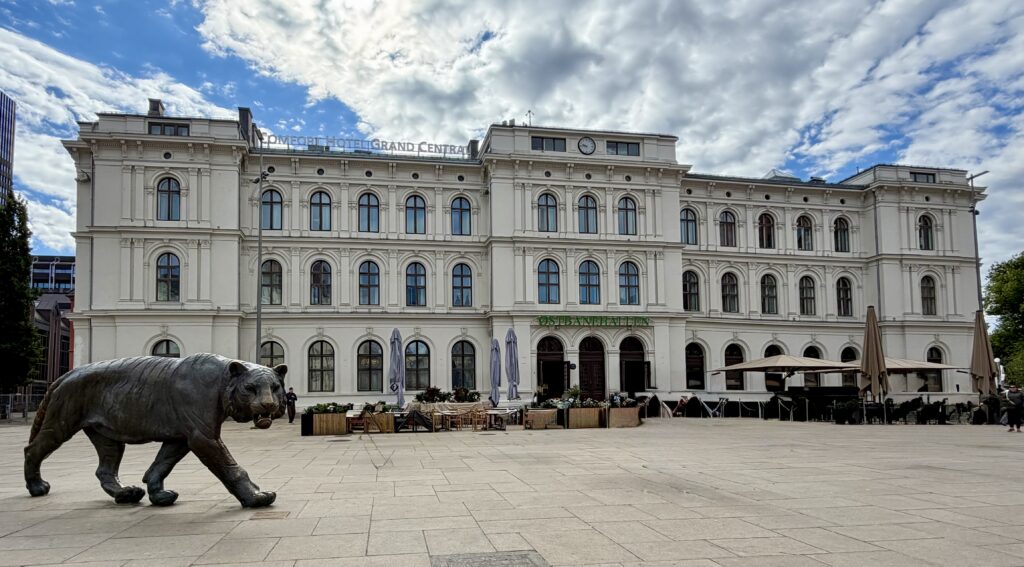
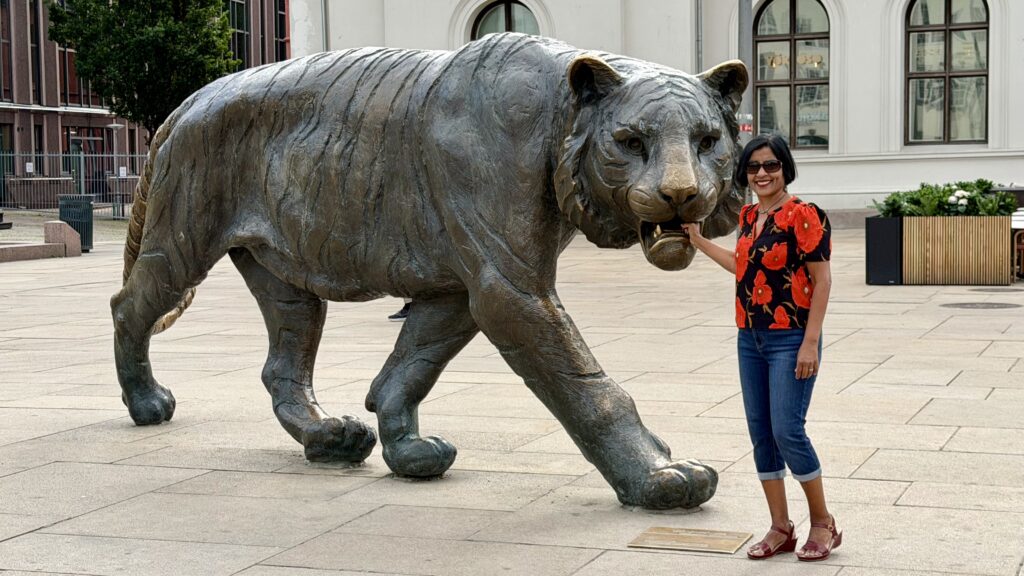
Tiger Statue (Tigerstatuen) – Standing outside Oslo Central Station in Jernbanetorget, this 4.5-meter bronze sculpture was created by Elena Engelsen and unveiled in 2000 to mark Oslo’s 1,000th anniversary. It celebrates the city’s nickname, Tigerstaden (Tiger City), and has become one of Oslo’s most popular meeting points and photo spots.
Christian Frederiks Plass – is a small square near Oslo Central Station, named in 1914 after Christian Frederick, who served as King of Norway for less than five months in 1814 during the country’s brief declaration of independence from Denmark. At its center stands the Sun and Earth fountain sculpture by Ørnulf Bast, installed in 1986.
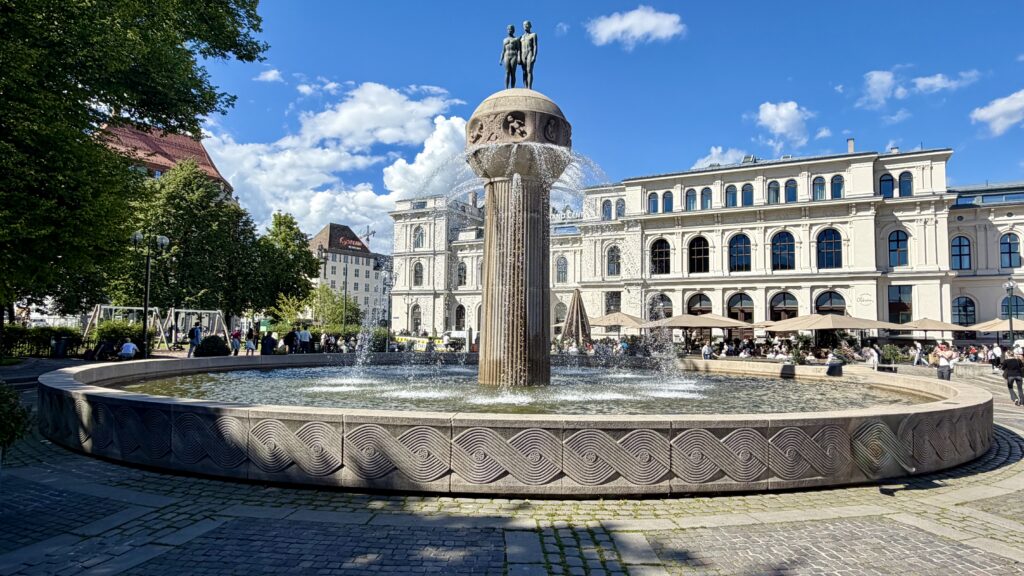
This square is just a 2-minute walk from Jernbanetorget, making it a convenient stop on the way to the Oslo Opera House, the waterfront, and several nearby attractions.
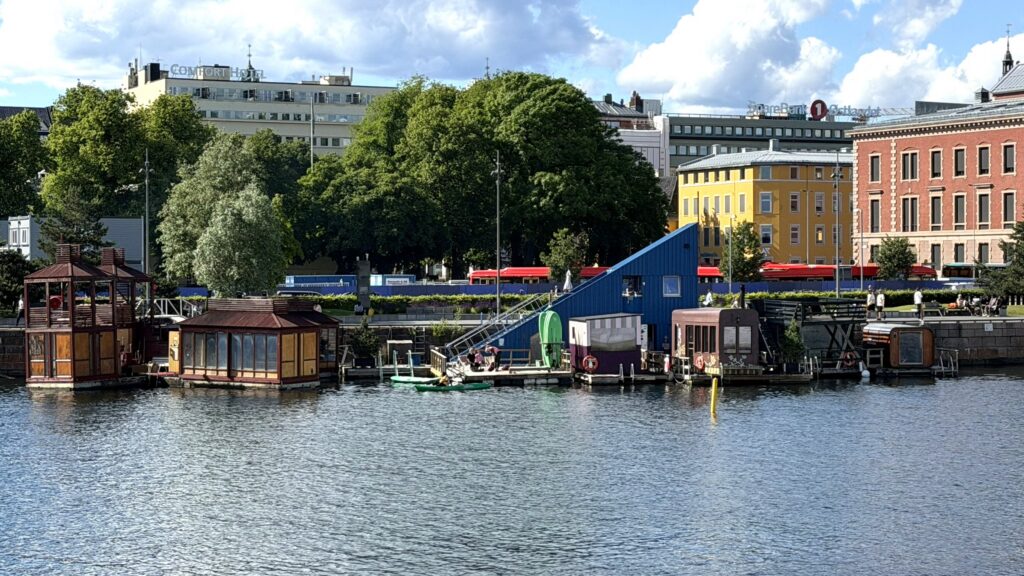
Oslo Waterfront (Havnepromenaden) – Oslo’s revitalized waterfront stretches for 9 km along the Harbour Promenade, transforming former shipyards into a vibrant district of parks, museums, restaurants, and public spaces. Many of the city’s top attractions including Oslo Opera House and Deichman Bjørvika are located along this scenic route, making it ideal for exploring on foot. The promenade is also home to several floating fjord saunas, where visitors can enjoy a traditional Nordic sauna followed by a refreshing dip in the Oslo Fjord—a quintessential Scandinavian experience.
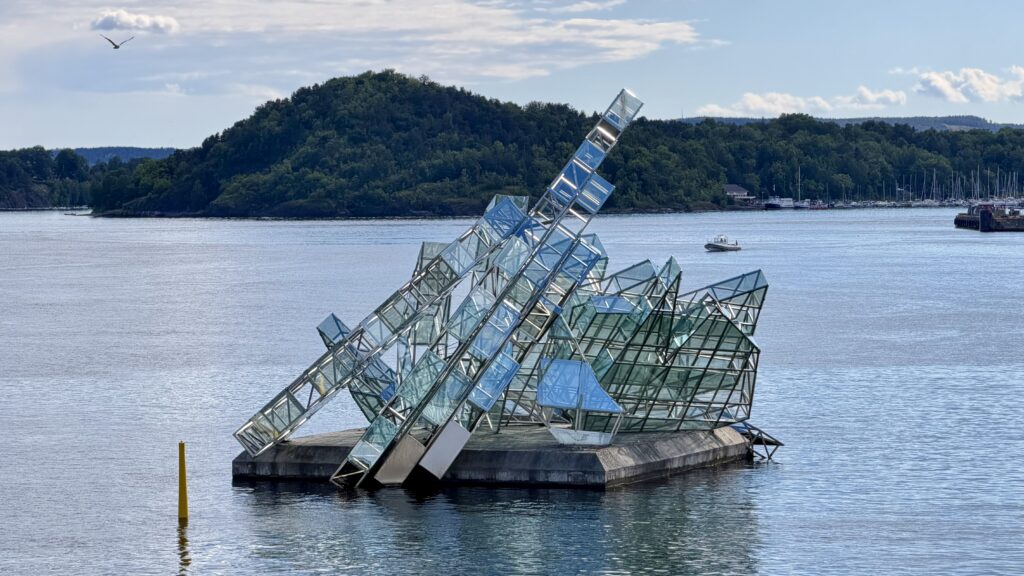
She Lies – Floating in the Bjørvika Fjord directly in front of the Oslo Opera House, She Lies is a 12-meter-high sculpture by Italian artist Monica Bonvicini designed to resemble a shattered glittering iceberg. The stainless steel and glass artwork is mounted on a floating platform that slowly rotates with the wind and tides, creating an ever-changing reflection on the water.
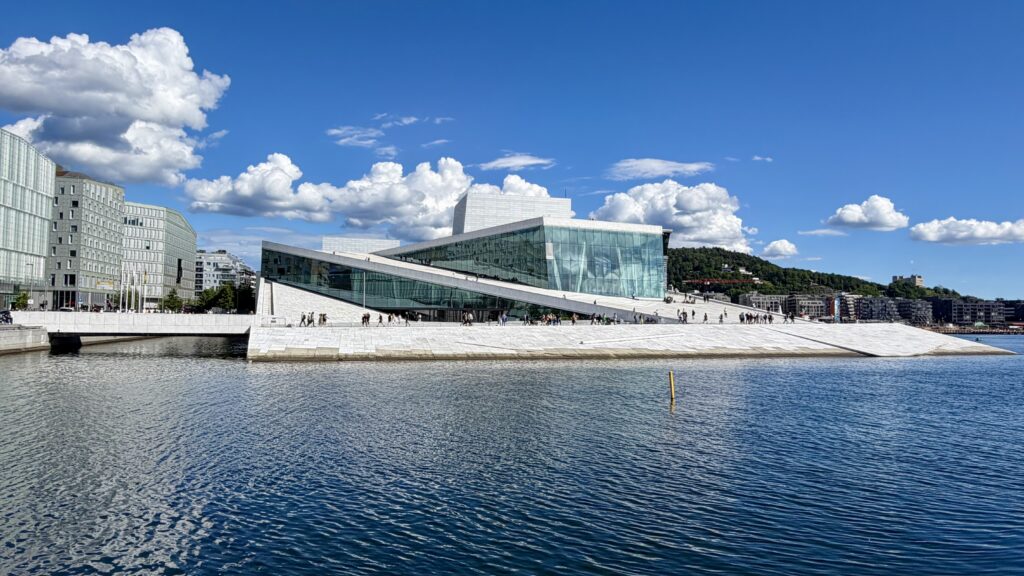
Oslo Opera House – Opened in 2008 and designed by the Norwegian architectural firm Snøhetta, the Oslo Opera House is home to the Norwegian National Opera and Ballet. Located on the waterfront in Bjørvika, its striking white marble and granite exterior is designed to resemble a glacier rising from the Oslo Fjord. One of its most distinctive features is the sloping roof, which visitors can walk on for panoramic views of the city and harbor. The warm oak interior houses three performance venues, including the 1,364-seat main auditorium.
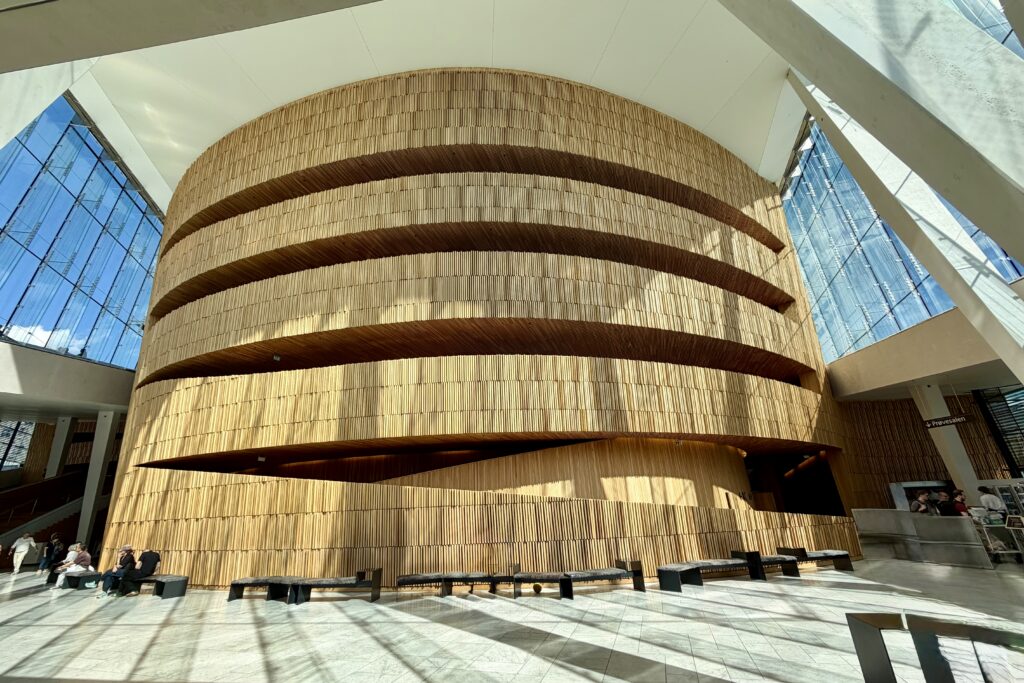
At the heart of the interior architecture is a sweeping Wave Wall made of strips of golden oak. Designed with input from Norwegian boat builders, it curves around the main auditorium and flows into timber stairways that connect the building’s upper levels.
We spent about an hour here exploring the exterior and briefly stepping inside the building. On the day of our visit, no guided interior tours were available.
Deichman Bjørvika – is Oslo’s main public library and is located across the road from the Oslo Opera House. Opened in 2020, it replaced the former 1933 headquarters at Hammersborg. Designed as a modern cultural hub, it has become a major public gathering space and is part of a wider network of around 20 branch libraries across Oslo, offering millions of books, films, music, and other media, along with thousands of cultural events each year.
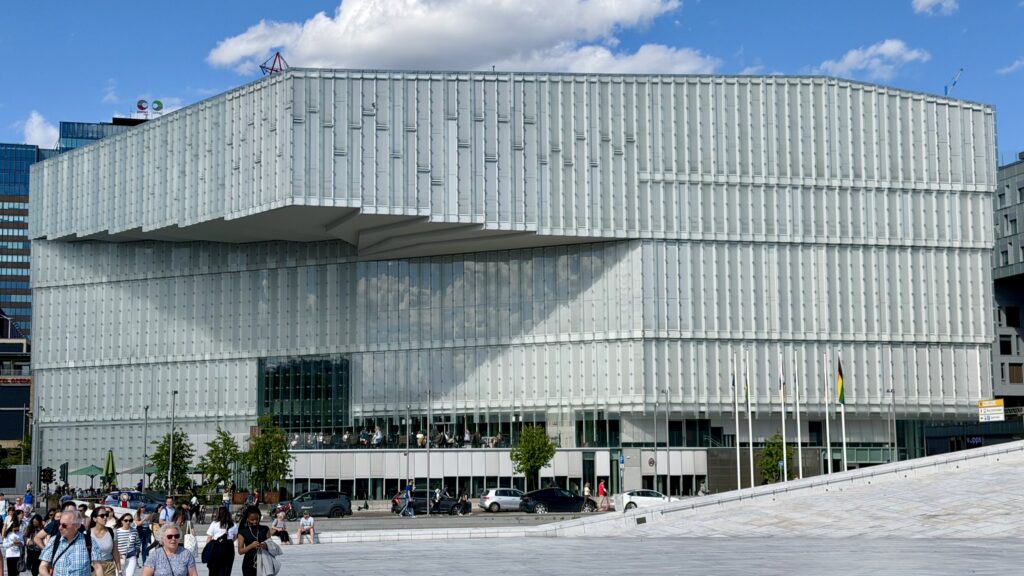
You can explore its interior for free and it is worth spending an hour here browsing through the 5-floors of books and other media as well as admiring the architecture.
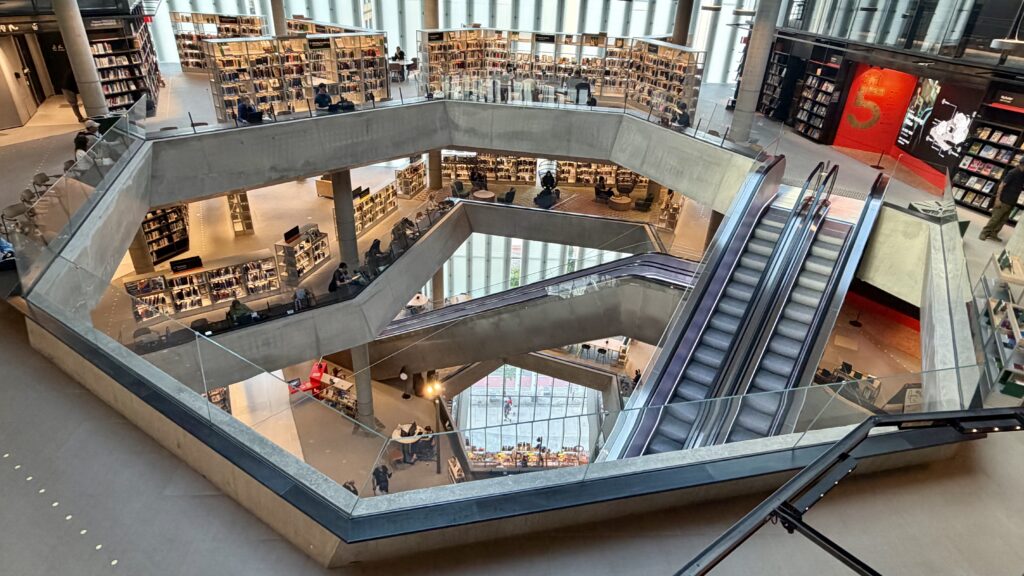
Future Library art Project – located on the top floor, this project is an initiative that will store 100 newly written books for 100 years before they are published in 2114.
Rådhusgata – We walked on this street next which is one of the oldest streets in Oslo, laid out in 1620. The street runs from Langkaia in Bjørvika to Oslo City Hall (Rådhuset). It is one of the original main streets laid out in Christiania’s early city plan and was historically known as Raadhusstræde.
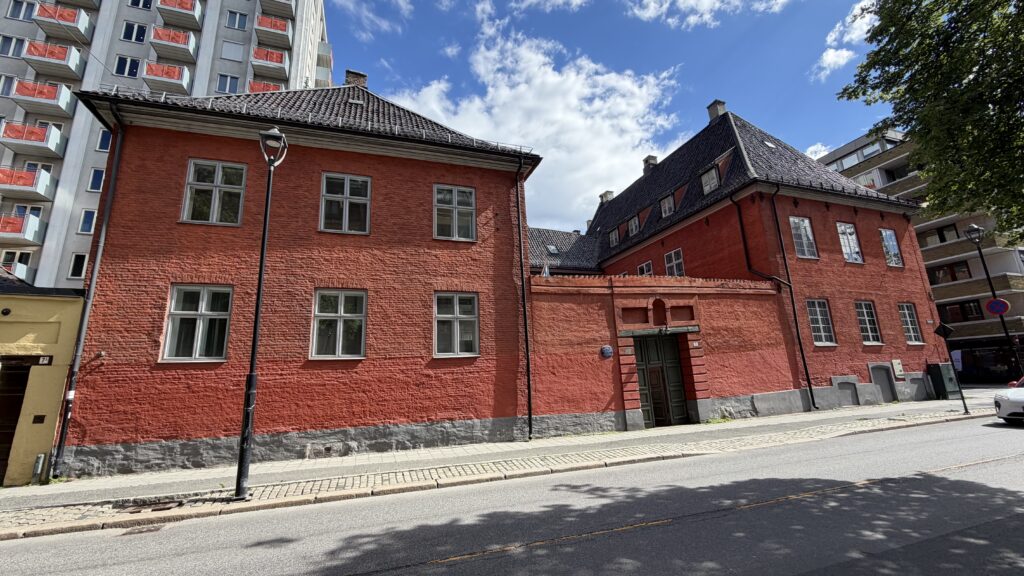
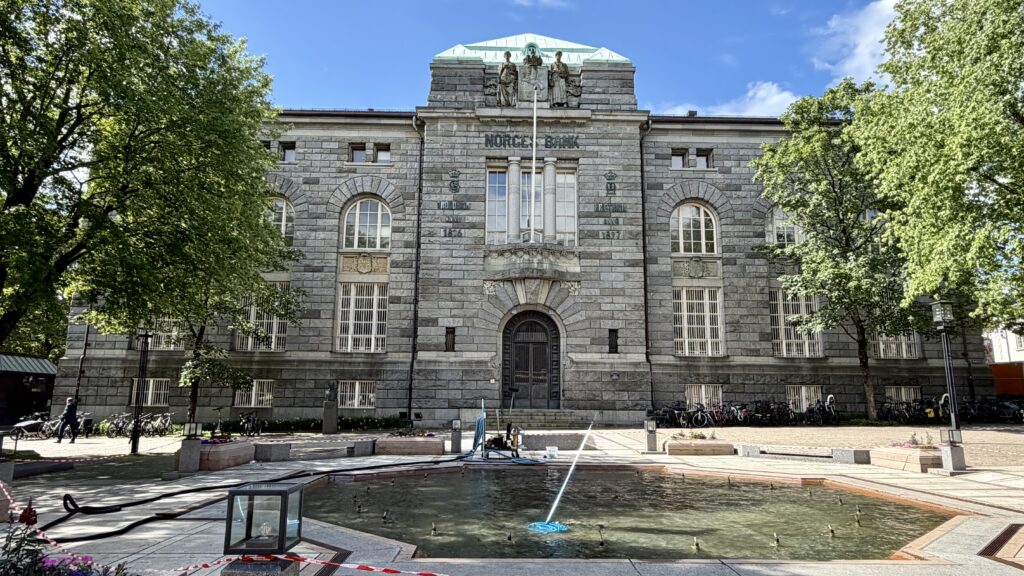
Bankplassen (The Bank Square) – We stopped by this square which takes its name from the former Norway’s national bank, Norges Bank building from 1830. Today, it is home to the National Museum of Art, Architecture and Design and the historic Engebret Café. Renovated in 2016 for its 200th anniversary, the square features benches, trees, and sculptures.
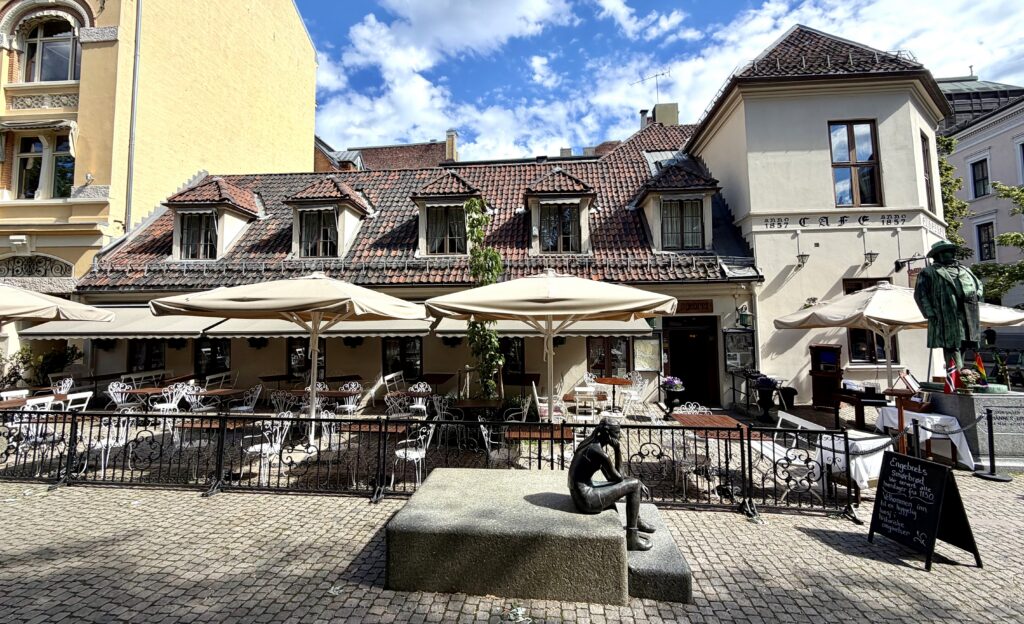
Engebret Café – Located on one side of Bankplassen, it is the city’s oldest restaurant in continuous operation. Founded in 1848 by Engebret Christoffersen, it originally stood on Rådhusgata before moving to Bankplassen in 1863. Housed in a protected 18th-century building, it has long been associated with Norwegian cultural life and has been frequented by many notable Oslo figures such as Henrik Ibsen,
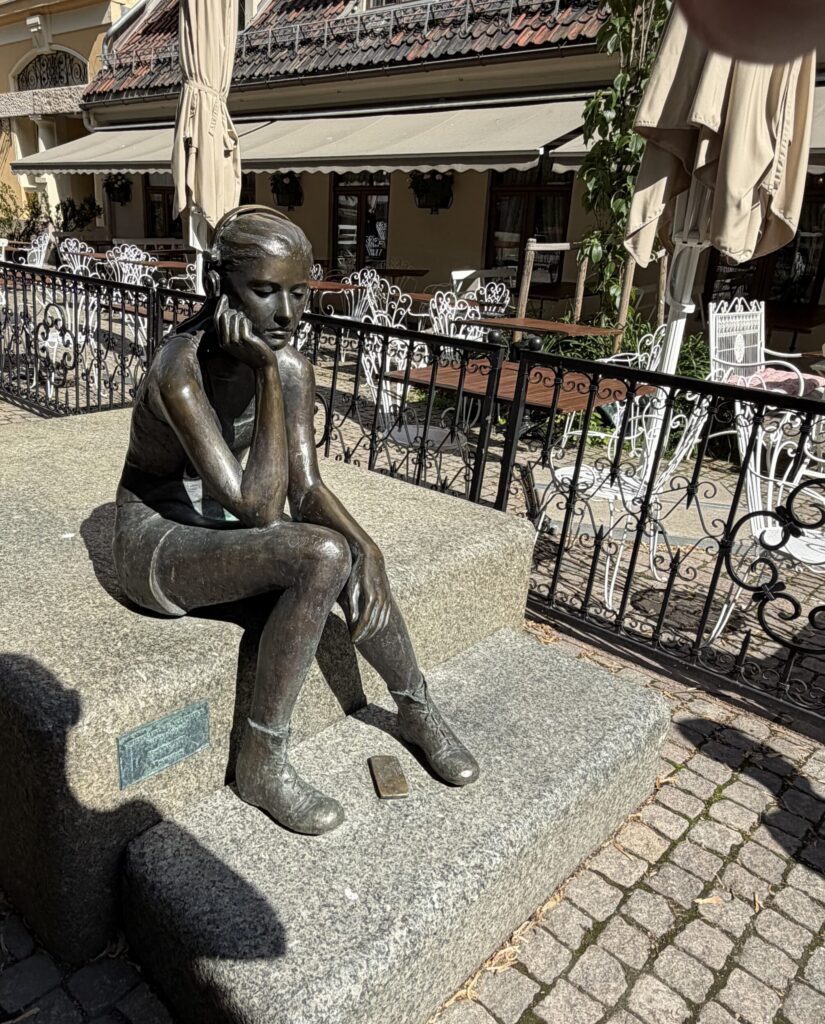
The bronze sculpture of a girl in front of the cafe is titled Sittende pike med hodetelefoner (Seated Girl with Headphones). Created in 2014 by Norwegian artist Marit Krogh, it shows a young girl sitting on a stone bench, absorbed in music through her headphones.
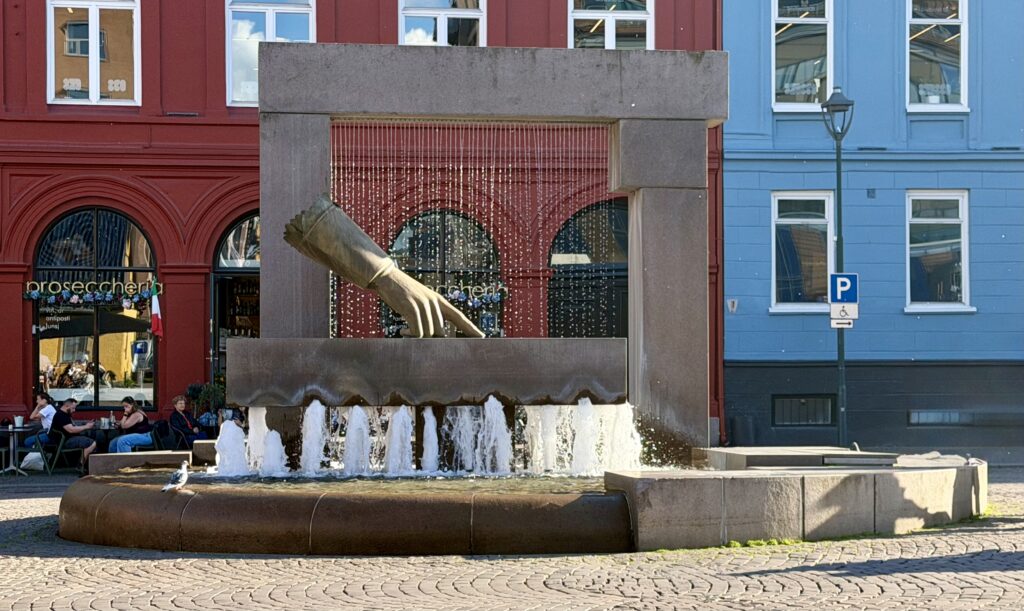
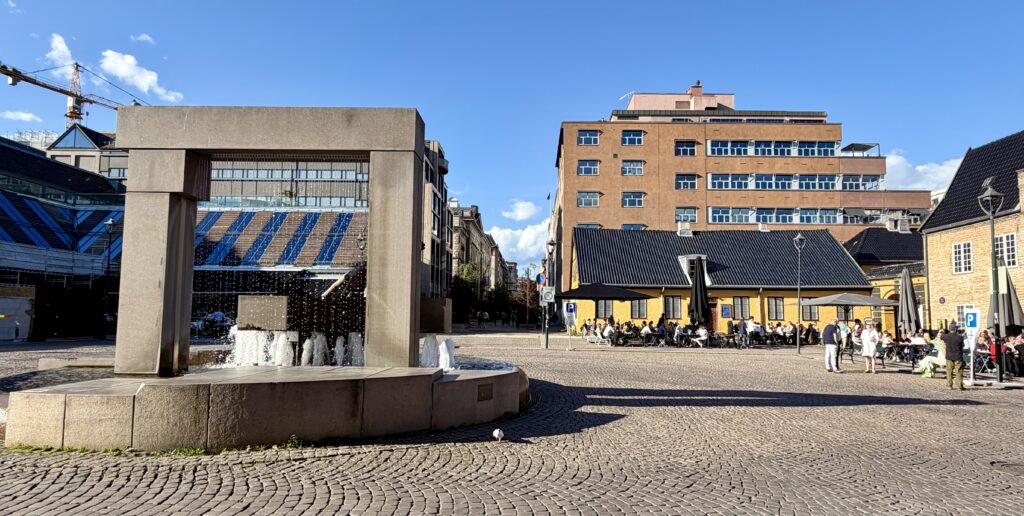
Christiania Torv – is a historic square along Rådhusgata. It is surrounded by some of the city’s oldest buildings. The square is known for its central fountain with a hand sculpture pointing to the ground, commemorating the legend that King Christian IV indicated this spot as the site for rebuilding the city after the 1624 fire.
The square is also home to a historic 17th-century building on one side of the square. The house dates back to around the 1640s and is one of the oldest preserved buildings in Oslo. It has had a long and unusual history, including use by the University of Oslo’s Faculty of Medicine for anatomy studies in the 1800s—hence the name Anatomigården (Anatomy House).
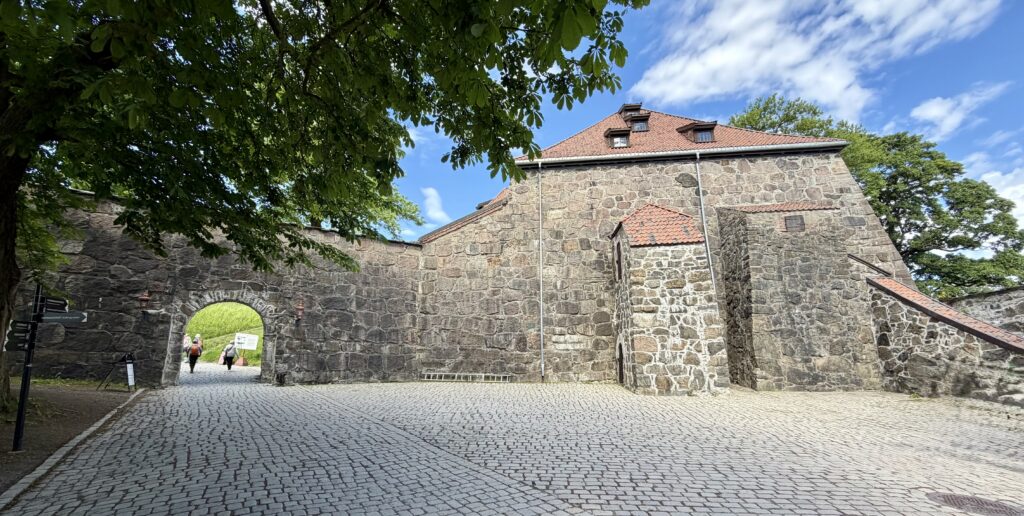
Akershus Fortress is a medieval castle and fortification built to defend Oslo, originally constructed in the late 13th century. Over the centuries, it has served multiple roles, including a royal residence, military stronghold, and prison, and today functions as a museum and historic site. We spent some time with our GuruWalk guide walking through the fortress grounds and enjoying panoramic views of Oslo Harbour from its highest points.
Admission to the outdoor fortress grounds is free of charge. It has 3 main Museum attractions for which you have to pay :
- Medieval Akershus Castle – Contains royal halls, dungeons, and the Royal Mausoleum.
- Armed Forces Museum (Forsvarsmuseet) – presents Norway’s military history from the Viking Age to modern times through weapons, uniforms, and exhibits.
- Norway Resistance Museum (Norges Hjemmefrontmuseum) – focuses on Norway’s World War II occupation and resistance movement from 1940–1945, using documents, photographs, and immersive displays.
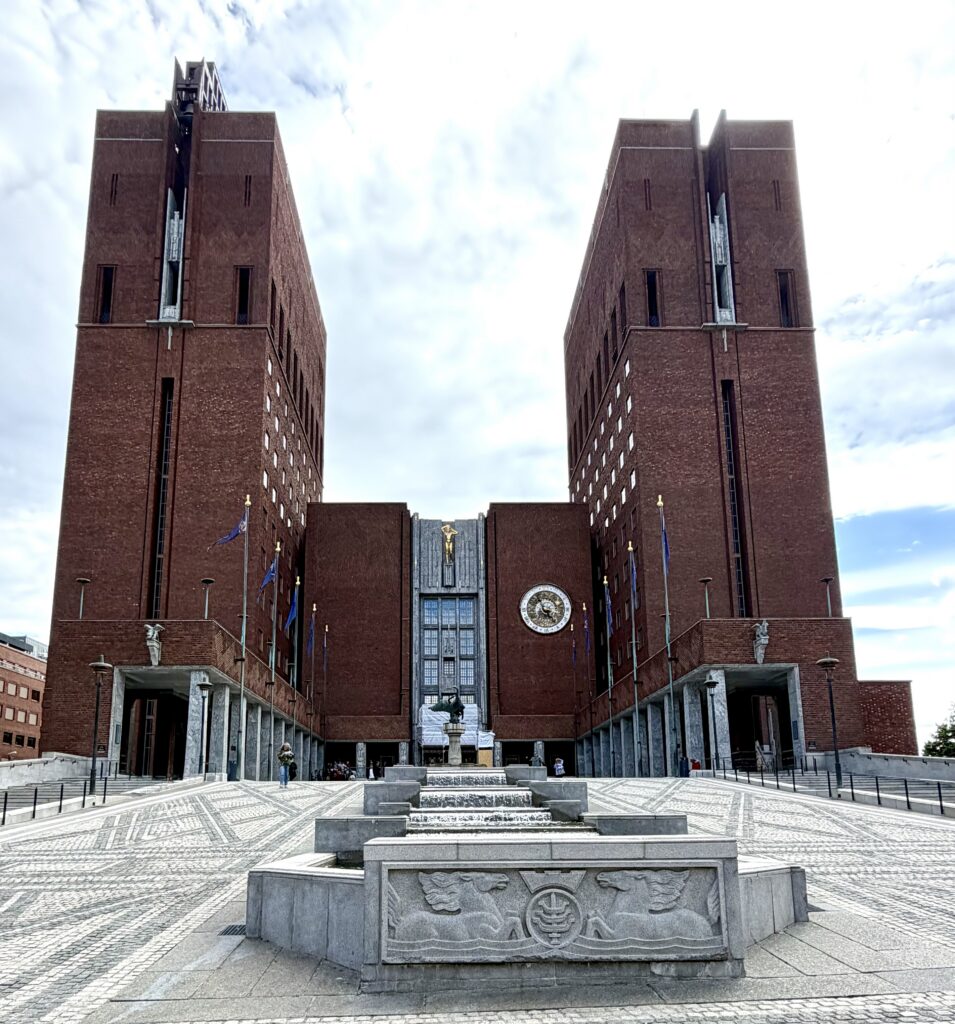
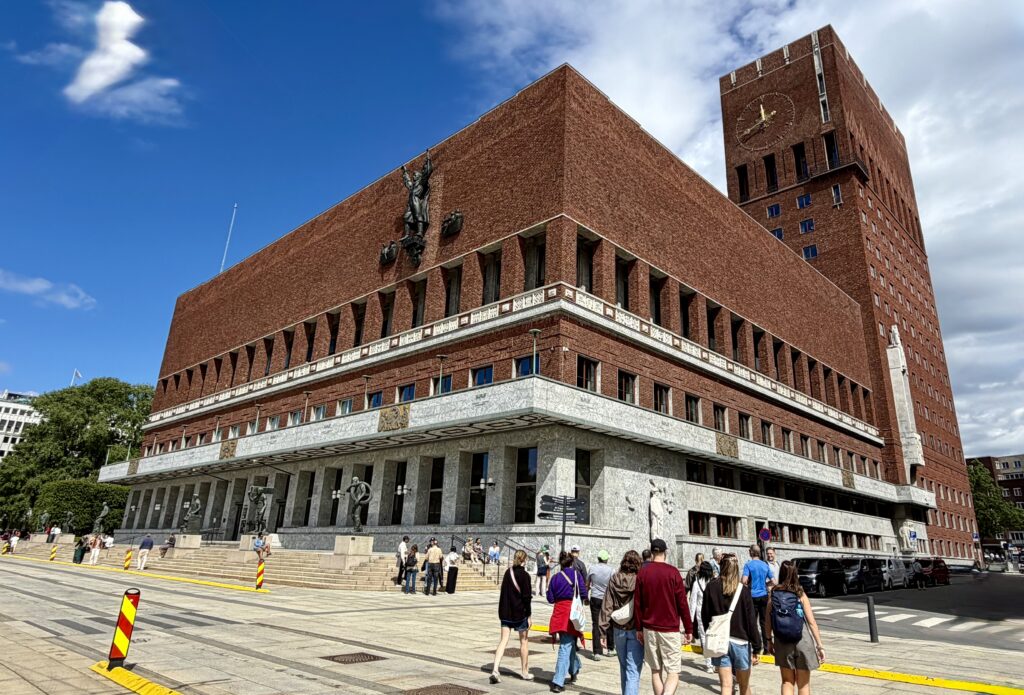
Oslo City Hall (Oslo Rådhus)– is one of the city’s most recognizable landmarks and the seat of Oslo’s municipal government. Built between 1931 and 1950, the striking red-brick building faces the Oslofjord and is distinguished by its twin towers, standing 63 and 66 meters tall. It is best known internationally as the venue for the Nobel Peace Prize ceremony held each year on December 10.
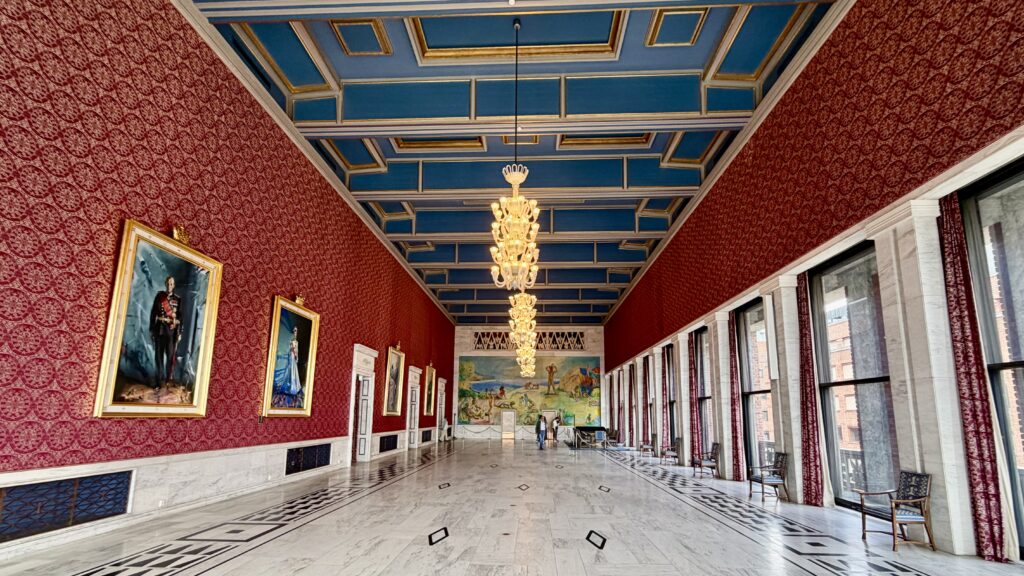
Visitors can explore the richly decorated interior free of charge, including the stunning paintings in the main hall, banquet hall, and other beautifully painted rooms on the first floor.
- Main Room – is where the annual Nobel Peace Prize ceremony is held. It has a series of wall paintings depicting Norwegian history, culture, and everyday life. Various monarchs and the city’s patron saint, St. Hallvard are also depicted.
- Storstein Room – is used for informal political activities relating to city council meetings
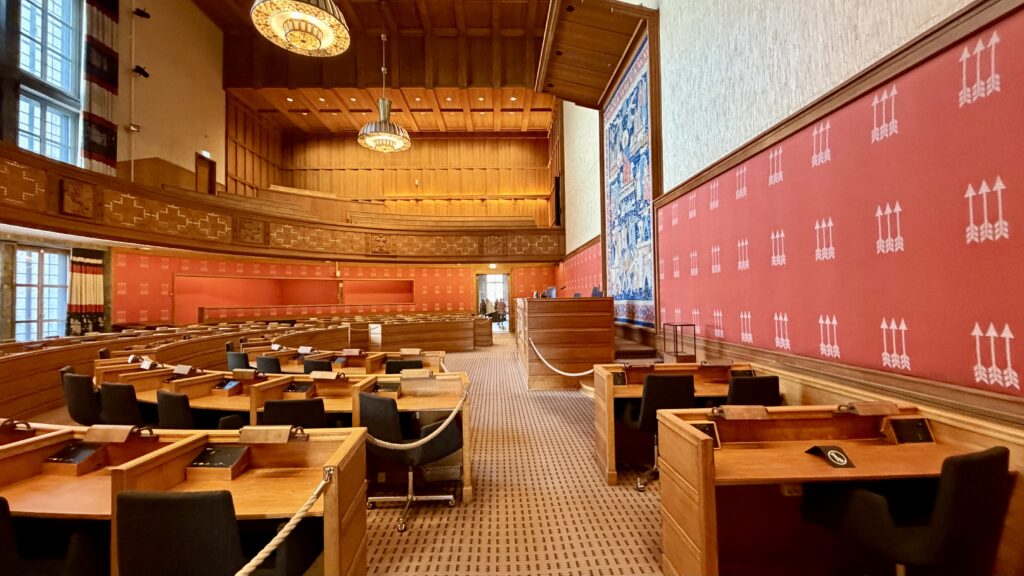
- City Council Hall – This semi-circular chamber is where Oslo’s City Council meets. The room is clad in warm oak paneling and decorated with large tapestries, the most notable depicting St. Hallvard, Oslo’s patron saint, alongside the seven virtues.
- Krogh Room – is another room used for informal political activities relating to city council meetings
- Antechamber or Formality Room
- Display Room – It contains glass display cases showcasing gifts, medals, commemorative plaques, and awards presented to the City of Oslo over the years. These items have been received from visiting dignitaries, international organizations, and foreign governments, reflecting Oslo’s diplomatic and cultural relationships.
- Banquet Hall – is used for official receptions, state banquets, civic celebrations, and ceremonial events hosted by the City of Oslo. It is one of the city’s most prestigious function rooms and is often used to welcome visiting heads of state, royalty, diplomats, and other distinguished guests.
The Storting (Stortingsbygningen) – is the seat of Norway’s Parliament and one of Oslo’s most recognizable landmarks. Located on Karl Johans gate, the distinctive yellow-brick building was designed by Swedish architect Emil Victor Langlet and officially opened in 1866. Its most distinctive architectural feature is the semi-circular parliamentary chamber projecting from the front façade, inspired by French and Italian design.
During World War II, the building was occupied by Nazi Germany, but today it once again serves as the home of Norway’s 169-member parliament.
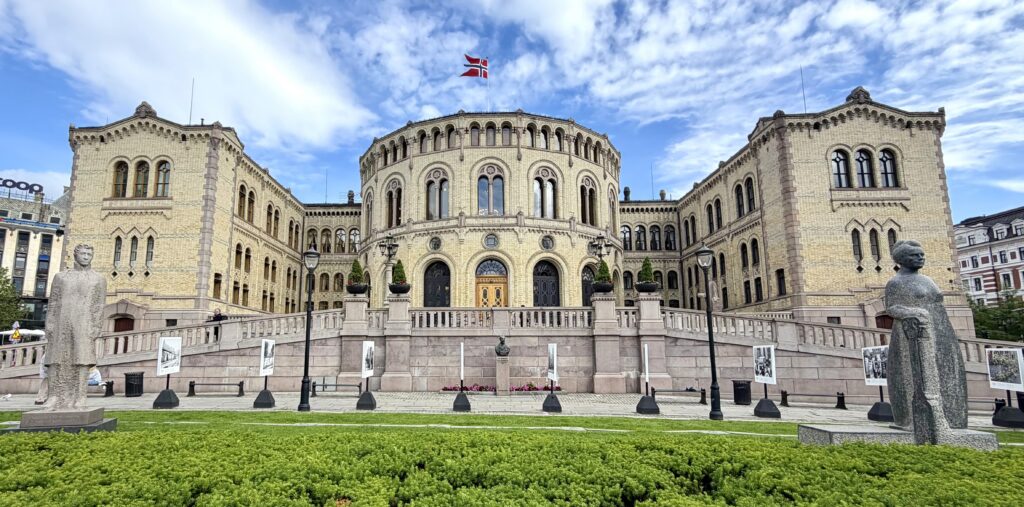
Our experience – You can only tour the building if you know someone who works in the building.
The National Theatre (Nationaltheatret) – is one of Norway’s premier performing arts venues and is located between the Royal Palace and the Parliament. Opened in 1899, the theatre traces its roots to the earlier Christiania Theatre. Today, the National Theatre manages four performance stages and remains a leading venue for Norwegian drama, classical theatre, and contemporary productions.
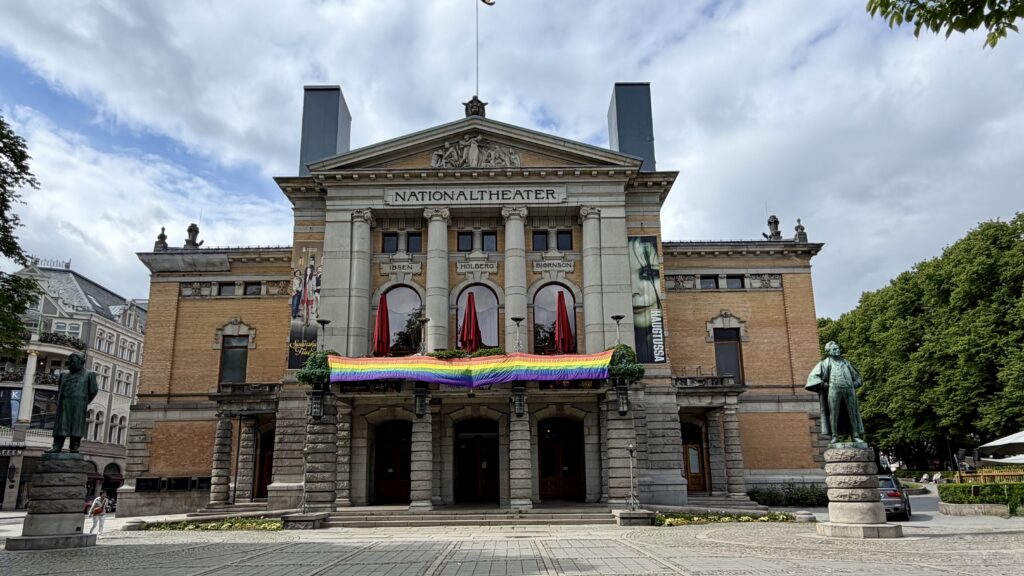
We admired the historic building from the outside, walking around it to photograph its impressive façade from every angle.
The surrounding area features statues of famous Norwegian playwrights, elegant fountains, and well-maintained flower gardens, making it a pleasant place to relax and appreciate the architecture.
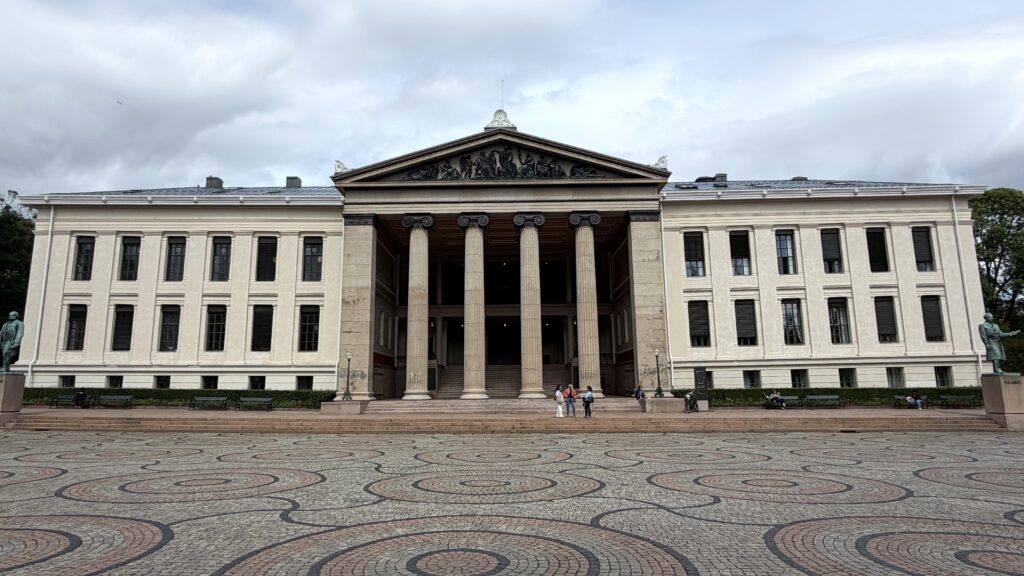
University of Oslo – This attractive building is located across the road from the National Theater. Founded in 1811, the University of Oslo is Norway’s oldest and largest university. Its historic downtown campus on Karl Johans gate features three elegant neoclassical buildings dating from 1841–1853. The centerpiece, Domus Media, houses the University Aula (great hall), renowned for its monumental murals by Edvard Munch, including The Sun and Alma Mater. While the historic buildings are now primarily home to the Faculty of Law, most of the university’s teaching and research takes place at the larger Blindern Campus a few kilometers away.
Karl Johans Gate – is Oslo’s lively main boulevard, stretching approximately 1.4 km from Oslo Central Station to the Royal Palace. The city’s principal shopping and promenade street is lined with cafés, restaurants, and stores while linking many of Oslo’s most important landmarks, including the Storting (Parliament), National Theatre, and the historic University of Oslo. Along the way, you’ll also pass Spikersuppa, a popular public square that hosts an outdoor ice-skating rink in winter.
We found ourselves walking along Karl Johans gate several times during our stay, as many of Oslo’s major attractions are located here. We also rode the tram along part of the boulevard, making it easy to get between sights while enjoying the lively atmosphere of the city center.
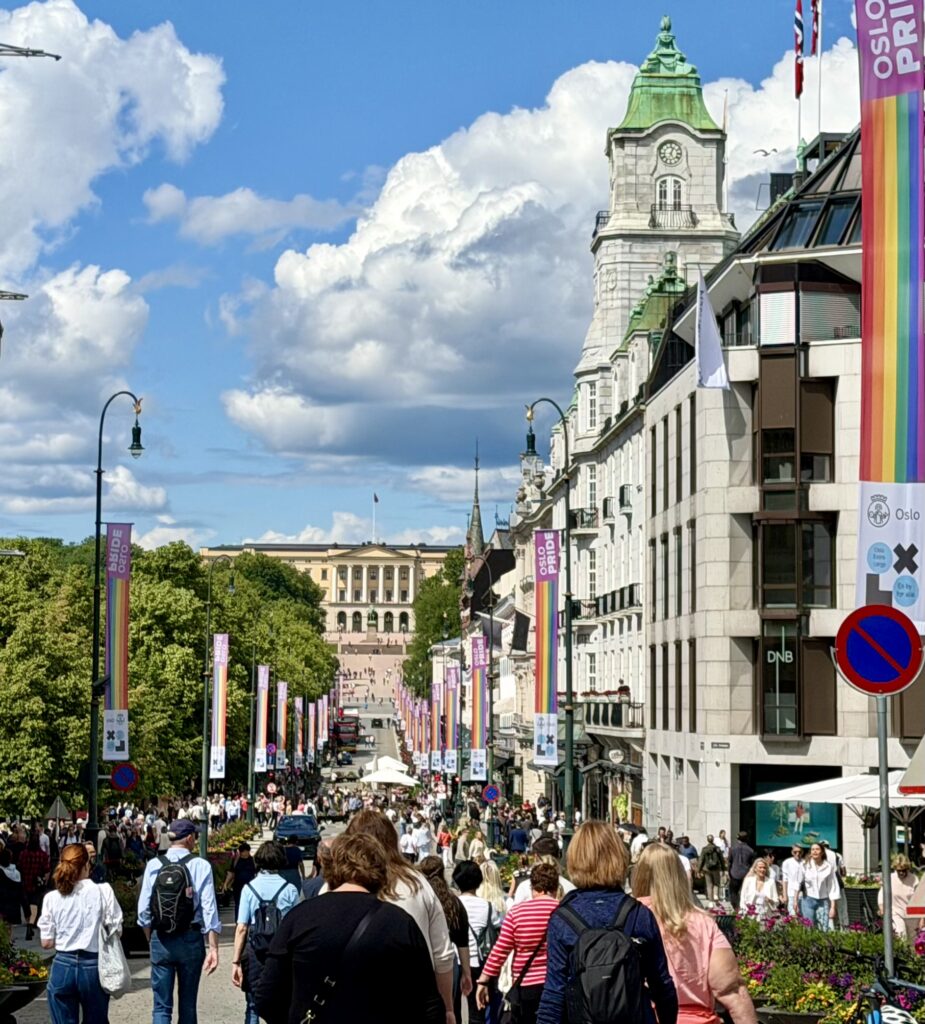
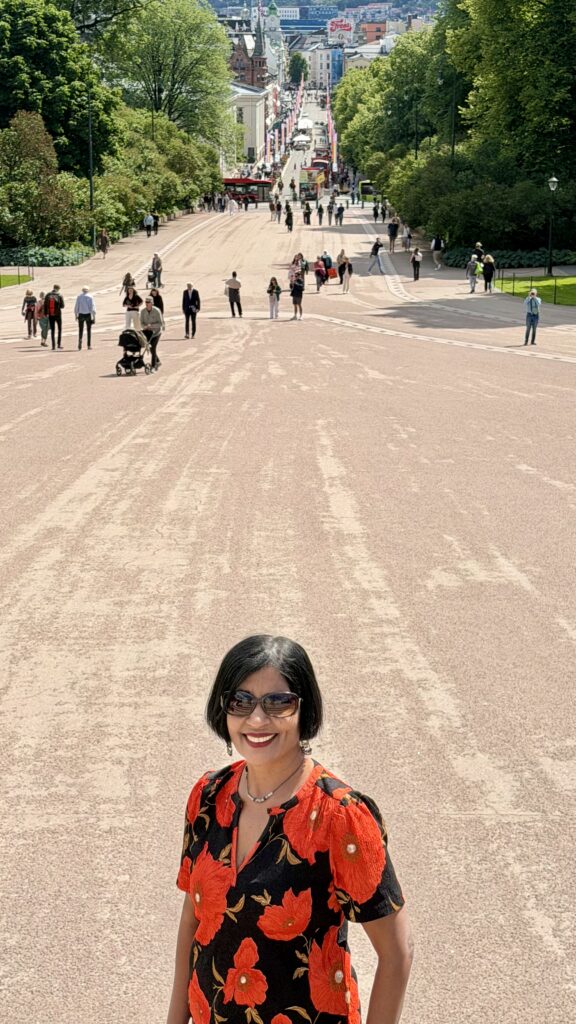
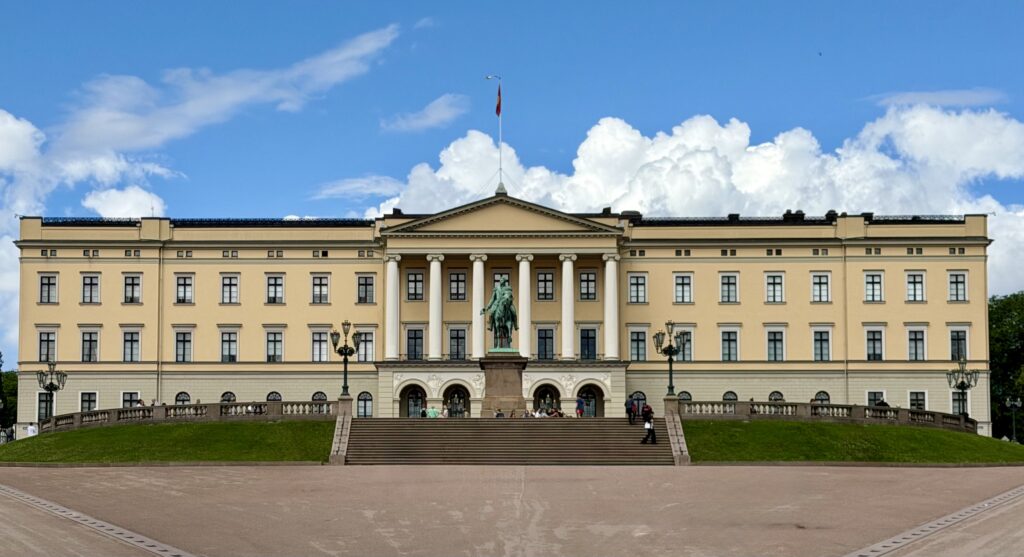
The Royal Palace (Det Kongelige Slott) is the official residence of the King and Queen of Norway and the primary workplace of the Norwegian Royal Family. Completed in 1849, the palace hosts state ceremonies, official dinners, audiences, and receptions throughout the year. During the summer months, visitors can join guided tours of the palace, exploring beautifully decorated rooms that showcase a variety of 19th-century architectural styles, including the Great Dining Room, Bird Room, and elegant White Salon. The surrounding Palace Park is open year-round and is a popular place for a leisurely stroll.
The Palace Park (Slottsparken) surrounds the Royal Palace and was landscaped alongside the palace’s construction in the mid-19th century, reflecting the naturalistic garden style popular across Europe at the time. Covering more than 50 acres, the park features tree-lined paths, ponds, lawns, and numerous statues. It also incorporates the historic Queen’s Park, originally created in 1751 as a private Rococo garden before becoming part of the palace grounds in 1840.
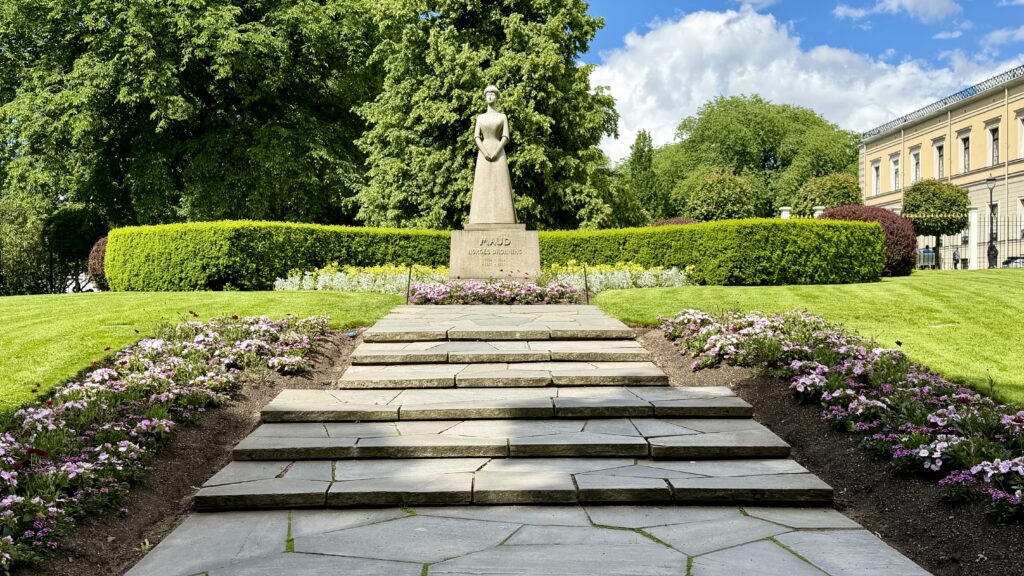
Note – The Royal Palace was not yet open for guided tours during our visit, as we were there in early June.
The Oslo Cathedral – was our next stop. The Cathedral has stood at Stortorvet Square since 1697. Built in the Baroque style after two earlier cathedrals were lost to fire, it has long served as the venue for important national events, including royal weddings, state ceremonies, and official services attended by the Norwegian Royal Family and government.
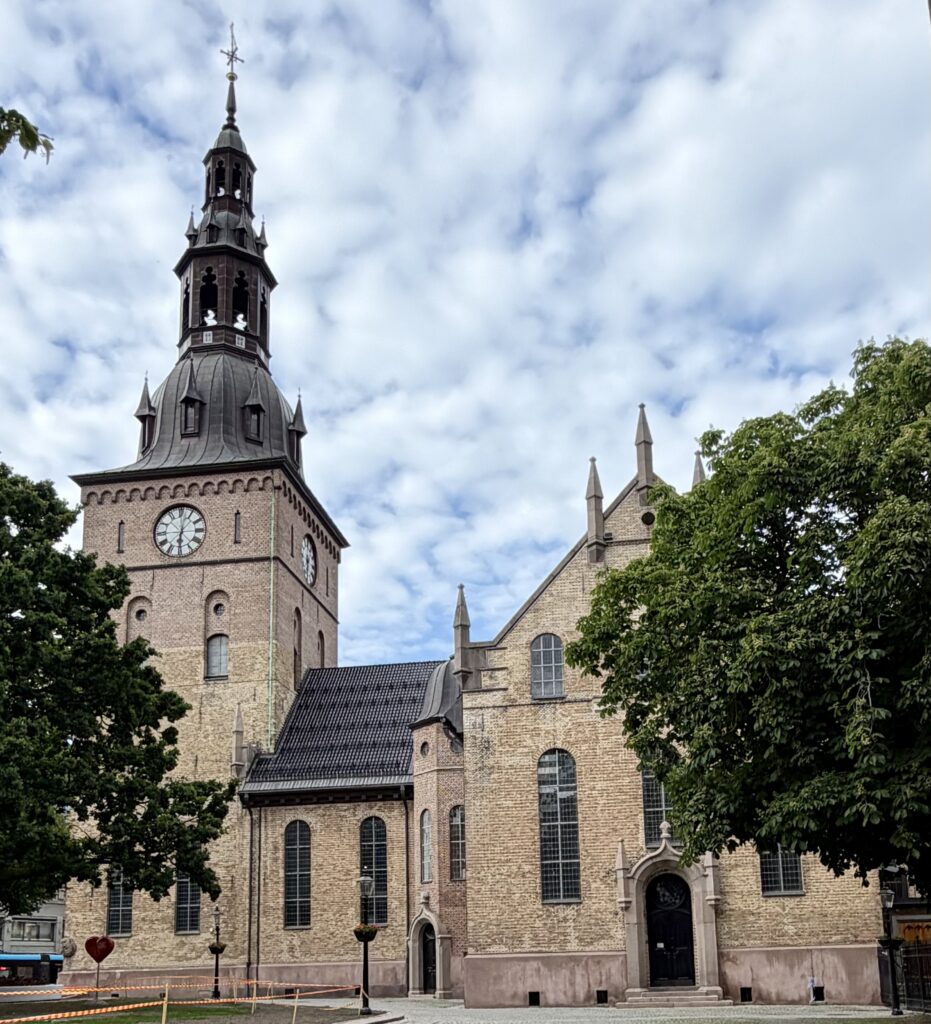
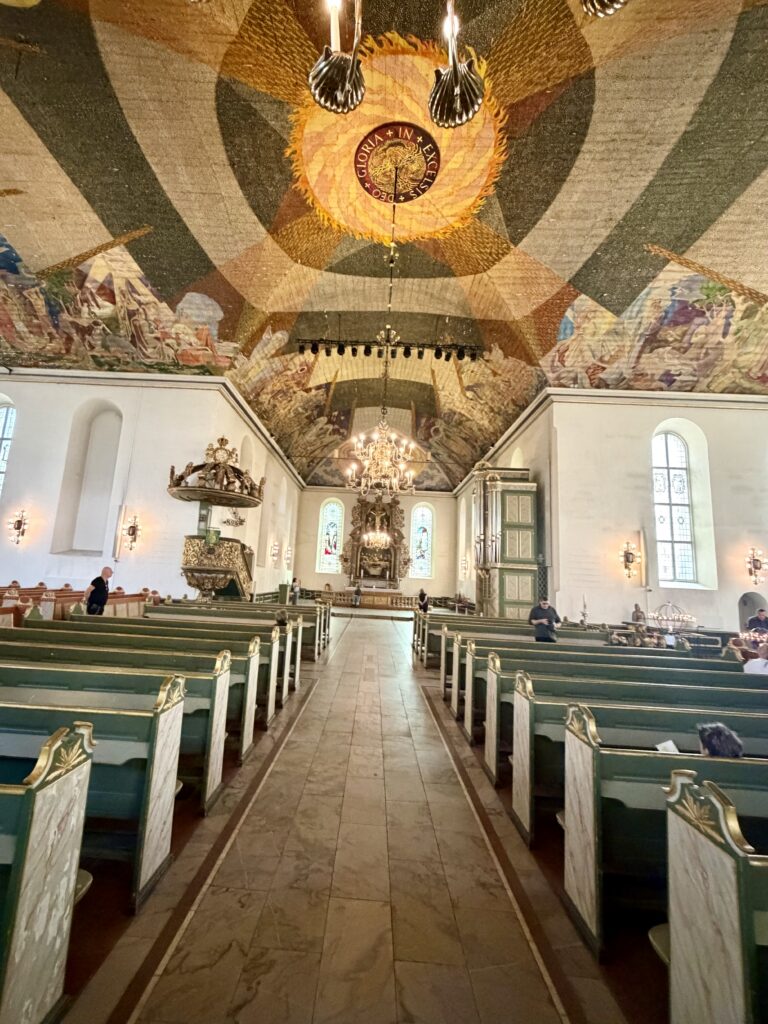
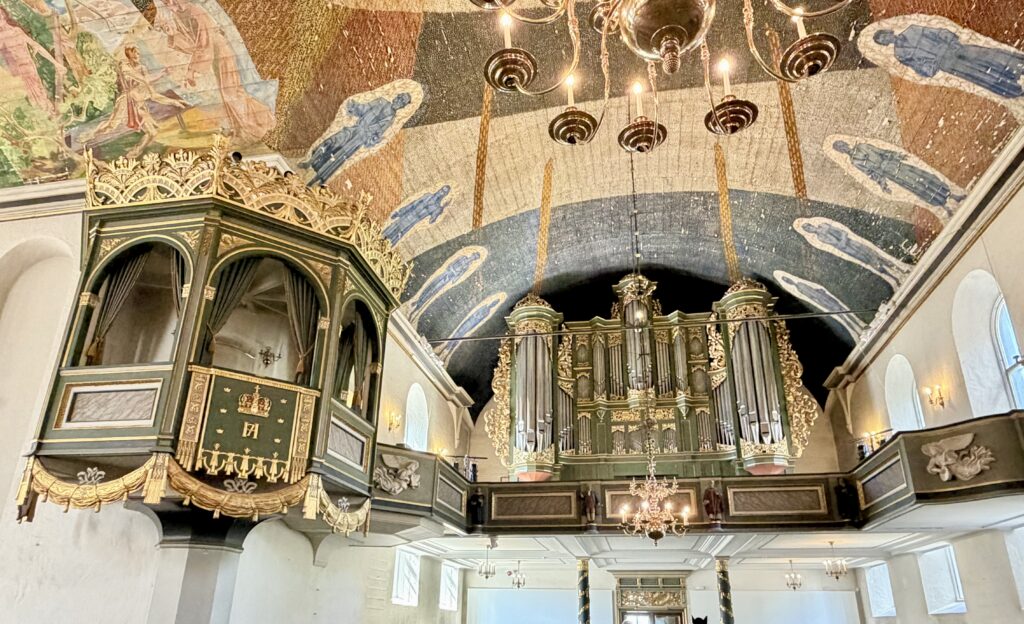
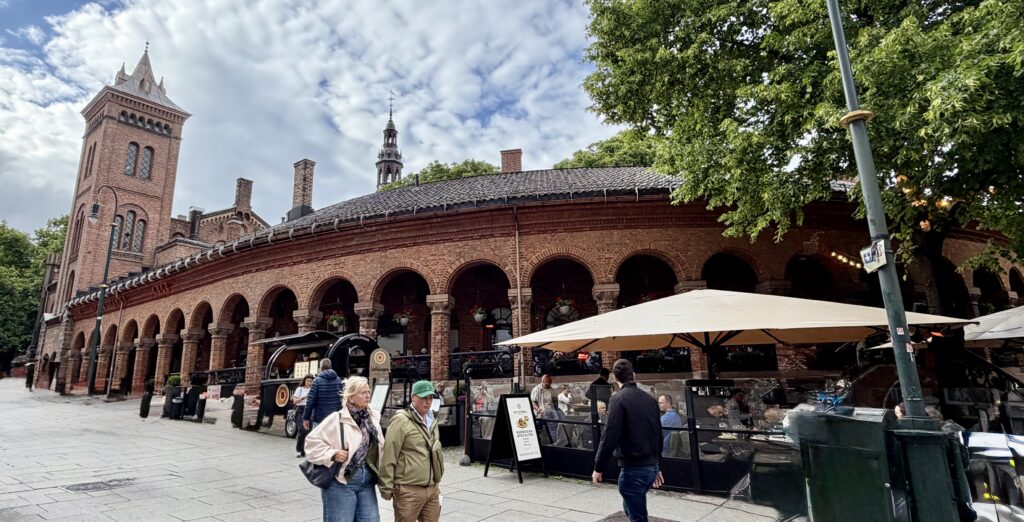
Café Cathedral – is a charming café and restaurant located in the historic Kirkeristen Bazaar Halls beside Oslo Cathedral. Opened in 2001, it occupies one of the beautifully restored Neo-Romanesque brick buildings designed by architect Christian H. Grosch between 1840 and 1859. The café serves a mix of Norwegian and Italian-inspired dishes, including pizzas, sandwiches, coffee, and desserts. With outdoor seating overlooking the lively square, it offers a wonderful setting to relax and people-watch while enjoying a meal.
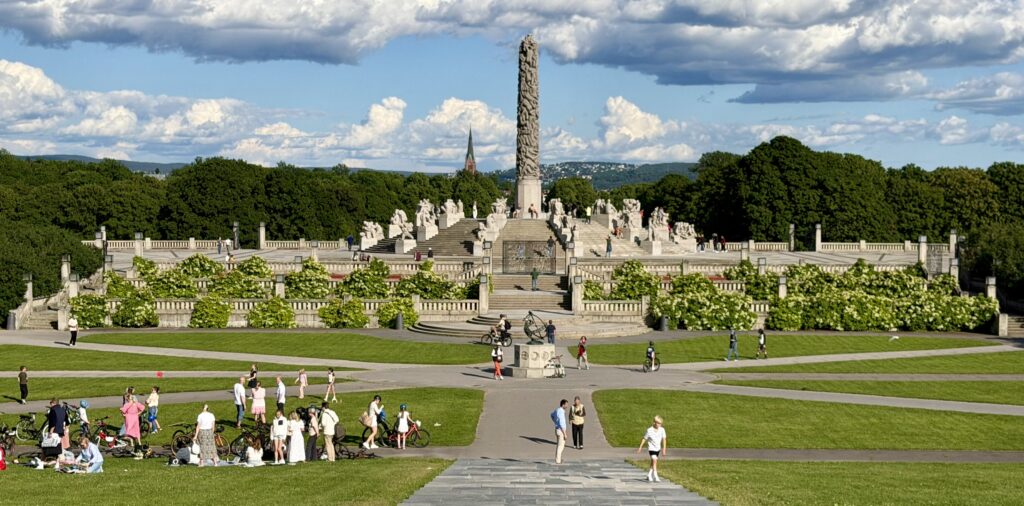
Frogner Park (Frognerparken) is Oslo’s largest public park and free to enter. Covering 45 hectares, the park is home to the world-famous Vigeland Sculpture Installation, the largest sculpture park created by a single artist, featuring more than 200 granite, bronze, and wrought-iron sculptures by Gustav Vigeland.
The Bridge in Frogner Park is the 100-metre-long walkway stretching from the Main Gate to the Fountain. It was initially laid out for the 1914 Jubilee Exhibition. Vigeland’s bronze sculptures were added in the 1940s.
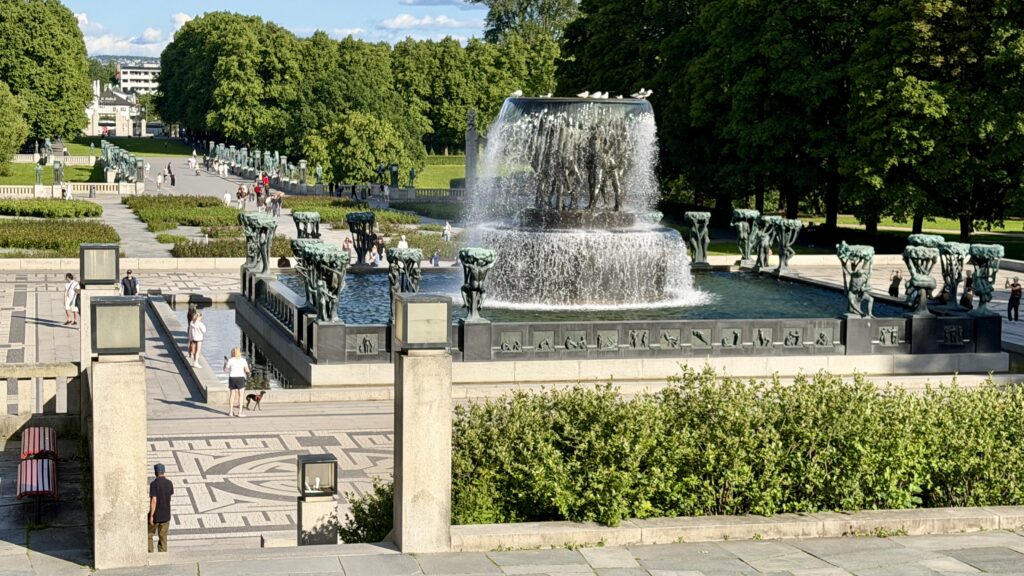
On that same axis, a few hundred metres further, is the Monolith, an elevated 14.12-metre totem composed of 121 human figures. This work alone took 14 years to carve from one gigantic piece of granite.
Other places to explore in Oslo
- Aker Brygge – is a popular shopping, dining, and entertainment district. Originally a shipyard established in 1854, it was transformed into its current form in the 1980s, offering a vibrant waterfront experience. This district physically begins next to the Oslo City Hall. As you walk west from the City Hall and cross the City Hall Square (Rådhusplassen), you enter the waterfront promenade of Aker Brygge, which then extends south toward the Tjuvholmen neighborhood.
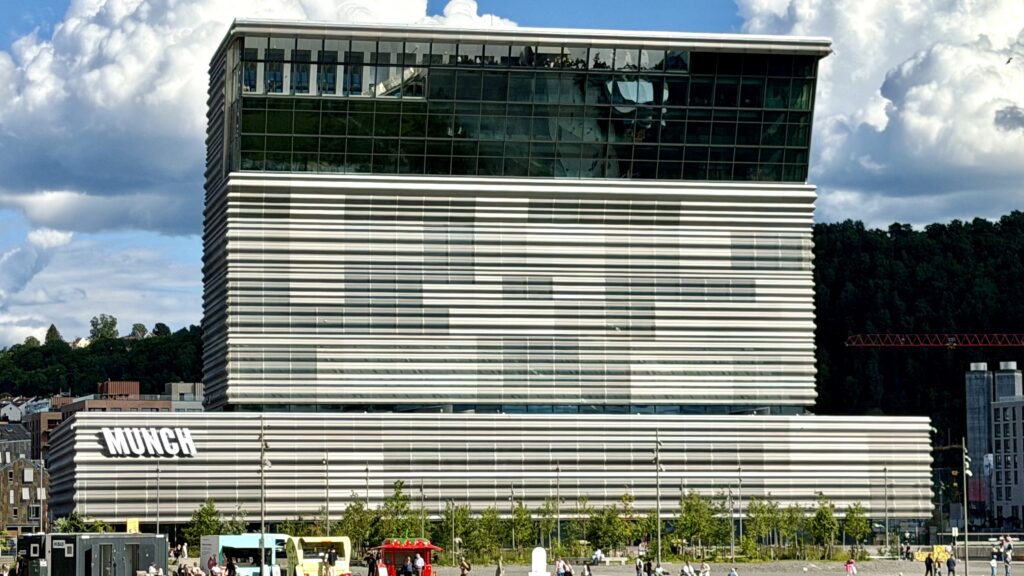
- MUNCH Museum – is dedicated to Norway’s most celebrated artist, Edvard Munch, and houses the world’s largest collection of his works. Opened in its striking 13-story waterfront building in Bjørvika in 2021, the museum displays a rotating selection from Munch’s extraordinary bequest of nearly 28,000 artworks, including several versions of The Scream. In addition to its permanent collection, MUNCH hosts major temporary exhibitions, contemporary art, concerts, talks, and cultural events. For one of the best views of the museum’s distinctive waterfront architecture, walk up onto the roof of the Oslo Opera House.
- Bygdøy Peninsula – is Oslo’s premier museum district and a popular recreational area, located just west of the city center. Easily reached by a short ferry ride from City Hall or by bus, the peninsula is home to several of Norway’s top museums, including the Fram Museum, Kon-Tiki Museum, Norwegian Museum of Cultural History, and the Norwegian Maritime Museum. Beyond its cultural attractions, Bygdøy also offers scenic walking trails, beaches, and the elegant Oscarshall Palace, making it an ideal destination for a full day of sightseeing.
- Mathallen Food Hall is one of Oslo’s premier culinary destinations, located in the trendy Vulkan neighborhood. Home to more than 30 specialty food shops, cafés, bars, and restaurants, it offers everything from traditional Norwegian delicacies to international cuisine. Visitors can dine at individual eateries or mix and match dishes from different vendors in the central food court, making it an ideal stop for lunch, dinner, or sampling a variety of flavors. The food hall is housed in a beautifully restored brick industrial building that was constructed in 1908 as an iron forge for the former Vulkan industrial district.