Half Day trip from Copenhagen
Helsingør is a city located about 45 miles north of Copenhagen. It lies on the northeast coast of the island of Zealand, at the narrowest part of the The Sound (strait separating Denmark and Sweden). We took a train from Copenhagen to Helsingør which took less than an hour to reach. All the attractions in the city are within walking distance.
- Helsingør Town Hall
- Saint Olaf’s Church
- Saint Mary’s Church
- Kronborg Castle
- Helsingør’s Sculptures
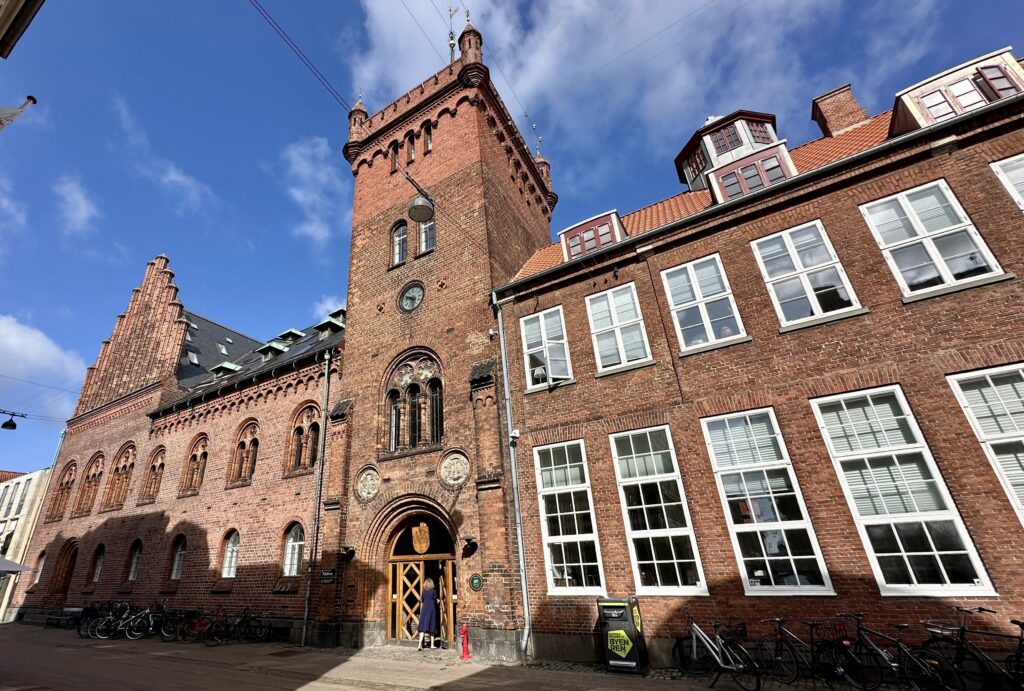
Helsingør Town Hall – We got off the train station and started walking towards the city center looking for a place to have breakfast. We found a restaurant on the street where the Town Hall was located. The old town is filled with boutiques, cafés, and charming restaurants.
Saint Olaf’s Church – The striking red brick Gothic cathedral of St. Olaf’s (Sankt Olai) is named after the Norwegian King Olav, who was canonized. The church is adorned with various depictions of him.
The building, originally a church, but consecrated as a cathedral in 1961, was completed in 1559, however its history dates back to the 13th century. Points of interest in the church include the Dutch alabaster altarpieces, the beautifully carved pulpit, and a number of frescoes.
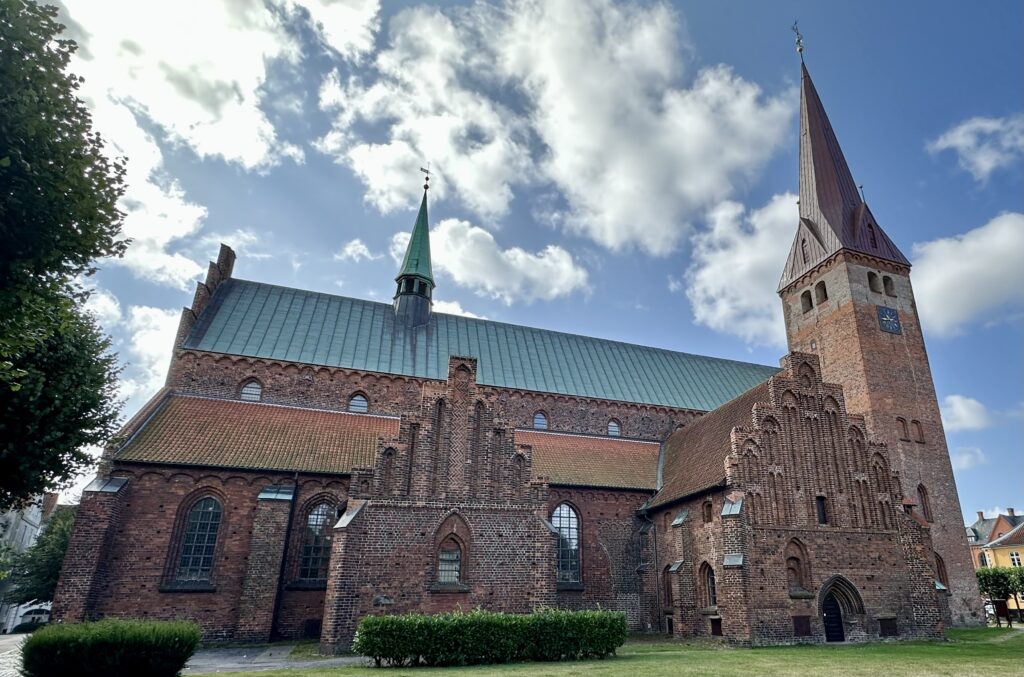
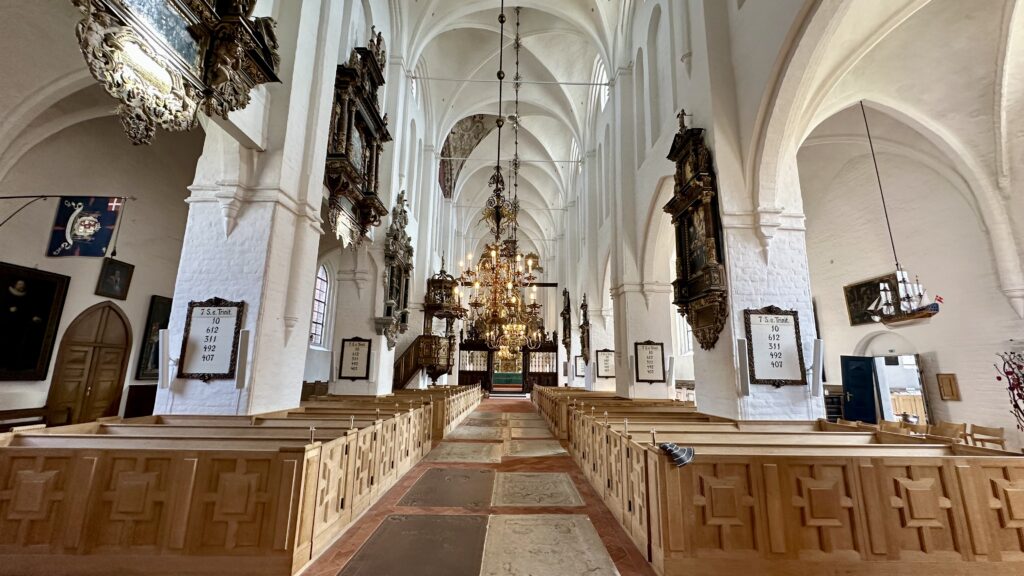
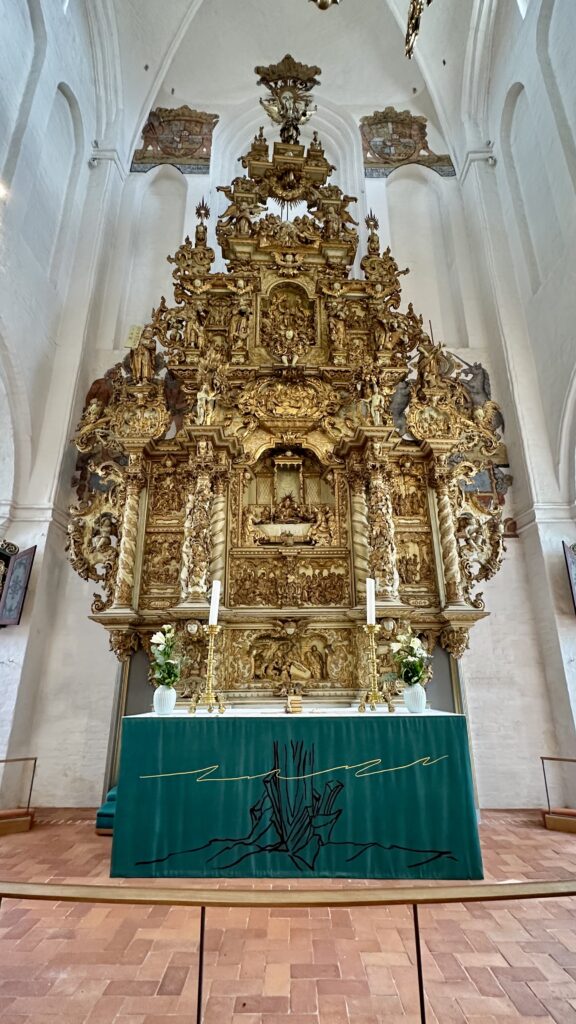
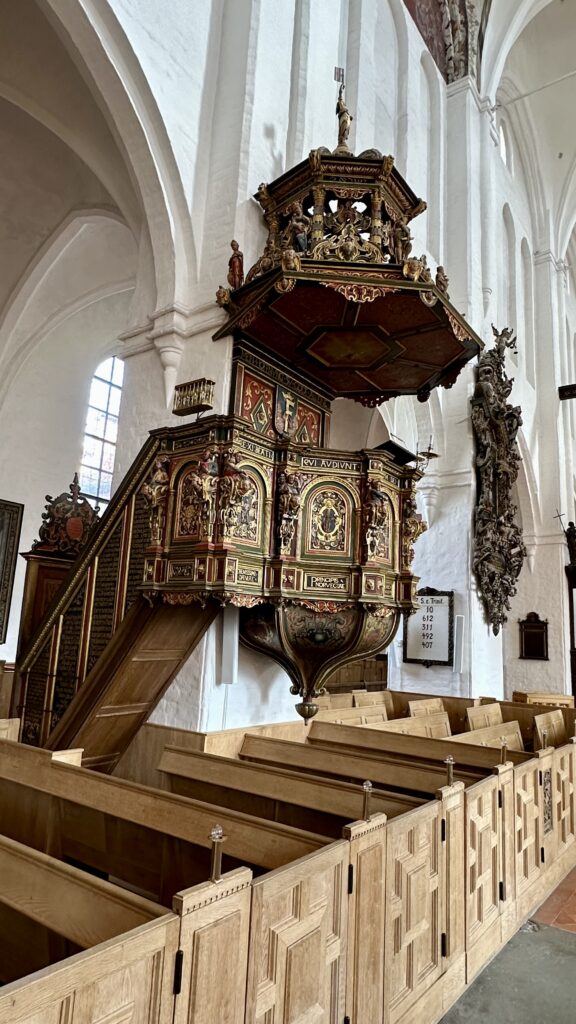
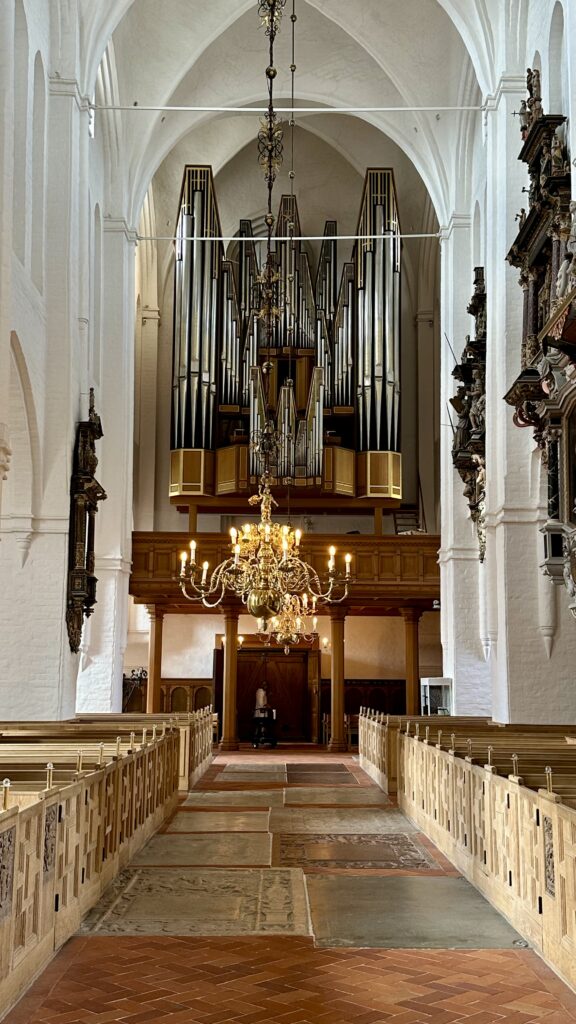
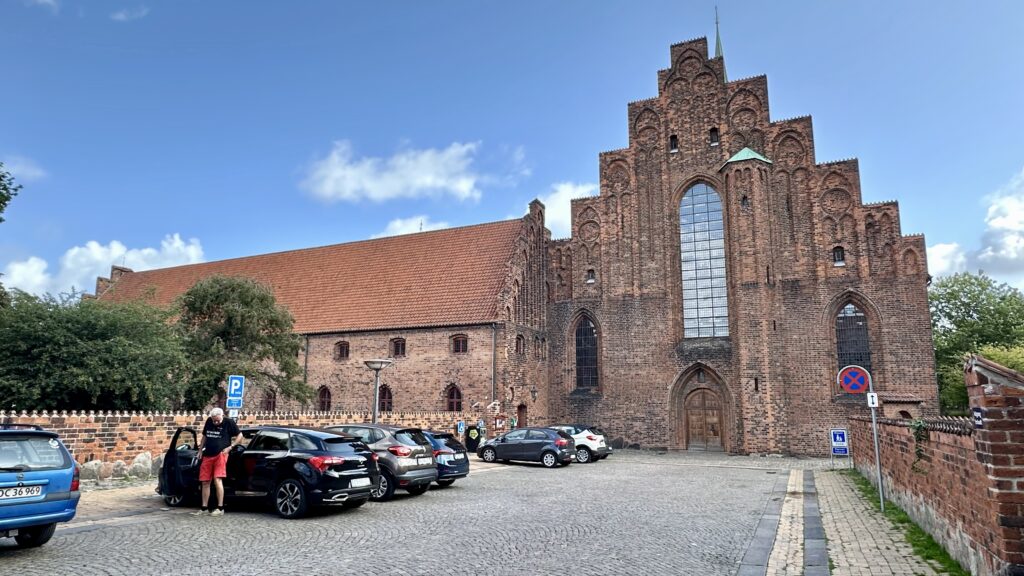
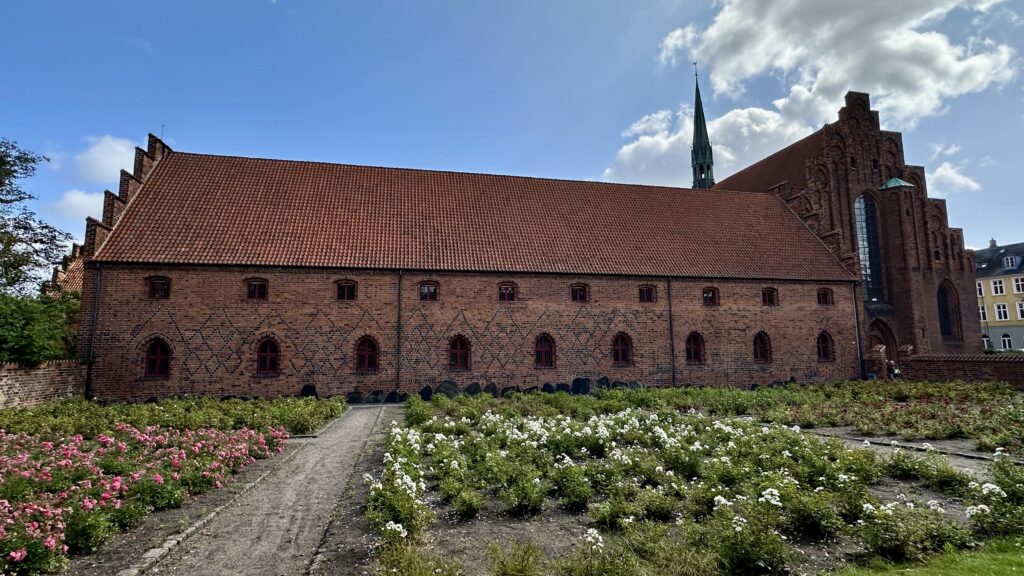
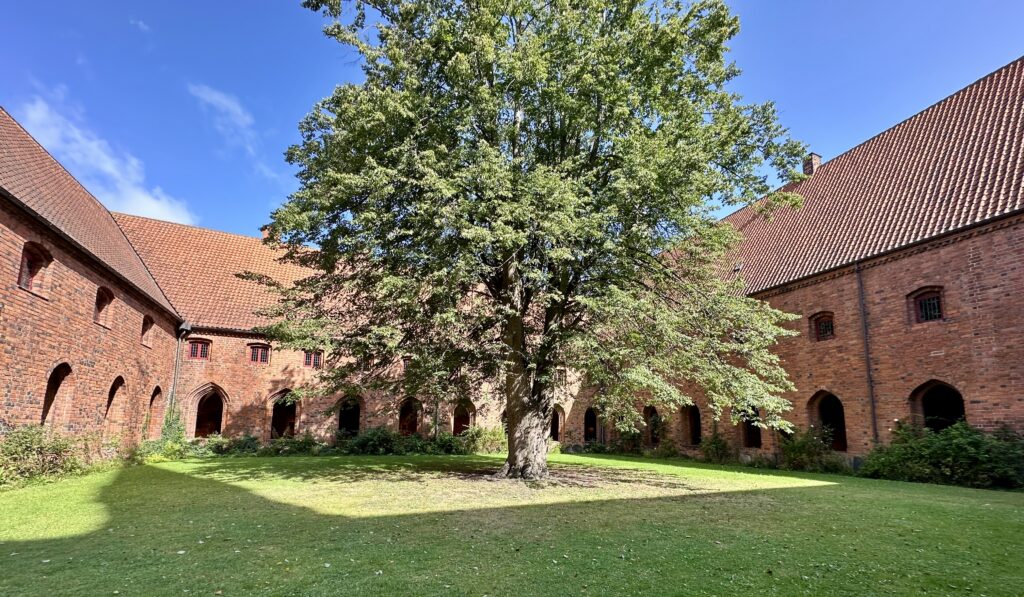
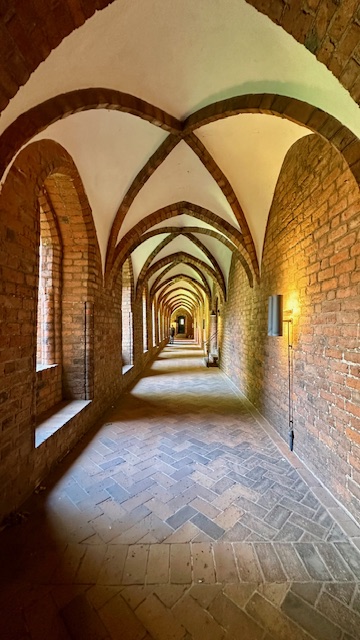
Saint Mary’s Church – This church which is housed within a 15th-century monastery, was within a few meters walking distance from Saint Olaf church. The church was closed on the day we visited but the beautifully maintained church cloisters were open for visiting.
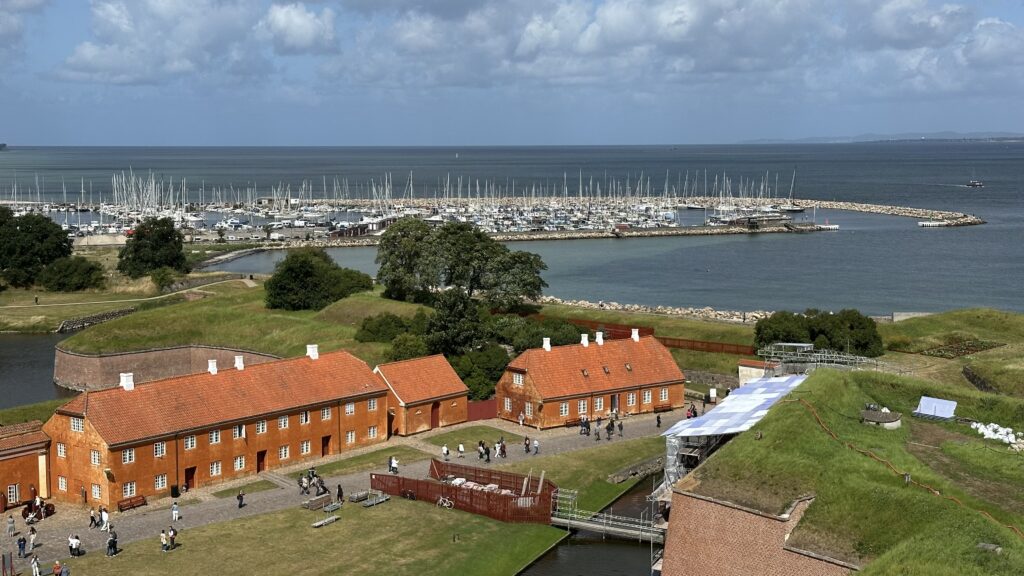
Kronborg Castle – Listed as a UNESCO World Heritage Site since 2000, this castle dates back to 1420 when Eric of Pomerania built Krogen, a fortress that was to control the entrance to Øresund and collect the lucrative Sound dues from ships traversing the Baltic Sea. Between 1574 and 1585, Frederik II had the fortress redesigned into a Renaissance castle with fortifications, royal apartments, a chapel, and casemates. From 1785 until 1923, the castle was used by the military, and not until then it was thoroughly restored and returned to the greatness of Frederik II and Christian IV.
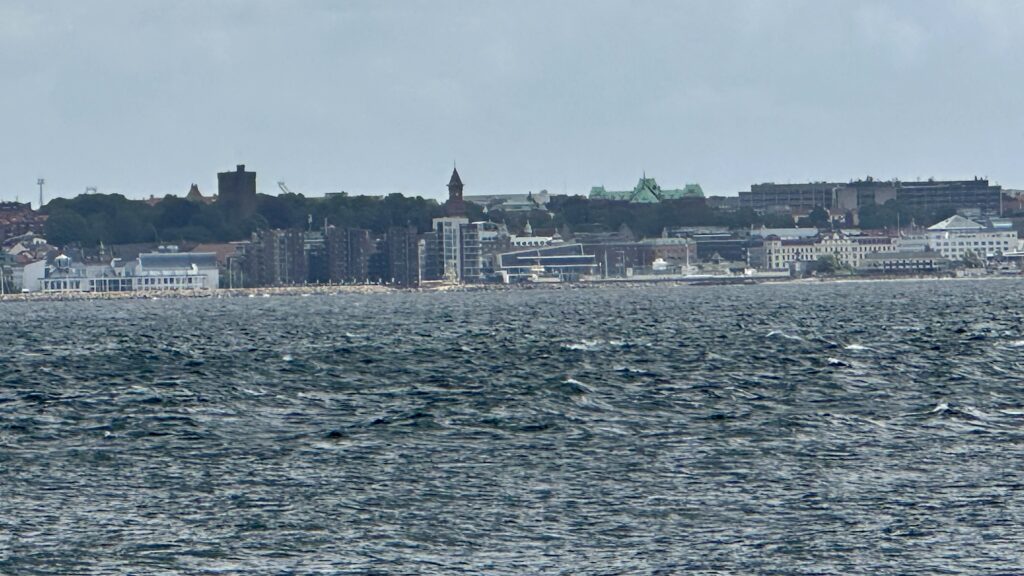
The castle is situated on the extreme northeastern tip of the island of Zealand at the narrowest point of the Sound (Øresund), facing its Swedish sister, Helsingborg that we can clearly see on the other side. The castle was also known as the Hamlet Castle because it served as the setting for Shakespeare’s play Hamlet. In the play, the castle is referred to as Elsinore, the English name for Helsingør.
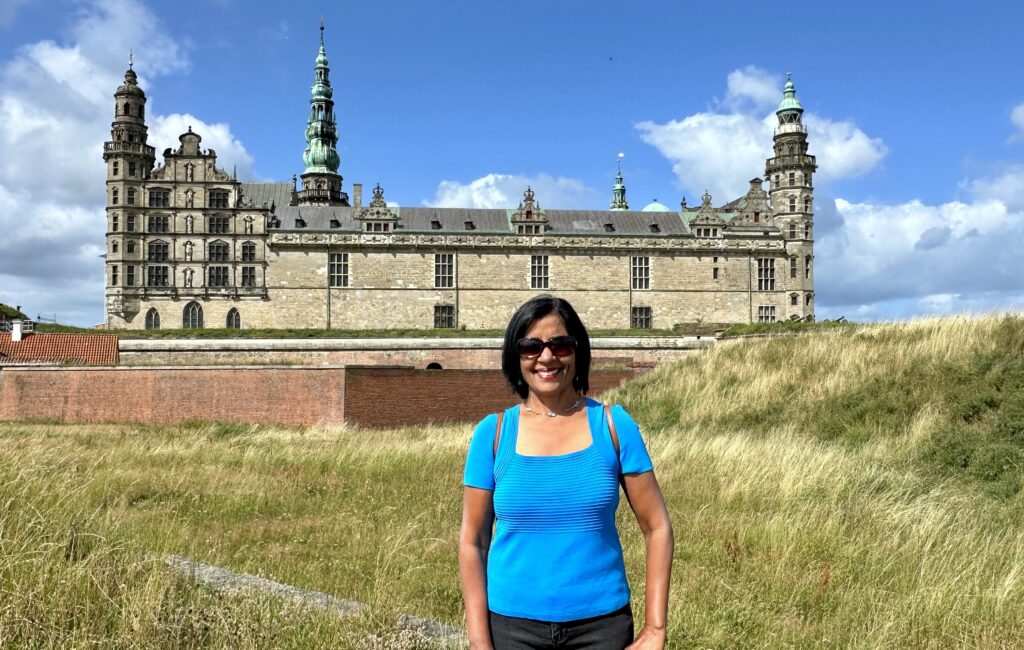
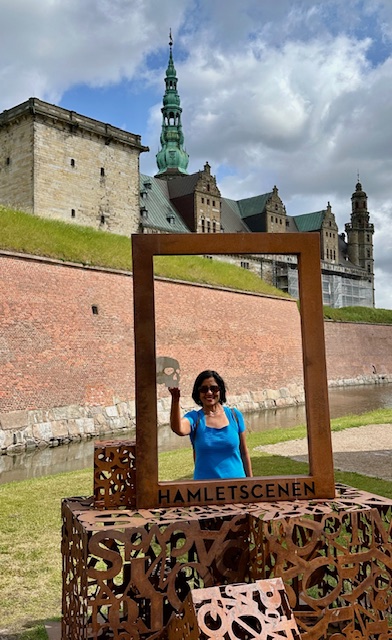
Kronborg Castle, Fortifications – The castle is surrounded by a star-shaped outer fortification called the Crownwork, along with ramparts, moats, and bridges. The Cannon Tower, a part of the fortifications, offers views of the surrounding area.
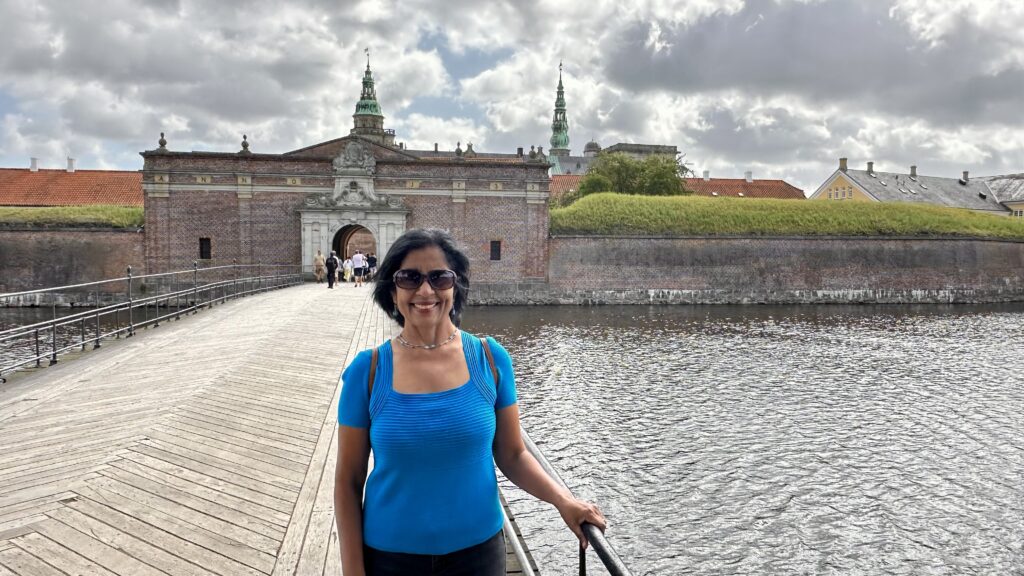
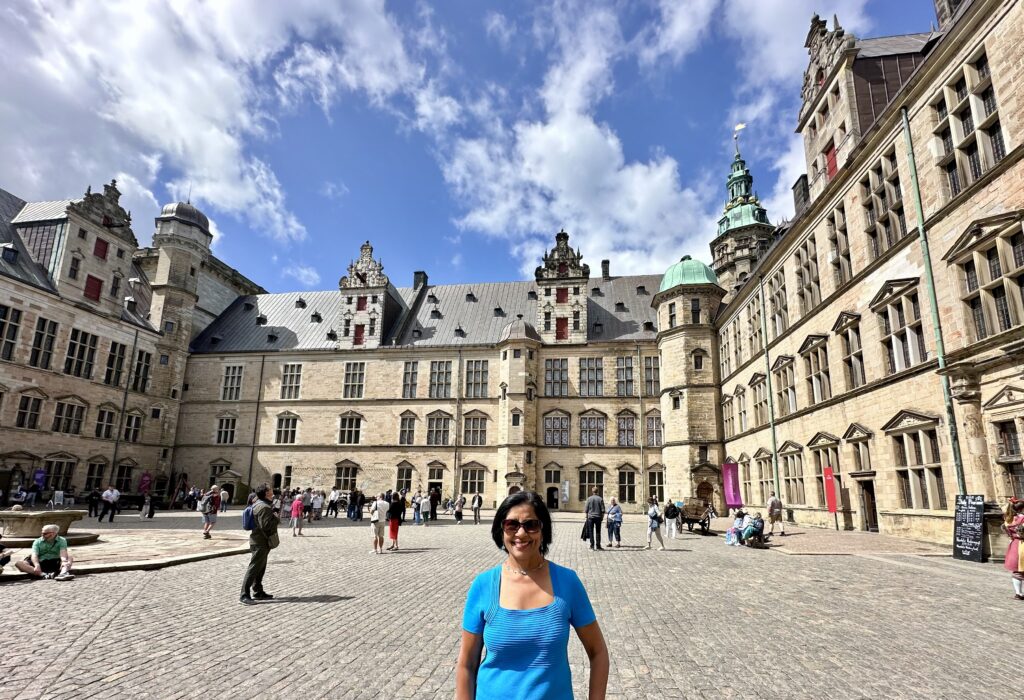
Kronborg Castle, Courtyard – The interior courtyard is a classic example of Danish Renaissance architecture, featuring arcades, galleries, and decorated sandstone windows.
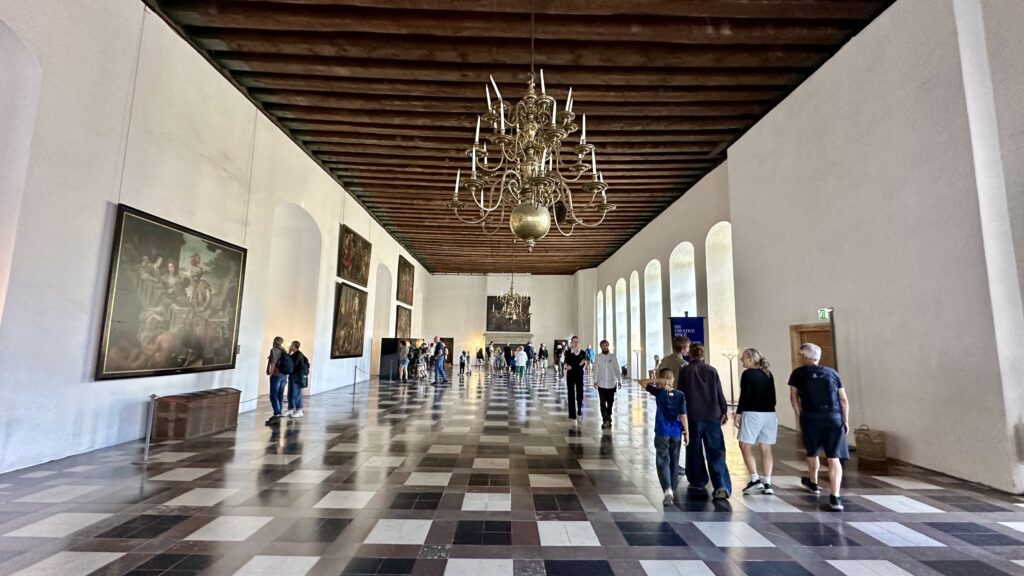
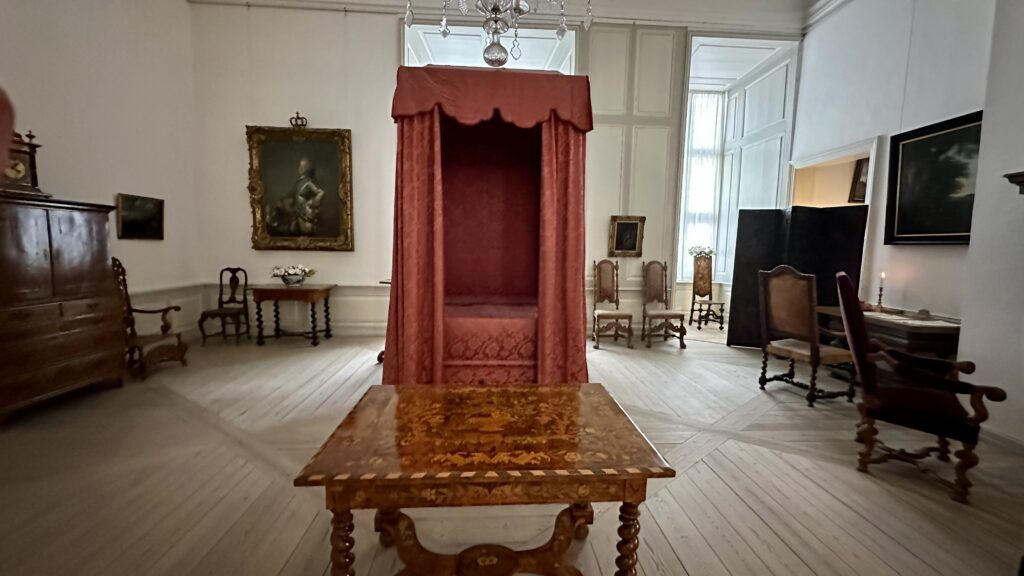
Kronborg Castle, Royal Apartments – These include the Royal Ballroom, Bedrooms and Tapestries Room. The ballroom is particularly notable for its size and historical significance.
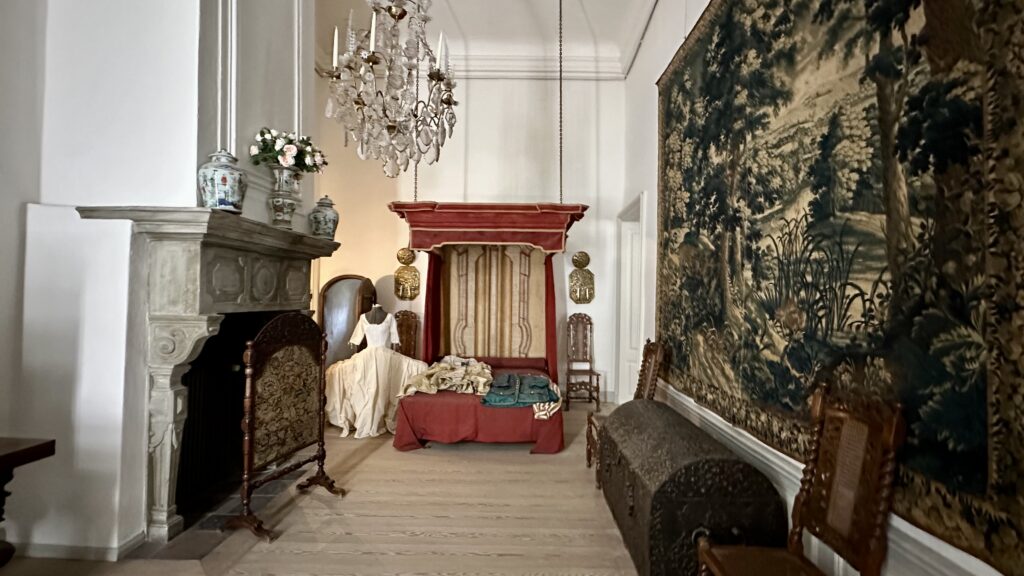
The tapestries are known as Kronborg Tapestries. They were part of a grand series of 43 tapestries commissioned by Frederik II to adorn the Great Hall during lavish feasts. Here are pictures of 3/15 that have survived.
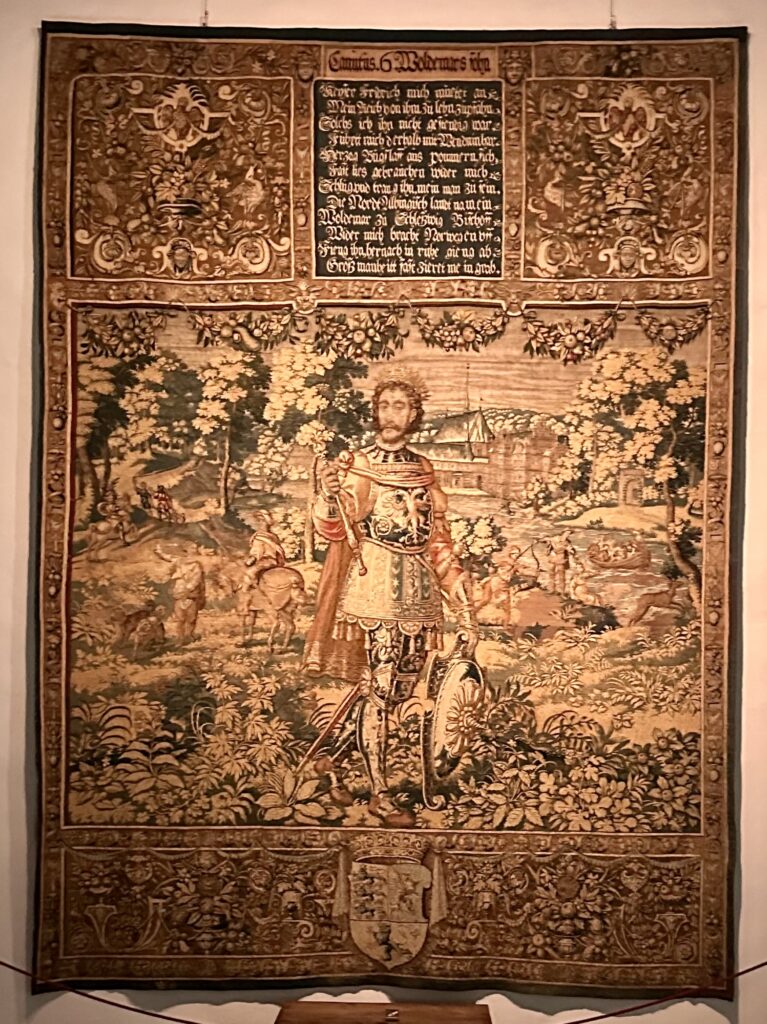
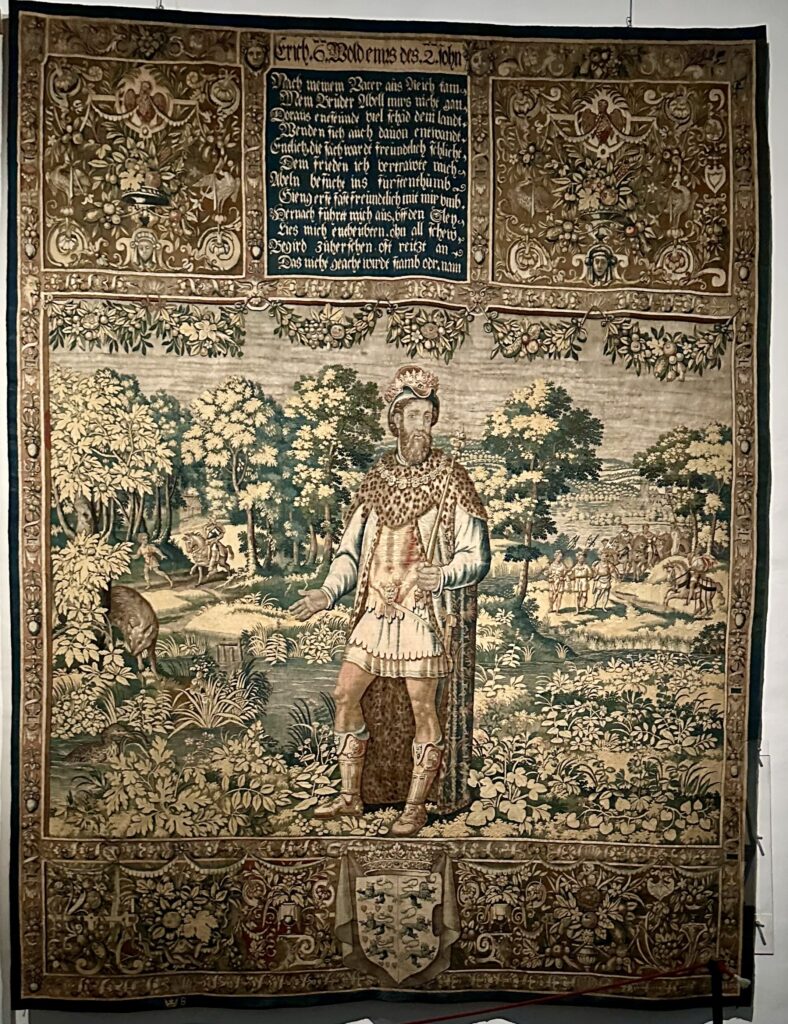

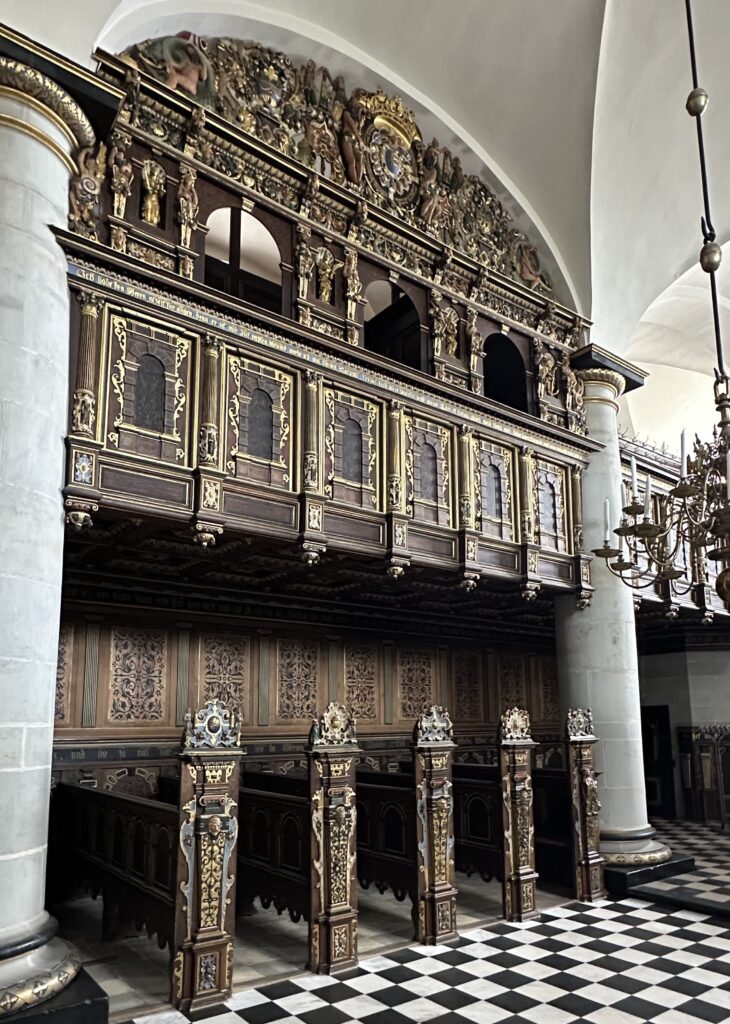
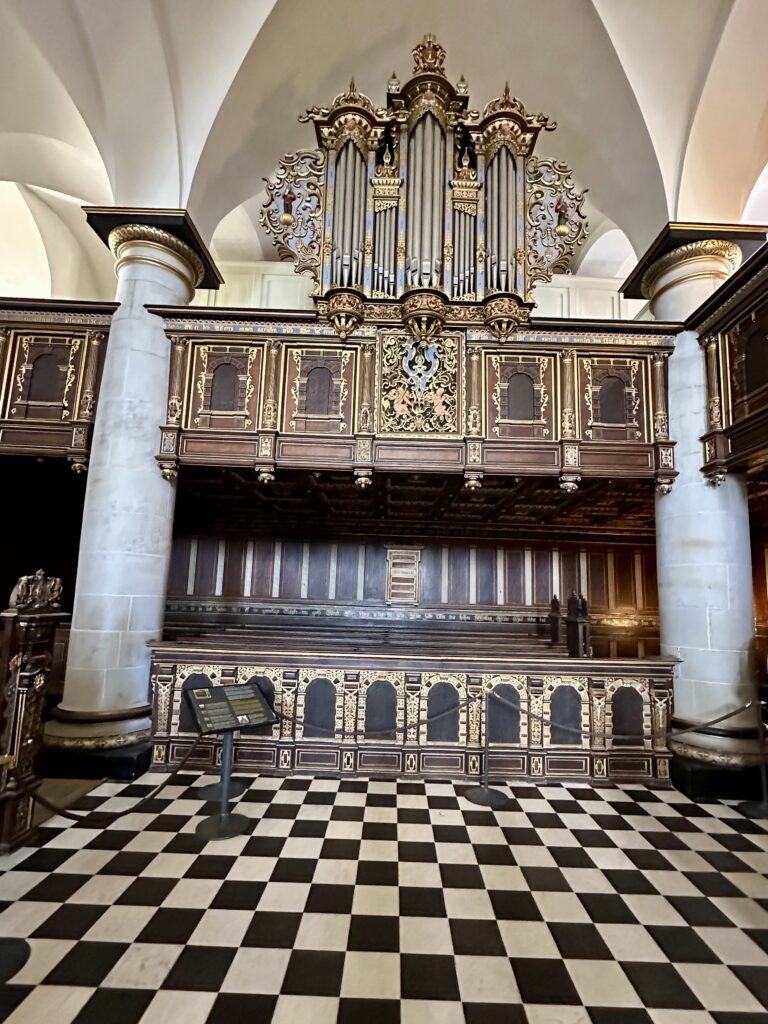
Kronborg Castle, King’s Chapel – Built in 1582, the chapel is an example of Dutch-Flemish Renaissance architecture, with white walls, vaulted ceilings and black and white tiled floor, elaborately carved altar and pews, gilt chandeliers, stunning woodwork, and pipe organ.
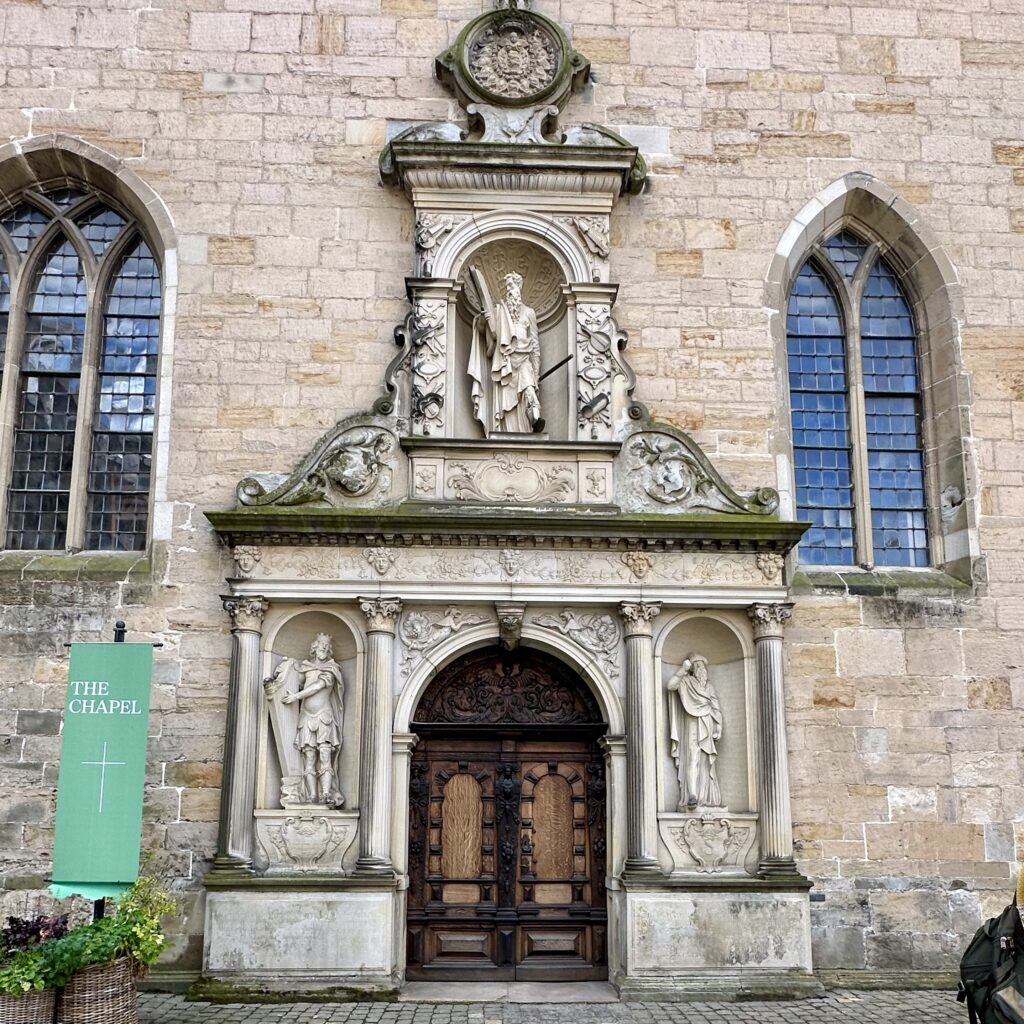
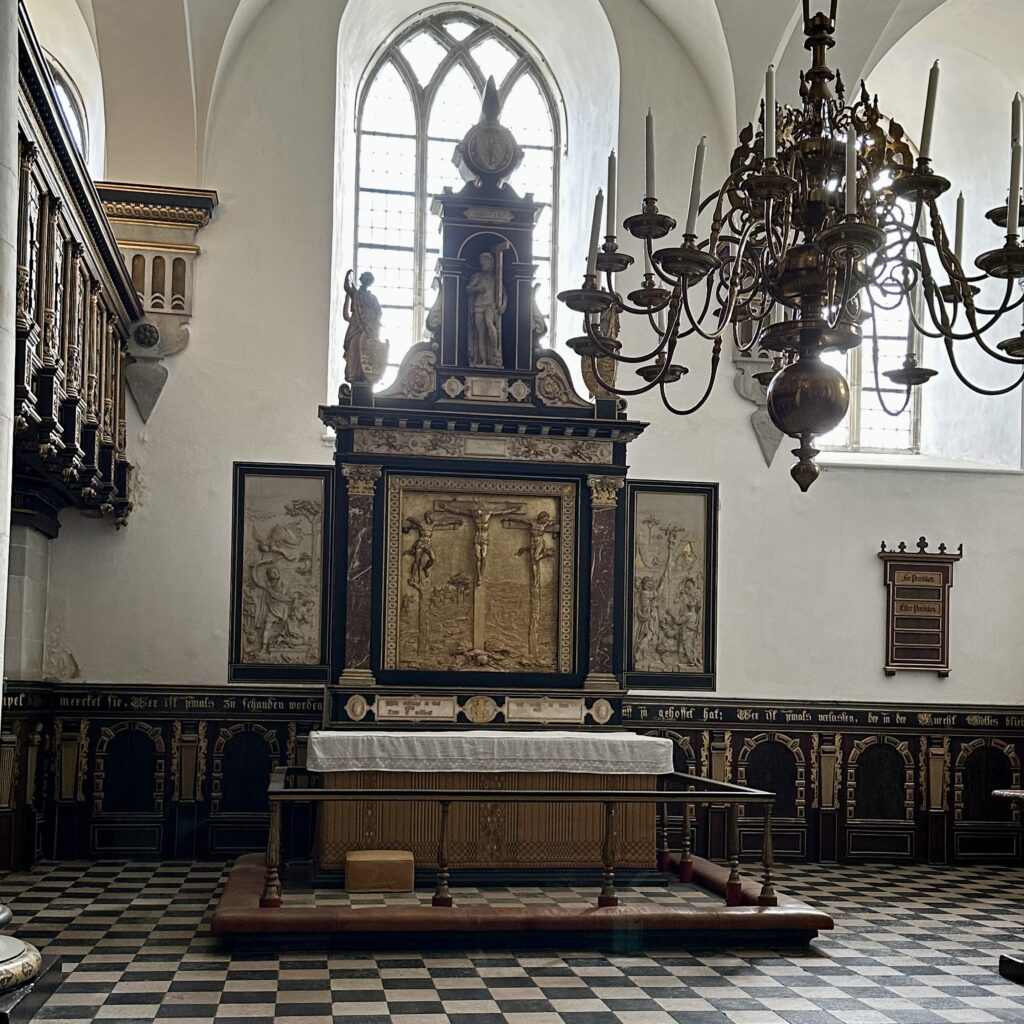
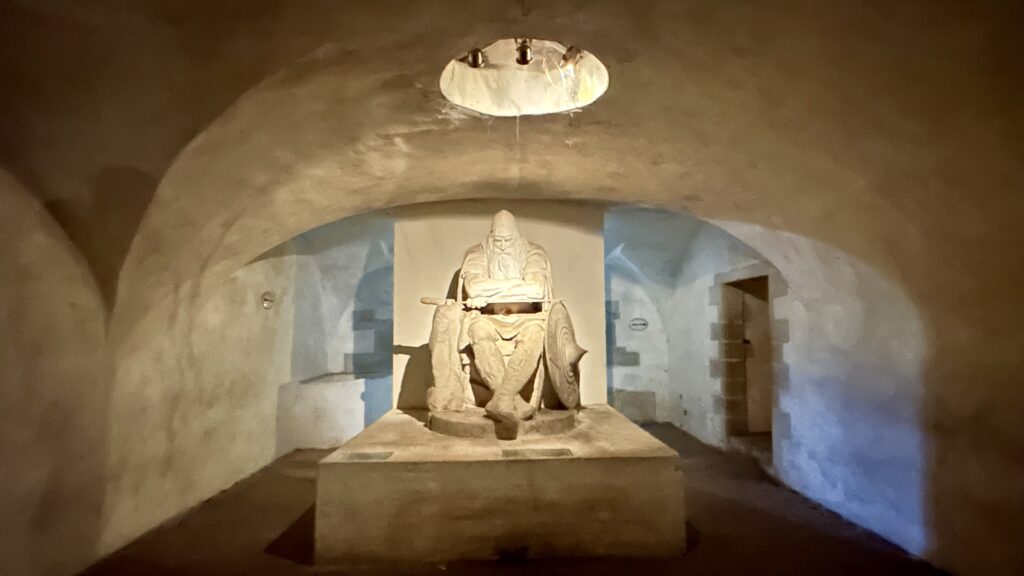
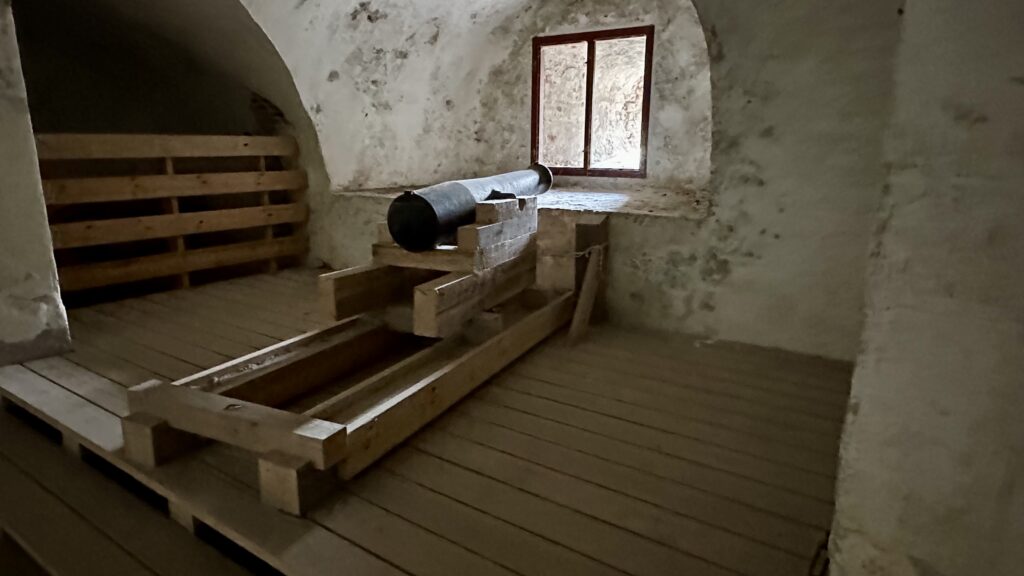
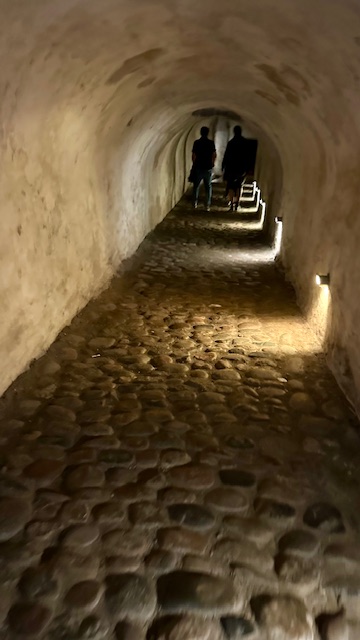
Kronborg Castle, Casemates – These are underground chambers that served as shelters for soldiers, cannons, and supplies during wartime, and once included a drill hall. While exploring these dark passages you come upon the statue of Holger the Dane. Holger is a national hero who has slept for hundreds of years. According to an old legend, “Holger Danske” will wake up the day Denmark is threatened by enemies. Only then will his eyes open. He will get to his feet and raise his sword.
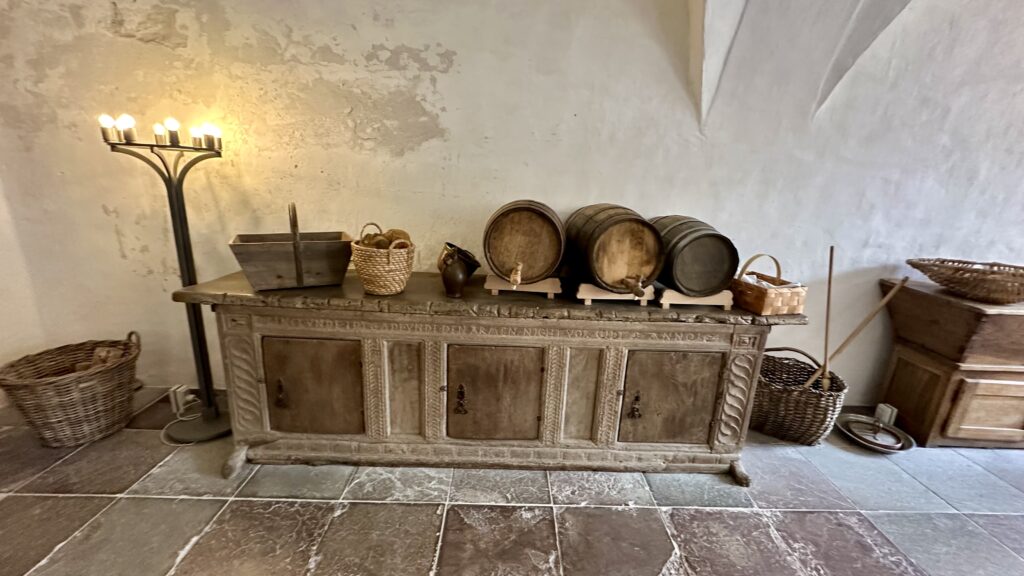
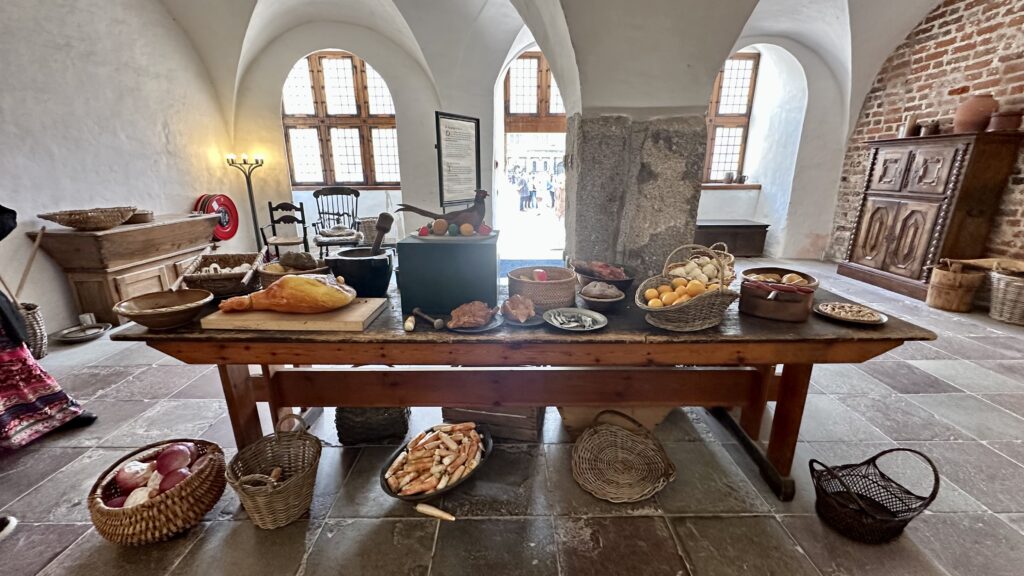
Kronborg Castle, Kitchens – Kronborg Castle has four kitchens, including one dedicated to the King, one to the Queen, one for soldiers and staff, and one for fried foods.
Kronborg Castle, Cannon Tower – The castle’s towers and spires, including the Cannon Tower, add to the castle’s imposing presence and offer views. To reach the top of the Cannon Tower you’ll need to climb 145 steps on a narrow, winding staircase. This tower is one of the highest points in the castle, offering views of the surrounding area, the courtyard below, and even Sweden on a clear day.
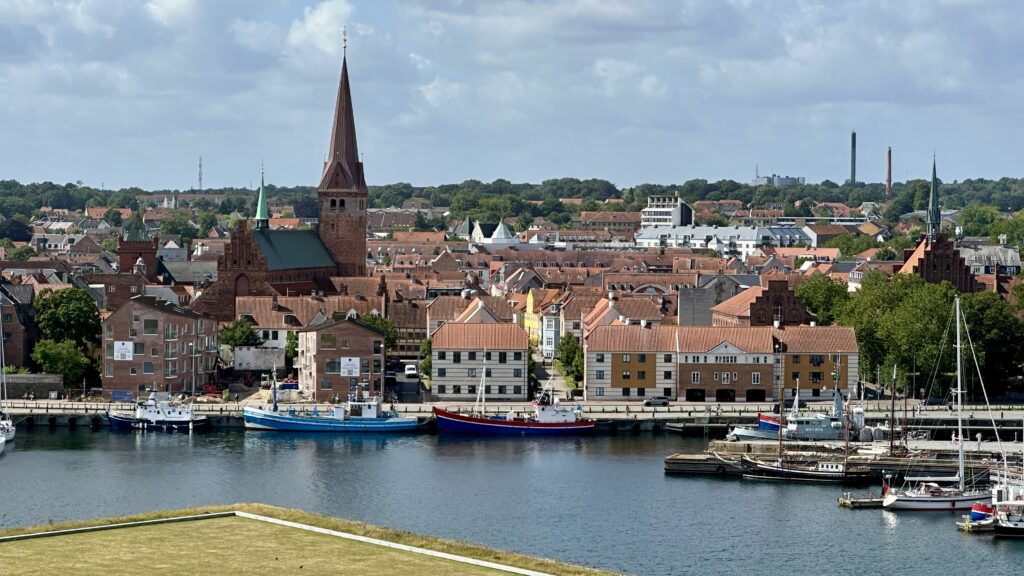

Helsingør’s Sculptures – Helsingør boasts a variety of captivating public sculptures, making it a treat for art enthusiasts and casual strollers alike. Many of the sculptures are located in or around the old shipyard area, close to Kronborg Castle.
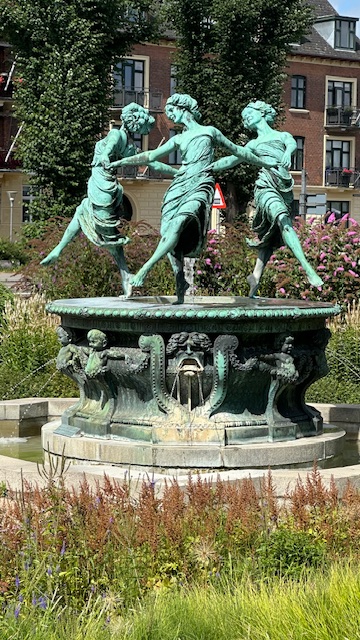
Helsingør’s Sculptures, Dancer’s Fountain (Danserindebronden) – The sculpture portrays three ballerinas Elna Lauesgaard, Emilie Smith and Grethe Detlevsen. It was installed originally in 1913 in King’s Garden in Copenhagen. In 1933, the monument was moved to Helsingør.

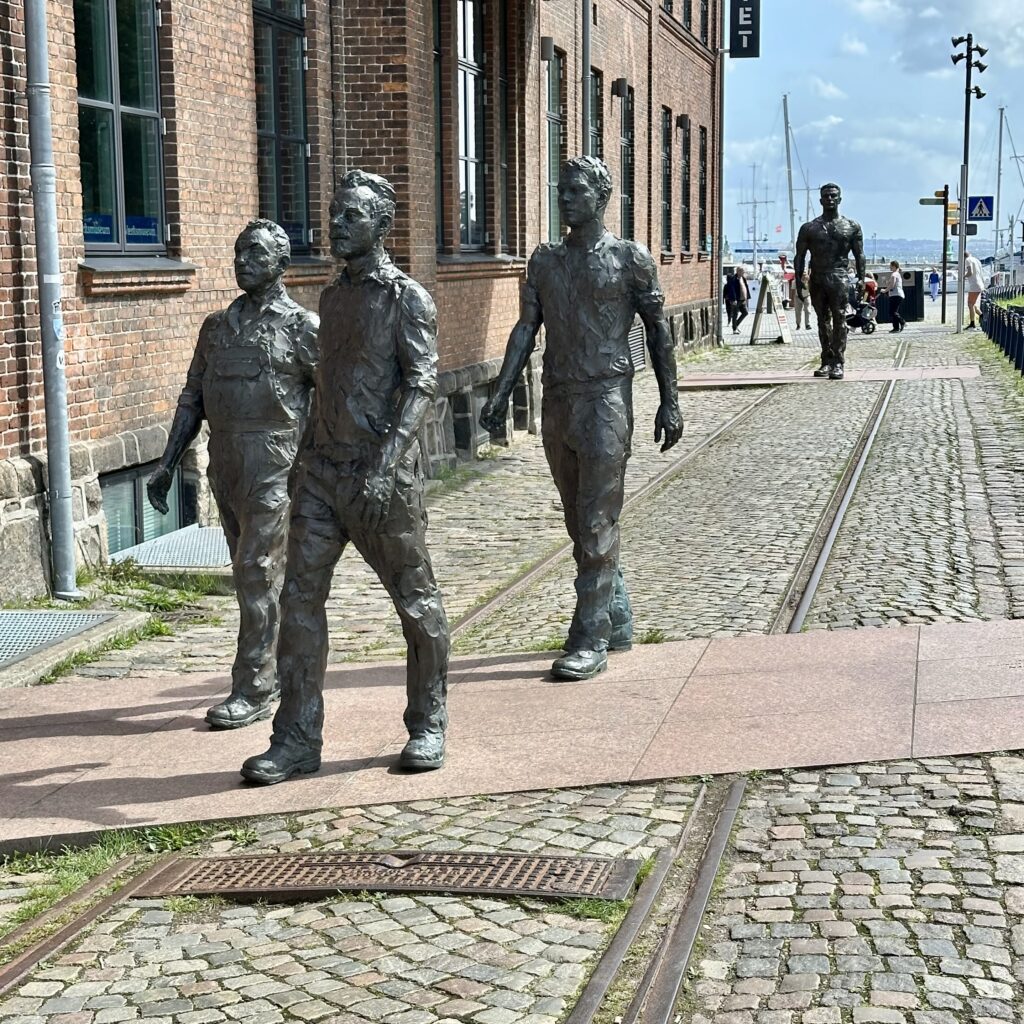
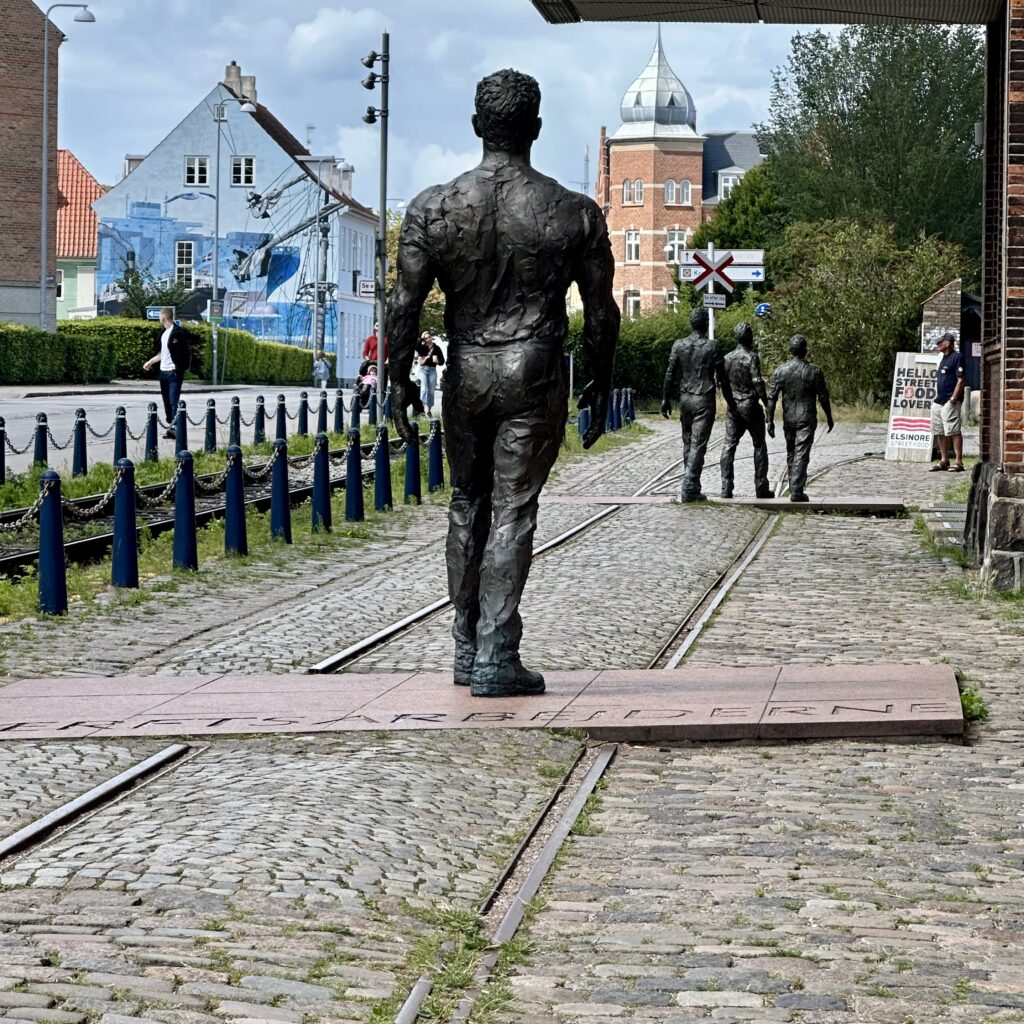
Helsingør’s Sculptures, The Shipyard Workers – This popular monument was created by Hans Pauli Olsen as a tribute to the shipyard workers and the industry that helped build the city. It depicts The Shipyard Workers walking home after a long day’s work.
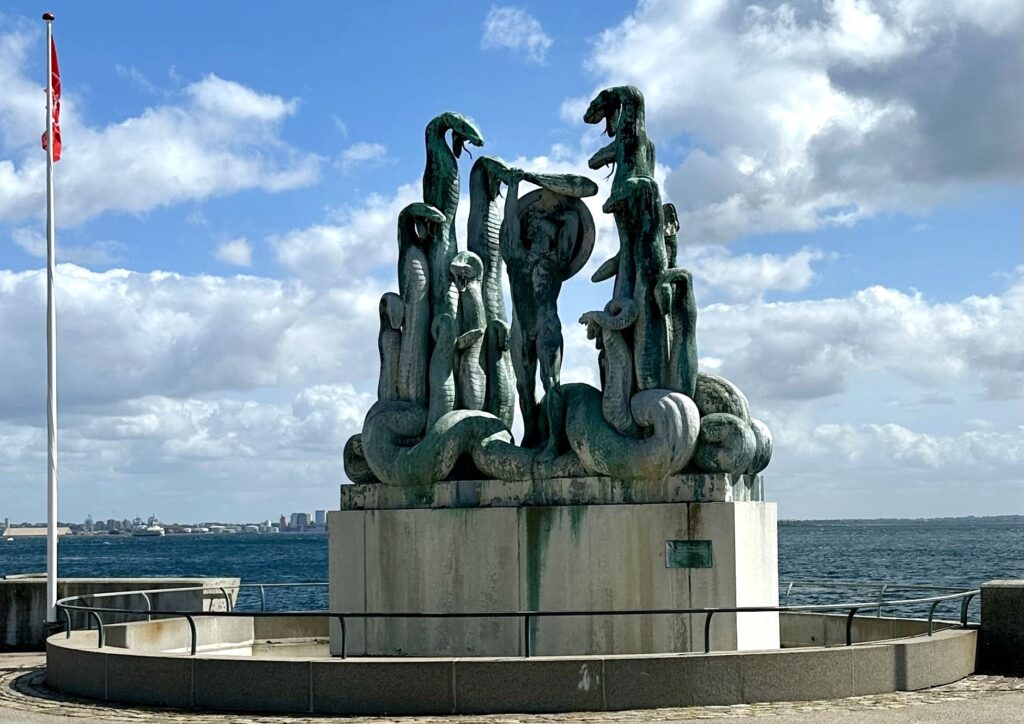
Helsingør’s Sculptures, Heracles and the Hydra – This is apparently one of the most impressive works of art relative to the divine Greek hero, Heracles (or Hercules) created by Danish sculptor, Rudolph Tegner. Completed in 1919 it depicts Heracles fighting against the dreaded Lernaean Hydra, which was the second labor tasked to the mythological strongman.
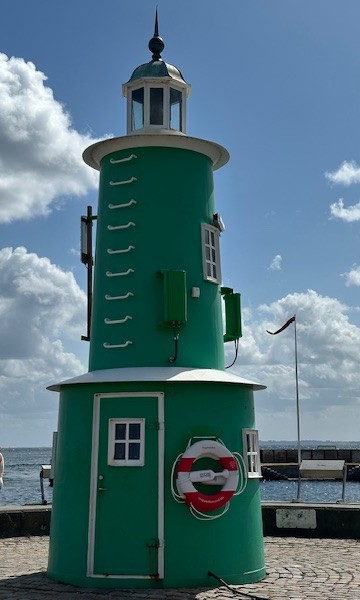
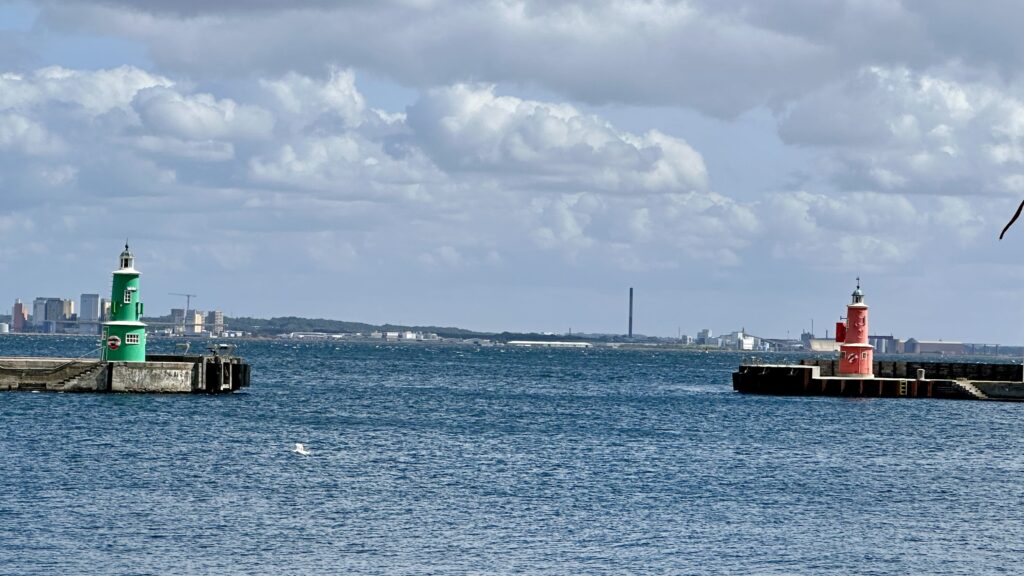
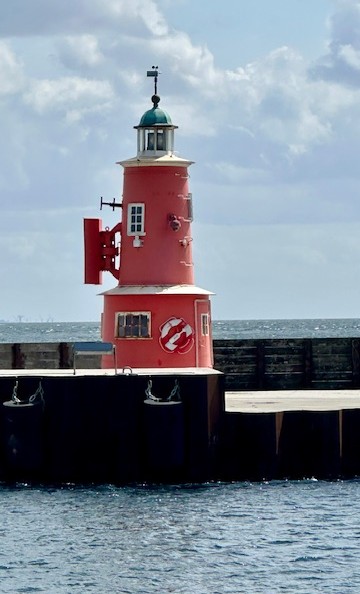
Helsingør’s Colorful Lighthouses – there are 2 prominent lighthouses located at the harbor entrance – a green lighthouse at the end of north mole and a red lighthouse at the end of the south pier. Both lighthouses guide ships entering and exiting the harbor.