Visited in 2005
Located on the northeastern coast of Mexico’s Yucatán Peninsula, Cancún is one of the country’s most famous beach destinations and the largest city in the state of Quintana Roo. Overlooking the turquoise waters of the Caribbean Sea, it serves as the gateway to the Riviera Maya and is renowned for its white-sand beaches, luxury resorts, vibrant nightlife, and excellent snorkeling and diving opportunities.
- Hotel Zone
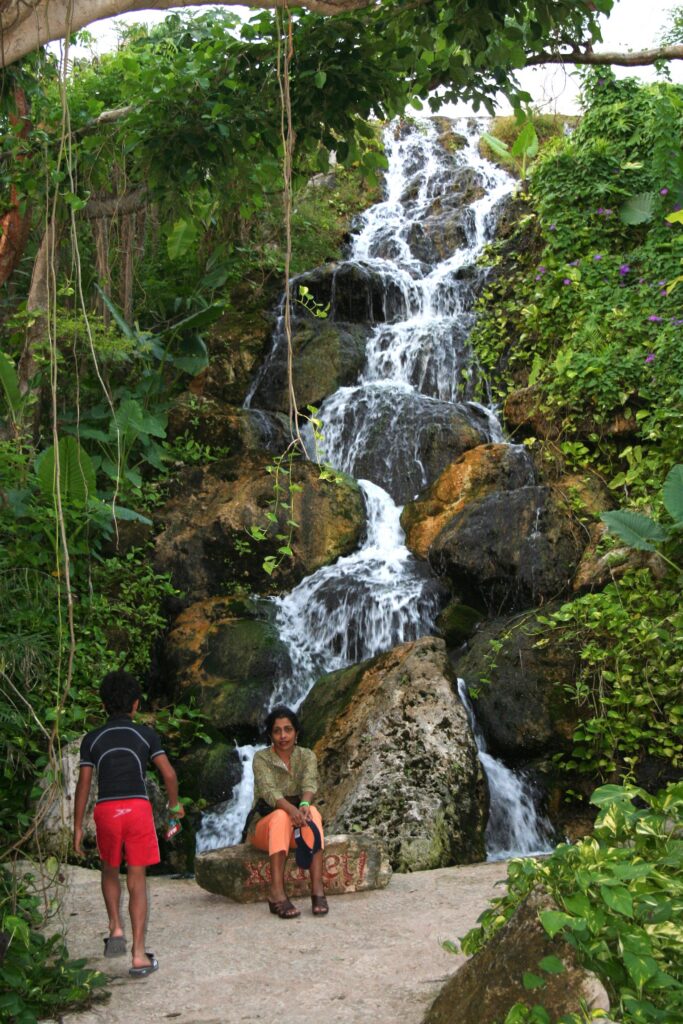
- XCaret Park
- Cobá Archaeological Zone
Hotel Zone – Originally developed as a planned tourist destination in the early 1970s, Cancún has grown into one of Mexico’s premier vacation spots. Its iconic Hotel Zone, a narrow strip of land lined with beachfront resorts, restaurants, shopping centers, and entertainment venues, attracts millions of visitors each year. Beyond its beaches, Cancún is also an ideal base for exploring nearby Mayan archaeological sites, cenotes, and the natural wonders of the Yucatán Peninsula.
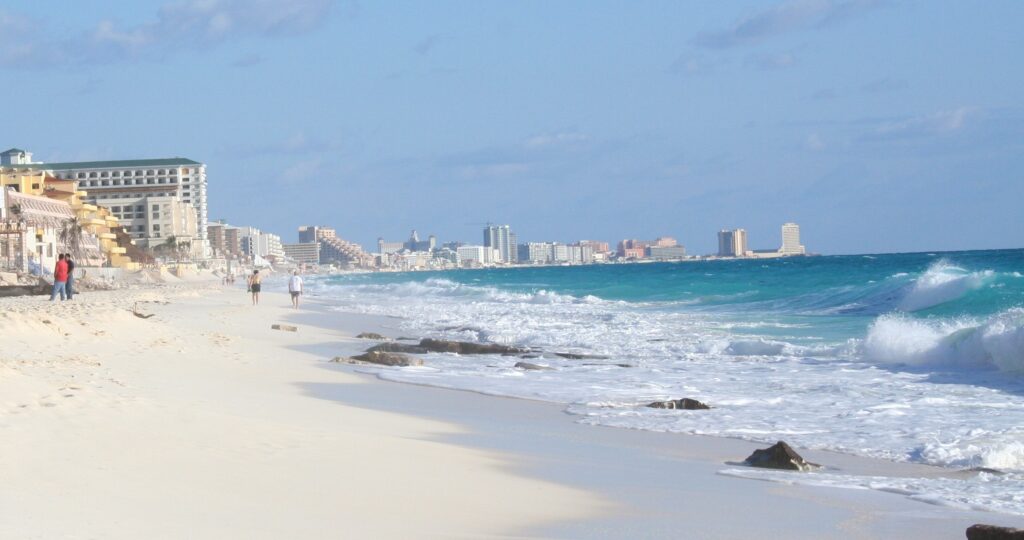
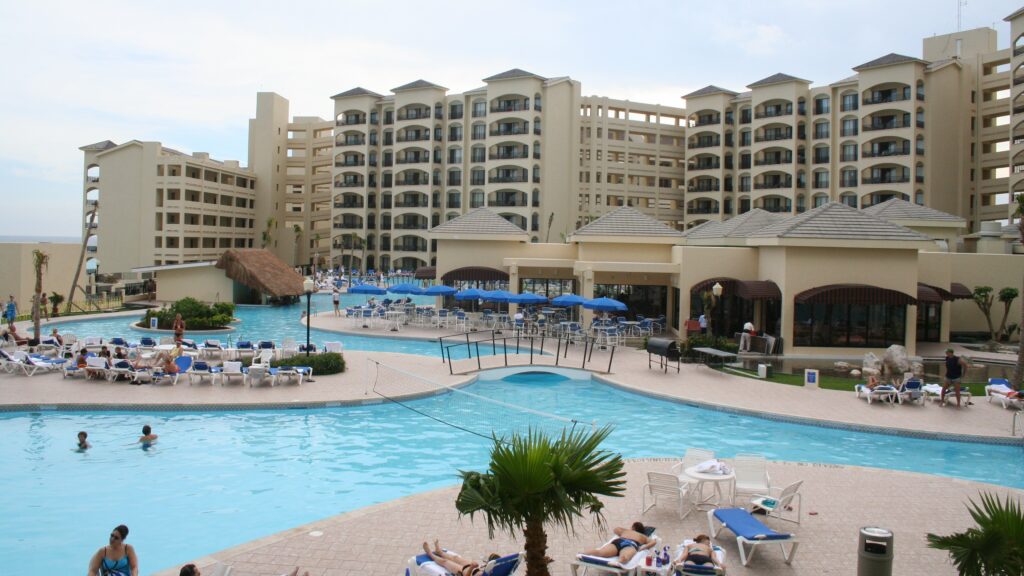
During our visit, we stayed at The Royal Caribbean in Cancún’s Hotel Zone, a beautiful beachfront resort with multiple swimming pools and the Caribbean Sea just steps away.
XCaret Park – Located along the Riviera Maya, about an hour south of Cancún, Xcaret Park is an eco-archaeological parks, blending natural beauty, wildlife, adventure, and Mexican culture into a full-day experience. Built around ancient Mayan ruins and underground rivers, the 200-acre park offers a unique combination of nature, history, and entertainment.
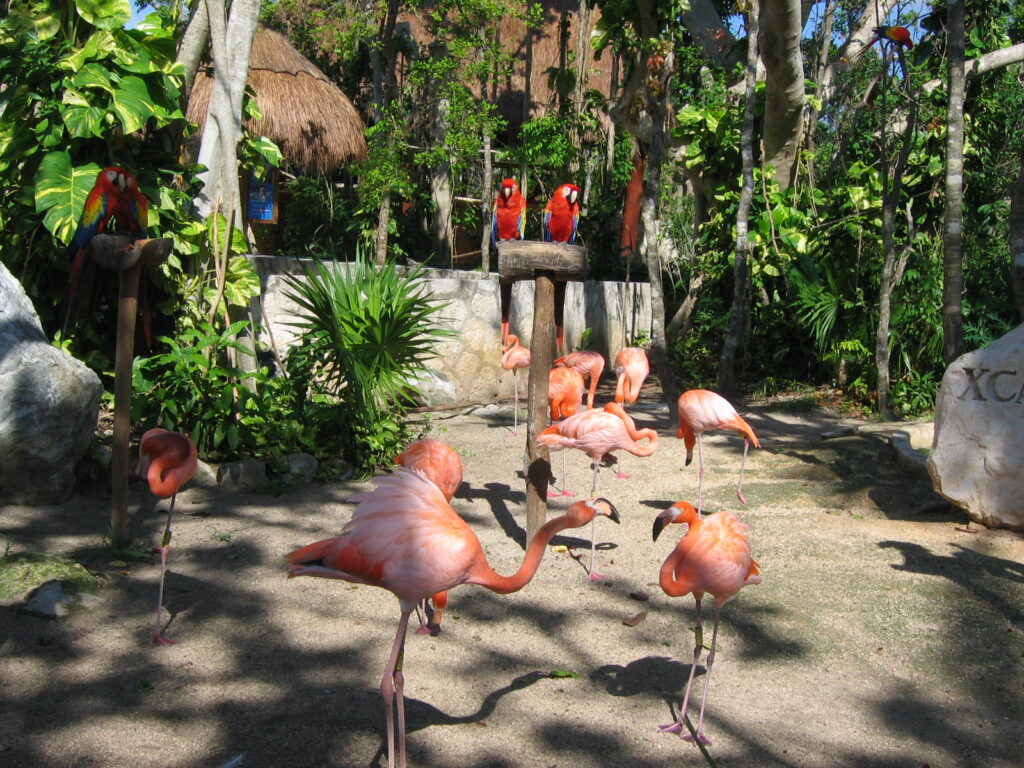
Visitors can swim or snorkel through crystal-clear underground rivers, relax on scenic beaches, explore the coral reef aquarium, and observe native wildlife including sea turtles, jaguars, and tropical birds. The park also showcases Mexico’s cultural heritage with traditional dance performances, an equestrian show, a recreated Mayan village, and exhibits highlighting local customs and history. The highlight of the day is the spectacular Xcaret México Espectacular evening show, where performers bring Mexico’s history, music, and folklore to life in a colorful and unforgettable production.
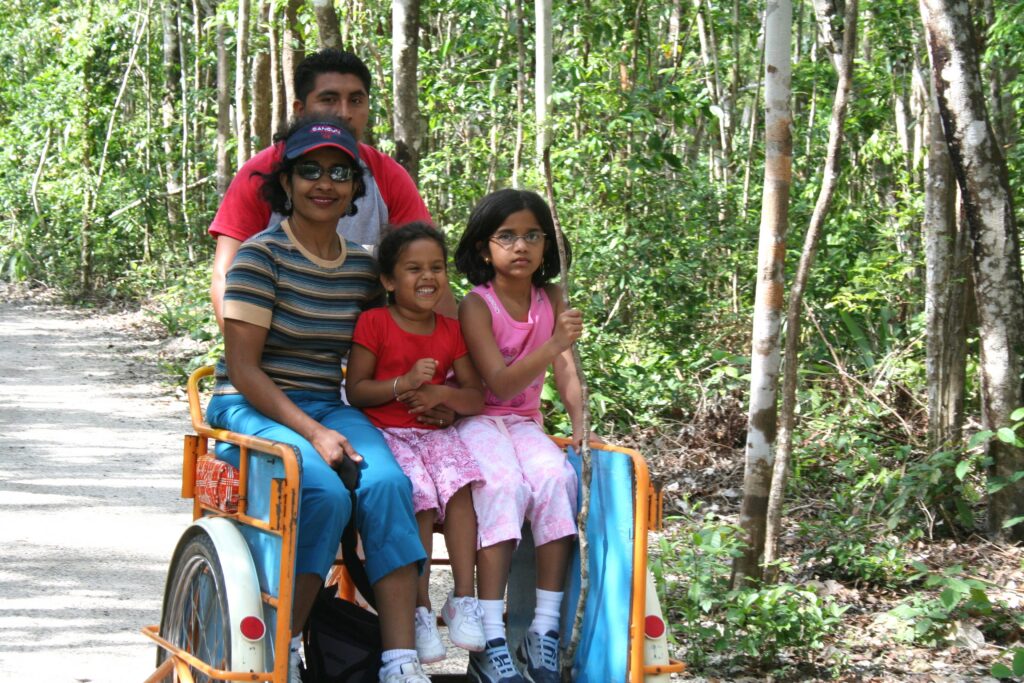
Cobá Archaeological Zone – Located about 135 km (84 miles) southwest of Cancún, Cobá is one of the largest ancient Maya cities in the Yucatán Peninsula. Hidden within the jungle, it flourished between 600 and 900 AD as an important trading and ceremonial center. Unlike more compact archaeological sites, Cobá is spread over a vast area, so visitors typically explore the ruins by bicycle or bicycle taxi.
———————————————–
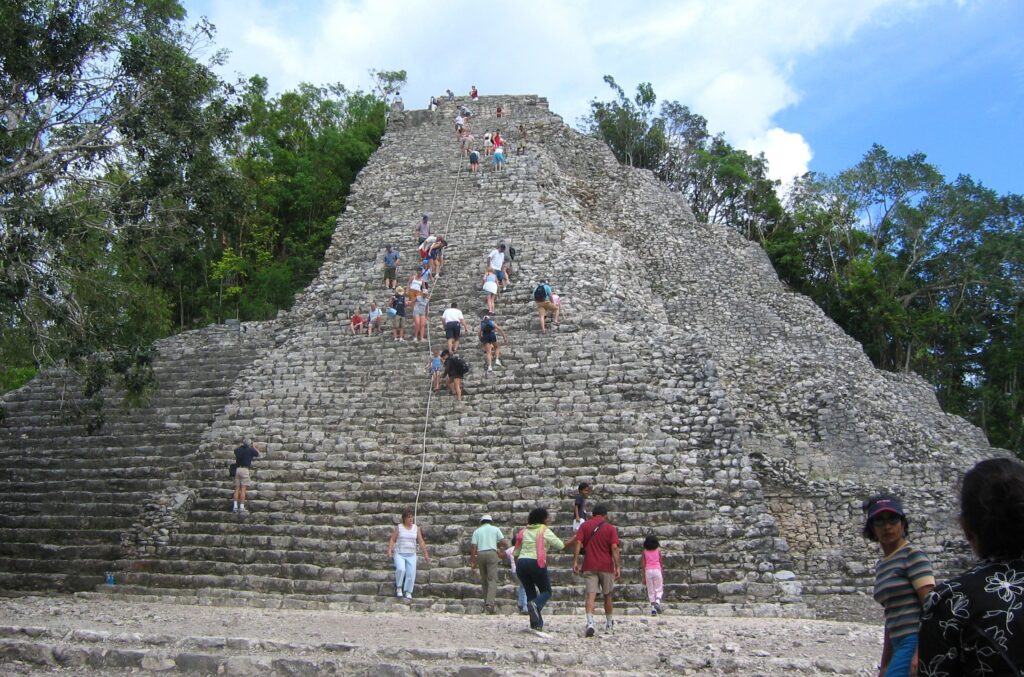
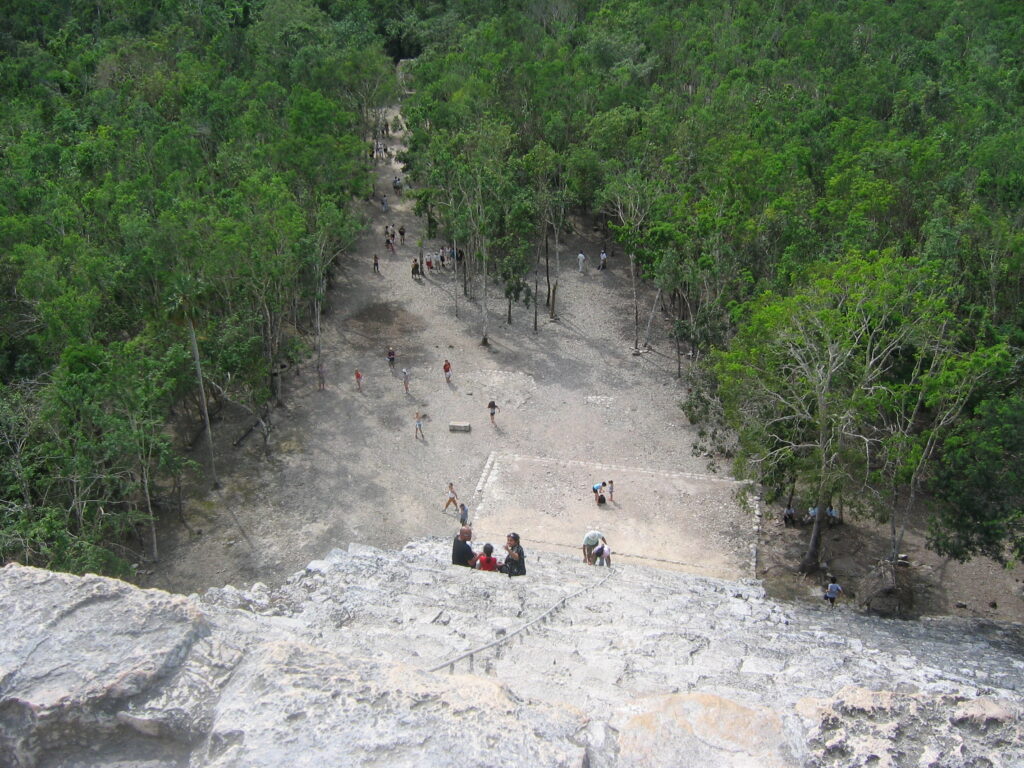
Ixmoja Pyramid (aka Nohoch Mul) – At 42m tall this is the the highest pyramid in the Coba. It’s also one of the few tall buildings in archaeological zones where visitors are allowed to climb to the top. We were allowed to climb in 2005, not sure if it is still allowed.
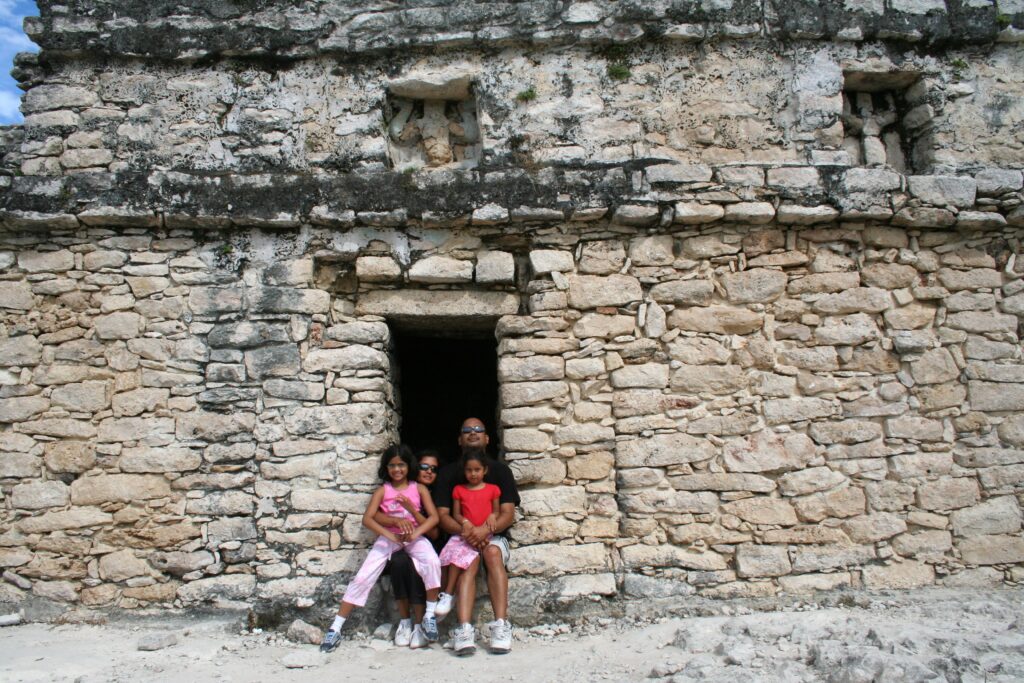
At the top of Nohoch Mul (Ixmoja) is a small temple featuring a carving of the mysterious Descending (or Diving) God, depicted upside down in a human-like form. This deity, also seen at Tulum and other Maya sites, is believed to be associated with the Maya Bee God and the importance of honey, trade, and fertility. Some scholars also link the figure to the planet Venus, which played a significant role in Maya astronomy, religion, and the timing of warfare.
———————————————–
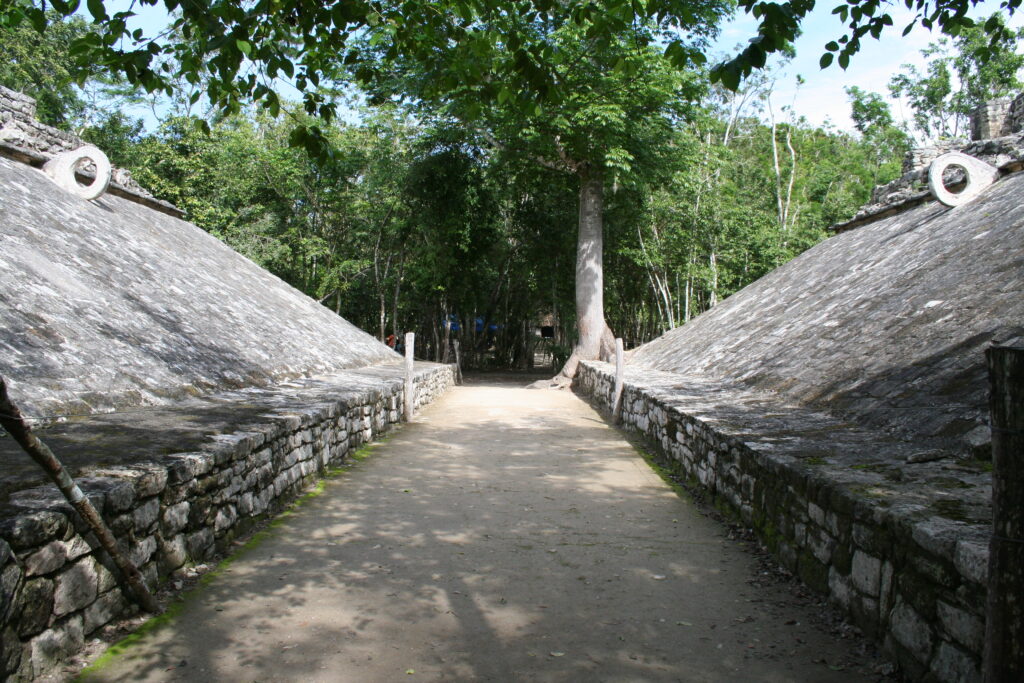
Mayan Ball Courts – Cobá has two ancient Mayan ball courts where players competed in the ceremonial Mesoamerican ball game using only their hips, knees, and elbows to strike a rubber ball. Stone rings mounted high on the side walls served as the goals, and sending the ball through one of these rings was an exceptionally rare and celebrated achievement. The courts highlight the importance of sport, ritual, and community in Maya civilization.
———————————————–
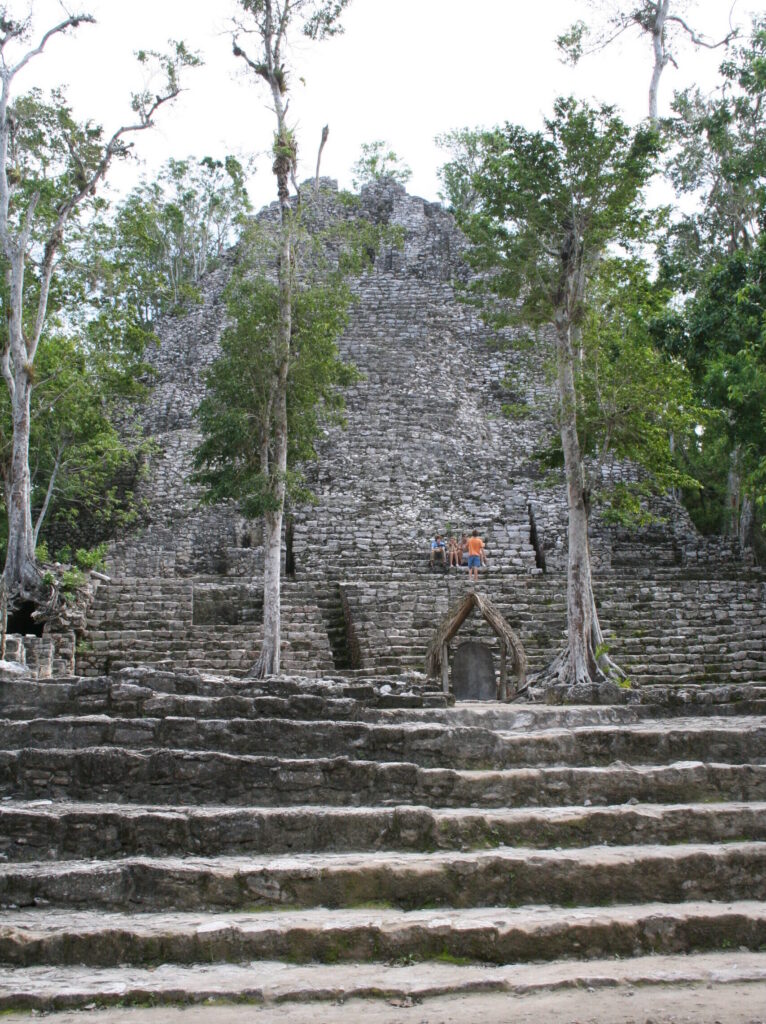
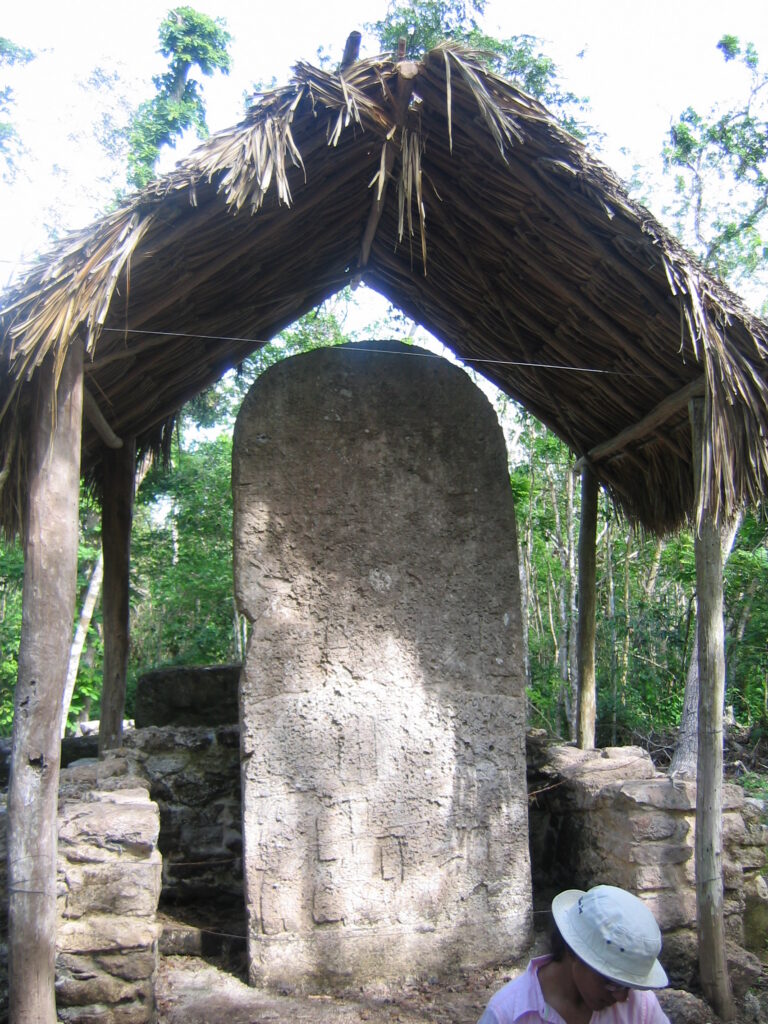
La Iglesia (The Church) – Standing 24 meters (79 feet) tall, La Iglesia is the second-highest pyramid at Cobá after Nohoch Mul. Located near the main entrance, this impressive nine-tiered pyramid with rounded corners was constructed over several phases beginning in the Early Classic period (300–600 CE), reflecting the city’s growth and architectural development. Located at the base of La Iglesia pyramid, Stela 11 is a carved stone monument that records important historical events and commemorates the Maya ruler Xaman K’awiil. Protected under a thatched palapa shelter, the stela contains well-preserved hieroglyphic inscriptions, including the date of Xaman K’awiil’s accession to power on March 14, 632 CE. A circular stone altar beside the stela continues to receive occasional modern offerings from visitors and local practitioners.
———————————————
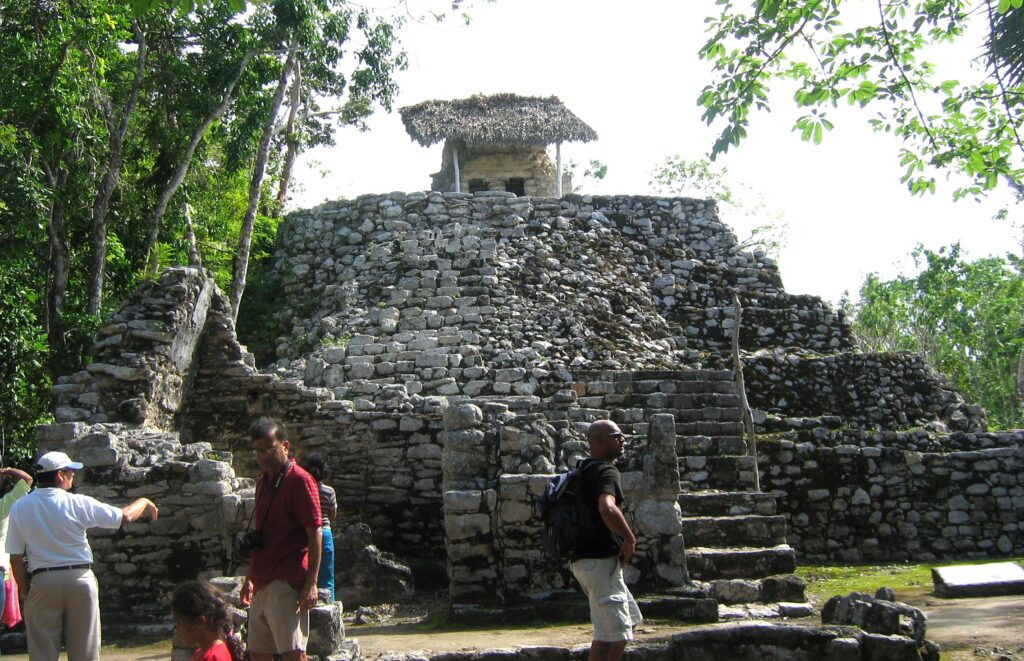
Templo Las Pinturas (Temple of Paintings) – Named for the colorful frescoes and paintings found inside, Templo Las Pinturas is a smaller Maya temple that reflects the later architectural traditions of the site. Built during the Postclassic period (1100–1450 AD), it sits atop a pyramid platform with a small temple structure at the summit, a common design feature in Maya ceremonial architecture. The temple was roped off to visitors to help preserve its fragile paintings and decorations.