Visited in 2014
Rome is at the top of every person’s list of cities to visit in their lifetime. The city offers thousands of years of history woven directly into everyday life—you can walk past ancient ruins on your way to dinner, step into a church that doubles as an art museum, and end the night in a lively square filled with locals. Most of Rome’s must-see sights are located in central Rome, making it easy to explore on foot. While walking is the best way to soak in the atmosphere, you can save time and energy by using the Rome metro, hopping on a bus, or taking a taxi when needed.
- St. Peter’s Basilica
- Vatican Museums & Sistine Chapel
- Colosseum
- Arch of Constantine
- Roman Forum
- Pantheon
- Spanish Steps
- Column of the Immaculate Conception
- Altar of the Fatherland
- Castel Sant’Angelo
- Piazza del Popolo
- Trevi Fountain
- Piazza Navona
- Obelisks in Rome
St. Peter’s Basilica – is one of the most important, famous and most visited church in the world, both architecturally and spiritually. Construction began in 1506 under Pope Julius II and took more than a century to complete, with the basilica finally consecrated in 1626. Built on the traditional site of St. Peter’s tomb, the church reflects the work of legendary artists and architects including Bramante, Michelangelo, and Bernini. The result is a monumental Renaissance masterpiece that symbolizes the power, faith, and artistic ambition of the Catholic Church.
The Basilica’s massive façade, designed by Carlo Maderno, is framed by towering columns and crowned with statues of Christ and the apostles, creating a powerful sense of scale and symmetry. The sweeping dome, engineered by Michelangelo, rises majestically above the skyline and can be seen from across Rome, signaling the spiritual heart of the Vatican.
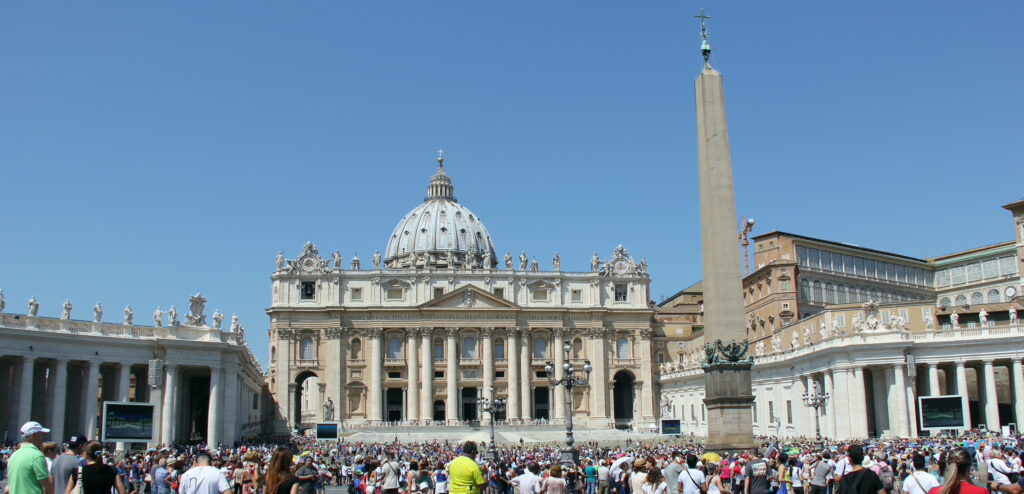
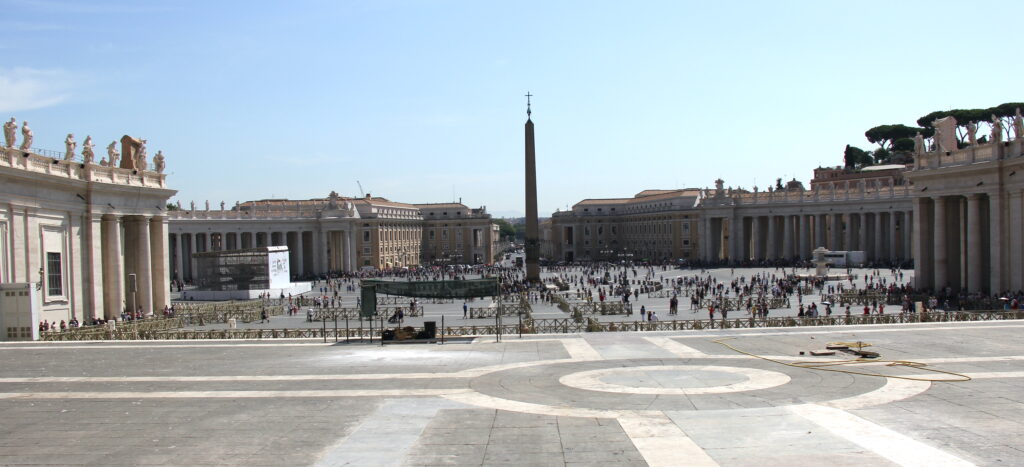
St. Peter’s Square is a vast and awe-inspiring open space that serves as the grand entrance to St. Peter’s Basilica and the heart of Vatican City. Designed by Gian Lorenzo Bernini in the 17th century, the square is defined by its sweeping colonnades, which curve outward like welcoming arms, embracing visitors from around the world. At its center stands an ancient Egyptian obelisk, flanked by elegant fountains, creating a perfect sense of balance and symmetry. More than just a beautiful architectural space, St. Peter’s Square is a powerful gathering place for ceremonies, celebrations, and moments of reflection.
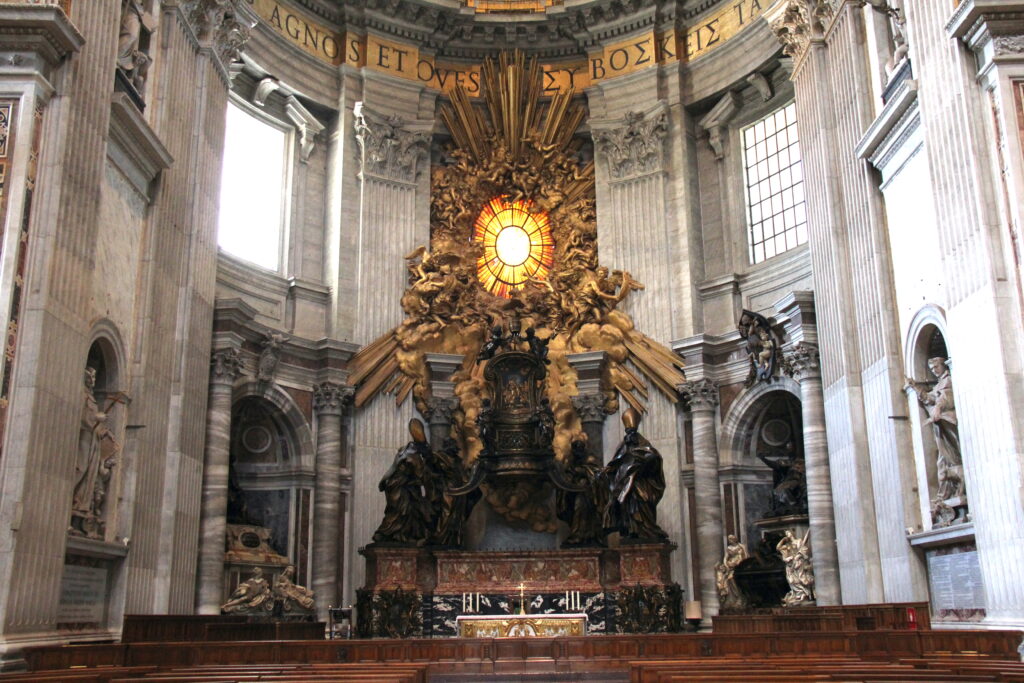
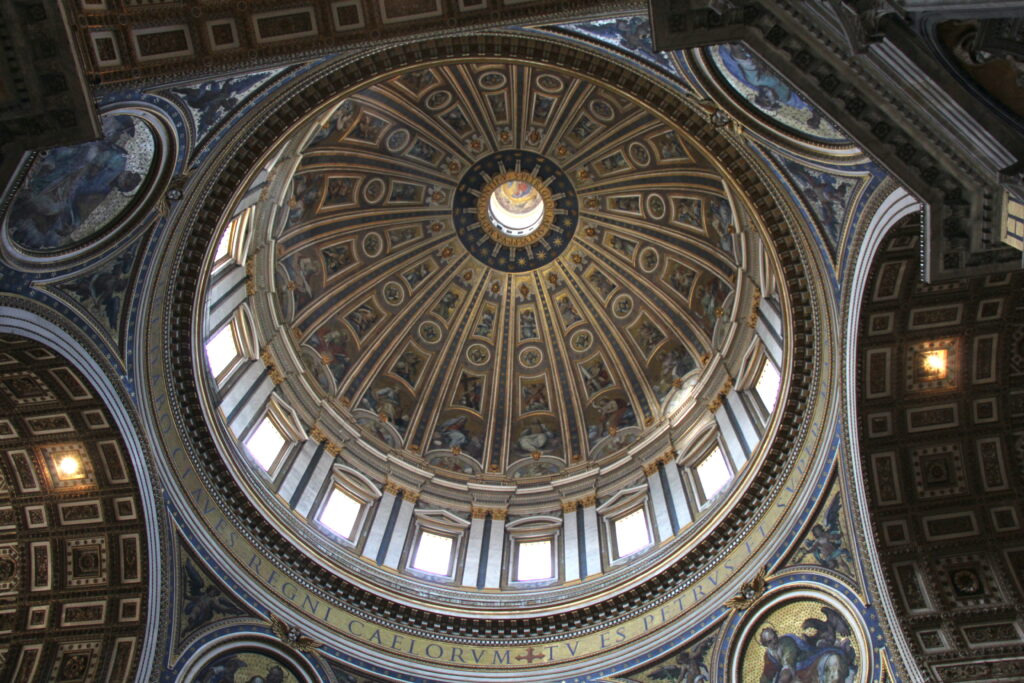
St. Peter’s Basilica, Interior – the soaring interior dome and grand apse create an overwhelming sense of scale and splendor. Michelangelo’s dome rises high above the altar, its intricate mosaics drawing the eye upward and filling the space with light and color. Beneath it, the apse is richly decorated with gilded details, serving as a dramatic focal point behind the high altar. Together, the dome and apse embody the artistic ambition of the Renaissance and Baroque periods.
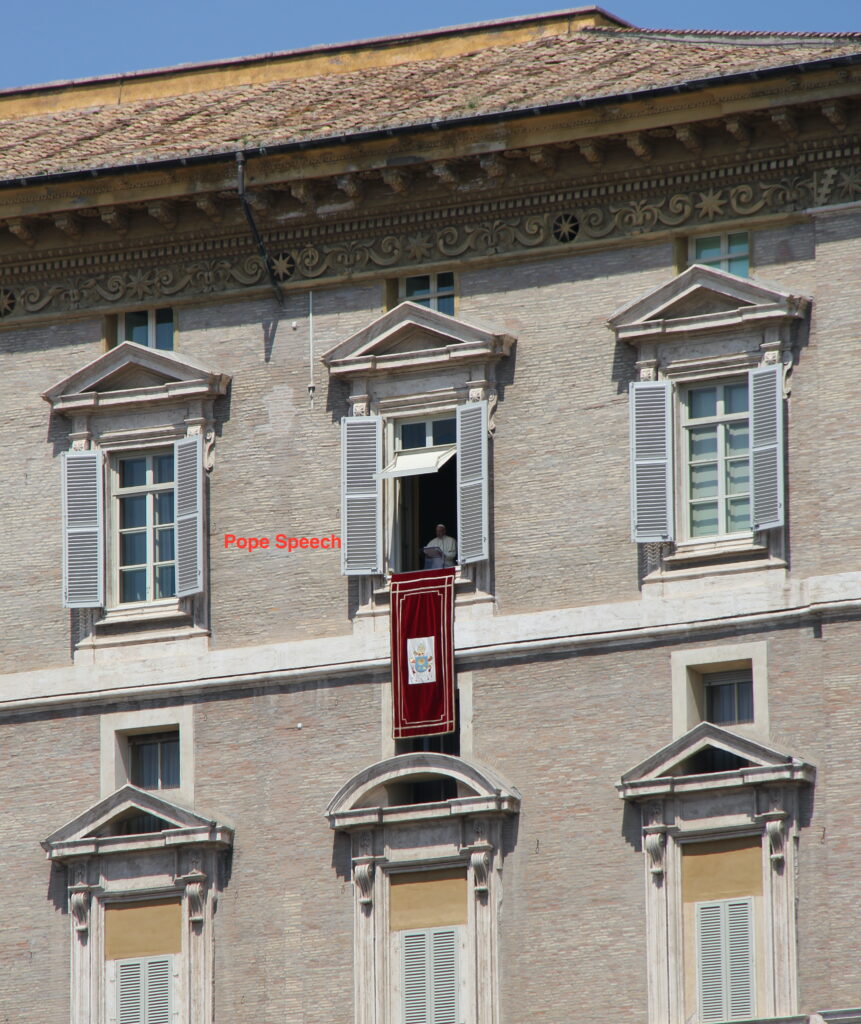
Papal Speech – We had the honor of listening to a speech delivered by the Pope from the window overlooking St. Peter’s Square. As he appeared above the square, hundreds of people gathered below in quiet anticipation, followed by warm applause. The combination of the open square, the historic backdrop, and the shared experience made the address feel personal, powerful, and deeply meaningful.
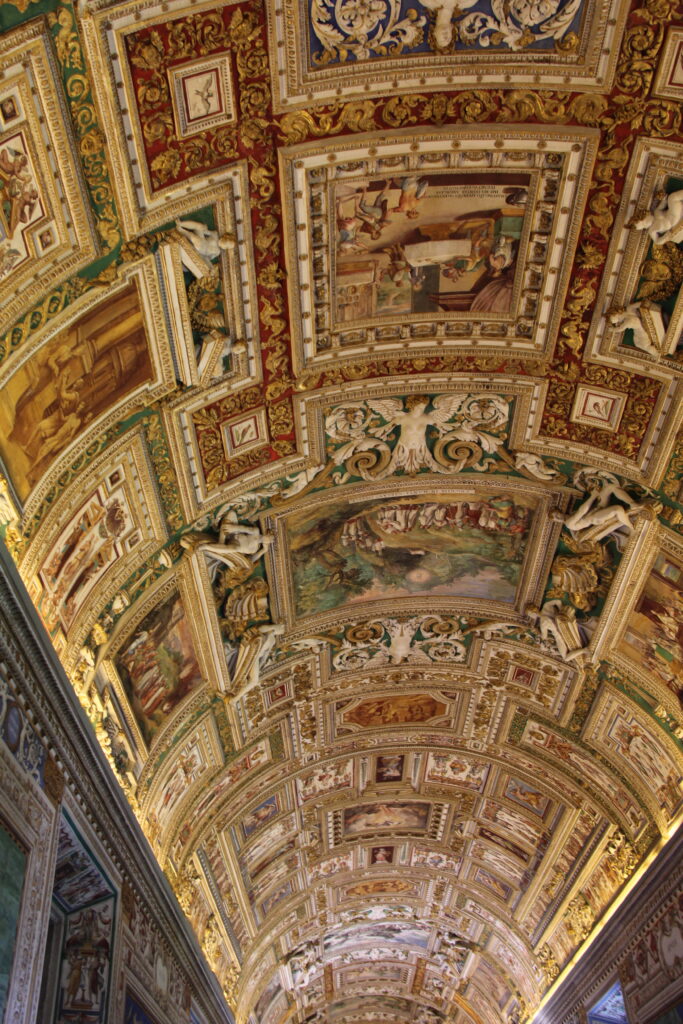
Vatican Museums & Sistine Chapel – Vatican Museum showcases the vast art collection gathered by the Catholic Church and the papacy over centuries. Founded in the early 16th century by Pope Julius II, the museums house masterpieces ranging from ancient Roman sculptures to some of the finest works of Renaissance art. Spread across 24 galleries, the visitor route famously includes the Raphael Rooms and culminates in the Sistine Chapel, home to Michelangelo’s legendary frescoes. It features more than 70,000 work of art. Some of the displays in the museum include –
- Gallery of Maps – a long and impressive corridor that features 40 large-scale frescoed maps of Italy based on drawings by the friar and geographer Ignazio Danti and painted by his brother, Antonio Danti. Commissioned in 1580 by Pope Gregory XIII, and completed between 1580 and 1583, the 120-meter-long gallery maps the entire Italian peninsula, with each panel showing a region alongside a detailed view of its most important city. Remarkably accurate for their time, the maps are divided by the Apennine Mountains, with one side depicting regions along the Ligurian and Tyrrhenian Seas and the other those along the Adriatic Sea.
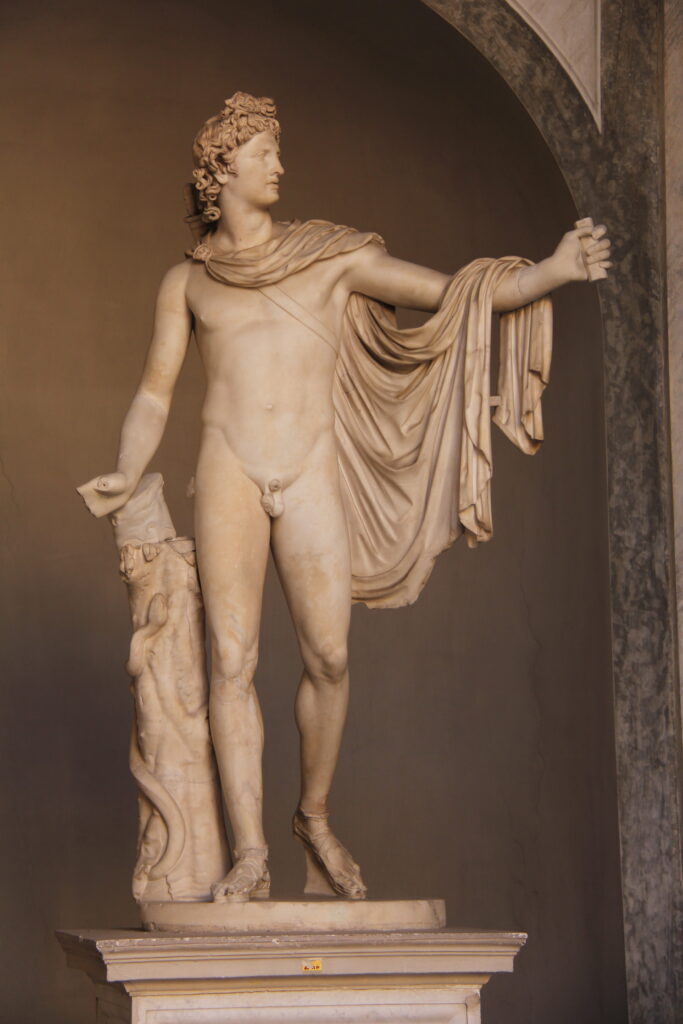
- Apollo Belvedere – a celebrated marble sculpture from classical antiquity, believed to be a Roman marble copy of a lost Greek bronze by the sculptor Leochares from around 330–320 BC. Rediscovered during the Renaissance, it has been on display at the Vatican since 1511 and is now housed in the Pio-Clementine Museum.
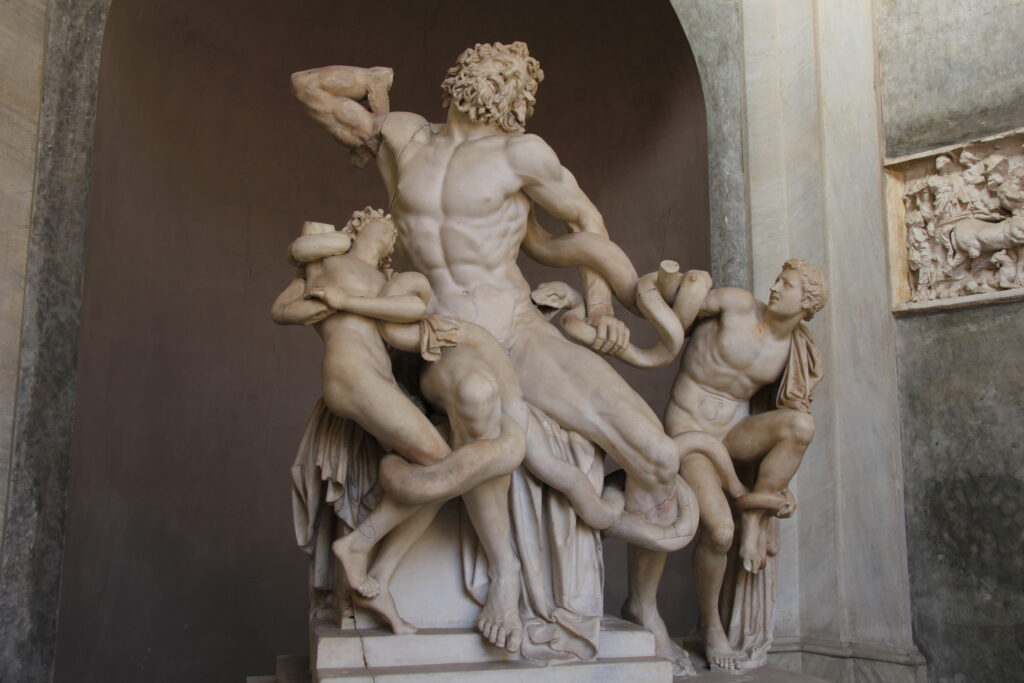
- Laocoön and His Sons – also known as the Laocoön Group, it is one of the most famous sculptures from ancient antiquity. Discovered in Rome in 1506, it depicts the Trojan priest Laocoön and his sons being attacked by sea serpents. The work is attributed to the Greek sculptors Agesander, Athenodoros, and Polydorus of Rhodes and is celebrated for its intense emotion, dynamic movement, and nearly life-sized scale.
The Sistine Chapel is one of the most celebrated and sacred spaces in Vatican City, located within the Apostolic Palace, the Pope’s official residence. Built between 1473 and 1481 under Pope Sixtus IV, the chapel has long served both religious and ceremonial purposes and is famously the site where new popes are elected. Its global popularity comes from the extraordinary frescoes that cover its interior, especially Michelangelo’s iconic ceiling, painted between 1508 and 1512, and The Last Judgment, completed between 1535 and 1541. Earlier Renaissance masters such as Botticelli, Perugino, and Ghirlandaio also contributed frescoes depicting the lives of Moses and Christ. Together, these masterpieces make the Sistine Chapel one of the most visited and awe-inspiring places in the world.
Note – Once you enter the Sistine Chapel, taking photographs is strictly prohibited. Security staff are positioned throughout the chapel and closely monitor visitors, and anyone caught taking pictures will be immediately asked to delete them. This rule helps maintain the solemn atmosphere of one of the most sacred and important spaces in the Vatican.
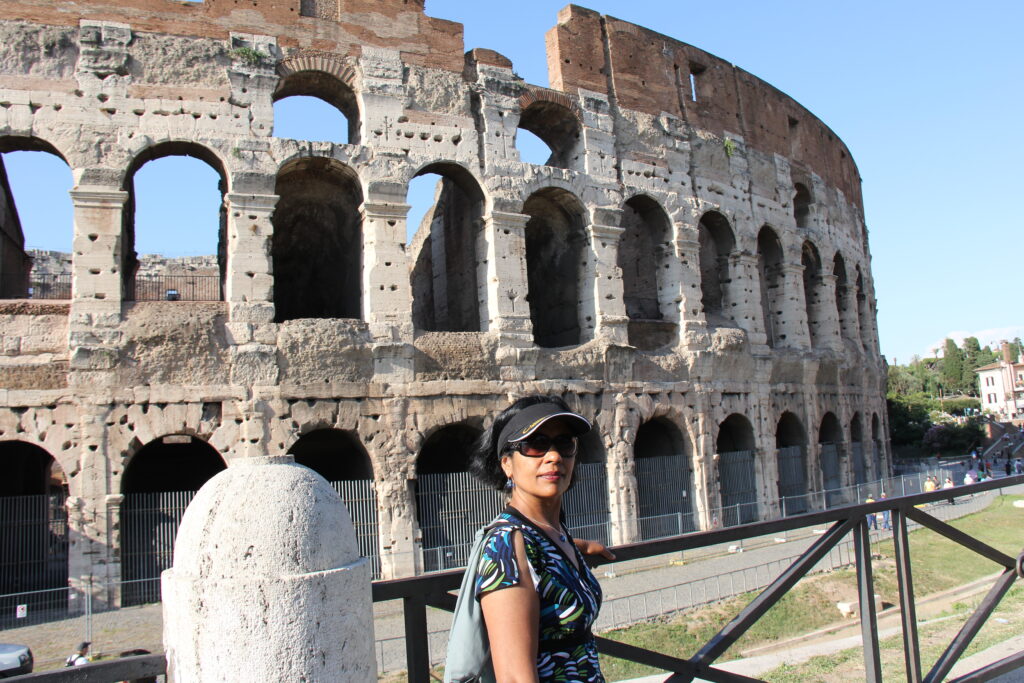
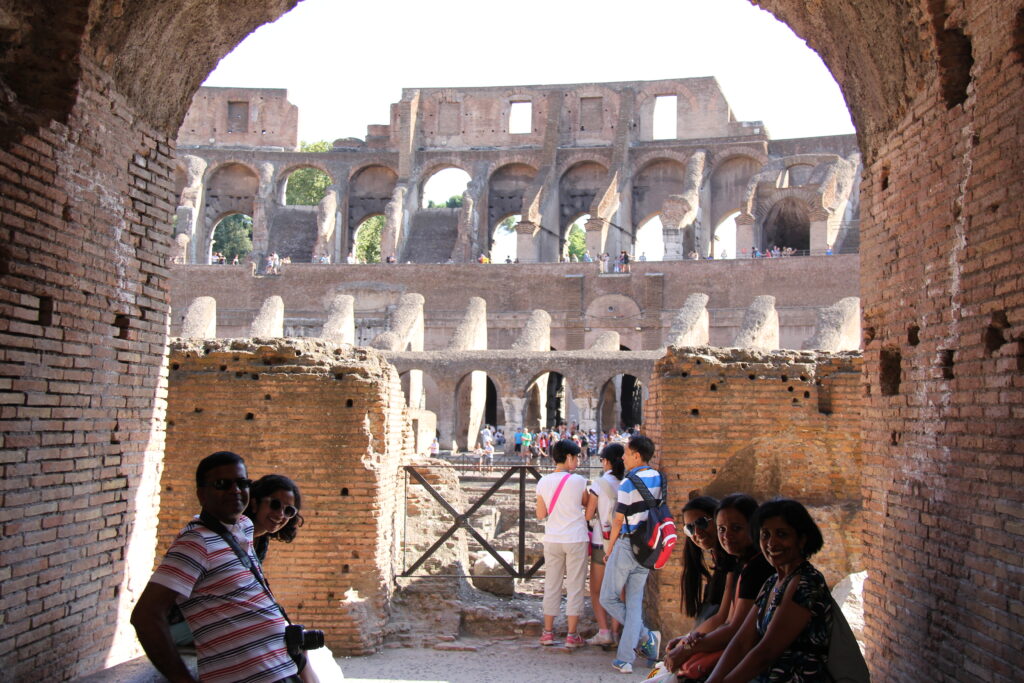
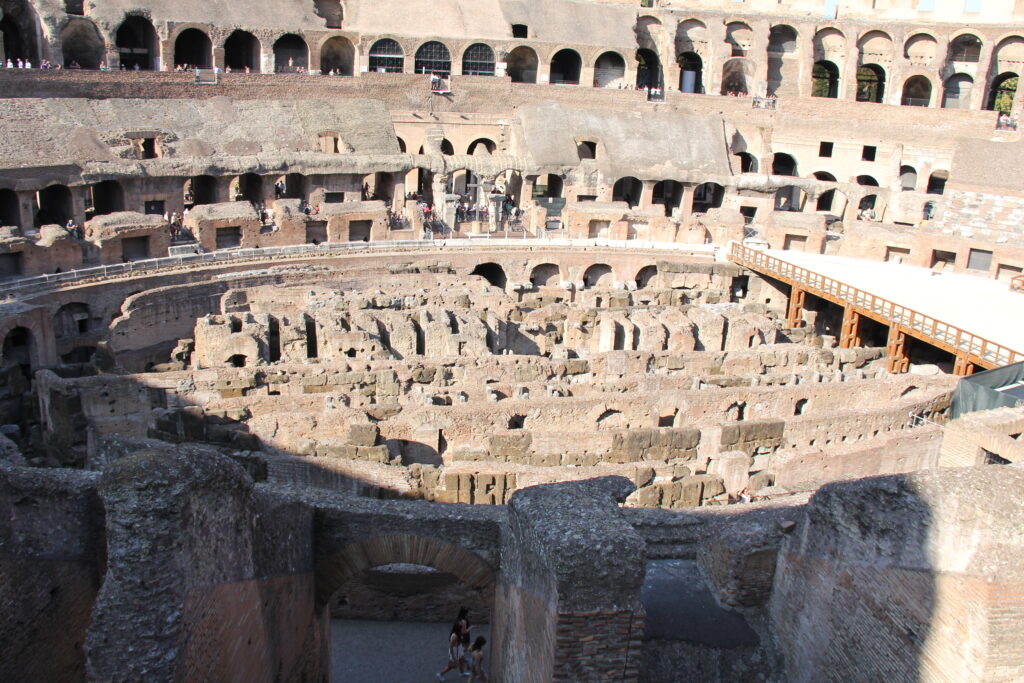
Colosseum – The Colosseum is an ancient Roman amphitheater in Rome, built between 70–80 AD under Emperors Vespasian and Titus. It is the largest amphitheater ever constructed in the Roman Empire and was used for gladiator contests, animal hunts, executions, and public spectacles. An iconic symbol of Rome’s engineering and power, it could hold around 50,000 – 80,000 spectators and featured advanced systems like underground chambers (the hypogeum). Despite damage from earthquakes and stone removal, the Colosseum remains one of the most famous landmarks in the world.
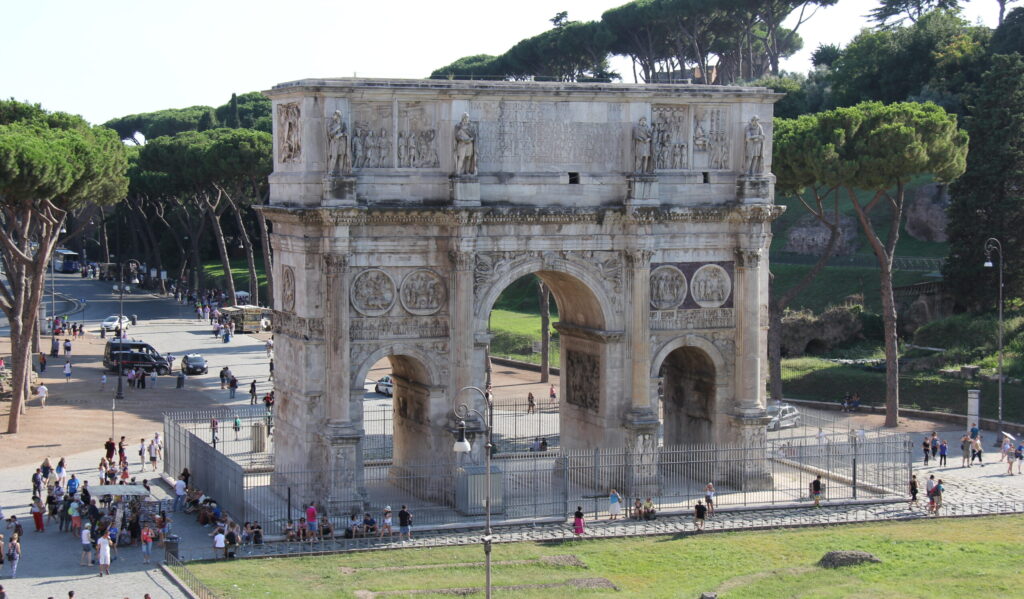
Arch of Constantine – is the largest and one of the most significant triumphal arches in Rome, standing between the Colosseum and the Palatine Hill along the ancient Via Triumphalis. Commissioned by the Roman Senate and dedicated in AD 315, the arch celebrates Emperor Constantine the Great’s victory over Maxentius at the Battle of the Milvian Bridge in AD 312. The monument is notable for its blend of old and new artistic styles, incorporating reliefs and statues taken from earlier monuments honoring emperors such as Trajan, Hadrian, and Marcus Aurelius, with Constantine’s likeness replacing theirs.
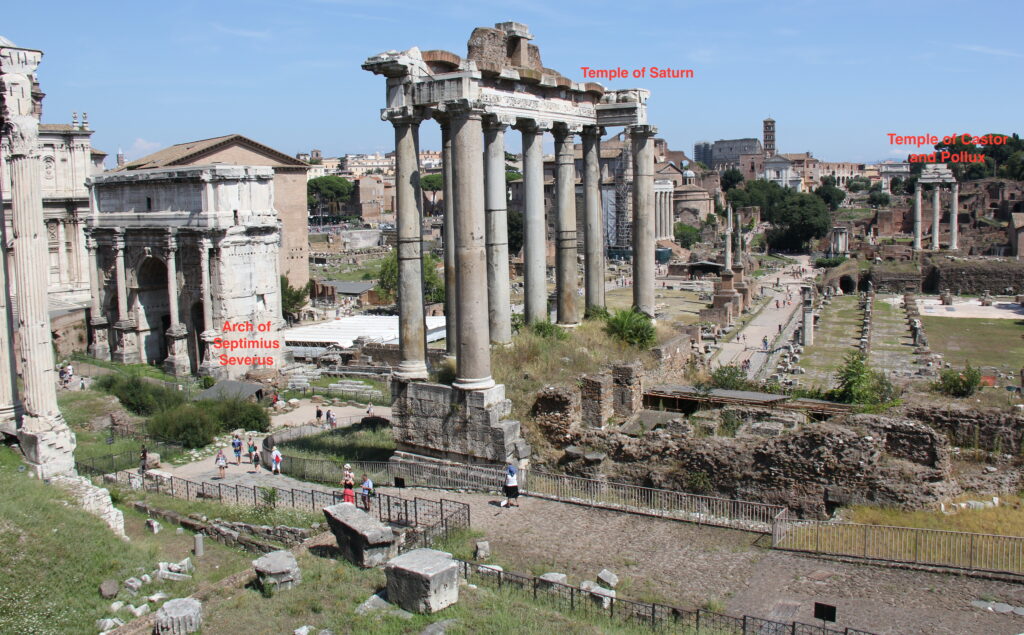
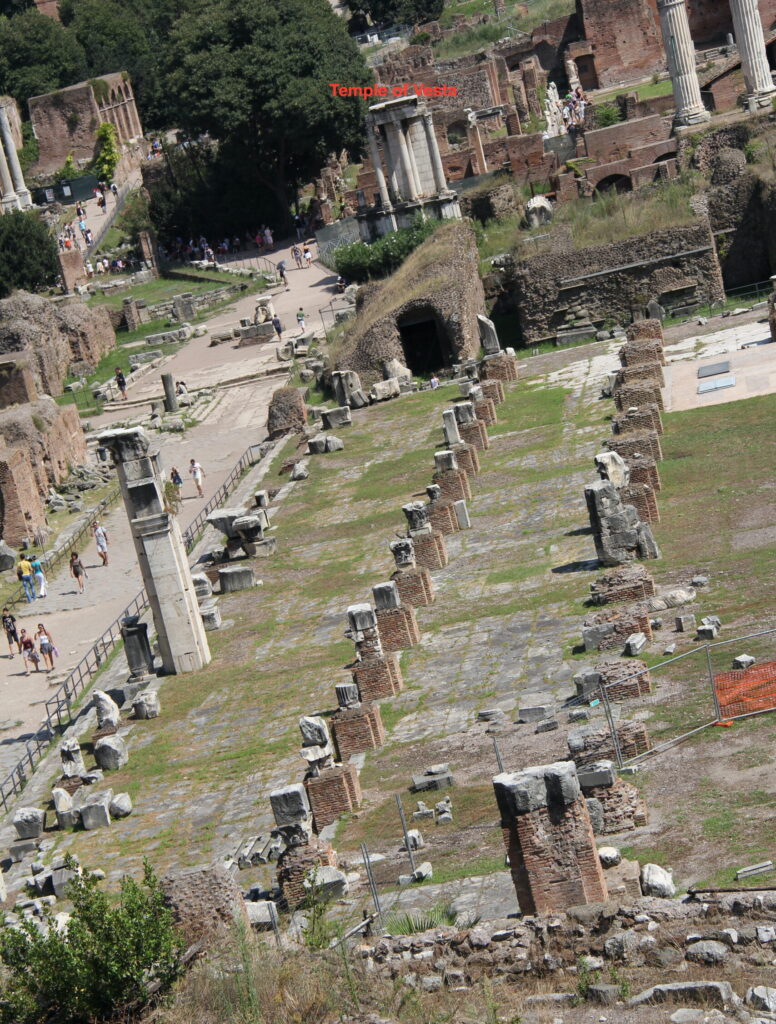
Roman Forum – was the heart of ancient Rome, serving for centuries as the city’s main public square and center of political, religious, and social life. Located in the valley between the Palatine and Capitoline Hills, it hosted everything from markets and elections to public speeches, trials, and triumphal processions. Surrounded by temples, basilicas, and government buildings—including the Temple of Vesta, the Senate House, and major basilicas built by Julius Caesar and later emperors—the Forum evolved alongside Rome itself. Today, its sprawling ruins offer a powerful glimpse into the daily life and grandeur of the ancient Roman world.
A few of the temple ruins that you can explore in the Roman Forum –
- Temple of Castor and Pollux, aka the Temple of the Dioscuri, was an important ancient sanctuary in the Roman Forum. Originally built in 495 BC to celebrate Rome’s victory at the Battle of Lake Regillus, the temple was dedicated to the twin gods Castor and Pollux, sons of Jupiter and Leda. Their worship was introduced to Rome through Greek influence from southern Italy, reflecting the city’s deep cultural connections with the Greek world.
- Temple of Saturn was one of the oldest and most important temples in ancient Rome, dedicated to the god Saturn. Traditionally dated to 497 BC, its ruins stand at the foot of the Capitoline Hill on the western edge of the Roman Forum. Beyond its religious role, the temple also symbolized wealth and prosperity in Rome, as it once housed the state treasury.
- Arch of Septimius Severus stands at the northwestern end of the Roman Forum and is one of Rome’s best-preserved triumphal arches. Dedicated in AD 203, it was built to celebrate Emperor Septimius Severus and his sons, Caracalla and Geta, for their victories over the Parthians.
- Temple of Vesta was one of the most sacred buildings in ancient Rome, located in the Roman Forum near the Regia and the House of the Vestal Virgins. It housed the eternal flame of Vesta, symbolizing Rome’s safety and prosperity, which was carefully tended by the Vestal Virgins. Unlike most Roman temples, it had a circular design inspired by early Roman homes, reflecting the domestic origins of Vesta’s worship.
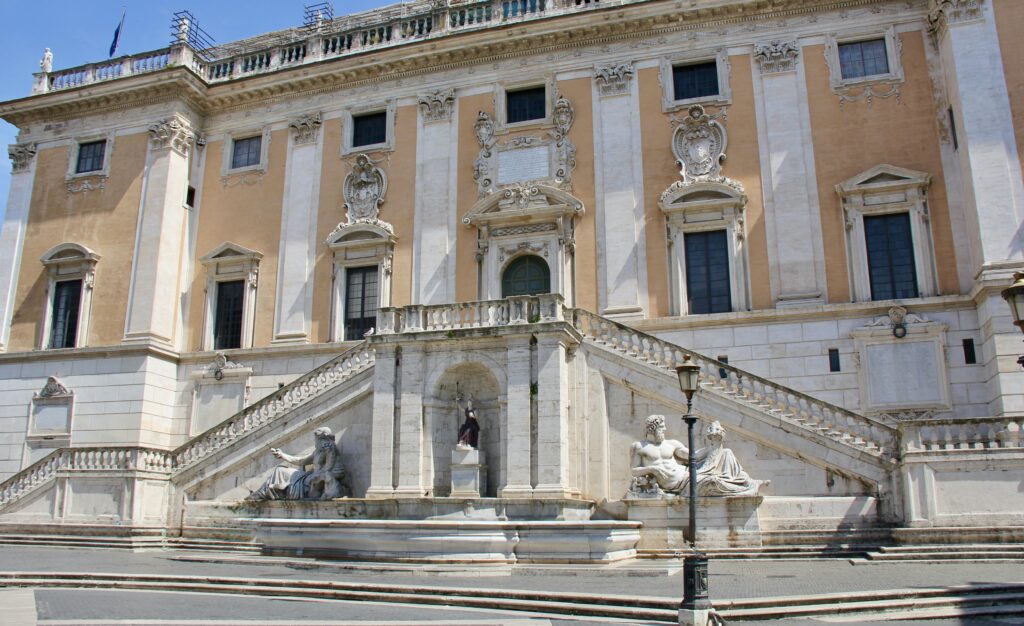
Piazza del Campidoglio – or Capitoline Square, sits atop Rome’s historic Capitoline Hill, between the Roman Forum and the Campus Martius. The square is framed by three prominent buildings – the Palazzo Senatorio, now Rome’s City Hall, and the two palaces of the Capitoline Museums—the Palazzo dei Conservatori and the Palazzo Nuovo. Founded in 1471 by Pope Sixtus IV, the museums house some of Rome’s most treasured ancient artworks. The elegant hilltop piazza itself was redesigned in the 16th century by Michelangelo, creating a masterful blend of Renaissance urban planning and ancient Roman heritage.
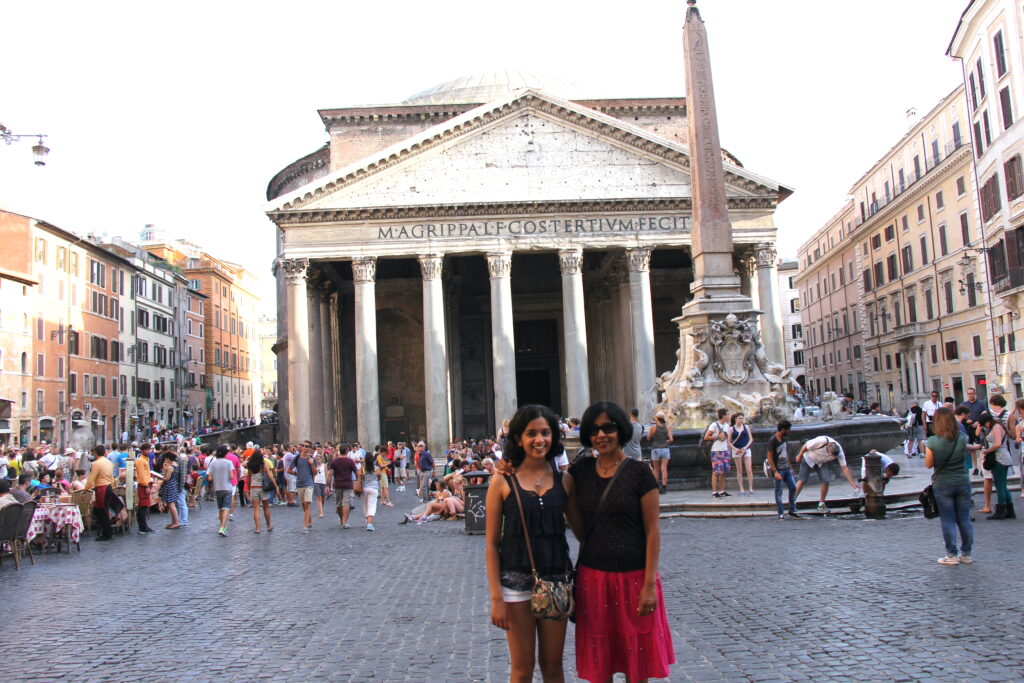
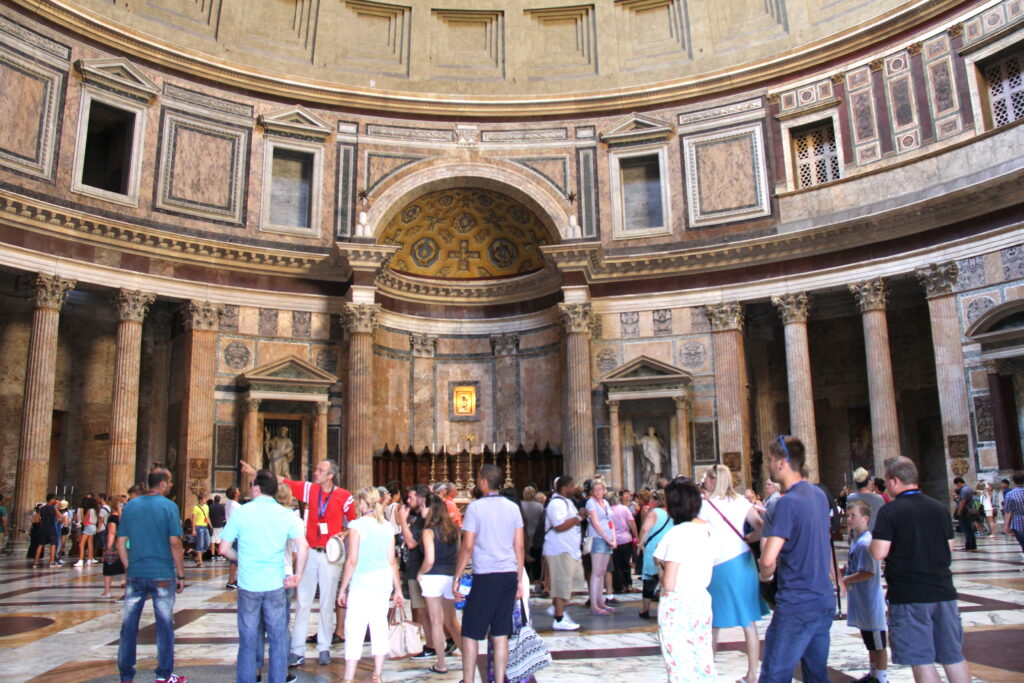
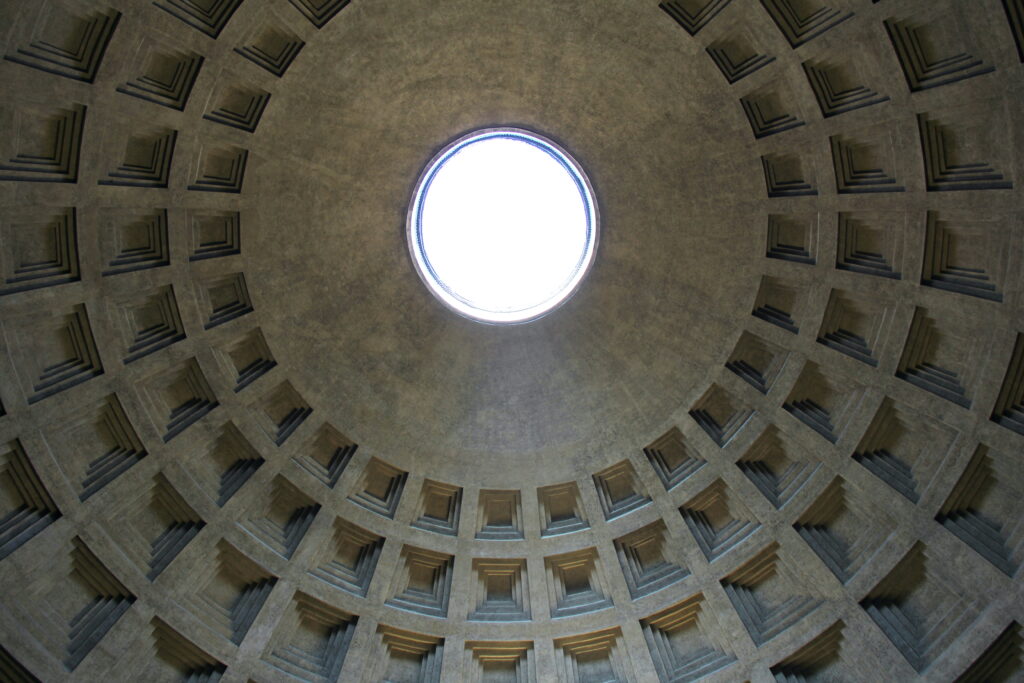
Pantheon – meaning all the gods, is an ancient Roman temple in Rome, originally built by Agrippa in 27 BC and rebuilt by Emperor Hadrian around 125 AD. It is renowned for its massive unreinforced concrete dome—the largest of its kind—with a central oculus as its only light source, showcasing perfect geometry and Roman engineering mastery. Converted into a Catholic church in 609 AD (Basilica of St. Mary and the Martyrs), it has remained in continuous use, preserving it as a historic monument and serving as the burial site of figures such as Raphael and Italian kings.
Pantheon Obelisk – also known as the Obelisco Macuteo, is an ancient Egyptian obelisk located in Piazza della Rotonda, standing proudly in front of the Pantheon atop a fountain. It is one of the 13 obelisks found throughout Rome and one of the relatively few surviving ancient monoliths. The Obelisk once stood in the sanctuary of Amun-Re in Heliopolis, Egypt.
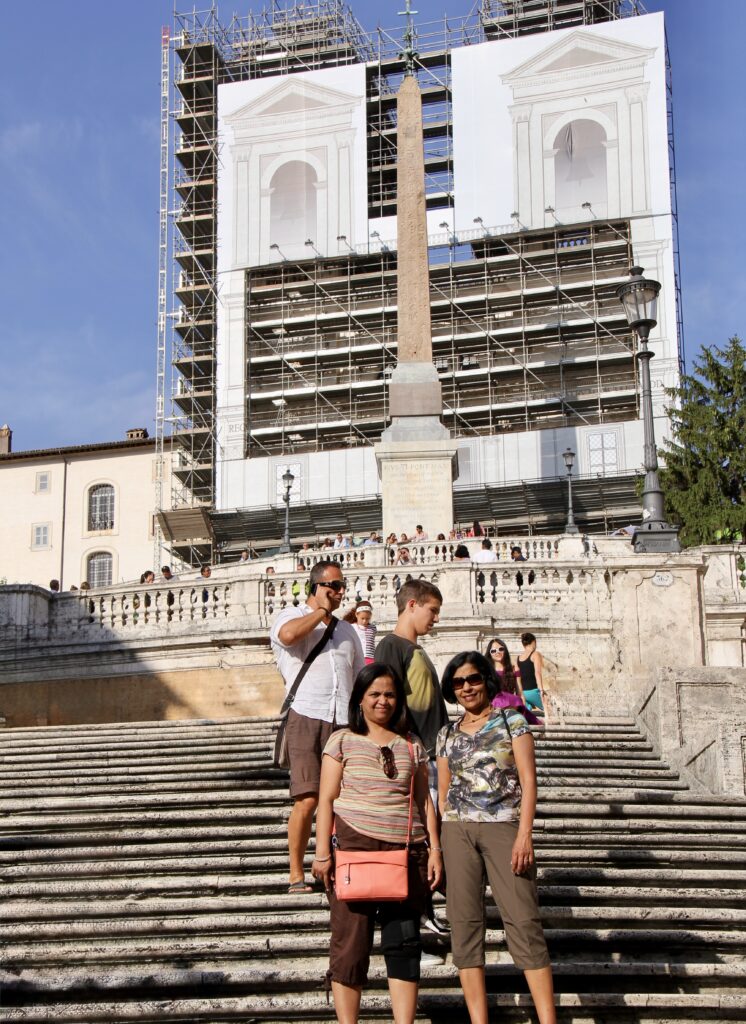
Spanish Steps – are a famous monumental staircase in Rome connecting the Piazza di Spagna at the base with the Piazza Trinità dei Monti, dominated by Trinità dei Monti church at the top. Built between 1723 and 1725, the 135-step staircase is a prime example of Baroque design and was intended to link the Spanish Embassy (below) with the French church (above). Today, the Spanish Steps are a popular gathering place and iconic landmark, especially lively during spring when decorated with flowers.
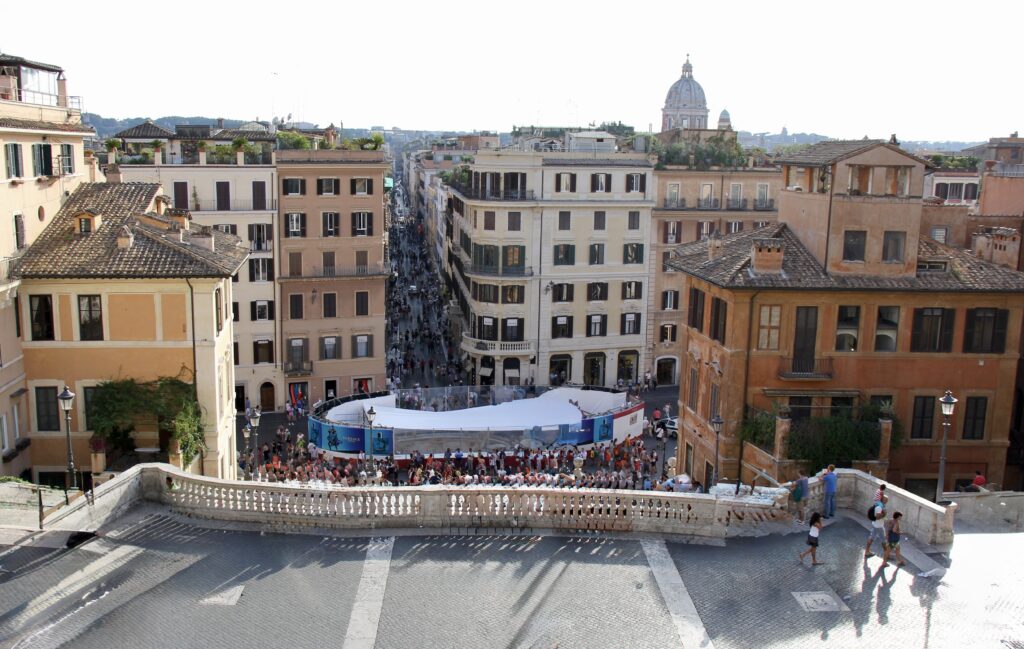
Column of the Immaculate Conception – Located in Piazza Mignanelli, near the Spanish Steps, this column is a 19th-century monument honoring the Blessed Virgin Mary. Designed by Luigi Poletti and commissioned by Ferdinand II, it was dedicated on 8 December 1857 to celebrate the dogma of the Immaculate Conception proclaimed by Pope Pius IX in 1854.
The monument features a square marble base with statues of biblical figures at the corners supporting an 11.8-meter Cipollino marble column, topped by a bronze statue of the Virgin Mary by Giuseppe Obici. Each detail reflects the standard imagery of the Immaculate Conception—a virgin on a crescent, atop the world, trampling a serpent—while bas-reliefs at the base depict scenes like the Annunciation, the coronation of Mary, and the promulgation of the dogma. Since 1953, popes have visited annually to offer flowers at its base on the Feast of the Immaculate Conception, assisted by Roman firemen.
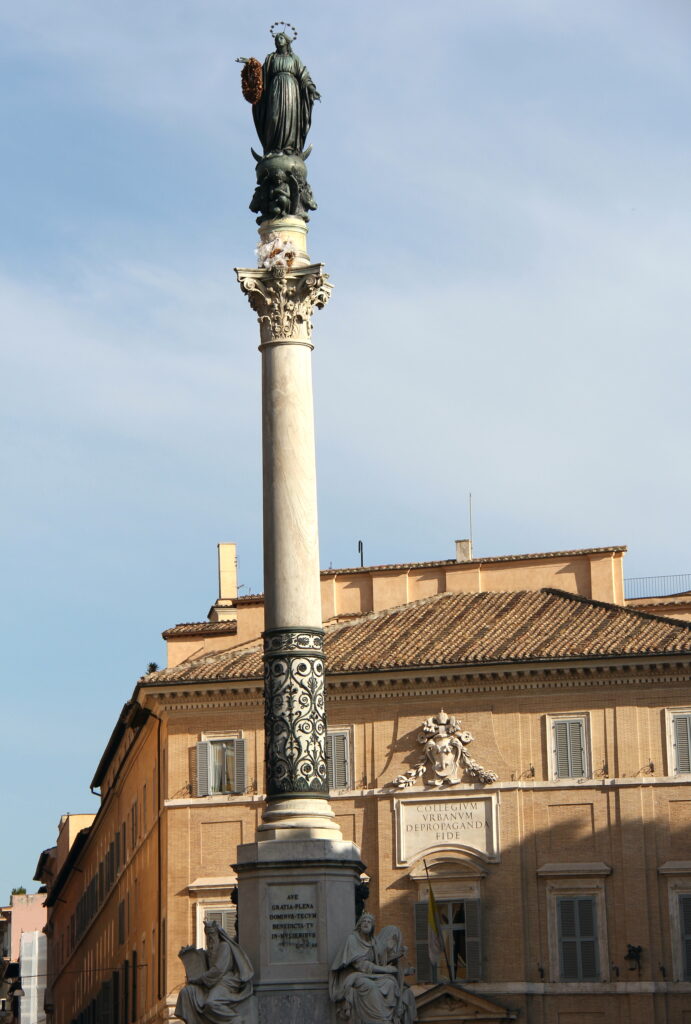
Altar of the Fatherland – Located in the heart of Rome, you’ll likely pass by this monument many times while exploring the city. Also known as the Victor Emmanuel II National Monument or the Altare della Patria, it was built between 1885 and 1935 to honor Victor Emmanuel II, the first king of a unified Italy. The monument stands prominently between Piazza Venezia and Capitoline Hill and is recognizable for its dramatic architecture, grand staircases, and impressive colonnade. It celebrates Italy’s unification and independence and also houses the Altar of the Fatherland and the Tomb of the Unknown Soldier, giving it the role of a secular temple dedicated to the Italian nation.
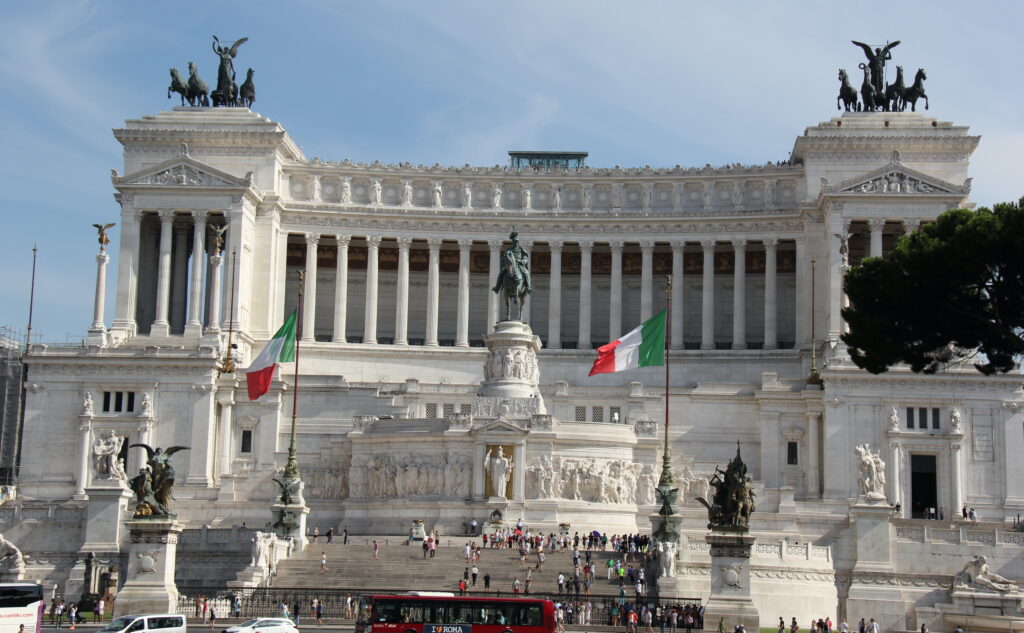
Castel Sant’Angelo – Originally built as a mausoleum for Emperor Hadrian, it later served as a fortress, papal residence, and even a prison, adapting to Rome’s changing needs over the centuries. Today, visitors can explore its winding corridors, grand halls, and panoramic terrace, which offers stunning views of the Tiber River and St. Peter’s Basilica.
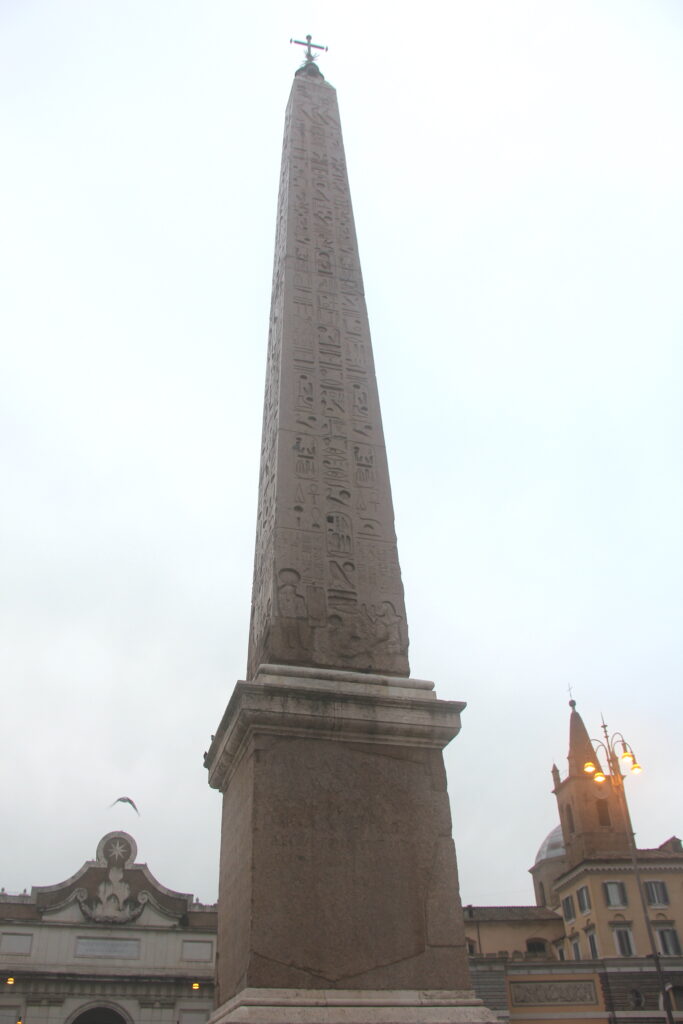
Piazza del Popolo – is one of Rome’s grandest and most historically significant squares, located just inside the city’s northern gate, the Porta del Popolo. For centuries, it marked the main entrance to Rome for travelers arriving via the Via Flaminia and was often their first impression of the city. Redesigned in elegant neoclassical style between 1811 and 1822, the piazza features sweeping semicircles, tree-lined spaces, and a visual connection to the Pincian Hill above. At its center stands the Flaminio Obelisk, an ancient Egyptian monument originally erected in Heliopolis and later brought to Rome by Emperor Augustus. Framed by churches, historic gates, and major streets, Piazza del Popolo is where locals meet to have a relaxing evening.
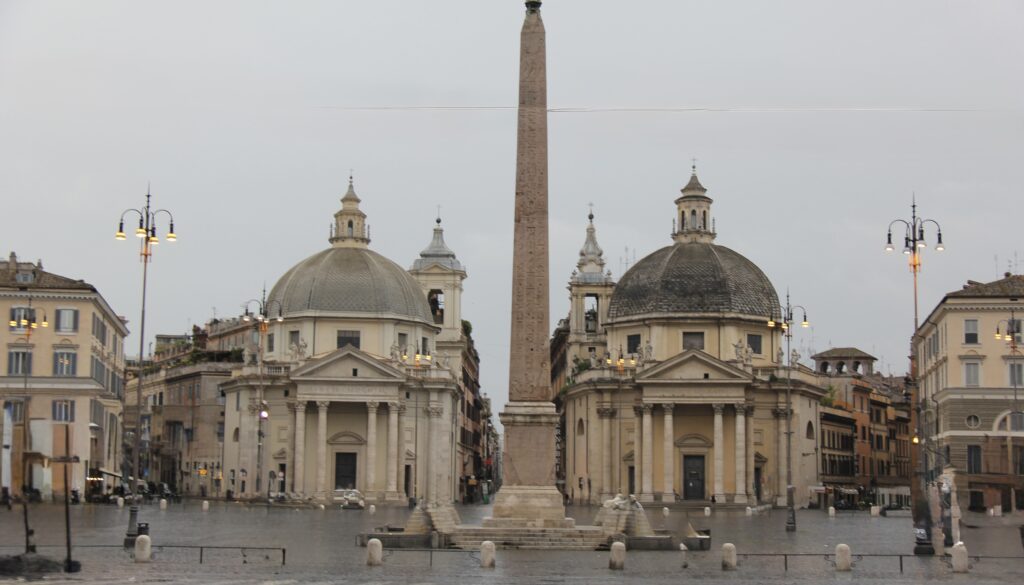
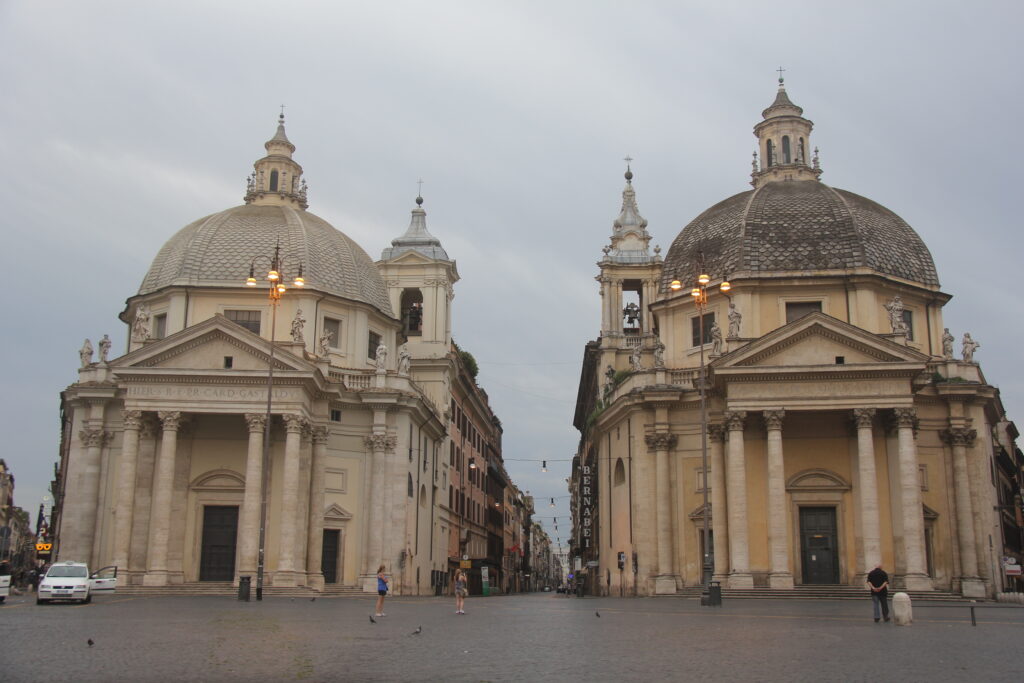
The piazza is flanked by the iconic twin churches of Santa Maria in Montesanto (1662–1675) and Santa Maria dei Miracoli (1675–1679), which create a striking symmetrical entrance to the bustling Via del Corso. This famous street, visible between the two churches, winds through the heart of Rome with narrow, meandering alleys, charming small piazzas, and a mix of shops, cafés, and historic buildings, offering a quintessential Roman urban experience.
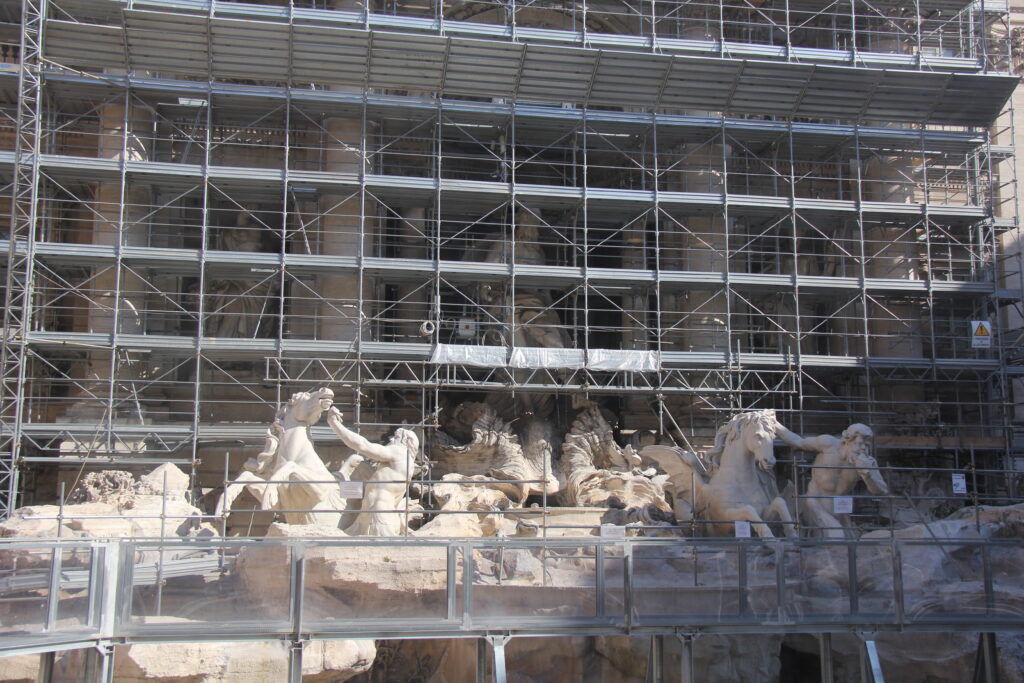
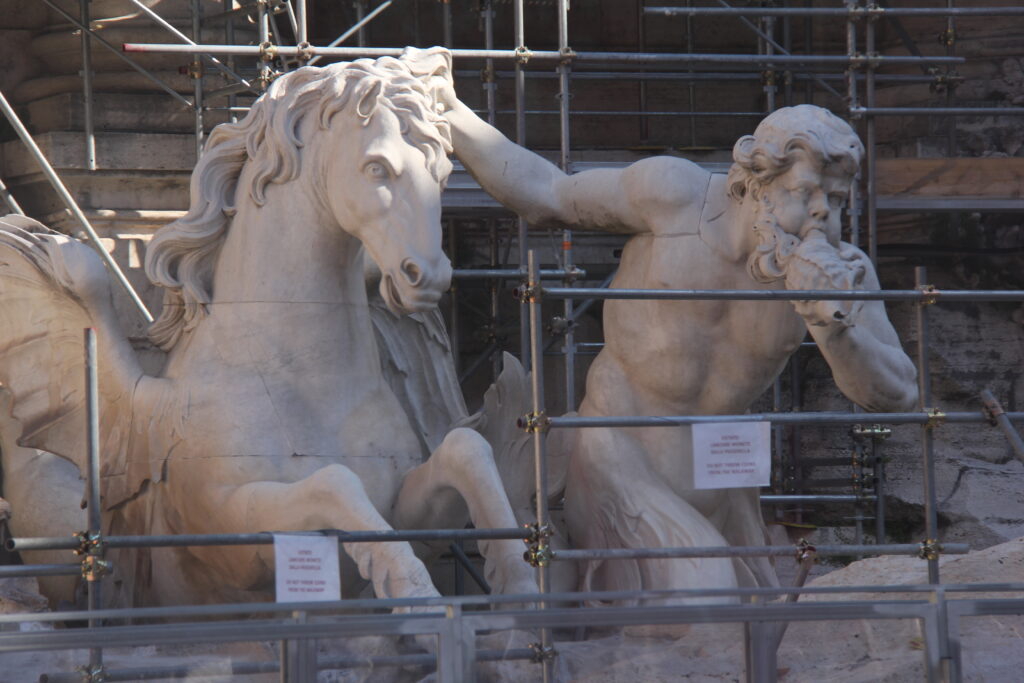
Trevi Fountain – is one of Rome’s most crowded and iconic landmarks, and the largest Baroque fountain in the city. Completed in 1762 by architect Nicola Salvi, it stands at the junction of three roads, marking the terminal point of an ancient aqueduct that once supplied water to Rome. The fountain’s dramatic design features Neptune, the god of the sea, commanding a chariot pulled by sea horses, surrounded by tritons and elaborate rock formations. Visitors toss coins over one’s shoulder, a ritual said to ensure a return to Rome.
When we visited, the Trevi Fountain was undergoing a major renovation, so we weren’t able to fully enjoy its usual splendor. Scaffolding and barriers covered much of the fountain, temporarily hiding the intricate sculptures and the dramatic scene of Neptune and his sea entourage.
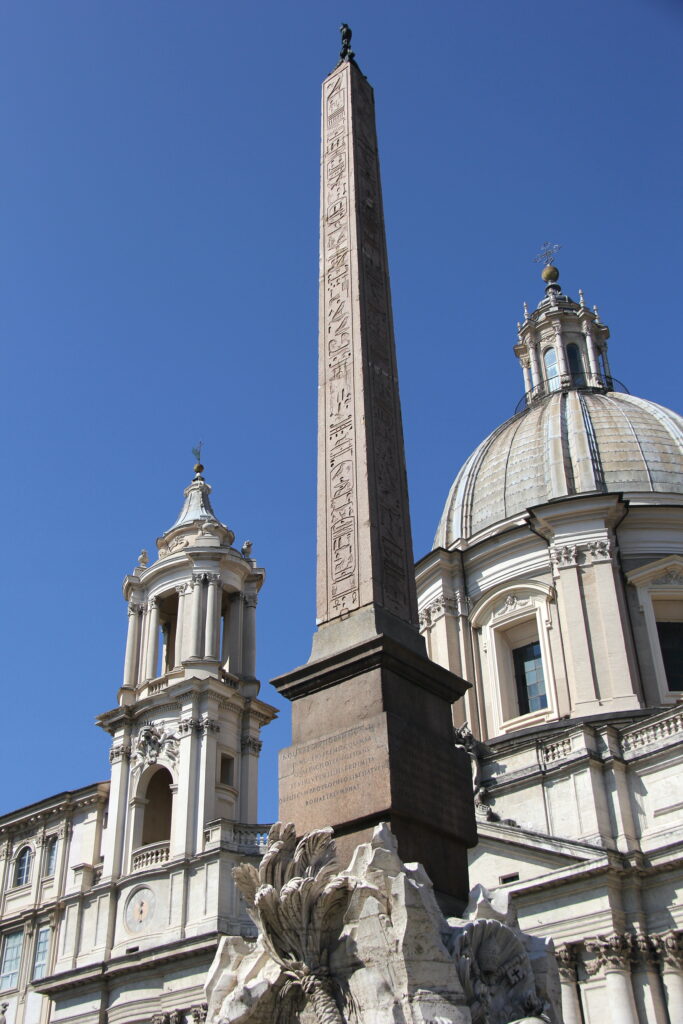
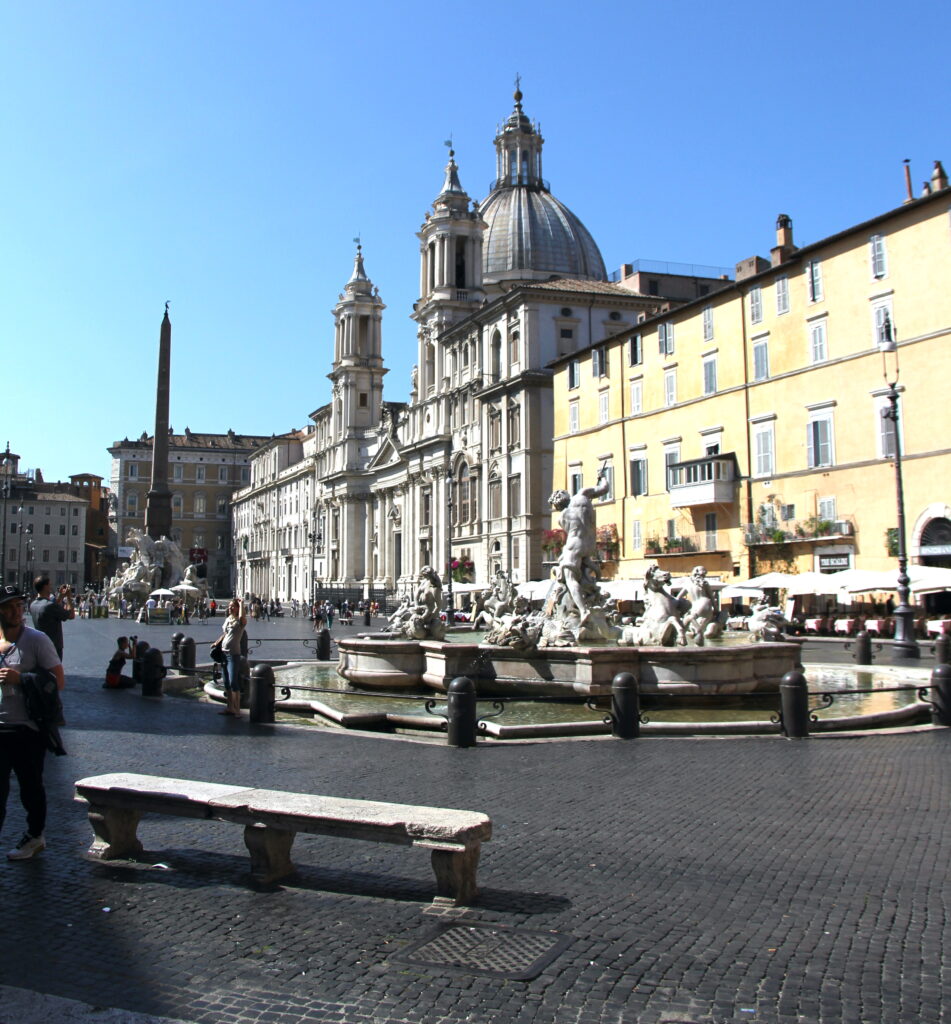
Piazza Navona – is one of Rome’s most vibrant and historically rich squares, built on the site of the 1st-century Stadium of Domitian, which gives it its characteristic elongated oval shape. Its centerpiece is Bernini’s spectacular Fontana dei Quattro Fiumi (Fountain of the Four Rivers), topped by the Obelisk of Domitian, while the church of Sant’Agnese in Agone, designed by Borromini and others, anchors one side of the square. Additional fountains, including the Fontana del Moro and the Fountain of Neptune, frame the piazza, creating a harmonious and lively space. Throughout its history, Piazza Navona has hosted markets, festivals, and performances, making it a dynamic mix of ancient history, Baroque art, and contemporary Roman life.
The Obelisk of Domitian, at the center of the square’s Fountain of the Four Rivers is an ancient Egyptian monument, brought to Rome and incorporated into Gian Lorenzo Bernini’s Baroque masterpiece in 1651.
Obelisks in Rome
- Vatican Obelisk (see section St. Peter’s Basilica) – Located in St Peter’s Square in front of St Peter’s Basilica, this Egyptian Obelisk, was brought to Rome in AD 37 by Emperor Caligula and positioned here in 1586 by order of Pope Sixtus V.
- Flaminio Obelisk (see section Piazza del Popolo) – is located in the Flaminio quarter on Piazza del Popolo. It is 24 m (67 ft) high and with the base and the cross reaches 36.50 m (100 ft).
- Obelisco Macuteo (see section Pantheon) – This ancient Egyptian obelisk is located in Piazza della Rotonda, standing proudly in front of the Pantheon atop a fountain. It is one of the relatively few surviving ancient monoliths. The Obelisk once stood in the sanctuary of Amun-Re in Heliopolis, Egypt.
- Obelisco Agonale (see section Piazza Navona) – aka Obelisk of Domitian, this ancient Egyptian-style obelisk rises above the Fountain of the Four Rivers in Piazza Navona. Commissioned during the Roman era and later reassembled in the 17th century, it was erected in its current position in 1651 as part of Gian Lorenzo Bernini’s dramatic Baroque design.
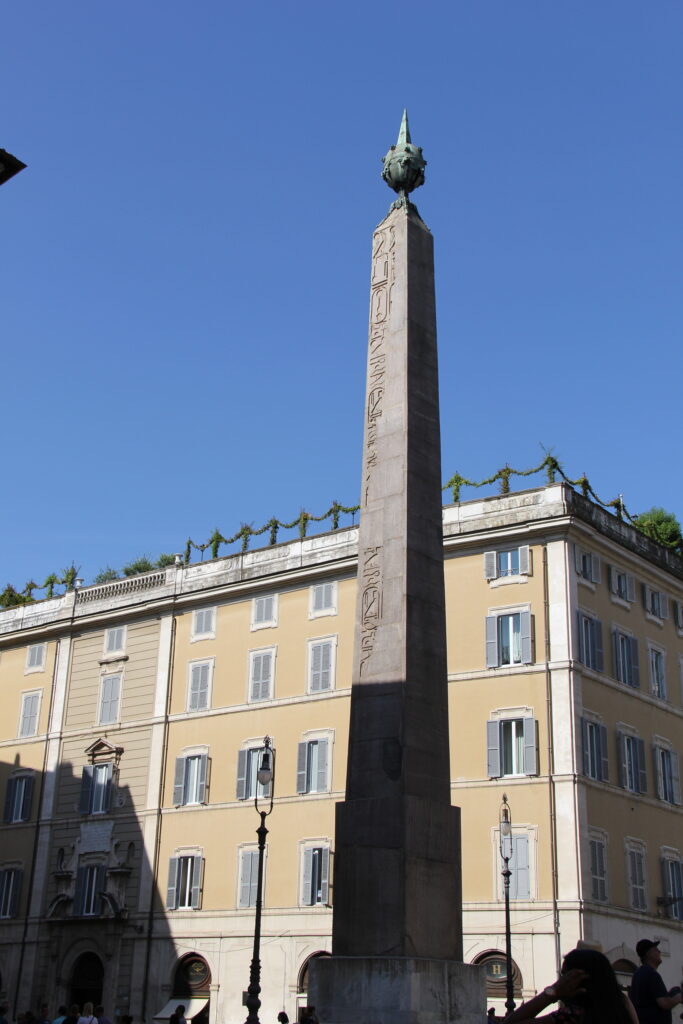
- Obelisk of Montecitorio – aka Solare Obelisk, is an ancient red granite obelisk originally erected in Heliopolis, Egypt, during the reign of Pharaoh Psamtik II (595–589 BC). It was brought to Rome in 10 BC by Emperor Augustus, along with the Flaminio Obelisk, to serve as the gnomon of the Solarium Augusti, a massive ancient sundial. Today, the obelisk stands in Piazza Montecitorio, rising 21.79 meters (71 feet) tall, including its base and globe.
- Lateran Obelisk – is the largest surviving ancient Egyptian obelisk in the world and the tallest obelisk in Italy. Originally weighing over 400 tons, it collapsed in antiquity and was later re-erected about four meters shorter, bringing its weight to roughly 300 tons. Today, it stands in a square opposite the Archbasilica of Saint John Lateran in Rome, dominating the area with its immense scale.
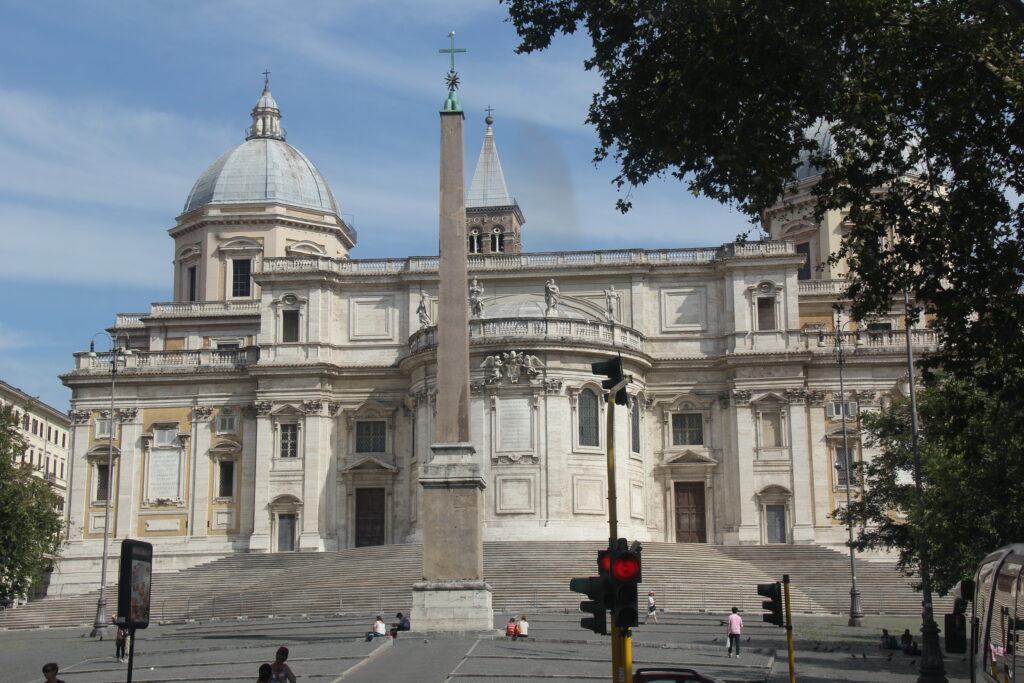
- Esquiline Obelisk – also known as the Liberian Obelisk, is located in Piazza dell’Esquilino, in front of Santa Maria Maggiore.