Formerly known as Madras, Chennai is the capital of the state of Tamil Nadu and one of India’s largest and most important cities. Located on the Coromandel Coast along the Bay of Bengal, Chennai is widely known as India’s Health Capital due to its thriving medical tourism industry and world-class hospitals. The city has earned global recognition for its vibrant food scene, cultural diversity, and creative industries—being named among National Geographic’s Top 10 Food Cities and included in the UNESCO Creative Cities Network. As the heart of the Tamil film industry, Chennai is also a major center for film production and entertainment in South India.
We’ve visited Chennai many times over the years, as much of our family is settled here. The city has plenty to see, but the attractions are spread out, and traffic can be challenging. Plan to spend a couple of days navigating busy roads—rush hour often feels like it lasts all day, even on weekends.
- Kapaleeshwarar Temple
- Watch a Cricket match in M.A Chidambaram Stadium
- Marina Beach
- Vivekananda House
- St. Thomas Cathedral Basilica
- ISKON Temple
- Marutham Village Resort
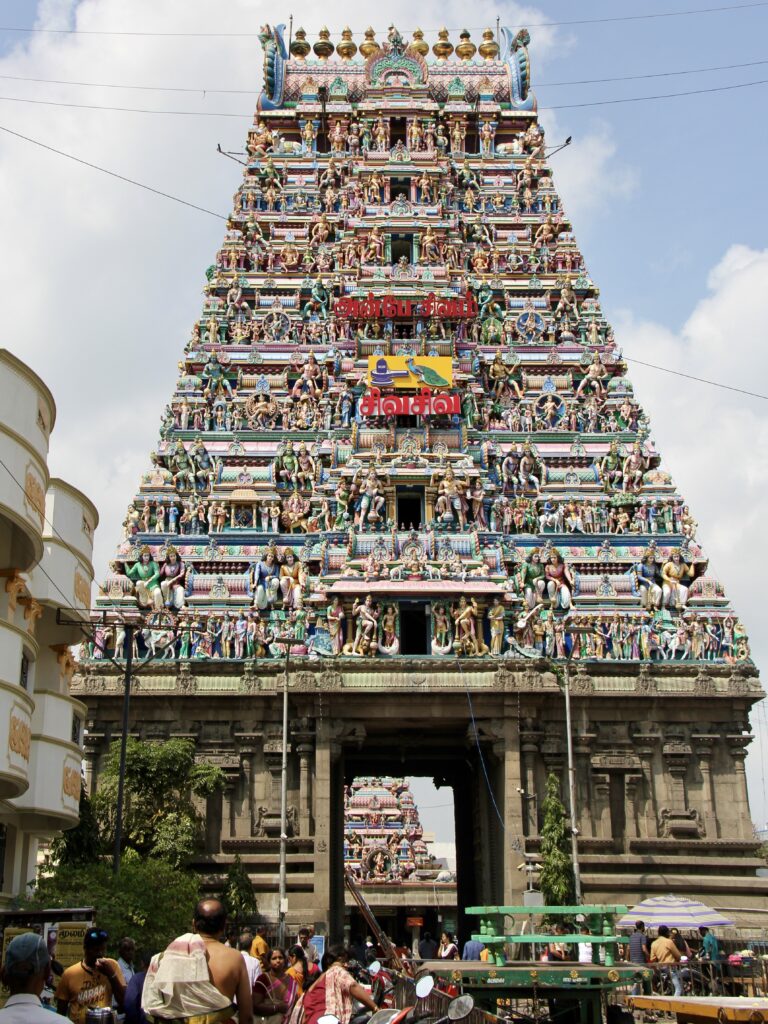
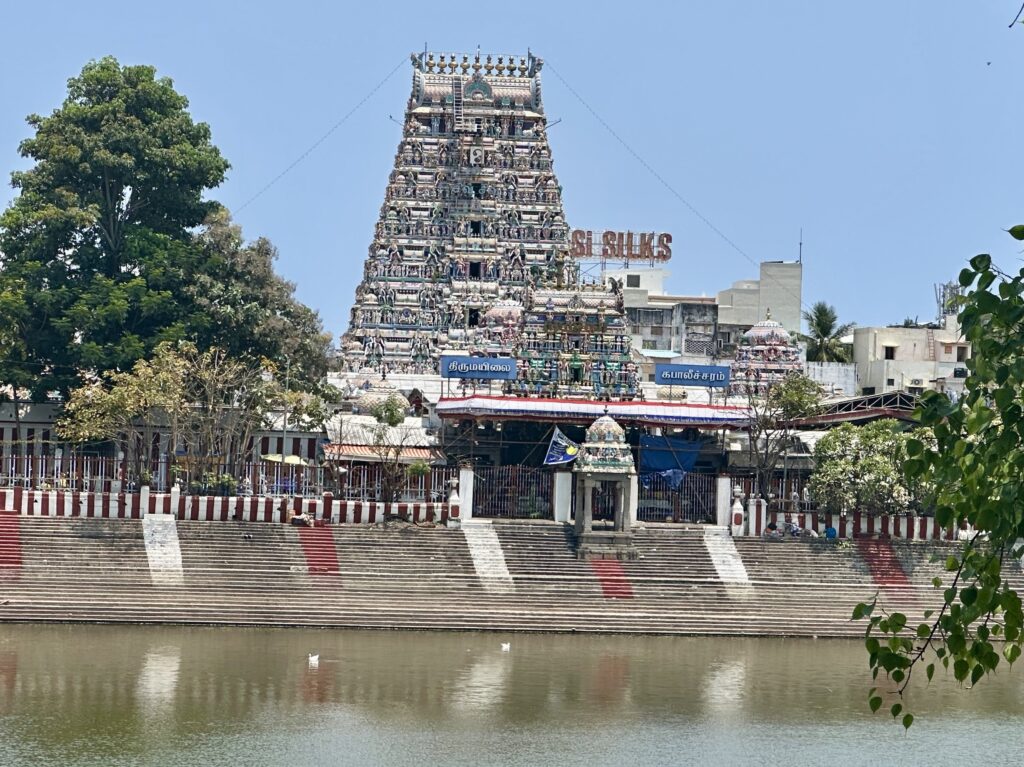
Kapaleeshwarar Temple – Located in Mylapore, this is a historic Hindu temple dedicated to Lord Shiva, built around the 7th century CE in the classic Dravidian style of South Indian architecture. According to legend, Goddess Parvati worshipped Shiva here in the form of a peahen, giving Mylapore its name (mayil means peacock in Tamil). Shiva is worshipped as Kapaleeshwarar, represented by a lingam, while Parvati is revered as Karpagambal. The temple complex features intricately carved gopurams (towers), multiple shrines, and vibrant daily rituals, with many festivals celebrated here.
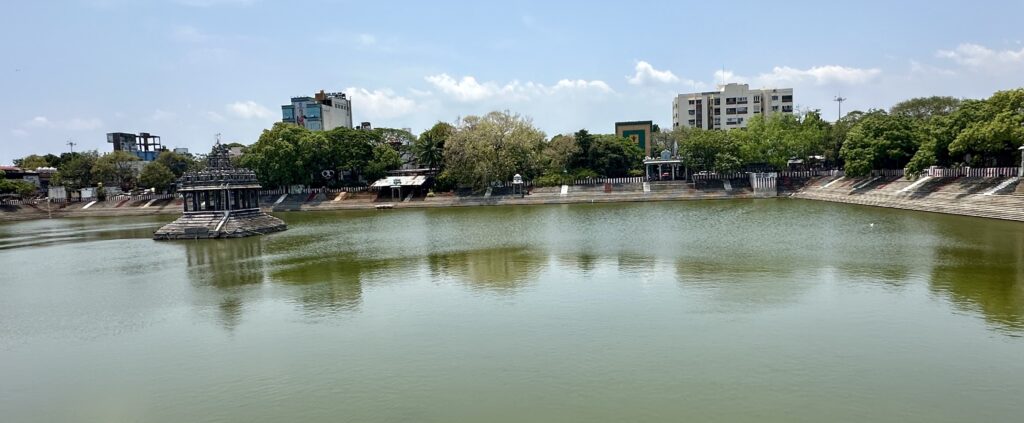
The temple has two main entrances, each marked by a towering gopuram. The eastern gopuram, rising to about 40 meters (about 130 feet), is the taller and more prominent of the two, while the smaller western gopuram faces the temple’s sacred tank, adding to the symmetry and grandeur to the complex.
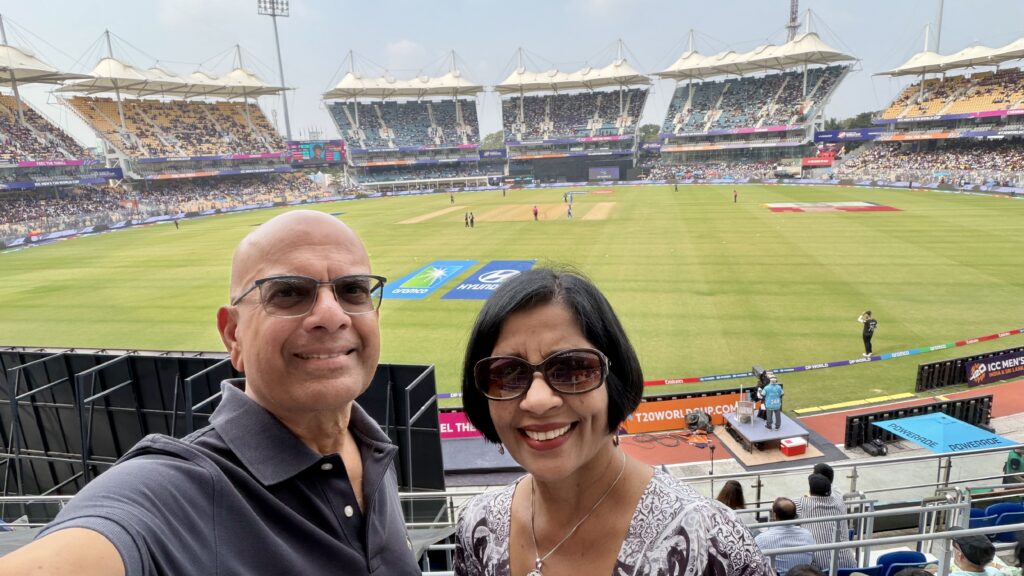
Watch a Cricket match in M.A Chidambaram Stadium – popularly known as Chepauk Stadium, is a historic cricket venue in Chennai, established in 1916 and managed by the Tamil Nadu Cricket Association. Named after former BCCI president M. A. Chidambaram, it is the second oldest international cricket stadium in India still in use, after Eden Gardens. The stadium has hosted iconic matches, including India’s first Test victory in 1952, the inaugural Ranji Trophy match, and several IPL finals featuring the Chennai Super Kings.
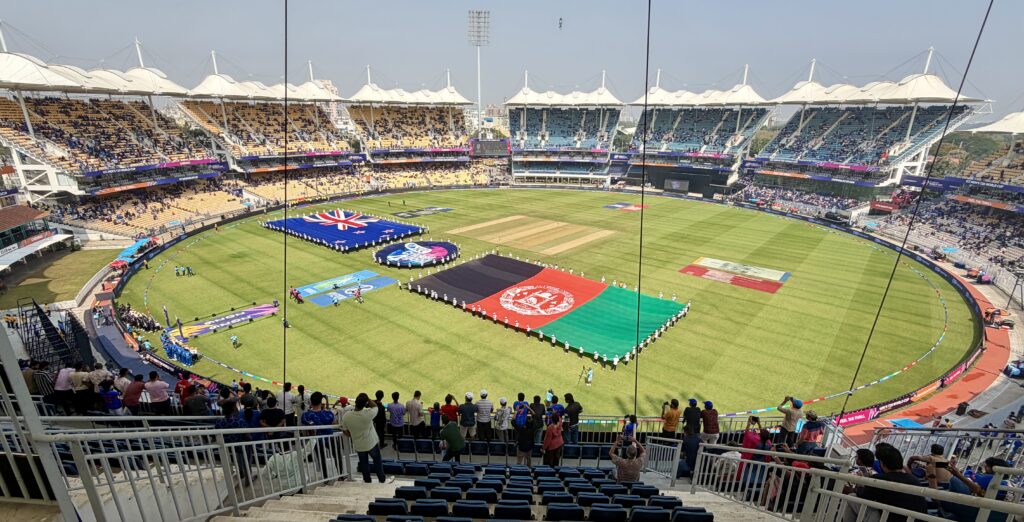
Watching cricket in India is an exciting experience—it’s almost a religion here. Stadiums are packed with passionate fans, waving flags, singing, beating drums, and chanting for their favorite teams, creating an electrifying atmosphere from start to finish.
Marina Beach – or simply the Marina, is a sprawling natural urban beach in Chennai along the Bay of Bengal. Stretching about 6 km from Fort St. George to Foreshore Estate, it is the second-longest urban beach in the world. Known for its sandy expanse, wide promenade, and iconic landmarks such as the Lighthouse, Anna Memorial, and Napier Bridge, the Marina attracts tens of thousands of visitors daily. Bathing is prohibited due to strong undercurrents, but the beach remains a vibrant spot for walks, local gatherings, and enjoying the sunrise or sunset.
Vivekananda House – is a historic landmark closely associated with Swami Vivekananda. He stayed here for nine days in 1897 after returning from his successful visit to the West, and the Sri Ramakrishna Math later operated from this building for nearly a decade. Today, it houses a modern interactive museum called Experience Vivekananda, featuring virtual reality, 3D/4D exhibits, and multimedia presentations that showcase Indian culture and Vivekananda’s life and teachings. Maintained by the Sri Ramakrishna Math, the site continues to inspire visitors from around the world.
The building itself is striking, built in 1842 along Marina Beach with thick walls, high ceilings, and arched verandas designed to withstand the coastal climate. Its distinctive red façade and colonial-era architecture make it one of the most recognizable heritage landmarks along the Chennai waterfront.
St. Thomas Cathedral Basilica – or San Thome Church, is a historic Catholic church in Chennai’s Santhome neighborhood. Built over the tomb of St. Thomas the Apostle, the current structure dates back to 1523 and was constructed by the Portuguese. In 1896, it was renovated in the neo-Gothic style favored by British architects, and consecrated the same year. Today, it serves as the cathedral of the Archdiocese of Madras-Mylapore and is a major pilgrimage site for visitors from India and around the world.
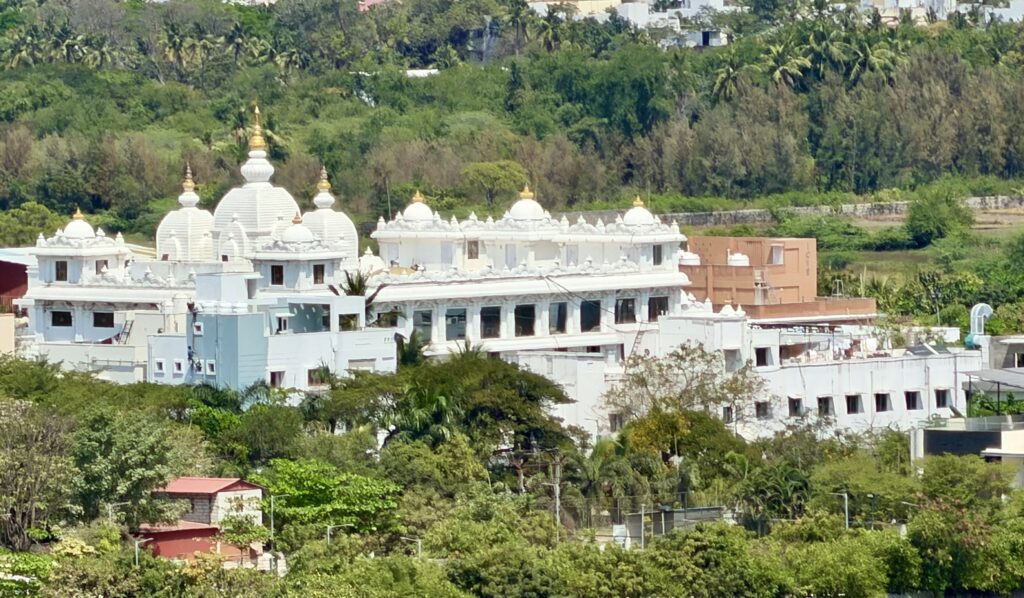
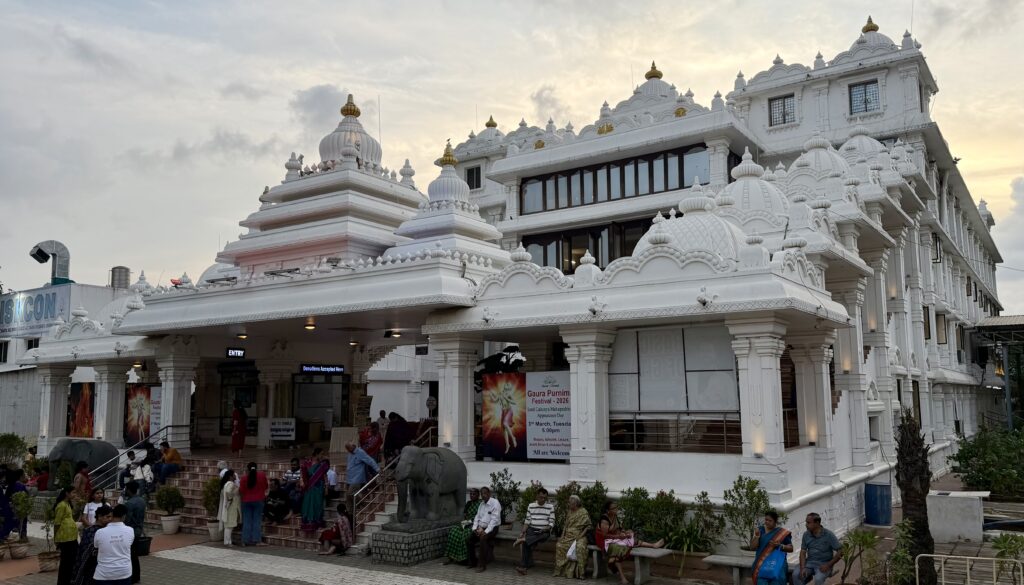
ISKCON Temple – I can see this temple from our apartment in Sholinganallur. Also known as Sri Radha Krishna Mandir, the temple is dedicated to Lord Krishna and Radha. It was formally inaugurated on 26 April 2012. The temple is an important spiritual and cultural center, known for its devotional programs, festivals, and teachings based on the Bhakti tradition.
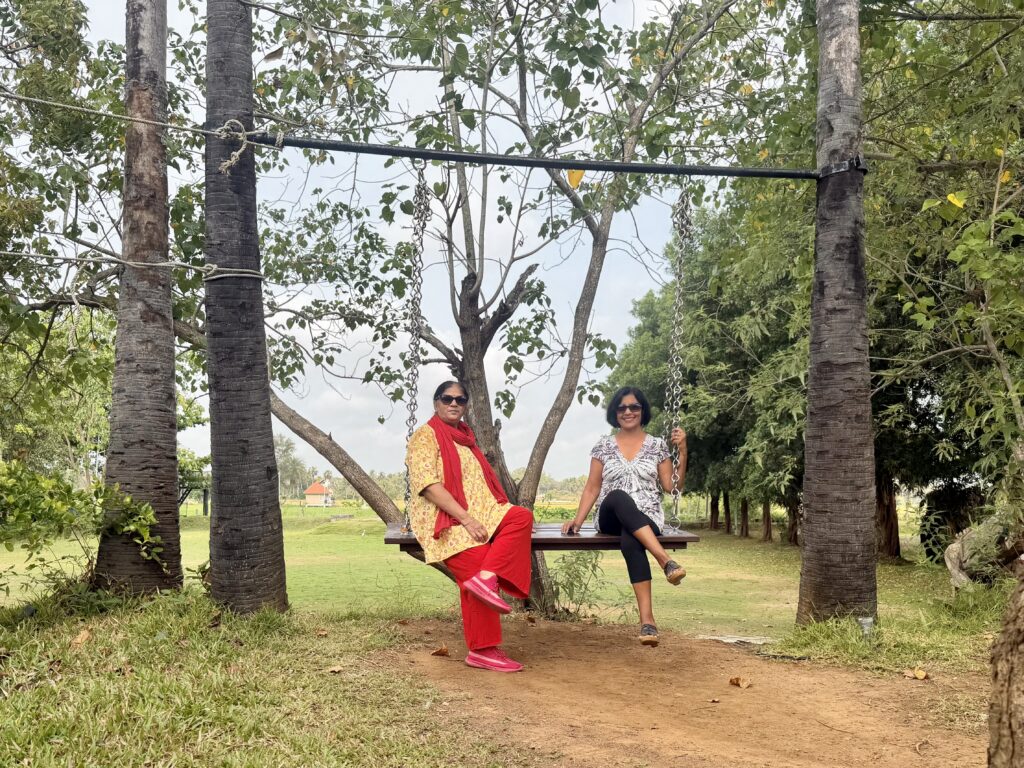
Marutham Village Resort – My niece booked this popular family-friendly getaway for an overnight stay to celebrate my brother’s birthday. Located about 40 km (less than an hour drive) from Sholinganallur, this resort is situated in the peaceful village of Vadakadambadi. The eco-conscious resort combines traditional Tamil village charm with clean and comfortable modern accommodations.
The resort offers a relaxing nature retreat experience with a range of activities and authentic home-style cuisine. Surrounded by rice farms and designed to reflect traditional village life, Marutham Village Resort provides visitors with a peaceful escape from city life.
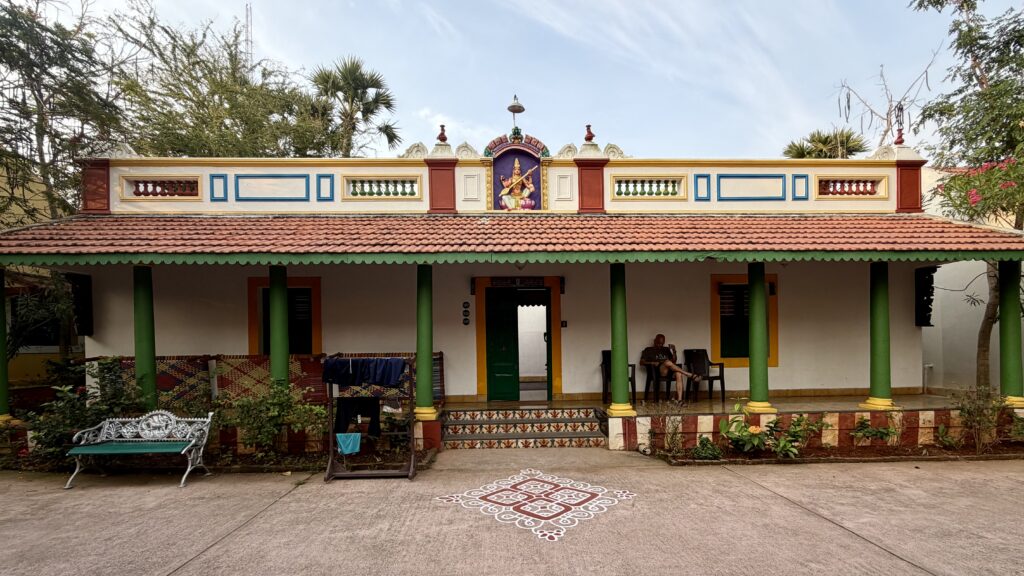
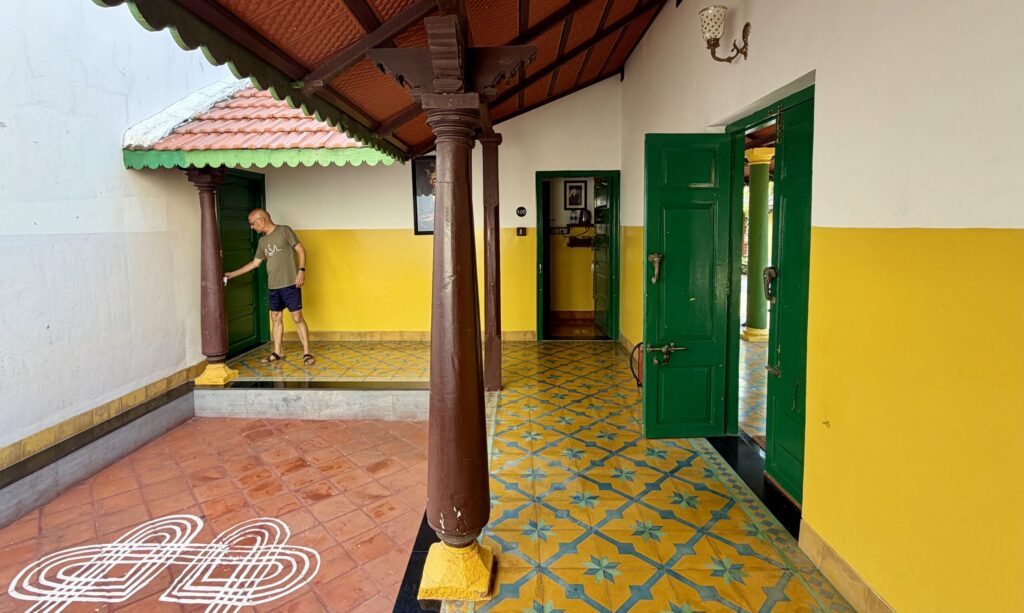
After arriving at Marutham Village Resort, we checked into our accommodation, which had a charming old-world look and feel. The layout featured a small open courtyard surrounded by three spacious rooms. Each room included a king-sized bed, a bathroom, and traditional design elements that added to the authentic village atmosphere.
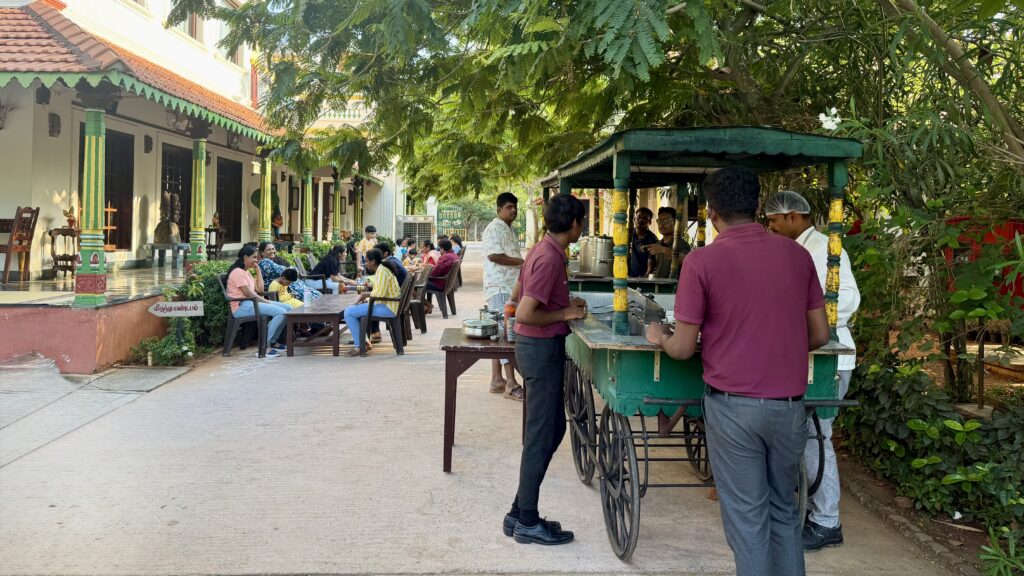
In the afternoon, we enjoyed tea and snacks before spending some time swimming in the pool. Although the pool was enjoyable, its smaller size meant it could get crowded during peak hours. The resort also offered several fun activities, including an open badminton court, pottery making, bracelet crafting with beads, and traditional village-style experiences such as getting drenched near the pump set.
The next morning, we went on an early guided walk through the rice fields surrounding Marutham Village Resort. Our guide explained the different stages of rice cultivation, from newly planted seedlings to month-old crops and fully matured rice ready for harvest. He also shared insights into the rotation crops grown in the fields and the traditional farming practices followed in the region.