3 nights in Lemon Tree, Aurangabad
Ajanta and Ellora Caves are among India’s most remarkable historical and architectural treasures, located near Aurangabad (Chhatrapati Sambhajinagar) in Maharashtra. Carved into rocky hillsides, these ancient cave complexes date back between the 2nd century BCE and the 10th century CE and are celebrated for their artistic excellence. Recognized as UNESCO World Heritage Sites, Ajanta and Ellora attract visitors from around the world, offering a fascinating glimpse into India’s rich artistic, religious, and cultural heritage.
Where to stay – Aurangabad is the nearest airport and an ideal base for exploring the Ajanta and Ellora Caves. It offers a wide range of good hotels, making it the preferred choice for most travelers. The Ellora Caves are about 30 km northwest of Aurangabad and can be reached in 45–50 minutes, while the Ajanta Caves are approximately 103 km northeast, requiring a drive of just over two hours. To make the most of the experience, it is advisable to spend one full day at each cave complex.
- Day 1
- Ellora Caves
- Ellora Caves – Video
- Grishneshwar Temple
- Tomb of Malik Ambar
- Bibi Ka Maqbara
- Day 2
- Ajanta Caves
————————– Day 1 ————————-
Ellora Caves – represent a unique blend of three major religions—Buddhism, Hinduism, and Jainism—coexisting in harmony. The highlight of Ellora is the Kailasa Temple (Cave 16), a massive monolithic structure dedicated to Lord Shiva, carved entirely out of a single rock and regarded as one of the greatest achievements of ancient Indian architecture.
Upon entering the complex, Cave 16, the iconic Kailasa Temple, is the first cave you will encounter. We hired a guide who spent nearly two hours with us, explaining the history and architectural details of some of the key caves—5, 10, 12, and 16. After the guided tour, we explored most of the 34 caves on our own at a relaxed pace. Here are some important information about the caves –
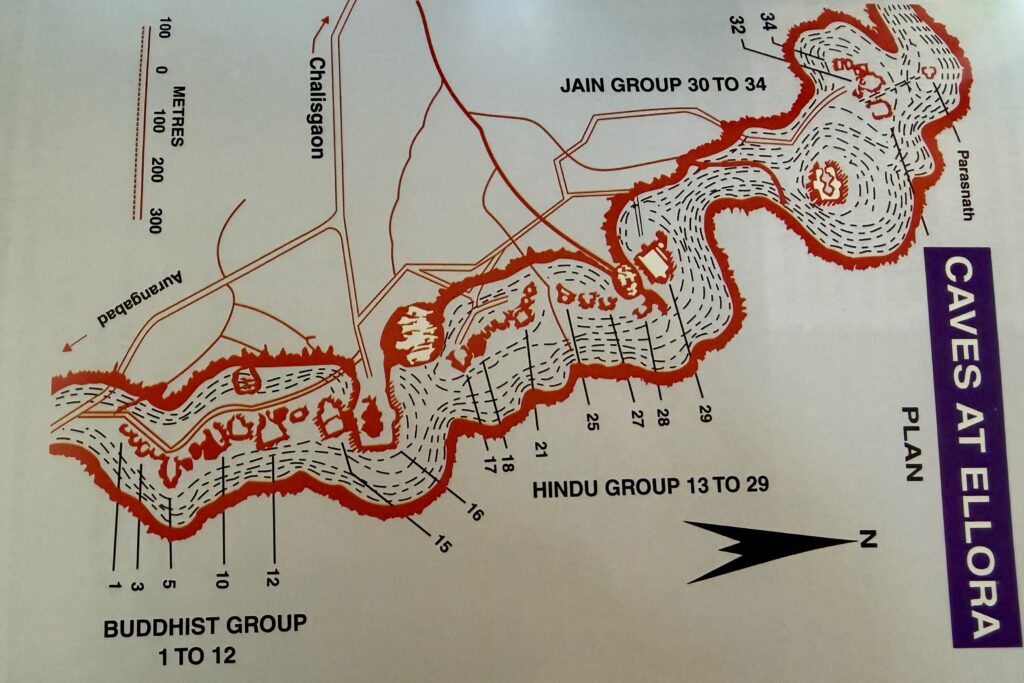
- There are 34 rock-cut Caves carved into the Charanandri Hills between 6th and 10th CE
- Caves 1-12 are related to Buddhist faith
- Caves 13-29 are related to Hindu faith
- Caves 30-34 are related to Jain faith
- The most famous is Cave 16, the monolithic Kailasa Temple.
- The caves are spread across a distance of about 2–3 km, and visitors can choose to walk the entire stretch if they are up for it.
- Electric shuttle vehicles run between the main entrance and the Jain caves (Caves 30–34), located about 2 km away. After visiting the Jain caves, the shuttle takes visitors to Cave 29, around 850 m away, and then returns them to the starting point.
- By the time we finished exploring Caves 1–16, we were quite exhausted, so we made good use of this convenient shuttle service.
- We spent about 5 hours here exploring the caves starting with cave 16.
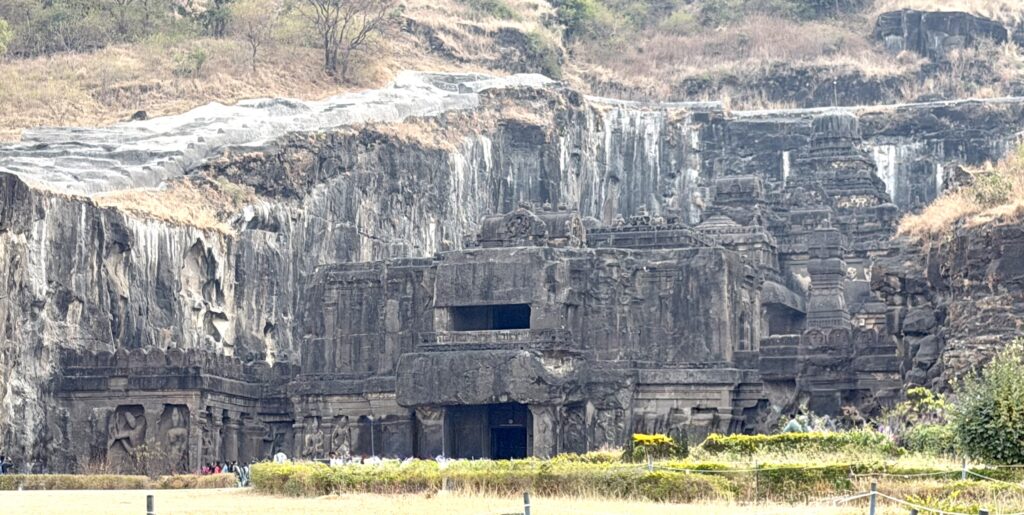
Ellora, Cave 16 – or The Kailasa Temple, is the largest and most spectacular rock-cut Hindu temple at the Ellora Caves. Carved from a single massive rock, this monumental structure is regarded as one of the finest achievements of ancient Indian architecture and is often described as the pinnacle of the rock-cut architectural tradition.
Rising about 32.6 meters (107 feet) above the courtyard below, the temple was sculpted top-down from the cliff face—an extraordinary feat of engineering and craftsmanship. Most of its construction is attributed to the 8th-century Rashtrakuta king Krishna I, with later additions completed over time. The temple’s architecture reflects a blend of Pallava and Chalukya styles, and its grand reliefs and free-standing sculptures are as impressive as the structure itself. Though the original paintings have largely faded, the scale, detail, and artistry of the Kailasa Temple continue to leave visitors in awe.
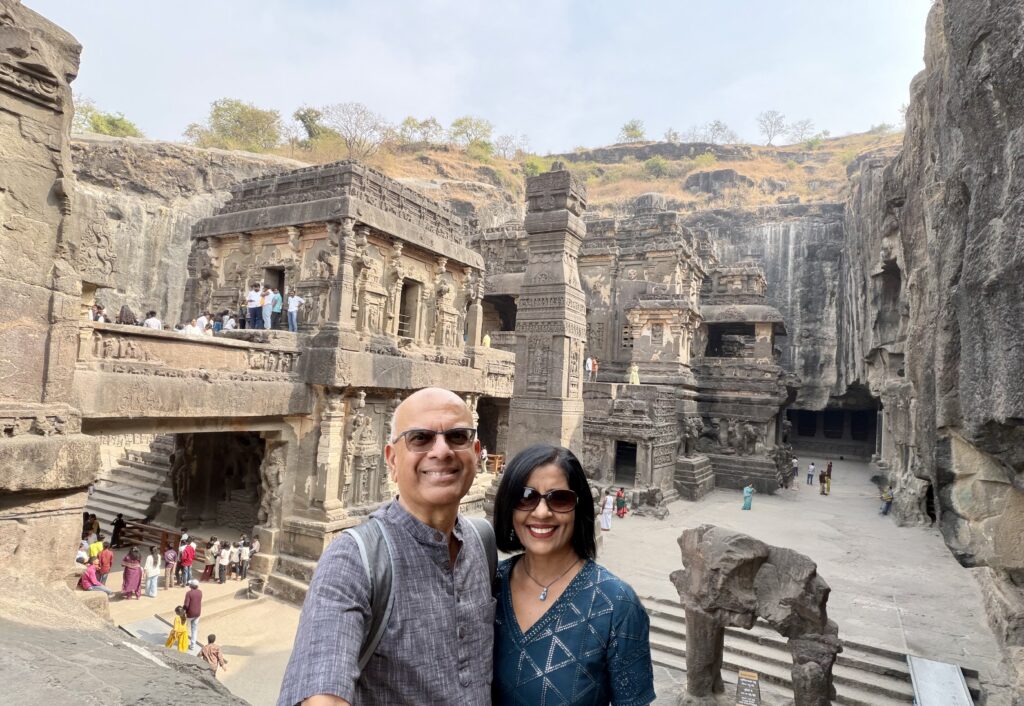
The Kailasa Temple dedicated to Lord Shiva was hewn from a single rock by 7,000 laborers and entailed removing 2,000 tons of rock. The temple consists of a gateway, antechamber, assembly hall, sanctuary, and a tower.
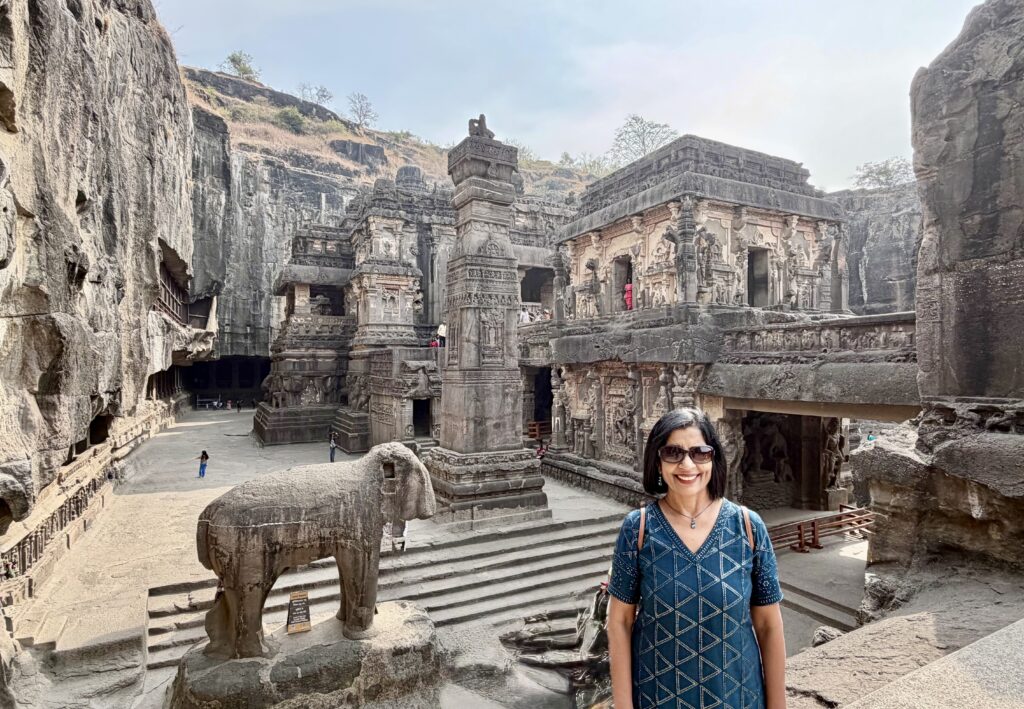
Other key points of interest within Cave 16 complex include –
- Ramayana panel – This panel depicts scenes from the epic Ramayana.
- Mahabharata panel – The top 5 lines depict scenes from the epic Mahabharata. The last 2 lines on this panel depict life of lord Krishna.
- Ravananugraha relief – Ravana, the demon king is a devout worshipper of Shiva. One day, Ravana is passing in his pushpak vimaan over Kailasa mountain. As Shiva and Parvati are residing on Kailasa, Kartikeya (Son of Shiva and Parvati), does not allow Ravana to pass through. Angered by this, Ravana tries to shake the mountain with all his might which is depicted in this panel.
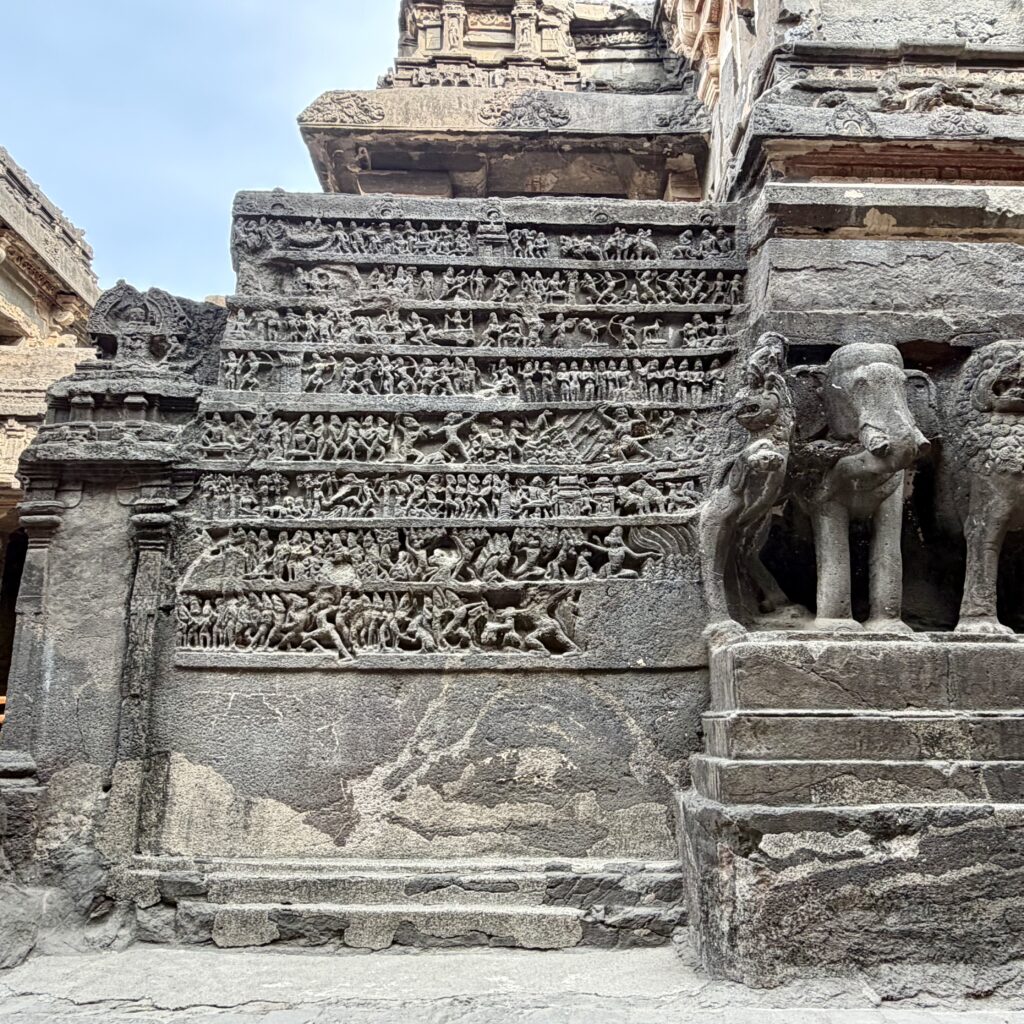
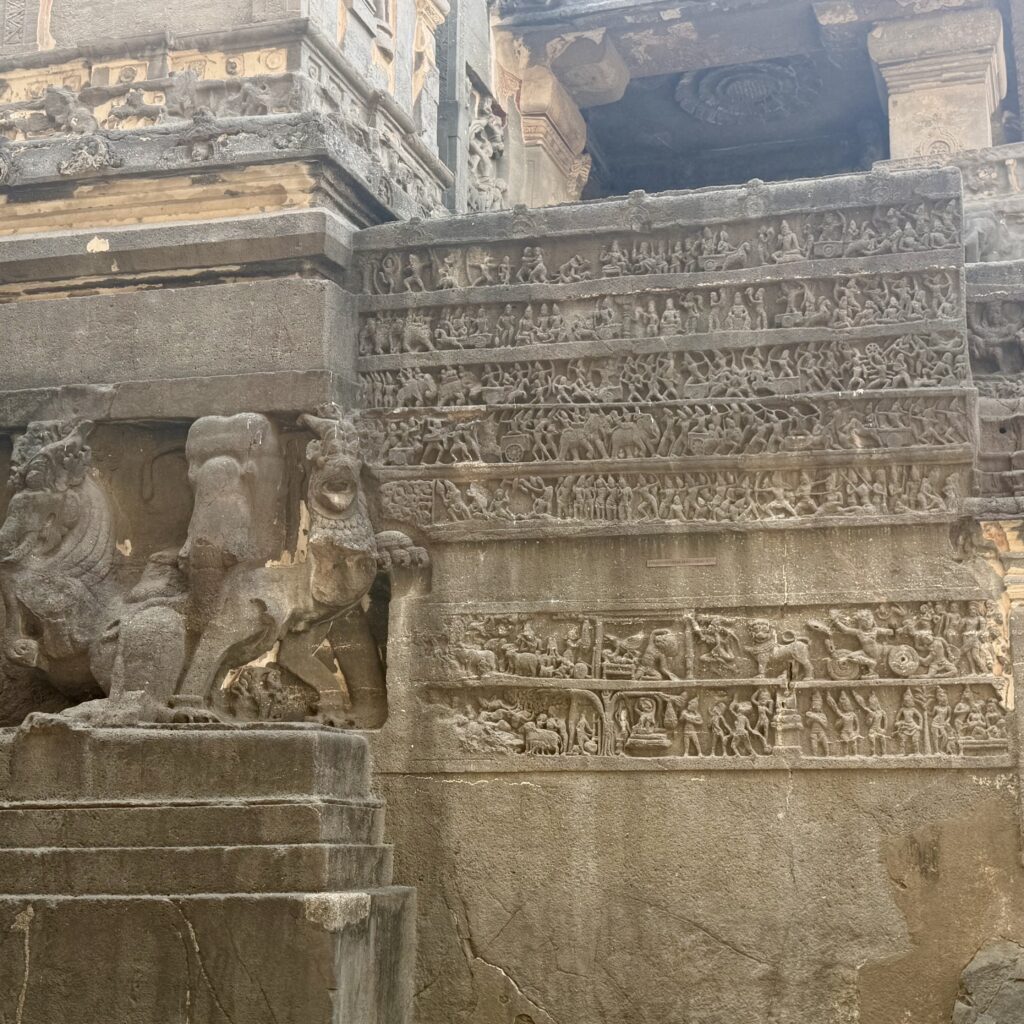
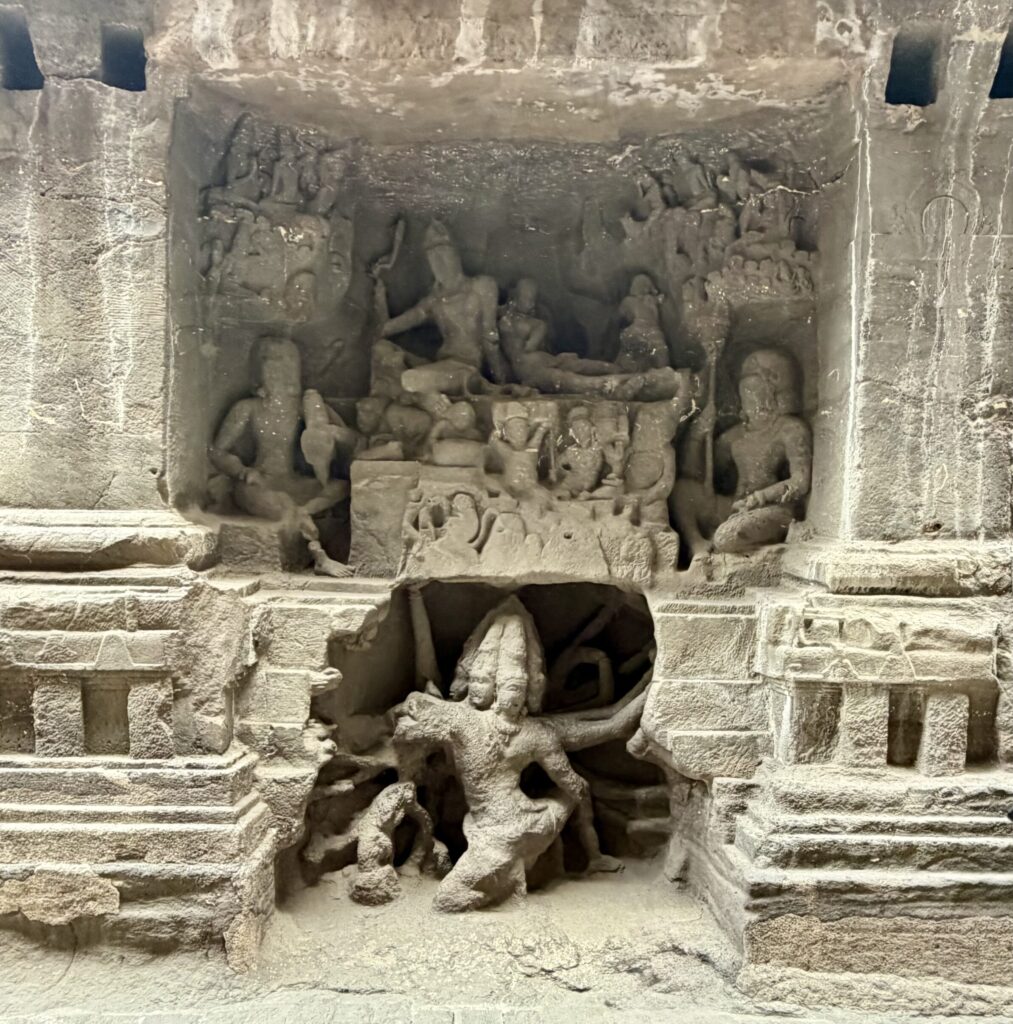
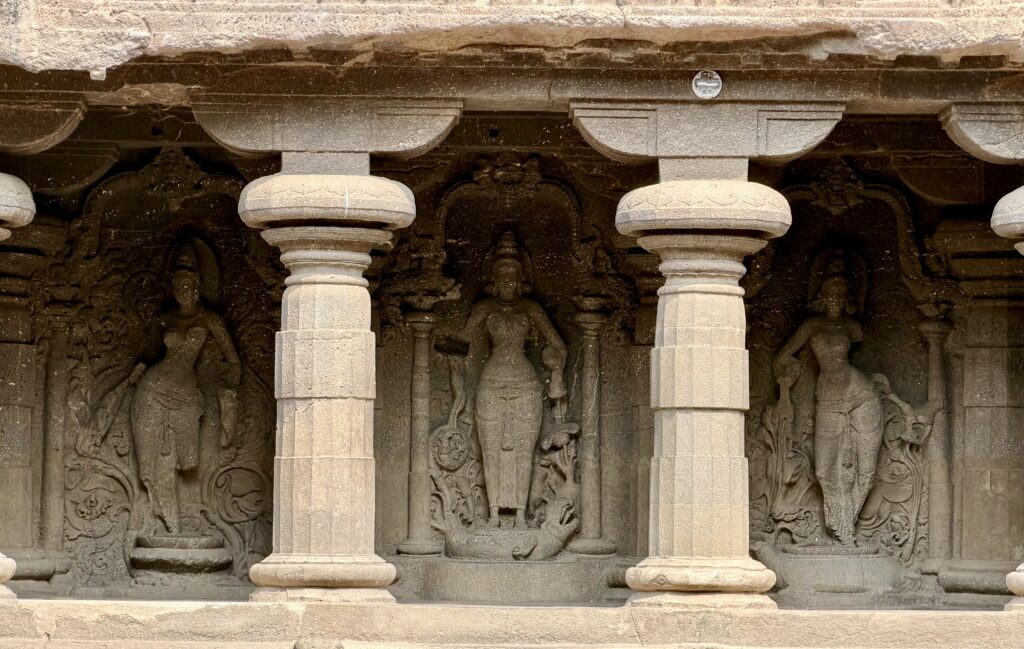
- Triveni Sangam – The Kailasa Temple complex features a shrine dedicated to the three river goddesses – Ganga, Yamuna, and Saraswati, symbolizing a spiritual Triveni Sangam. These tall, elegant, and confident figures represent the life-giving, sacred rivers of India, often depicted as paying homage to Lord Shiva.
——————————
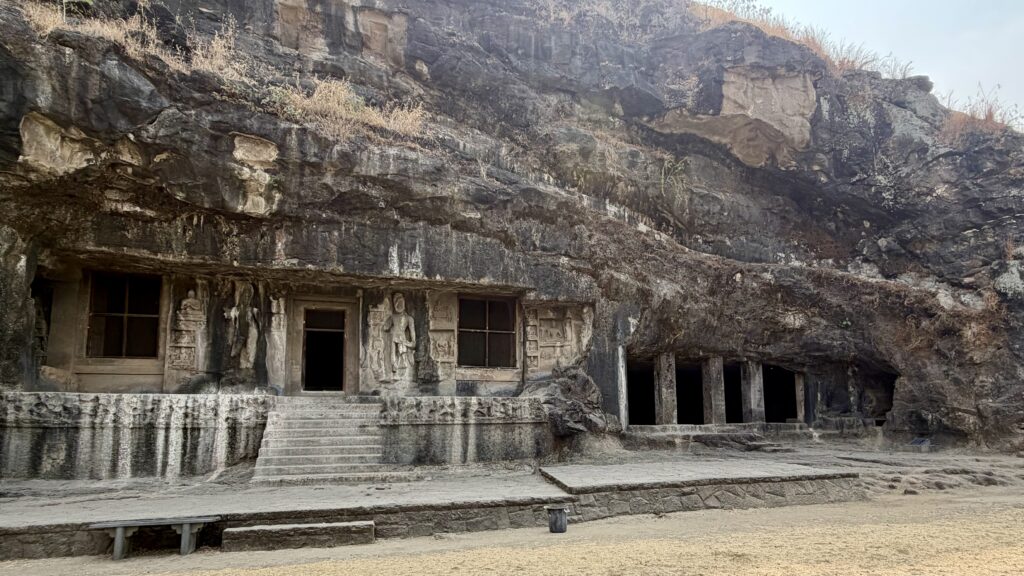
Ellora, Cave 1, 2 – Cave 1 is the earliest excavation at Ellora. It is a plain Vihara with 8 cells which was used by the monks for residential purpose. Cave 2 is accessed by a flight of stairs, with the entrance flanked by dwarapalas (door keepers). The interior of Cave 2 has a hall with pillars and in the center of the back wall is a 3m high seated Buddha.
——————————
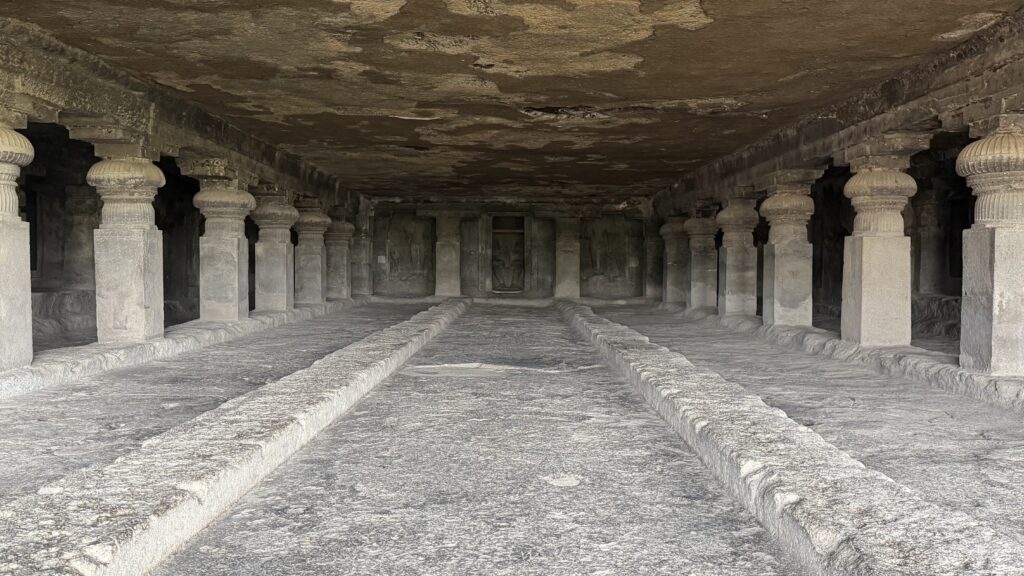
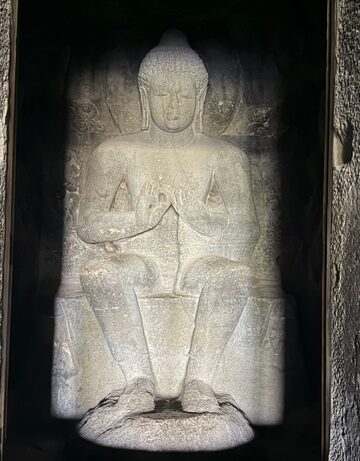
Ellora, Cave 5 – Known as Maharwada, it is the largest of the single storey caves measuring 17.6m by 35.66m. The cave contains 24 massive pillars and a shrine with a giant statue of Buddha. The cave was probably used by monks as a class-room or a dining hall.
——————————
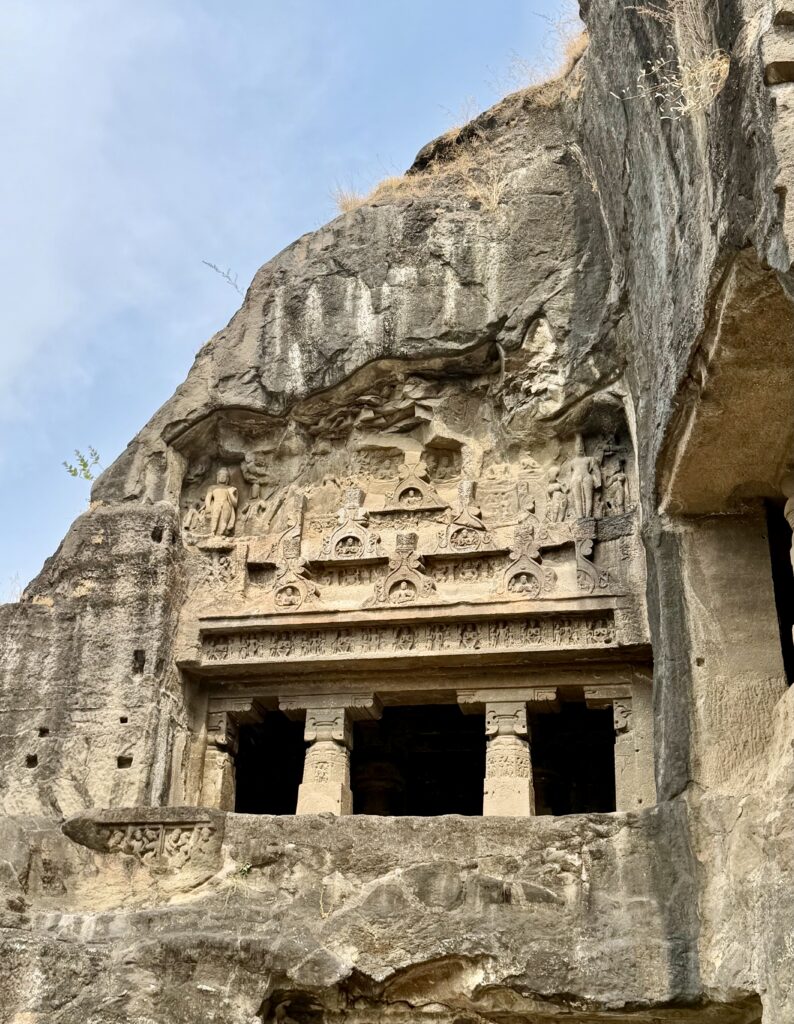
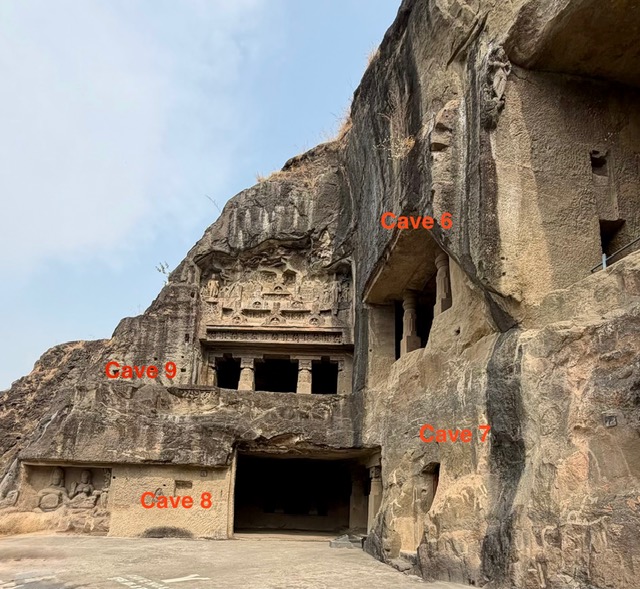
Ellora, Cave 9 – The facade of this cave is richly decorated with rows of Chaitya windows separated by figures of dwarfs. The cave can be accessed through the hall of Cave 6.
——————————
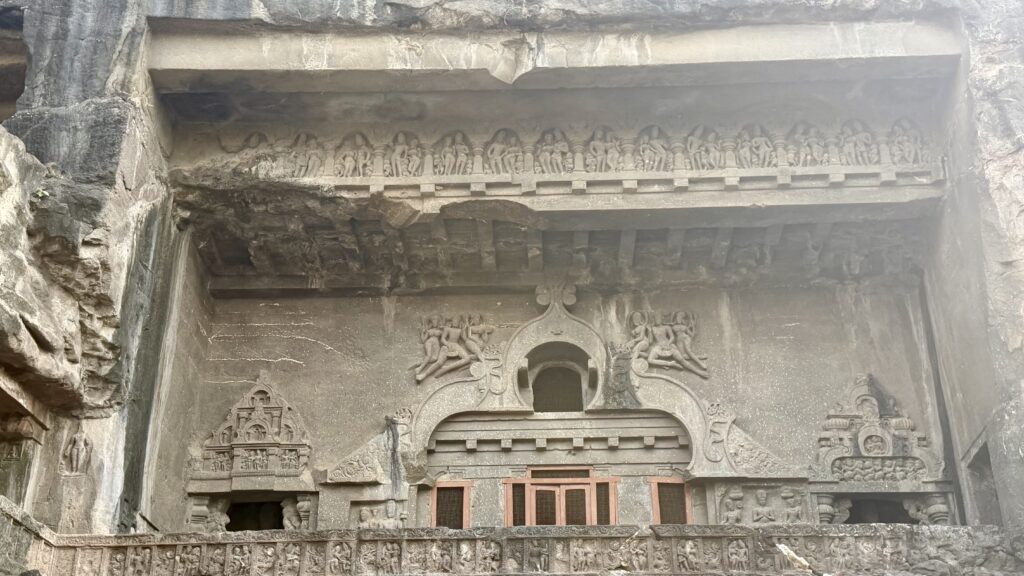
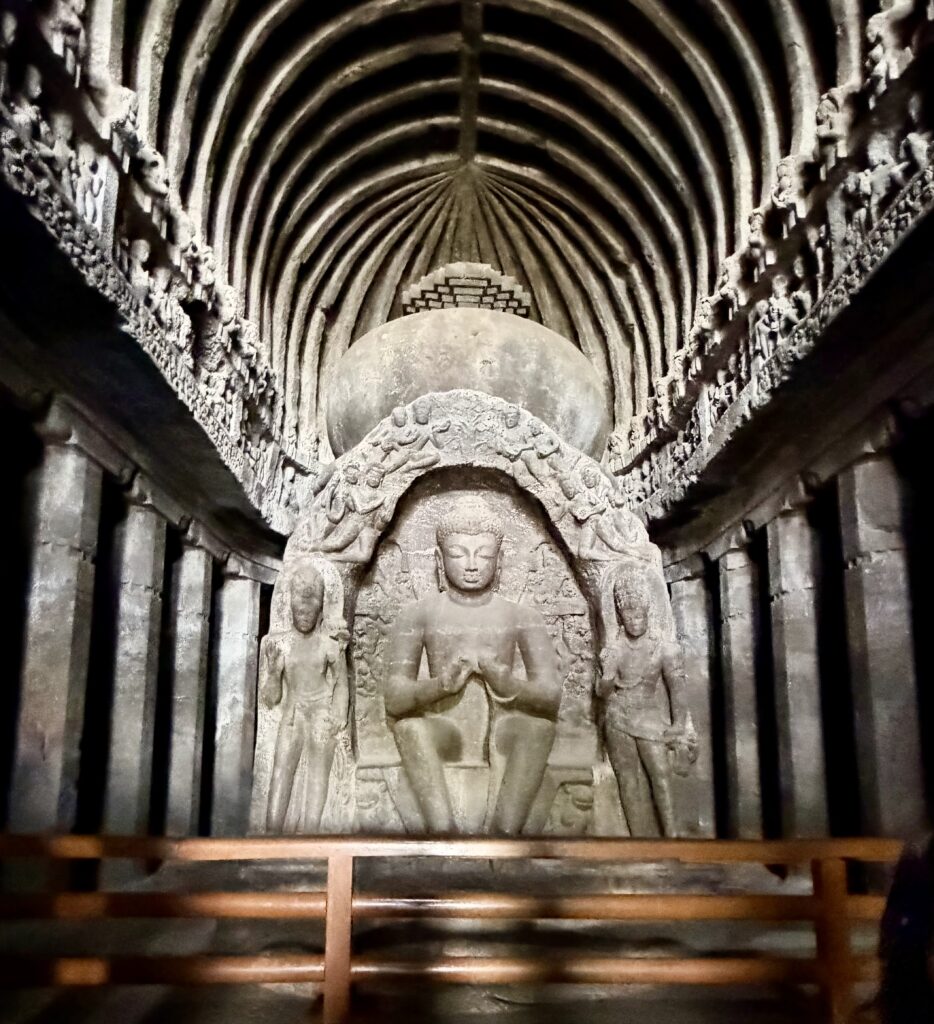
Ellora, Cave 10 – aka the Visvakarma Cave, is the only Chaitya (chapel) cave in the Ellora complex that also functioned as a monastery. It features a large open courtyard at the front, leading to a pillared verandah, and is renowned for its impressive prayer hall and architectural design. The exterior decorations gives the impression of use of wood as the building material instead of stone.
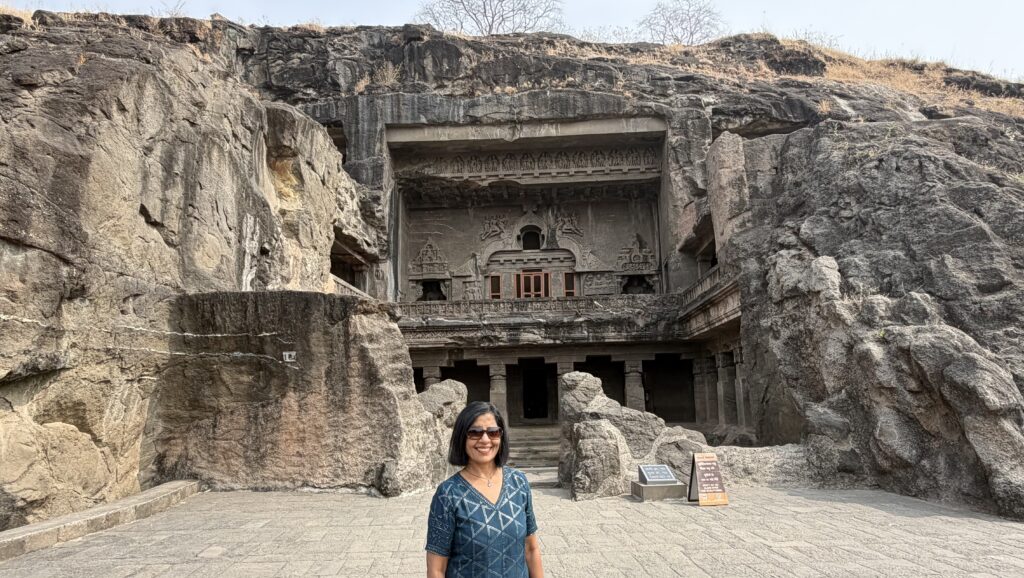
The façade of Cave 10 Chaitya features a distinctive horseshoe-shaped gavaksha arch, with flying celestial figures crowning the upper balcony doorway. The chamber inside has 28 columns which runs around a decorated stupa with a massive preaching Buddha carved in the forefront.
——————————
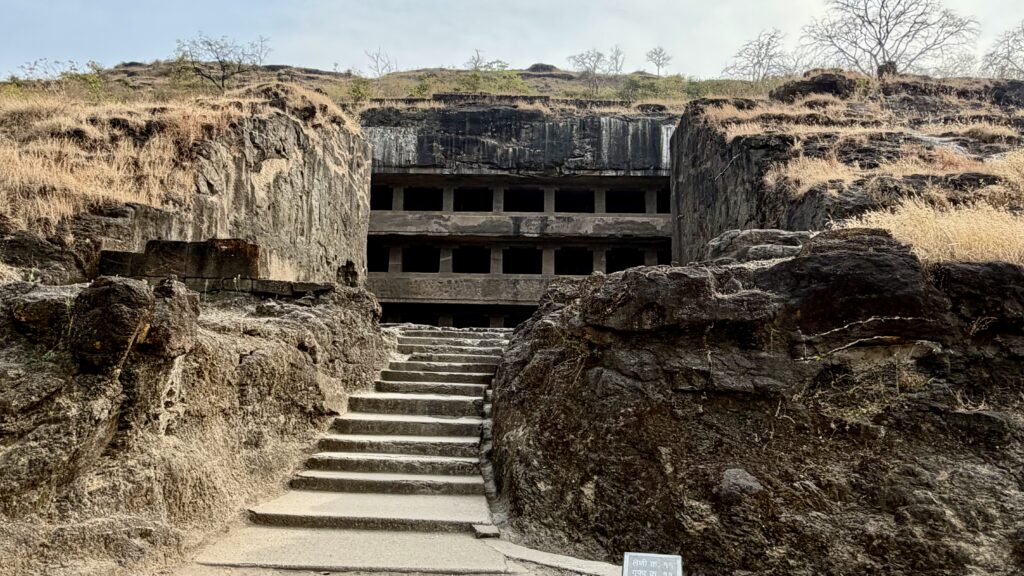
Ellora, Cave 11 – was known as Do Taal (2-storeyed). A third storey was discovered in 1876 when the basement was discovered. The lowest level is a verandah with a shrine and 2 cells at the back. The upper level has a porch opening into a long corridor hall with a Buddha shrine at the rear.
——————————
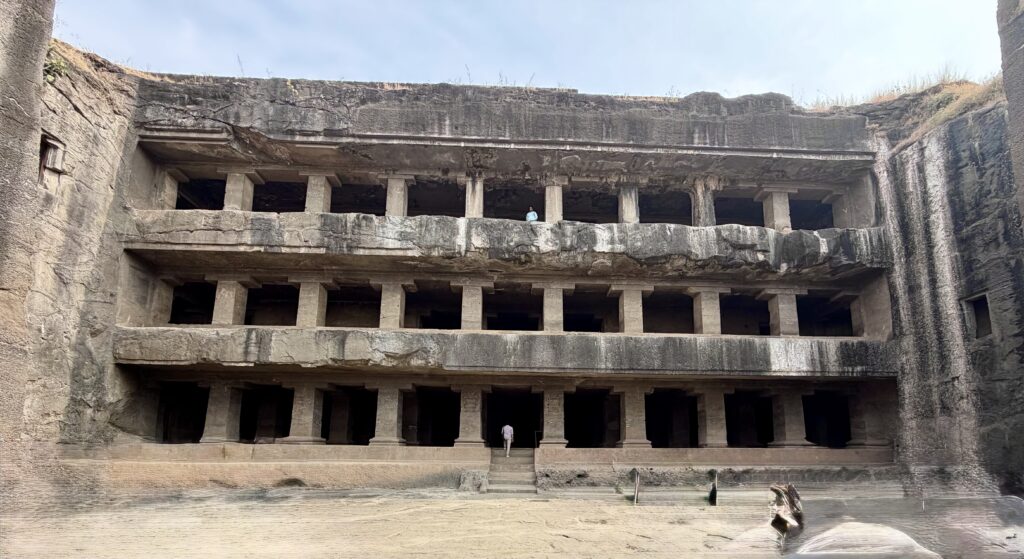
Ellora, Cave 12 – Known as Tin Taal (3-storeyed) has cells for sleeping (stone benches) on the lower floor. The second storey has a large hall and the third floor has 14 impressive images of Buddha, 7 in teaching attitude and 7 in meditation pose.
——————————
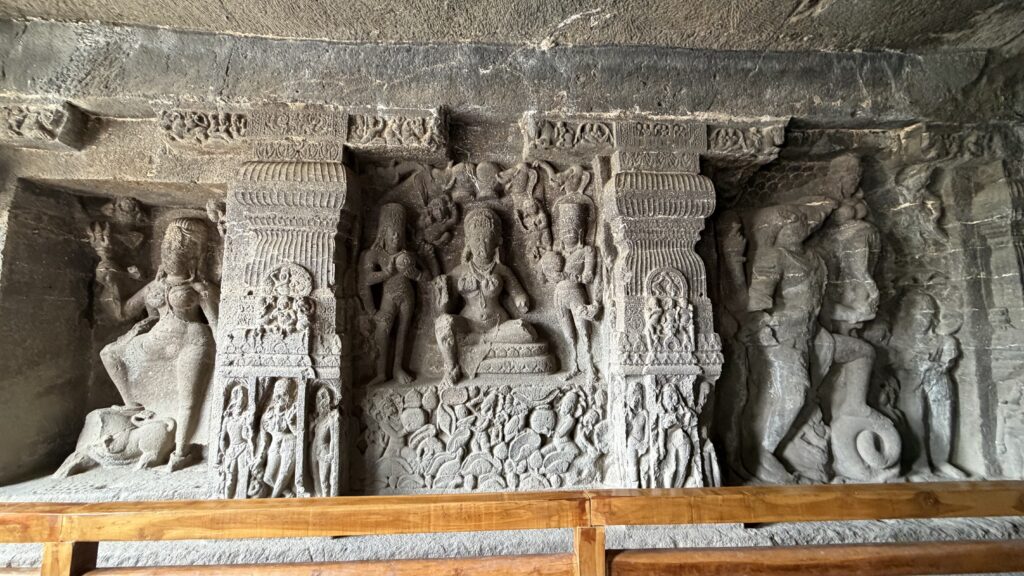
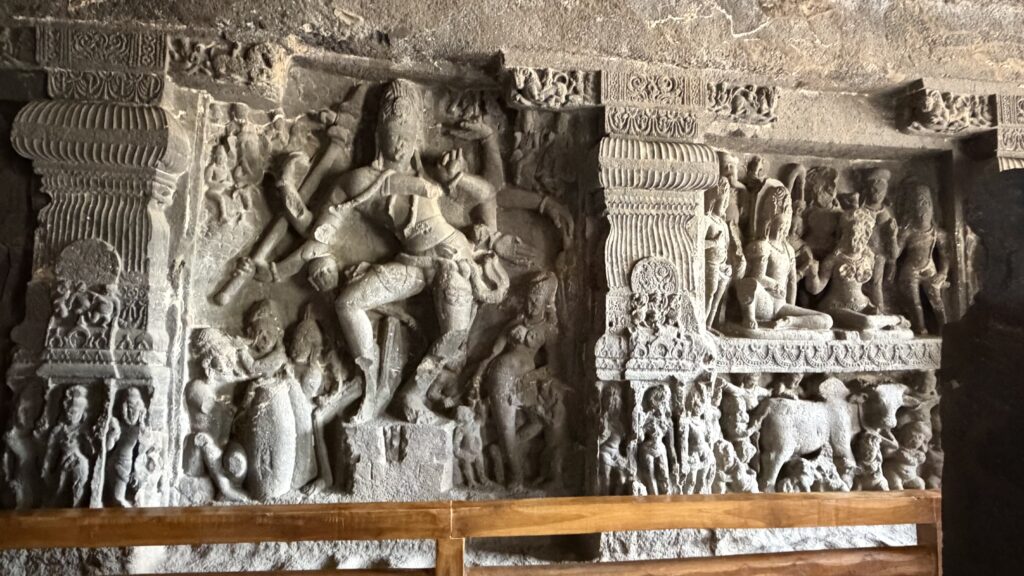
Ellora, Cave 13, 14 – There is nothing in Cave 13 of interest, it was probably a resting place or Dharmashala. Cave 14 aka Ravana-ki-khai, dates from the 7th century. It is single storied with a pillared verandah and a shrine.
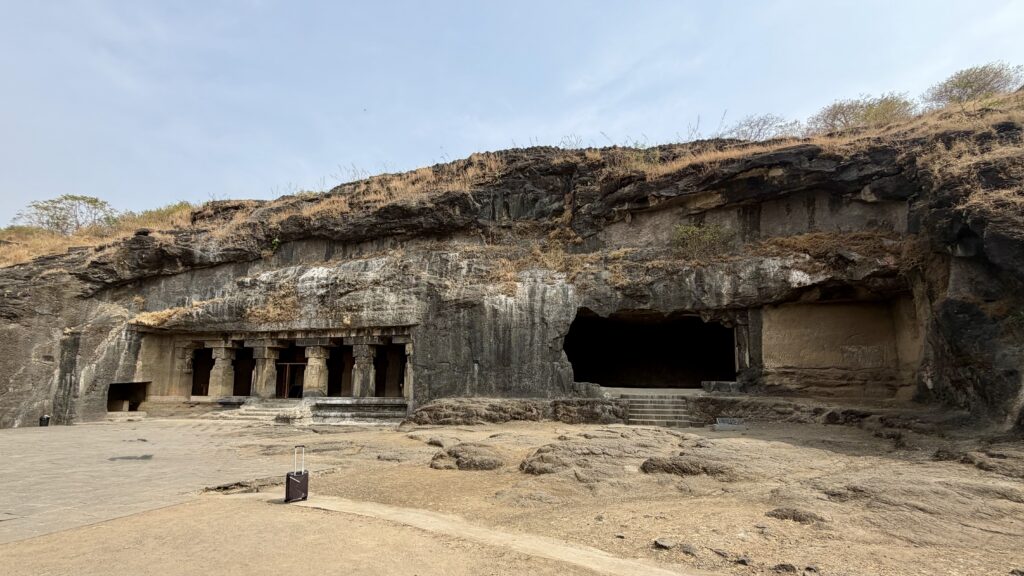
The sculptures in Cave 14 are all themed from Hindu mythology, the Puranas, and the Epics. Many sculpture panels represent manifestations of Shiva and there are a few of Lord Vishnu and Lord Brahma.
——————————
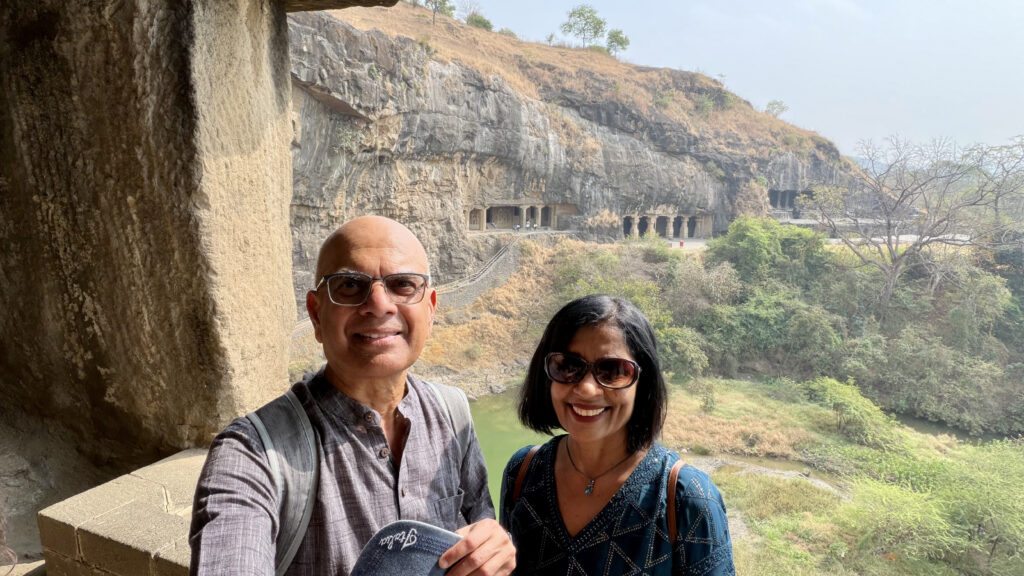
Ellora, Cave 26, 27, 28 – We got a view of the 3 caves from Cave 29. A waterfall which flows over Cave 28, is visible during the monsoon season, though there was no water when we visited the site in February.
——————————
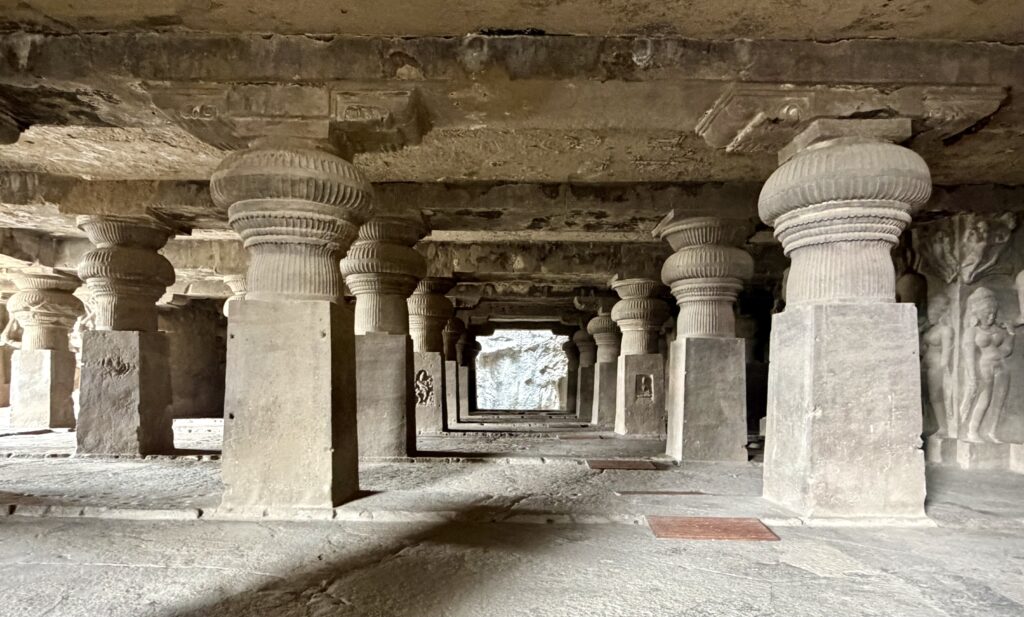
Ellora, Cave 29 – This is second best cave after Kailasa Temple in Ellora. It is also known as Dhumarlena and Sita-nahani (bathroom of Sita). Almost 50m wide and 5m high, it is similar to Elephanta Caves near Mumbai. There are 3 entrances to the cave, each guarded by seated lions. Built in the middle of 7th century, the cave has 26 big and beautifully carved pillars.
Note – We took a shuttle to Cave 29 after exploring the Jain Caves 30-34. This stop is included when you buy shuttle tickets to visit the Jain group of caves (30–34). Shuttles are available from an area near Cave 16. It is possible to walk if you have any energy left after exploring caves 1-16.
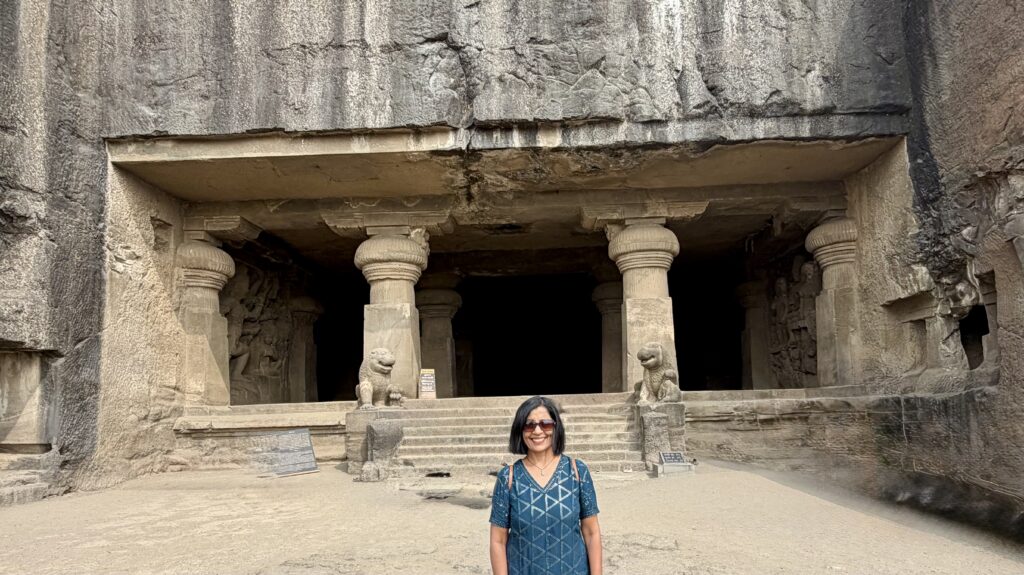
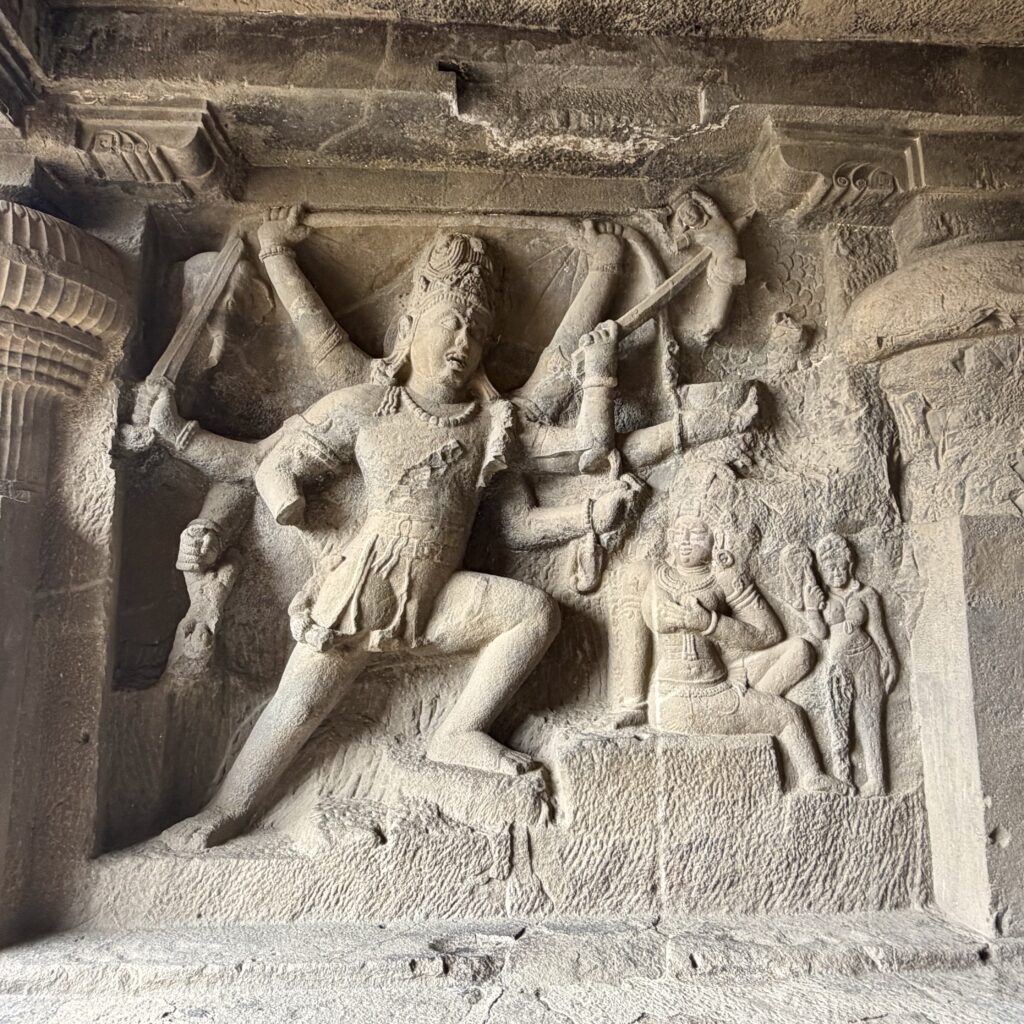
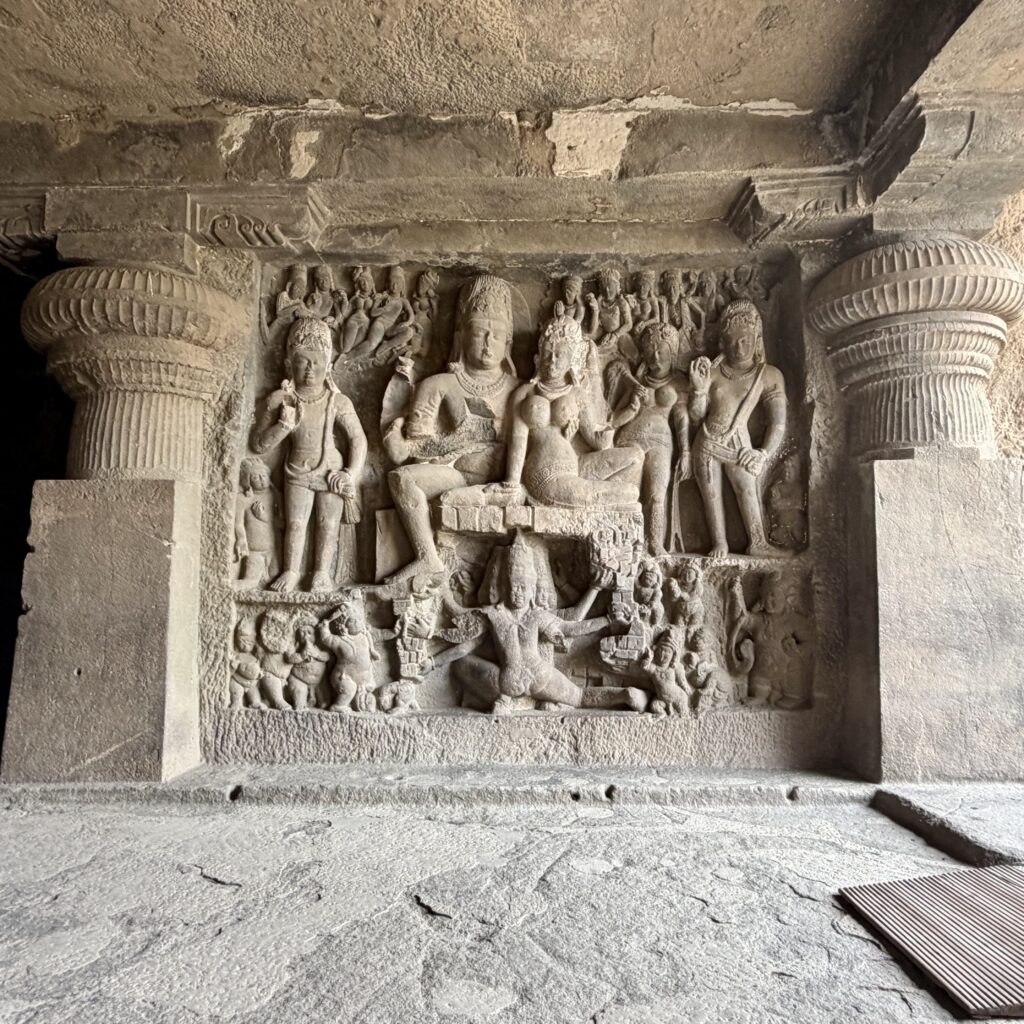
The cave has a panel with Shiva killing the demon Andhakasur as a seated Parvati looks on admiringly. Shiva holds a skull cap in his right hand to catch the demon’s blood. Another panel depicts Ravana shaking mount Kailasa.
———— Jain Group of Caves 30-34 ————
After we explored caves 1-16, we took a shuttle to the Jain group of caves 30-34. Shuttles are available from an area near Cave 16. The same shuttle will also take you to Cave 29 (see section above) before dropping you off at the starting point.
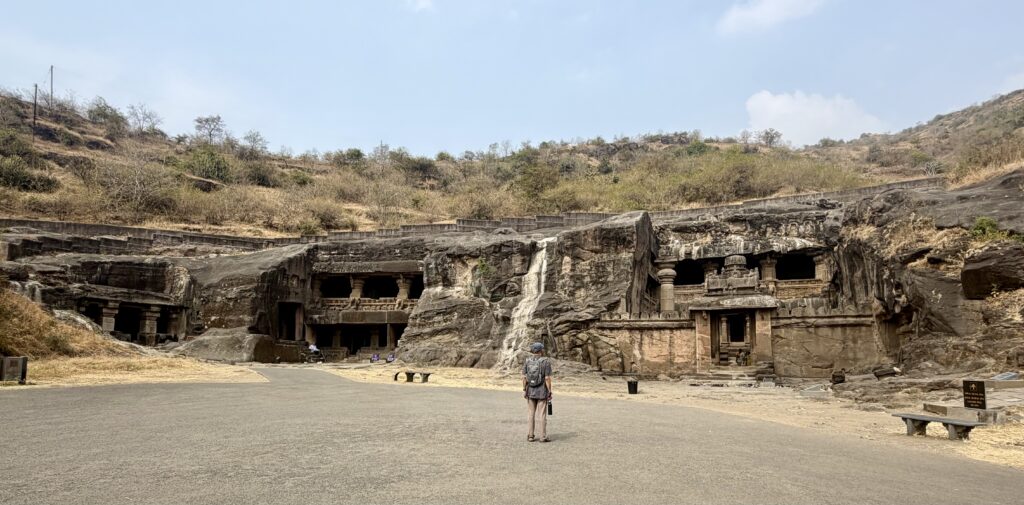
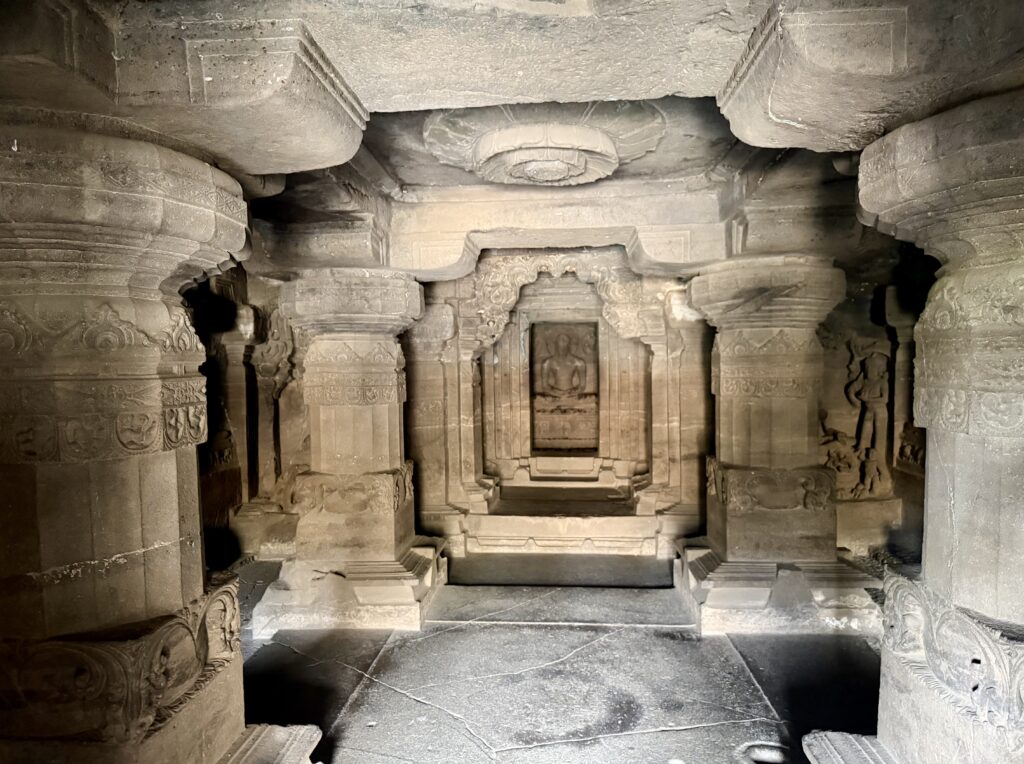
Ellora, Cave 32 – Built in the 9th century, this cave is known as Indra Sabha and is the finest of the Jain series dedicated to Mahavira. A simple gateway leads into an open courtyard in the middle of which stands the shrine which looks like a mini Kailasa.
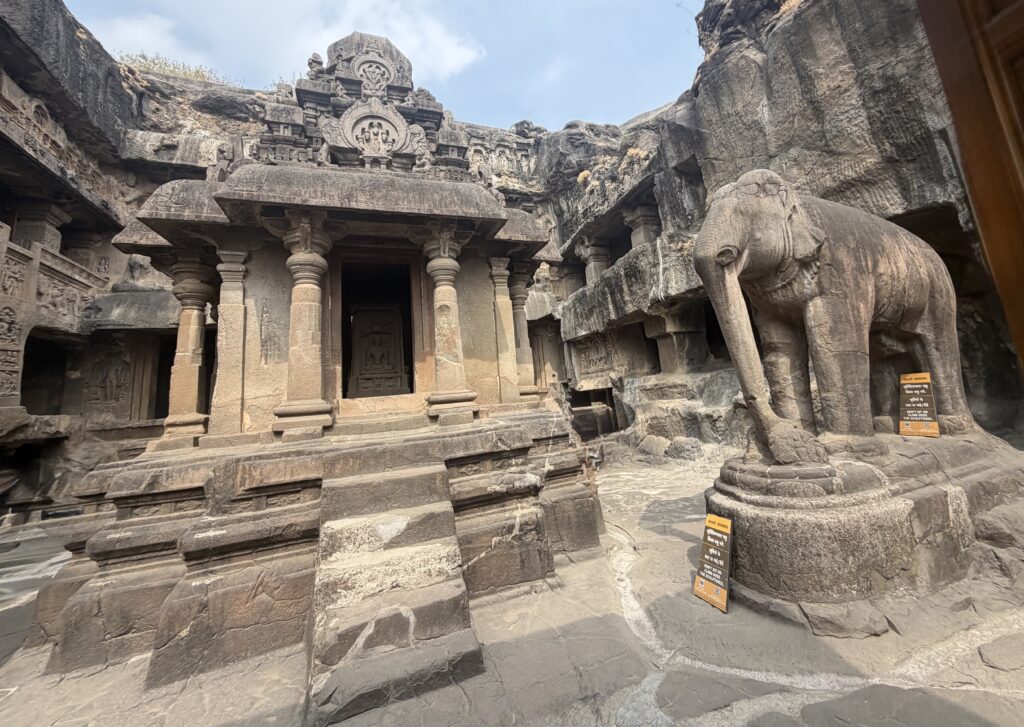
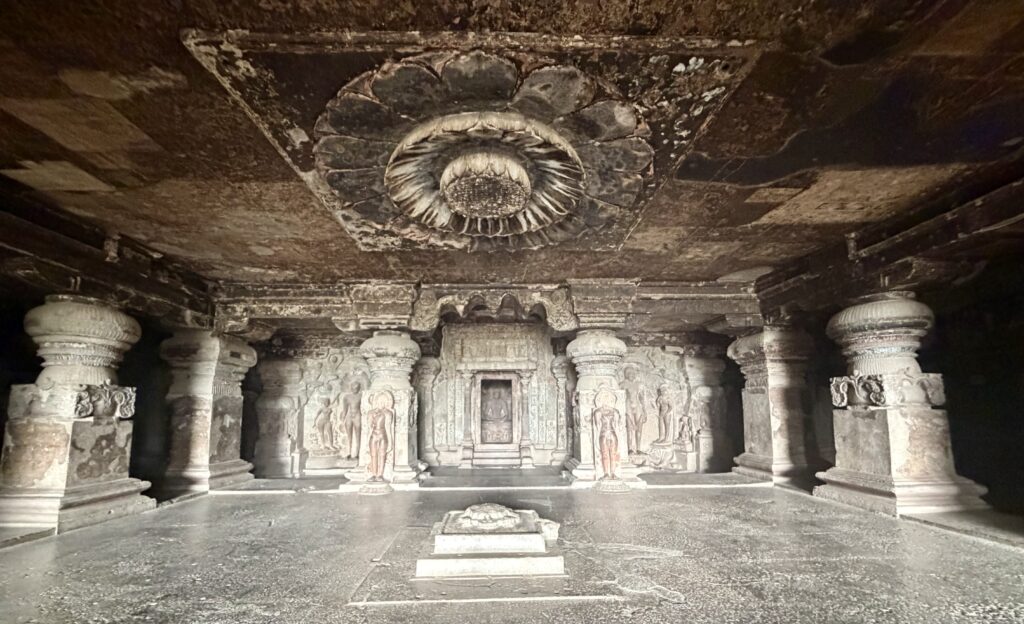
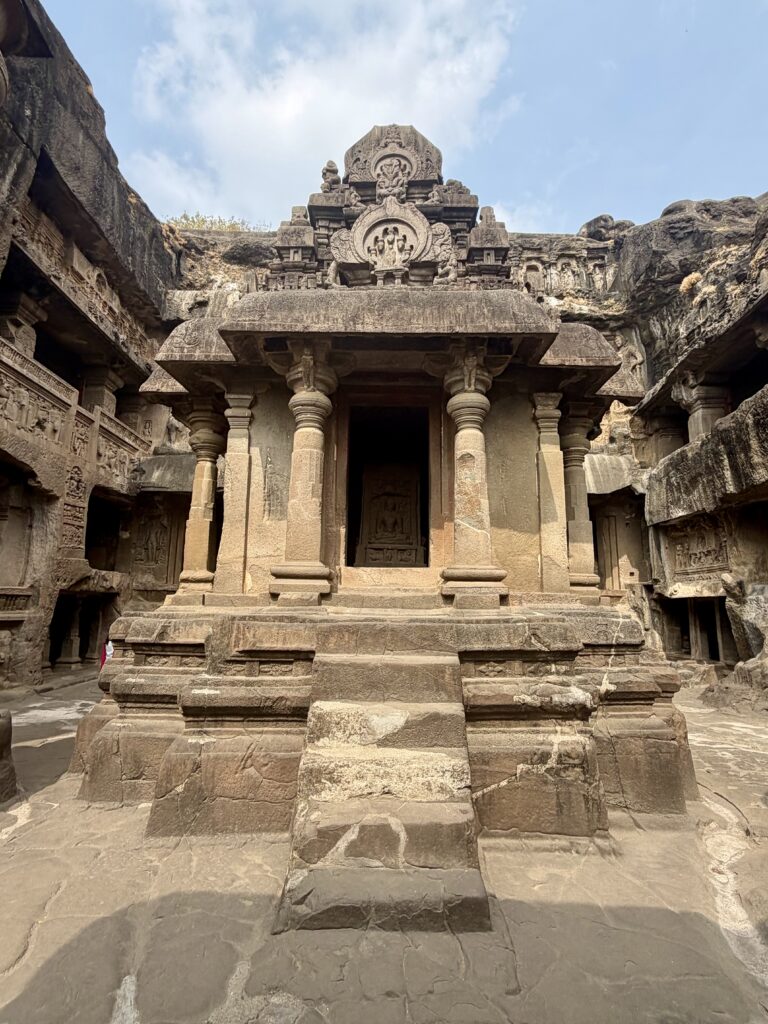
Ellora, Cave 34 – One of the last Jain caves, it has some good sculptures of Parashwanath, Mahavira, and Gommateshwara.
Ellora Caves – Video
Grishneshwar Temple – Located less than 2 km from Ellora caves, this temple is the 12th of the 12 sacred Jyotirlinga shrines dedicated to Lord Shiva. It holds special significance for devotees undertaking the pilgrimage to visit all twelve Jyotirlingas across India. Rebuilt in the 18th century, the temple is constructed from red stone and showcases elegant five-tier Hemadpanti-style architecture. Grishneshwar Temple is especially known for offering direct, in-person sparsh (touch) darshan of the east-facing Shiva linga, making it a deeply spiritual and unique experience for worshippers.
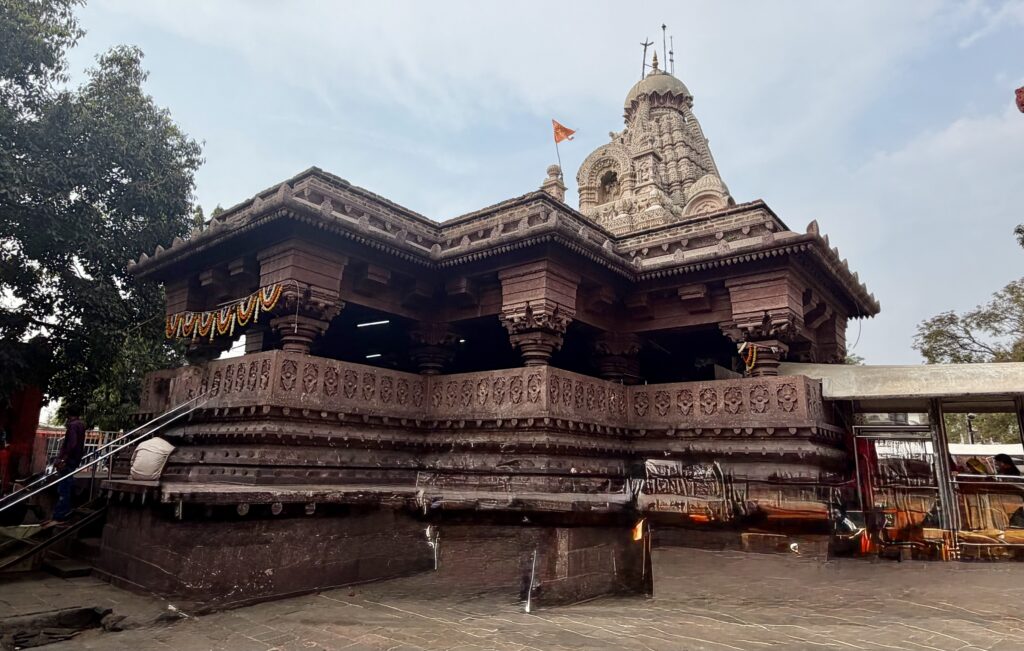
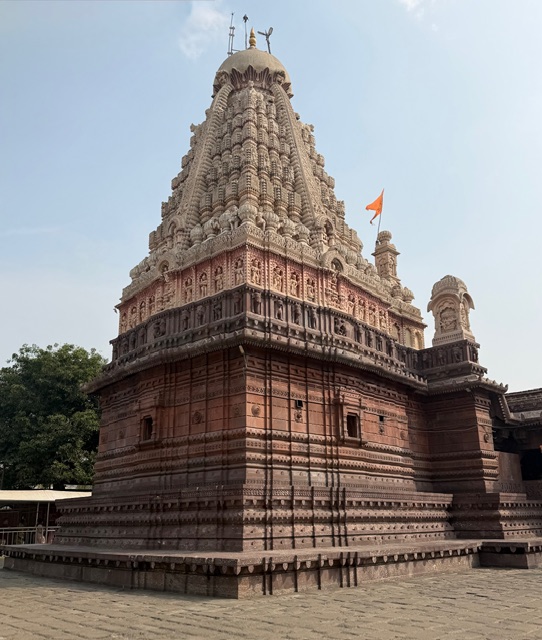
Grishneshwar Temple, Hemadpanti-style architecture – Notable features of this style include star-shaped ground plans, intricate stone carvings, and serrated facades that create patterns of light and shadow.
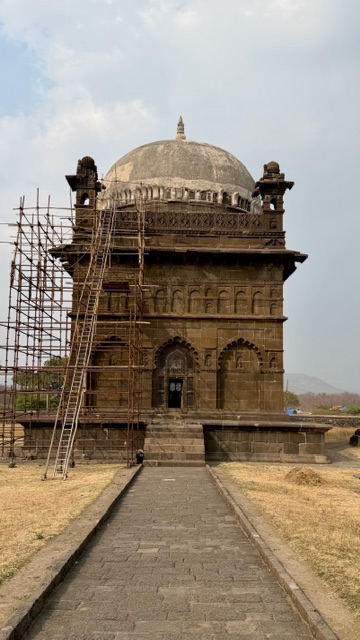
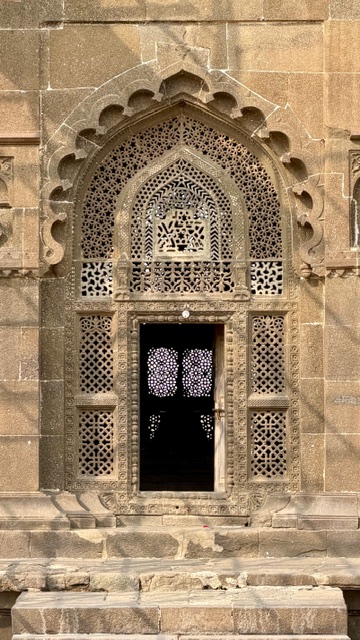
Tomb of Malik Ambar – We made a quick 10 min stop at this mausoleum located near Grishneshwar Temple. As the name suggests, it is the burial place of Malik Amber, a military leader who served as the prime minister of the Ahmadnagar Sultanate. Ambar built the tomb for himself, and was interred here upon his death in 1626. It is listed as a monument of national importance.
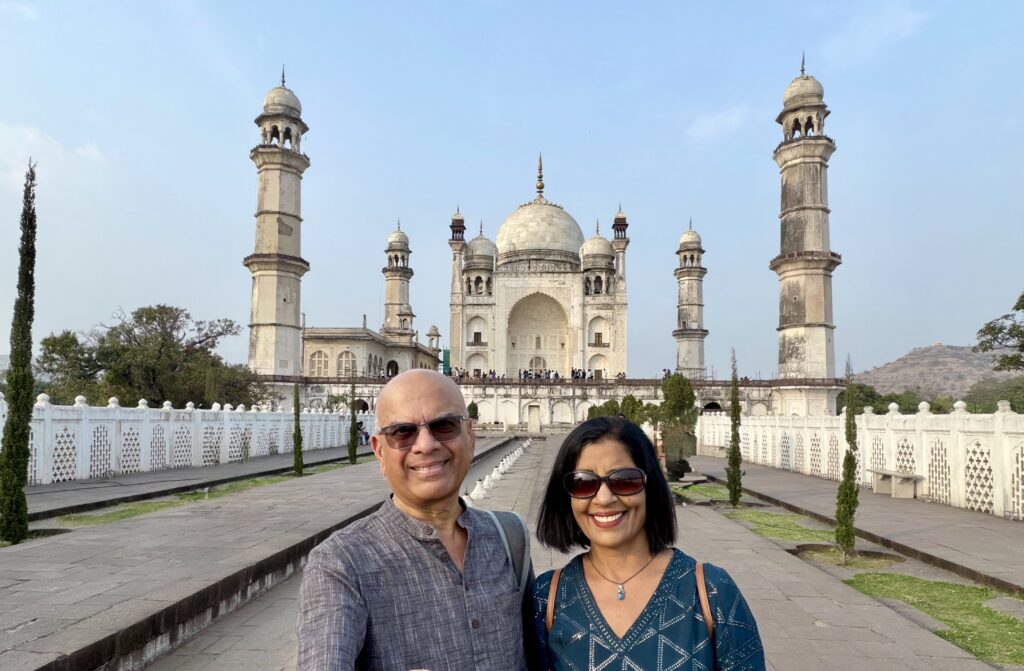
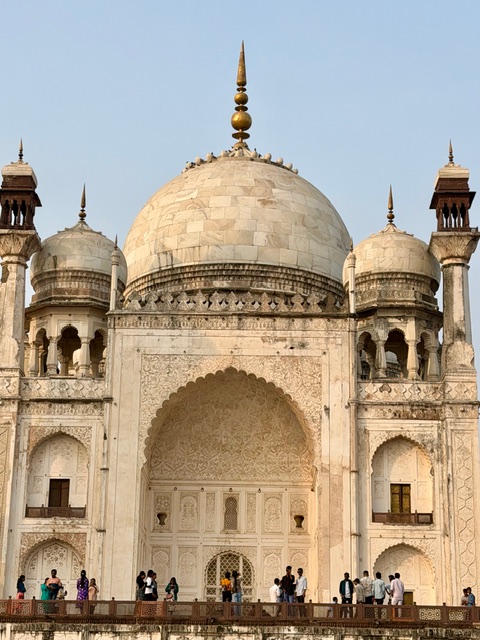
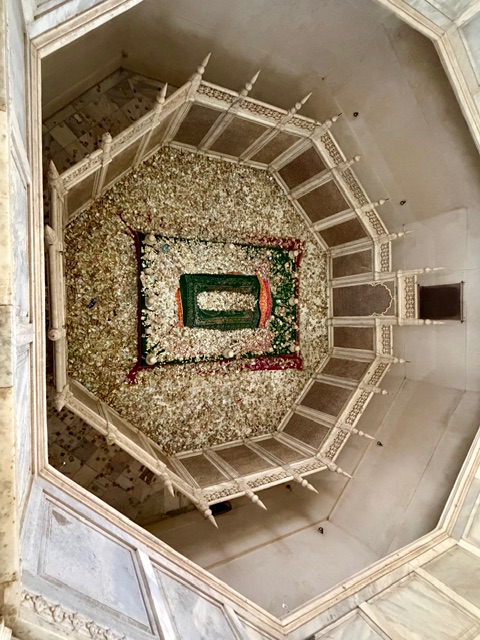
Bibi Ka Maqbara – Located in Chhatrapati Sambhajinagar (formerly Aurangabad), this historic mausoleum was commissioned in 1660 by Prince Azam Shah, son of Mughal emperor Aurangzeb. The monument was built in memory of his mother, Dilras Banu Begum, also known as Rabia-ul-Durrani. Often referred to as the Taj of the Deccan or Dakkhani Taj, the mausoleum completed in 1668, bears a striking resemblance to the Taj Mahal, reflecting the Mughal architectural style.
Despite frequent comparisons to the Taj Mahal, Bibi Ka Maqbara possesses a distinct charm and stands as the principal monument of Chhatrapati Sambhajinagar. The structure was designed by Ata-ullah, son of Ustad Ahmad Lahauri—the chief architect of the Taj Mahal—with engineering by Hanspat Rai. The marble for this mausoleum was brought from mines near Jaipur
————————- Day 2 ————————-
Ajanta Caves – The caves were created between the 2nd century BCE and 6th century CE. At the end of 7th century, Buddhism began to decline and its shrines fell into ruin and were buried for a 1000 years. It was accidentally discovered in 1819 by British Army Officers lead by John Smith, hunting for a tiger in the valley of Ajanta. The caves are renowned for their exquisite wall paintings and sculptures that depict the life of Buddha and various Jataka tales. These paintings are considered masterpieces of ancient Indian art and provide valuable insight into early Buddhist culture and society. Ajanta Caves are 104 km from Aurangabad and takes about 2 hours in a car.
There are a couple of ways to visit the Ajanta caves –
- The common approach is to park at the designated lot and take a paid shuttle to the main entrance.
- A more scenic option is to drive to the Upper View Point, which offers a panoramic view of the horseshoe-shaped cave complex. From there, visitors can walk down past the Lower View Point to the path leading to Cave 8, explore the caves, and exit from the main entrance, arranging for their driver to pick them up there to avoid climbing back up to the viewpoint. The distance from the Upper View point all the way down to the caves is less than 1 km and downhill.
- We learned about the Upper View Point from another visitor. After exploring the caves, we made a detour on our return to Aurangabad to visit it, walking down to the Lower View Point and then back up – not the most efficient use of energy.
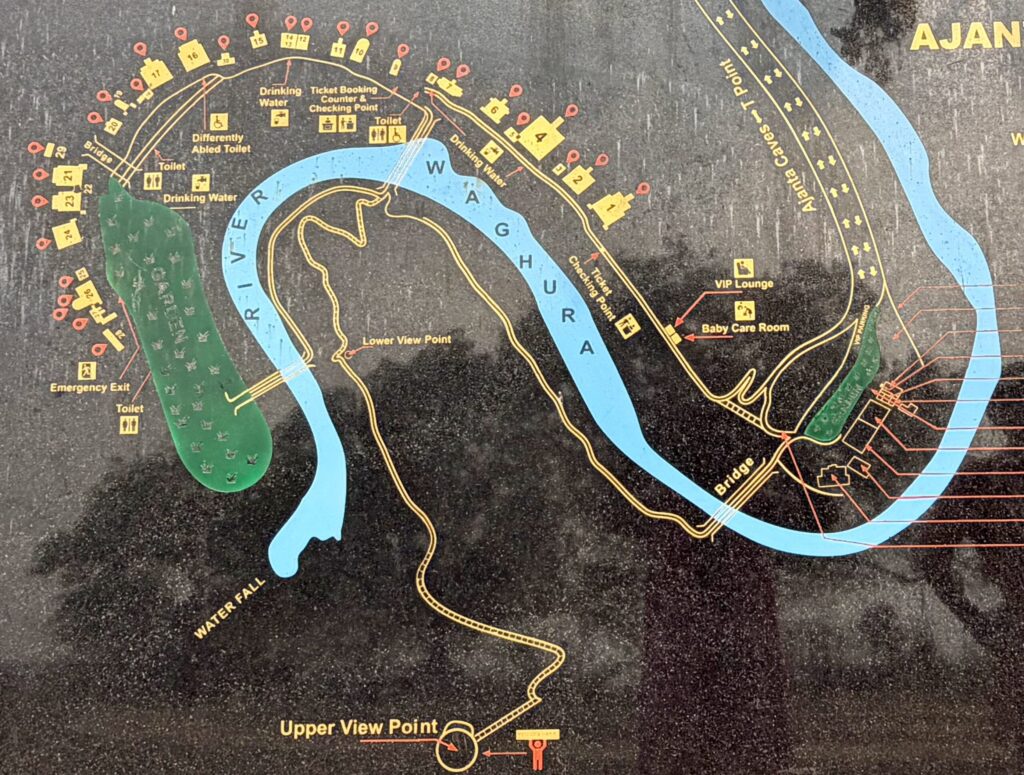
Ajanta Caves, Upper Viewpoint – The view of Ajanta Caves from the viewpoint gives you a true sense of their scale and craftsmanship. Carved directly into a steep rock face, the caves line the cliff in a graceful curve, showing just how intentionally and skillfully they were shaped from solid stone. From this angle, it’s easier to imagine the immense effort and precision required to create these spaces centuries ago, making the achievement feel even more impressive.
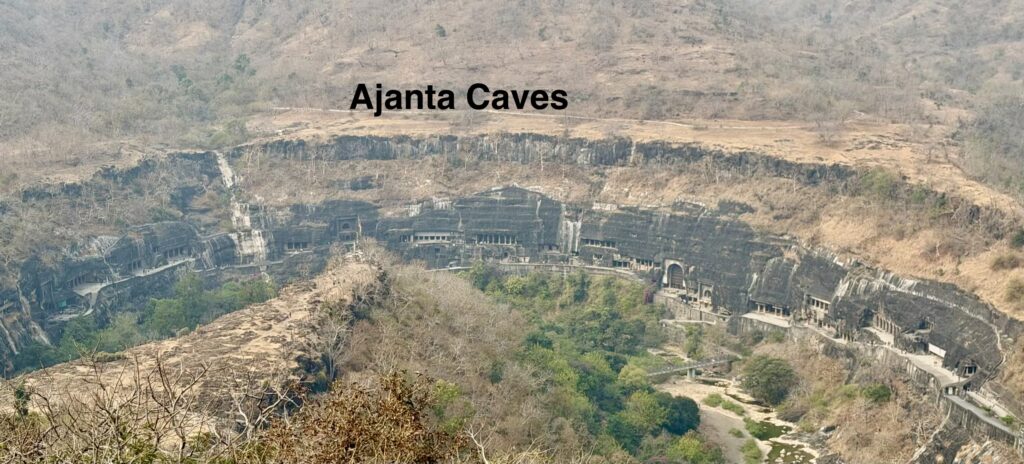
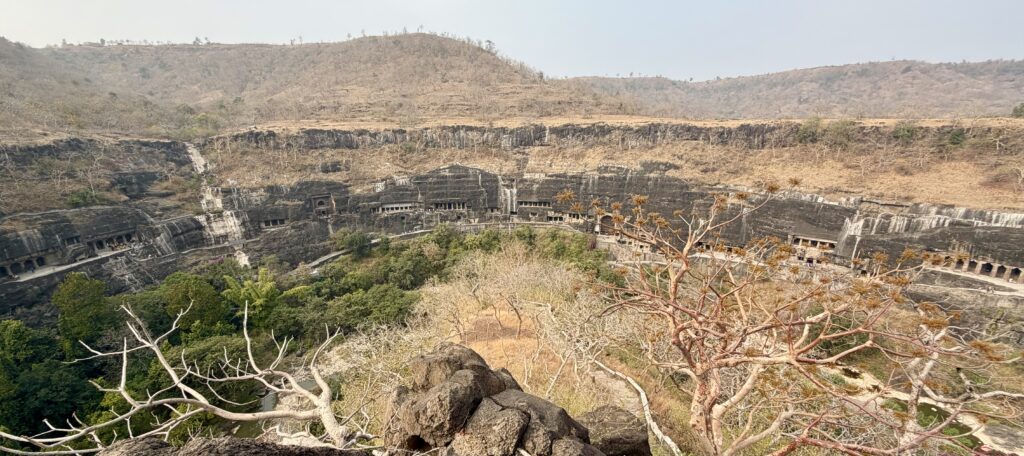
We hired a guide who spent a little less than two hours with us, explaining the paintings in the main Caves 1, 2, 16, 17, 19. After the guided tour, we explored most of the 30 caves on our own at a relaxed pace. The Ajanta caves are more compact and easier to explore on foot, without the need for a shuttle. Chair-carry services are available for disabled visitors, as there are many steps to climb up and down.
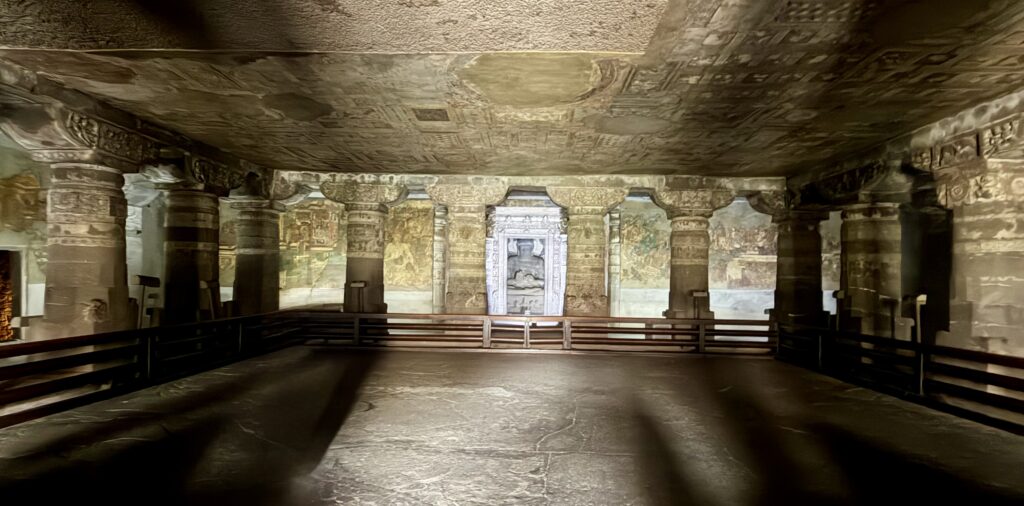
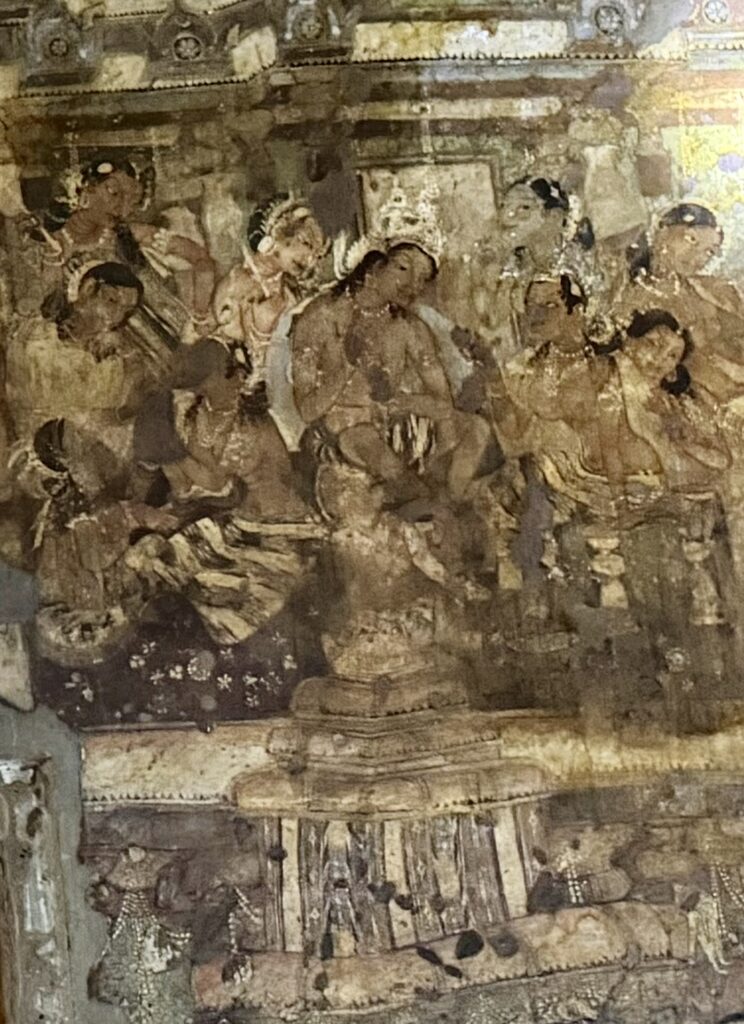
Ajanta Cave 1 – is a Mahayana Buddhist monastery excavated around 500 AD and is considered the finest architecturally among India’s rock-cut monasteries. It’s walls once depicted scenes from the life of Buddha. The sanctum houses a preaching Buddha, and the hall features about 20 ornately carved pillars. Although the walls, ceilings, columns, and sculptures were originally fully painted, many paintings were lost due to moisture and damage by insects and birds. However, some remarkable paintings have survived for visitors to enjoy.
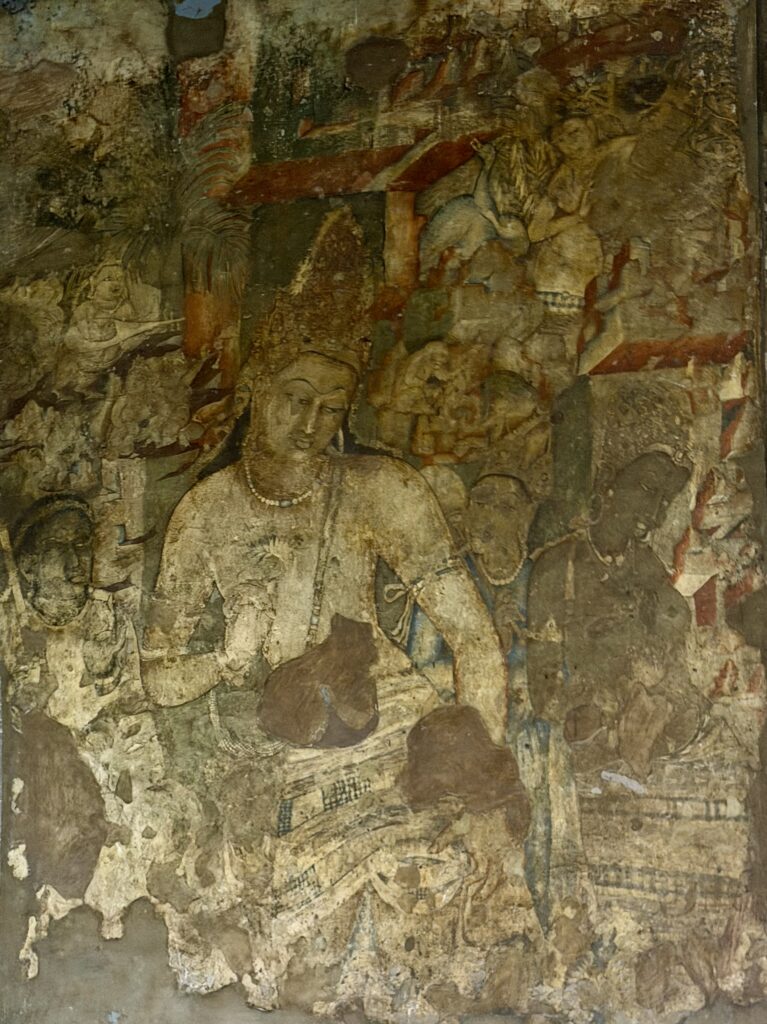
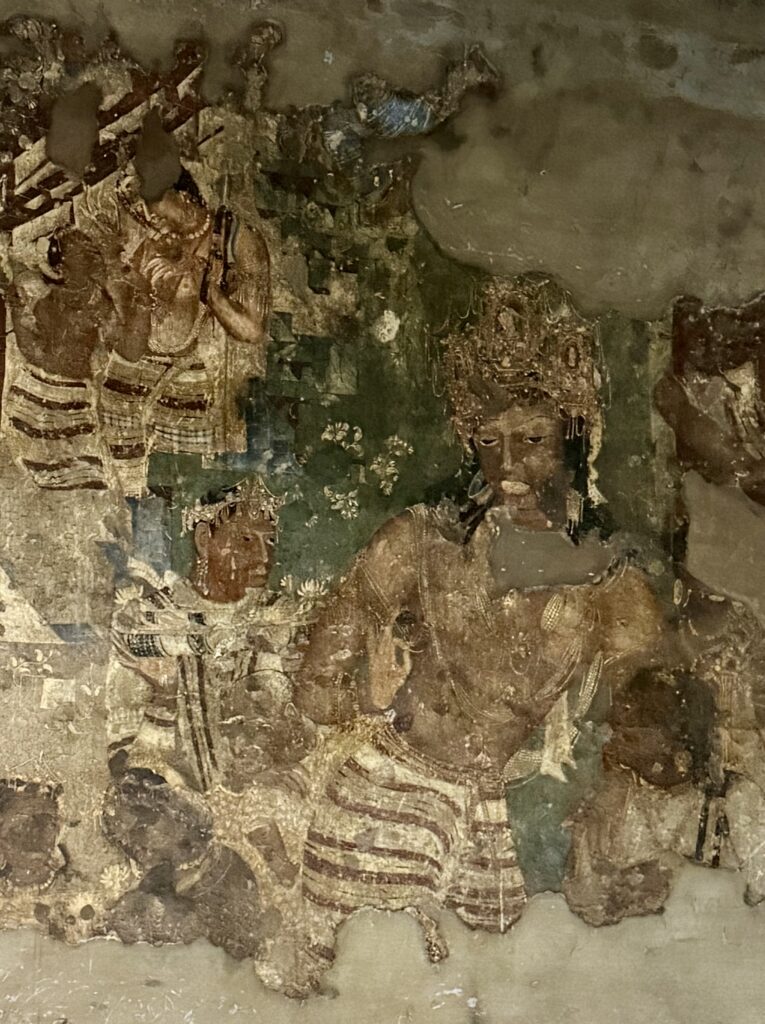
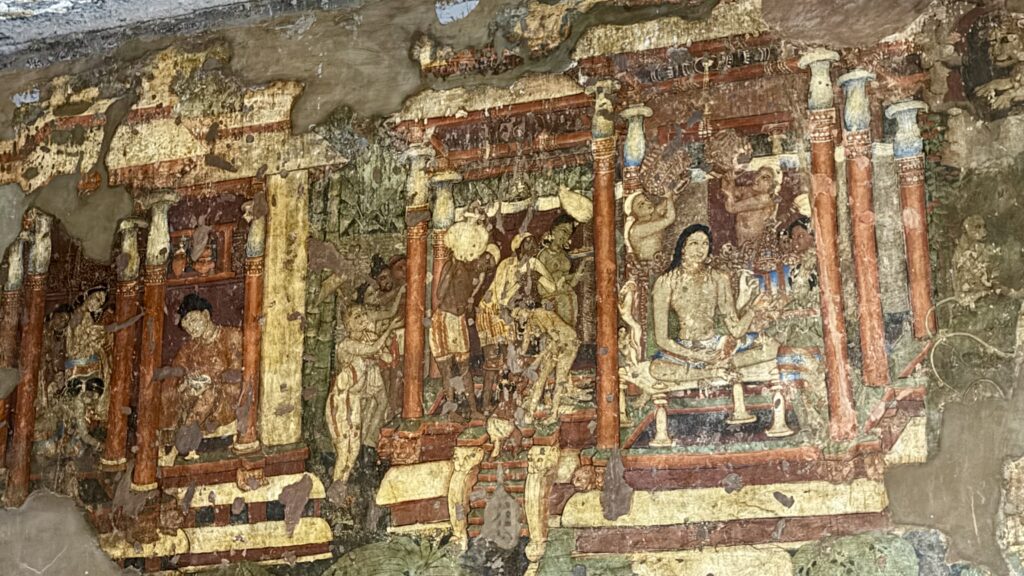
———————————–
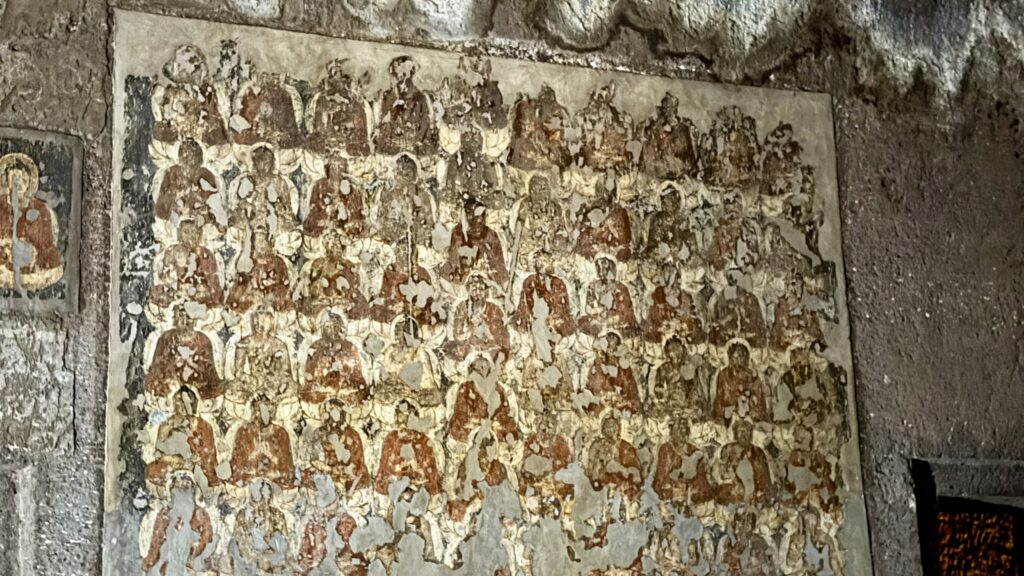
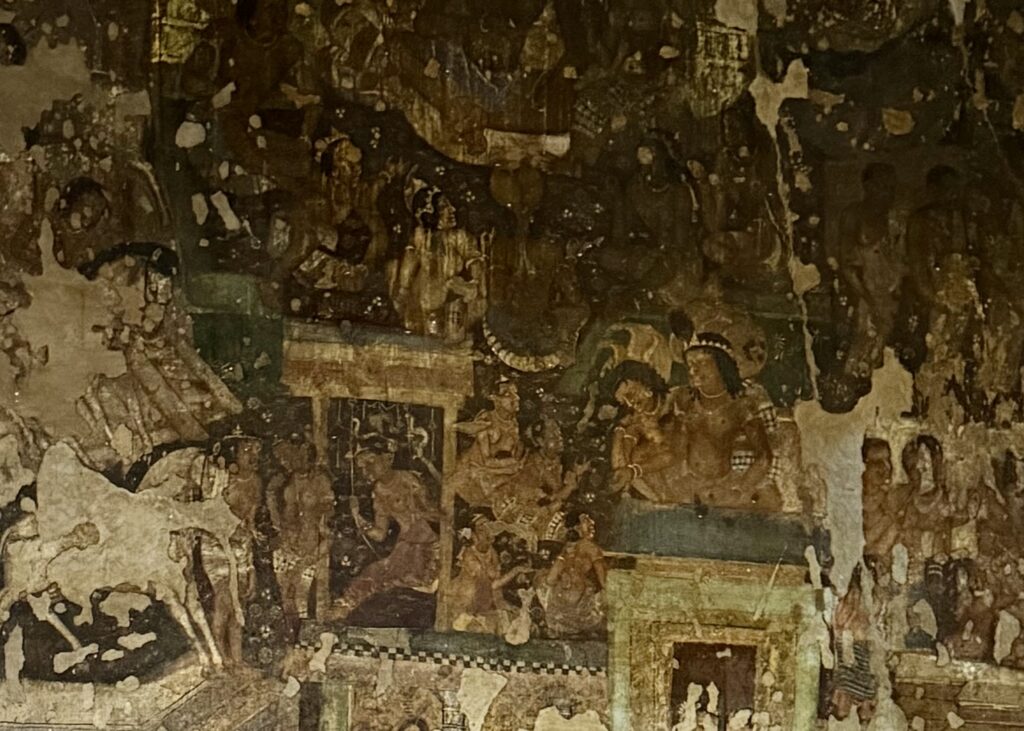
Ajanta, Cave 2 – This cave is also a Mahayana Monastery. The entrance doorway has some beautiful carvings. The cave has some lovely paintings that have survived. The Miracle of Sravasti painting, also known as the Twin Miracle, is a celebrated event in which the Buddha confounded his rivals by levitating and simultaneously producing opposing phenomena—flames from the upper body and water from the lower, alternating sides—while manifesting multiple forms of himself and teaching the Dharma.
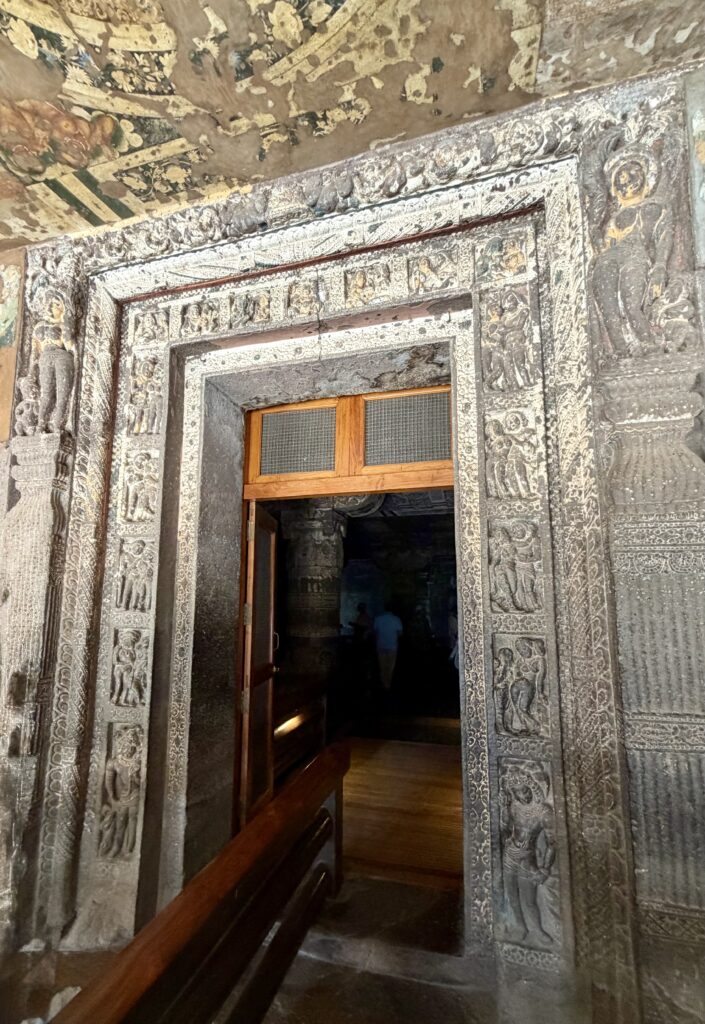
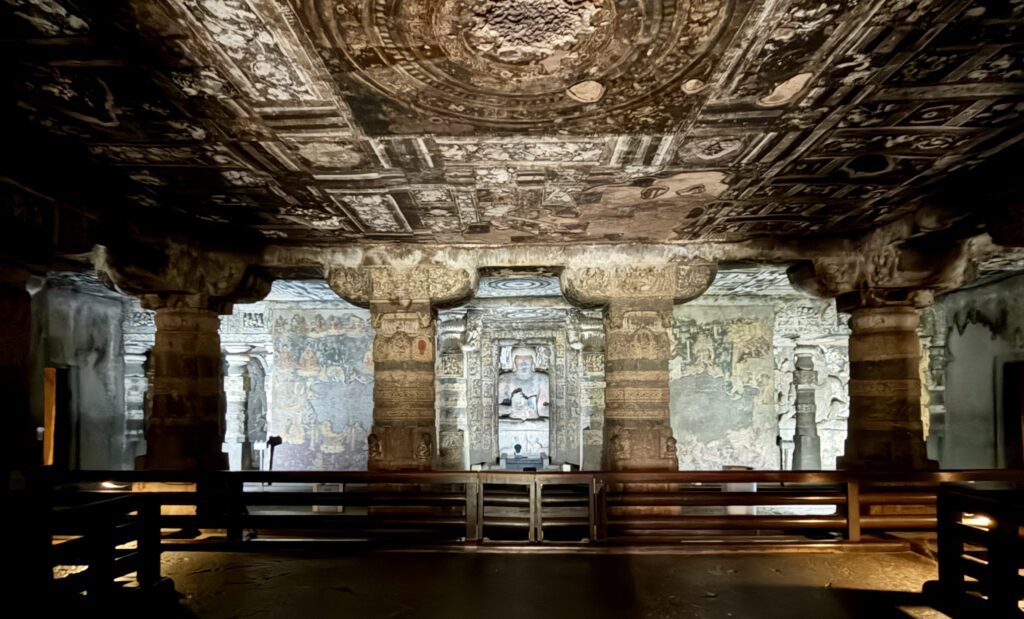
The Cave 2 sanctum features a large Buddha image, along with massive, ornately carved pillars and an elaborately decorated ceiling.
———————————–
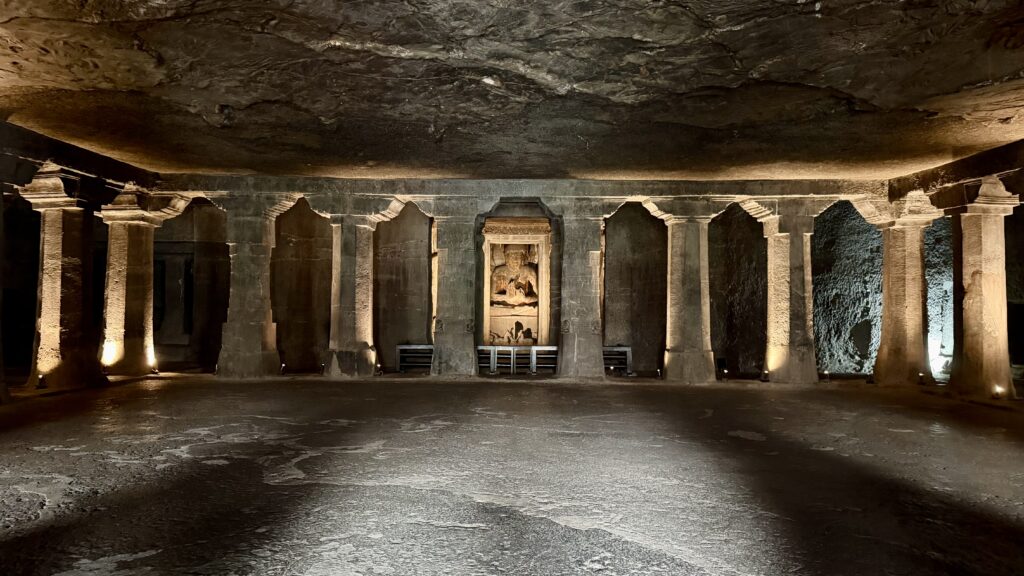
Ajanta Cave 4 – is the largest vihara in the inaugural group and is located at a significantly higher level, possibly because the artists realized that the rock quality at the lower and same level of other caves was poor and they had a better chance of a major vihara at an upper location. The Archaeological Survey of India dates it to the 6th century CE although it could have been built a century earlier, to about 463 CE, based on construction style and other inscriptions.
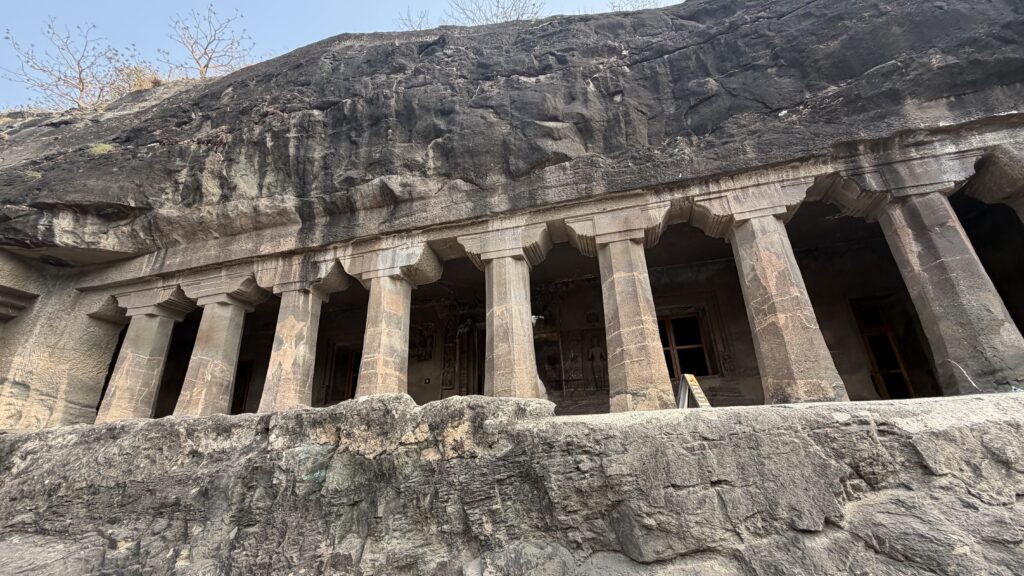
The cave has a squarish plan, houses a colossal image of the Buddha in preaching pose flanked by bodhisattvas and celestial nymphs hovering above. It consists, of a verandah, a hypostyle hall, sanctum with an antechamber and a series of unfinished cells.
———————————–
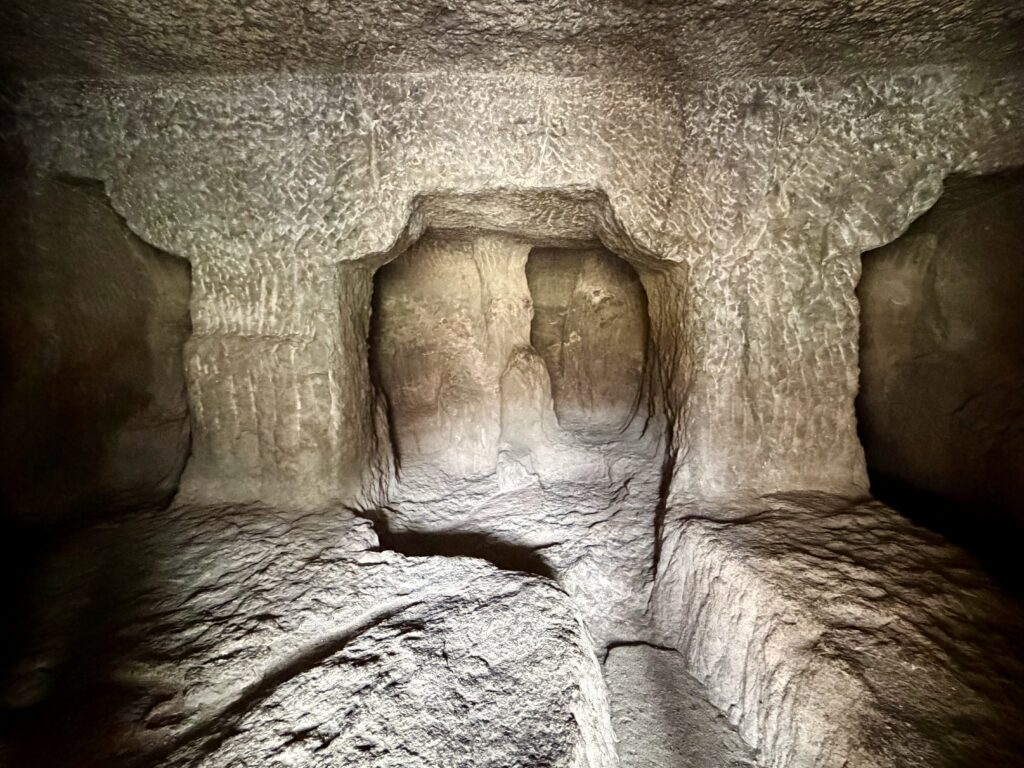
Ajanta Cave 5 – an unfinished excavation, was planned as a monastery (10.32 × 16.8 m). Cave 5 is devoid of sculpture and architectural elements except the door frame. The cave’s construction was likely initiated about 465 CE but abandoned because the rock has geological flaws.
————————————
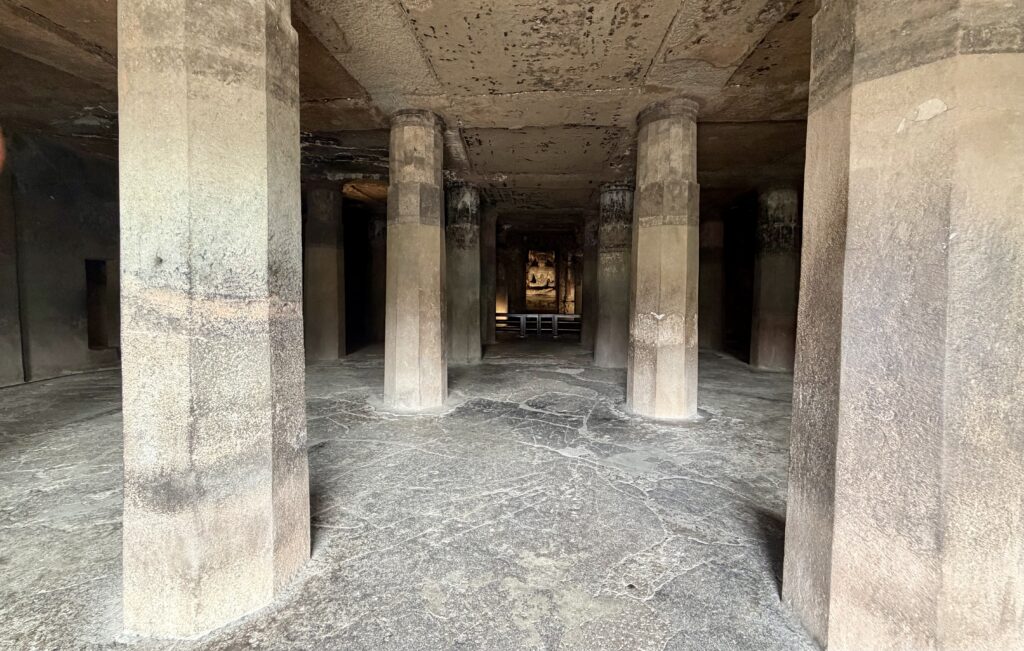
Ajanta Cave 6 – Constructed between 460-470 CE, Cave 6 is the only two-storey monastery at Ajanta. It consists of a sanctum, a hall on both levels. The lower level is pillared and has attached cells. The upper hall also has subsidiary cells. The sanctums on both level feature a Buddha in the teaching posture.
———————————-
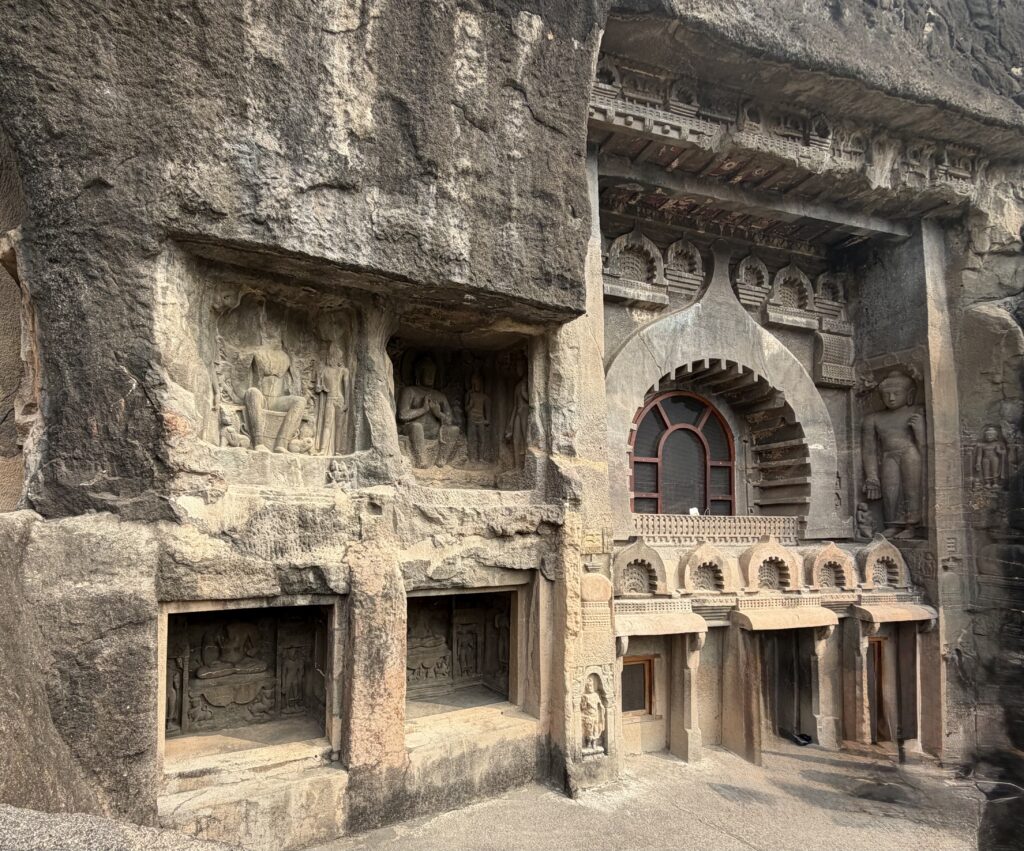
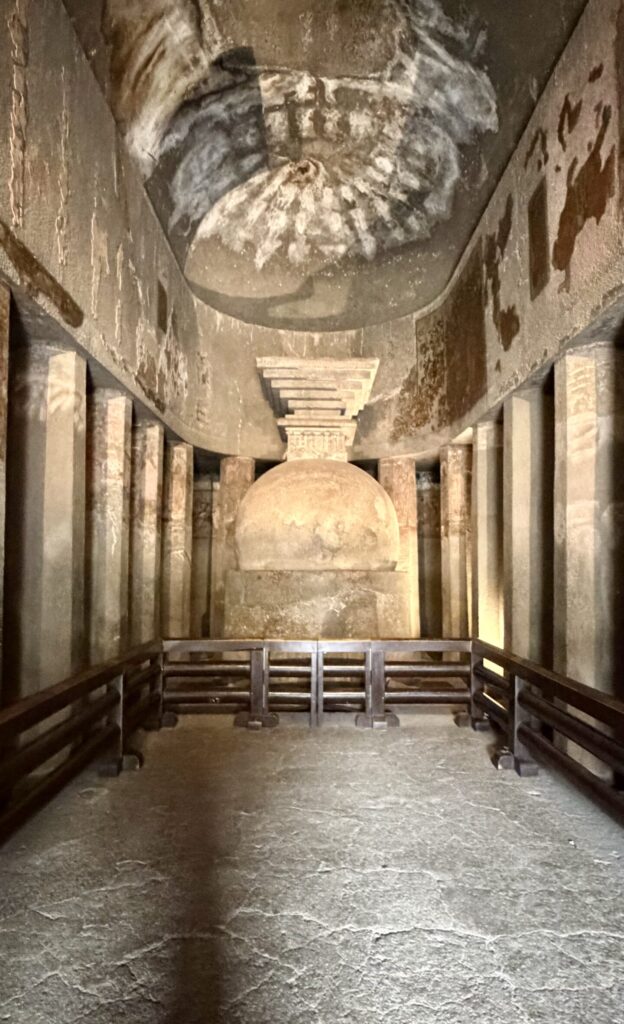
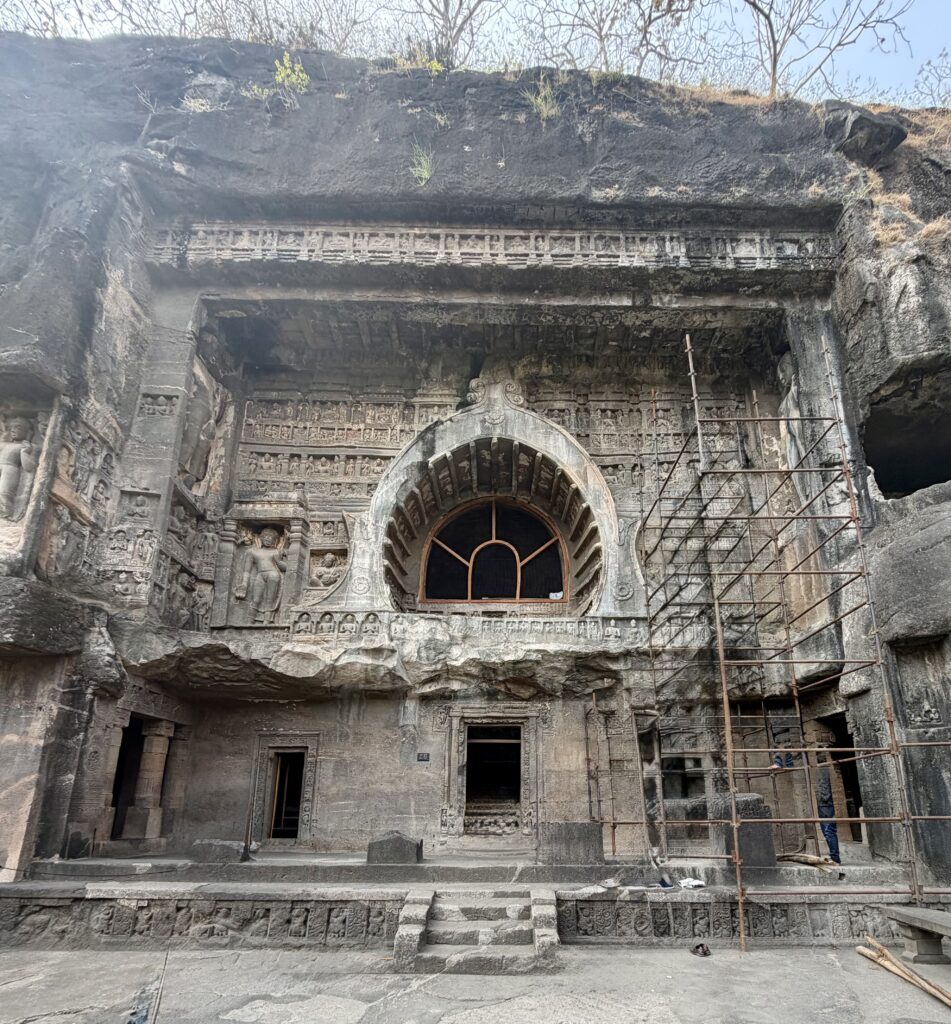
Ajanta Cave 9 – is a chaitya or worship hall from the 2nd to 1st century BCE – the first period of construction, though it was reworked upon the end of the second period of construction in the 5th century CE. It is oblong in shape and has 23 highly proportional pillars and a small un-ornamental stupa in the center. The exterior of the cave is adorned with horse-shoe shaped beautiful window
———————————–
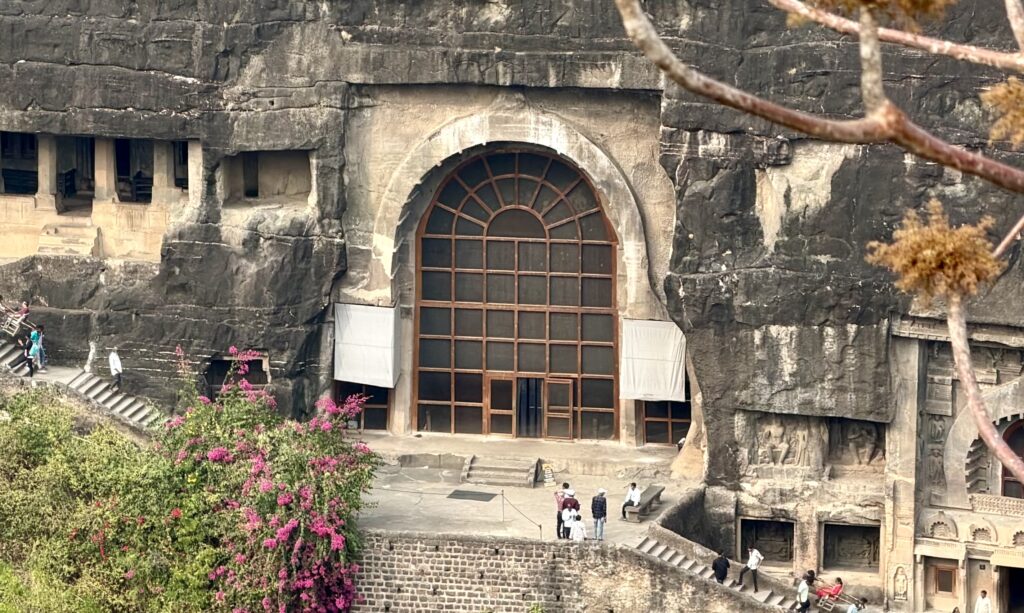
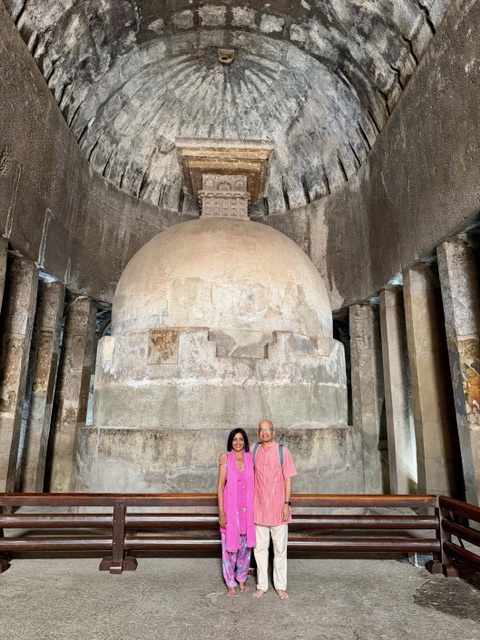
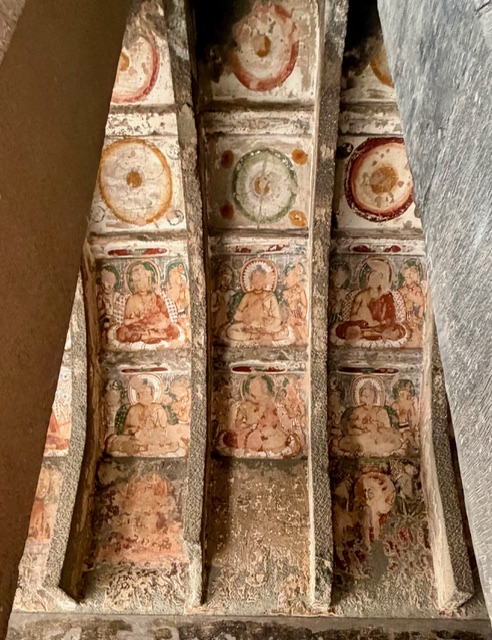
Ajanta Cave 10 – is a vast prayer hall or Chaitya from the 1st century BCE and the oldest at Ajanta. It has the highest facade of 45 feet and the interior has a stupa taller than the one in Cave 9. Its interior has a large central apsidal hall with a row of 39 octagonal pillars. The stupa has a circumambulatory path (pradakshina). Cave 10 is also historically important because in April 1819, a British Army officer John Smith saw its arch and introduced his discovery to the attention of the Western audience.
———————————–
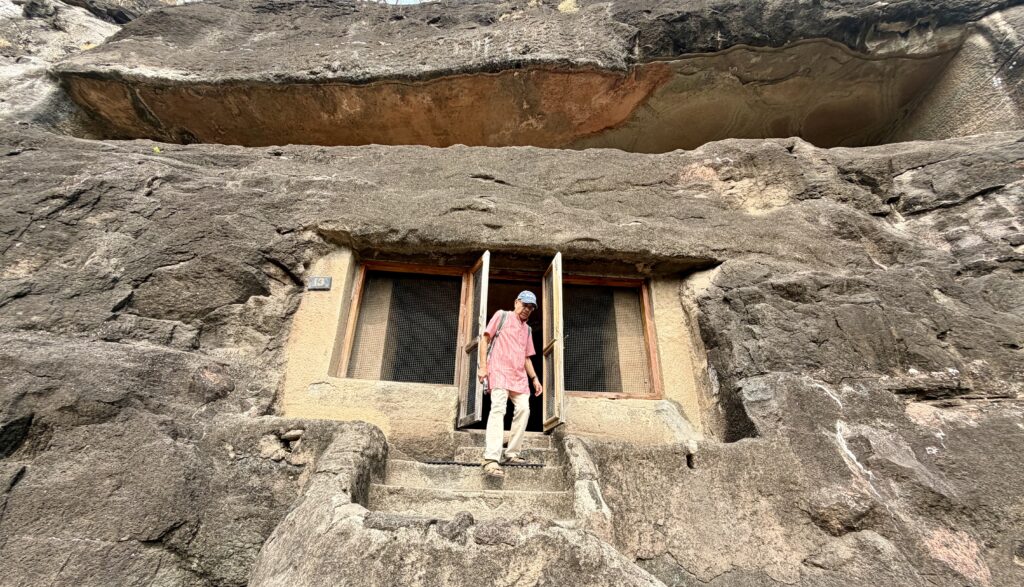
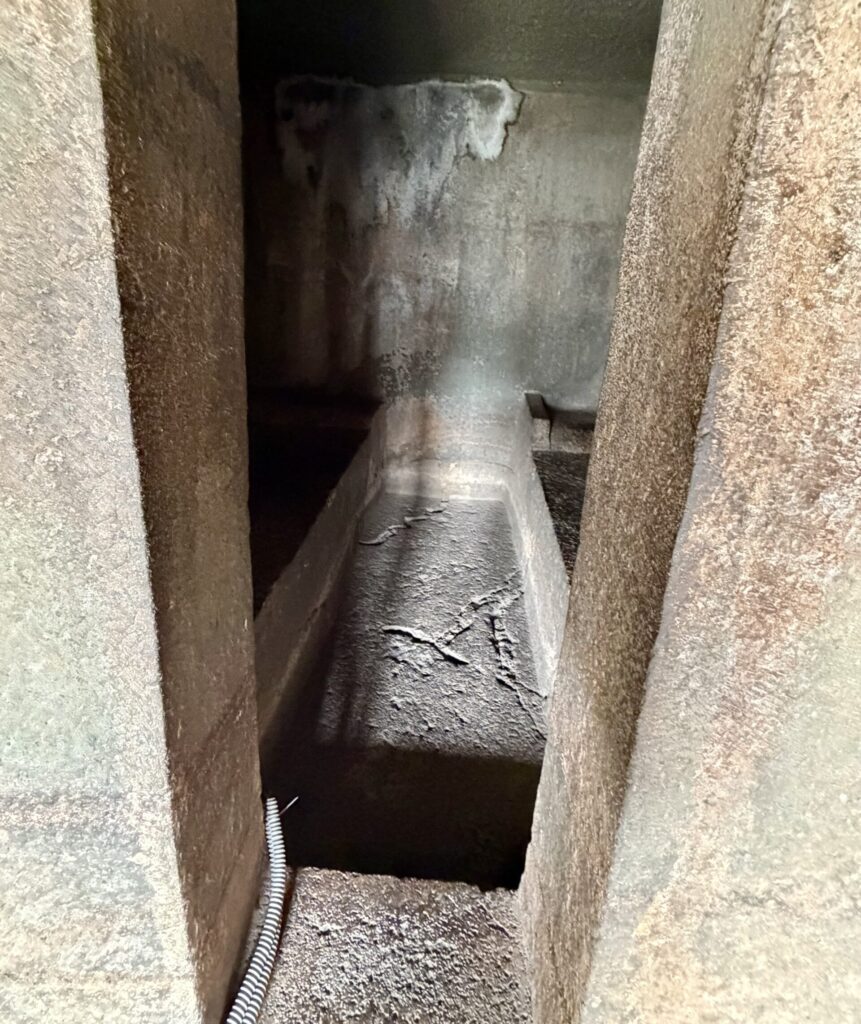
Ajanta Cave 13 – is a small monastery from the early period, consisting of a hall with seven cells, each with stone beds carved out of the rock.
———————————–
Ajanta Cave 16 – occupies a prime position near the middle of site, and was constructed between 475 – 500 CE. There are stone elephants at the entrance stairs to the single-storey Cave 16.
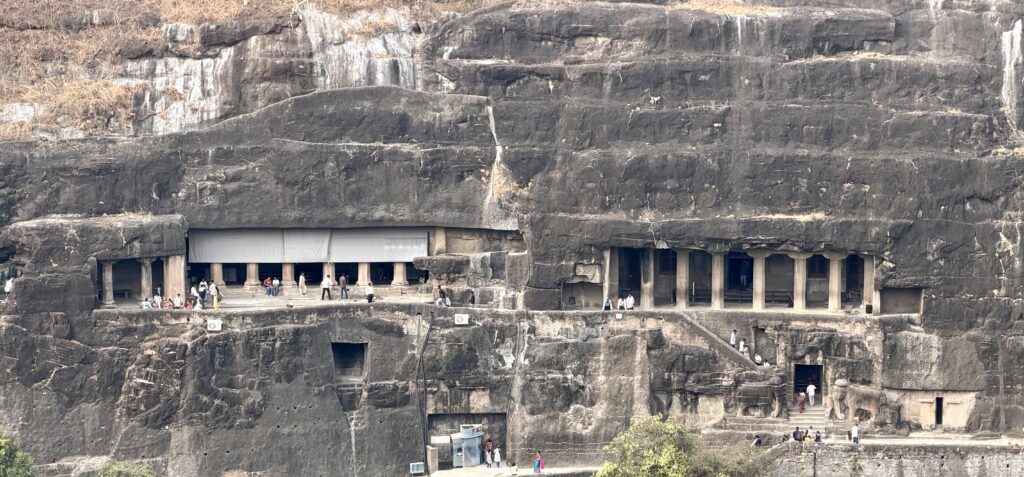
The main hall is supported by 20 pillars and there is a huge statue of Buddha in the preaching pose.
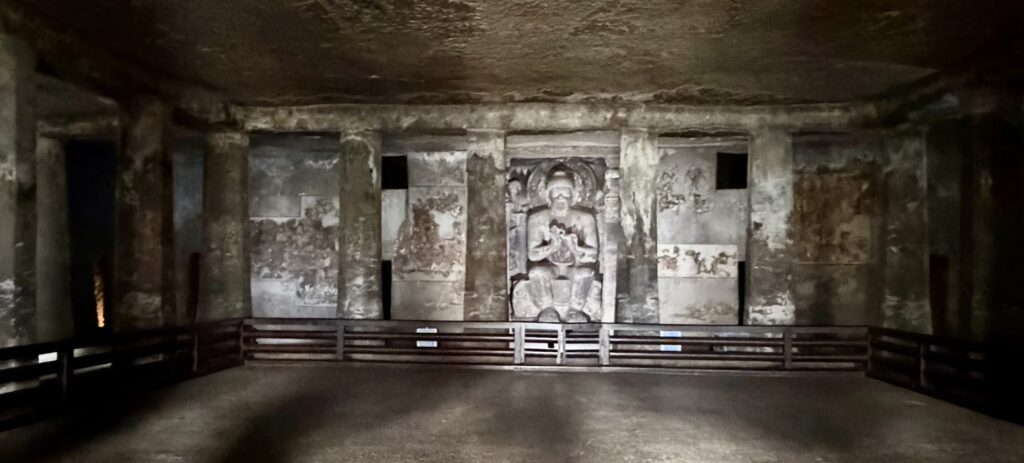
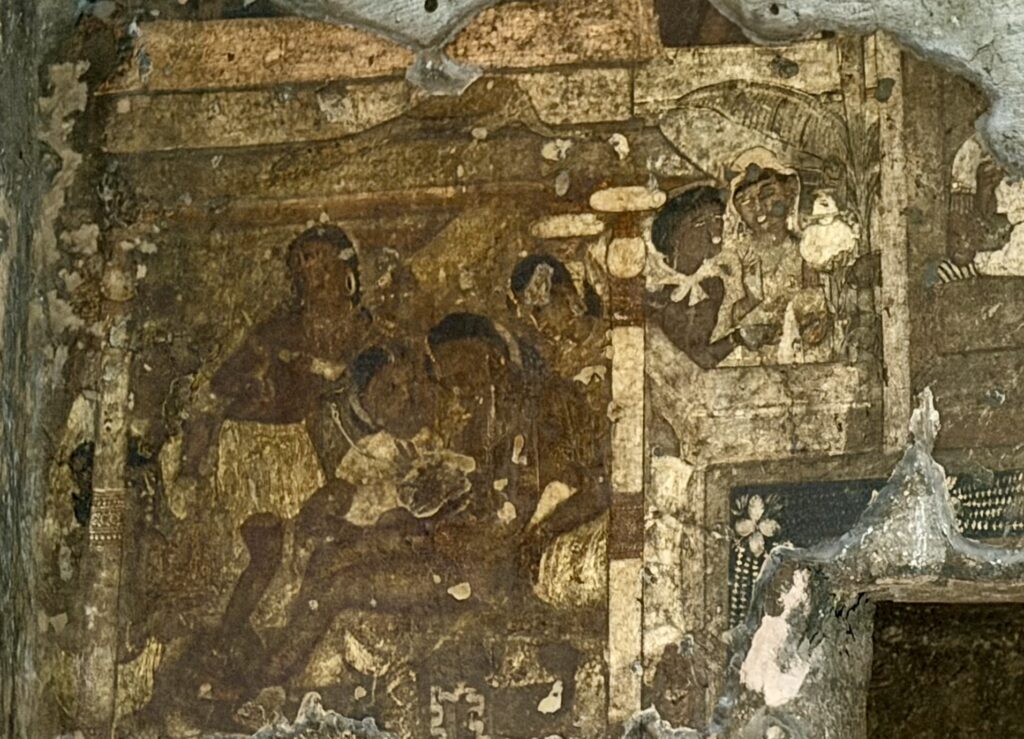
The walls are filled with paintings. The cave is known for the painting of The Dying Princess – depicts the story of Sundari, the wife of Nanda (Buddha’s half-brother), who collapsed in despair upon learning her husband had renounced the world to become a monk.
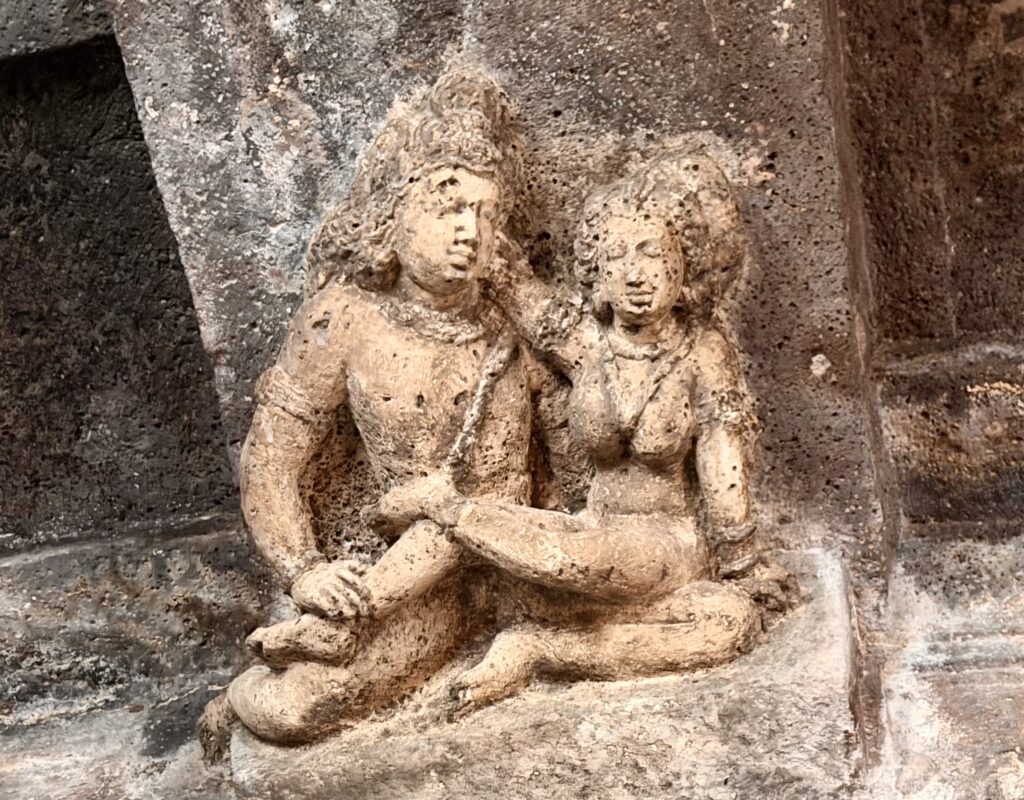
There are elegant sculptures of dwarfs, heavenly musicians, and apsaras on the ceiling. The two flying couples are note-worthy for their graceful expressions and remarkable features.
———————————–
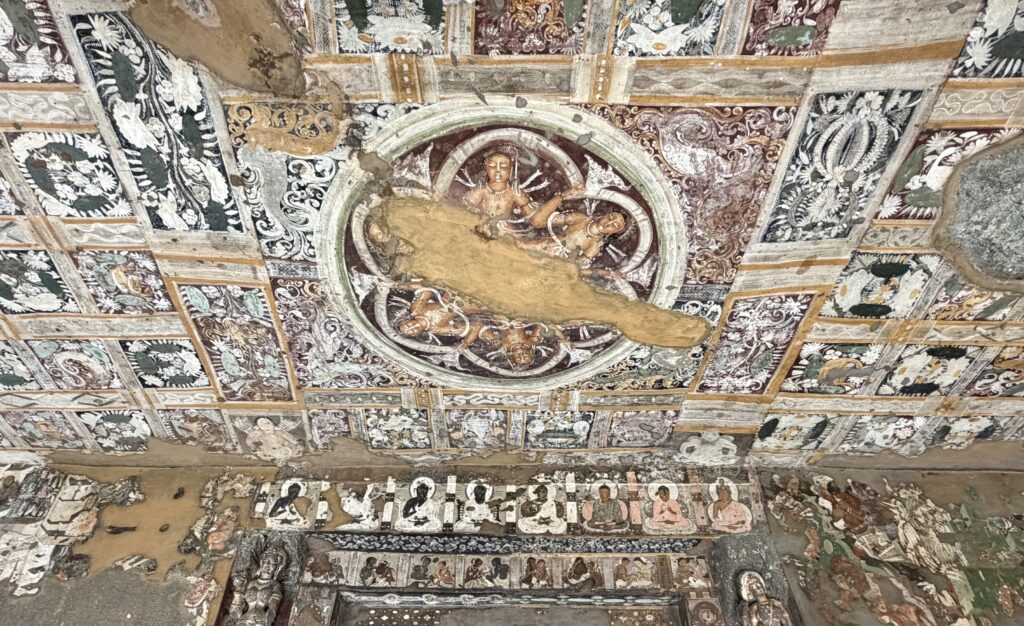
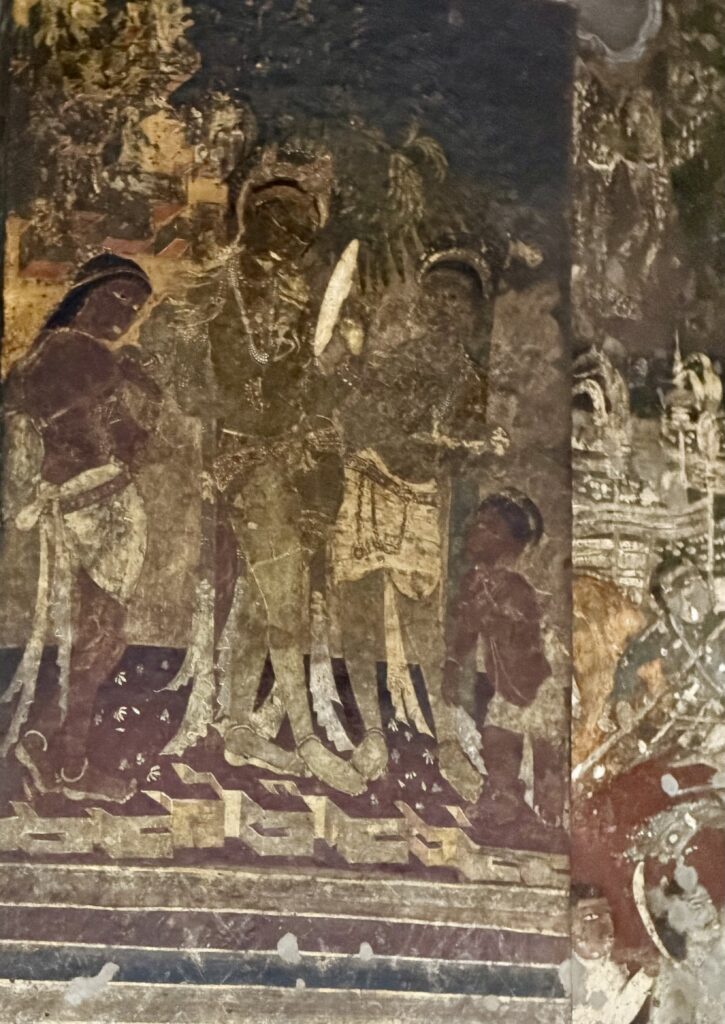
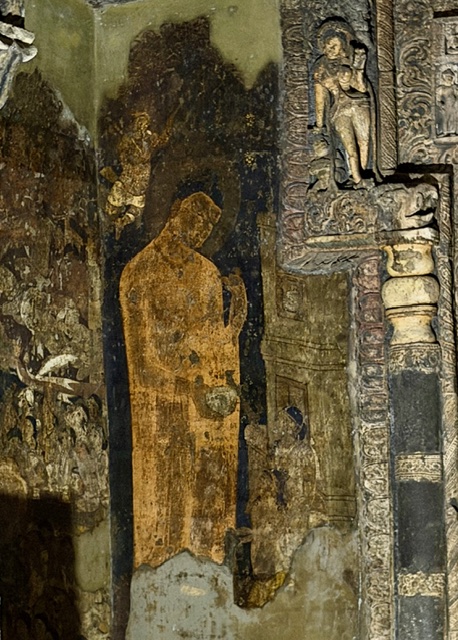
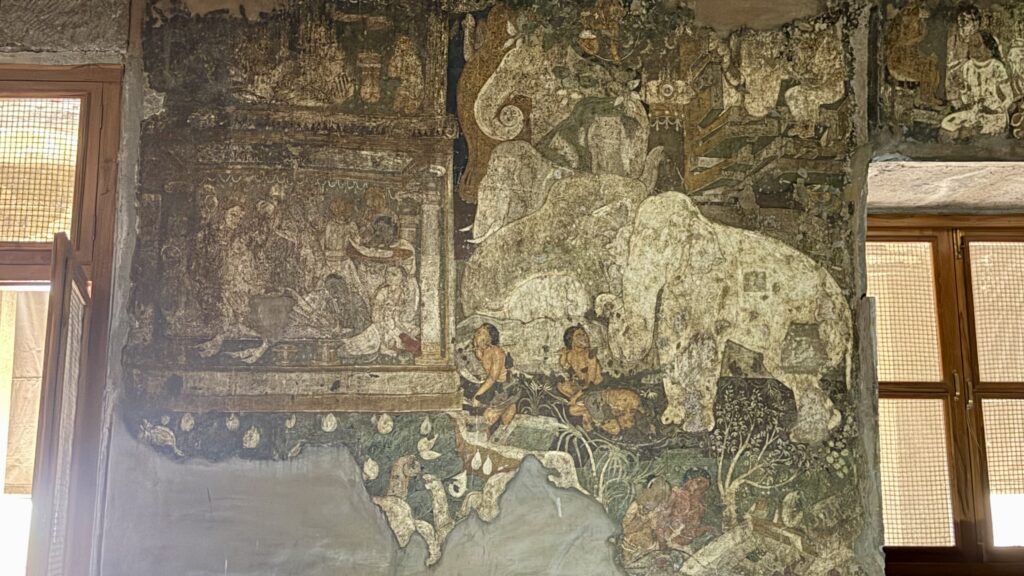
Ajanta Cave 17 – The cave features a large and most sophisticated vihara design, along with some of the best-preserved and well-known paintings of all the caves. While Cave 16 is known for depicting the life stories of the Buddha, Cave 17 paintings has attracted much attention for extolling human virtues by narrating the Jataka tales. Facade of Cave 17 – see section above.
———————————–
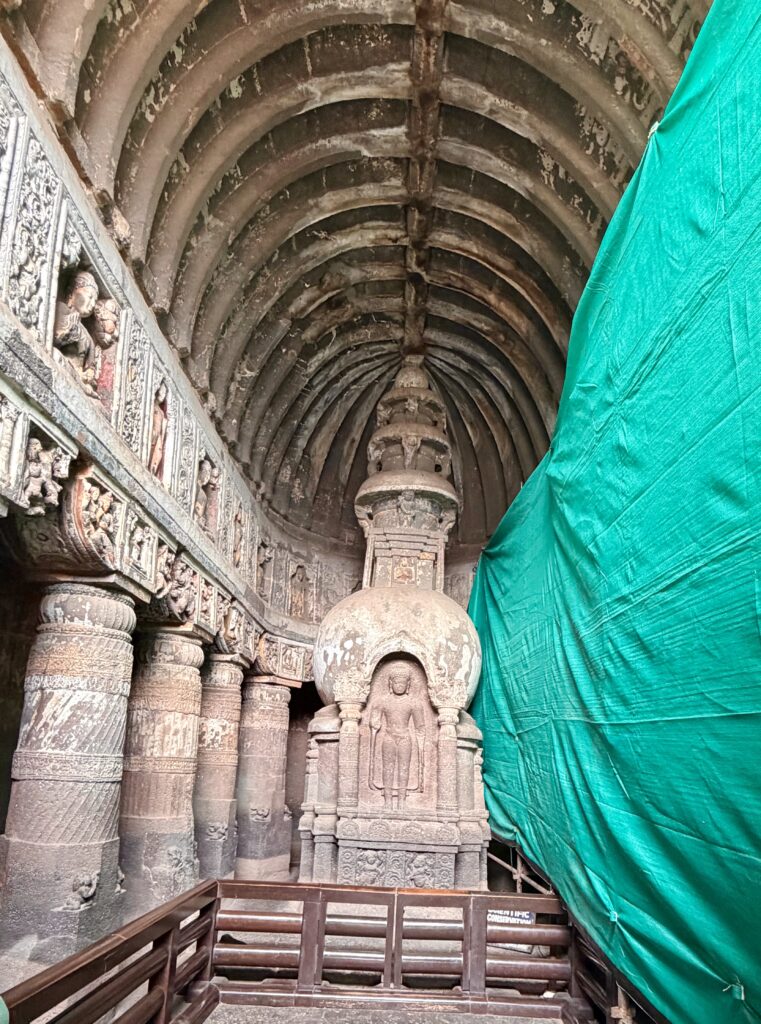
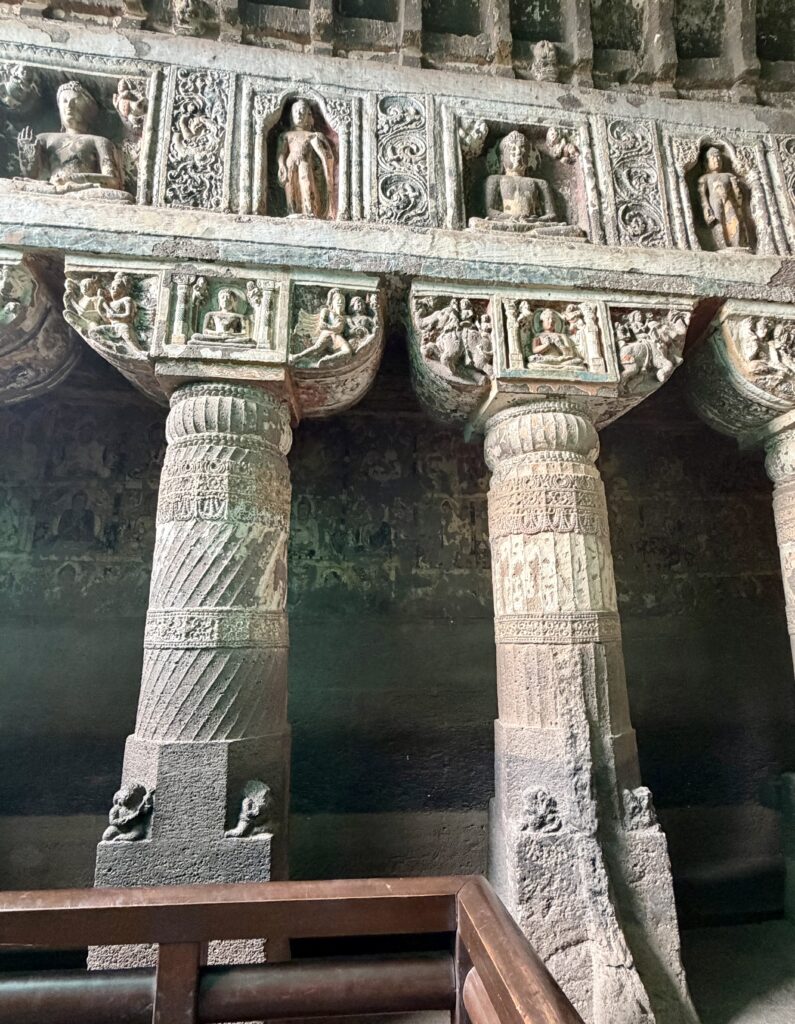
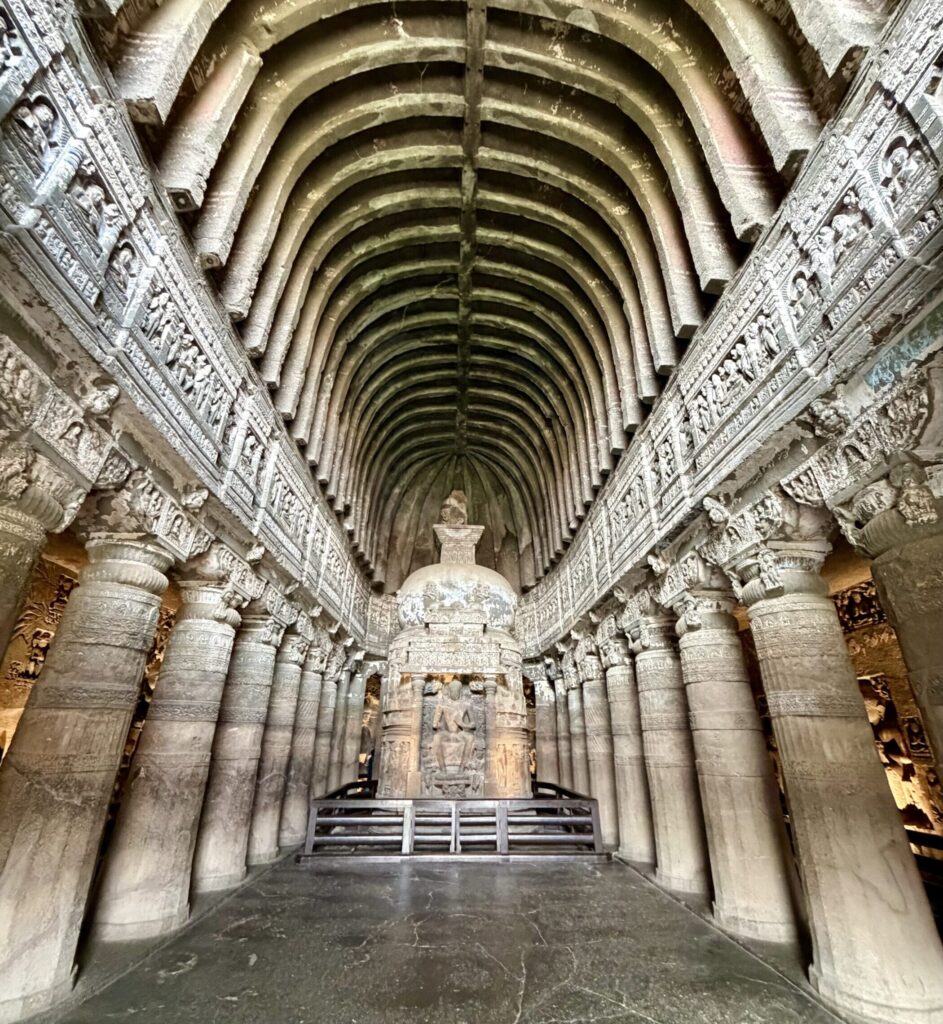
Ajanta Cave 19 – is another worship hall datable to the fifth century CE. The facade is ornate with Buddha’s figures carved all over. Two round pillars with fluted floral patterns and carved garlands support a porch. Its capital is an inverted lotus connecting to an amalaka.
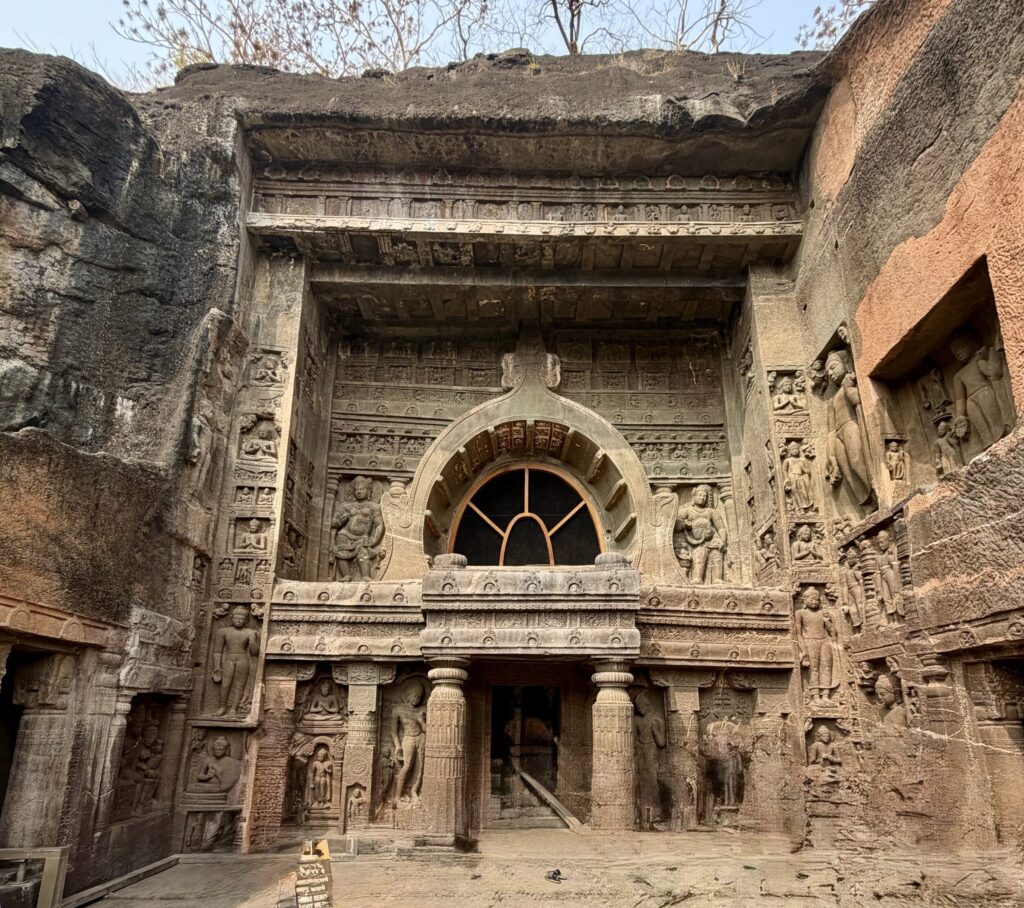
The worship hall is apsidal, with 15 pillars dividing it into two side aisles and one nave. The stupa in the center is ornate and contains a statue of Buddha. The pillars have floral reliefs and a fluted shaft topped with Buddha in its capitals. Next to the Buddha in the capitals are elephants, horses and flying apsara friezes, reflecting the style of the Gupta Empire artwork.
———————————–
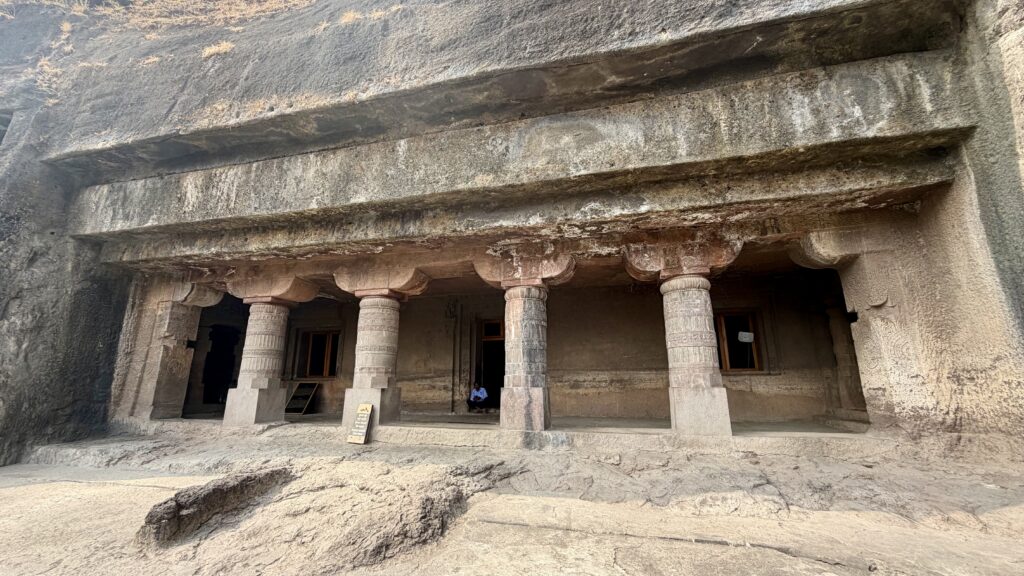
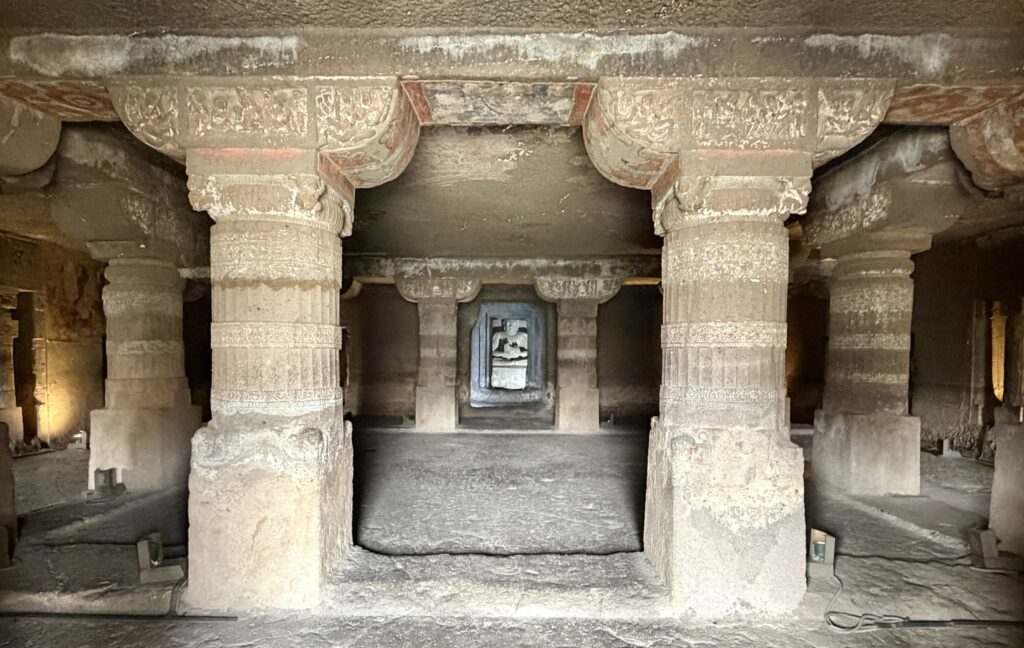
Ajanta Cave 21 – is a hall (29.56 × 28.03 m) with twelve rock-cut rooms for monks, a sanctum, and twelve pillared and pilastered verandah. The carvings on the pilaster include those of animals and flowers. The pillars feature reliefs of apsaras, Nagaraja, and Nagarani, as well as devotees bowing with the Anjali mudra. The hall shows evidence that it used to be completely painted. The sanctum Buddha is shown in preaching posture.
———————————–
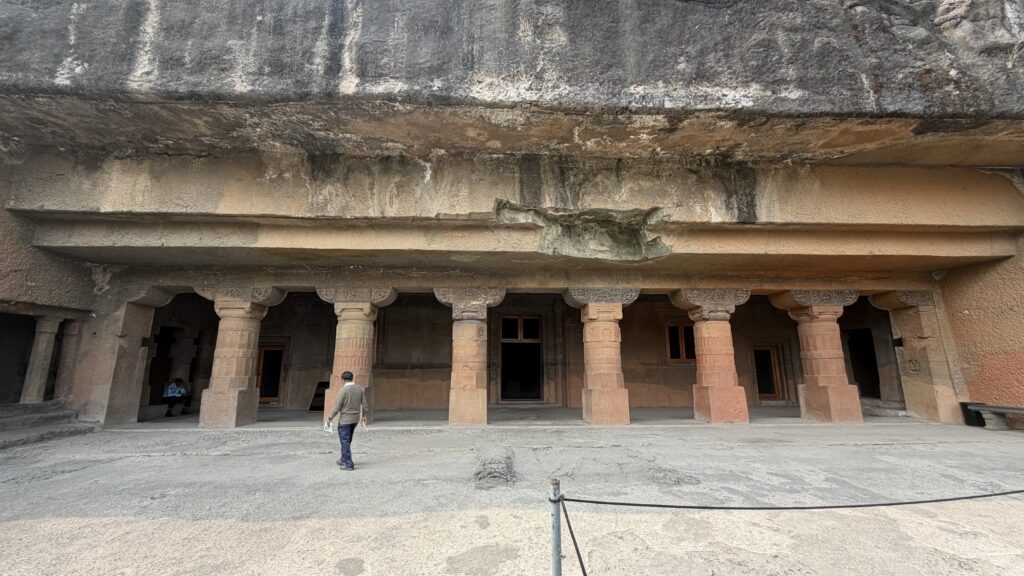
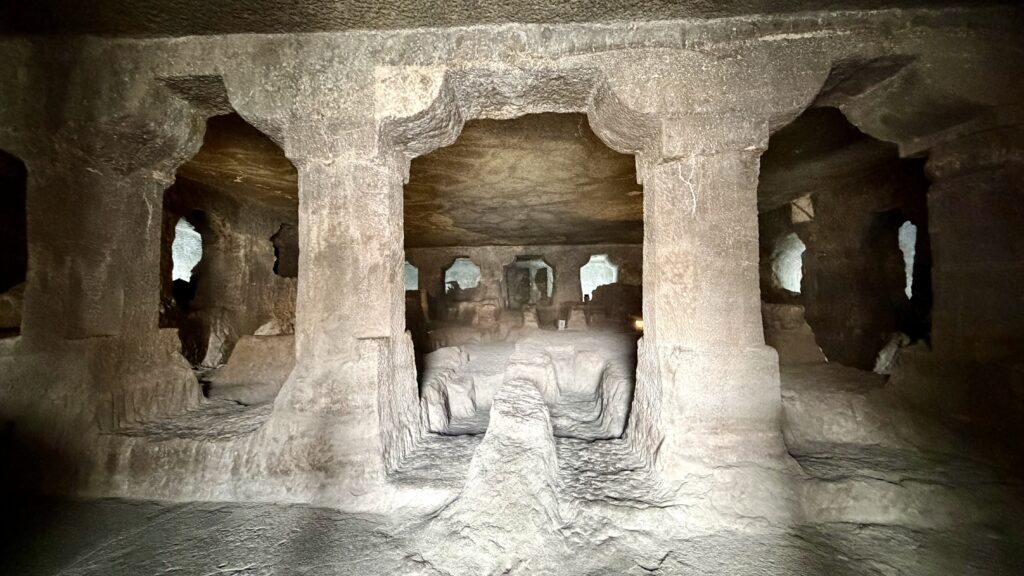
Ajanta Cave 24 – is the second largest of the excavated caves and would have been one of the most impressive if completed.
———————————–
Ajanta Cave 26 – is a worship hall (chaityagriha, 25.34 × 11.52 m) similar in plan to Cave 19. The sculptures in this cave are elaborate and more intricate. It is among the last caves excavated, and an inscription suggests late 5th or early 6th century according to ASI. The cave consists of an apsidal hall with side aisles for circumambulation (pradakshina). At the center of the apse is a rock-cut stupa with an image of the Buddha on its front.
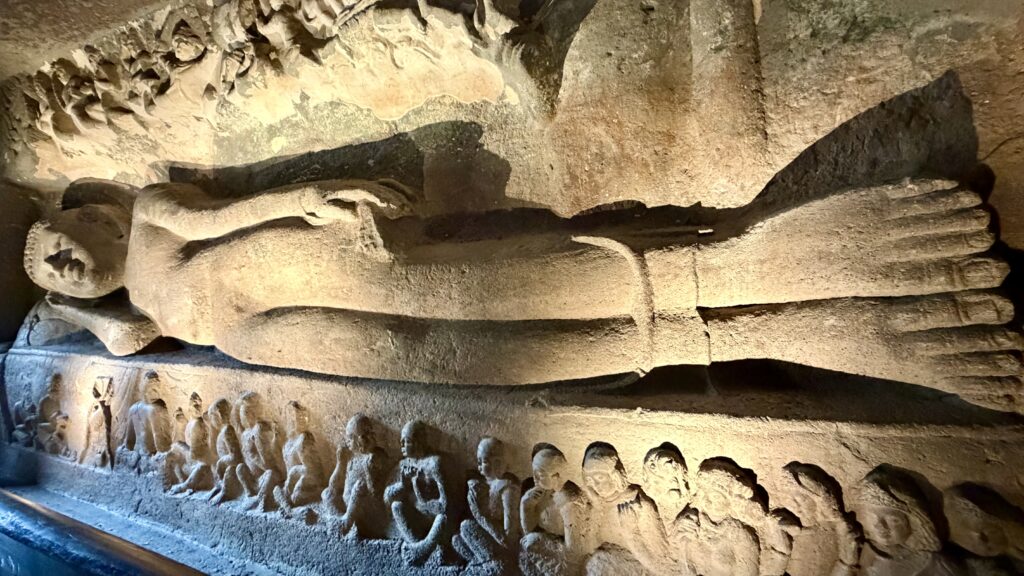
On the left wall is a huge figure of reclining Buddha preparing to enter Nirvana.