1 Night in Royal Orchid, 1 Night in ITC Fortune
Mysuru (formerly Mysore) is a historic city that served as the capital of the Kingdom of Mysore for nearly six centuries (1399–1947). Famous for its heritage structures and grand palaces—most notably the iconic Mysore Palace—the city is often called the City of Palaces, Heritage City, and the Cultural Capital of Karnataka. Situated at the foothills of the Chamundi Hills at an elevation of about 770 m, Mysuru lies roughly 140 km southwest of Bengaluru. Much of the city’s modern development is credited to the Mysore maharajas of the Wadiyar dynasty, renowned patrons of art, architecture, and culture.
We had hired a car and driver in Bengaluru and on the way to Brindavan Gardens(near Mysuru), stopped at Srirangapatnam which was about 125 km away and took us 2 hours to reach.
- Srirangapatna
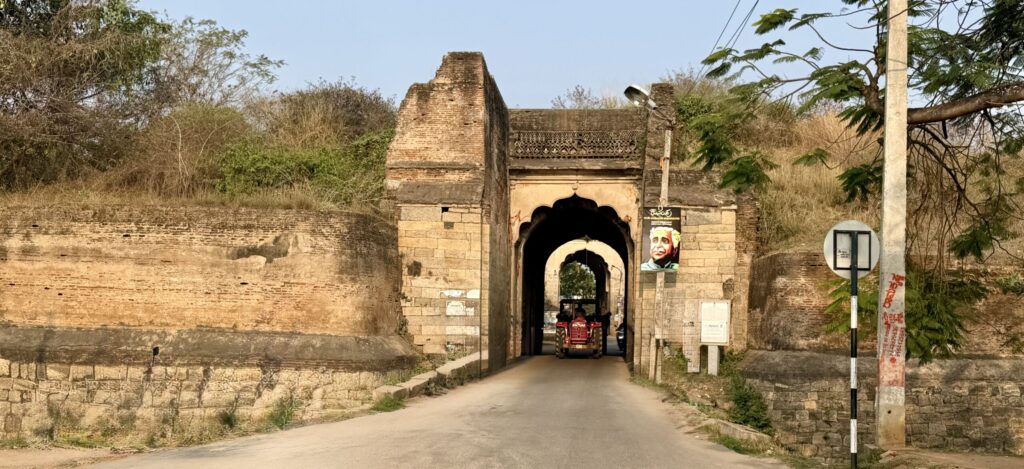
- Srirangapatna Entrance
- Tipu Sultan Memorial
- Ranganathaswamy Temple
- Brindavan Gardens
- Mysuru
- Traffic Circles
- Mysore palace
- Philomena Church
- Sri Jayachamarajendra Art Gallery
- Chamundi Hills
- Lalita Mahal Palace
- Sanjeevani park
- Freedom fighter park
- Venugopala Swamy Temple
Srirangapatna – gets its name from the Ranganathaswamy Temple, consecrated around 984 CE, and has long been an important religious and pilgrimage site. The monuments on this island town have been nominated for UNESCO World Heritage status. In 1610, Raja Wodeyar I captured Srirangapatna, taking control of its fort and the annual Navaratri festival—both symbols of sovereignty over the Kingdom of Mysore. Later, the town served as the capital under Hyder Ali and Tipu Sultan, who used it as a strategic stronghold during campaigns against the British and neighboring rulers.
========================
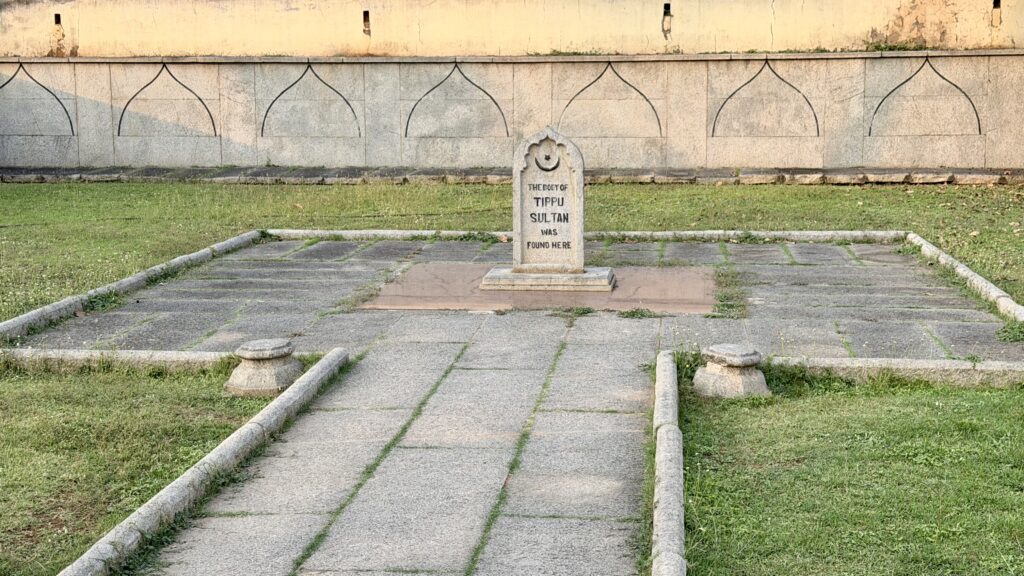
Tipu Sultan Memorial – Srirangapatna was the site of the decisive final battle of the Fourth Anglo-Mysore War in 1799, fought between Tipu Sultan, ruler of Mysore, and the East India Company. Tipu Sultan was killed inside the fort of Seringapatam, betrayed by one of his own confidants; the site of his fall is now marked by a memorial.
========================
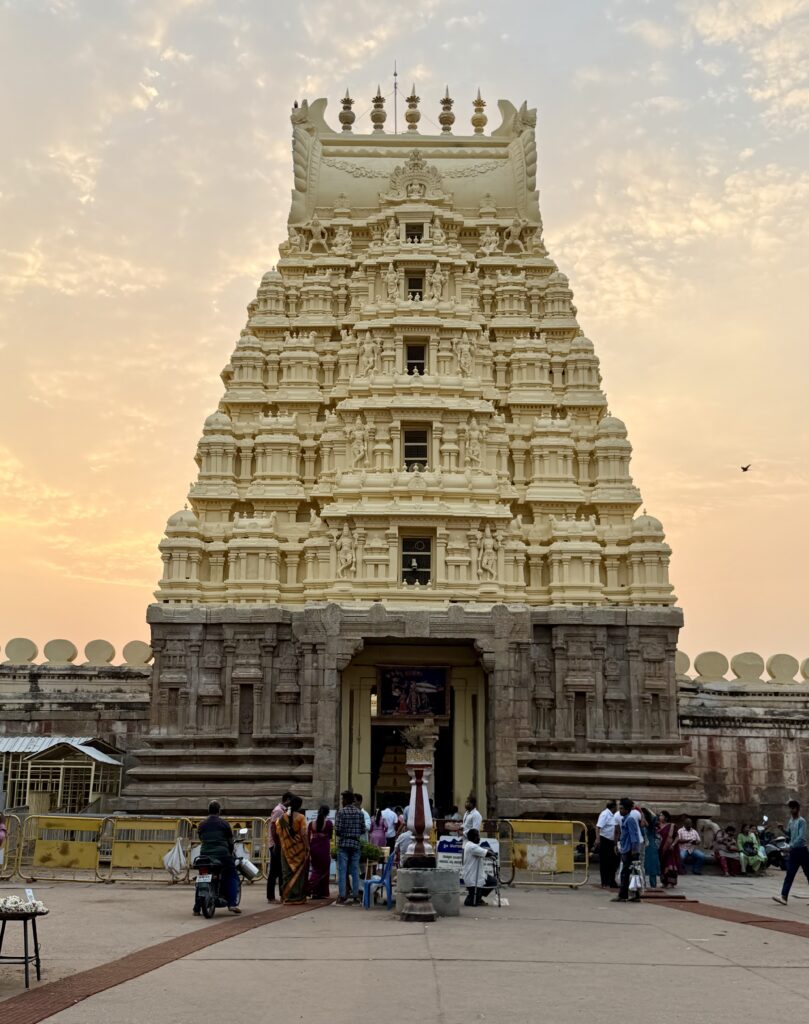
Ranganathaswamy Temple – The Ranganathaswamy Temple, is dedicated to Ranganatha, a form of Vishnu. It is one of the five sacred pilgrimage sites along the Kaveri River, collectively known as the Pancharanga Kshetrams in Southern India. Being the first temple upstream, the deity here is called Adi Ranga (meaning first Ranga). The town of Srirangapatna takes its name from this temple and is uniquely situated on an island in the Kaveri River.
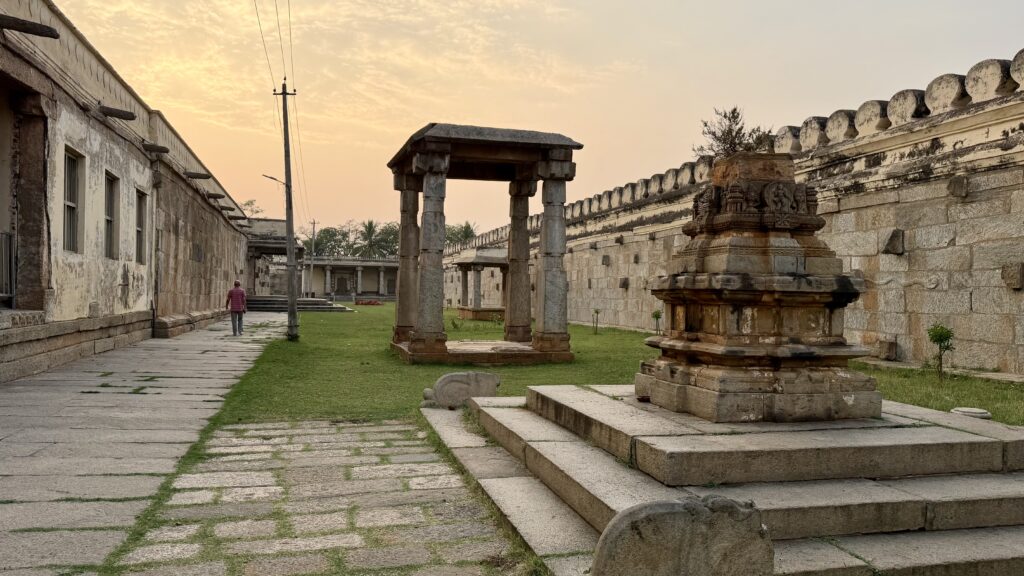
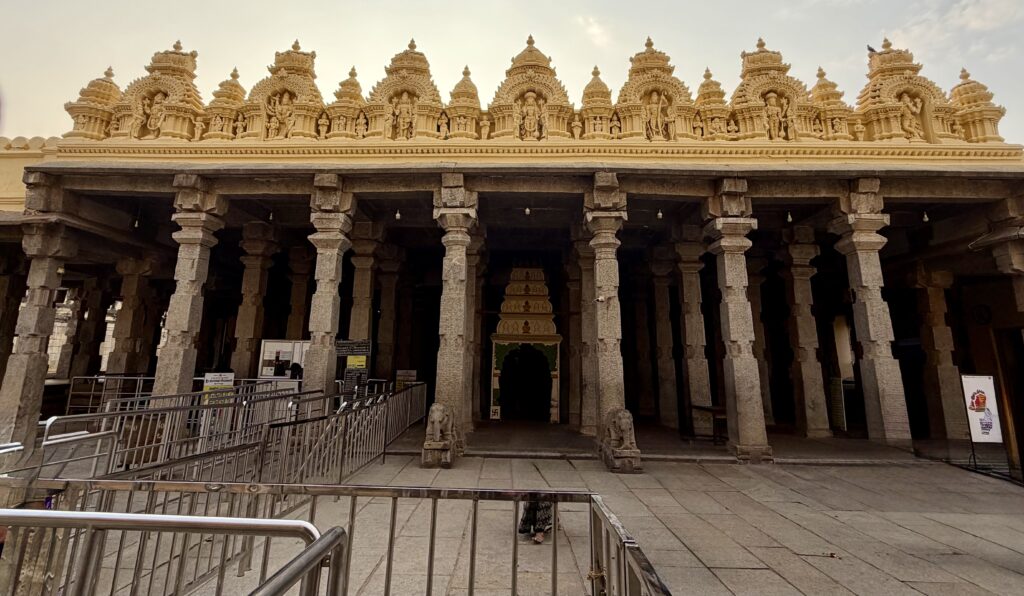
Brindavan Gardens – After visiting Srirangapatna, we drove to Brindavan Gardens, located about 20 km away. We checked into our hotel, Royal Orchid, conveniently located within the garden complex.
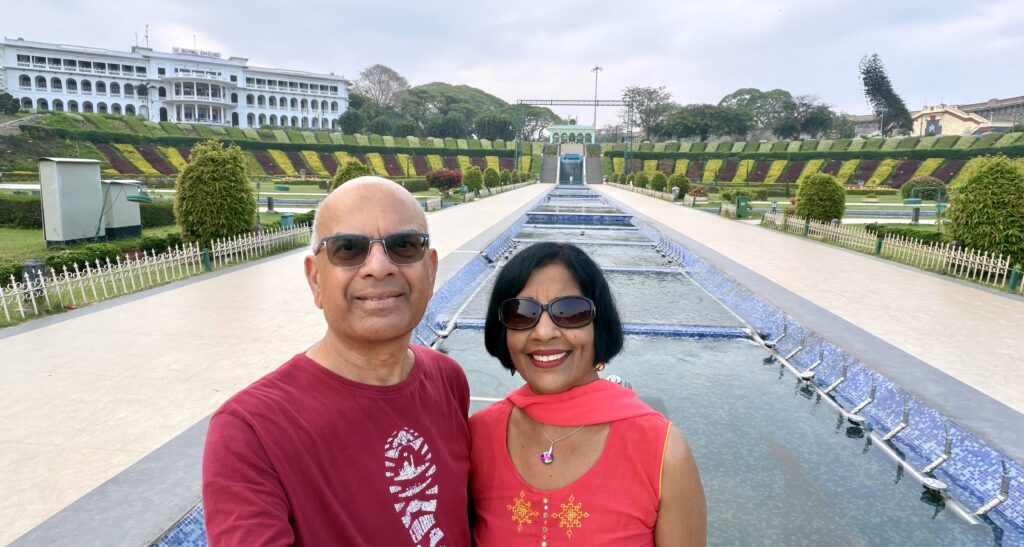
Brindavan Gardens, Krishnarajasagara Dam – The gardens lies adjoining the Krishnarajasagara Dam (or KRS Dam) which is built across the river Kaveri. The work on laying out this garden was started in the year 1927 and completed in 1932.
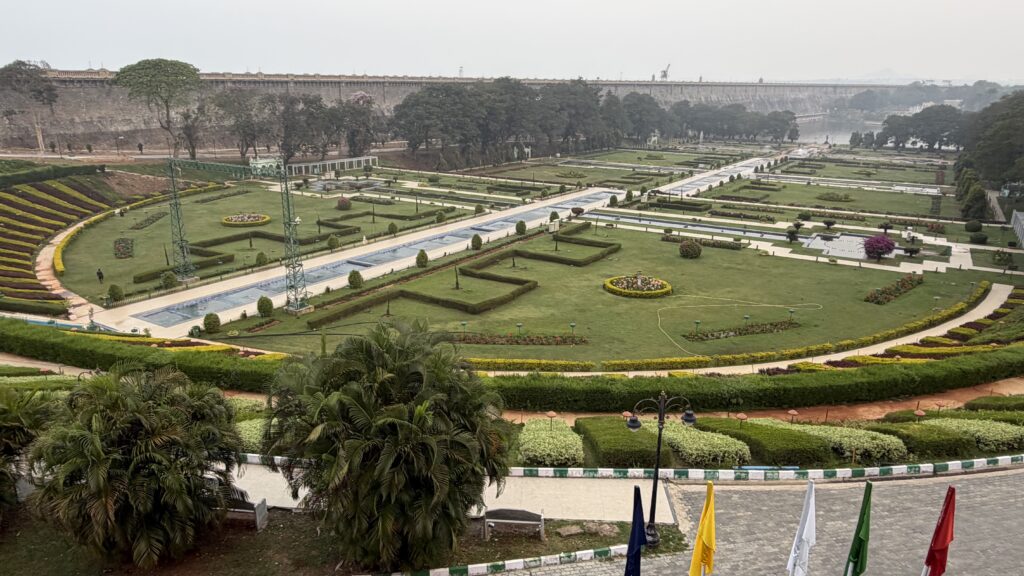
Krishnarajasagara Dam was built across the Kaveri River between 1911 and 1931, employing nearly 10,000 workers. Since cement was not manufactured in India at the time, builders used a traditional mortar called surki instead.
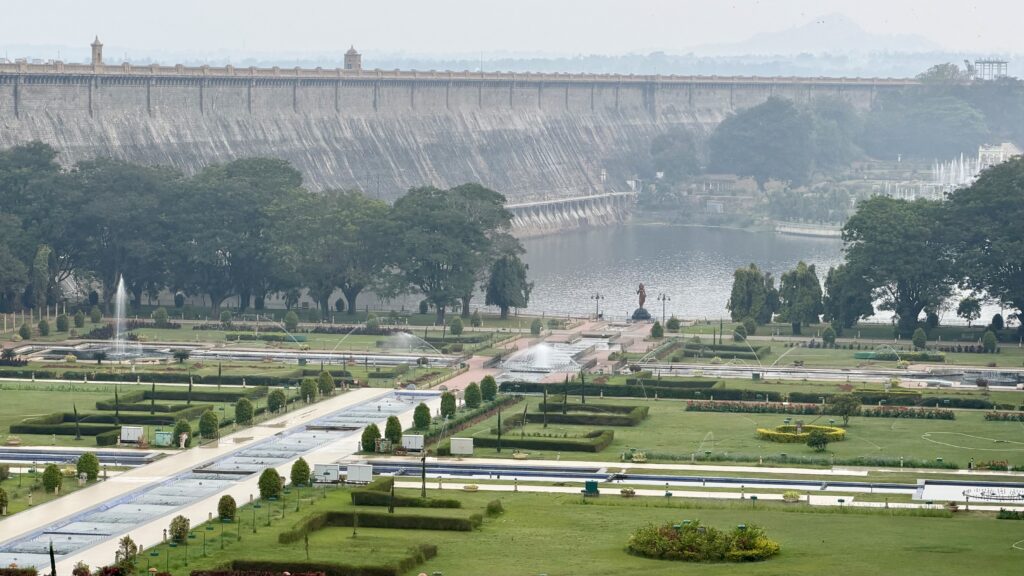
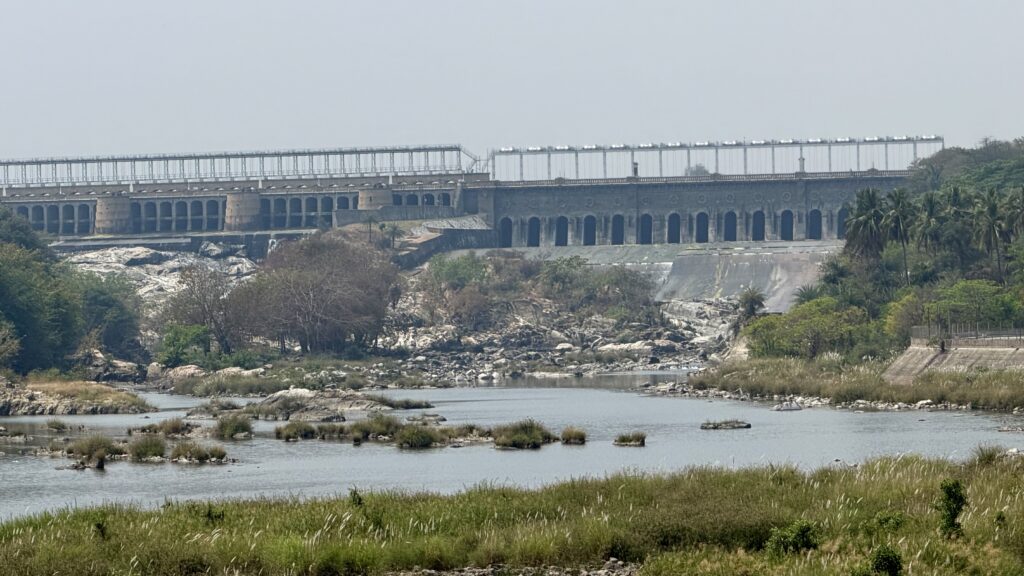
Brindavan Gardens, Night View and Musical Fountain – In the evening, the fountains were brilliantly lit in vibrant colors, creating a stunning sight. From the balcony of our room at Royal Orchid Brindavan Garden, we had a wonderful view of the entire Brindavan Gardens.
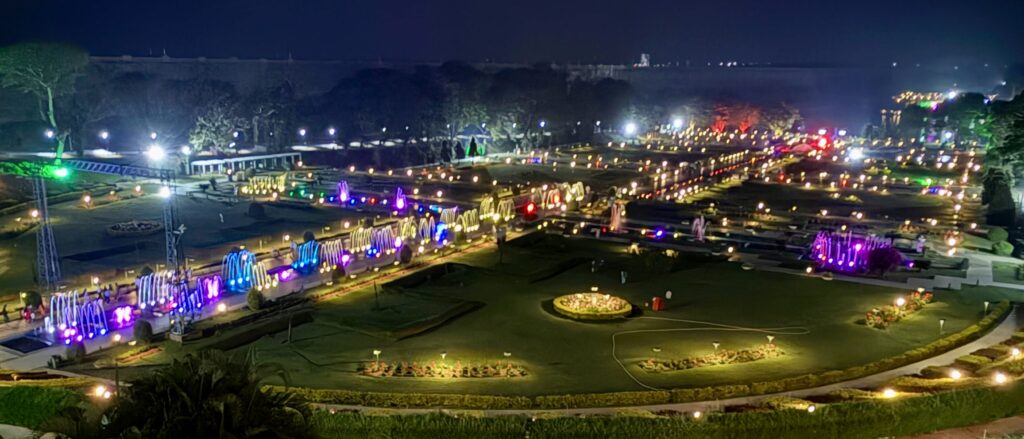
The gardens’ famous musical fountain, located near the Krishna Raja Sagara Dam, is a popular evening attraction featuring synchronized water, lights, and music. The shows typically run from 6:30 PM to 7:30 PM on weekdays, with extended timings until 8:30 PM on weekends.
From our hotel, it was almost a mile’s walk to the far end of the garden where the show takes place. Boats are available that take visitors part of the way, though you still have to walk about half the distance from the hotel. However, the walk is much shorter if you enter directly through the main entrance of the gardens.
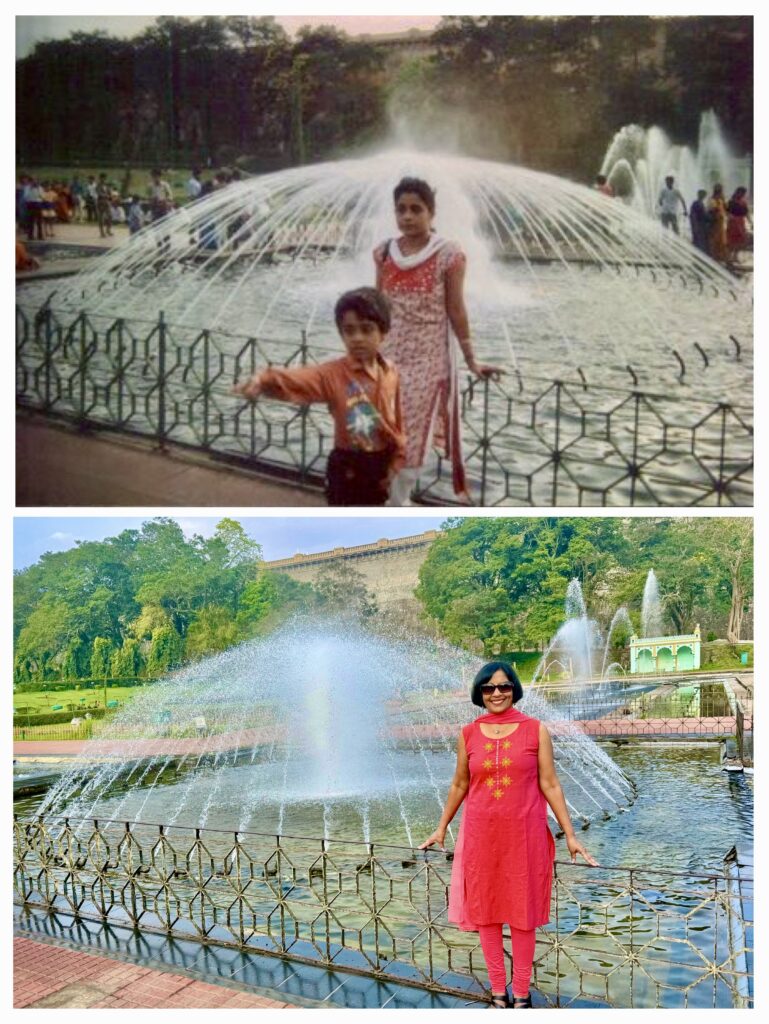
Brindavan Gardens – Old memories, New frame – We first visited Brindavan Gardens back in 1991, and I wanted to recreate a memory from near one of the fountains. To my surprise, the fountain from 35 years ago was still in the same spot, allowing me to perfectly recreate the scene.
————— Mysuru —————
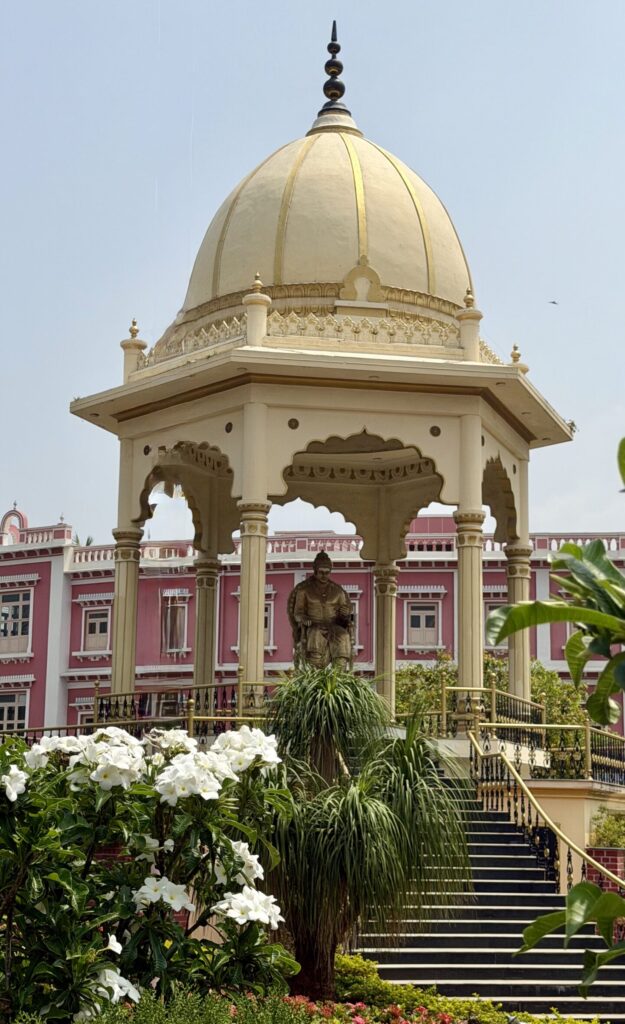
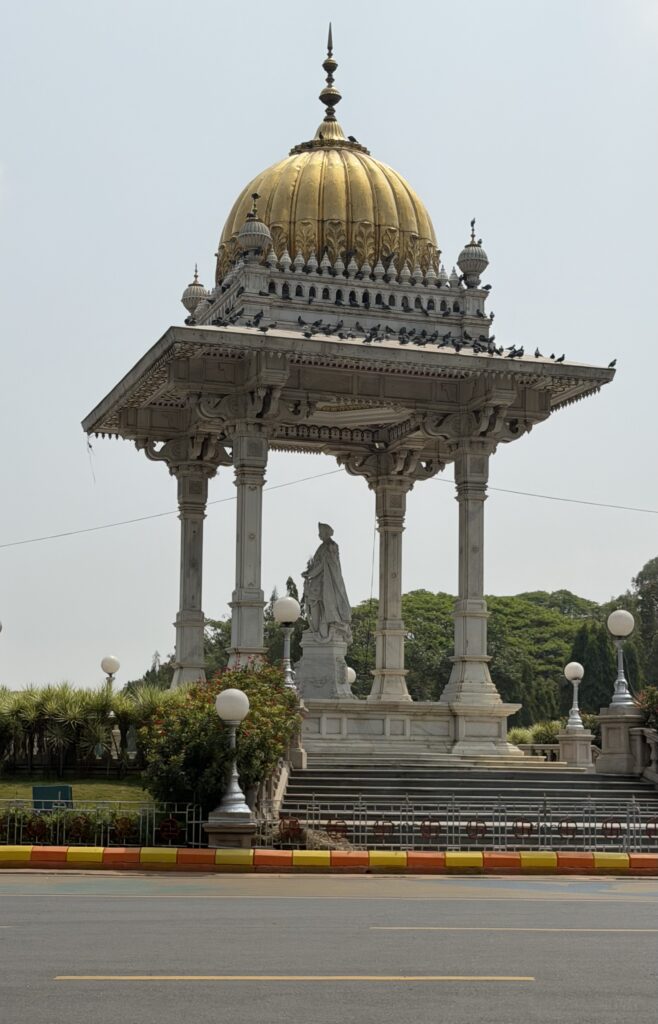
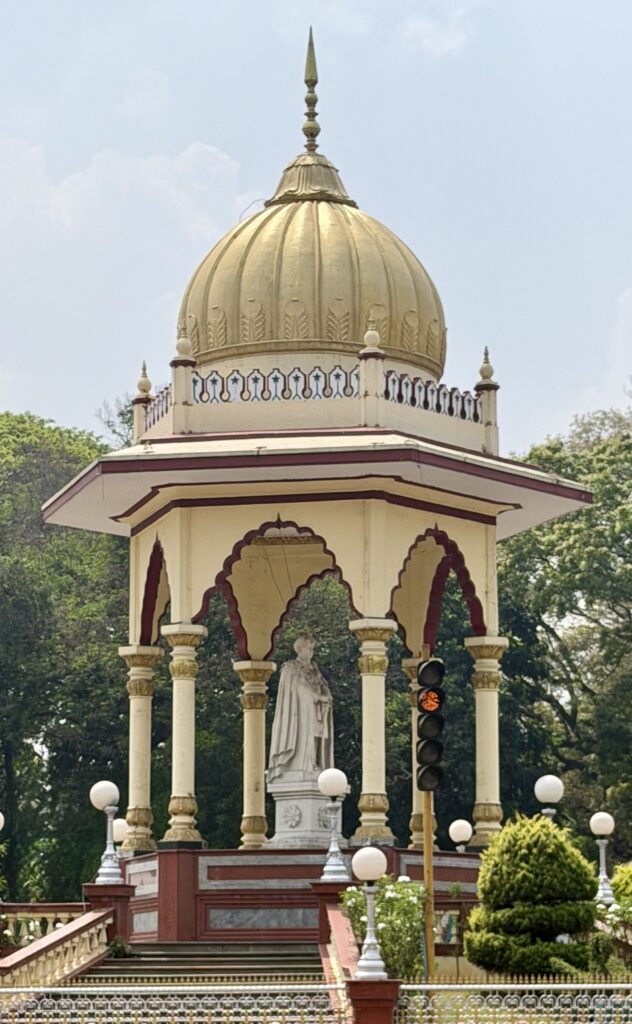
Mysore Traffic Circles – There are very few cities in India that can claim to have ornate traffic circles like Mysore. Several are decorated, either with impressive statues or elaborate lamps.
- Krishnaraja Circle – at the intersection of Sayyaji Rao Road, Albert Victor Road and Devaraj Urs Road, has a statue of Maharaja Krishnaraja Wadiyar on an elevated hexagonal base.
- Chamarajendra Circle – Built in 1920, this circle is located in front of the Mysore palace’s north gate and is a well-known landmark. It has a marble statue of Maharaja Chamarajendra Wadiyar under a golden-domed pavilion. He was a popular and hospitable king who was a keen horseman and a patron of sports and arts.
- Jayachamarajendra Circle – A 9-foot marble statue of Maharaja Jayachamarajendra Wadiyar, the last ruling king of Mysore stands at this circle. This 20-ton statue was unveiled in 2016.
Mysore palace – also known as Amba Vilas Palace, this historic royal residence in Mysuru, served as the official residence of the Wadiyar Dynasty and the seat of the Kingdom of Mysore. Located in the heart of the city and facing the Chamundi Hills, the palace is the most prominent among the seven palaces that give Mysuru its nickname, the City of Palaces. The original palace, built in the 14th century within the Old Fort, was constructed mainly of wood and was destroyed by fire several times. After a major fire in 1897, the present stone and brick structure was built between 1897 and 1912.
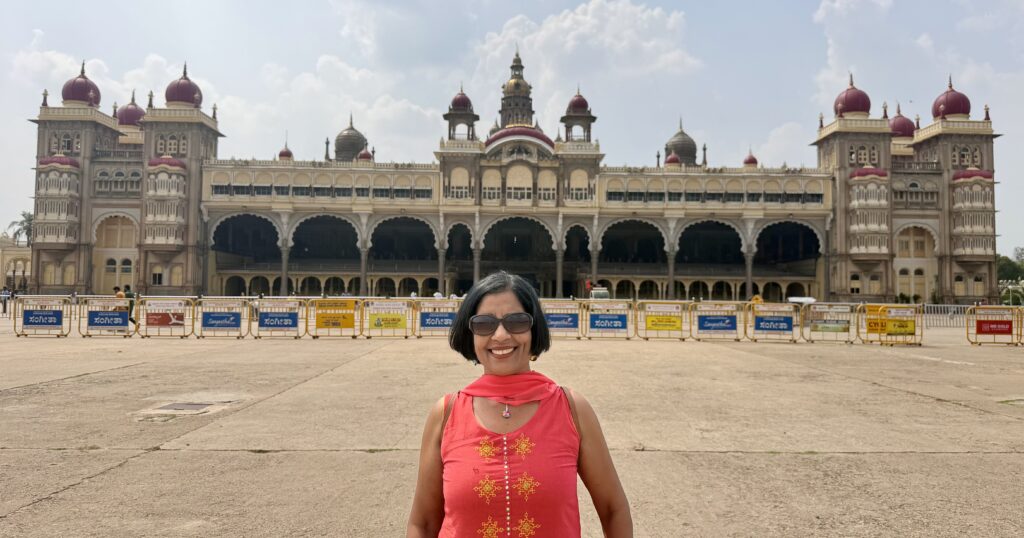
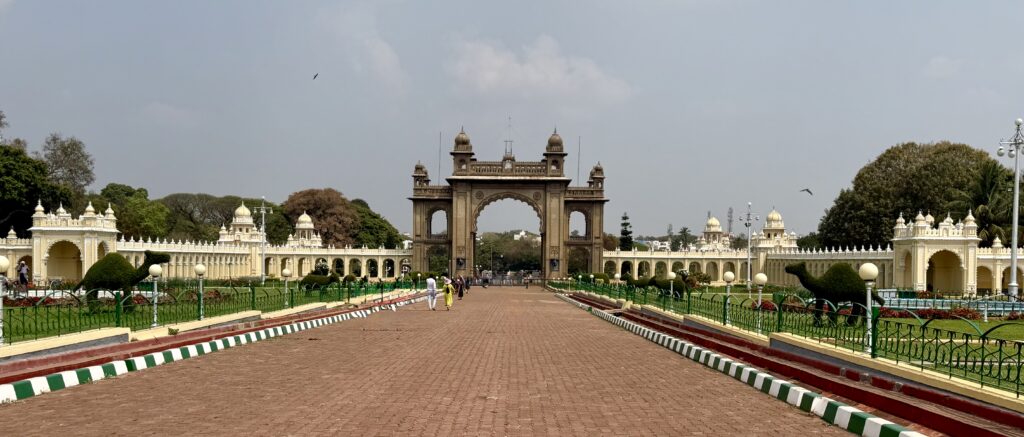
You can spend 4-5 hours here enjoying the architecture, museum, and the garden. Spread across an area of 700,000 square feet, the palace has 7 main gates, with the Varaha Gate (South Entrance) serving as the primary entrance for visitors. The palace is open daily from 10:00 AM to 5:30 PM, and ticket counters are located near this gate. Entry fees are approximately ₹120–₹150 for Indian adults, and ₹1,000 for foreign visitors. While there are several entrances to the palace complex, tourists most commonly enter through the Varaha Gate or the Jayarama–Balarama Gate (North Entrance). These gateways provide access to the grand palace grounds and its historic interiors. There are temples with huge gopurams at each of the entrances.
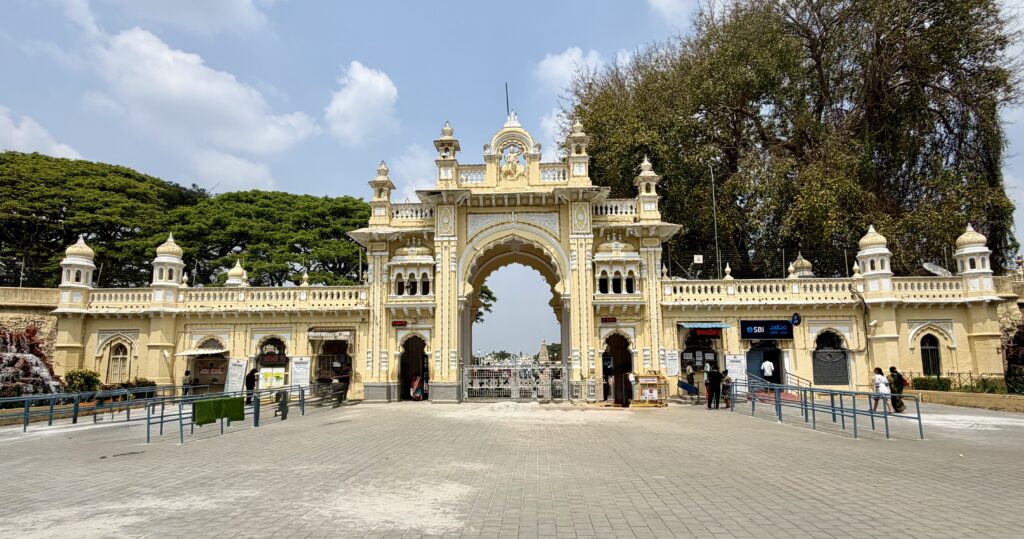
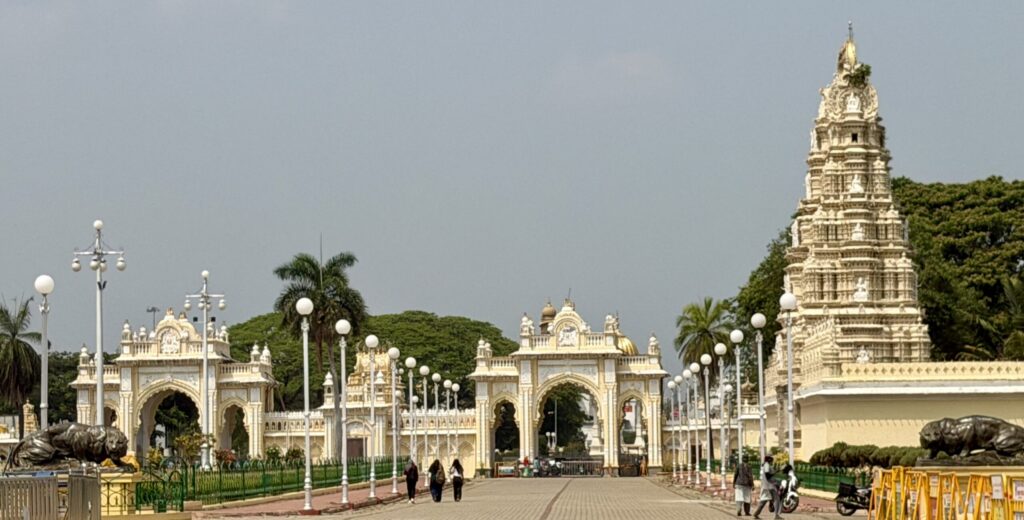
The Jayamarthanda Gateway (biggest and grandest of the gates) at Mysore Palace is generally not used as the main visitor entrance today mainly for crowd management and preservation reasons.
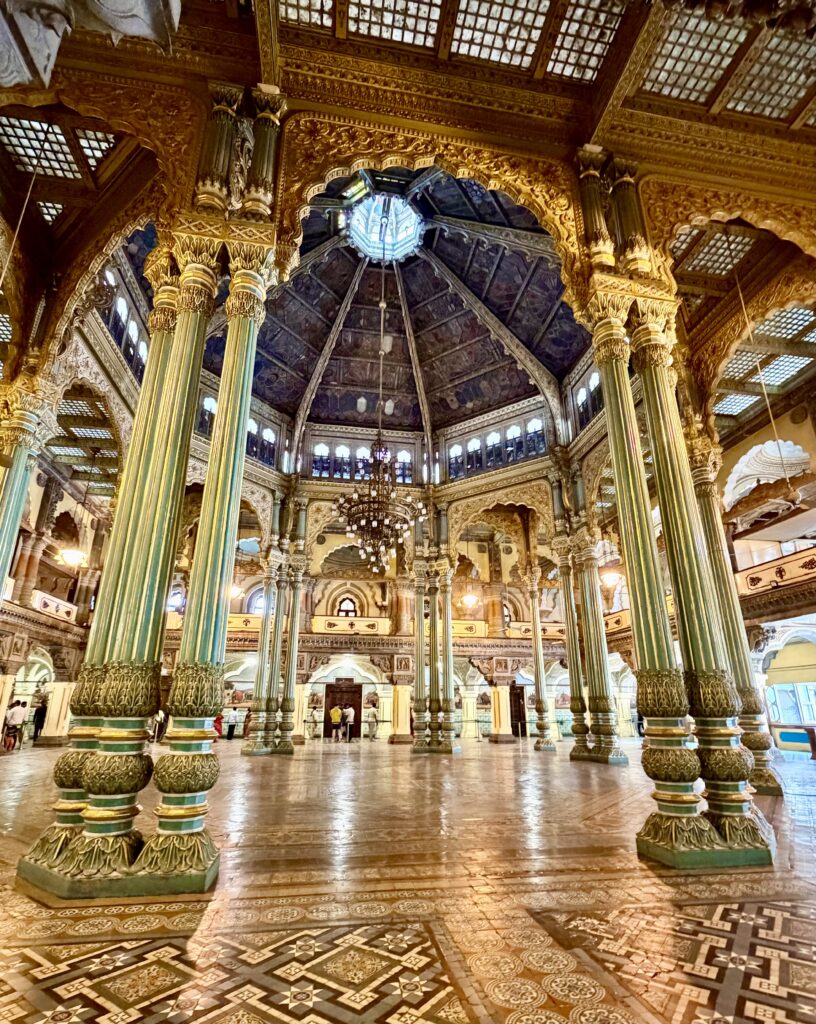
Mysore Palace Interior – The palace has many fascinating rooms to explore, beginning with the magnificent Kalyana Mantapa, followed by the grand Durbar Hall (or Audience Hall).
- The Kalyana Mantapa (Marriage Pavilion) – is octagonal dome-shaped opulent hall featuring a multi-hued glass ceiling, imported from Belgium. The floor is decorated with, intricate peacock mosaics using glazed tiles. The dome is supported by, ornate, cast-iron pillars. The walls feature massive oil paintings that showcase the traditional, Dasara procession in Mysore.
- Durbar Hall (or Audience Hall) – The hall is designed in the Indo-Saracenic style, blending Hindu, Mughal, Rajput, and Gothic styles. It is filled with multi-colored pillars and decorative arches and the walls and ceilings feature exquisite paintings. The hall is illuminated by 97,000 electric bulbs. This is where the royal Wadiyar family held, and still holds, special meetings and cultural events.
- Inner Courtyard – The open-air inner courtyard frequently referred to as the Wrestling Courtyard, was historically used for traditional wrestling matches during the Dasara festival. Completed in 1912, the structure features intricate carved pillars and open spaces and is surrounded by the main palace building, which includes the Durbar Hall, Kalyana Mantapa (wedding hall), and Doll’s Pavilion.
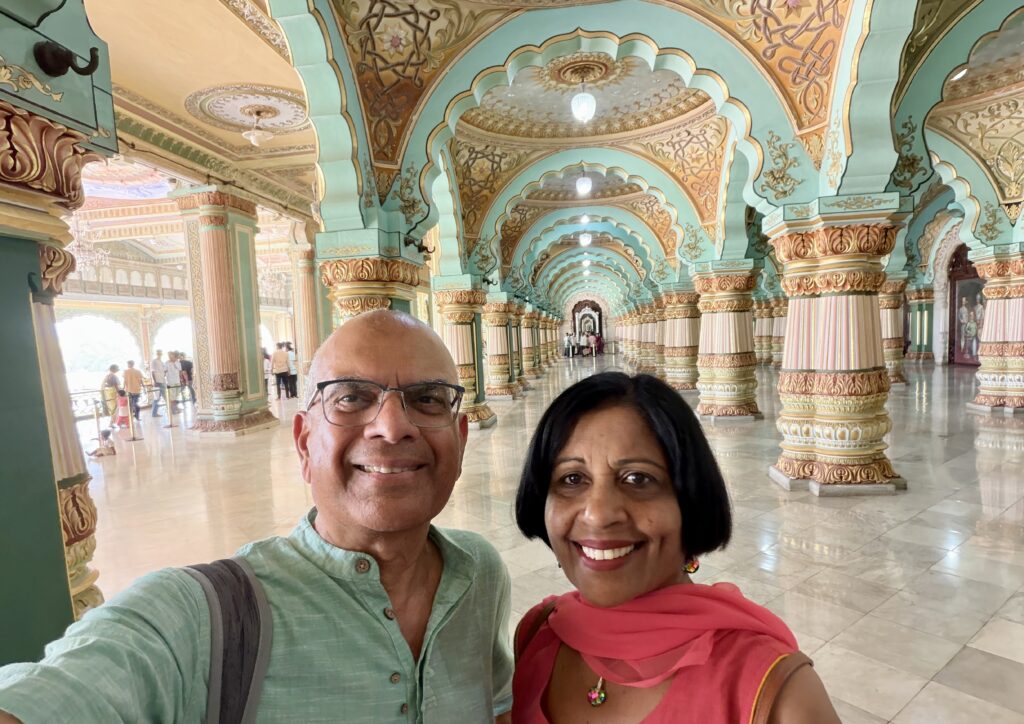
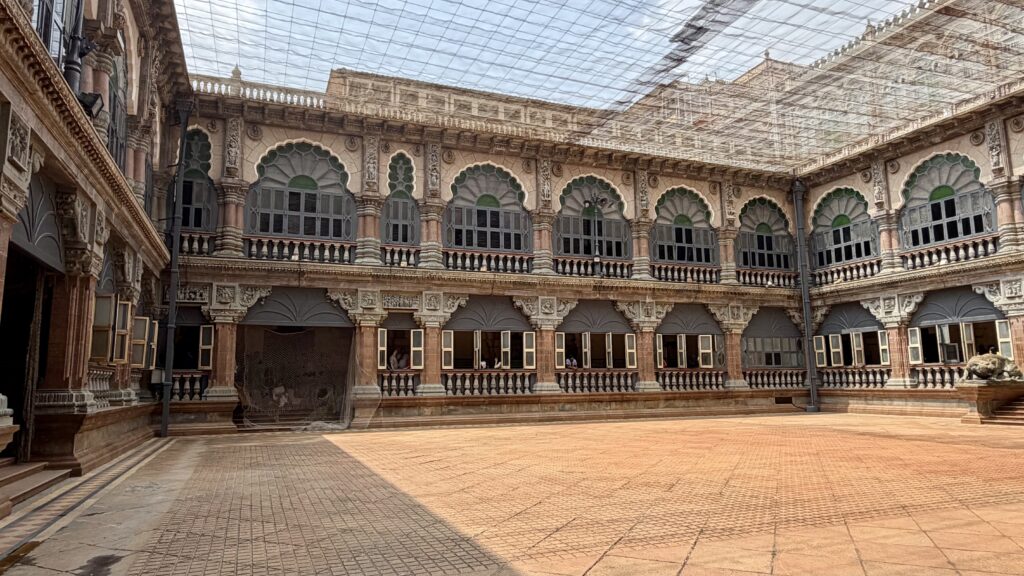
The palace features several galleries displaying antique weapons, royal furniture, and other artifacts from the palace’s past. A Portrait Gallery showcases the lineage of the Wodeyar Dynasty, with paintings of kings and queens dating from the 15th century to the present. The palace also features a Musical Instrument Gallery, exhibiting a wide range of Indian and Western instruments, and a Costume Gallery displaying the traditional clothing and jewelry of the royal family.
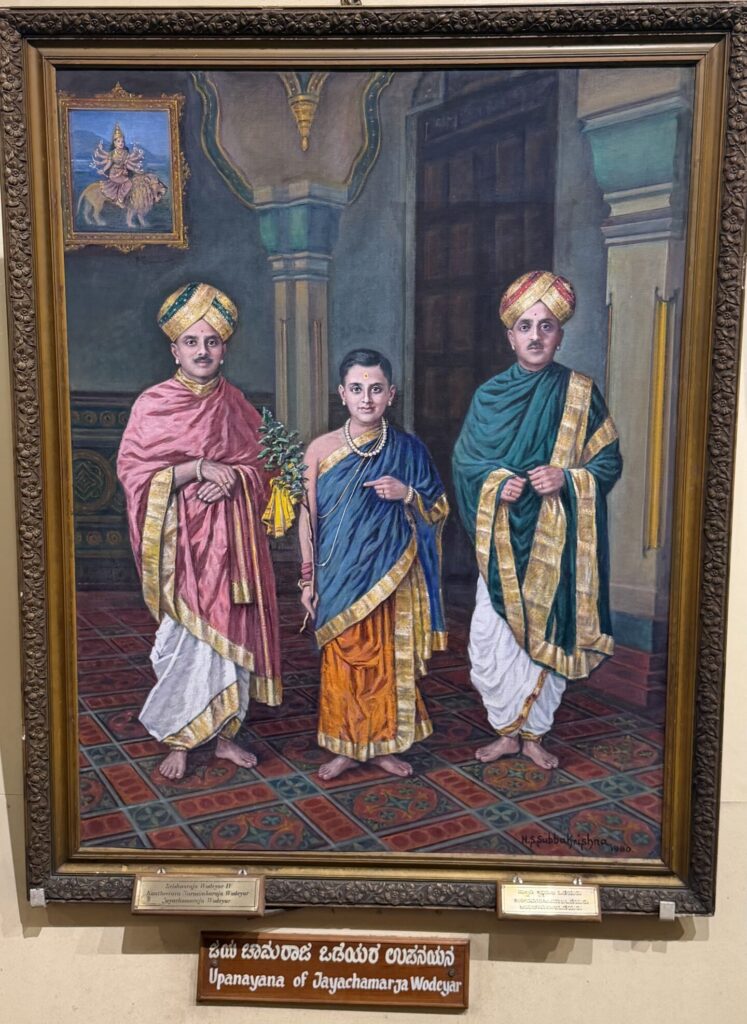
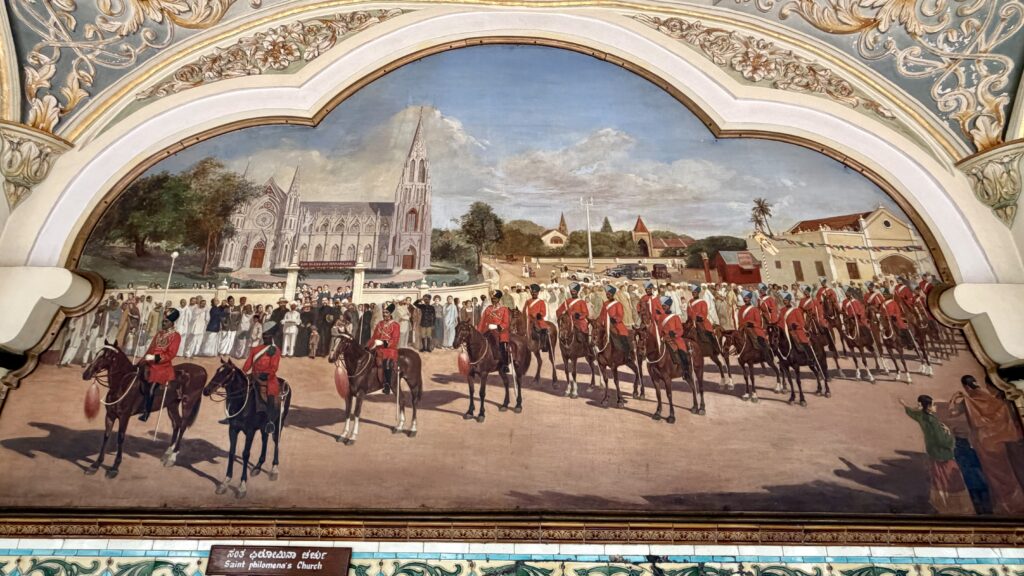
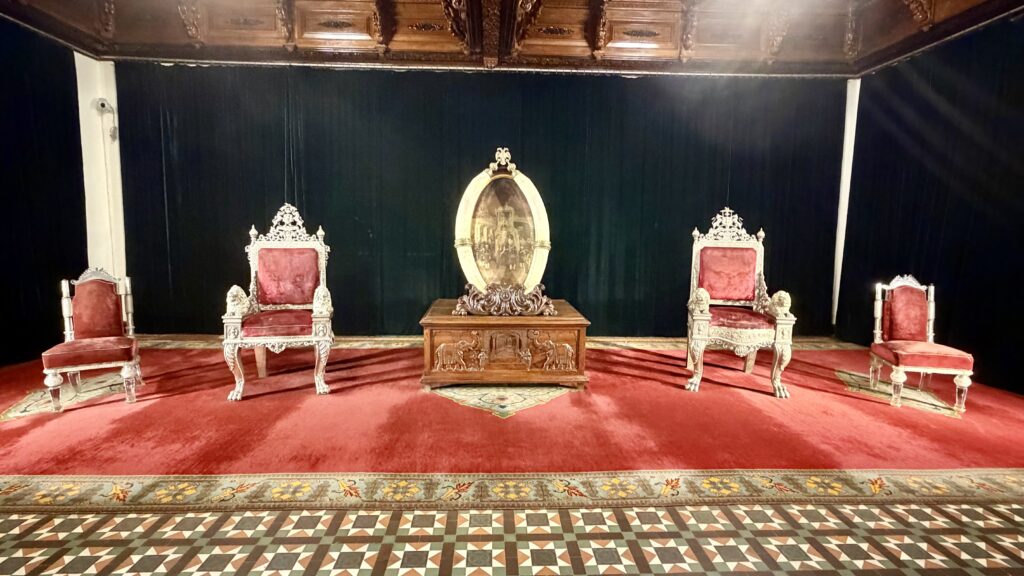
After exploring the interior of Mysore Palace, we walked around the palace grounds, passing through the residential wing. The path eventually led us to the Lakshmiramana Swamy Temple with its tall gopuram, after which we came across another gate within the palace complex.
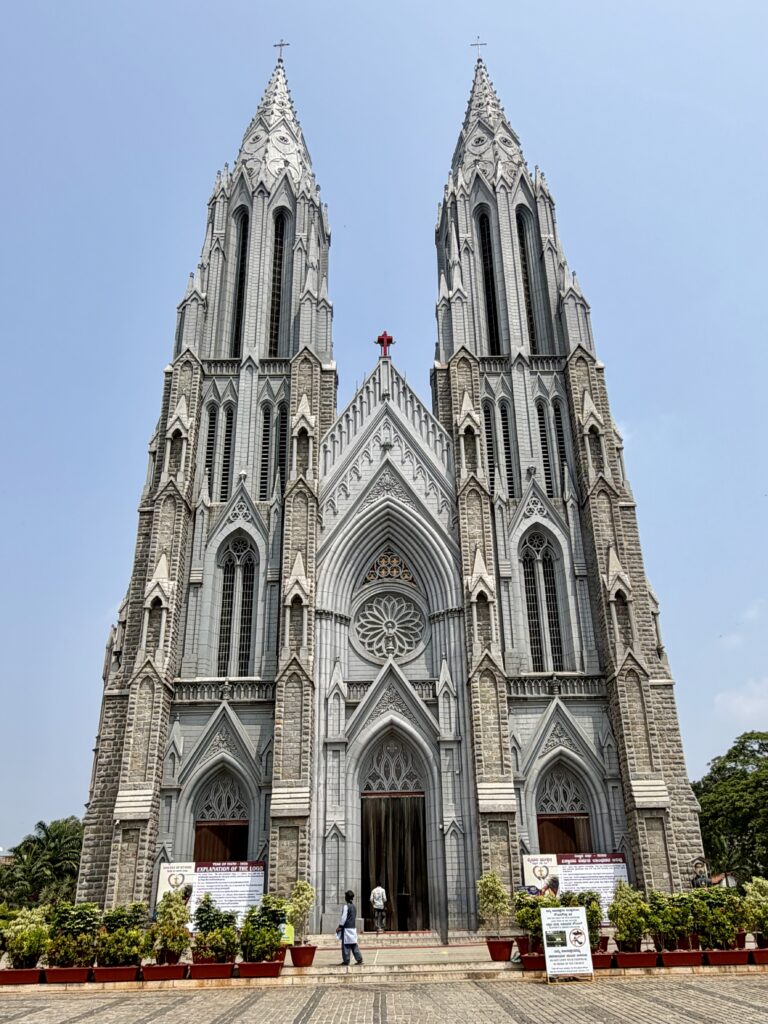
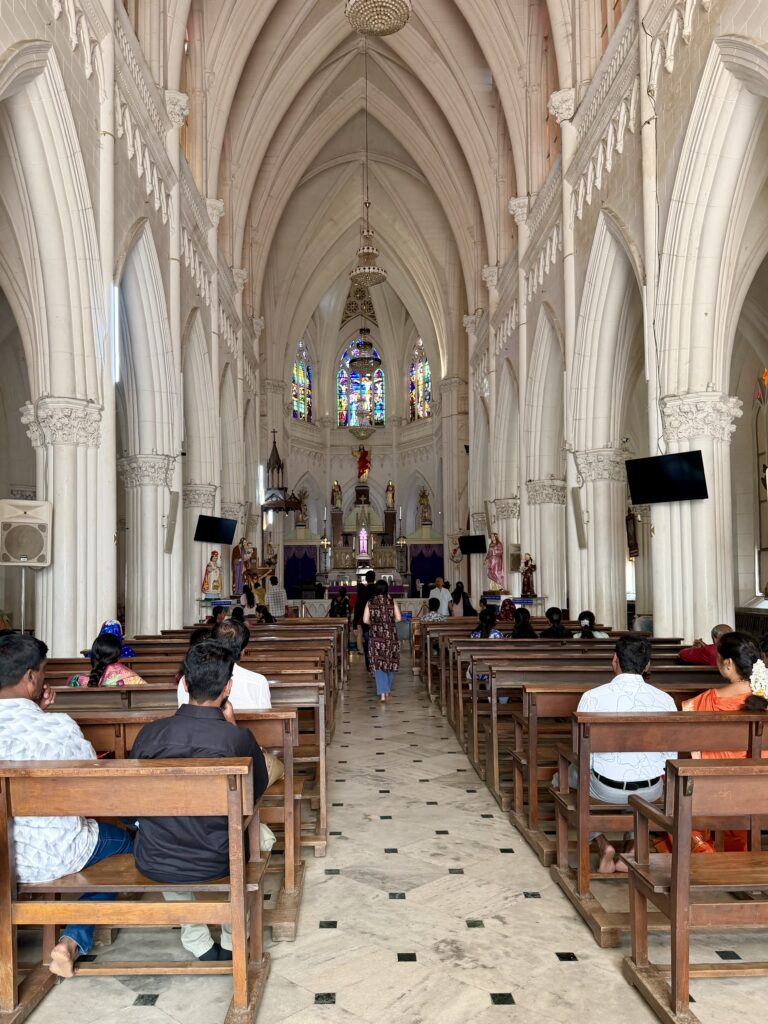
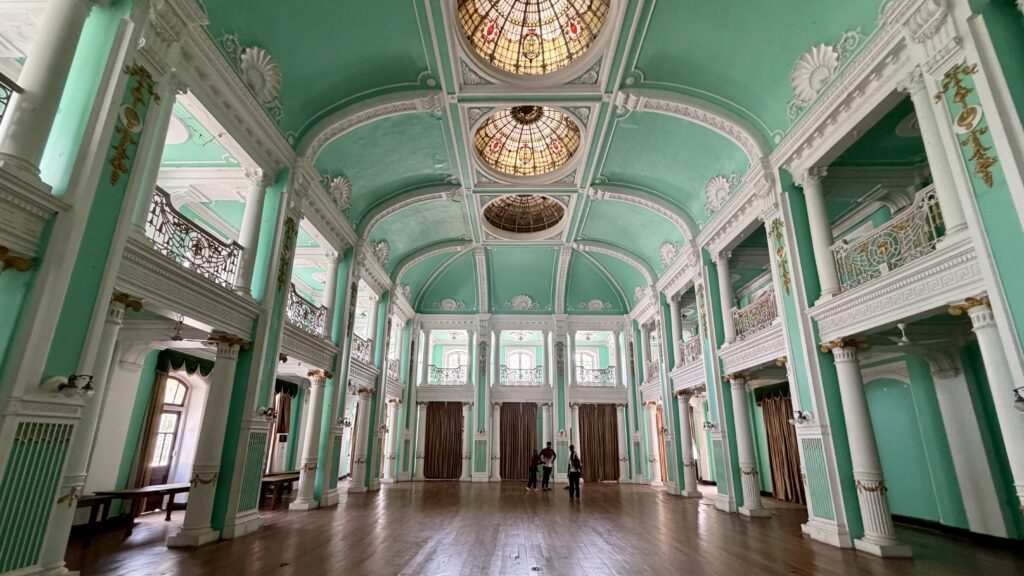
St. Philomena’s Cathedral – We decided to visit St. Philomena’s Cathedral after seeing its mural inside Mysore Palace (see painting in the above section). This magnificent church is well worth spending about 20 minutes exploring. It is a prominent Catholic church and serves as the seat of the Roman Catholic Diocese of Mysore. Built in 1936 during the reign of Krishnaraja Wadiyar IV, the cathedral showcases a striking Neo-Gothic design inspired by the famous Cologne Cathedral in Germany, and is considered one of the tallest churches in Asia. The cathedral is dedicated to Saint Philomena, a young Greek princess believed to have been martyred in the 4th century.
Sri Jayachamarajendra Art Gallery – formerly known as Jaganmohana Palace, this is a historic royal mansion, arts museum, and auditorium located about 200 meters west of Mysore Palace. Construction began in 1856 and was completed in 1861, making it one of the oldest modern structures in the city. The palace served as an alternative residence for the Mysore royal family whenever renovations or construction were underway at Mysore Palace. The last time the royal family stayed here was in 1897, following a fire that destroyed the old Mysore Palace, during the reign of Maharaja Krishnaraja Wadiyar IV.
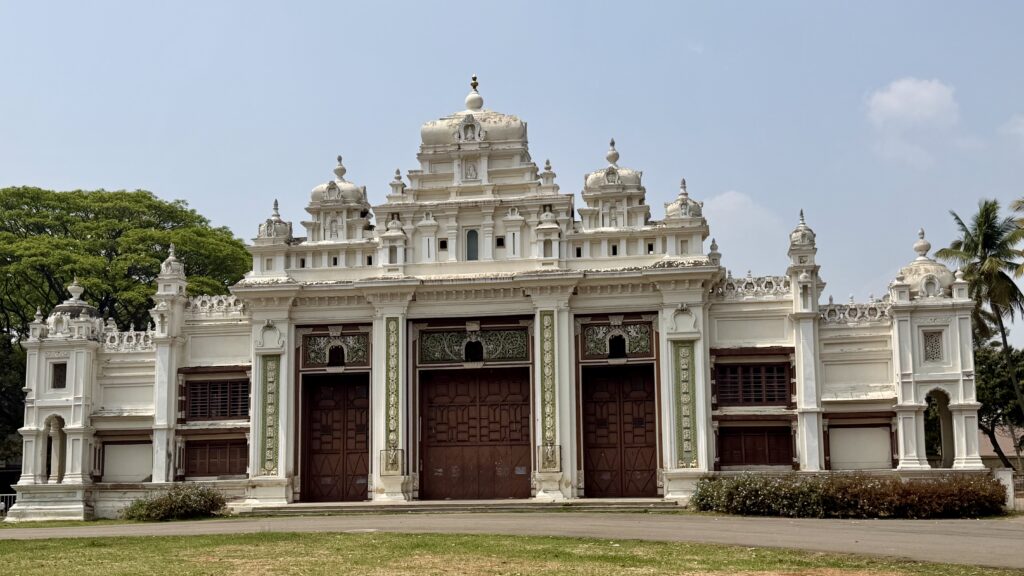
The Art Gallery houses one of the largest collections of artifacts in South India, with over 2,000 paintings in various Indian styles such as Mysore, Mughal, Shantiniketan and even miniature artworks painted on grains of rice, viewable only through a magnifier. Beyond paintings, the gallery showcases a fascinating collection of weapons, musical instruments, sculptures, brassware, antique coins, and currencies. There is a French clock featuring a miniature parade of soldiers, with drums marking the seconds and a bugle indicating the minutes.
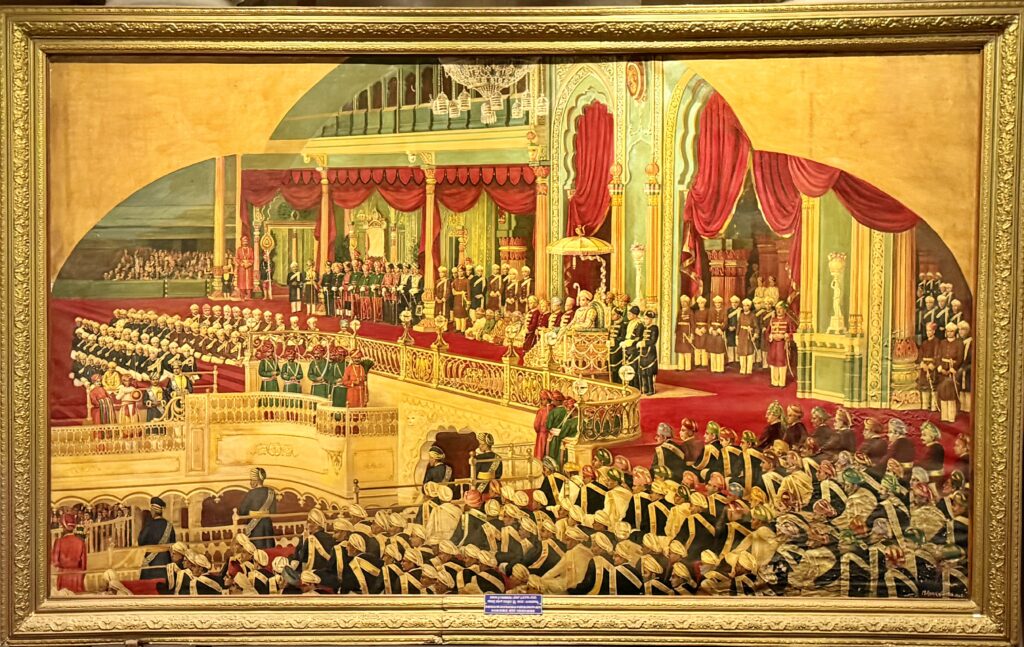
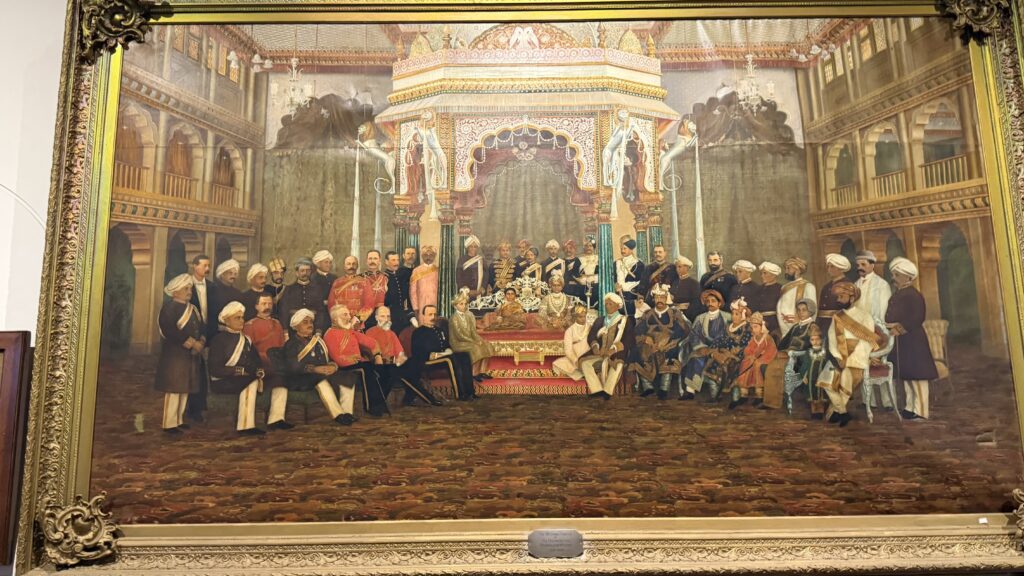
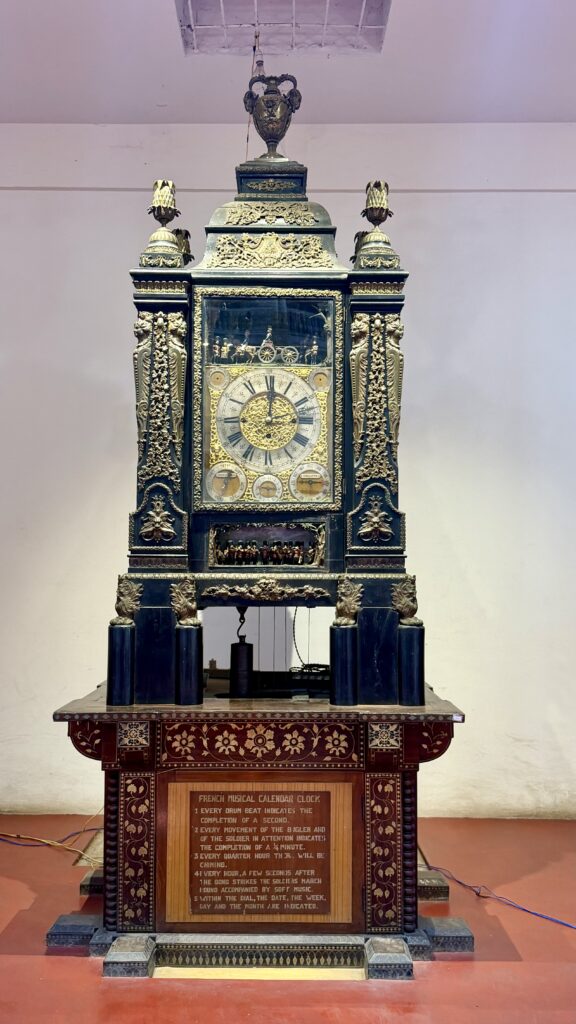
Chamundi Hills – located 13 km from Mysuru, the sacred hill which is 3,489 ft tall is famous for the Chamundeshwari Temple, a 17th-century Dravidian-style temple dedicated to goddess Chamundeshwari Devi who was the tutelary deity of the Mysore royal family. The hill is associated with the legend of Goddess Chamundi slaying the demon Mahishasura. There is a giant statue of Mahishasura near the temple.
The hill can be accessed by car, bus, or by trekking over 1,000 steps. Visitors are advised to follow the strict dress code when visiting the temple.
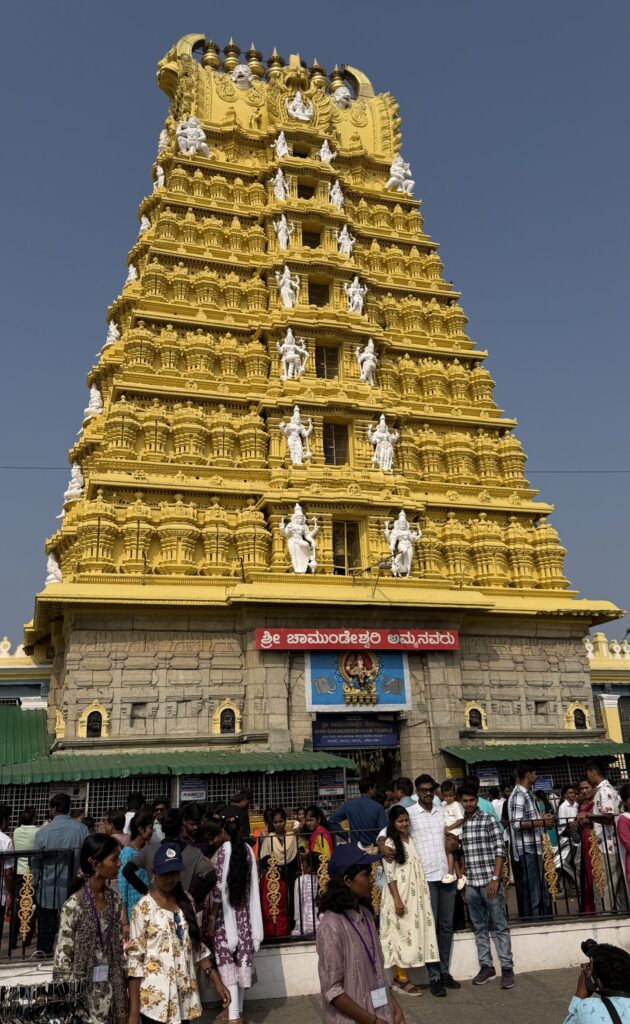
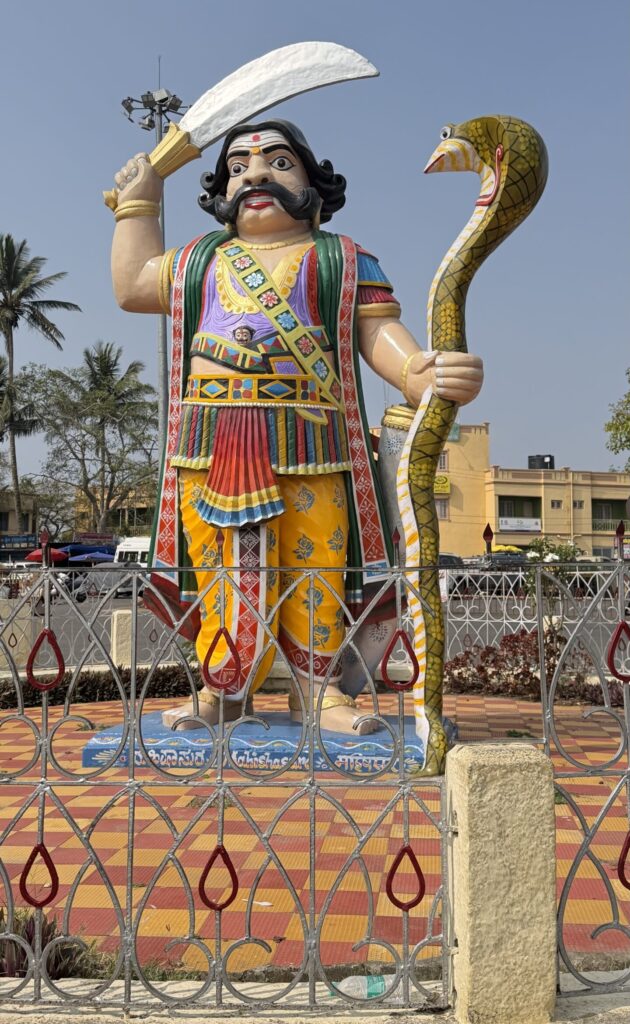
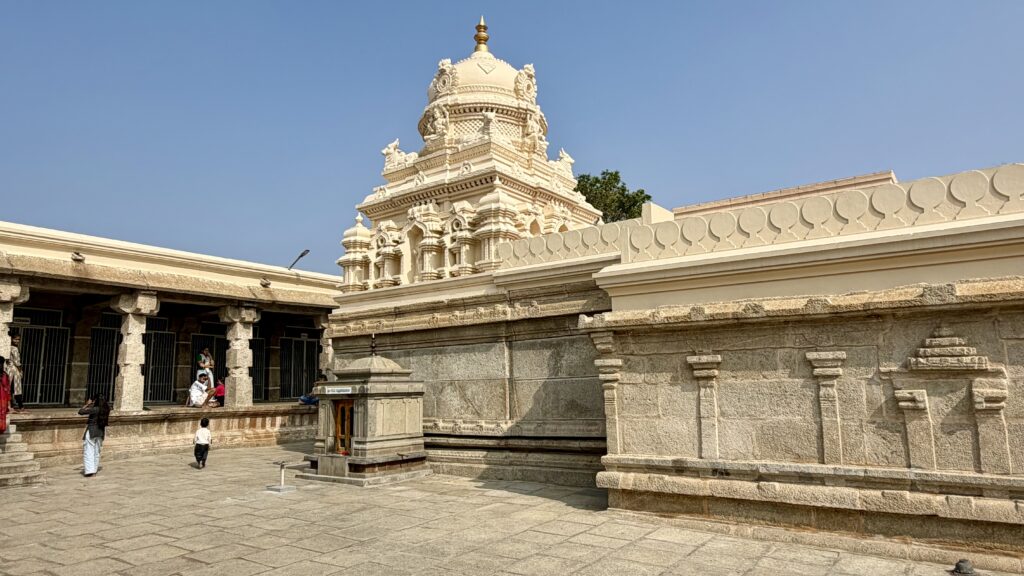
We did not go inside the Chamundeshwari Temple due to the long lines for darshan. Even the faster queue, which requires a ₹200 payment, had a wait time of about 2 hours. There was a premium queue at ₹1,000/person with a wait time of 10 minutes. We decided to skip and explored a few other attractions here.
Mahabaleswara Temple – This temple was the first temple built on the hill in the 8th century CE by the Ganga kings and dedicated to Lord Shiva. The Hills were called Mahabaladri until the Chamundeshwari Temple was built nearby. The temple was renovated by the Hoysala kings and the bronze idols found in this temple are believed to be of Chola period. Thus, this temple of Mahabaleshwar in Chamundi hills was famous in Ganga, Chola, and Hoysala periods.
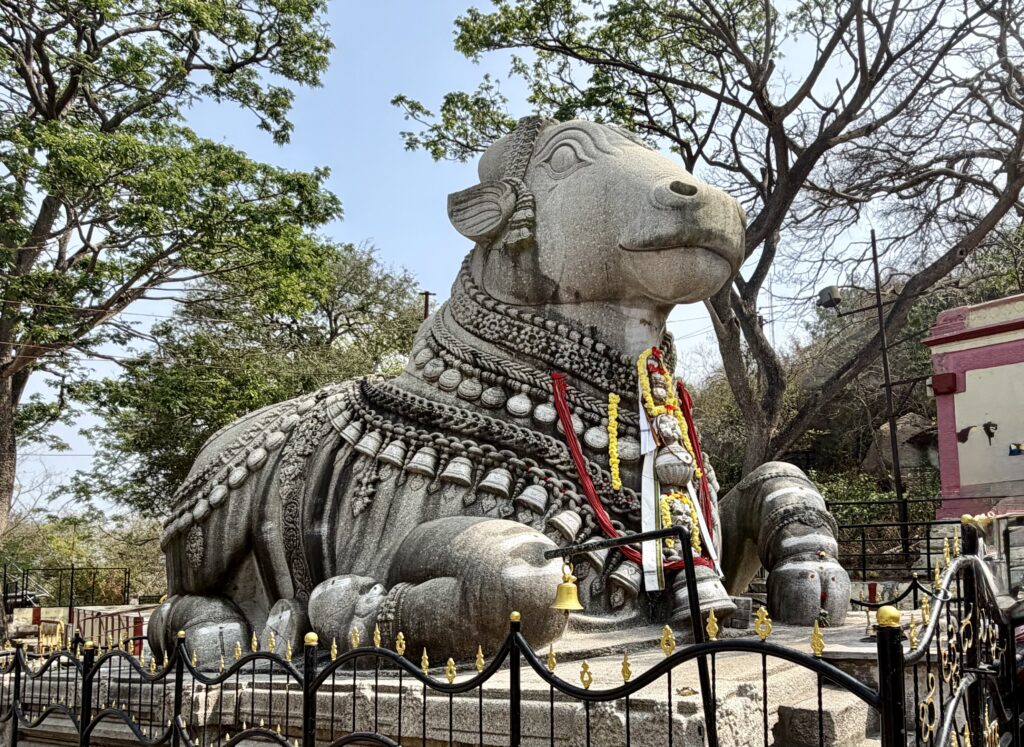
Nandi Statue – at Chamundi Hills is a magnificent monolithic sculpture that is more than 350 years old and one of the oldest icons in Mysuru. In Hindu mythology, Nandi is the sacred bull and vehicle of Shiva, typically placed facing Shiva temples. Standing about 16 feet high and 24 feet long, this statue is the third largest Nandi in India and was commissioned by Dodda Devaraja Wodeyar in the 17th century. The sculpture was carved directly out of a massive boulder and features beautifully detailed carvings of bells and garlands.
We stopped at a viewpoint on the way down from Chamundi Hills, hoping to get a panoramic view of Mysuru. Unfortunately, the weather was a bit foggy that day, which made it difficult to get a clear view or capture good photos of the city below.
Lalita Mahal Palace Hotel – formerly known as Lalitha Mahal, is a luxury hotel housed in a former royal residence and is the second largest palace in Mysuru, after the Mysore Palace. Located near Chamundi Hills, it was built in 1921 by Maharaja Krishnaraja Wodeyar IV for the exclusive stay of the Governor-General of India. Converted into a heritage hotel in 1974, it was part of the Ashok Group under the India Tourism Development Corporation (ITDC) until 2018, when management was transferred to a unit of the Government of Karnataka.
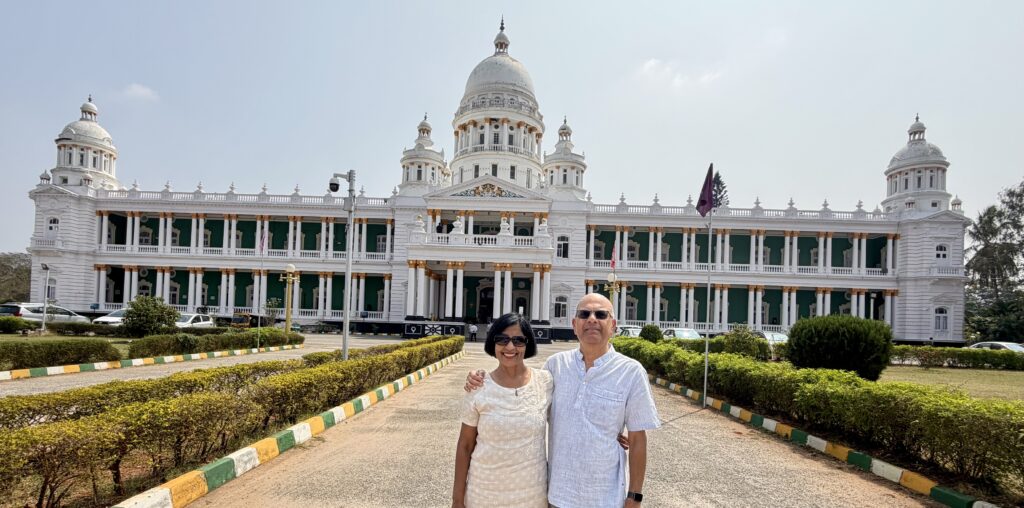
There is an entry fee for visitors (Rs 100/person) which includes a cup of tea and biscuits.
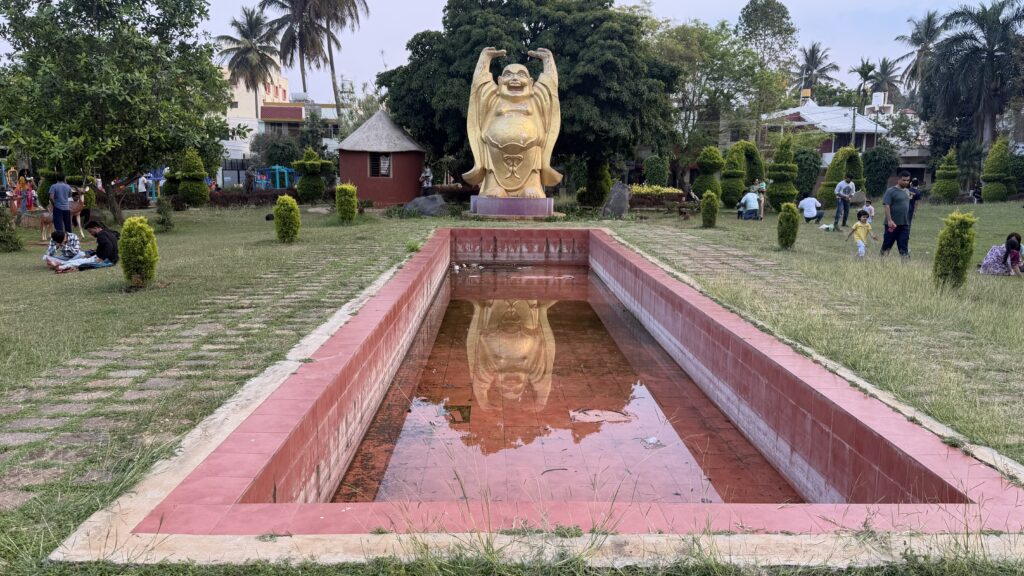
Sanjeevani park – is a charming urban park located in the heart of the city. The park’s centerpiece is a massive Laughing Buddha statue, which adds a cheerful vibe. It also features swings and play rides, making it a popular spot for children. Surrounded by lush greenery, the park offers city dwellers a refreshing escape, providing fresh air and a peaceful environment to relax and unwind. There were also a couple of ostrich running around in an enclosed space.
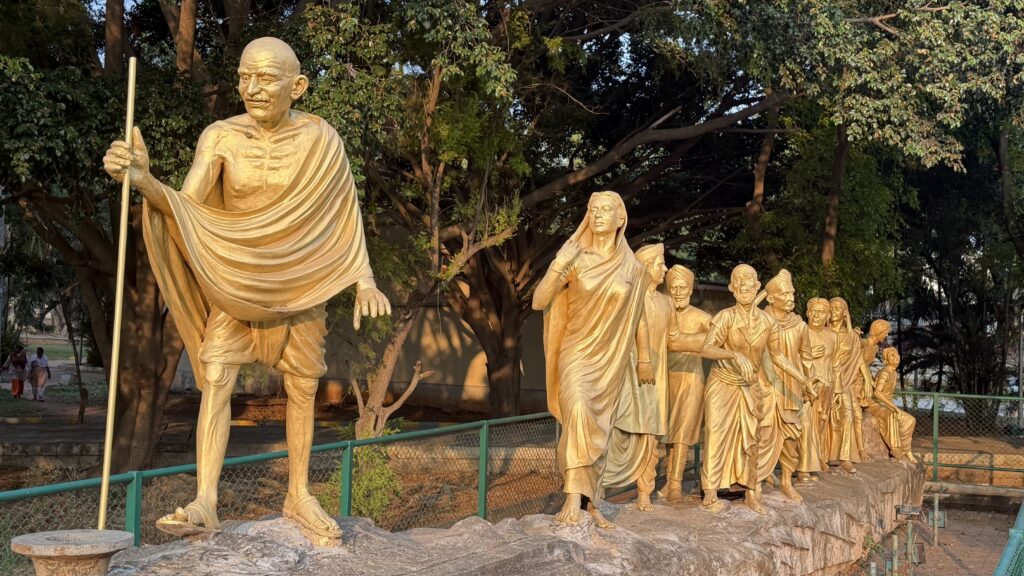
Freedom fighter park – This is a small park in the heart of the city and is a tribute to the Mysore Chalo movement and symbolizes the birth of freedom in Mysore. It features inspiring statues of freedom fighters and provides a serene space for yoga and meditation, highlighting the bravery and courage of those who fought for the country’s independence. While the park is full of historical significance, it is not very well maintained, which slightly diminishes its charm.
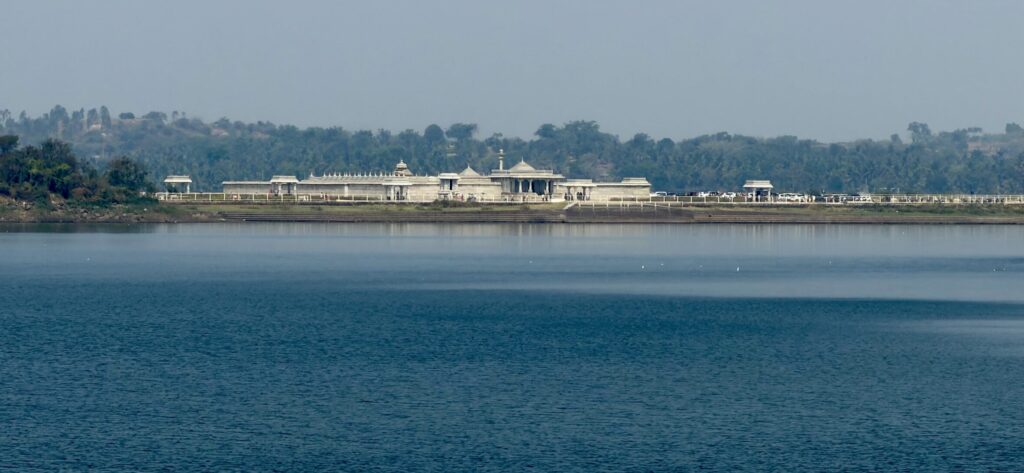
Venugopala Swamy Temple – is a remarkable example of Hoysala architecture dating back to the 12th century. Originally located in Kannambadi village near the Krishna Raja Sagara Dam, the temple was submerged when the dam was built in the early 1900s. During periods of drought, the structure would occasionally reappear, and in 2000, a severe drought revealed the temple completely for the first time in decades. Despite remaining underwater for nearly 70 years, the granite temple stayed largely intact. In 2011, the temple was carefully dismantled and reconstructed stone by stone by the Khoday Foundation under the leadership of philanthropist Sri Hari Khoday. It now stands in Hosa Kannambadi, about 30 km from Mysuru.
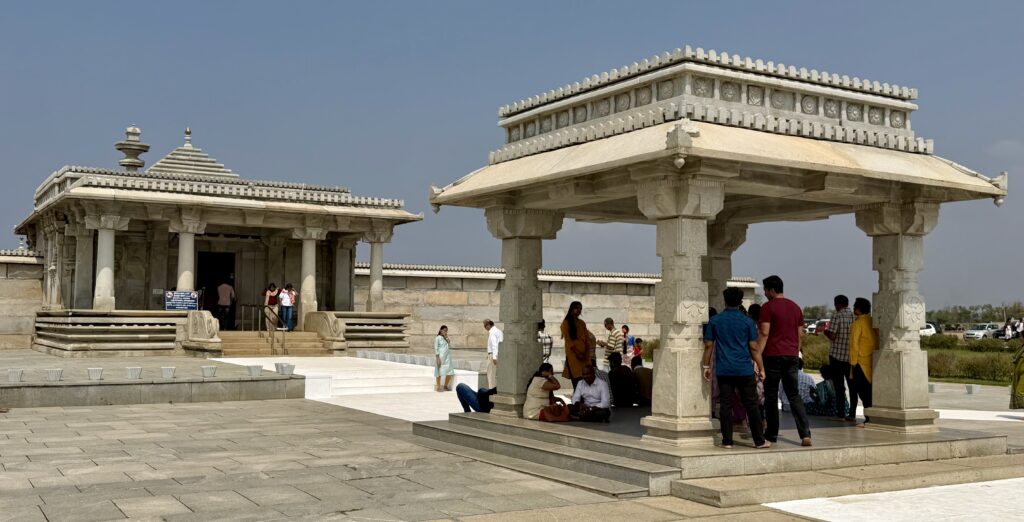
Dedicated to lord Krishna in his form as Venugopala—the divine flute-playing shepherd, the temple is surrounded by the backwaters of the Krishna Raja Sagara Dam, formed by the Kaveri River creating a peaceful floating temple effect, especially when the dam reaches high water levels.
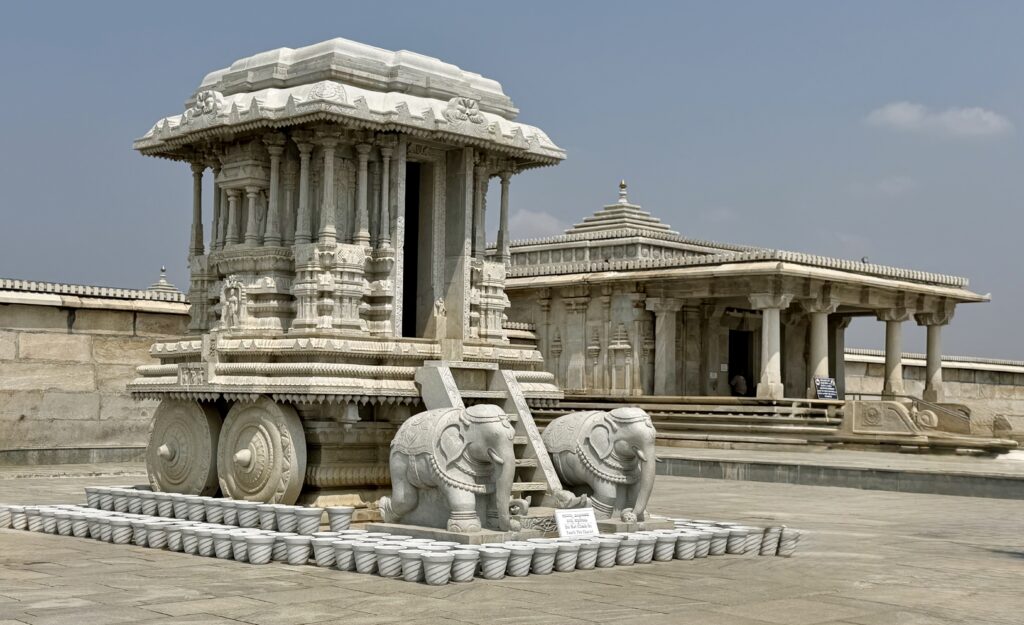
One of the temple’s most admired modern additions is its beautifully carved stone chariot, inspired by the famous chariot at Hampi. Decorated with elephant balusters and intricate stone carvings, it has become a major attraction for visitors.