Last visited in 2025
London is one of the most diverse capitol cities in the world. With its rich history, famous landmarks, and excellent public transport, it offers something for every visitor. We have visited this city several times over the years, most recently in 2025. During our latest trip, we joined a three-hour GuruWalk that took us around the city’s major landmarks. We walked all the way from Hyde Park to Big Ben (see list below)
- Hyde Park
- Wellington Arch
- Commonwealth Memorial
- Walk on The Mall
- Buckingham Palace
- St James Palace
- Trafalgar Square
- #10 Downing Street
- Houses of Parliament
- Big Ben
- St Margaret`s Church
- Red Telephone Booths
- St James Park
- London Eye
- London Bridge and Tower Bridge
- The Shard
- Borough Market
- Afternoon Tea
- Watching Cricket
- Wimbledon Lawn Tennis Museum
- Churches and Statues we passed by
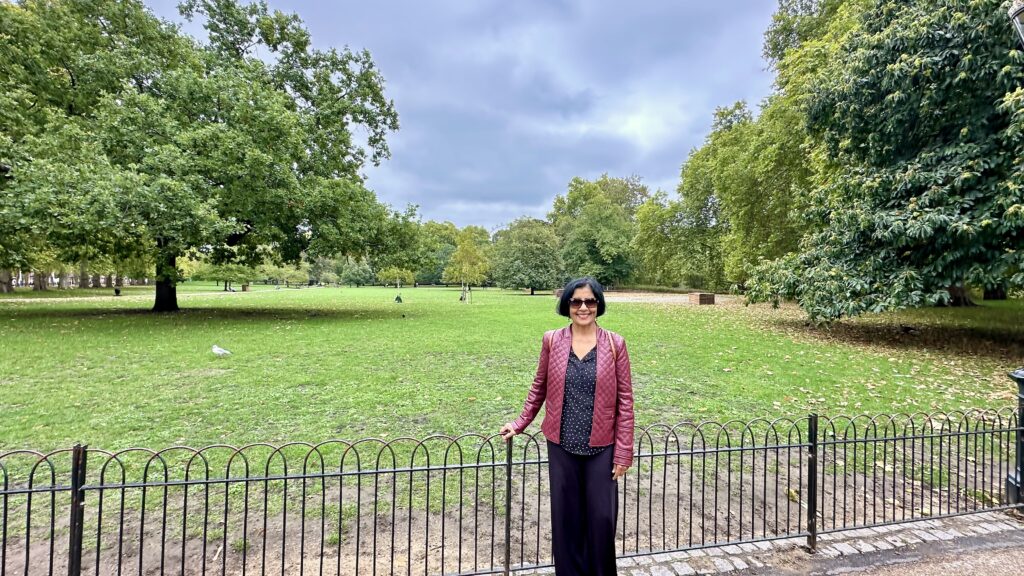
Hyde Park – is one of London’s largest and most famous royal parks, offering a peaceful green escape in the heart of the city. Covering vast open spaces, and ideal for walking and relaxing, it is home to many landmarks such as the Serpentine Lake, Speakers’ Corner, and memorials near Hyde Park Corner. The park has numerous entrances with the popular ones being the Marble Arch and Hyde Park Corner.
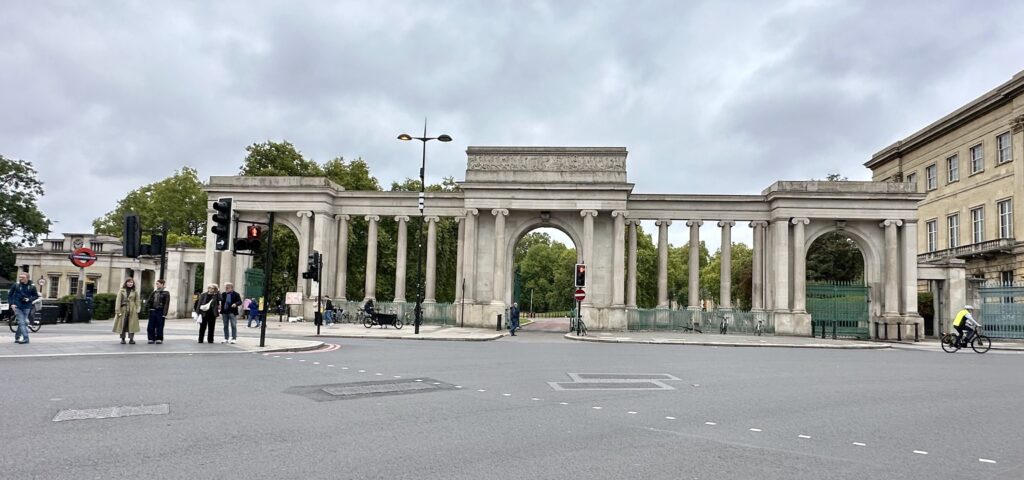
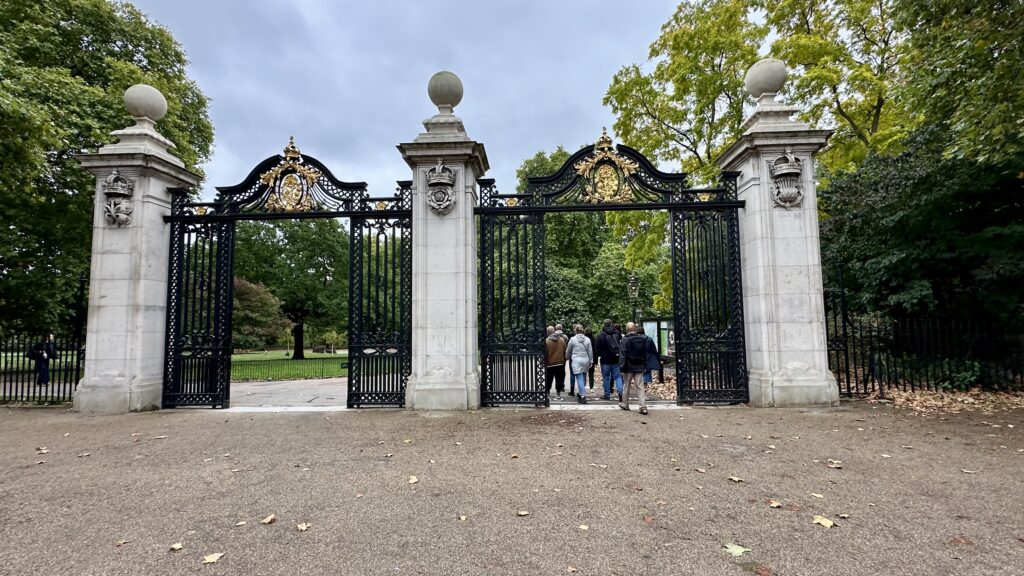
Hyde Park Corner is the major road junction and area at the southeast corner of Hyde Park, featuring iconic landmarks like the Wellington Arch. The grand, formal entrance to the park here is the Apsley Gate aka the Hyde Park Screen, designed by Decimus Burton. On our most recent trip to London, we met our GuruWalk guide at this corner for a walking tour of London.
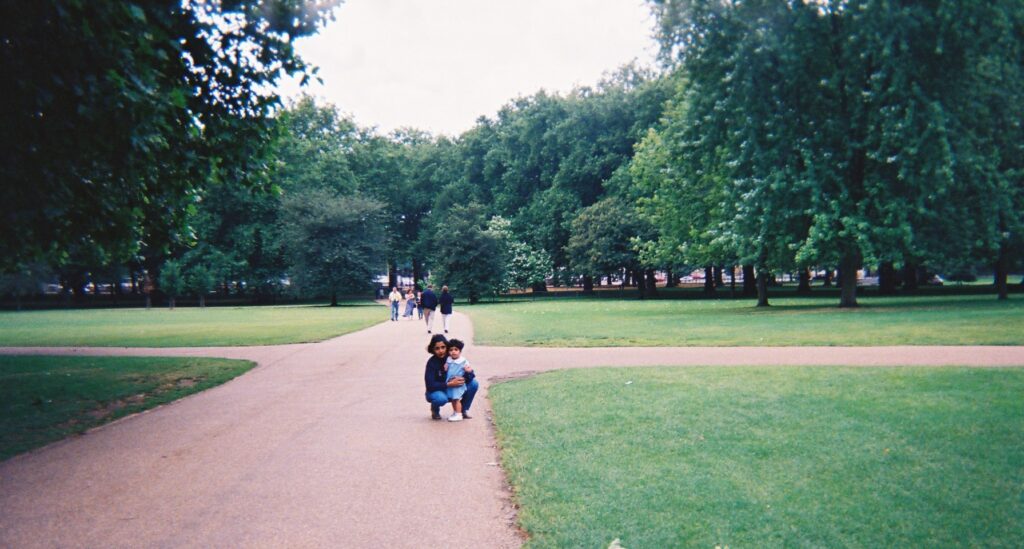
On a previous visit to London, we took long walks around Hyde Park and enjoyed the serene surroundings.
Hyde Park, Speaker’s Corner – In 1872, an Act of Parliament set aside this area of Hyde Park for public speaking. Enthusiastic speakers often bring a chair, stand on it, and passionately share their views on topics ranging from current politics to racial discrimination. Many address the crowd in languages other than English, and at times there seem to be more speakers using other languages than English. The gathered crowds react freely, applauding or booing depending on their views on the topics being discussed.
Wellington Arch – also known as the Constitution Arch or the Green Park Arch (original name), this arch is located at Hyde Park Corner in central London, where Hyde Park meets Green Park. It was built between 1826 and 1830 to commemorate Britain’s victory over Napoleon and honors the Duke of Wellington, who led British forces to victory at the Battle of Waterloo in 1815. It was moved to its current position at the top of Constitution Hill in the 1880s. Originally topped by an equestrian statue of the Duke of Wellington, the arch is now crowned by the striking bronze sculpture Angel of Peace Descending on the Quadriga of War by Adrian Jones. The sculpture is the largest bronze sculpture in Europe.
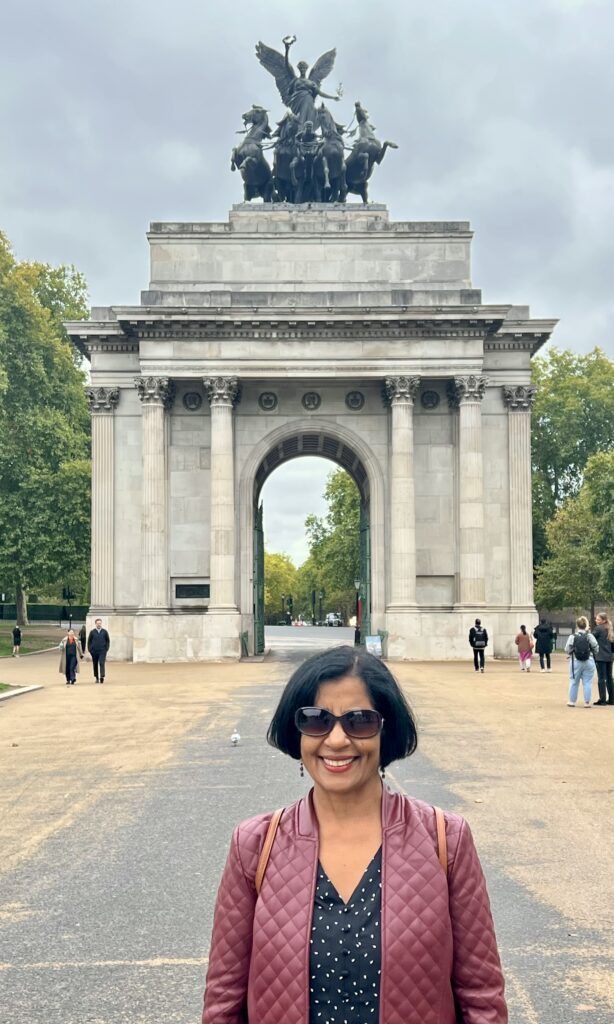
For a small fee, you can climb up to the Wellington Arch’s balconies for panoramic views of central London. While it looks modest from the outside, the interior reveals three levels of exhibitions and two balconies. From the top, you are rewarded with excellent views of London and the Buckingham Palace gardens.
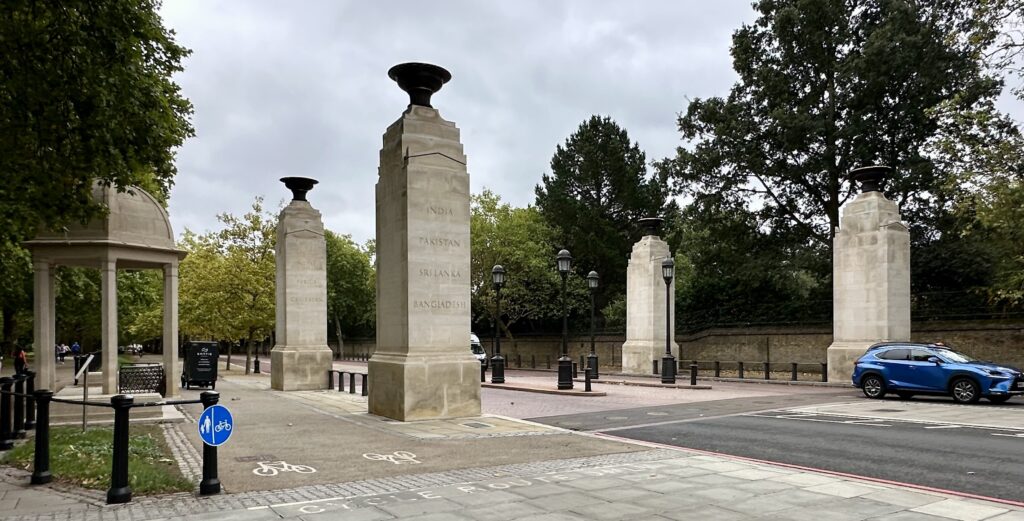
Commonwealth Memorial – aka The Memorial Gates, this war memorial is located past the Wellington Arch. They honor soldiers from the Indian subcontinent, Africa, and the Caribbean who served for Britain during the First and Second World Wars. The memorial was inaugurated in 2002 by Queen Elizabeth II.
Walk on The Mall – The Mall is a wide, tree-lined avenue that leads directly to Buckingham Palace. During major royal events such as weddings or funerals, crowds gather here to watch royal processions, with Union Jack flags lining the road. On the day we visited London, the President of United States was also visiting London and hence you see both the Union Jack and the US flags lining the road. On most days, it is a calm and scenic street, perfect for a leisurely stroll.
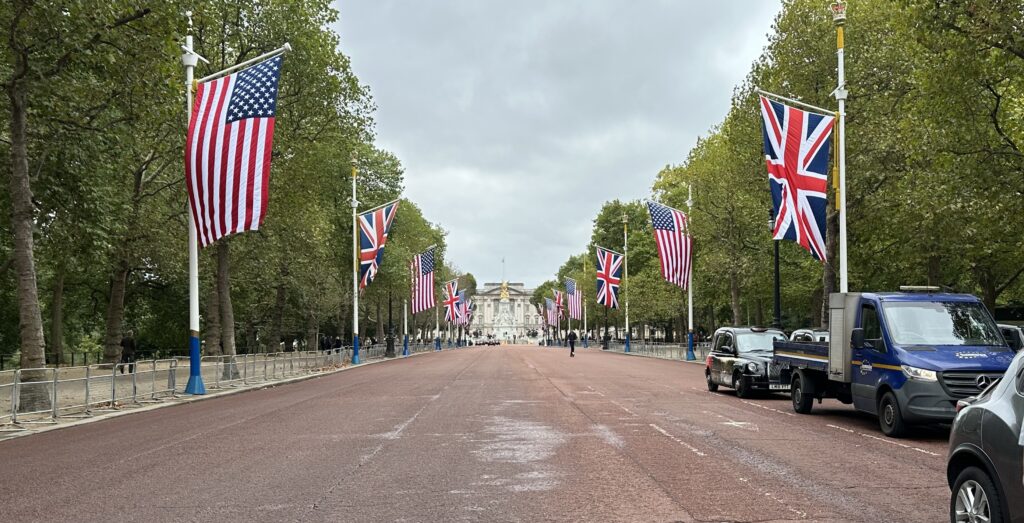
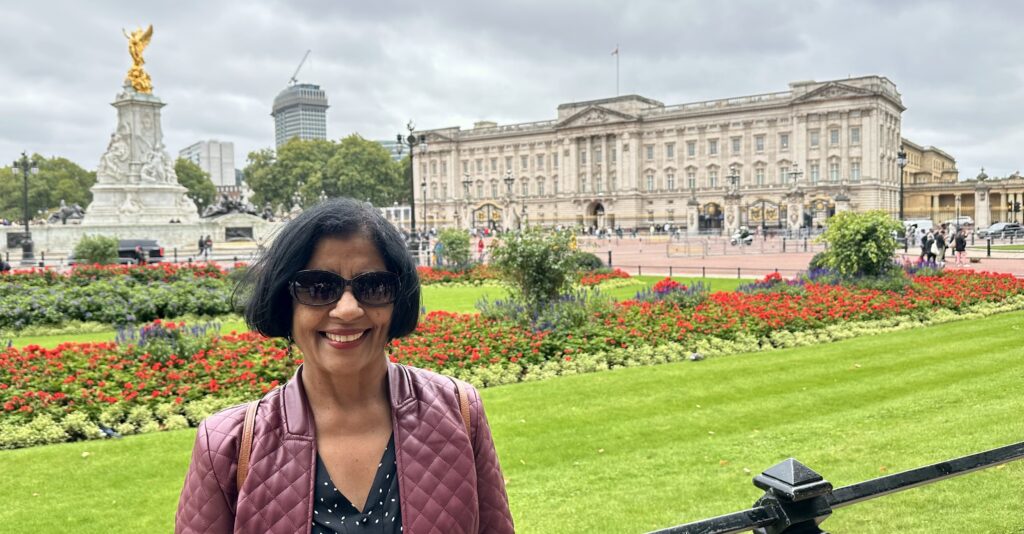
The Victoria Memorial which is located at the end of The Mall and in front of Buckingham Palace is a grand monument dedicated to Queen Victoria. Designed in 1901 by sculptor Sir Thomas Brock, it was unveiled in 1911 and completed in 1924.
Buckingham Palace – is a royal residence and has been the home of British monarchs since 1837. For first-time visitors to London, strolling along The Mall to reach the palace is a must-do experience and a great way to see the Changing of the Guard. You also have the option to tour parts of Buckingham Palace when it is open to the public during summer months (July-September). During the rest of the year the Palace only opens on selected dates for small-group guided tours.
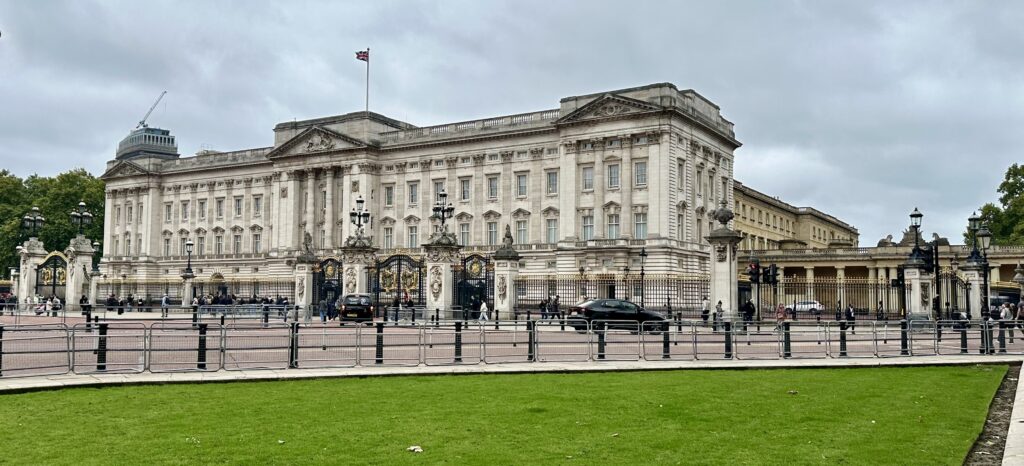
History of Buckingham Palace – Buckingham Palace began as Buckingham House, a large townhouse built in 1703 for the Duke of Buckingham and Normanby. It was purchased by King George III in 1761 as a private home for Queen Charlotte and became known as The Queen’s House. During the 19th century, architects John Nash and Edward Blore expanded it into the palace we see today, and it officially became the monarch’s London residence when Queen Victoria ascended the throne in 1837.
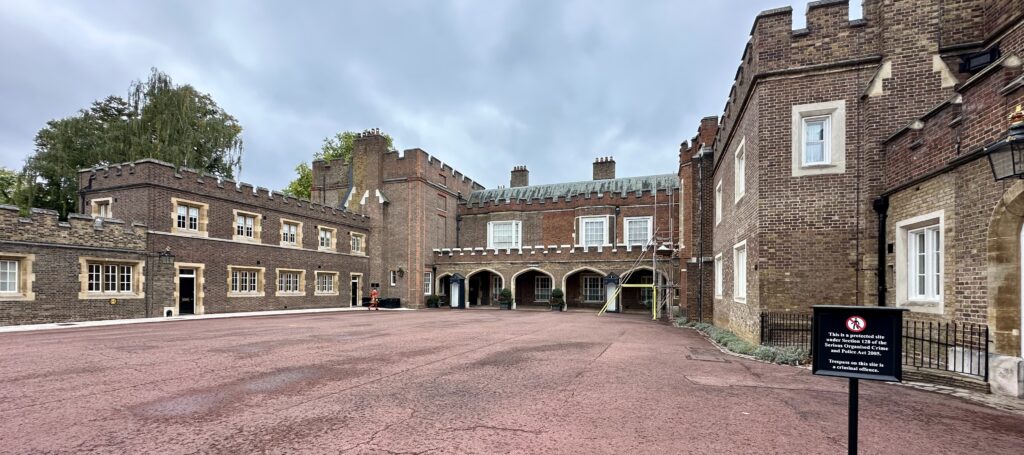
St. James’s Palace – is a historic royal residence built largely between 1531 and 1536 by King Henry VIII, with much of its original red-brick Tudor structure still intact. For over 300 years, it served as the residence of English monarchs until the reign of Queen Victoria and has been the setting for many significant royal events.
Today, it remains a busy working palace, housing important royal offices and hosting state functions and around 100 charitable receptions each year.
St. James’s Palace, Friary Court is used after the death of a reigning monarch. The Accession Council meets to declare the new monarch from the deceased monarch’s line. Once the monarch has made a sacred oath to the council, the Garter King of Arms steps onto the Proclamation Gallery which overlooks Friary Court to announce the new monarch. Friary Court has also been used in association with several other ceremonial functions, such as the christening of Prince George of Wales and more recently the christening of Prince Louis in 2018.
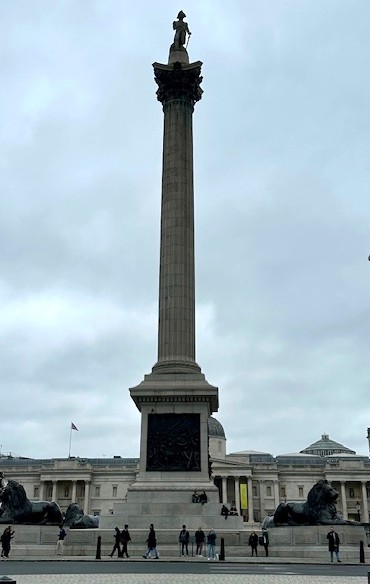
Trafalgar Square – Trafalgar Square is one of London’s most famous public squares, located in the heart of the city. It is centered around Nelson’s Column, which commemorates Admiral Lord Nelson’s victory at the Battle of Trafalgar, and is surrounded by fountains and statues. The square is a lively gathering place for visitors and locals, close to major attractions such as the National Gallery, and is often used for events, New Year celebrations, and public gatherings.
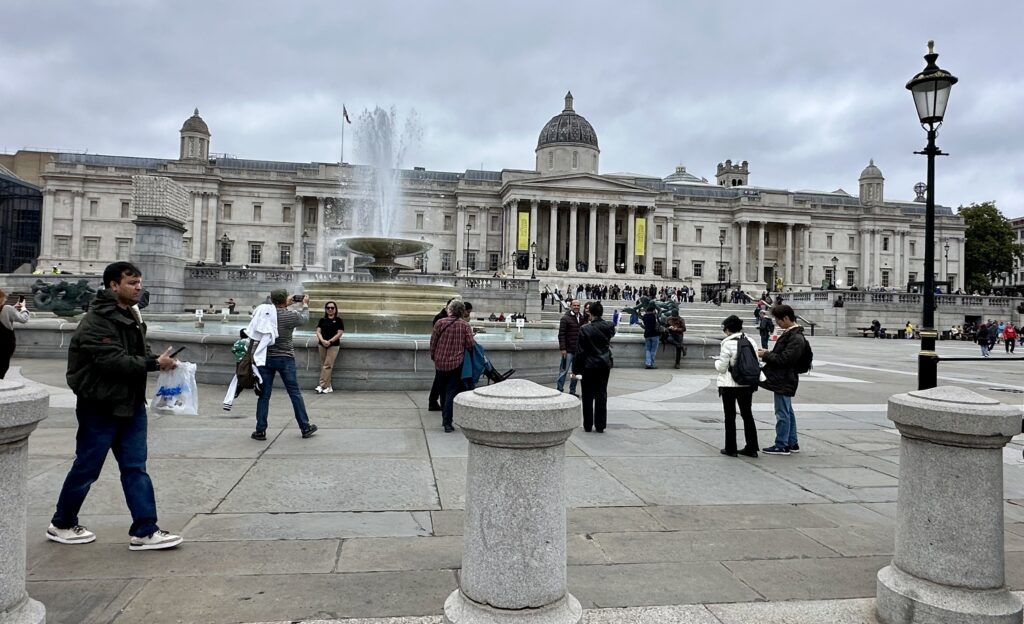
The northside of the square is dominated by the imposing neoclassical National Gallery Museum, a renowned art museum that houses a collection of over 2,300 paintings dating from the mid-13th century to 1900. The museum’s permanent collection in the main galleries are free to visit. There is a charge for some special or temporary exhibitions.
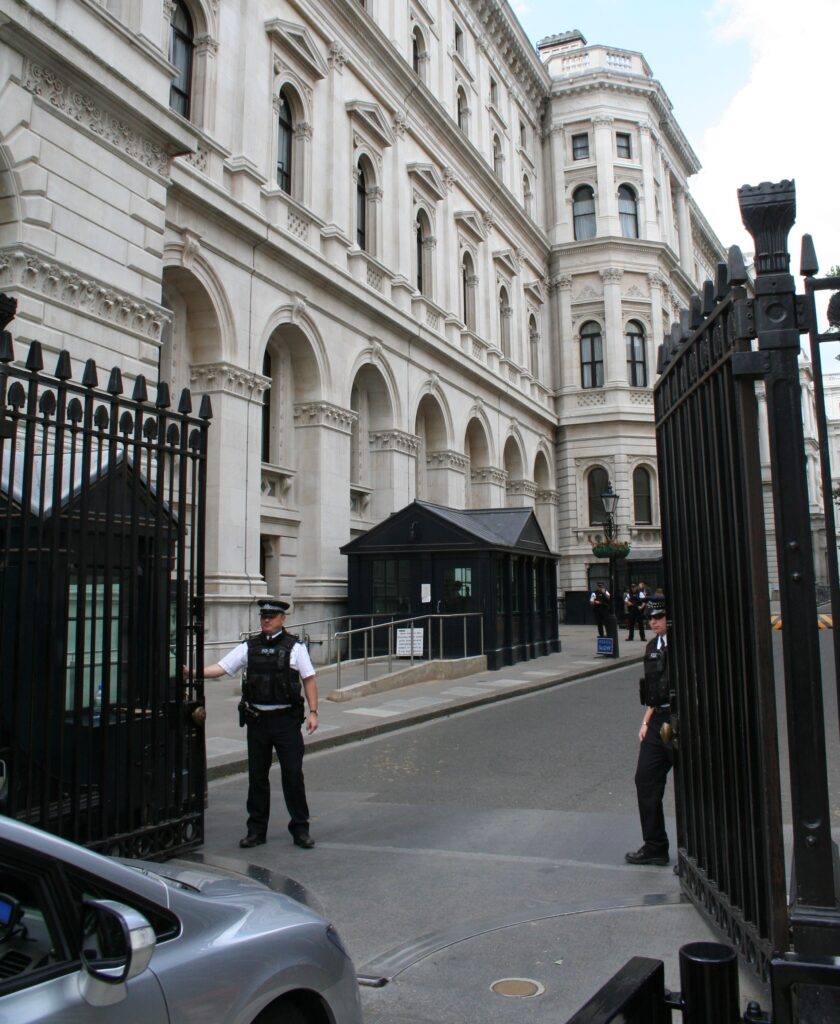
#10 Downing Street – is the headquarters of the United Kingdom government and the official residence of the Prime Minister. It is over 300 years old and is a Grade I listed building with approximately 100 rooms. The Prime Minister’s private residence occupies the third floor, with a kitchen in the basement and offices, meeting rooms, and reception areas on the other floors. It is located within walking distance of Trafalgar Square, St James’s Park and the Palace of Westminster.
Visitors cannot take public tours of the building, they can only glimpse the famous black doorway from a distance, as the building is secured behind strong fencing and guarded access.
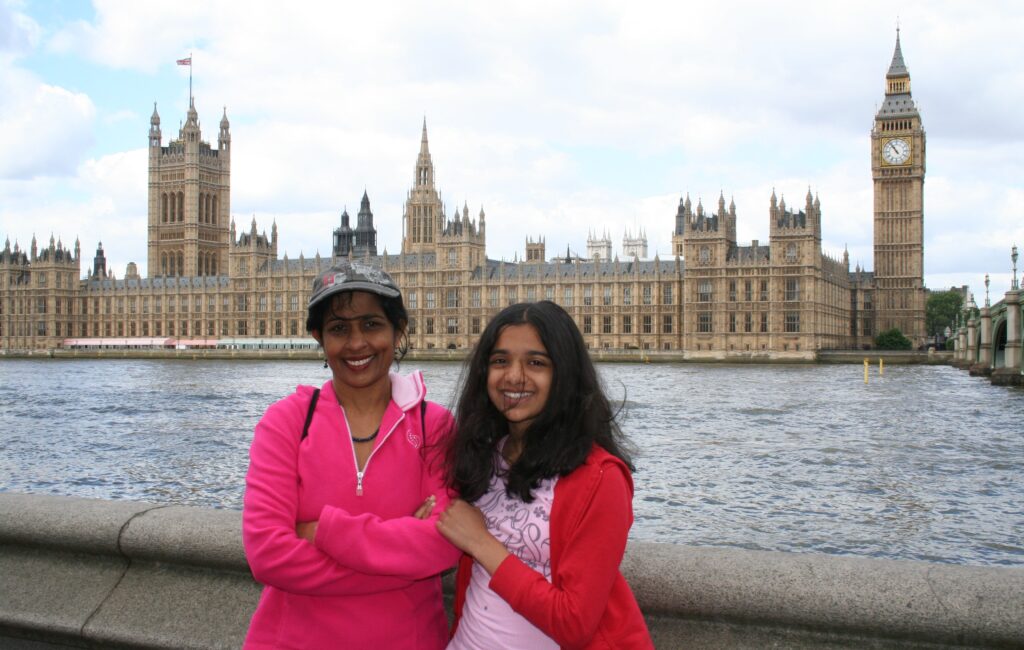
Houses of Parliament – or The Palace of Westminster is the meeting place of the UK Parliament, housing the House of Commons and the House of Lords. Originally built as a royal palace in the 11th century, it became the home of Parliament after a fire in 1512, and was largely rebuilt in Gothic Revival style by Charles Barry between 1840 and 1870. Westminster Hall, dating from the 12th century, survived the rebuilding and is still part of the palace today. The palace is a UNESCO World Heritage Site.
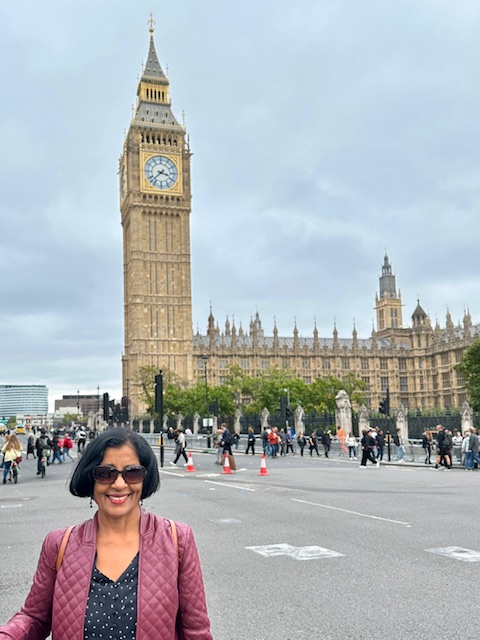
Big Ben (aka Elizabeth Tower) – This clock tower sits on the north end of the Houses of Parliament and is one of London’s most famous landmarks and an exciting sight for a first timer in London. The tower was completed in 1859 and Big Ben first rang across Westminster on 31 May 1859.
Technically, Big Ben is the name given to the massive bell inside the clock tower, which weighs more than 13 tons (13,760 kg). The clock tower looks spectacular at night when the four clock faces are illuminated. In addition to the view of Big Ben from Parliament Square Garden, you can enjoy excellent views of Big Ben and the Houses of Parliament from Westminster Bridge across the River Thames.
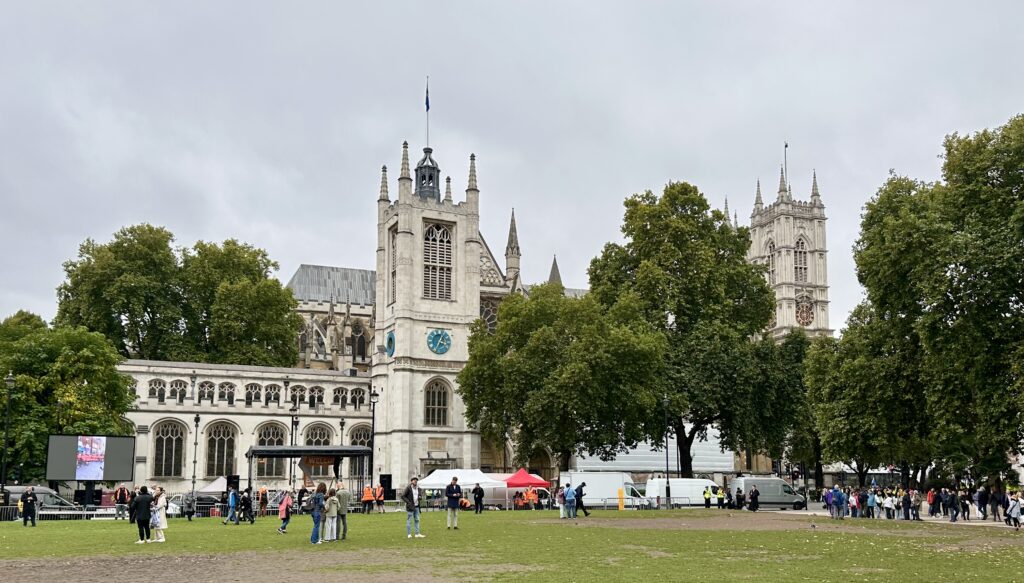
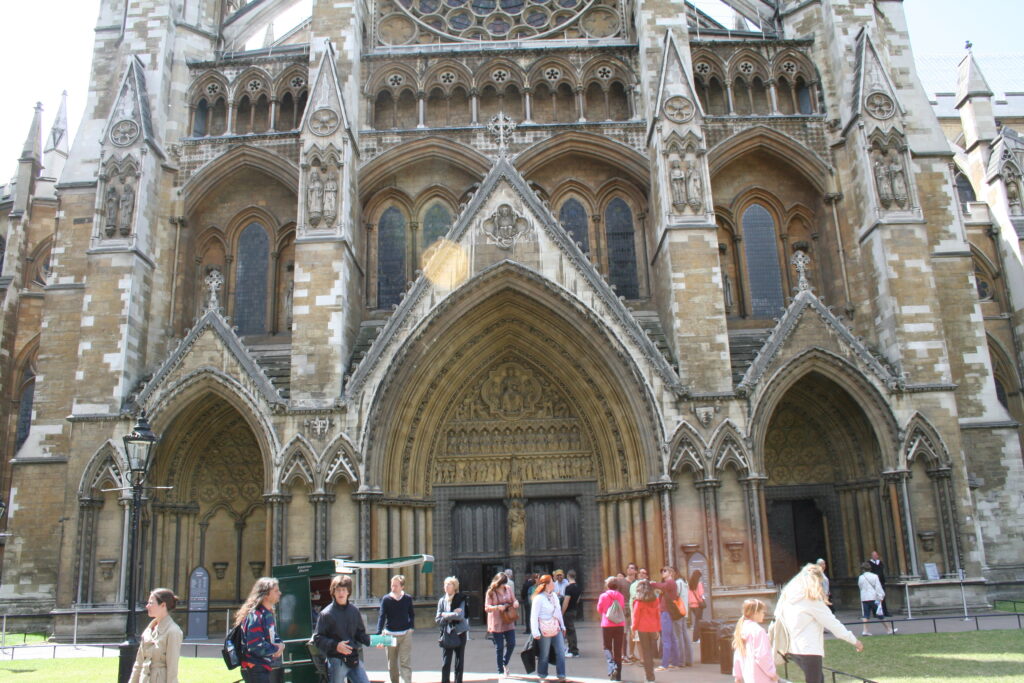
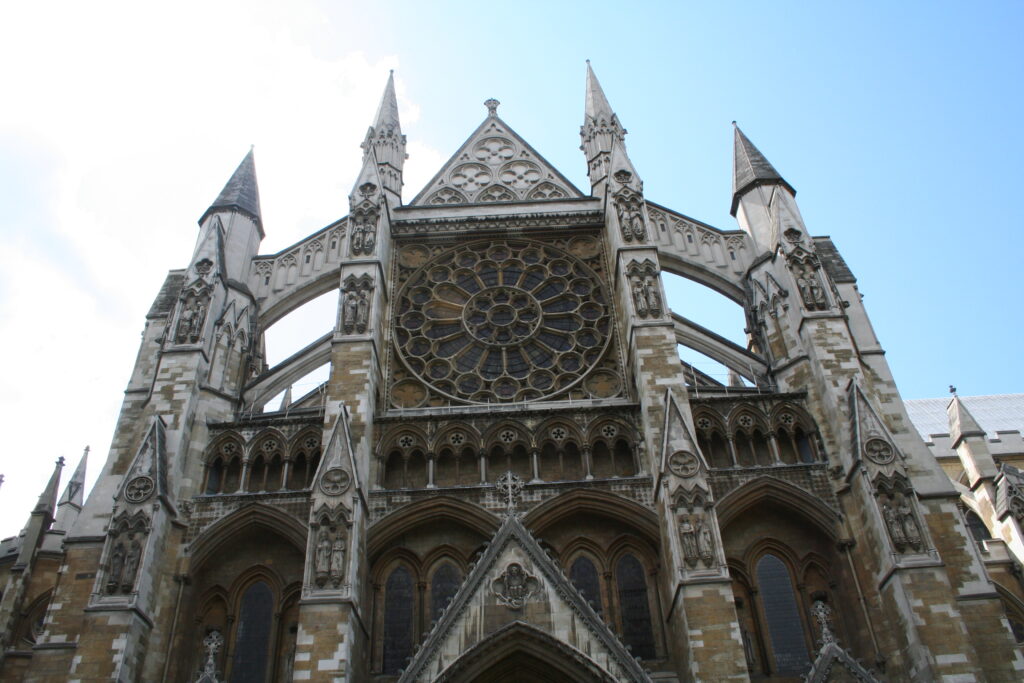
St Margaret`s Church – The current structure was consecrated in 1523 and is the third on site. Since 1614 St Margaret’s has been the church of the House of Commons. Originally built towards the end of the 11th century, the church has a history almost as long as the Abbey itself. It is included in the UNESCO World Heritage Site designation for Westminster Abbey.
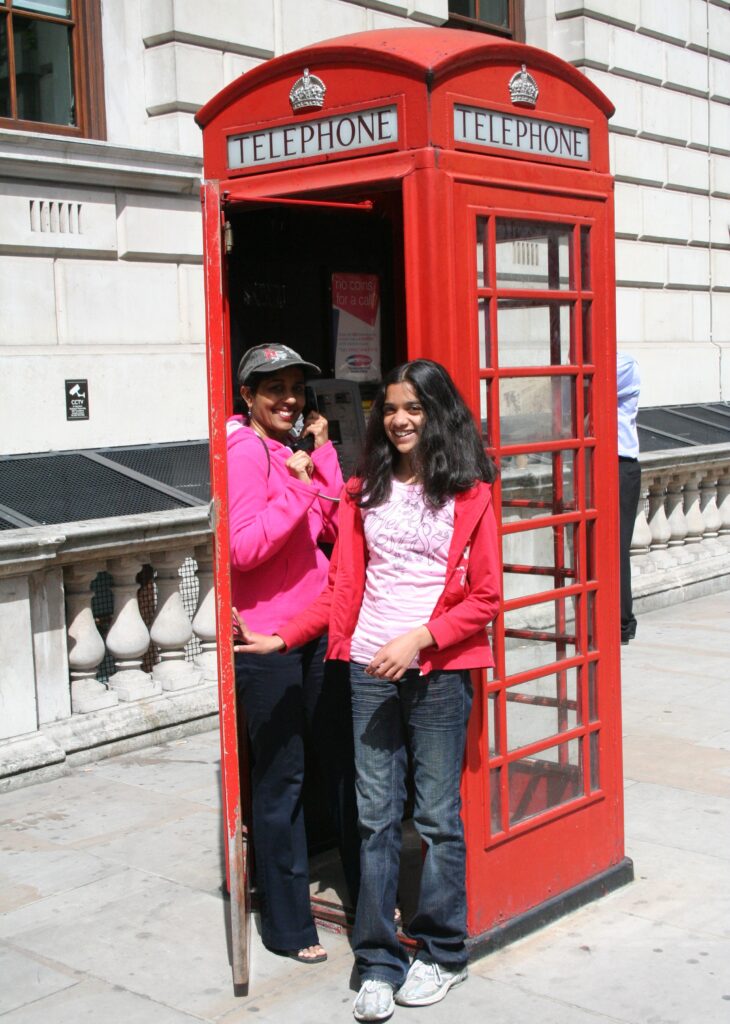
Red Telephone Booths – London’s red telephone booths, designed by Sir Giles Gilbert Scott, are iconic symbols of British culture that were originally built for public calls. The most famous models are the K2 (1926) and the K6 (1935), both painted red to match other public services like buses and pillar boxes.
Although their numbers have declined with the rise of mobile phones, many have been creatively repurposed as mini-libraries, defibrillator stations, or photo spots. You can see a few remaining ones near landmarks such as Parliament Square, Covent Garden, St. Paul’s Cathedral, and along the Victoria Embankment.
We took a picture in the Red Telephone Booth near the Big Ben in Parliament Square.
St James Park – This is the oldest and most royal of London’s Royal Parks, shaped over centuries by generations of monarchs. Covering 36 hectares (90 acres), it is surrounded by grand buildings and palaces and has been the setting for many historic ceremonies, from royal weddings and jubilees to military parades and state celebrations. The park features beautifully maintained flower beds, open lawns, and a lake that is home to waterfowl.
Originally the site of a leprosy hospital dedicated to St James the Less, the area was transformed by Henry VIII into royal hunting grounds. Its present romantic landscape dates largely from an 1828 redesign by architect John Nash, who revitalized the park’s trees, lawns, and gardens. One can easily spend an entire day walking through the park, exploring its many paths, buildings, sculptures, and memorials.
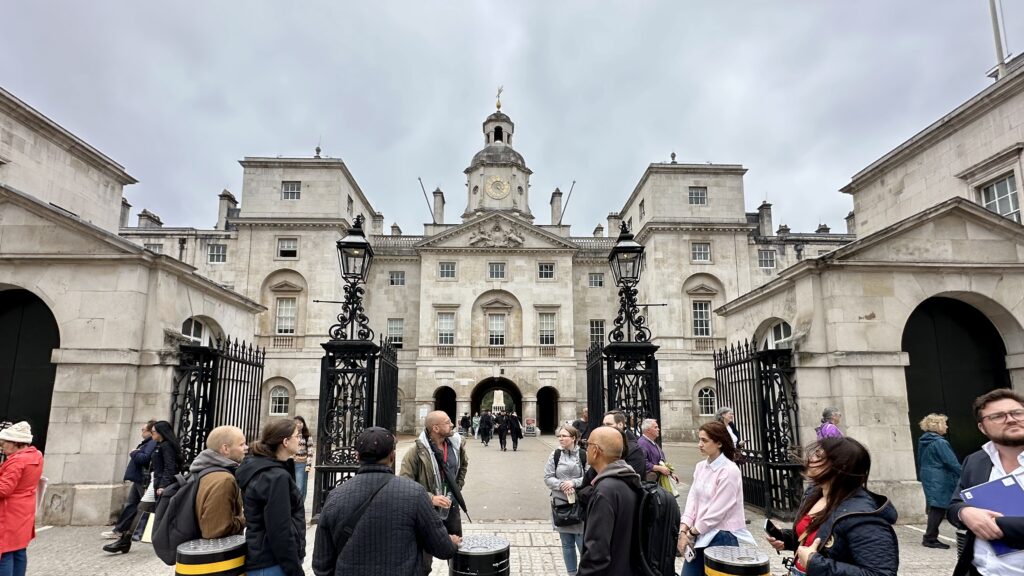
Horse Guards – Built in the 18th century, Horse Guards with a clock tower over an archway, remains the official entrance to St James’s and Buckingham Palace. The Household Cavalry Museum is located in the Horse Guards where visitors can view the horses in the 18th-century working stables through a glazed partition.
When you enter Horse Guards from Whitehall and pass through the central archway, it opens onto Horse Guards Parade, a large ceremonial parade ground. This space is used for major events and forms part of the Changing of the Guard ceremony.
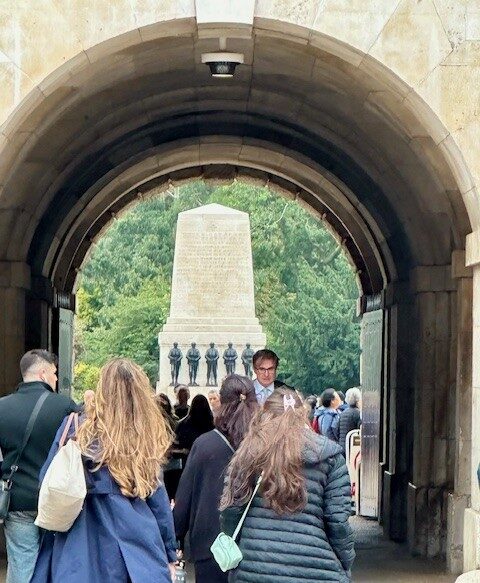
Guards memorial – is a cenotaph with five life-size bronze figures sculpted by Gilbert Ledward representing the Foot Guards Regiments – Grenadiers, Coldstream, Scots, Welsh and Irish. Installed in memory of Guardsmen who died in the First World War, it was unveiled in 1926 by the Duke of Connaught, the uncle of King George V. After the Second World War an inscription was added to remember those who died between 1939 and 1945. The sculptures were made from guns captured in the Frist World War and modelled on real guardsmen.
We got a view of the memorial from Whitehall street and through the central archway of Horse Guards building. We did not have time to go closer.
Note – St James Park is bordered by Buckingham Palace to the west, The Mall to the north, and Horse Guards to the east. St. James’s Palace is located at the eastern edge of St. James’s Park. Whitehall (street) runs south from Trafalgar Square and is home to key UK government buildings, including Downing Street and Houses of Parliament. The park’s eastern edge meets Horse Guards, which leads directly into Whitehall, creating a seamless area for walking and sightseeing.
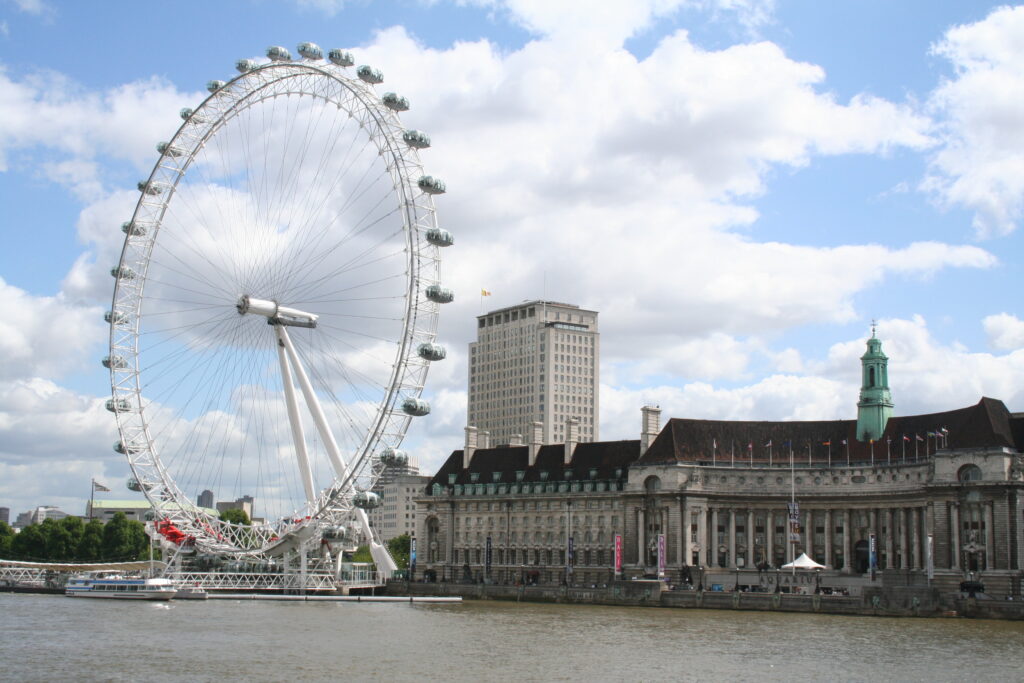
London Eye – This giant observation wheel located on the south bank of the River Thames, opened in 2000, and offers panoramic views of London’s skyline. For 30 minutes, as your pod slowly makes one revolution, you get panoramic views of London’s skyline, including landmarks such as Big Ben, St. Paul’s Cathedral, and Buckingham Palace.
London Bridge and Tower Bridge – London Bridge and Tower Bridge are located parallel to each other on the River Thames.
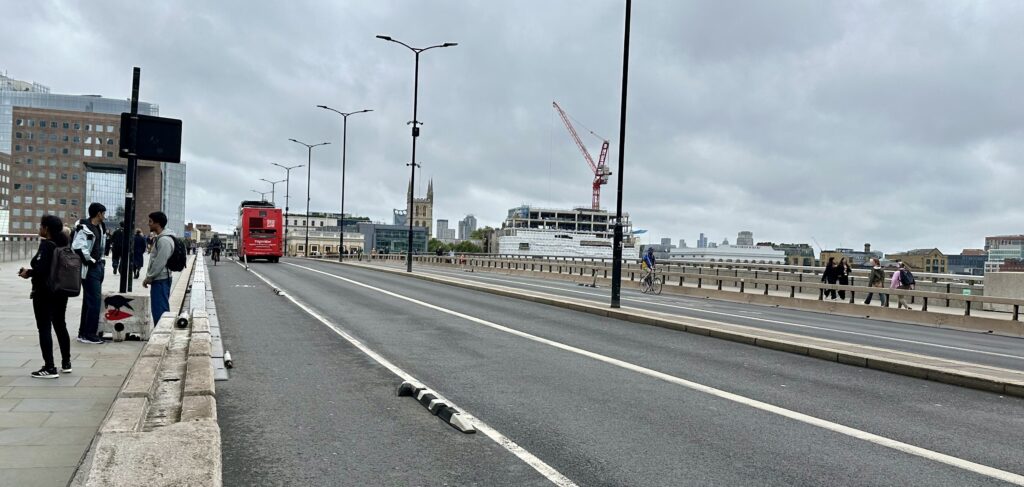
- London Bridge is the oldest river crossing in London, bringing river and road traffic together. The bridge as we know it today, was opened to traffic by The Late Queen Elizabeth II on 16 March 1973. Now made of concrete and steel, it replaced a 19th century stone arched bridge designed by Scottish civil engineer John Rennie, which in turn succeeded a 600-year-old stone-built structure. London Bridge, spans the Thames from the City of London to Southwark.
- Tower Bridge spans the River Thames near the Tower of London. Completed in 1894, it is a combined bascule and suspension bridge, designed to allow both river traffic and road traffic to pass. Its twin towers, linked by high-level walkways, are built in a striking Gothic Revival style, making the bridge instantly recognizable. Visitors can explore the Tower Bridge Exhibition, which includes access to the walkways with panoramic views of London, as well as the Victorian engine rooms that once powered the bridge’s lifting mechanism.
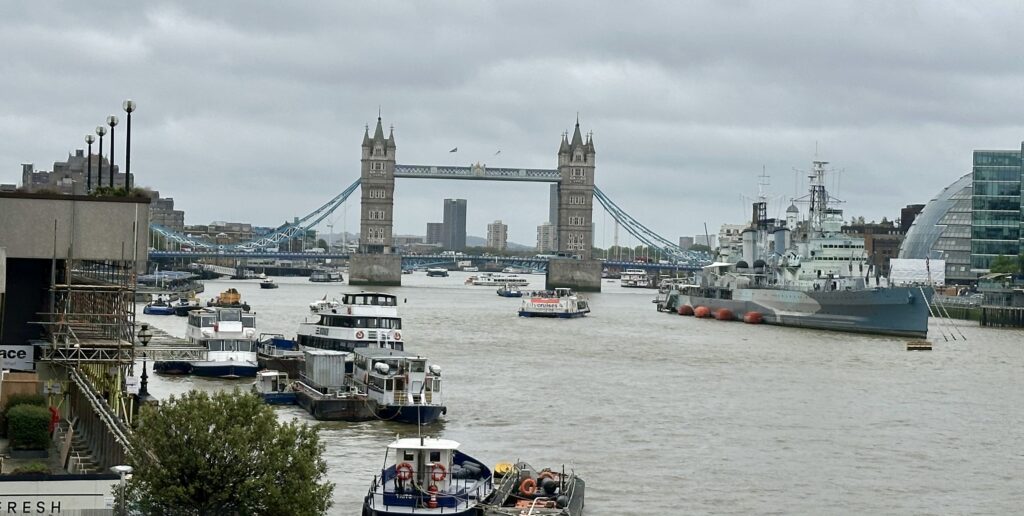
Tower Bridge and London Bridge are very close—just over half a mile (about 1 km) apart—making it easy to walk between them in under 15 minutes. Walking along London Bridge offers a fantastic view of Tower Bridge, with its twin towers and lifting bascules. On a previous visit, we took a tour of Tower Bridge itself, exploring the high-level walkways for panoramic city views and the Victorian engine rooms that powered the bridge’s original bascule mechanism.
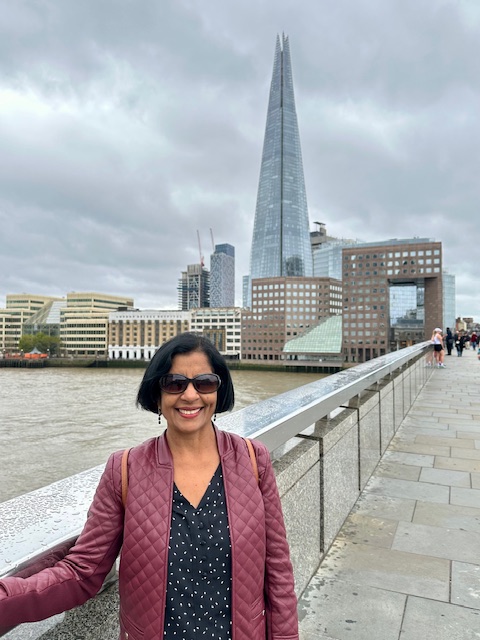
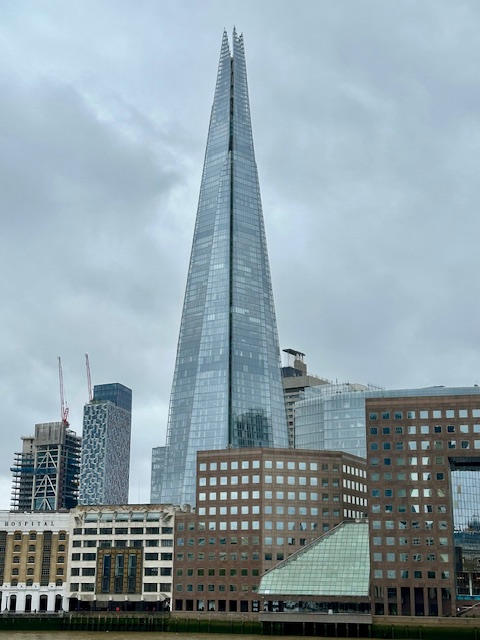
The Shard – is a striking modern 72-story skyscraper in central London and one of the city’s most recognizable landmarks. Designed by architect Renzo Piano, it was completed in 2012 and stands at 310 meters, making it the tallest building in the United Kingdom. With its glass-clad, pyramid-like design, the Shard houses offices, restaurants, a hotel, and a public viewing platform offering panoramic views of London. You get a great view of this building as you walk across London Bridge.
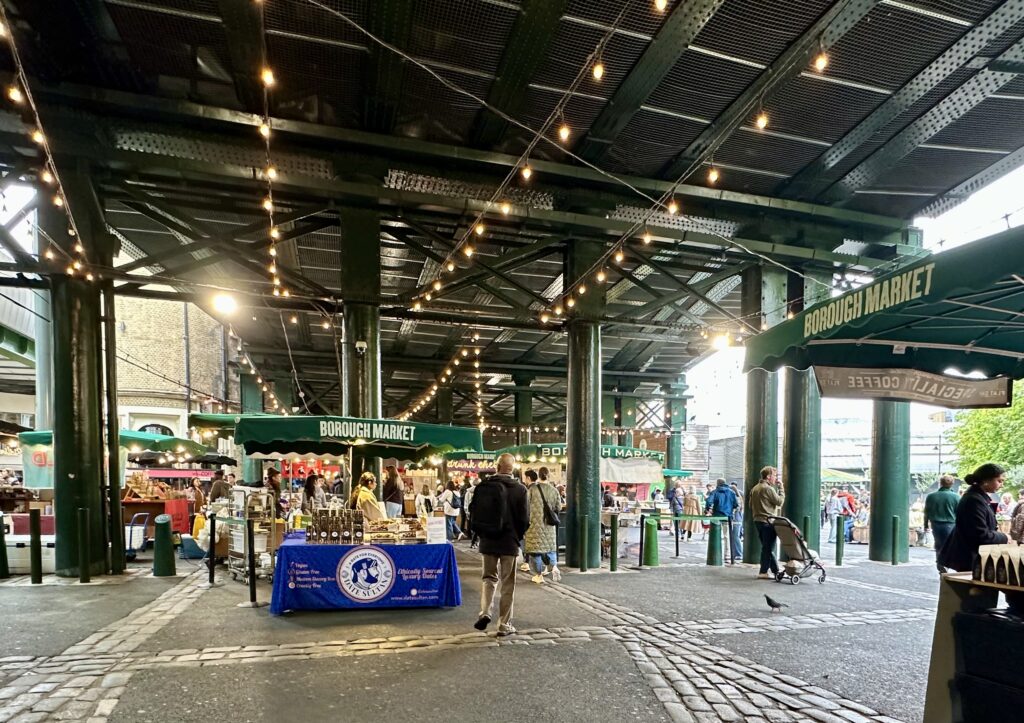
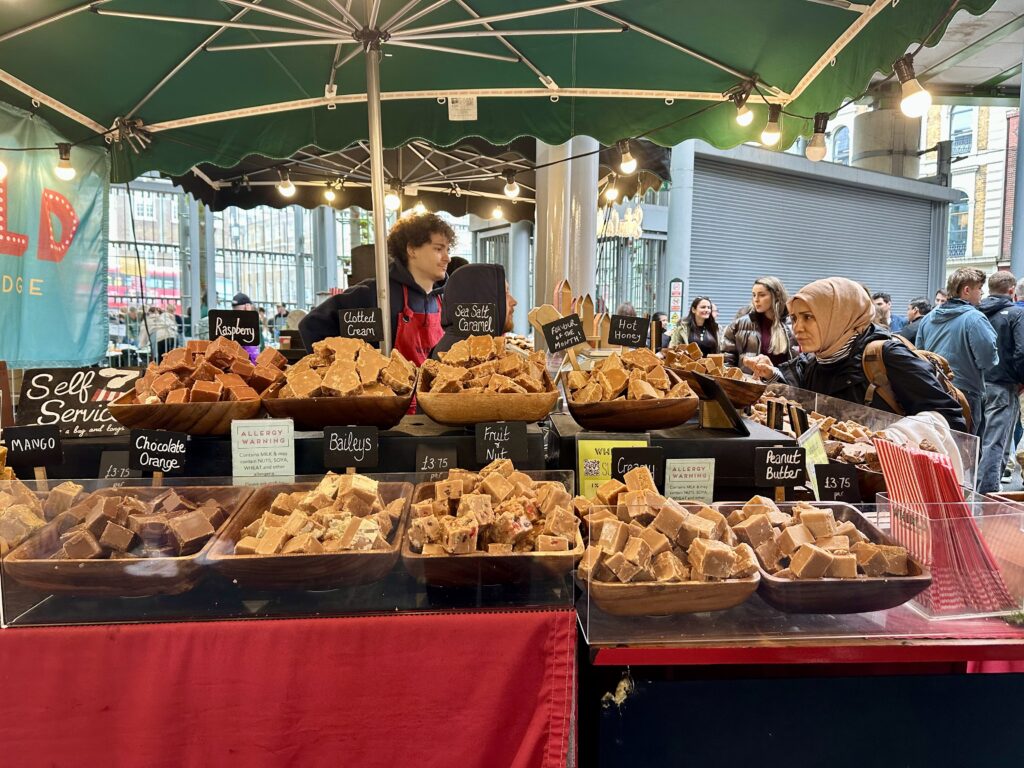
Borough Market – Borough Market is a historic wholesale and retail food market located in Southwark, London and is less than 5 min walking distance of The Shard. Dating back to at least the 12th century, it is one of the oldest and largest food markets in the city. The current market buildings were constructed in the 1850s, and today Borough Market is known for selling high-quality specialty foods to the public.
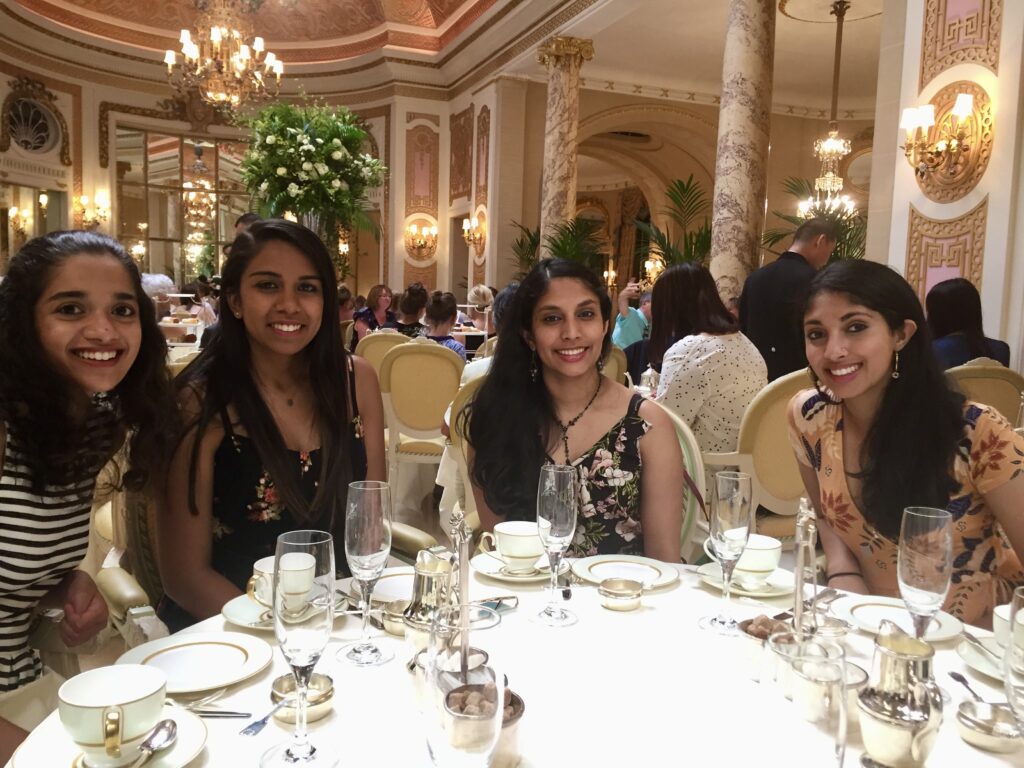
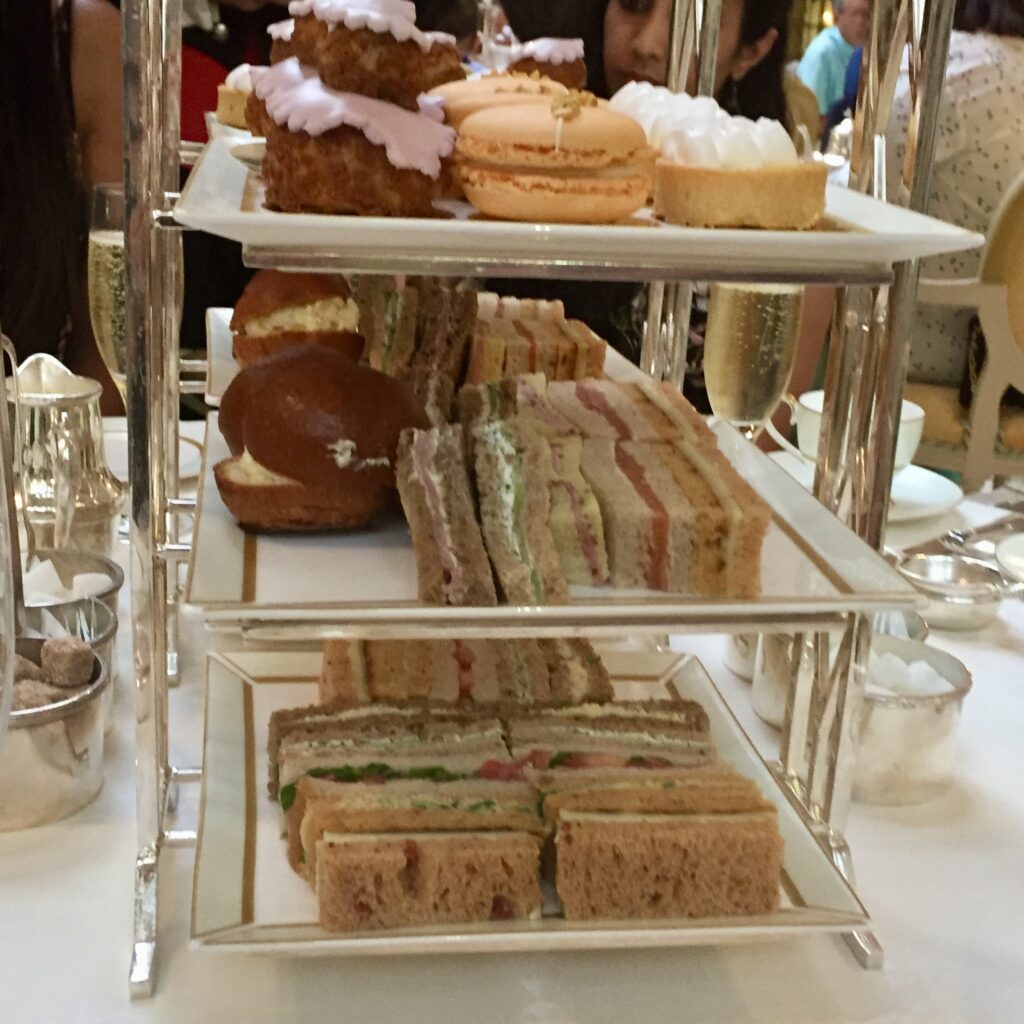
Afternoon Tea is one of my favorite, and I love trying different teas wherever I travel. When in London, it’s a must to indulge in this quintessentially British tradition, savoring finely cut sandwiches, freshly baked scones with clotted cream and preserves, an array of delicate pastries and cakes, and last but not least a wide selection of premium teas.
We booked Afternoon Tea at The Ritz London for two hours, and they wonderfully accommodated all our vegan and vegetarian requirements. The variety of teas, pastries, sandwiches, scones, and cakes was amazing and absolutely delicious. The impeccable service and elegant atmosphere made it a truly memorable experience.
Wimbledon Lawn Tennis Museum – is the largest tennis museum in the world and is located within the grounds of the All England Lawn Tennis Club. Opened to the public in 2006, the museum showcases tennis history through exhibits and artifacts dating back to 1555. Visitors can explore memorabilia from famous players and experience famous moments of the Wimbledon Championships.
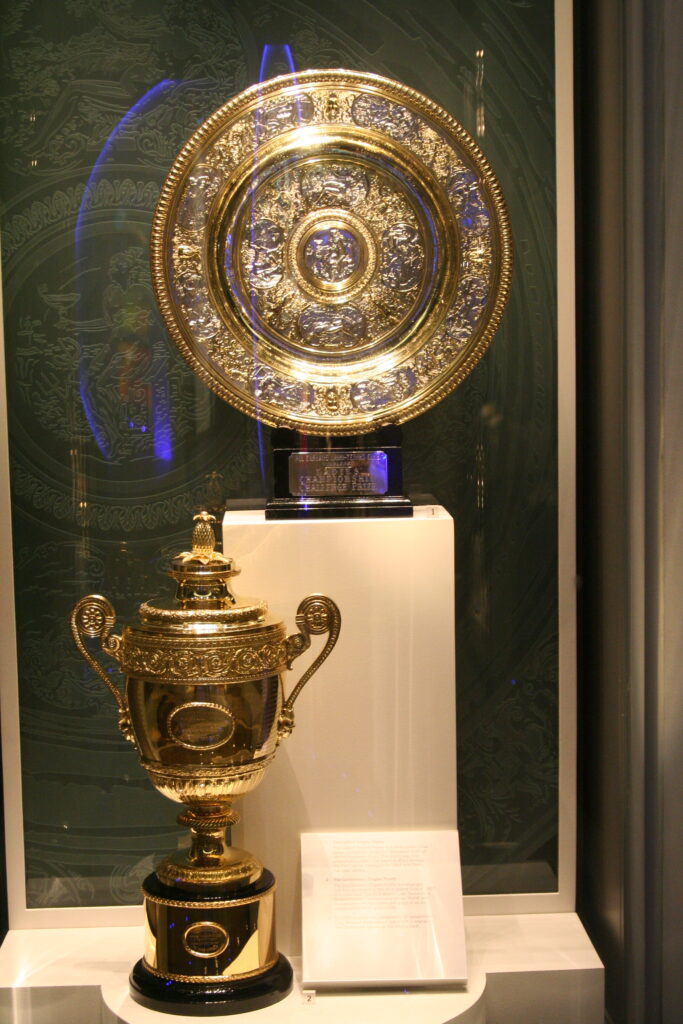
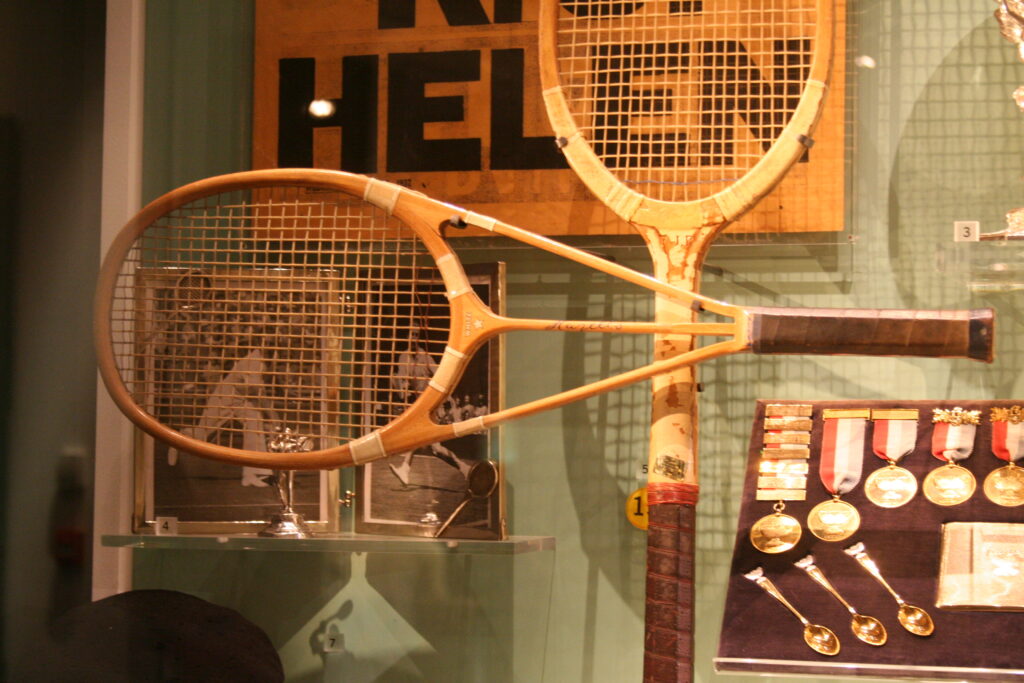
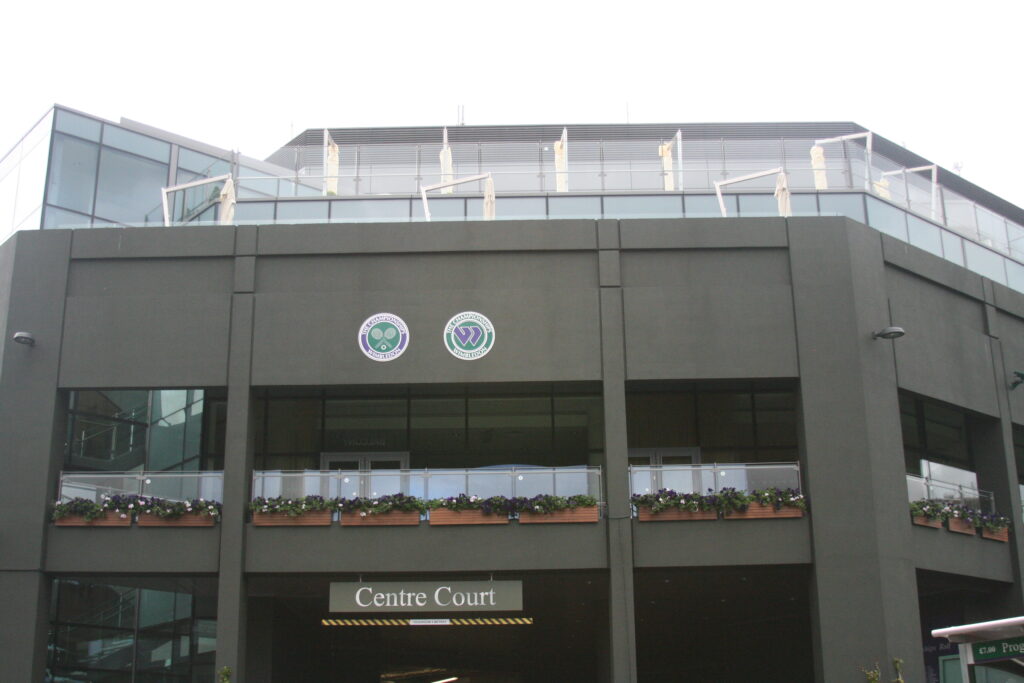
Watching Cricket is a wonderful way to experience one of the world’s most popular sports followed by millions of fans, especially in countries like England, India, Australia, and Pakistan. Spending a day watching a cricket match in London is both relaxing and exciting, and offers a taste of the city’s sporting culture.
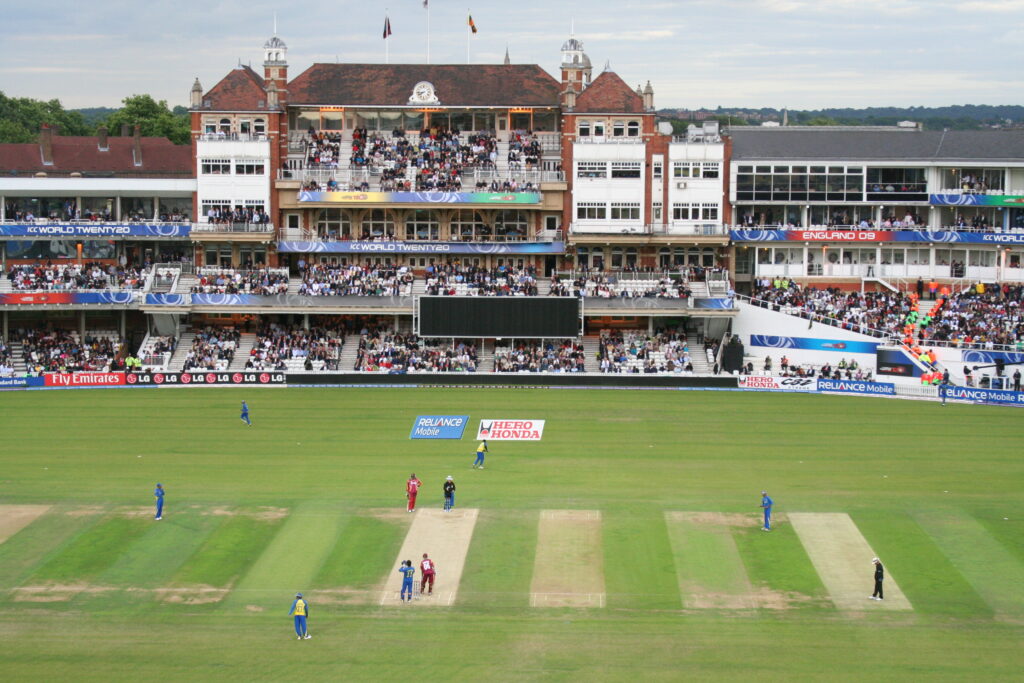
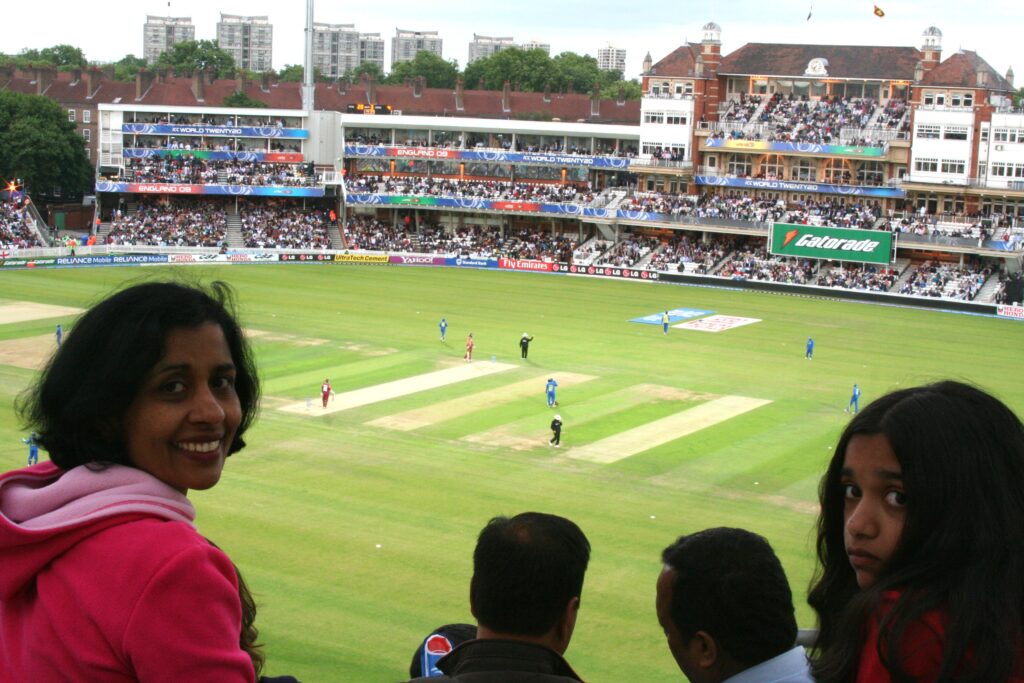
T20 World Cup Cricket (2009) – We watched the semifinals between West Indies and Sri Lanka at The Oval Cricket Stadium and the Finals between Sri Lanka and Pakistan at Lords.
- The Oval – is a historic international cricket ground in south London and the home of Surrey County Cricket Club since 1845. It was the first ground in England to host a Test match, doing so in 1880, and traditionally stages the final Test of the English season. We were fortunate to enjoy the semifinal of the T20 World Cup between West Indies and Sri Lanka played in this beautiful ground.
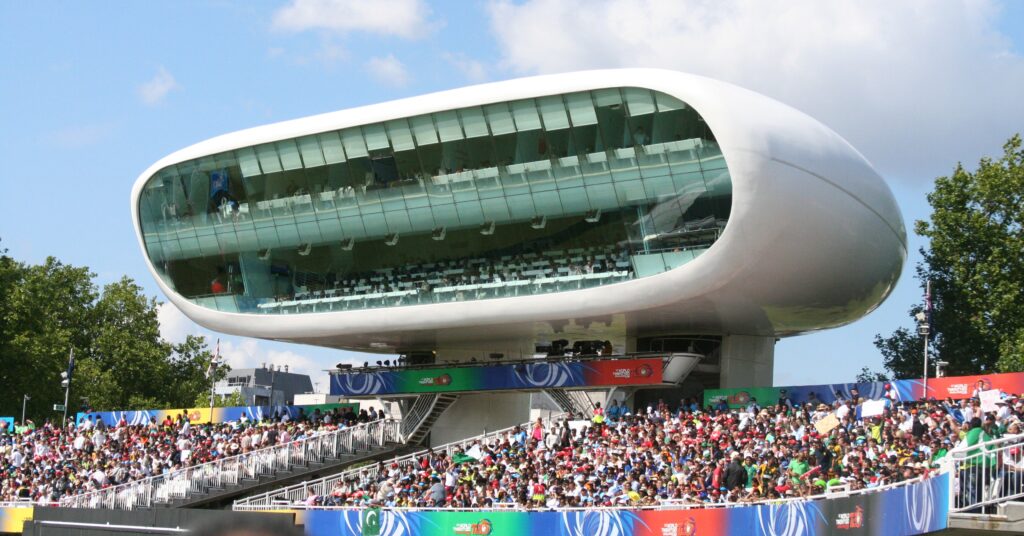
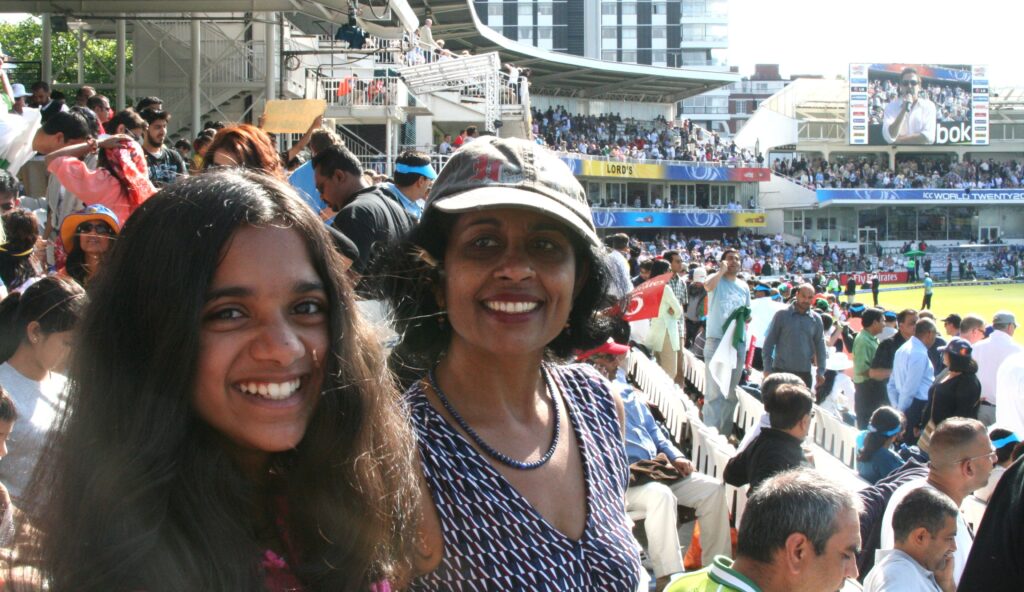
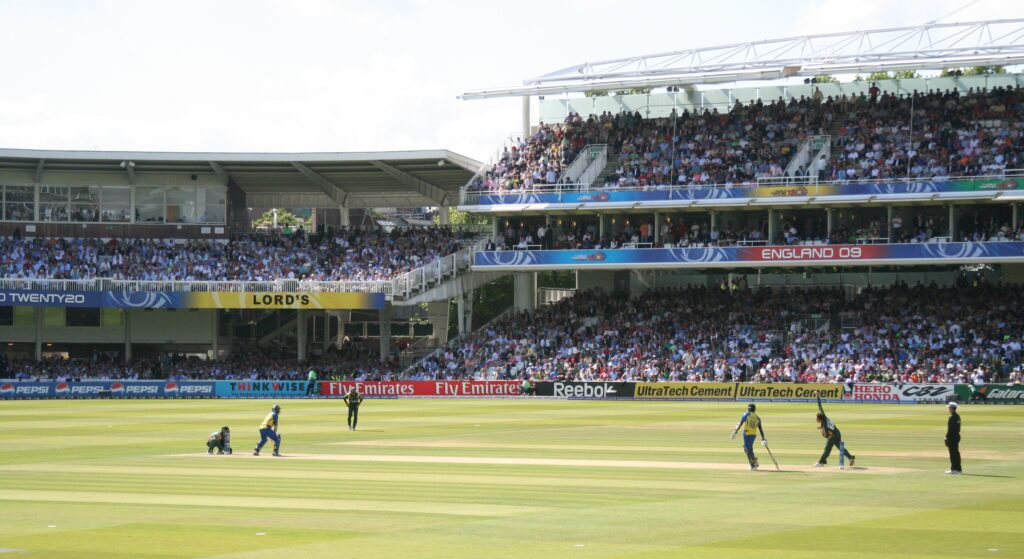
- Lord’s Cricket Ground – located in St John’s Wood, London, this is one of the most famous cricket venues in the world. Owned by the Marylebone Cricket Club, it is known as the Home of Cricket and houses the world’s oldest sporting museum. The current ground established by Thomas Lord has a capacity of over 31,000 spectators, serving as a key venue for international and domestic cricket. We watched the finals of the T20 World Cup between Pakistan and Sri Lanka played in this Mecca of Cricket.
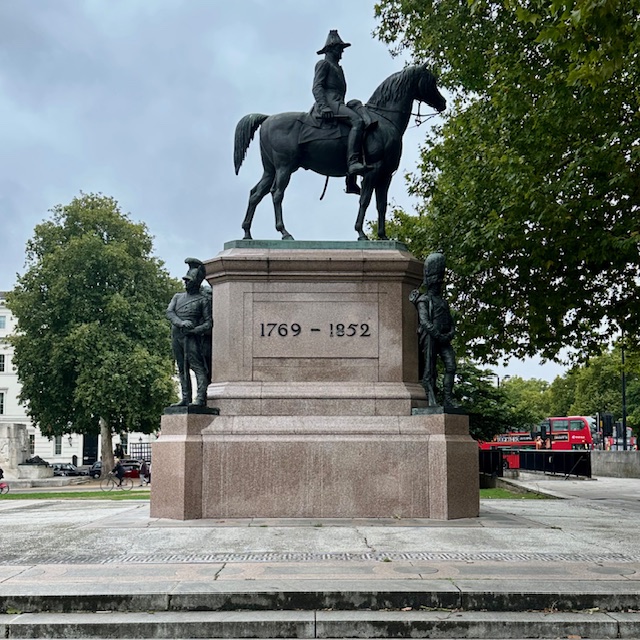
Churches and Statues we passed by – On our walk around London in 2025, we passed by many statues, memorials, and churches.
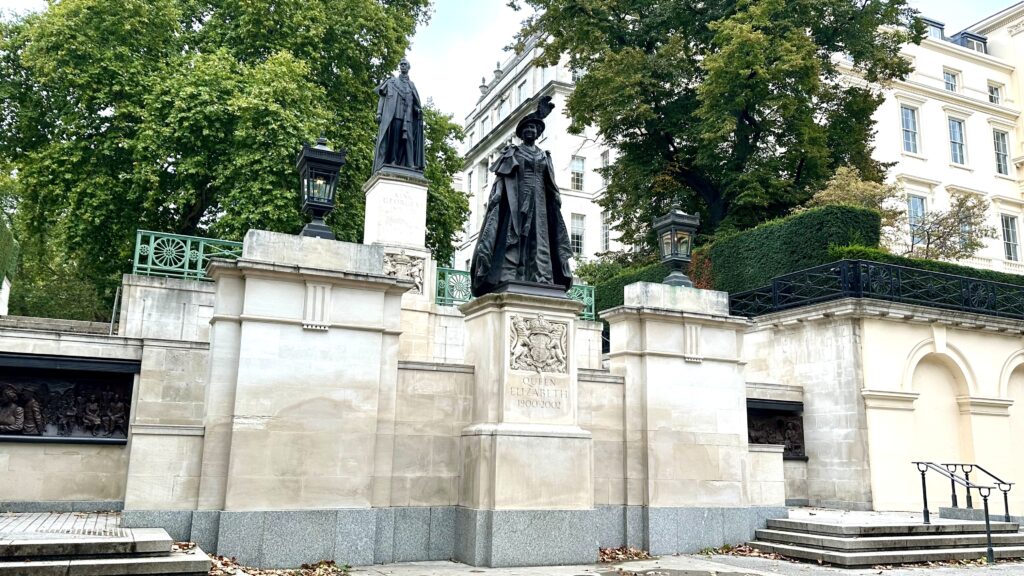
King George VI and Queen Elizabeth Memorial – is located between The Mall and Carlton Gardens in central London. It commemorates King George VI and his consort, Queen Elizabeth, later known as the Queen Mother. Completed in its present form in 2009, the memorial incorporates an earlier statue of King George VI unveiled in 1955, along with a statue of the Queen Mother and additional sculptures and architectural elements revealed by Queen Elizabeth II in 2009.
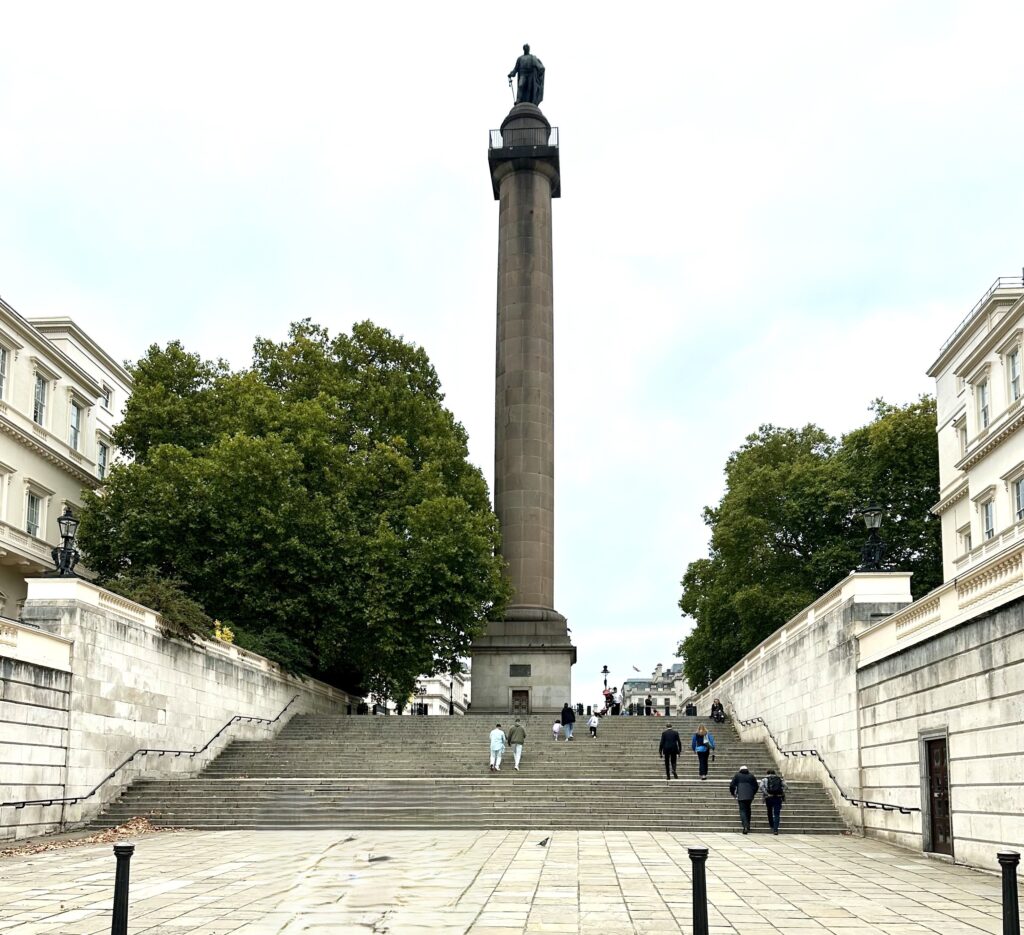
Duke of York’s Column – commemorates Prince Frederick, Duke of York, the second son of King George III and commander-in-chief of the British Army during the late 18th-century wars with France. Although not remembered for battlefield success, he is honored for reforming the British Army after his return to England. Rising nearly 42 meters high, the monument features a bronze statue of the Duke in the robes of the Knights of the Garter, overlooking The Mall and St James’s Park.
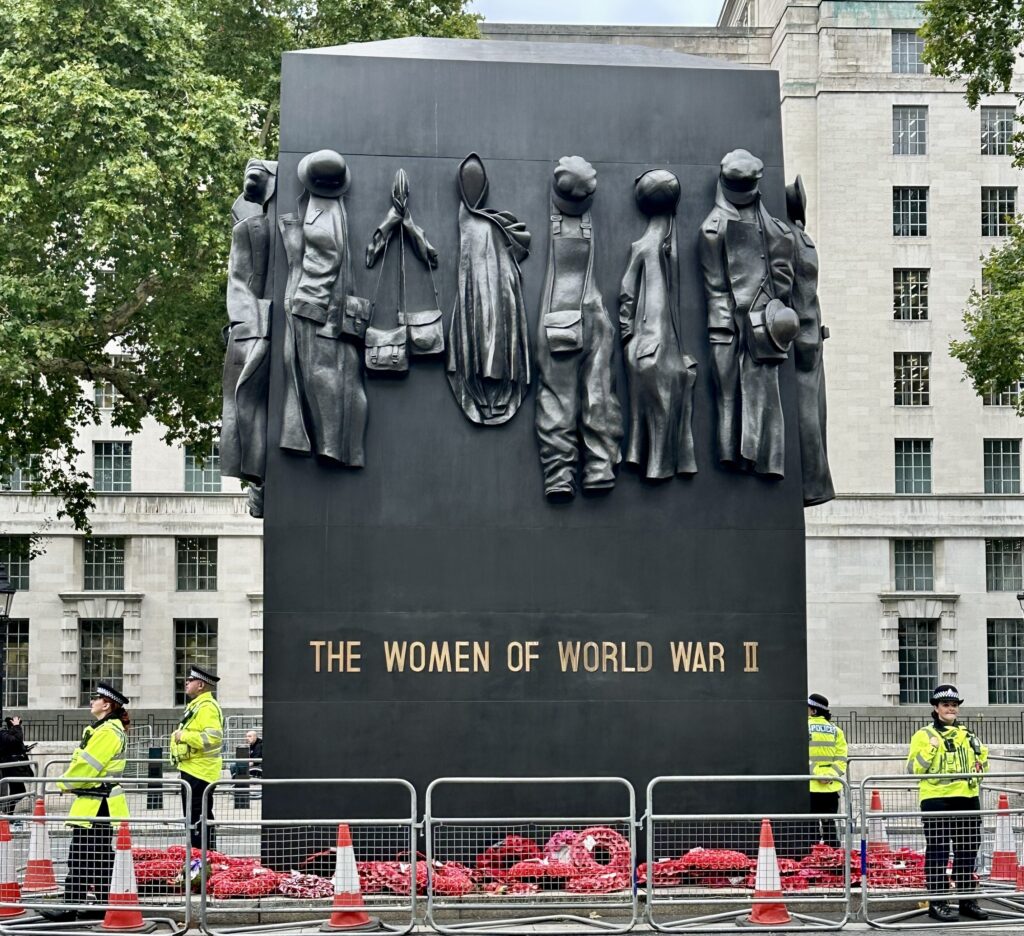
Women of World War II – This National Memorial to Women of World War II on Whitehall primarily commemorates WWII, it also reflects WWI-era contributions such as nurses, Land Girls, and factory workers, highlighting the continuity of women’s service.
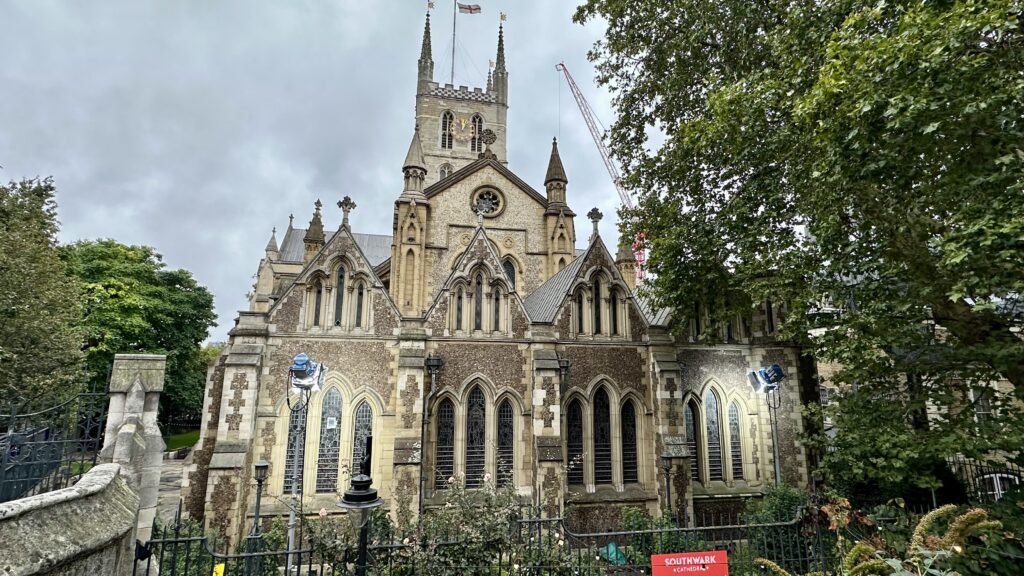
Southwark Cathedral caught our eye while we were walking near the London Bridge and Shard area.
This historic Church of England site has been a place of Christian worship for over 1,000 years and became the cathedral of the Diocese of Southwark in 1905. The building largely retains its Gothic structure from 1220 to 1420, with the nave reconstructed in the late 19th century, though it was not open on the day we visited.