2 nights in JW Marriott
We flew into Rio de Janeiro on a morning flight from Foz do Iguaçu. Founded by the Portuguese in 1565, Rio served as Brazil’s capital from 1763 until 1960, when the capital was moved to Brasília. Today, it is Brazil’s second-largest city and is renowned for its spectacular natural scenery, Carnival celebrations, and world-famous beaches. Rio also hosted the 2016 Summer Olympics, further cementing its reputation as one of the world’s most celebrated destinations.
Safety Precautions in Rio de Janeiro – Before arriving in Rio de Janeiro, we had heard numerous stories about thefts, including jewelry and purses being snatched and cell phones grabbed right out of people’s hands. Naturally, these stories made us a little anxious about exploring the city without becoming victims of theft. We decided that the best approach was to stay alert and take a few precautions. We kept an eye on our surroundings, especially when stopping to take photographs, and made sure to check that no one suspicious was nearby. We also carried our backpacks in front of us in crowded areas and avoided wearing expensive jewelry. I opted to wear a pair of inexpensive earrings for the whole trip. These simple precautions helped us feel more comfortable as we explored the city.
- Copacabana
- Copacabana Palace
- Praça XV de Novembro
- Paço Imperial
- Tiradentes Palace
- Igreja de Nossa Senhora do Carmo da Antiga Sé (Old Cathedral)
- Arco do Teles
- Praça Pio X
- Igreja da Candelária (Candelária Church)
- Pira Olímpica do Povo
- Praça Mauá
- Museu do Amanhã (The Museum of Tomorrow)
- Museu de Arte do Rio (MAR) (Art Museum of Rio)
- Aterro do Flamengo (Flamengo Park)
- Monument to the Dead of World War II
- Monastery of Saint Benedict (Mosteiro de São Bento)
- Little Africa (Pequena África)
- Brazilian Flag Staircase (Escadaria da Bandeira do Brasil)
- Largo de São Francisco da Prainha
- Valongo Wharf (Cais do Valongo)
- Street Art by Wark Rocinha and Eduardo Kobra
- Real Gabinete Português de Leitura (Royal Portuguese Reading Room)
- João Caetano Theater (Teatro João Caetano)
- Tiradentes Square (Praça Tiradentes)
- Metropolitan Cathedral of Saint Sebastian
- Arcos da Lapa (Carioca Aqueduct)
- Escadaria Selarón (Selarón Steps)
- Lunch at Boteco Rio’s
- Largo da Carioca (Carioca Square)
- Convent of Saint Anthony
- Cinelandia
- Theatro Municipal do Rio de Janeiro
- National Library of Brazil (Biblioteca Nacional do Brasil)
- Museu Nacional de Belas Artes
- Pedro Ernesto Palace
- Praça Mahatma Gandhi
- Santa Teresa Neighborhood
- Mirante Dona Marta
- Tea at Confeitaria Colombo
- Sugarloaf Mountain
- Christ the Redeemer
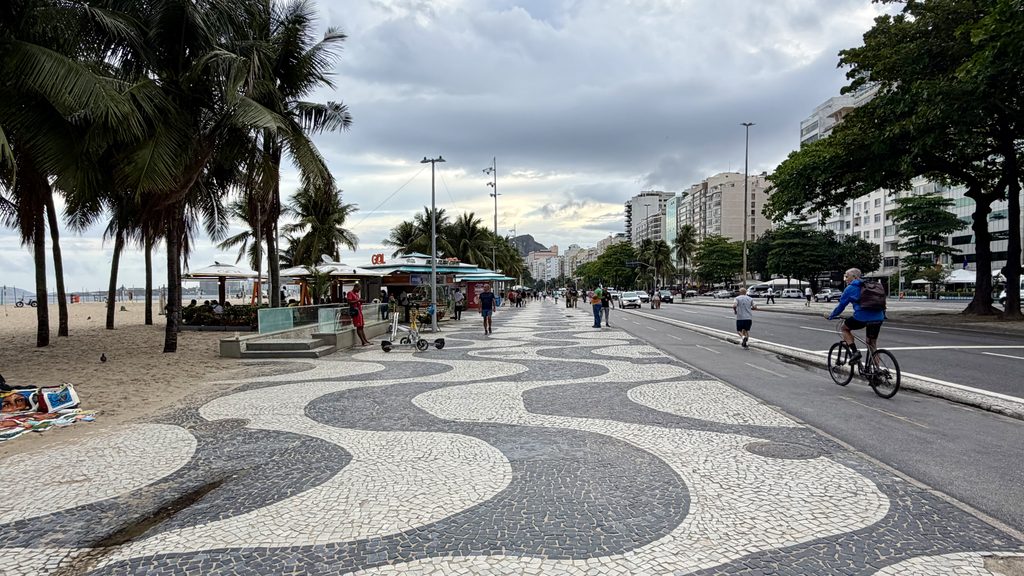
Copacabana – The hotel we stayed in (JW Marriott) was located in Copacabana across the beach, which could be seen from our hotel room. It is one of Rio de Janeiro’s most famous neighborhoods, celebrated for its sweeping crescent-shaped beach and lively atmosphere. Nicknamed the Princess of the Sea (Princesinha do Mar), the beach stretches for approximately 4 km along the city’s South Zone. Its waterfront is lined with high-rise hotels, cafés, restaurants, and beach kiosks, while the iconic black-and-white wave-patterned Portuguese mosaic promenade adds to its distinctive charm. The promenade is a popular place for walking, jogging, and people-watching. Copacabana is also famous for its spectacular New Year’s Eve celebrations, when enormous crowds gather on the beach to watch fireworks over the ocean.
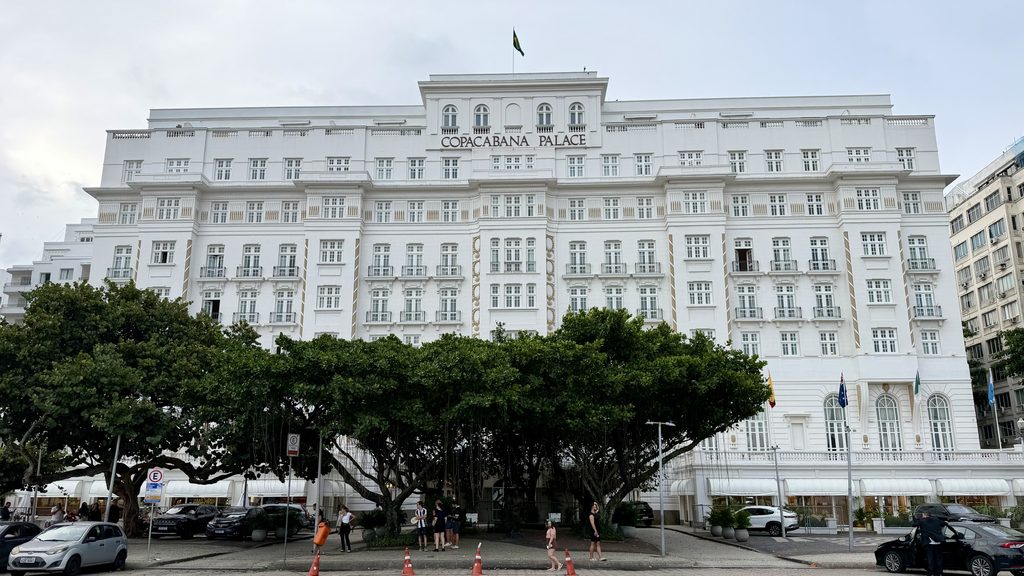
Copacabana Palace – This is the most famous luxury hotel located along the Avenida Atlântica. Designed in the elegant Art Deco style, it opened in 1923 and has welcomed numerous celebrities and distinguished guests, including Princess Diana, Madonna, Marilyn Monroe, and Mick Jagger. With its distinctive white façade, the hotel features luxurious rooms and suites, a grand swimming pool, and acclaimed restaurants offering Italian, Pan-Asian, and Brazilian cuisine.
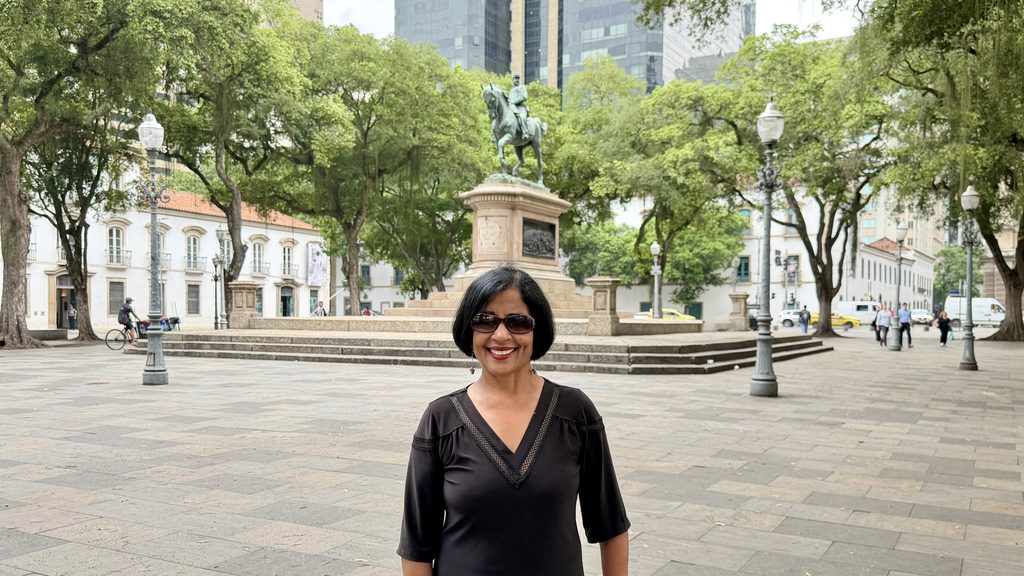
Praça XV de Novembro – After we landed in Rio late morning, we left our luggage in the hotel and took an uber to Praça XV de Novembro. Located in the center of the city along Guanabara Bay, Praça XV is one of the city’s oldest and most historically significant public squares, dating back to the 16th century. Formerly known as Largo do Paço, it was revitalized and reopened in 2016. It is now part of the waterfront promenade known as Orla Conde and serves as a transport hub for ferry services across Guanabara Bay and the city’s light-rail system. It is also a popular gathering place for skateboarders and is home to statues and some prominent buildings.
- The square has a few equestrian statues, one of them being the Equestrian Statue of General Osório that was erected around 1894, honoring a prominent Brazilian military leader and war hero from the Paraguayan War (War of the Triple Alliance).
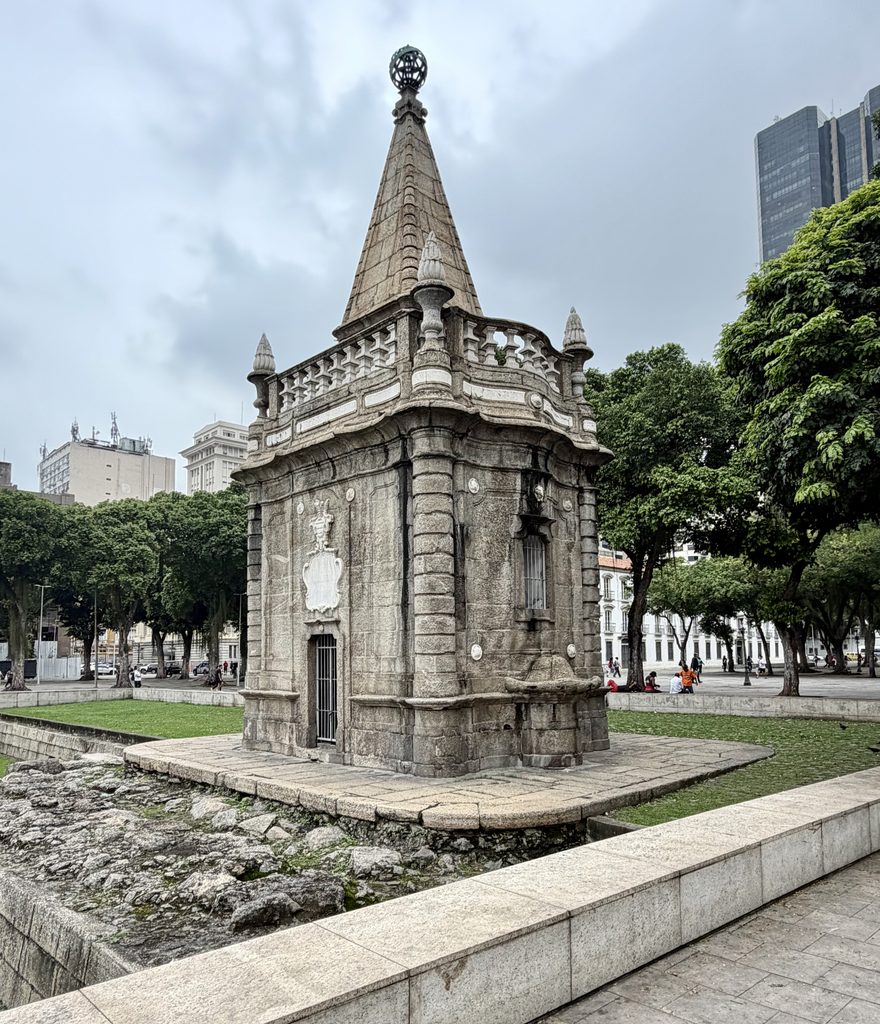
- Another striking structure in the plaza is the Chafariz do Mestre Valentim (Mestre Valentim Fountain). Built from stone, this fountain was inaugurated in 1789 and once supplied with water through the Carioca Aqueduct (see section below). An armillary sphere crowns the structure, which served as an important source of fresh water for ships and residents during colonial times.
———————————-
Praça XV, Paço Imperial (Imperial Palace) – Completed in 1743, it was originally built as the residence of the governors of colonial Brazil and later as the Royal Palace when the Portuguese royal court arrived in Rio in 1808, fleeing Napoleon’s invasion of Portugal. Following Brazil’s independence in 1822, it was renamed the Imperial Palace and served as the workplace of emperors Pedro I and Pedro II. After the monarchy ended in 1889, the building served as Rio’s central post office. Restored in 1980, the Paço Imperial has operated as a cultural center since 1984, hosting art exhibitions and other events.
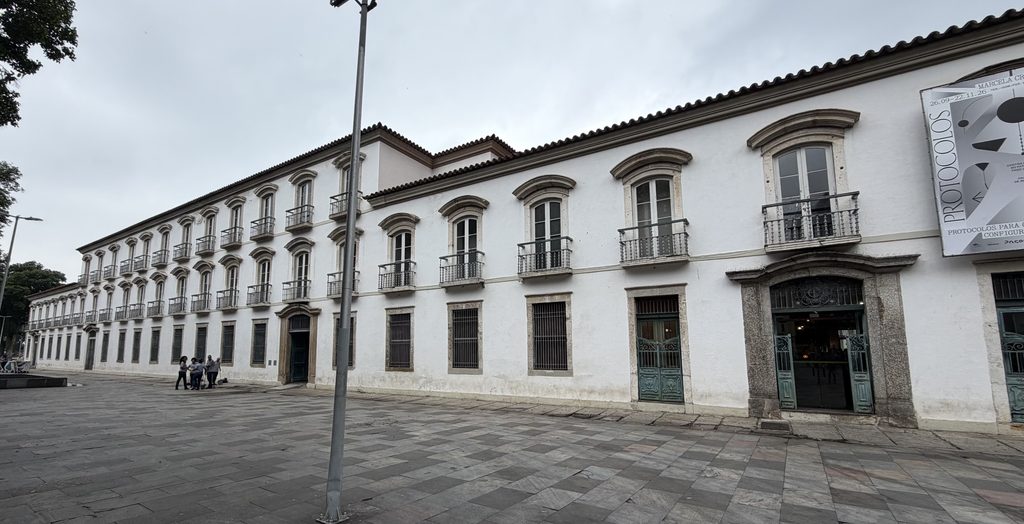
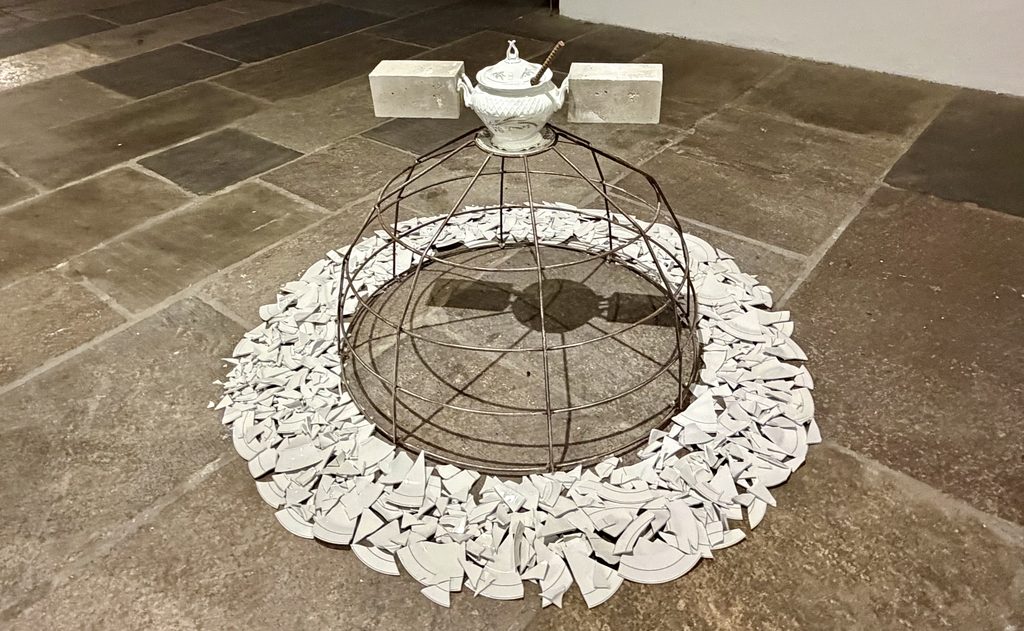
Admission to the Paço Imperial is free, and we took the opportunity to explore its interior. During our visit, an art exhibition featuring porcelain pieces was on display, giving us a chance to admire the artworks while discovering this historic building.
———————————-
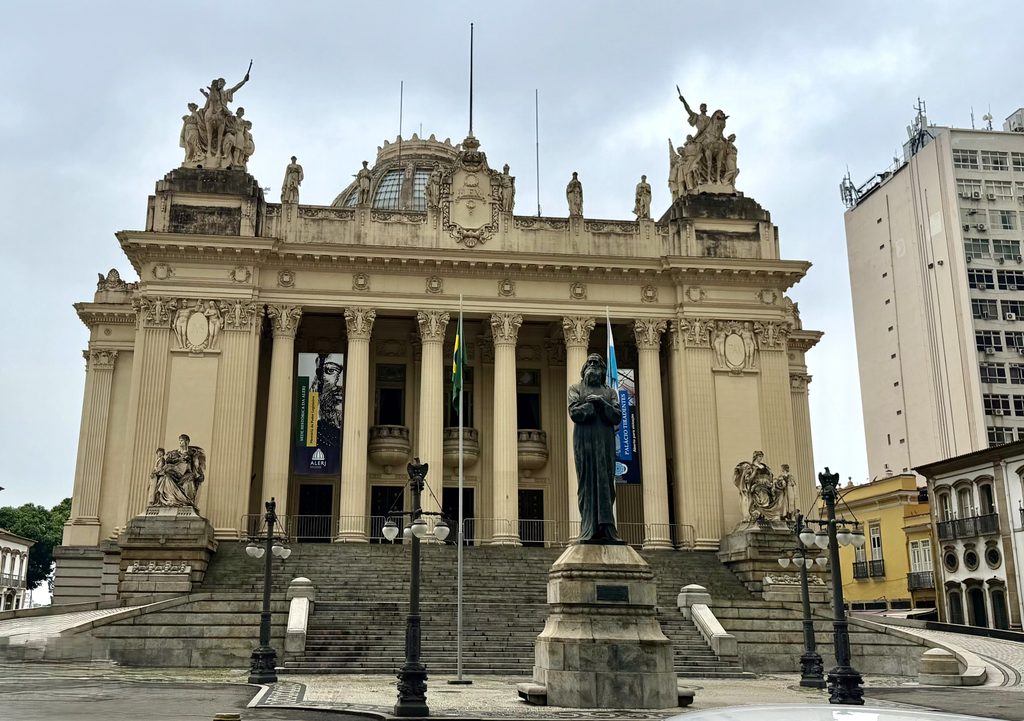
Praça XV, Tiradentes Palace (Palácio Tiradentes) – Located next to the Paço Imperial, the Palace is an impressive government building that serves as the seat of the Legislative Assembly of the State of Rio de Janeiro. Inaugurated on May 6, 1926, the eclectic-style palace was built to house Brazil’s Chamber of Deputies, which met there until the federal capital moved to Brasília in 1960. Since 1975, it has housed the Legislative Assembly of the State of Rio de Janeiro.
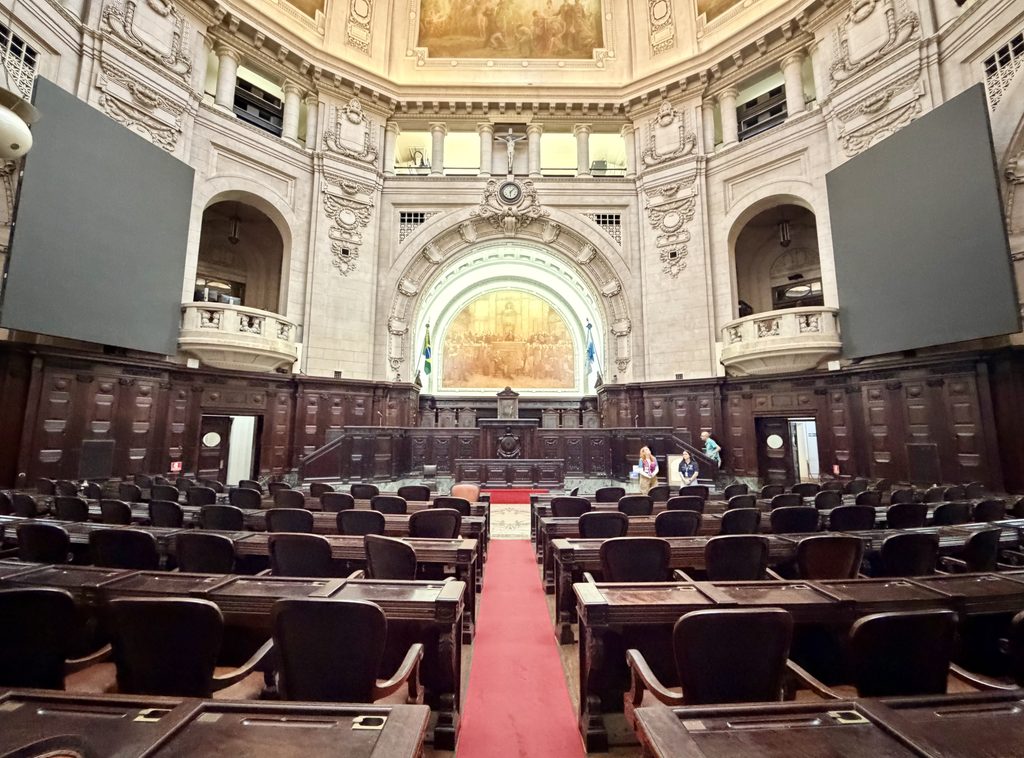
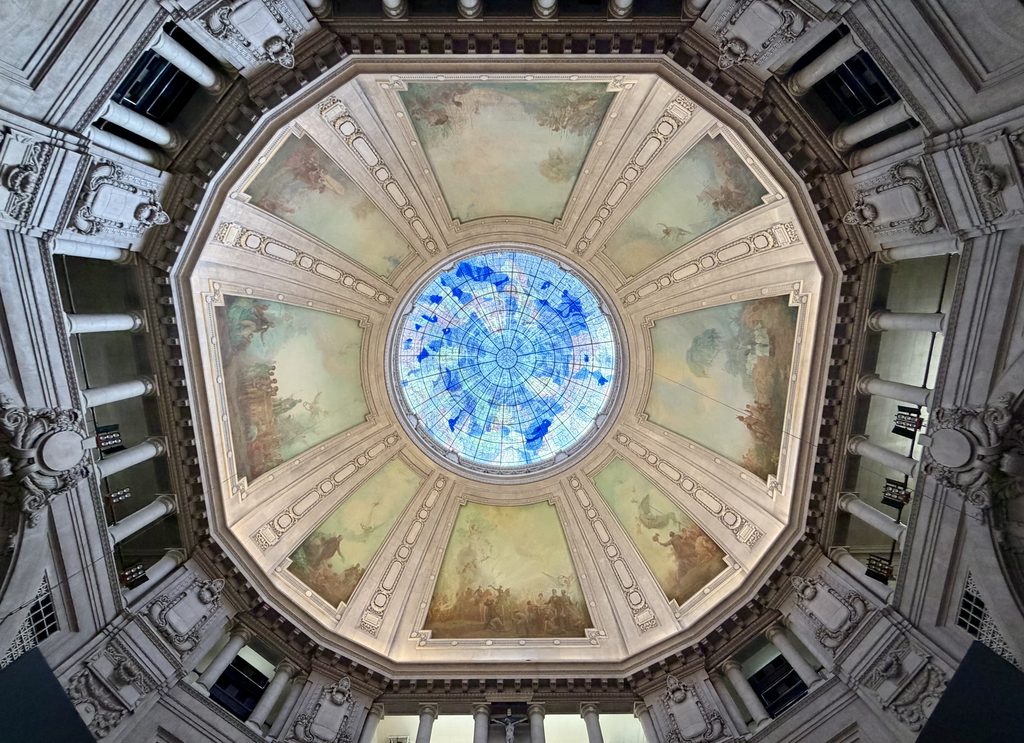
Guided tours of the interior are available at scheduled times each day, and we joined a short tour that included a visit to the Plenário Barbosa Lima Sobrinho (Tiradentes Palace Assembly Hall). This is the palace’s main legislative chamber, renowned for its magnificent stained-glass dome depicting the night sky over Rio de Janeiro on November 15, 1889, the day Brazil became a republic. With its semicircular layout, tiered wooden desks, and spectator galleries, the chamber combines impressive artistic detail with an important chapter in Brazil’s political history.
———————————-
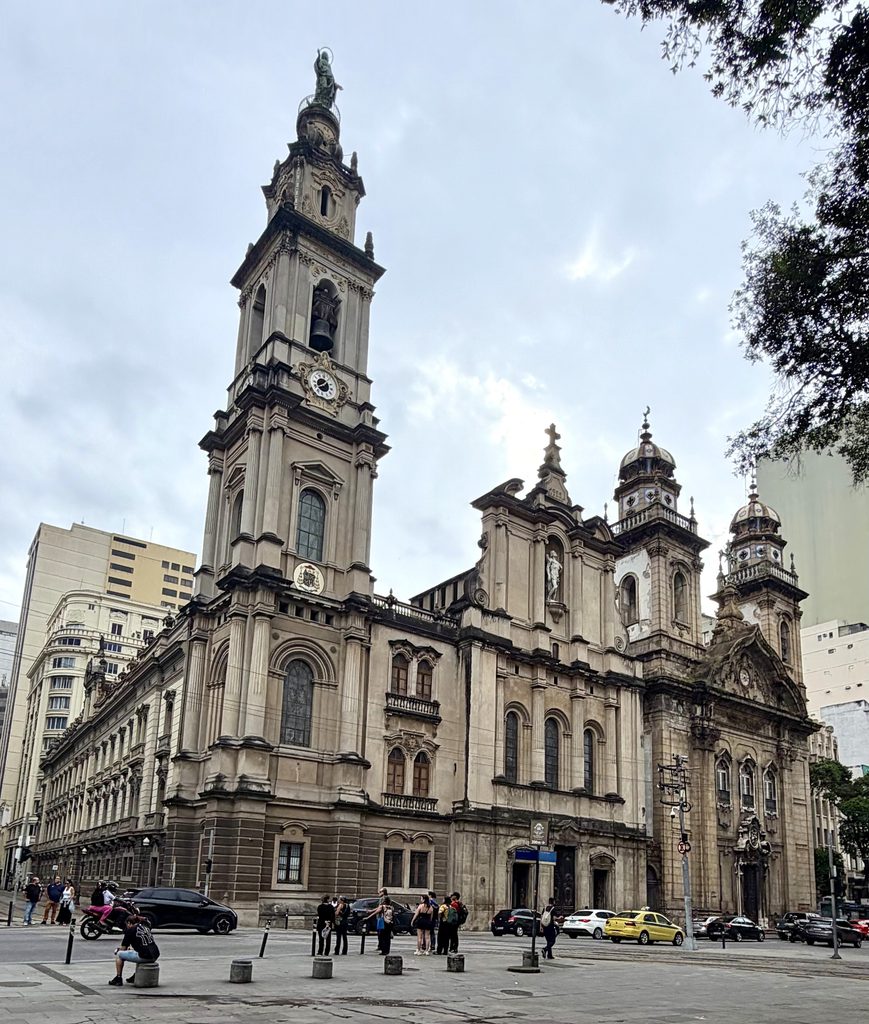
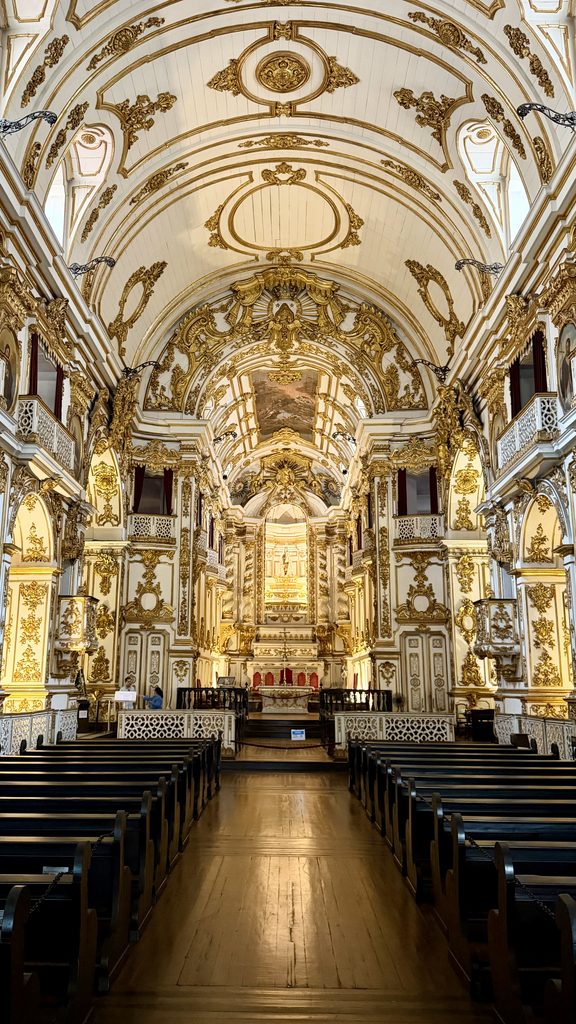
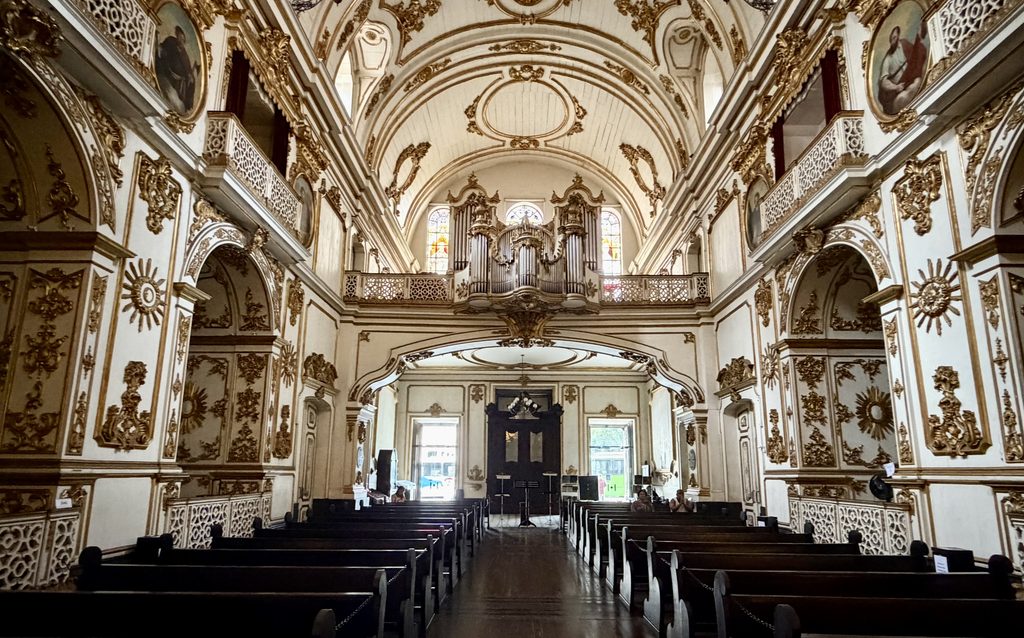
Praça XV, Igreja de Nossa Senhora do Carmo da Antiga Sé (Old Cathedral) – is a Catholic church built between 1761 and 1770 in Baroque and Rococo styles. Its richly decorated interior features elaborate gilded wood carvings created by sculptor Inácio Ferreira Pinto. The church was later designated the Imperial Chapel after Brazil gained independence in 1822. It served as Rio de Janeiro’s main cathedral until 1976 and witnessed several important royal ceremonies, including the coronations of Emperors Pedro I and Pedro II and the wedding of Princess Isabel in 1864.
———————————-
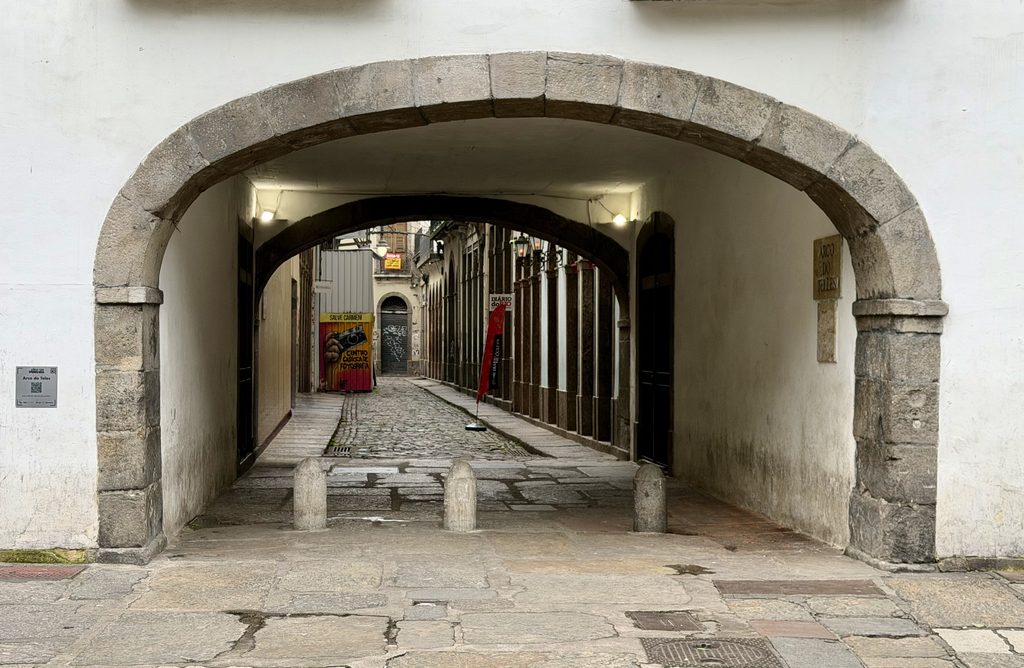
Arco do Teles (Telles Arch) – This 18th-century arch was built into a row of elegant townhouses to preserve a passage used by merchants traveling between Praça XV and Rua do Ouvidor. It is not a particularly prominent arch and can easily go unnoticed, as we spent some time wandering around the large square before finally figuring out where it was.
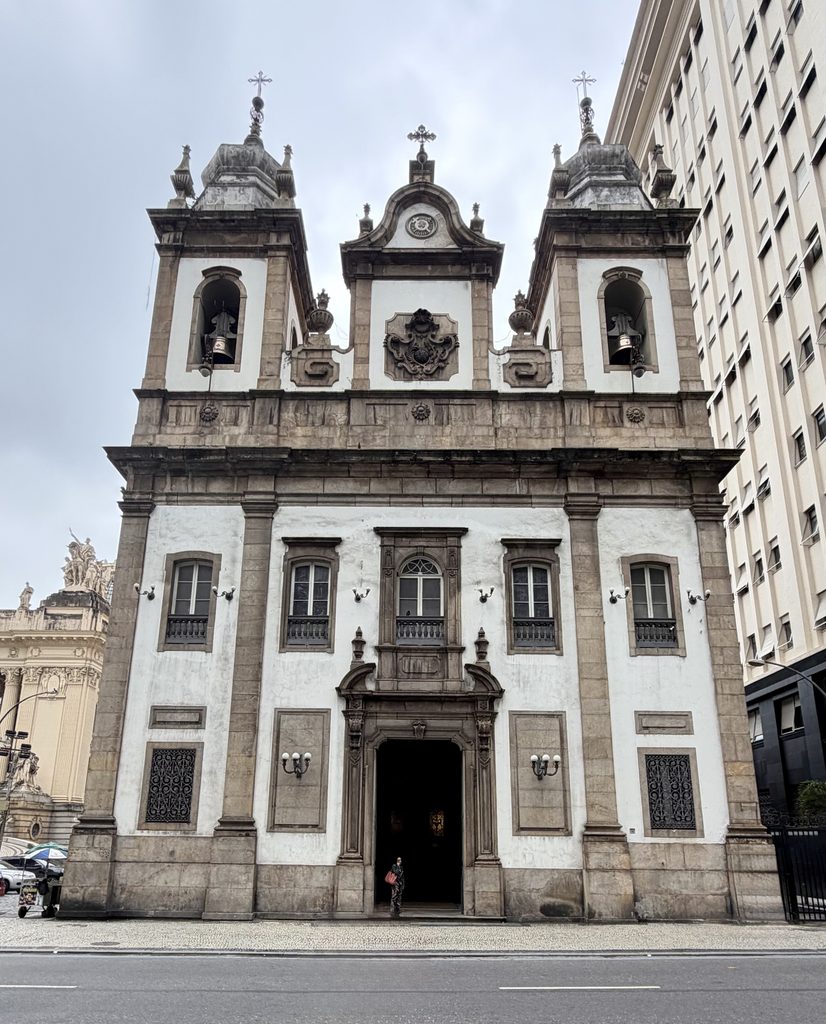
Igreja de São José (Church of Saint Joseph) – Located right next to Tiradentes Palace, this was one of those places we hadn’t planned to visit but discovered simply because of its convenient location. Founded in 1608, the Church of Saint Joseph has a history spanning more than four centuries. The church’s interior is as impressive as its exterior, and it was a lovely surprise to discover this church while exploring the area.
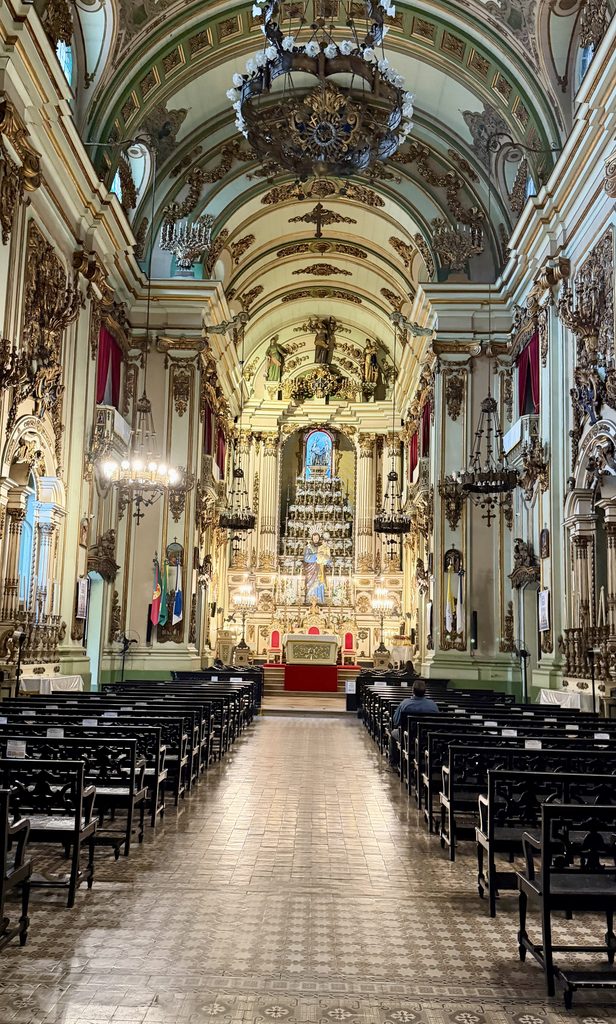
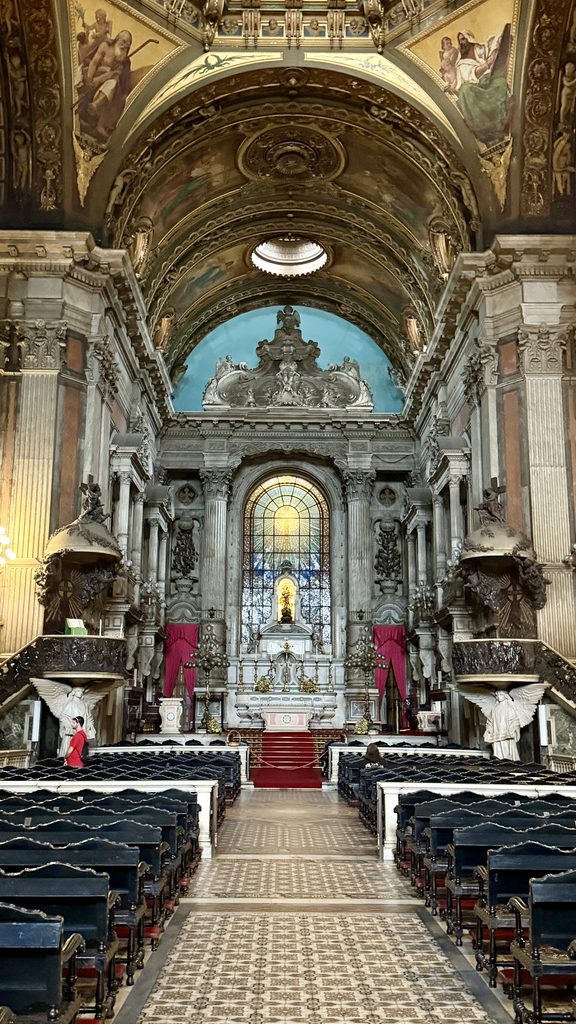
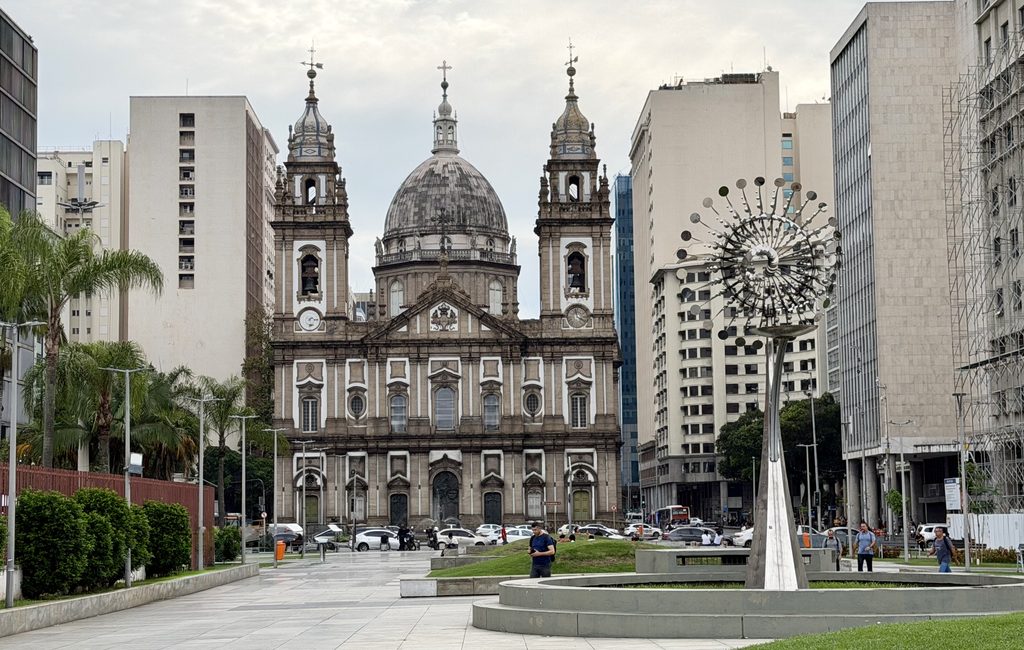
Praça Pio X – Located in Rio de Janeiro’s bustling Centro district, this square named after Pope Pius X. The square is dominated by the magnificent Candelária Church (Igreja de Nossa Senhora da Candelária), an architectural landmark featuring Neoclassical elements and an impressive dome. Its richly decorated interior includes marble details and ceiling paintings by artist Zeferino da Costa depicting the church’s origins.
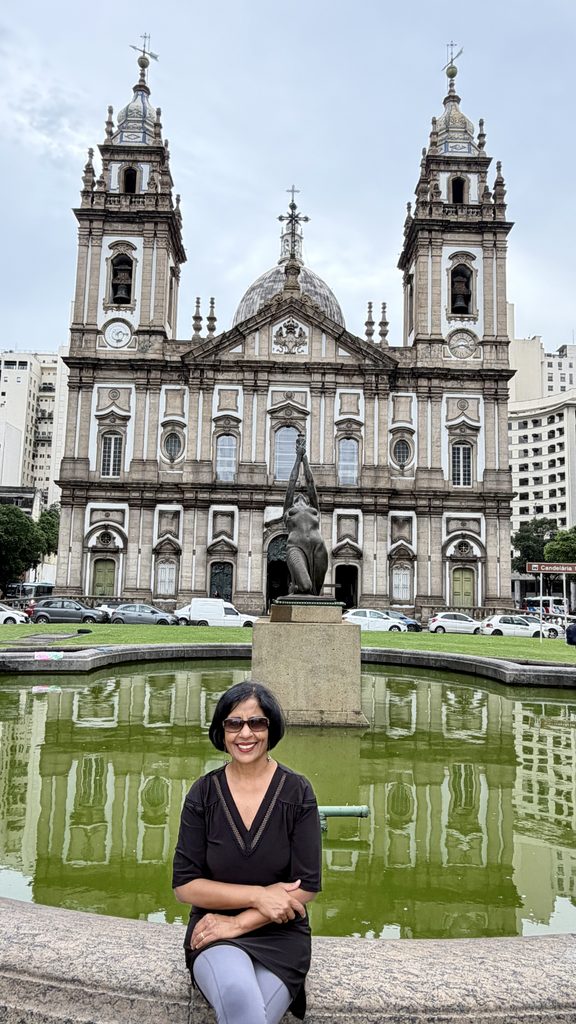
Pira Olímpica do Povo (The People’s Olympic Cauldron) – Across from Candelária Church in Praça Pio X stands a striking kinetic steel sculpture created by American artist Anthony Howe. Permanently installed to commemorate the Rio 2016 Olympic Games, this moving artwork serves as a lasting reminder of the city’s role as host of the Summer Olympics.
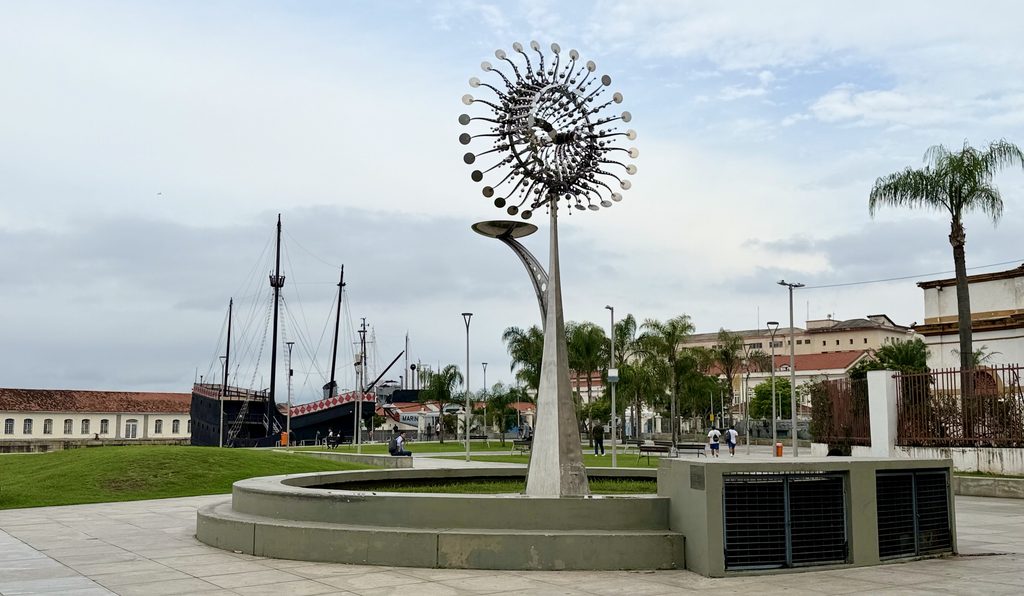
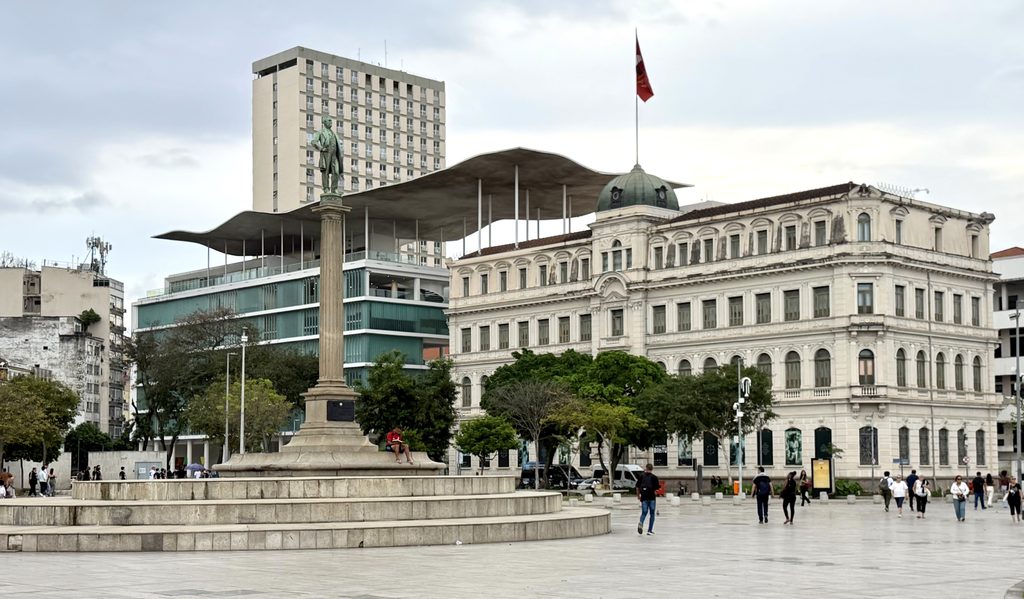
Praça Mauá (Mauá Square) – A 10-minute walk from Praça Pio X along the waterfront promenade brought us to Praça Mauá, a spacious square overlooking Guanabara Bay. Established in 1910, the square was named after the Viscount of Mauá, a Brazilian entrepreneur and pioneer who helped develop the country’s first railway. A prominent statue of the viscount stands at the center of the square. One end of the plaza is occupied by Museu de Arte do Rio (MAR) (Rio Art Museum). Opened in March 2013, the museum occupies two connected buildings – the historic Palacete Dom João VI, which houses exhibition galleries, and a former bus terminal that now contains the Escola do Olhar, an educational space dedicated to art and culture. The buildings are linked by a striking elevated, wave-like roof that unifies their contrasting architectural styles.
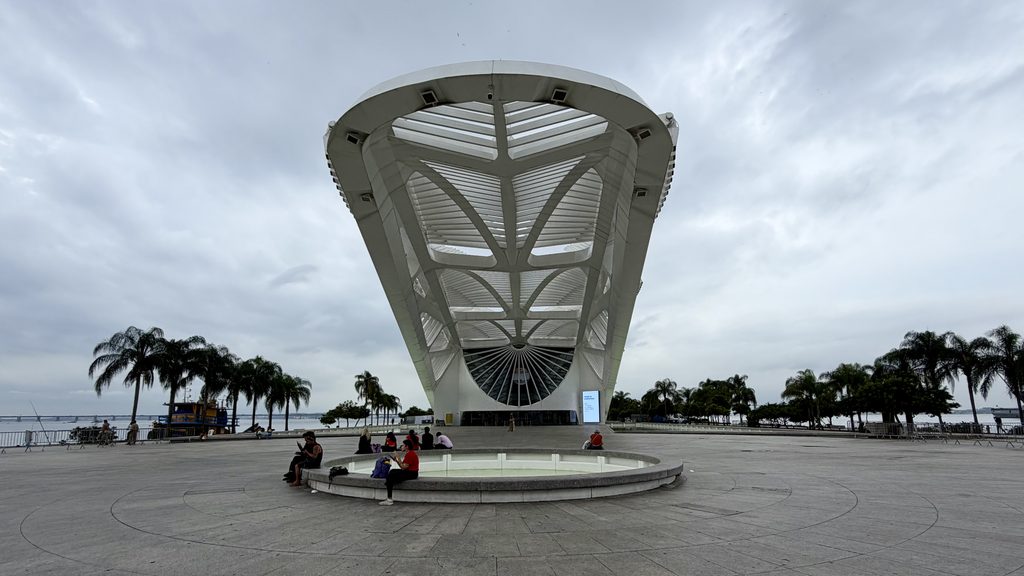
Museu do Amanhã (Museum of Tomorrow) – Another end of Praça Mauá is dominated by the strikingly modern Museum of Tomorrow, a science museum that explores the future of our planet and humanity through exhibits focused on sustainability, technology, and the challenges facing the world.
On the second day of our stay in Rio, we had booked a Viator full-day city tour. In Rio, most of the attractions are spread out and we thought we’d do a private tour to cover them. We picked the places to visit and the guide found the best way to cover all of them in 9 hours which included a stop for lunch and tea.
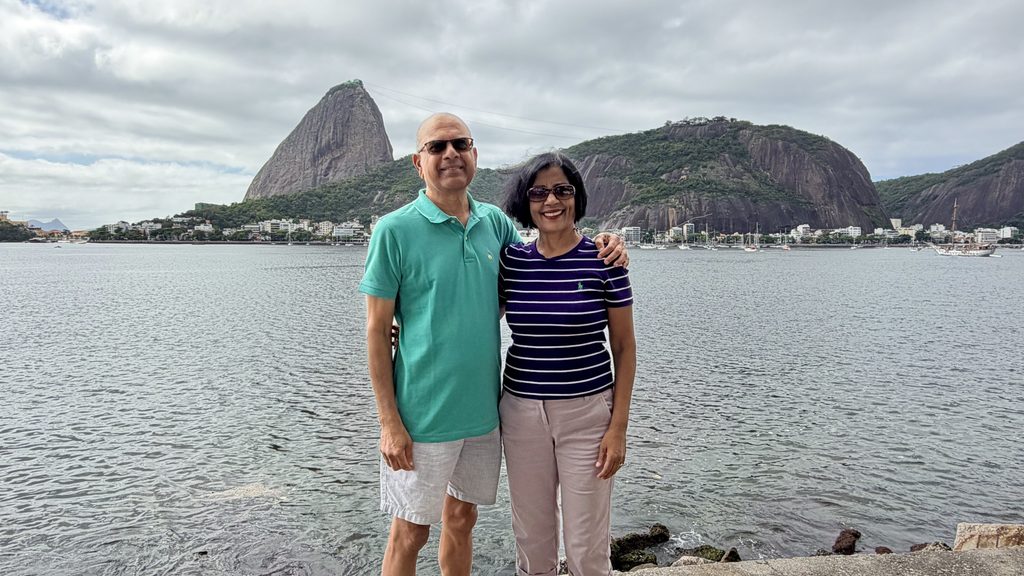
Aterro do Flamengo (Flamengo Park) – We first stopped at Flamingo park from were we got a great view of sugarloaf mountain.
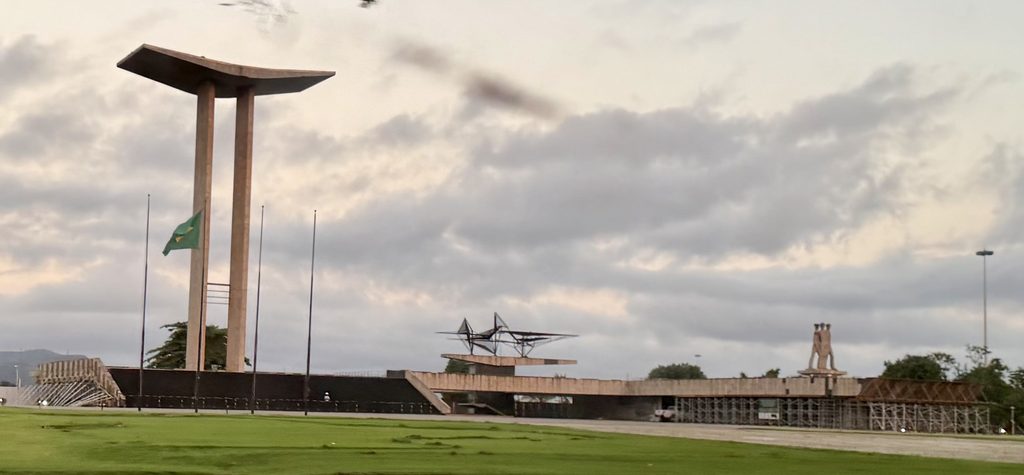
Monument to the Dead of World War II – This monument located in Flamengo Park commemorates Brazil’s participation and sacrifices during World War II. Completed in 1960, it features a striking 31-meter-high concrete memorial structure, sculptures honoring Brazil’s land, sea, and air forces, and a mosaic dedicated to sailors and merchant mariners who lost their lives at sea. Beneath the monument, a mausoleum holds the remains of 467 Brazilian servicemen who died fighting in Italy and were repatriated from Tuscany in 1960.
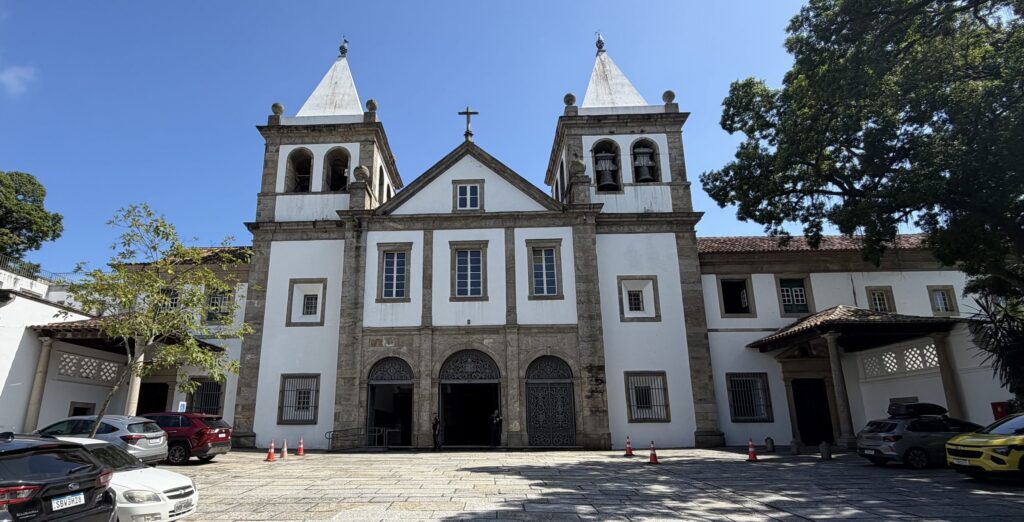
Monastery of Saint Benedict (Mosteiro de São Bento) – Dedicated to Our Lady of Montserrat, the monastery’s Mannerist-style church’s construction began in 1633 and continued through the 18th century. Its impressive façade features three arched entrances and twin towers topped with pyramidal spires.
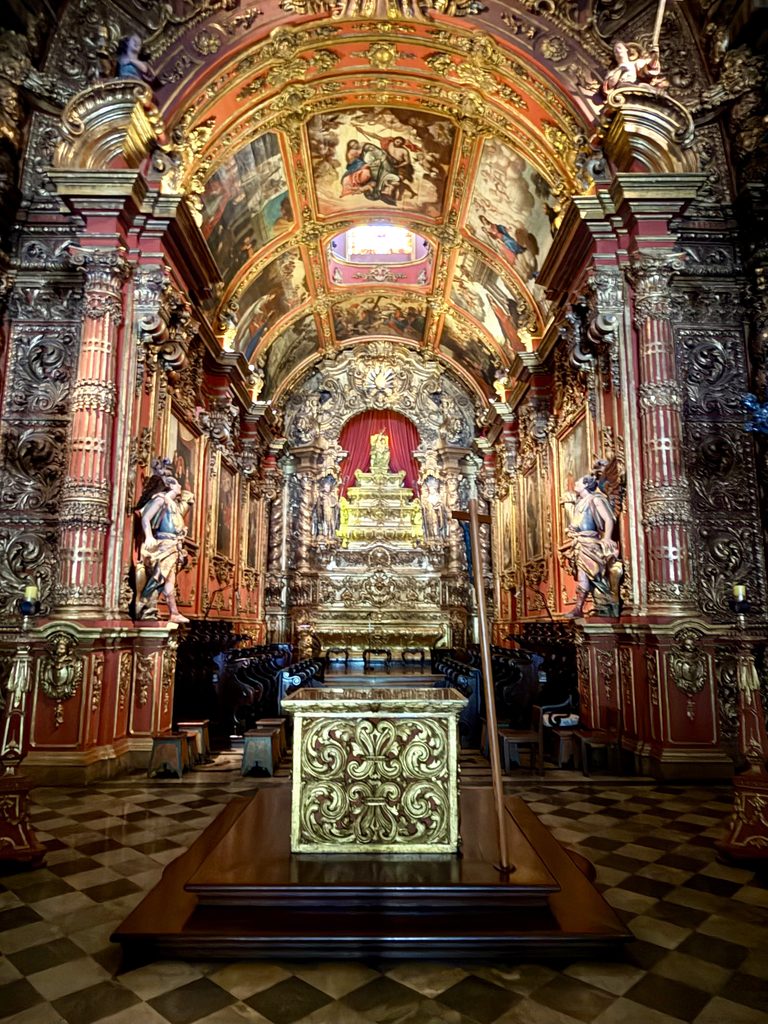
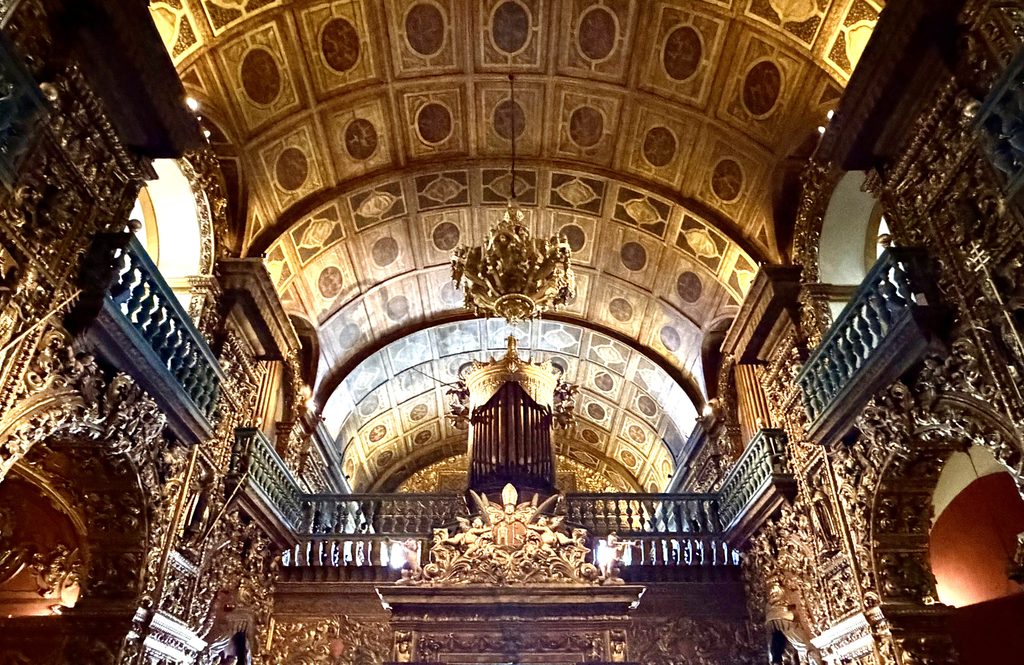
The church’s interior is renowned for its magnificent Baroque and Rococo decorations, with elaborate gold-leaf gilding and intricate wood carvings adorning much of the space. Today, it remains an active religious institution and houses the College of São Bento and a faculty offering courses in theology and philosophy, preserving its longstanding traditions of monastic life, education, and worship.
Little Africa (Pequena África) – Located in Rio de Janeiro’s port district, Little Africa is a historically significant Afro-Brazilian cultural area that preserves the legacy, resilience, and traditions of the city’s Black community. The area developed as freed and enslaved Black people established communities and cultural networks, becoming an important center of Afro-Brazilian heritage and the early roots of samba and Carnival traditions.
- Brazilian Flag Staircase (Escadaria da Bandeira do Brasil) – We first stopped at this colorful staircase on Rua Eduardo Jansen, which has become a popular tourist attraction. Originally decorated in 1998, the staircase features the Brazilian flag and has gained popularity among visitors and photography enthusiasts. Fortunately, when we arrived, there were no crowds, and we had the entire staircase to ourselves and our guide took a video of us on the stairs.
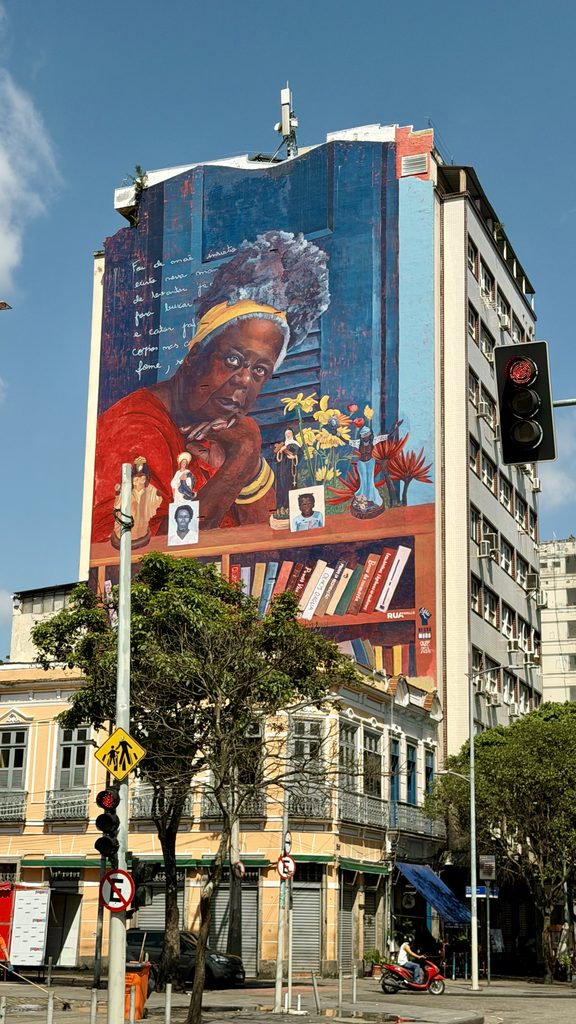
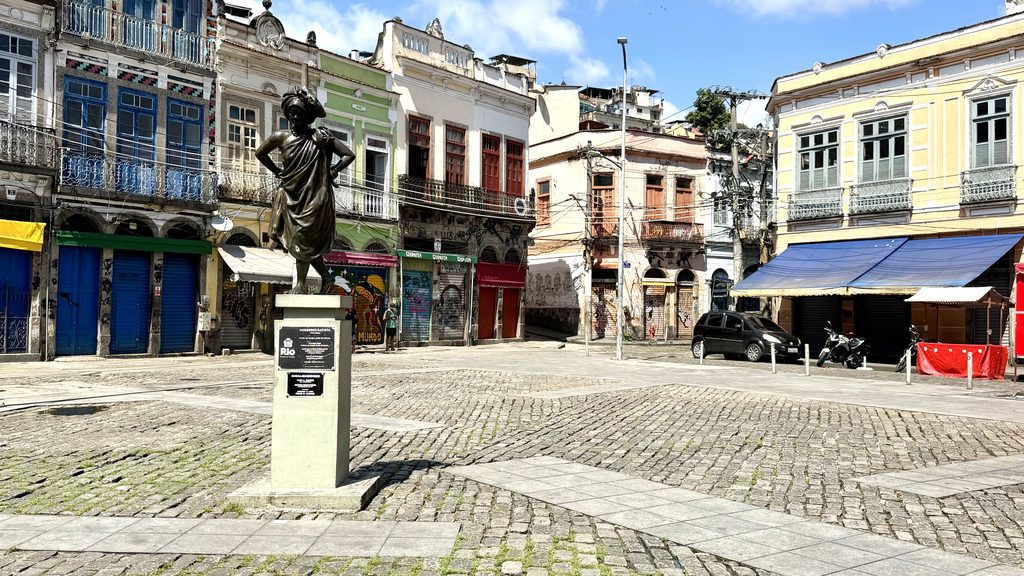
- Largo de São Francisco da Prainha – Located near the Brazilian Flag Staircase, this lively square is an important landmark of Afro-Brazilian culture and heritage. One of its most striking features is a large mural created by NegroMuro, an urban art collective dedicated to celebrating Black Brazilian figures and their contributions to society. Stretching approximately 20 meters, the mural honors Conceição Evaristo, one of Brazil’s most celebrated contemporary Black writers. More than just a work of street art, the mural serves as a powerful tribute to Black identity, cultural memory, and resistance, reinforcing the square’s significance as a gathering place within Rio’s historic Afro-Brazilian community.
———————————-
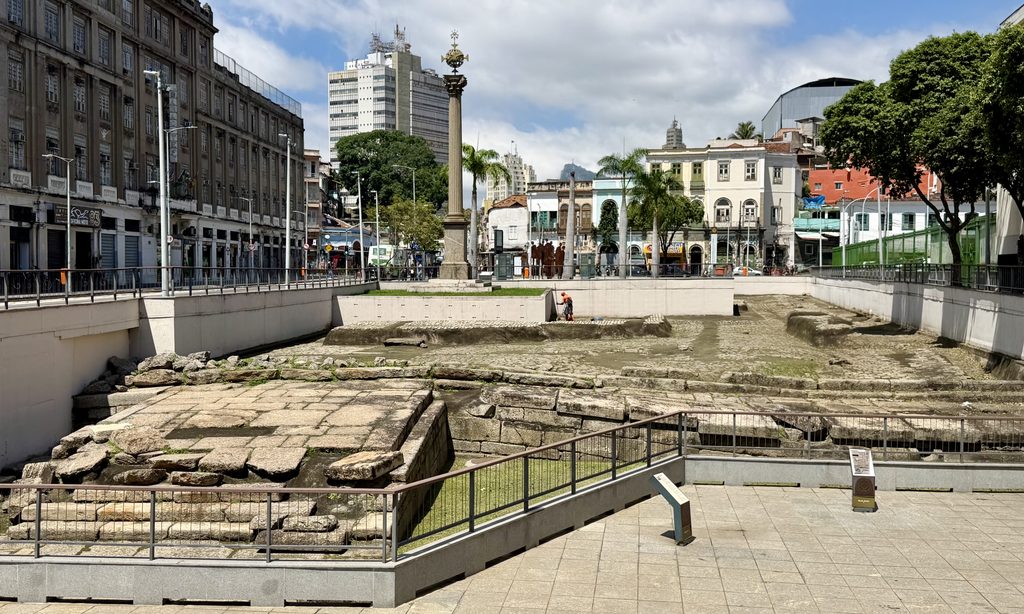
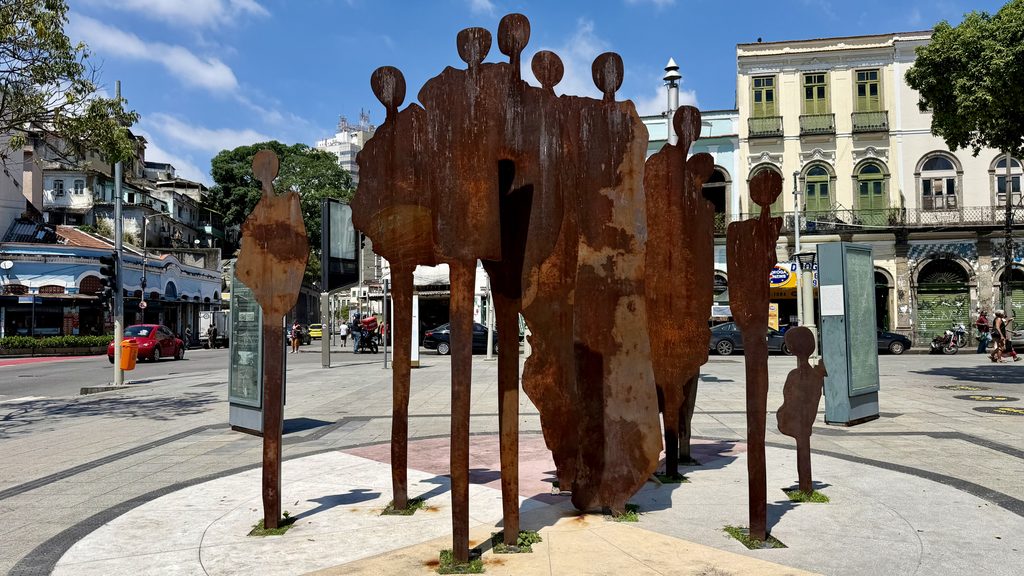
Valongo Wharf (Cais do Valongo) – Located in Rio’s port district, Valongo Wharf was built in 1811 and became the main landing site for enslaved Africans brought to Brazil. Between 1811 and 1831, an estimated 500,000 to one million people arrived here under the brutal transatlantic slave trade. Although the trade was officially banned in 1831, it continued clandestinely for years afterward. The site was eventually buried during urban redevelopment in 1911 and rediscovered during archaeological excavations in 2011. Today, Valongo Wharf is a UNESCO World Heritage Site and a powerful place of remembrance, preserving the history of millions of Africans whose lives were shaped by slavery and honoring their enduring cultural legacy.
———————————-
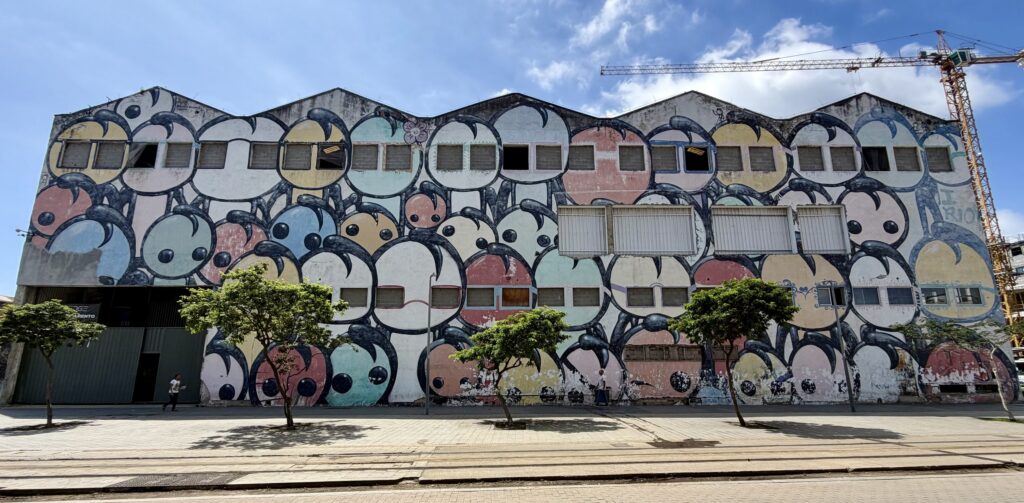
We then stopped to admire some enormous street art by Brazilian artists Wark Rocinha and Eduardo Kobra in Rio’s Little Africa neighborhood. These vibrant murals transformed the walls of the port district into an open-air art gallery, showcasing Brazil’s creative energy.
Street Art by Wark Rocinha – Known for his playful, cartoon-inspired characters and bold designs, Wark transforms ordinary walls into vibrant works of public art.
Mural das Etnias (Etnias Mural) – Located along Olympic Boulevard in Rio’s port district, this spectacular mural was created by renowned Brazilian street artist Eduardo Kobra for the 2016 Summer Olympics. Titled Todos Somos Um -We Are All One, the enormous artwork stretches 170m long and 15m high across the side of a warehouse, making it one of the world’s largest murals by a single artist. Its depicts portraits of five Indigenous people representing Africa, the Americas, Asia, Europe, and Oceania, celebrating the diversity of humanity. Inspired by the five Olympic rings, the mural conveys a powerful message of unity, peace, and cultural harmony. It was recognized by Guinness World Records as the largest mural ever created by a single artist at the time.
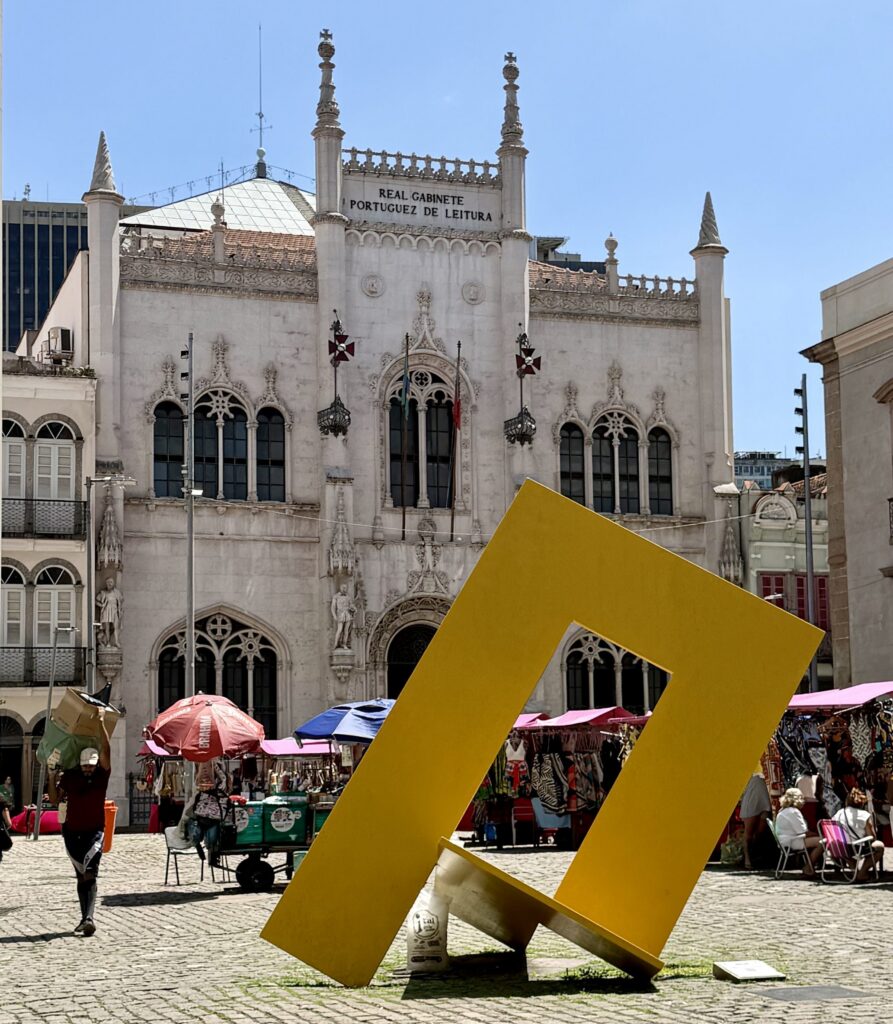
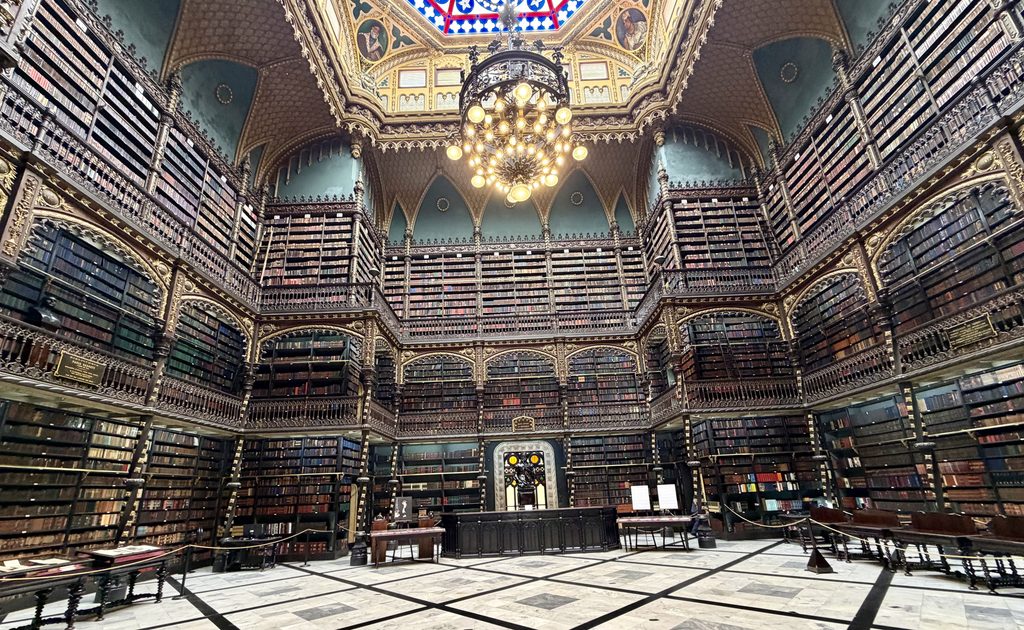
Real Gabinete Português de Leitura (Royal Portuguese Reading Room) – this historic library was founded in 1837 by Portuguese immigrants to promote Portuguese culture and literature in Brazil. Its magnificent Neo-Manueline building, was constructed between 1880 and 1887, with a façade inspired by Lisbon’s Jerónimos Monastery. The exterior features statues of notable Portuguese explorers and the poet Luís de Camões, while the stunning interior boasts towering wooden bookshelves, an intricate iron-framed skylight, and an impressive chandelier.
Open to the public since 1900, the library houses approximately 350,000 volumes, including rare editions, manuscripts, and the largest collection of Portuguese literature outside Portugal. Recognized internationally for its architectural beauty and cultural significance, it was ranked among the world’s most beautiful libraries by Time magazine in 2014. The interior is free to visit Mon-Fri, 10AM-5PM.
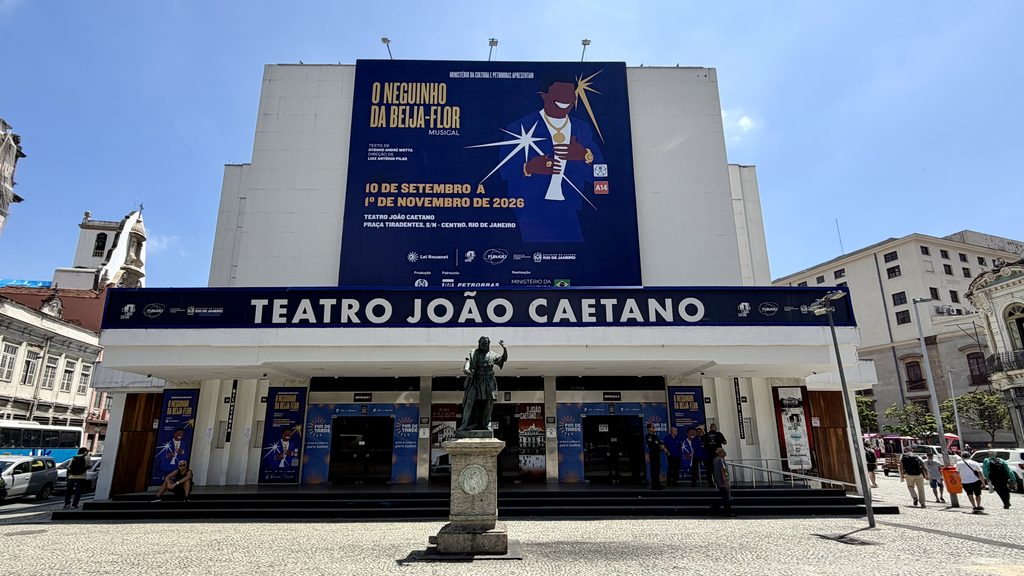
João Caetano Theater (Teatro João Caetano) – This theater was located in the same square as the Royal Portuguese Reading Room. A longstanding landmark of Brazilian performing arts, it has hosted theatrical productions, musical revues, and cultural events for more than two centuries.
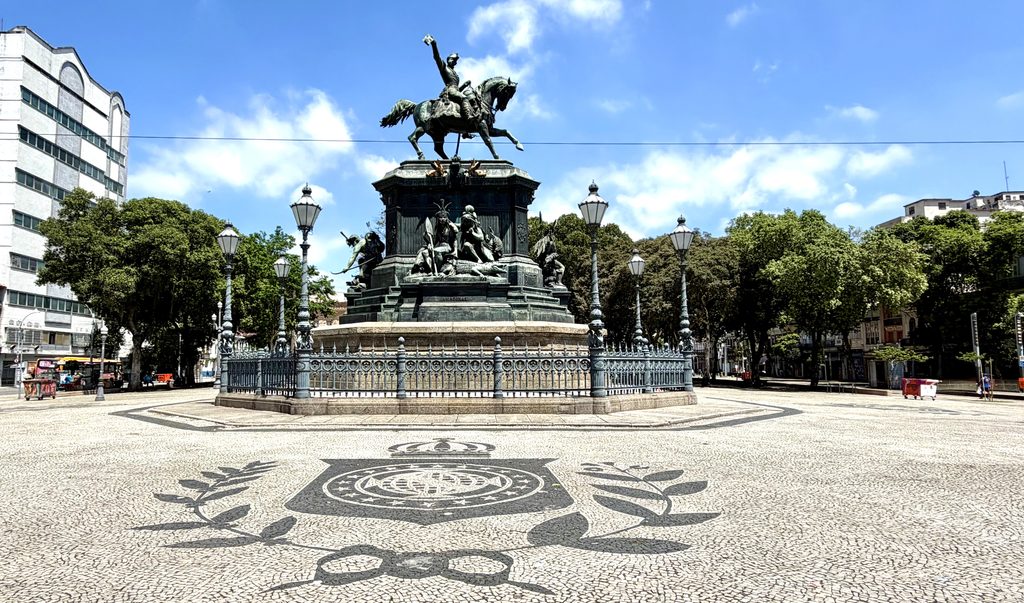
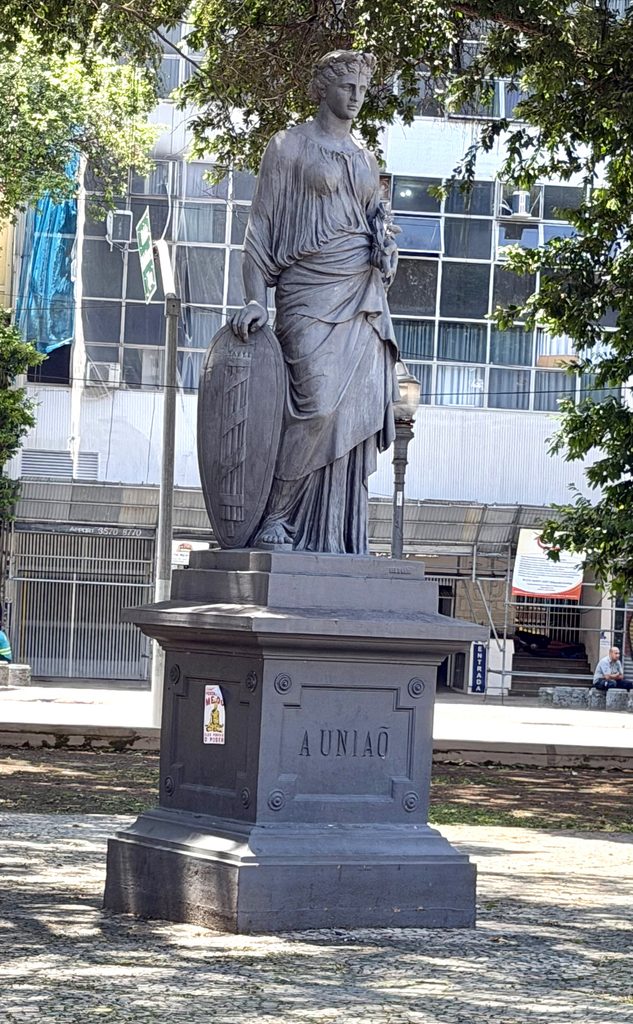
Tiradentes Square (Praça Tiradentes) – Located across the road from João Caetano Theater this historic square dates back to the 17th century and has undergone several name changes, before adopting its current name in 1890 in honor of Tiradentes, a martyr of Brazil’s independence movement who was executed nearby. The square’s centerpiece is the impressive equestrian statue of Emperor Dom Pedro I, unveiled in 1862, surrounded by four statues representing Justice, Liberty, Union, and Fidelity.
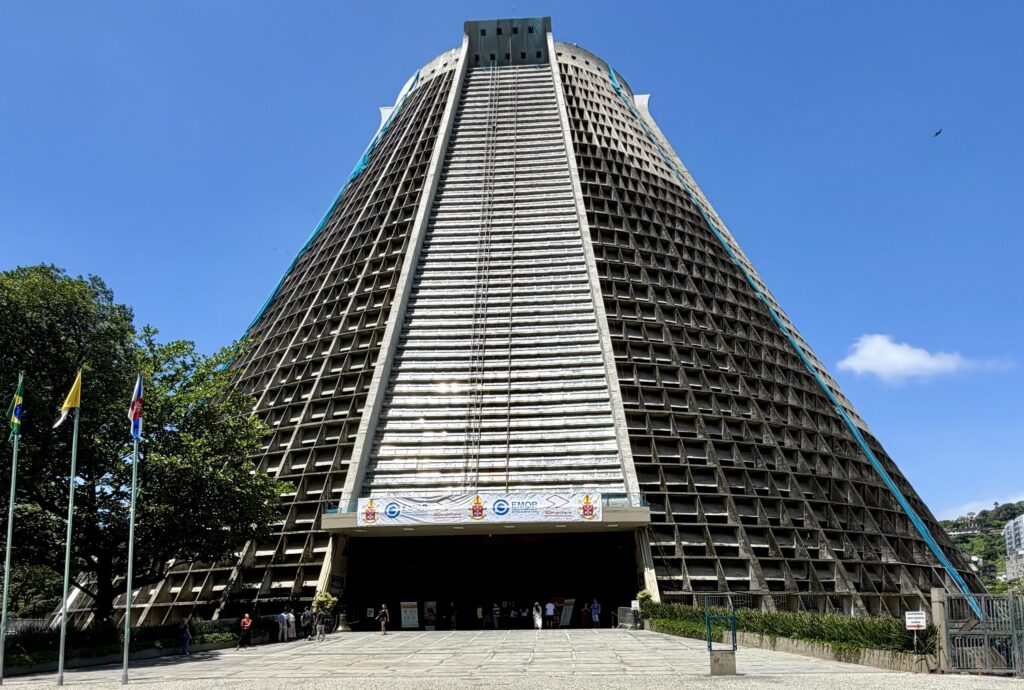
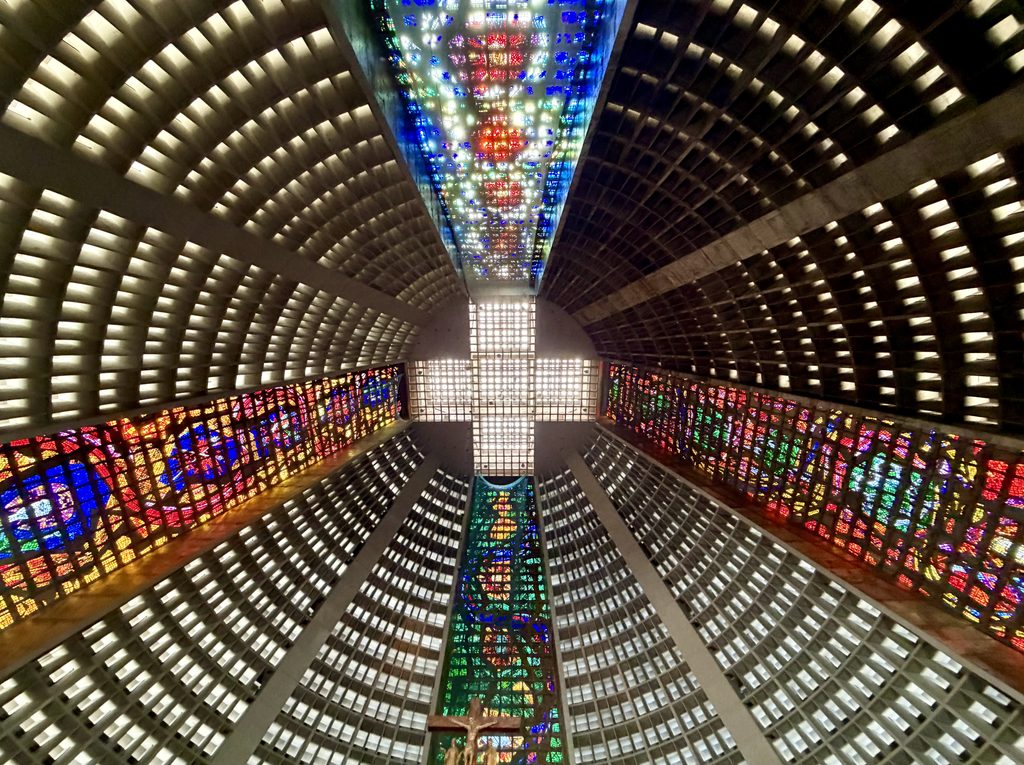
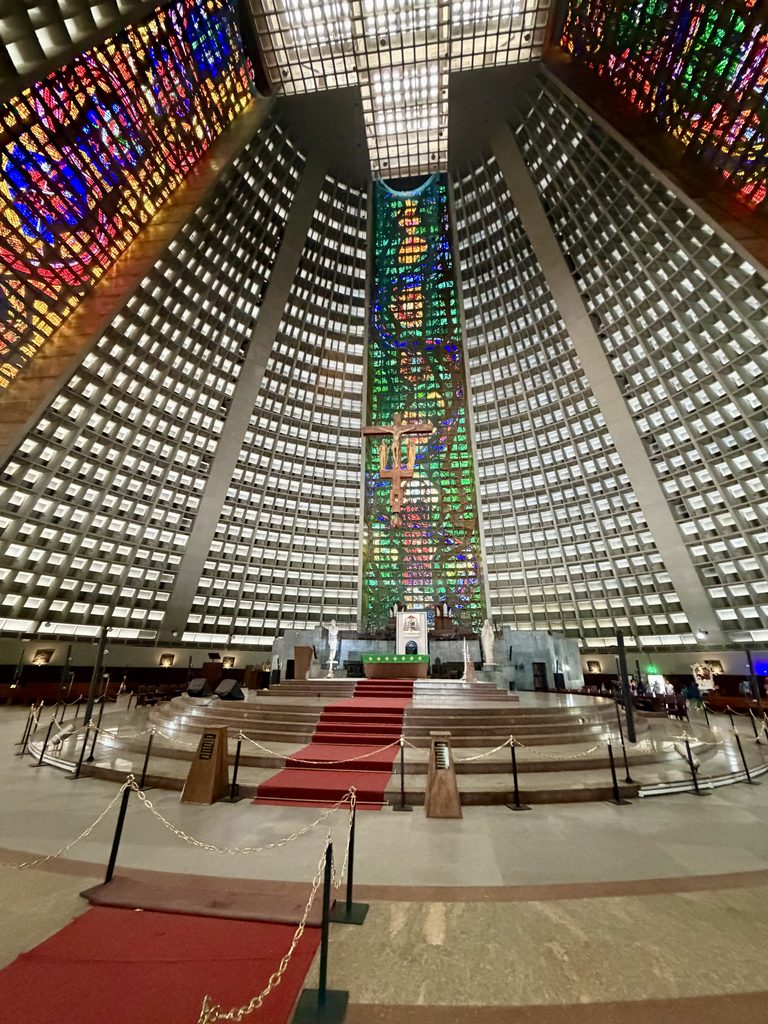
Metropolitan Cathedral of Saint Sebastian – This modern looking cathedral is the seat of the Archdiocese of Rio and is dedicated to Saint Sebastian, the city’s patron saint. Designed by architect Edgar de Oliveira da Fonseca, the cathedral was built between 1964 and 1979 in a distinctive conical shape inspired by Mayan pyramids. Its impressive structure measures 75m high, with an interior diameter of 96m, and can accommodate around 5,000 seated worshippers. Inside, four enormous stained-glass windows rise 64 meters from the floor to the ceiling, filling the spacious interior with colorful light. The cathedral replaced the Old Cathedral, which had served as Rio’s principal church for many years.
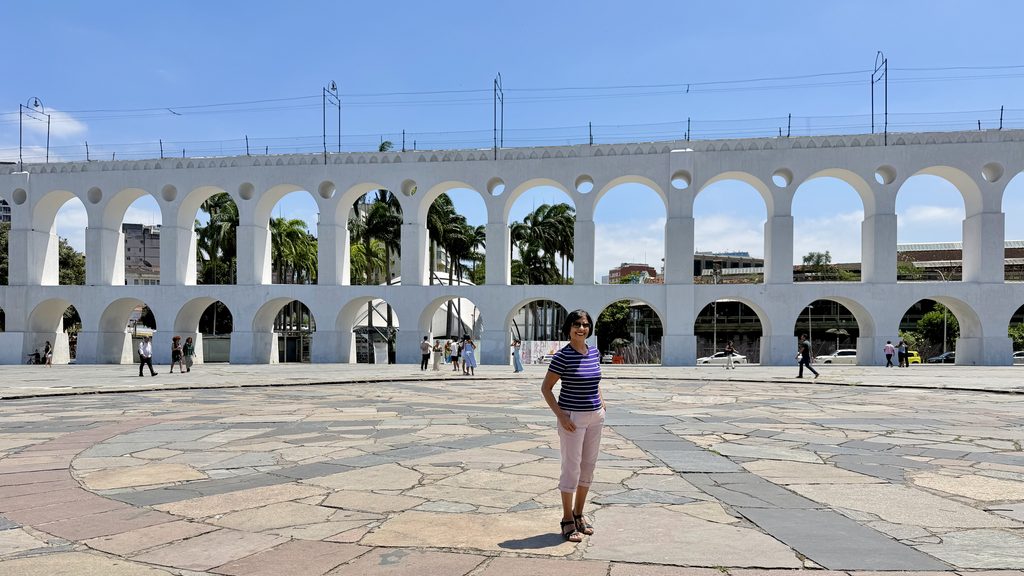
Arcos da Lapa (Carioca Aqueduct) – Located in the Lapa neighborhood of downtown Rio de Janeiro, the Carioca Aqueduct was built in the middle of the 18th century to bring fresh water from the Carioca River to the population of the city. Its most striking feature is a 270-meter-long structure consisting of two tiers of 42 monumental white arches, reaching up to 17.6 meters high. After the aqueduct was decommissioned in the late 19th century, it was adapted into a viaduct for the Santa Teresa Tramway, which crosses the arches on its scenic route between downtown Rio and the hillside neighborhood of Santa Teresa.
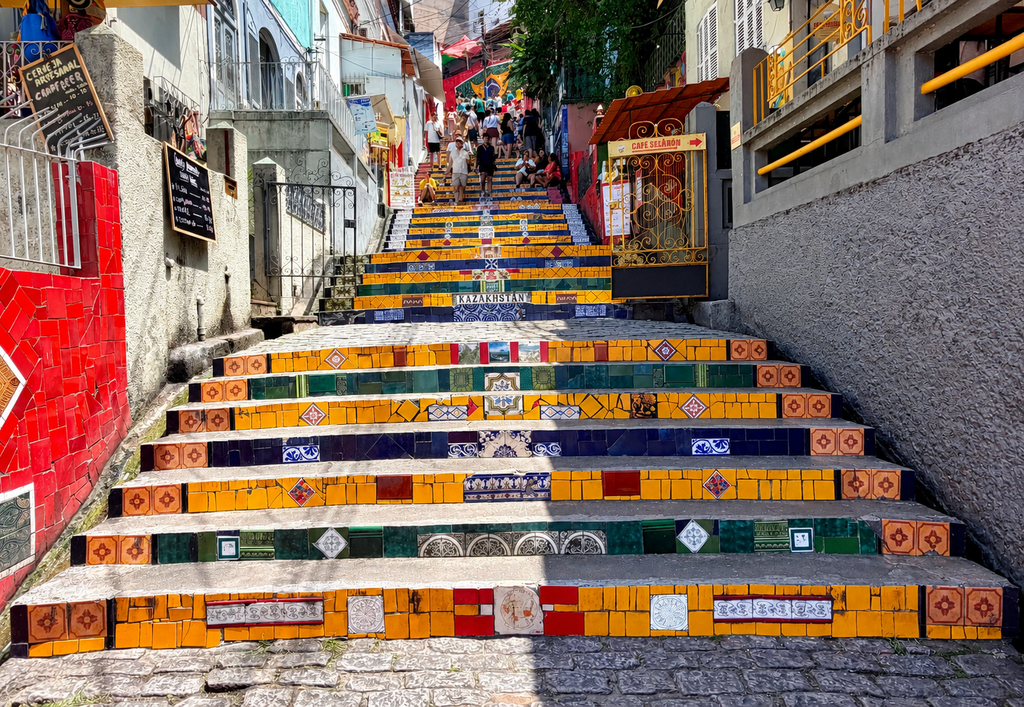
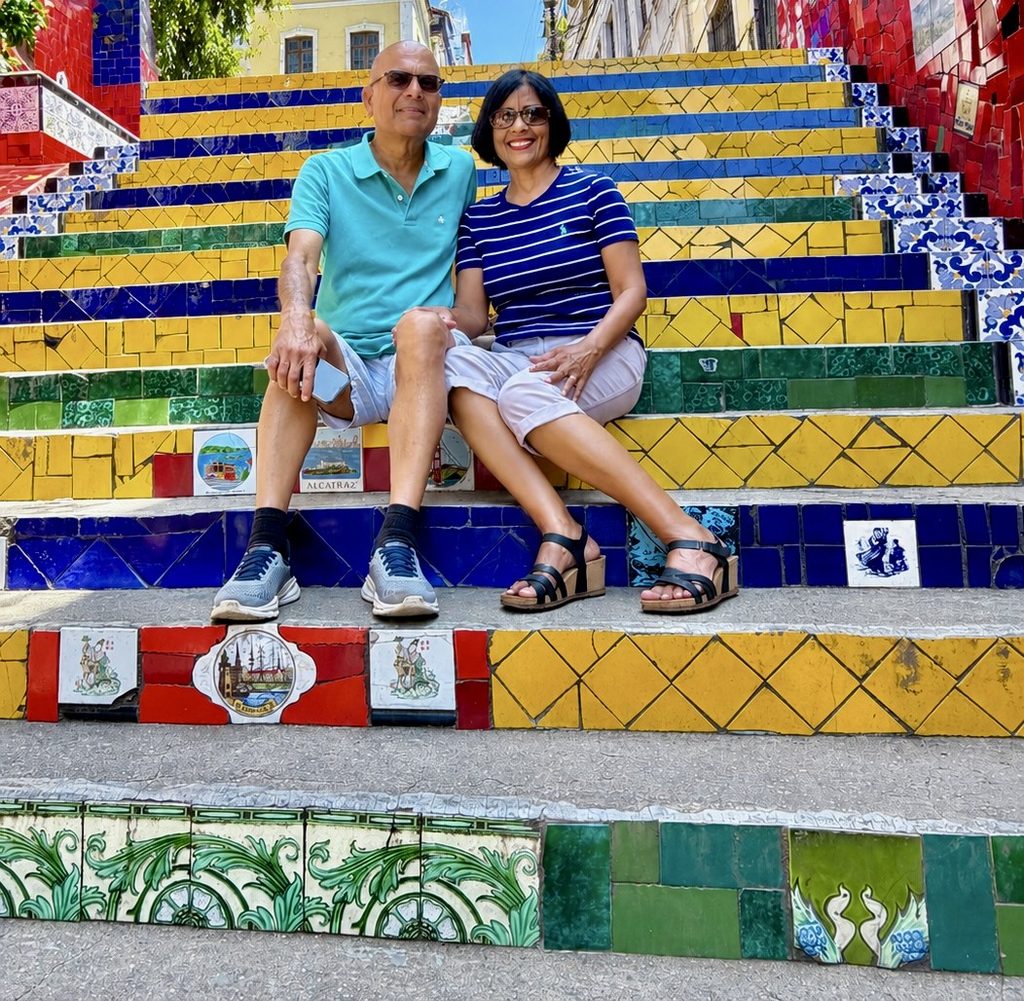
Escadaria Selarón (Selarón Steps) – Located between the Lapa and Santa Teresa neighborhoods, the Selarón Steps are one of Rio de Janeiro’s most colorful and famous landmarks. The 215 steps stretch for approximately 125 meters and are covered with thousands of vibrant ceramic tiles, mosaics, and mirrors collected from more than 60 countries. Chilean-born artist Jorge Selarón began transforming the once-neglected staircase in 1990 as a tribute to the Brazilian people, gradually turning it into a remarkable work of public art. Many of the tiles feature colorful patterns and designs, making the staircase a popular spot for photographs.
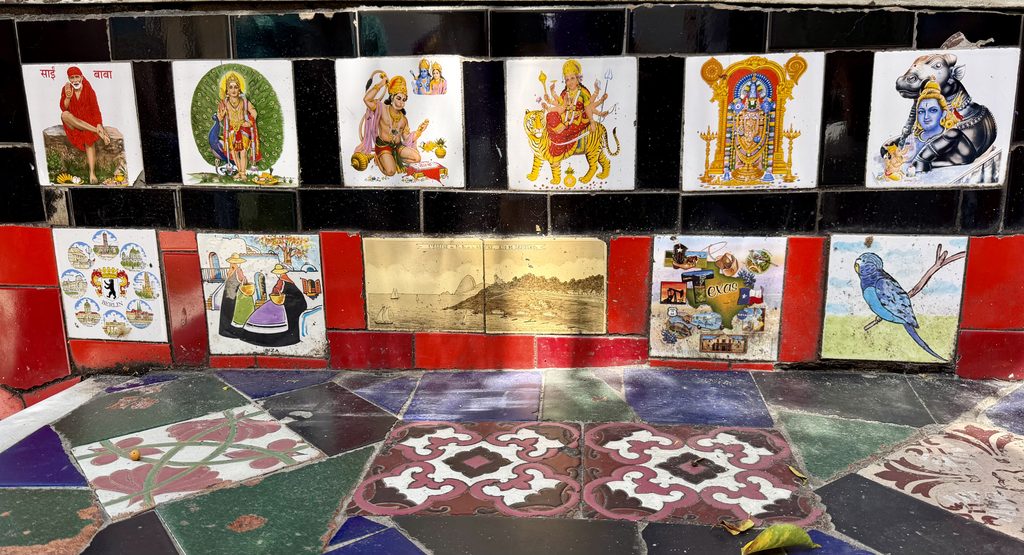
At the very beginning of the Selarón Steps, we noticed colorful tiles depicting Hindu deities, including Lord Ganesha, Shiva, and Vishnu. It was a special surprise to see these familiar Indian religious figures among the thousands of colorful tiles decorating the staircase.
The Selarón Steps have also gained international recognition after appearing in music videos and media productions. This unique attraction is free to visit, but it is almost always crowded with visitors. At times, the crowds are so dense that you can barely see the colorful staircase. We walked a little farther up the staircase to find a less crowded spot where we could take a picture.
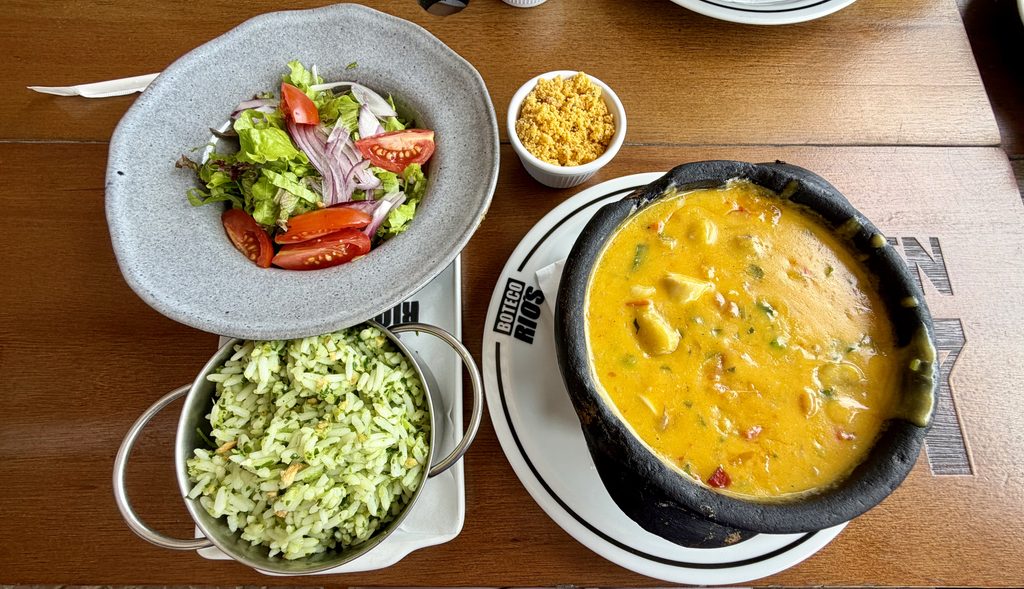
Lunch at Boteco Rio’s – We stopped here for lunch, where our guide recommended trying their vegetarian specialty, Vegan Moqueca. This delicious Brazilian-inspired dish featured banana, hearts of palm, coconut milk, and spices, served with broccoli rice and a fresh mixed green salad. It turned out to be the most delicious and satisfying meal of our entire 10-day trip to Brazil.
Largo da Carioca (Carioca Square) – Located in the heart of downtown Rio de Janeiro, Largo da Carioca is one of the city’s busiest public spaces, bustling with commuters, shoppers, and street vendors. Its name is linked to the Carioca Aqueduct, built in the 18th century to bring fresh water from the hills of Santa Teresa into the colonial city. The aqueduct’s famous arches can still be seen in the Lapa neighborhood.
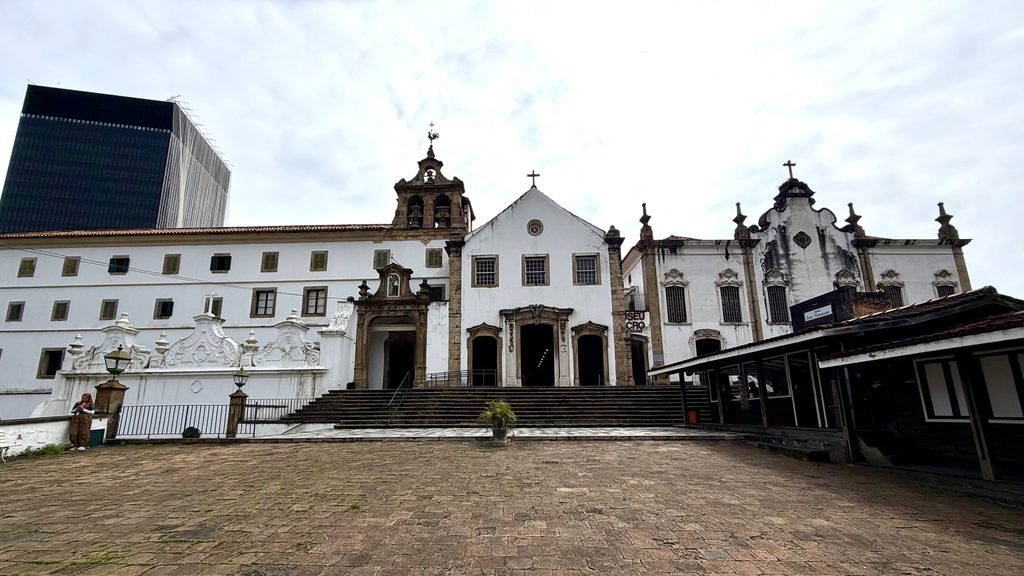
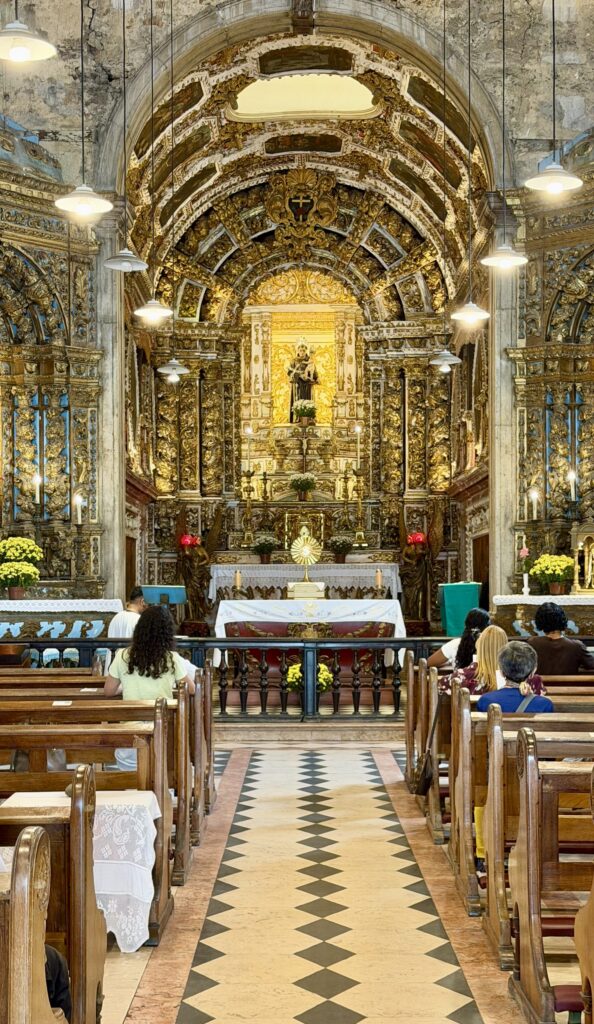
The square also has a long history connected to the Convent of Saint Anthony, built between 1608 and 1620 on a hill overlooking a lagoon that was later drained to create the open plaza. The convent still stands above the square and is known for its richly decorated Baroque interior, featuring elaborate gilded carvings. Today, with a major metro station beneath it and a constant stream of pedestrians passing through, Largo da Carioca remains an important transportation hub and a lively gathering place in central Rio.
Cinelândia (Praça Floriano Peixoto) – Located in downtown Rio de Janeiro, Cinelândia is a major public square officially named after Floriano Peixoto, Brazil’s second president. The area was transformed in the early 20th century as part of a major urban renewal project inspired by the grand boulevards of Paris. The square is surrounded by impressive historic buildings, including the Municipal Theatre, the National Library, the National Museum of Fine Arts, and Pedro Ernesto Palace. A monument honoring Marshal Floriano Peixoto stands at the center of the square.
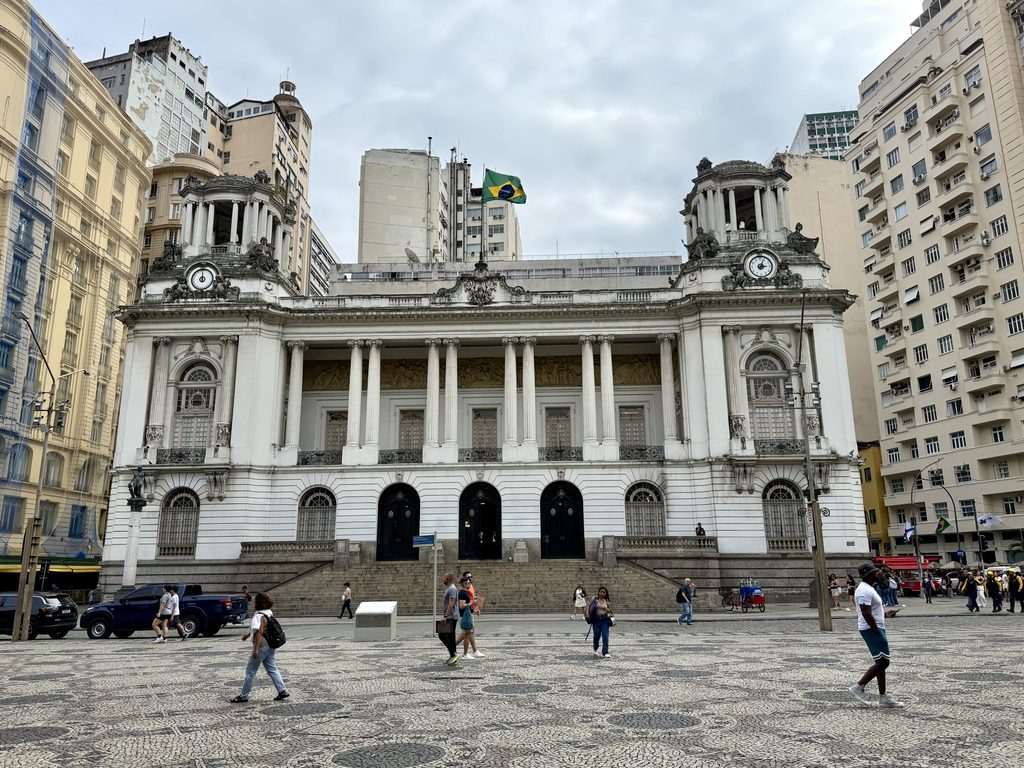
- Pedro Ernesto Palace (Palácio Pedro Ernesto) – Overlooking Praça Floriano, Pedro Ernesto Palace has housed the Municipal Chamber of Rio de Janeiro since its inauguration in 1923. Its construction was so expensive that historian Brasil Gerson nicknamed it the Golden Cage, as its cost exceeded twice that of the nearby Municipal Theatre. Today, the grand building remains an important center of local government.
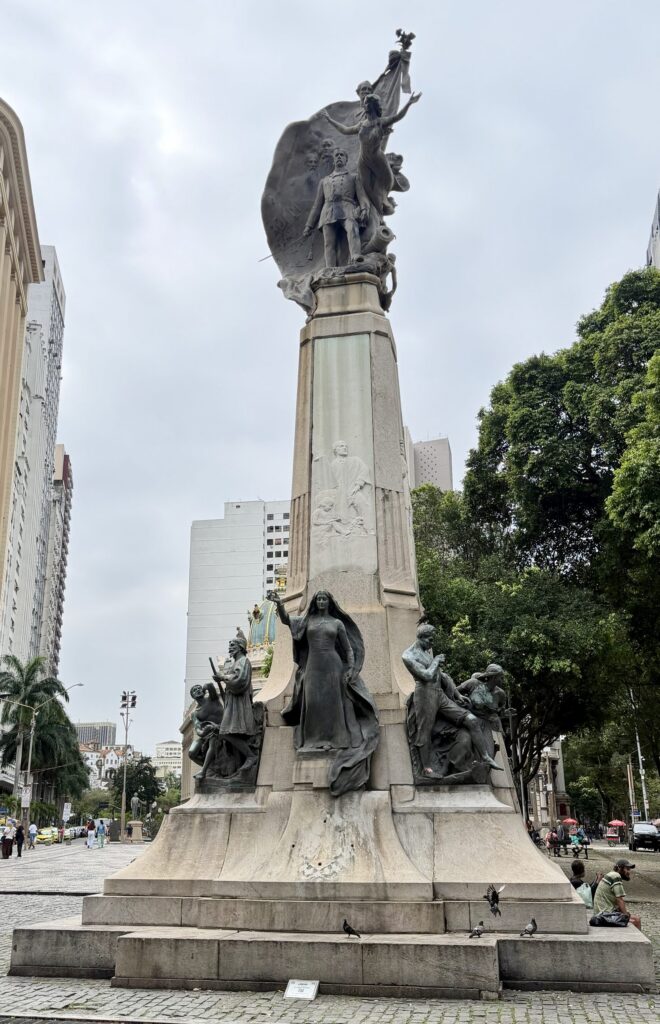
- Monument to Marshal Floriano Peixoto – Located in Praça Floriano, this imposing monument honors Marshal Floriano Peixoto, Brazil’s second president, who served from 1891 to 1894 and was nicknamed the Iron Marshal. Inaugurated on April 21, 1910, the monument was constructed in Paris. Standing approximately 17 meters tall, including its granite column, the monument features a bronze statue of Floriano Peixoto in a commanding military pose, holding a sword and draped in the national flag.
—————————————–
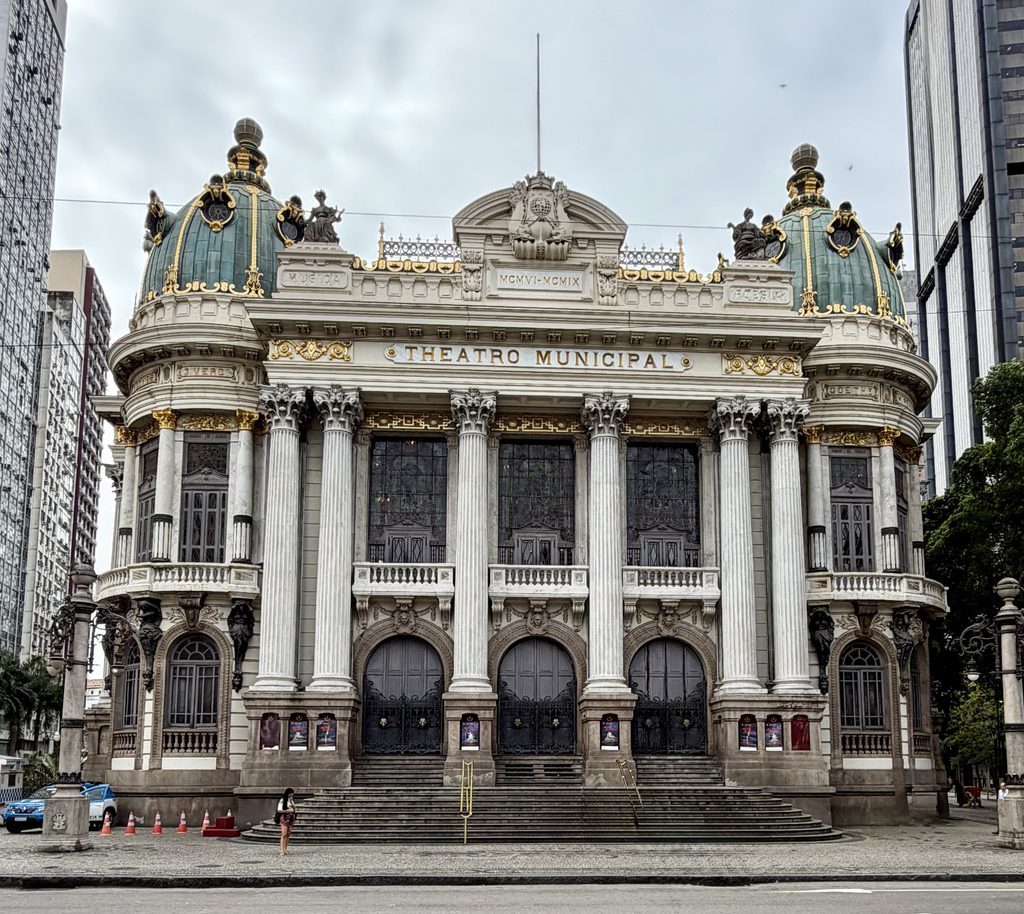
Theatro Municipal (Municipal Theatre of Rio de Janeiro) – One end of Praça Floriano Peixoto is occupied by this beautiful theater, renowned for its grand architecture and rich cultural heritage. Inaugurated in 1909, the building was designed in an eclectic style inspired by the famous Palais Garnier opera house in Paris and became a symbol of Rio de Janeiro’s modernization in the early 20th century. Its impressive exterior features ornate sculptures and inscriptions honoring celebrated Brazilian and European artists, while its interior showcases lavish decorations, stained-glass windows, mosaics, and elaborate artwork by leading artists of the time. Today, the theater can seat more than 2,300 people and is a leading venue for opera, ballet, and classical music performances in Brazil.
—————————————–
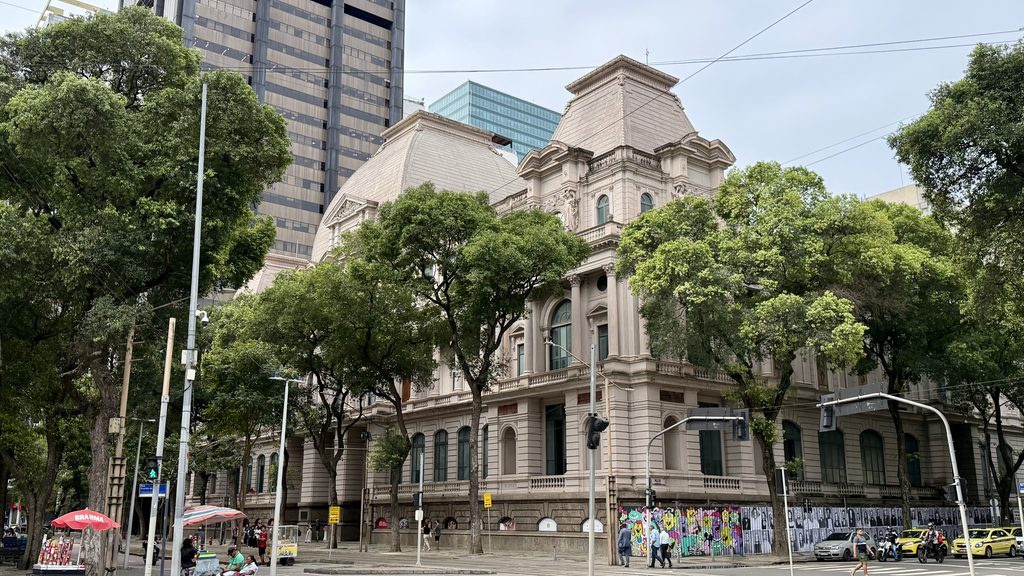
Museu Nacional de Belas Artes (National Museum of Fine Arts) – Located near Cinelândia, the National Museum of Fine Arts is renowned for its extensive collection of Brazilian paintings and sculptures from the 19th century. Although it was inaugurated in 1938, the museum’s collection dates back to 1808, when King João VI brought artworks from Portugal to Brazil following the arrival of the Portuguese royal court. Housed in an impressive eclectic-style building completed in 1908, the museum features architectural influences from the French Renaissance and Italian Renaissance, with ornate façades, sculptures, and decorative details.
—————————————–
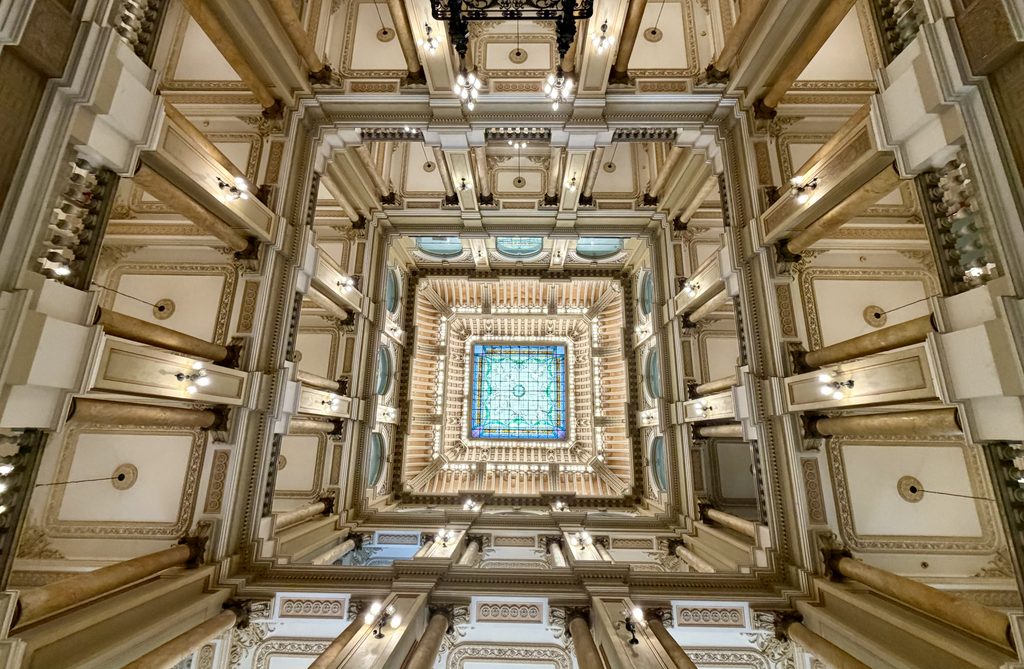
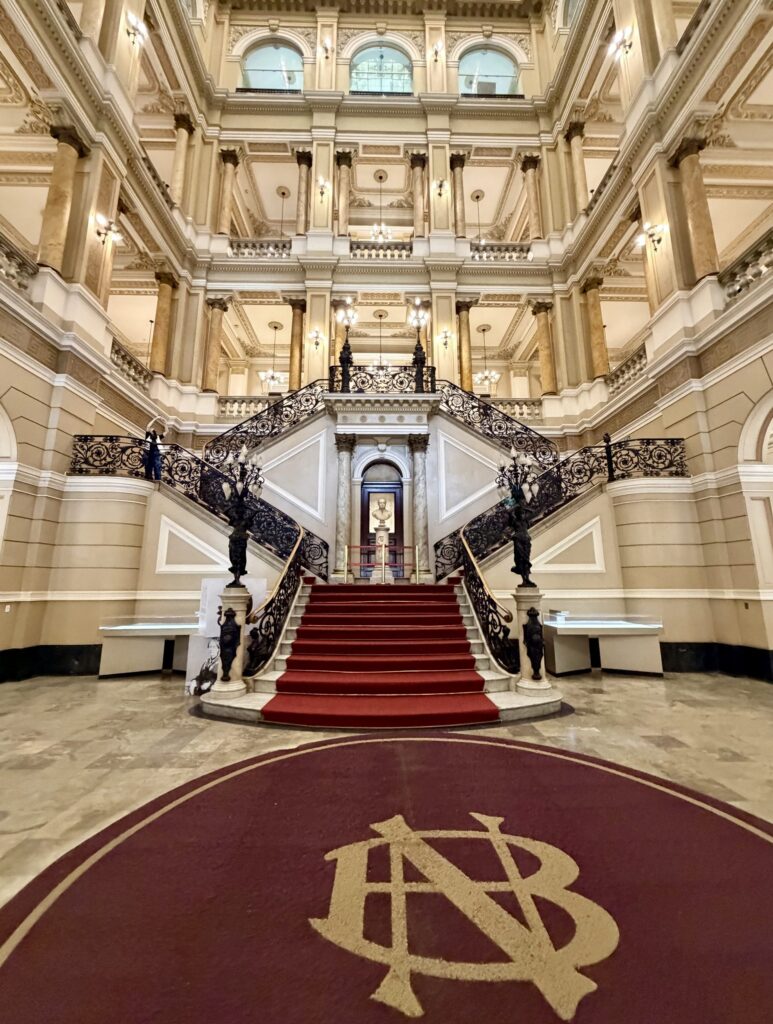
Biblioteca Nacional do Brasil (National Library of Brazil) – Located at one end of Praça Floriano Peixoto and opposite Pedro Ernesto Palace, the National Library of Brazil is the largest library in Latin America. Its history dates back to 1808, when the Portuguese royal court arrived in Brazil, bringing a collection of books and manuscripts from the Royal Library in Lisbon. Officially founded in 1810, the library moved to the present building in 1910 to accommodate its growing collection.
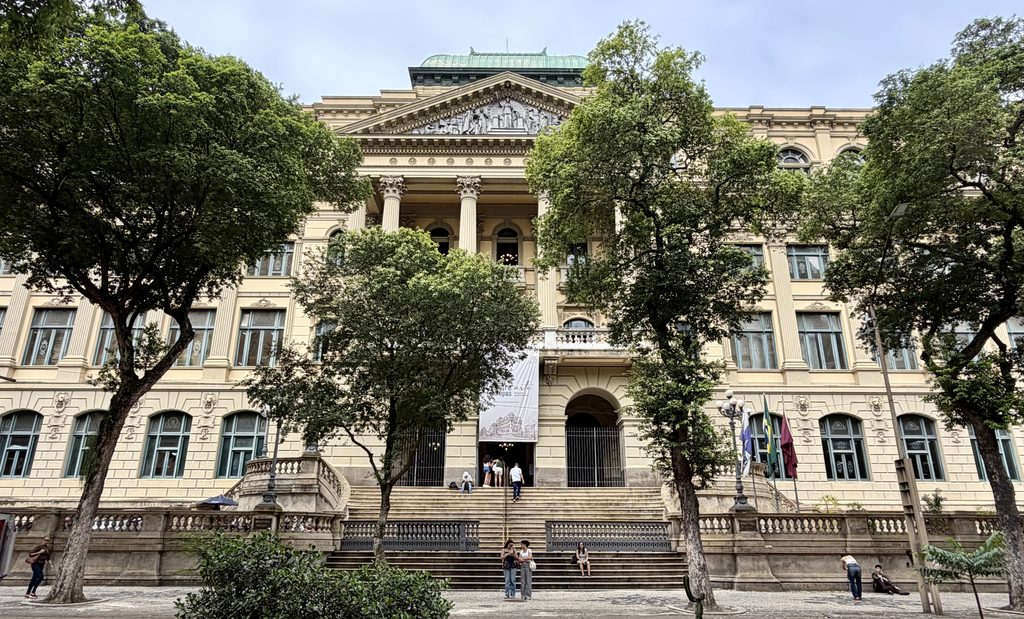
Today, the library preserves approximately nine million items, including books, manuscripts, photographs, maps, and other historical documents, safeguarding Brazil’s literary and documentary heritage. Together with the nearby National Museum of Fine Arts and Municipal Theatre, it forms part of Cinelândia’s remarkable architectural and cultural landscape.
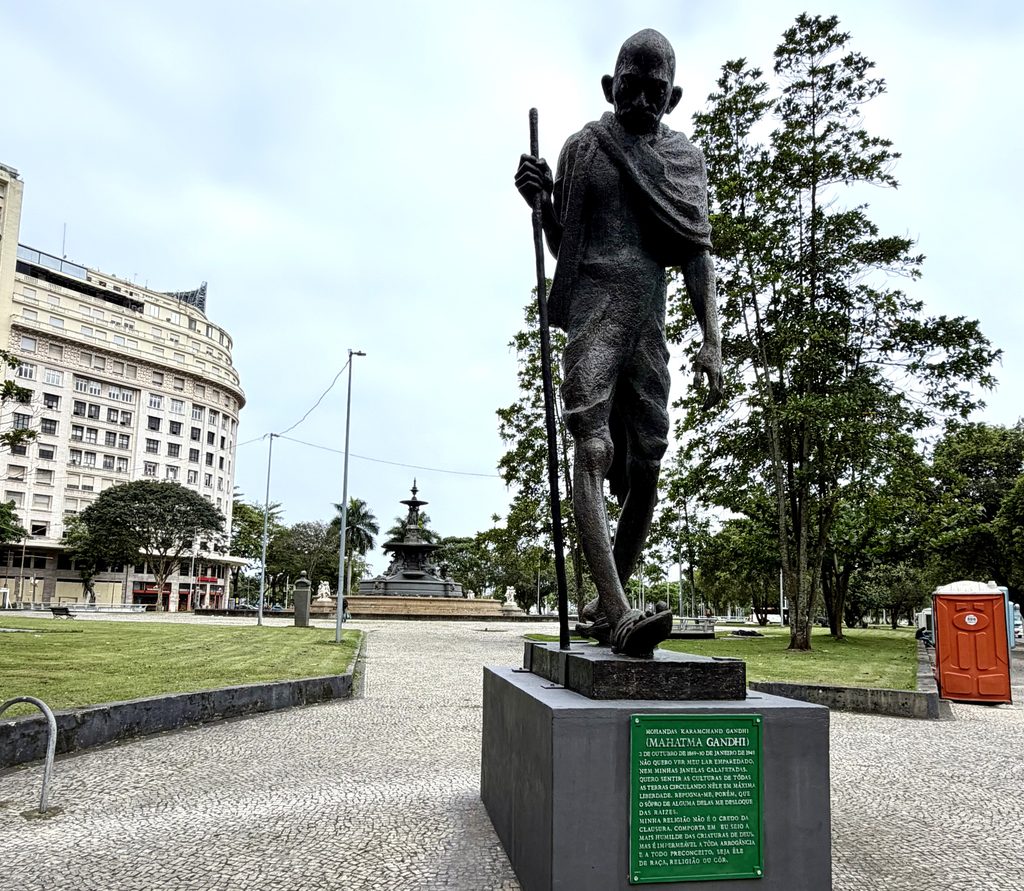
Praça Mahatma Gandhi – This square was within walking distance of Cinelândia and is named in honor of Mahatma Gandhi, the renowned Indian leader who championed nonviolence, peace, and tolerance. The square was officially named in 1948, and a bronze statue of Gandhi, a gift from India to Brazil, was unveiled there on August 14, 1969. The statue symbolizes the friendship between India and Brazil and reflects Gandhi’s enduring message of peace and mutual respect.
This was one of those unexpected places we discovered simply because it was conveniently located along our route. We had no idea this square existed, so stumbling upon it was a pleasant surprise during our exploration of Rio de Janeiro.
Santa Teresa Neighborhood – located on top of the Santa Teresa hill, the charming neighborhood developed in the 1750s around the Santa Teresa Convent, located on Morro do Desterro. It is one of the few neighborhoods to resist development in order to retain its colonial charm and is famous for its winding, narrow streets and for being an artistic hotspot. We stopped by this picturesque neighborhood on our way to Mirante Dona Marta, pausing at a viewpoint to admire the scenery and appreciate some of the colorful street art along the way.
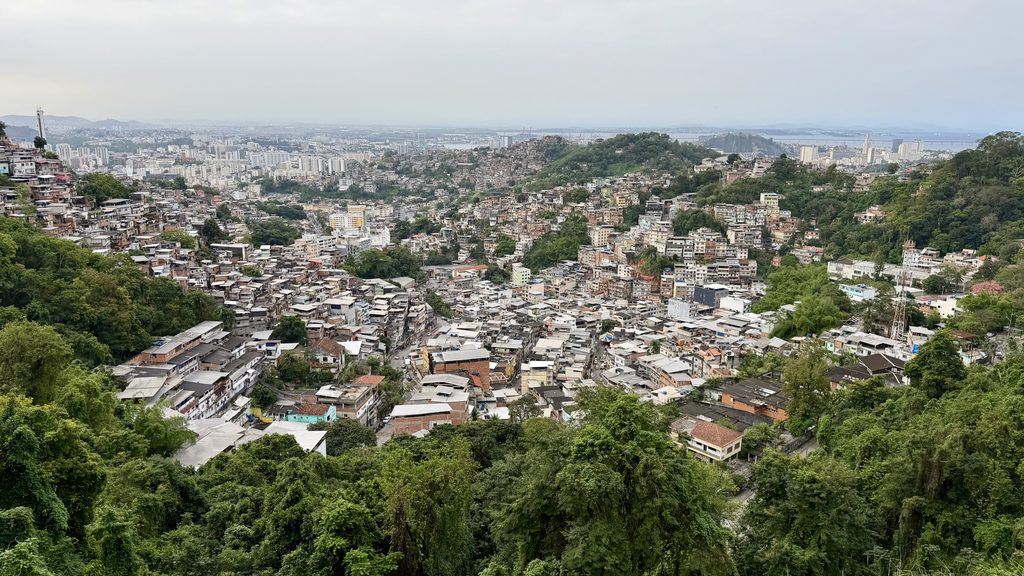
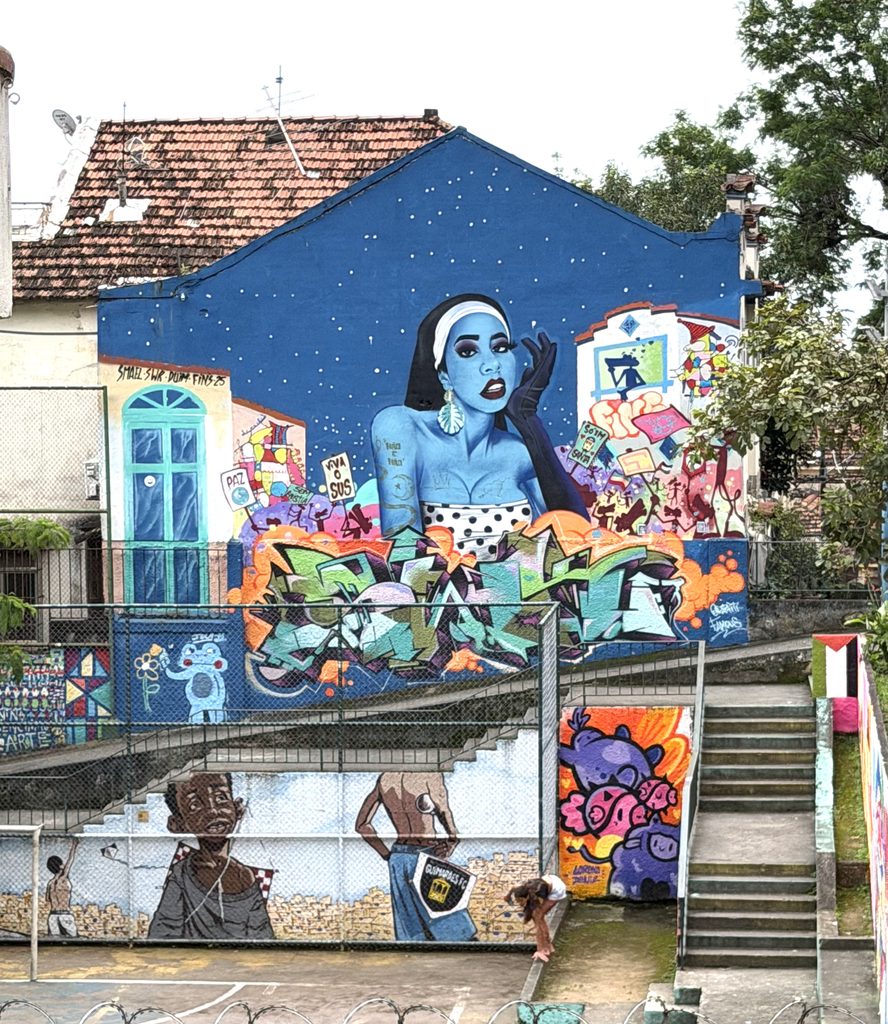
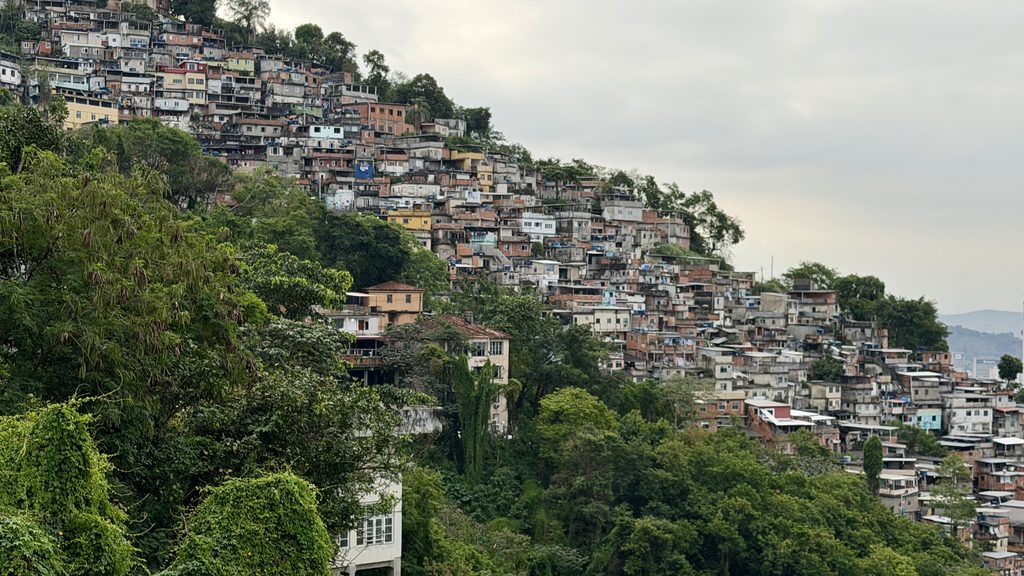
Morro dos Prazeres (Hill of Pleasures) – is a hillside favela (low-income community or informal hillside settlement) in the Santa Teresa neighborhood of Rio de Janeiro’s South Zone. Settlement began around 1940, and the community takes its name from the hill, which rises about 275 meters above sea level, and ultimately honors Mother Maria dos Prazeres, who once held religious services at its base, where a chapel stood. While driving through Santa Teresa, we stopped at a roadside viewpoint to admire the densely packed homes cascading down the lush green hillside, offering a glimpse of Rio’s distinctive urban landscape.
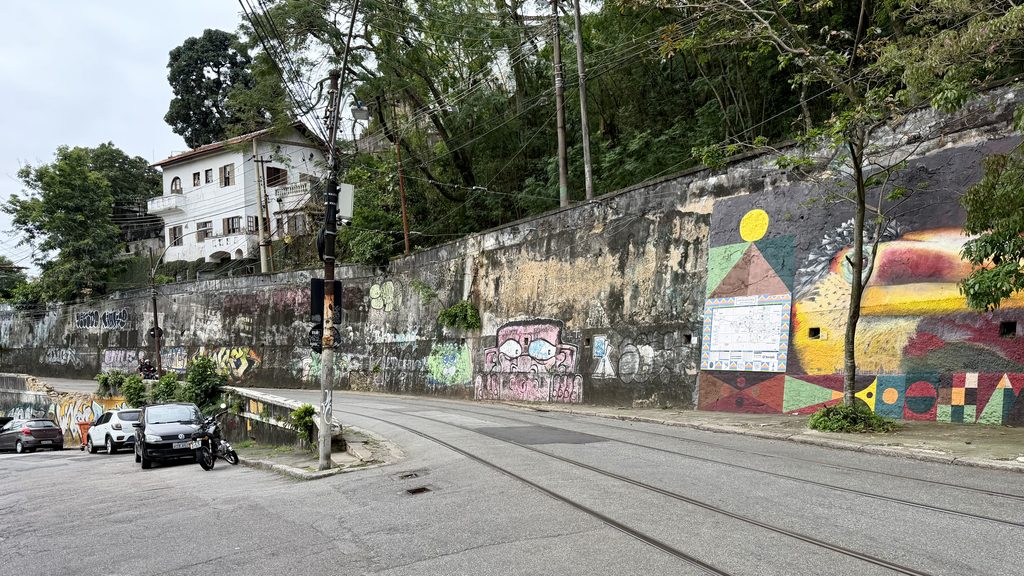
Santa Teresa Tram (Bondinho) – Rio de Janeiro’s last surviving historic streetcar line departs from downtown near Carioca Station and crosses the famous Arcos da Lapa aqueduct on its way to the charming Santa Teresa neighborhood. The tram offers a scenic ride through the historic area and is a memorable way to experience Rio’s past.
Note – You can also reach Santa Teresa neighborhood by climbing the 215 Escadaria Selarón (Selarón Steps).
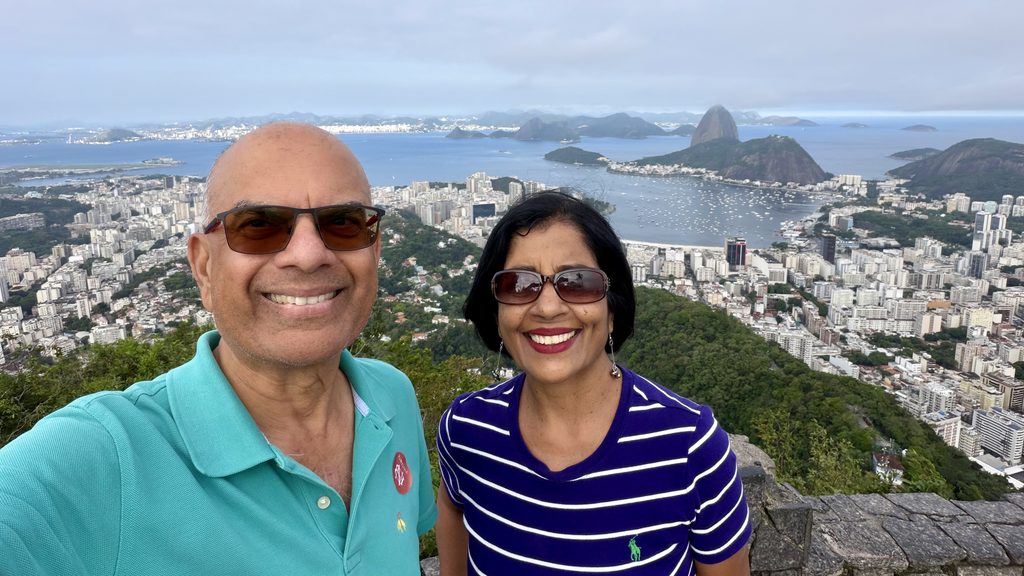
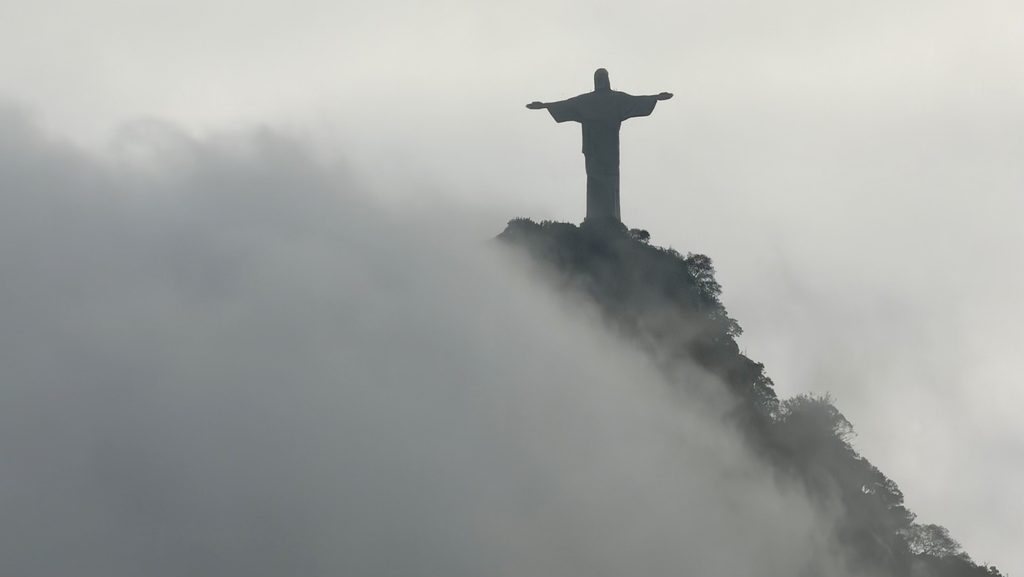
Mirante Dona Marta – offers spectacular panoramic views of the city and is free and easy to access by car or Uber. From the parking lot, it is just a short walk to the viewing platform, where the scenery unfolds in every direction. The highlight is the iconic view of Sugarloaf Mountain and Praia de Botafogo, framed by the beautiful waters of Guanabara Bay. You can also admire the northern districts of Rio and, by turning around, see the magnificent Christ the Redeemer statue standing atop Corcovado Mountain. Although the view from Dona Marta is similar to that from Christ the Redeemer, its lower elevation of approximately 360 meters (compared with 710 meters at the statue) offers a different perspective of the city.
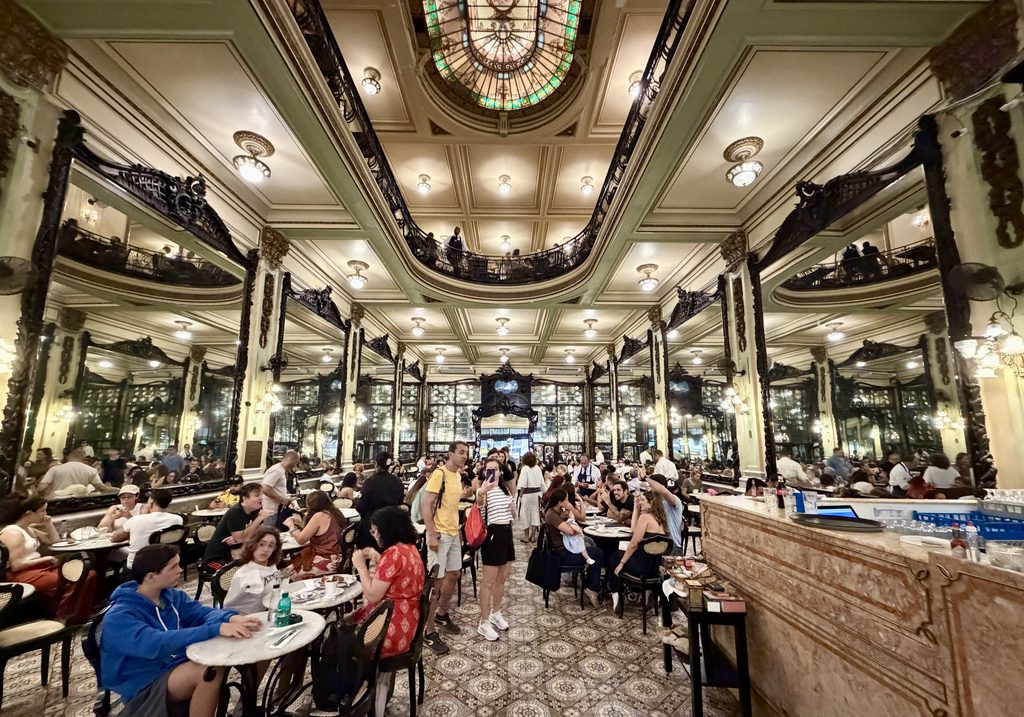
Tea at Confeitaria Colombo – Founded in 1894 by Portuguese immigrants, Confeitaria Colombo is one of Rio de Janeiro’s most beautiful and historic cafés. Expanded in 1922 with the addition of a second floor, the café became a popular gathering place for Brazil’s writers, artists, intellectuals, and political figures. We ended our day at this beautiful historic café, enjoying tea and cake in its elegant Belle Époque surroundings. With its magnificent crystal mirrors, ornate wooden furnishings, and stunning architecture, Confeitaria Colombo was the perfect place to relax after a day of exploring Rio de Janeiro.
On the last day of our stay in Rio de Janeiro, we had booked a six-hour guided tour of Sugarloaf Mountain and Christ the Redeemer through our hotel. We preferred the convenience of an organized tour rather than having to find the ticket counters and wait in long queues. We paid $110 USD per person for the entire excursion, which included all entrance fees, two cable car rides at Sugarloaf Mountain, and transportation by van up to Christ the Redeemer. It was a hassle-free way to visit two of Rio’s most iconic attractions and make the most of our final day in the city.
———————————
Sugarloaf Mountain – is an iconic, 396-meter granite peak that rises abruptly at the mouth of Guanabara Bay. It is world-renowned for its cable car system and the panoramic views of Rio and its beaches as well as Christ the Redeemer. It gets its name because its conical shape resembles the traditional clay molds used by Portuguese colonists to refine and transport sugar.
The Sugarloaf Cable Car (Bondinho) – Inaugurated in 1912, the Bondinho was the first cable car system in Brazil and remains one of Rio de Janeiro’s most iconic attractions. The scenic journey to the summit of Sugarloaf Mountain (Pão de Açúcar) takes place in two stages. Departing from Praia Vermelha, the first cable car ascends to Morro da Urca, a 220-meter-high hill offering beautiful views of the surrounding landscape. From there, a second cable car takes visitors to the summit of Sugarloaf Mountain for spectacular panoramic views of Rio, its beaches, and Guanabara Bay. Round-trip tickets can be purchased at the Praia Vermelha ticket counter or booked online in advance, with online ticket holders joining the queue at their scheduled time.
The first cable car ride to Morro da Urca, the lower hill, took about three minutes, and we had to disembark at this station. Morro da Urca has its own viewing platforms, shops, and restrooms, making it a pleasant place to stop and enjoy the scenery. You can explore the area before boarding the second cable car to Pão de Açúcar, or head straight to the next station and return to Morro da Urca later. We spent about 30 minutes here, taking in the spectacular views. Personally, I found the views from Morro da Urca even more impressive than those from the higher summit, making this first stop a highlight of our visit.
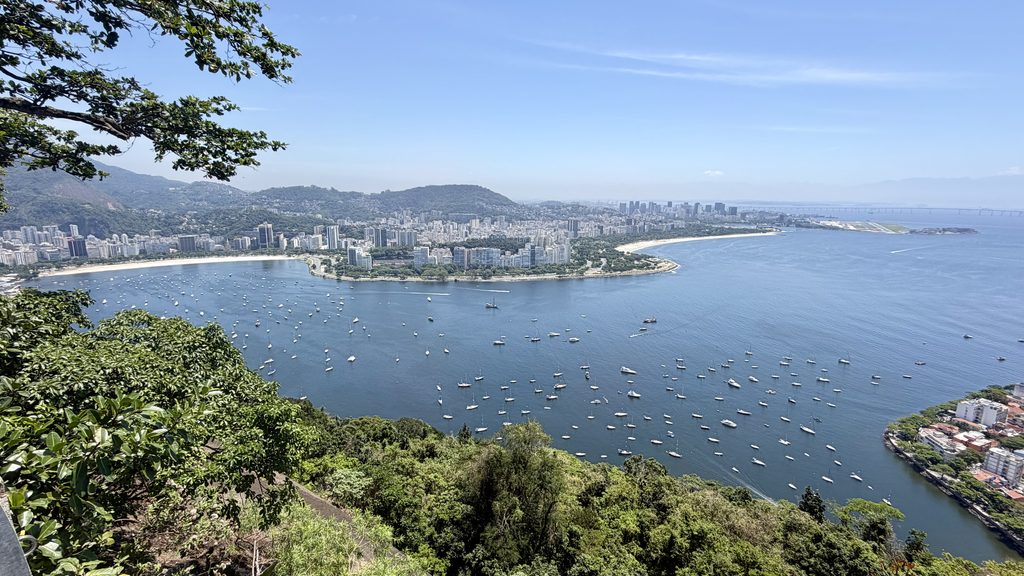
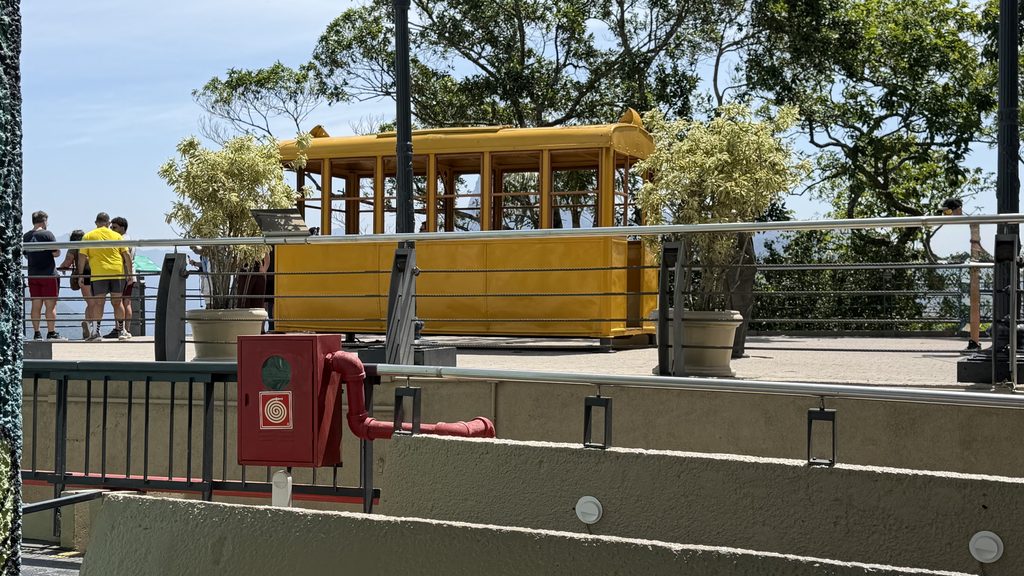
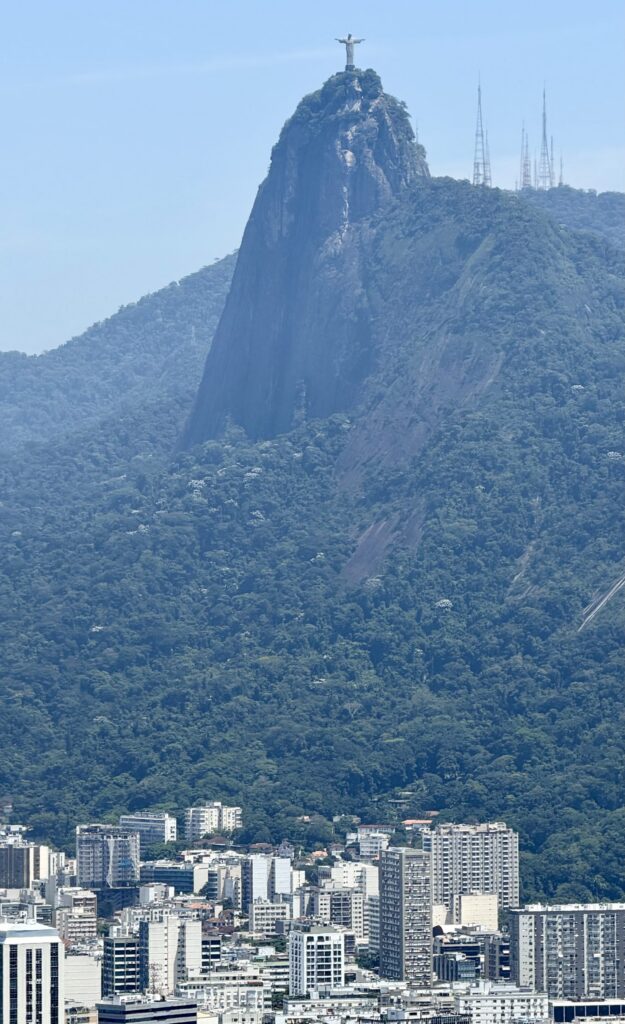
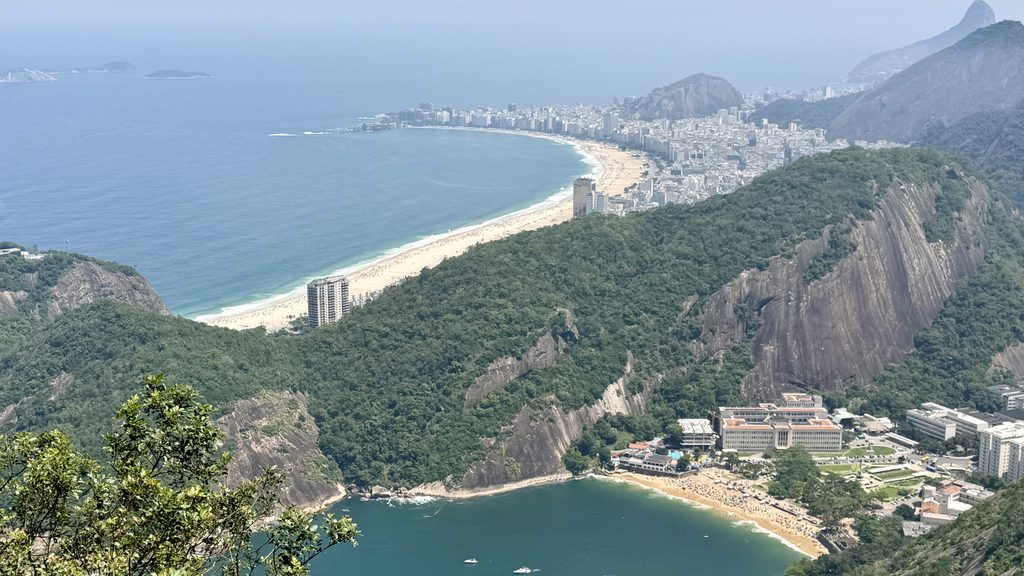
We then boarded the second cable car for the approximately five-minute ride to Pão de Açúcar (Sugarloaf Mountain), the higher summit. From the top, we could see Copacabana Beach along with sweeping views of Rio de Janeiro’s coastline. We spent about 20 minutes exploring the viewpoint and taking in the scenery. However, I found the views somewhat disappointing, as the numerous cables and wires around the viewing areas obstructed the otherwise beautiful panoramas and made it difficult to capture a clean picture.
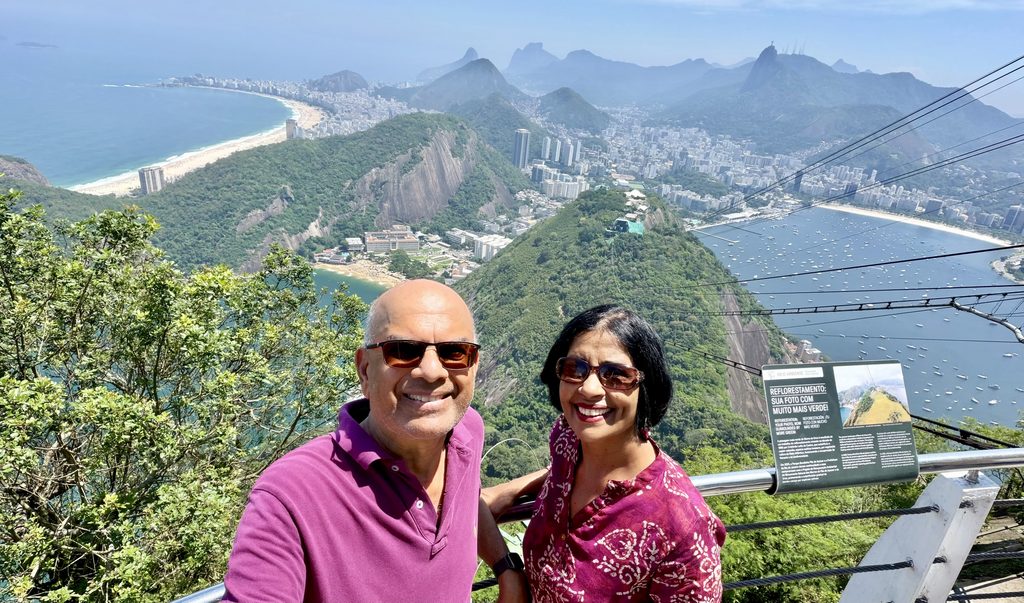
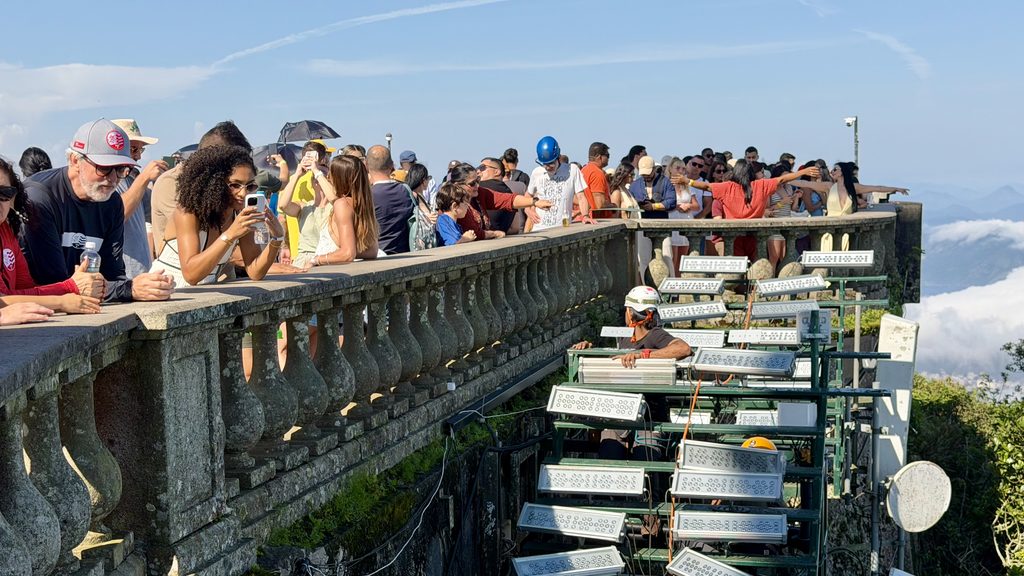
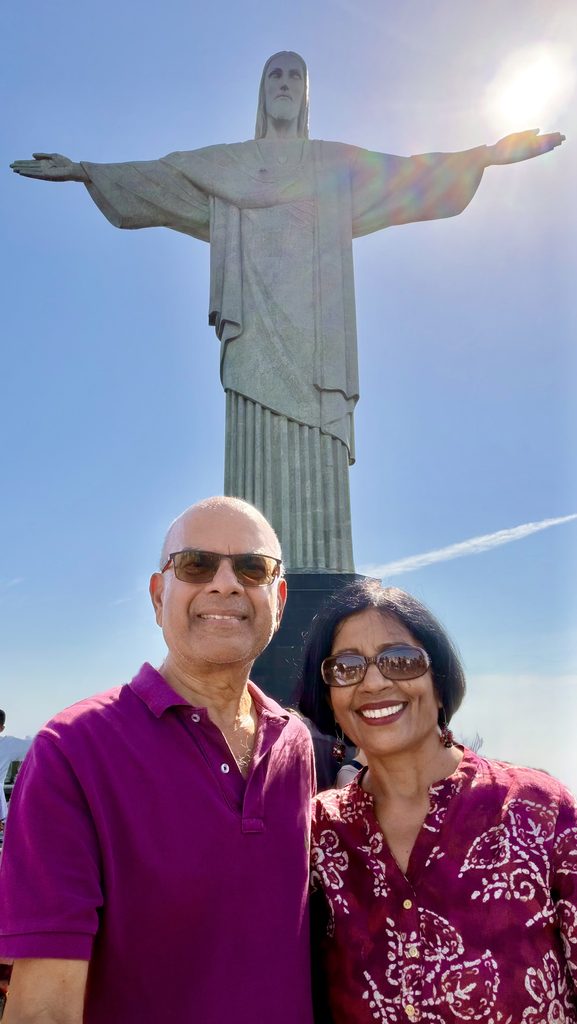
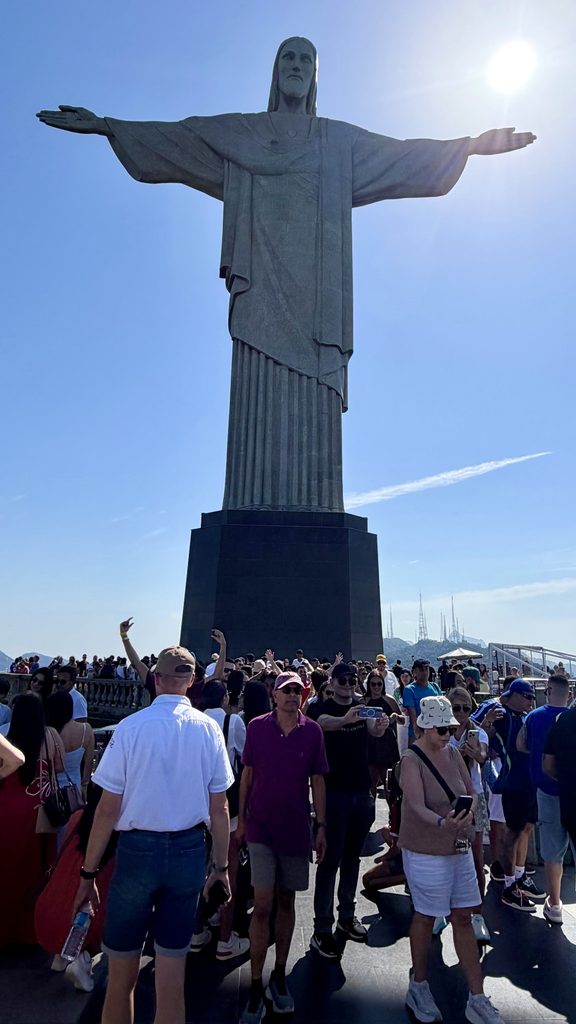
Christ the Redeemer – After visiting Sugarloaf Mountain, we were driven to the transfer point, where we boarded a van for the journey up to Christ the Redeemer atop Corcovado Mountain. As expected, the site was extremely crowded, with visitors gathered around the iconic statue and competing for the best photo opportunities. The small viewing area extending out in front of the statue was packed with people taking pictures and selfies, making it difficult to find a quiet spot to admire the monument and enjoy the panoramic views of Rio de Janeiro. Nevertheless, we went with the flow, joined the crowd, and eventually found a way to take a selfie with this world-famous landmark 🙂
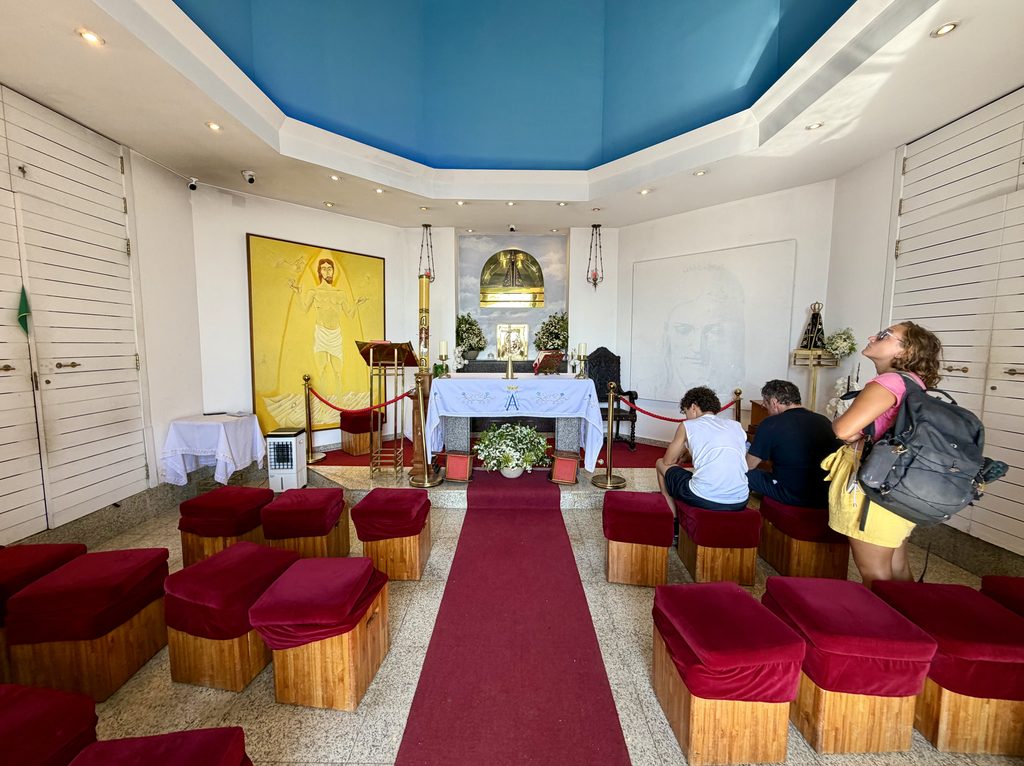
Chapel of Our Lady of Aparecida – Amid all the excitement of taking selfies and admiring the panoramic views, don’t forget to visit this small chapel tucked inside the stone pedestal at the base of Christ the Redeemer. Dedicated to Our Lady of Aparecida, the patron saint of Brazil, the chapel was inaugurated in October 2006 to mark the 75th anniversary of the iconic statue. Despite its modest size, it is a peaceful place of worship, featuring an octagonal layout, white walls, a marble floor, and a ceiling painted to resemble the blue sky.