3 nights in Park Tower, a Luxury Collection Hotel (Chase)
Buenos Aires is the capital and largest city of Argentina, located along the Río de la Plata. It is a fantastic vacation destination where one can enjoy tango dancing, explore historic neighborhoods, admire stunning architecture, visit museums, and experience the city’s lively nightlife. With its charming cafés, welcoming atmosphere, and blend of European and Latin American influences, Buenos Aires is a great place to visit and explore.
We spent three wonderful days in Buenos Aires in early October, when the weather was pleasant and the city felt less crowded with tourists. It was the perfect time to explore Argentina’s capital at a relaxed pace and enjoy its unique blend of European and Latin American culture. We found Buenos Aires relatively safe during our visit, perhaps because we mainly explored popular tourist attractions during the daytime. However, as in any major city, it is important to stay alert and take precautions against pickpocketing and theft. Here are a few practical safety tips based on our experience.
- Keep your belongings secure at restaurants. When dining out, keep your purse on your lap rather than hanging it on the back of your chair. Avoid leaving your phone on the table, as it can be snatched quickly.
- Avoid walking alone at night. If you are returning to your hotel late in the evening, consider taking a ride instead of walking alone, especially in unfamiliar areas.
- Use a reliable ride service. We recommend using Uber or another reputable ride-hailing service so you can check the driver’s details and vehicle information before getting in.
- Keep your bag in front of you. When walking through busy streets, crowded tourist areas, or riding a public transportation, carry your purse across the front of your body rather than at your side or behind you.
Our hotel was in the Retiro neighborhood, near Plaza General San Martín. We used a combination of walking and Uber to get around Buenos Aires, depending on the distance and how much exploring we planned to do.
- Plaza General San Martín
- Plaza Fuerza Aérea Argentina and the Monumental Tower
- Galetias Pacifico Shopping Mall
- Plaza de Mayo
- Casa Rosada
- Pirámide de Mayo
- Metropolitan Cathedral
- El Cabildo
- Banco de la Nación Argentina
- Saint Ignatius of Loyola Church
- Basílica y Convento de San Francisco de Asís
- San Telmo
- Convento Santo Domingo
- Estatua de Mafalda
- El Zanjón de Granados
- Mercado de San Telmo
- Plaza Dorego
- El Viejo Almacén – A Traditional Tango Experience
- Palacio Libertad, Domingo Faustino Sarmiento in Plaza del Correo
- Puerto Madero
- Costanera Sur Ecological Reserve
- Micaela Bastidas Park
- Alvear Tower
- La Boca
- Fundación Proa
- La Bombonera stadium
- Avenida 9 de Julio
- Obelisco de Buenos Aires
- Teatro Colón
- Plaza Lavalle
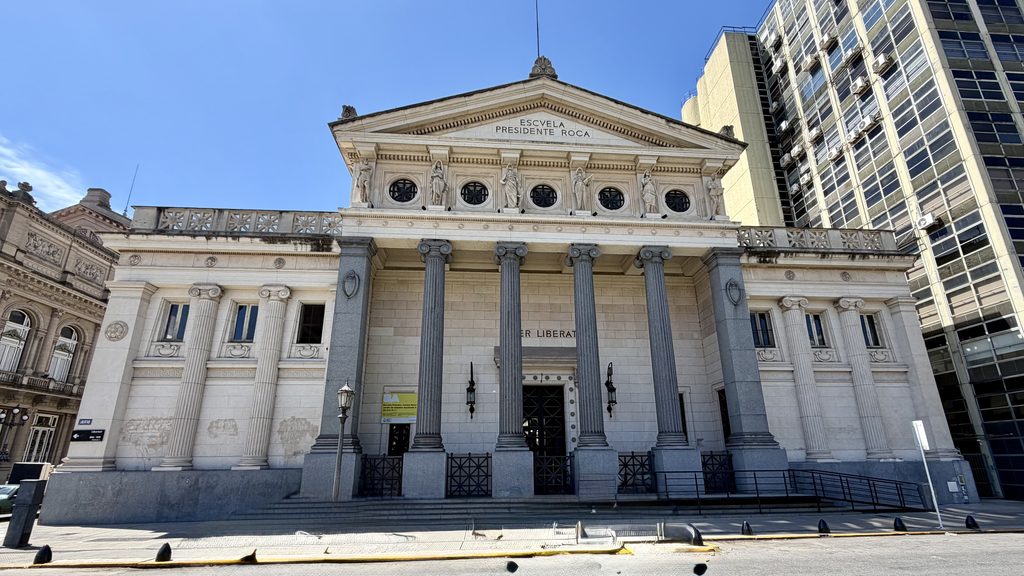
- Escuela Presidente Roca
- El Ateneo Grand Splendid
- Plaza Alvear
- Recoleta Cemetery
- Basílica Nuestra Señora del Pilar
- Avenida de Mayo
- Palacio Barolo
- Plaza del Congreso
- Palace of Argentine National Congress
- Plaza Francia
- Museo Nacional de Bellas Artes
- Puente Peatonal Figueroa Alcorta
- Floralis Genérica
- Palermo Neighborhood
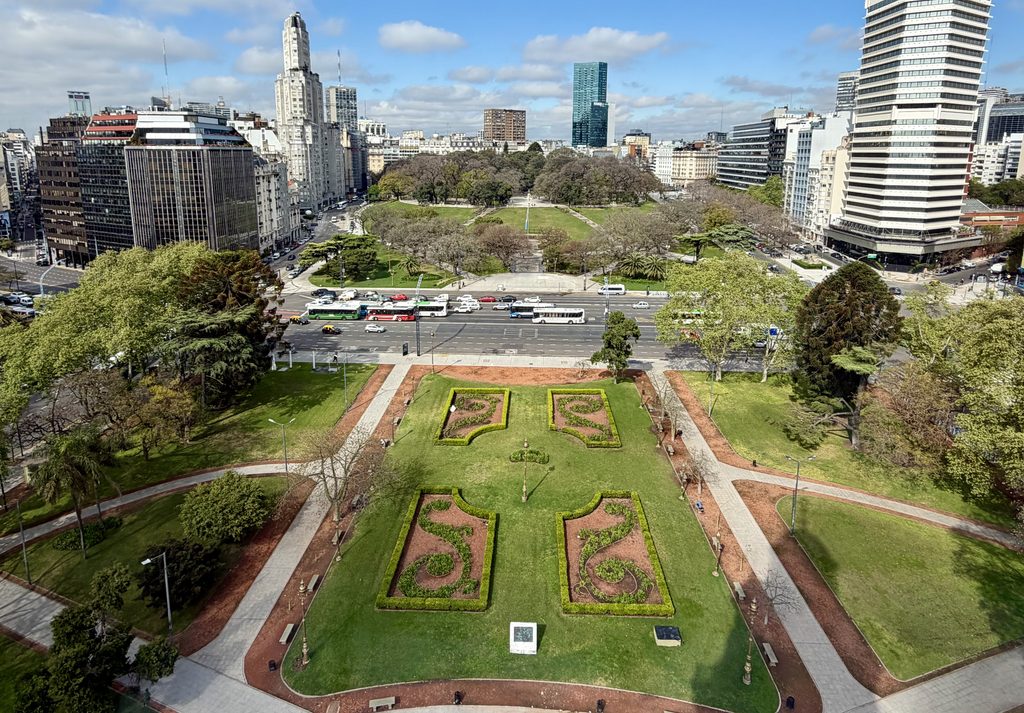
We started exploring the city by walking down to the two plazas in front of our hotel – Plaza General San Martín and Plaza Fuerza Aérea Argentina and the Monumental Tower
Plaza General San Martín – Located in the Retiro neighborhood, it was a hop, skip, and jump away from our hotel. This beautiful green park is a lovely place to relax and is named after General José de San Martín, one of Argentina’s most celebrated independence heroes, whose impressive equestrian statue stands at its center.
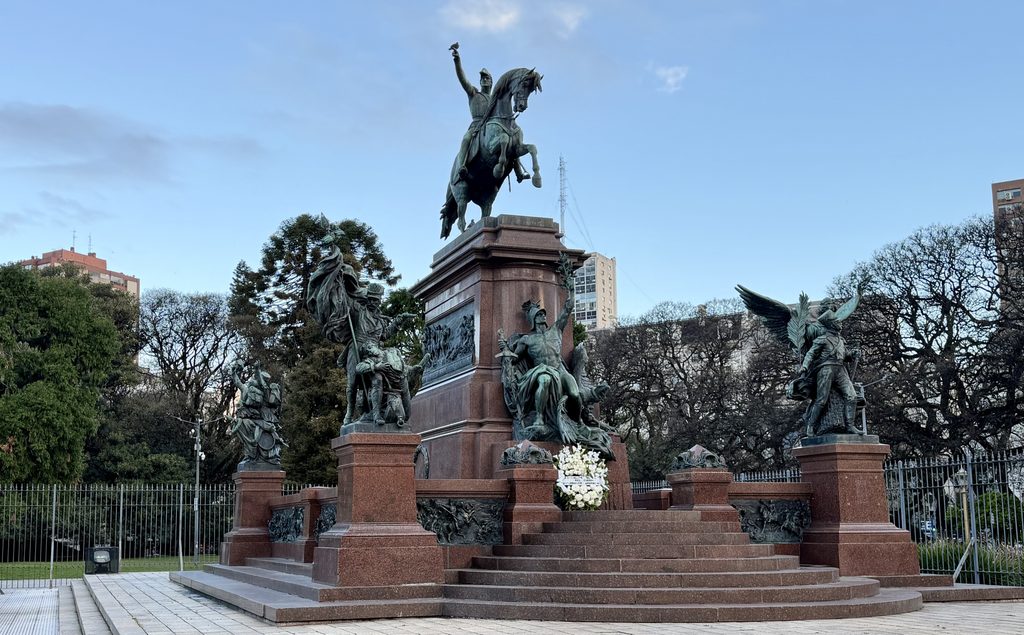
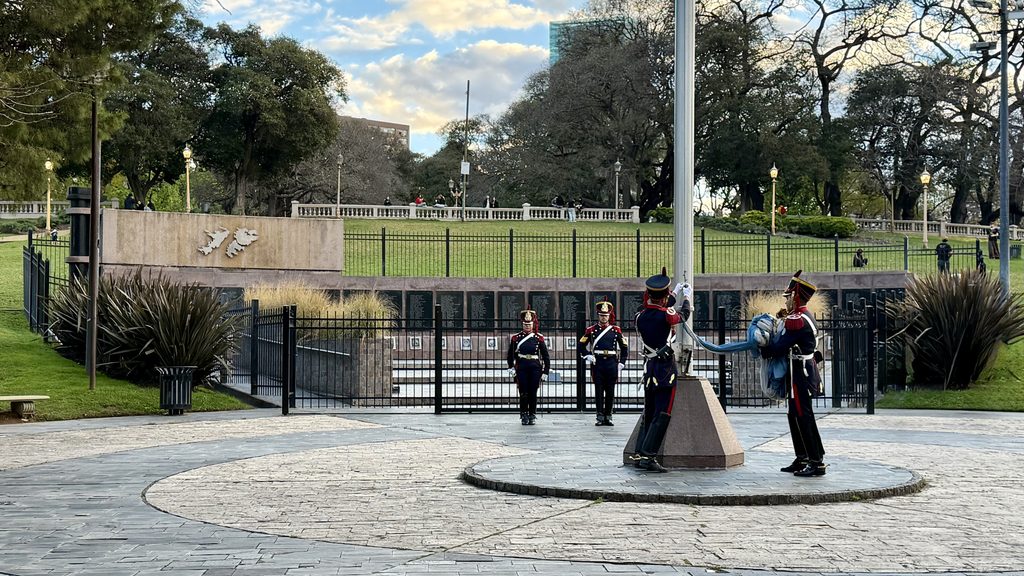
The park has a fascinating history, having once been the site of military barracks and other colonial-era structures before being transformed into a public green space in the late 19th century. Today, it features mature trees, landscaped gardens, and monuments, including Monumento a los caídos en Malvinas (Monument to the Fallen in the Falklands)
Plaza Fuerza Aérea Argentina and the Monumental Tower – We could see this lovely plaza right from our hotel room! The square is home to the Monumental Tower, formerly known as the English Tower. Standing about 75 meters tall, the tower was funded by the British community in Buenos Aires to commemorate the centenary of Argentina’s May Revolution in 1910, although it was not inaugurated until 1916. The square was originally called British Square and was renamed after the Falklands War in honor of the Argentine Air Force. Just across the road from the tower, stands the striking Retiro railway station, with its beautiful domed roof and impressive architecture.
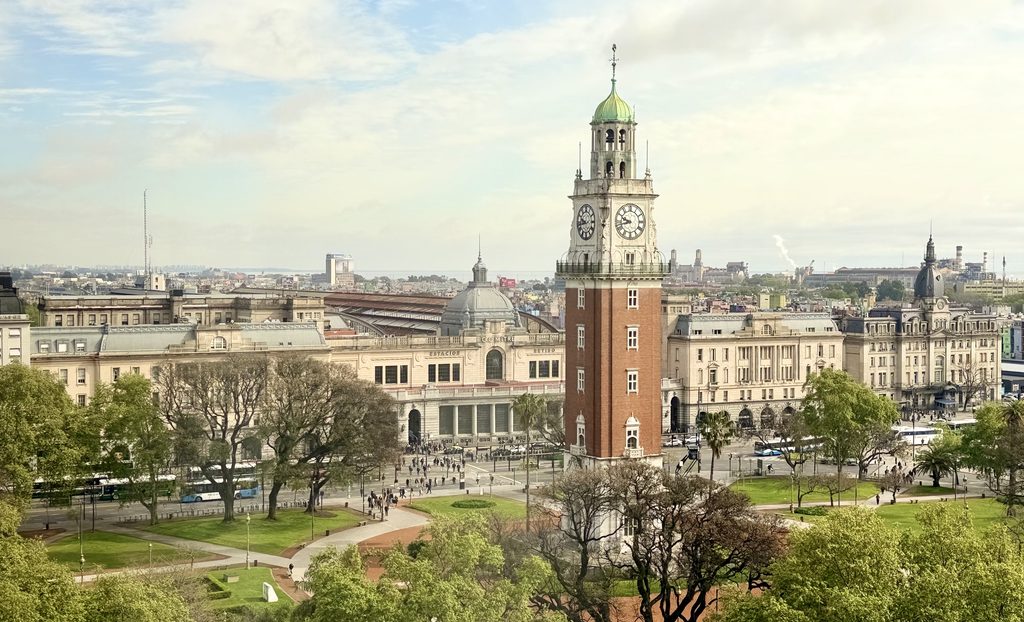
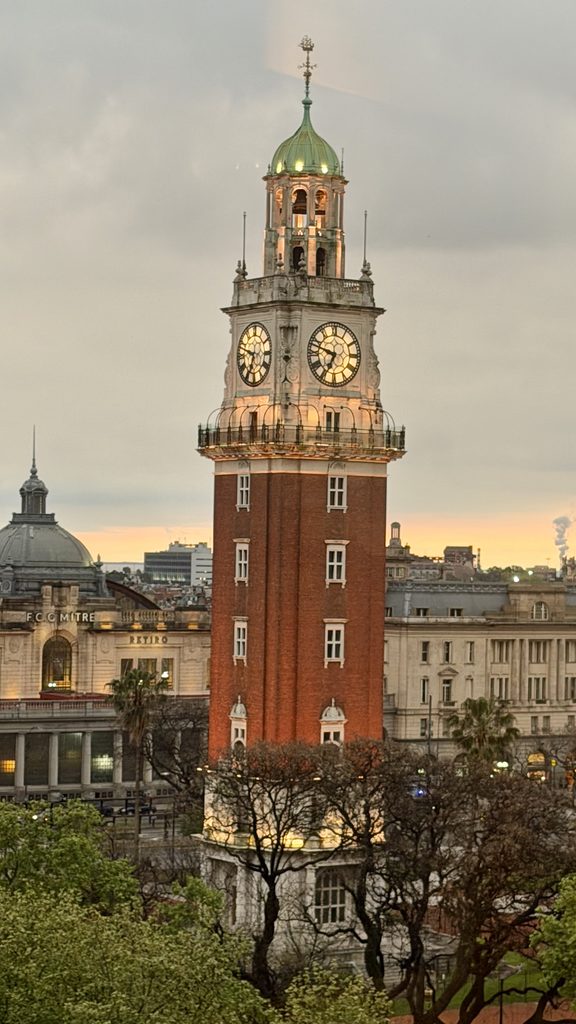
One of the highlights of our visit was climbing the tower for free! Wednesday was the designated day for free access when we visited, so we took advantage of the opportunity to enjoy the experience without paying an entrance fee. If you are planning a visit, it is worth checking the current opening hours and free-admission arrangements in advance, as these may change.
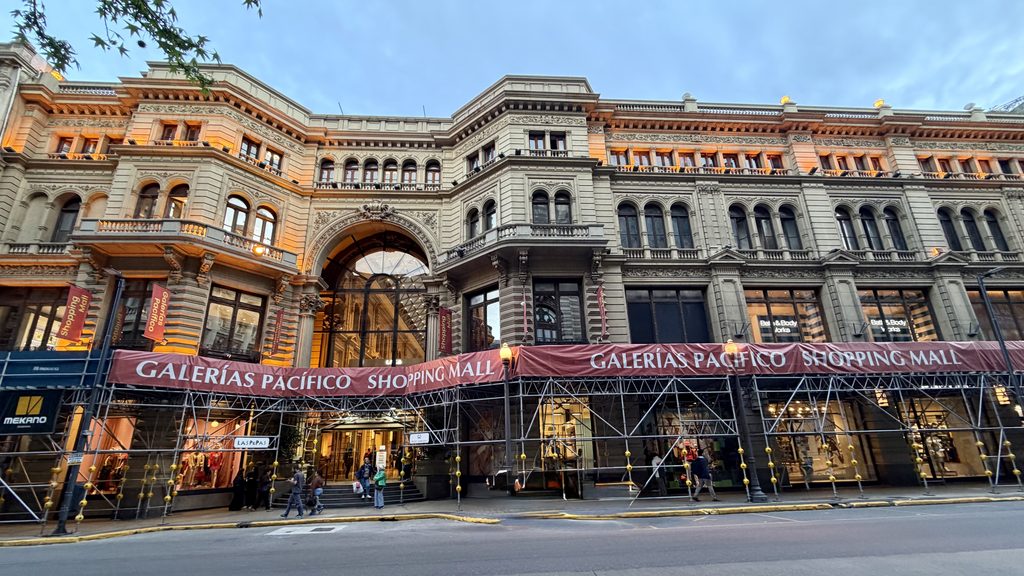
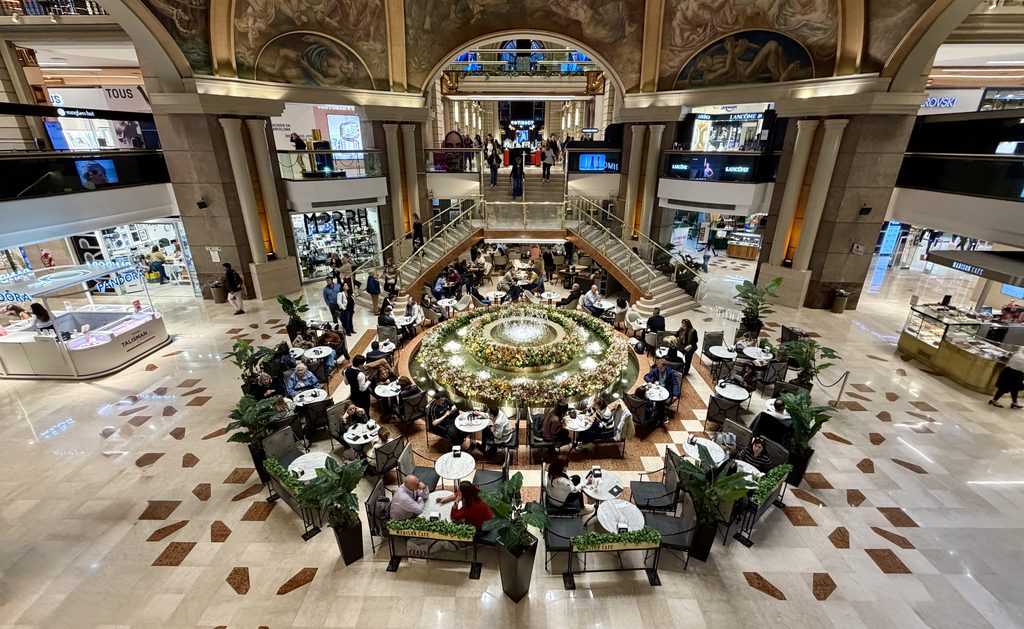
Galerías Pacífico – This famous shopping centre was also located within a short walking distance of our hotel. Housed in an elegant Beaux-Arts building designed in 1889 by architects Emilio Agrelo and Roland Le Vacher, it was originally intended to be a grand department store inspired by Paris’s Le Bon Marché. Today, Galerías Pacífico is known for its impressive architecture, beautiful interior murals, and wide selection of shops and restaurants. The building also holds a darker place in Argentina’s history, as an abandoned torture centre used during the country’s military dictatorship was discovered in its basement in 1987.
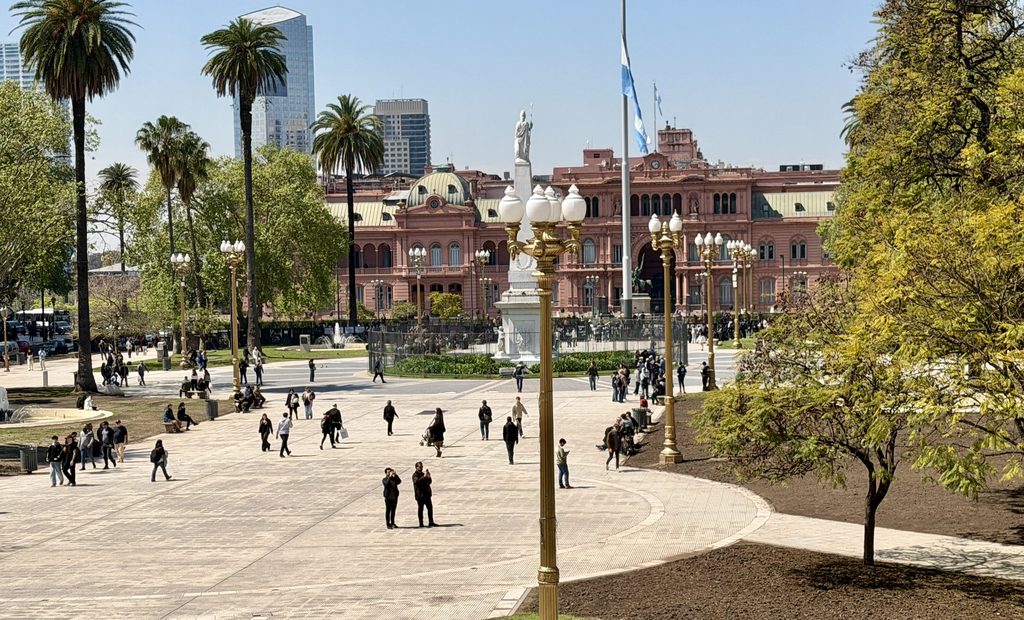
Plaza de Mayo – We took an Uber to this plaza which is the historic heart of Buenos Aires and one of the most important landmarks in Argentina. Established in its present form in 1884, the square has witnessed many defining moments in the country’s history and remains a popular gathering place for public celebrations and demonstrations. The square has a few landmarks.
——————————-
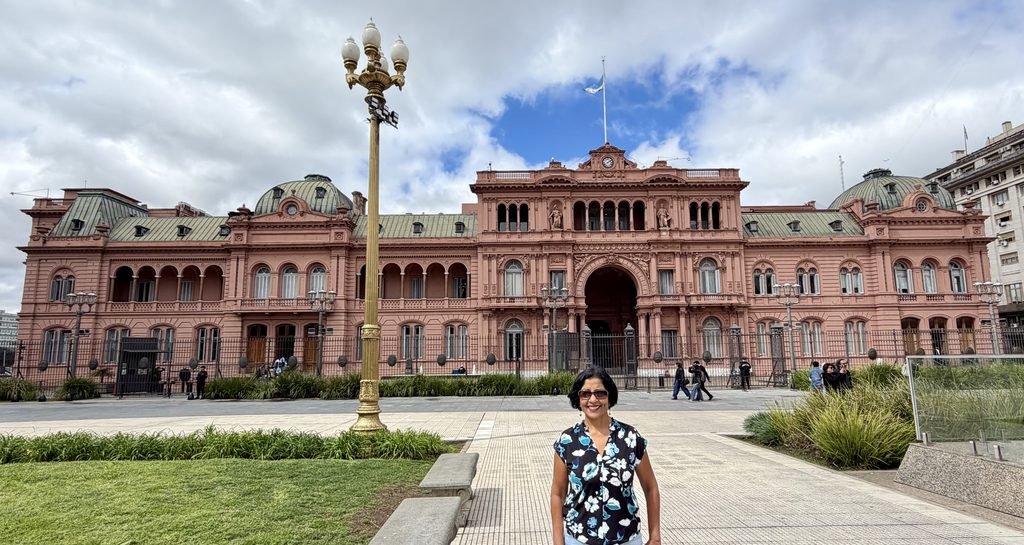
Casa Rosada – also known as the Pink House, is a historic and iconic presidential palace located at the eastern end of Plaza de Mayo in Buenos Aires. Its distinctive pink color symbolizes a blend of Argentina’s leading political parties. The palace has been witness to significant historical events, including speeches by Juan and Eva Peron from its balcony. There were no guided tours available during our visit.
——————————-
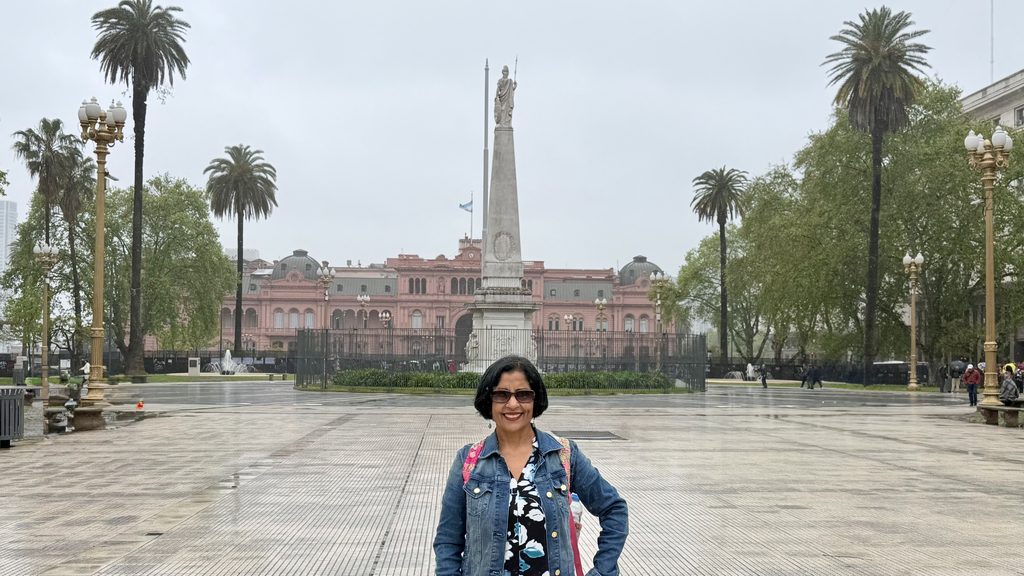
Pirámide de Mayo – or May Pyramid, is the oldest national monument in Buenos Aires, located in the center of Plaza de Mayo. It was built in 1811 to commemorate the first anniversary of the May Revolution, an important event that paved the way for Argentina’s independence from Spanish rule. At the top stands an allegorical statue of Liberty, symbolizing freedom and independence.
——————————-
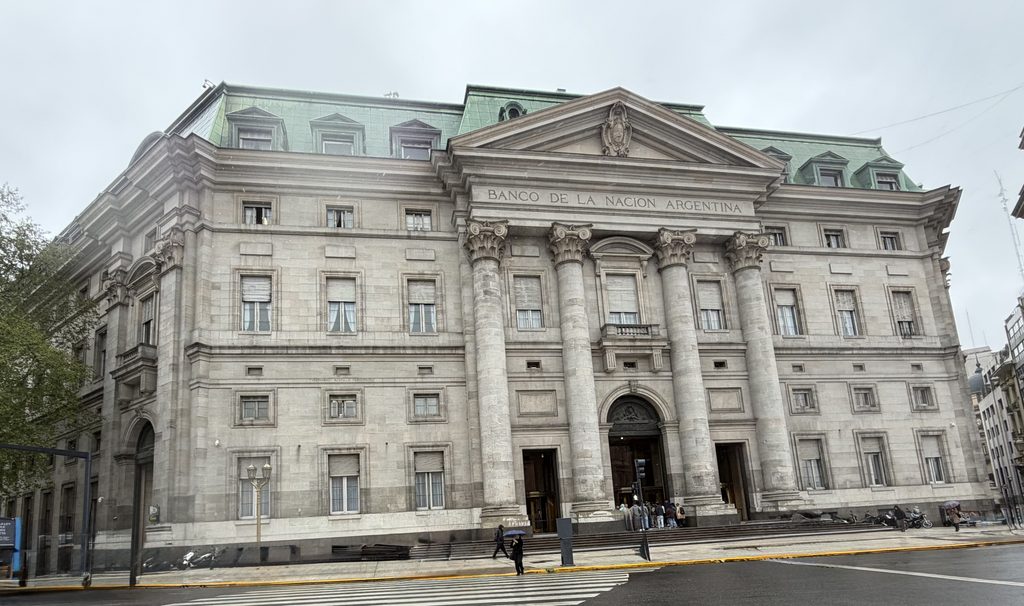
Banco de la Nación Argentina – A grand, monumental national bank headquarters located right across from the square, featuring an impressive dome and a numismatic museum.
——————————-
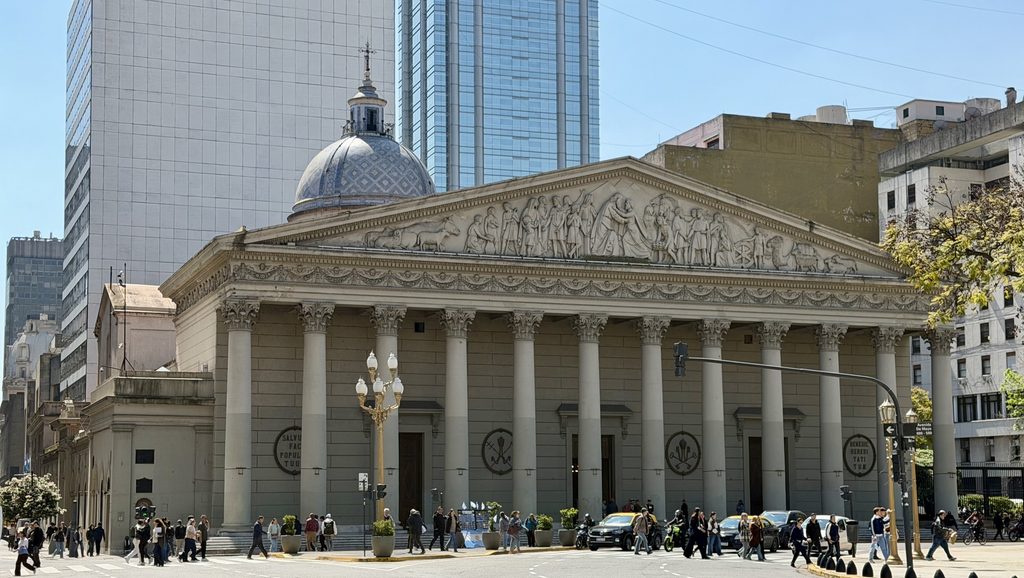
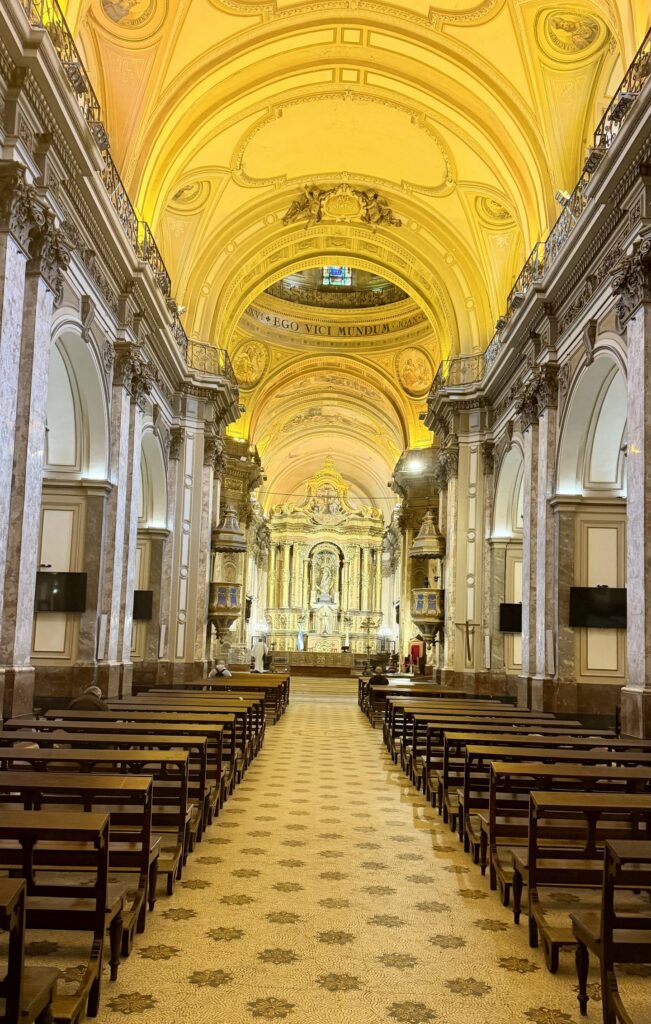
Metropolitan Cathedral of Buenos Aires – is another landmark located in Plaza de Mayo. Its history dates back to the founding of Buenos Aires in 1580, although the cathedral underwent numerous reconstructions before reaching its present form. The striking neoclassical façade, featuring twelve tall columns and a triangular pediment, resembles an ancient Greek temple, while the interior showcases beautiful religious artwork, ornate altarpieces, and intricate mosaics.
——————————-
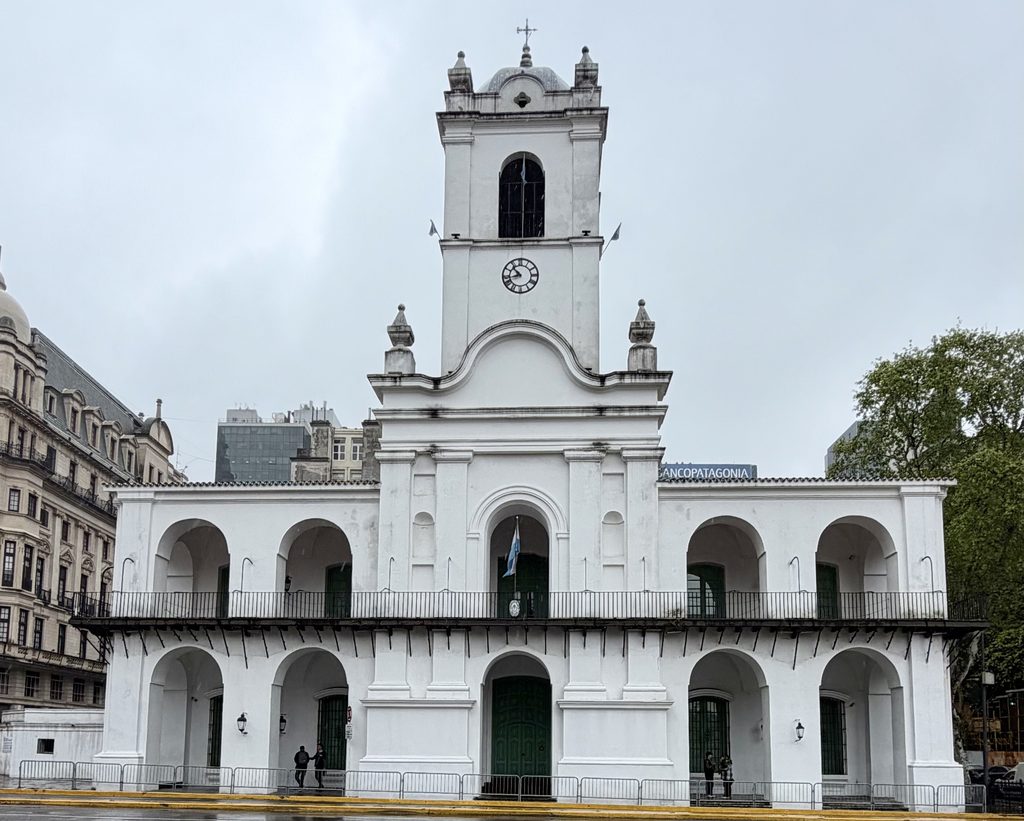
The Cabildo – This charming historic building stands opposite the Casa Rosada on Plaza de Mayo. Dating back to the colonial era, it once served as the city council’s headquarters and played an important role in Argentina’s struggle for independence. Today, it houses the National Museum of the Cabildo and the May Revolution, where visitors can discover Argentina’s history through exhibits of historical artifacts, paintings, clothing, and other fascinating objects. Admission to the museum is free, however, most of the exhibit descriptions are in Spanish, which may make it a little challenging to fully appreciate the displays if you don’t speak the language.
After exploring the historic buildings around Plaza de Mayo, we set off on foot along Defensa Street toward the San Telmo neighborhood. We took our time along the way, stopping at churches, historic buildings, and other attractions that caught our eye.
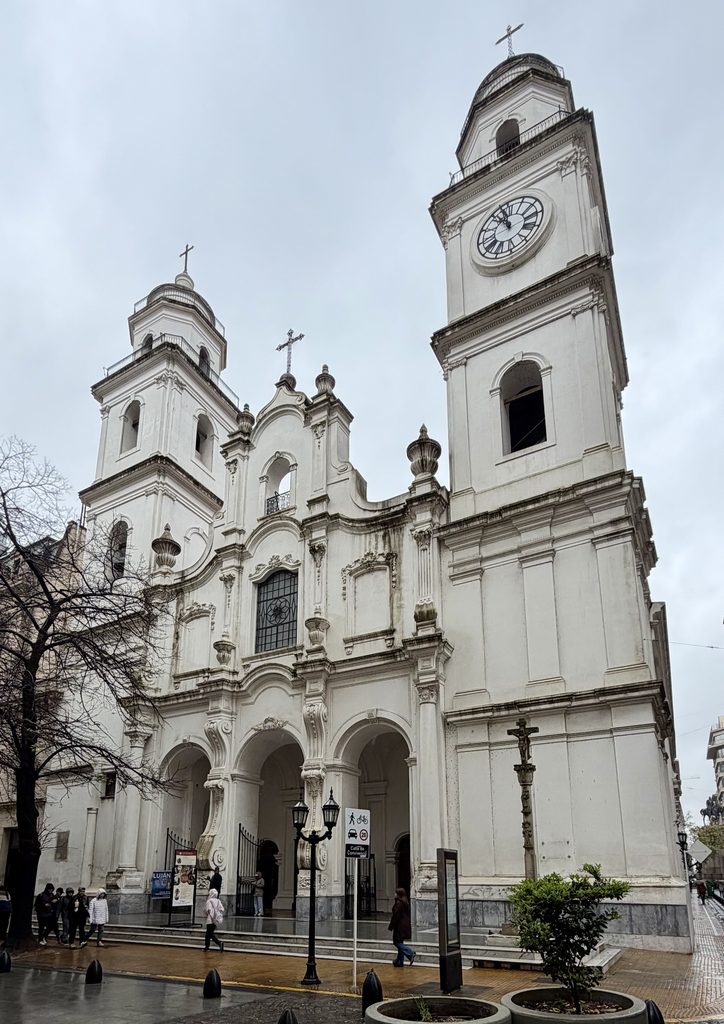
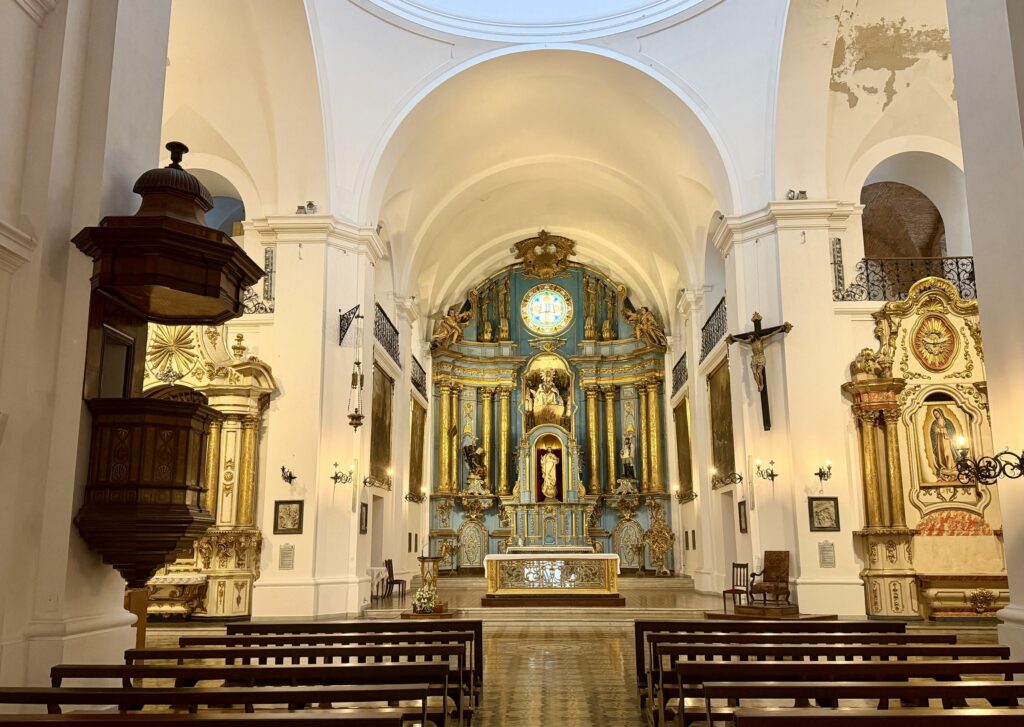
Church of Saint Ignatius of Loyola (Iglesia de San Ignacio de Loyola) – is the oldest preserved church in Buenos Aires. Built by the Jesuits, construction began in the late 17th century, with the present church completed in 1722 and consecrated in 1734. Its simple colonial façade and elegant interior reflect the city’s early Spanish heritage. Today, it remains an important place of worship and a key stop for visitors exploring the city’s colonial past.
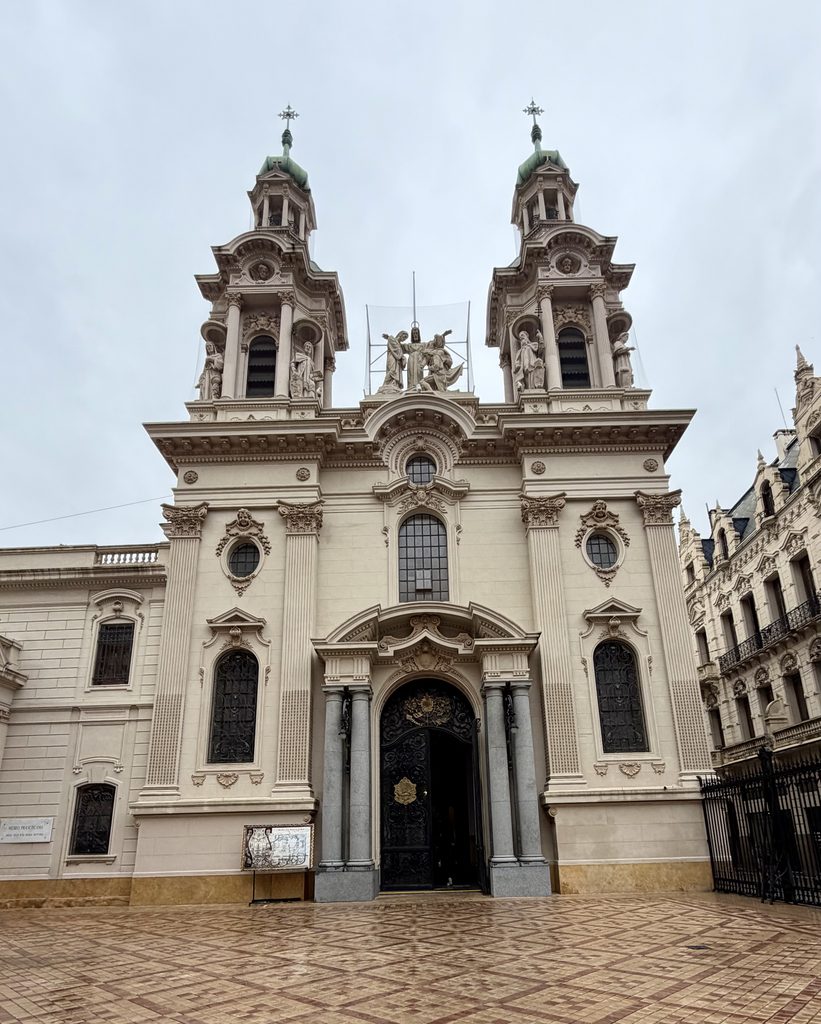
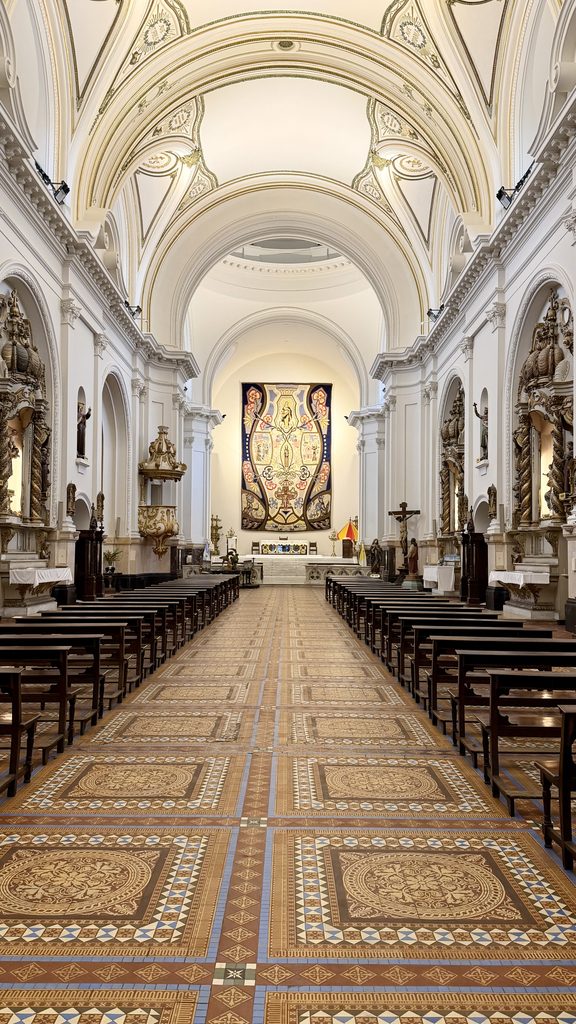
Basilica and Convent of Saint Francis of Assisi (Basílica de San Francisco de Asís) – As we continued our walk toward San Telmo, we stopped by this beautiful historic church in the Monserrat neighborhood. The Franciscans received the land in 1583, and construction of the present church began in the early 18th century. The basilica was inaugurated in 1754 and later underwent a major renovation between 1907 and 1911, giving its façade a distinctive Bavarian Baroque appearance. One of its most striking features is the sculptural group above the entrance, depicting Saint Francis of Assisi alongside Dante Alighieri, the Italian painter Giotto, and Christopher Columbus.
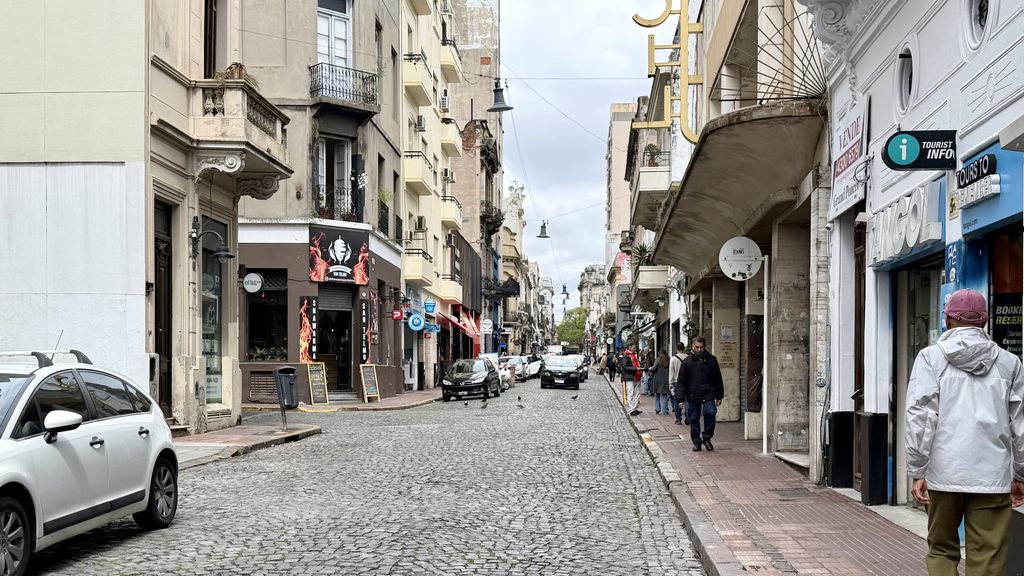
San Telmo – As we entered the San Telmo neighbourhood, we were greeted by charming cobblestone streets, historic churches, traditional cafés, antique shops, and old buildings that reflect the city’s rich history. One of its main attractions is the Mercado de San Telmo, a historic indoor marketplace offering a variety of foods, antiques, and local products. From there, we continued along Calle Defensa toward Plaza Dorrego, a lively square surrounded by cafés and bars.
———————————
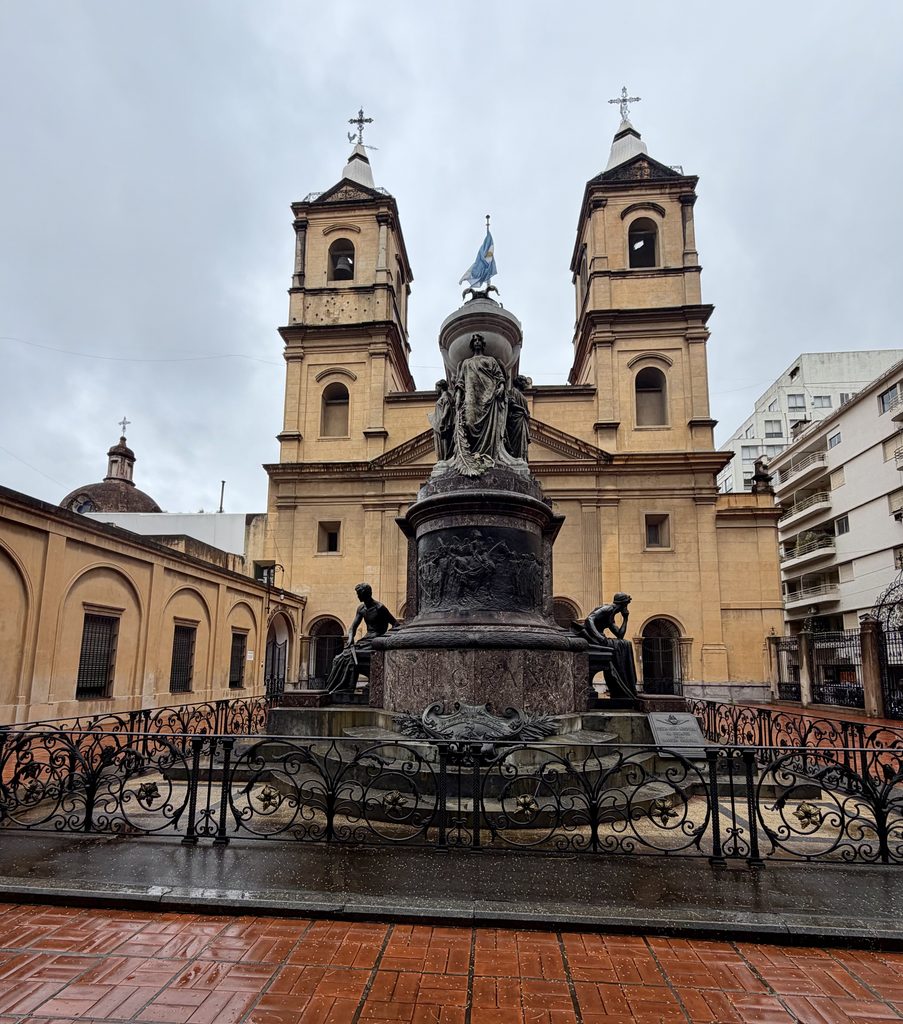
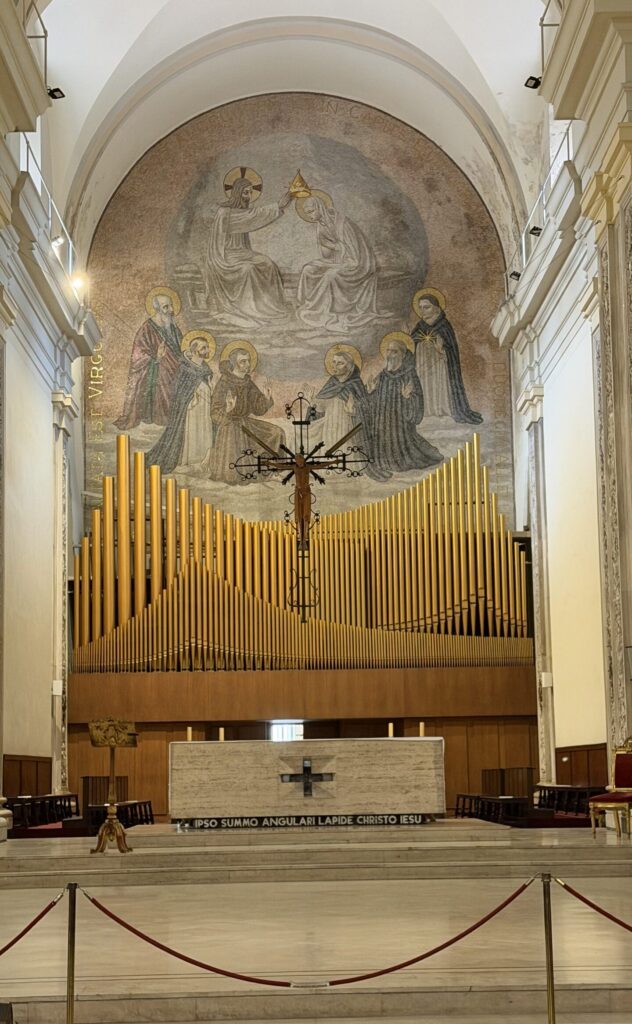
Convento Santo Domingo – Dating back to the 18th century, the basilica played an important role during the British invasions of Buenos Aires in 1806 and 1807, and you can still see reminders of this turbulent period in the tower, where wooden plugs mark the spots struck by British cannonballs. The church is also the final resting place of General Manuel Belgrano, one of Argentina’s most important independence heroes, whose mausoleum stands in the atrium.
———————————
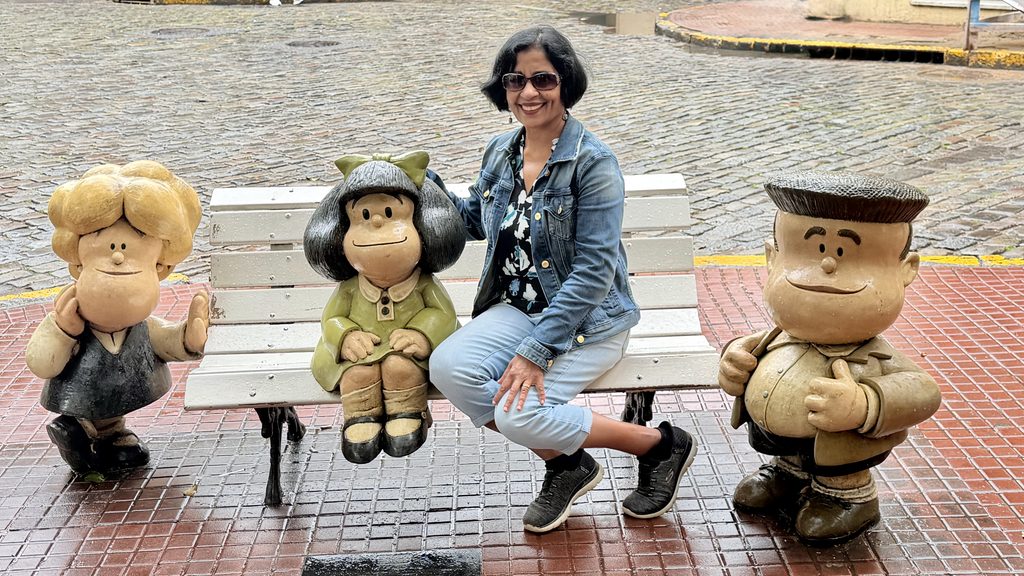
Estatua de Mafalda – One of the most charming stops in San Telmo is the famous Mafalda statue, located at the corner of Chile and Defensa streets, right in front of the former home of her creator, Argentine cartoonist Joaquín Salvador Lavado, better known as Quino. Mafalda is a beloved comic-strip character known for her witty observations about society and the world. The sculpture, created by Argentine artist Pablo Irrgang, depicts the little girl sitting on a bench in her iconic dress and bow with her friends Manolito and Susanita. The statue is a popular photo spot, so you may have to wait a little to get your picture taken with Mafalda!
———————————
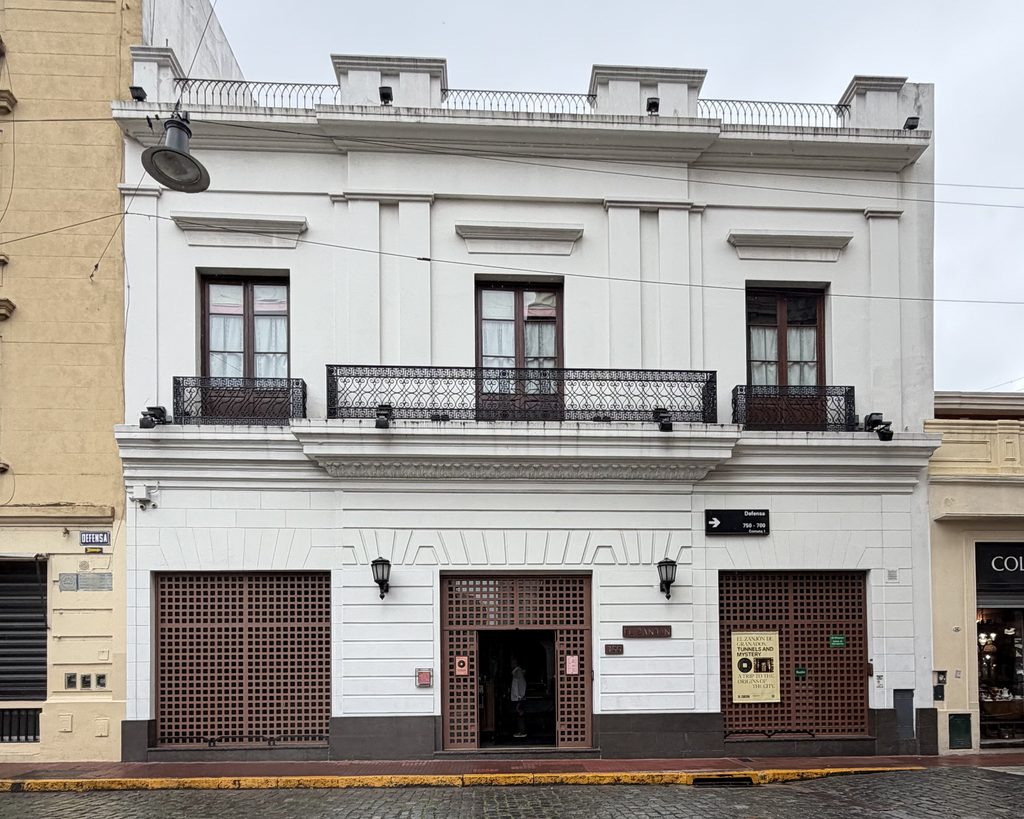
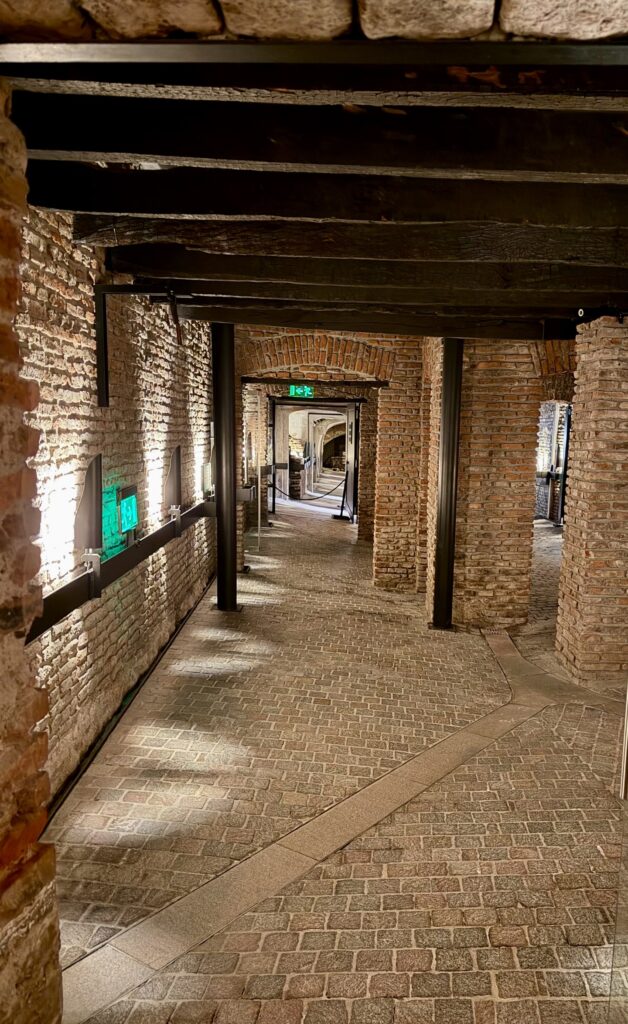
El Zanjón de Granados – This is another fascinating stop in San Telmo that reveals the hidden history of Buenos Aires beneath its streets. After decades of excavation and restoration led by founder Jorge Eckstein, a network of long-forgotten underground tunnels and historic buildings has been brought back to life. The site is located in an area associated with the city’s earliest Spanish settlements, dating back to the 16th century, when rainwater flowed through natural ravines known as Los Terceros toward the Río de la Plata, often flooding nearby homes. One of these ravines ran through the land where El Zanjón stands today, and traces of this forgotten waterway can still be explored underground. We took a 60 min guided tour through the atmospheric tunnels and beautifully restored buildings, gaining a unique glimpse into Buenos Aires’ colonial past and the layers of history hidden beneath the modern city.
———————————
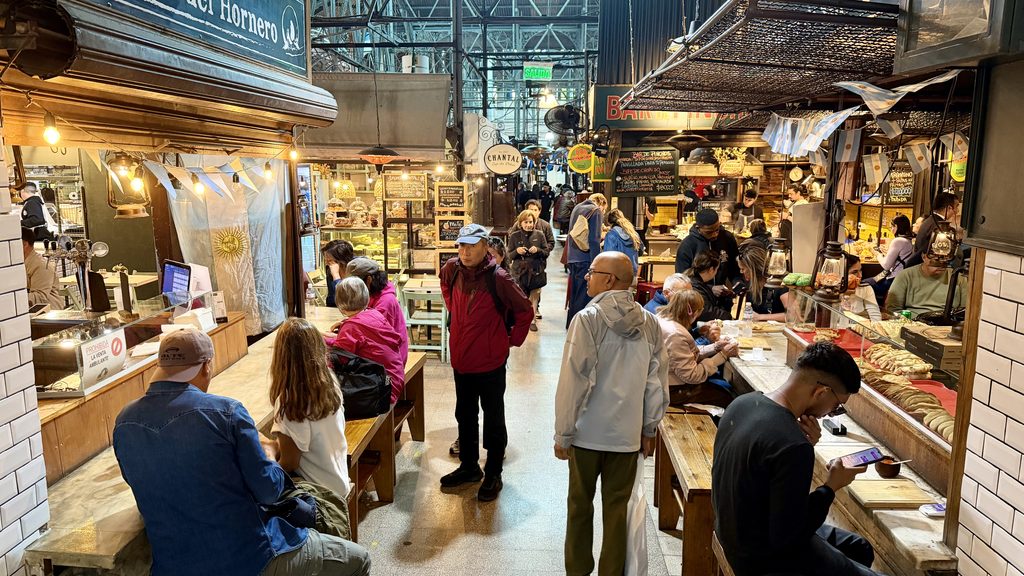
Mercado de San Telmo – As you continue exploring the San Telmo neighborhood, you’ll come across this historic indoor market filled with food stalls, cafés, antique shops, vintage stores, and local specialties. It’s a wonderful place to experience the neighborhood’s traditional character while browsing unique finds and sampling local food.
The market occupies an entire city block, with approximately three to four entrances along the surrounding streets, making it easy to enter from different directions. We took our time wandering through the aisles, and had coffee and snacks in one of the cafes.
——————————
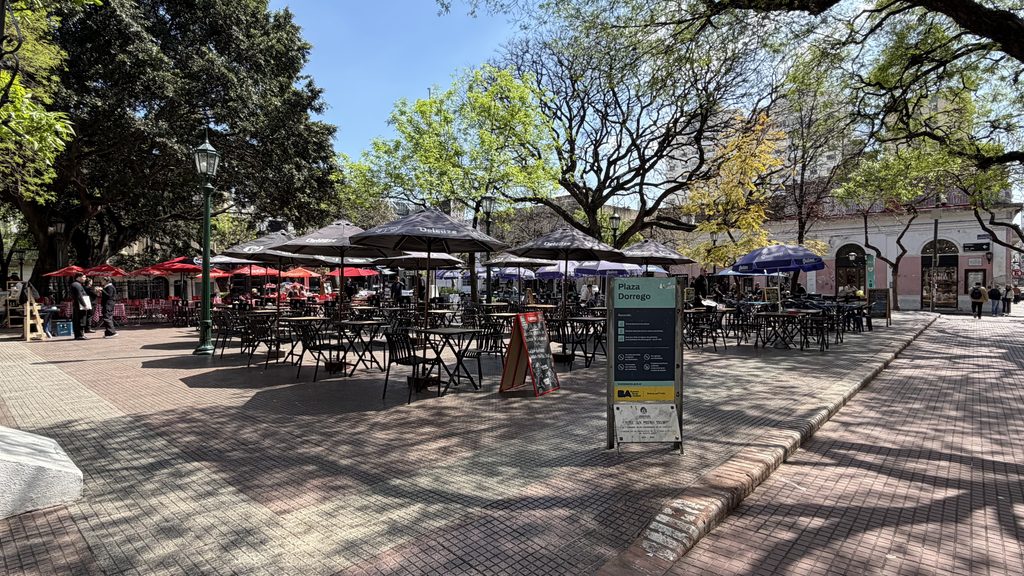
Plaza Dorrego – is a historic square in the heart of San Telmo. During the 19th century, San Telmo was the city’s main residential neighborhood, and the square served as an important gathering point for wagons travelling into the city centre. Its historic buildings have retained their original character thanks to preservation efforts. Today, Plaza Dorrego is a popular tourist attraction surrounded by cafés, bars, pubs, and antique shops. Every Sunday, the square comes alive with a famous antiques and crafts fair, featuring unique finds, tango performances, and street entertainment that capture the vibrant spirit of Buenos Aires.
———————————
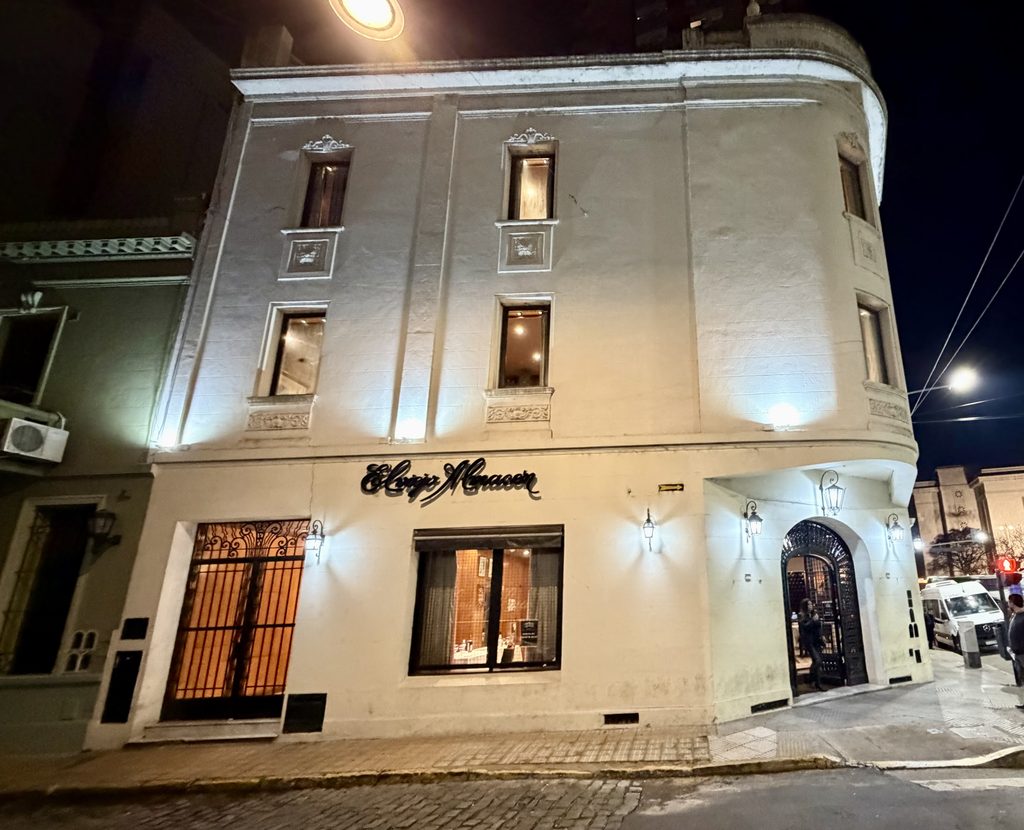
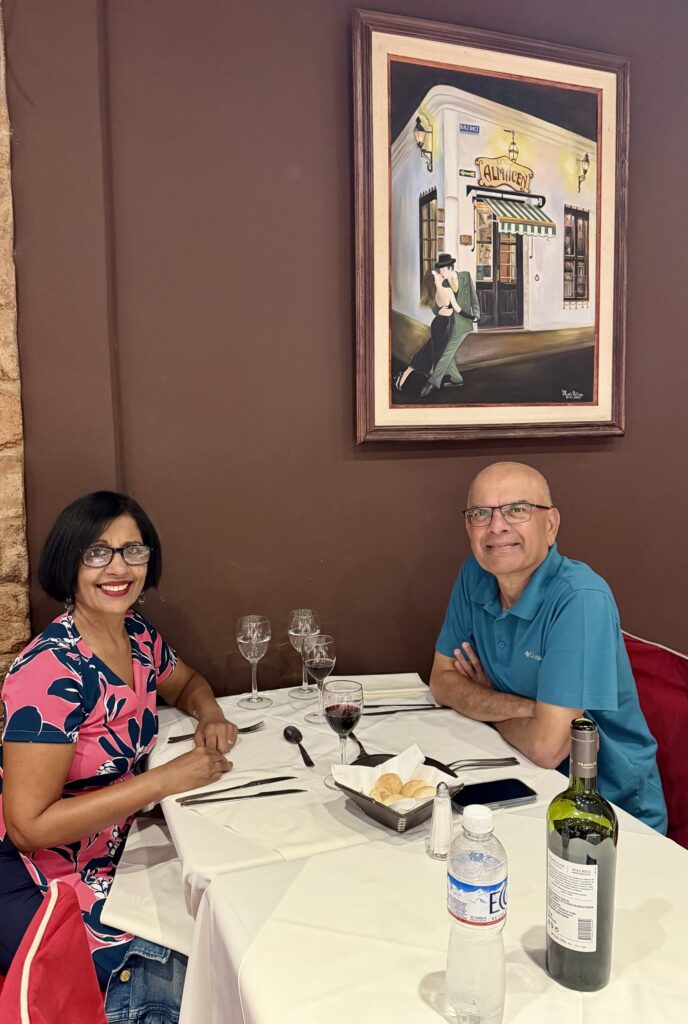
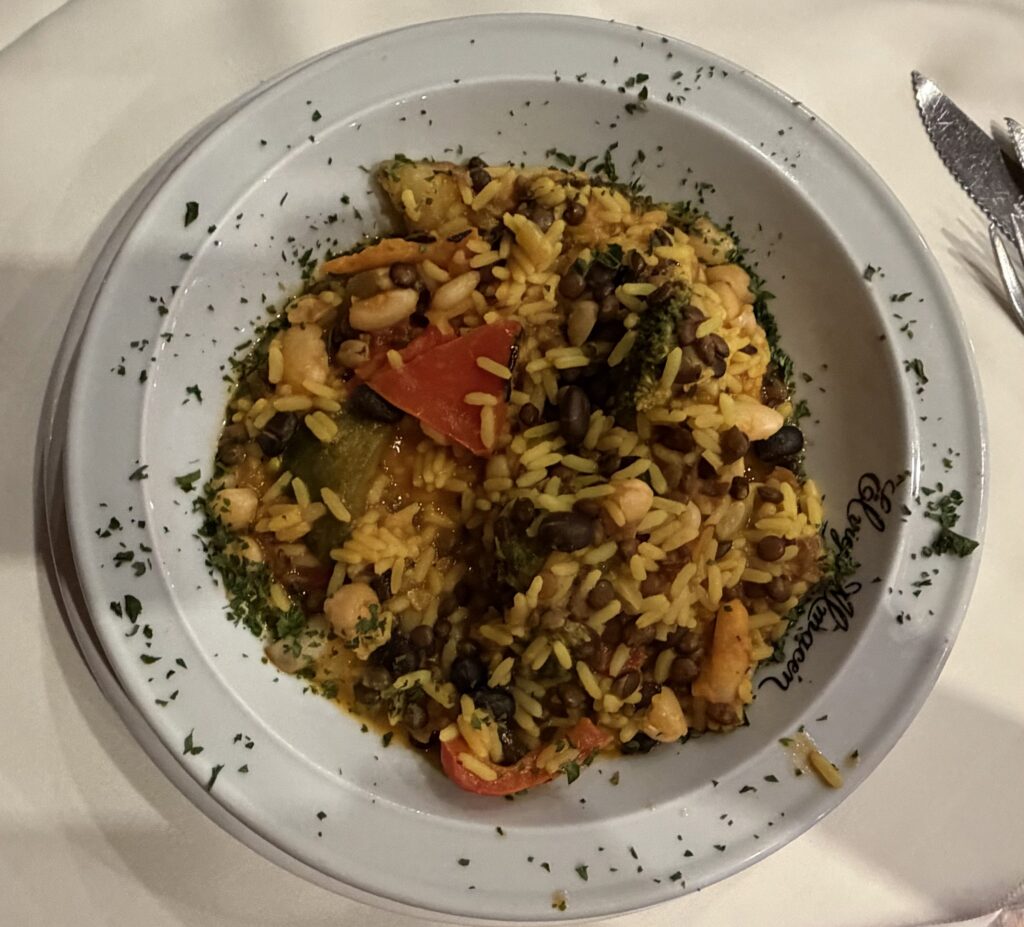
El Viejo Almacén – A Traditional Tango Experience – This historic tango venue in the San Telmo neighbourhood was established in 1969 in an 18th-century building. Known for its intimate atmosphere and traditional performances, it offers visitors an authentic Argentine cultural experience. Our evening began with dinner around 8pm, where we enjoyed potato soup, a vegetarian rice dish, and traditional desserts, accompanied by local wines. At around 9:45pm, we crossed the street to another building for the tango show, featuring a live orchestra, folk musicians, and professional dancers. The performance lasted approximately 1 hour and 40 minutes, showcasing the passion and elegance of Argentine tango. We had a wonderful time and thoroughly enjoyed this memorable cultural experience.
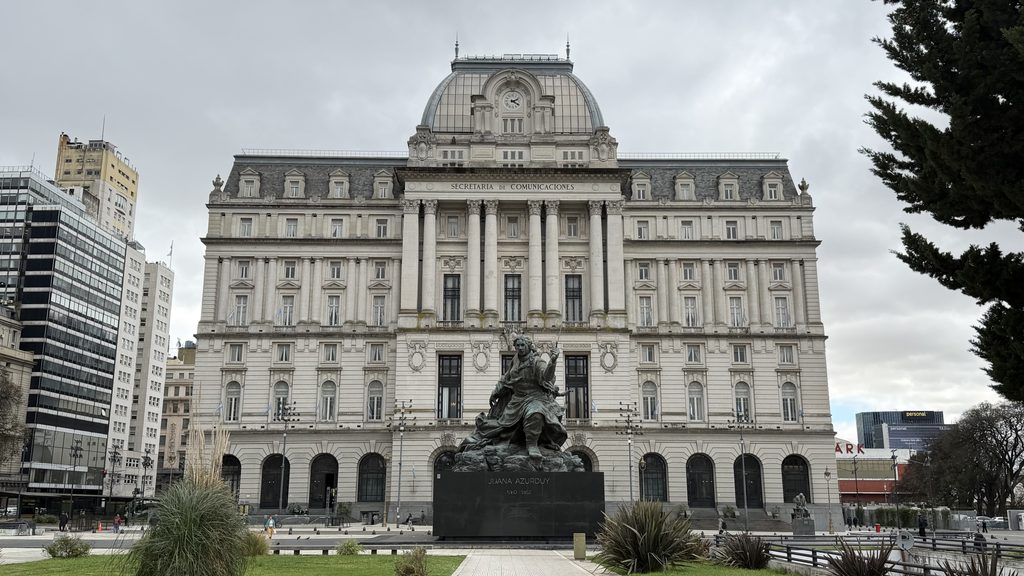
Palacio Libertad, Domingo Faustino Sarmiento in Plaza del Correo – As we walked toward the Puerto Madero area, we came across a huge, magnificent building overlooking an expansive plaza. Its grand architecture immediately caught our attention and made us want to learn more about its history.
Originally Buenos Aires’ historic Central Post Office, the building was designed by French architect Norbert Maillart in the Beaux-Arts style and opened in 1928. It later became the Centro Cultural Kirchner (CCK) serving as a major cultural center. Standing prominently in front of the building in Plaza del Correo is the Monumento a Juana Azurduy, an imposing bronze statue honoring the courageous military leader who fought in the South American wars of independence.
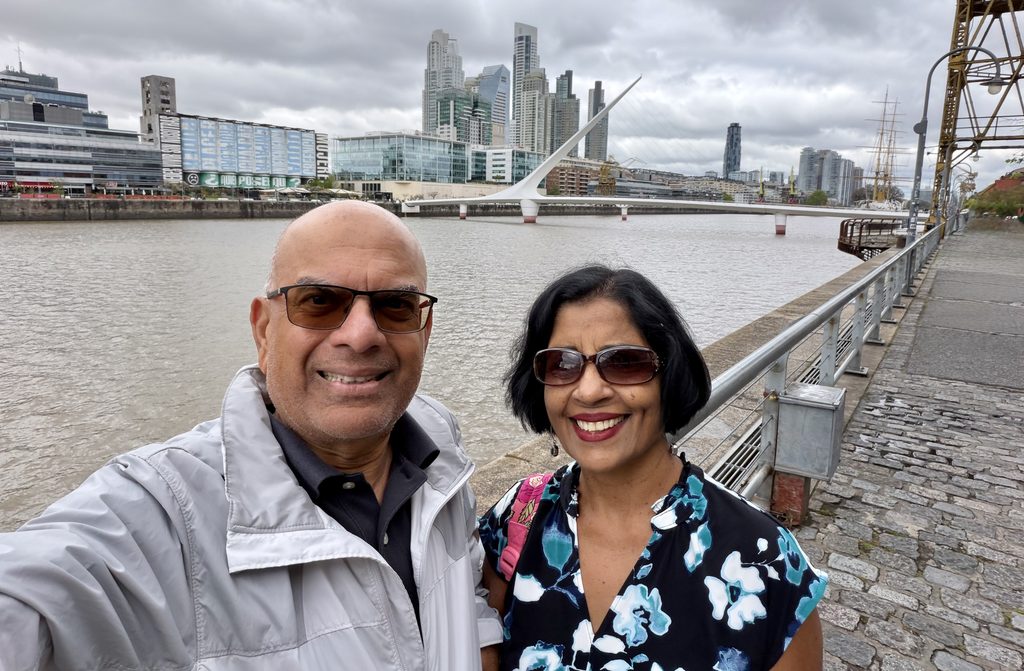
Puerto Madero – Our next stop was one of Buenos Aires’ most modern and upscale neighborhoods, located along the banks of the Río de la Plata. Once a busy port built in the late 19th century, it became obsolete as larger cargo ships required a more advanced harbour. The old docks and warehouses gradually fell into disrepair until a major urban renewal project began in 1989, transforming the area into a stylish waterfront district. Today, its beautifully restored red-brick warehouses house elegant restaurants, cafés, offices, and apartments, alongside modern skyscrapers and luxury hotels.
One of its most recognizable landmarks is the Puente de la Mujer (Women’s Bridge), a striking pedestrian bridge designed by Spanish architect Santiago Calatrava. With its scenic waterfront promenades, contemporary architecture, and excellent dining options, Puerto Madero offers a fascinating contrast to the historic streets of San Telmo and the traditional charm of Buenos Aires.
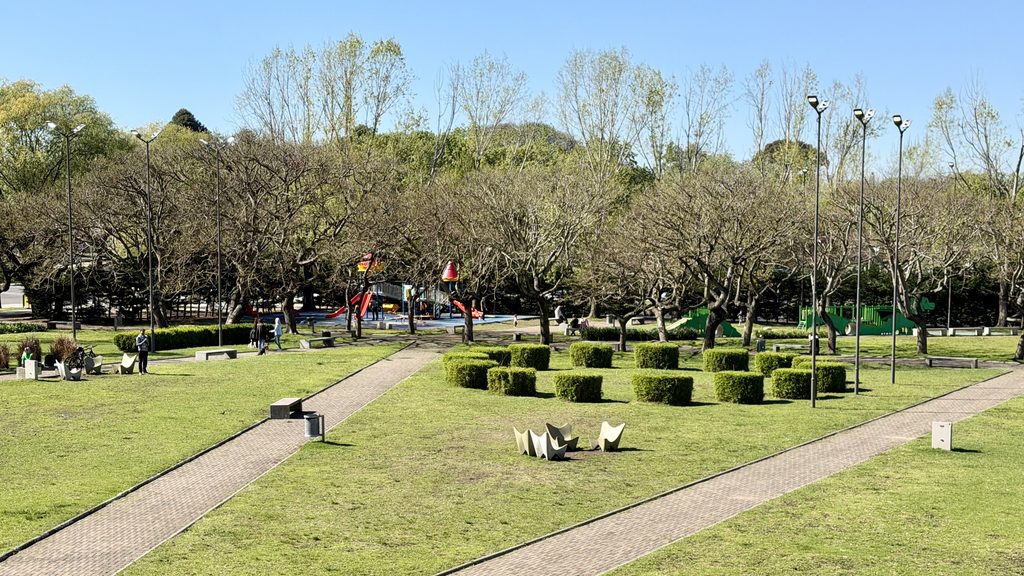
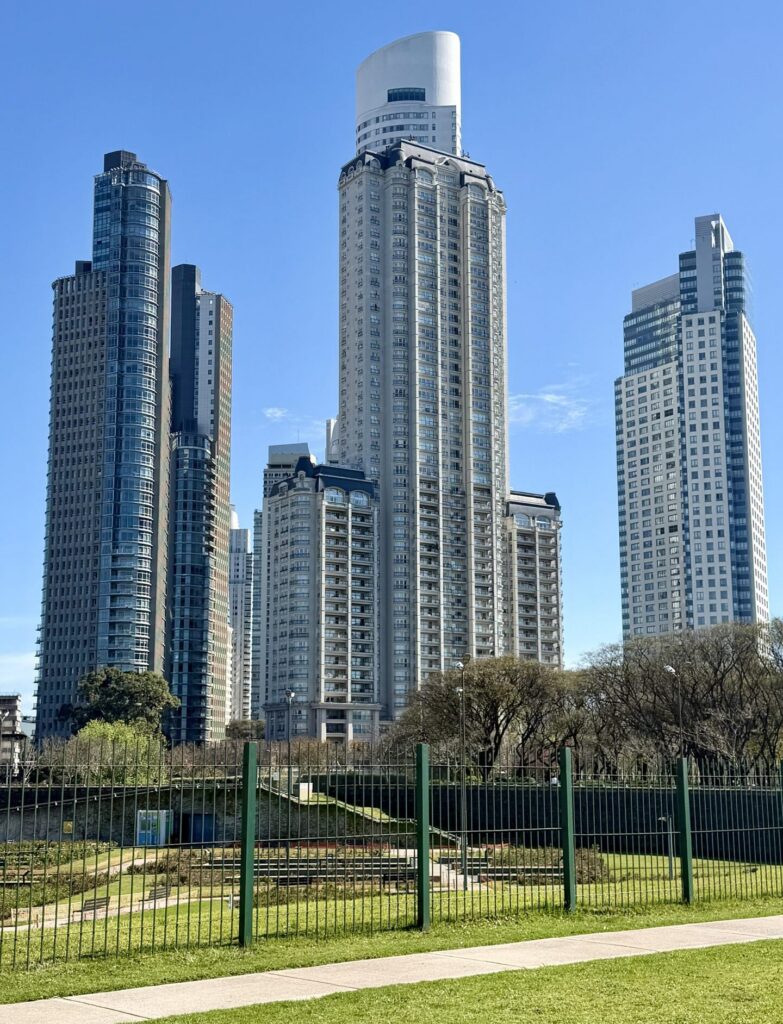
Puerto Madero also offers plenty of green spaces and outdoor activities. The nearby Costanera Sur Ecological Reserve features scenic walking and cycling trails, lakes, and abundant wildlife, making it a popular spot for families, nature lovers, and joggers. The neighbourhood is also home to several attractive parks, including Micaela Bastidas Park, where visitors can relax, enjoy the landscaped gardens, or take a leisurely stroll. From the park, you can admire the impressive Alvear Tower, one of Puerto Madero’s most prominent landmarks and the tallest building in Buenos Aires and Argentina. Standing approximately 235 metres (771 feet) tall to the roof, or around 239 metres (784 feet) including its antenna, the skyscraper rises 54 to 55 floors above the city, creating a striking contrast with the surrounding greenery.
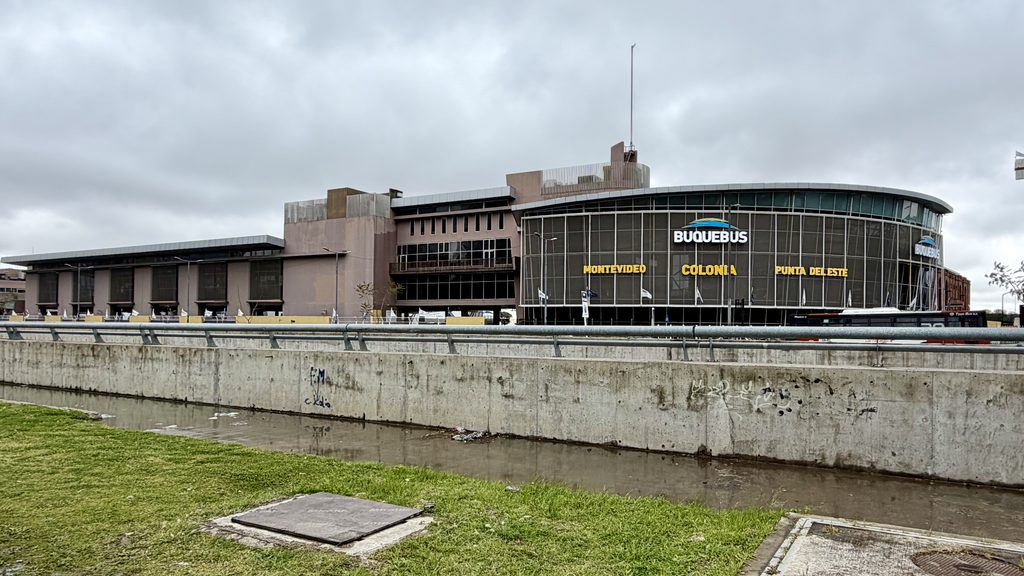
The area also serves as a departure point for day trips to Colonia del Sacramento in Uruguay, a UNESCO World Heritage site.
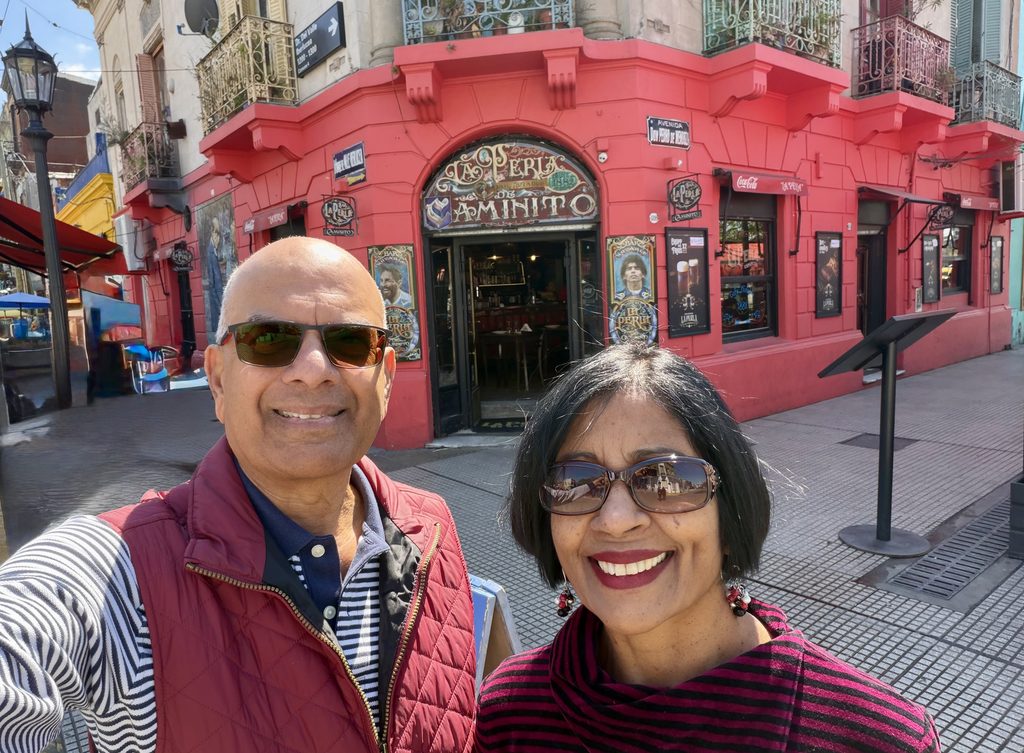
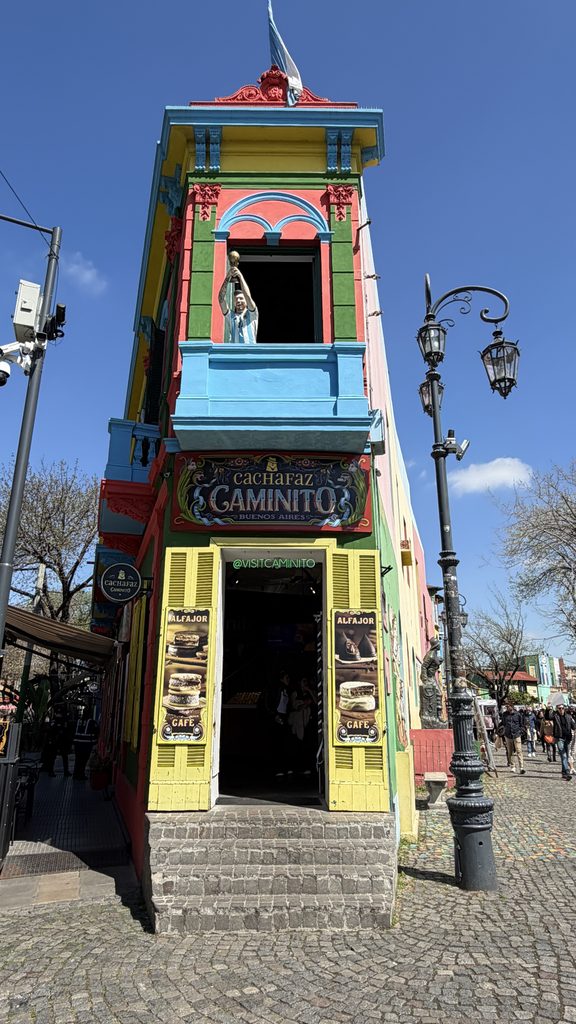
La Boca – We took an Uber from our hotel to La Boca, one of Buenos Aires’ most distinctive neighborhoods, known for its vibrant colours and artistic atmosphere. The colourful architecture reflects the influence of Genoese immigrants who settled in the area during the 19th century and used leftover ship paint to decorate their homes. Its most famous attraction is El Caminito, a lively pedestrian street lined with brightly painted corrugated-metal houses, street artists, souvenir shops, and tango performers. As we wandered through the neighbourhood, we also spotted statues of football legends Lionel Messi and Diego Maradona outside several shops, reflecting Argentina’s deep passion for football.
——————————————-
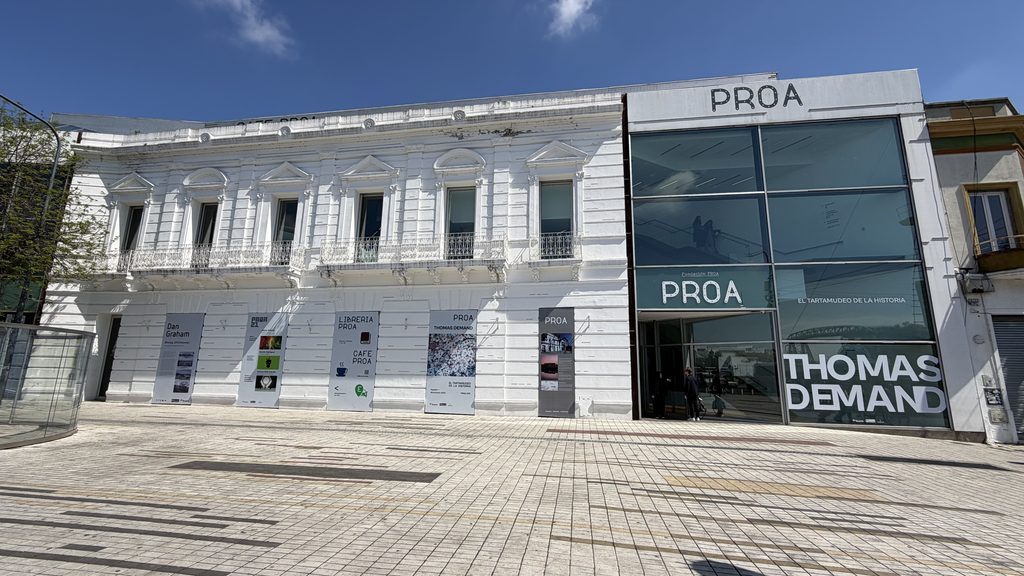
Fundación Proa – is an art museum located in the vibrant La Boca neighborhood. Housed in a refurbished Italian-style house, it features contemporary exhibits, a performance and film auditorium, a cafe with panoramic views, and a library. Founded in 1996, it promotes major artistic movements of the twentieth century through exhibitions, educational programs, and cultural exchanges.
——————————————-
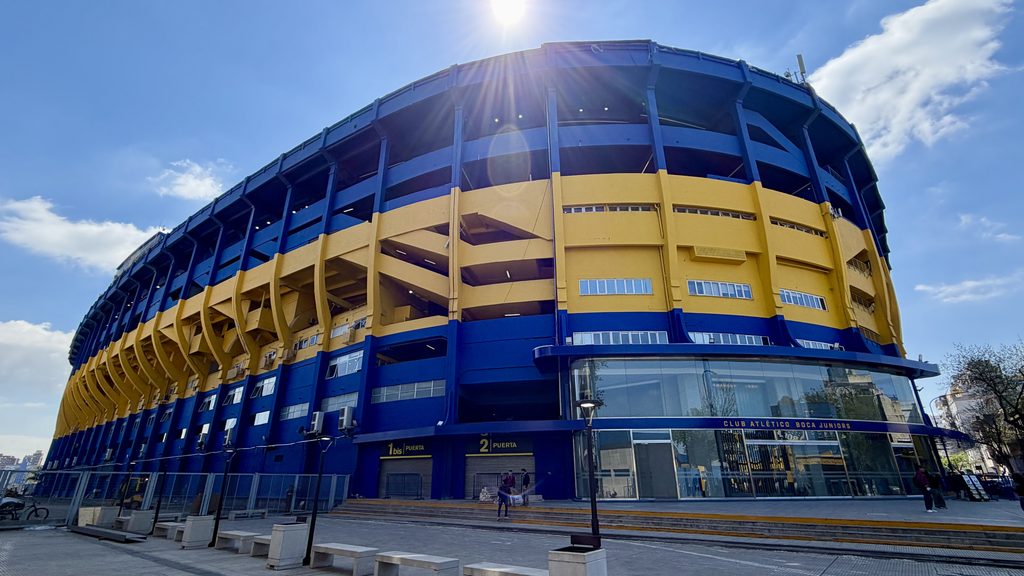
La Bombonera Stadium – For football fans, no trip to Buenos Aires is complete without visiting the Bombonera stadium, or Estadio Alberto J. Armando, as it’s officially called, home to Maradona’s beloved Boca Juniors and often considered the stadium with the most intense, passionate atmosphere in the world. The stadium is just a stone’s throw from the famous Caminito of La Boca and is known as La Bombonera the chocolate box owing to its unusual ‘D’ shape and steep sides, which give it incredible acoustics. The stands are very close to the pitch, with only a small space separating the fans from the field of play, which makes for an unbeatable atmosphere at matches. The stadium was inaugurated on May 25 1940.
La Boca is best explored during daylight hours, particularly around El Caminito and the main tourist areas, while taking care with personal belongings and avoiding isolated streets.
Avenida de Mayo – is one of Buenos Aires’ most elegant and significant avenues, stretching westward from Plaza de Mayo toward Plaza del Congreso. Inspired by the grand boulevards of Paris, it is lined with impressive architecture, historic cafés, ornate façades, and beautiful old buildings that reflect the city’s European influence. Along the avenue, visitors can admire the striking Palacio Barolo, an architectural landmark inspired by Dante’s Divine Comedy, before continuing toward Plaza del Congreso, home to the magnificent Argentine National Congress building. After we had tea and cake in one of the cafe on this avenue, we walked to Palacio Barolo.
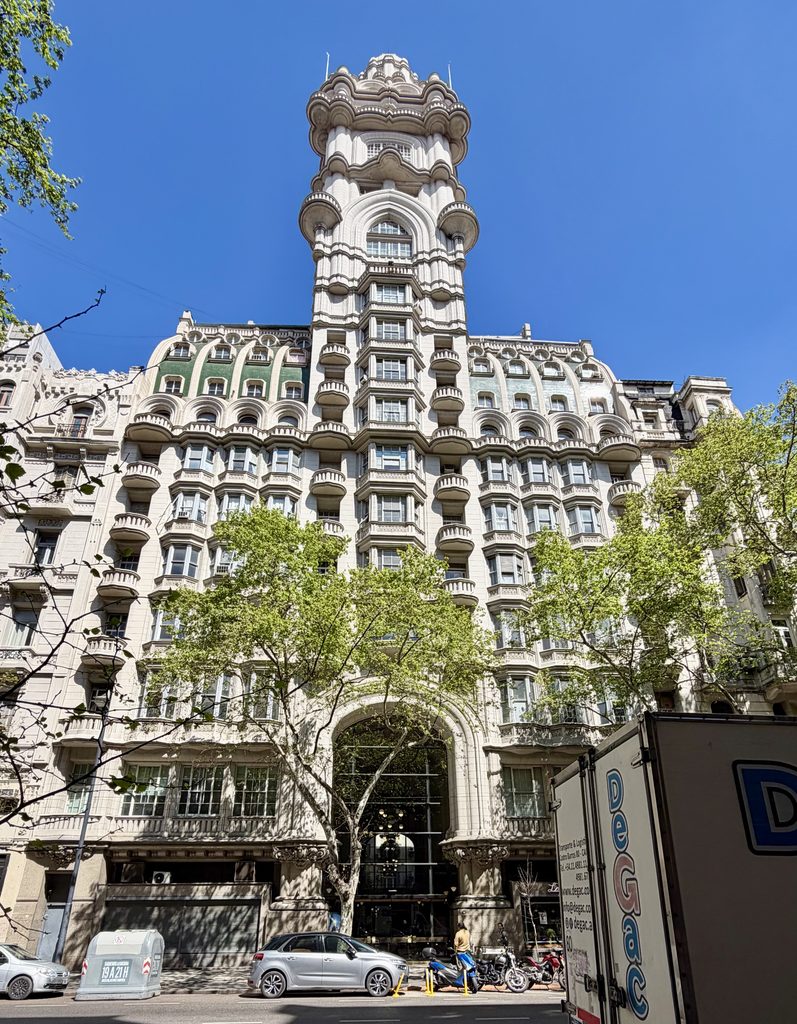
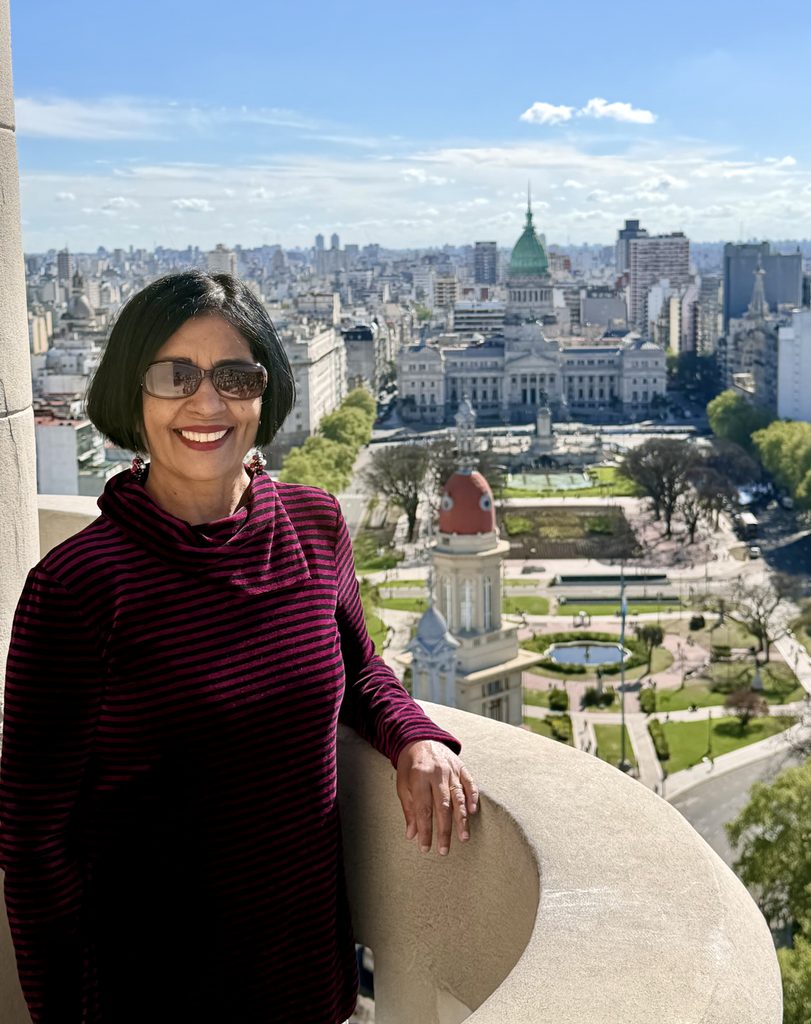
Palacio Barolo – is a unique office building in Buenos Aires, designed by Italian architect Mario Palanti and inspired by Dante Alighieri’s Divine Comedy. Completed in 1923, the building’s architecture and layout reflect the poem’s three realms: Hell, Purgatory, and Heaven. Its intricate domes, vaulted ceilings, symbolic details, and lighthouse-like tower represent different elements of Dante’s masterpiece, while Latin inscriptions throughout the building add to its mysterious charm. We took a 90-minute guided tour to explore the palace’s fascinating history, symbolism, and architectural features. The tour was absolutely worth it, especially for the spectacular view of Plaza del Congreso from the 14th floor.
—————————————-
Plaza del Congreso – is a significant square in Buenos Aires, commemorating the 100th anniversary of the revolution. The area features grand carved fountains and serves as a starting point for exploring the city. The square is a popular spot for photographs and offers a wonderful view of the impressive Palace of the Argentine National Congress.
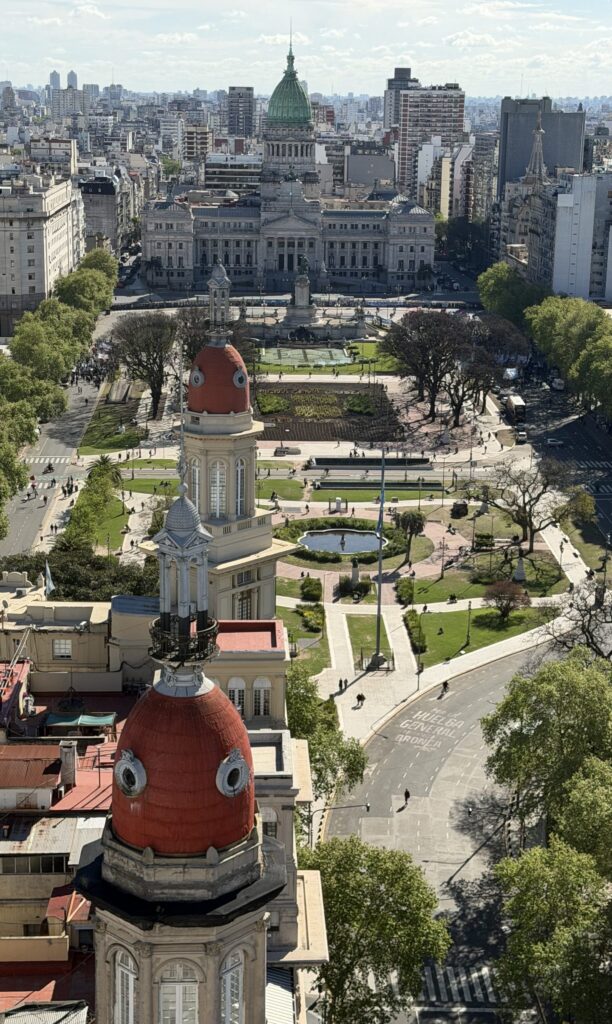
Palace of the Argentine National Congress – One end of Plaza del Congreso is occupied by this magnificent building which is the seat of Argentina’s National Congress. The monumental building was constructed between 1898 and 1906 and is recognized as a National Historic Landmark. Guided tours are available on certain days of the week.
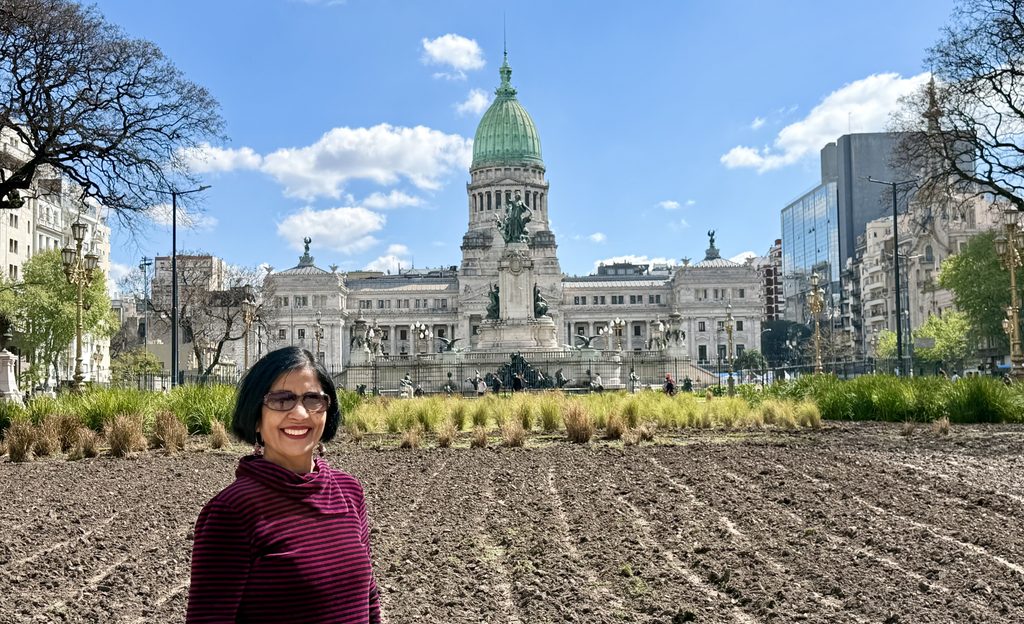
Plaza del Congreso marks the western end of Avenida de Mayo. Here, Avenida Rivadavia intersects the square and continues west, while the boulevard heading east toward the Casa Rosada changes its name from Avenida Rivadavia to the elegant Avenida de Mayo.
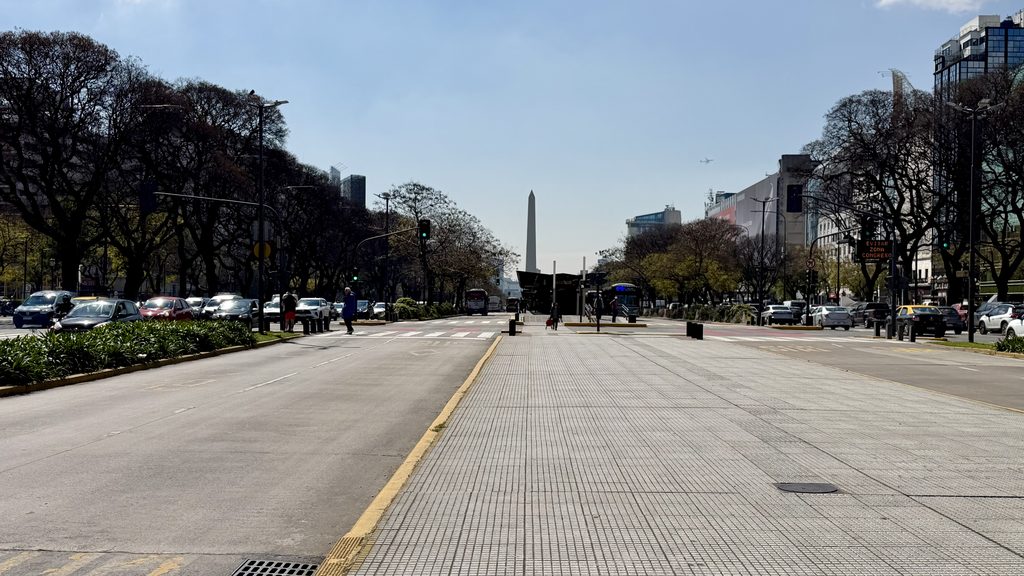
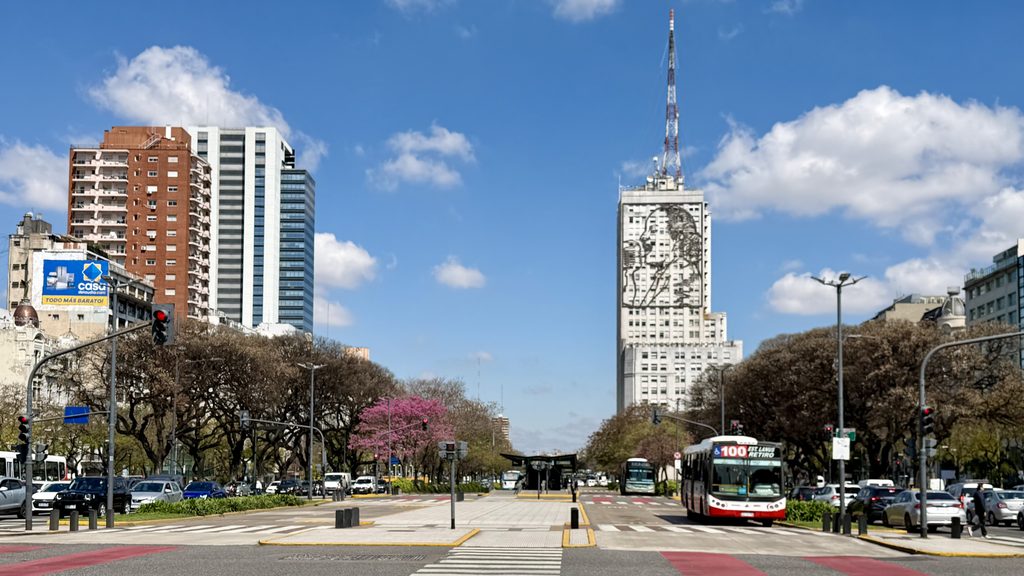
Avenida 9 de Julio – is widely regarded as one of the widest avenues in the world. Running through the heart of the city, it stretches from the Retiro district in the north toward Constitución in the south, spanning approximately 110 to 140 metres (360 to 460 feet) across. The avenue features multiple lanes of traffic, landscaped medians, and dedicated Metrobús lanes, making it a striking sight from end to end. Its name commemorates Argentina’s Independence Day, celebrated on July 9, 1816.
———————————
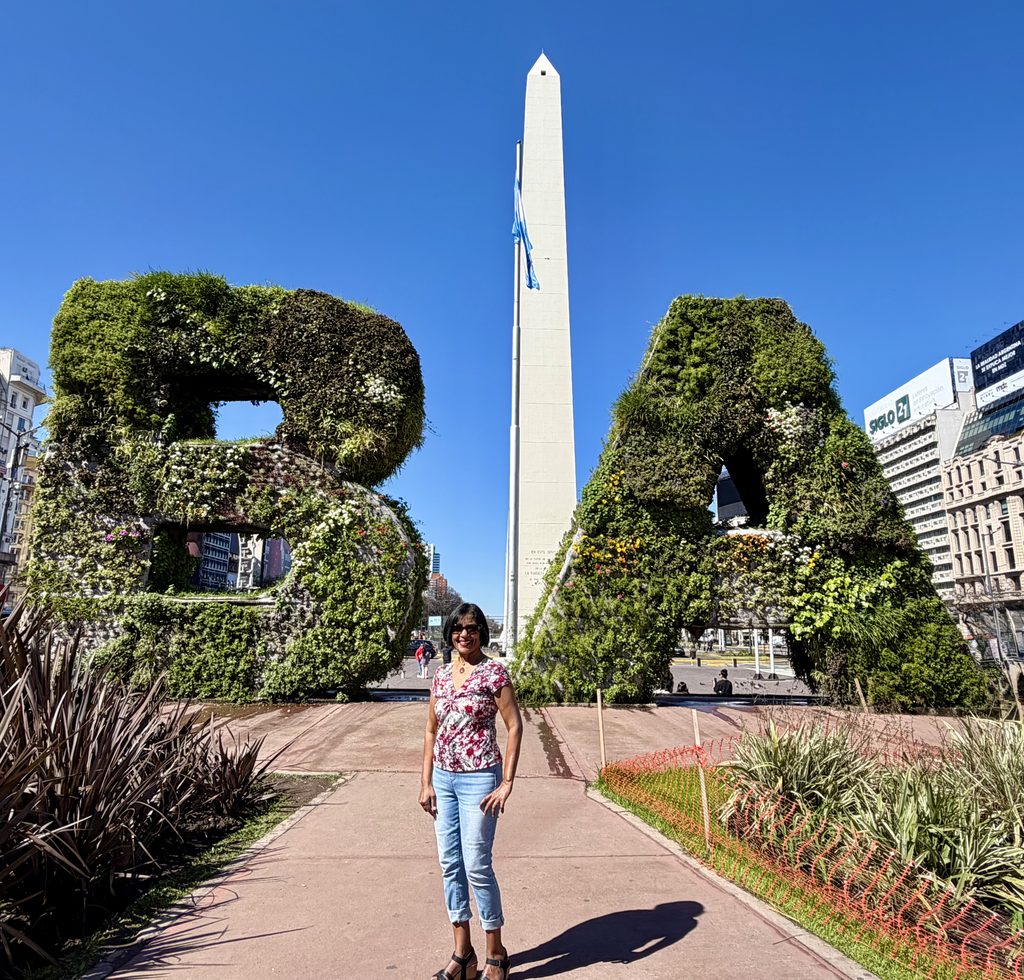
Obelisco de Buenos Aires – One of Avenida 9 de Julio’s most famous landmark is a 67.5-meter tall Obelisk made from Cordoba white stone. Erected in 1936 to commemorate the 400th anniversary of Buenos Aires’ first foundation, it stands at the intersection of Avenida Corrientes and Avenida 9 de Julio.
———————————
Eva Perón Mural – Another striking sights along Avenida 9 de Julio is the enormous steel portrait of Eva Perón, affectionately known as Evita, displayed on the façade of the Ministry of Health building. Eva Perón was Argentina’s influential First Lady and a prominent political figure who championed workers’ rights and social welfare. The building features two monumental iron portraits of her on opposite sides of the building – one showing her smiling and another depicting her in profile, addressing the public through a microphone.
———————————
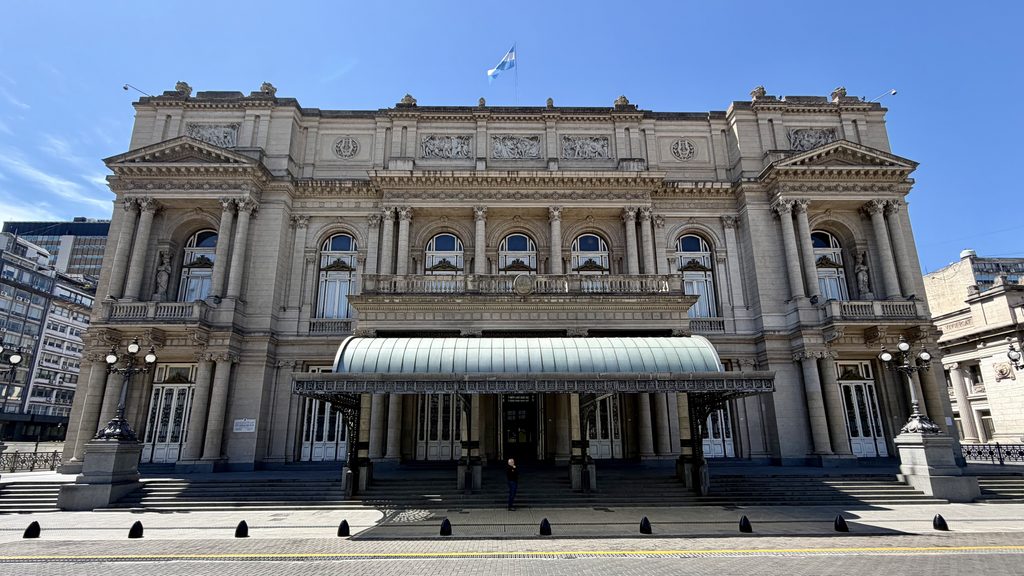
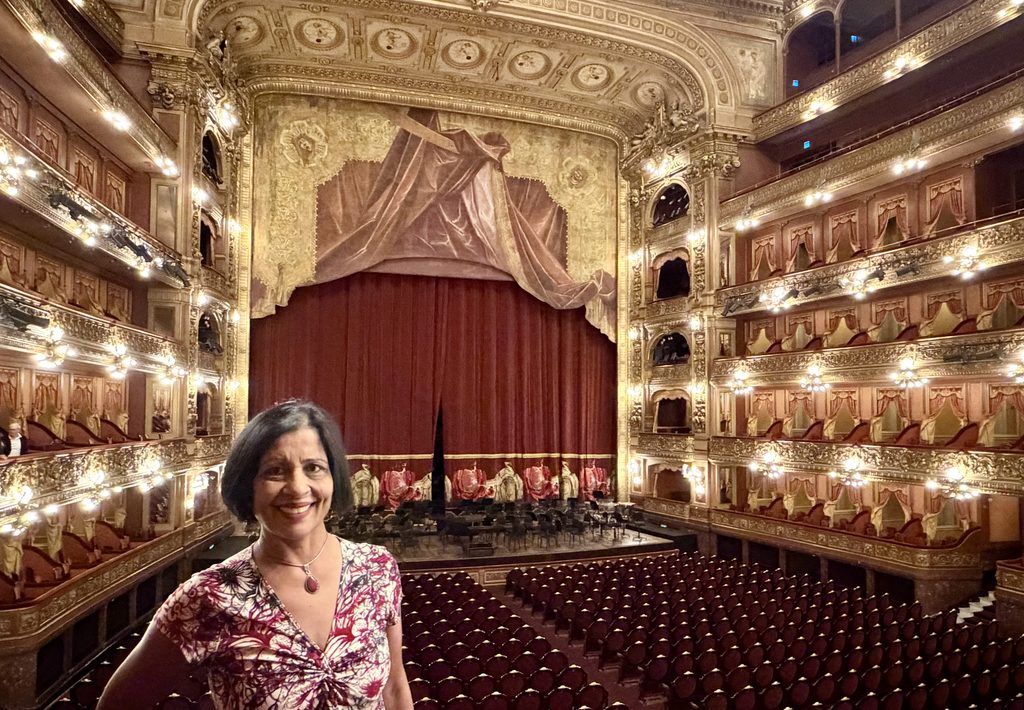
Teatro Colón – Located within a few meters of the Obelisk is one of the world’s premier opera houses, globally renowned for its phenomenal acoustics and stunning Beaux-Arts architecture. It offers both world-class performances and daily behind-the-scenes guided tours in English. We took a 1-hour guided tour of the stunning interior of the theater.
———————————
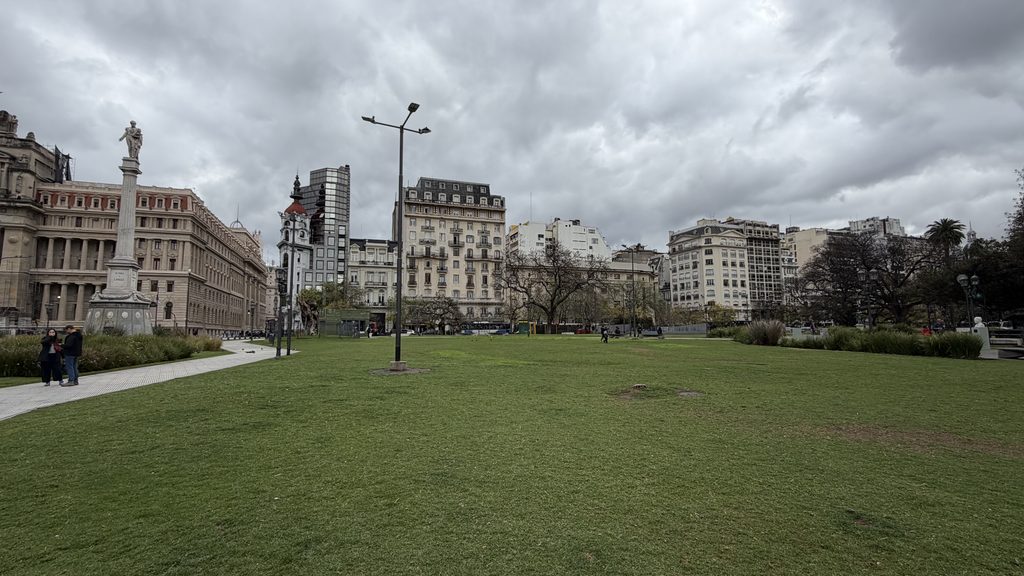
Plaza Lavalle – This plaza is located located in front of Teatro Colón. Named after General Juan Lavalle in 1878, it occupies the site of the former Estación del Parque, Argentina’s first railway terminal, opened in 1857. The square features shaded walking paths, mature trees, a children’s playground, and several monuments and memorials, including tributes to the victims of the 1994 AMIA terrorist attack and ballet dancers who died in a 1971 plane crash.
———————————
Escuela Presidente Roca – a historic public primary school is also located next to Teatro Colón and opposite Plaza Lavalle. Inaugurated in 1903, it symbolizes the country’s commitment to public, secular education. The building is renowned for its monumental neoclassical, Greek-inspired architecture, featuring four imposing granite columns and six sculpted caryatids by Giovanni Arduino. Its interior includes a central courtyard surrounded by columns and an auditorium decorated with Greek-inspired frescoes. Recognized as a National Historic Monument, the school continues to operate as a public primary school today.
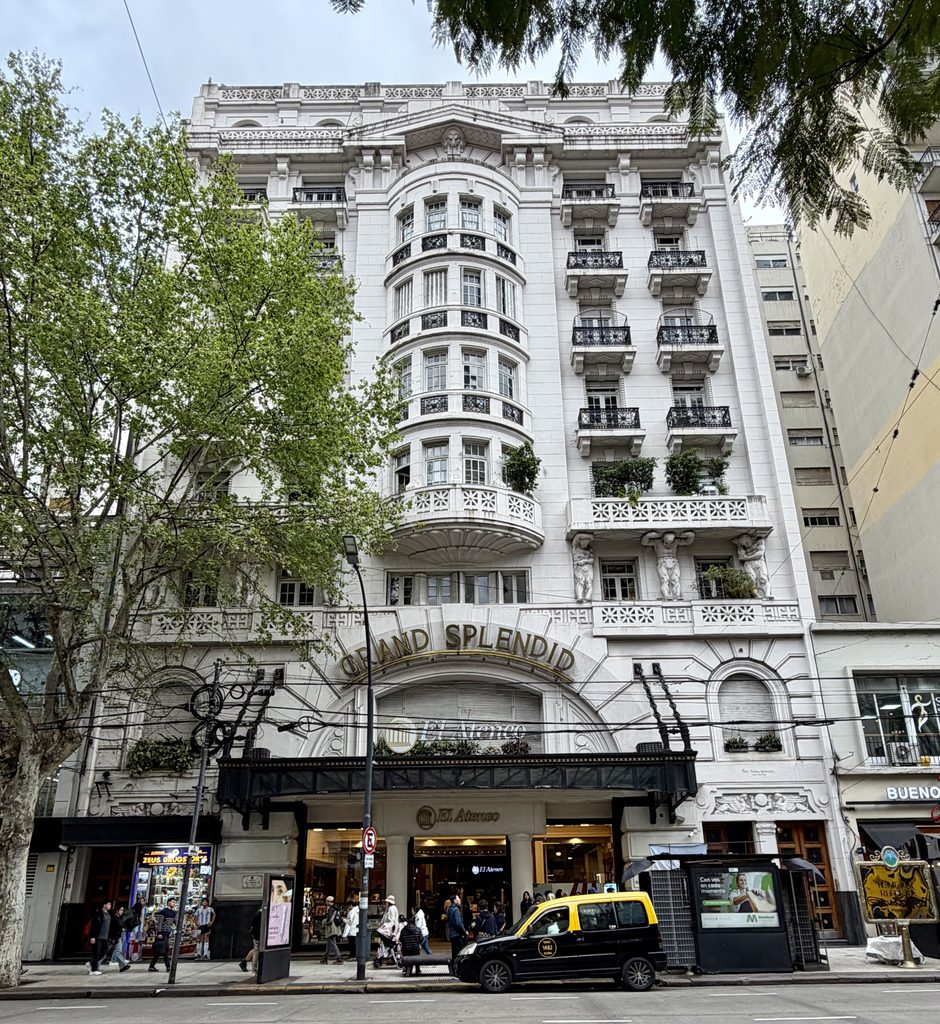
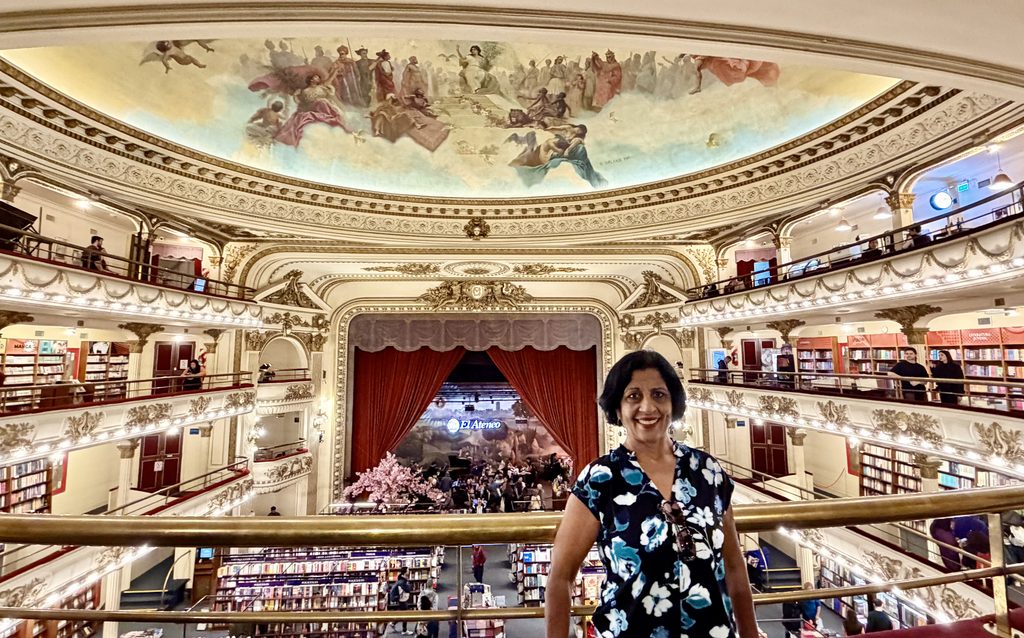
El Ateneo Grand Splendid is one of the most beautiful bookstore, housed in a magnificent former theatre that opened in 1919. The elegant bookstore retains much of its original theatrical grandeur, featuring an ornate frescoed ceiling, decorative balconies, and beautifully detailed architecture. Today, the former auditorium is filled with bookshelves, offering visitors a unique experience of browsing an extensive collection of books in a stunning historic setting. The original stage has been transformed into a café, where visitors can sit back with a coffee and admire the theatre’s beautiful interior. Entry is free, making it a wonderful stop for book lovers, architecture enthusiasts, and anyone looking to experience one of the city’s most distinctive cultural landmarks.
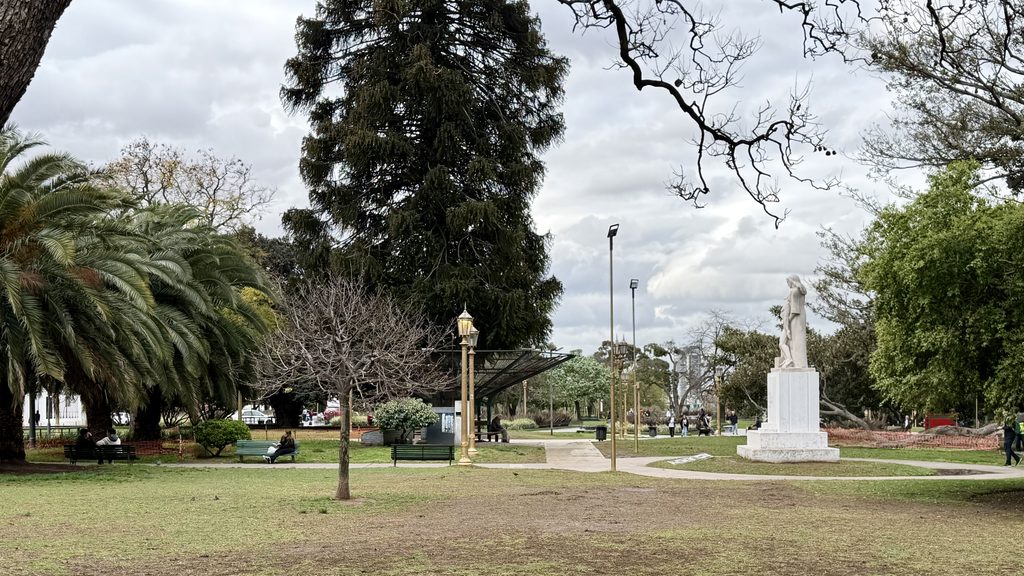
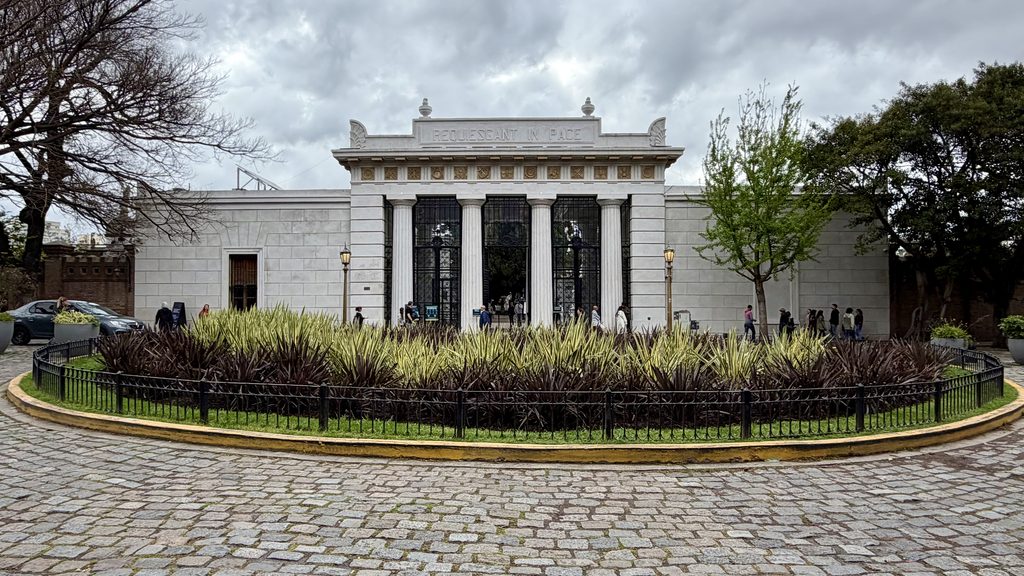
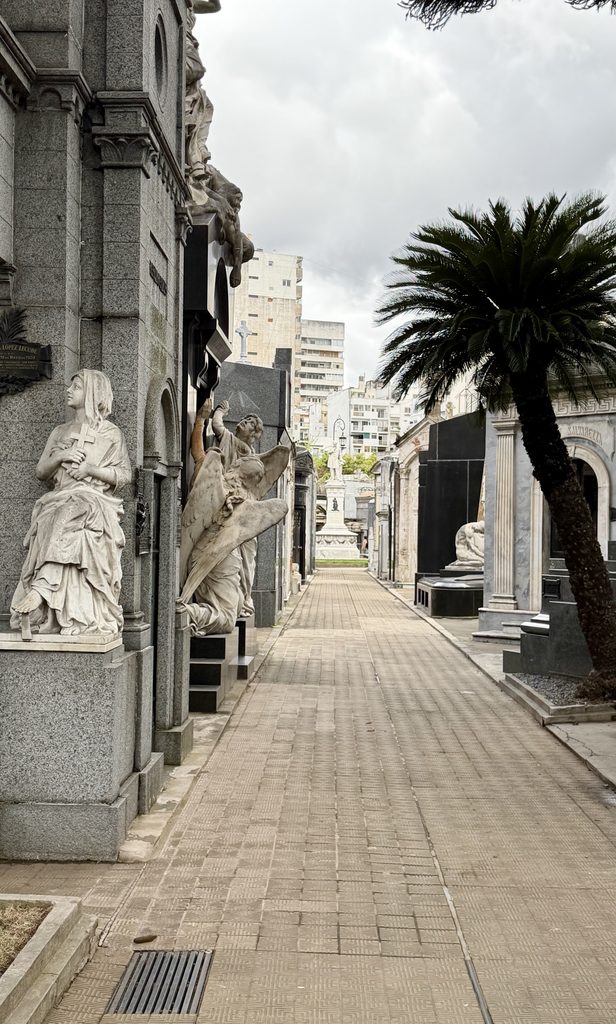
Plaza Intendente Alvear – 1.2 km north of El Ateneo Grand Splendid, is another historic public square in the Recoleta neighborhood of Buenos Aires. It is home to two prominent landmarks – Recoleta Cemetery, established in 1822 and famous for its elaborate mausoleums and notable residents, and the Basílica Nuestra Señora del Pilar, completed in 1732 and admired for its beautiful colonial architecture.
The plaza features numerous statues, shaded areas, and benches where visitors can sit, relax, and watch everyday life unfold.
——————————————–
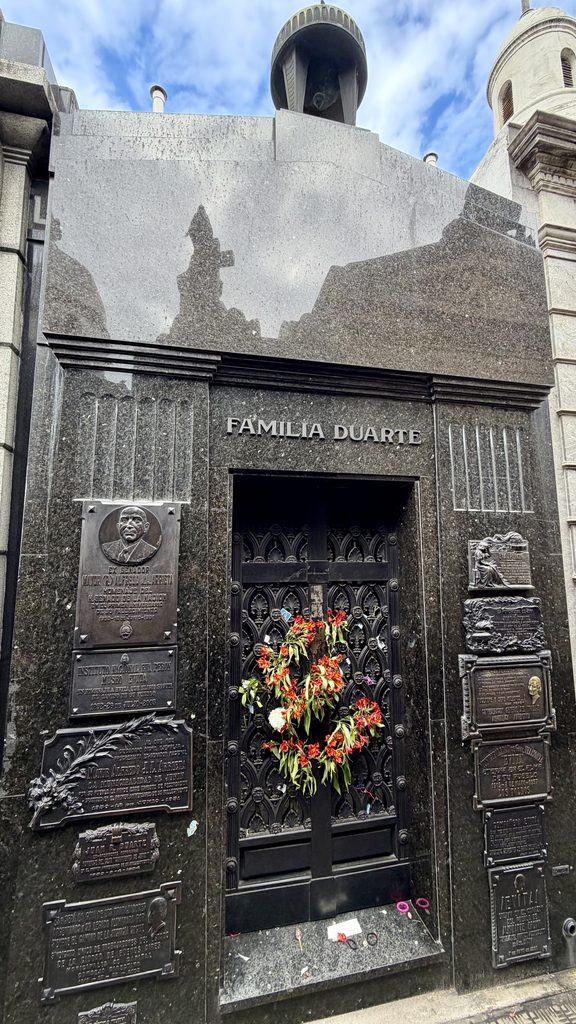
Recoleta Cemetery – is the cemetery for the rich and famous. Located in the upscale Recoleta neighbourhood, it is also the final resting place of Eva Evita Perón, Argentina’s beloved former First Lady and one of the country’s most influential historical figures. She died in 1952 at the age of 33, and her body underwent a remarkable journey following the military coup that overthrew her husband, President Juan Perón, in 1955. Her embalmed body was secretly taken abroad and hidden in Italy under a false identity for many years before eventually returning to Argentina. In 1976, she was laid to rest in the Duarte family mausoleum, where her remains lie behind a secure vault door several metres underground.
——————————————–
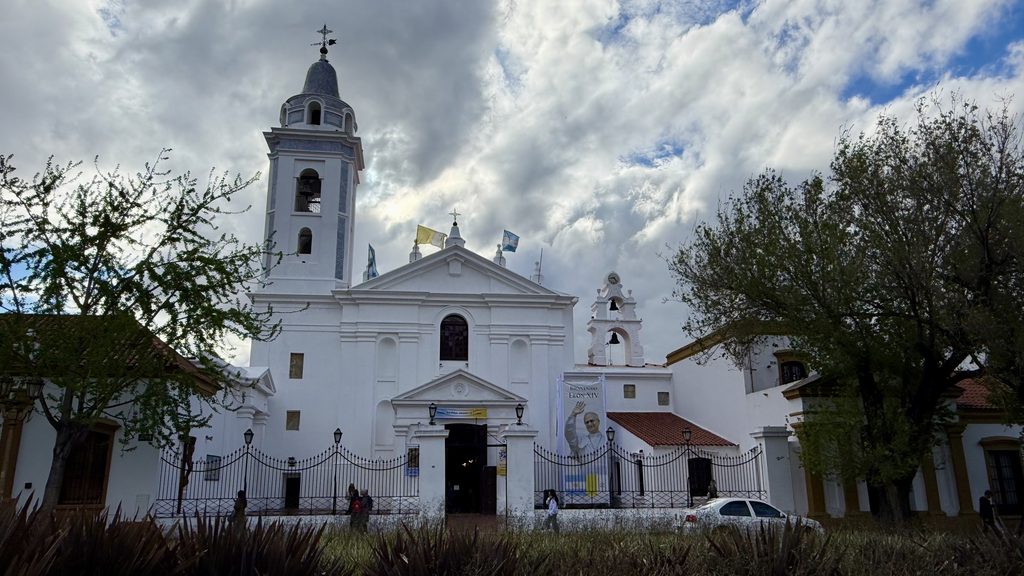
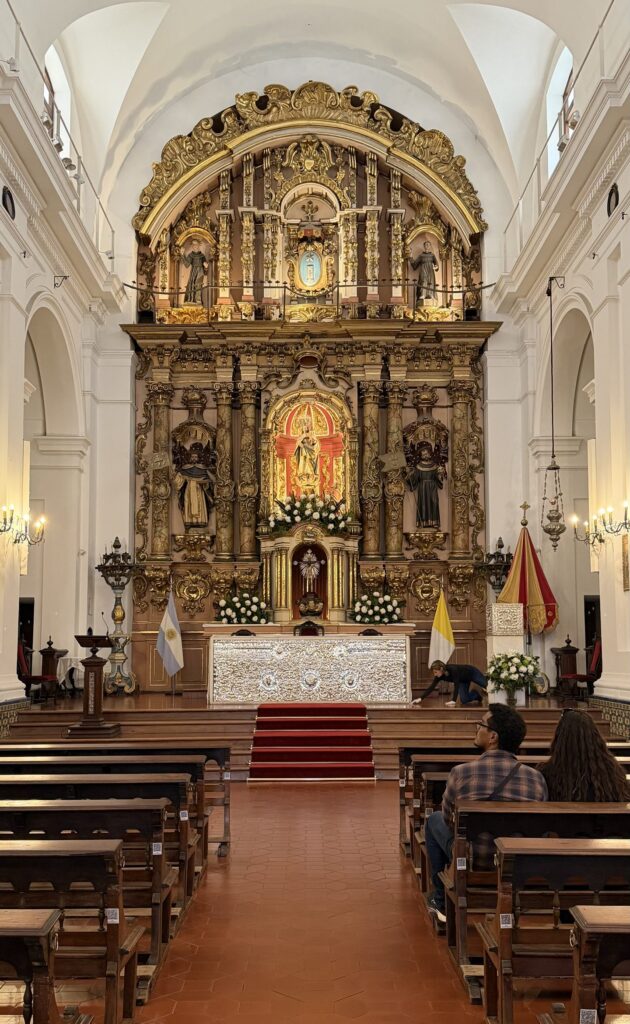
Basílica Nuestra Señora del Pilar – This church is located next to Recoleta Cemetery. Completed in 1732, it is one of the city’s oldest surviving churches, designed by Italian Jesuit architect Andrés Blanqui. The basilica features beautiful Spanish-colonial and Baroque architecture, an ornate golden high altar, and a three-level museum of religious art housed in its historic cloisters. Its former convent garden eventually became Recoleta Cemetery.
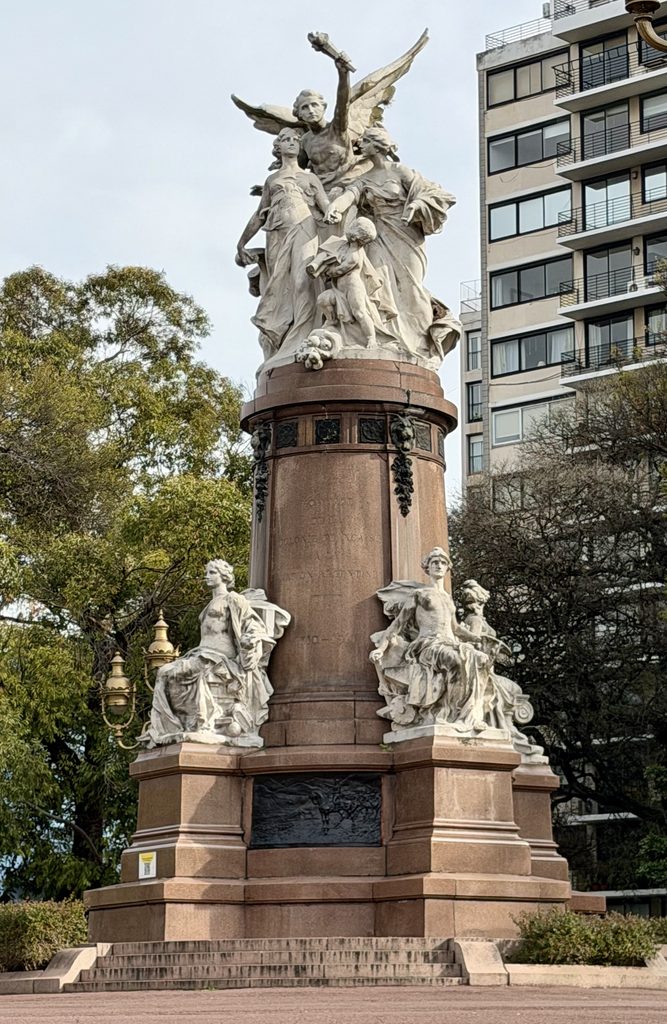
Plaza Francia – less than half a kilometer north of Recoleta cemetery is a beautiful public square created in 1909 as part of the city’s celebrations leading up to the centenary of Argentina’s independence. Its main highlight is the Monument of France to Argentina, inaugurated in 1910 and donated by the French community to celebrate the friendship between the two nations. The impressive monument features bronze reliefs depicting important historical events from both countries, including the Storming of the Bastille in France and the Crossing of the Andes in Argentina. The square is a pleasant place to take a stroll and relax.
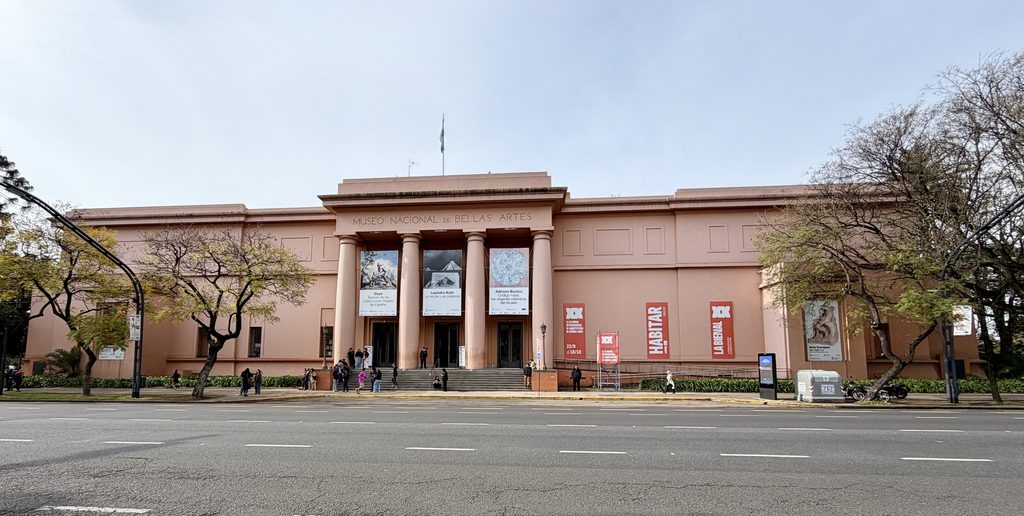
Museo Nacional de Bellas Artes (National Museum of Fine Arts) – is a prominent art museum located in a neoclassical building that was once a waterworks facility. It houses one of the largest public art collections in Latin America and features an extensive array of European masterpieces from the 12th to 20th centuries, including works by Degas, Monet, and Rodin. This museum is located across the road from Plaza Francia.
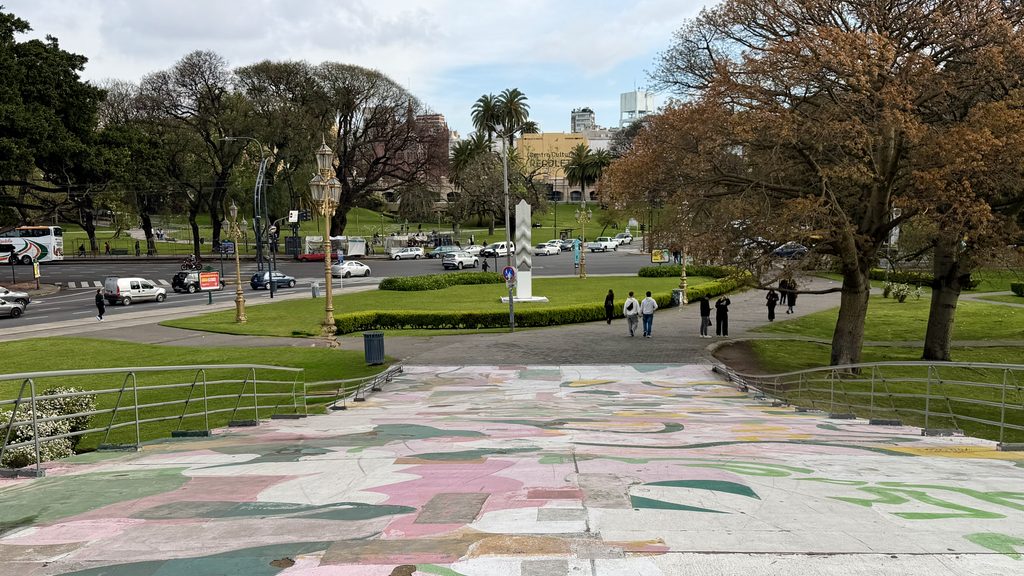
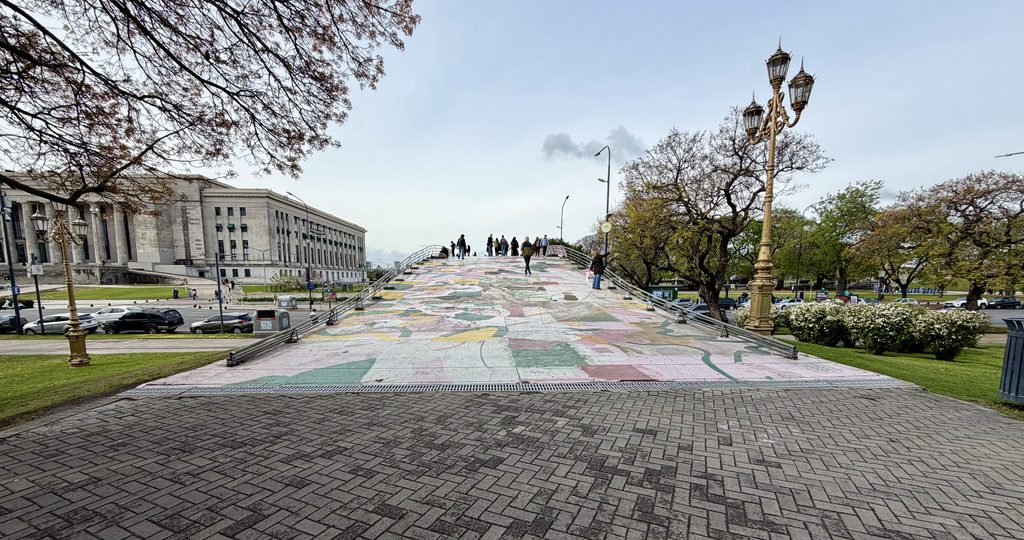
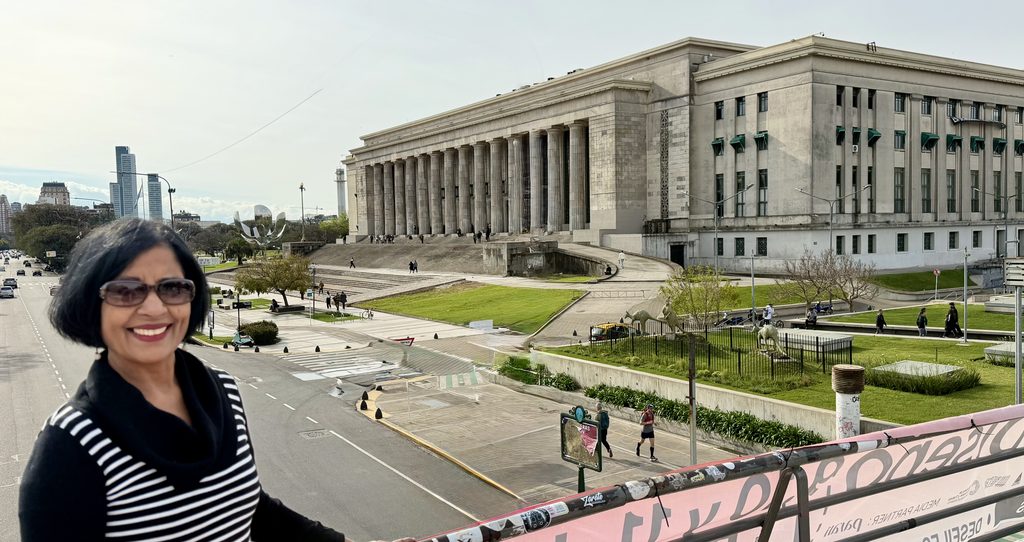
Puente Peatonal Figueroa Alcorta – officially named Carlos Sánchez Viamonte, is a colorfully painted pedestrian bridge that crosses Avenida Figueroa Alcorta behind the Museo Nacional de Bellas Artes. The original bridge was designed by architect César Janello for the 1960 Exposición del Sesquicentenario, and the current structure dates from a 1978 reconstruction. It is a heavily used pedestrian link to the Facultad de Derecho of the University of Buenos Aires, providing direct access between the law faculty, the museum, Plaza Francia, as well as Floralis Genérica (see section below).
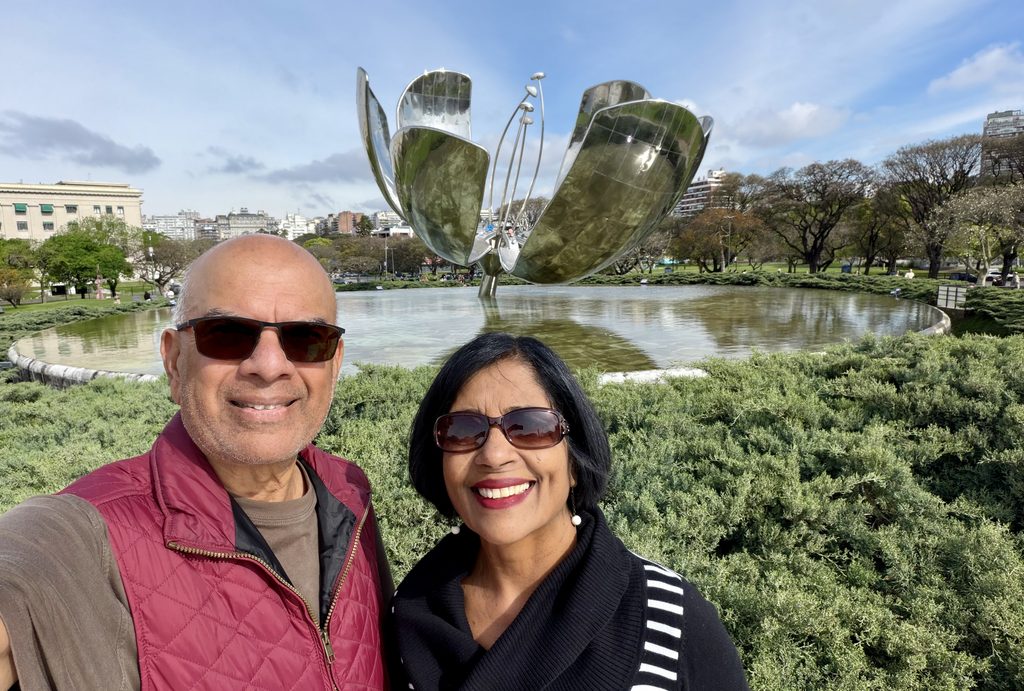
Floralis Genérica – This 23-meter-tall stainless-steel and aluminum sculpture is located in United Nations Square just a few meters from Plaza Francia. Designed by Argentine architect Eduardo Catalano and gifted to the city in 2002, it represents a giant flower symbolizing all flowers and the hope of renewal. Weighing 18 tons, it stands above a reflecting pool in a landscaped park. One of its most distinctive features is its mechanical petals, designed to open in the morning and close at sunset, with a red glow at night. Its gleaming steel and aluminum petals were commissioned from the Lockheed airplane factory, giving it a futuristic appearance.
Palermo Neighborhood – We did not have time to visit this neighborhood which has the following attractions –
- Museo Evita – A museum dedicated to Eva Perón, one of Argentina’s most influential historical figures. It explores her life, political work, and impact on Argentine society, housed in a beautiful historic building.
- Malba Museum – The Museum of Latin American Art of Buenos Aires features an excellent collection of modern and contemporary Latin American art, including works by major Argentine and international artists.
- Paseo El Rosedal – A gorgeous rose garden within the Palermo parks, with thousands of roses, peaceful walking paths, a lake, bridges, and elegant pergolas. It’s especially beautiful in spring, although the experience varies by season.