Visited in 2026
The capital of Wisconsin, Madison is a vibrant city uniquely situated on an isthmus between Lakes Mendota and Monona, giving it one of the most picturesque settings of any U.S. state capital. Founded in 1836 and named after President James Madison, it is Wisconsin’s second-largest city and a center for government, education, culture, and outdoor recreation.
Over the years, we have visited Madison many times because a couple of our close friends from Pittsburgh relocated and made the city their home.
- Wisconsin State Capital
- Dane County Farmer’s Market
- Monona Terrace Community and Convention Center
- Lake Monona
- University of Wisconsin-Madison
- Arboretum
- Geology Museum
- Taliesin East
———————————–
Wisconsin State Capitol — Located in the heart of downtown Madison on the Capitol Square, the Wisconsin State Capitol is home to the Wisconsin Legislature, Supreme Court, and Governor’s Office. Completed in 1917, it is the fifth capitol building in Wisconsin’s history and the third since statehood in 1848. Its iconic dome dominates the Madison skyline, and a state law protects its prominence by limiting the height of nearby buildings. The Capitol sits at the center of Madison’s unique isthmus between Lake Mendota and Lake Monona, surrounded by the vibrant Capitol Square.
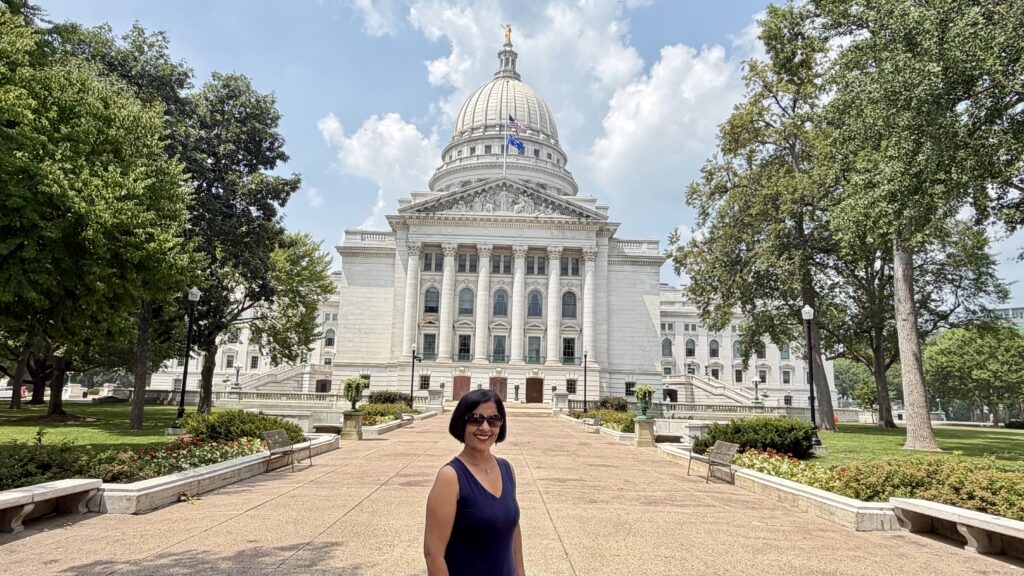
We joined a one-hour guided tour of the Wisconsin State Capitol, which offered a fascinating look at the building’s history, architecture, and government functions. The tour included visits to the magnificent Rotunda, the chambers of the Wisconsin Senate and Assembly, and the Supreme Court.
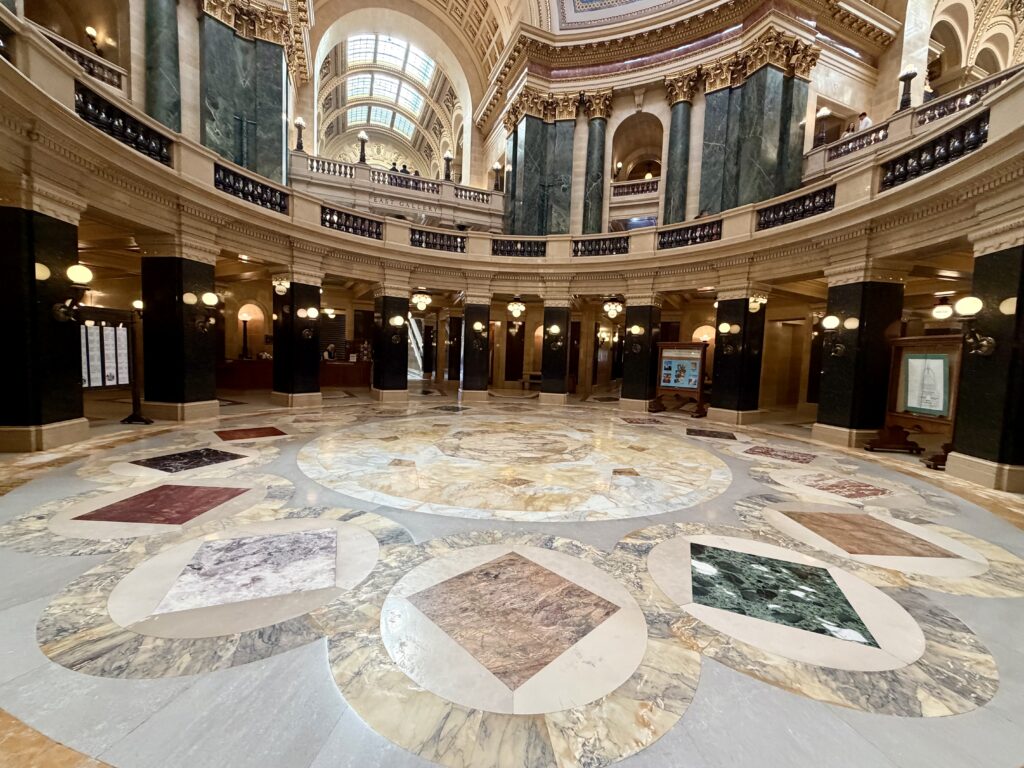
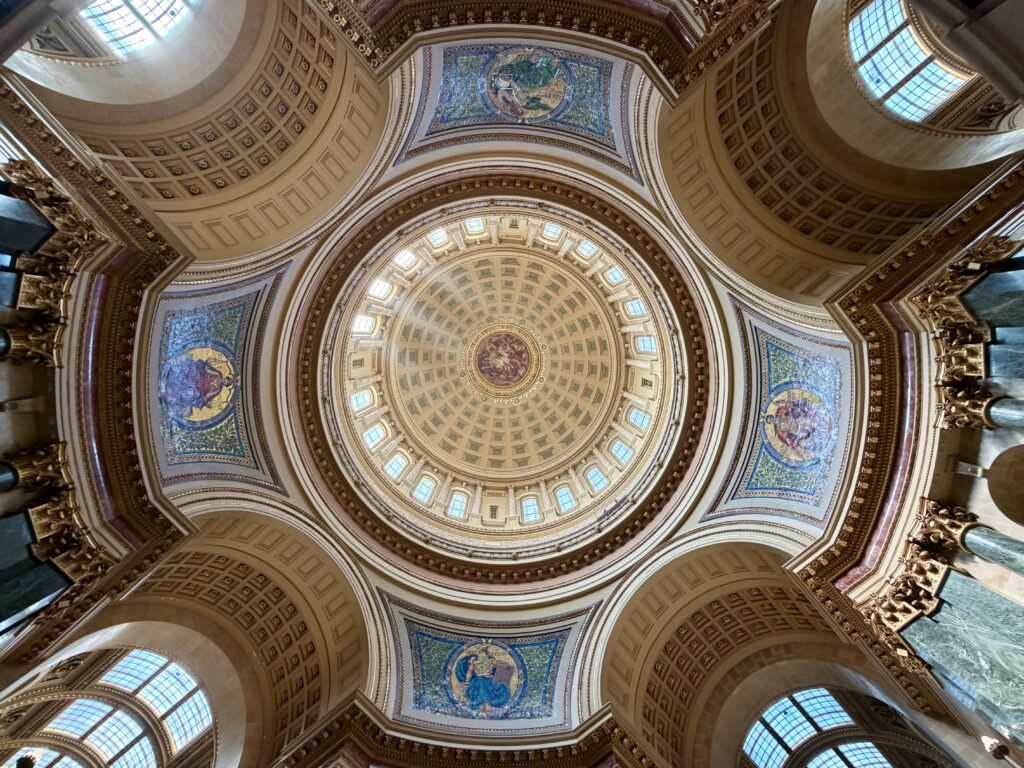
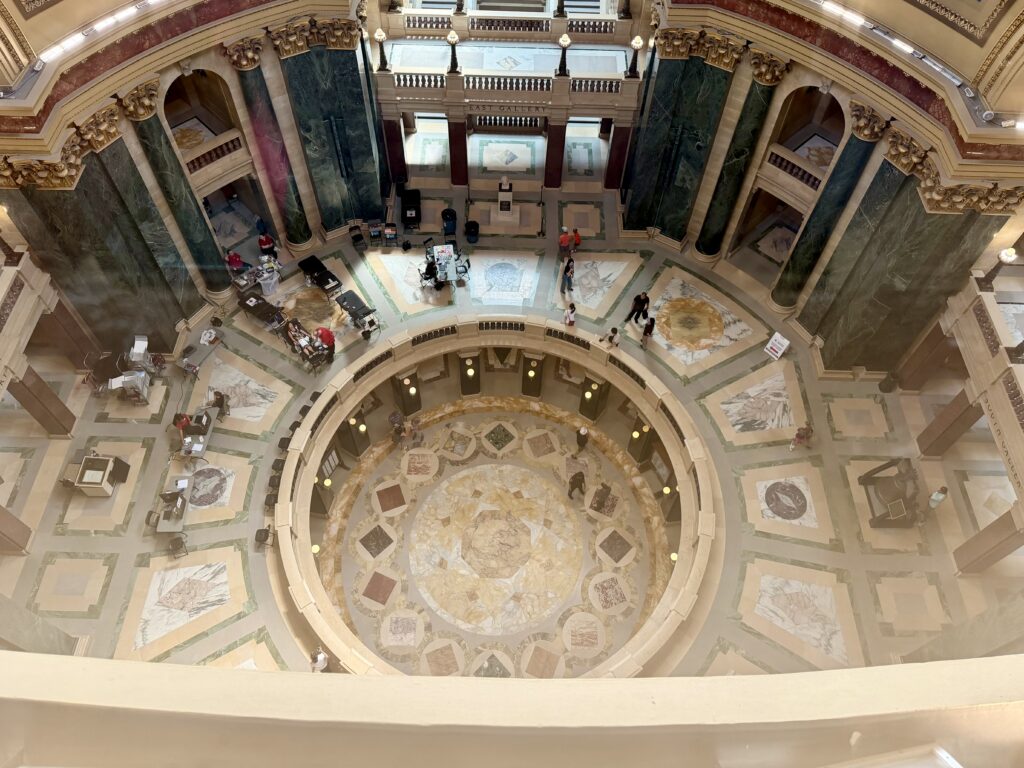
Rotunda — The Wisconsin State Capitol’s grand Rotunda is one of the building’s most impressive spaces. The Rotunda’s four large glass mosaic panels by Kenyon Cox represent the foundations of government and democracy—Legislation, Government, Justice, and Liberty—with each mosaic made from thousands of pieces of glass tile. Above, Edwin Howland-Blashfield’s ceiling mural Resources of Wisconsin depicts the state as a central figure surrounded by symbols of its heritage and prosperity. During December, the Rotunda is transformed with the beautifully decorated Wisconsin State Capitol Holiday Tree, creating a festive highlight for visitors.
——————————————–
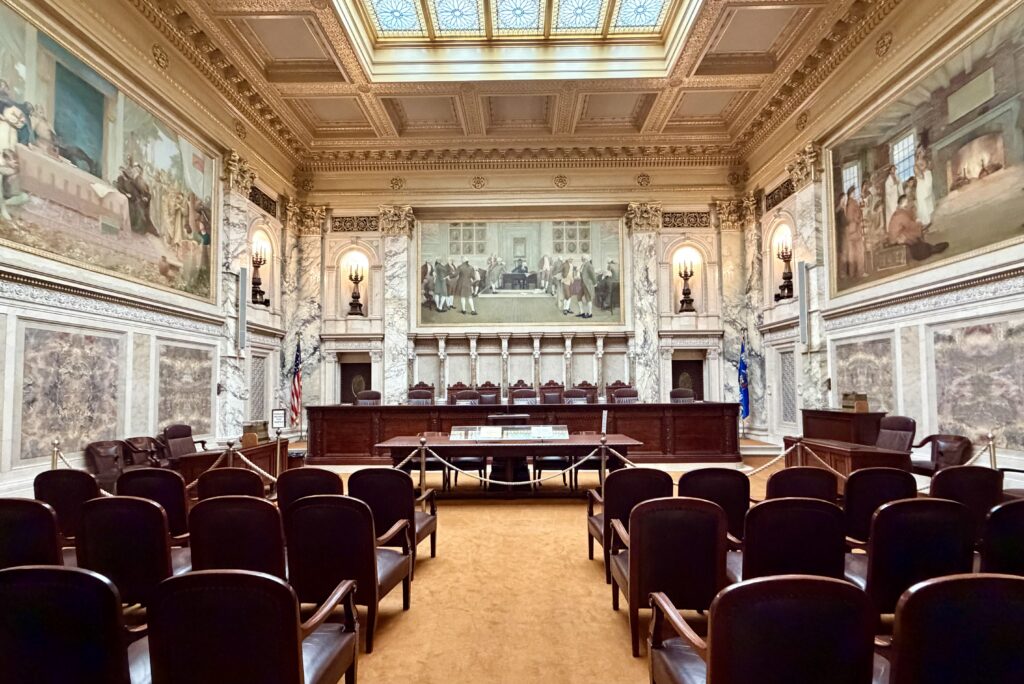
Supreme Court Room — is an elegant space featuring a coffered ceiling with a stained-glass skylight, marble from around the world, and original solid mahogany furnishings. The room is adorned with four murals by Albert Herter depicting significant moments in legal history, including the Magna Carta, the U.S. Constitution, and the historic 1830 trial of Chief Oshkosh of the Menominee tribe, which marked the first use of a jury in Wisconsin.
——————————————–
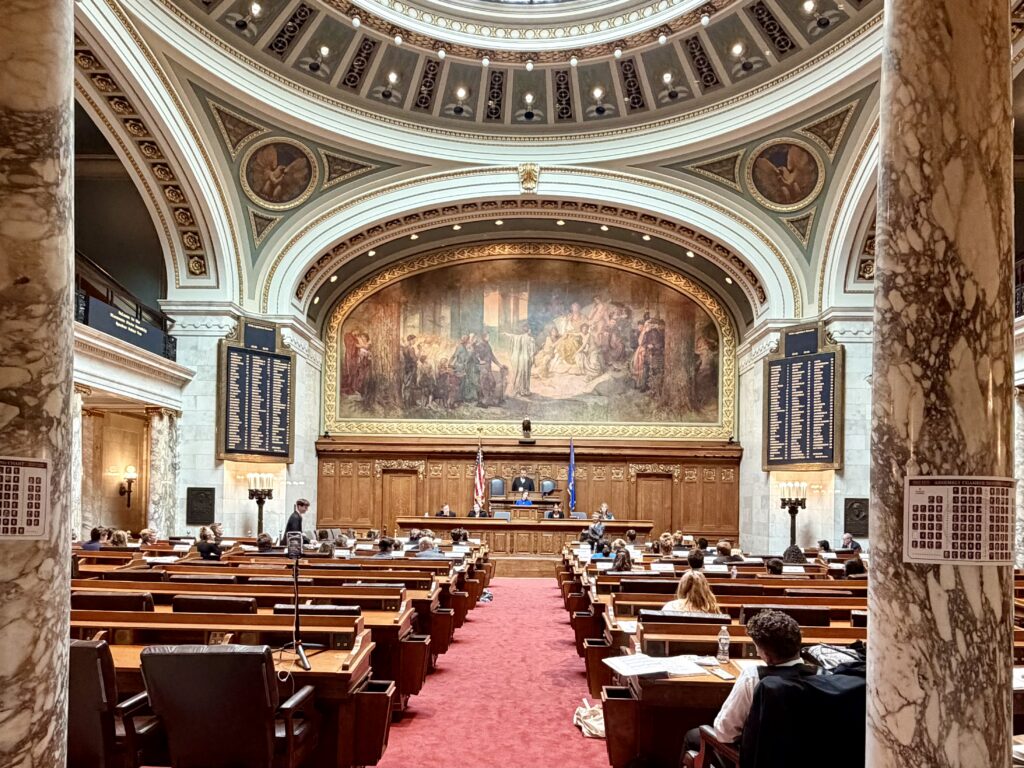
Senate and Assembly Chambers — The Wisconsin State Capitol’s legislative chambers showcase the building’s remarkable craftsmanship, historic furnishings, and artwork. The room features elegant Dover marble walls from New York, Italian marble columns, and the Capitol’s largest skylight—a 36-foot circular stained-glass skylight that fills the room with natural light. At the front of the chamber is Edwin Blashfield’s mural Wisconsin, which depicts the state’s past, present, and future, along with a replica of Old Abe, the famous Civil War eagle mascot of the 8th Wisconsin Infantry Regiment.
——————————————–
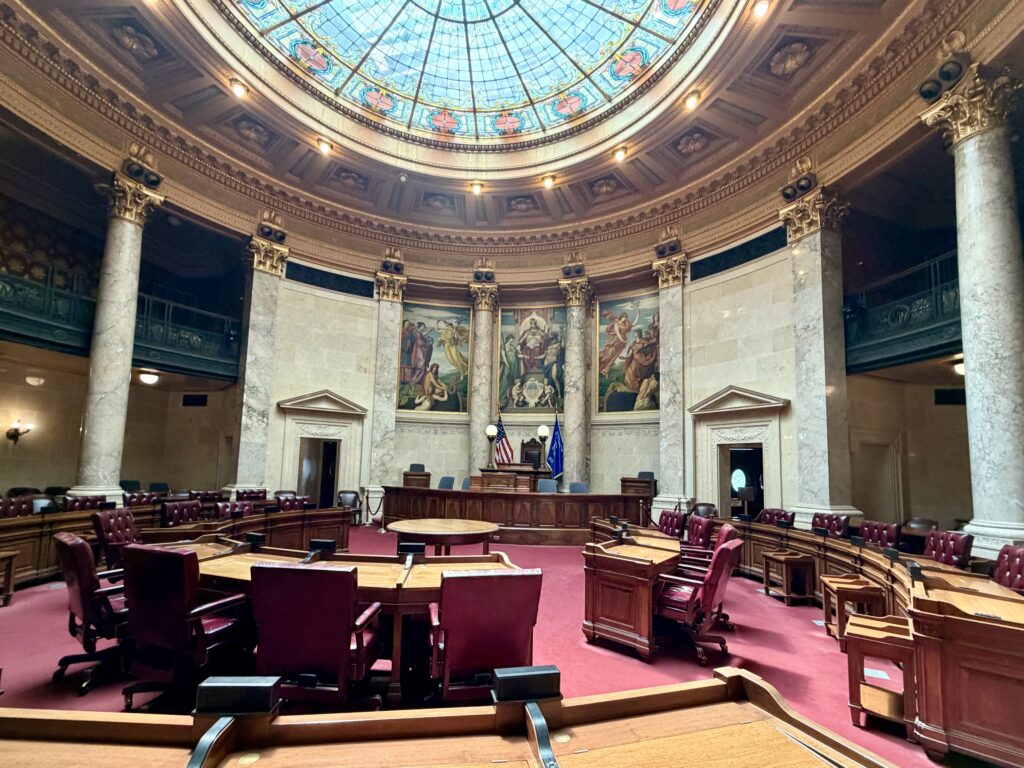
The Senate Chamber is an equally impressive circular room featuring Italian Tavernelle marble walls, Escalette marble columns and pilasters from France, and a 28-foot circular stained-glass skylight overhead. The chamber retains its original hand-carved walnut furnishings, including the Senate President’s desk, Clerk’s desk, round table, and Senators’ desks. A prominent feature is Kenyon Cox’s mural The Marriage of the Atlantic and the Pacific, which commemorates the opening of the Panama Canal and symbolizes the connection between the nation’s two oceans.
After the guided portion, we explored the Observation Deck which is 92 feet above ground level. From the deck, visitors get a panoramic view of the City of Madison, including the lakes, the University campus, and the Monona Terrace Community and Convention Center. Inside the museum, visitors can see displays on the construction of the current Capitol, along with artifacts uncovered during construction. Guests may also get a close-up view of the inner Capitol dome from the Rotunda viewing deck.
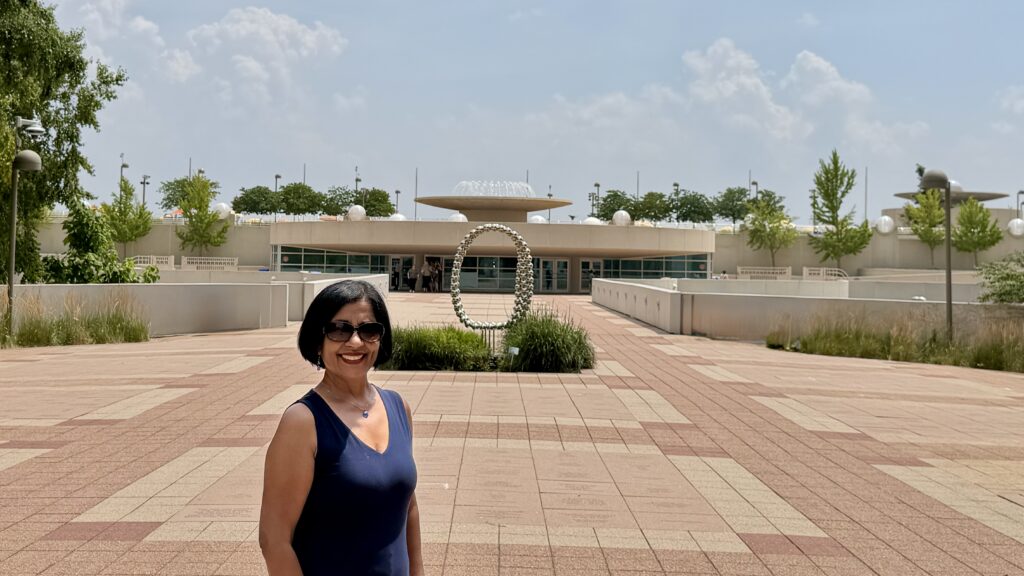
Monona Terrace Community and Convention Center – is one of Frank Lloyd Wright’s most remarkable legacies, beautifully situated on the shores of Lake Monona in downtown Madison. Wright first designed the building in 1938, envisioning a convention center that would blend seamlessly with the lakefront and complement the nearby Wisconsin State Capitol. Although his proposal was rejected during his lifetime, his vision was finally realized nearly 60 years later, when Monona Terrace opened in 1997.
The rooftop terrace is a particular highlight, offering spectacular views of Lake Monona, the Wisconsin State Capitol, and the Madison skyline. Today, Monona Terrace hosts hundreds of conventions, meetings, weddings, and community events each year. You can visit the terrace for free even if you’re not attending any event to appreciate one of Frank Lloyd Wright’s final great designs and to enjoy one of the finest public viewpoints in Madison.
Lake Monona – From the rooftop of Monona Terrace, you are treated to stunning panoramic views of this picturesque freshwater lake, which forms the southern shoreline of downtown Madison. It is the second-largest of the four interconnected Yahara Lakes, which also include Lakes Mendota, Waubesa, and Kegonsa. Together, these lakes define Madison’s unique landscape, with the city’s downtown nestled on the narrow isthmus between Lake Monona and Lake Mendota.
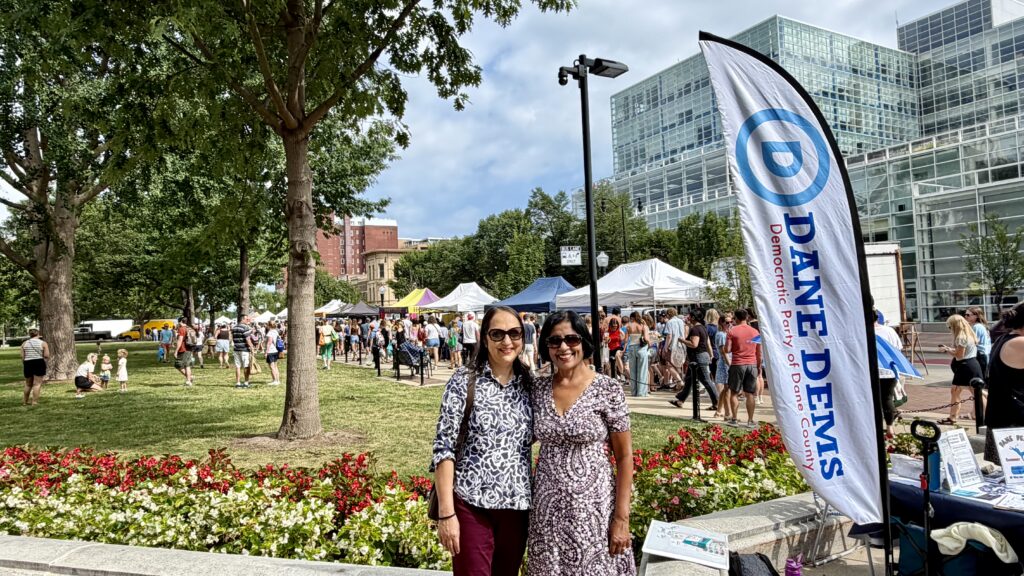
Dane County Farmers’ Market is one of Madison’s most beloved attractions and is widely regarded as the largest producer-only farmers’ market in the United States. Held around the majestic Wisconsin State Capitol on Capitol Square (Wednesday and Saturday mornings), the market brings together more than 200 local vendors, all selling products they have grown, raised, or produced themselves.
Visitors can browse an impressive selection of fresh fruits, vegetables, colorful flowers, artisanal cheeses, local honey, freshly baked breads, pastries, meats, jams, and handcrafted goods. Whether you’re sampling Wisconsin’s famous cheese, picking up freshly baked treats, or simply strolling through the market, you’ll love its festive atmosphere, vibrant energy, and the warm hospitality of local farmers and artisans.

University of Wisconsin–Madison – Founded in 1848, the same year Wisconsin achieved statehood, the university occupies a beautiful 933-acre campus on the shores of Lake Mendota and is internationally recognized for its academic excellence, groundbreaking research, and vibrant campus community.
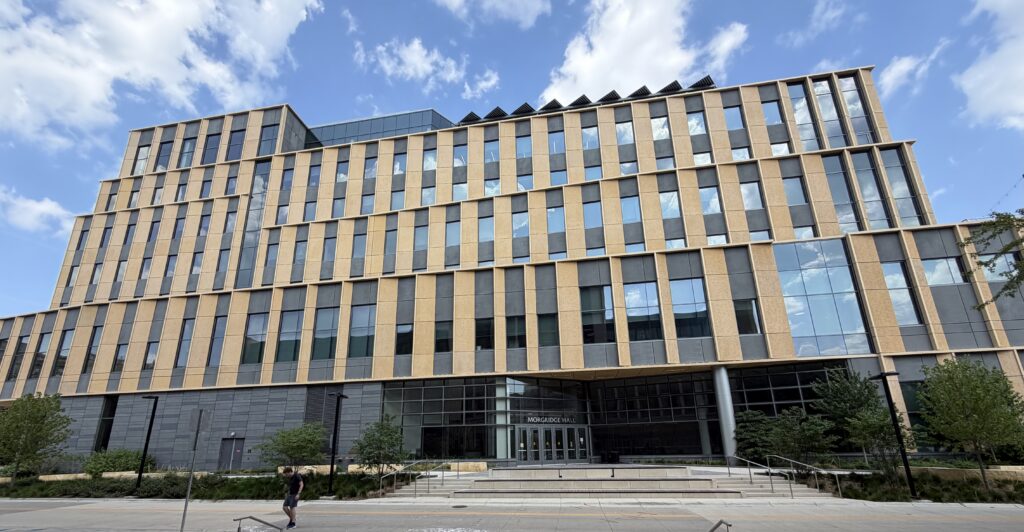
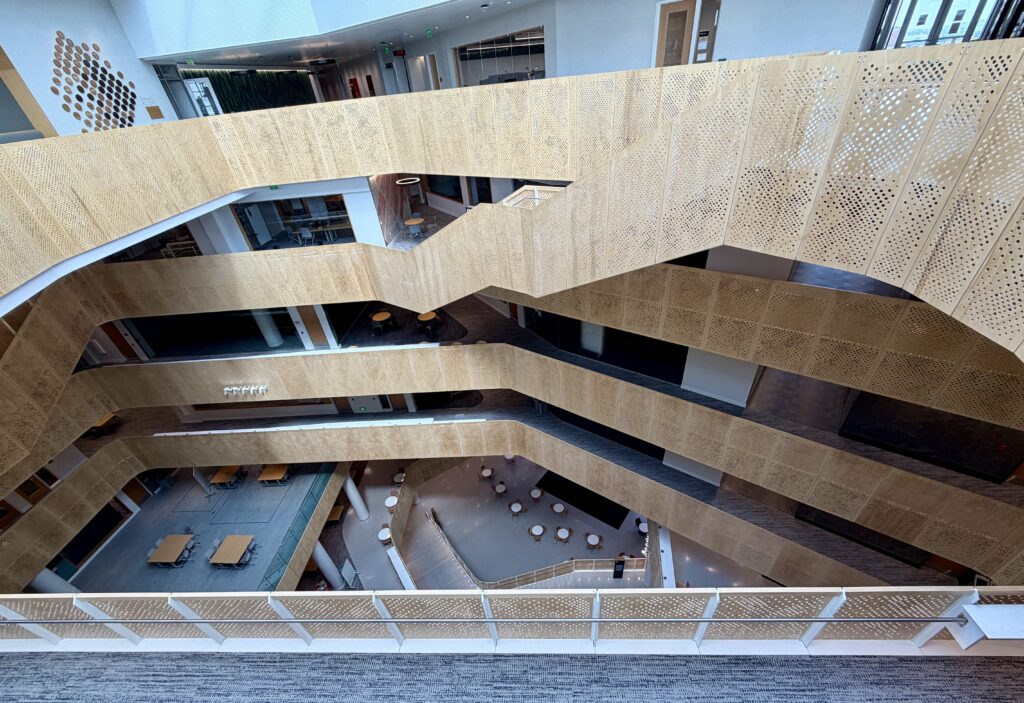
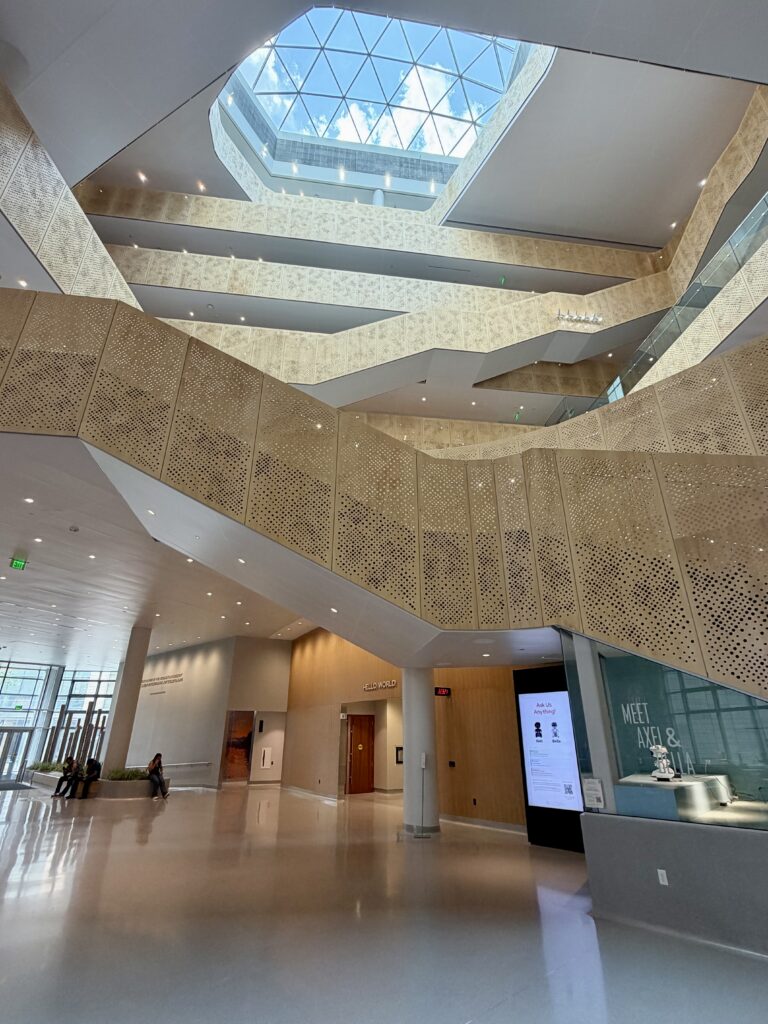
University of Wisconsin–Madison, Morgridge Hall – One of our close friends, who is a professor at the university, gave us a personal tour of the impressive new Morgridge Hall. Home to the College of Computing & Artificial Intelligence and the Data Science Institute, this state-of-the-art facility opened in August 2025 and brings together cutting-edge teaching, research, and collaboration under one roof. Touring the building with someone who teaches there made the experience especially meaningful and offered a fascinating glimpse into the future of computing and artificial intelligence.
————————————————-
University of Wisconsin–Madison, Arboretum – is a 1,200-acre nature preserve and research facility recognized as the birthplace of ecological restoration. Established in 1932, it is home to the oldest restored tallgrass prairie in the United States, along with woodlands, wetlands, gardens, and the scenic shoreline of Lake Wingra. The Visitor Center provides exhibits, maps, and insights into the Arboretum’s history and conservation efforts, making it a wonderful place to explore Wisconsin’s native landscapes.
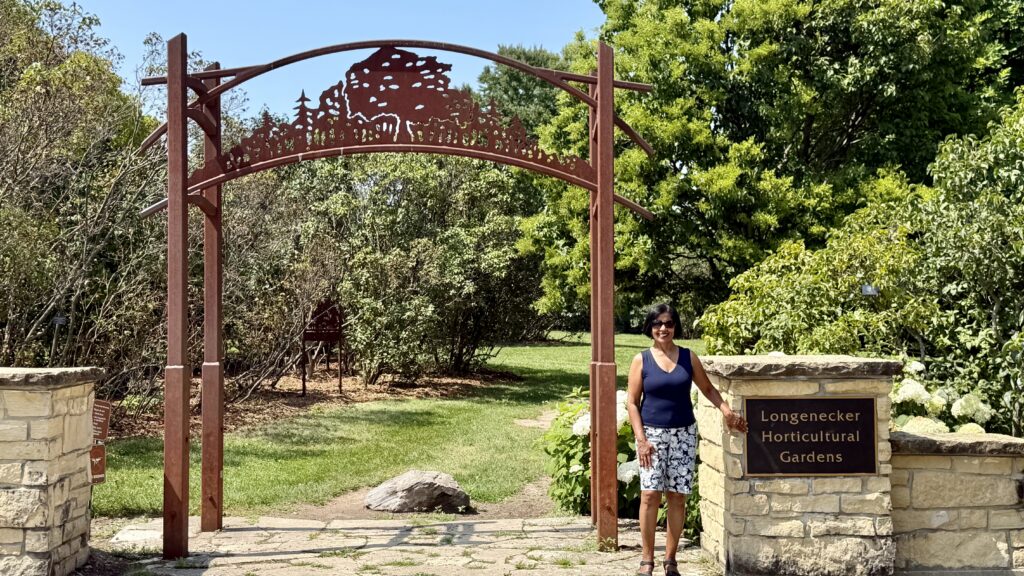
The Longenecker Horticultural Gardens are within walking distance of the Visitor Center and offer a beautiful collection of trees and plants arranged in a garden setting. We enjoyed a relaxing walk through the gardens, which provided plenty of shaded areas and a welcome escape from the heat on a warm day.
————————————————-
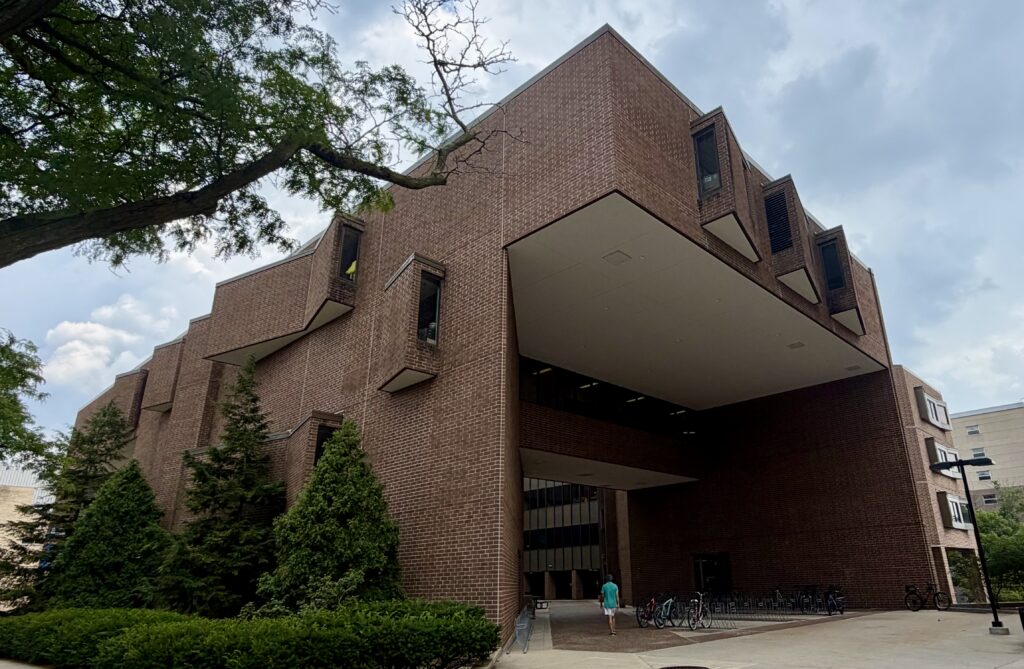
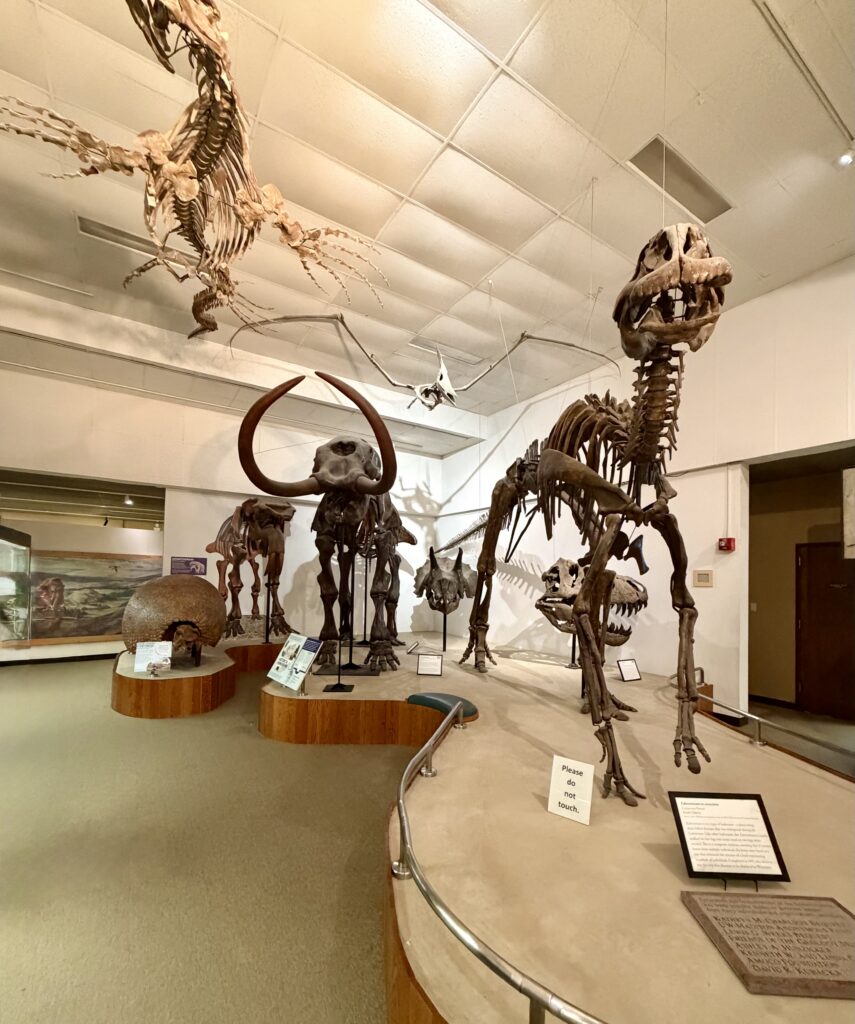
University of Wisconsin–Madison, Geology Museum – is a free geology and paleontology museum located in Weeks Hall on the campus. Founded in the 19th century, the museum features nearly 1,000 specimens across exhibits showcasing rocks, minerals, fossils, meteorites, glaciers, and prehistoric life.
With its engaging displays and educational outreach, it is one of the university’s most visited museums and a fascinating stop for visitors interested in Earth’s history.
Taliesin East – Frank Lloyd Wright’s Home and Studio — Located near Spring Green, Wisconsin, Taliesin was Frank Lloyd Wright’s personal home, studio, and architectural laboratory. Built beginning in 1911 on 600 acres of his ancestral family land, the estate is a masterpiece of Prairie School architecture, designed to blend harmoniously with the rolling hills and natural landscape of Wisconsin’s Driftless Area. The name Taliesin, meaning shining brow in Welsh, refers to the building’s location on the brow of a hill.
Taliesin remained Wright’s primary residence and workplace, where he designed many of his most famous projects, including Fallingwater, Johnson Wax Headquarters, the Jacobs House, and the Guggenheim Museum. In 1932, Wright also established the Taliesin Fellowship, where aspiring architects lived and worked alongside him. Today, Taliesin is a National Historic Landmark and a UNESCO World Heritage Site, welcoming visitors to explore Wright’s architecture, life, and creative vision.
There are a variety of tours offered and we chose the Highlights Tour! This experience is led by a knowledgeable tour guide and showcases the property’s most notable highlights – Taliesin and Hillside Drafting Studio and Theater.
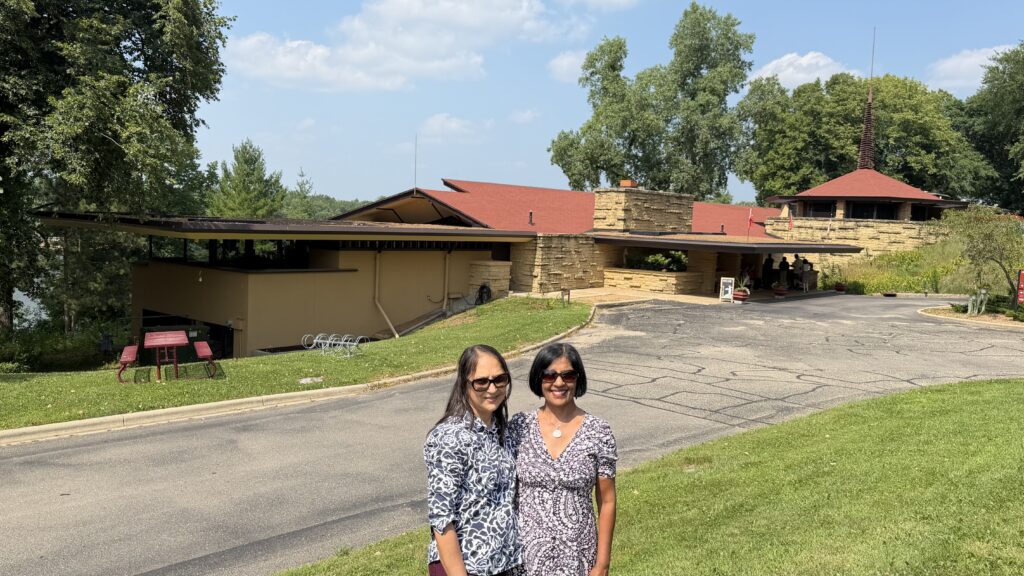
The Frank Lloyd Wright Visitor Center serves as the gateway to the 800-acre Taliesin Estate and the departure point for all public tours. The center is housed in the historic Riverview Terrace Restaurant, a building originally designed by Wright in 1953 along the banks of the Wisconsin River. Acquired and adapted by Taliesin Preservation in 1993, the center offers exhibits, a gift shop, and café, providing an ideal introduction to Wright’s life, work, and architectural vision.
—————————————
Frank Lloyd Wright’s Residence – We boarded a shuttle from the Visitor Center to Taliesin, where our tour began inside Frank Lloyd Wright’s personal residence and drafting studio.
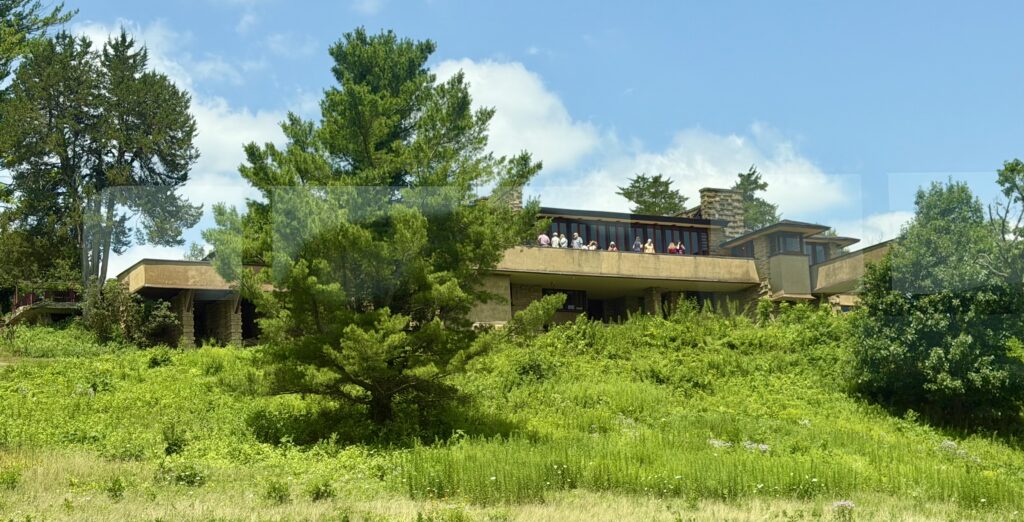
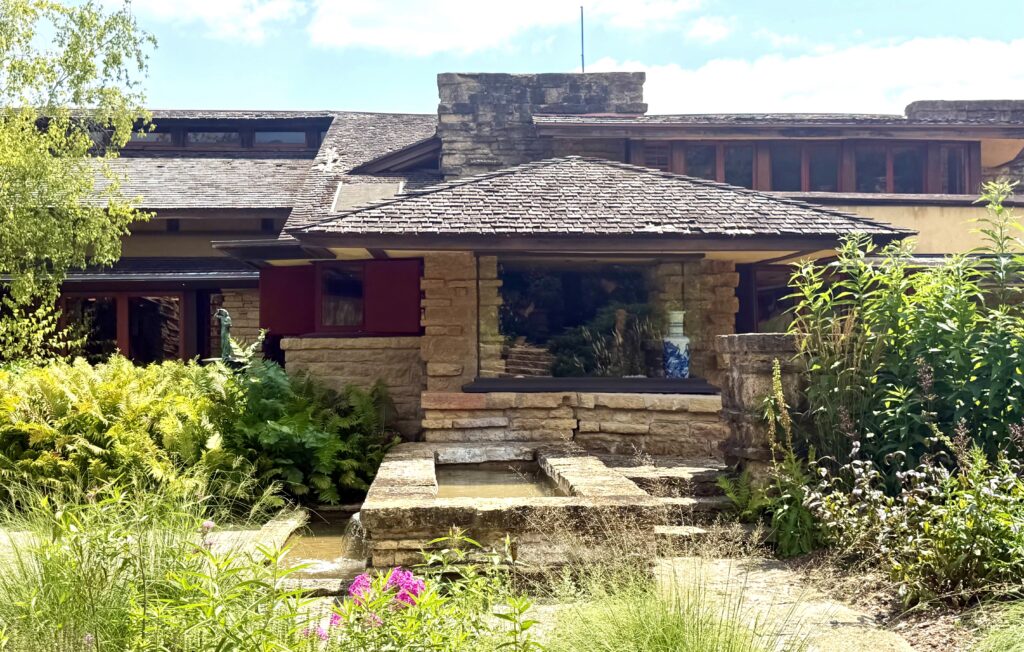
Touring Taliesin’s interiors offers a fascinating glimpse into Frank Lloyd Wright’s personal life and creative genius. The home features beautifully designed living spaces that seamlessly blend with the surrounding landscape through expansive windows and terraces. The highlight is the Living Room, a warm, light-filled gathering space with soaring ceilings, limestone walls, built-in seating, and Wright’s signature geometric details. Designed for both family life and entertaining guests, the room frames spectacular views of the Wisconsin countryside, perfectly illustrating Wright’s philosophy of bringing nature and architecture together.
—————————————
The second part of the tour explores the Hillside Drafting Studio and Theater building, including the 5,000 square foot Drafting Studio, home to the Taliesin Fellowship, Wright’s architectural apprenticeship program.
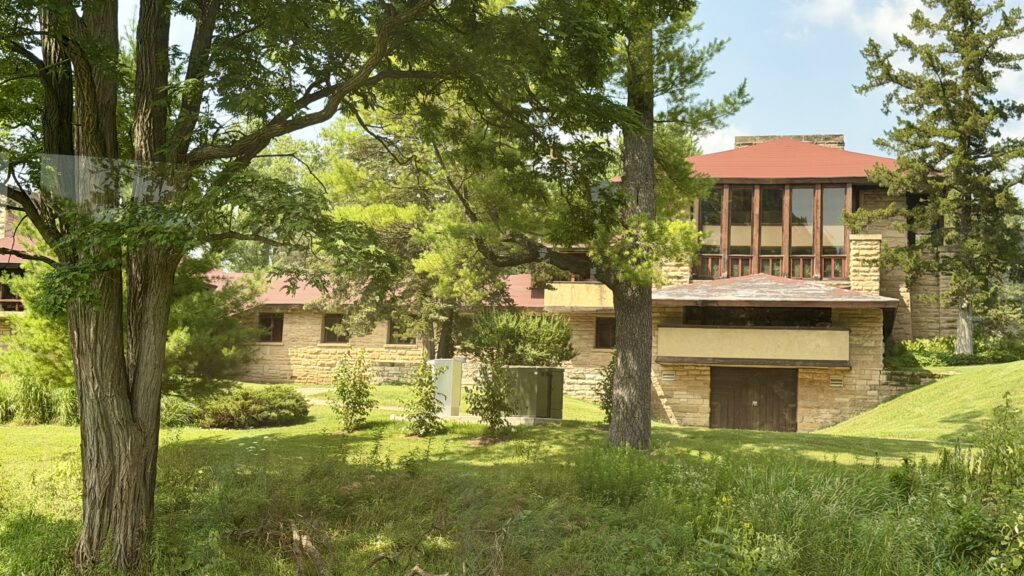
The Hillside Studio, was where Wright’s apprentices worked, studied, and collaborated on architectural projects. The spacious drafting studio, filled with natural light, reflects Wright’s belief that architecture should be learned through hands-on practice and close mentorship. Nearby is the Hillside Theater, an intimate performance space that served as the cultural heart of the Taliesin hosting plays, concerts, films, and lectures. Together, these buildings illustrate Wright’s vision of combining architecture, education, and the arts into a single creative community.
—————————————
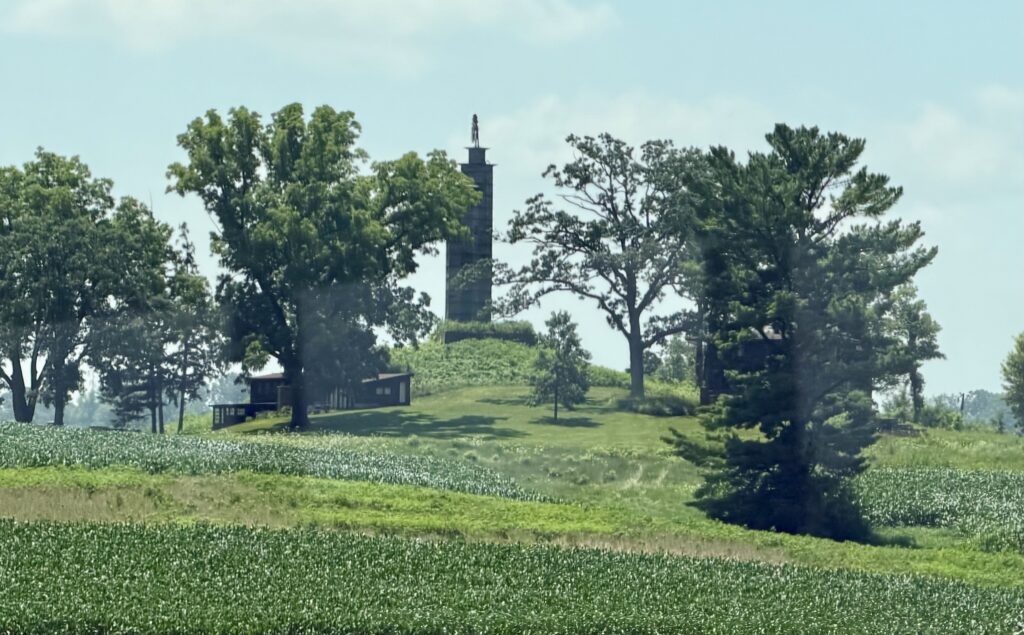
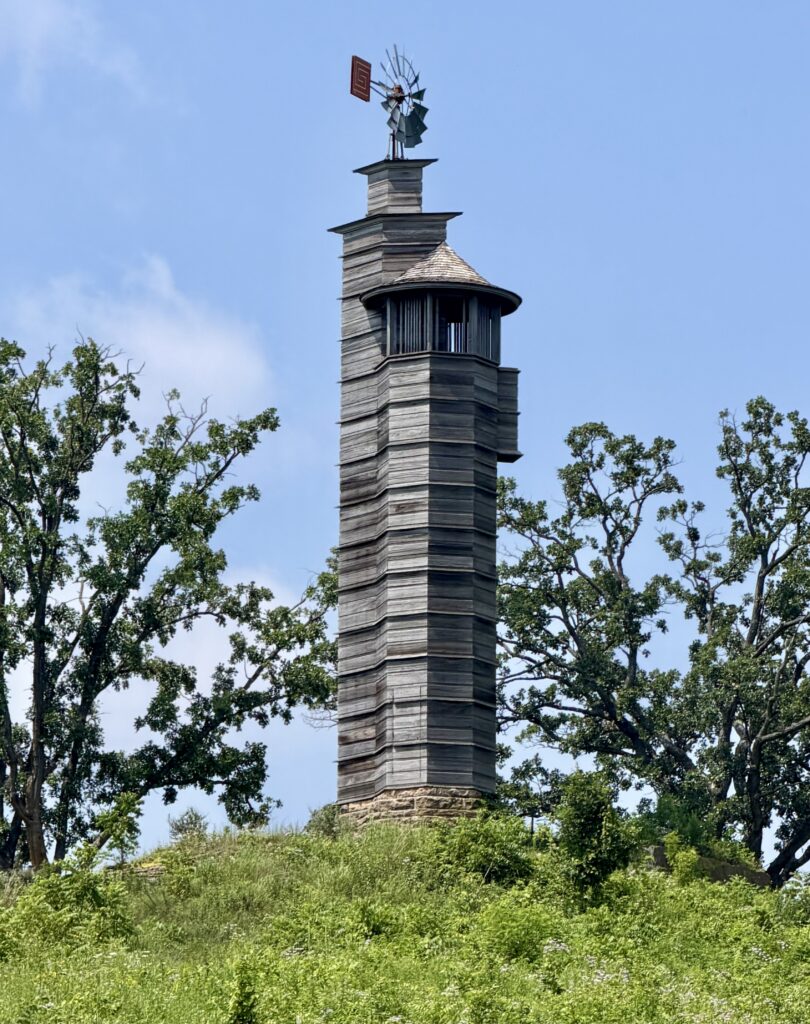
Taliesin’s 800-acre estate is home to several other notable Frank Lloyd Wright buildings, including Unity Chapel, Tan-y-Deri, and the Romeo and Juliet Windmill. We admired these landmarks as our shuttle passed by them and from the scenic views on Taliesin’s Garden Room terrace. If time permits, you can return after the guided tour to explore these buildings more closely on your own.
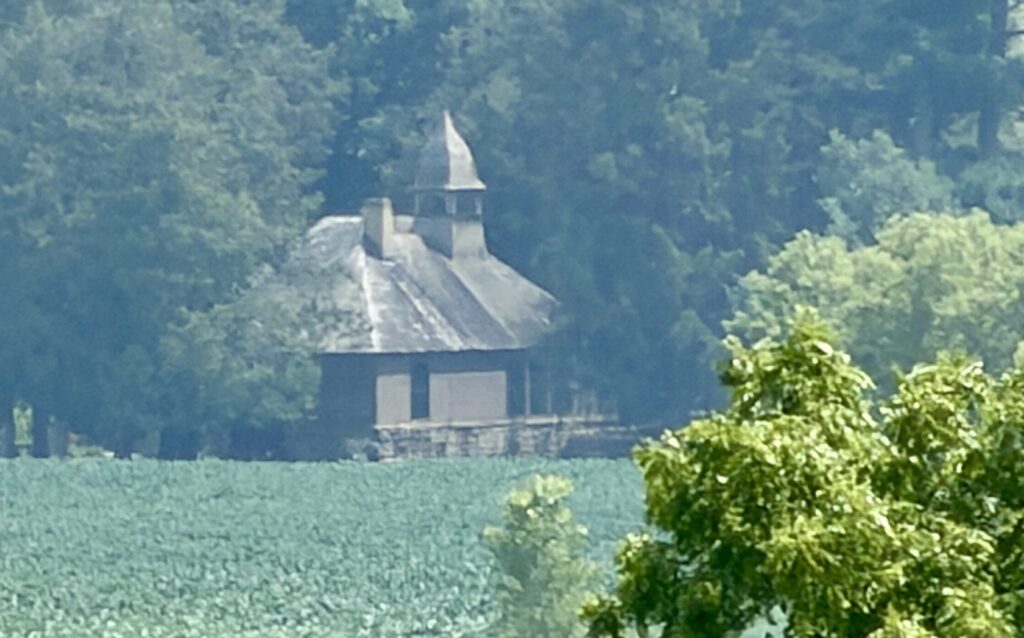
Unity Chapel (1886) — is Frank Lloyd Wright’s earliest surviving work. Commissioned by his uncle, Jenkin Lloyd Jones, the chapel is attributed to architect Joseph Lyman Silsbee, while the 18-year-old Wright designed its interior. Built in the Shingle Style, the chapel reflects the beginnings of Wright’s architectural journey. The adjacent family cemetery includes members of the Lloyd Jones family, including Wright’s original burial site. Today, Unity Chapel remains owned and operated by the Lloyd Jones family and can be visited by request.
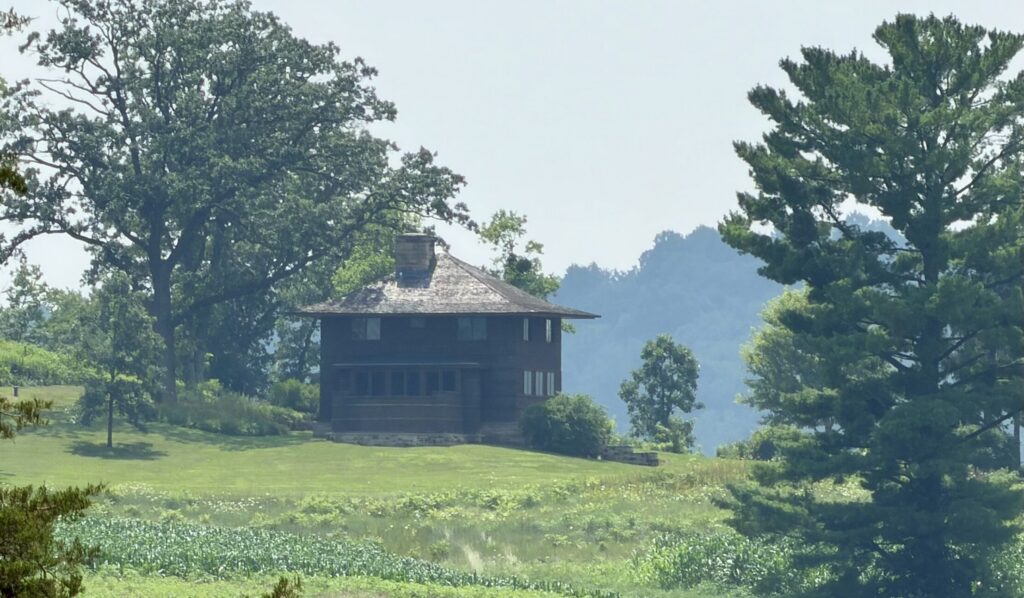
Tan-y-Deri – Wright designed Tan-y-Deri as a residence for his sister, Jane Porter, and her family. The Porters worked for the Hillside Home School, just downhill. Welsh for under the oaks, Tan-y-Deri sits on a hill adjacent to Taliesin and next to the Romeo and Juliet Windmill. Tan-y-Deri underwent a comprehensive interior and exterior restoration completed in 2017.
Romeo and Juliet Windmill (1897) — Designed by Frank Lloyd Wright for his aunts’ boarding school, the Romeo and Juliet Windmill was built to pump water while doubling as a striking observation tower. Its distinctive design features two intersecting towers—a triangular Romeo tower supported by the octagonal Juliet tower—creating an aerodynamic structure that withstands strong winds. Restored in 1992, the windmill remains one of Wright’s most imaginative early designs.