3 nights in Provincetown Airbnb – June 2026
We spent four wonderful days exploring Cape Cod, visiting its many picturesque lighthouses, discovering historic sites in Plymouth, Provincetown, and Chatham, and making the most of the beautiful weather while relaxing on the area’s scenic beaches.
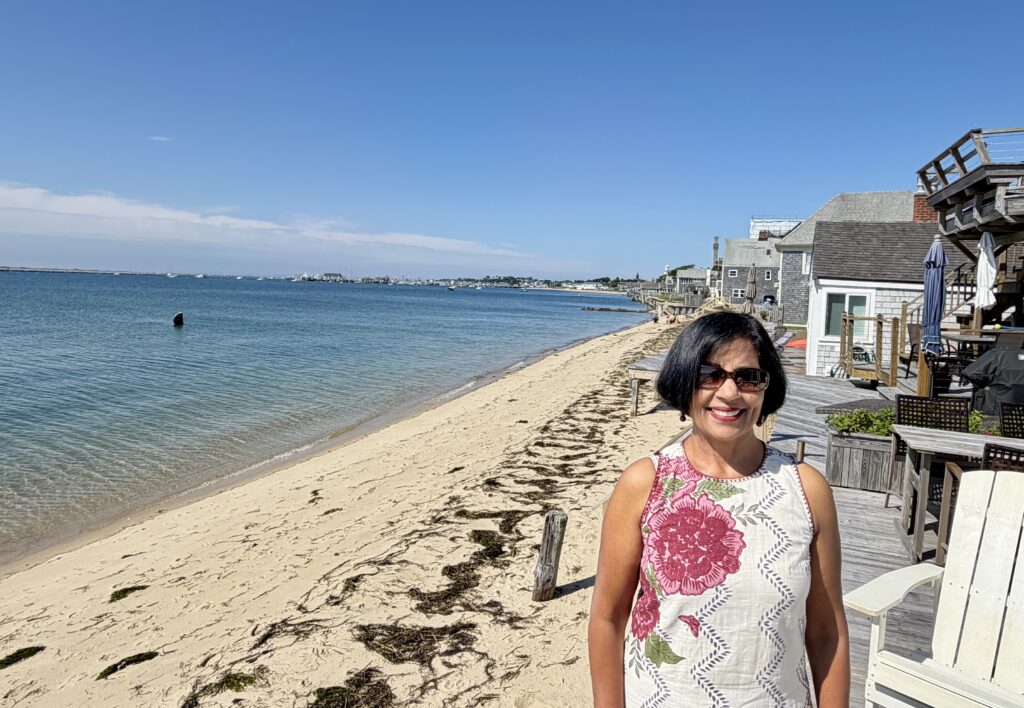
We rented an Airbnb in Provincetown that was just a few steps from the beach and the water. From the living room, we had a beautiful view across the bay, where we could see the distinctive hook-shaped tip of Cape Cod.
- Day 1 – Lighthouses in Eastham and Truro
- Three Sisters Lighthouses
- Nauset Lighthouse
- Highland Lighthouse
- Airbnb
- Day 2, 3 – Provincetown
- Church of St. Mary of the Harbor
- Provincetown Public Library
- Portuguese Bakery
- Bob Gasoi Memorial Art Alley
- Provincetown Town Hall
- Pilgrim Monument
- Pilgrim House
- Lands End Inn
- Provincetown Piers
- MacMillan Pier
- Fisherman’s Wharf (Cabral’s Pier)
- USCG Pier
- Shuttle Boat to Long Point Lighthouse
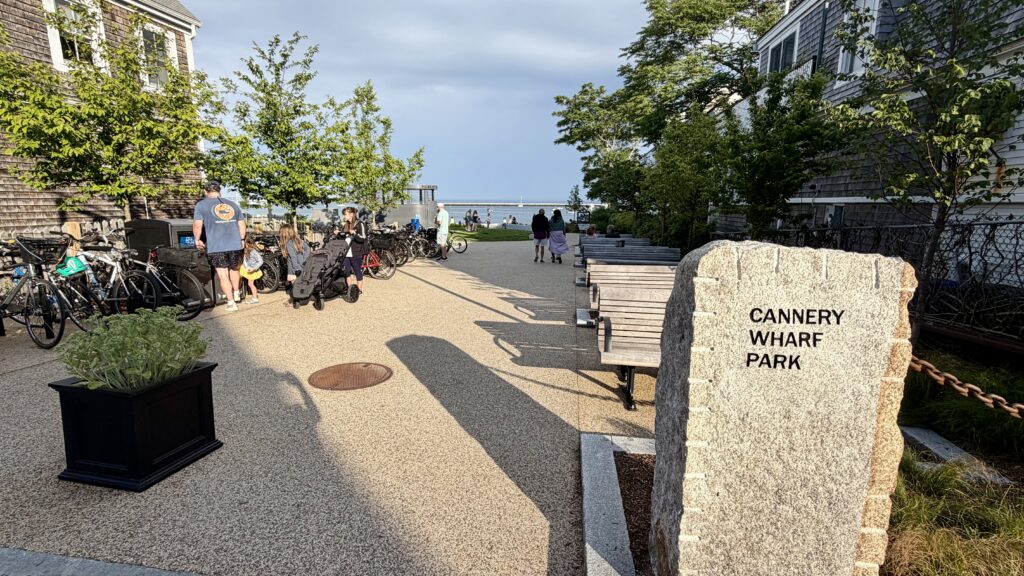
- Canary Wharf Park
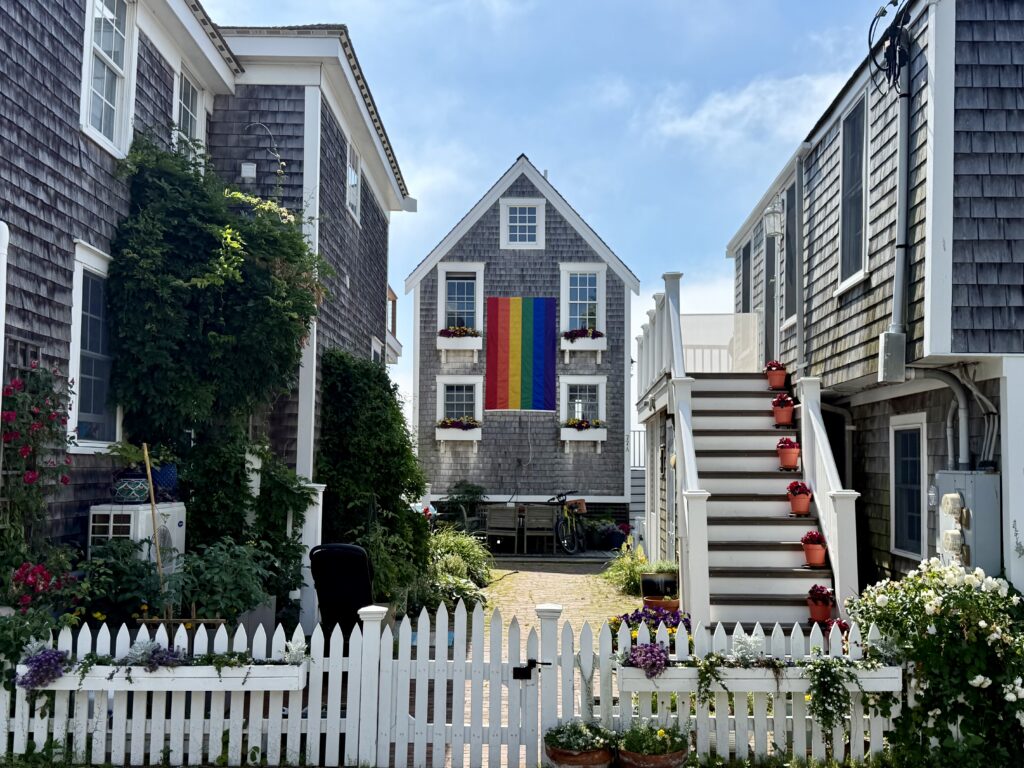
- Wharf House at 77A Commercial Street
- Pilgrims’ First Landing Park and Provincetown Causeway
- Day 4 – Driving back to Boston
- Chatham
- Chatham Lighthouse
- Chatham’s Main Street
- Chase Park
- House with a Replica
- Chatham Fish Pier
- Plymouth
- Plymouth Rock
- Mayflower II
- Chatham
———- Day 1 ———-
Three Sisters Lighthouses – Driving from Boston, our first stop was in Eastham to visit the Three Sisters Lighthouses. It was a bit of a letdown, as two of the lighthouses no longer have their light towers, while the third was partly covered for restoration. These lighthouses were the original guardians of the Nauset Cliffs before they were replaced by Nauset Light. They earned the name Three Sisters because sailors at sea thought they resembled three women dressed in white with black hats.
Nauset Lighthouse – We then walked over to Nauset Lighthouse, which is less than a 10-min walk from the Three Sisters Lighthouses parking lot. It was absolutely beautiful and is featured on Cape Cod Potato Chip bags. Nauset Light was originally one of a pair of lighthouses in Chatham, with its twin, Chatham Lighthouse, still standing today. It was moved to its current location in 1923 and repainted with its now-iconic red lantern room. The lighthouse is open for tours at certain times in the summer.
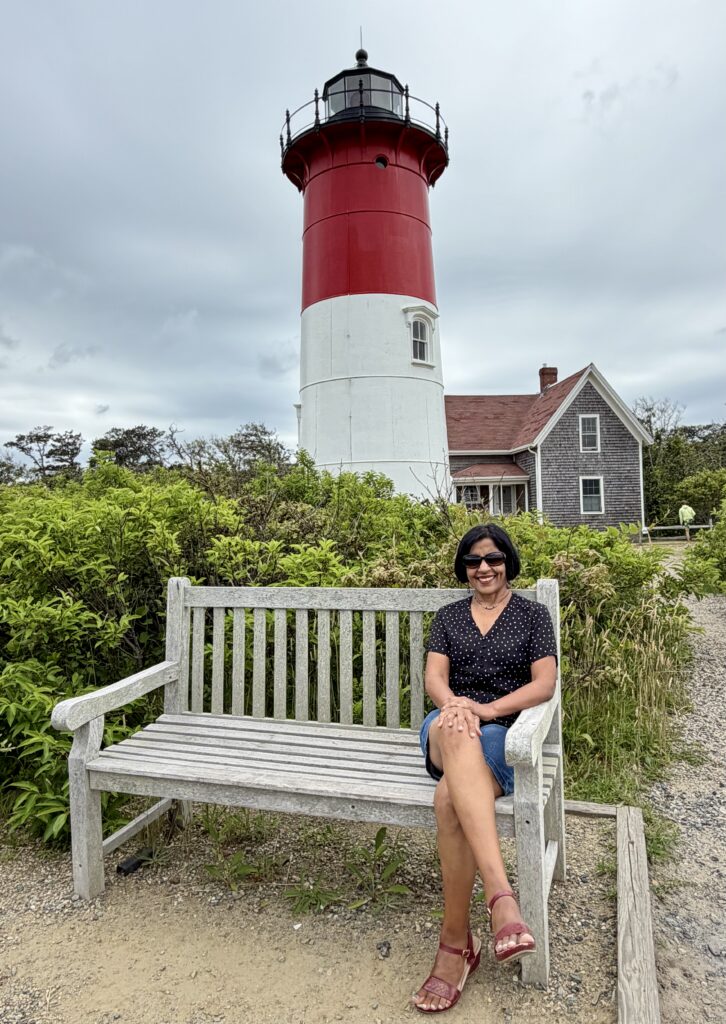

Note – We parked at the Three Sisters Lighthouses parking lot, which is free but limited to 30 minutes. Parking at Nauset Lighthouse is paid because it also serves Nauset Beach. In addition to the parking fee, there is a separate per-person beach access fee. Since we were only visiting the lighthouse and not the beach, we chose to park at the Three Sisters Lighthouses and walk to Nauset Lighthouse.
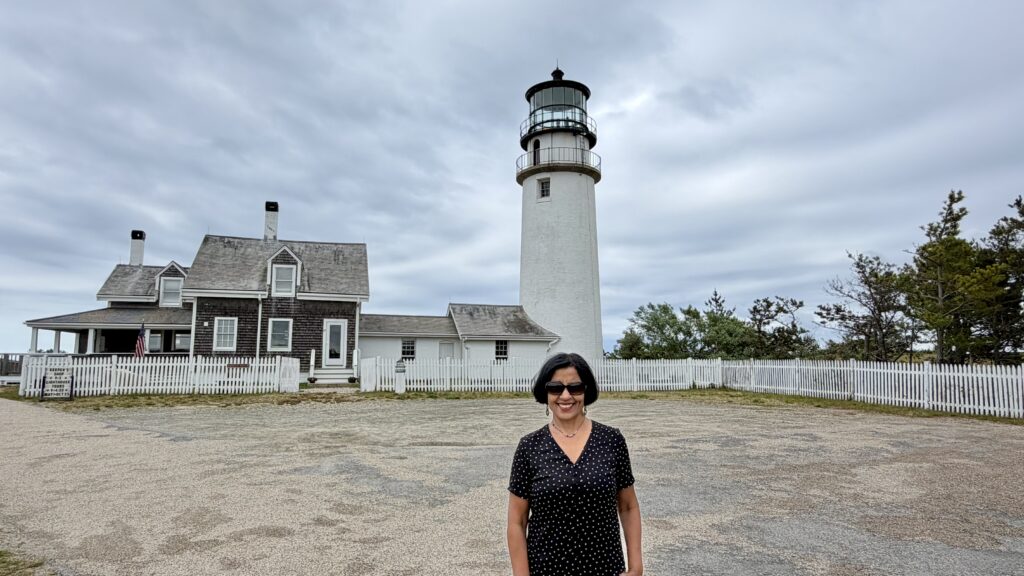
Highland Lighthouse – Located in North Truro, Highland Lighthouse is the oldest and tallest lighthouse on Cape Cod and stands in a peaceful setting overlooking the nearby golf course. The first lighthouse on this site was commissioned by George Washington in 1797 to help guide ships along the treacherous Cape Cod coastline. That original wooden structure was replaced by a brick lighthouse in 1833, and the present 66-foot brick tower was built in 1857 after the earlier lighthouse was deemed unsafe.
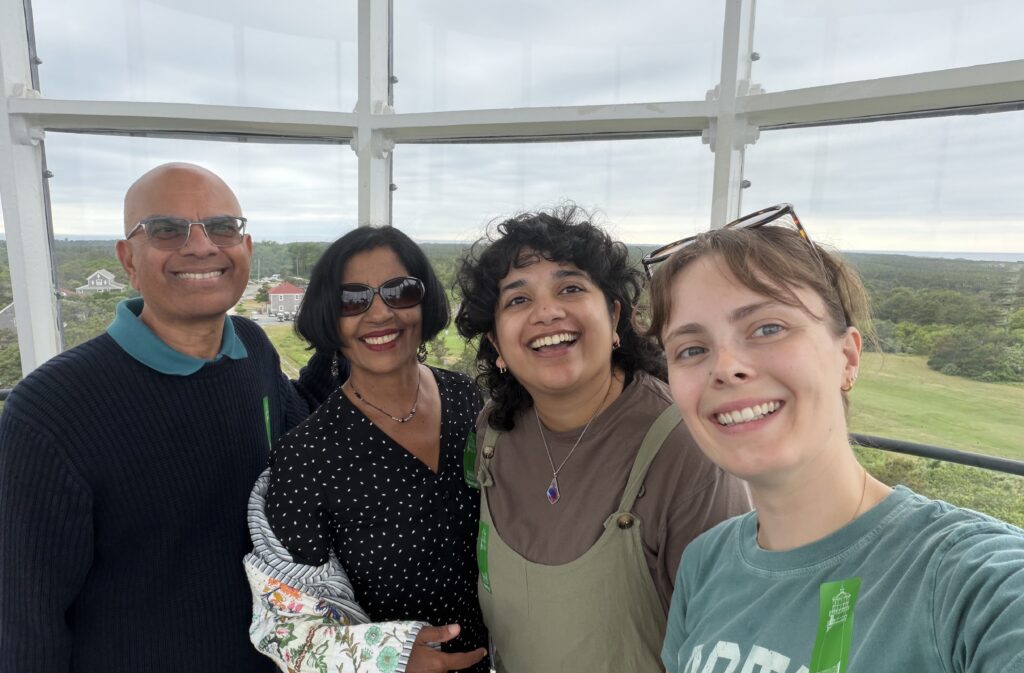
Like many structures along Cape Cod’s coastline, the lighthouse was threatened by coastal erosion. In 1996, it was carefully moved 450 feet inland to protect it from the encroaching cliffs, preserving one of the Cape’s most iconic landmarks. We joined the 30-minute guided tour, which included climbing 65 steps to the top of the lighthouse. The effort was well worth it, as we were rewarded with breathtaking panoramic views of Cape Cod and its iconic hook-shaped coastline as well as the Long Point Lighthouse.
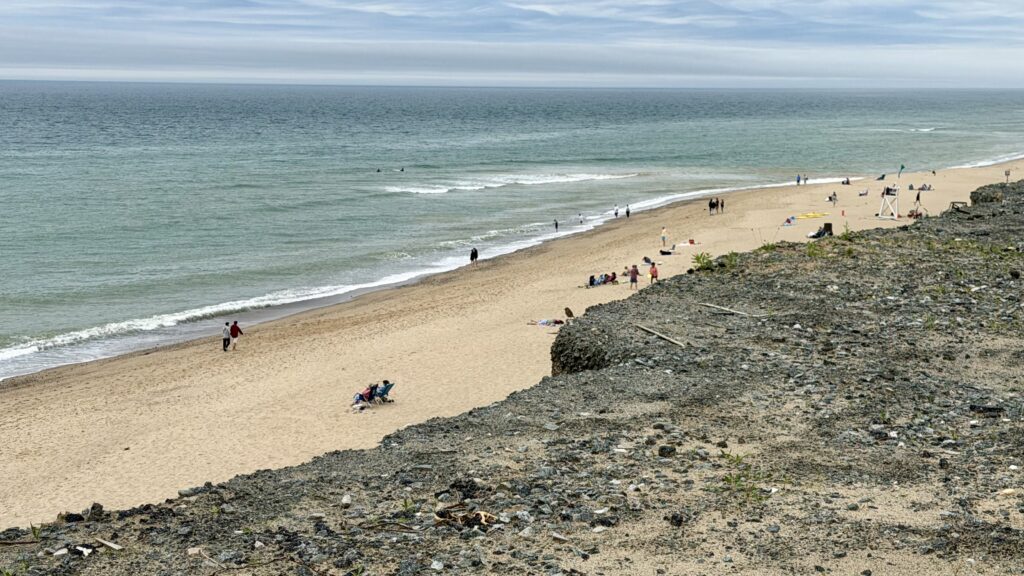
Airbnb – We then checked into our spacious two-bedroom Airbnb on Commercial Street. The location was perfect, and from our living room we enjoyed stunning views across Cape Cod Bay toward the tip of Cape Cod’s iconic hook and the distant Long Point Lighthouse. The beach was just steps away, making it ideal for long walks along the shore. We spent the rest of the day relaxing, soaking in the beautiful scenery, and enjoying the water.
———- Day 2, 3 ———-
History of Provincetown – Perched at the very tip of Cape Cod, Provincetown—affectionately known as P-town—is one of New England’s most vibrant seaside towns. While it is best known today for its thriving arts community, beautiful beaches, lively Commercial Street, and welcoming LGBTQ+ culture, Provincetown’s history stretches back more than four centuries.
The town occupies an important place in American history. In November 1620, the Mayflower anchored in Provincetown Harbor after crossing the Atlantic, and it was here that the Pilgrims signed the Mayflower Compact before sailing across the bay to establish Plymouth Colony. Long before European settlers arrived, the area was home to the Nauset people, who had lived along these shores for generations.
During the 18th and 19th centuries, Provincetown flourished as a fishing and whaling port, attracting many Portuguese immigrants, particularly from the Azores. Their influence remains an important part of the town’s identity and is reflected in its culture, festivals, and outstanding Portuguese bakeries and restaurants.
Most of the attractions we visited were located along Commercial Street, Provincetown’s lively three-mile main thoroughfare. While we had a list of places we wanted to see, we stumbled upon some of them along the way and they were pleasant surprises.
———————————————
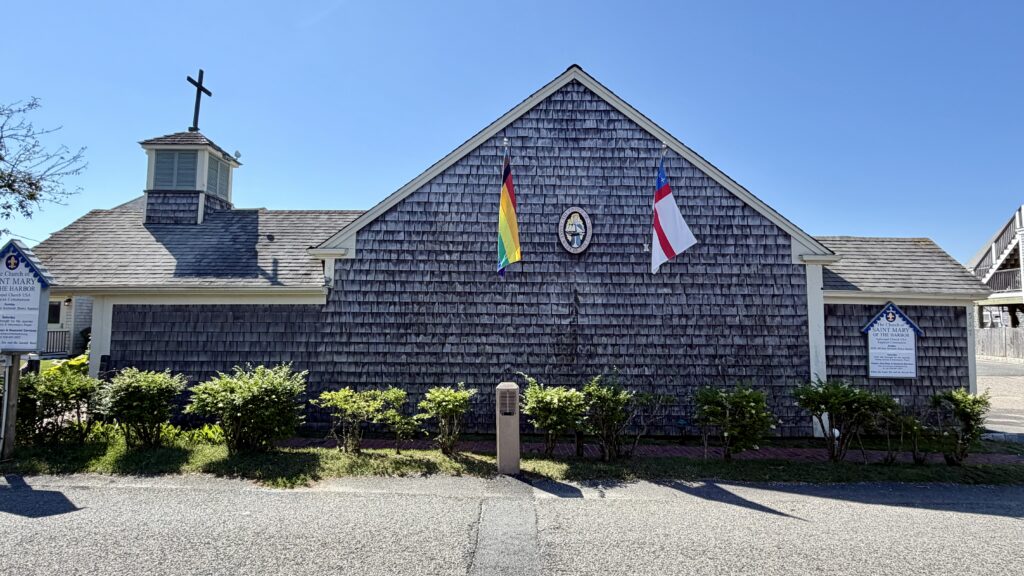
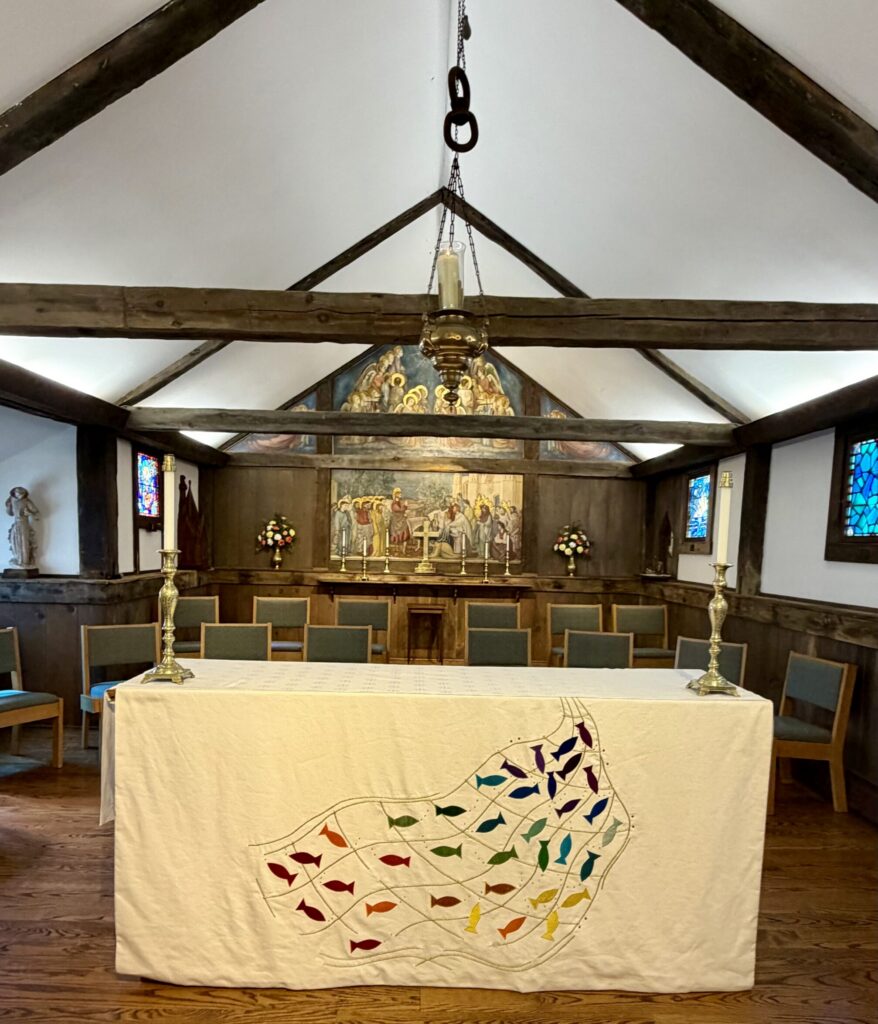
Church of St. Mary of the Harbor – We started the day with a walk toward the center of Provincetown. Along the way, we came across the Church of St. Mary of the Harbor, which was open, so we stepped inside for a few quiet moments. Built in 1890, this Roman Catholic church features a classic New England design that stands out among the town’s colorful streets. Its peaceful interior, illuminated by beautiful stained-glass windows and centered around a simple yet elegant altar, provides a tranquil space for reflection.
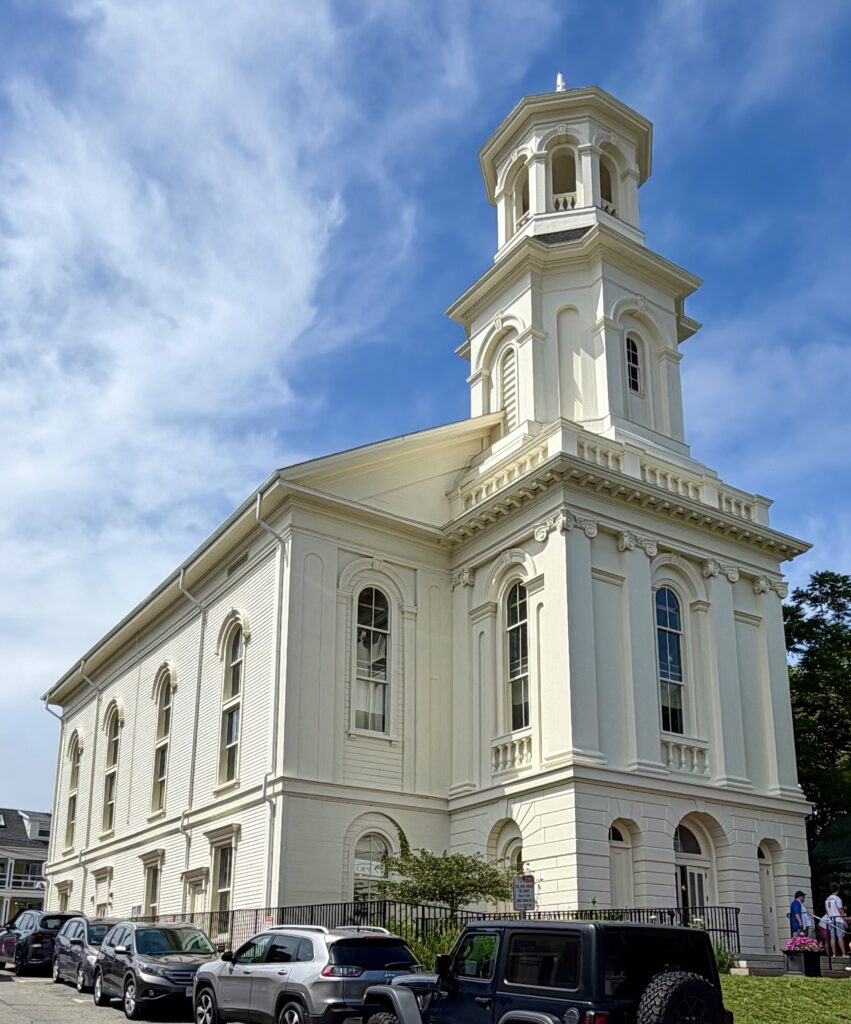
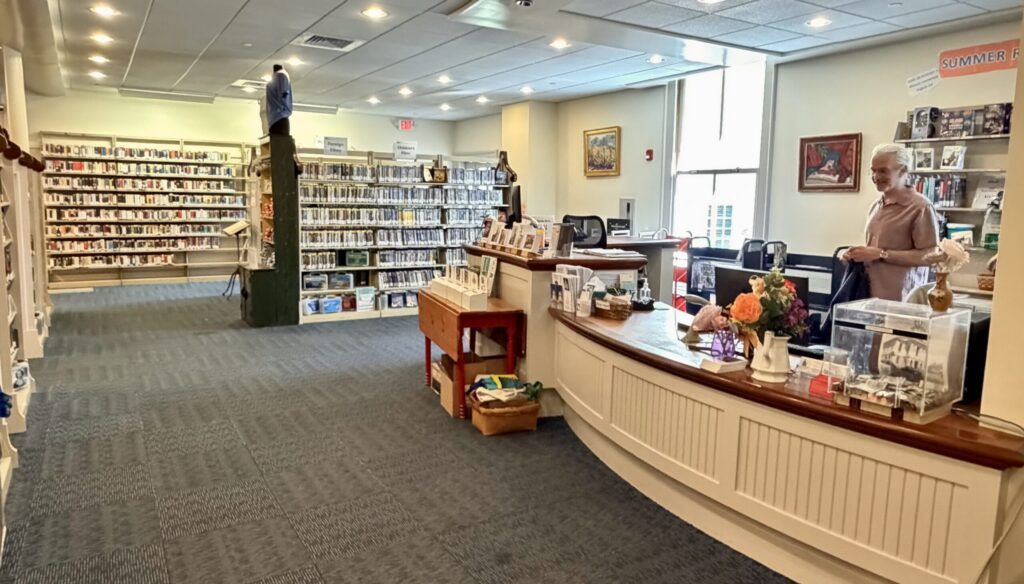
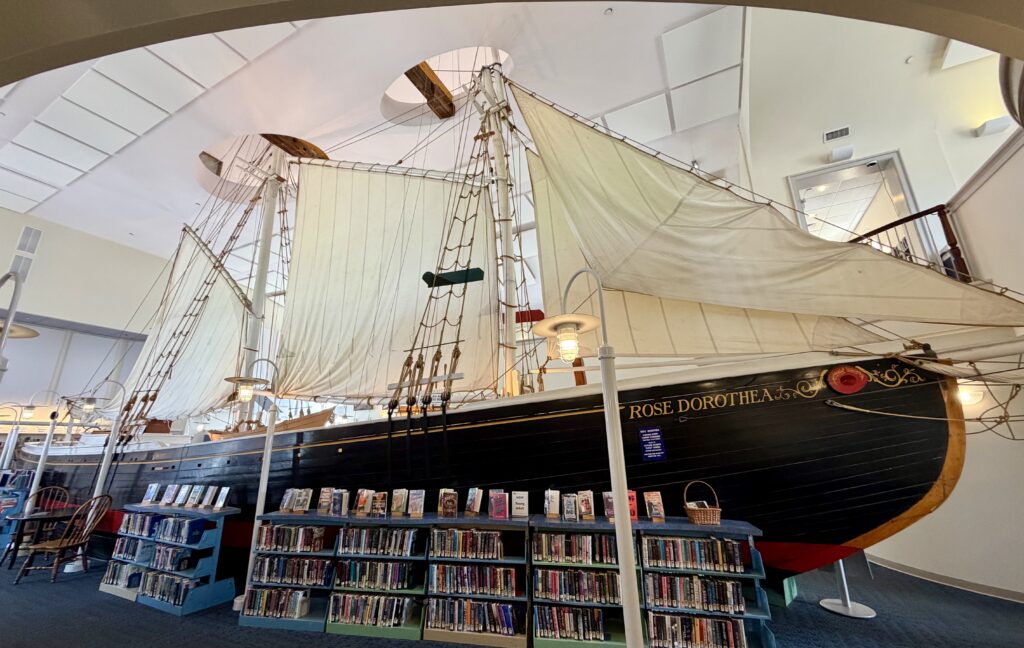
Provincetown Public Library – The next interesting building we came across was the Provincetown Public Library, which was open, so we took some time to explore its beautiful interior. Housed in a former Methodist church built in 1860, the building has had a fascinating history. It has served as one of the largest Methodist churches in the United States, an art museum, and a heritage museum before being transformed into the town’s public library in 2005.
Its most remarkable attraction is the Rose Dorothea, a full-scale replica of the famous Provincetown fishing schooner displayed in the center of the library. Suspended beneath the towering ceiling, the schooner is a stunning centerpiece that celebrates Provincetown’s rich maritime heritage.
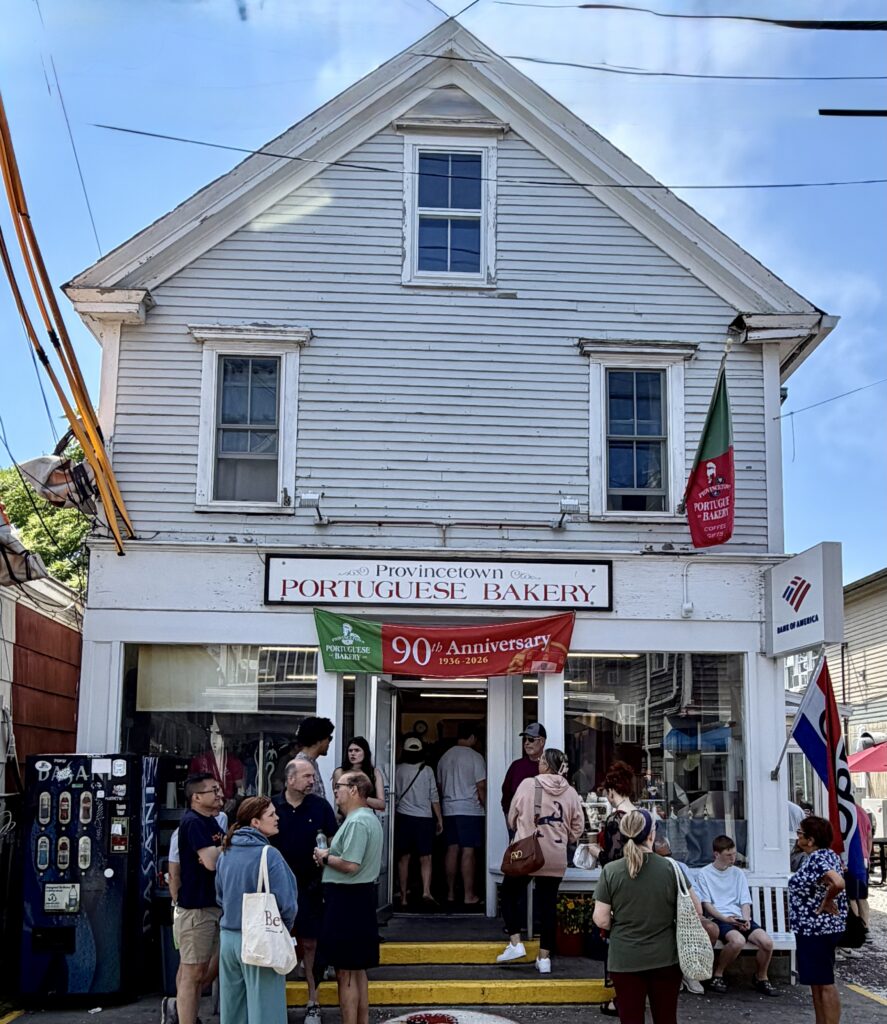
Portuguese Bakery – We had heard so many great things about this bakery while researching places to eat in Provincetown that it was high on our list to visit. When we stopped by that morning, however, it was packed with customers, so we decided to return later in the day. We came back in the afternoon and treated ourselves to coffee and pastries. The bakery offers an impressive variety of baked goods, but if you’re hoping to try one of their freshly made sandwiches, be sure to visit in the morning, as they’re only available then.

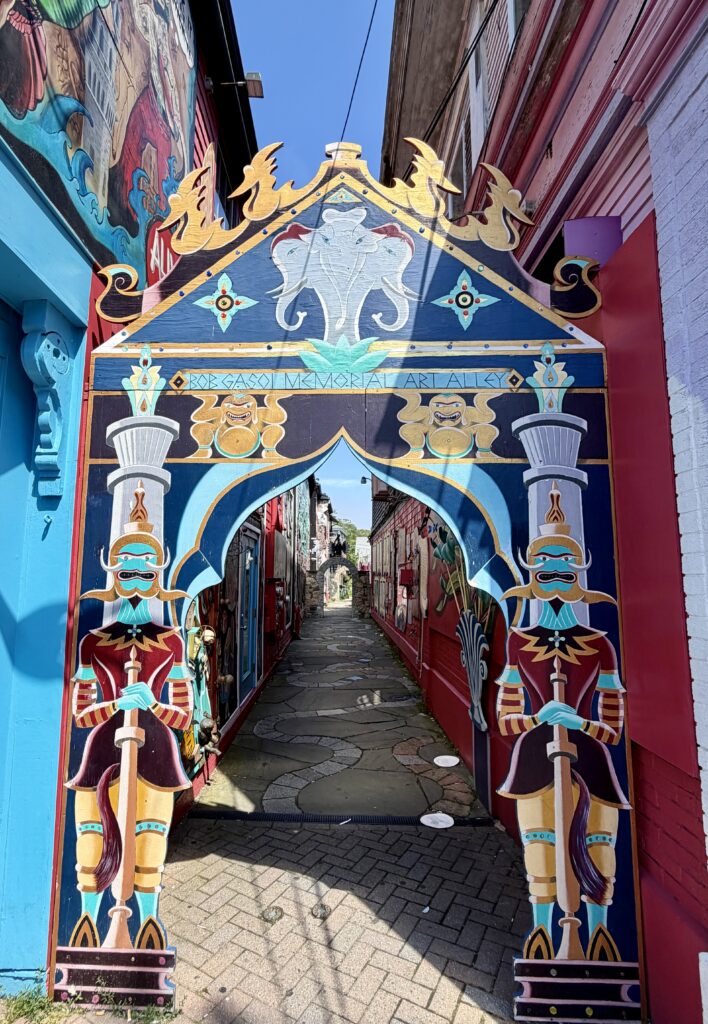
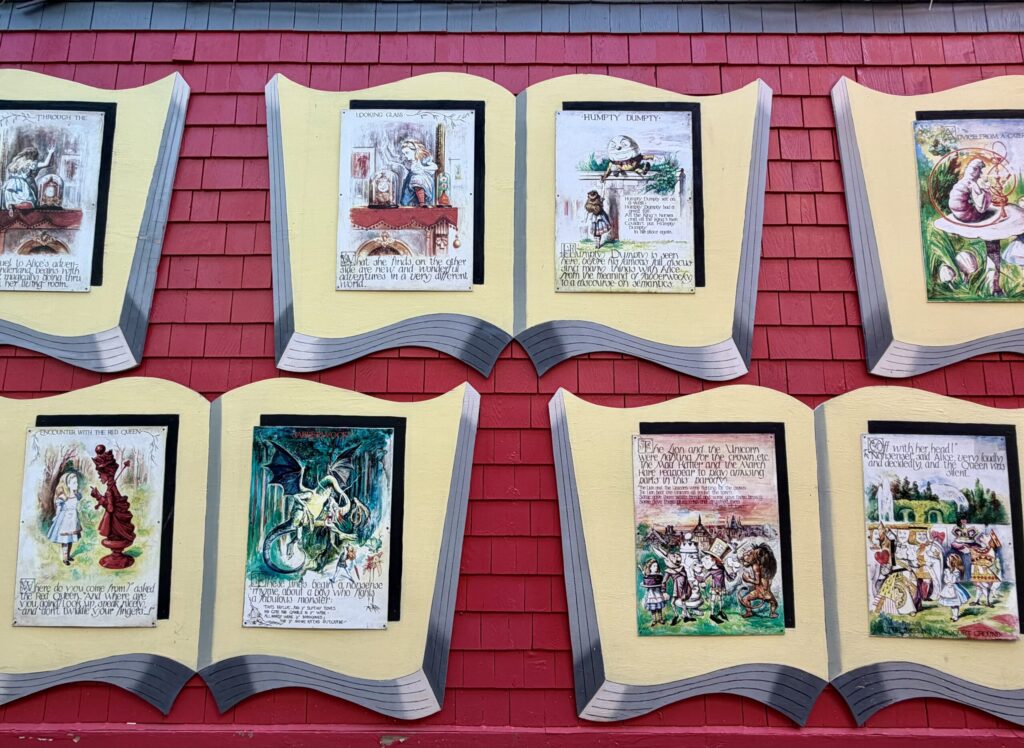
Bob Gasoi Memorial Art Alley – Just off Commercial Street near Ryder Street, this colorful alley is one of Provincetown’s hidden artistic gems. It features jigsaw-cut figures created from murals painted by local artist Bob Gasoi, which originally decorated the former Shop Therapy store from 1987 to 2010.
After the store closed, the mural fragments were preserved and reimagined into an eclectic outdoor art installation by Arnie Charnick, with assistance from Bo Johnson. The alley also includes metal sculptures, paintings, and a series of small works inspired by Alice in Wonderland titled Alice Alas. Many of the pieces parody classical art, incorporate playful humor and nudity, and challenge viewers’ ideas about art, censorship, and what society considers obscene.
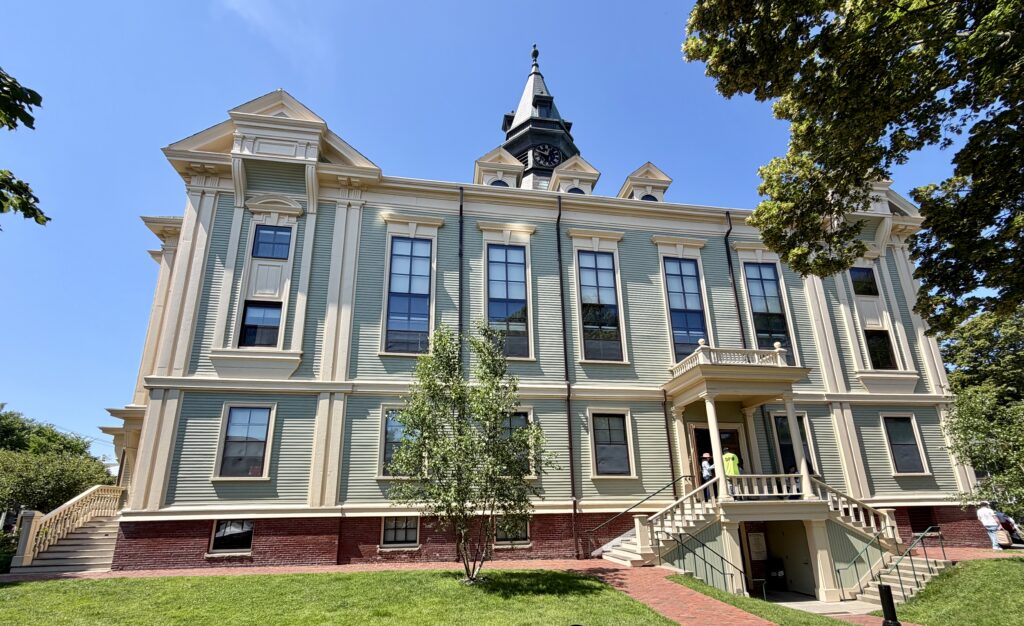
Provincetown Town Hall – Built in 1885, Provincetown Town Hall serves as both the seat of the town’s government and an important cultural landmark. While the lower floor houses municipal offices, the upper level features a beautiful community hall with a wraparound balcony, elegant wooden architecture, and excellent acoustics, making it a popular venue for concerts, performances, and community events. We were unable to explore the interior because Town Hall was closed for the weekend. Even so, its stately exterior and historical significance make it worth a stop while strolling along Commercial Street.
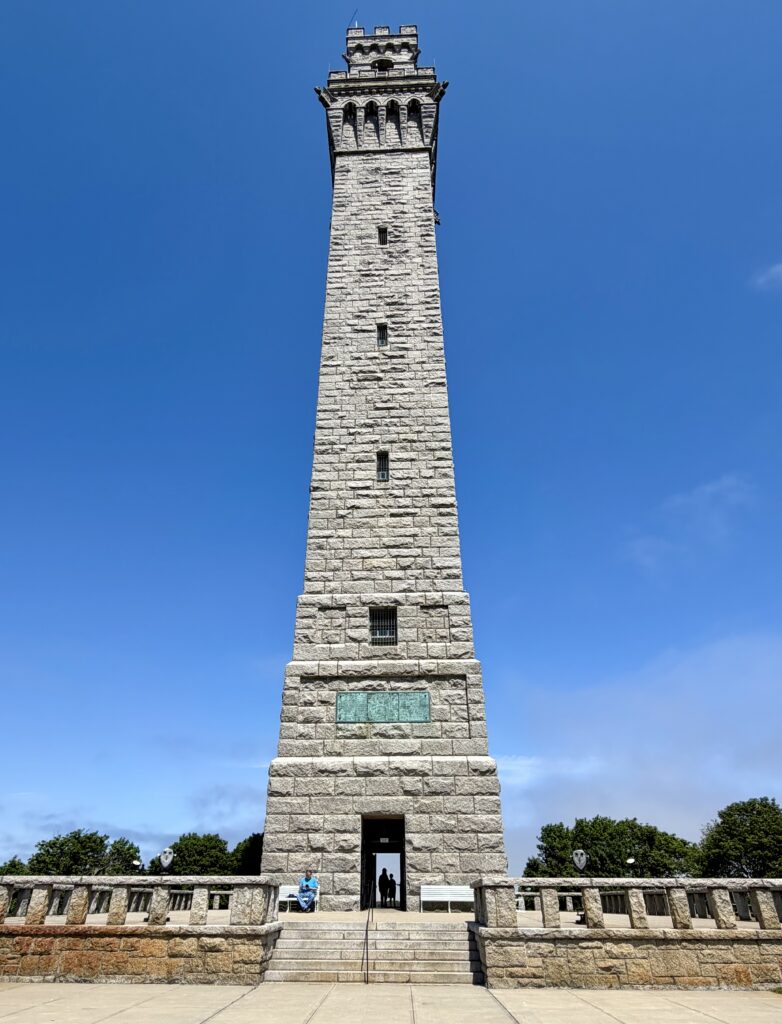
Pilgrim Monument – Just a short walk from Town Hall, the Pilgrim Monument is Provincetown’s most iconic landmark. Built between 1907 and 1910, the 252-foot granite tower commemorates the Pilgrims’ first landfall in Provincetown in 1620 and the signing of the Mayflower Compact in Provincetown Harbor before they sailed across the bay to establish Plymouth Colony.
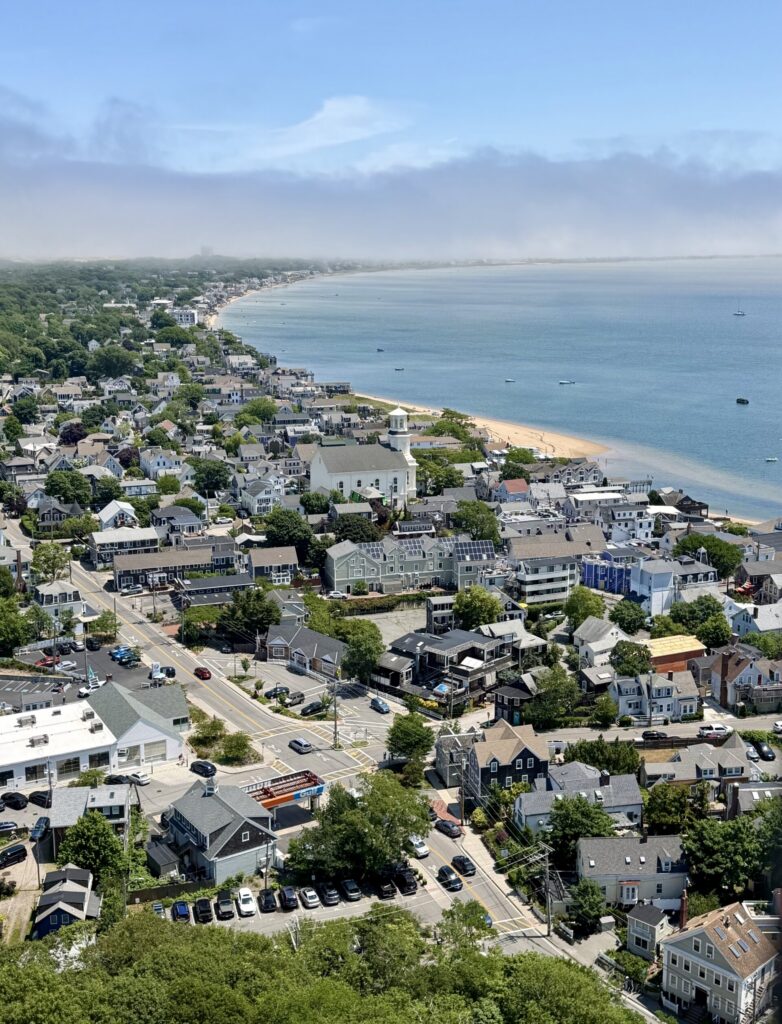
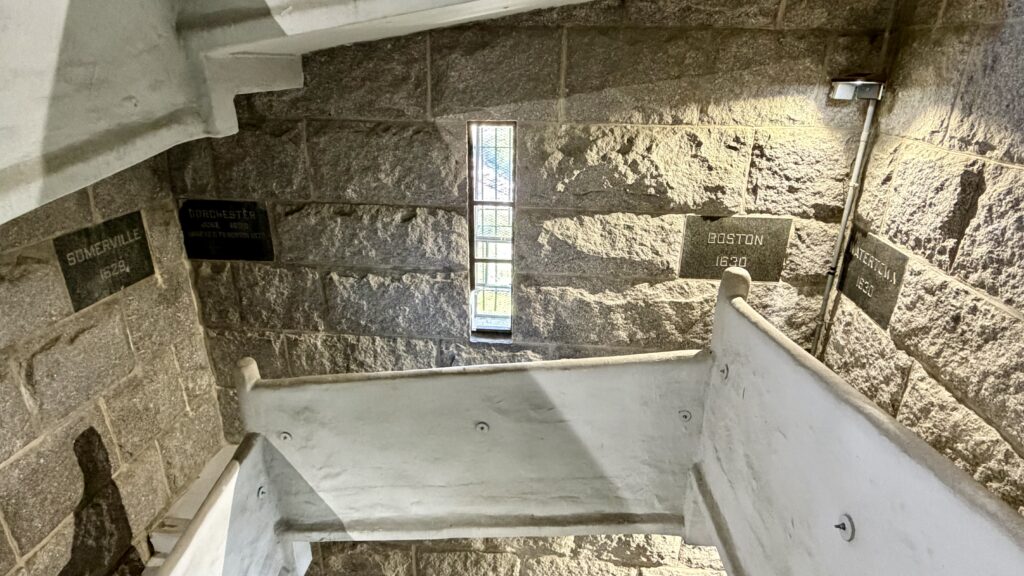
Admission was $23 per person, which also included entry to the Provincetown Museum at the base of the monument. We climbed the monument to the top. Although the climb is a bit tiring, it is well worth the effort for the spectacular panoramic views of Provincetown, Cape Cod Bay, Atlantic Ocean, and the surrounding coastline. As you climb to the top of the monument, you’ll notice the names of towns and cities across Massachusetts etched into the granite walls at various levels.
The museum provides an engaging overview of Provincetown’s history, with exhibits highlighting the arrival of the Mayflower in 1620. One of the most interesting facts we learned was that the Pilgrims first anchored in Provincetown Harbor and signed the Mayflower Compact before crossing the bay to establish Plymouth Colony, making Provincetown an important part of early American history. We also enjoyed reading about local landmarks such as The Pilgrim House and Land’s End Inn, both of which we visited later during our time in Provincetown.
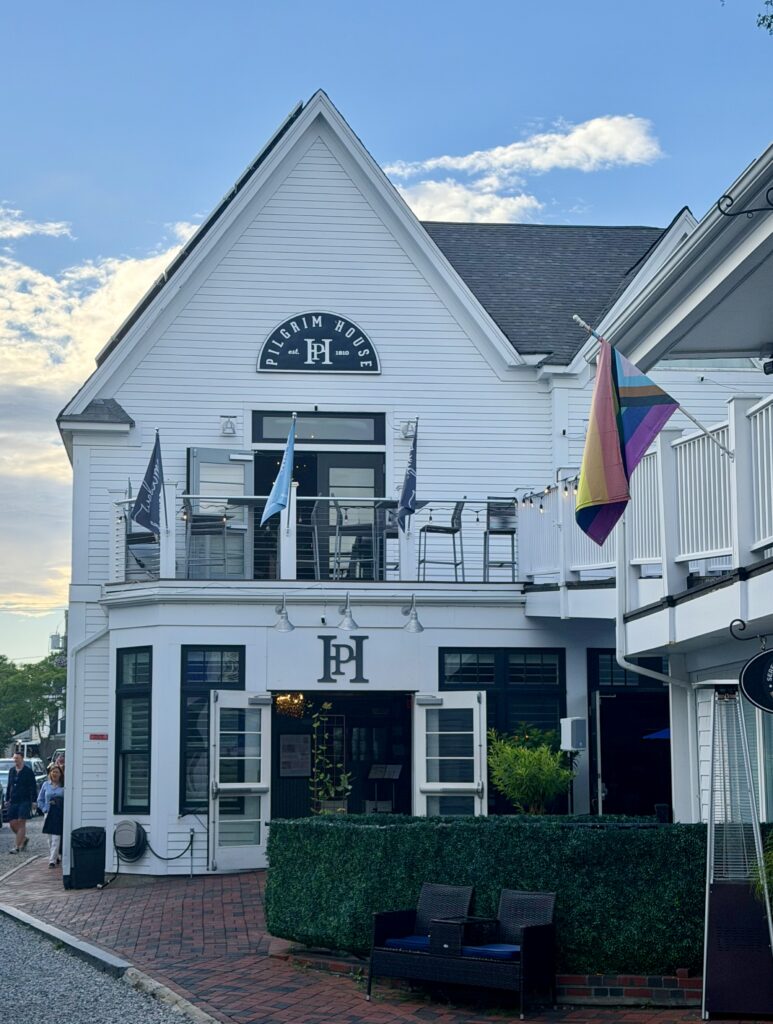
- Pilgrim House – Located on Commercial Street, The Pilgrim House is one of Provincetown’s oldest inns, with a history dating back to the late 1700s. It hosted writer Henry David Thoreau in the 1850s during his visits to Cape Cod. Over the years, it evolved from a seaside inn into a popular entertainment venue, hosting many performers before being destroyed by a fire in 1990. Rebuilt as a boutique hotel and entertainment space, it continues to be a historic landmark in the heart of Provincetown.
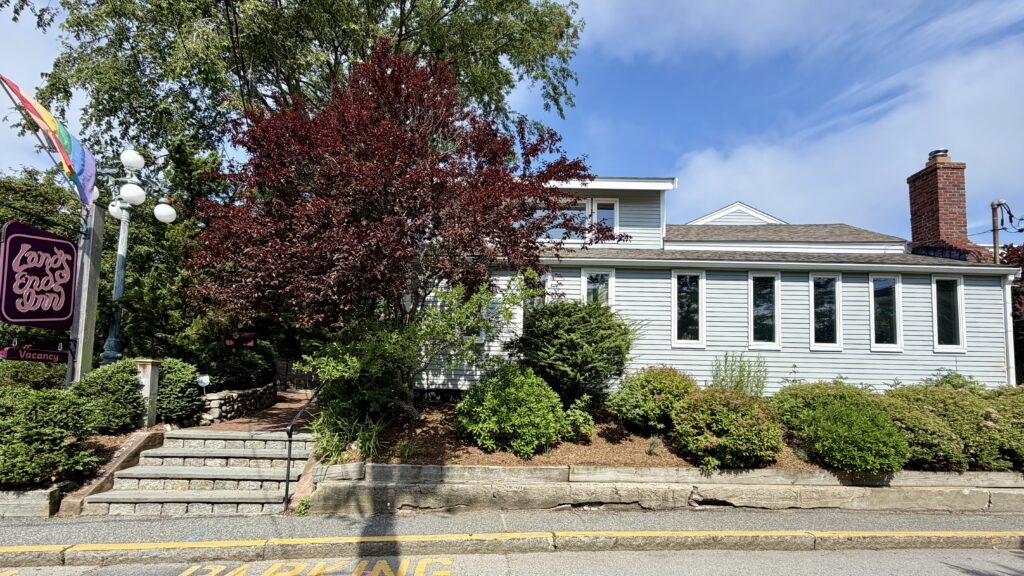
- Land’s End Inn – Perched atop Gull Hill in Provincetown’s West End, Land’s End Inn was built in 1904 as a whimsical artistic bungalow by Boston lecturer and traveler Charles Lothrop Higgins. It became an inn in 1926 and has since maintained its unique, eclectic character. Today, this historic bed and breakfast continues to preserve its artistic charm while offering beautiful views of Provincetown and the surrounding coastline.
Provincetown Piers – Provincetown’s piers are at the heart of the town’s maritime heritage, tourism, and fishing industry. The waterfront serves as the departure point for ferries, whale-watching tours, fishing charters, and commercial fishing vessels.
- MacMillan Pier – is the town’s main waterfront hub, extending deep into Provincetown Harbor. It serves as the arrival point for ferries from Boston and Plymouth and the starting point for many whale-watching and boat excursions. We walked the entire length of this pier browsing through all the available boat excursions.
- Fisherman’s Wharf (Cabral’s Pier) – Located immediately parallel to MacMillan Pier, this is a hub for fishing and charter vessels. It is famously home to They Also Faced the Sea, an outdoor installation featuring large portraits of local Portuguese-Americans.
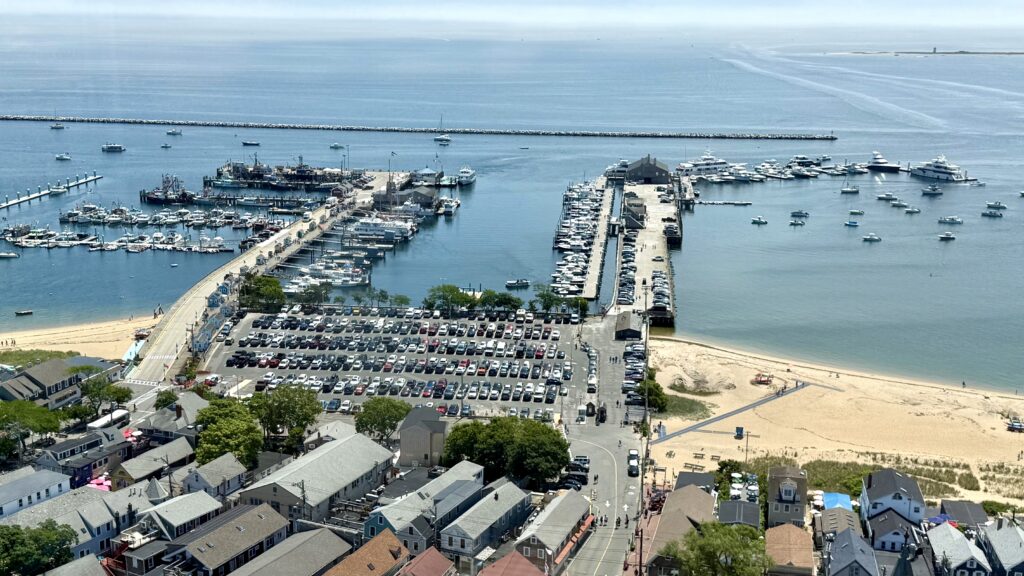
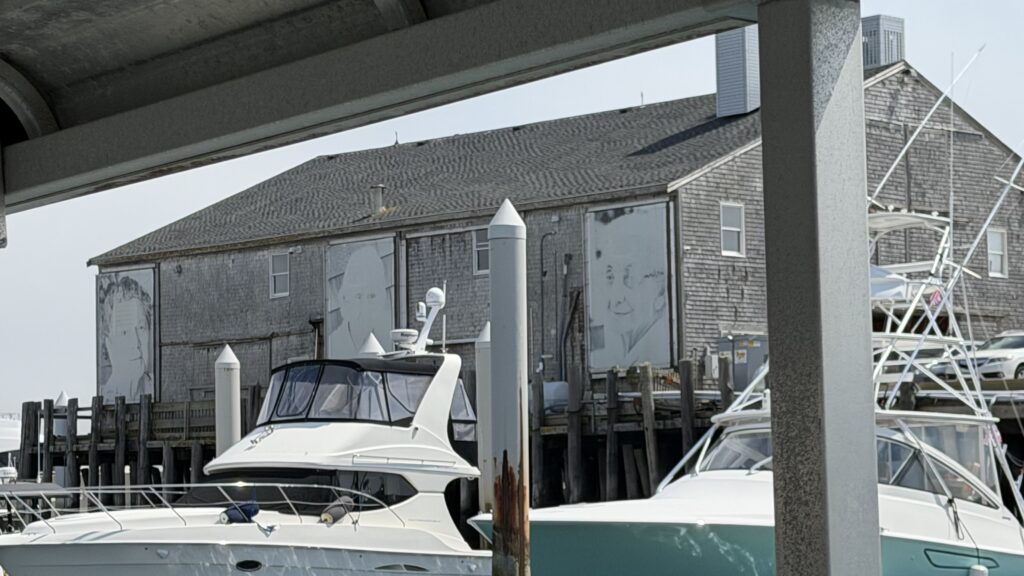
- US Coast Guard Pier represents the town’s ongoing maritime operations and safety services. Not open to public.
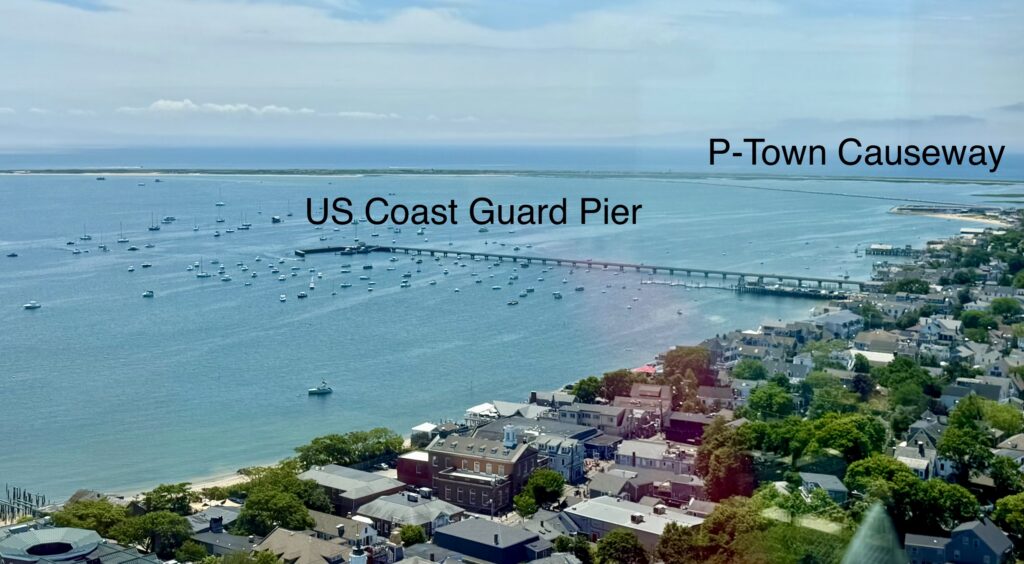
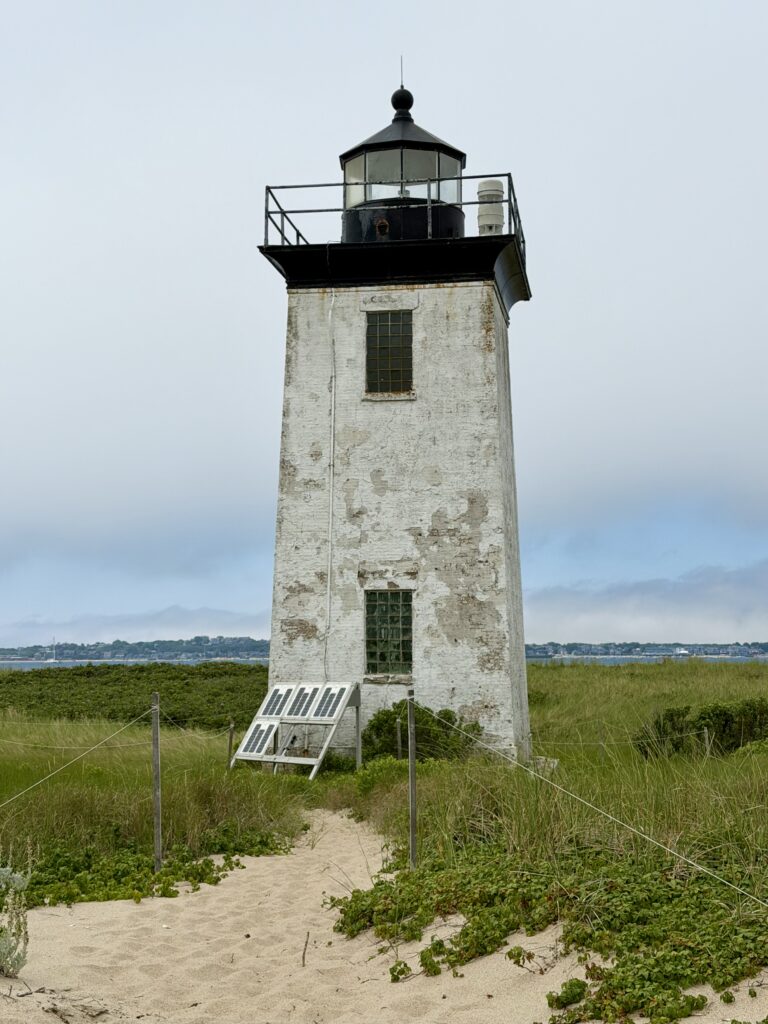
Shuttle Boat to Long Point Lighthouse – The shuttle boat to Long Point Lighthouse departs from the middle of MacMillan Pier and costs $25 for a round trip (cash only, there is an atm nearby). The short 10-minute ride takes you to the very tip of Cape Cod’s iconic hook, where the lighthouse and a beautiful, secluded beach await.
On the return journey, the captain took a scenic route along the shoreline, giving us the opportunity to spot several seals swimming in the water. Along the way, the guide shared fascinating stories about Provincetown’s maritime history, including its once-thriving whaling industry, making the trip both enjoyable and informative.
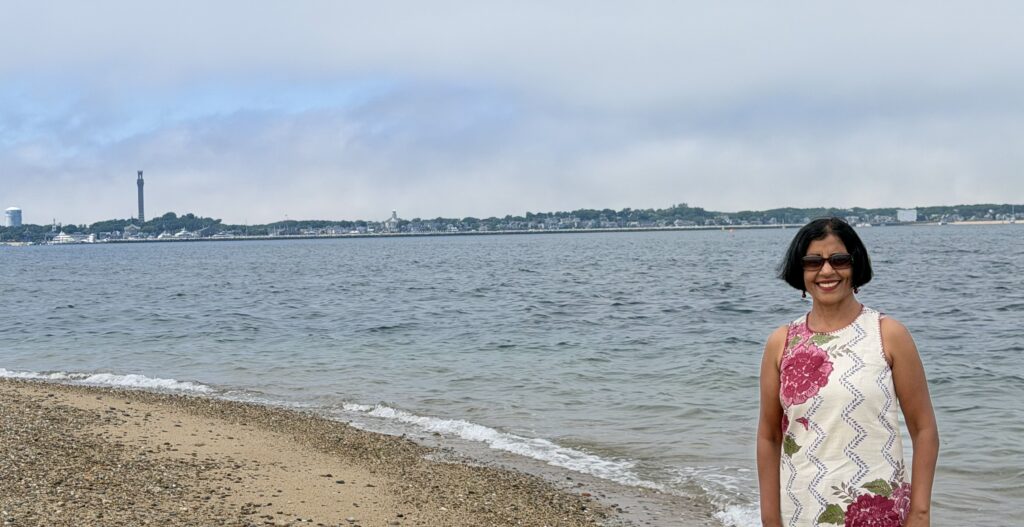
Canary Wharf Park – is a lovely green space close to the town center. It’s a peaceful spot to relax, enjoy the waterfront views, or simply take a break from sightseeing.
Wharf House at 77A Commercial Street – We stopped to admire this charming waterfront home, which is said to be one of the most photographed houses in Provincetown. Located along the route to the Provincetown Causeway at the town’s West End, the house is known for its and classic coastal character. The facade is usually adorned with an American flag, but during our visit in June, it was proudly decorated with a Pride flag in celebration of Pride Month, reflecting Provincetown’s welcoming and inclusive spirit.
Pilgrims’ First Landing Park and Provincetown Causeway – At the tip of Cape Cod, where Provincetown now stands, the Pilgrims first came ashore on November 11, 1620, after arriving aboard the Mayflower. This historic spot is commemorated at Pilgrims’ First Landing Park in the West End, near the intersection of Commercial Street and Province Lands Road. A marker at the park honors the Pilgrims’ arrival and the signing of the Mayflower Compact before they continued across Cape Cod Bay to establish Plymouth Colony.
Adjacent to the park is the Provincetown Causeway (West End Breakwater), a 1.25-mile rocky pathway that stretches across tidal flats toward secluded beaches and the Wood End Lighthouse.
The walk offers beautiful views of the harbor, dunes, and surrounding coastline, but it is important to check tide conditions before setting out, as portions of the causeway can become submerged and unsafe during high tide.
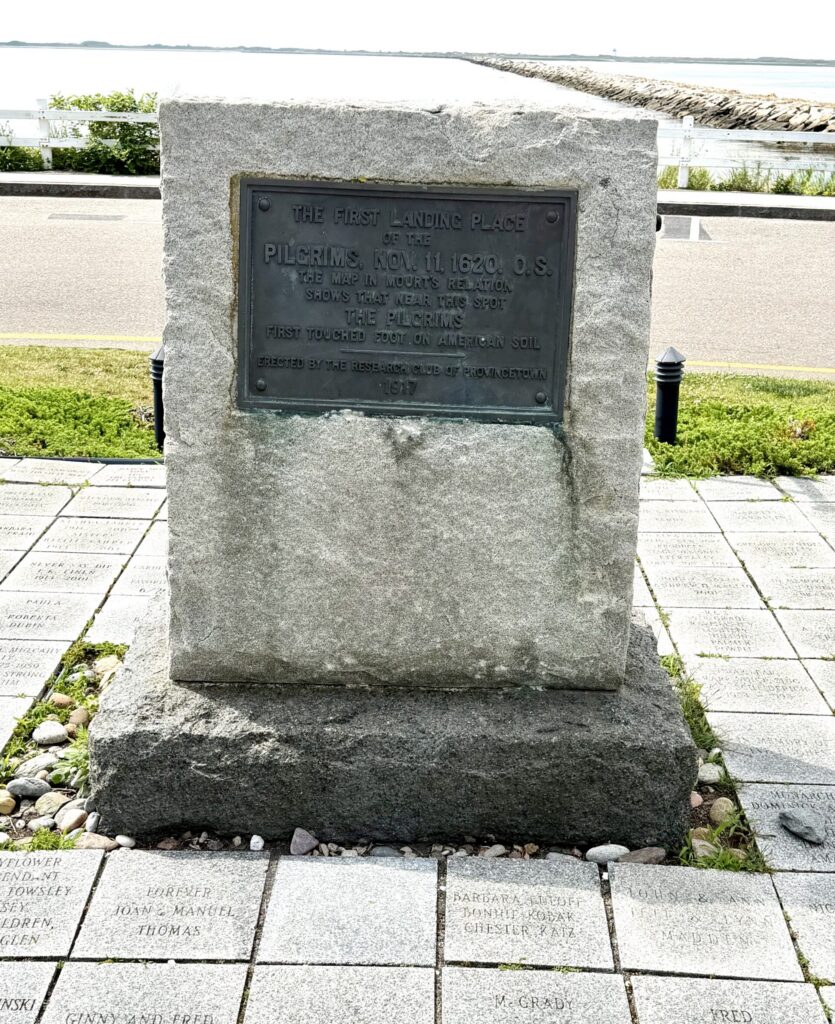

Provincetown Causeway was a 1.8 mile walk from our Airbnb. We did not have time to walk on the causeway but will do so in our future visit.
———- Day 4 ———-
We left our Airbnb early on Day 4, as we planned to spend a few hours exploring the charming town center of Chatham before continuing on to Plymouth, where we hoped to experience more of Cape Cod’s rich history.
————— Chatham —————
Known as the elbow of Cape Cod and located at the southeastern tip of Cape Cod, Chatham is a charming seaside town with a rich maritime history. First settled by English colonists in 1664 and incorporated in 1712, the town grew as a fishing, shipping, and whaling center. Today, Chatham blends its historic character with a lively summer atmosphere, featuring a picturesque Main Street filled with locally owned shops, restaurants, and galleries.
Chatham Lighthouse – Standing near the elbow of Cape Cod, Chatham Lighthouse was originally established in 1808 as a pair of wooden towers known as the Twin Lights. The wooden towers were replaced over the years, and in 1877, two cast-iron towers were constructed farther inland due to coastal erosion. In 1923, one of the twin towers was moved north to Eastham, where it became the famous Nauset Lighthouse, leaving Chatham with its single active tower. Today, the lighthouse is operated by the U.S. Coast Guard and continues to guide vessels through the waters around Cape Cod.
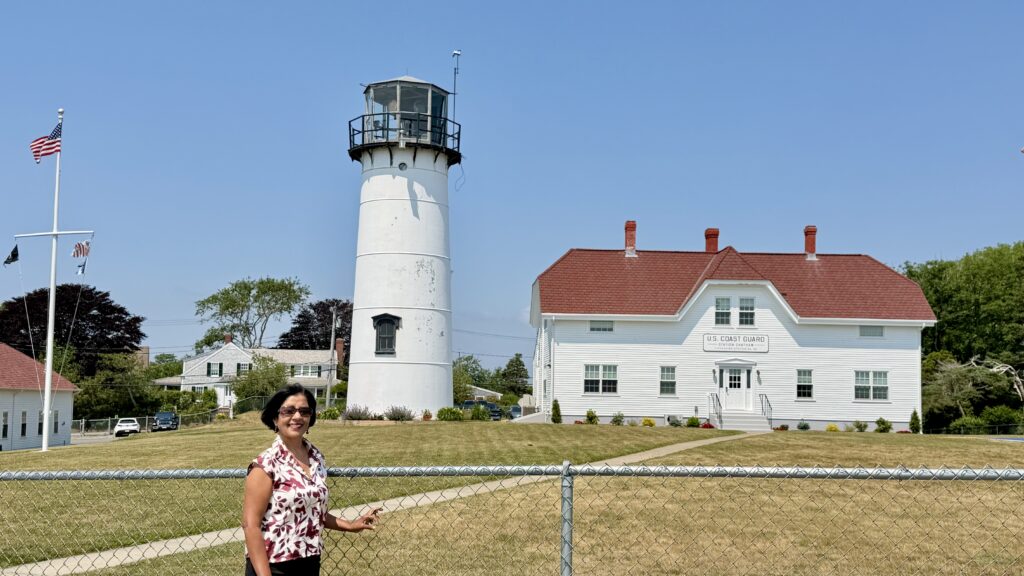
Tours are available on Wednesdays 1 pm – 3pm from June 24-Aug 26th. We visited the lighthouse grounds and enjoyed the beautiful coastal views. Located across the lighthouse is the beautiful Chatham beach with stunning ocean views, making it a perfect place for a relaxing walk.
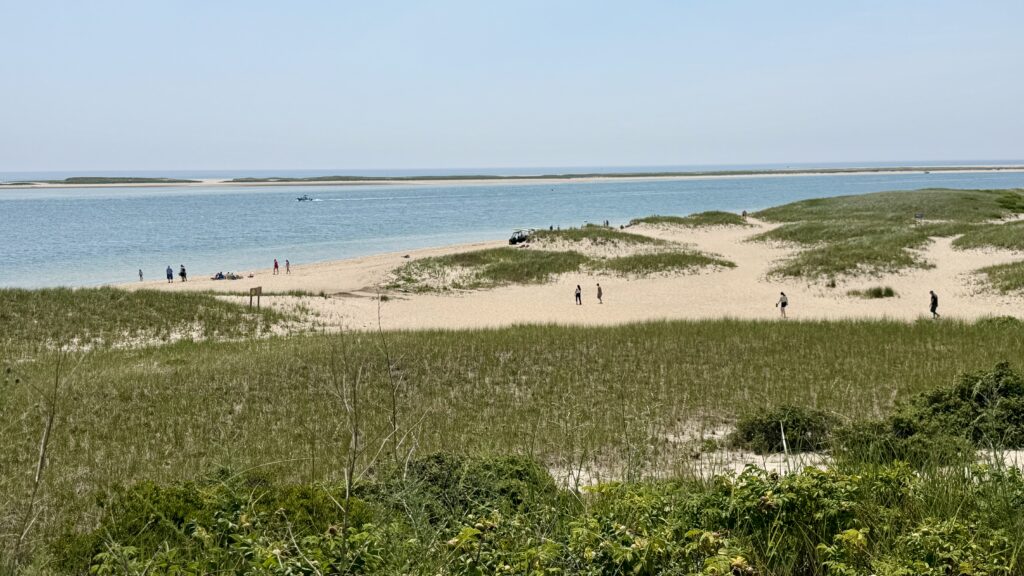
Chatham’s Main Street – We then drove to Chatham’s vibrant Main Street, a lively area lined with charming boutiques, cafés, and restaurants. It is a great place to stroll, shop, or stop for a meal. Several attractions are within a 10-minute walk from downtown.
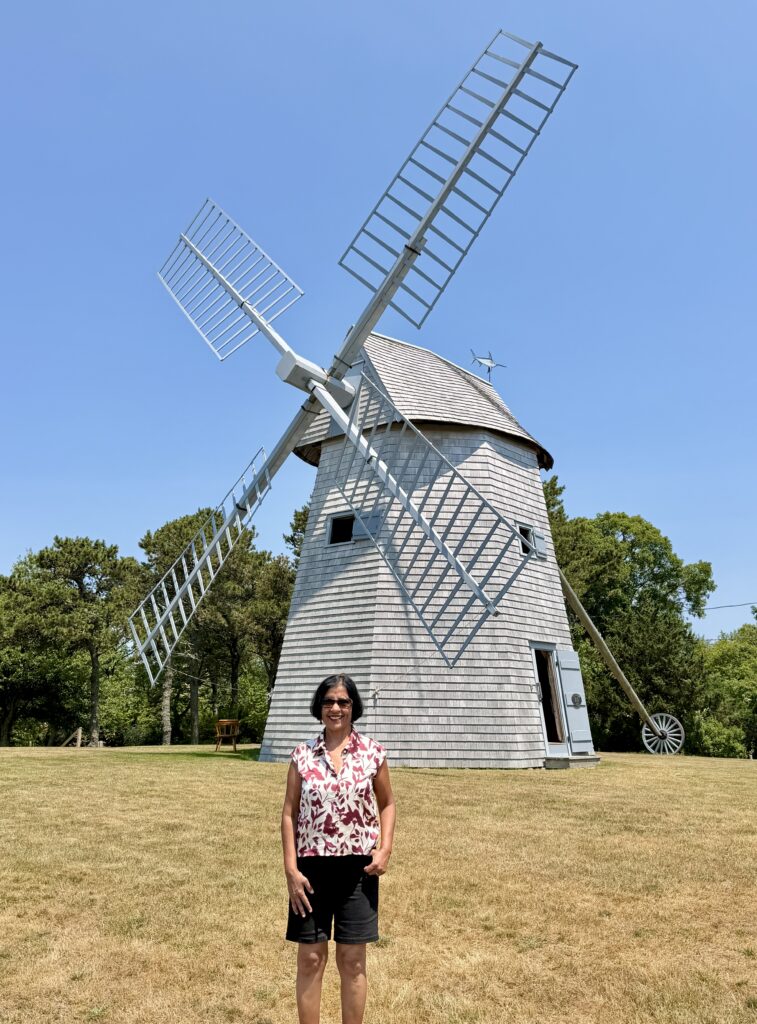
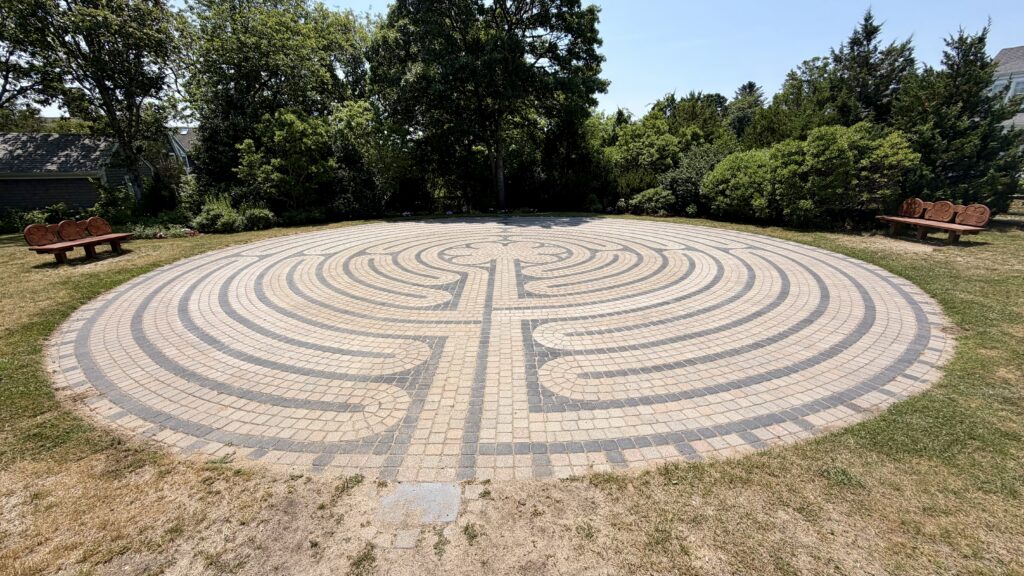
Chase Park – A 10-min walk from Main Street will lead you to this park which is home to the Godfrey Windmill, a beautifully preserved, over 200-year-old wind-powered grist mill. Admission is free, and knowledgeable volunteer guides explain how the mill operates and share its fascinating history. Donations are appreciated. The park is also home to The Chatham Labyrinth, an ancient pattern found in many cultures around the world.
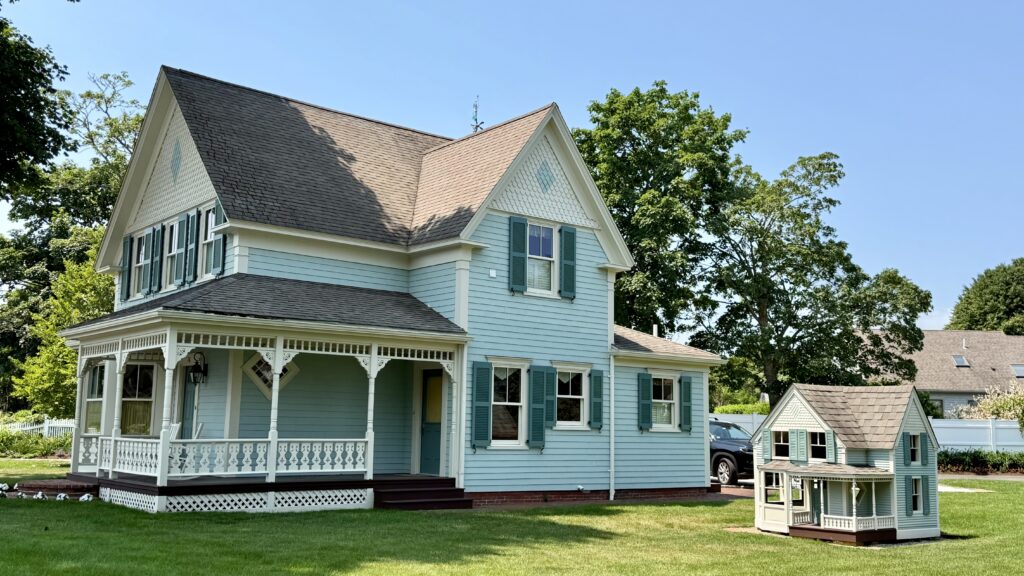
House with a Replica – Just across Chase Park at 72 Cross Street is a charming house featuring a miniature replica of itself in the front yard. The surrounding streets are perfect for a leisurely walk, with beautifully maintained homes, well-maintained gardens, and classic Cape Cod charm.
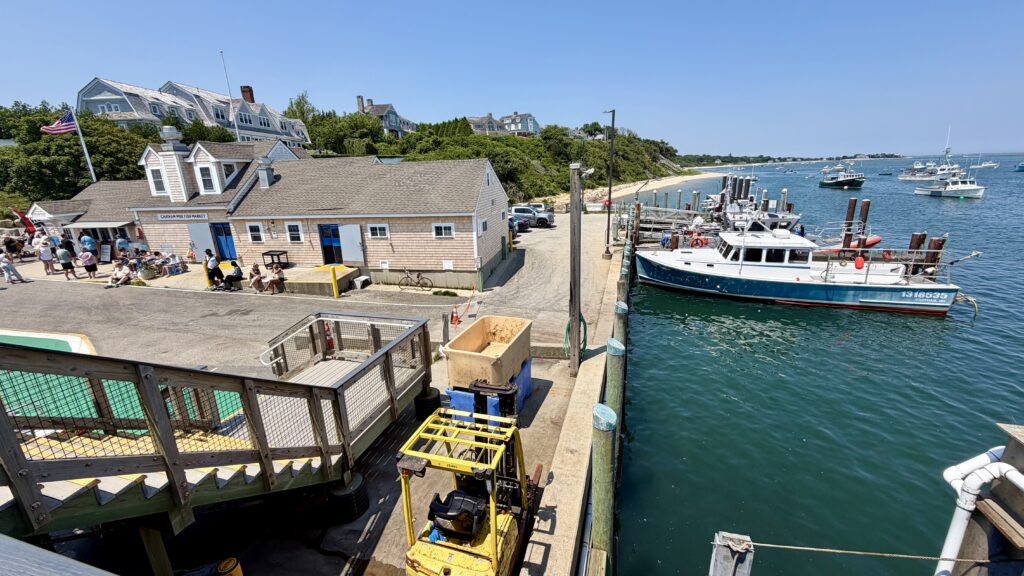
Chatham Fish Pier – Our next stop was the Chatham Fish Pier, a working commercial fishing pier that offers a glimpse into Cape Cod’s fishing industry. It is also one of the easiest and best places to see harbor seals, especially if you’re not taking a seal-watching cruise. We spotted several seals swimming near the pier, hoping for scraps from the returning fishing boats. The pier also offers wonderful views of the fishing fleet, Chatham Harbor, and the surrounding waters, making it a great place to watch boats come and go while enjoying the coastal scenery.
————— Plymouth —————
Known as America’s Hometown, Plymouth is one of the country’s most historic destinations. It was here that the Pilgrims established Plymouth Colony in 1620, creating the first permanent English settlement in New England. Although the Mayflower first anchored in Provincetown Harbor, the Pilgrims eventually crossed Cape Cod Bay and chose Plymouth as the site of their new settlement.
Long before the arrival of the Pilgrims, the area was home to the Wampanoag people, whose homeland included the village of Patuxet. We visited the Plymouth Rock and Mayflower II.
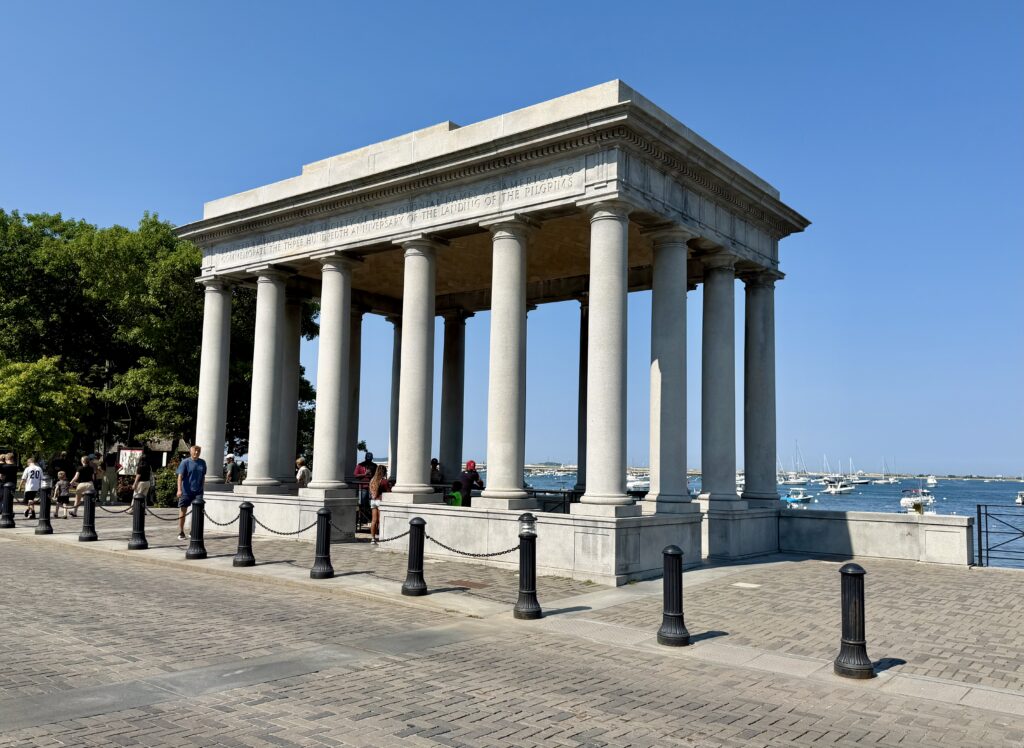
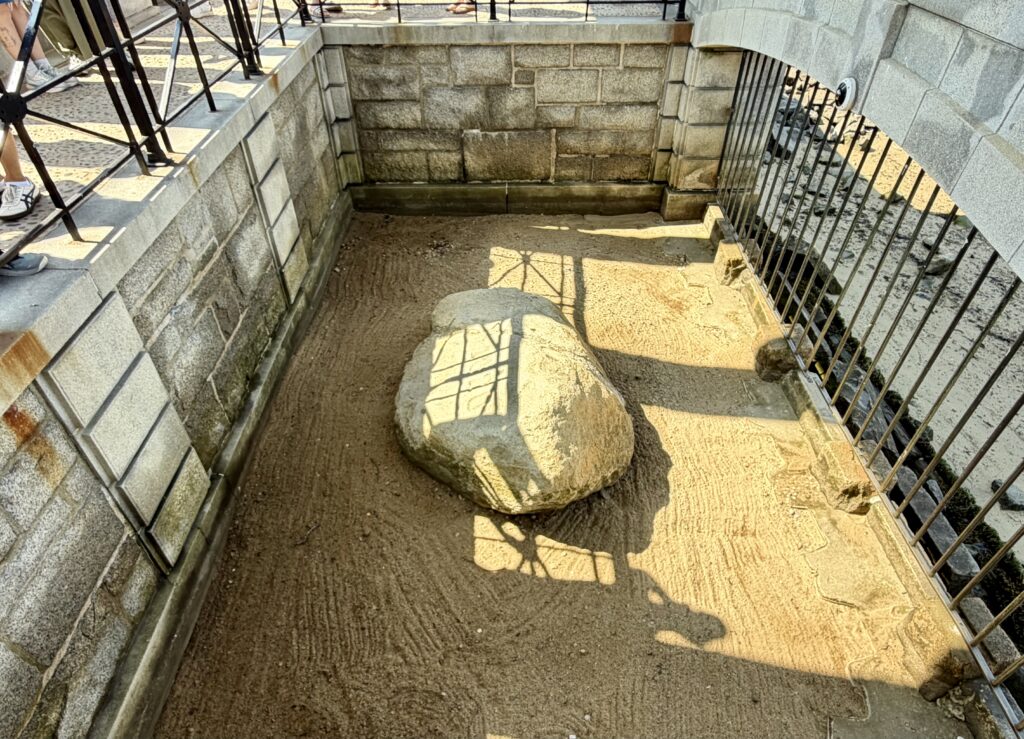
Plymouth Rock – is traditionally believed to mark the spot where the Pilgrims came ashore after crossing Cape Cod Bay in December 1620. While there is no contemporary evidence that the Pilgrims actually stepped onto this particular boulder, it has become an enduring symbol of the founding of Plymouth Colony and the beginning of European settlement in New England.
Over the centuries, the rock has been moved several times and even split in half during one relocation. Today, it rests beneath a granite portico overlooking Plymouth Harbor, with the date 1620 carved into its surface.
—————————————–
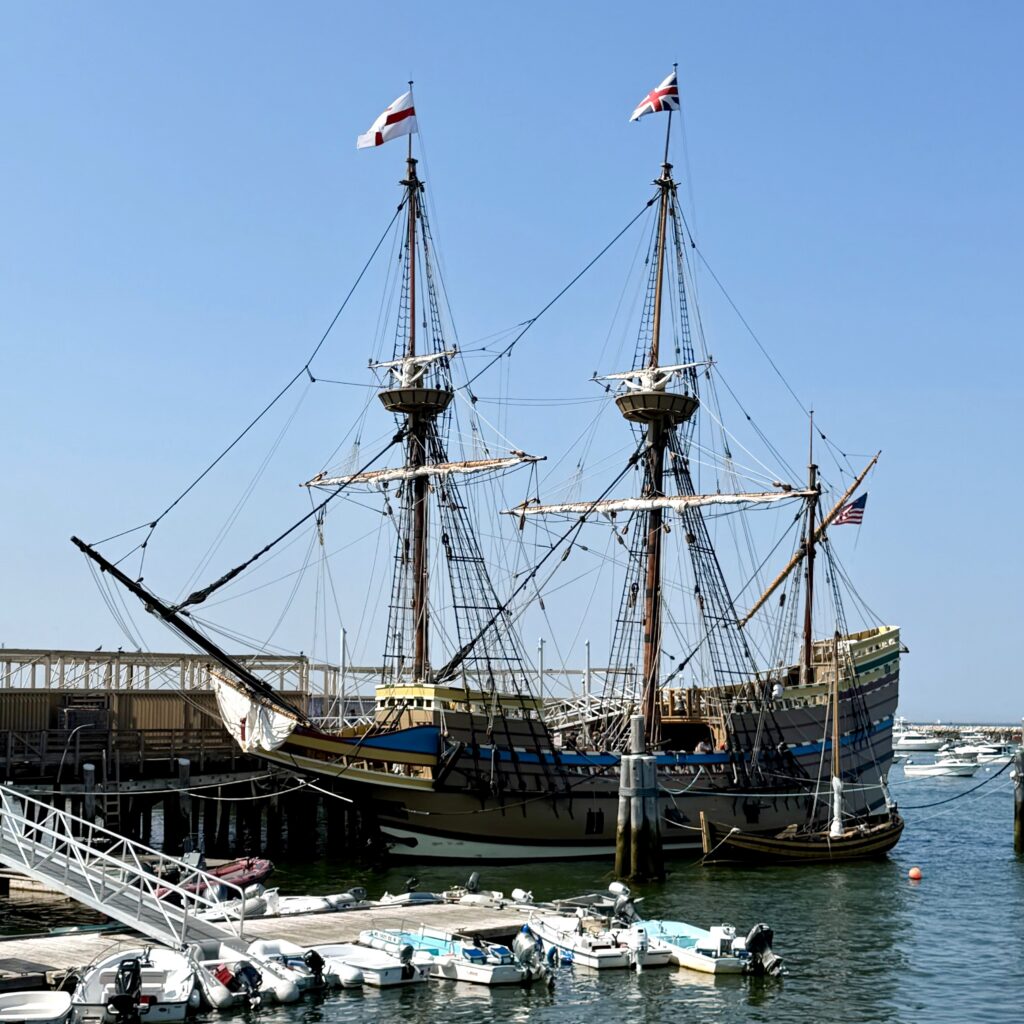
Mayflower II – Docked at State Pier in Plymouth Harbor, the Mayflower II is a full-scale replica of the ship that carried the Pilgrims across the Atlantic in 1620. Built in Devon, England, and sailed to the United States in 1957, the ship now serves as a floating museum operated by Plymouth Patuxet Museums. Visitors can step aboard to explore the faithfully recreated vessel and learn about the Pilgrims’ remarkable transatlantic voyage and the challenges they faced on their journey to the New World.
——————————————–
If you’re planning to explore the historic attractions in Plymouth, consider purchasing a combination ticket, which includes admission to Plymouth Patuxet Museums, the Plymouth Grist Mill, and the Mayflower II. It’s a convenient and cost-effective option for experiencing Plymouth’s rich colonial history. Unfortunately, we didn’t have enough time to visit Plymouth Patuxet Museums. We stopped by the Plymouth Grist Mill.