Overnight in Radisson Blu
We flew from Bergen to Trondheim and took the airport bus to the city center instead of an Uber. The bus dropped us just a short walk from our hotel and cost NOK 520, compared with about NOK 850 for an Uber. It was a convenient and more economical way to reach the city. After checking in, we began our sightseeing at Bakke Bridge, located just a short walk from our hotel.
- Bakke Bridge
- Old Town Bridge
- Row of colorful wooden buildings
- CycloCable
- Bakklandet
- Archbishop’s Palace and Nidaros Cathedral
- Torvet (Market Square)
- Vår Frue Kirke
- Terra Incognita
- Verftsbrua (aka Flower bridge)
- Kristiansten Fortress
- Ringve Museum
- Other Notable Sites
- Nordenfjeldske Museum of Decorative Arts
- Munkholmen
- Tyholttårnet
- Pirbadet
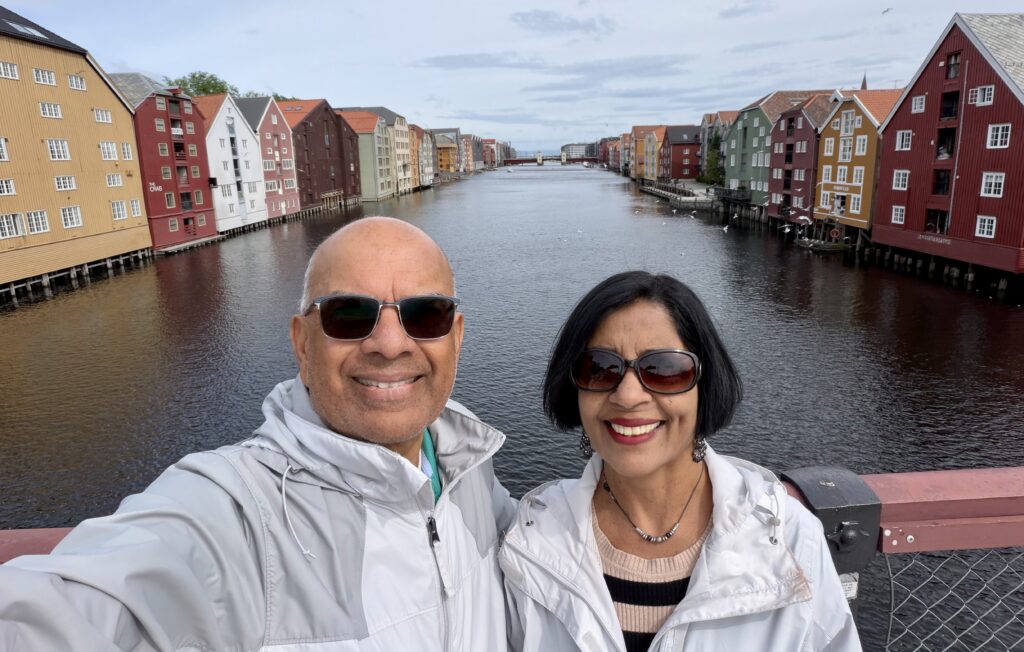
Bakke Bridge – is one of Trondheim’s most picturesque bridges, spanning the Nidelva River and offering beautiful views of the colorful waterfront buildings and surrounding cityscape. Built in the 19th century, it connects the city center with the historic Bakklandet neighborhood.
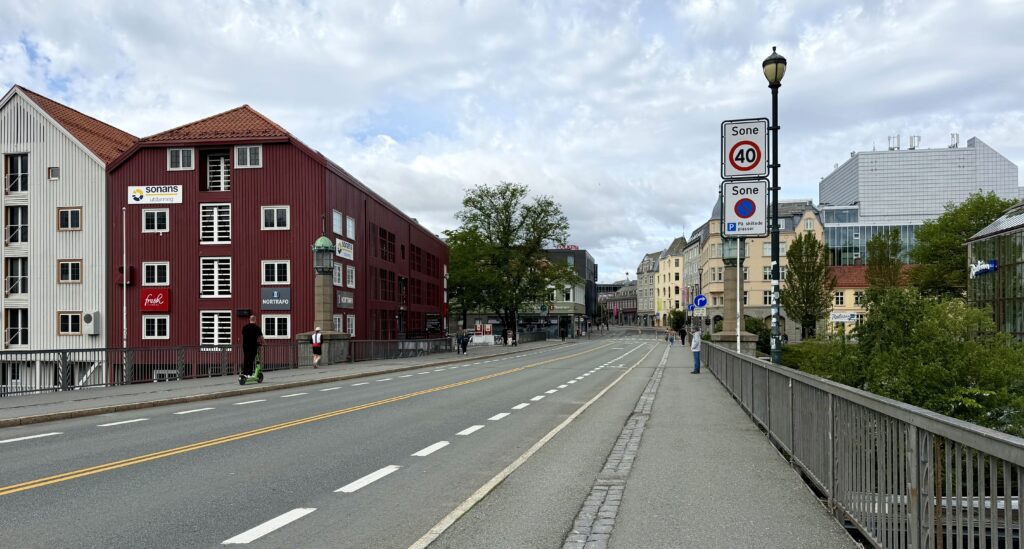
From One side of Bakke Bridge, you can enjoy views of our hotel and the Flower Bridge, another pedestrian bridge crossing the Nidelva River. Across the road, you’ll find a perfect view of the Row of colorful wooden buildings lining the waterfront.
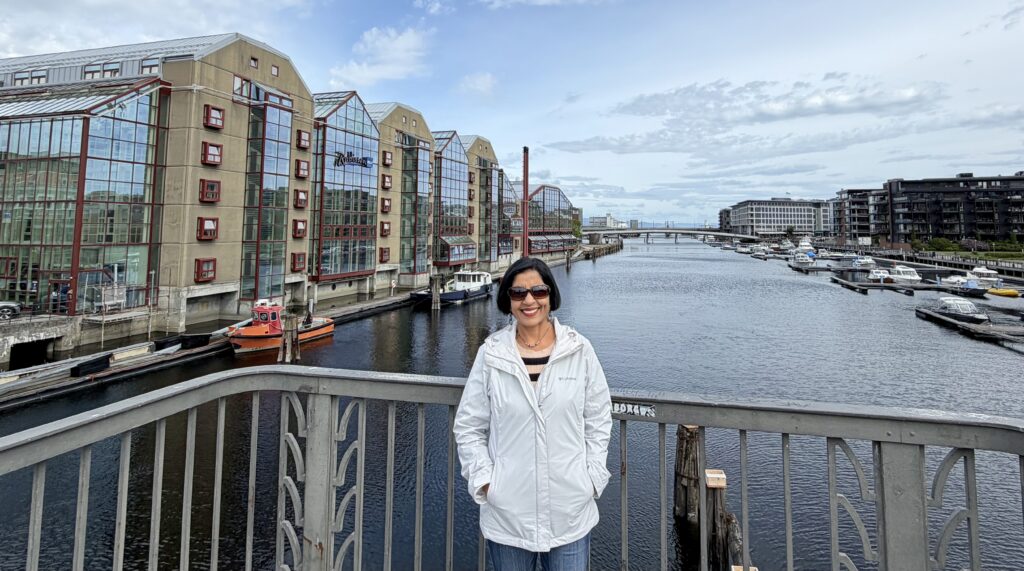
Row of colorful wooden buildings – One of Trondheim’s most iconic views is the row of colorful wooden buildings lining the banks of the Nidelva River between Bakke Bridge and the Old Town Bridge. These historic 17th-19th century structures, were originally built as warehouses and trading houses. Many of the buildings stand on wooden piles driven into the riverbank, allowing merchants to load and unload goods directly from boats. Their brightly painted facades—red, yellow, green, and ochre—create a picturesque waterfront that has become one of the city’s most photographed scenes.
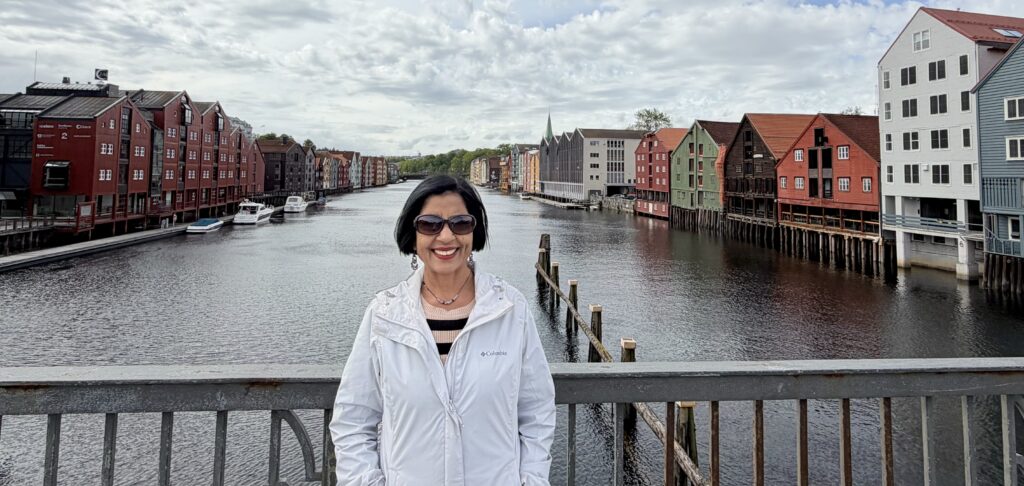
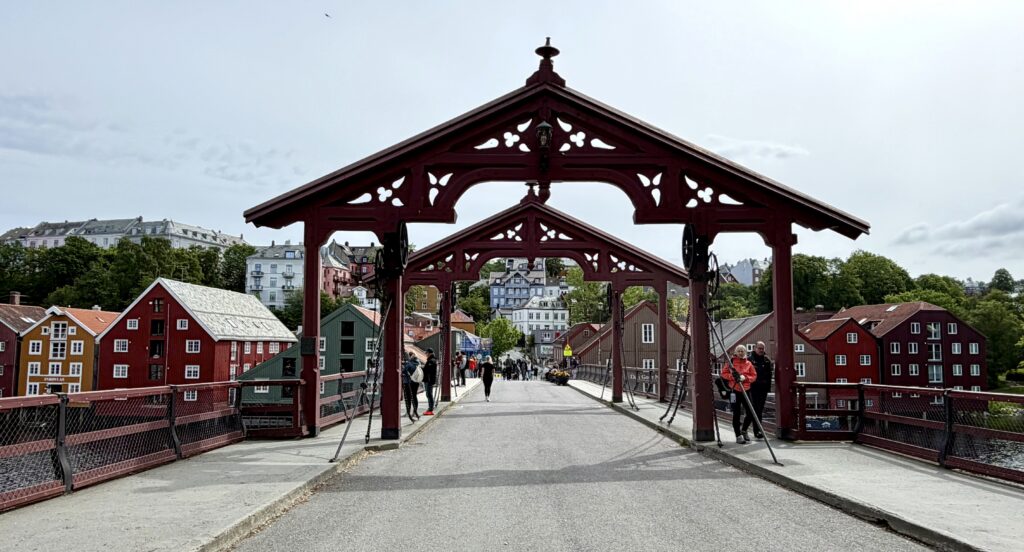
Old Town Bridge – This pedestrian and cycling bridge also spans the Nidelva River, linking the city center with the historic Bakklandet neighborhood. A bridge has stood at this location since 1681, while the present structure dates from 1861. It is best known for its distinctive red wooden gateway, Lykkens Portal (Portal of Happiness), through which generations of locals and visitors have crossed into Trondheim’s charming old town.
———————————————–
Over the years, many of these buildings have been carefully preserved and repurposed. Today, they house cafés, restaurants, offices, galleries, and residences while retaining their historic character.
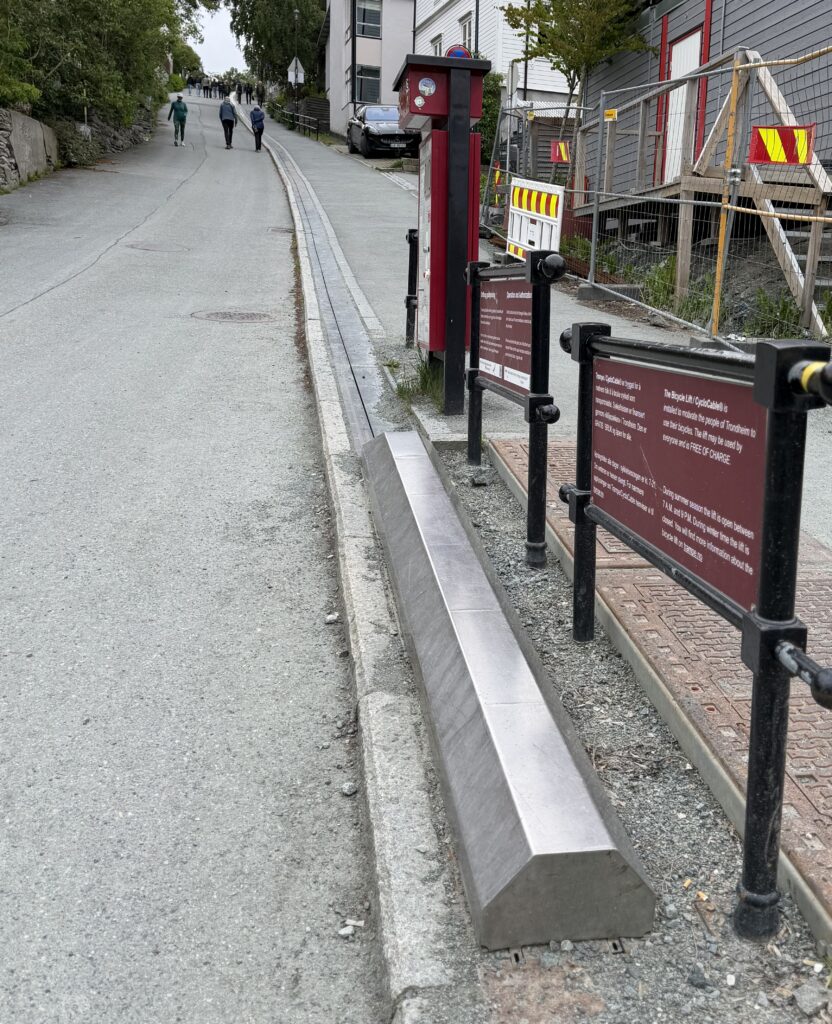
CycloCable – Just a few metres from the Old Town Bridge in Bakklandet is the CycloCable, the world’s only lift designed specifically for cyclists. Originally installed in 1993 and later modernized, it was invented by Trondheim resident Jarle Wanvik to help cyclists conquer the steep 20% incline leading to Kristiansten Fortress.
The lift is free to use and operates daily. Simply press the start button, place one foot on the moving footplate while keeping the other on your bicycle pedal, and the lift gently pushes you uphill. Even if you don’t use it, it’s a fun and uniquely Trondheim attraction worth stopping to watch and it motivates people to use their bicycles in the summer.
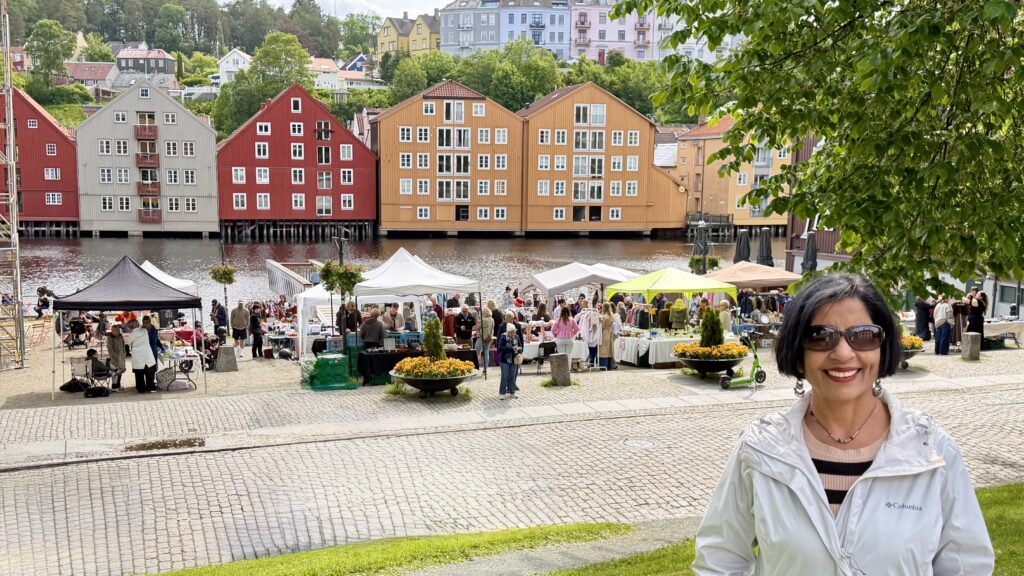
Bakklandet – is Trondheim’s most charming and historic neighborhood, located on the east bank of the Nidelva River between Bakke Bridge and the Old Town Bridge. Its colorful wooden houses, cobblestone streets, and cozy cafés make it one of the city’s most popular places to explore.

In the 1960s, much of Bakklandet was slated for demolition to make way for a major highway. Thanks to strong public opposition, those plans were abandoned, preserving the neighborhood’s historic character. Today, Bakklandet is a lively area where visitors can wander its picturesque streets, relax at a café, and soak up the atmosphere of old Trondheim.

We explored Bakklandet on foot, walking the entire length of the neighborhood along both sides of the Nidelva River. After crossing the Old Town Bridge, you’ll find yourself in the heart of Bakklandet, with the CycloCable bicycle lift marking the beginning of this charming district.
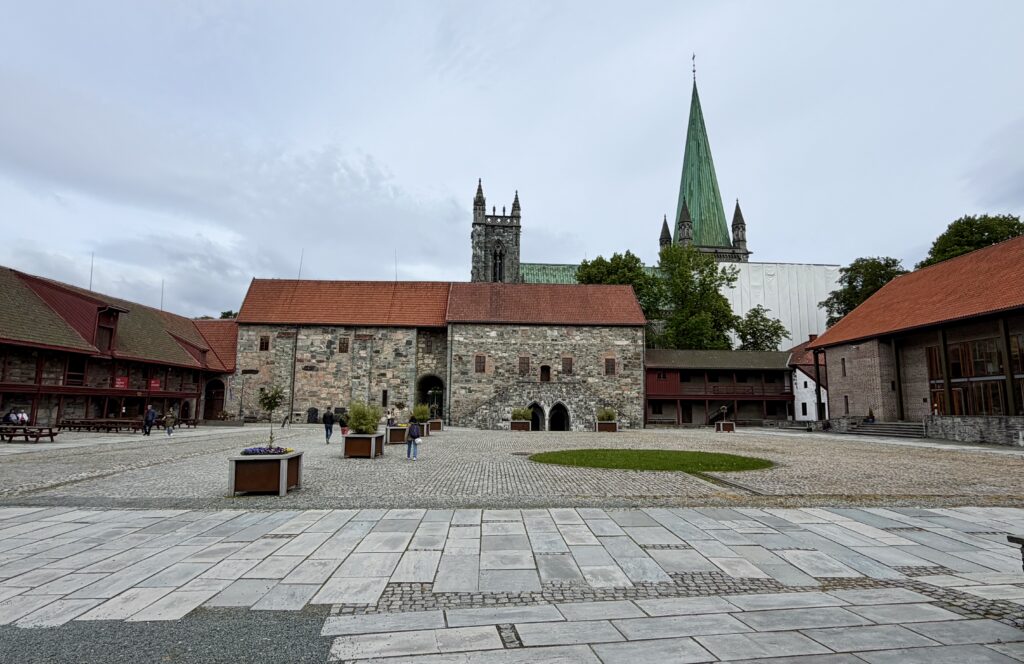
Archbishop’s Palace and Nidaros Cathedral – We bought combo tickets to see both. The ticket allows admission to –
- The interior of Nidaros Cathedral
- Norway’s Crown Jewels – Located in the palace’s west wing, this museum holds the coronation objects of the Norwegian monarchy, including the King’s crown, which has been in use since 1818
- The Archbishop’s Palace Museum – displays original sculptures from Nidaros Cathedral, medieval archaeological discoveries, and the remains of the world’s northernmost medieval mint. One of its greatest treasures is the Olav’s Frontal, a beautifully preserved altar frontal dating from the first half of the 14th century,
The Archbishop’s Palace is one of Scandinavia’s largest and best-preserved medieval stone buildings, located beside Nidaros Cathedral in the heart of Trondheim. Dating back to the 13th century, it served for centuries as the residence and administrative center of the Archbishop of Nidaros. After the Reformation, the palace became royal property and later served military and administrative purposes. Today, it houses several museums and is home to Norway’s Royal Regalia, including the Crown of Norway, which has been on permanent display here since 2006.
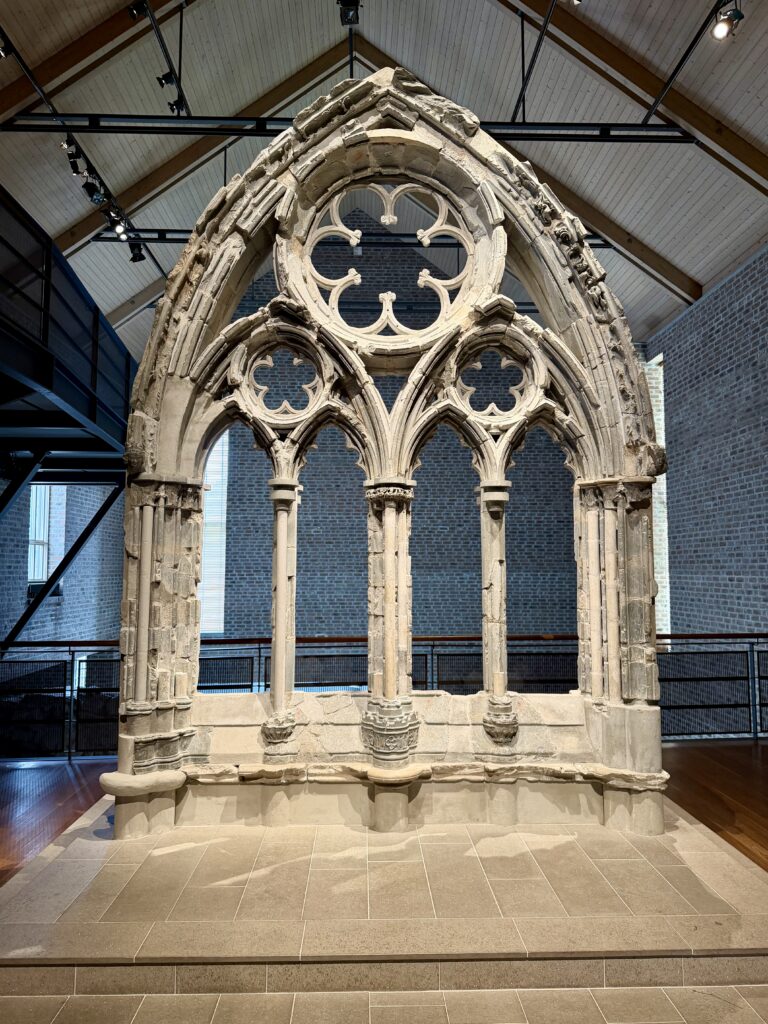
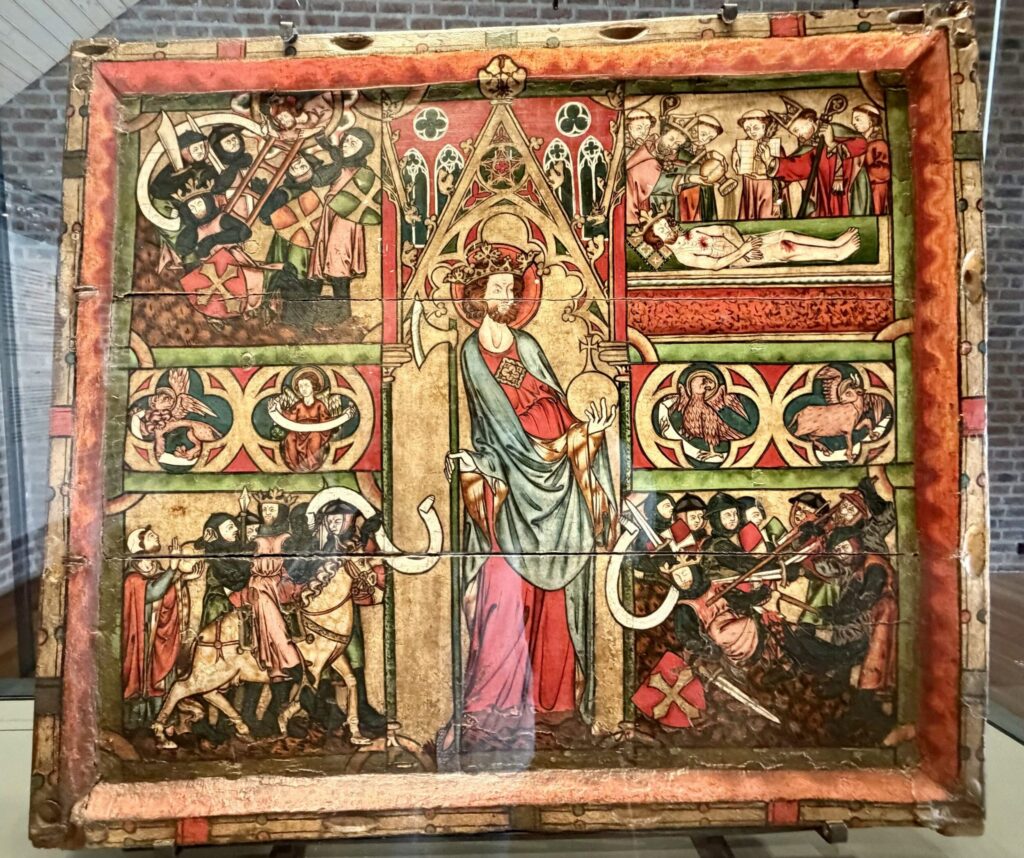
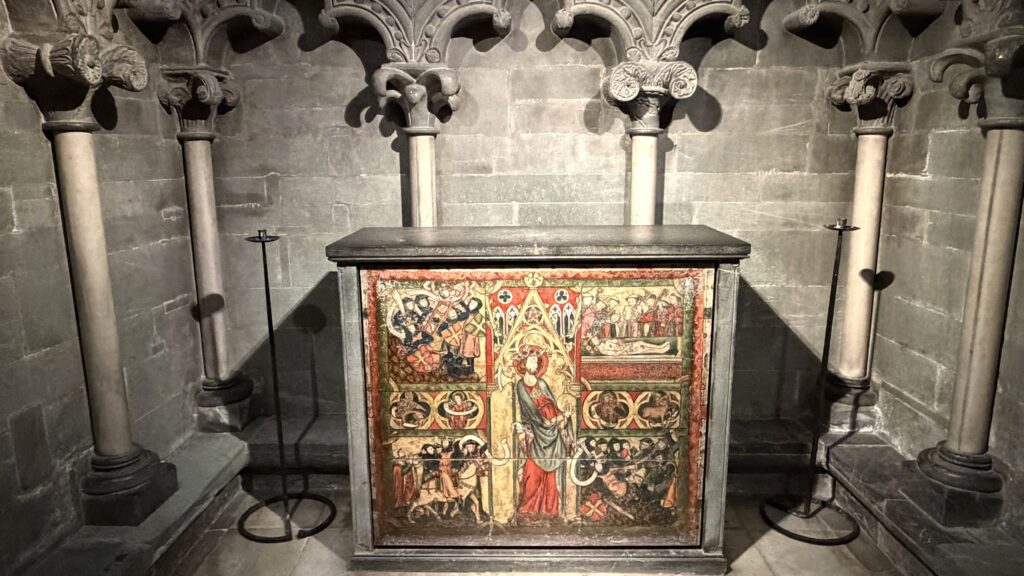
St. Olav Altar Frontal – is a rare medieval painted wooden panel from the early 14th century (around 1320). It depicts scenes from the life, death, and sainthood of Saint Olav, including events surrounding his martyrdom and the opening of his tomb. The original is preserved in the Archbishop’s Palace Museum and a replica is displayed inside the cathedral.
The history of his death is presented in four scenes, with clear parallels to the Passion of Christ.
- Bottom Left – King Olav Haraldsson on is way to the Battle of Stiklestad, gives a bag of coins to pay priests to pray for the souls of those of his enemies who will fall in the battle
- Top Left – King Olav dreams that he sees a ladder ascending to heaven. The dream is interpreted as a premonition of his death.
- Bottom Right – King Olav is killed in the Battle of Stiklestad in 1030. Torstein strikes him in the knee with an axe. Tore Hund stabs him in the chest with a spear and Kalv Arnesson drives a sword into his shoulder.
- Top Right – King Olav is proclaimed a saint in 1031, one year after his death. According to legend, his body was incorrupt when the coffin was opened, and his hair and nails had grown.
- Center – Olav is presented as a Saint. St. Olav is now Rex Perpetuus Norvegiae, the eternal king of Norway.
—————————————
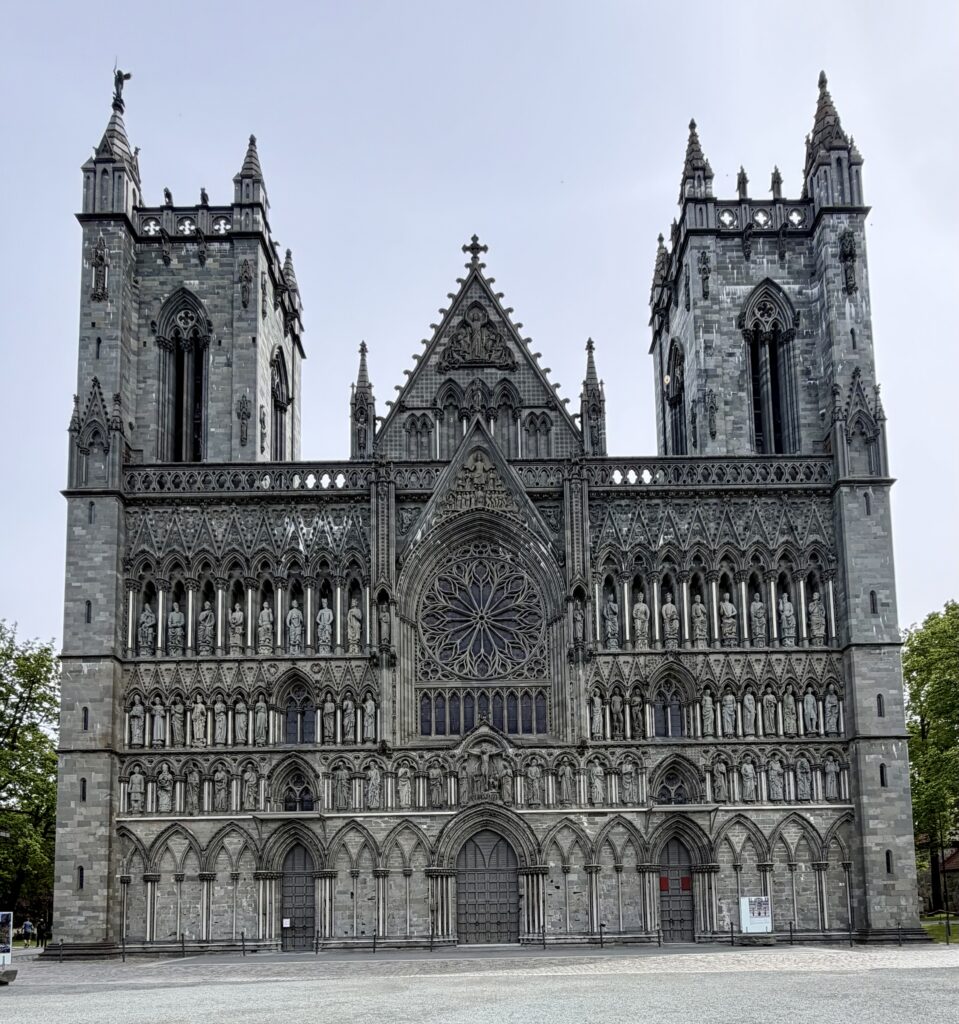
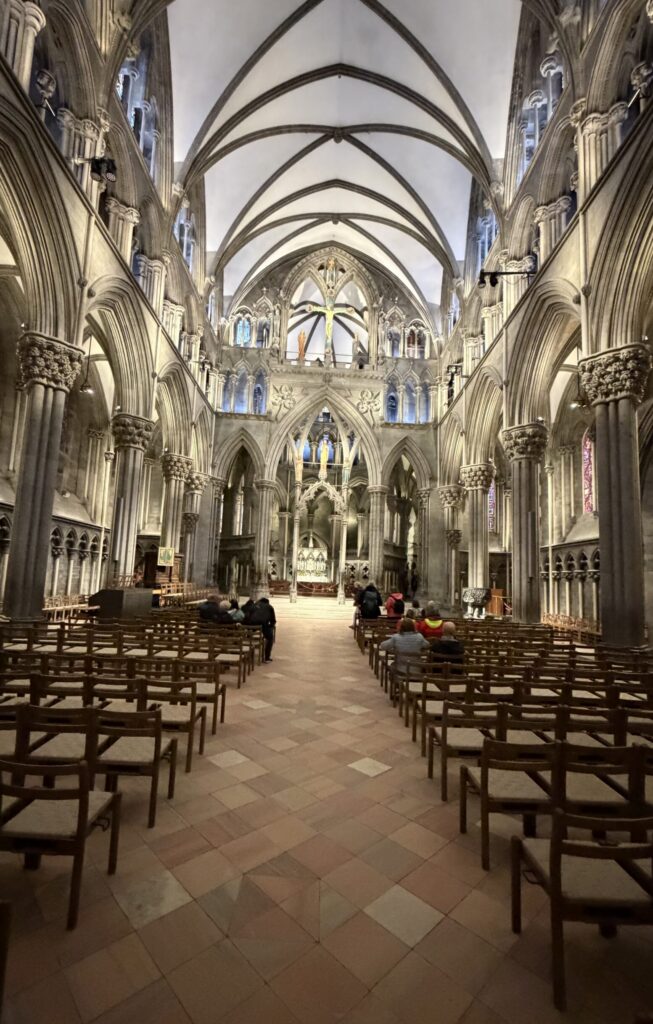
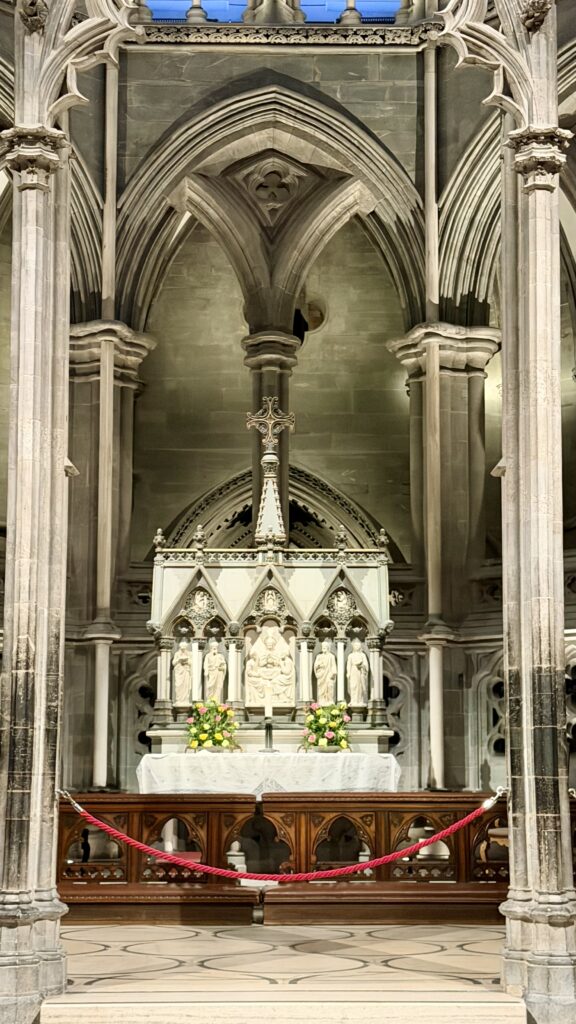
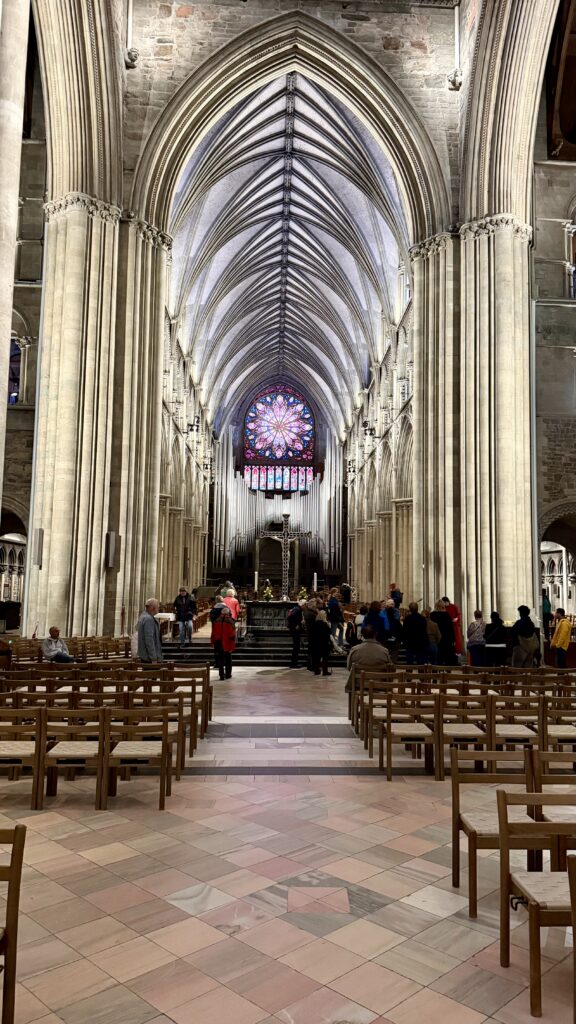
Nidaros Cathedral is Norway’s most important medieval church and one of the country’s most iconic landmarks. Built between 1070 and 1300 over the burial site of King Olav II (St. Olav), who brought Christianity to Norway, it has been a major pilgrimage destination for centuries. The cathedral is renowned for its magnificent Gothic architecture, elaborate stone carvings, soaring stained-glass windows, and richly decorated interior. It is also the traditional site for the consecration of Norway’s monarchs and remains an active place of worship.
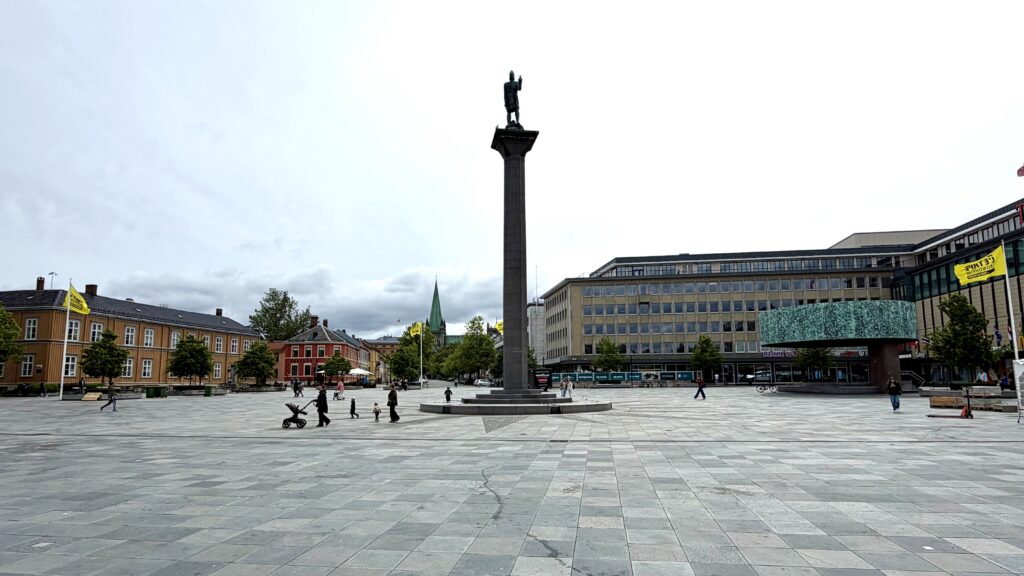
Torvet (Market Square) – is the heart of Trondheim and has been the city’s main gathering place since it was founded by King Olaf Tryggvason in 997. After a devastating fire in 1681, the square was redesigned as part of the city’s new Baroque street plan. At the center of the square stands the Olaf Tryggvason Monument, a 58-foot (17.5 m) column unveiled in 1921. The statue honors the founder of Trondheim and also functions as a giant sundial, with the column casting a shadow onto markings set into the surrounding cobblestones.
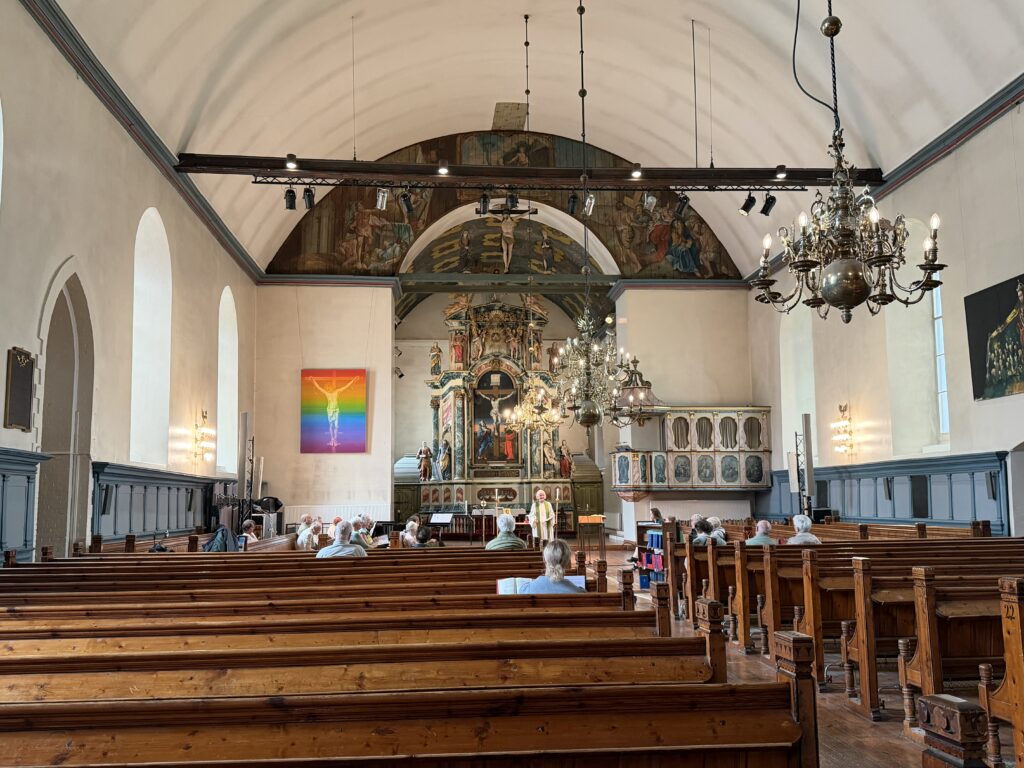
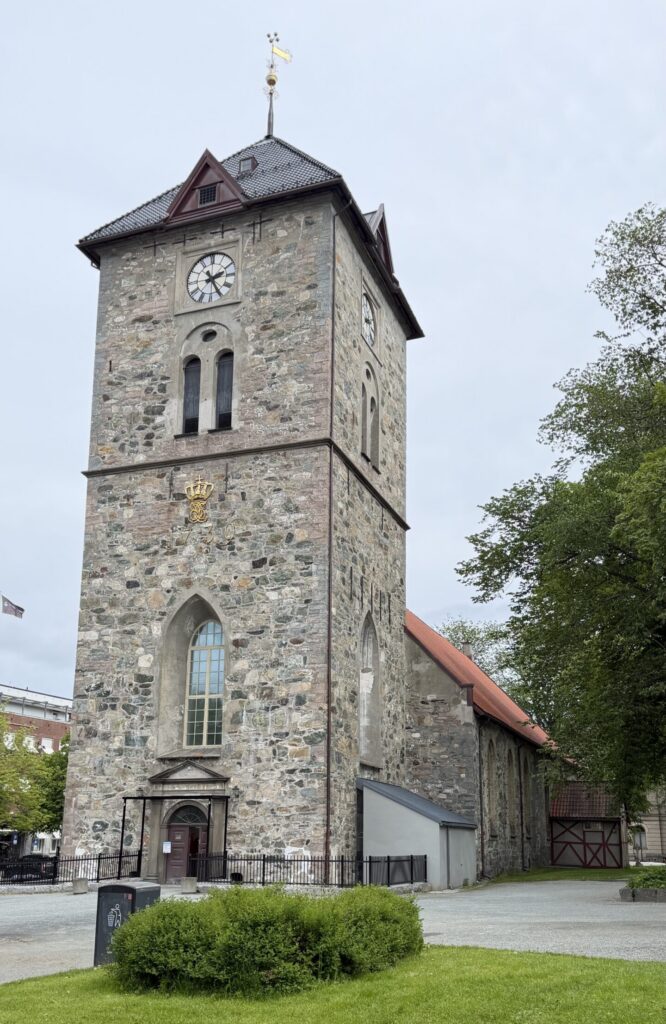
Vår Frue Church – We could see the tower of this church from Torvet Square and decided to stop by. It is one of only three medieval churches surviving in Trondheim and the city’s second most important historic church after Nidaros Cathedral. Originally built in the 12th century, it has been damaged by several fires but faithfully rebuilt over the centuries, preserving much of its medieval stonework.
Inside, the church combines medieval architecture with later Baroque and Gothic elements. Today, it is known as Trondheim’s open church, welcoming visitors, hosting concerts, and serving as a place for quiet reflection and community outreach. Its central location makes it an easy and worthwhile stop while exploring the city.
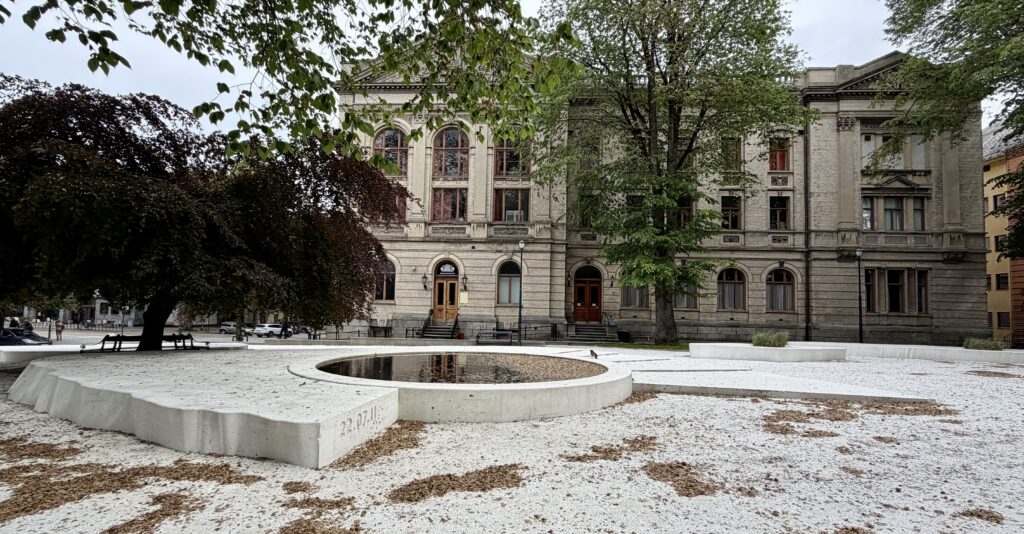
Terra Incognita – is Trondheim’s memorial to the victims of the July 22, 2011 terrorist attacks in Oslo and on Utøya (A far-right extremist, Anders Breivik, launched a bomb attack on government offices in Oslo). The peaceful memorial features a white marble landscape dotted with concrete islands, symbolizing unexplored territory and the challenge of finding hope after tragedy. At its center is a shallow circular reflecting pool illuminated by 77 lights, commemorating the 77 lives lost. The concrete surfaces are engraved with words and reflections about democracy, openness, empathy, and humanity, many contributed by local authors and schoolchildren.
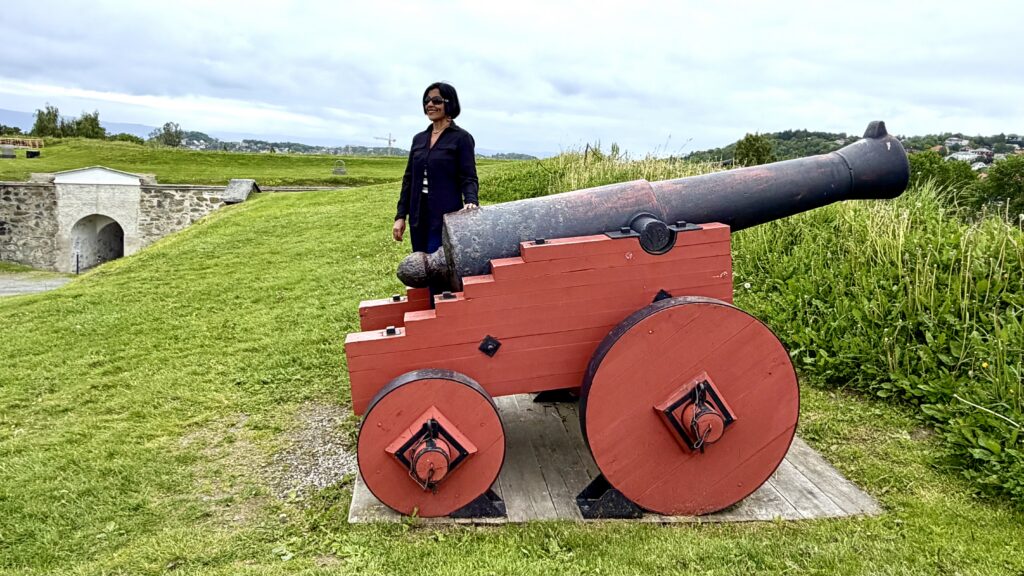
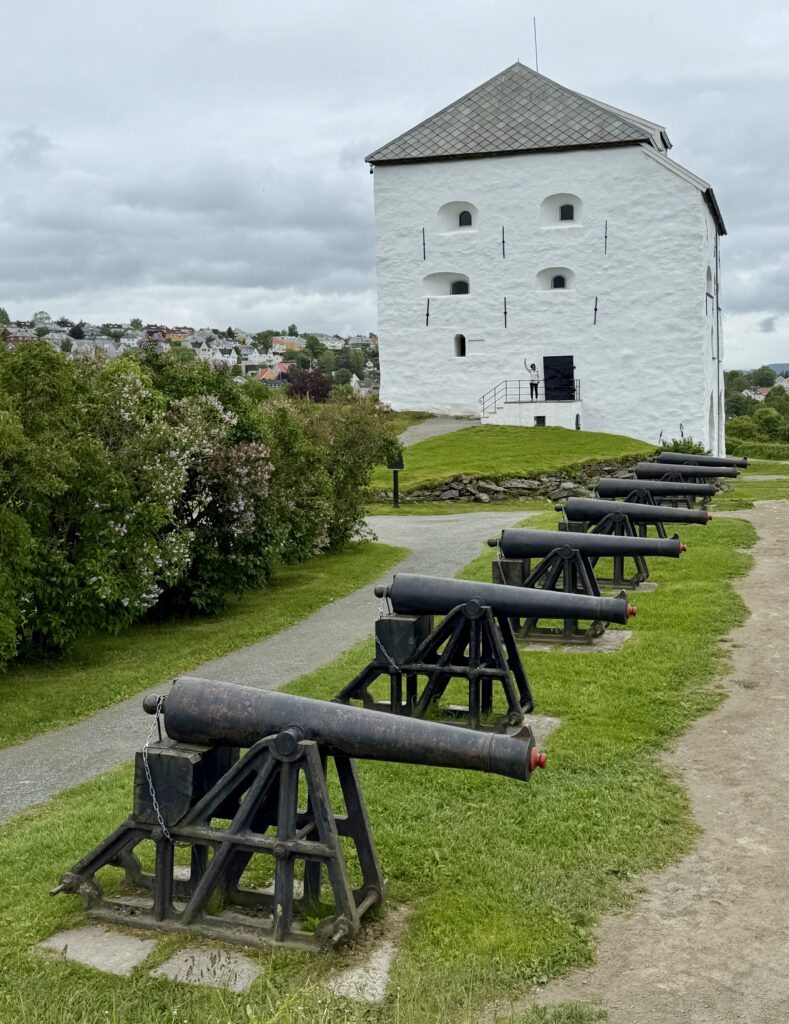
Kristiansten Fortress – Perched on a hill overlooking Trondheim, Kristiansten Fortress was built between 1682 and 1685 after the great city fire of 1681 to defend the city from attacks from the east. It successfully fulfilled that role during the 1718 Swedish siege, when its strong defenses helped prevent Trondheim from being captured.
Today, the fortress is one of the city’s best viewpoints, offering panoramic views over Trondheim, the Nidelva River, and the surrounding fjord. The grounds are free to explore, and the historic tower houses a small museum. The site also serves as a memorial, as it was used for executions during World War II and in the post-war period. We walked to the Fortress, a pleasant 15-minute uphill walk from the Old Town Bridge, passing the CycloCable bicycle lift along the way.
Verftsbrua – better known as the Flower Bridge, is one of Trondheim’s most photographed pedestrian bridges. Spanning the Nidelva River, it connects the city center with the Nedre Elvehavn waterfront district and has become one of the city’s busiest walking and cycling routes. Built as part of the redevelopment of the former shipyard area, the bridge is famous for its colorful flower displays during the warmer months, making it a favorite spot for photos and a pleasant walk along the river.
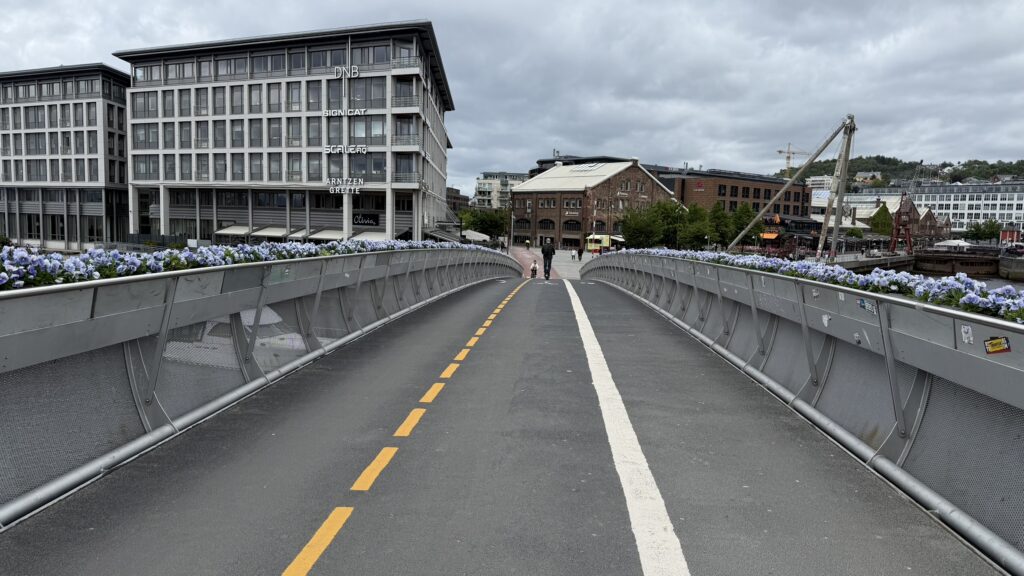
You can see this bridge from Bakke Bridge (see the first section on Bakke Bridge).
Ringve Museum – is Norway’s national museum of music and musical instruments, located on the historic Ringve Farm overlooking the Trondheimsfjord. Opened to the public in 1952, the museum is based on the remarkable private collection of Victoria Bachke, who assembled more than 1,500 musical instruments and music-related artifacts.
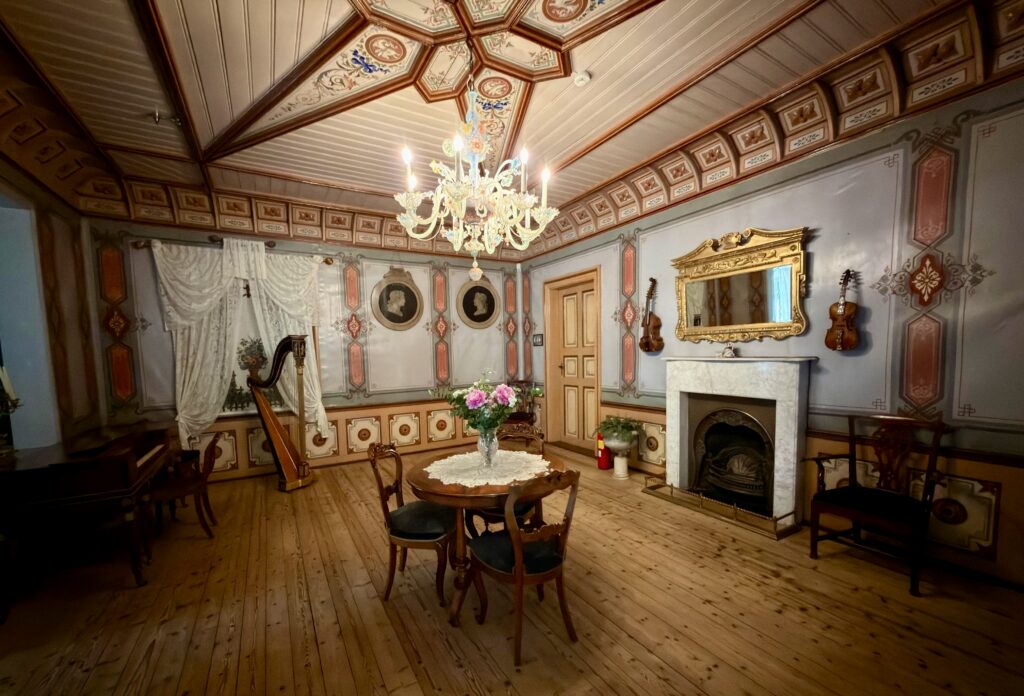
The museum is divided into two main exhibitions. The Manor House features beautifully preserved period rooms where guided tours include live demonstrations of historic instruments, while the Barn offers interactive displays tracing the history of music from around the world. Surrounded by attractive botanical gardens, Ringve is well worth a visit, even if you are not a music enthusiast.
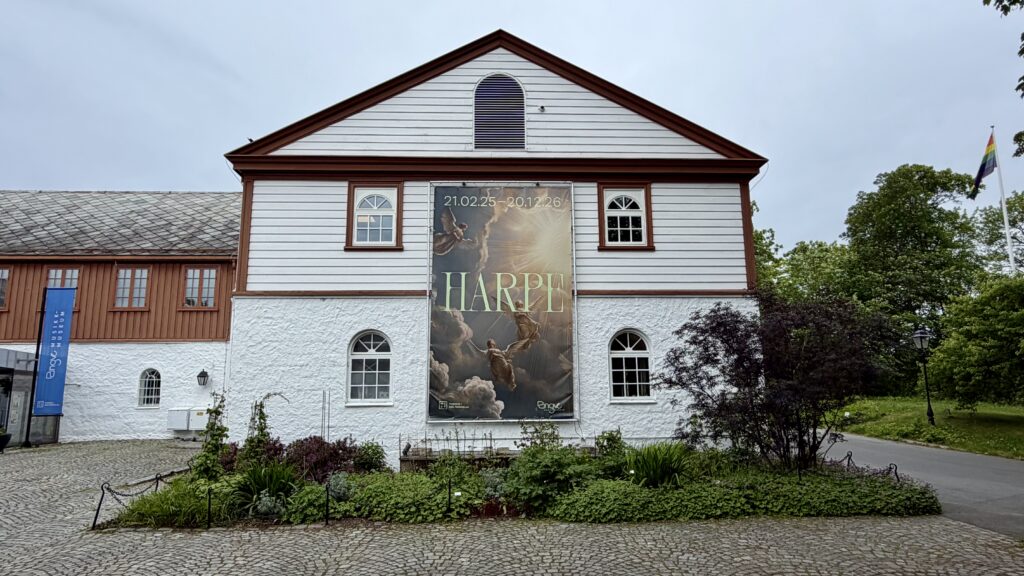
Unfortunately, the museum was closed during our visit, so we weren’t able to see the exhibits. Instead, we spent some time walking around the historic buildings and the peaceful Ringve Botanical Garden.
Note from a fellow traveler who was able to visit the interior A 45-minute guided tour takes you through the rooms of the Manor House, with live music performed by the tour guide on various historical instruments. You can easily spend 2–3 hours at this museum, and she highly recommends doing so.
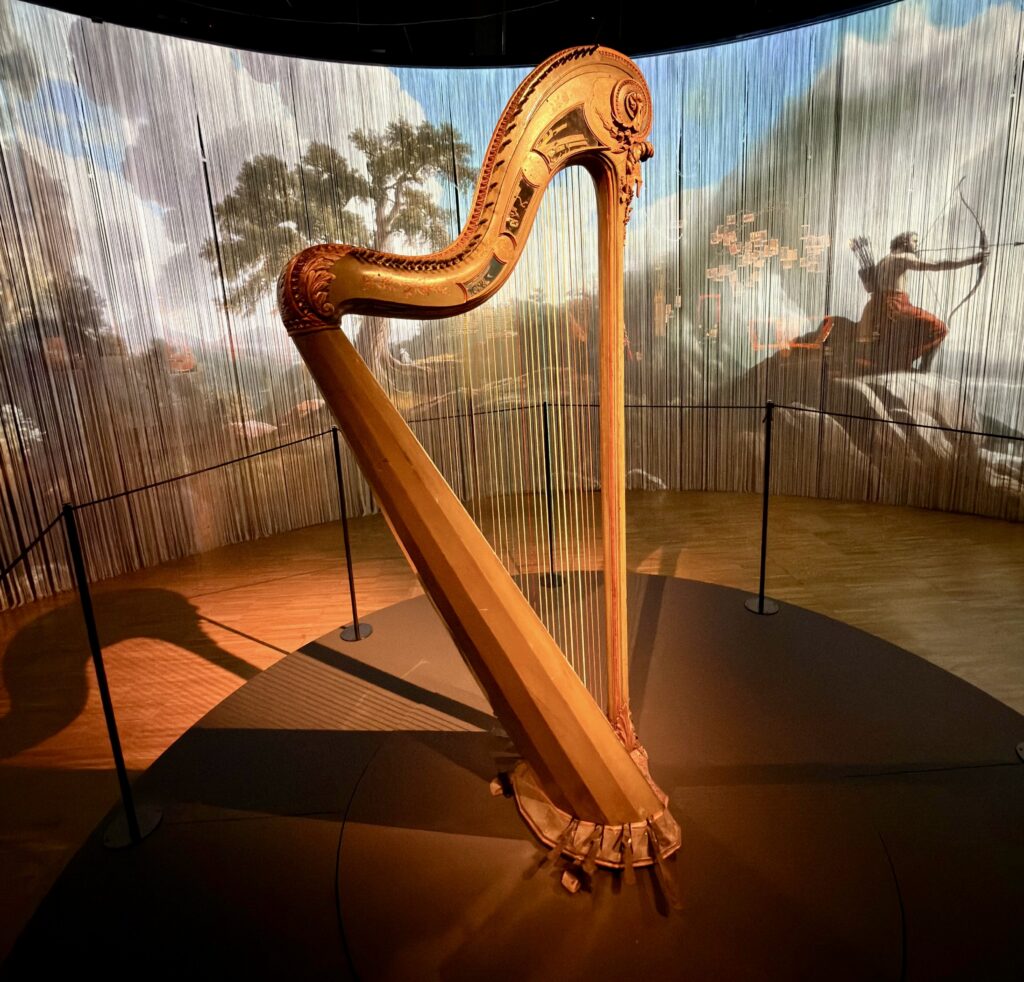
Other Notable sites – The following sites are worth visiting if you have time.
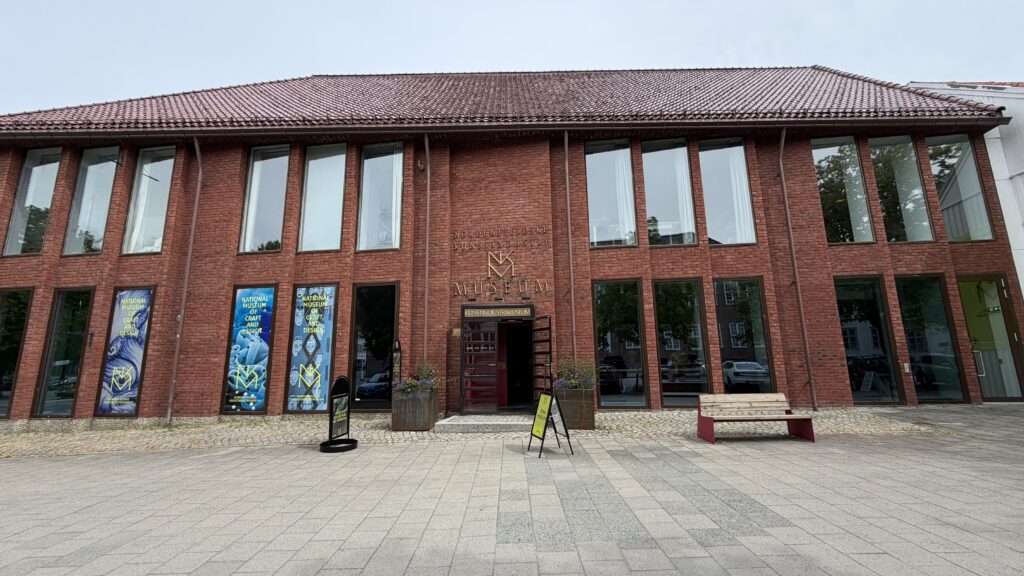
Nordenfjeldske Museum of Decorative Arts – Just a block from the Nidaros Cathedral, and on the way to the Torvet square you will come across this Museum which showcases one of Norway’s finest collections of decorative arts, spanning more than 500 years of craftsmanship. Its exhibits include historic Trøndelag silverwork, 18th-century Norwegian glass, furniture, ceramics, textiles, jewelry, and Scandinavian design.
————————————————-
Munkholmen – is a small island in the Trondheimsfjord, just 1.3 km from Trondheim’s city center. Despite its size, it has played many roles throughout history—as an execution site, a Benedictine monastery, a fortress, a prison, and even a World War II anti-aircraft station. Today, Munkholmen is a popular destination for visitors, offering guided tours, scenic views of Trondheim, and a small beach for swimming during the summer. Ferries operate regularly from the city center, making it an easy and enjoyable excursion on a sunny day.
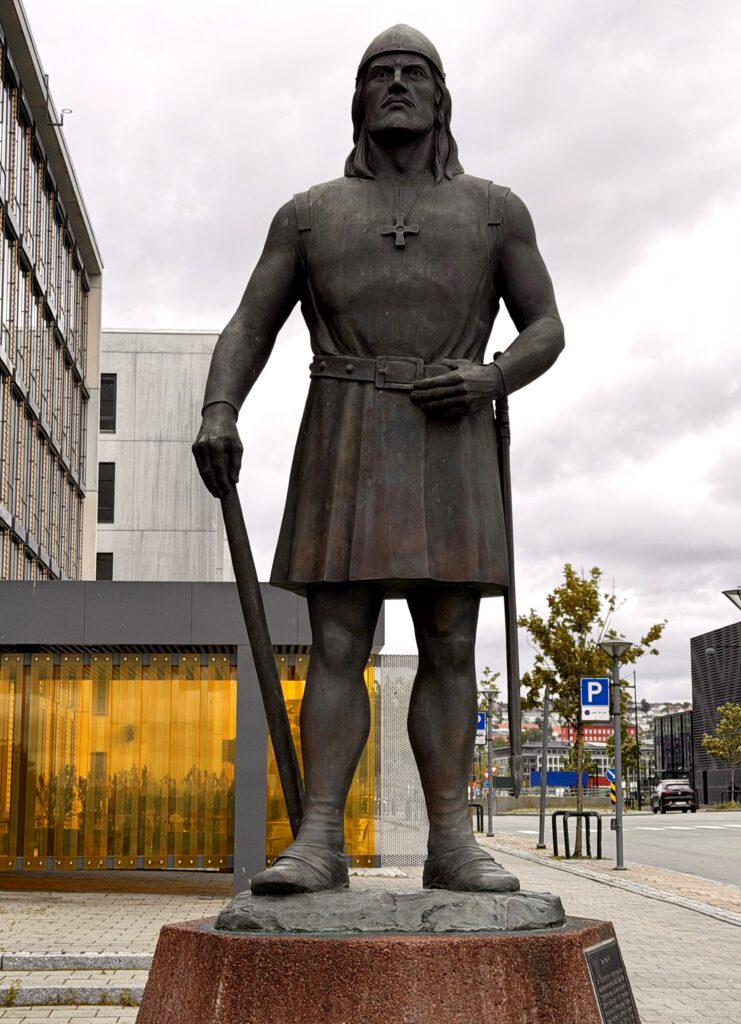
As we walked to the waterfront to get a view of the Munkholmen island, we came across a 10-foot bronze monument of Leif Erikson on the pier at Havnegata, overlooking the Trondheim fjord. Donated by the Leif Erikson Society of Seattle in 1997, it honors the Norse explorer and the sagas describing his voyage from Trondheim to North America. The statue is one of three replicas of August Werner’s 1962 Seattle World’s Fair sculpture, with others located in Greenland and Newfoundland.
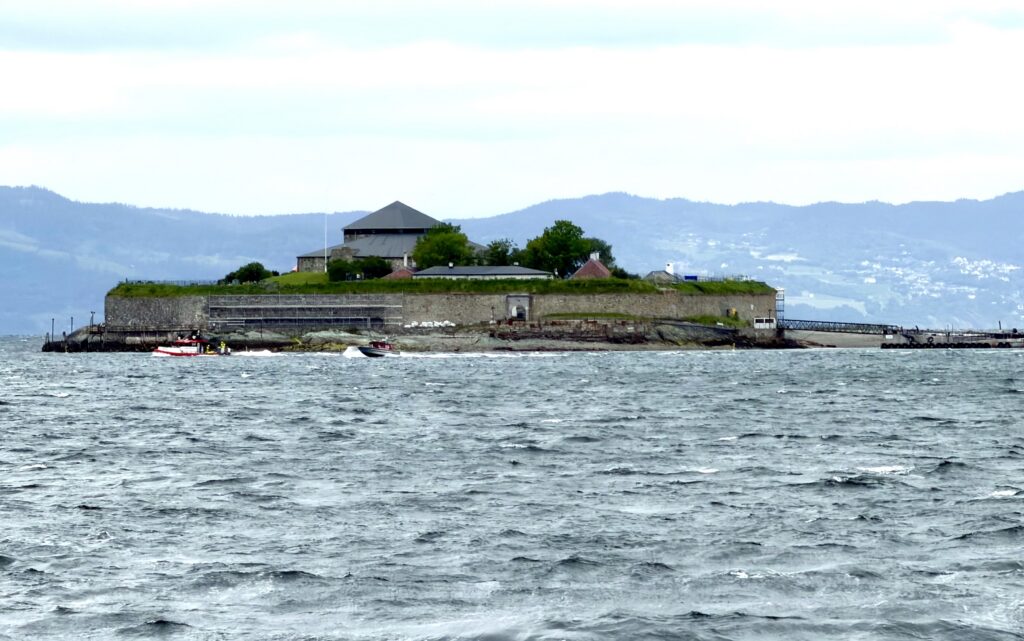
We did not have enough time to take the ferry to Munkholmen Island, but it is a destination we hope to visit on a future trip
————————————————-
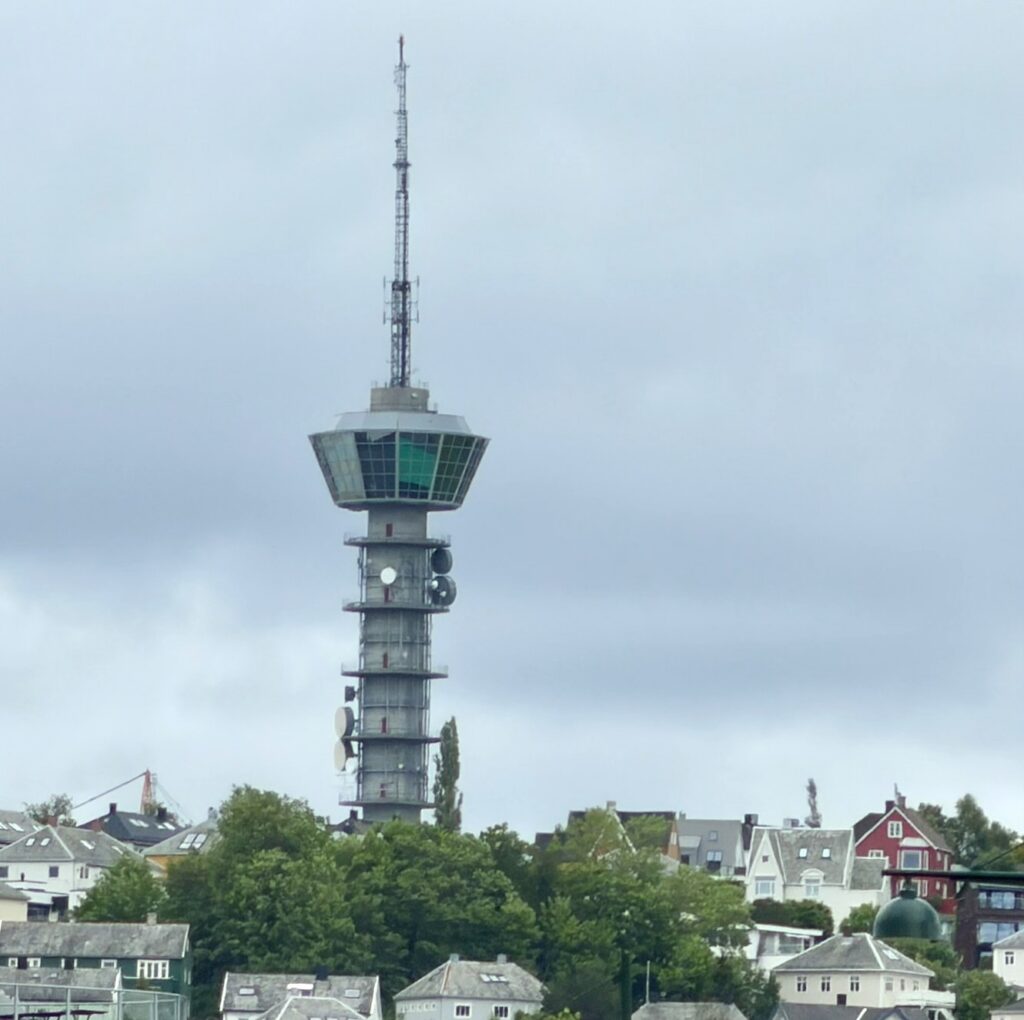
Tyholttårnet – is a 124-metre telecommunications tower and one of Trondheim’s most recognizable landmarks. Completed in 1985, it offers panoramic views of the city, the Trondheimsfjord, and the surrounding countryside.
A highlight of the tower is the Egon revolving restaurant, located 74 metres above ground. The restaurant completes one full rotation every hour, allowing diners to enjoy ever-changing views while they eat. Even if you’re not planning a meal, it’s a great place to visit for some of the best views in Trondheim.
————————————————–
Pirbadet – is Trondheim’s largest indoor water park and public swimming complex, located on the city’s waterfront. Opened in 2001, it features a 50-metre Olympic-size swimming pool, water slides, wave pools, children’s play areas, hot tubs, wellness facilities, and both indoor and outdoor pools. The complex has hosted the Norwegian Swimming Championships and is popular with both locals and visitors.