Overnight in Samanvay (Udupi)
After spending four days sightseeing in and around Chikkamagaluru, we drove on to Udupi. Along the way, we stopped for a couple of hours to explore the impressive Sharadamba Temple complex in Sringeri.
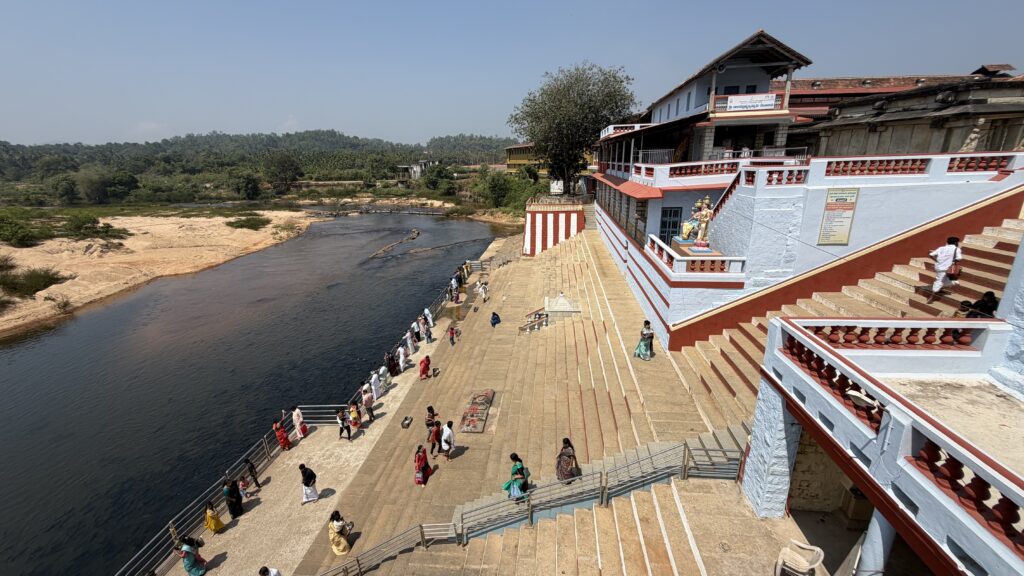
Sringeri, located on the banks of the Tunga River is a renowned piligimage site and first of the four Amnaya Peethams established by Adi Shankaracharya in the 8th century. It is famous for the Sri Sharada Peetham, the Vidyashankara Temple, and as a center for Advaita Vedanta philosophy. The sprawling temple grounds have many shrines and structures, making it a fascinating place to wander around and take in the spiritual atmosphere.
- Sringeri
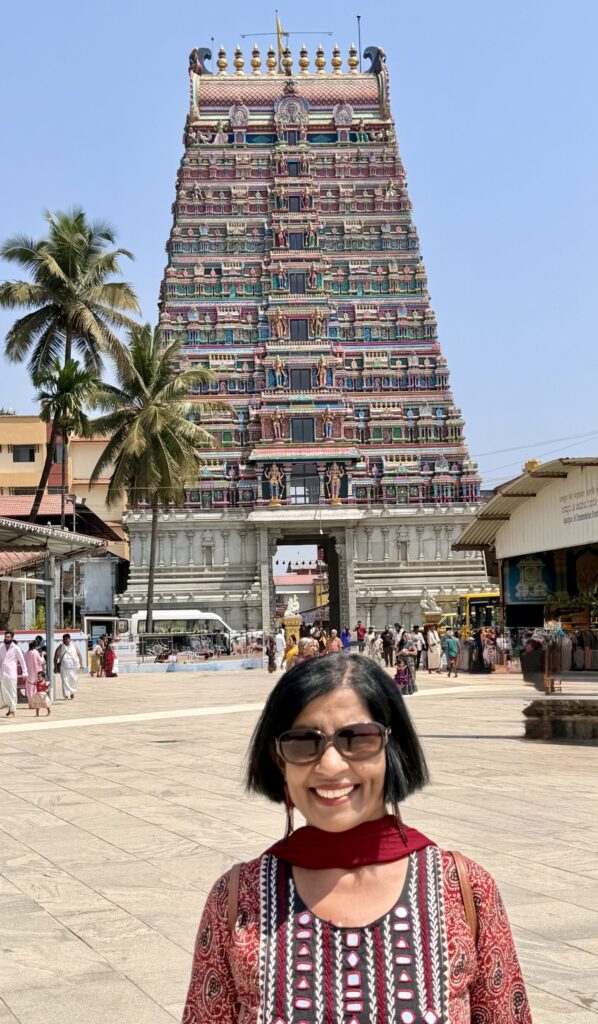
- Rajagopuram
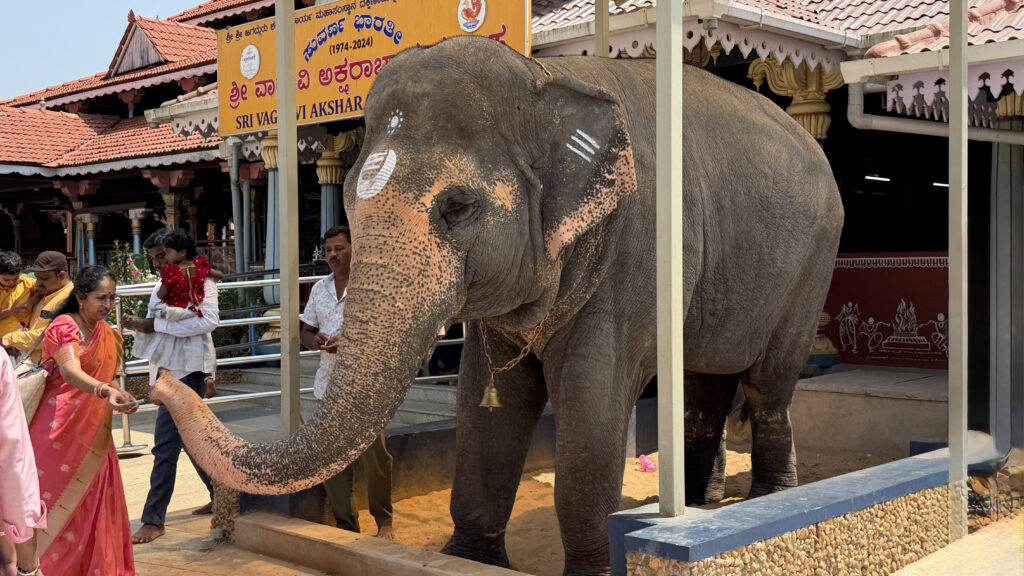
- Elephants at the entrance
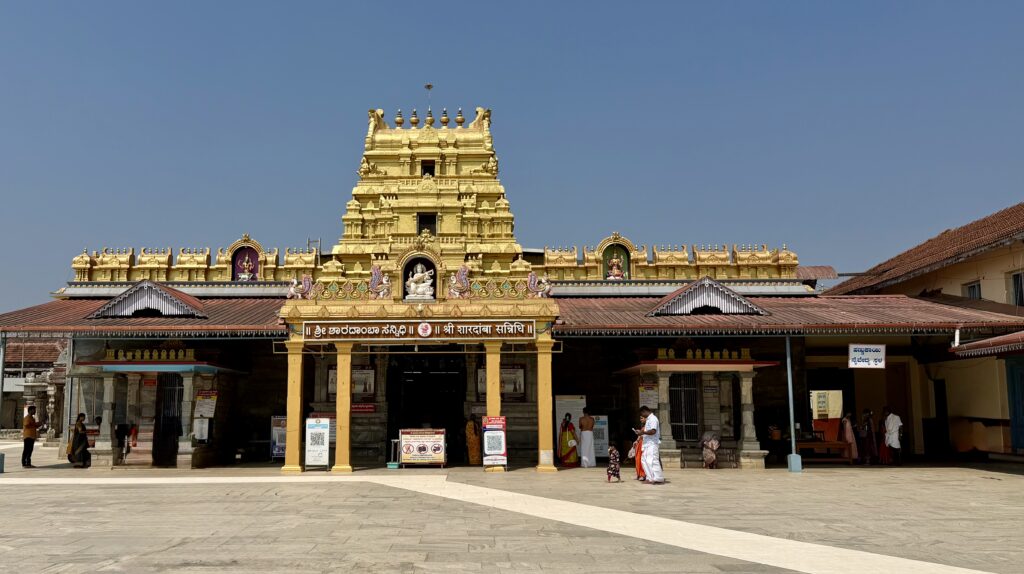
- Sharadamba Temple
- Vidhyashankara Temple
- Adi Shankaracharya Sannidhi
- Thorana Ganapathy Temple
- Bala Subramanya Temple
Note – No photography was allowed inside any of the shrines in the Sringeri complex
Sringeri, Rajagopuram – This majestic 127-foot-tall Dravidian-style entrance tower serves as the main gateway to the Sri Sharadamba Temple and Vidyashankara Temple complex. Located on the banks of the Tunga River, the towering gateway features intricate sculptures of mythological figures and deities. The foundation for this impressive structure was laid in February 2008, and the frame installation was completed on November 12, 2010. Built in traditional Dravidian architectural style, the Rajagopuram marks the grand entrance to the sacred monastic center established by Adi Shankaracharya.
Sringeri, Elephants at the Entrance — At the entrance to the Sringeri Sharada Peetham complex, visitors are often greeted by two well-known resident elephant sisters named Jayalakshmi and Shreelakshmi. These gentle elephants are known for their calm and friendly nature, frequently interacting with visitors and sometimes blessing devotees with their trunks.
Sringeri, Sri Sharadamba Temple – is a revered temple dedicated to the goddess Sharadamba. The temple dates back to the 8th century and was established by the philosopher-saint Adi Shankara, who also founded his first monastery here, known as the Sringeri Sharada Peetham. This institution became the southern monastic seat among the four cardinal monasteries he established across India, making it one of the most important centers of Advaita Vedanta.
During the Third Anglo-Mysore War in 1791, the temple was attacked and damaged by the Pindaris. Tipu Sultan, the ruler of Mysore at the time, expressed deep concern and offered protection, financial assistance, and gifts to help restore the temple.
Sringeri, Adi Shankaracharya Sannidhi – Within the Sri Sharadamba Temple complex, there is a shrine dedicated to Adi Shankaracharya, the founder of the monastic seat. The shrine was first established by the 33rd Jagadguru, Sacchidananda Shivabhinava Nrisimha Bharati and houses the idol of Adi Shankara seated in yogasana pose, showing chinmudra in the right hand and abhayamudra in the left. The pedestal features the four principal disciples of Shankara, with a Shiva linga placed in front. Later, the 35th Acharya, Abhinava Vidyatirtha Mahaswamiji, enhanced the structure, and a larger temple complex was initiated in 2006 and consecrated in 2011. Today, the shrine remains an important pilgrimage site and spiritual center for followers of Advaita philosophy.
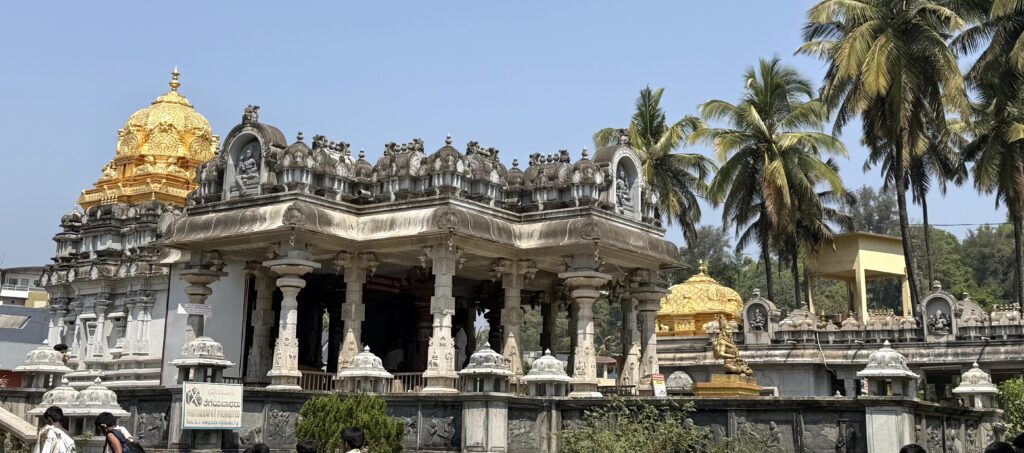
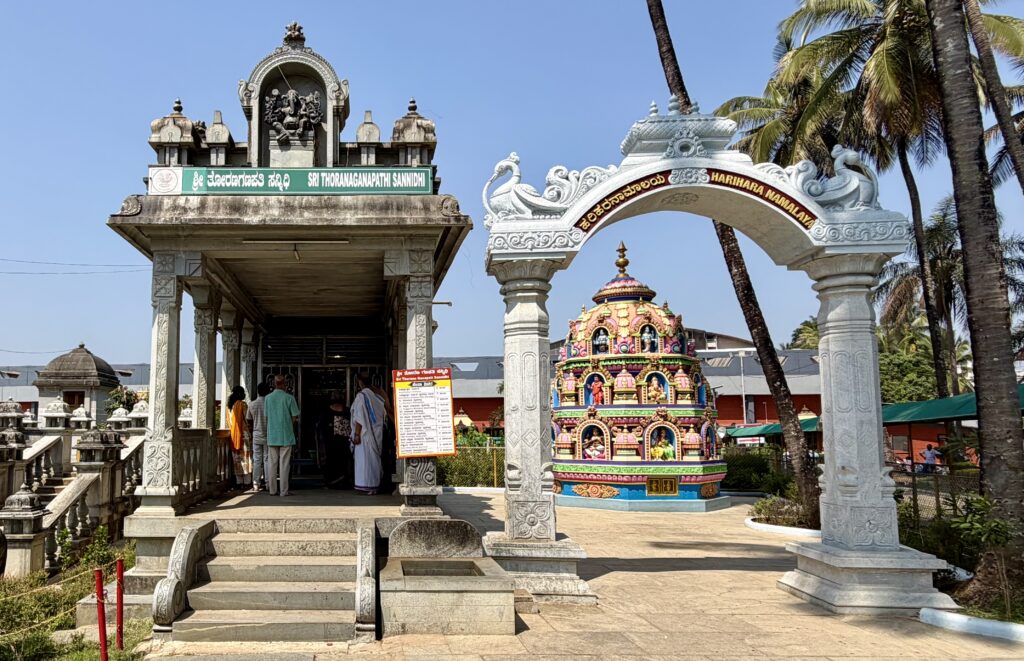
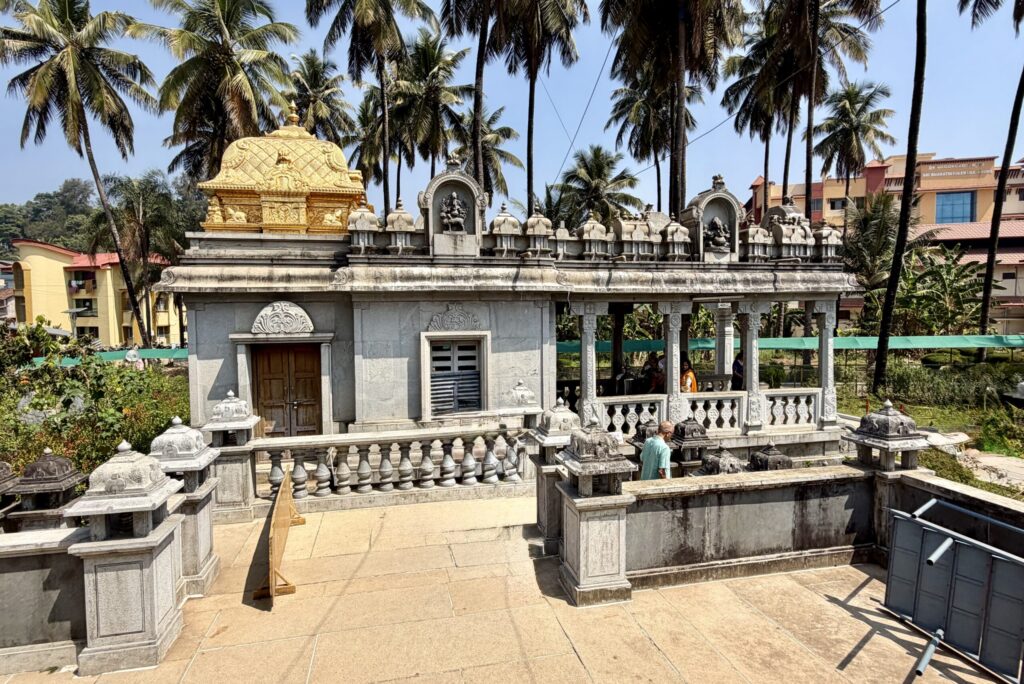
Sringeri, Thorana Ganapathy Temple – is an ancient and highly revered shrine dedicated to Ganesha, located next to Adi Shankaracharya Sannidhi. Traditionally, the Sringeri Jagadgurus worship here before beginning any tour, and it is considered one of the five Pancha Maha Ganapathys in the region. Originally a sand-outline image of Ganesha on a torana (arch), it was reconstructed into a separate temple in June 2014. The deity is adorned with a Suvarna Kavacha (golden armor) and the temple features a decorative silver door.
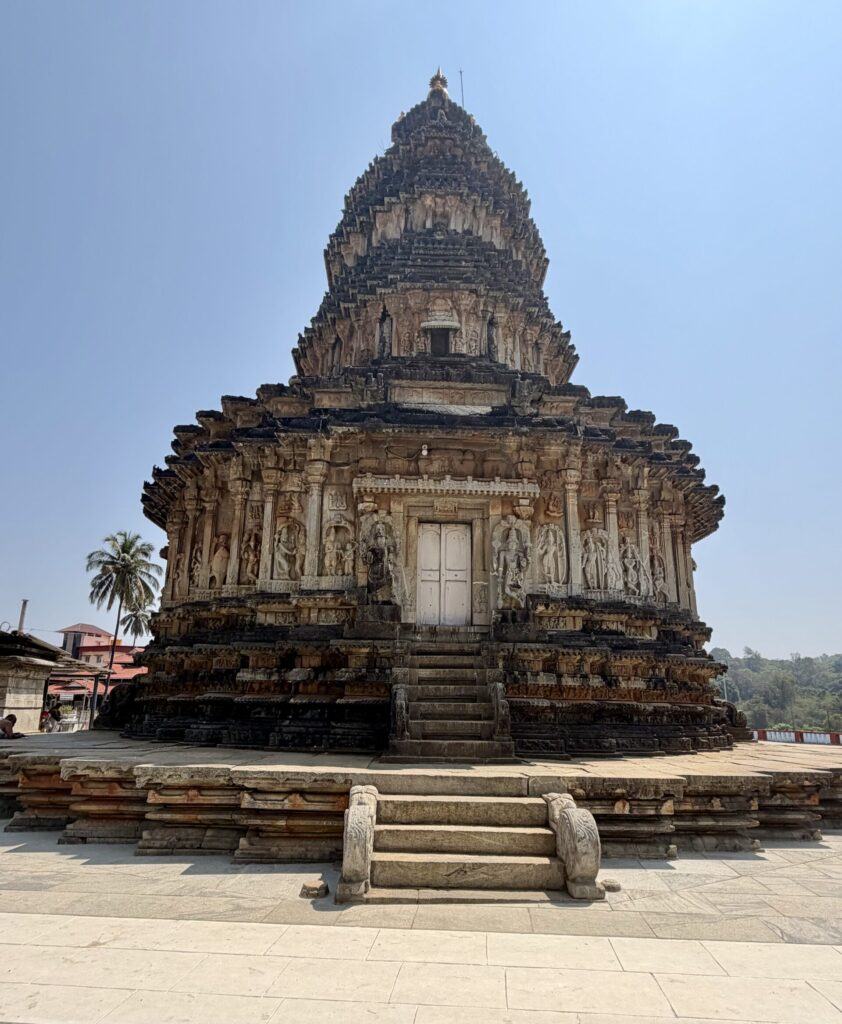
Sringeri, Vidhyashankara Temple – This incredibly striking structure was built in 1338 CE and is constructed entirely of stone, blending Hoysala (Chalukya) and Dravidian architectural styles. The temple stands on a high plinth, offering impressive views of the surrounding hills and slopes. The structure is roughly rectangular with apsidal ends along the east–west axis. The sanctum on the western side houses the main deity, with Vidya Ganapati on one side and Durga on the other, while the remaining sides feature shrines to Brahma, Vishnu, and Shiva along with their consorts.
The eastern half of the temple contains a mandapa supported by twelve massive monolithic pillars, each representing one of the twelve zodiac signs, an architectural feature that also aligns with the movement of sunlight through the year. The central ceiling is exquisitely carved with a lotus motif surrounded by parrots, showcasing the exceptional craftsmanship of the period.
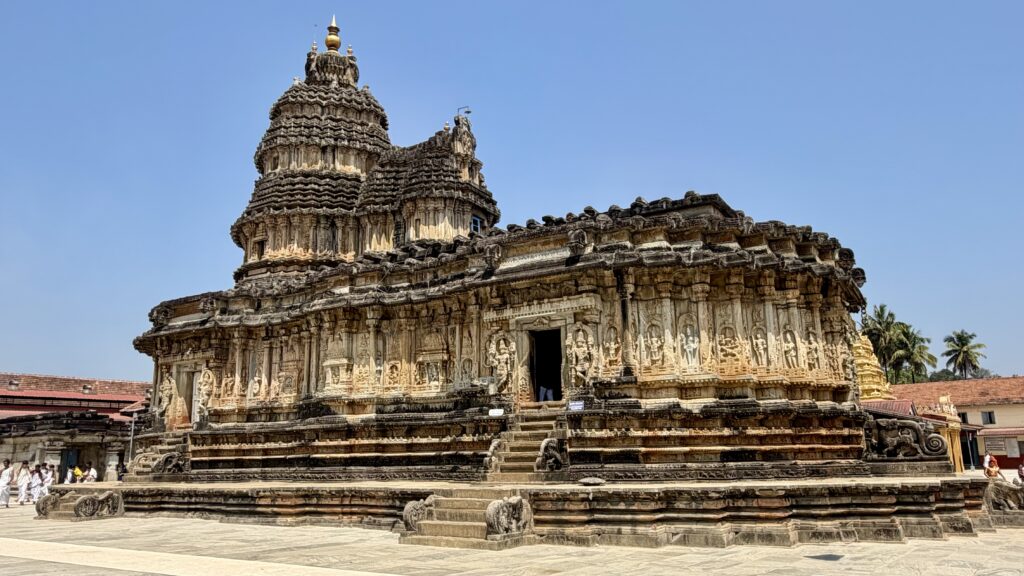
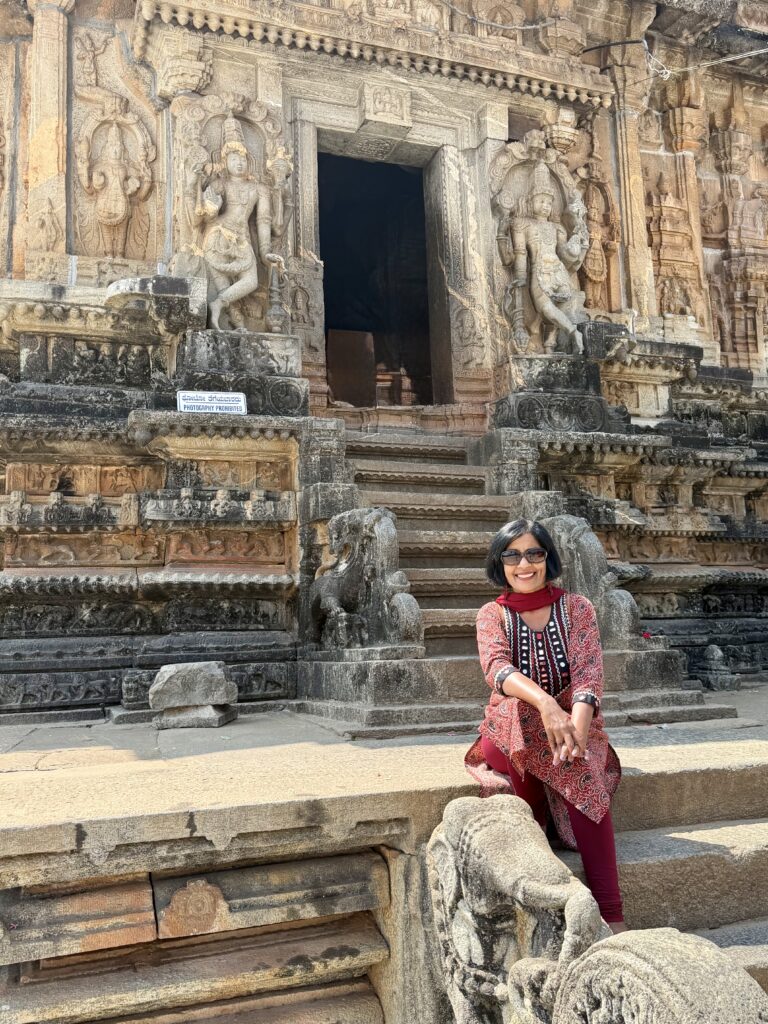
The exterior of the temple is richly decorated with intricate stone carvings that reflect a blend of Hoysala and Dravidian artistic traditions. The temple walls feature beautifully sculpted panels of Hindu deities, mythological scenes, and decorative motifs, all carved with remarkable precision. Running along the base are friezes depicting animals such as elephants, lions, and horses, symbolizing strength, courage, and royal power. Higher sections of the walls include finely detailed figures of gods, celestial beings, and ornamental patterns that showcase the skill of medieval craftsmen.
Sringeri, Bala Subramanya Temple – a peaceful shrine dedicated to Subramanya (Lord Murugan) in his child form. It is located on the southern side of the Sri Sharadamba Temple complex in Sringeri, close to the banks of the Tunga River. The temple was consecrated in 1978 by Abhinava Vidyatirtha Mahaswamiji, the 35th Jagadguru of the Sringeri Sharada Peetham.
————— Udupi —————
After thoroughly exploring the Sringeri Sharadamba Temple complex under the hot, humid, and sweaty March sun, we continued our journey westward to Udupi, about 80 km away. The drive took a little over two hours, after which we checked into our hotel and rested for a couple of hours to recover before heading out to explore the city.
Udupi is a coastal city, nestled between the Western Ghats and the Arabian Sea. Renowned as a temple city, its main attraction is the Sri Krishna Temple, famous for the Kanakana Kindi, a small window through which devotees can glimpse the deity. The complex also hosts the historic Chandramouleeshwara Temple dedicated to Shiva.
Udupi cuisine, originating from temple kitchens, is celebrated worldwide, with specialties like masala dosa, saaru, adyes, and ajadinas.
- Sri Krishna Temple Matha
- Madhva Sarovara or Sri Krishna Temple pond
- Chandramoulishwar Temple
- Krishna Temple
- Golden Chariot of Udupi Sri Krishna Temple
- Ananteshwar Temple
- Malpe Beach
- Sea Walk Malpe
Plan on spending 1–2 hours exploring the sprawling complex and visiting its various shrines. Upon entering, you will first pass by the Madhva Sarovara.
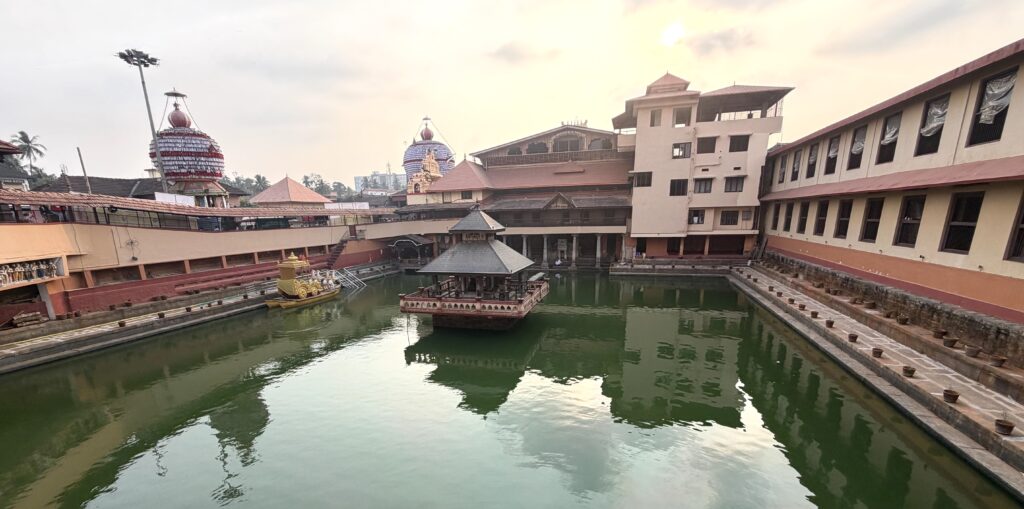
Madhva Sarovara – You will pass by this sacred temple pond on the way to Sri Krishna Matha. This large rectangular tank is considered holy and plays an important role in temple rituals. According to tradition, Madhvacharya, the 13th-century philosopher who founded the temple, used this water for daily worship and rituals. We paused here to take in the calm surroundings before continuing on.
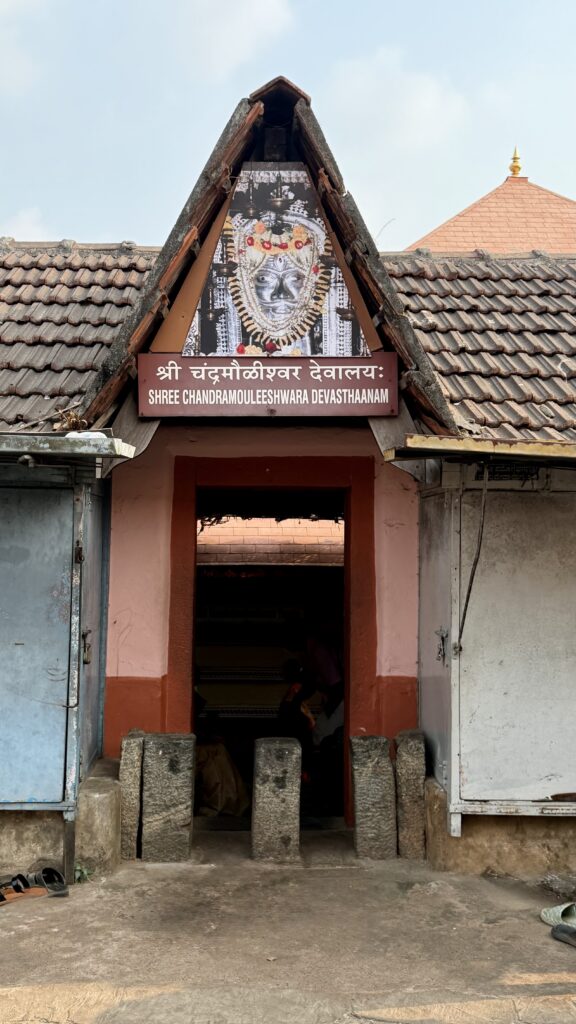
Chandramoulishwar Temple – Devoted to Lord Shiva, this temple is located in front of the main Sri Krishna Temple. The history of this temple dates back to over 900 years and is older than the Krishna Mutt. It is quite and peaceful inside, providing a calm retreat away from the busy crowds outside.
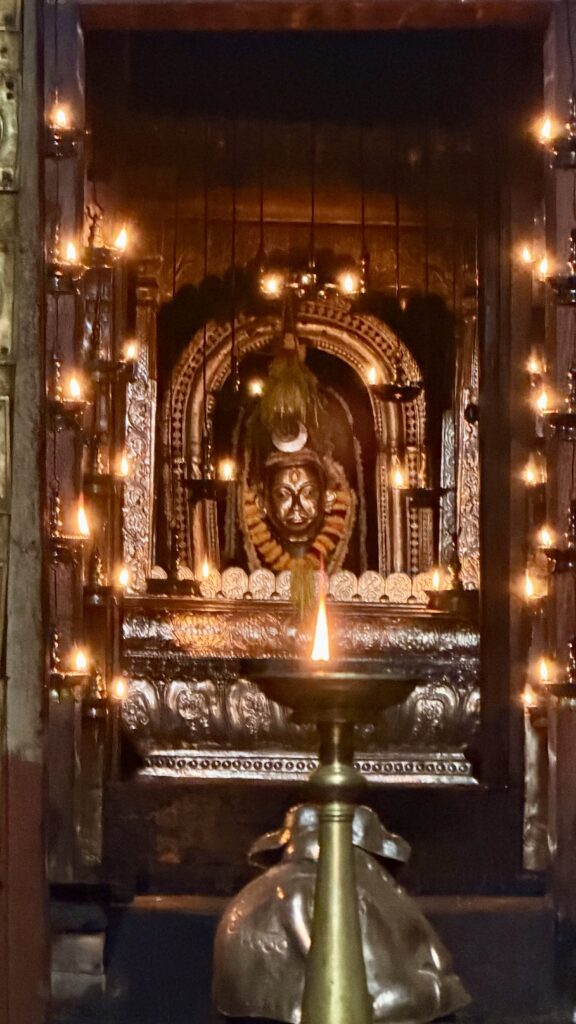
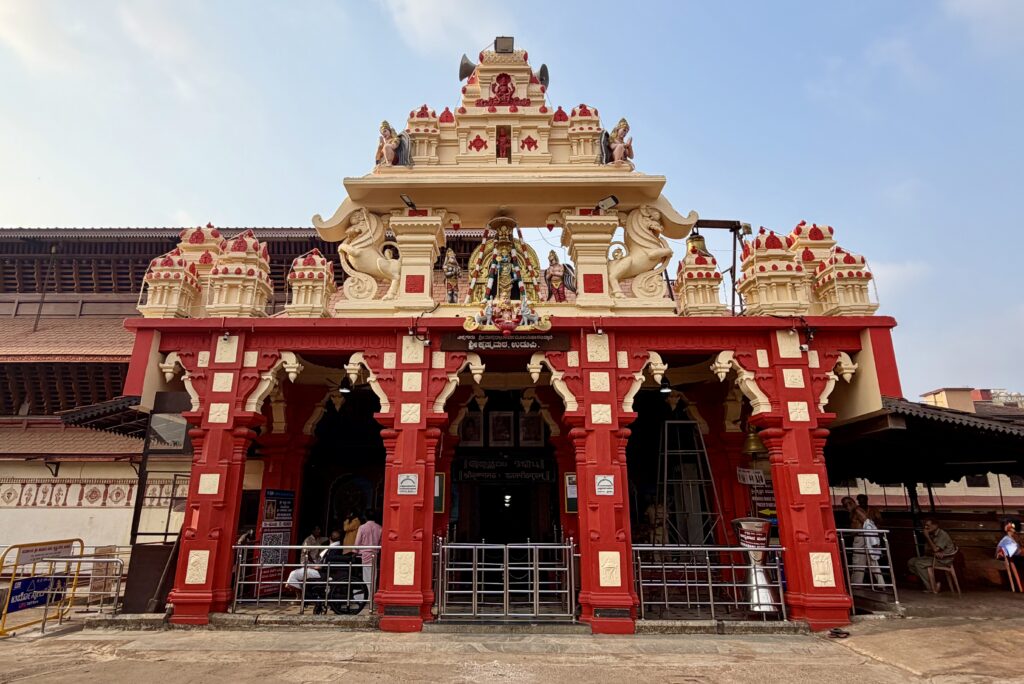
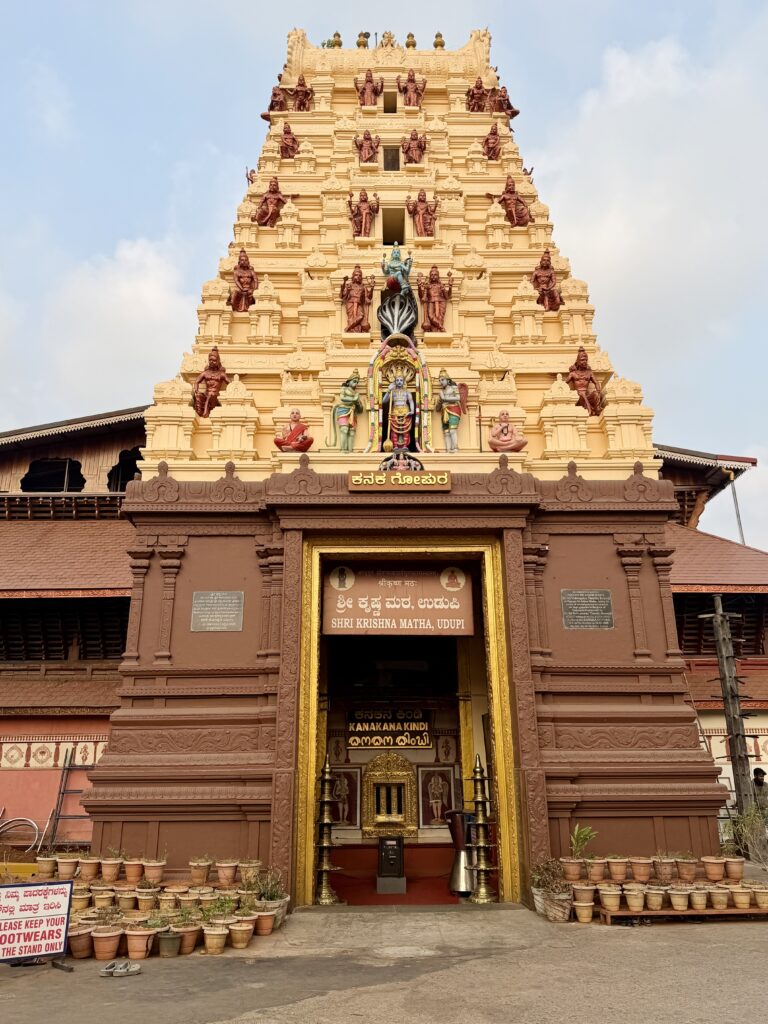
Sri Krishna Temple – Considered to be one of the most famous pilgrimage sites in South India, the Krishna Temple or the Udupi Sri Krishna Matha is one of the most auspicious temples dedicated to Lord Krishna. Founded in the 13th century by the Vaishnavite saint Madhvacharya, who established the Dvaita school of Vedanta, the temple complex functions as a living ashram for daily devotion. Devotees view Krishna through two special windows – the Navagraha Kindi, a silver-plated window with nine holes, and the Kanakana Kindi, decorated with an arch honoring Saint Kanakadasa.
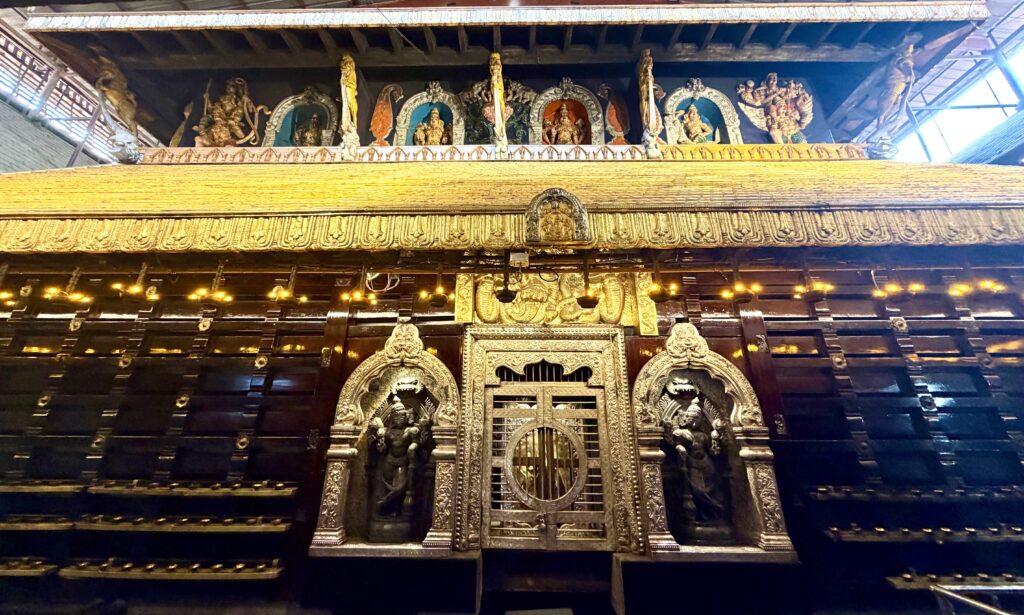
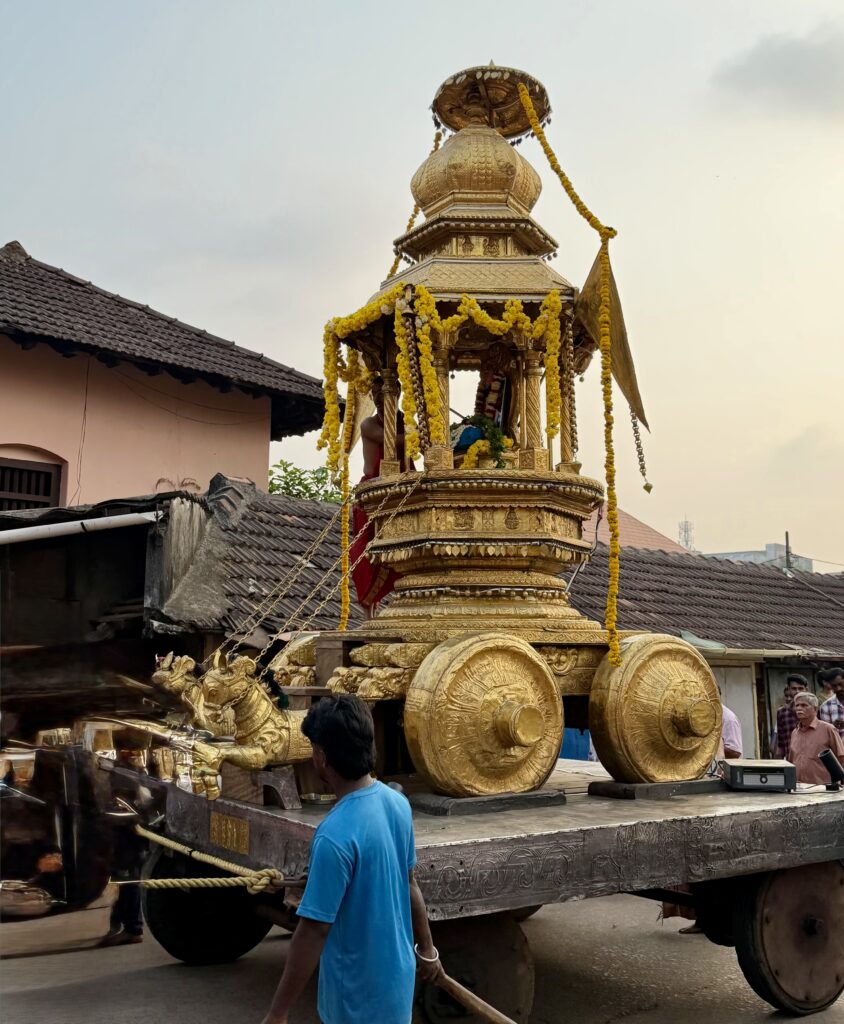
Sri Krishna Temple Golden Chariot – This beautifully decorated ceremonial chariot at Udupi Shri Krishna Temple is used during special temple festivals and processions. Known locally as the Suvarna Ratha, it is plated with gold and intricately carved with figures of deities and traditional motifs. During major celebrations such as Krishna Janmashtami and the Paryaya Festival, the idol of Krishna is placed on the chariot and taken in a procession through the temple streets. Devotees gather in large numbers to witness the procession and often help pull the chariot as an act of devotion.
When not in use, the golden chariot—gleaming in the sun—stands within the temple complex and is one of the striking highlights visitors notice while exploring the temple grounds. We were fortunate to see the chariot being taken out in procession during our visit.
Ananteshwar Temple – Dedicated to Lord Shiva, Ananteshwar Temple is an ancient 8th-century temple believed to be the oldest in the region. The temple is located within the area surrounding the Sri Krishna Temple complex. Due to the temple’s location amid surrounding structures and narrow spaces, it was a bit difficult to capture a good photograph of the exterior.
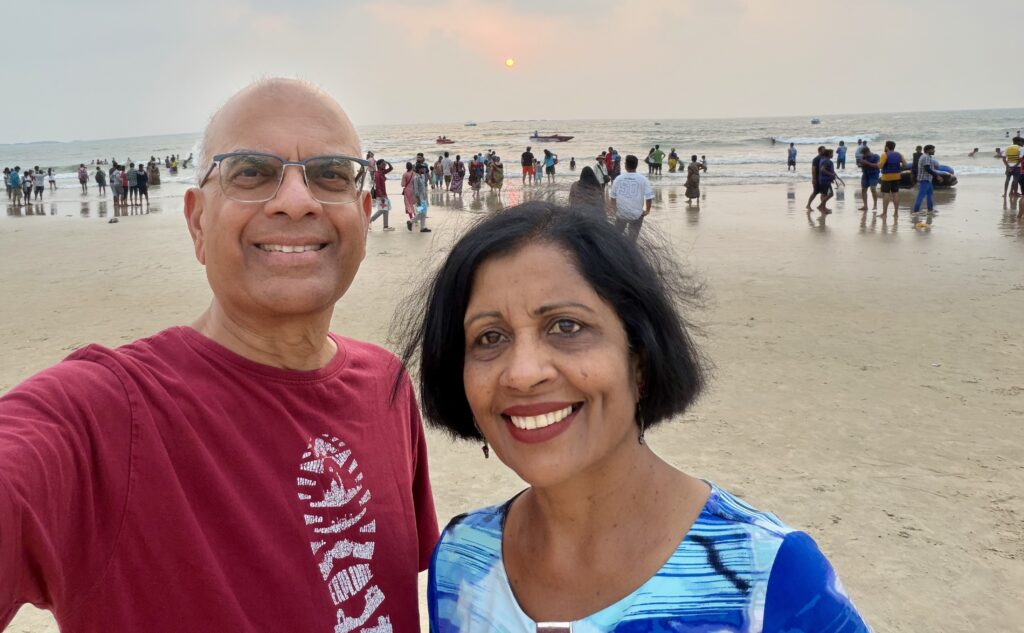
Malpe Beach – This beach is one of the hidden gems of the state of Karnataka. Located about 6 km from Udupi, the beach is known for its pristine white sand, beautiful sunset views, and the scenic sea walk. We spent some time strolling along the shoreline, enjoying the gentle waves and waiting to watch the sun slowly set over the Arabian Sea.
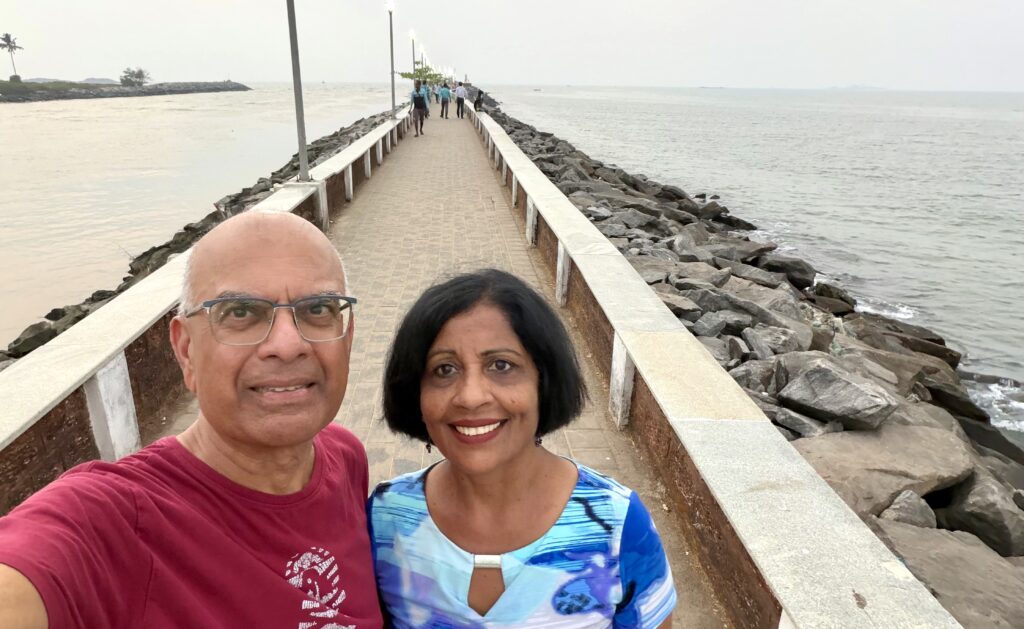
Sea Walk Malpe – After sunset, we drove about 10 minutes to this scenic sea walkway located a short distance from the main beach area. The 450-meter walkway offers a unique experience of walking out into the sea on a long pier, providing lovely views of the vast Arabian Sea on one side and the backwaters of the Swarna River on the other. Benches placed along the path allow visitors to relax and enjoy the scenic surroundings.
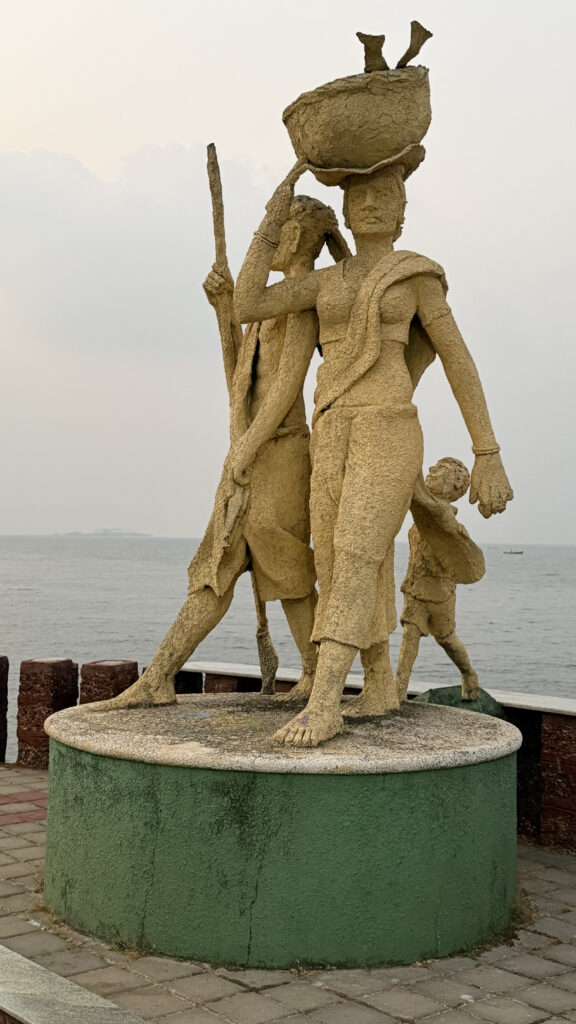
There is also a sculpture of a fisherman and his family, serving as a tribute to the local fishing community. The walkway is illuminated at night, creating a pleasant atmosphere for an evening stroll.
St. Mary’s Island – Located off the coast near Malpe Beach, this small island is famous for its rare hexagonal columnar basalt rock formations, created by ancient volcanic activity. The island can be reached by ferry or boat from the Malpe beach jetty, with services usually operating between 9:00 AM and 5:00 PM. As facilities on the island are limited, it is advisable to carry sunscreen, hats, and drinking water. We did not have time to visit the island.