Visited in 2014
Verona is located in northern Italy and best known for its romantic links to Shakespeare’s Romeo and Juliet. Set along the Adige River, it blends ancient ruins, medieval streets, and lively piazzas, making it both culturally rich and easy to explore.
- Centro Storico
- I Portoni della Brà
- Via Giuseppe Mazzini
- Piazza Bra
- Arena di Verona
- Piazza Delle Erbe
- Torre dei Lamberti
- Juliet’s House
- Basilica of San Zeno Maggiore
- Ponte di Castle Vecchio
- Castel San Pietro
- Basilica of Santa Anastasia
- Verona City Walls
The Centro Storico is the city’s historic heart and a UNESCO World Heritage site, known for its beautifully preserved Roman, medieval, and Renaissance architecture. Compact and walkable, its streets reveals landmarks like the Verona Arena, Piazza delle Erbe, Piazza Bra, and Juliet’s House, all set along the Adige River. Lively cafés, shops, and daily local life make this area the starting point for many city tours and explorations.
- I Portoni della Brà – also known as the Doors of the Bra or The Archway at the Piazza Bra, is a massive medieval gateway to the historic city of Verona, Italy. It served as a passage between the city and its surrounding suburban countryside. Made of Verona marble, this archway features two arches and a clock installed in 1872.
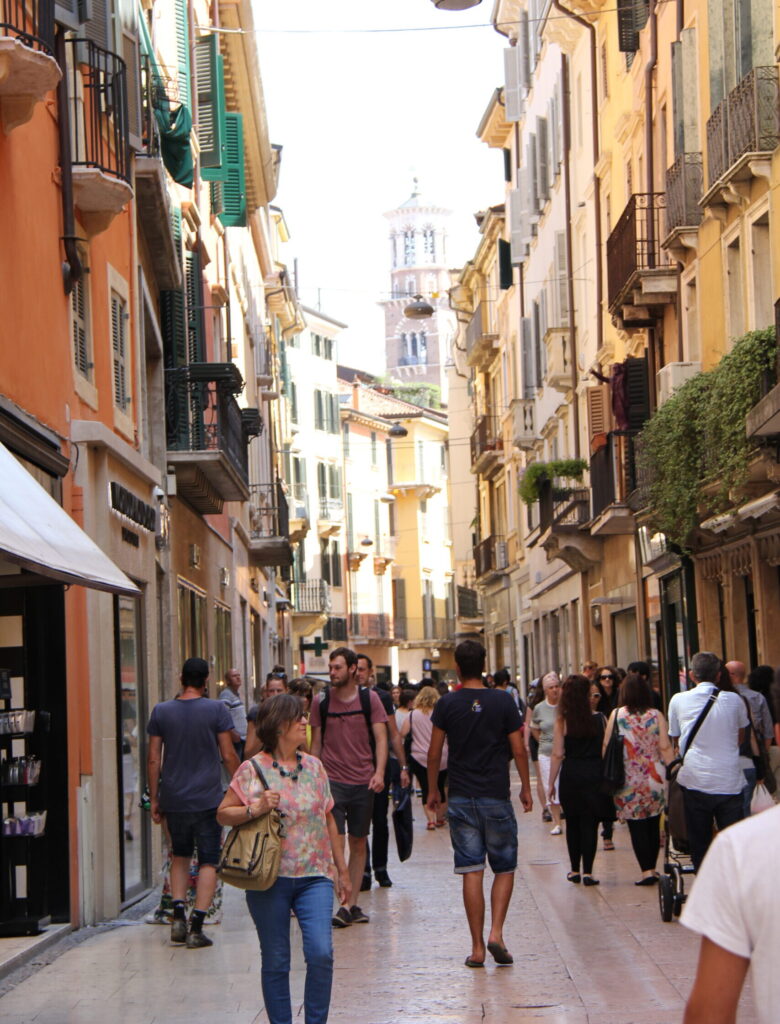
- Via Giuseppe Mazzini, a premier shopping street, is also located in this area between Piazza Bra and Piazza delle Erbe. This pedestrian-only street, paved with white limestone, is known for its luxury boutiques, high-fashion brands like Gucci, Zara, and Massimo Dutti, and elegant cafés.
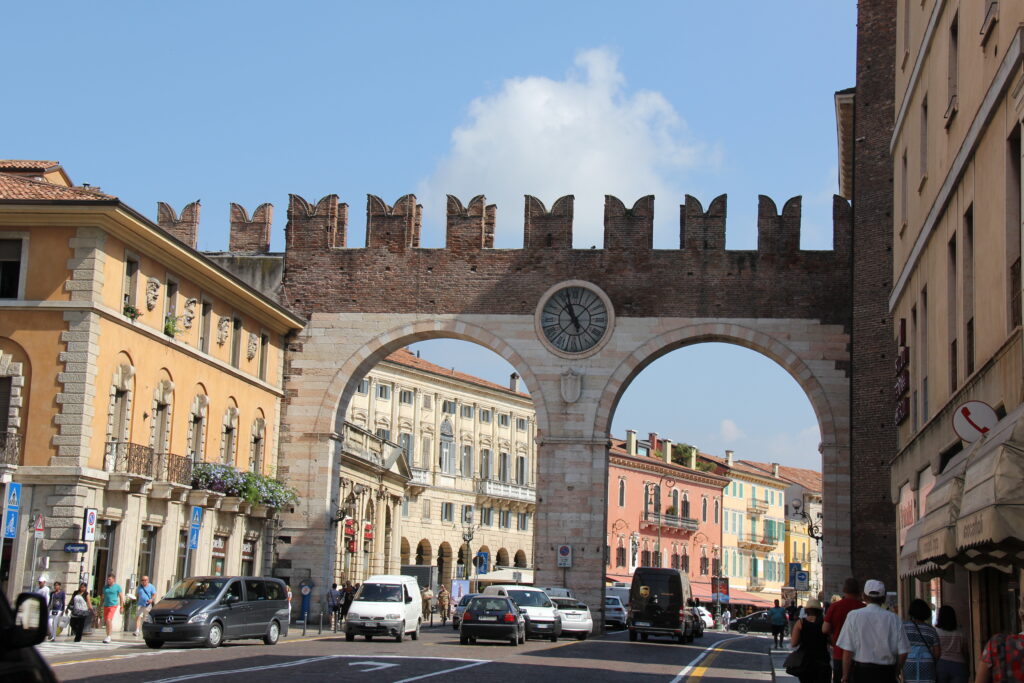
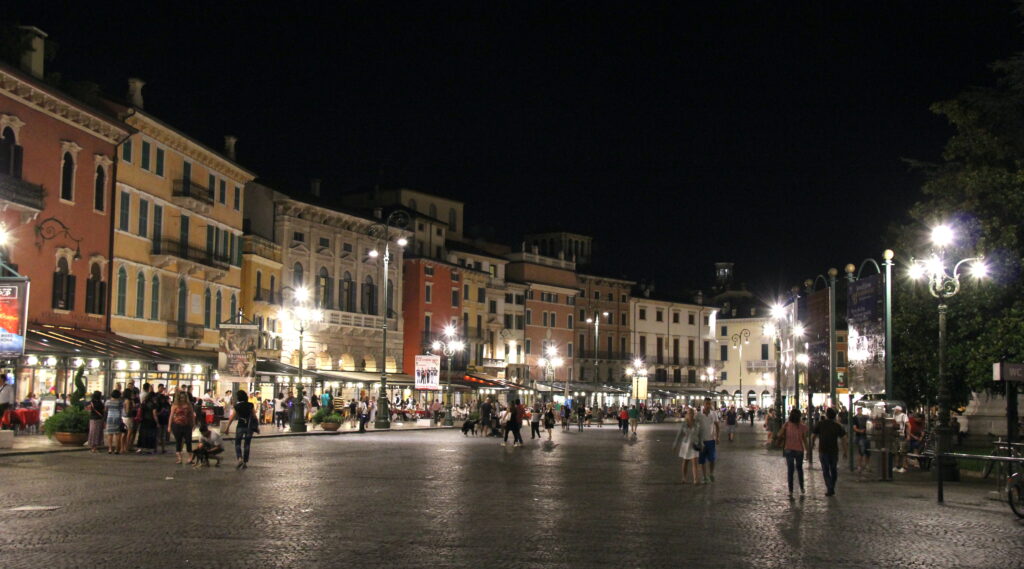
Piazza Bra – is the largest square in the historic center and sits right next to the famous Verona Arena (see next section). Piazza Bra serves as one of the main gateways to the old town and connects to Via Mazzini (see picture in previous section), which leads toward Piazza delle Erbe.
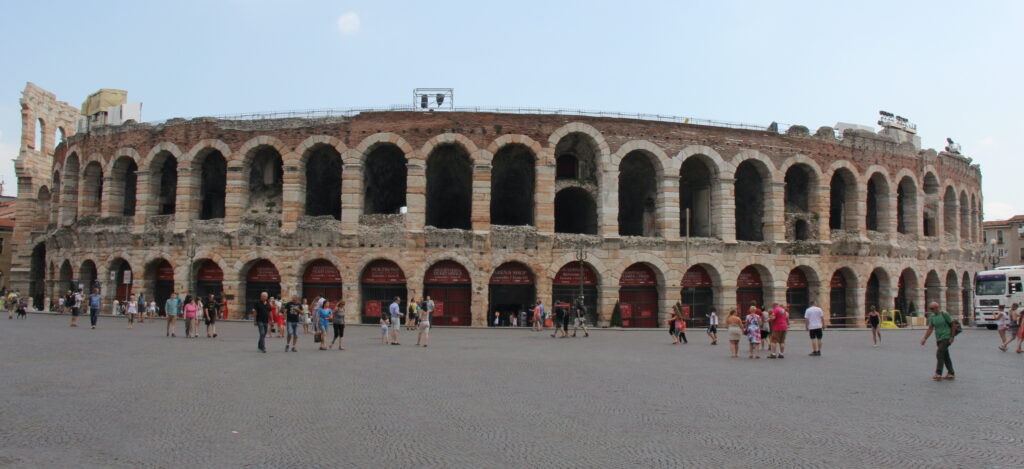
Arena di Verona – or Verona Arena is a well-preserved Roman amphitheater in the heart of Verona near Piazza Bra. It was probably built around 30 AD during the late Augustan to early Claudian period. It predates the Colosseum in Rome, showcasing early innovations in amphitheater design. Today, the Arena hosts the famous Arena di Verona Festival in summer, with opera performances, while serving as a concert venue throughout the rest of the year.
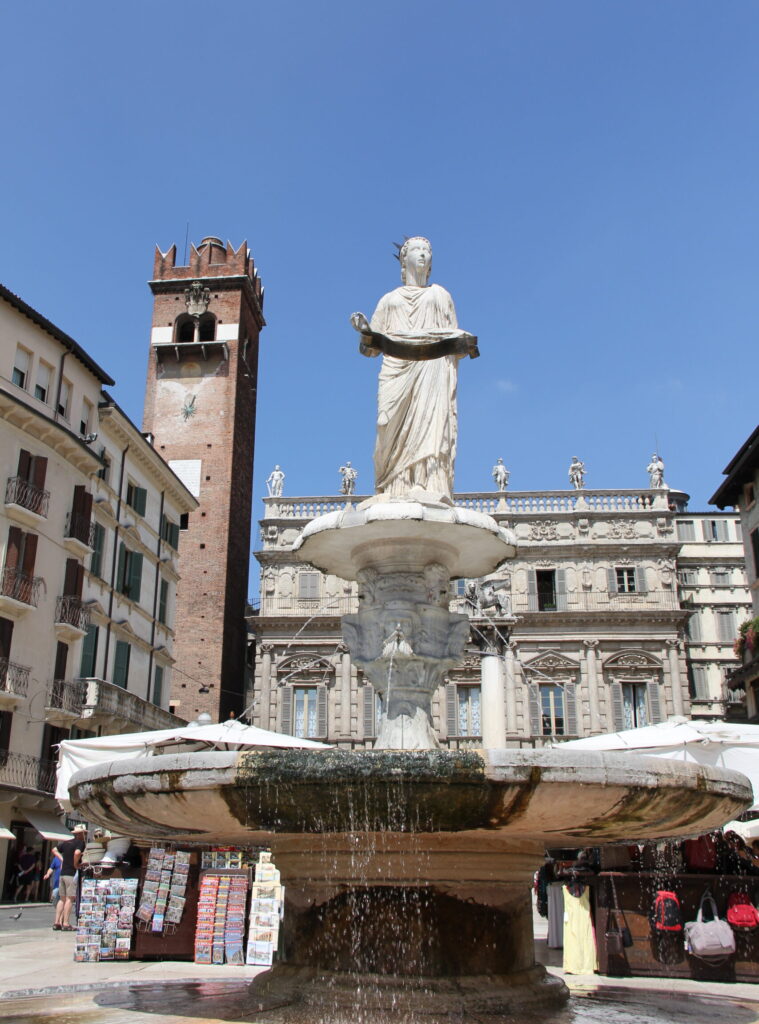
Piazza delle Erbe – Lined with cafés, restaurants, fountains, and marble statues, Piazza delle Erbe, is one the many charming squares in Verona. This diamond-shaped piazza sits at the heart of the historic center and has long been a lively focal point of the city. Once the main Roman forum, it is now surrounded by notable landmarks such as Torre Lamberti, Palazzo Maffei, and the Case dei Giudici.
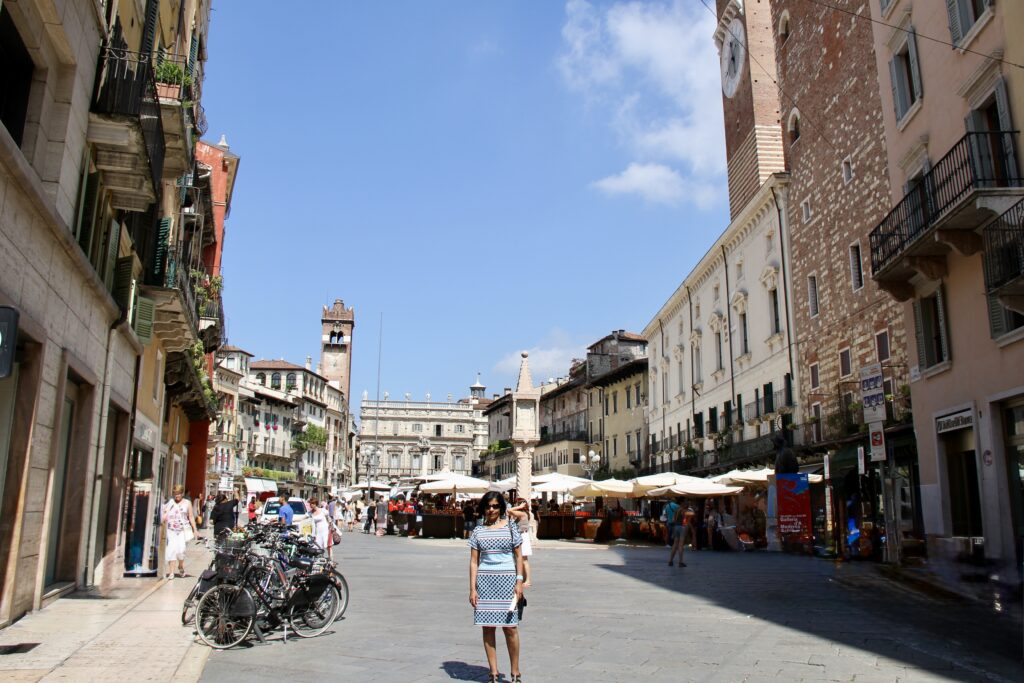
- Piazza delle Erbe, Madonna Verona fountain – built in 1368, Verona is depicted as a regal queen (Madonna meaning my lady), representing the city’s strength and heritage. The pedestal features carved faces of legendary and historic rulers, and the statue holds a copper scroll bearing Verona’s ancient motto – Est justi latrix urbs haec et laudis amatrix — Verona is a city that upholds justice and loves to be praised.
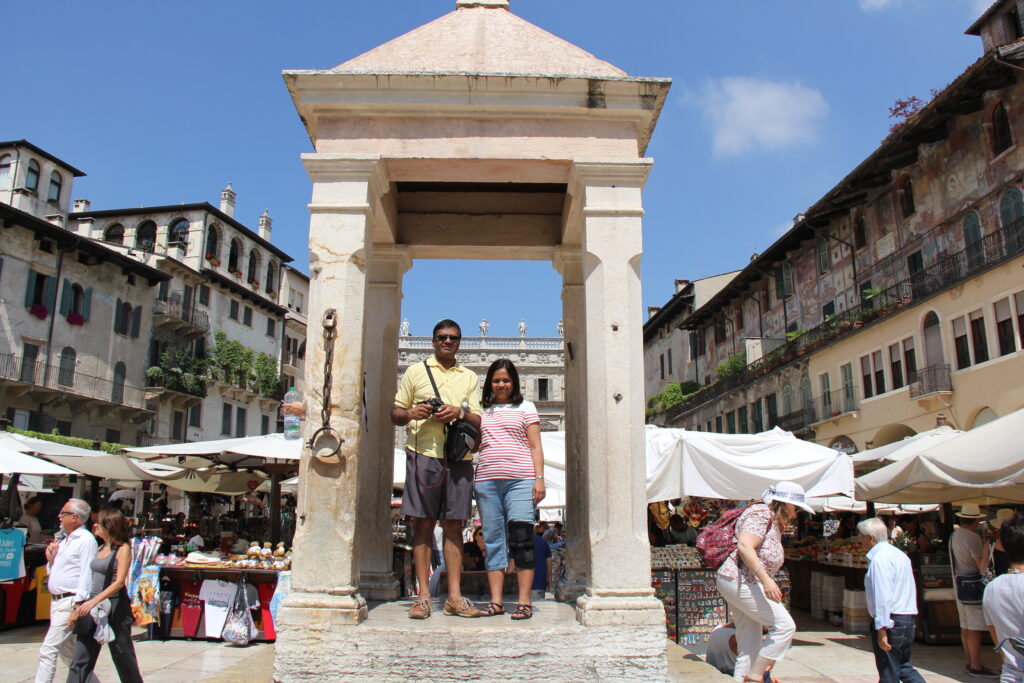
- Piazza delle Erbe, Capitello (or Berlina) – Located near Madonna Verona fountain, stands a small 13th-century structure known as the Capitello, or Berlina. This open, marble podium with a roof supported by pillars once served as a place where city magistrates took their oaths. It was also used as a pillory, where criminals or debtors were publicly displayed as punishment. The structure features engraved local units of measurement for goods—used to ensure fair trade—and even includes a chain once used for measuring bundles.
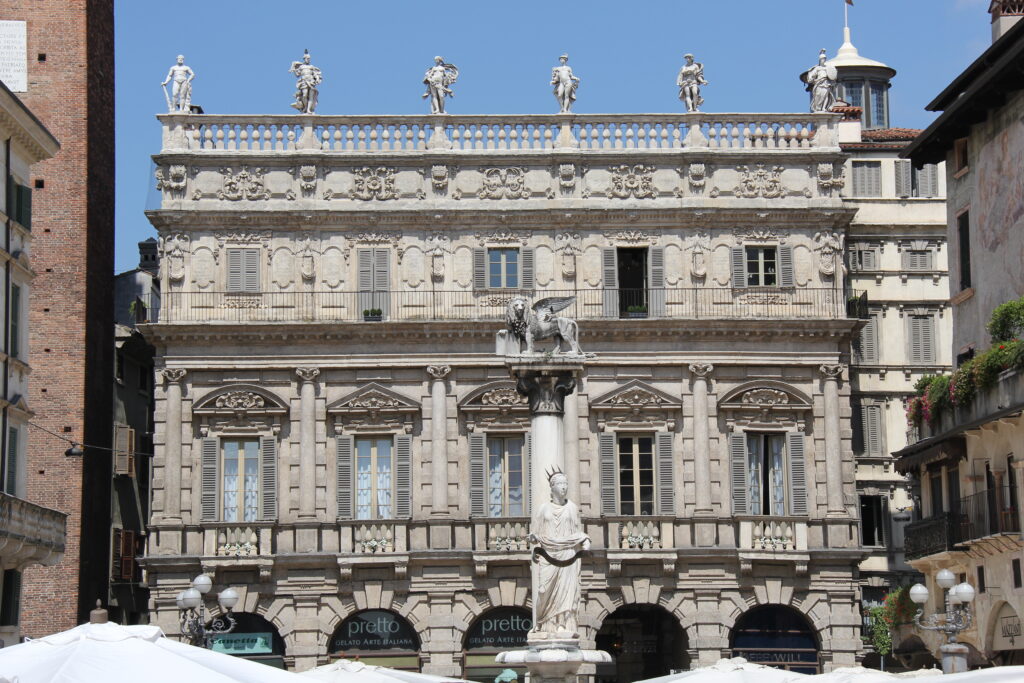
- Piazza delle Erbe, Palazzo Maffei – is a historic Baroque palace on the north-western side of Piazza delle Erbe. Originally a 15th-century building, it was expanded by nobleman Marcantonio Maffei, with construction finishing in 1668. Its three-floor façade is richly decorated: the first floor features arcades topped with elegant balconies and Ionic columns adorned with large masks, while the upper floors have smaller windows and faux-framed columns. The roofline is crowned by six statues of divinities, including Hercules, Jupiter, Venus, Mercury, Apollo, and Minerva. Inside, a remarkable helicoidal stone staircase spirals from the underground stores all the way to the roof, adding an intriguing architectural twist to this Venetian-era gem.
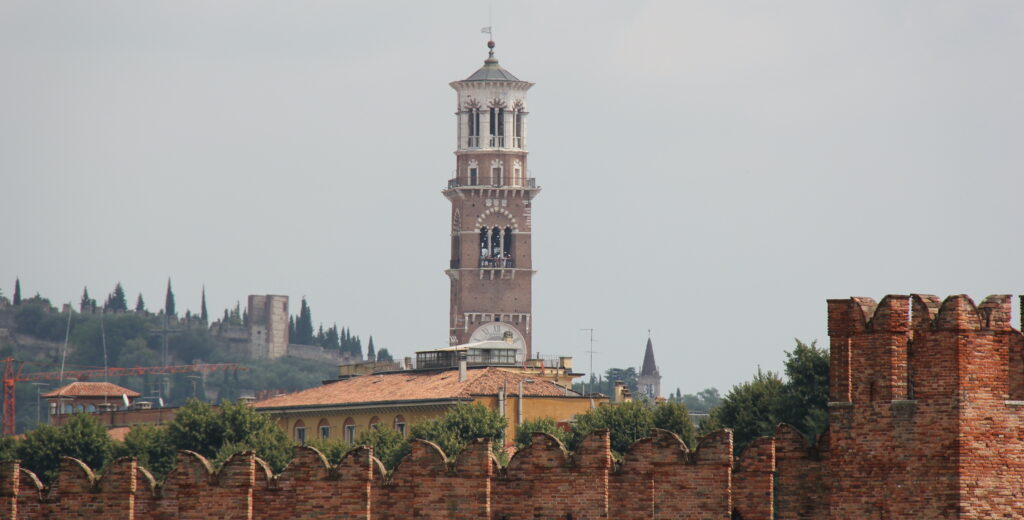
Torre dei Lamberti – a historic medieval tower located in Piazza delle Erbe that was built in 1172 by the Lamberti family, and is about 84 meters tall. The tower houses several historic bells, that once marked work hours, warned of fires, and summoned citizens or councils. A large clock was later added in the late 18th century. Visitors can climb 368 steps or take an elevator to reach the top. From the summit, you get panoramic views of Verona’s rooftops and surrounding hills.
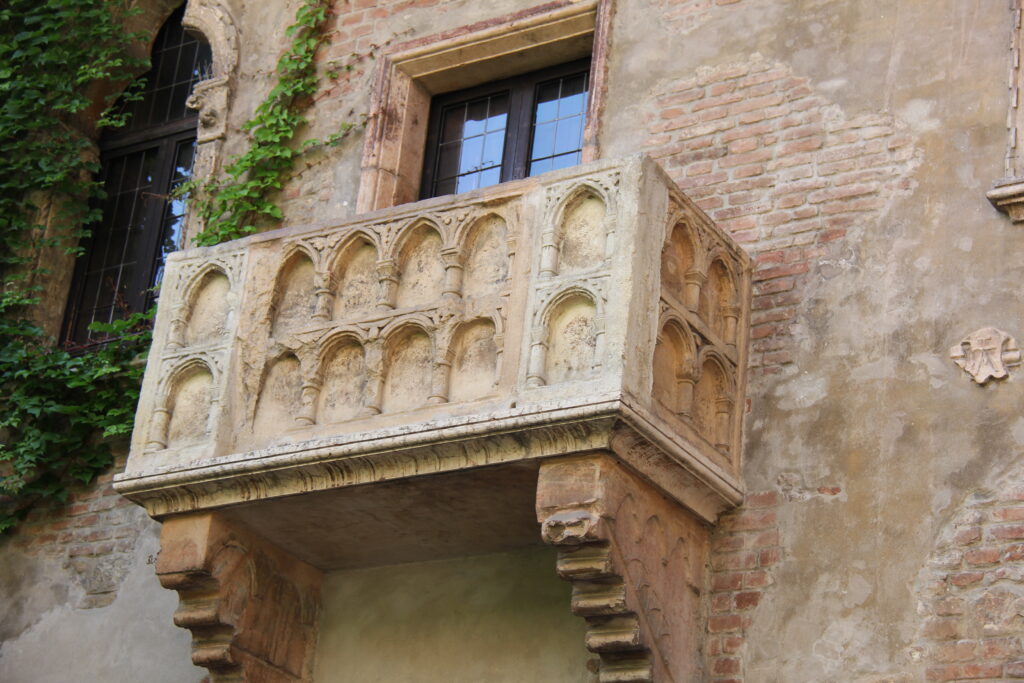
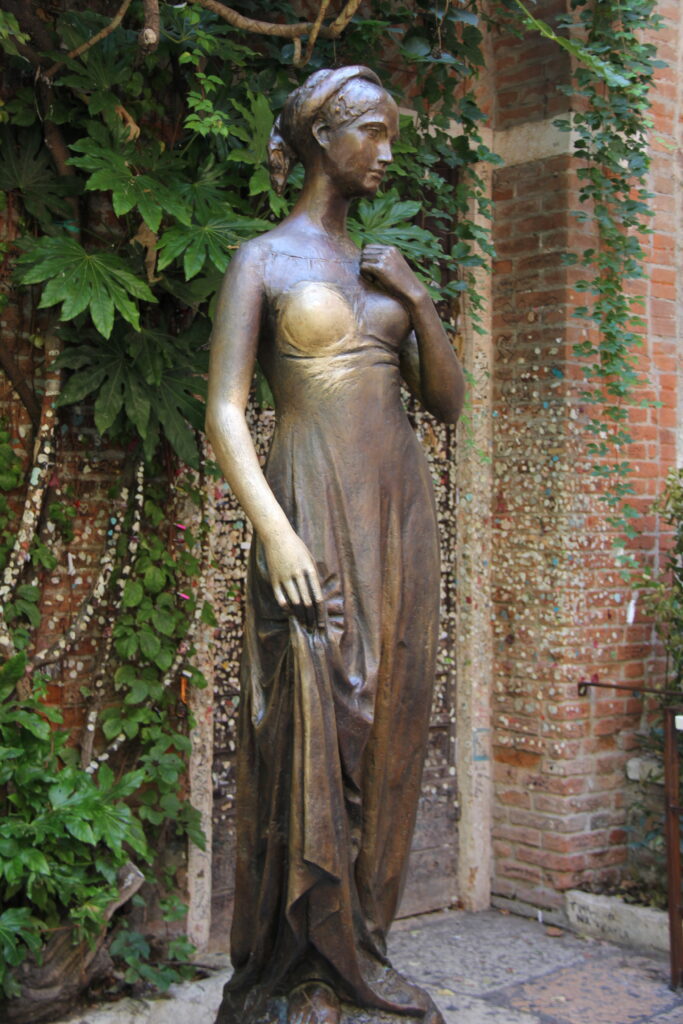
Juliet’s House – is a 13th-century building once owned by the Cappello family. It is traditionally linked to Shakespeare’s Capulets. The famous balcony was added in the 1930s to make it more romantic. Today, the house is a museum with old furniture, costumes, and objects. In the courtyard, there is a statue of Juliet, and touching her right breast is said to bring good luck. The courtyard walls were previously covered in love notes and graffiti attached with chewing gum, a practice now regulated by the city. Thousands of letters addressed to Juliet are still sent here each year, answered by volunteers from the Juliet Club.
Basilica di San Zeno Maggiore – is a major Catholic church and a masterpiece of medieval architecture. It stands on the site of earlier religious buildings, originally built over the tomb of Zeno of Verona, who died between 372 and 380. A major Romanesque renovation began in the 11th to early 12th century, and by around 1138, much of the present structure was completed. Despite later modifications, the basilica has largely preserved its medieval layout and character. It is also known as the traditional setting for the fictional marriage of Romeo Montague and Juliet Capulet.
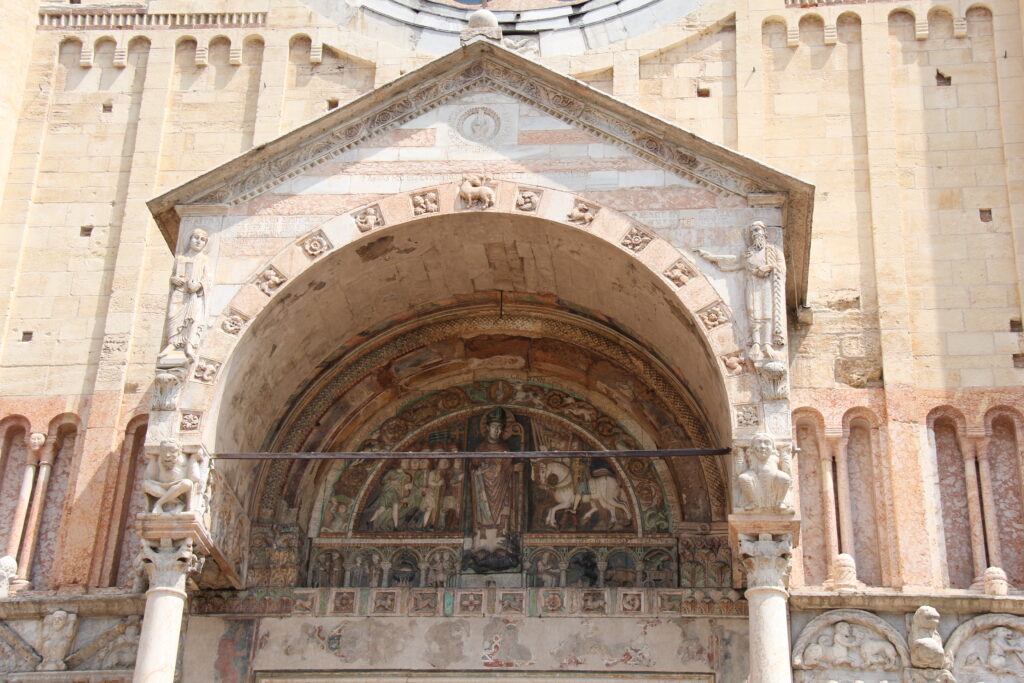
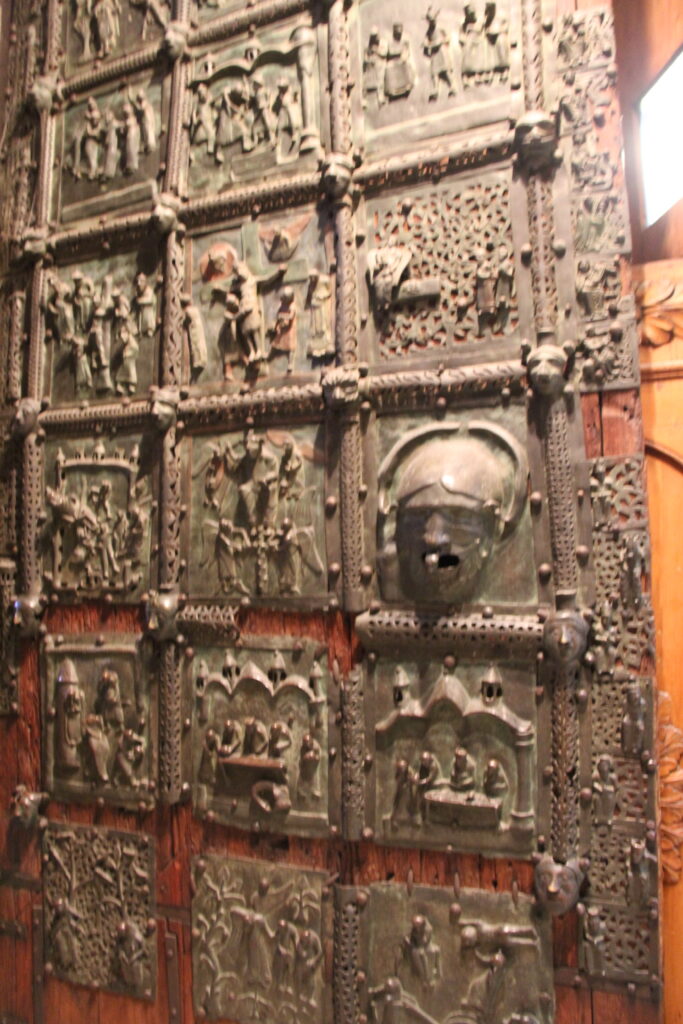
Basilica of San Zeno, Bronze Portal – consists of 73 panels made at different times by various master founders. Forty-eight large panels depict biblical scenes, miracles of Saint Zeno, and include two handles. Smaller panels show individual figures, Virtues, and decorative openwork frames. Each panel was cast separately using small molds, unlike the single-casting method common in Germany. The current larch wood doors, was probably installed around 1138.
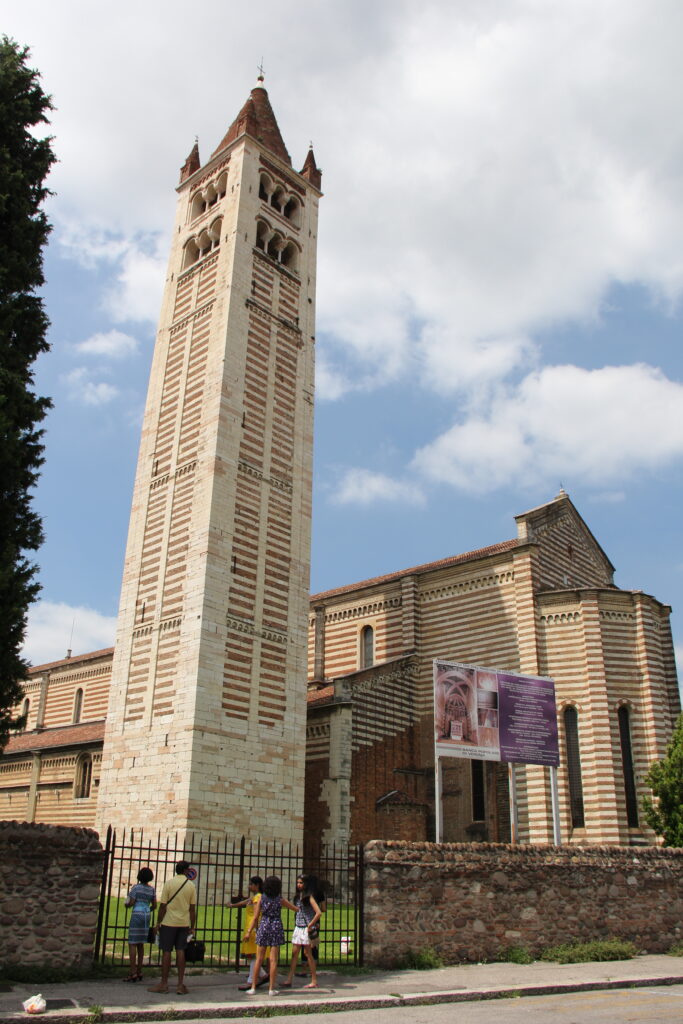
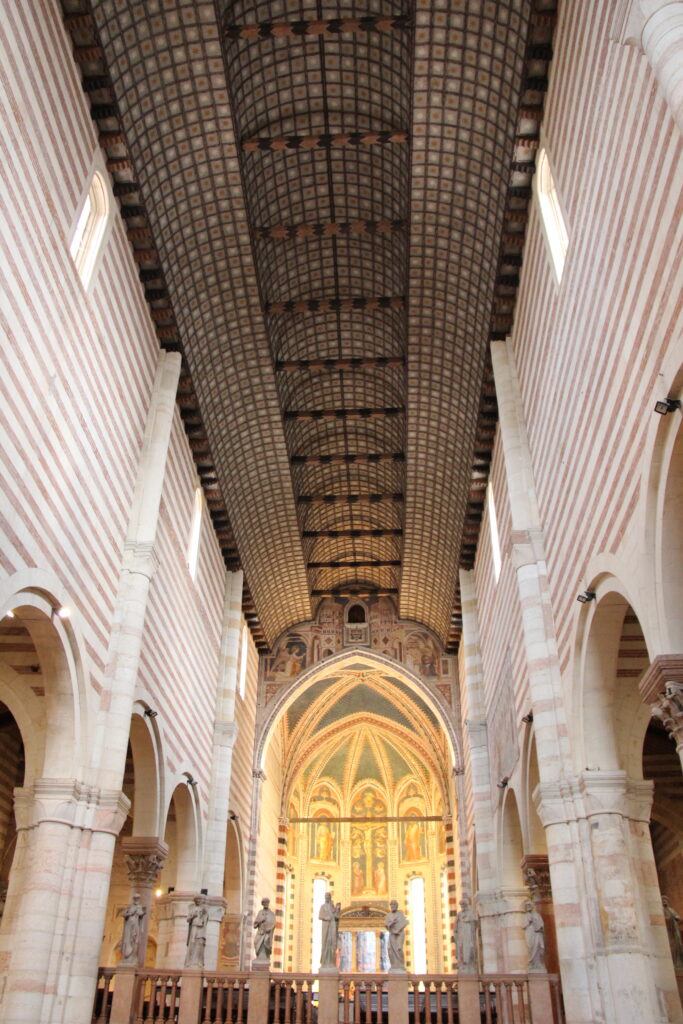
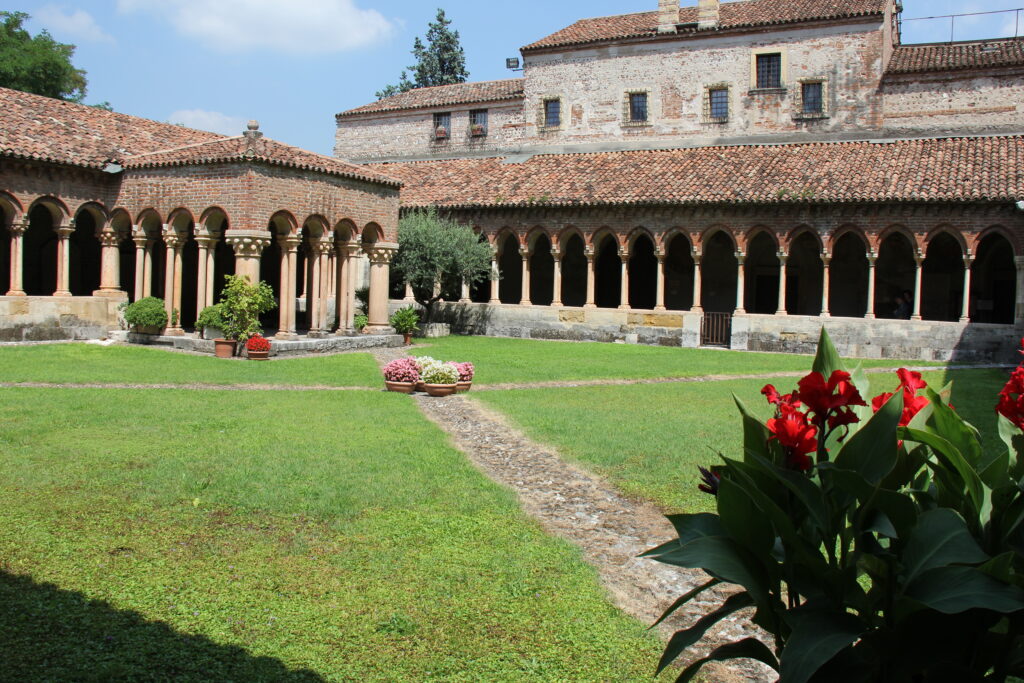
The complex also includes an attached abbey with a beautiful cloister and arched courtyard.
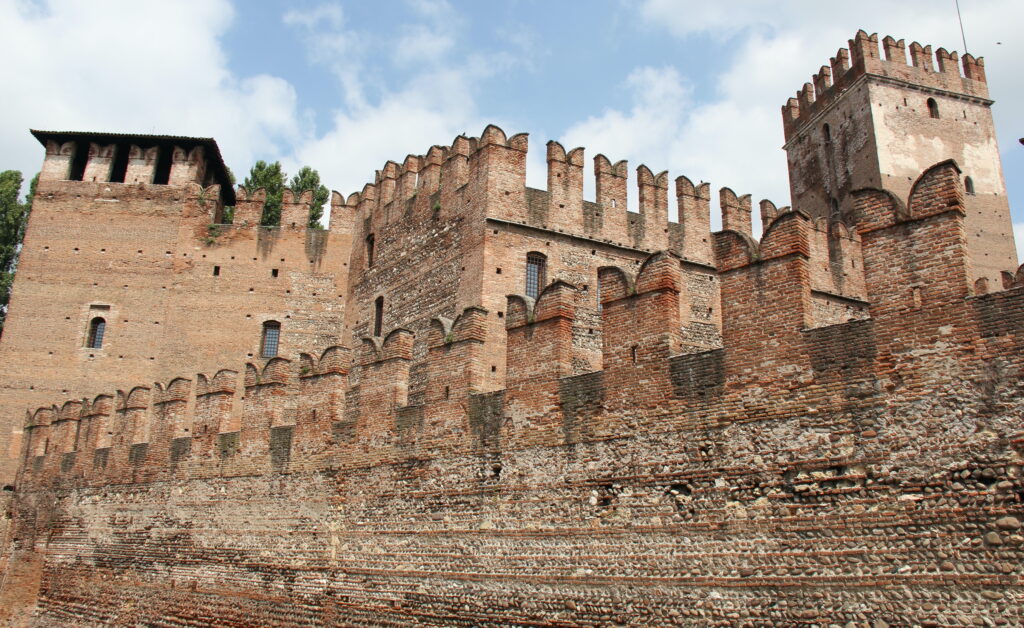
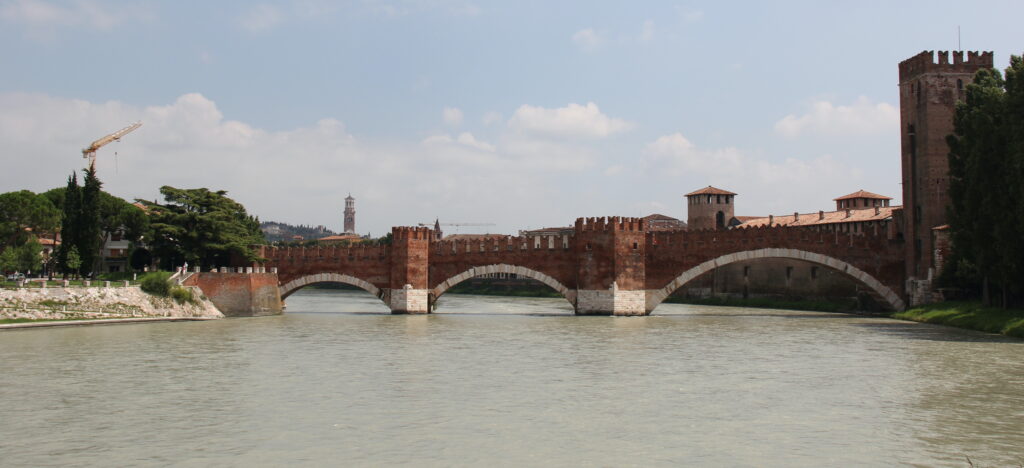
Ponte di Castle Vecchio – also called the Scaliger Bridge, this fortified bridge over the Adige River was built around 1354–1356 and served as a secure escape route from the castle. The bridge was completely destroyed by German troops in 1945. It was reconstructed between 1949 and 1951 in red brick and white marble, and has three spans of decreasing length, with the largest span (48.70 m) being the world’s largest at that time. The total length of the bridge is 120 m, anchored by pentagonal towers and two pylons.
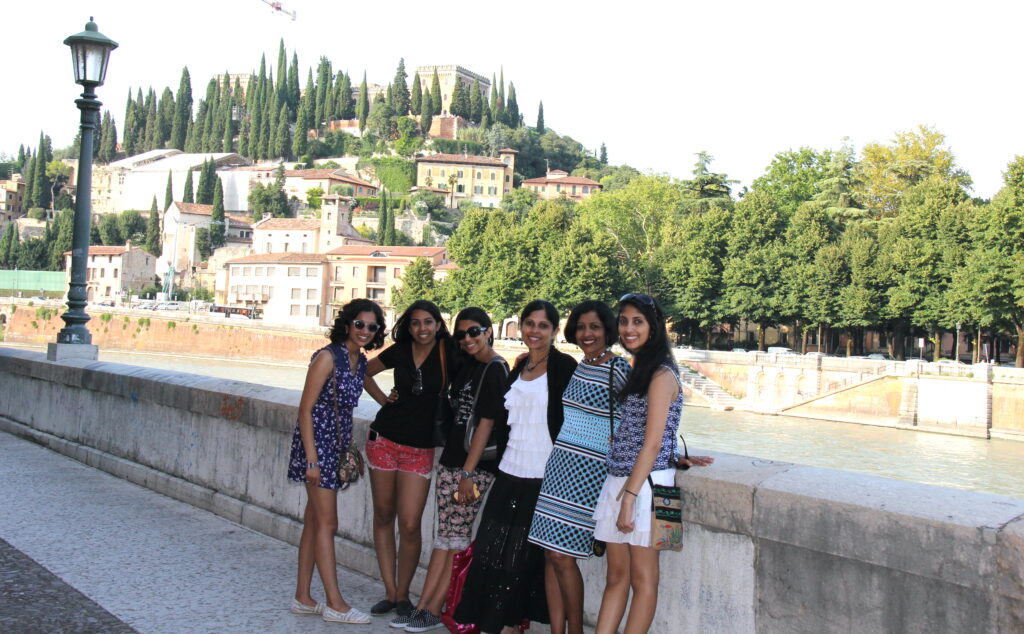
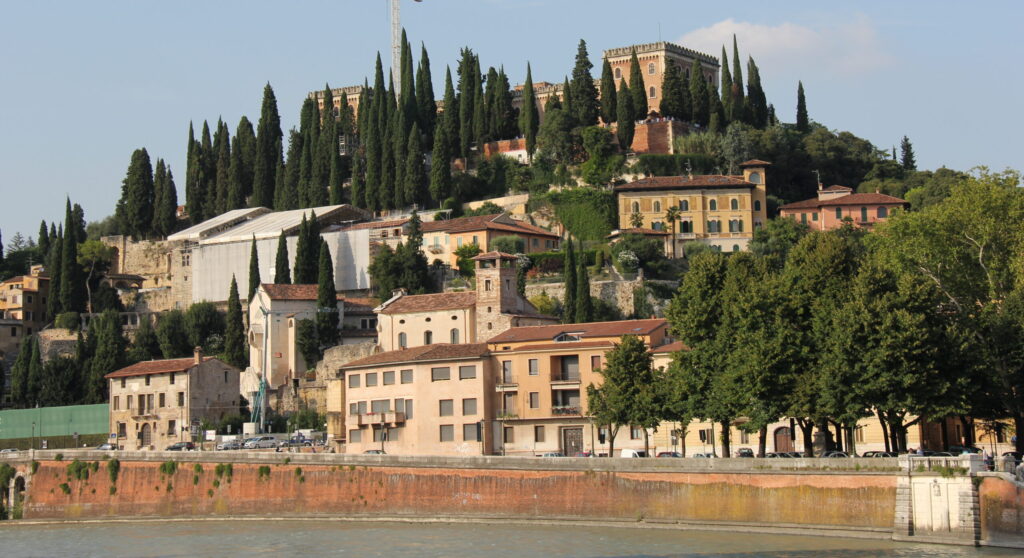
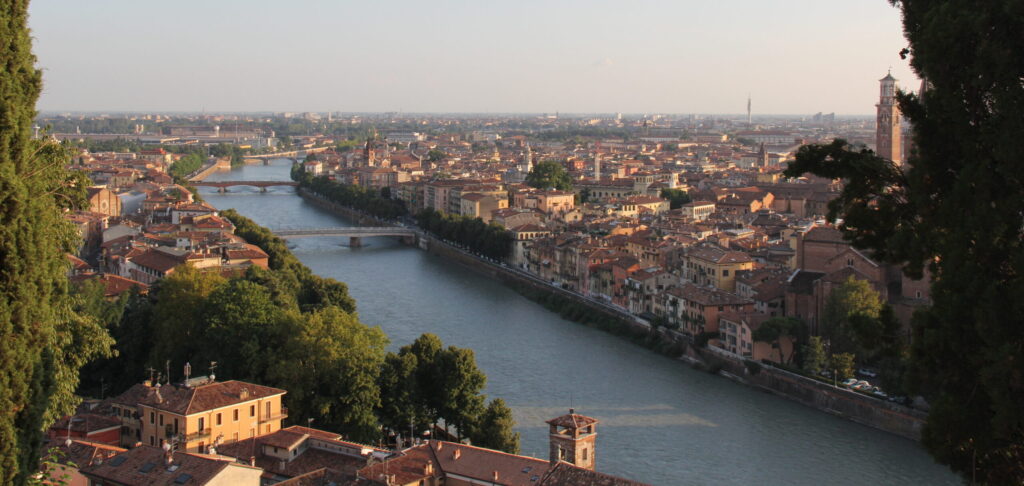
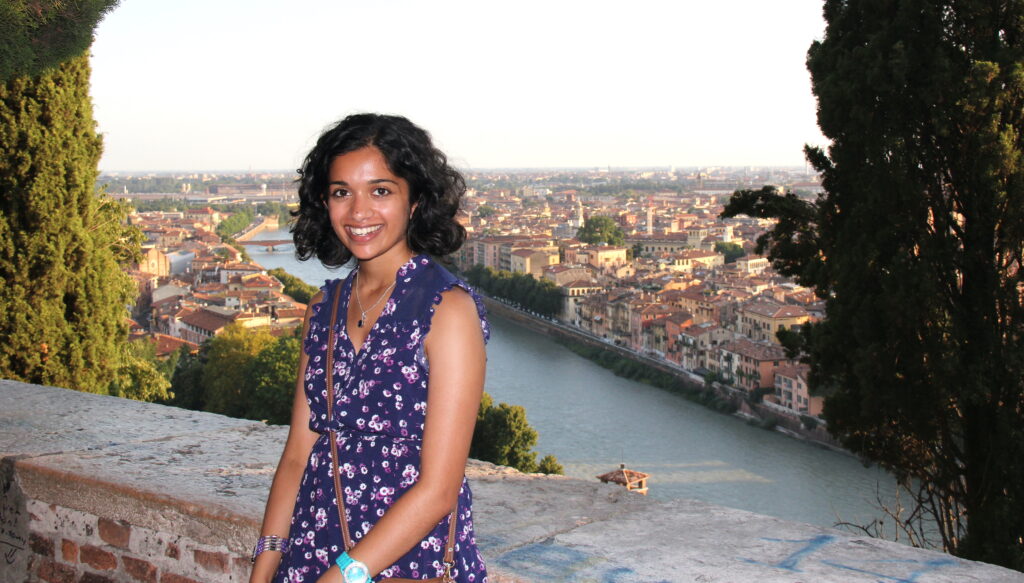
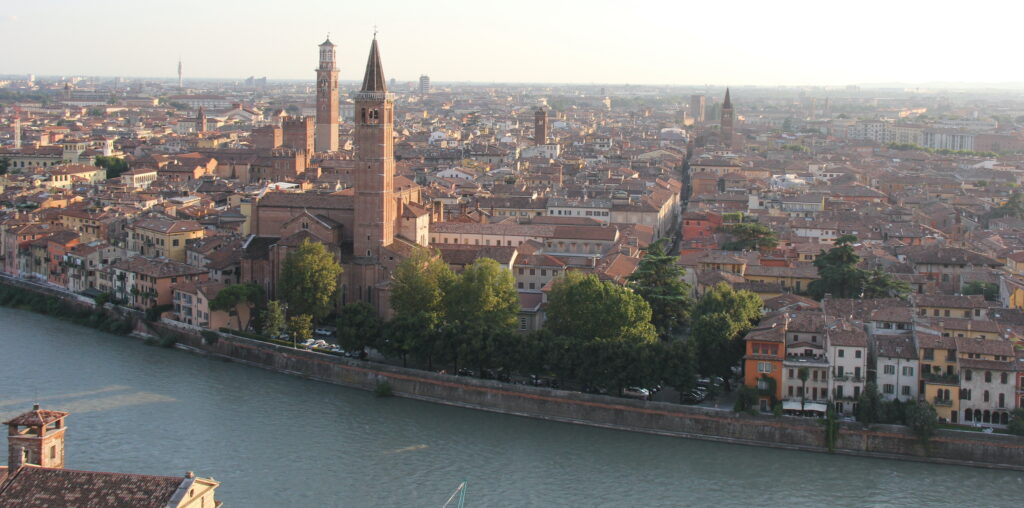
Castel San Pietro – We walked all the way up to this fortress on a hill offering panoramic views of the city. It sits on the site of a Roman-era temple and was fortified in the Middle Ages by the Scala and Visconti families, later by the Republic of Venice.
The visible ruins mainly date from the 14th-century Visconti castle, rebuilt multiple times and destroyed in 1801. Visitors can reach the top via a funicular (~€3) or a 10–15 minute walk from the Roman Theater. Sunset is the best time to enjoy sweeping views of Verona’s old town and bridges.
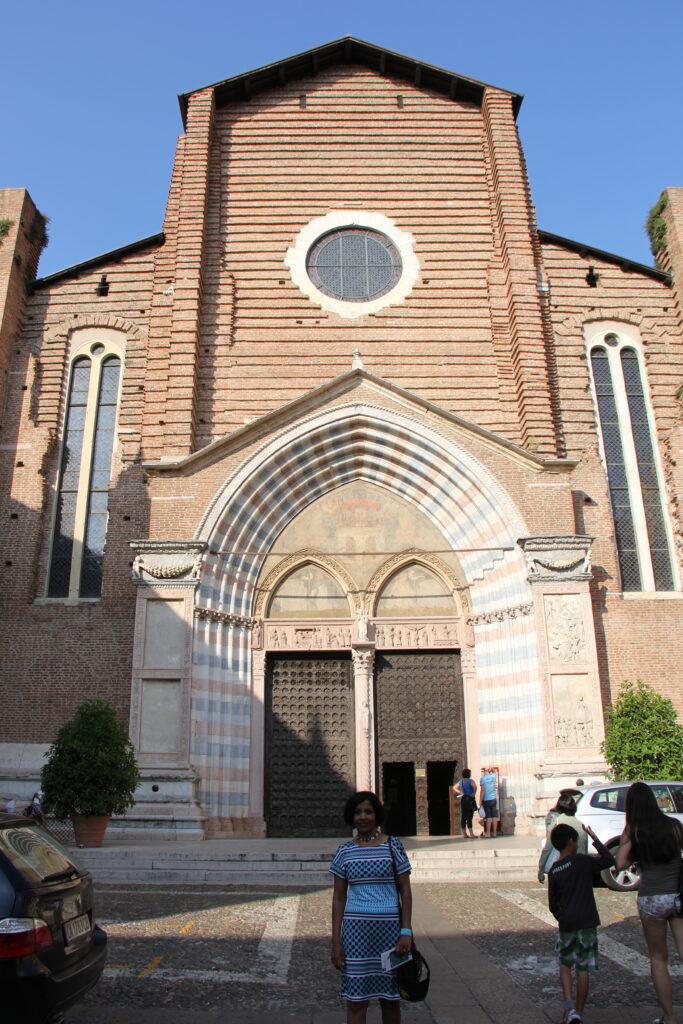
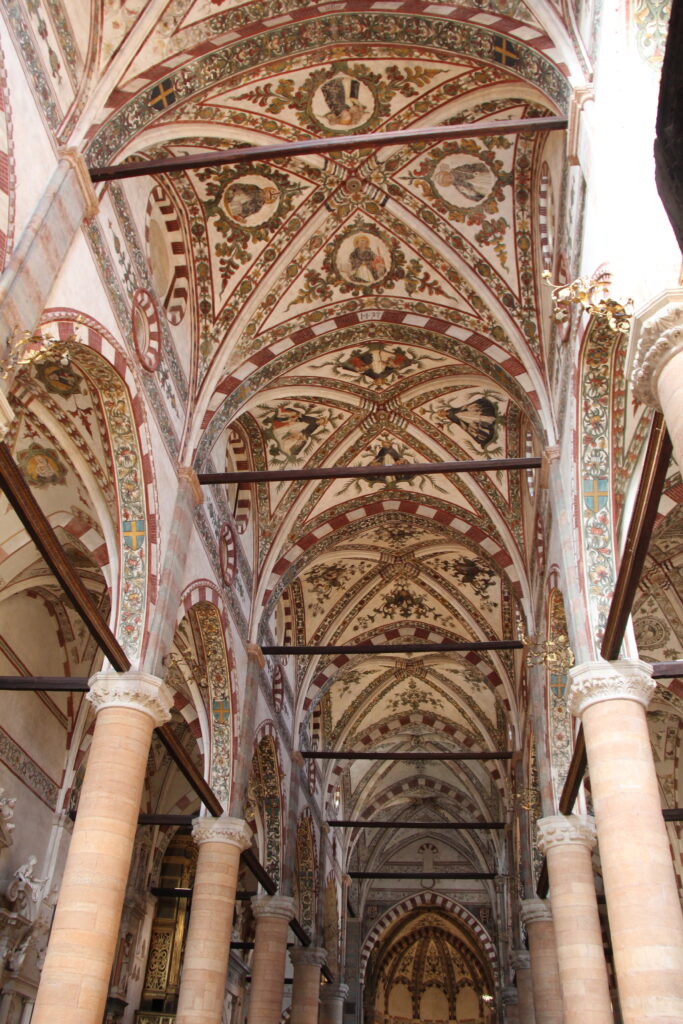
Basilica of Santa Anastasia – is a major Gothic Catholic church constructed between 1290 and 1497. Its unfinished façade features a Gothic mullioned doorway, leading to an interior with 3 naves, monumental columns, chapels, and notable artworks.
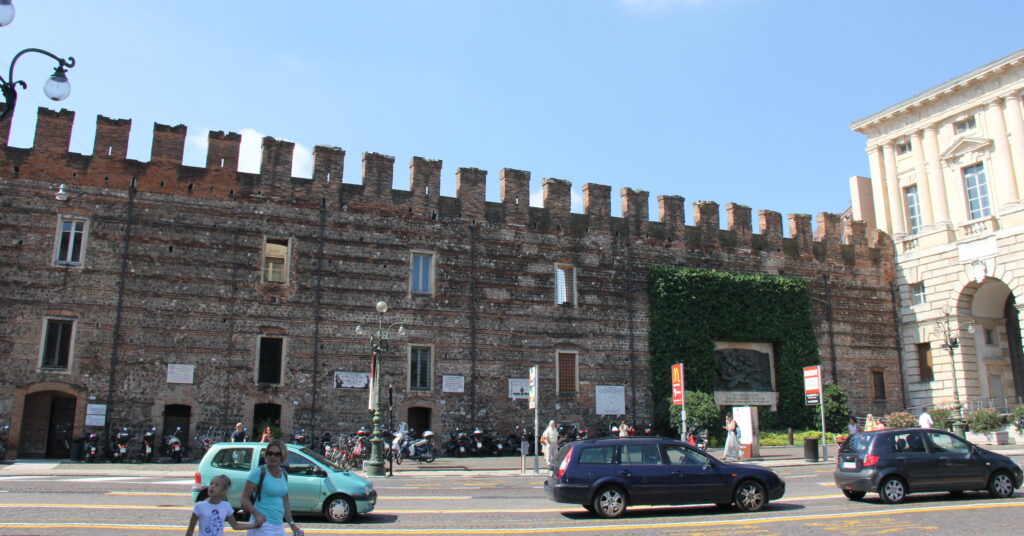
Verona City Walls – are a notable example of the layered fortifications typical of many European cities. Verona developed three main defensive walls over time: the original Roman walls, the 12th-century municipal walls, and the early 14th-century walls built under the Scaliger lordship. The Scaliger walls were later strengthened and renovated in the 16th century. Remains of these different fortification phases are still visible throughout the city today.