Visited in 2014
In Venice, streets are canals, gondolas are taxis, and every corner is Instagram-ready magic. This UNESCO World Heritage Site is built on a network of waterways, with the Grand Canal serving as its main thoroughfare. Getting around relies entirely on walking, water buses (vaporetti), and of course, the iconic gondolas.
We went on a few Viator guided tours of Doge’s Palace, St. Marks Basilica, etc.
- Grand Canal
- Rialto Bridge
- St. Mark’s Square
- Campanile of St. Mark
- St. Mark’s Clock Tower (Torre dell’Orologio)
- St. Mark’s Basilica
- Doge’s Palace
- Bridge of Sighs
- Murano
- Church of San Giorgio Maggiore
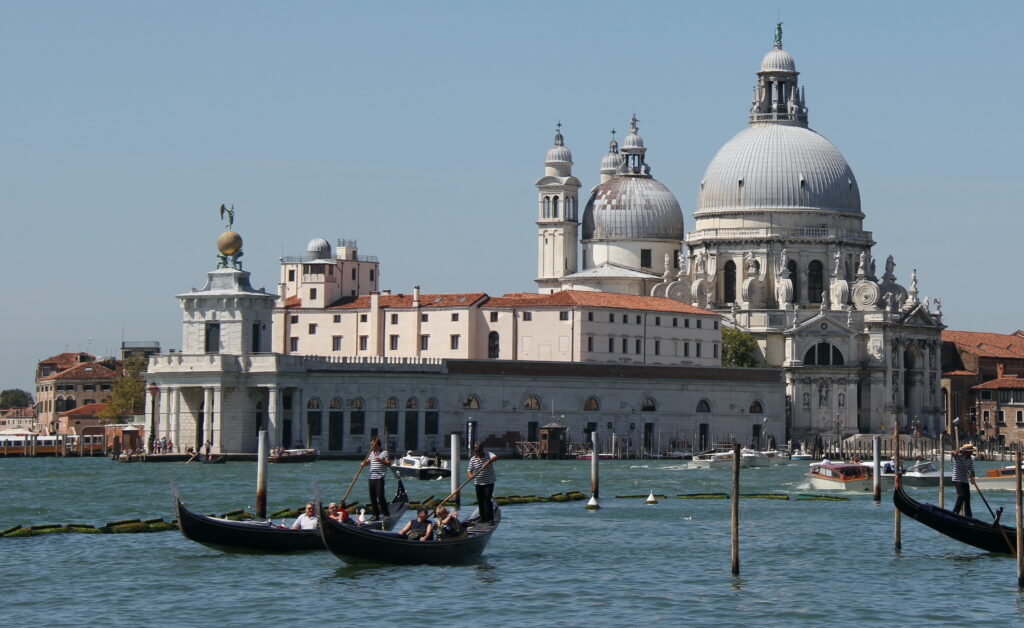
- Santa Maria della Salute
The Grand Canal (Canal Grande) – is Venice’s main waterway, an S-shaped canal stretching about 4 km through the heart of the city. Lined with more than 170 historic palaces, it acts as Venice’s central transportation route and visually divides the city in two. About 30–90 meters wide and 5 meters deep, the canal is crossed by only four bridges and is constantly animated by vaporetti, water taxis, gondolas, and private boats.
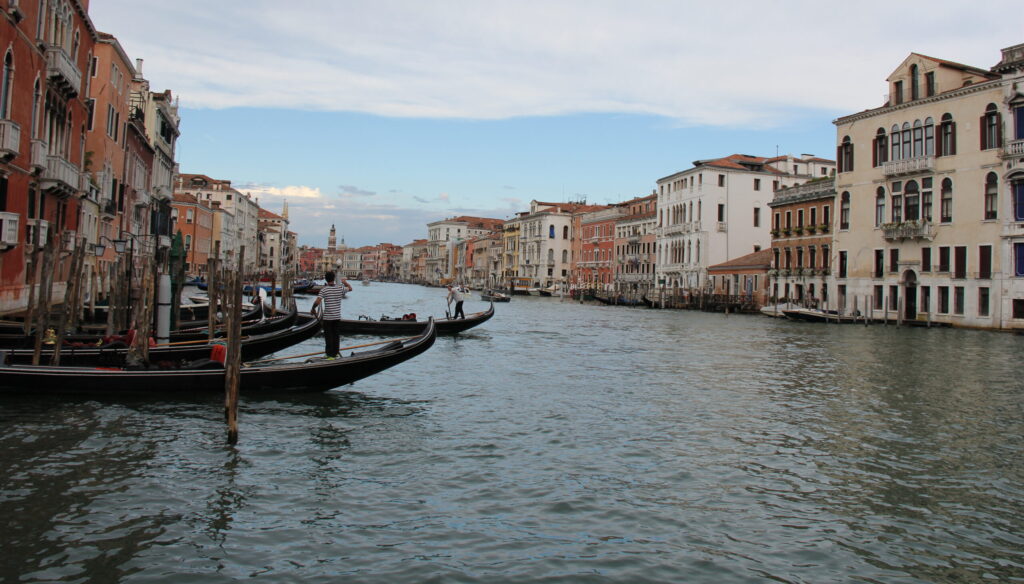
- Vaporetti – Vaporetti are Venice’s public water buses and the most affordable way to get around the city. They run regular routes along the Grand Canal and to outer islands like Murano and Burano. Used by locals and visitors alike, they offer a practical way to sightsee from the water.
- Water Taxis – Water taxis are fast, private boats that provide direct point-to-point travel across Venice. They are more expensive but more convenient and available at all times. They are often used by hotels and airports.
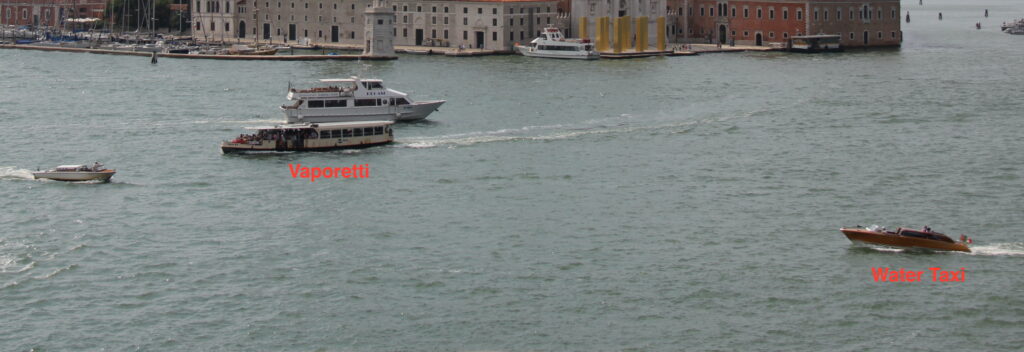
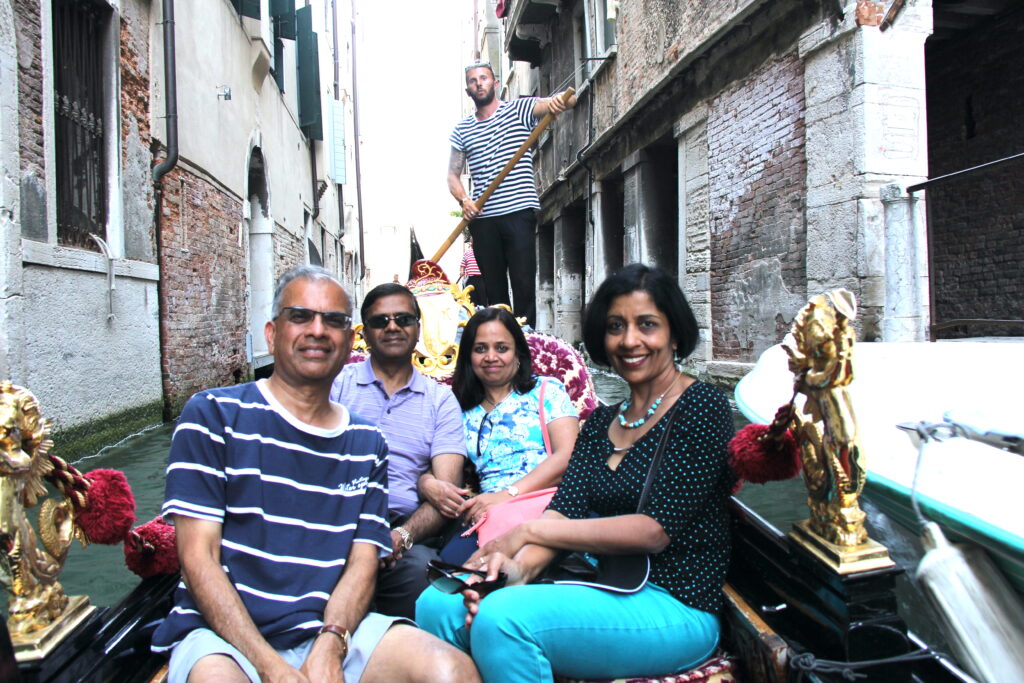
- Gondolas – Gondolas are traditional Venetian boats, famous for their elegance and craftsmanship. Primarily used for short rides, they are a romantic and iconic way to experience the canals. Today, gondolas are mainly for leisure rather than everyday transportation. Although widely considered a very touristy activity (in our—and many tourists’—opinion), a trip to Venice would feel incomplete without gliding through its canals on a gondola.
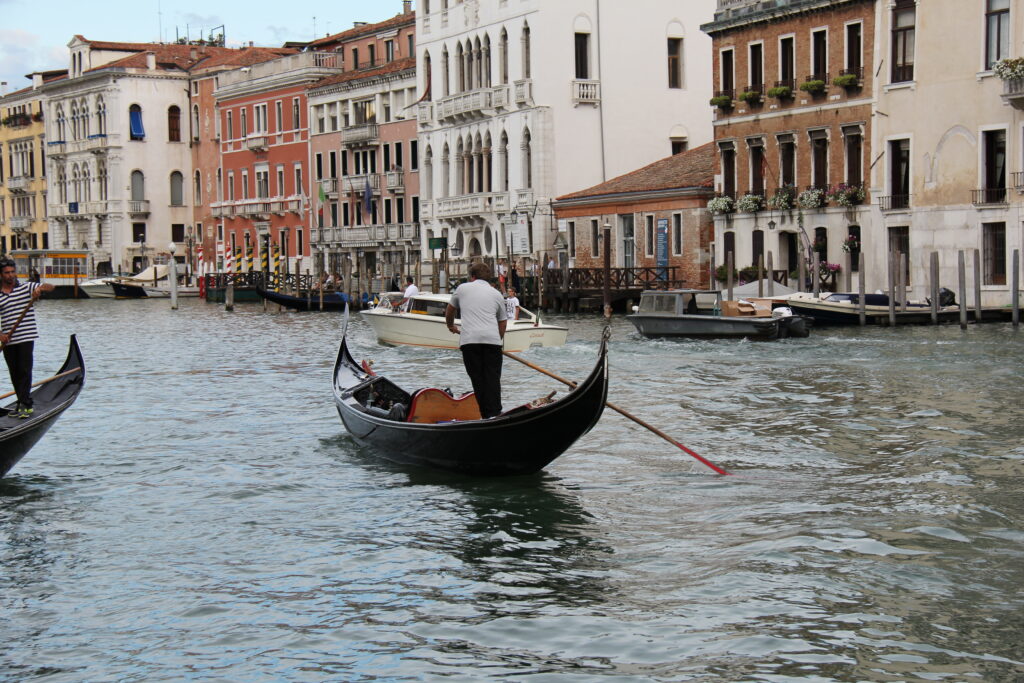
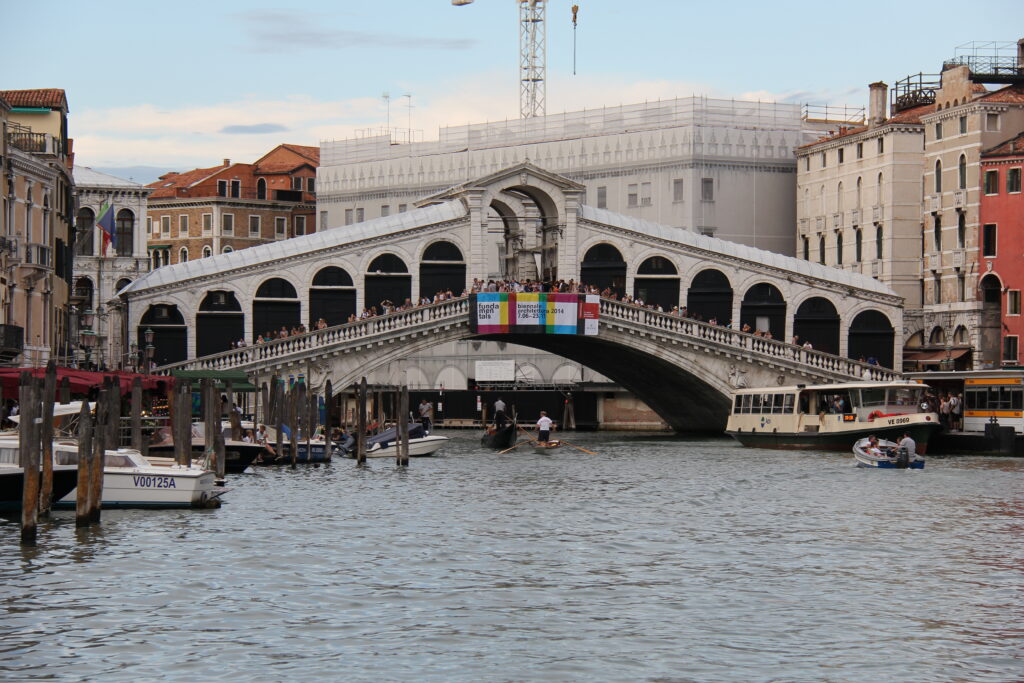
Rialto Bridge (Ponte di Rialto) – is the oldest and Venice’s most recognizable landmarks and busiest tourist attractions. It is one of the four bridges crossing on Venice’s Grand Canal, linking the districts of San Marco and San Polo. First built as a pontoon bridge in the late 12th century, it was rebuilt several times before taking its present form.
The current stone bridge, designed by Antonio da Ponte and completed in 1591, features a single bold arch with two ramps leading to a central portico lined with shops.
St. Mark’s Square – We spent a lot of time here, joining guided tours and simply wandering around, soaking in the lively atmosphere of Venice’s most famous square. It is the main public square of Venice and the city’s social, religious, and political heart. Known simply as la Piazza, and often called the drawing room of Europe, the square houses major historical landmarks like St.Mark’s Basilica, Doge’s Palace and the Campanile. The main square is connected to a smaller area the Piazzetta, near the water.
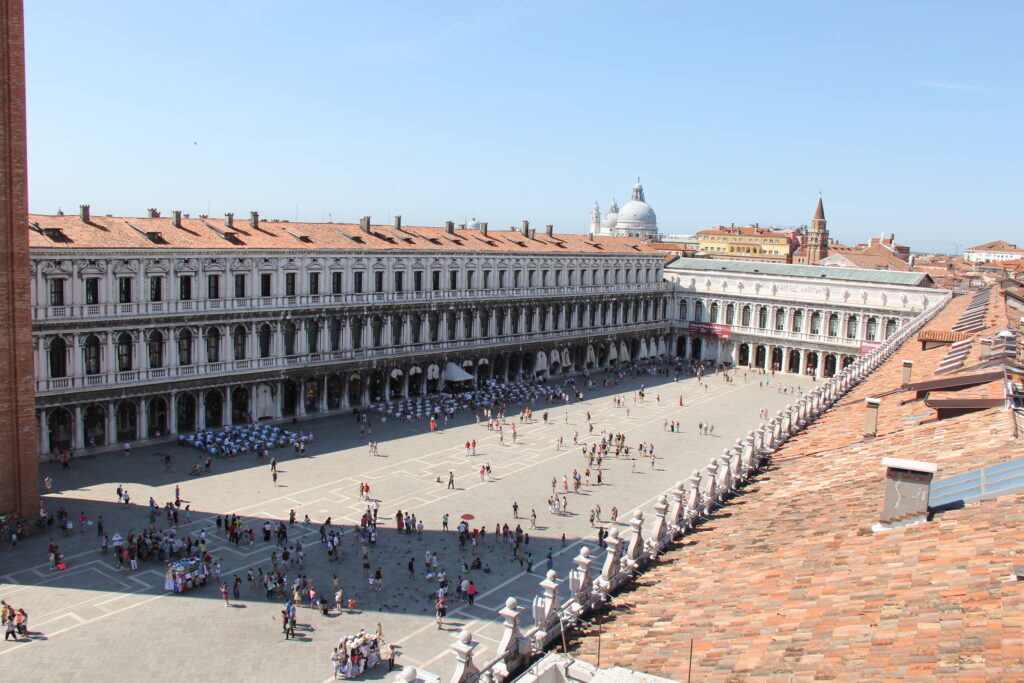
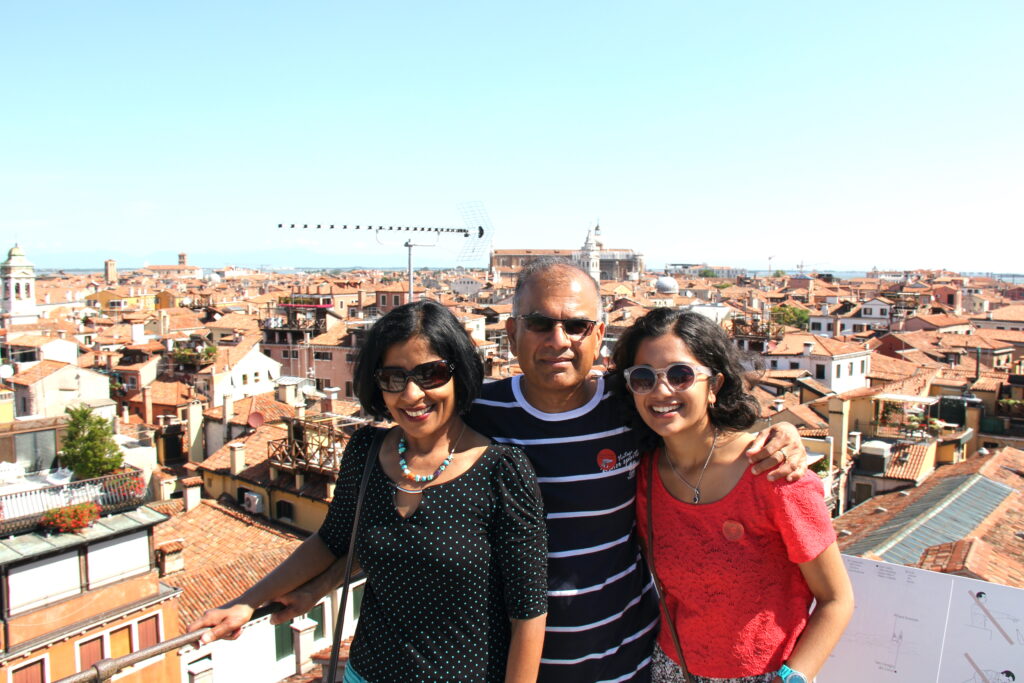
- Campanile of St. Mark – is the bell tower of St. Mark’s Basilica, though it stands as a separate structure in Piazza San Marco rather than being attached to the church. Originally built as a lighthouse and watchtower, it has guided sailors into the lagoon for centuries. The current brick structure which is 100 m tall, is a faithful reconstruction completed in 1912 after the original tower collapsed in 1902. Topped with a pyramidal spire and a golden statue of the Archangel Gabriel, the campanile offers sweeping views over Venice and the surrounding islands, making it both a symbol of the city and a popular viewpoint.
- St. Mark’s Clock Tower (Torre dell’Orologio) – is another of Venice’s iconic Renaissance landmarks, standing on the north side of Piazza San Marco. Built between 1496 and 1499, it marks the entrance to the historic Merceria shopping street. Its striking blue-and-gold astronomical clock displays the time, moon phases, and zodiac signs, while two bronze Moors ring the bell every hour. Today, this fascinating site can be explored by visitors through guided interior tours.
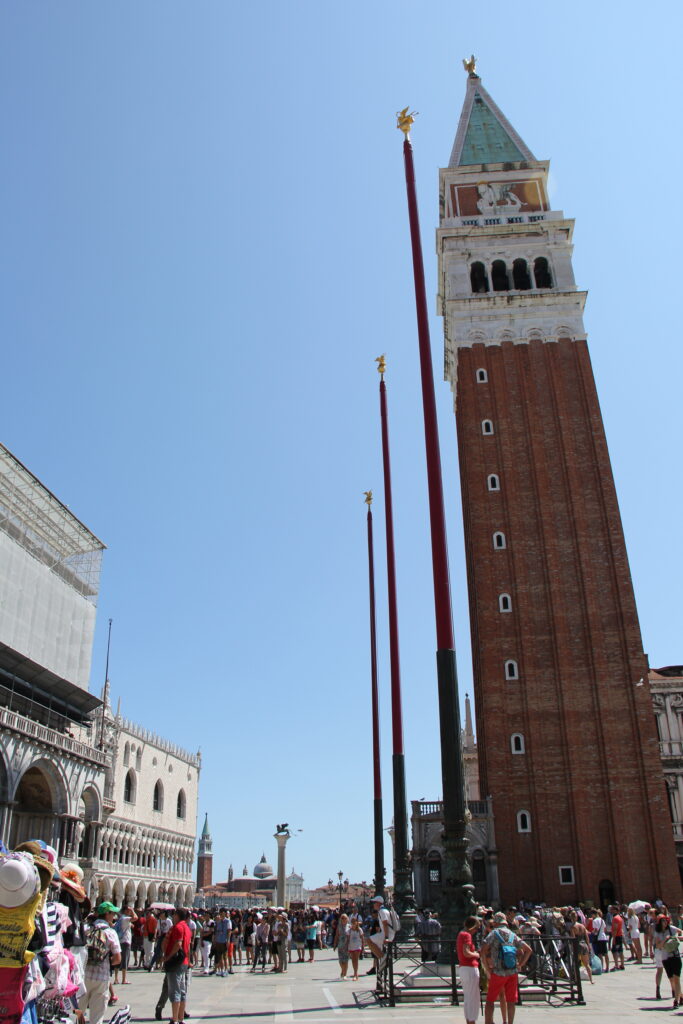
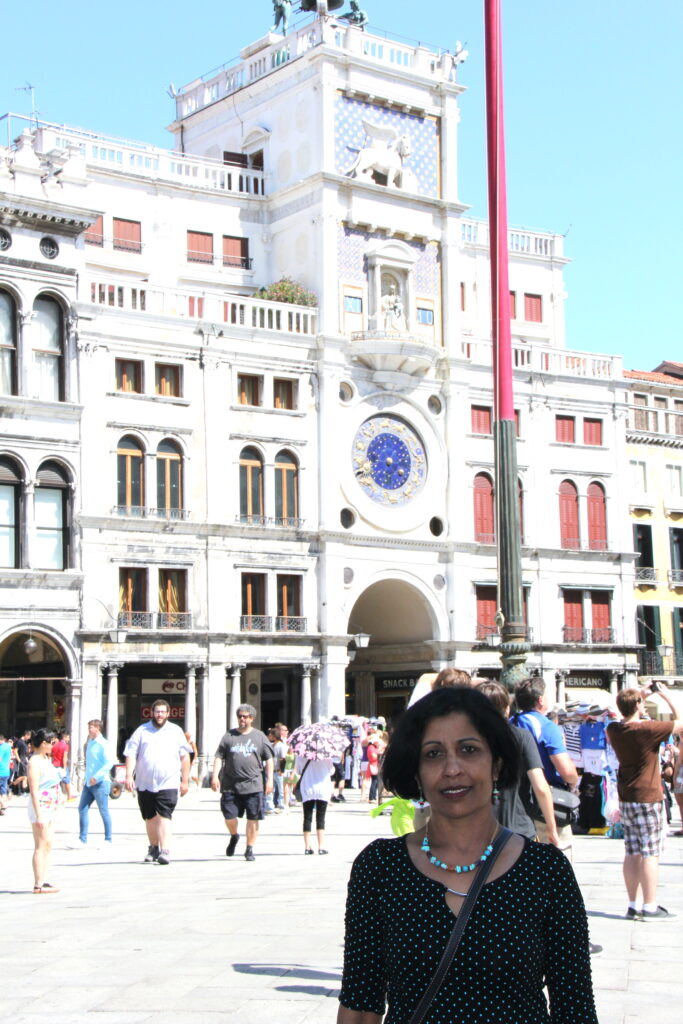
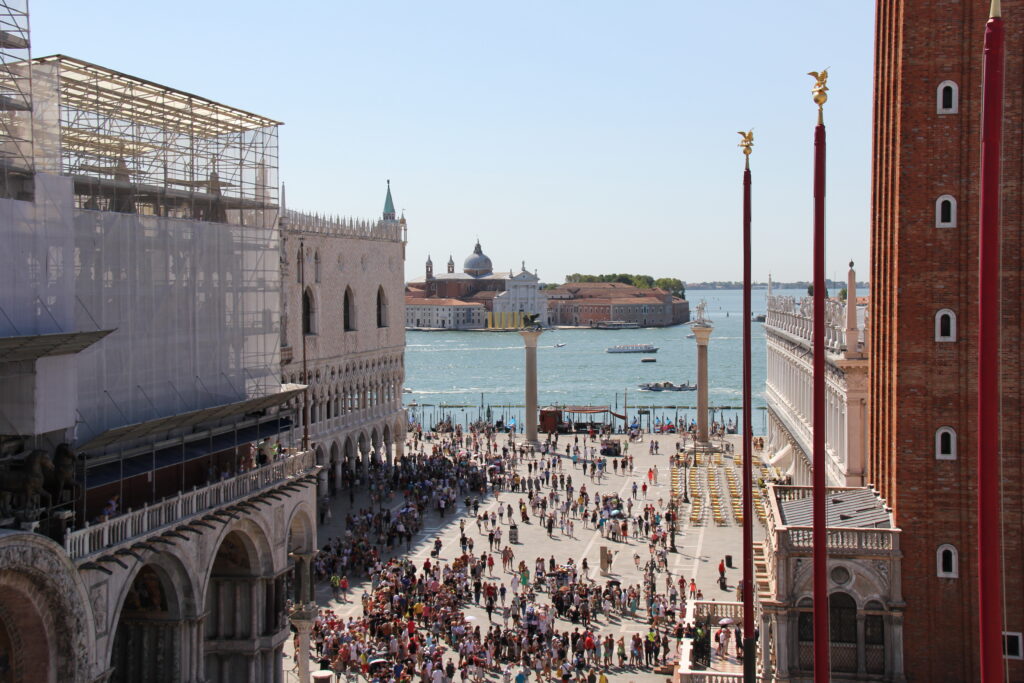
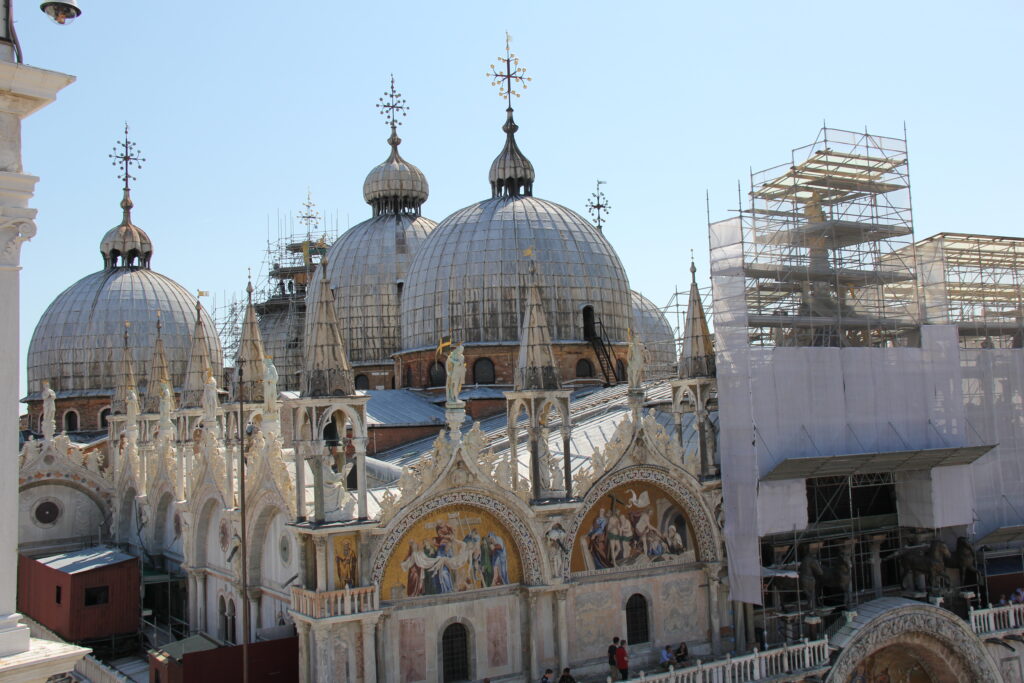
- St. Mark’s Basilica is renowned for its opulent Byzantine design and glittering mosaics. Built in the 11th century to house the relics of St. Mark the Evangelist, the basilica reflects Venice’s historic ties to the Eastern Mediterranean. Its façade is richly decorated with marble columns, sculpted arches, and gilded details, while the interior glows with over 8,000 square meters of gold mosaics depicting biblical scenes. It stands at the eastern end of Piazza San Marco.
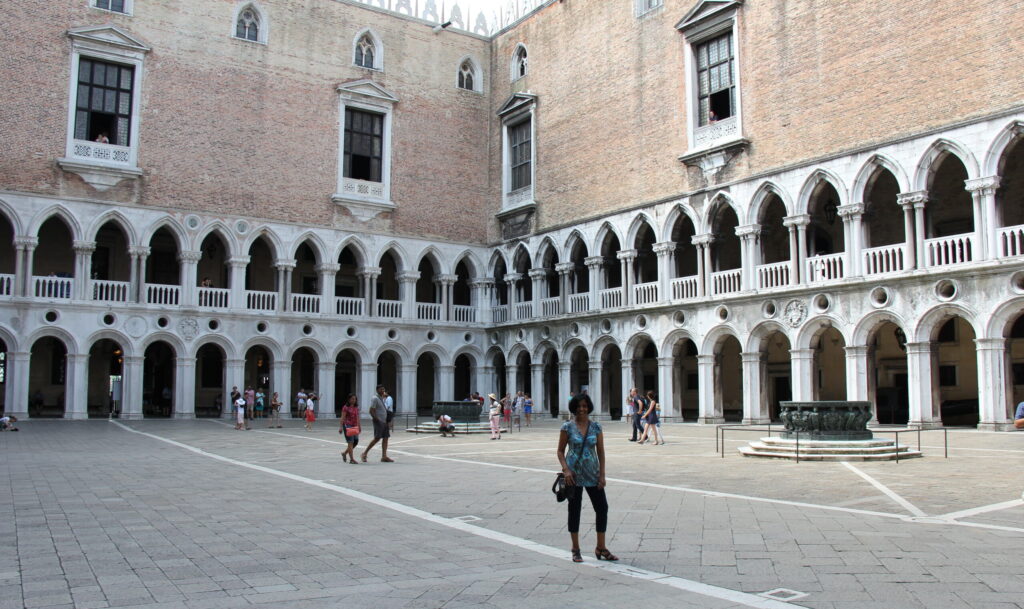
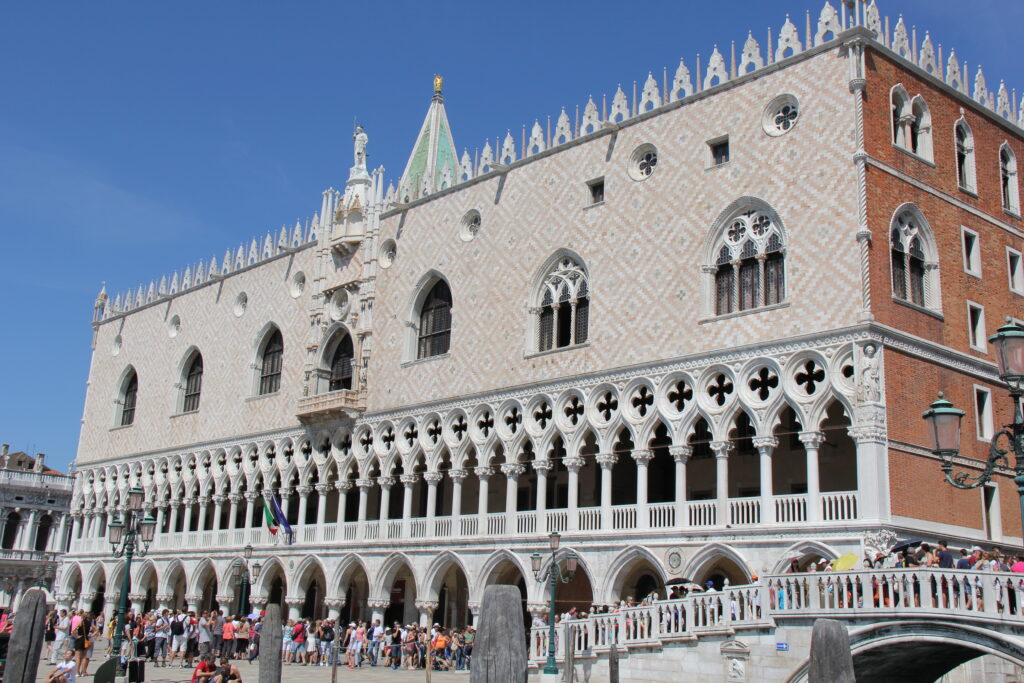
Doge’s Palace (Palazzo Ducale, Venetian: Pałaso Dogal) is another of Venice’s iconic landmarks, built in the striking Venetian Gothic style. Originally constructed in 810 as the residence of the Doge—the elected leader of the Venetian Republic—it served over the centuries as a government center, palace, and jail. Rebuilt in 1340 and modified extensively thereafter, the palace showcases a blend of Byzantine and Gothic architecture, including Istrian stone bases and intricate brick patterns. Today, it functions as a museum, offering visitors a glimpse into the grandeur and political power of Venice’s historic republic.
We went on a guided tour of the palace, which included a visit to the prison area when the palace served as a jail and the interior of the Bridge of Sighs (see next section)
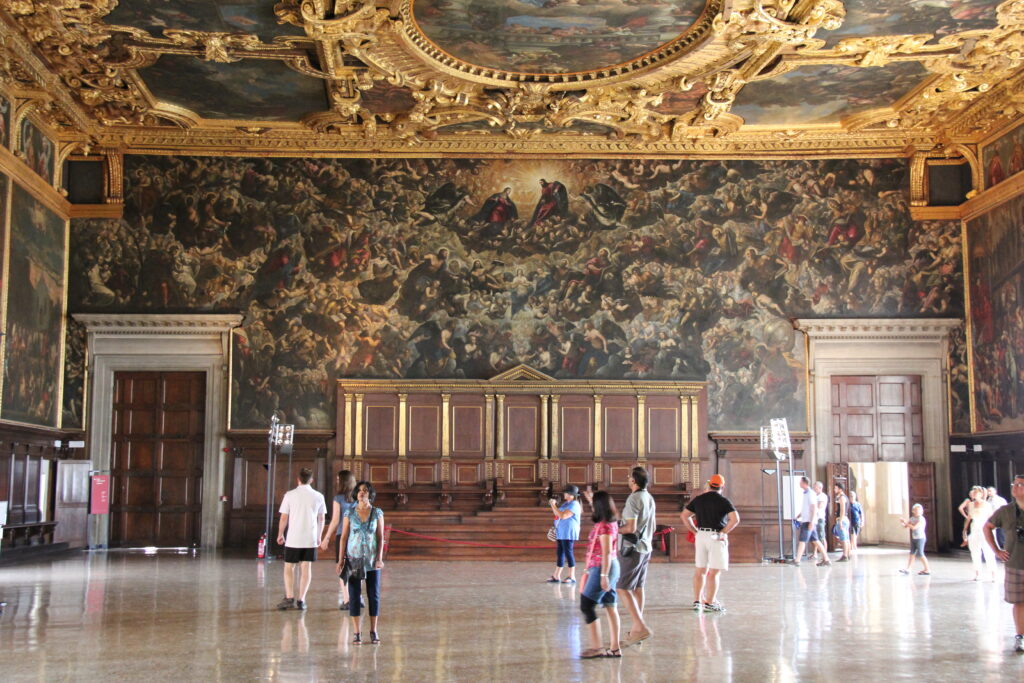
Doge’s Palace, Great Council Room – was the grand heart of Venetian government, where the powerful Maggior Consiglio once convened to make laws and elect the Republic’s leaders. It is one of the largest halls in Europe, measuring over 50 m long and 25 m wide, designed to accommodate up to around 2,000 noble council members. The room’s walls and soaring ceiling are richly decorated with monumental paintings and ornate gilded designs, including the enormous Paradise canvas behind the Doge’s throne—one of the largest oil paintings in the world.
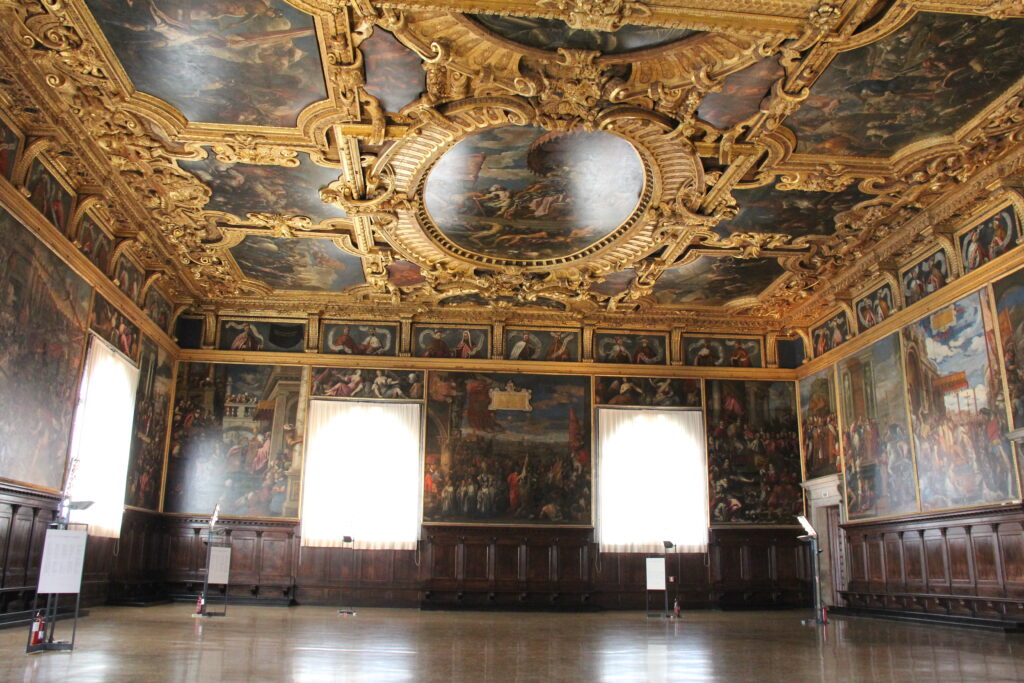
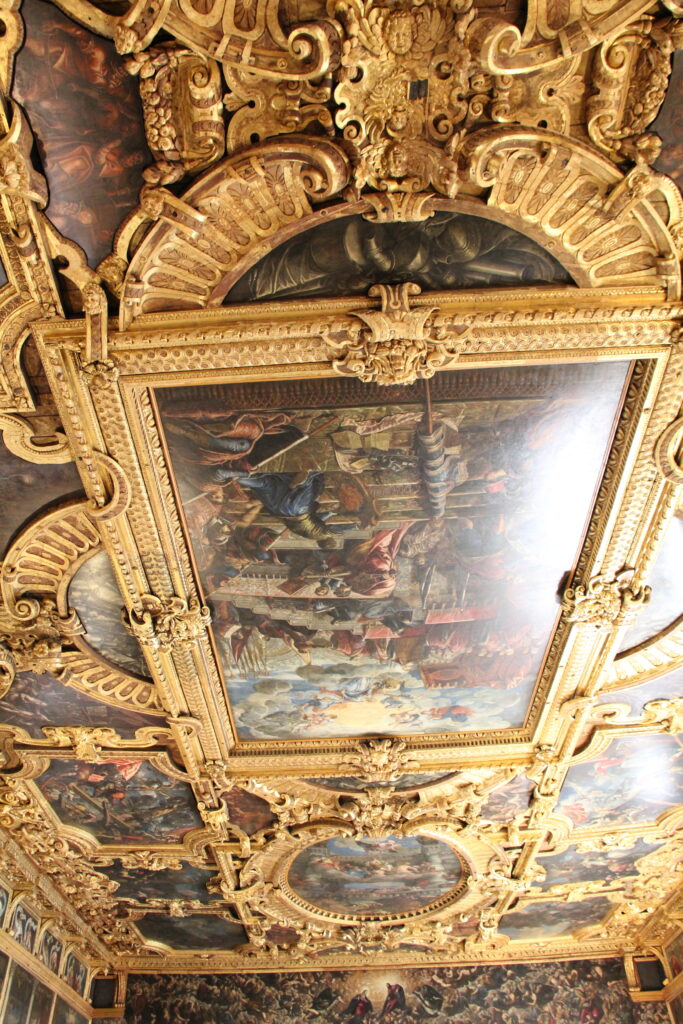
Doge’s Palace, Room of Full College – is richly decorated to reflect the power and prestige of Venice’s executive government. The space is adorned with elaborate wooden ceilings, gilded carvings, and large oil paintings, depicting allegorical scenes of justice, wisdom, and the glory of the Republic. The room was used by the Doge and senior officials for day-to-day government meetings and planning state affairs. It also served to receive foreign ambassadors, showcasing Venice’s power and authority.
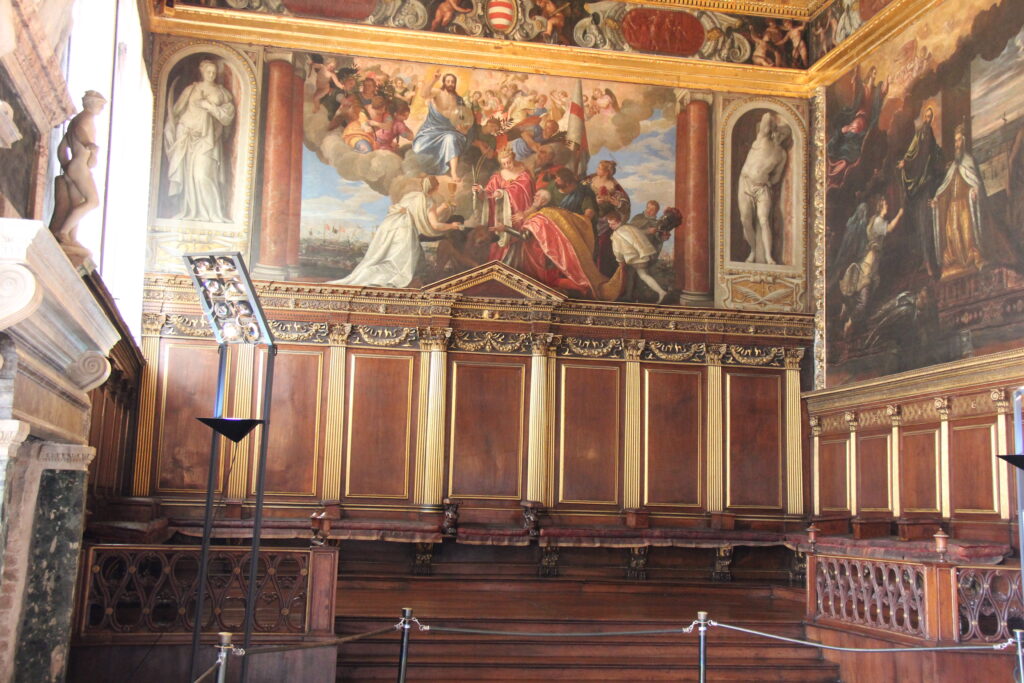
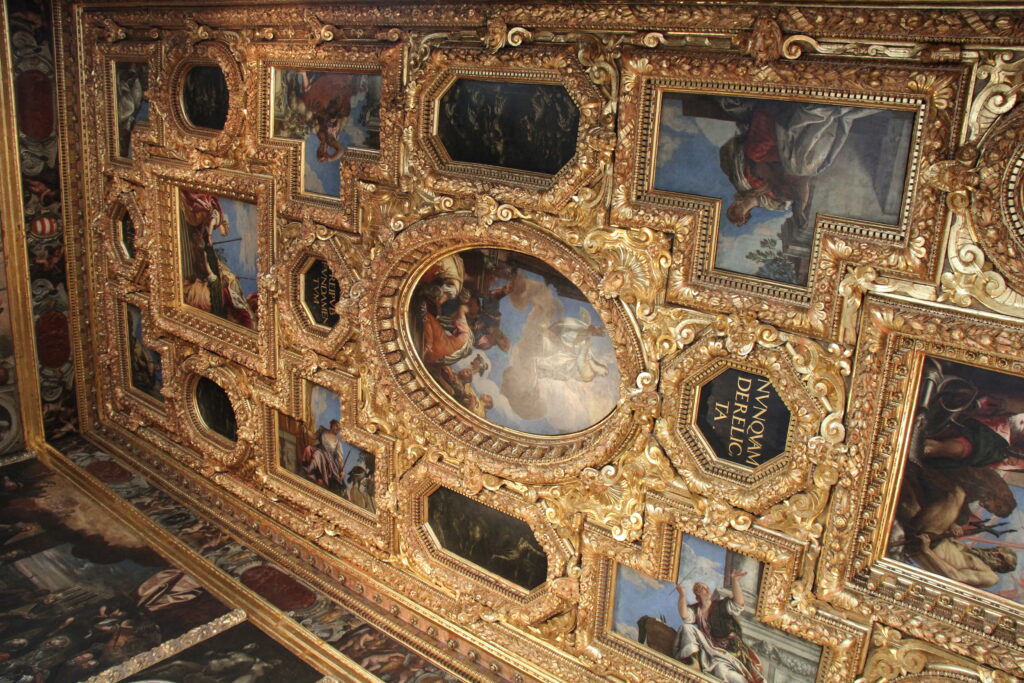
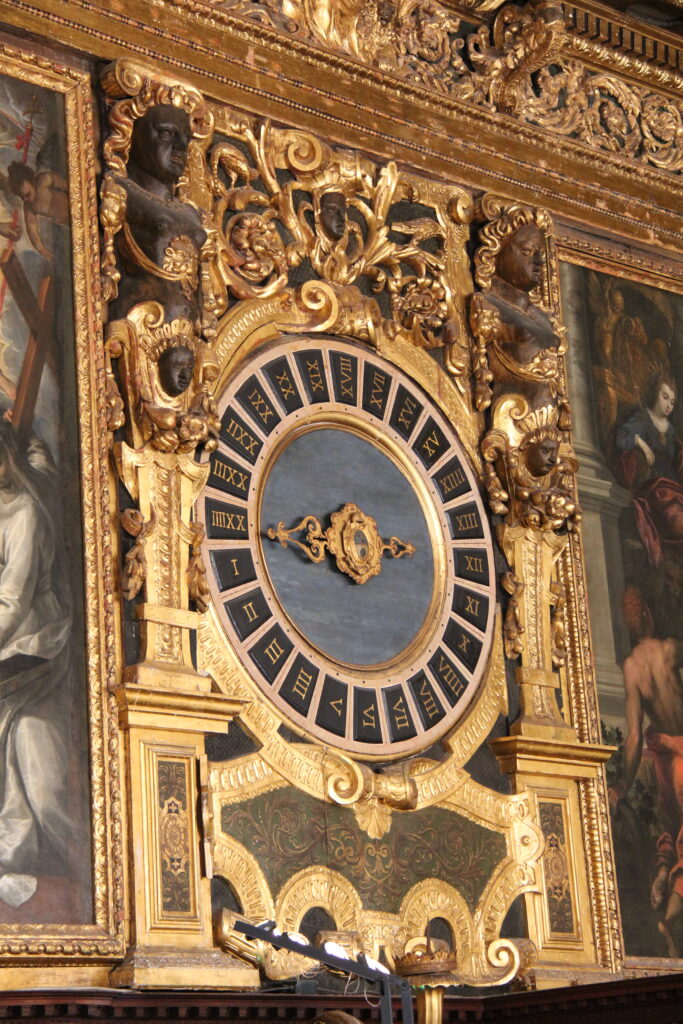
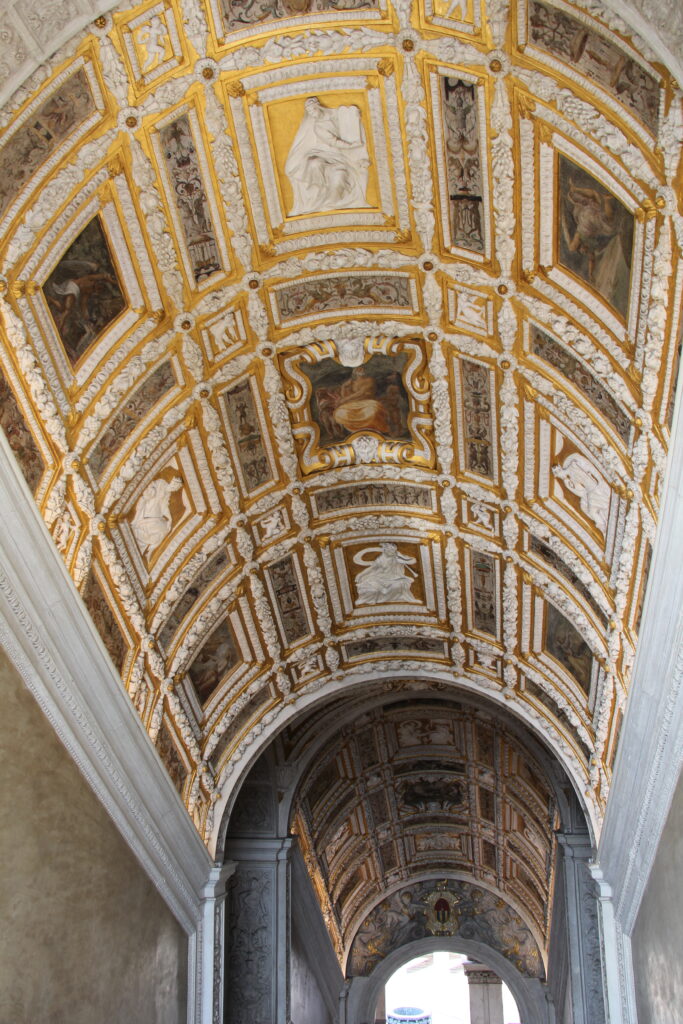
- Golden Staircase (Scala d’Oro) – This ceremonial staircase, is richly decorated with white stucco and 24-carat gold leaf and frescoes, giving it its name. It was built in the mid-16th century to connect the palace courtyard with the Doge’s apartments and the halls of government, and its ornate decoration—mythological figures and allegories of Venice’s power—was meant to impress visitors and dignitaries ascending to the heart of the Republic’s political life.
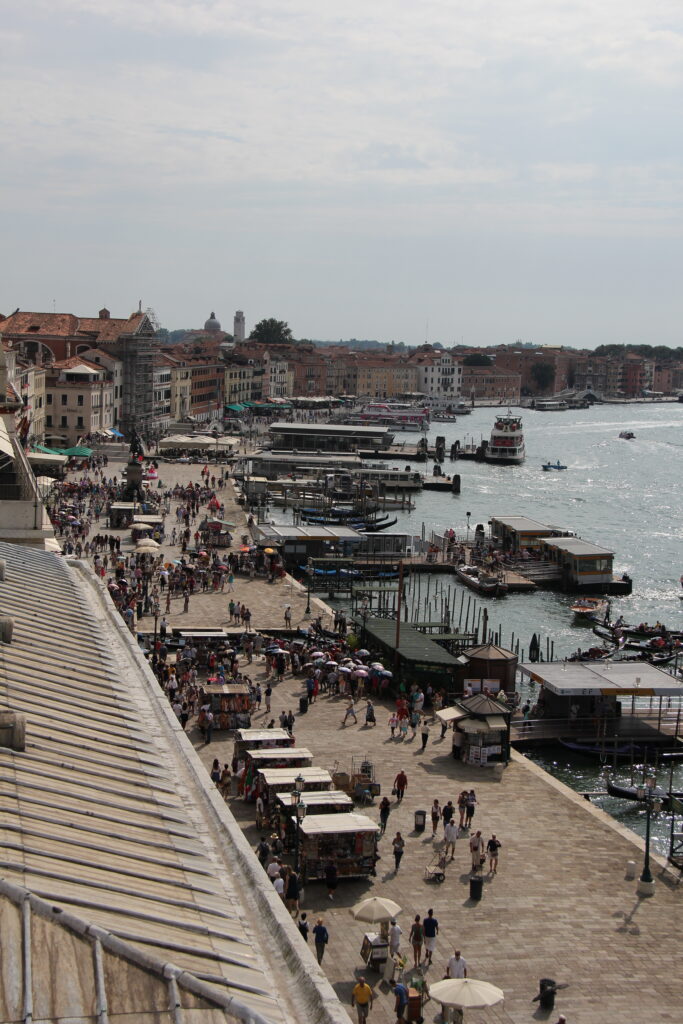
- Doge’s Palace Terrace – The terrace (loggia) of the Doge’s Palace, opens out toward the Venetian Lagoon. From here, officials once looked over the water and arriving ships, reinforcing Venice’s role as a powerful maritime republic.
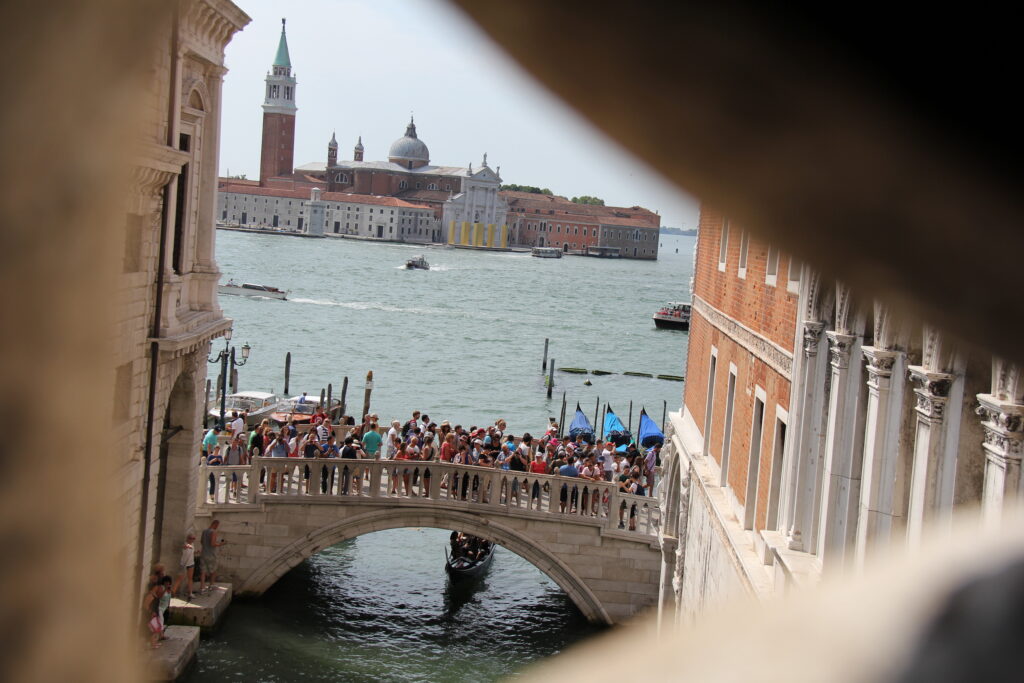
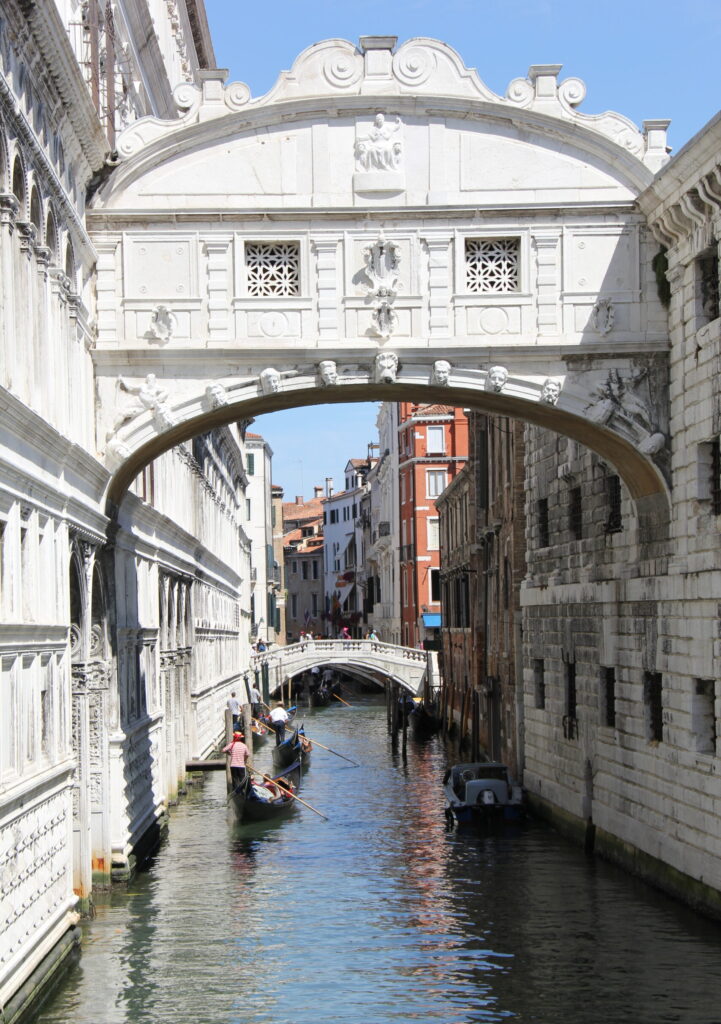
The Bridge of Sighs (Ponte dei Sospiri) – is an enclosed limestone bridge in Venice that crosses the Rio di Palazzo. Built in 1600 and designed by Antonio Contin, it connects the Doge’s Palace with the New Prison, allowing prisoners to be led from interrogation rooms to their cells.
Its name comes from the belief that prisoners sighed as they caught their last glimpse of Venice through the small barred windows. The romantic English name was popularized in the 19th century by Lord Byron, transforming the bridge into one of Venice’s most famous and evocative landmarks.
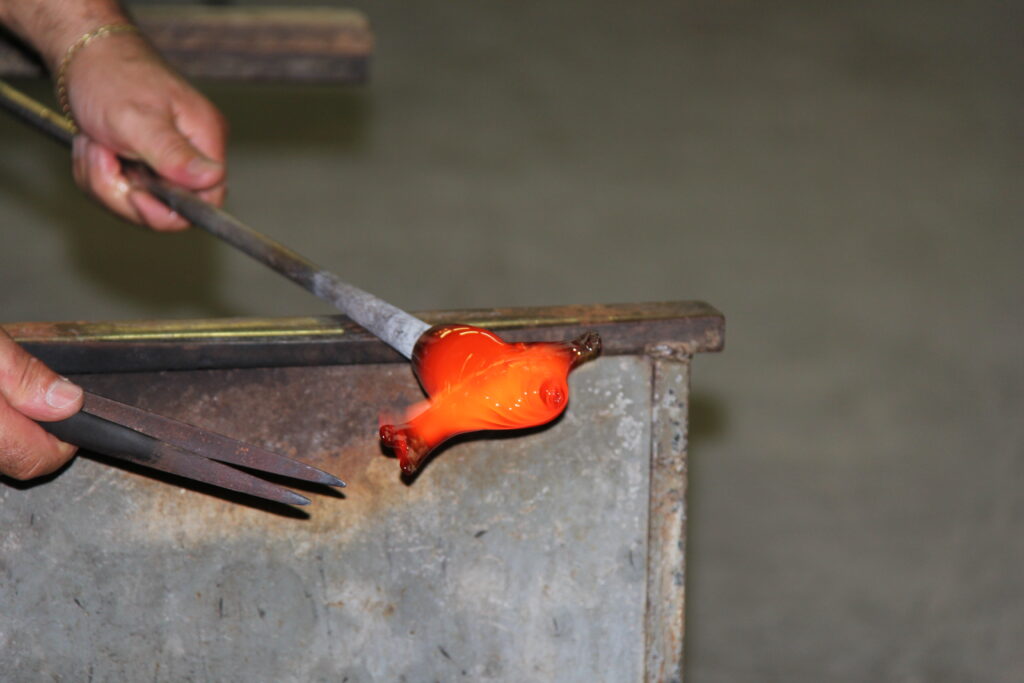
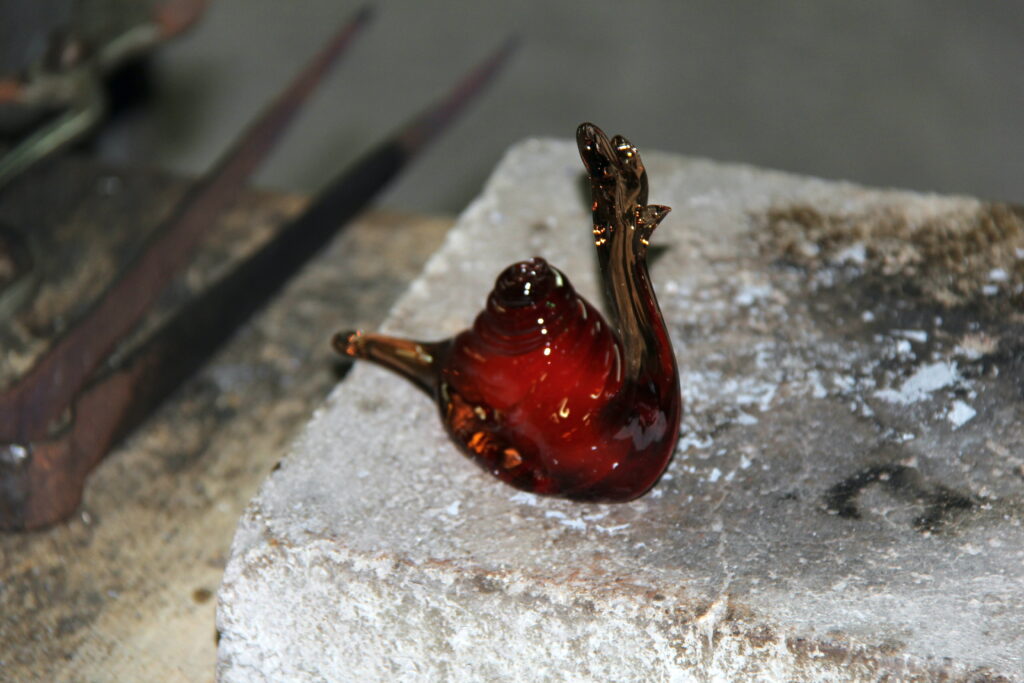
Murano – is a group of islands in the Venetian Lagoon, just north of Venice, world-famous for its glassmaking tradition. The easiest and cheapest way to reach Murano is by vaporetto which takes 15-20 minutes. We spent a few hours in Murano, watching skilled artisans at work in glassmaking demonstrations and browsing the island’s charming shops filled with delicate, colorful creations.
Church of San Giorgio Maggiore – You get a great view of this striking church from Doge’s Palace terrace. It is a 16th-century Benedictine church, standing on the island of the same name across from St. Mark’s Square. Built between 1566 and 1610 in a classical Renaissance style, its brilliant white marble façade rises dramatically above the blue waters of Venetian Lagoon. Originally home to a Benedictine monastery dating back to the 10th century, the church was rebuilt after earlier structures were destroyed by an earthquake.
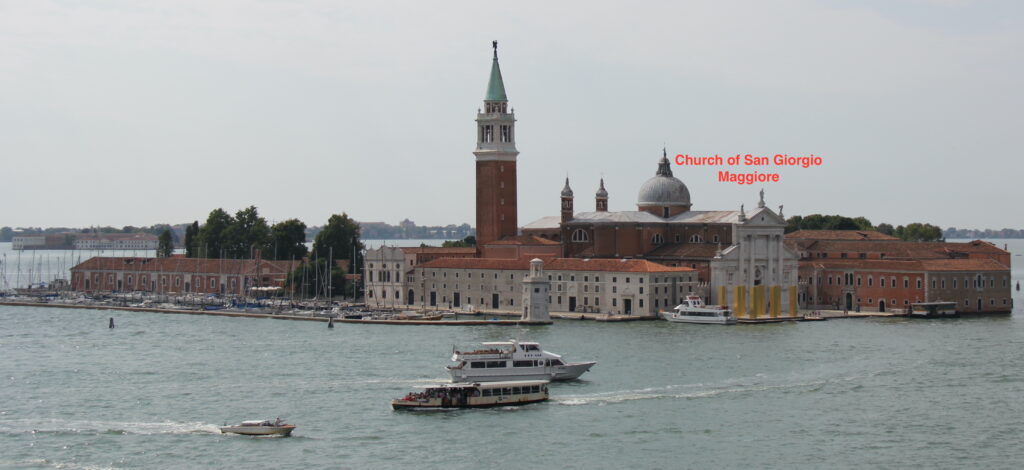
You can take a vaporetto to the church which runs frequently from San Marco Zaccaria (stop located behind St. Mark’s Basilica). The short crossing offers lovely water views. The church is free to visit, you have to pay a fee to climb the bell tower.
Santa Maria della Salute – is a Baroque church built in the 17th century as a vow after Venice survived a devastating plague. Standing at Punta della Dogana between the Grand Canal and the Giudecca Canal, its grand dome dominates the skyline and is especially visible when approaching St. Mark’s Square by water. Designed by Baldassare Longhena, the church symbolizes Venice’s faith, resilience, and recovery.