Visited in 2019
Located along the St. Lawrence River, Montreal is the largest city in the province of Quebec. Founded in 1642, it is the largest French-speaking city in the Americas and one of Canada’s most bilingual cities. The city has hosted major global events, including Expo 67 and the 1976 Summer Olympics.
- Old Port of Montreal
- Place Jacques-Cartier
- Place d’Youville
- The English Pug and the French Poodle
- The Thousand Islands
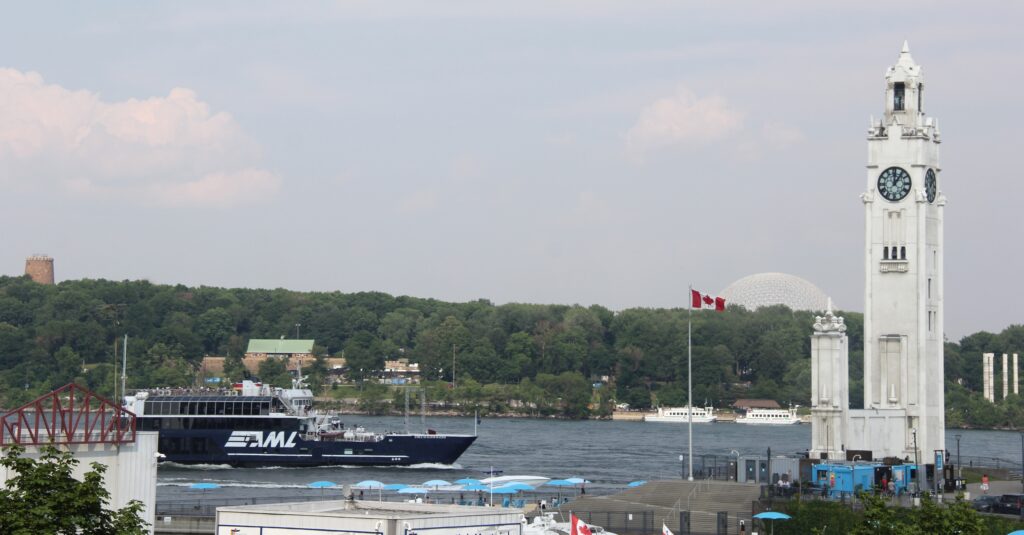
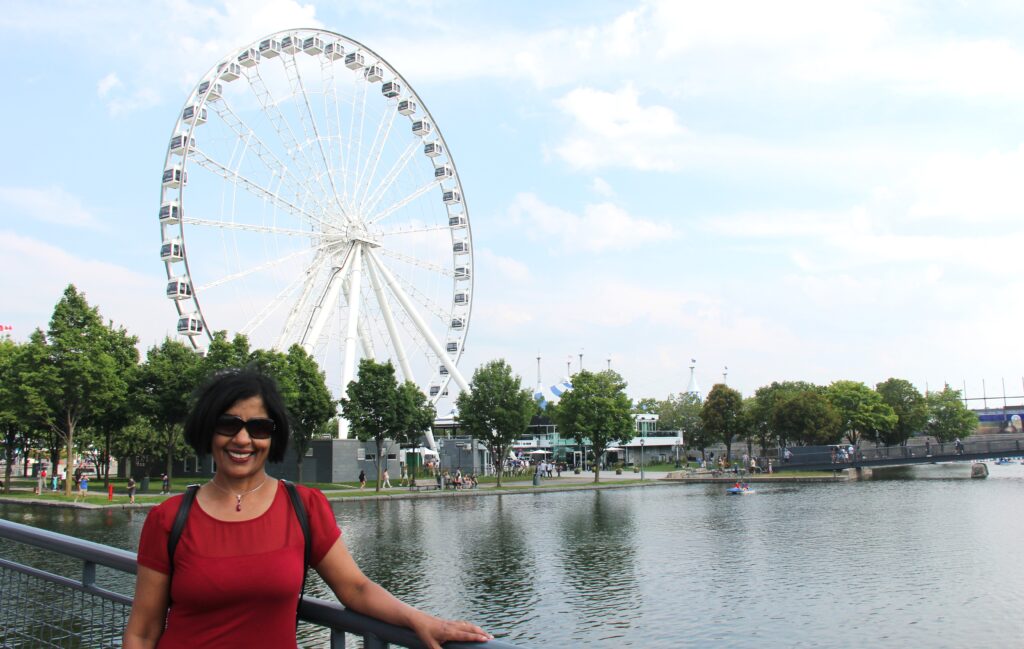
Old Port of Montreal – is a historic waterfront area along the St. Lawrence River that was originally used as a trading post in the early 17th century. After port activities moved east in 1976, the area was redeveloped in the 1990s into a major recreational and cultural destination. Today, it features attractions such as the Montréal Science Centre, Clock Tower, Clock Tower Beach, the Grande roue de Montréal Ferris Wheel, and year-round festivals, drawing millions of visitors annually.
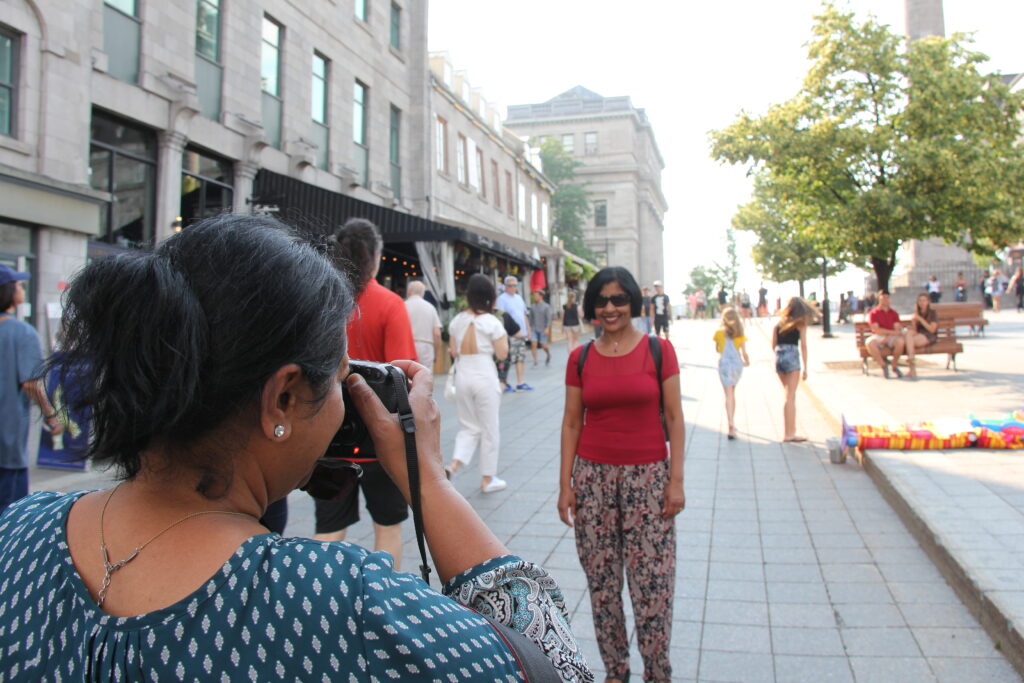
Place Jacques-Cartier – a lively historic square in Old Montreal that connects the Old Port to City Hall. Known for its street performers, artists, cafés, and outdoor terraces, it is a popular gathering place for both locals and tourists. Created in 1847 on the former site of the governor’s château, the square features landmarks such as the Nelson Monument and offers a vibrant atmosphere.
Place d’Youville – another plaza that holds great historical significance as the site of Montreal’s first settlers, the signing of the Great Peace of Montreal in 1701, and the area associated with Marie-Marguerite d’Youville (first native-born Canadian to be elevated to sainthood by the Catholic Church).
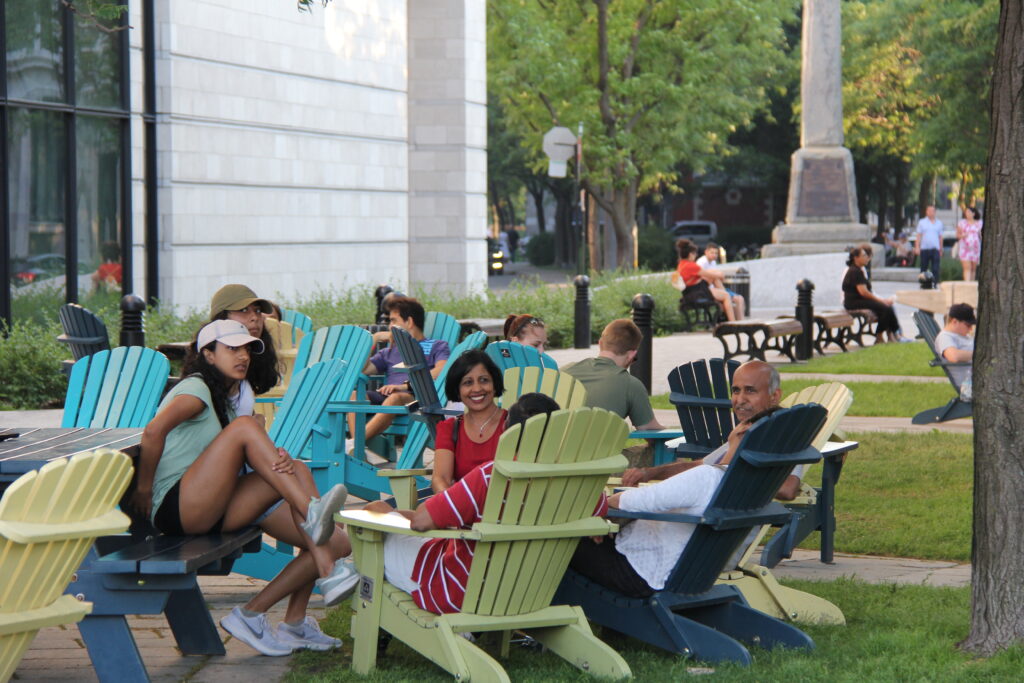
Today, Place d’Youville features modern design elements such as the Monument of the Pioneers, timber boardwalks, and green spaces. Visitors can relax on Adirondack chairs or picnic tables, stroll along its pathways, and use the square as a gateway to the Old Port and nearby Rue Saint-Paul.
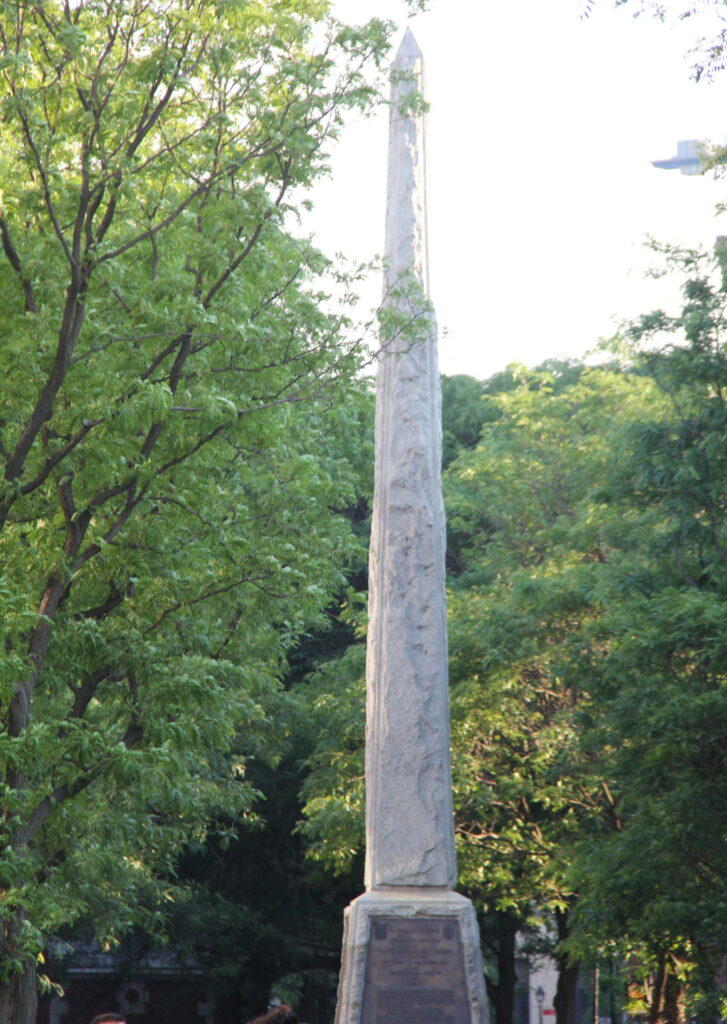
The Monument of the Pioneers in Place d’Youville, is a 40-foot granite structure erected in 1894 to honor Montreal’s founders and first French settlers who arrived in 1642. Designed by J.A.U. Baudry and built from Stanstead grey granite, it commemorates the establishment of Fort Ville-Marie.
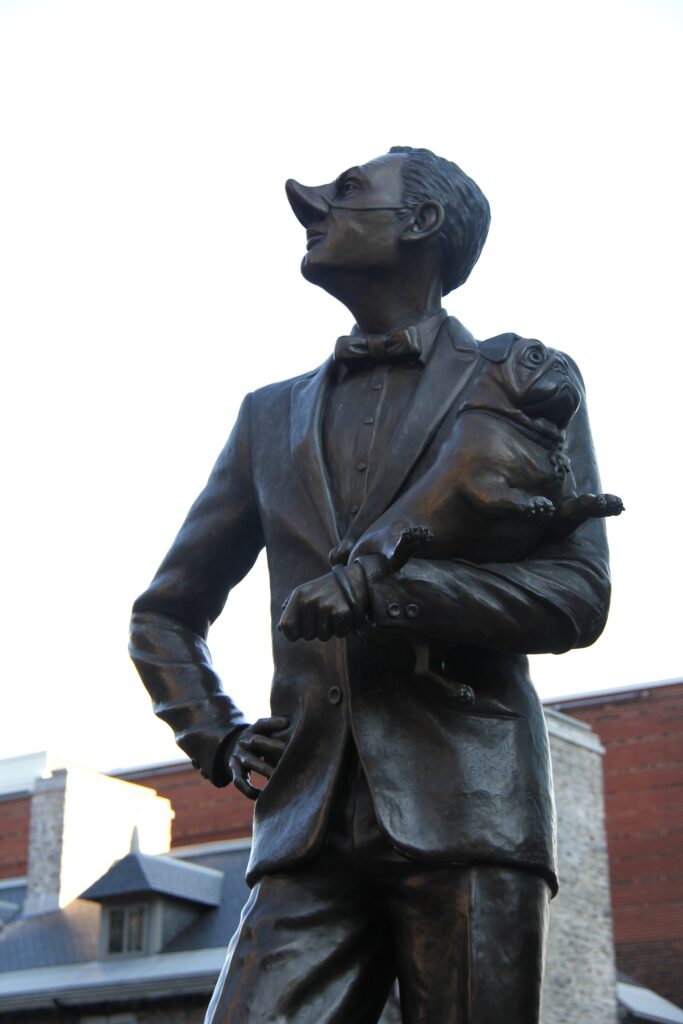
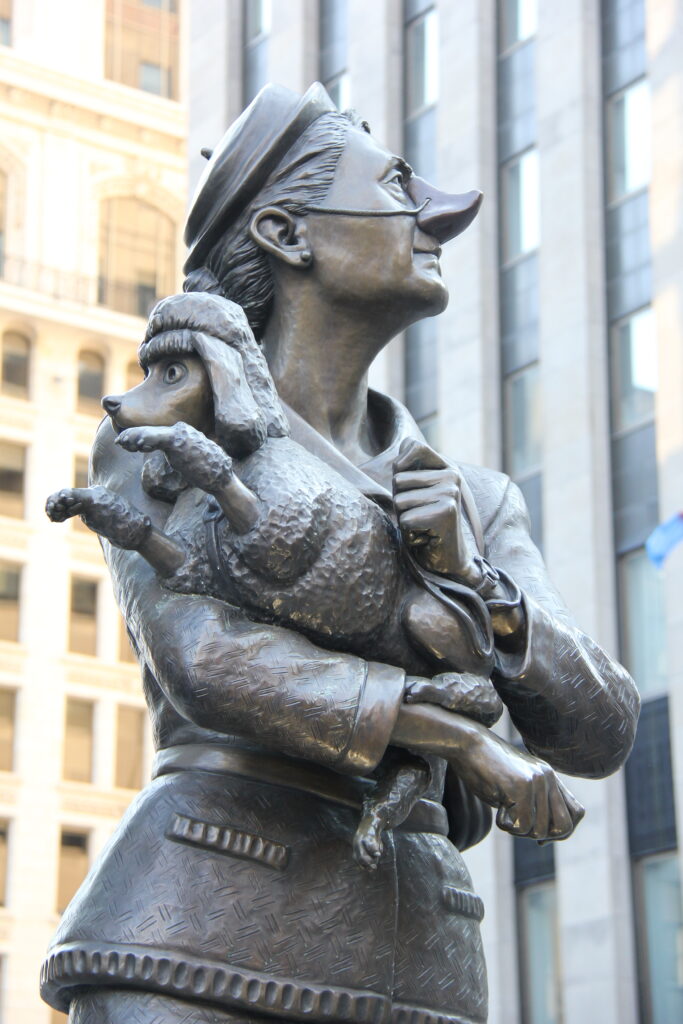
The English Pug and the French Poodle – also known as The Two Snobs, is a 2013 outdoor art installation by Canadian artist Marc André J. Fortier located at Place d’Armes in Old Montreal. Consisting of two bronze sculptures placed on opposite sides of a building, the work humorously depicts the historical cultural divide between English and French Canadians. Inspired by Two Solitudes and Commedia dell’arte, the sculptures show an Englishman and a Frenchwoman facing away from each other, while their dogs—symbolizing connection—are drawn together despite their owners’ separation.
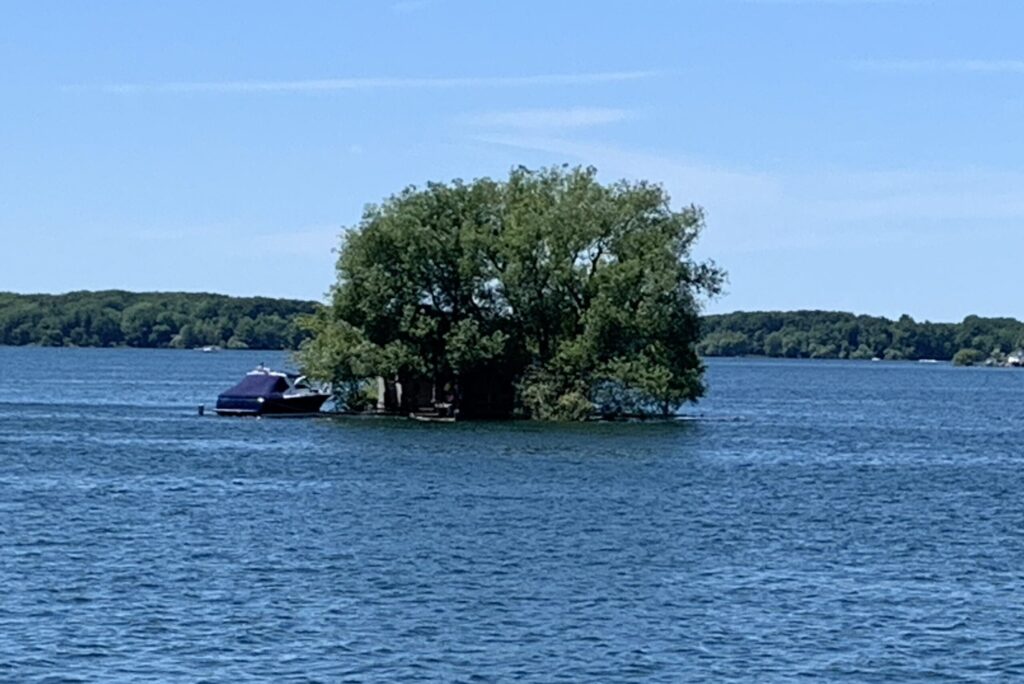
The Thousand Islands – Straddling the Canada-US border between Ontario and New York State, Thousand Islands, are an archipelago of 1,864 islands located along the Saint Lawrence River. Stretching about 80 km downstream from Kingston, the islands vary in size from large landmasses to tiny rocky outcrops, each required to remain above water year-round and support at least two trees. The region is a UNESCO World Biosphere Reserve and is connected by major routes such as the Thousand Islands Bridge, linking Canada and the United States.
The Thousand Islands are about 239 km south of Montreal, roughly a 2-hour and 20-minute drive. We stopped in this area and went on a short hike during our drive back from Montreal to Pittsburgh.