Visited in 2019
Quebec City is the capital of the province of Quebec and one of the oldest European settlements in North America as well as the only walled city north of Mexico. Perched above the St. Lawrence River, it’s known for its cobblestone streets, strong French heritage, and historic Old Town (Vieux-Québec), a UNESCO World Heritage Site.
- Old Québec (Vieux-Québec)
- Fortifications of Québec
- Rue Saint-Louis
- Château Frontenac
- The Dufferin Terrace
- Place Royale and Petit Champlain
- Old Quebec Funicular
- Citadelle de Québec
- Quebec City Monuments and statues
- Cruising the St. Lawrence River
- Quebec City’s Parliament Building
- Montmorency Falls
Old Québec (Vieux-Québec) – is North America’s only walled city north of Mexico and a UNESCO World Heritage Site, celebrated for its European charm and beautifully preserved 17th-century architecture. The historic district is divided into two distinct areas. The Upper Town (Haute-Ville) is rich in history, home to the Château Frontenac, the star-shaped Citadel, and Terrasse Dufferin, offering some of the best viewpoints in the city. Below, the Lower Town (Basse-Ville) features the charming Quartier Petit Champlain, considered North America’s oldest commercial district, filled with boutiques, cafés, and historic buildings.
The two levels are connected by a scenic funicular, as well as staircases for those who prefer to walk. Founded by Samuel de Champlain in the early 1600s, Old Québec blends French heritage with North American culture and is often described as a piece of Europe on this side of the Atlantic. It is compact and highly walkable and can be easily explored on foot.
—————————–
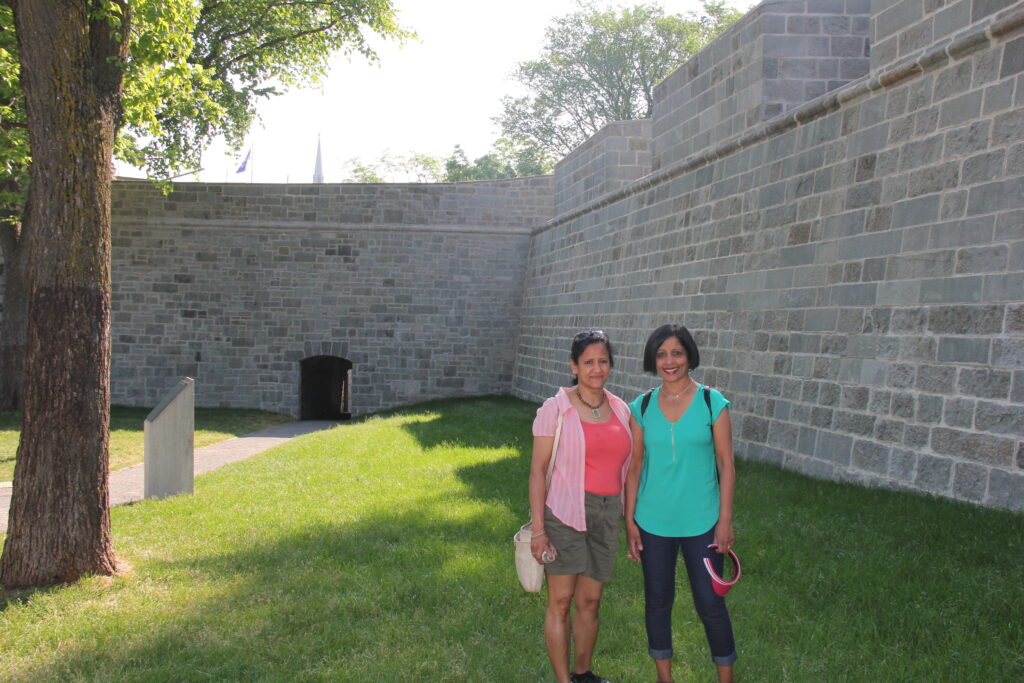
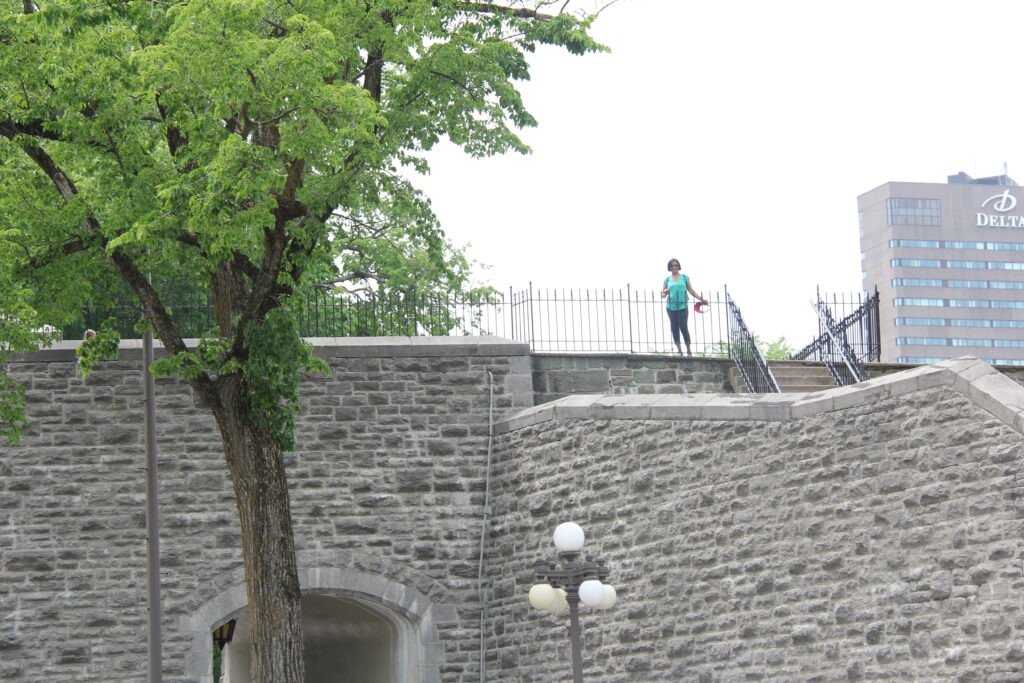
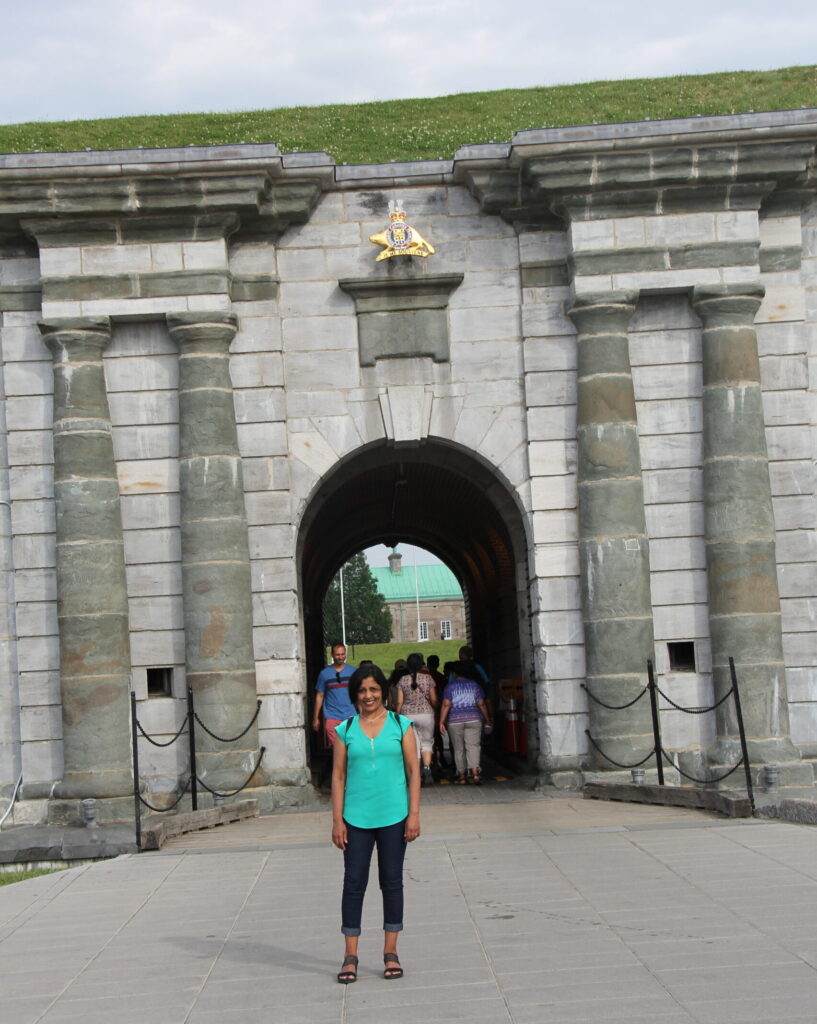
Fortifications of Québec – are historic city walls that surround the western end of Old Québec’s Upper Town. Dating back to the 17th century, these fortifications stretch for 2.9 miles, with their southern section forming part of the Citadel of Quebec.
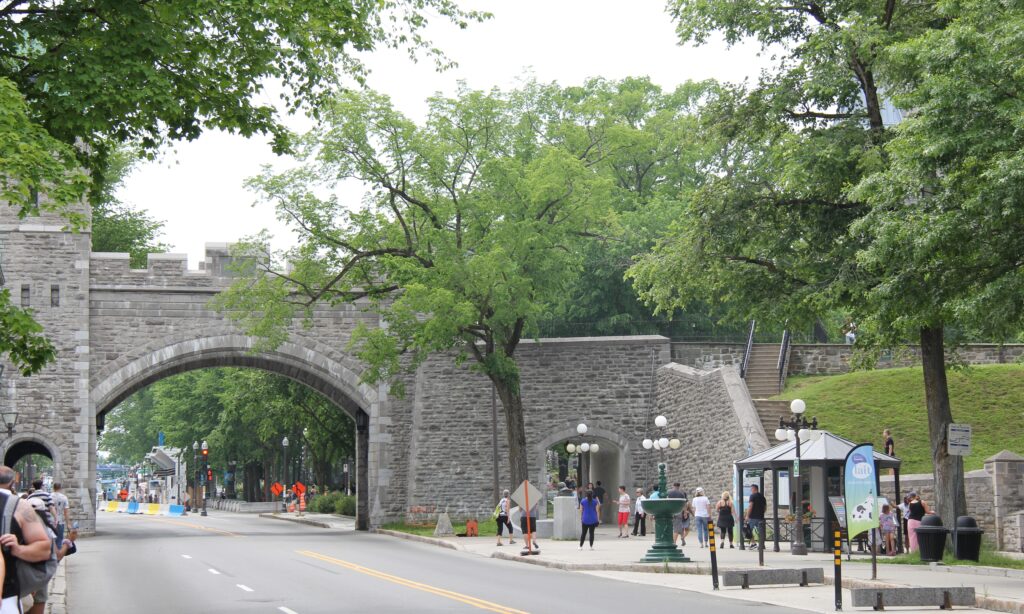
Originally built in 1690 to defend the city, the ramparts were expanded and strengthened over time and successfully withstood several major sieges in the 18th century. Today, they remain one of the best-preserved examples of colonial military defenses in North America and are part of both a National Historic Site and a UNESCO World Heritage Site.
——————————
Rue Saint-Louis – This charming street in Old Québec, stretches from Porte Saint-Louis (see pic above) toward the iconic Fairmont Le Château Frontenac and Place d’Armes. Lined with centuries-old stone buildings that now house hotels, restaurants, and boutique shops, the street has a old-world European atmosphere.
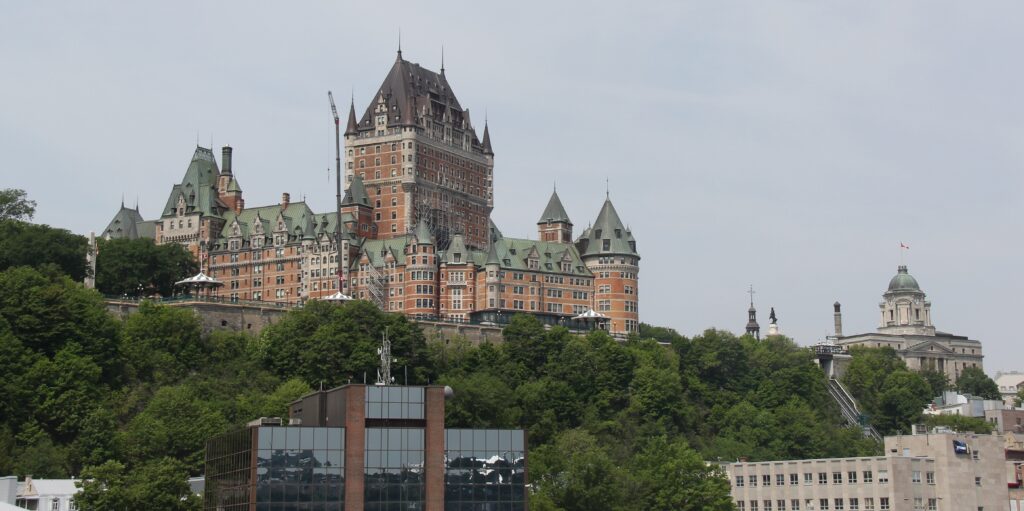
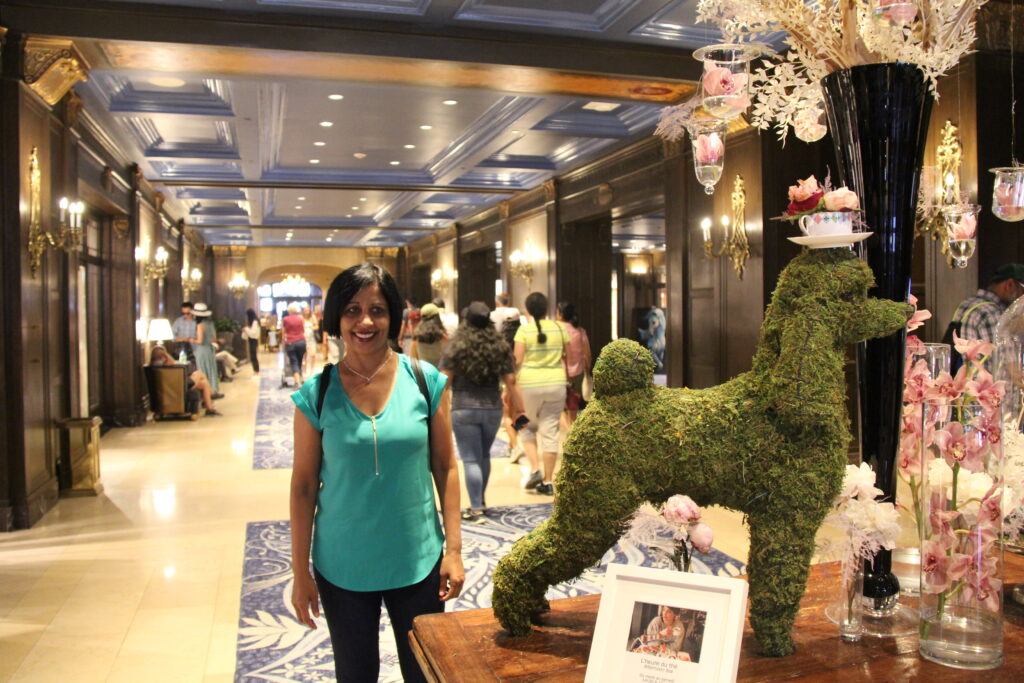
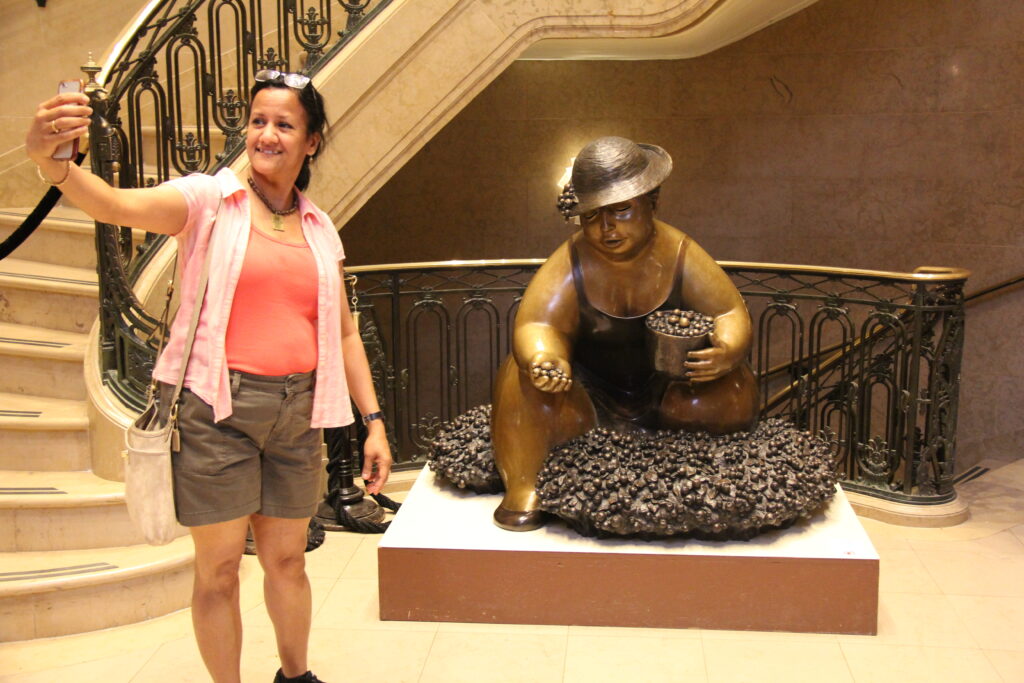
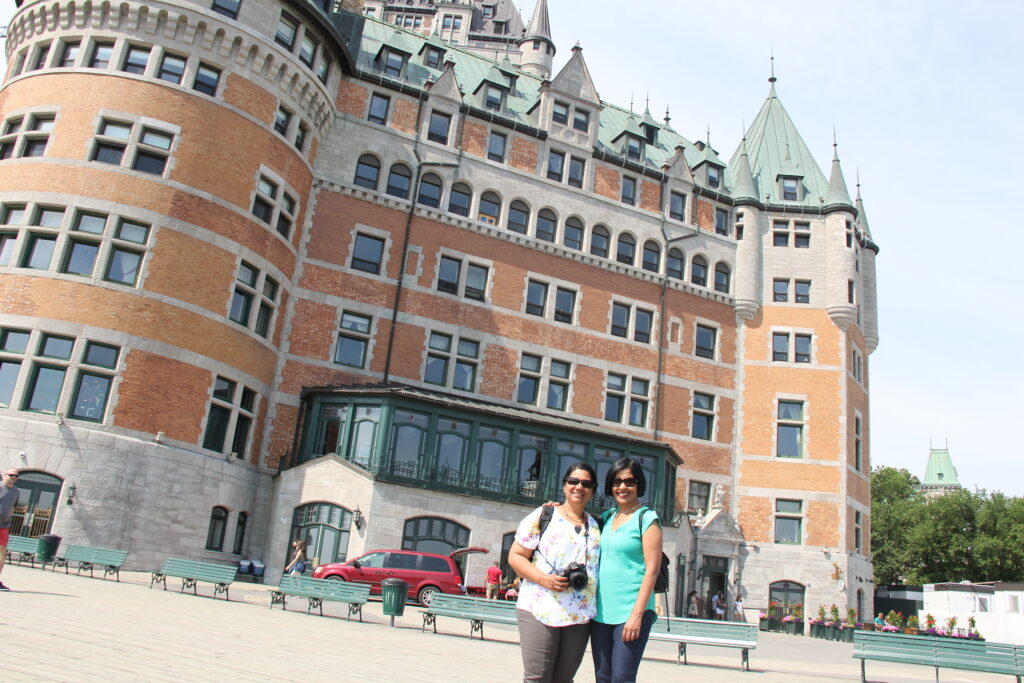
Fairmont Le Château Frontenac – is Quebec City’s most iconic landmark and is often called the most photographed hotel in the world. Opened in 1893, this grand Château-style hotel rises above Old Quebec Upper Town, overlooking the St. Lawrence River from its dramatic hilltop setting at Place d’Armes. Built by the Canadian Pacific Railway, it is one of Canada’s original grand railway hotels and was designated a National Historic Site in 1981.
——————————
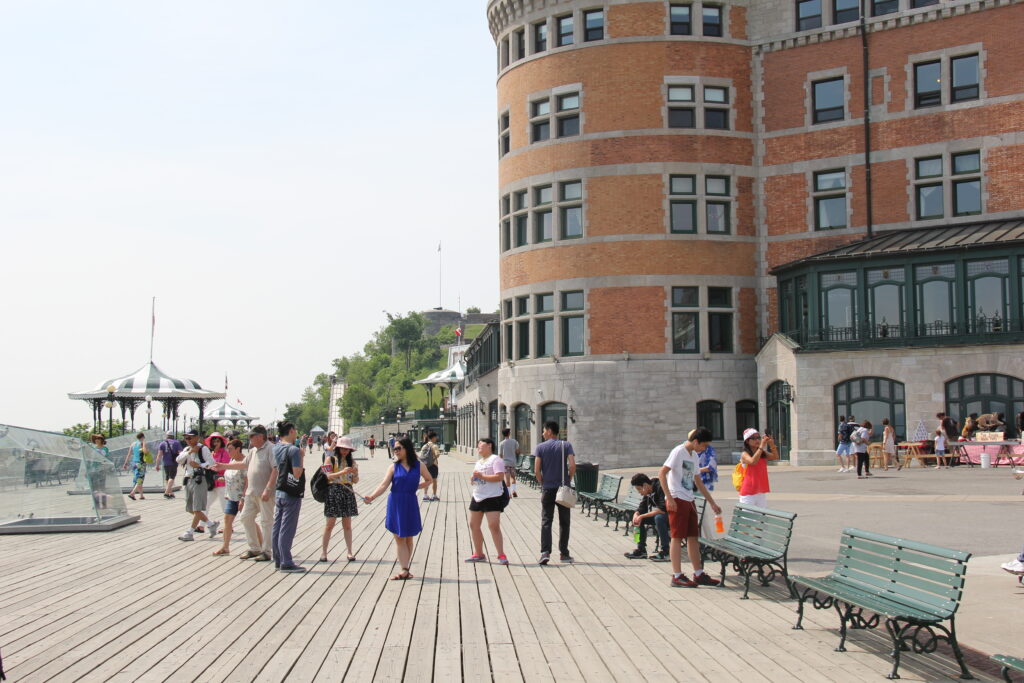
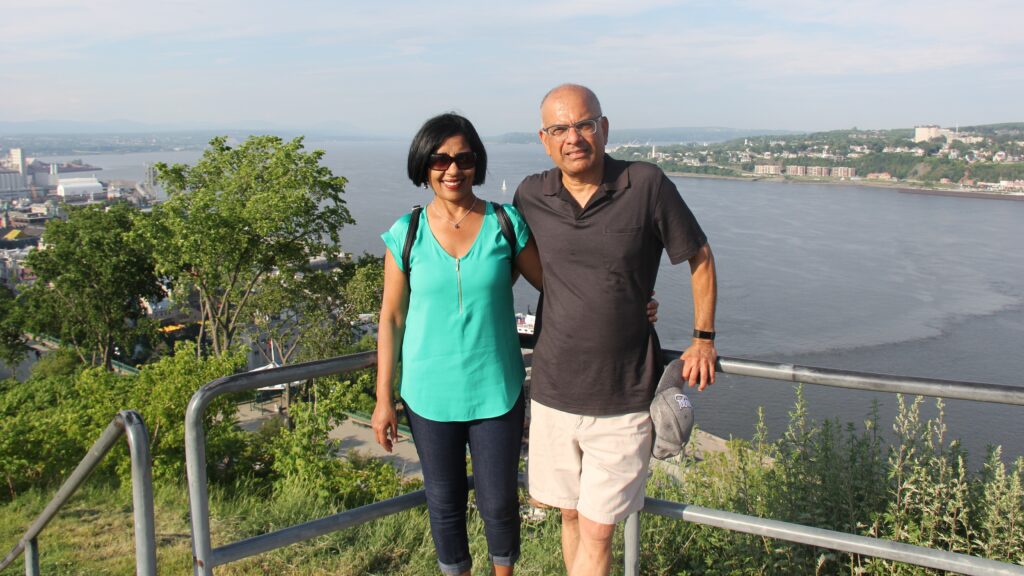
Dufferin Terrace (Terrasse Dufferin) – is a long wooden promenade beside the Château Frontenac, offering breathtaking views of the St. Lawrence River and the surrounding area. Open to the public since 1838, it is a great spot for both locals and visitors to stroll, relax, and admire the scenery. From here, you can board the funicular down to Rue du Petit-Champlain (next section).
——————————
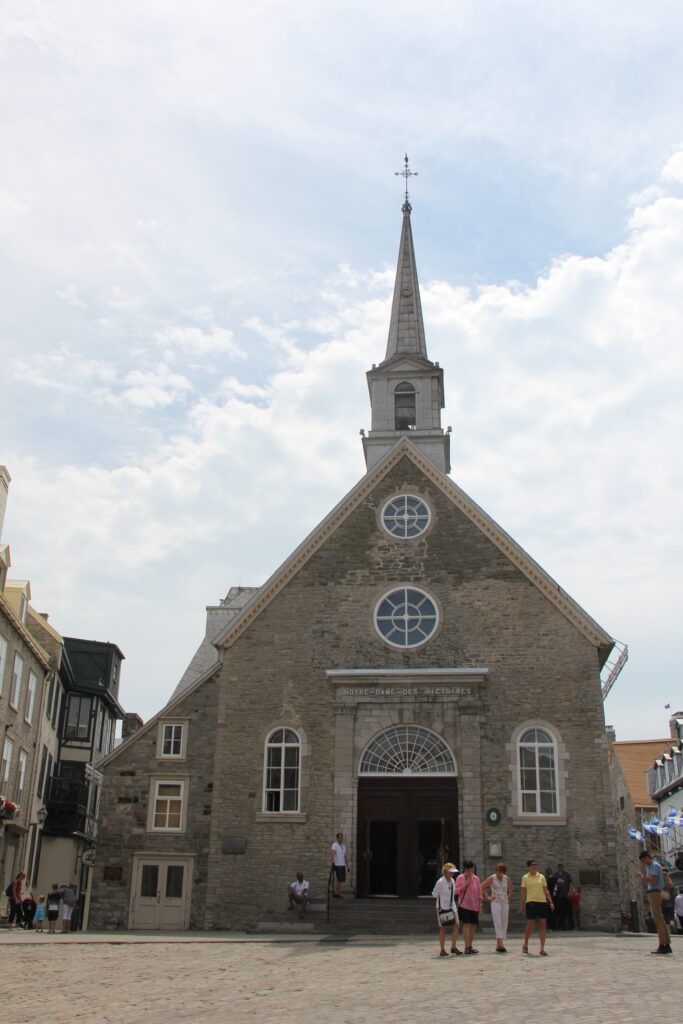
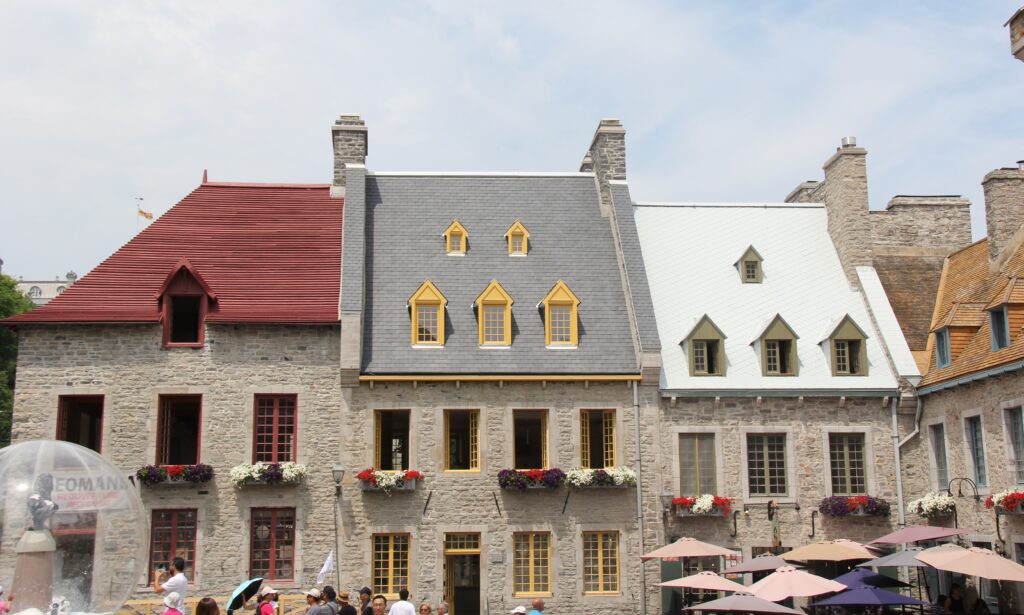
Place Royale and Rue du Petit-Champlain – Place Royale is a historic square regarded as the birthplace of Quebec City, where Samuel de Champlain founded the settlement in 1608. It is renowned for its well-preserved 17th and 18th-century architecture and the iconic Notre-Dame-des-Victoires Church.
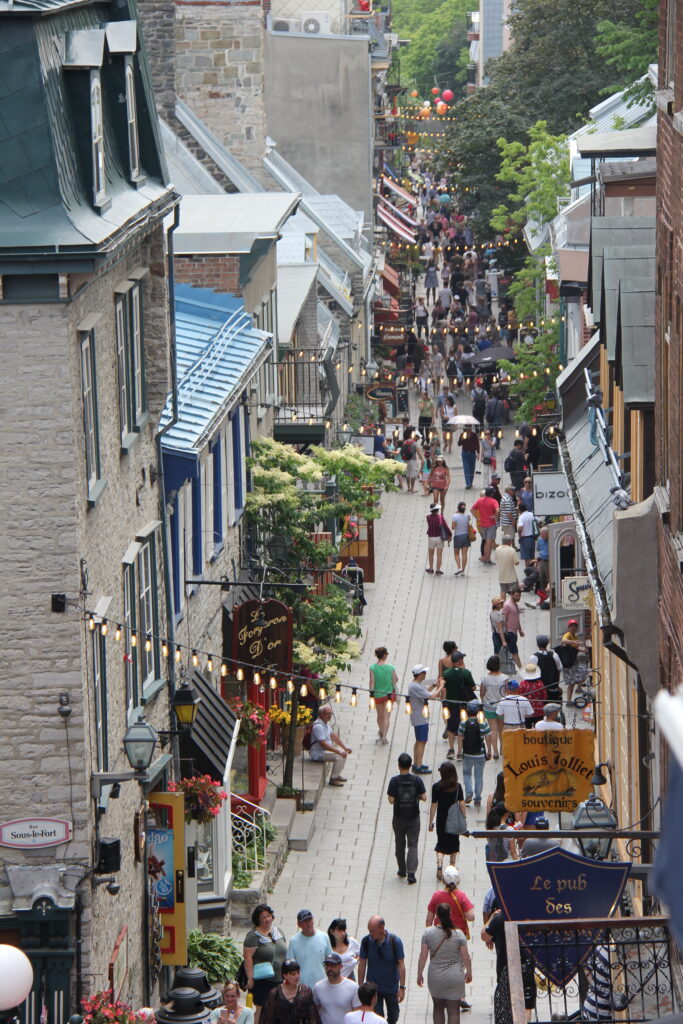
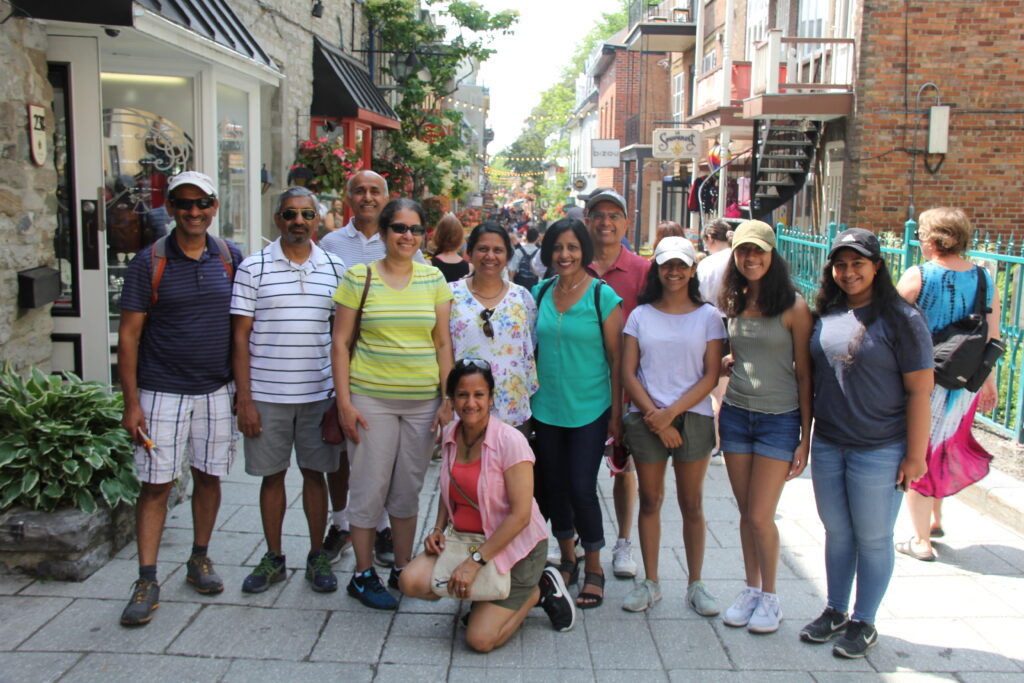
Rue du Petit-Champlain is a historic pedestrian street in Quebec City’s Lower Town, located at the foot of Cap Diamant near Place Royale. Known for its cobblestone path, stone buildings, and boutique shops, it is one of the oldest streets in North America and a centerpiece of the Petit Champlain district.
——————————
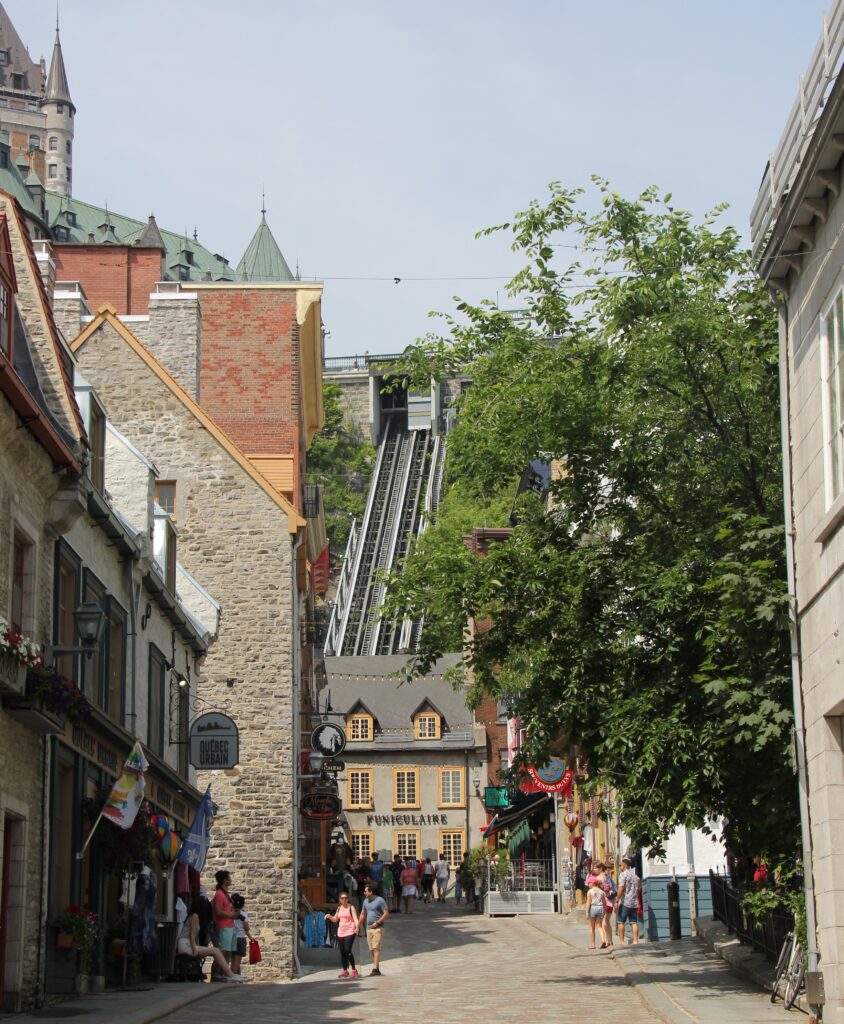
Old Quebec Funicular – At the end of Rue du Petit-Champlain you will come across the old Quebec Funicular which is a historic cable railway that connects Lower Town near Petit Champlain and Place Royale with Upper Town close to Château Frontenac and Dufferin Terrace.
Originally opened in 1879, it offers a quick and scenic way to travel up Cap Diamant while providing views of the St. Lawrence River and Old Quebec. The 210 feet are covered in less than a minute, descending about 190 feet. There are two cars, moving independently, each with a capacity of about 60 people. It runs every few minutes and costs about CAD$6.00 each way.
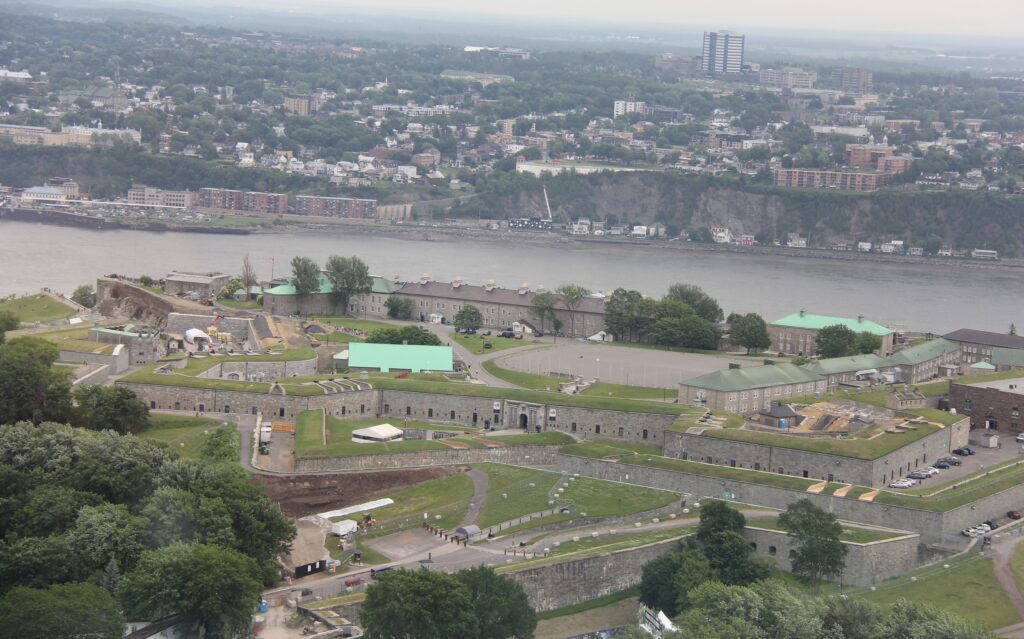
Citadelle de Québec – Perched atop Cap Diamant, the Citadelle de Québec is the largest British fortress in North America. Built between 1820 and 1850 to defend the city, it is an important military heritage site and houses the Musée Royal 22e Régiment, where visitors can explore the history of the regiment and the fortress.
Quebec City Monuments and statues
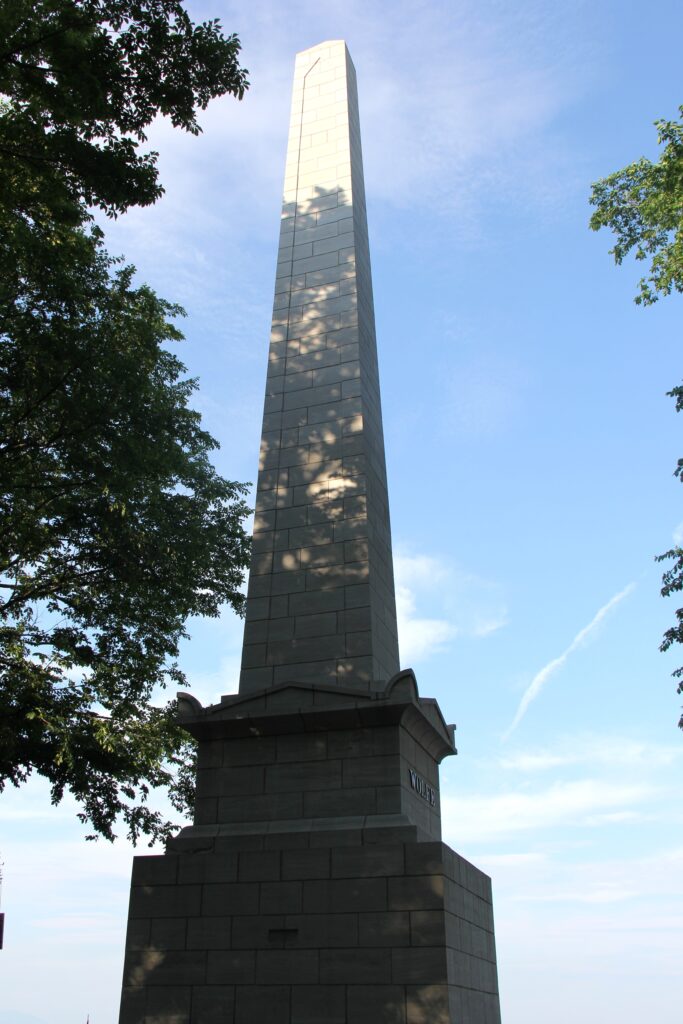
Wolfe-Montcalm Monument – is a historic obelisk located in Governors’ Garden, just south of the Château Frontenac in Quebec City. Completed in 1828, it is the city’s oldest monument and commemorates British General James Wolfe and French General Louis-Joseph de Montcalm, both of whom died during the Battle of the Plains of Abraham. Notably, it is one of the few monuments that honors opposing commanders from the same battle, symbolizing shared bravery and legacy.
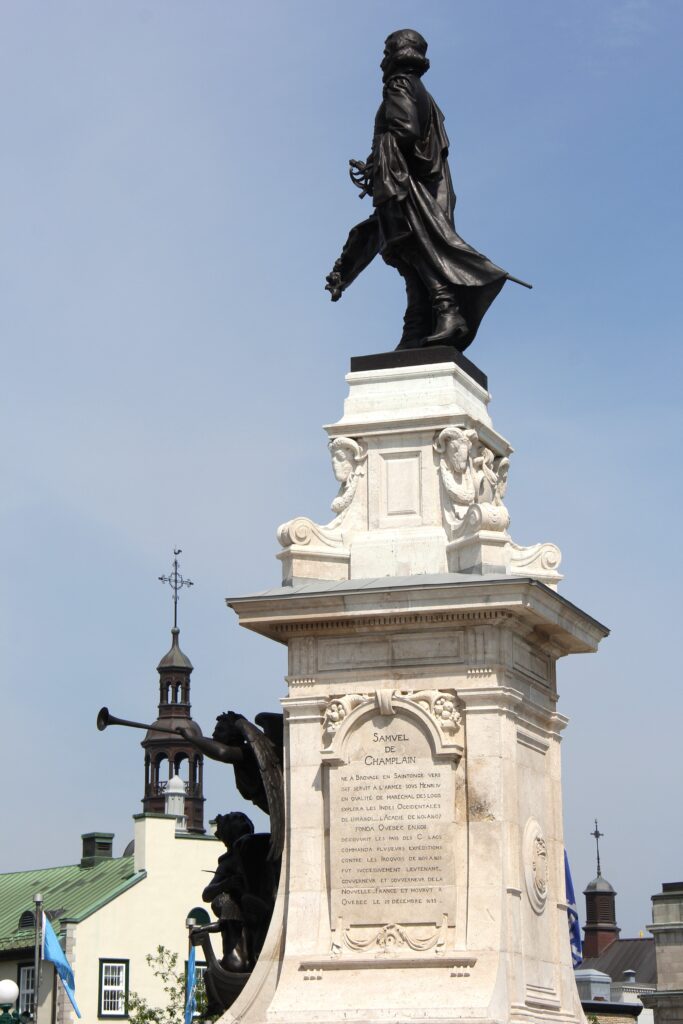
Samuel de Champlain Monument – Located on Dufferin Terrace next to the Château Frontenac, the Samuel de Champlain Monument honors the founder of Quebec City, governor of New France, and the first European to explore the Great Lakes. One of the tallest monuments in the city, it overlooks the lively crowds of tourists and locals who gather in this popular part of Old Quebec.
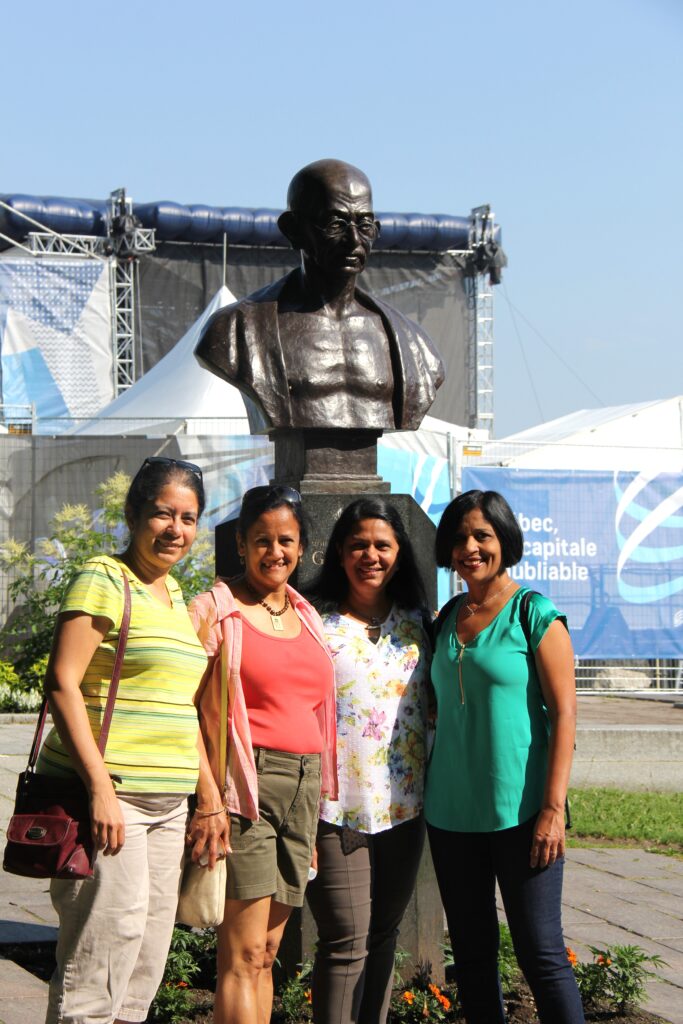
Mahatma Gandhi – Located in Old Quebec and installed in November 2006, the sculpture was a gift from India in recognition of Quebec’s role in promoting peace and non-violence. Created by Indian sculptor Gautam Pal, the bust features Gandhi’s iconic glasses and stands as a symbol of shared values and India’s independence legacy in North America.
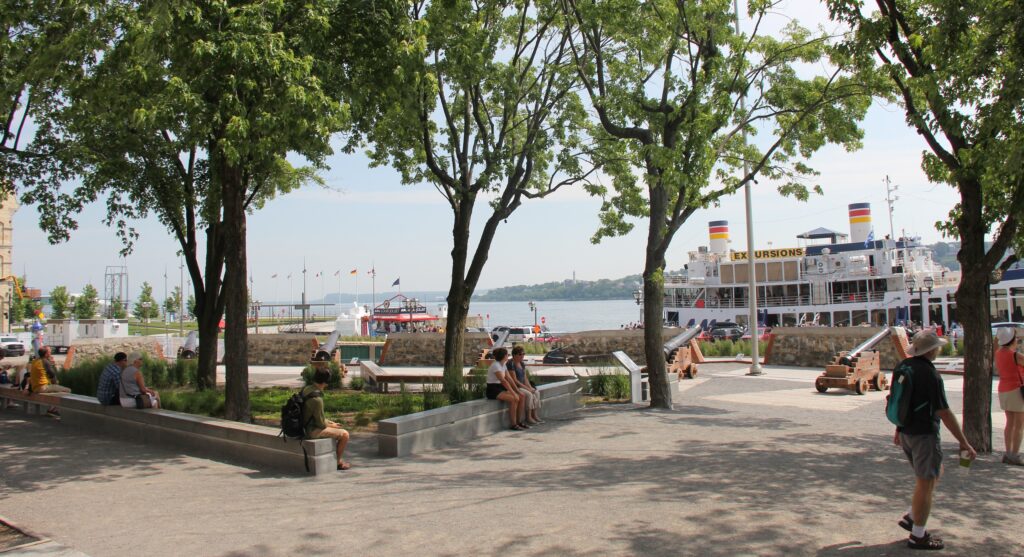
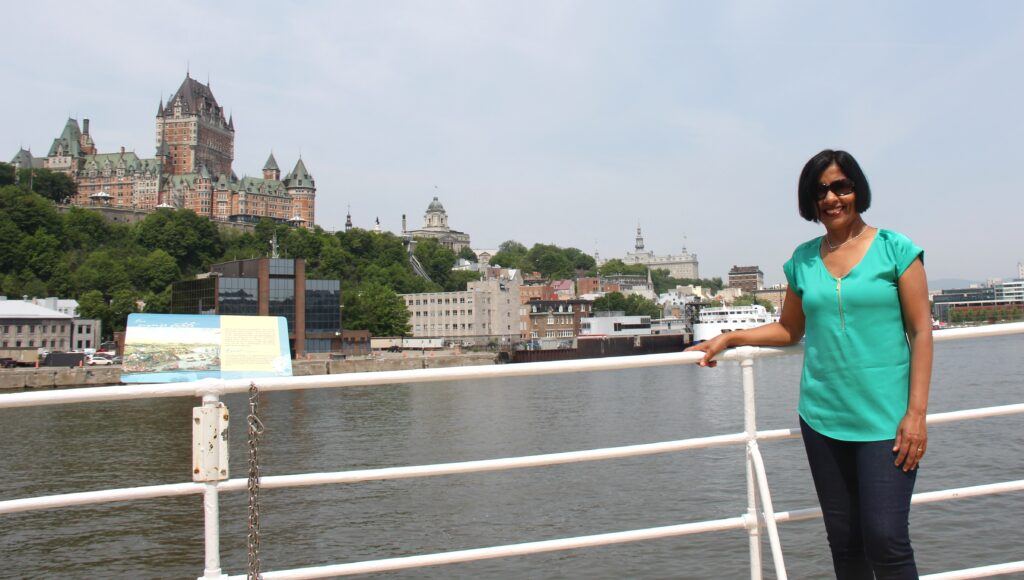
Cruising the St. Lawrence River – Major docks are located close to the charming Petit-Champlain district, making cruises easy to access. We took a short 90-minute cruise on the St. Lawrence River, which offered spectacular views of historic Old Québec and the iconic Château Frontenac from the water.
Quebec City’s Parliament Building – Constructed between 1877 and 1886, the Parliament Building is designed in the Second Empire architectural style, which was popular in Europe and the United States during the late 19th century. The building closely resembles Philadelphia City Hall, another North American example of the same style built in the same era.
The building’s symmetrical design, featuring a central clock tower, reflects the traditional layout of British-influenced legislative institutions, yet its architectural style is considered unique among Canadian provincial parliament buildings. Its façade is richly decorated with statues and symbols that form a pantheon highlighting important figures and key events in Quebec’s history.
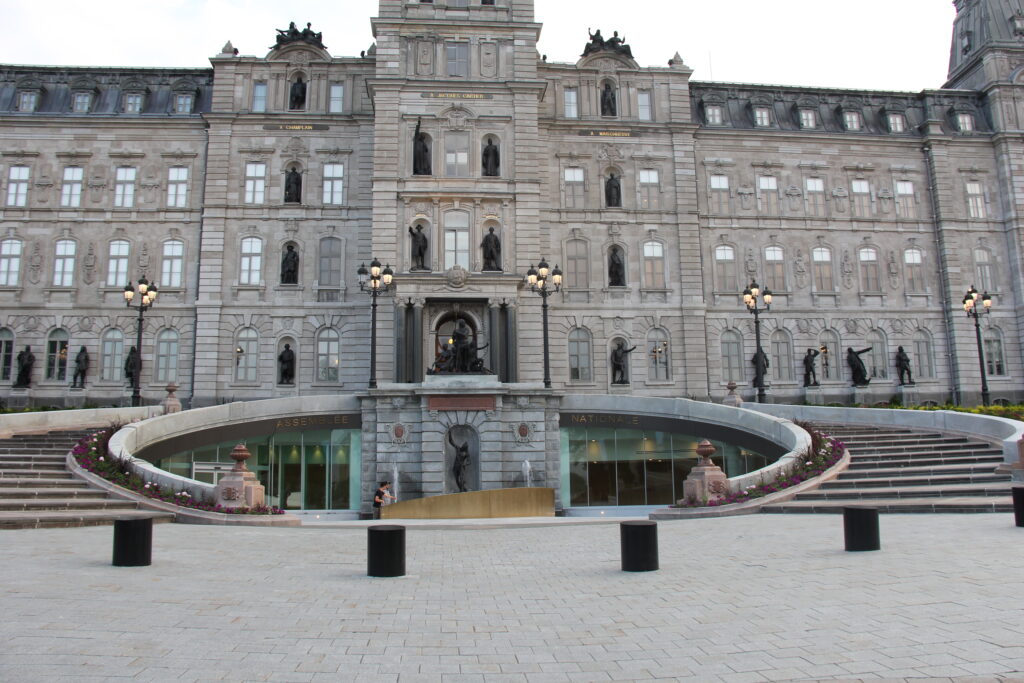
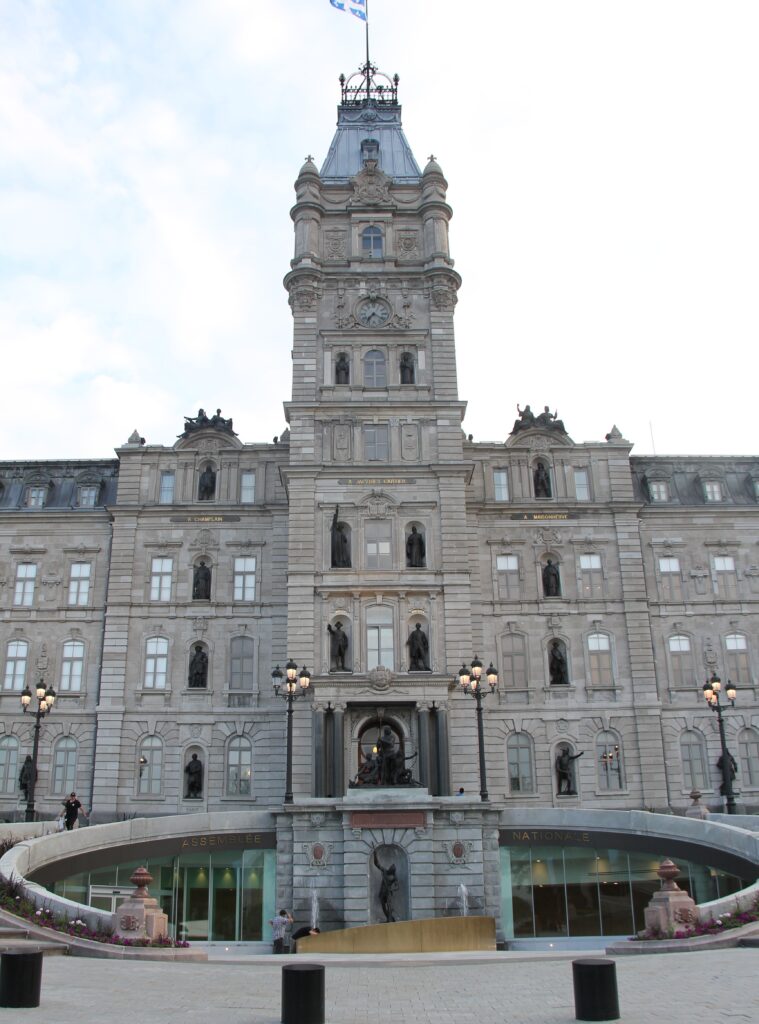
The Parliament of Quebec is the legislative body of the province of Quebec, Canada. It consists of 125 members of the National Assembly and the lieutenant governor, who represents the King of Canada.
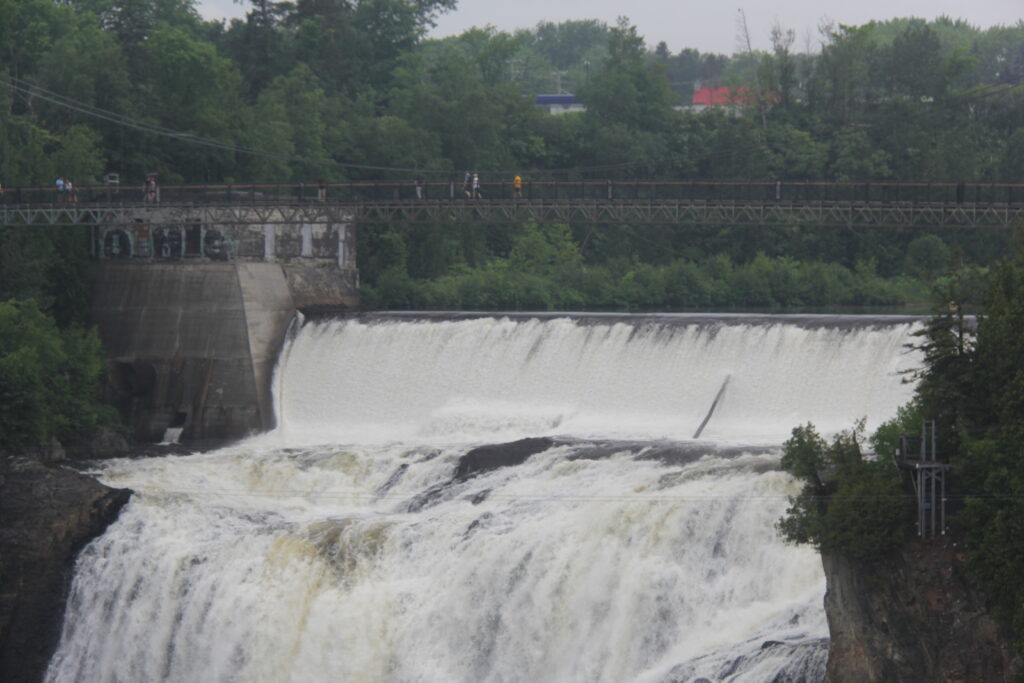
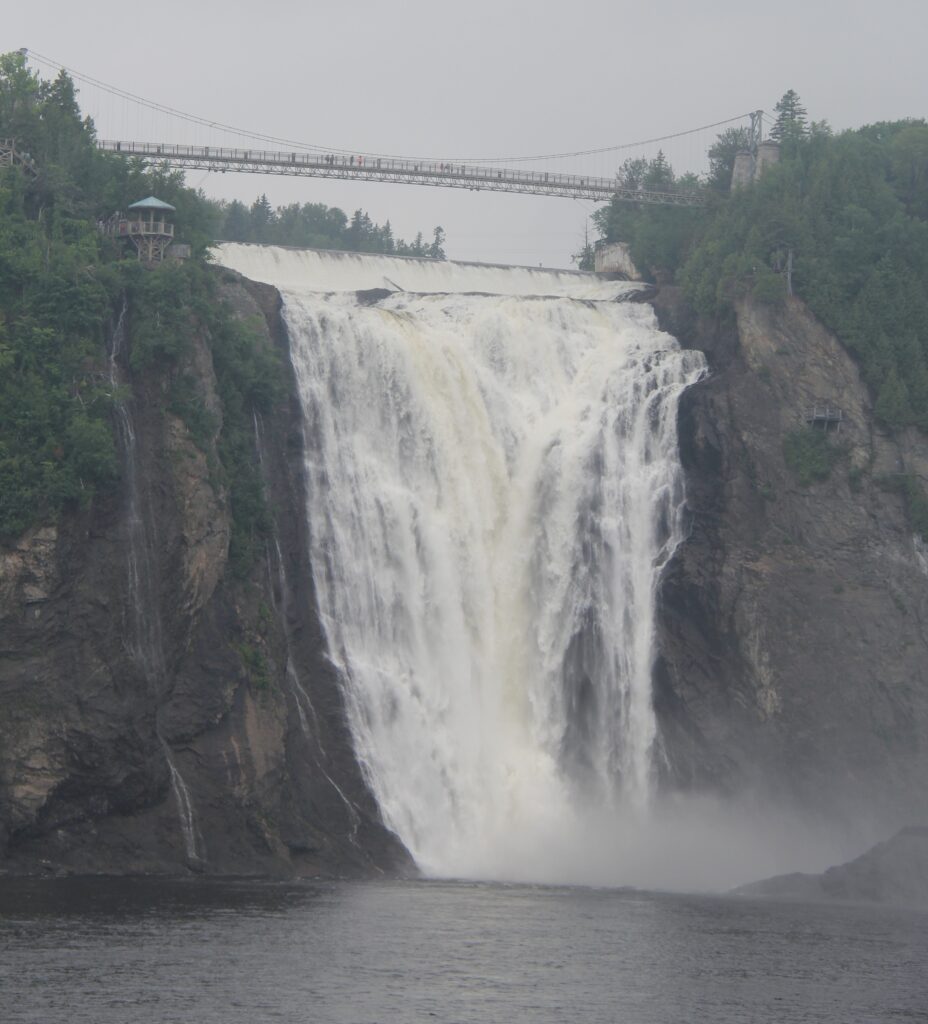
Montmorency Falls is located about 7.5 miles from Old Quebec City, where the Montmorency River plunges dramatically into the St. Lawrence River, opposite the western tip of Île d’Orléans. At 83 metres high, the falls are an impressive 30 metres taller than Niagara Falls.
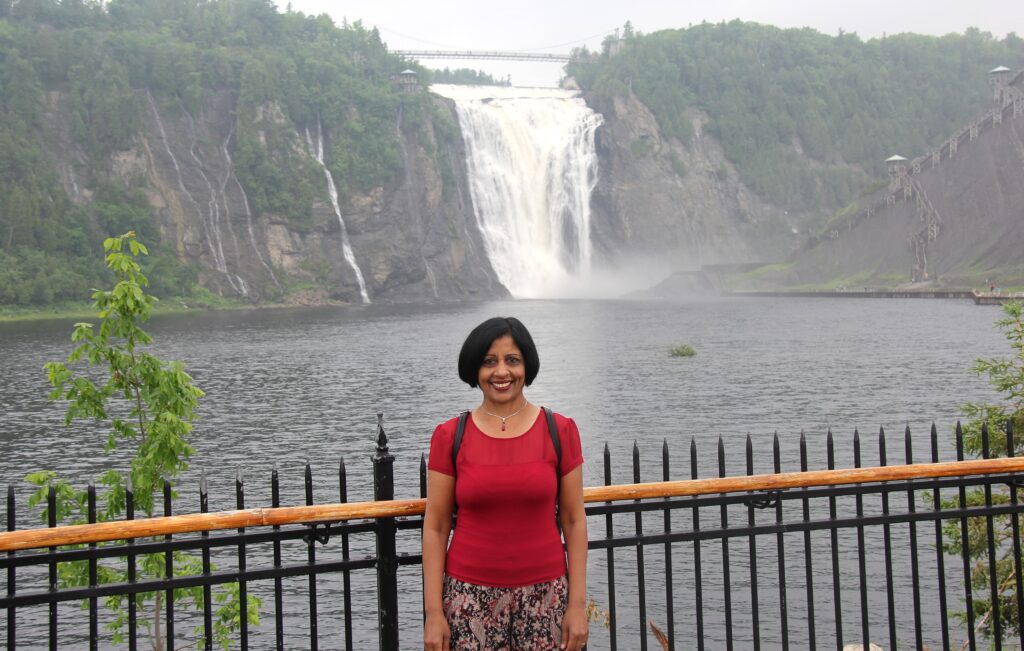
Visitors can admire the falls from multiple viewpoints, with staircases and scenic pathways offering close-up perspectives. A suspension bridge spans the crest, connecting both sides of the park, while a funitel cable car provides an easy ride between the base and the top, revealing spectacular panoramic views along the way. During summer, the falls take on a distinctive yellowish tint due to the high iron content in the water.