Edinburgh has been Scotland’s capital since the 15th century, and is the seat of the Scottish Government and Parliament, as well as the official residence of the British monarch in Scotland at the Palace of Holyroodhouse. Its historic Old Town and elegant Georgian New Town are both UNESCO World Heritage Sites, making Edinburgh one of the most visited cities in the United Kingdom.
- Scott Monument
- Royal Mile
- Edinburgh Castle
- Scotch Whisky Experience
- St. Giles’ Cathedral
- Harry Potter Trail
- Palace of Holyroodhouse
- Arthur’s Seat
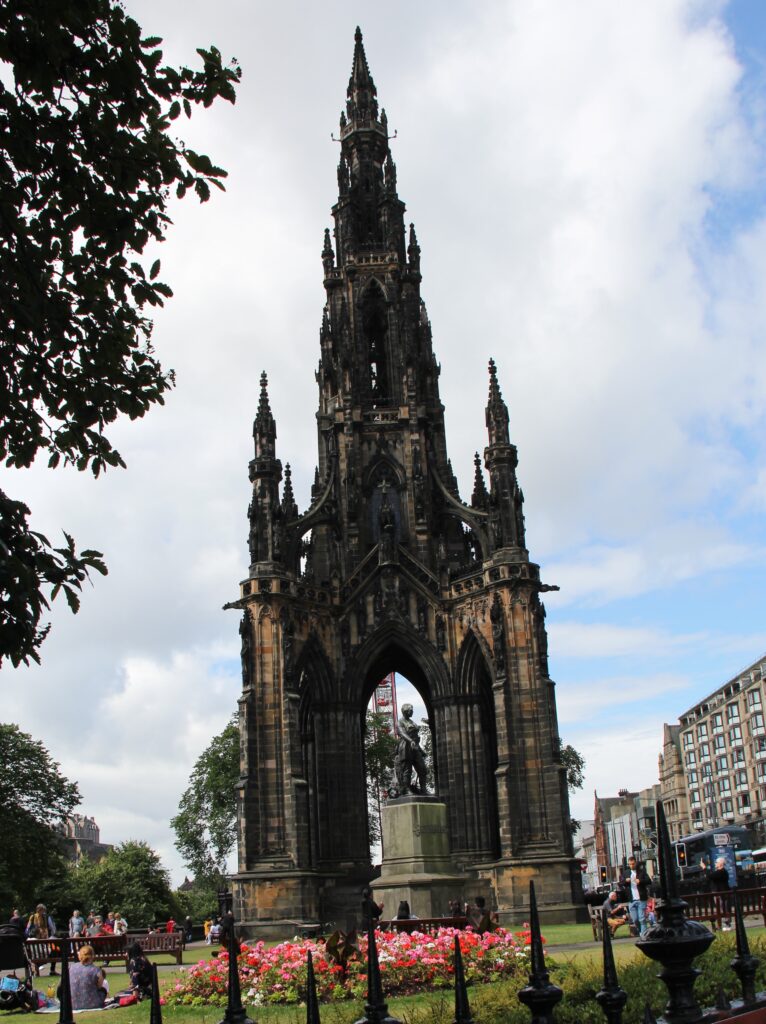
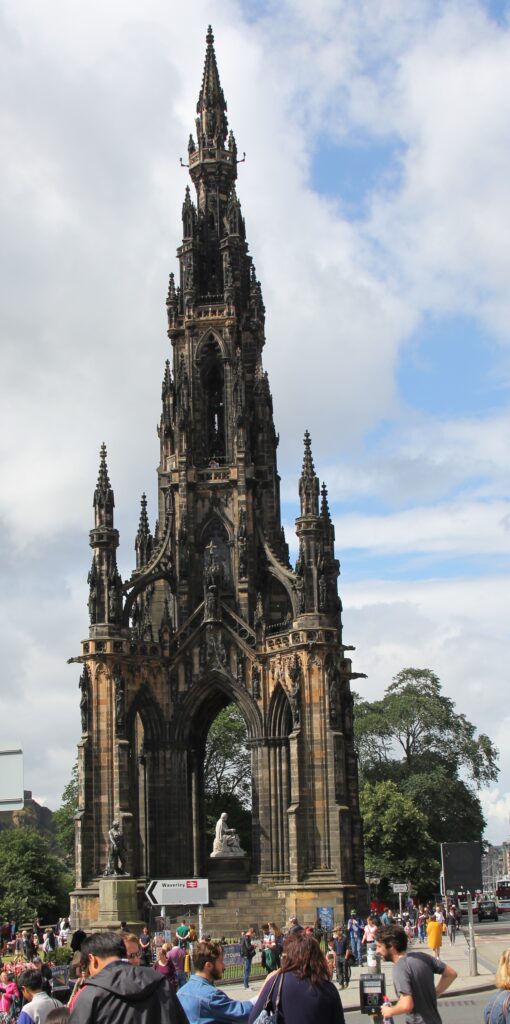
The Scott Monument – Located in the New Town, this Victorian Gothic monument in Edinburgh honors Scottish author Sir Walter Scott and stands in Princes Street Gardens near Edinburgh Waverley Station. The tower is 61 m tall and features viewing platforms reached by 287 spiral steps, offering panoramic views of the city. Built from Binny sandstone, it dominates the eastern section of the gardens.
Following Scott’s death in 1832, a competition was held to design the monument. George Meikle Kemp, a self-taught architect, won under the pseudonym John Morvo. Inside the monument is a white Carrara marble statue of Scott by John Steell, showing him seated with his quill and dog, Maida.
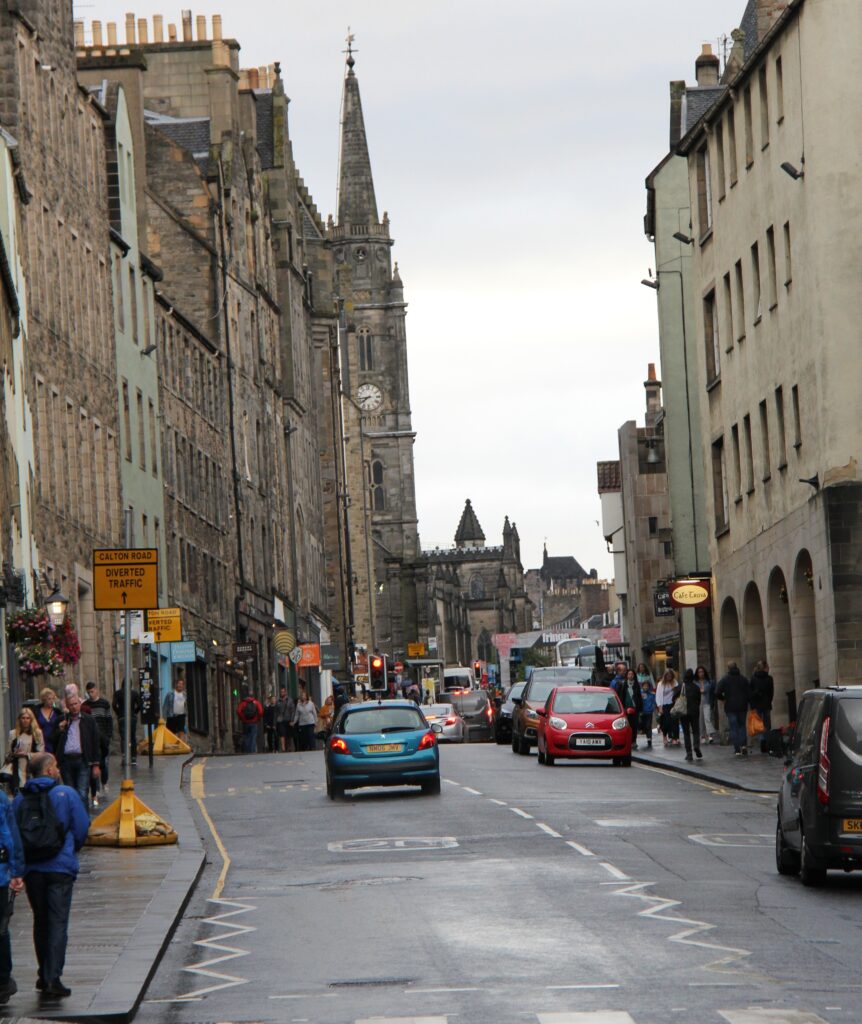
Royal Mile – The Royal Mile is the main street of Edinburgh’s Old Town, stretching almost exactly one mile between Edinburgh Castle and the Palace of Holyroodhouse. Made up of several streets—including Castlehill, the Lawnmarket, the High Street, and the Canongate, it runs downhill from the castle to the palace and is the busiest tourist area in the Old Town.
Lined with shops, pubs, restaurants, and historic attractions, the Royal Mile becomes especially lively during the Edinburgh Festival Fringe, when street performers and crowds fill the area. Built along a natural ridge formed by ancient glacial activity, the street features narrow side alleyways, known as closes, leading off from the main route.
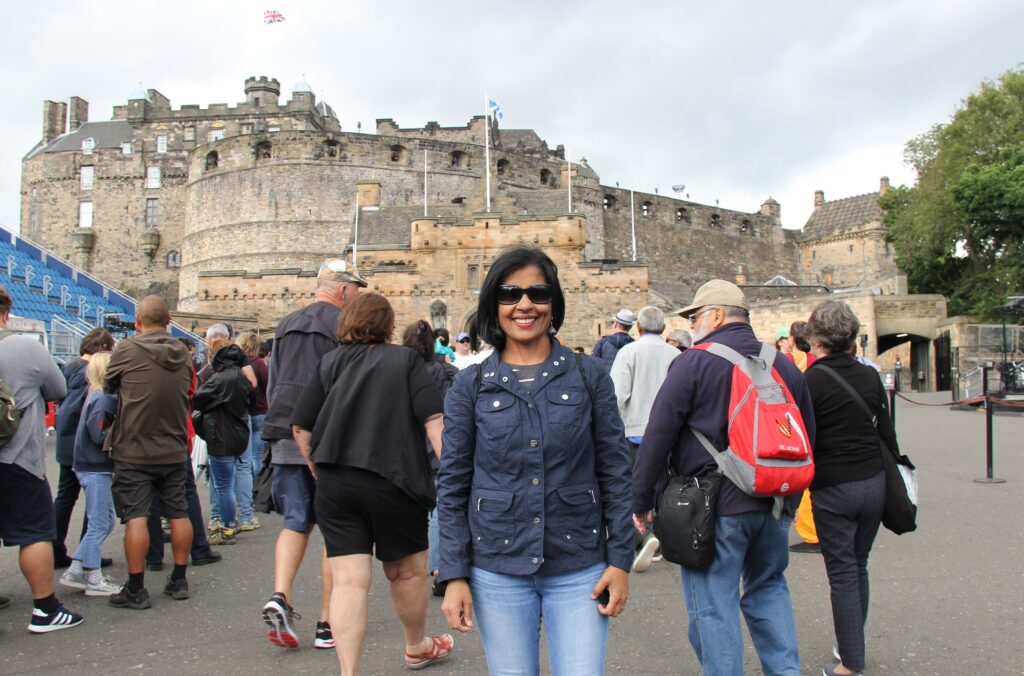
Edinburgh Castle – Located at the top of the Royal Mile, the Castle is the starting point for many guided and self-guided tours. A royal castle has stood on this site since the 11th century, serving as a royal residence until the 17th century before becoming mainly a military stronghold. Over the centuries, it has served many purposes, including a royal palace, fortress, treasury, prison, and the home of the Honours of Scotland, the nation’s crown jewels.
Central to Scottish history, the castle was involved in numerous conflicts and is considered one of the most besieged places in Britain. Most of the buildings seen today date from after the 16th century, although St Margaret’s Chapel—the oldest surviving building in Edinburgh—still remains.
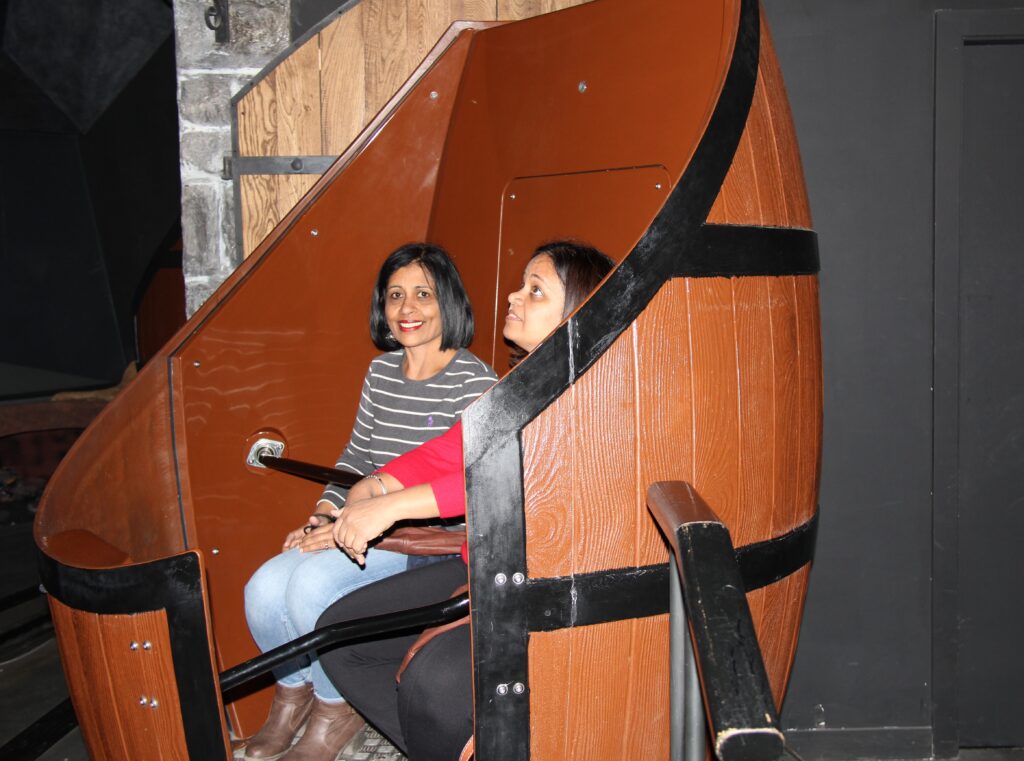
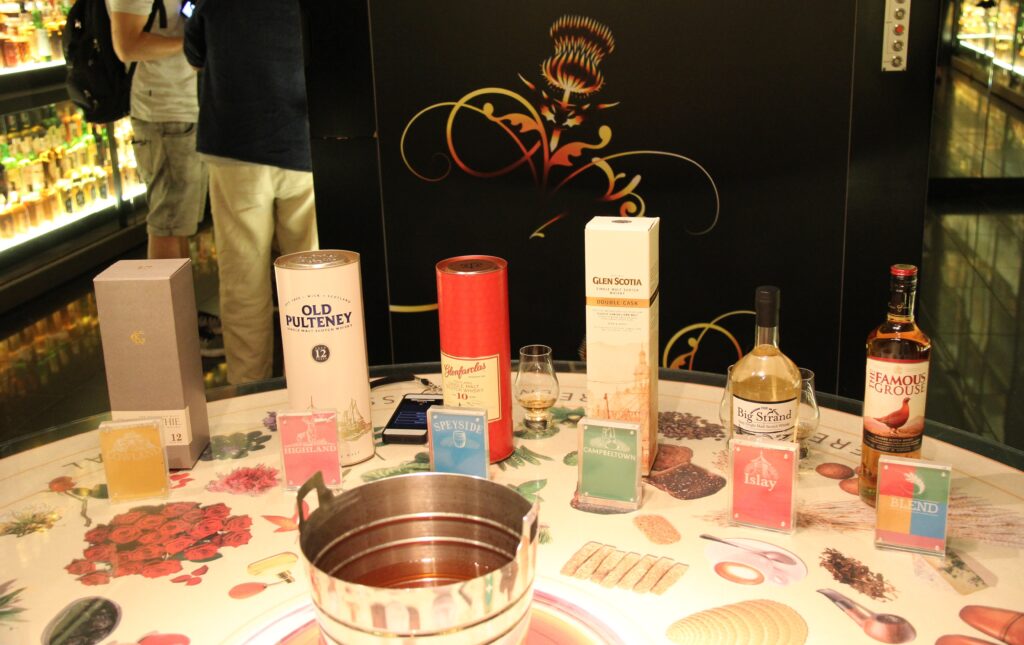
Scotch Whisky Experience – We did the Gold Tour at this place, a premium whisky tasting experience that takes visitors deep into the world of Scotch. The tour includes a guided journey through whisky production, from the ingredients and distillation process to maturation. The tour started with a barrel ride through the virtual distillery and ended with whisky tasting. After the whisky tour, you’ll enjoy an introductory tasting tray of 4 contrasting regional single malts. This place is located on Royal Mile.

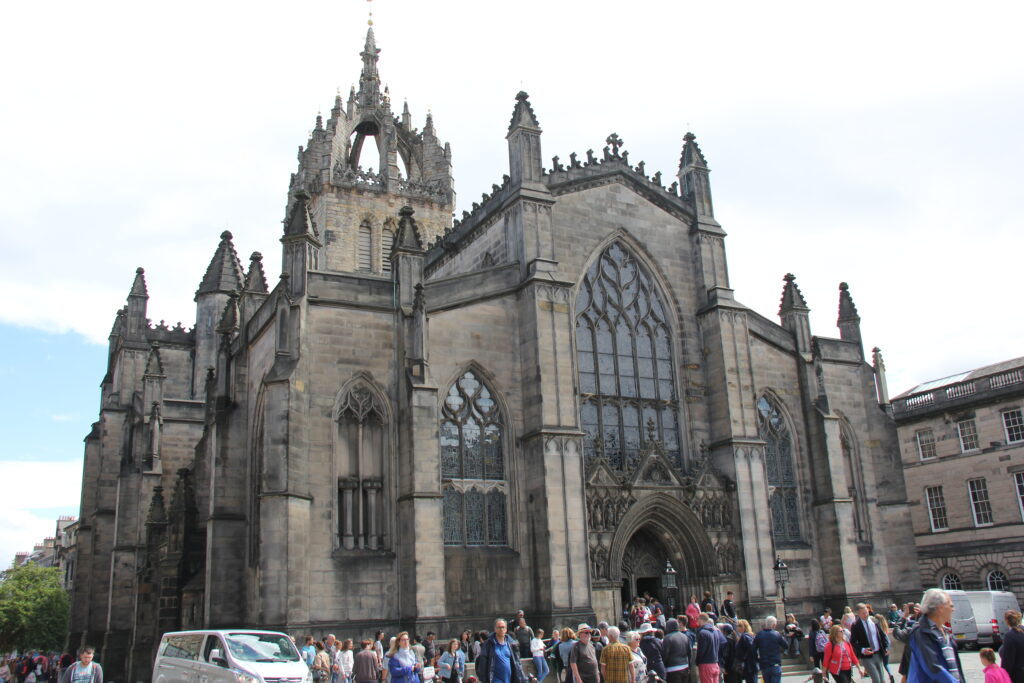
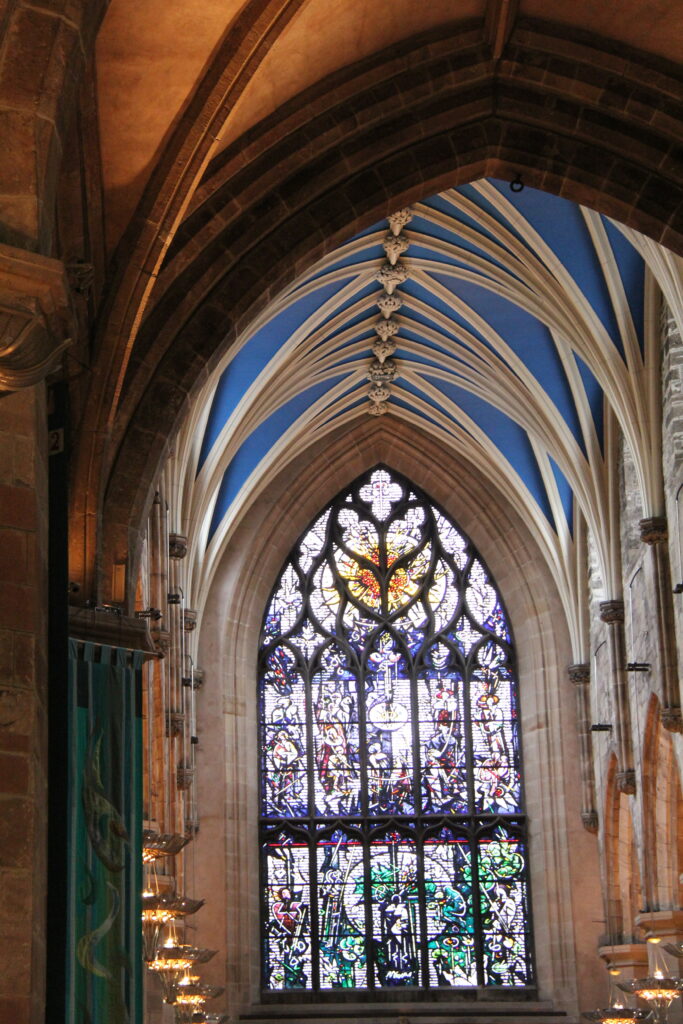
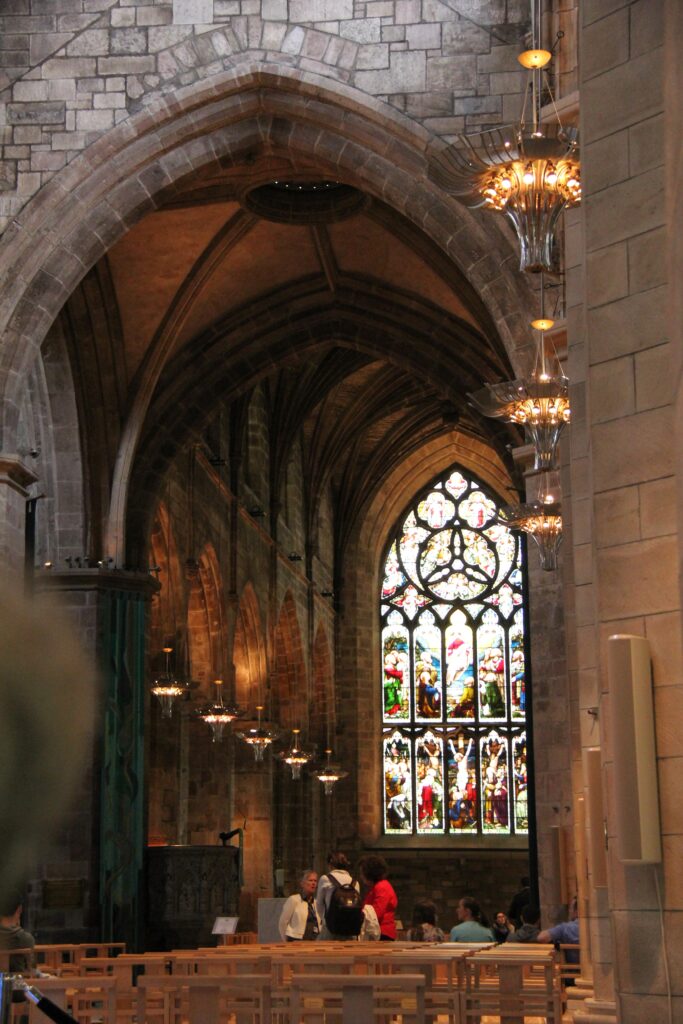
St. Giles’ Cathedral – also known as the High Kirk of Edinburgh, this cathedral is one of the city’s most important historic churches. Founded in the 12th century and largely built between the 14th and early 16th centuries, it has played a central role in Scotland’s religious and political history. Over the centuries, St Giles’ has undergone major changes, including restorations in the 19th century and the addition of the ornate Thistle Chapel in the early 20th century.
Harry Potter Trail – Edinburgh is the city where J.K. Rowling found much of her inspiration for the Harry Potter series, and as a result, many locations around the city are linked to the books. There are several guided Harry Potter tours available, but we chose to explore on our own, visiting some of the places that inspired the stories.
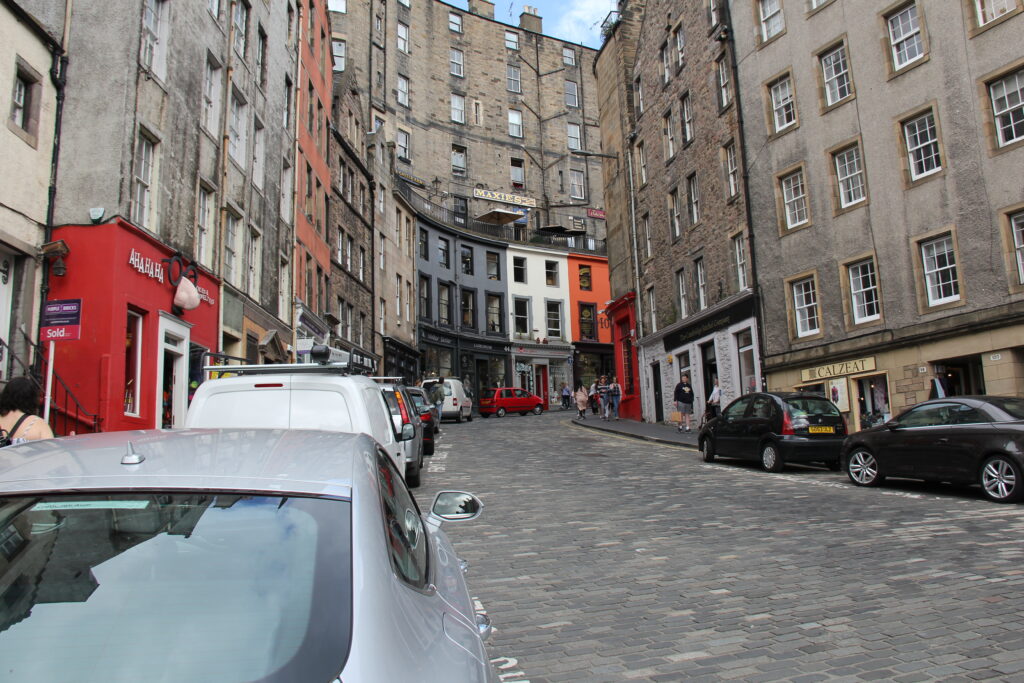
Harry Potter Trail, Victoria Street – This street is often compared to Diagon Alley. Its curved, cobbled street lined with colorful shopfronts, narrow buildings, and steep slopes gives it a magical, old-world feel. While J.K. Rowling never officially confirmed it as Diagon Alley’s inspiration, many visitors believe its look and atmosphere helped inspire the famous wizarding street.
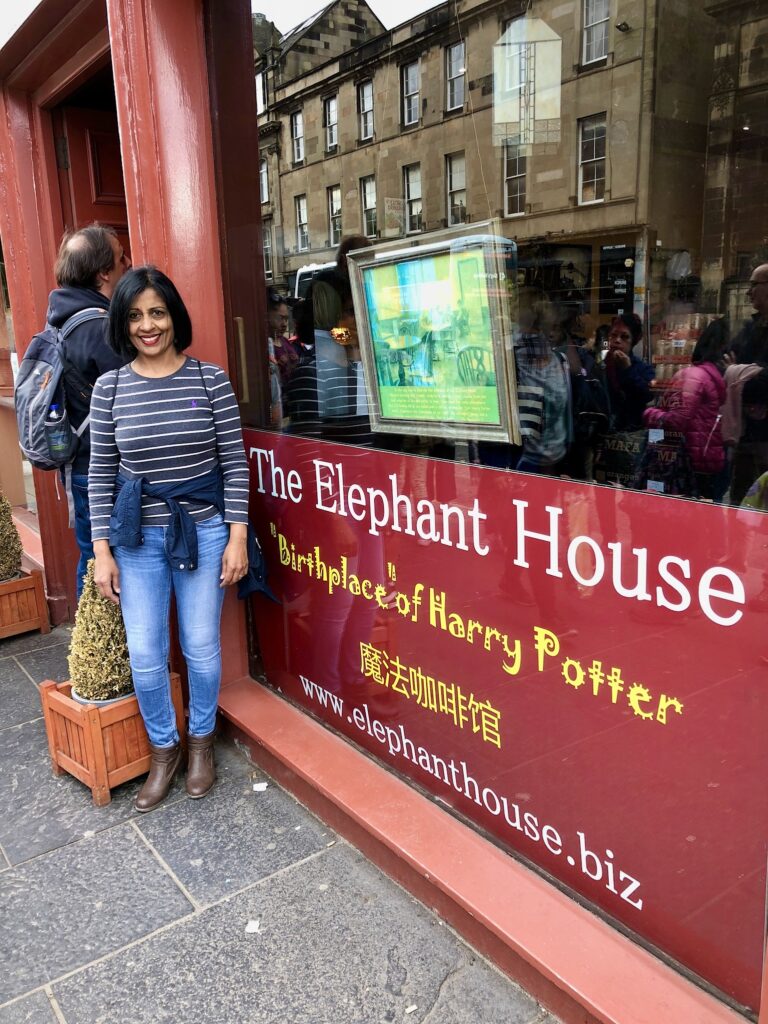
Harry Potter Trail, The Elephant House – Often called the birthplace of Harry Potter, The Elephant House opened in 1995 and has become one of Edinburgh’s most popular tea and coffee houses. It gained fame as the café where J.K. Rowling wrote much of her early novels, often working in the back room with views overlooking Edinburgh Castle.
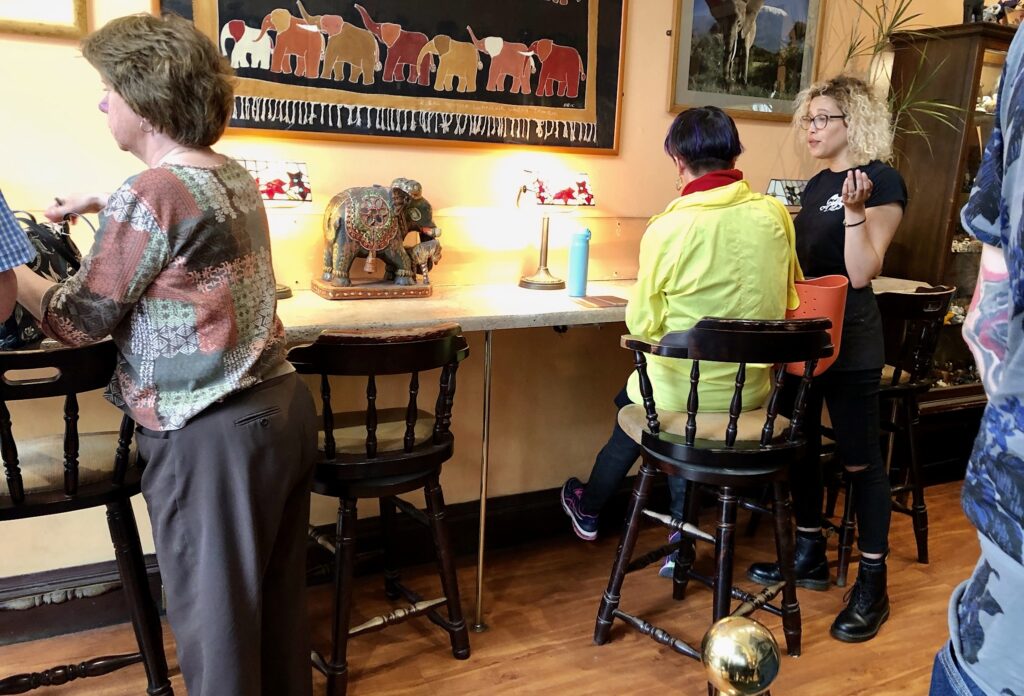
Note – The Elephant House was one of several properties badly damaged in a blaze on George IV Bridge in August 2021. Rowling has described working on her early books in The Elephant House in the late 1990s and often sat at an antique wooden table which was salvaged from the blaze.
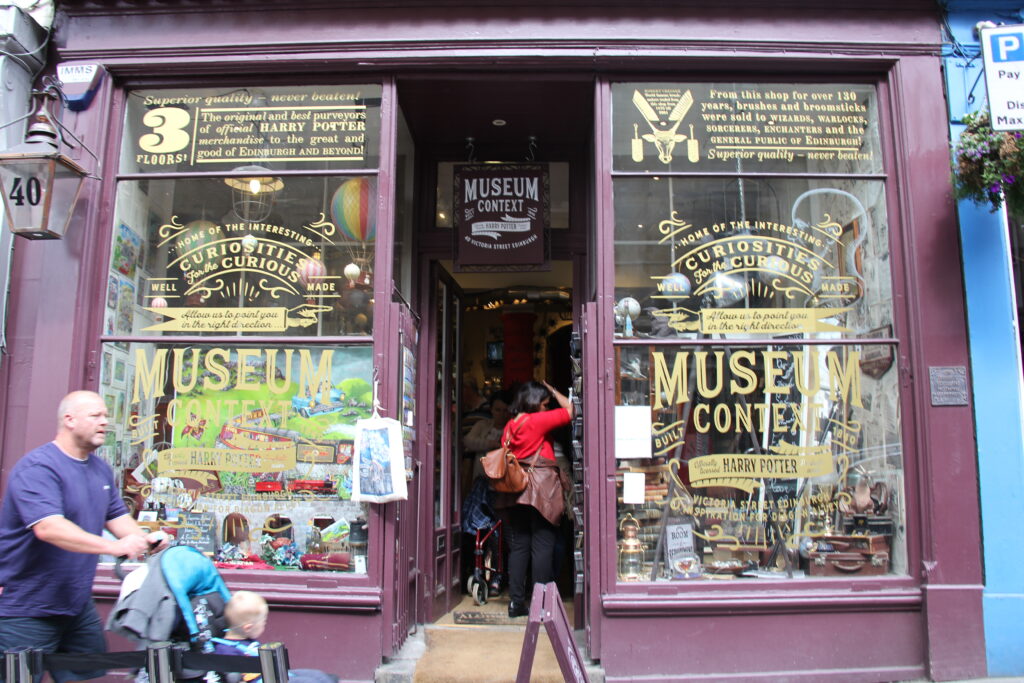
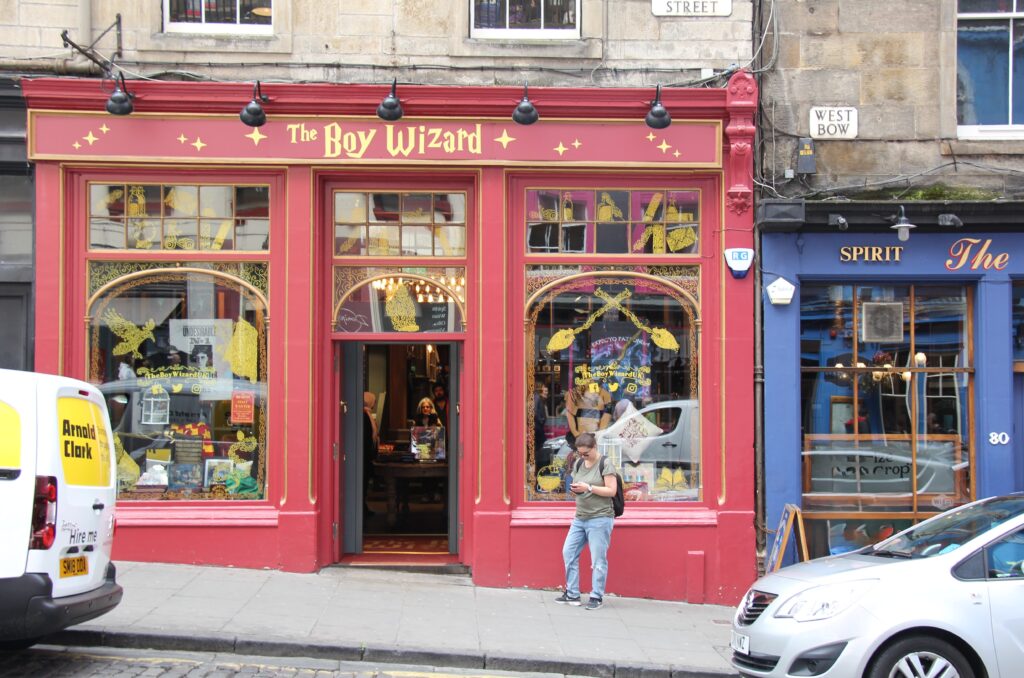
Harry Potter Shops – On Victoria Street, we visited a couple of shops selling Harry Potter merchandise, including Museum Context and The Boy Wizard. The shops are designed to feel magical and offer a range of officially licensed Harry Potter items. They are a must-visit for any fan of the series.
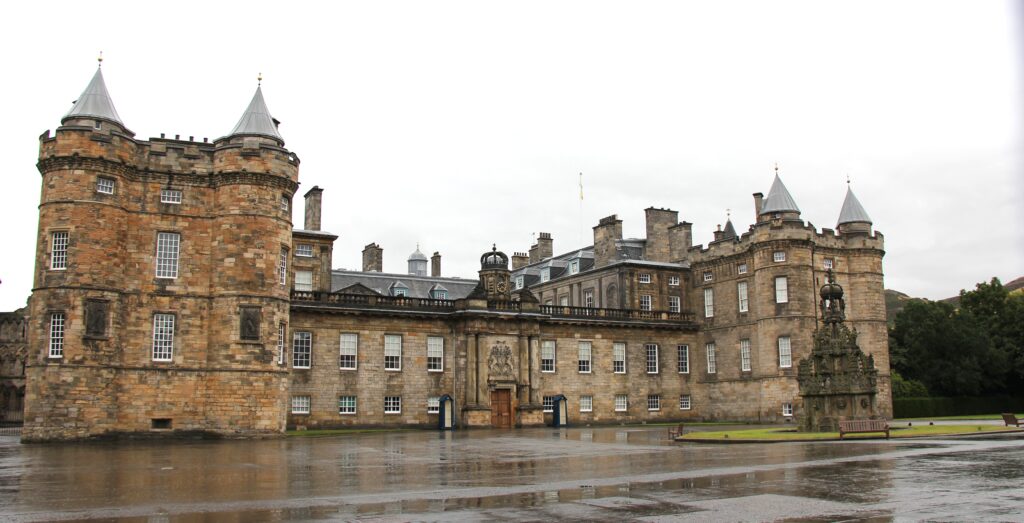
The Palace of Holyroodhouse – Also called Holyrood Palace, it is the official residence of the British monarch in Scotland. Located at the bottom of Edinburgh’s Royal Mile, it has been the principal royal residence in Scotland since the 16th century and is used for state occasions and official entertaining.
The palace adjoins Holyrood Abbey, with gardens set within Holyrood Park. The King’s Gallery, opened in 2002, displays artworks from the Royal Collection. Historic apartments, including those of Mary, Queen of Scots, and the State Apartments, are open to visitors throughout the year except when the royal family is in residence. King Charles III spends a week at Holyrood each summer carrying out official engagements, and the palace also hosts the Lord High Commissioner during the annual General Assembly of the Church of Scotland.
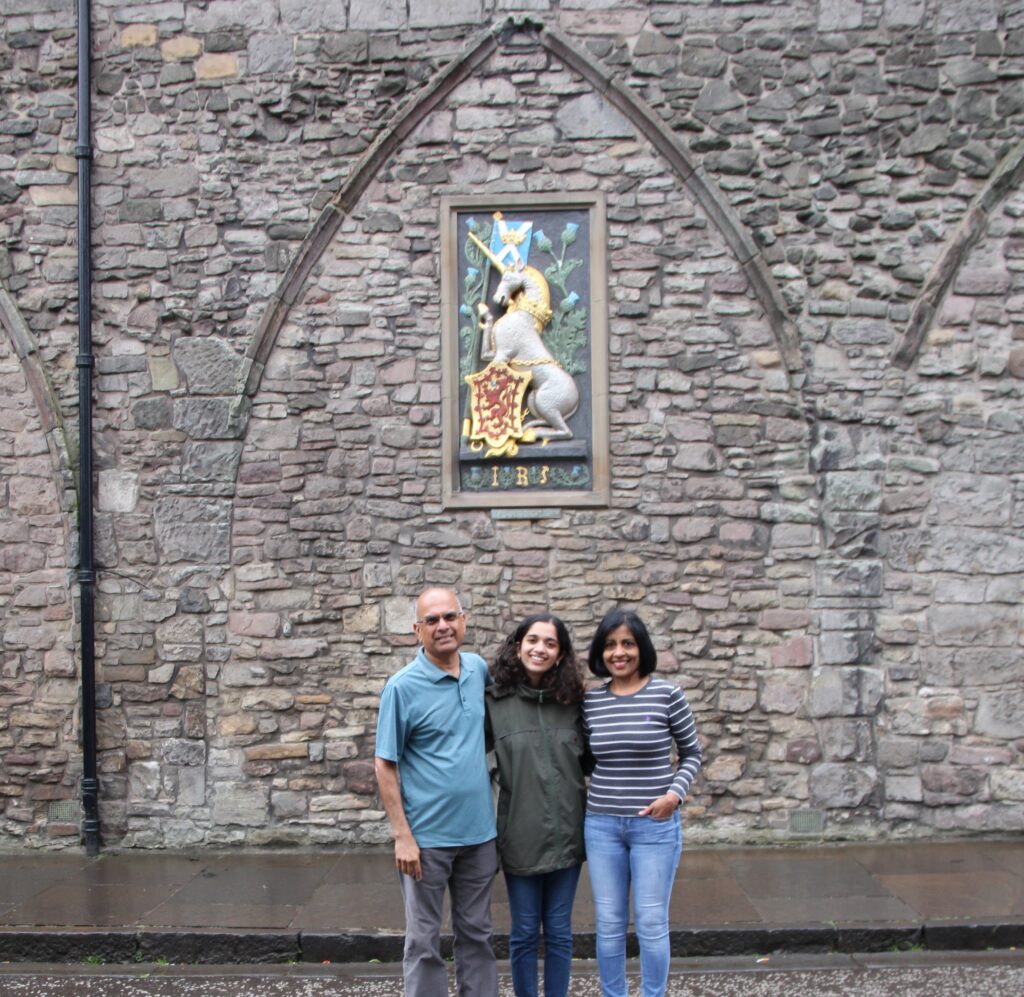
The heraldic panel at the Palace of Holyroodhouse features the Royal Arms of Scotland with the initials IR5 for King James V. It also shows Scotland’s national animal, the unicorn, often chained to symbolize majesty, and is surrounded by thistles, representing Scottish heritage. Originally placed above the gatehouse entrance around 1515, this carved panel is a rare surviving example of the rich symbolism and decoration used in royal Scottish buildings, highlighting the importance of heraldry under James V.
Arthur’s Seat – Located in Holyrood Park near the Palace, Authur’s Seat is a prominent hill in Edinburgh, offering stunning views over the city and surrounding landscapes. It is an ancient volcano and a popular spot for hiking, with paths of varying difficulty leading to the summit. Rich in history and legend, it is said to be linked to King Arthur, adding a touch of myth to its natural beauty.
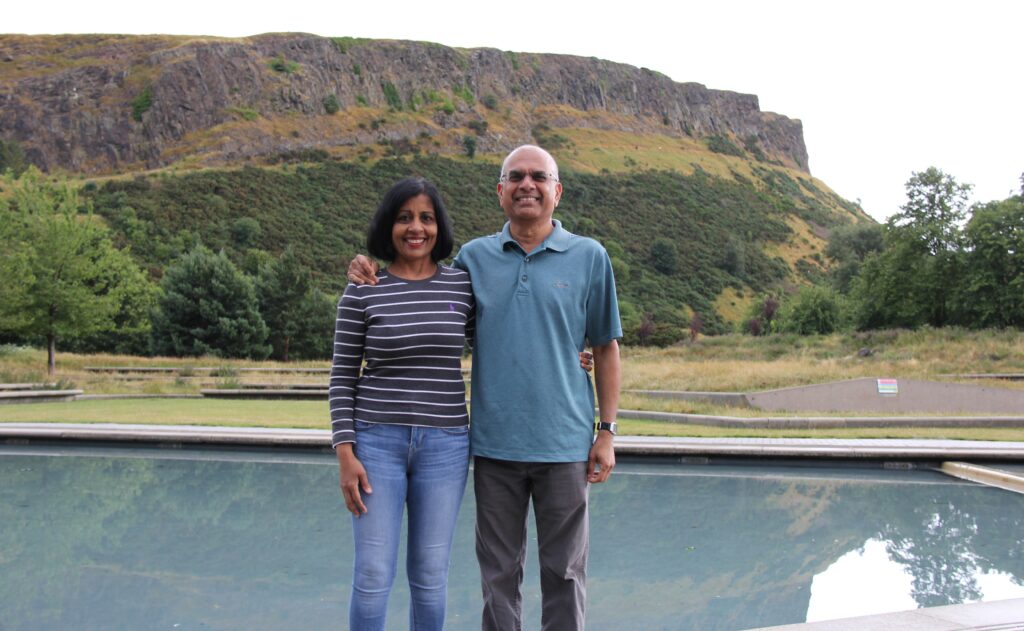
Climbing Arthur’s Seat – The hike to the summit is roughly 2 to 2.5 miles (3–4 km) round-trip, depending on the route you take. The steepest paths are shorter but more challenging, while the gentler trails are slightly longer. The most common route to the summit takes about 45 minutes to 1 hour for most people, depending on fitness level and pace. We’ll have to plan another trip to Edinburgh to hike Arthur’s Seat, as we didn’t have time on this visit.