Mumbai is India’s financial capital and the heart of the Bollywood film industry, earning it the nickname City of Dreams. It boasts stunning UNESCO World Heritage Sites alongside a vibrant culture characterized by its lively bazaars, delicious street food, and beautiful beaches.
- Gateway of India
- Taj Mahal Palace Hotel
- Chhatrapati Shivaji Maharaj Terminus
- Mumbai General Post Office
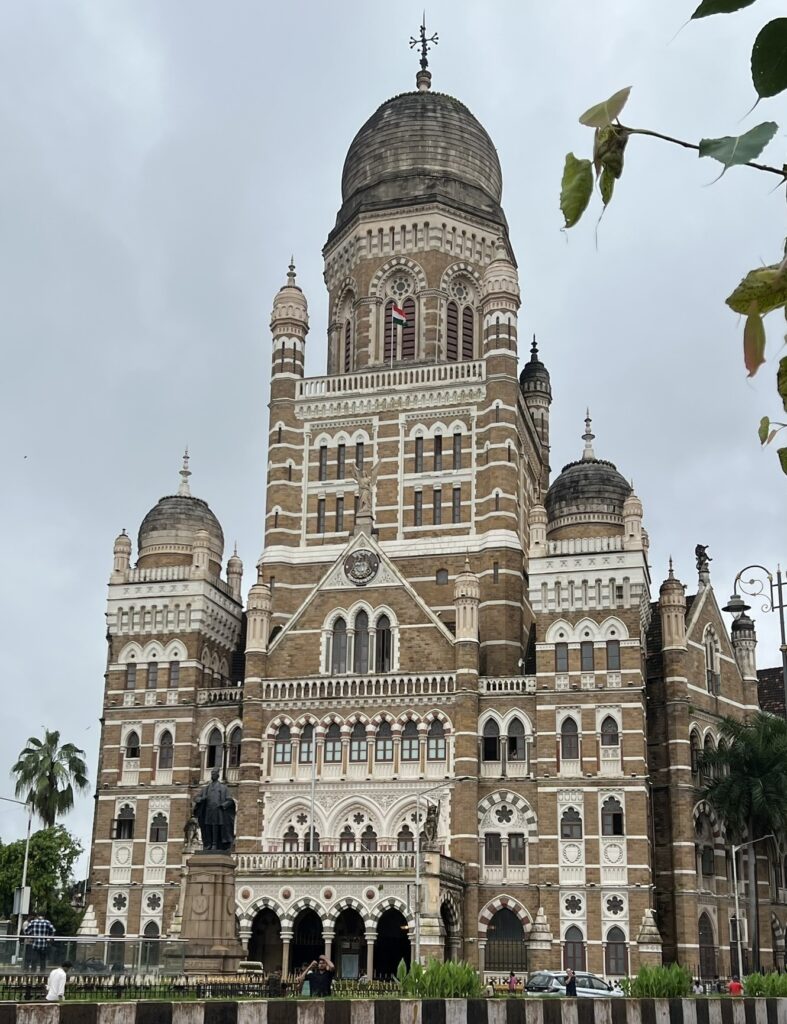
- Municipal Corporation Building
- Nariman Point
- Marine Drive
- Dhobi Ghat
- University of Mumbai
- Oval Maidan
- Siddhivinayak Temple
- Worli-Bandra Sea Link
- Elephanta Caves
Gateway of India – Located on the Arabian sea, this arch-monument was completed in 1924. It was erected to commemorate the landing of king George V of the United Kingdom for his coronation as the Emperor of India in December 1911. He was the first British monarch to visit India. The monument is built in the Indo-Saracenic style, inspired by elements of 16th-century Gujarati architecture. The structure is made of basalt and is 26 m high.
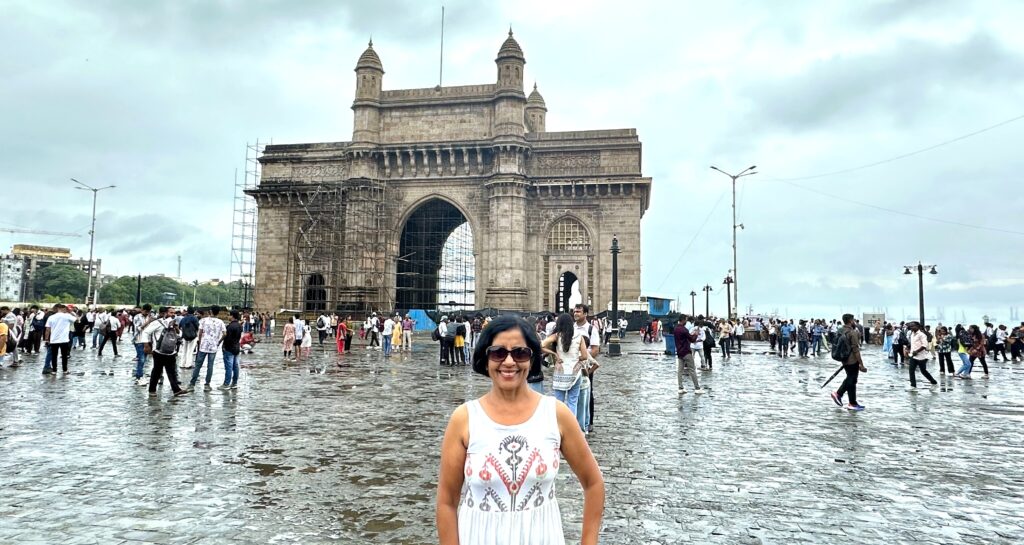
After its construction, the Gateway was used as a symbolic ceremonial entrance to India for important government personnel. The Gateway is also the monument from where the last British troops left in 1948, following Indian independence a year earlier.
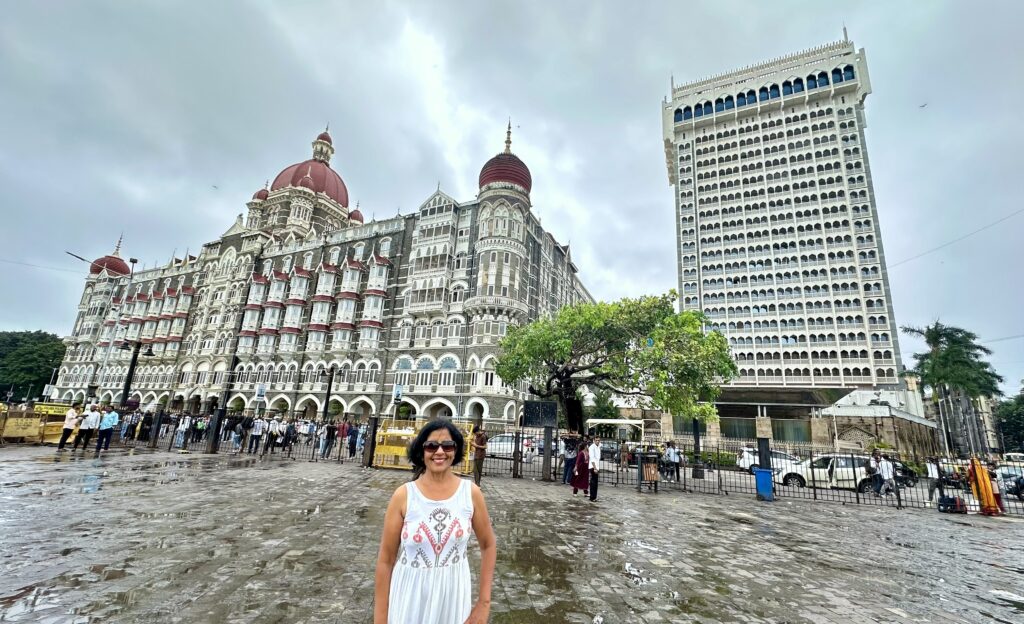
Taj Mahal Palace Hotel – The iconic landmark consists of two distinct structures. The original Taj Mahal Palace Hotel was opened in 1903 and the more modern Taj mahal Tower opened in 1972. The Tower is a newer addition to the historic complex, offering luxurious accommodation and different amenities, and is located adjacent to the Original Taj Palace building.
The architecture of the original Taj Mahal Palace Hotel is Indo-Saracenic which is a blend of Indian and Islamic features. The hotel offers luxurious accommodations, multiple dining options, and personalized service and has hosted royalty and dignitaries for over a century.
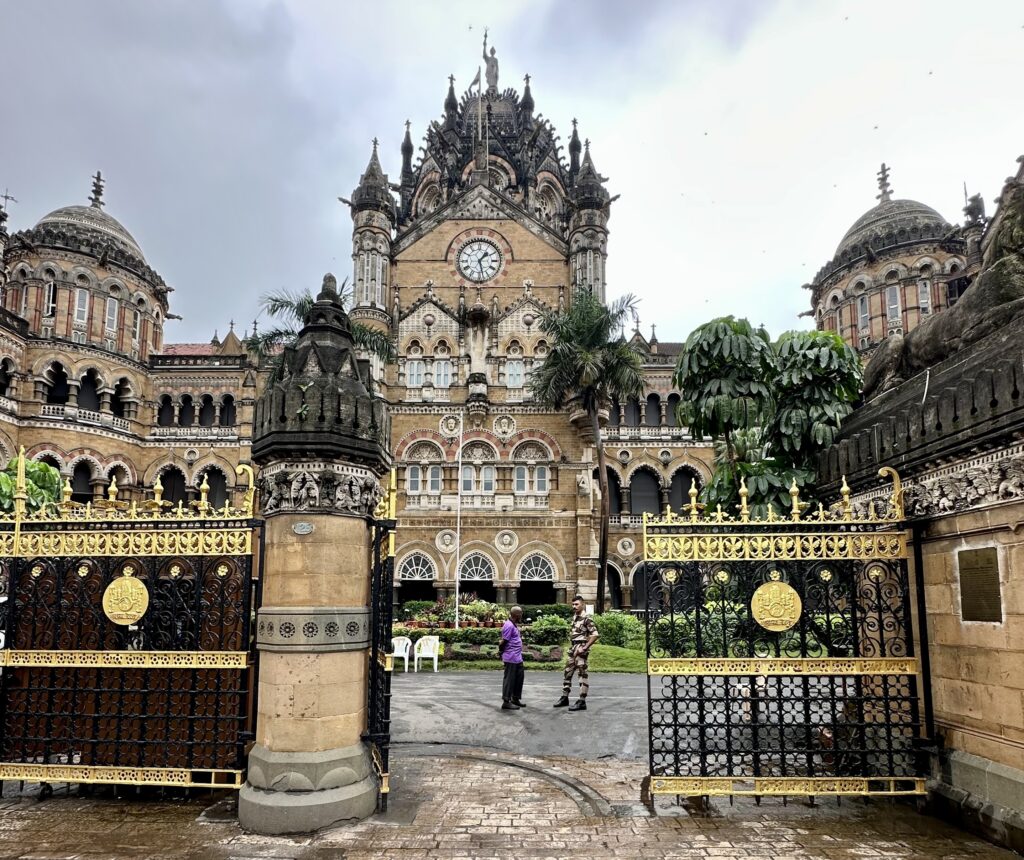
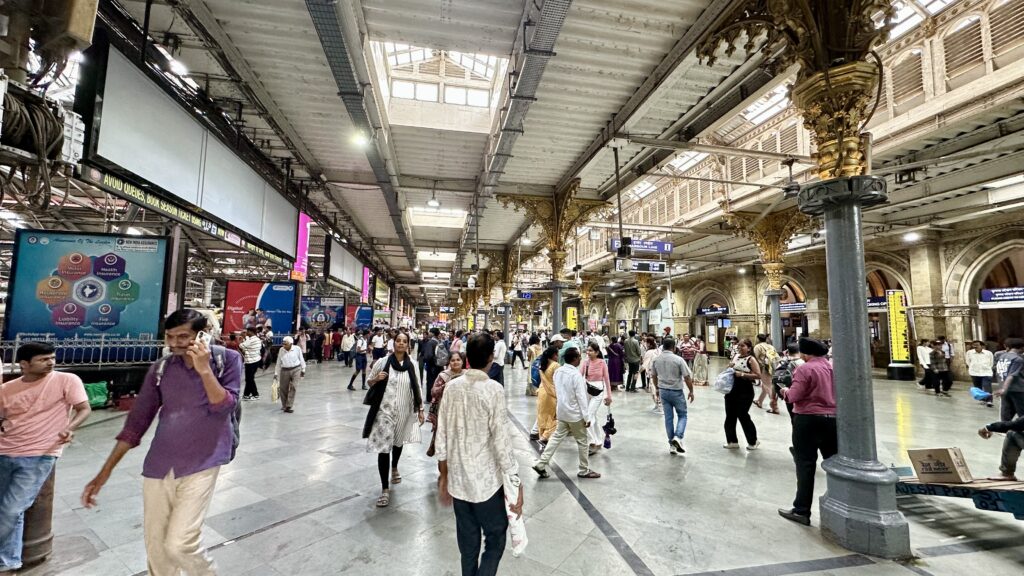
Chhatrapati Shivaji Maharaj Terminus – (CSMT) is a historic UNESCO World Heritage Site railway station recognized for its unique Victorian Gothic Revival architecture blended with traditional Indian design elements. Completed in 1887, it was built as a symbol of Mumbai’s status as a major mercantile port. Designed by British architect F-W. Stevens, it features ornate elements like domes, turrets, pointed arches, and a central dome. It serves as a busy, functional railway station and the headquarters for the Central Railway system.
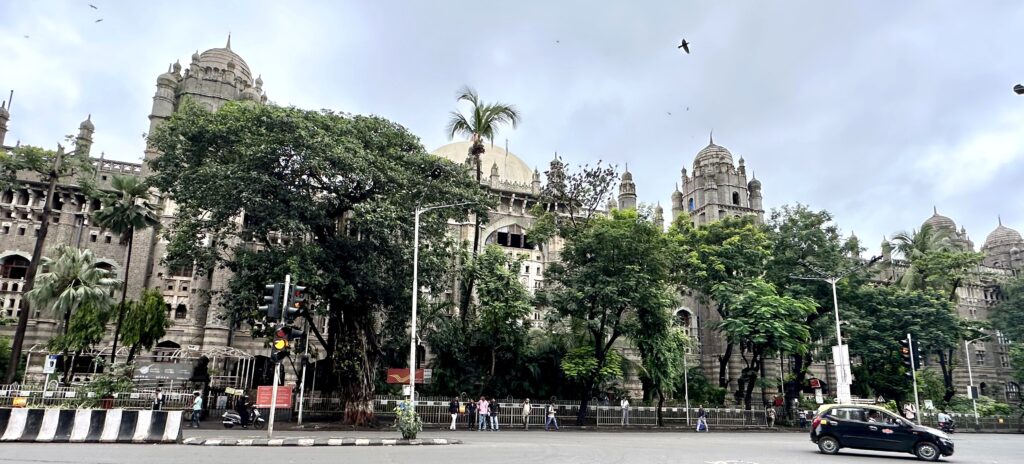
Mumbai General Post Office – This striking building located near the Chhatrapati Shivaji Terminus is an iconic example of Indo-Saracenic architecture. Designed by Scottish architect John Begg and completed in 1913, it is known for its majestic domes and intricate stonework, and serves as a prominent landmark in the city. The GPO handles a large volume of the city’s inbound and outbound mail and parcels daily.
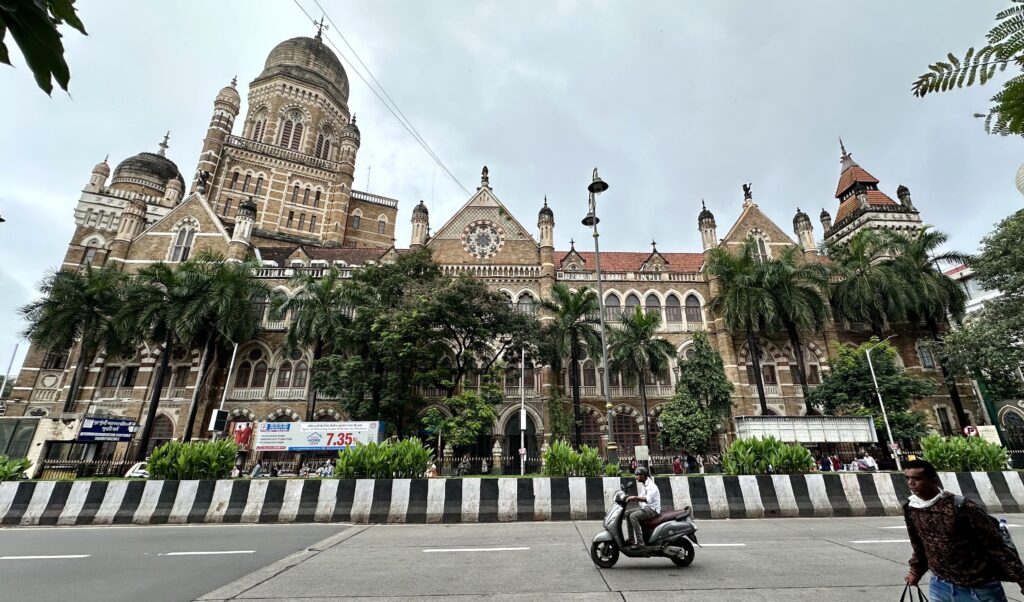
Municipal Corporation Building – is the governing civic body of Mumbai. The Municipal Corporation of Greater Mumbai was created in 1865 and was initially housed in a modest building at the terminus of Girgaum Road. On 9 December 1884, the foundation stone for the new building of the Bombay Municipal Corporation was laid opposite to Chhatrapati Shivaji Terminus. The building completed in 1893 is a blend of Venetian Gothic and Indo-Saracenic architecture.
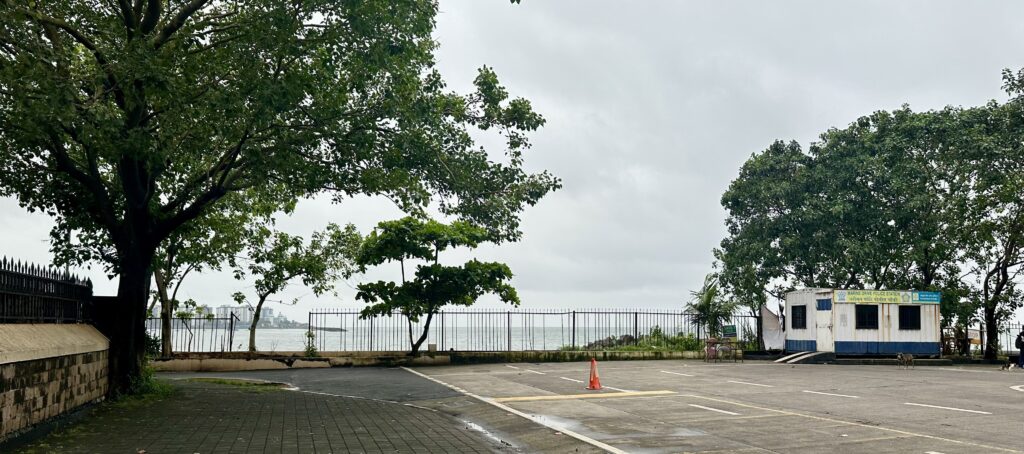
Nariman Point – is a business Centre located on the southern tip of Mumbai, at the end of Marine Drive. It was built on land reclaimed from the Arabian sea. Many of India’s prestigious business headquarters and corporate offices are located here.
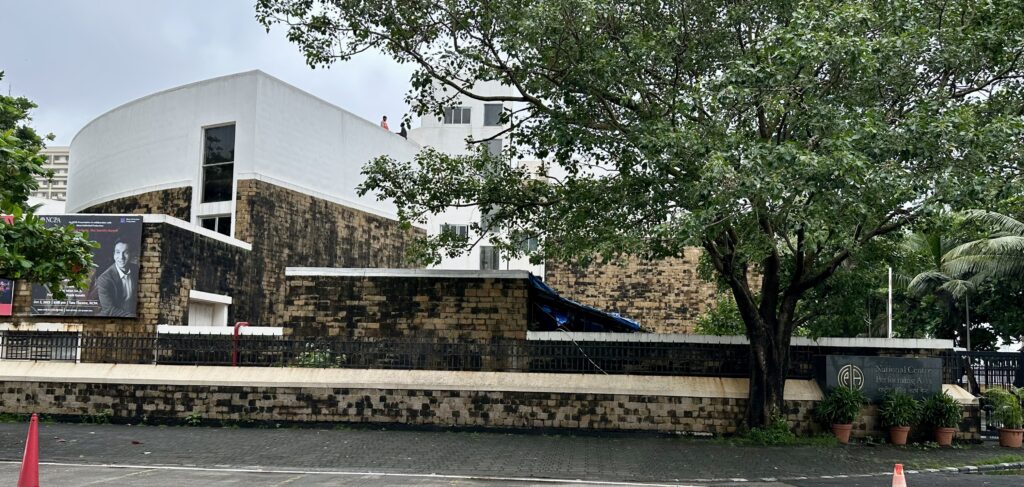
Located at the tip of Nariman point is the National Centre for the Performing Arts (NCPA), which was built in 1985. The (NCPA) is a multi-venue, multi-purpose cultural center which aims to promote and preserve India’s heritage of music, dance, theatre, film, literature and photography. It also presents new and innovative work in the performing arts field.
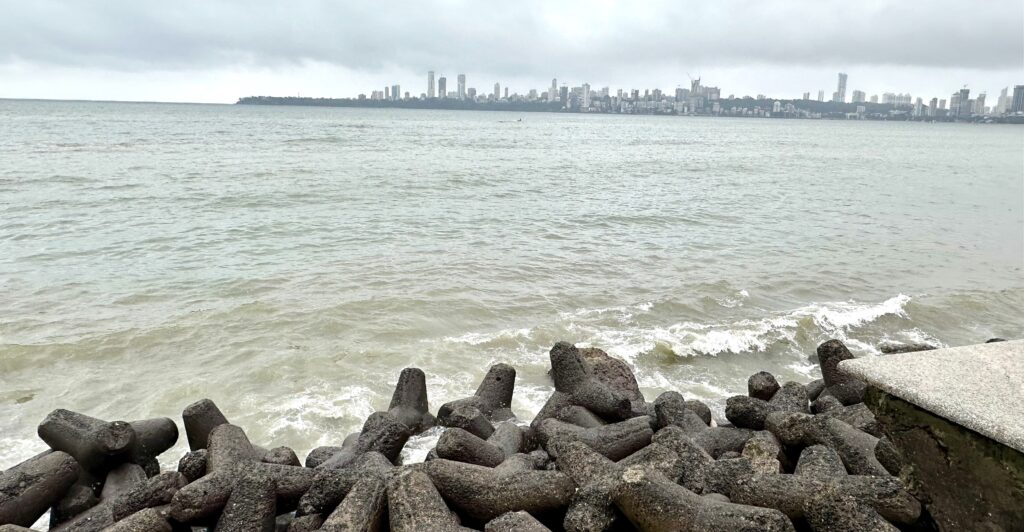
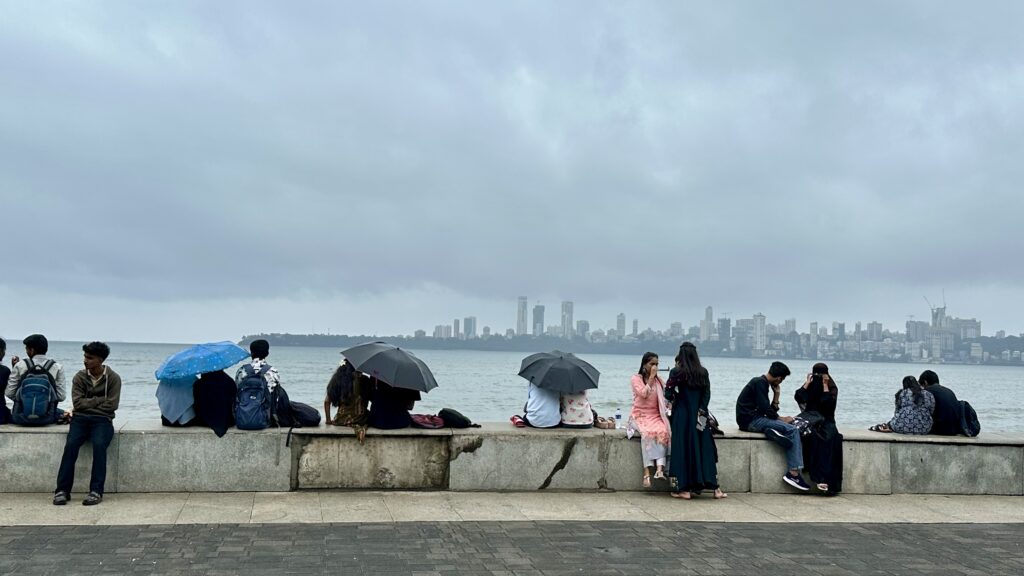
Marine Drive – Situated in South Mumbai, Marine Drive stretches along a 3.6-kilometre-long C-shaped boulevard, offering a stunning panoramic view of the Arabian Sea. Known affectionately as the Queen’s Necklace, this promenade lights up in the evening to resemble a string of pearls from an elevated position, creating a breathtaking sight against the backdrop of the bustling city.
Dhobi Ghat – Dhobi ghats are open-air laundromats found across India, known for the large-scale hand-washing of clothes in concrete wash-pans and on flogging stones, serving as social and cultural hubs where people gather to mingle and share information. The Mahalaxmi Dhobi Ghat in Mumbai is the most famous example, providing a colorful and chaotic sight as hundreds of workers wash and dry clothes from city hotels and hospitals.
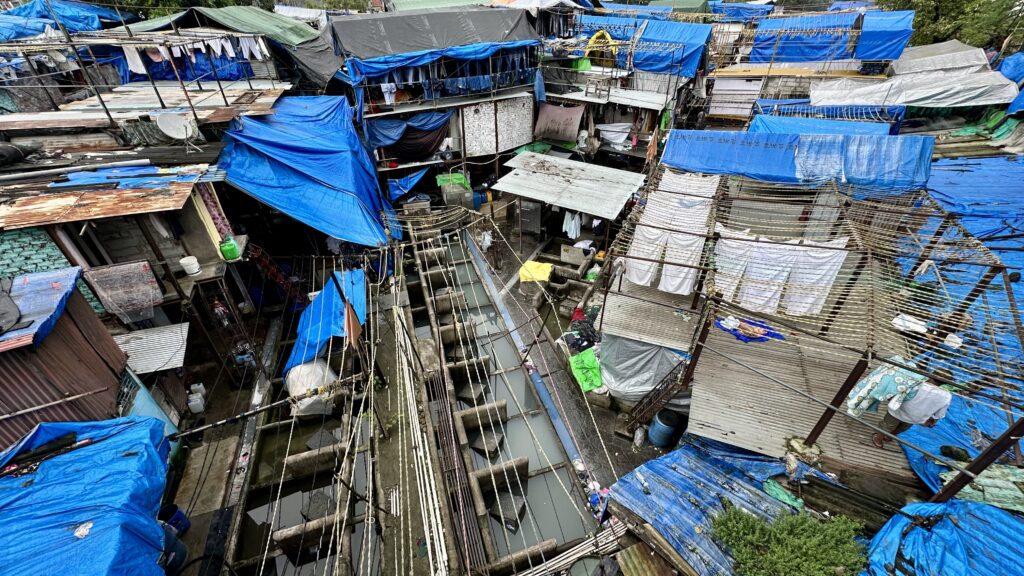
We visited this place in the afternoon, so did not see much action or workers. Also there was a slight drizzle.
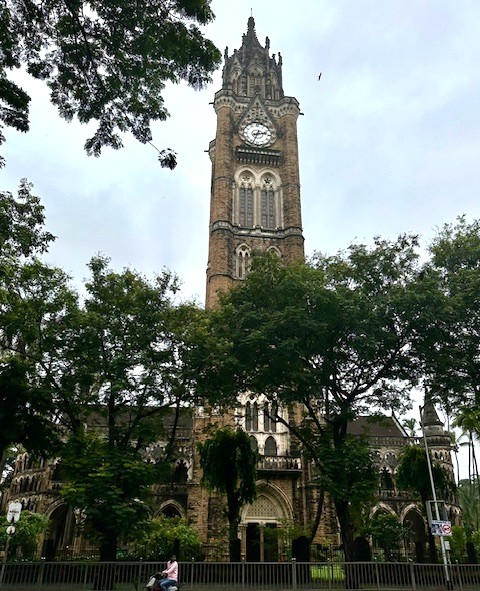
University of Mumbai – This premier and leading institution was established on July 18, 1857. It is one of the first three universities established in India and has played a pivotal role in shaping the nation’s intellectual, cultural, and scientific landscape.
The University operates from five campuses and caters to more than 800,000 students from rural, tribal, hilly and metropolitan regions covering seven districts such as Mumbai, Mumbai Suburban, Thane, Ratnagiri, Raigad, Sindhudurg, and Palghar in the Maharashtra State of India. The University offers 405 academic programs for Under Graduates, Post Graduates and doctoral.
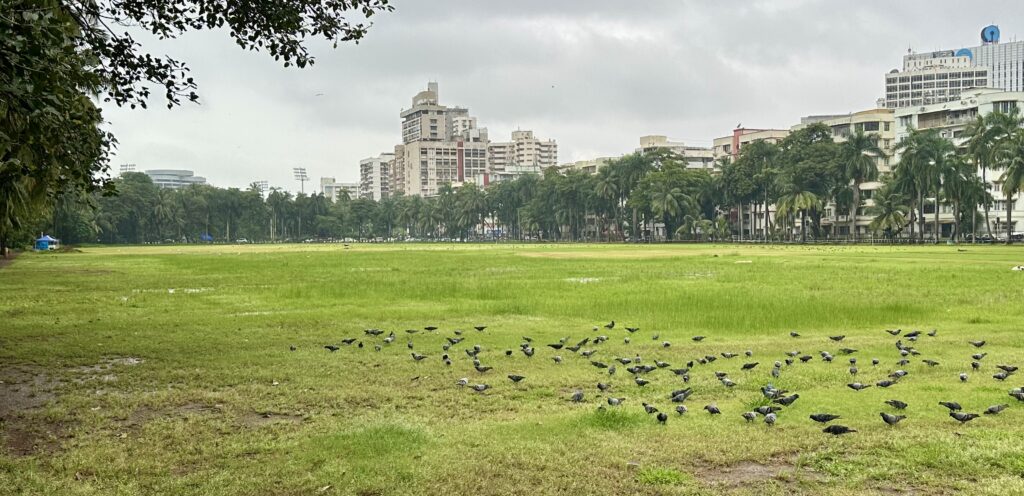
Oval Maidan – Located near the University of Mumbai, Oval Maidan is a large recreational ground and is so named because of its oval shape. It is a popular recreation ground, with the most popular sports played there being cricket and football. The ground measures 22 acres in area. Political rallies and religious functions are banned in the maidan.
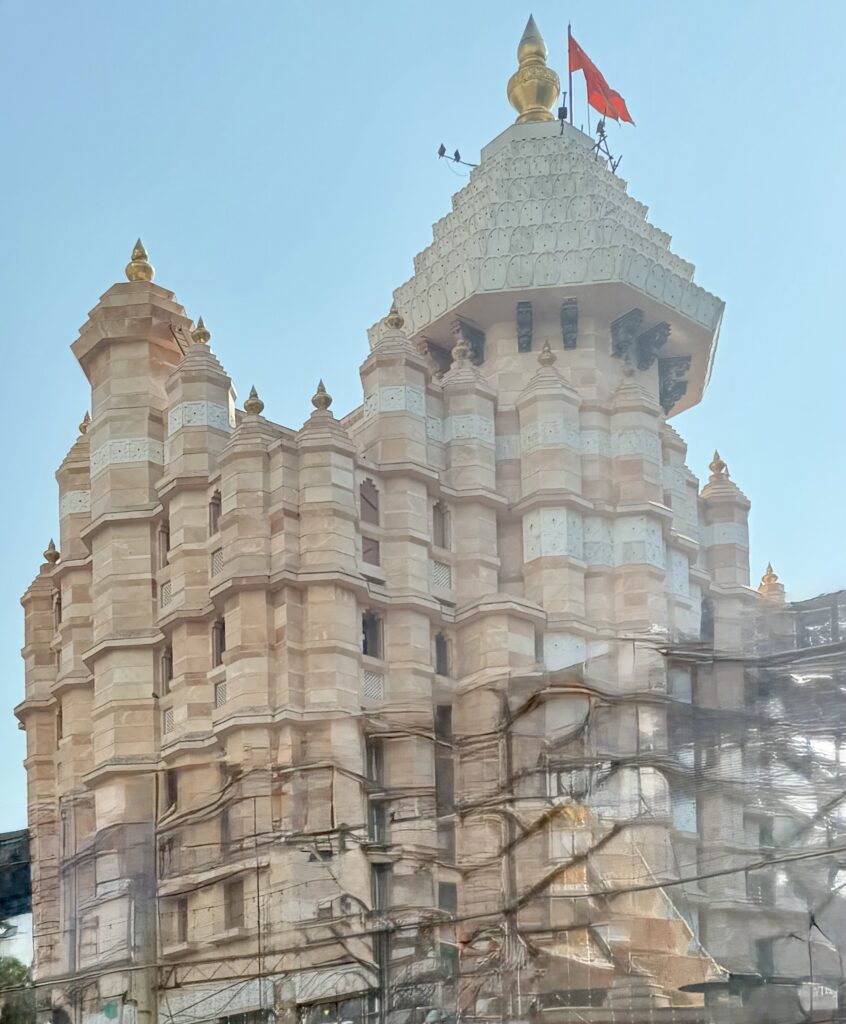
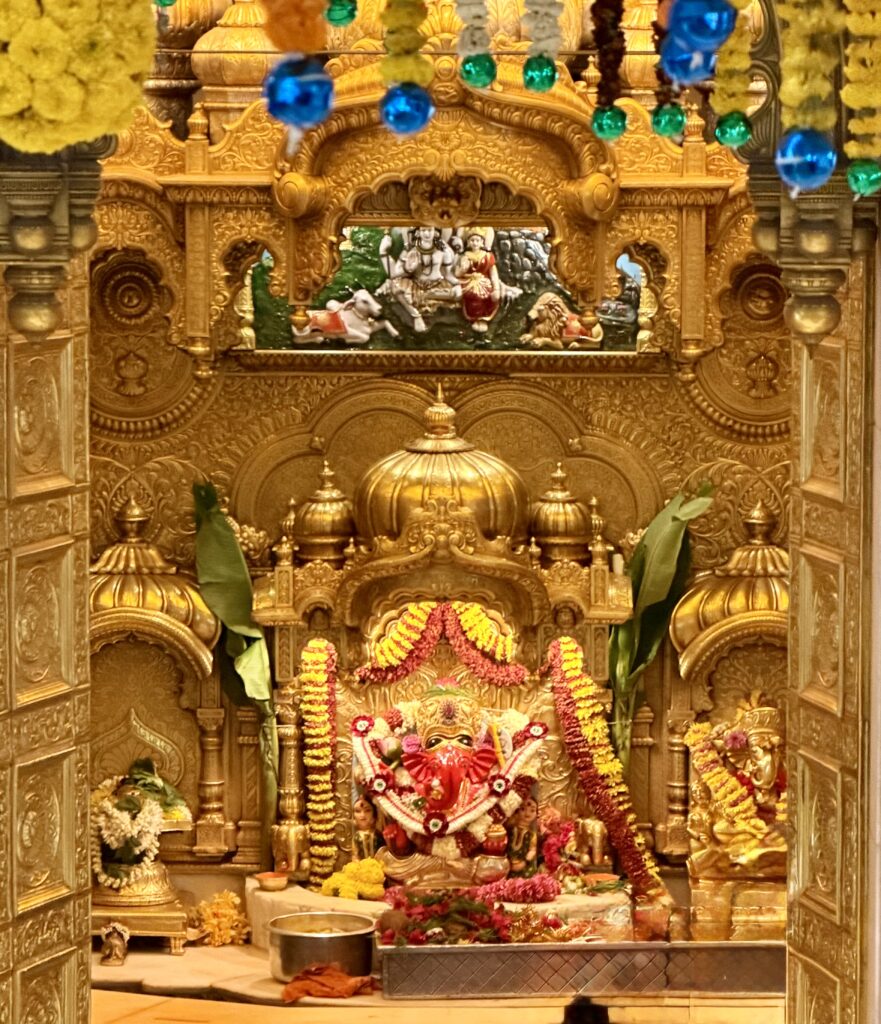
Siddhivinayak Temple – is one of Mumbai’s most revered Hindu temples, dedicated to Lord Ganesha. Located in Prabhadevi, the temple was originally built in 1801 and over the years, it has become a major spiritual landmark and one of the city’s most popular places of worship. The temple features a modest mandap leading to the shrine of Siddhi Vinayak, symbolizing Ganesha as the granter of wishes.
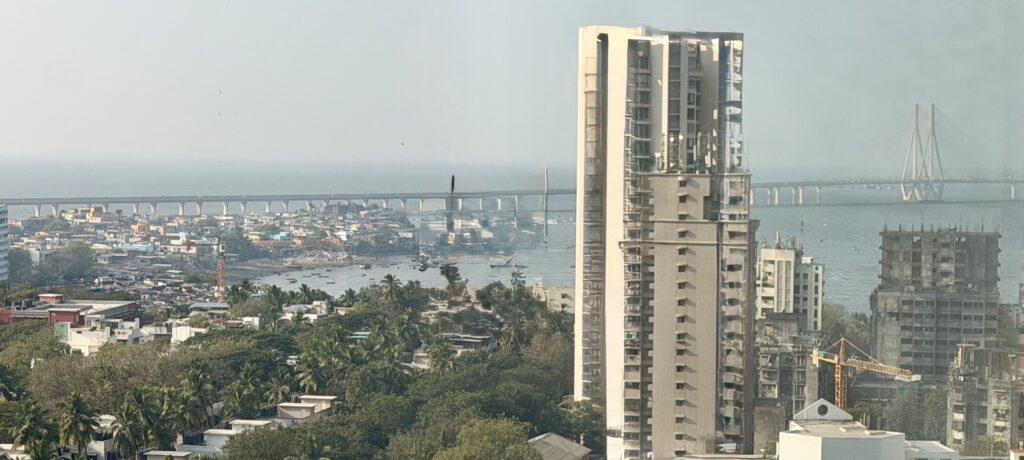
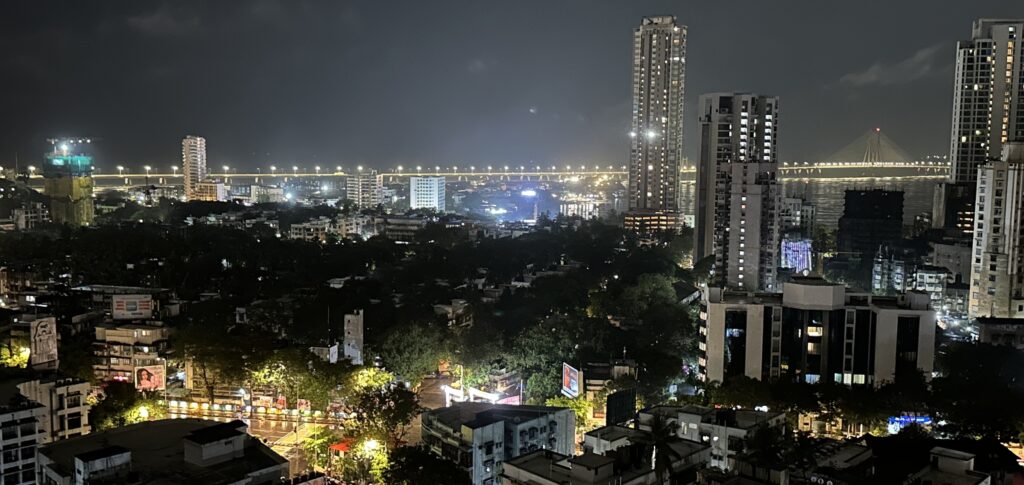
Worli-Bandra Sea Link – This architectural marvel connects the suburbs of Bandra and Worli, significantly cutting down travel time for commuters, and also providing spectacular vies of Mumbai Skyline and Arabian Sea. It is well lit in the night. The sea link is a prestressed concrete-steel viaduct and one of the few cable-stayed bridges built over the Arabian Sea, representing a significant civil engineering achievement. The bridge incorporates seismic arresters, making it the first earthquake-resistant project in Mumbai, capable of withstanding earthquakes up to a 7.0 magnitude Richter scale.
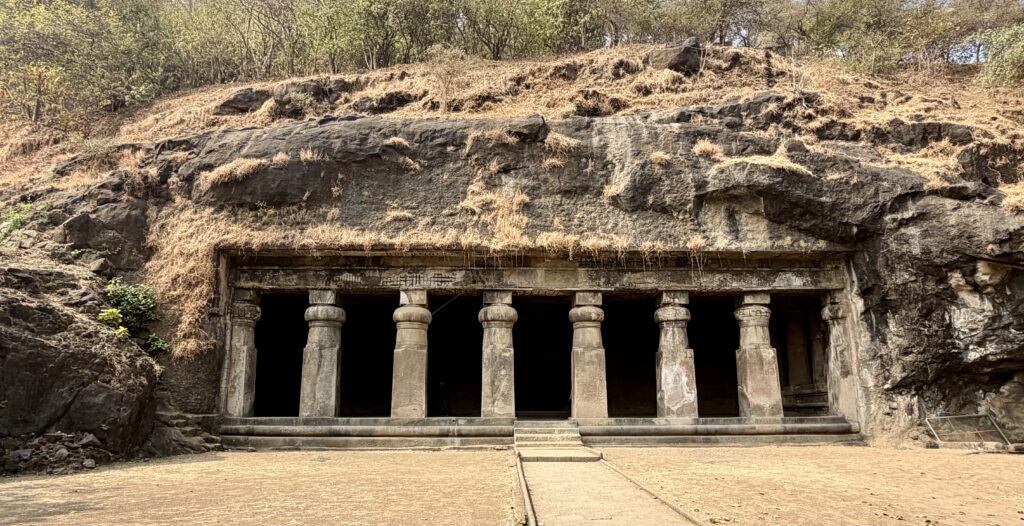
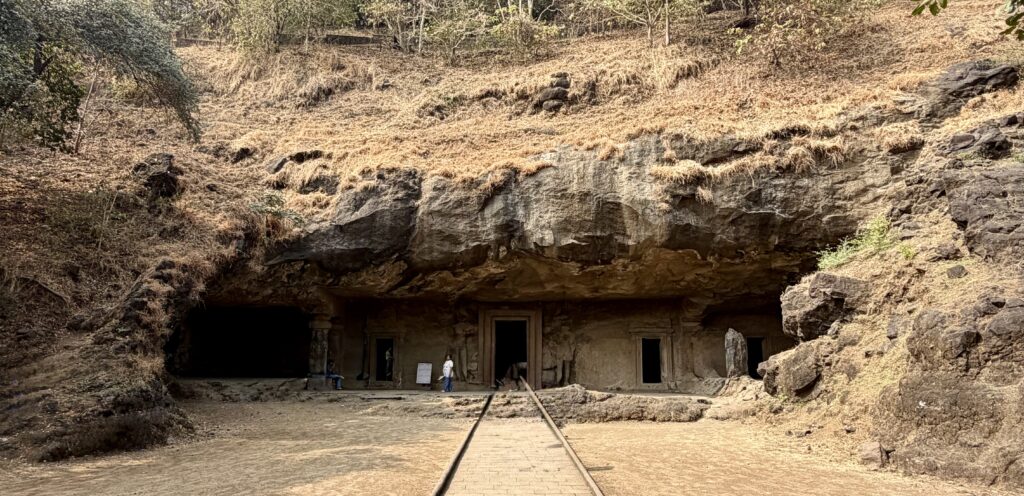
Elephanta Caves – Built approximately between 600-635 AD, this magnificent rock-cut temples are dedicated to Lord Shiva. The highlight of this UNESCO World Heritage Site is the colossal, three-headed Trimurti Sadashiva sculpture in Cave 1 representing Shiva as the Creator, Preserver and Destructor. Plan on spending 3-4 hours here, which includes travel time plus time to explore the caves.
Elephanta Island gets its name from a large elephant statue found by the Portuguese, now displayed in Jijabai Bhosle Udyan Byculla in Mumbai. Their arrival marked the end of the caves as an active Hindu place of worship, and the Portuguese soldiers caused much of the damage to the statues.
There are a couple of ways to travel to Elephanta caves from Gateway of India –
- The faster and more expensive way is by premium speedboat, which gets you there within 30 minutes, significantly reducing travel time and avoiding ferry crowds.
- The slower and inexpensive ferry option costs less than $5 round trip and takes about 60 minutes each way – Since we were not in any hurry, we chose this option
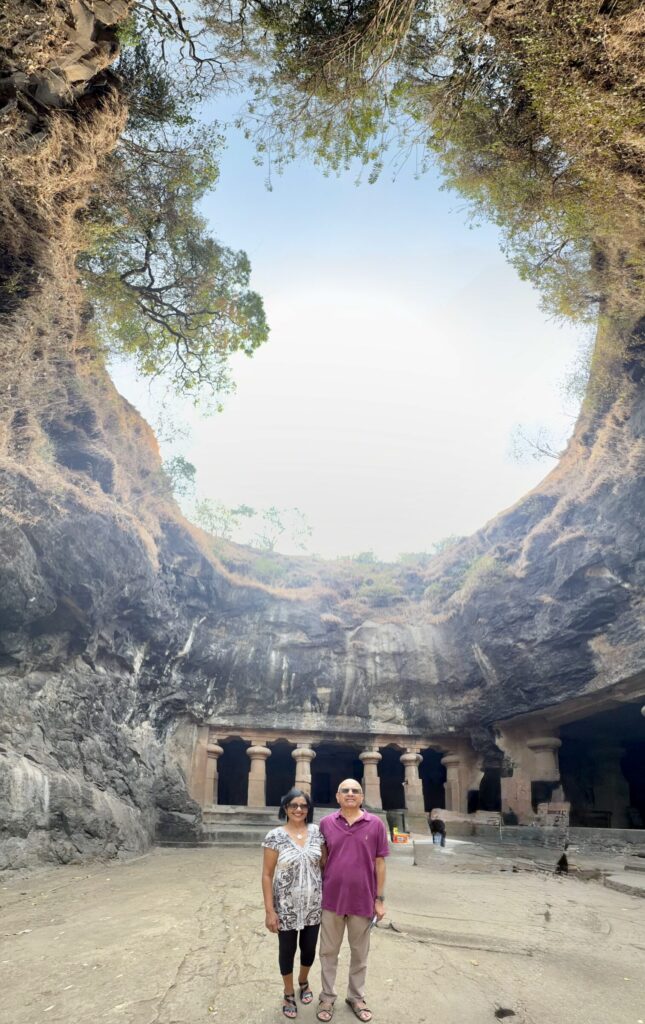
After disembarking, there is an entry fee to access the park, followed by a one-mile walk that includes climbing about 120 steps to reach the ticket counter.
There are about 4 caves that can be visited. Only Cave 1 has sculptures and carvings The other three caves are almost entirely bare of carvings or statues and show evidence of pretty extensive damage. Apparently all five caves were once painted as well as carved.
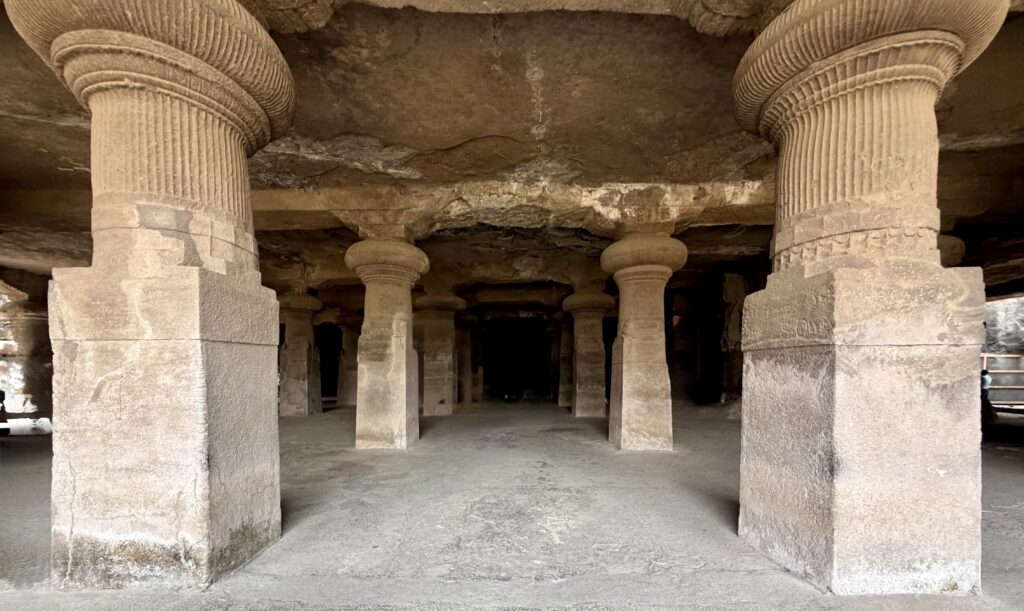
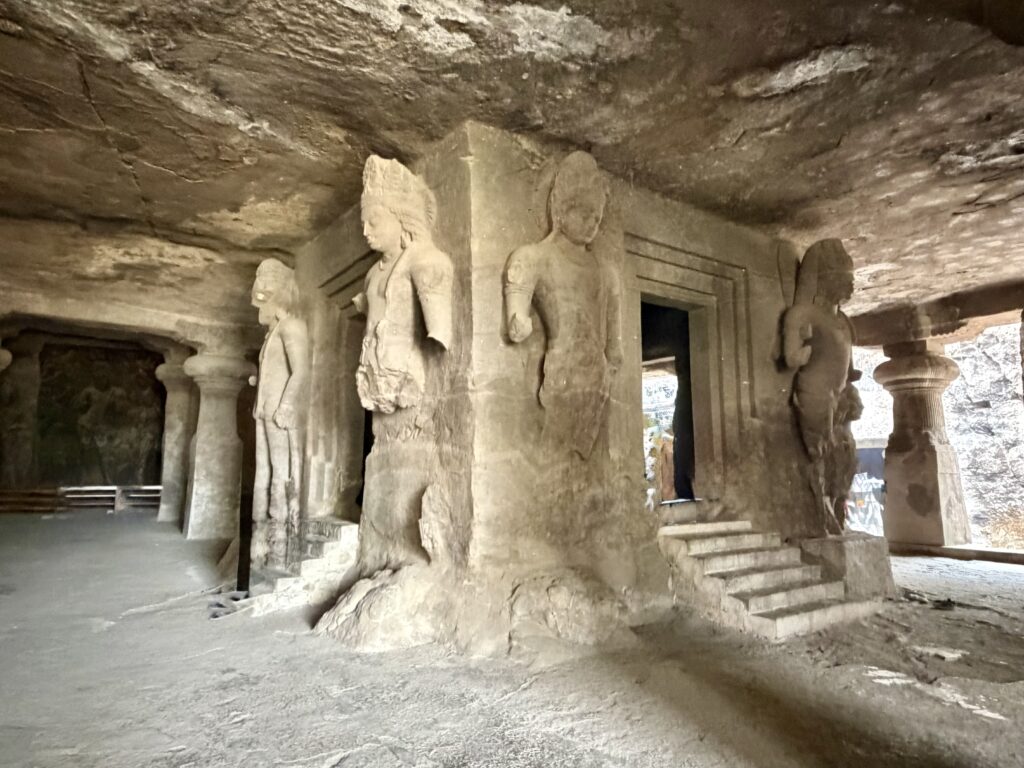
Elephanta Caves, Cave 1 – is within a few feet from the ticket counter. It is 130 sq feet and is supported by rows of massive pillars. The sculptures in the cave are all intricately carved from basalt rock, offering a spiritual and artistic journey through Hindu mythology.
Key Sculptures in the Great Cave (Cave 1) –
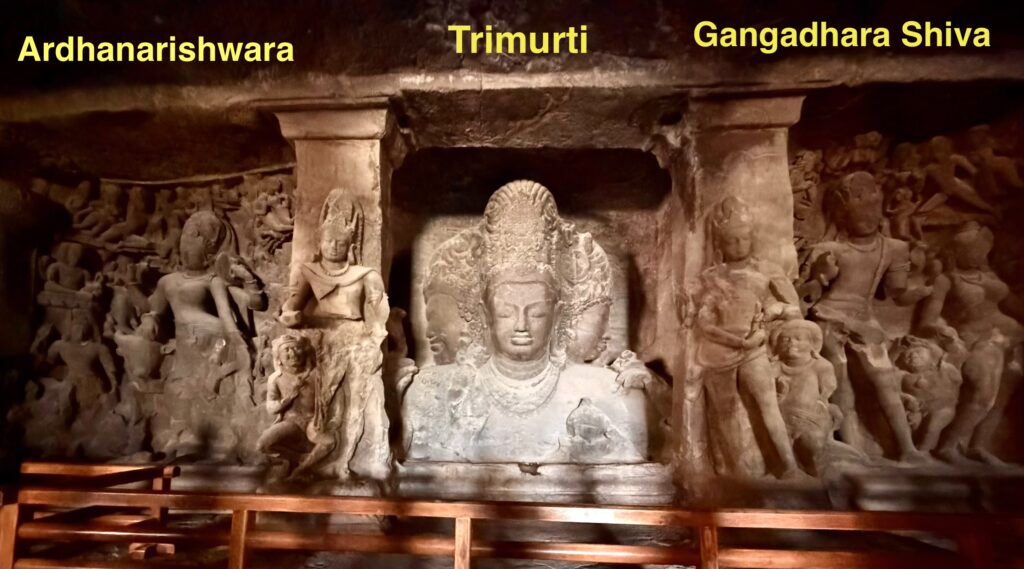
- Trimurti Sadashiva – As soon as you enter the cave, you will see a massive, 20-foot-tall sculpture of Shiva with three faces in front of you. The face of destruction is on the left, creation face to the right, and preserver face in the center. The image is set in a deep recess flanked by pilasters on which are figures of dwarapalas (door keepers).
- Ardhanariswara – A depiction of Shiva and Parvati as a single being. The panel depicts right half as Shiva and left half as Parvati, standing reclining against his mount Nandi in the center.
- Gangadhara – The sculpture depicts Lord Shiva’s role in the great cosmic event of the descent of river goddess Ganga from heaven to earth. Lord Shiva allows the powerful river Ganga to cascade through his matted locks.
- Nataraja – A dynamic depiction of Shiva as the cosmic dancer. Lots of damage to the sculpture with the lower portion completely missing. There is the figure of Parvati to the right and above her is Lord Vishnu riding on Garuda.
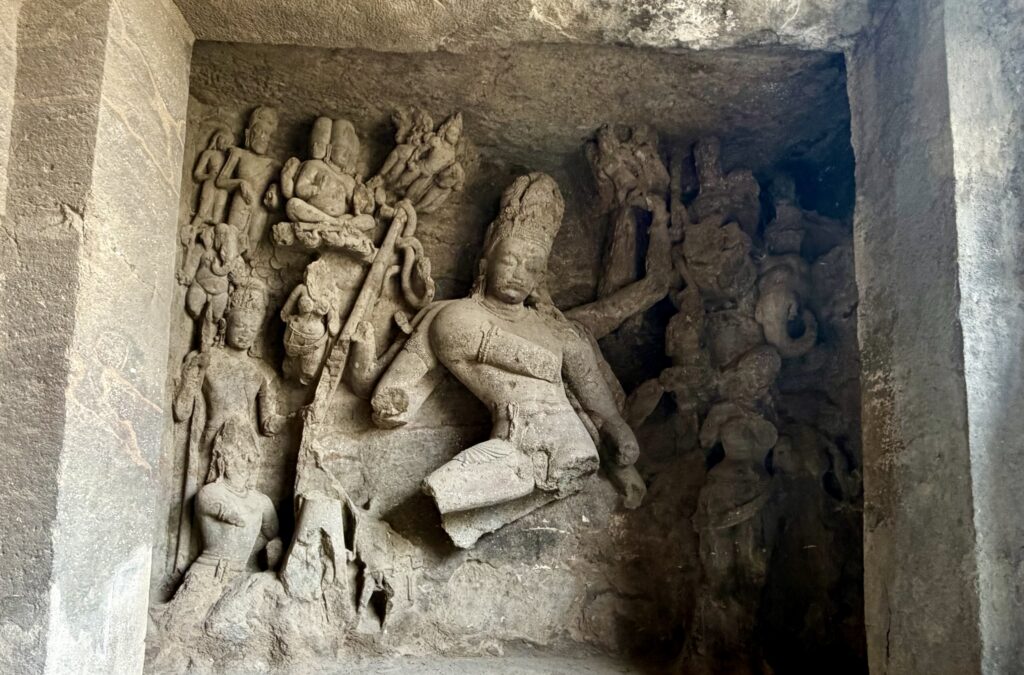
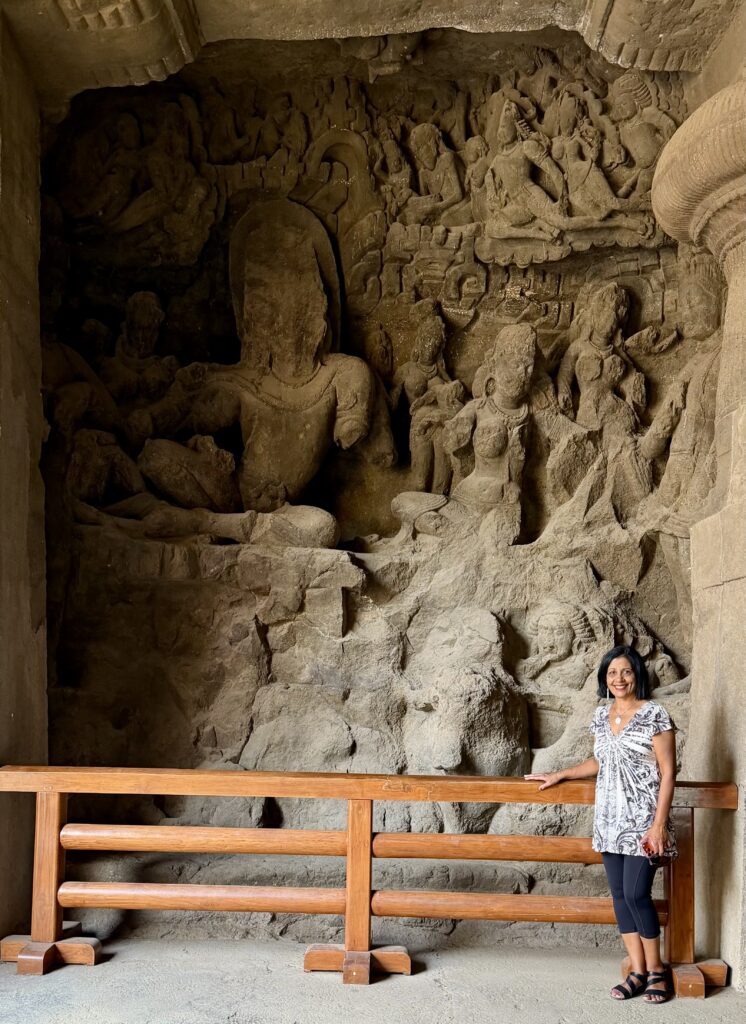
- Shiva Parvati – The panel portrays Shiva-Parvati seated on a high platform and below are several carved figures that are totally damaged. Shiva and Parvati are seated with legs folded.
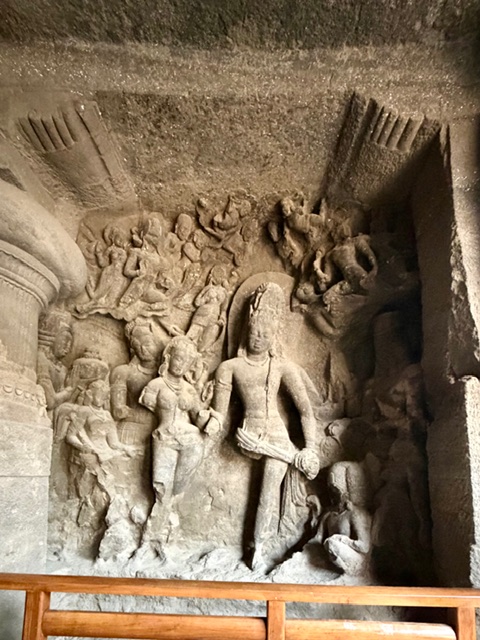
- Kalyansundara – This panel depicts the divine marriage of Shiva and Parvati.
After Cave 1, we explored the other caves, but they were much smaller and didn’t have anything particularly interesting inside.