Day trip from Honolulu
Also known as The Island of Hawaiʻi, the Big Island is the largest of all the Hawaiian Islands and is renowned for its incredibly diverse landscapes and natural beauty. We had booked a viator guided tour and our day began quite early with a flight to the island from Honolulu at 5am. There is a lot to do in this island and a one-day trip is certainly not enough to cover all the sites.
- Hilo Bay beachfront
- Liliʻuokalani Gardens
- Rainbow Falls
- Splatter Cone Lava
- Kilauea Visitor Center and Overlook
- Chain of Craters Road
- Lava Tube
- Steam Vents
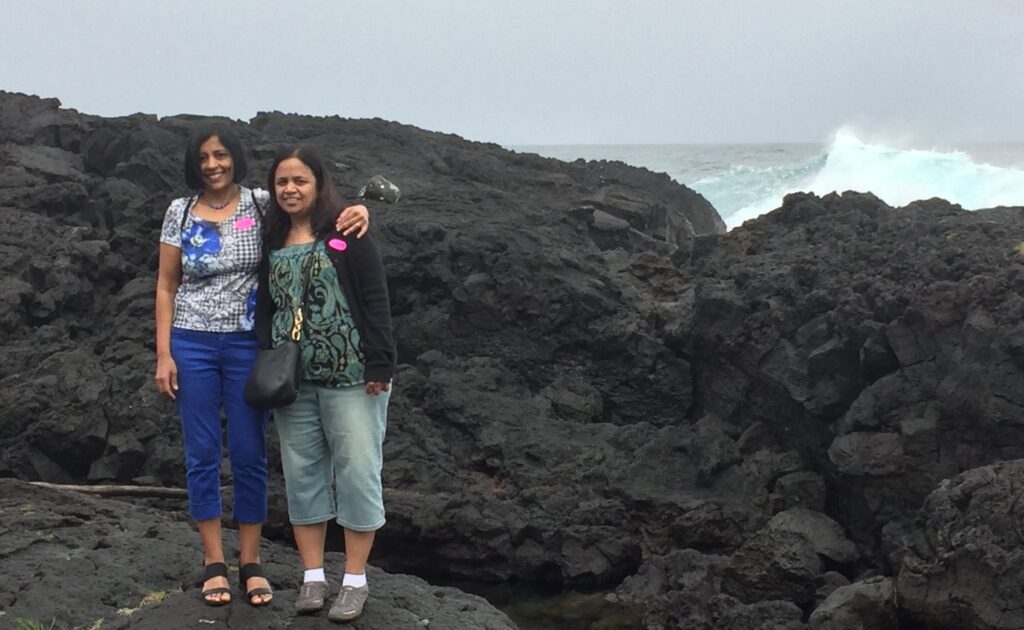
Hilo Bay beachfront – Hilo’s beachfront area that we visited was covered with black rocks and black sand and the water current was strong with large waves hitting the shores. We walked around the beach enjoying the black sand and the scenic beauty.

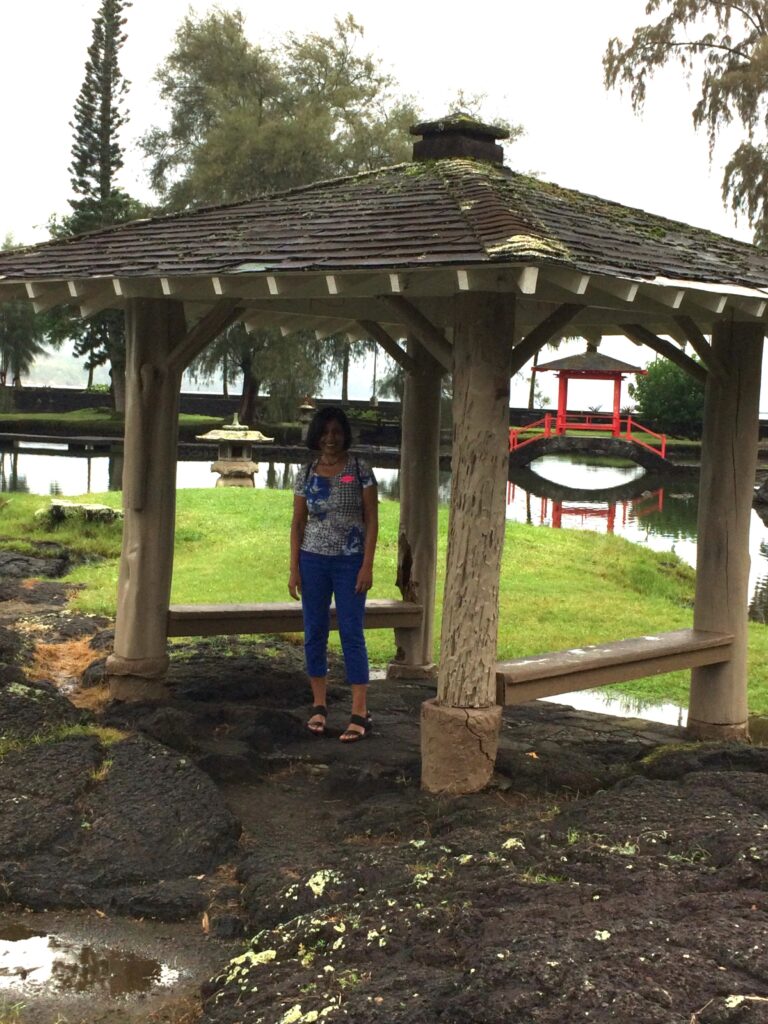
Liliʻuokalani Gardens – Located along Hilo Bay, Liliʻuokalani Gardens is the largest authentic ornamental Japanese garden outside of Japan. Admission is free and it is open 24/7. Named after the last reigning monarch, Queen Liliʻuokalani, you will feel like you are in Japan as you stroll through the peaceful garden. The garden was dedicated in 1917 as a tribute to Hawaiʻi’s first Japanese immigrants who worked in the island of Hawaiʻi’s sugar cane fields.
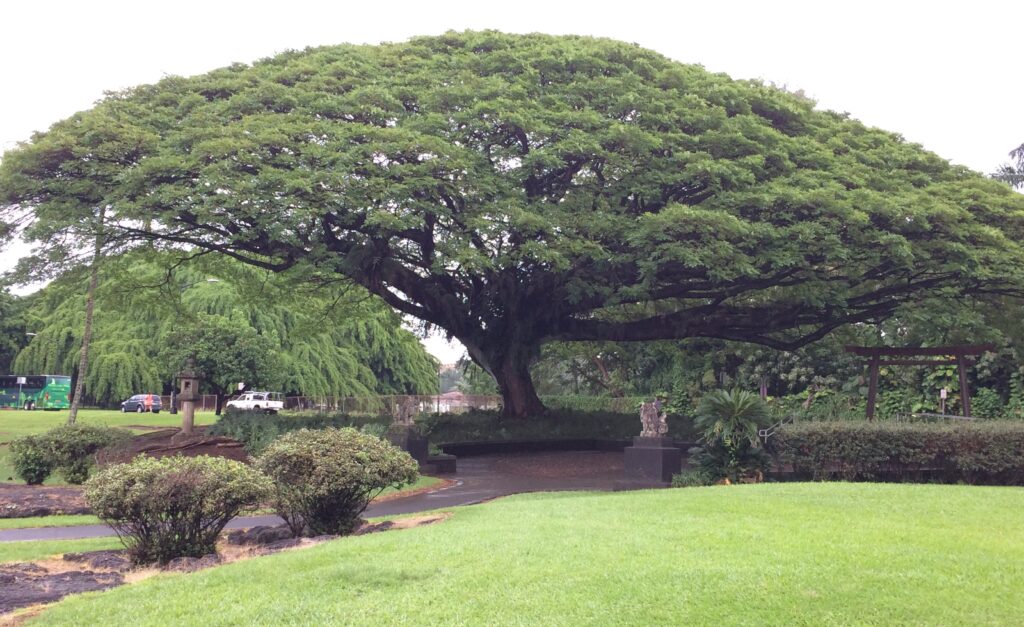
This beautifully landscaped park features arching bridges over fishponds, rock gardens, pagodas, Japanese stone lanterns and a teahouse.
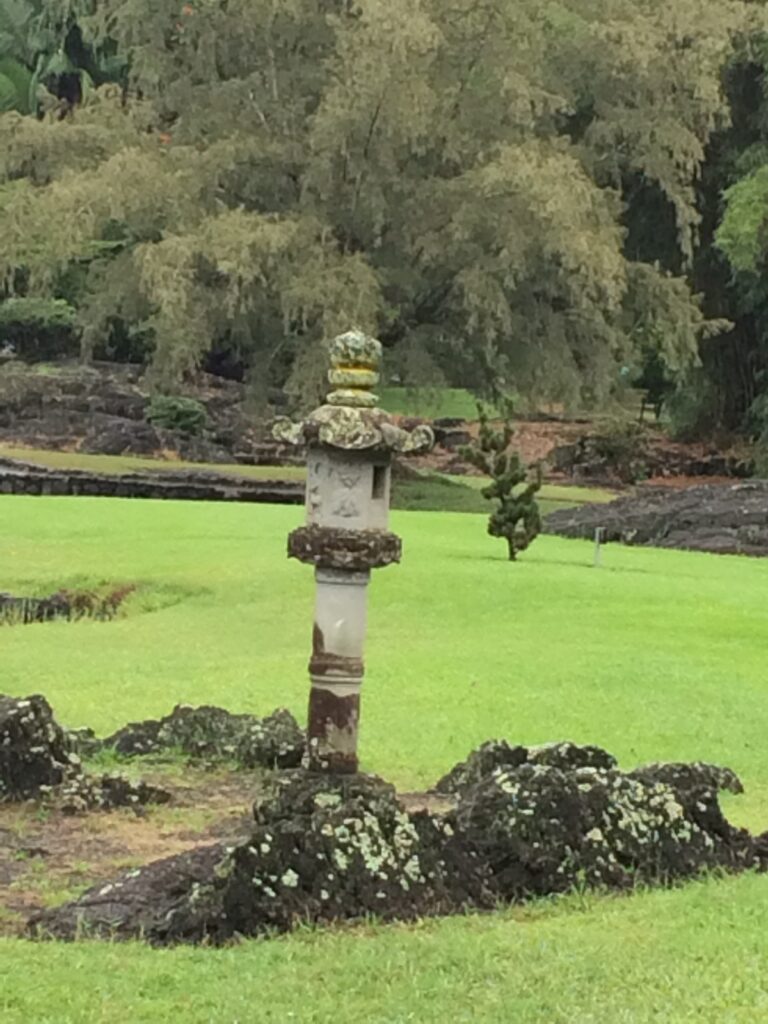

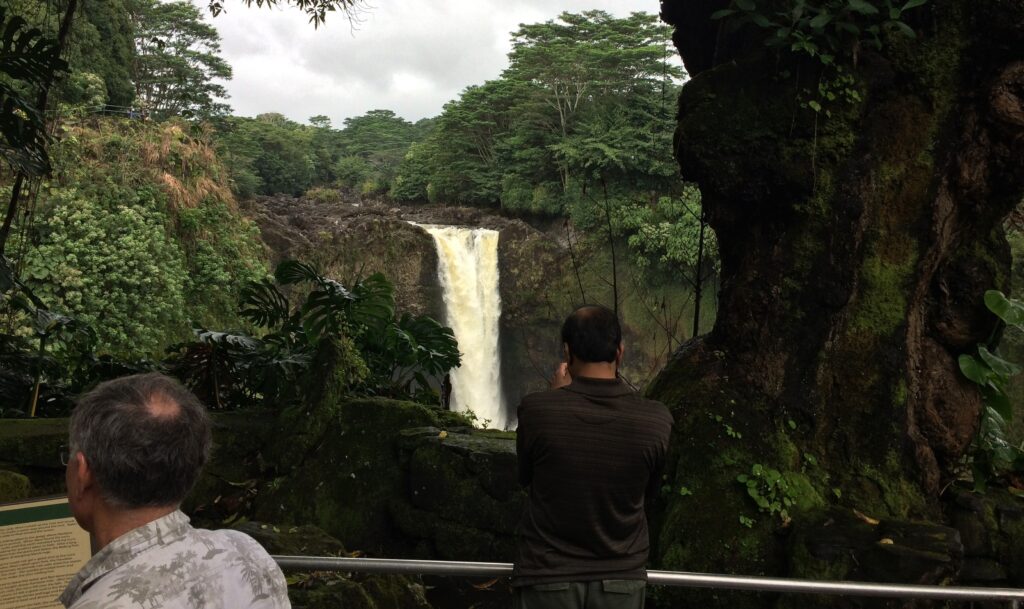
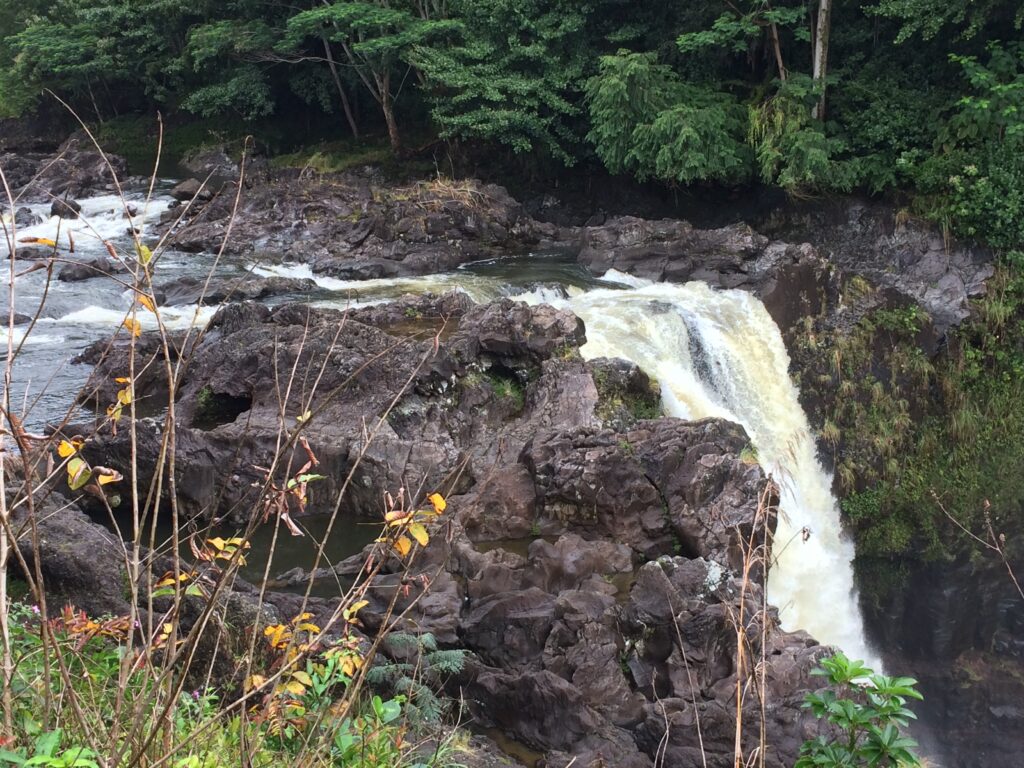
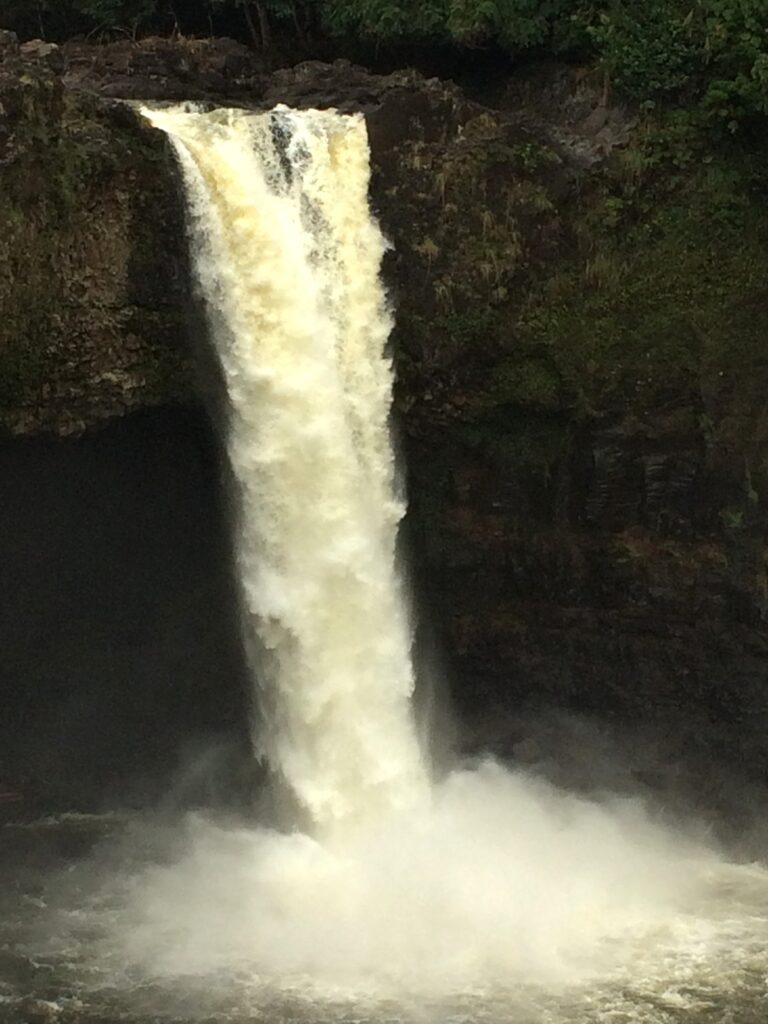
Rainbow Falls – Falling from a height of 80 ft and located in the center of Hilo Town, this falls is beautiful and easy to reach and free to view. Rainbow Falls derives its name from the fact that, on sunny mornings around 10 am, rainbows can be seen in the mist thrown up by the waterfall.
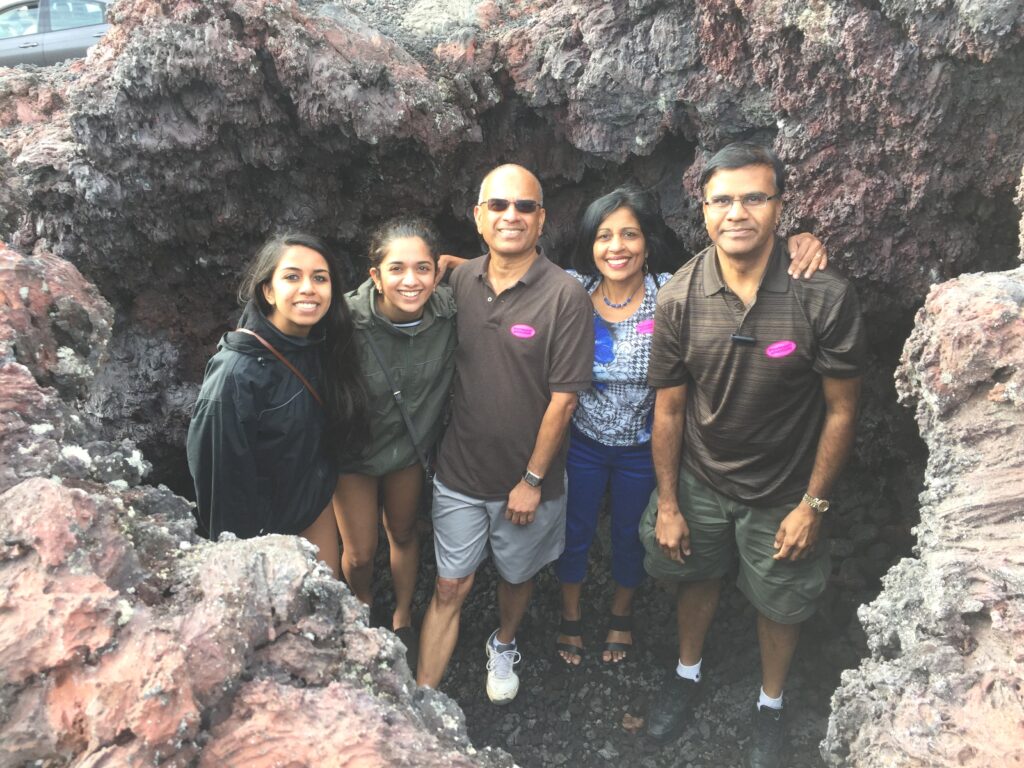
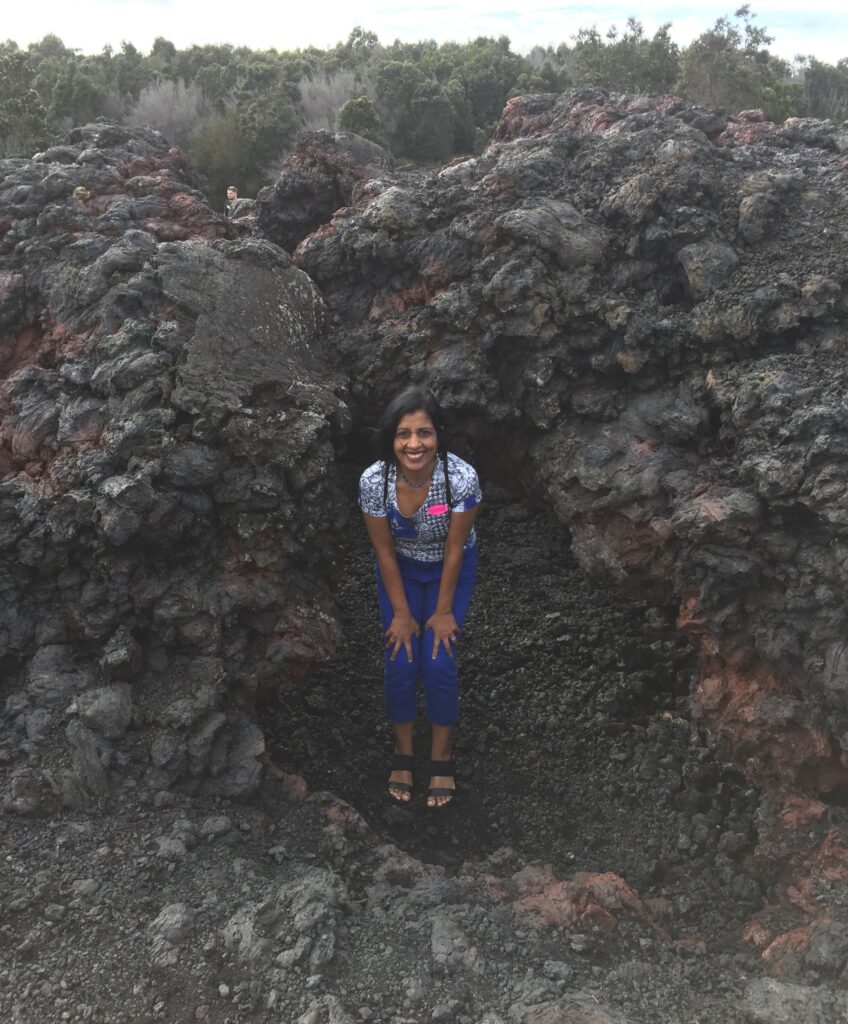
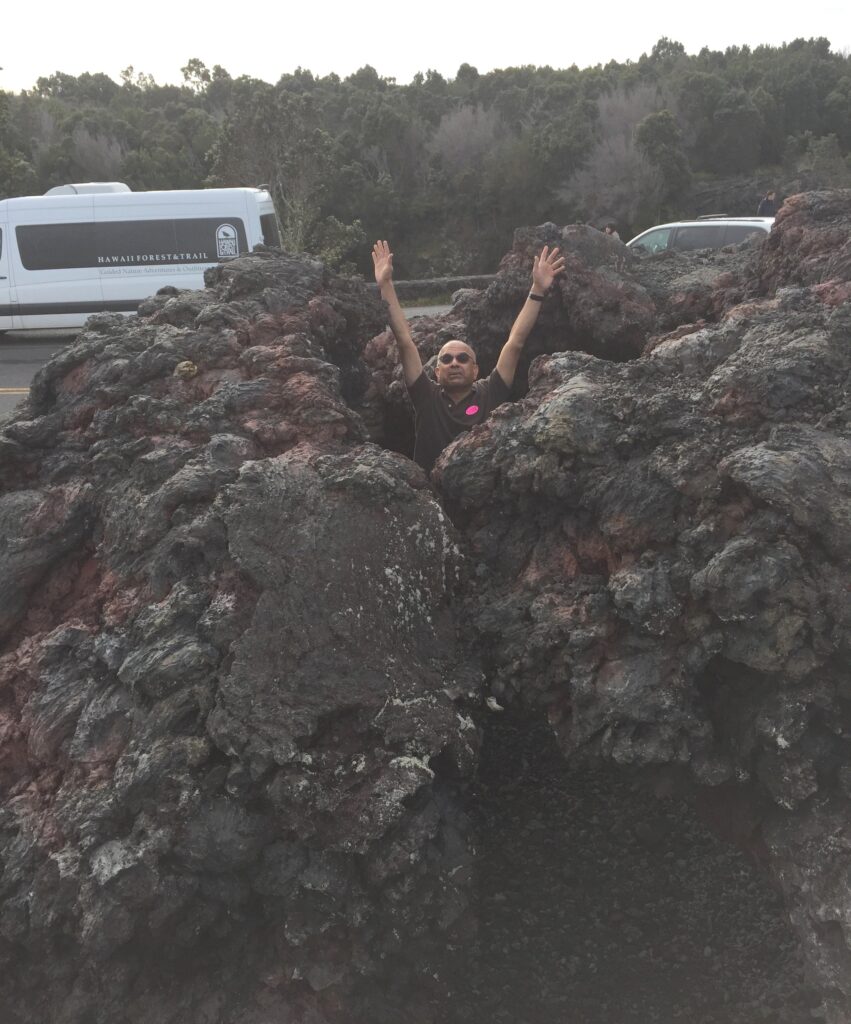
Spatter Cone Lava – are cone-shaped mounds of molten rock that form around a volcanic vent as lava blobs are repeatedly thrown into the air and pile up around the vent. On Hawaii’s Big Island, Kilauea volcano has built several significant spatter cones. We visited some of the smaller ones around the island, many of them were right off the road.
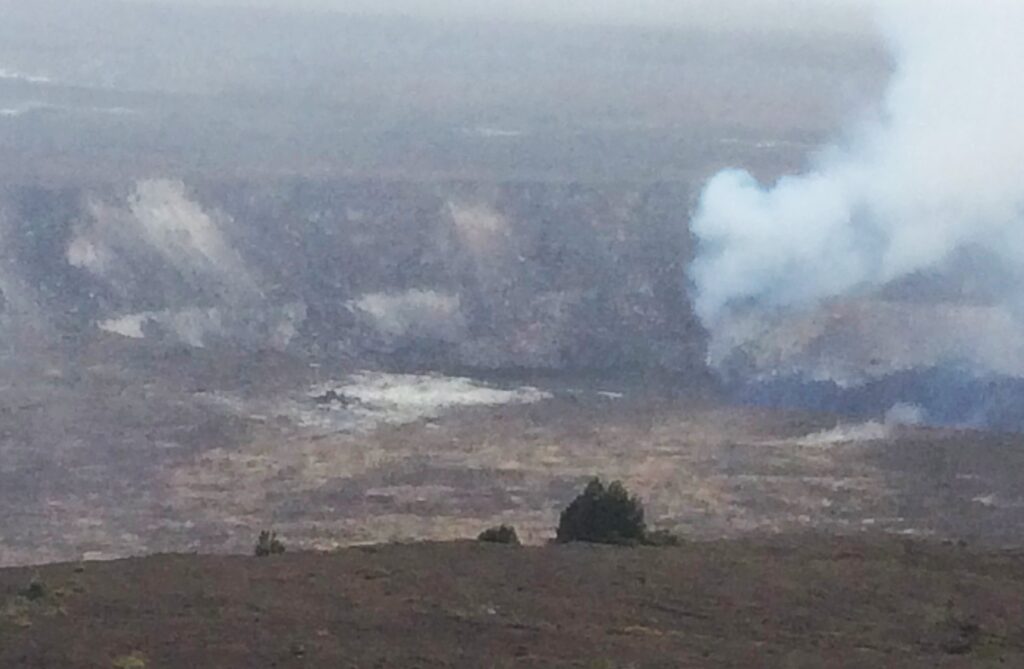
Kilauea Visitor Center and Overlook – This visitor center gives you a great introduction to Hawaii Volcano National Park and features exhibits covering the park’s environment, history & culture. Kilauea Volcano is an active shield volcano that is between 210,000 and 280,000 years old and grew above sea level about 100,000 years ago. Since the islands were settled, it has been the most active of the 5 volcanoes that together form the island and among the most active volcanoes on Earth. We viewed the volcano from an overlook near the visitor’s center.
Chain of Craters Road – is a 19-mile long winding paved road through the East Rift and coastal area of the Hawaii Volcanoes National Park in Big Island. The road has paths and road offshoots that allow access to features such as pit craters, dormant lava flows, plumes from lava tubes and geographic sites that can be accessed by trails from the road.
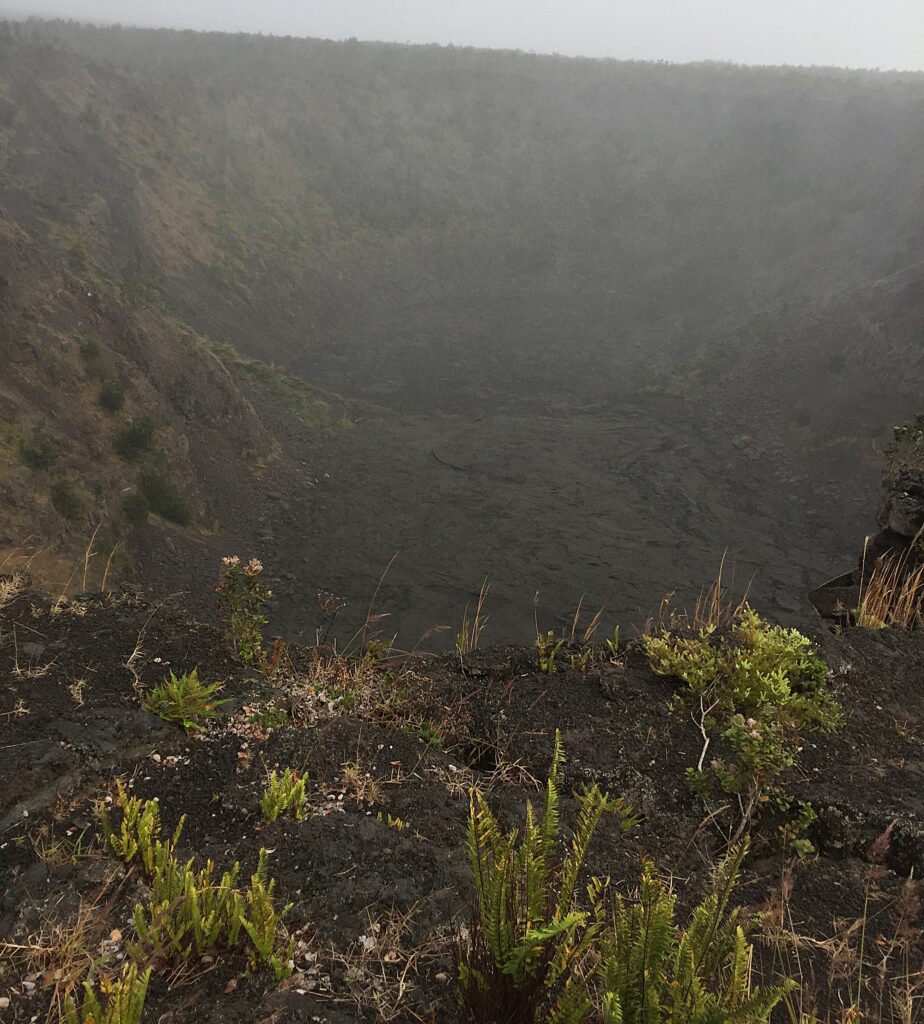
Pauahi Crater – is a composite triple-pit crater, approximately 360 ft deep and 1,600 ft long. This crater has been the site of three eruptions in recent history – May 1973, November 1973, and November 1979. The crater floor we see today is covered by a thin veneer of lava from the 1979 event.
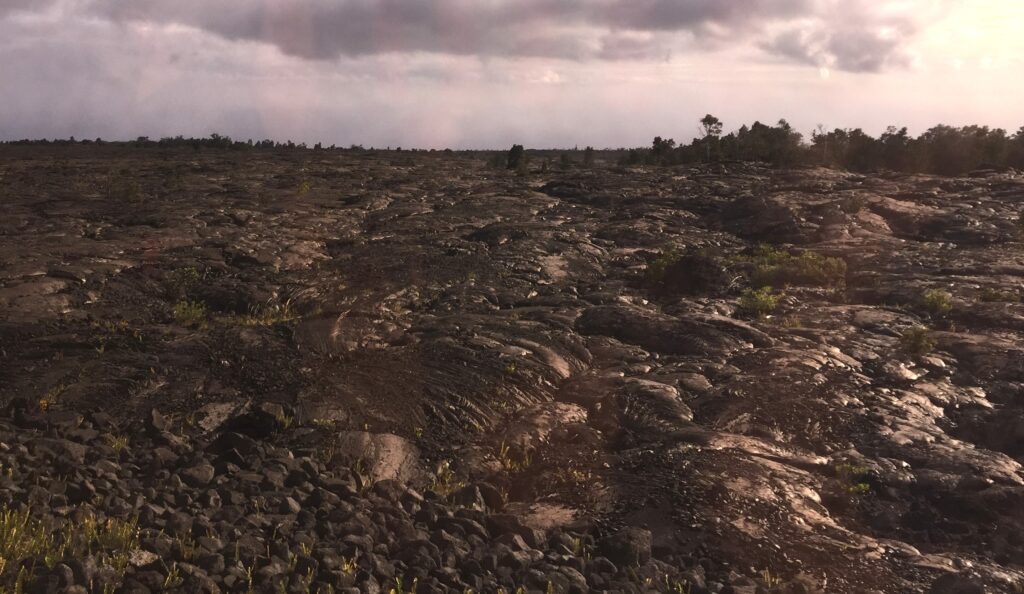
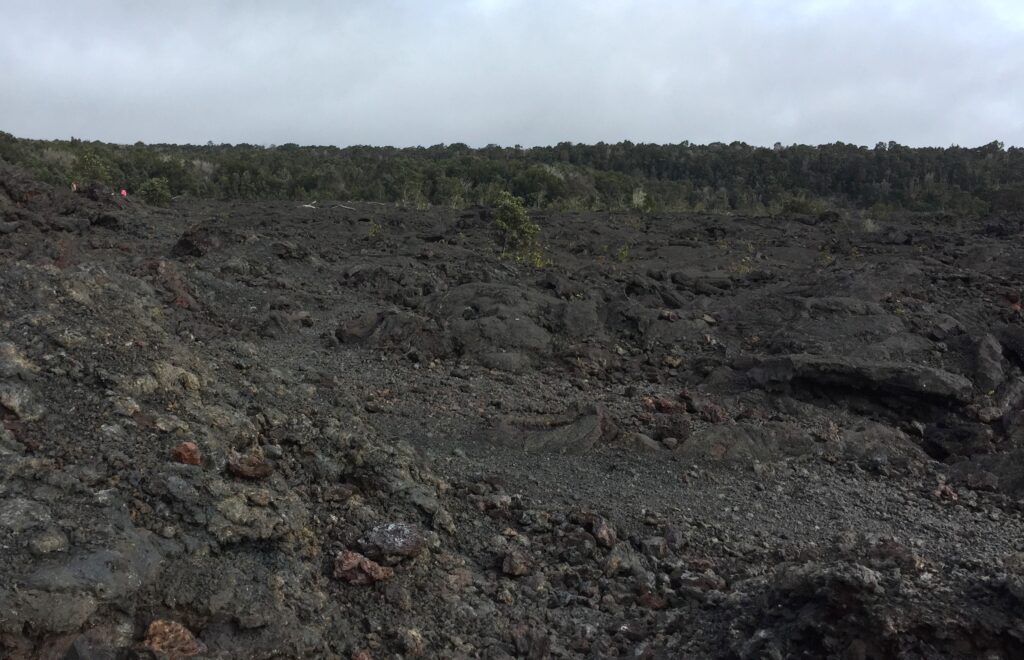
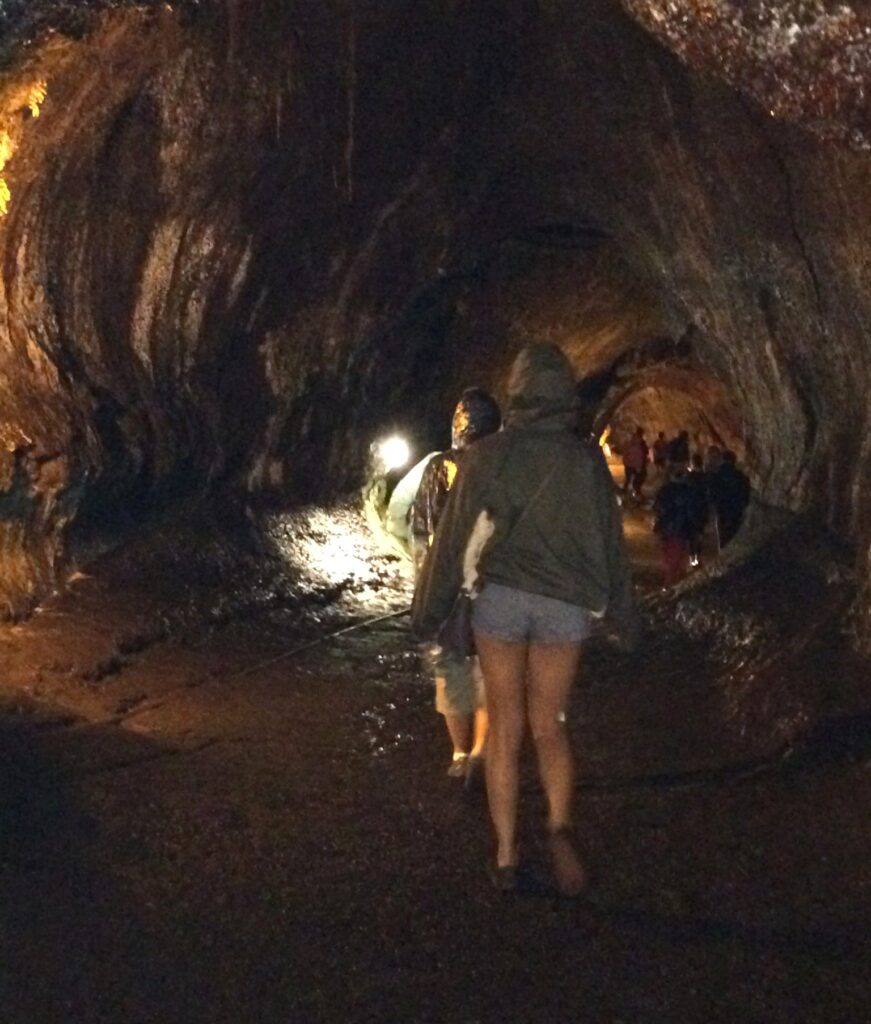
Lava Tube – are natural tunnels formed when the surface of a molten lava flow cools and solidifies, creating a crust that insulates the molten lava flowing beneath it. When the lava supply eventually ceases, the molten lava drains out, leaving behind a hollow, roofed conduit or cave. Many of the lava tubes on Big Island were formed within just a couple of months.
Many of the Big Island lava tubes are accessible to the public for exploration and they look like massive tunnels in the ground that one can walk through, much like any traditionally large cave. We visited one of them on the guided tour.
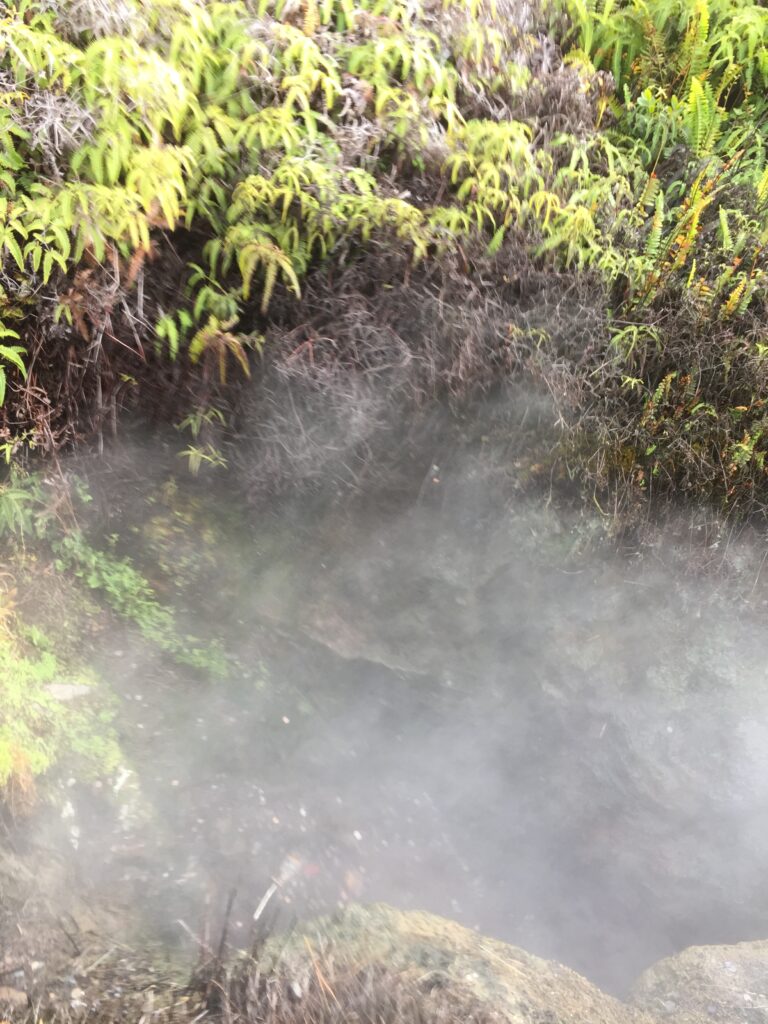
Steam Vents – refers to a place where hot smoke is spewing out from a terrain like a cracked or hollow puddle due to volcanic activity. The temperature in these cracks is about 145 degrees Fahrenheit, and the visibility of the steam is largely dependent upon the humidity and temperature of the surrounding air.