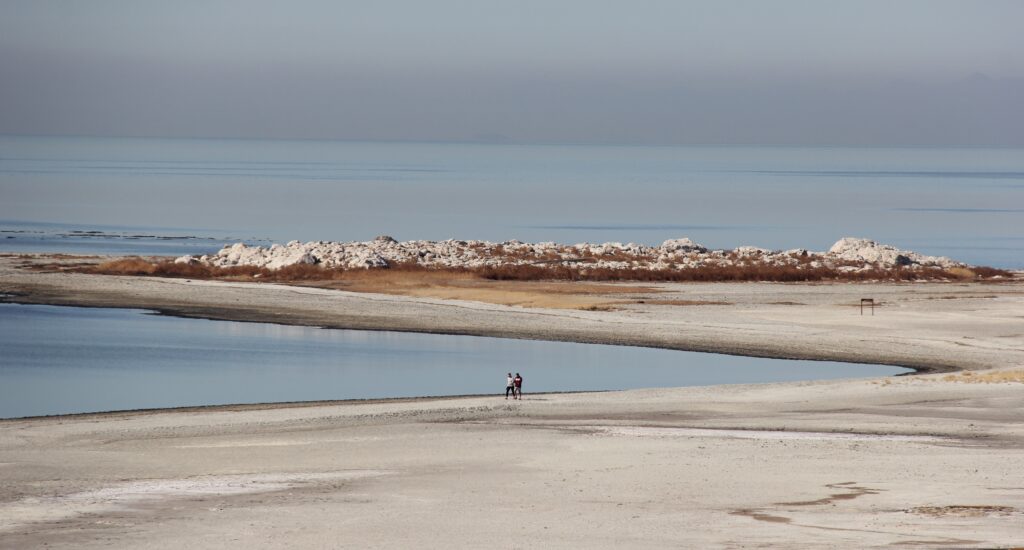
Bordered by the Great Salt Lake, Salt Lake City is the largest metropolitan area in Utah and is at a high elevation – 4,330 ft. We found that people here are ridiculously friendly and hospitable. We visited the city in October of 2020.
- Utah State Capitol
- Temple Square
- McCune Mansion
- This is the Place Heritage Park
- Great Salt Lake
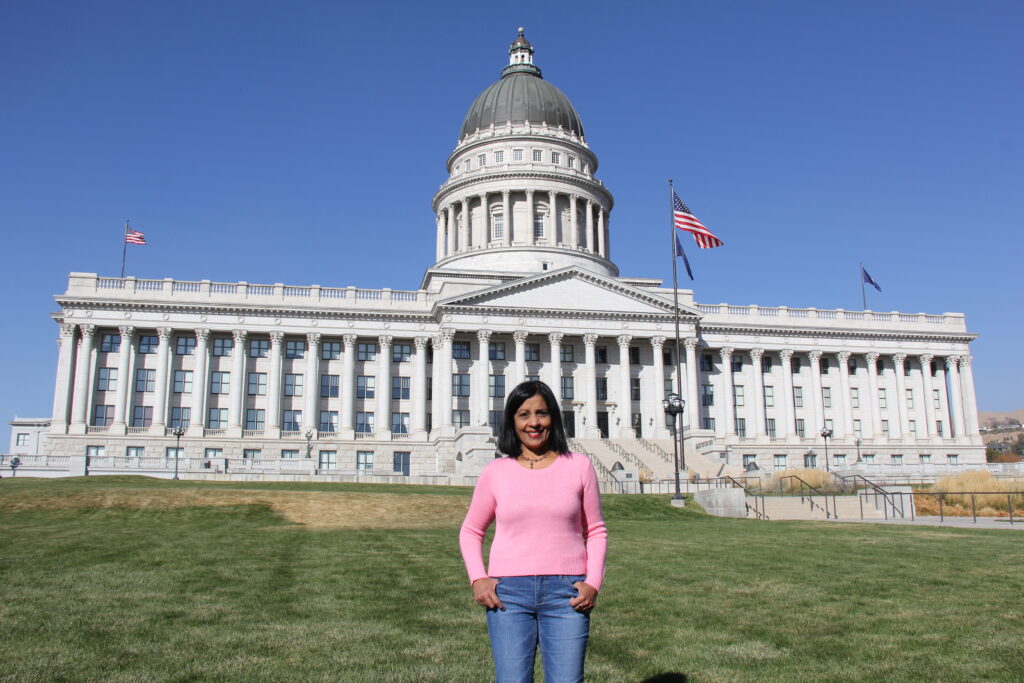
Utah State Capitol – We visited Salt Lake City in the midst of COVID restrictions in Oct 2020. The building was not open to public and hence were only able to explore the exterior of the building.
Built between 1912 and 1916 in Neoclassical revival, Corinthian style with 52 Corinthian columns, the building was constructed using granite from nearby Little Cottonwood Canyon. The dome is covered with Utah copper. Throughout the grounds, on the building itself, and within the interior are countless beehive representations. The State Capitol was added to the National Register of Historic Places in 1978.
The building underwent a major restoration in 2004, which included the addition of a base isolation system which will allow the building to survive as much as a 7.3 magnitude earthquake.
Temple Square – is the holy place of the Mormons and is a center of history and worship for members of The Church of Jesus Christ of Latter-day Saints. Located in downtown Salt Lake City, Temple Square features five city blocks of historic sites, engaging exhibits, and wholesome activities centered on the Church’s mission to worship Jesus Christ and serve God’s children. Guided or self-guided tours are available for several locations on Temple Square.
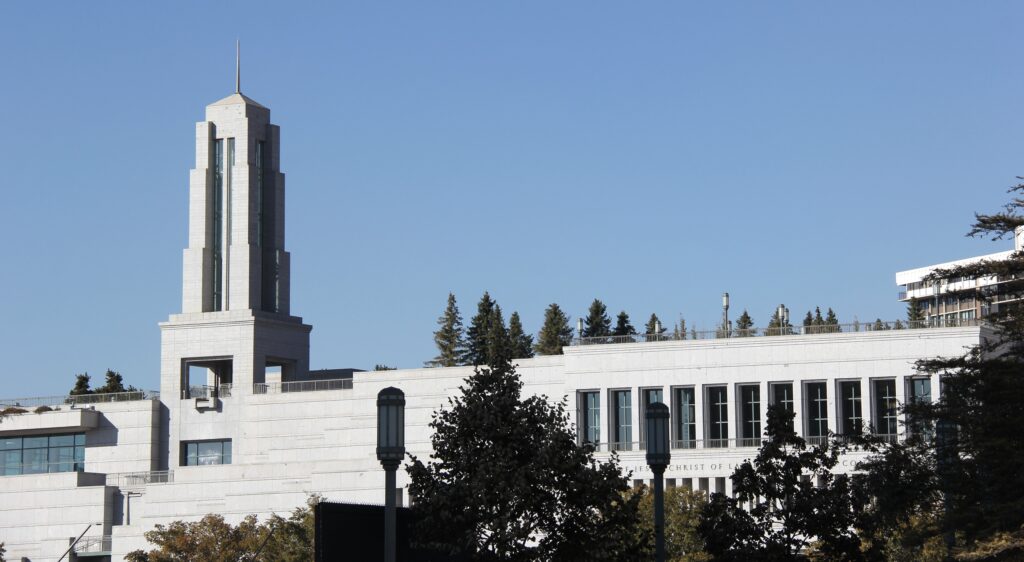
Temple Square, Conference Center – is the main arrival point for visitors, and the venue for the semiannual General Conference of The Church of Jesus Christ of Latter-day Saints. The building has a statue of Jesus Christ and various art pieces and from the observation deck on the third floor, you can get a unique view of the Salt Lake Temple.
Temple Square, Joseph Smith Memorial Building – is a multipurpose, ten-story administrative office building and social center. The building provides dining options and event hosting with restaurants, large meeting rooms, banquet and wedding reception rooms. The building is also home to a 500-seat theater that hosts various film experiences produced by The Church of Jesus Christ of Latter-day Saints.
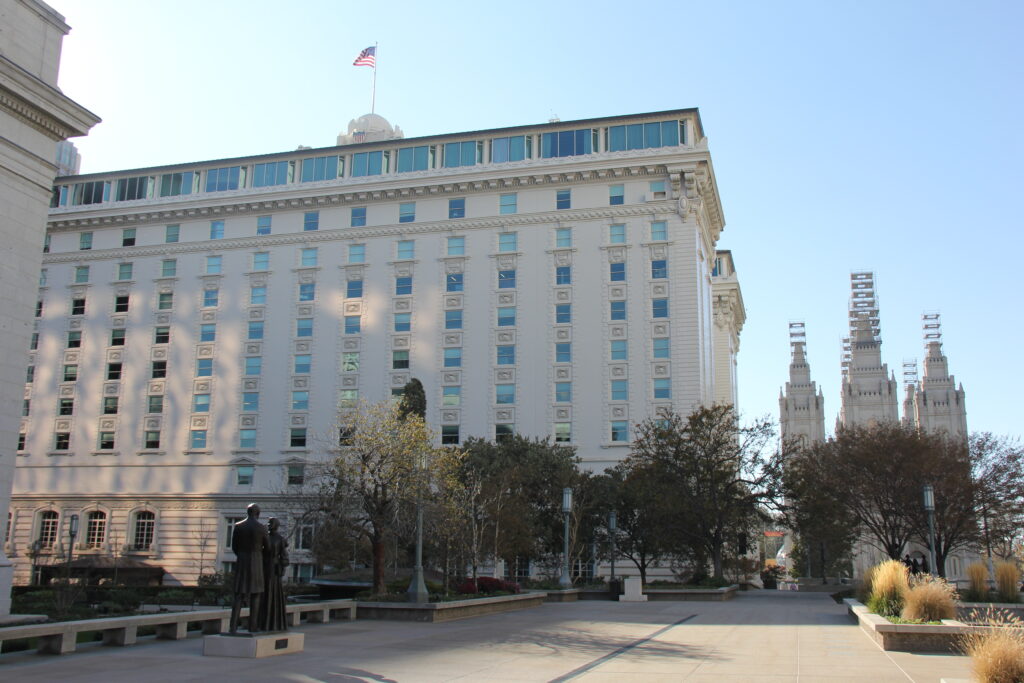
Temple Square, Salt Lake Temple – is a landmark and symbol for The Church of Jesus Christ of Latter-day Saints. For Church members, it is considered a sacred place for the worship of the Savior Jesus Christ. When Latter-day Saints settled the Salt Lake Valley in 1847, Apostle George A. Smith declared that a temple in the valley would fulfill Isaiah’s prophecy that “the mountain of the Lord’s house shall be established”. Shortly after, Brigham Young, the President of the Church at the time, saw in a vision the place where the temple should be built. Under the guidance of Brigham Young, construction of the granite temple began in 1853. The construction took 40 years, and much of it was completed by hand. The Salt Lake Temple was dedicated, or consecrated, to the Lord in 1893.
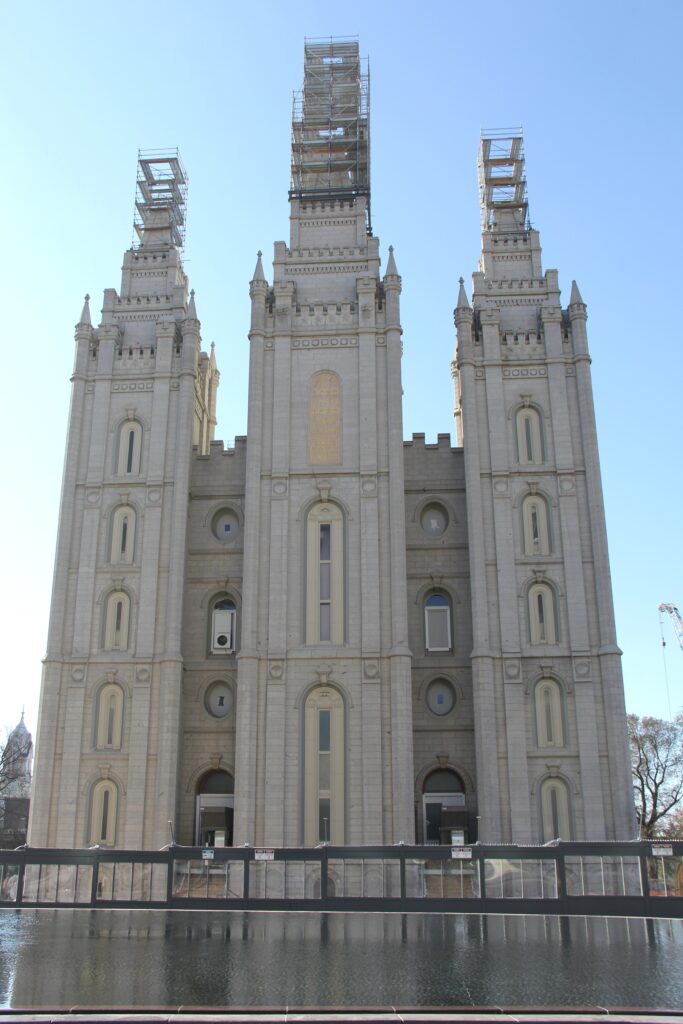
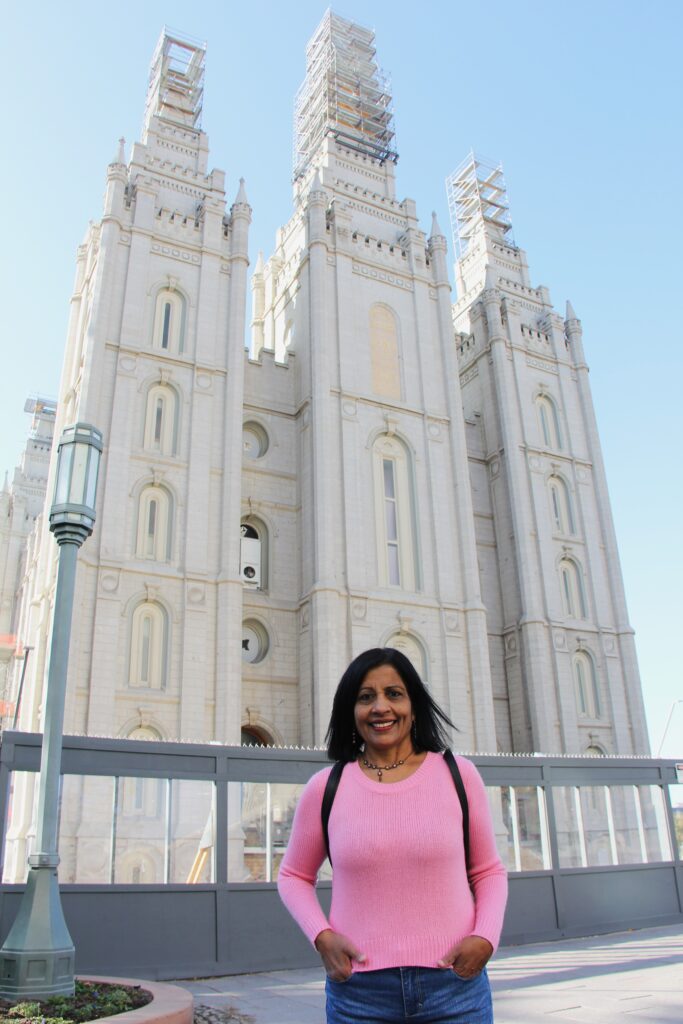
There was a major renovation to the temple during the time of our visit in 2020. Parts of the Temple had scaffolding.
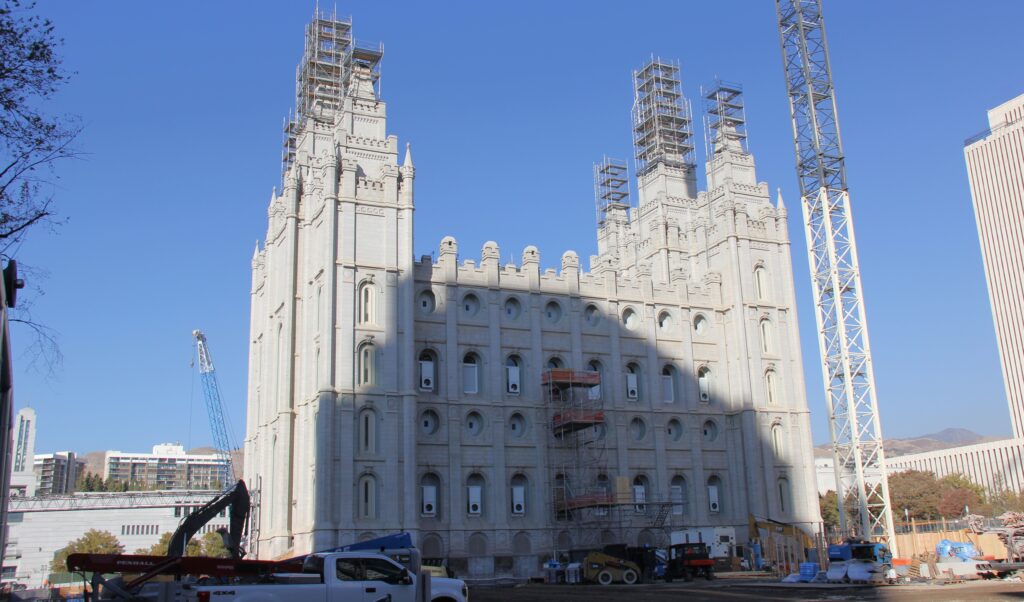
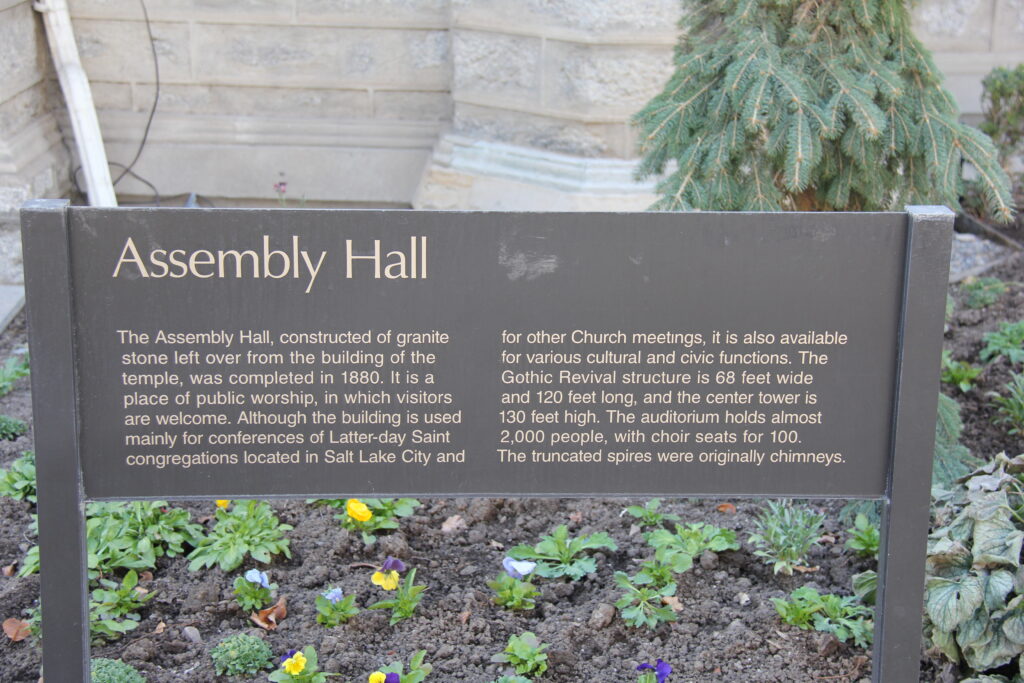
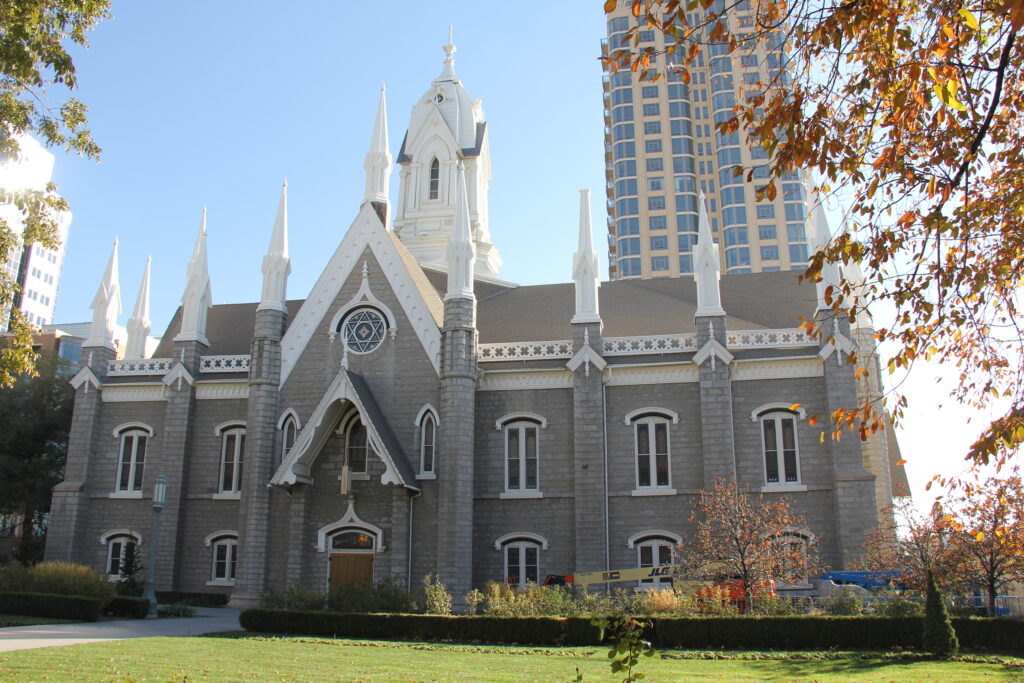
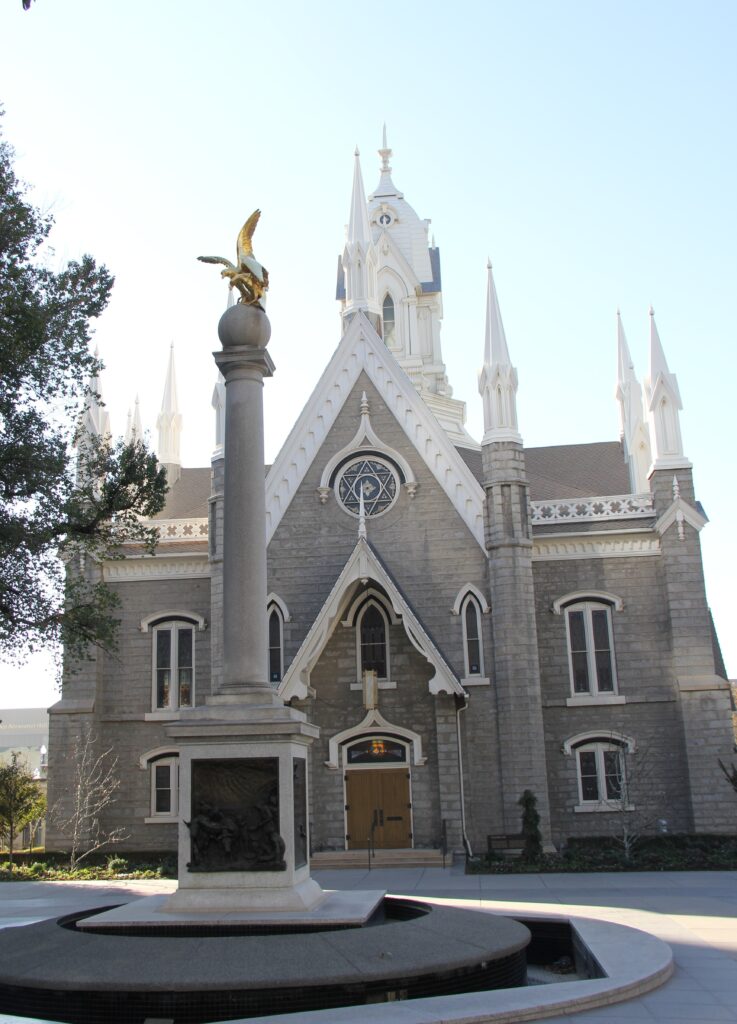
Temple Square, Assembly Hall – is a Gothic Revival style building finished in 1880. It was built as place of worship for local Latter-day Saint congregations in Salt Lake City. The historic building is located on the southwest corner of Temple Square. It was built using stone from the same quarry as the Salt Lake Temple.
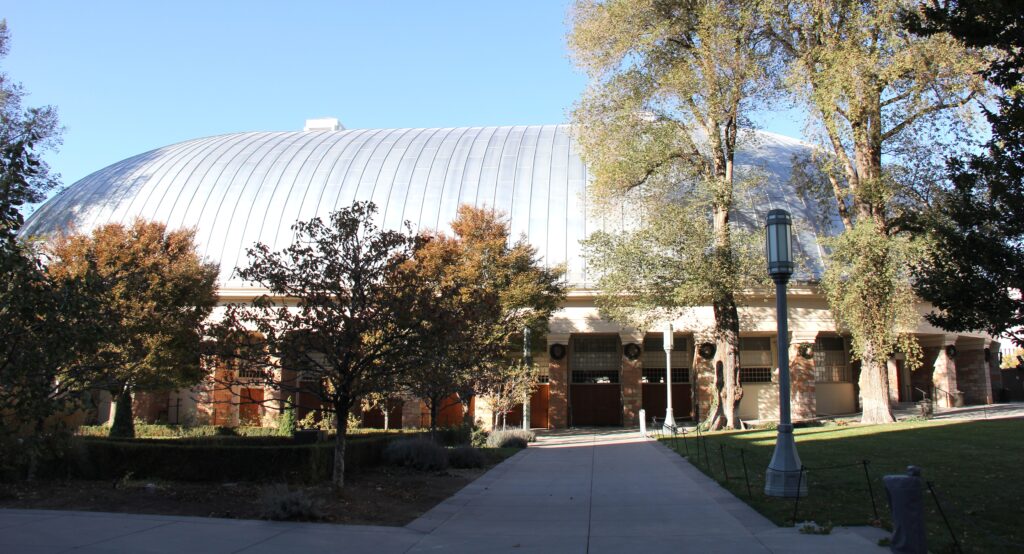
Temple Square, Tabernacle – The Salt Lake Tabernacle was designed for large gatherings and events for The Church of Jesus Christ of Latter-day Saints. Construction on the Tabernacle began in 1863 and was completed in 1867. The key purpose of constructing the building was to allow Latter-day Saints to gather and hear the word of the Lord. The Tabernacle was the first building in the United States to be designated as a National Historic Civic Engineering Landmark.
The Tabernacle, with the iconic 11,623-pipe organ as a backdrop, is now primarily used as the home of The Tabernacle Choir and Orchestra at Temple Square for its weekly rehearsals and performances of Music & the Spoken Word. It is also used for other concert programs as well as for daily organ recitals.
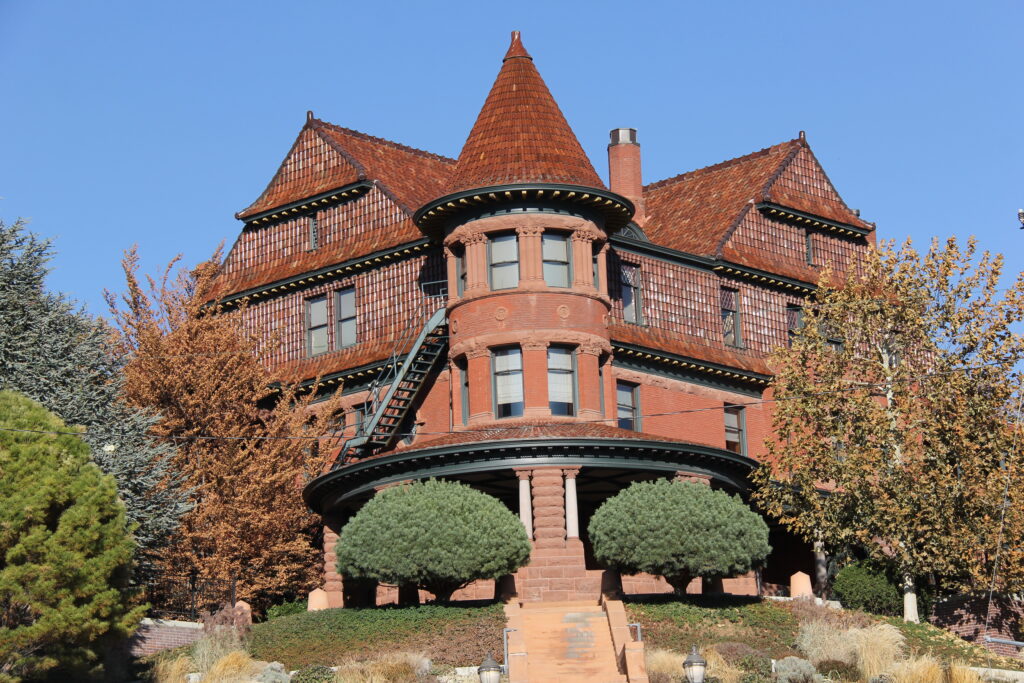
McCune Mansion – You will run into this handsome looking mansion as you walk in downtown from the Temple Square to the Capitol. It was built in 1901 by the railroad and mining tycoon Alfred McCune and later in 1920 donated to the Church of Latter Day Saints. Today the mansion provides an impressive setting for any social or business event like runway fashion shows, movie and video filming, luxurious private parties, and weddings. It is not generally open to the public.
This is the Place Heritage Park – The pioneer story began in New York State in 1830 when The Church of Jesus Christ of Latter-day Saints was organized. The Church grew rapidly through the next 15 years, with major settlements in Ohio, Missouri, and Illinois. Persecution followed the Church members wherever they settled. In February, 1846 they made the decision to trek over 1,000 miles west to the uncivilized lands of the Rocky Mountains. When Brigham Young viewed the great Salt Lake Valley from the mouth of Emigration Canyon, he raised himself on his elbow from his sick bed in the carriage, and exclaimed to Wilford Woodruff in whose carriage he was riding: “It is enough. This is the right place. Drive on.”
The spot near where Brigham Young made this proclamation is now the centerpiece of This Is The Place Heritage Park. For nearly a century, great efforts have been made to preserve and improve the 450 Acre State Park in order to honor the memory of the pioneers, Native Americans, and all who were part of the story which created the great state of Utah.
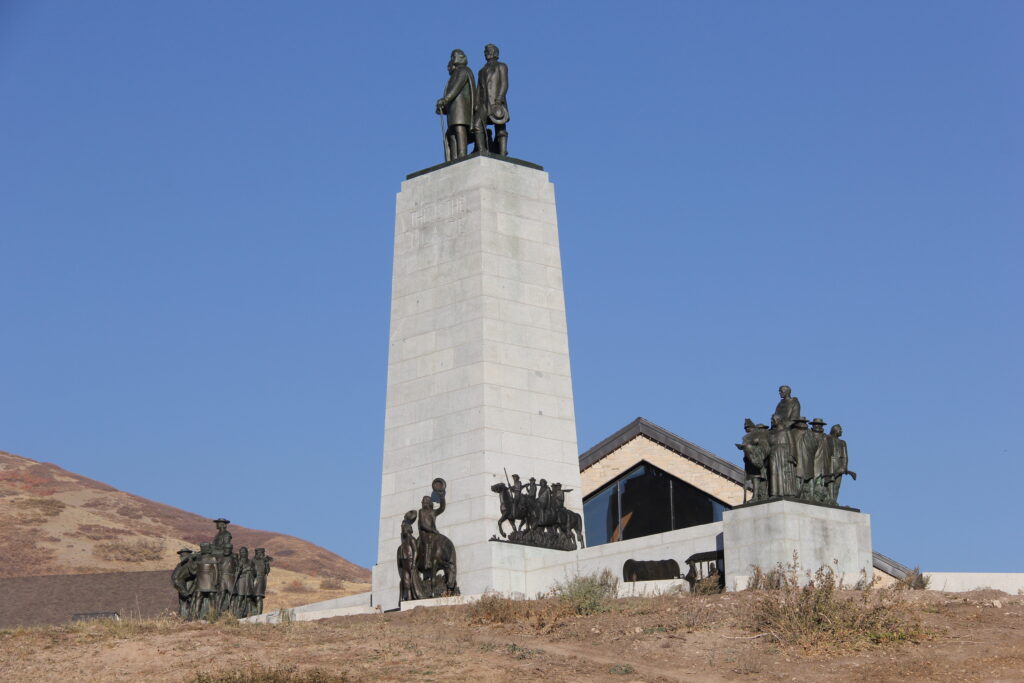
You can stroll the streets of the village, and visit historic homes on a self-guided tour and enjoy Brigham’s Donuts, the Huntsman Grill, ZCMI Toy and Candy Shop, the Livery, and more.
Great Salt Lake – The Great Salt Lake is the largest terminal saltwater lake in the Western Hemisphere located 19 miles west of Salt Lake City and is crucial for millions of migrating birds. A terminal lake has no outlet, so water only leaves through evaporation.
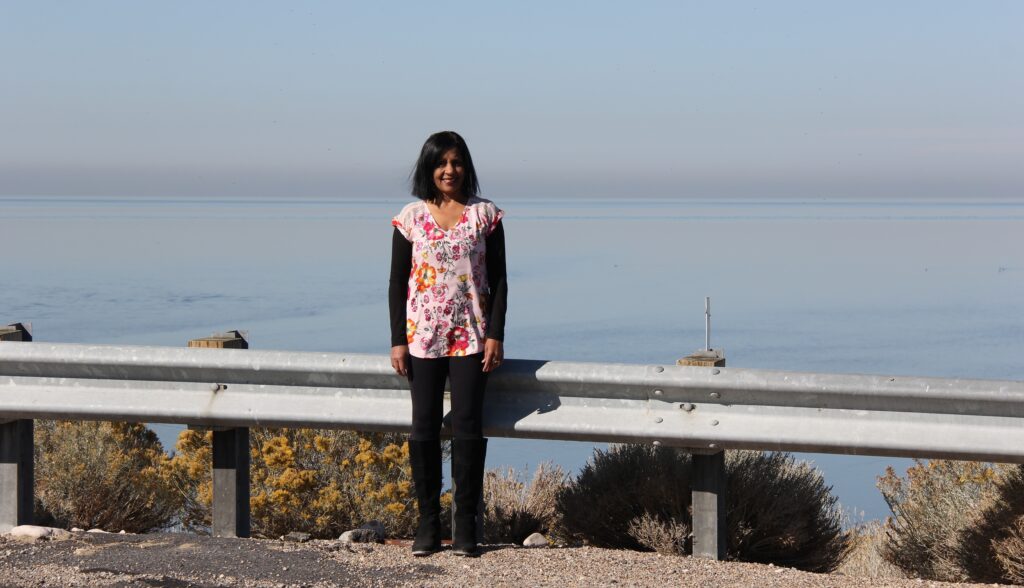
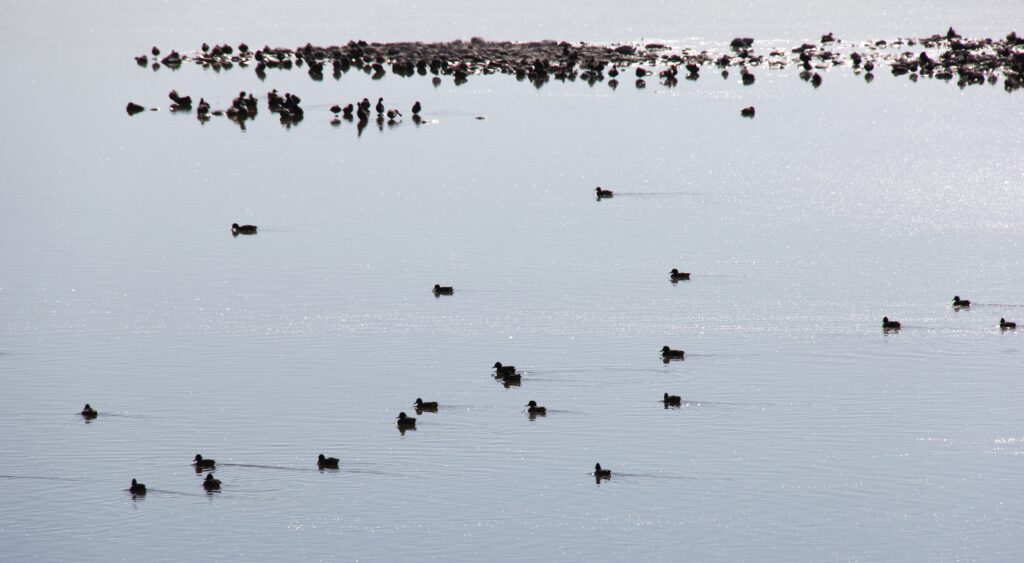
The primary threats to the Great Salt Lake are the declining water levels, increasing salinity, and potential toxic dust exposure, all stemming from water diversions, climate change, and unsustainable water use. These factors are interconnected and pose significant risks to the lake’s ecosystem, wildlife, and human health. The lake has already lost a significant portion of its surface area and water volume, impacting the habitat available for birds and other wildlife and the higher salinity can crash the brine shrimp populations.