3 nights in The Sparrow Hotel
Stockholm is the capital city of Sweden and is one of the cleanest and greenest cities in the world. It is made up of more than 10 islands as you can see in the map below. During our visit to Stockholm, we visited sites in the areas circled in red. Our hotel was located in Norrmalm which is the downtown area of Stockholm. Most of the sites we were planning to visit was within 1 mile walking distance from our hotel.
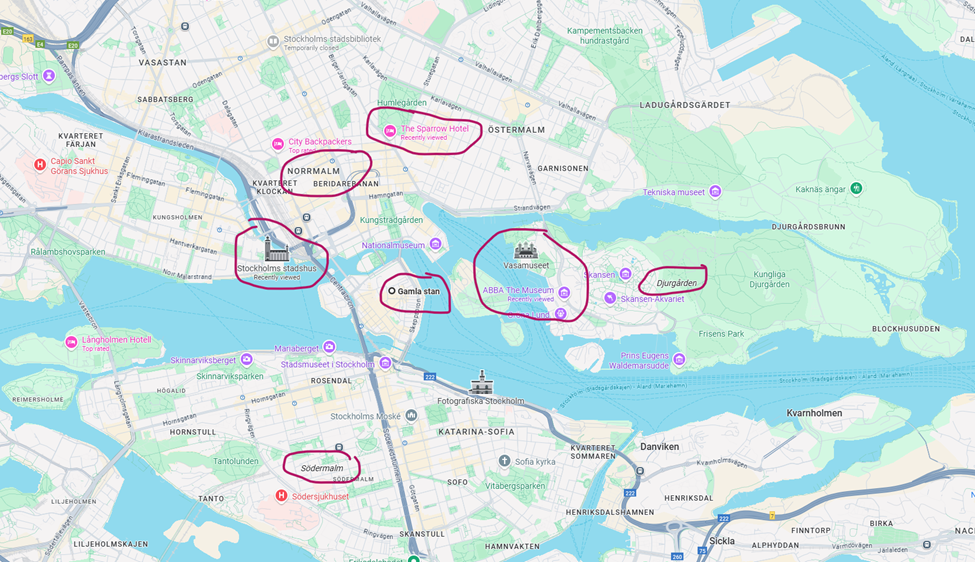
- Norrmalm
- Kungsträdgården
- Gamla Stan (Old Town)
- GuruWalk
- Stortorget, the main public square
- Nobel Prize Museum (Nobelmuseet)
- Stockholm Cathedral (Stockholms domkyrka)
- Royal Palace
- Kungsholmen
- City Hall (Stadshuset)
- Södermalm (a hip and trendy neighborhood)
- Monteliusvägen
- Katarina Viewing Platform
- Djurgården Island (home to museums, parks, and an amusement park)
- ABBA Museum
- Vasa Museum
- Grona Lund amusement park
- Skansen Open air museum
- Archipelago Ferry ride – Vaxholm
- Eric Ericson Hall
Norrmalm, Kungsträdgården (King’s Garden) – This park was less than half a km from our hotel and we had to pass by it on our way to the other attractions in Stockholm. The park’s location and its outdoor cafés makes it a popular place to hangout. It hosts open-air events in summer and is transformed into an ice rink in the winter.
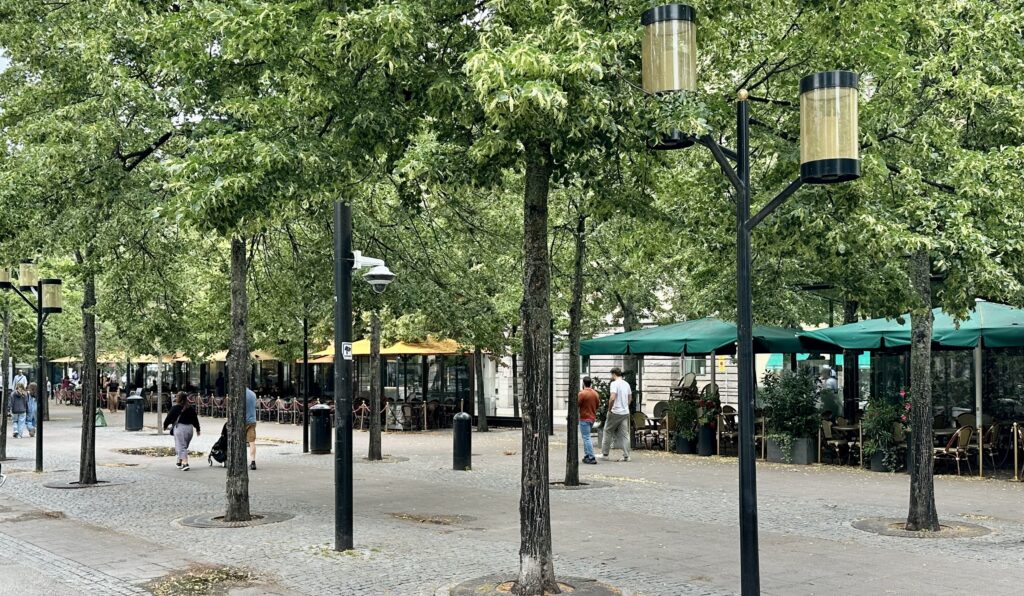
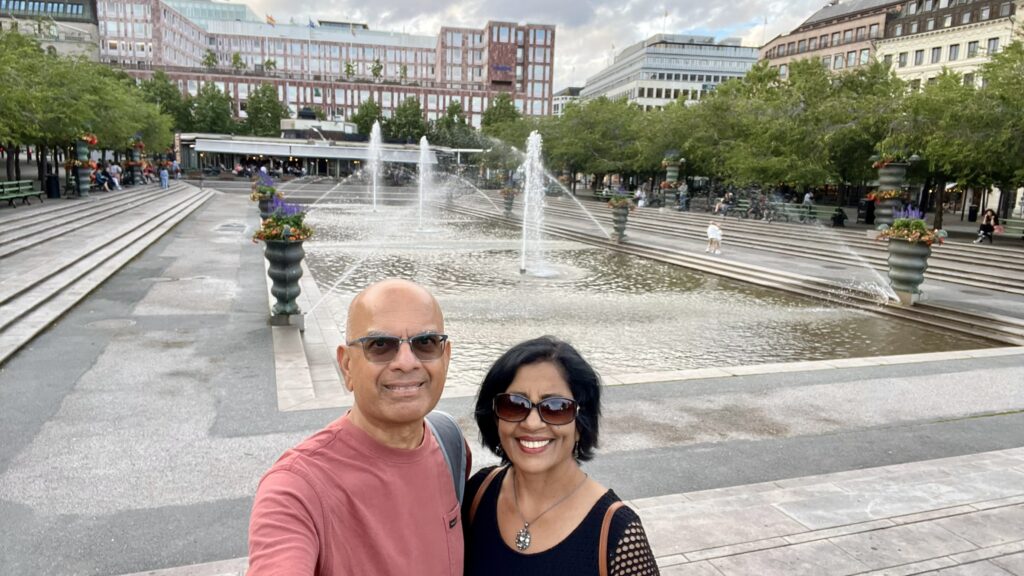
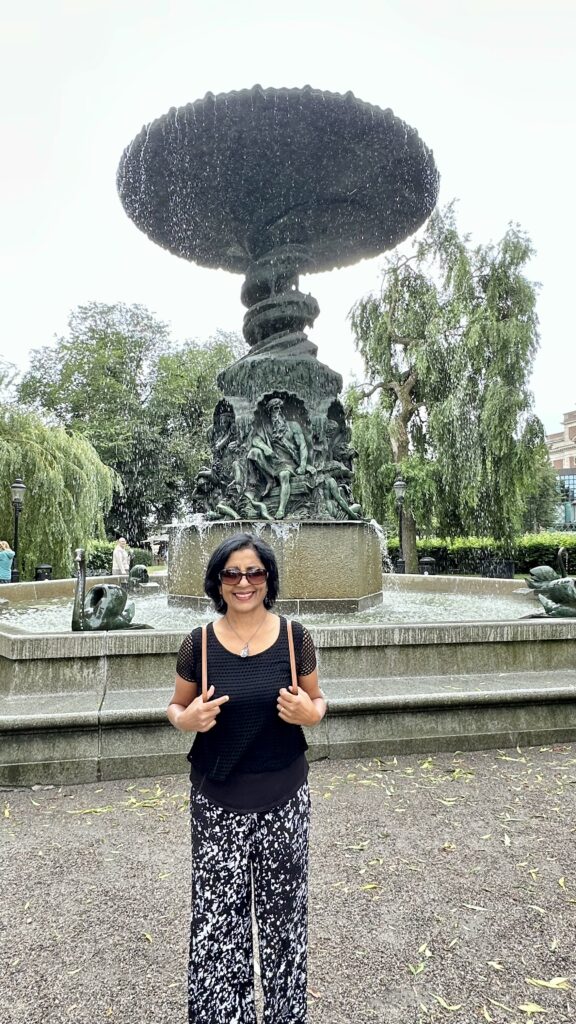
The park is divided into four distinct spaces from north to south – Fountain of Wolodarski, Square of Charles XIII, Molin’s Fountain, and Square of Charles XII.
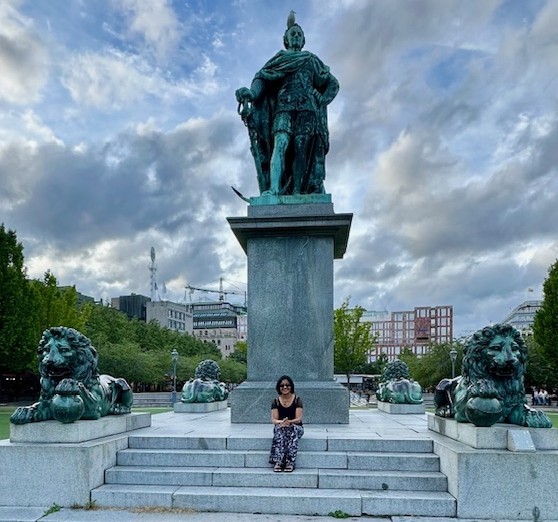
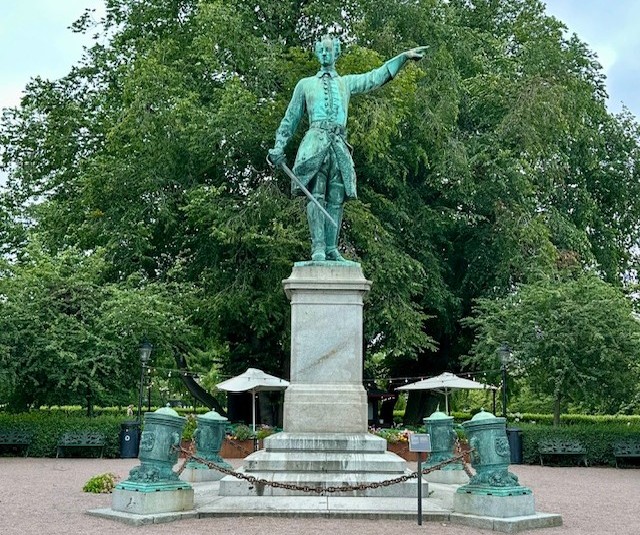
GuruWalk – We started booking these tours in all the big cities. GuruWalk tours often deviate from standard tourist routes to explore hidden gems and local spots that you might otherwise miss. Most tours are 2-3 hours long of walking in and around city center and the guide will answer all your questions and give you recommendations on places to eat, drink etc. At the end of the tour, tip the guide based on how much you enjoyed the walk (minimum recommended amount $10).
Our guided tour was close to 3 hours long starting at the corner of Drottningatan and Stromgaten and ending at Stortorget.
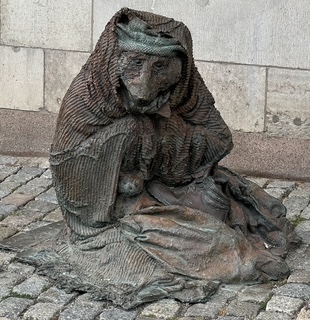
There is a sad statue called Hemlös räv (“Rag and Bone”) near the place we started the tour. It is a bronze sculpture of a homeless fox by British artist Laura Ford. The sculpture, created in 2008, depicts a small fox huddled amongst a pile of blankets with a pair of worn boots. The guide explained that the statue was placed there by the city of Stockholm so that the tourists and the wealthy can spare a thought for the homeless, and maybe some change as well.
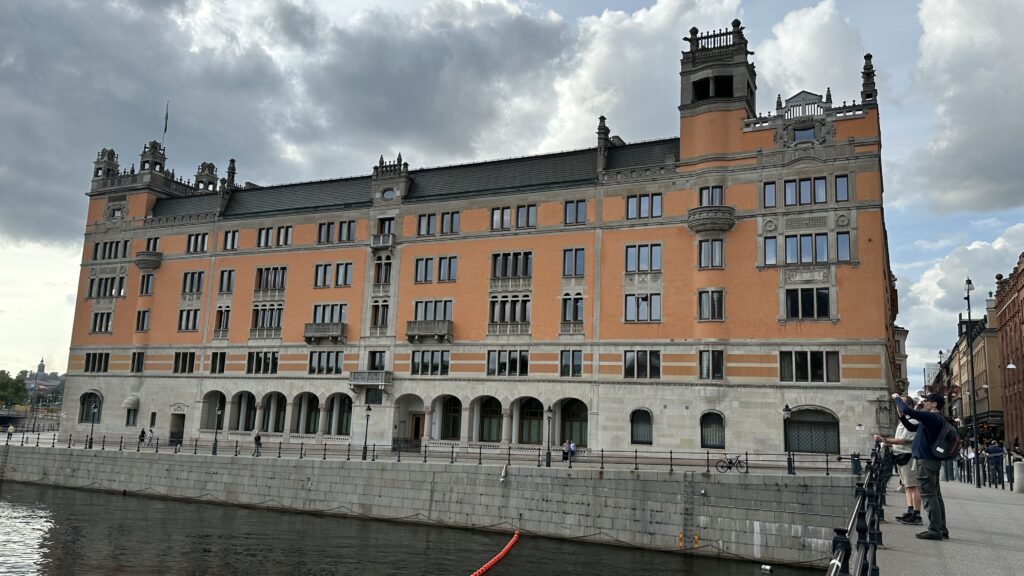
GuruWalk, Rosenbad and Sagar House – Rosenbad is owned by the Swedish State and serves as the seat of the Government and Prime Minister’s office. It is located close to the Sagar House, the official residence of the Prime Minister.
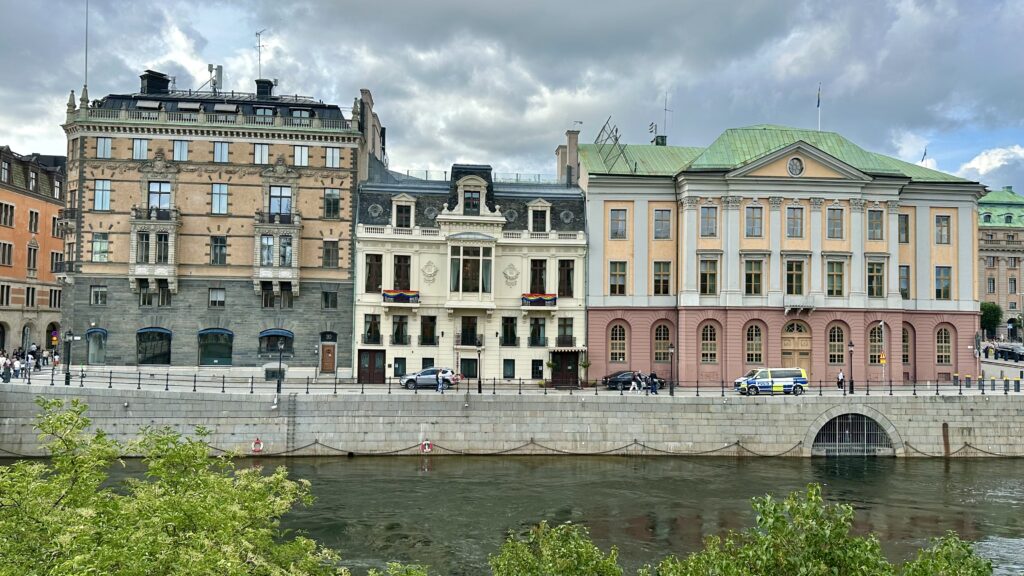
GuruWalk, Foreign Office – The Ministry of Foreign Affairs was created in 1791, when Gustav III established the King’s Cabinet for Foreign Correspondence. It was formally named the Ministry of Foreign Affairs in 1840 and is responsible for foreign policy, international development cooperation and foreign trade. The building shares one side of its wall with the residence of the Prime Minister (see picture above)
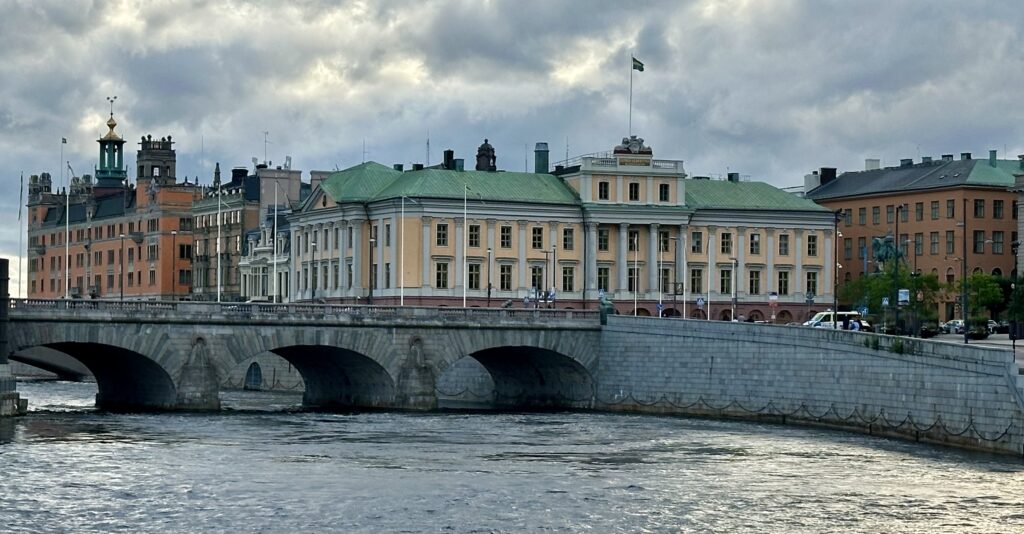
GuruWalk, Riksdag – is the parliament and the decision making body of the Kingdom of Sweden. It has been a unicameral parliament since 1971. The Riksdag performs the normal functions of a legislature in a parliamentary democracy like enacting laws, amending the constitution etc.
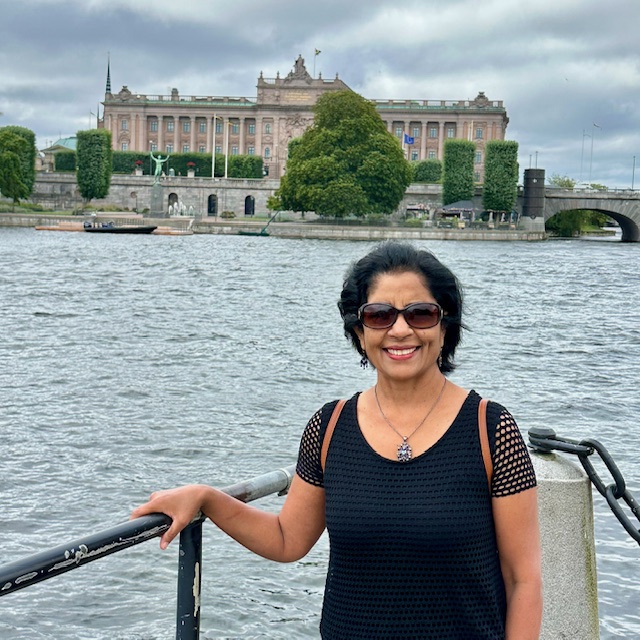
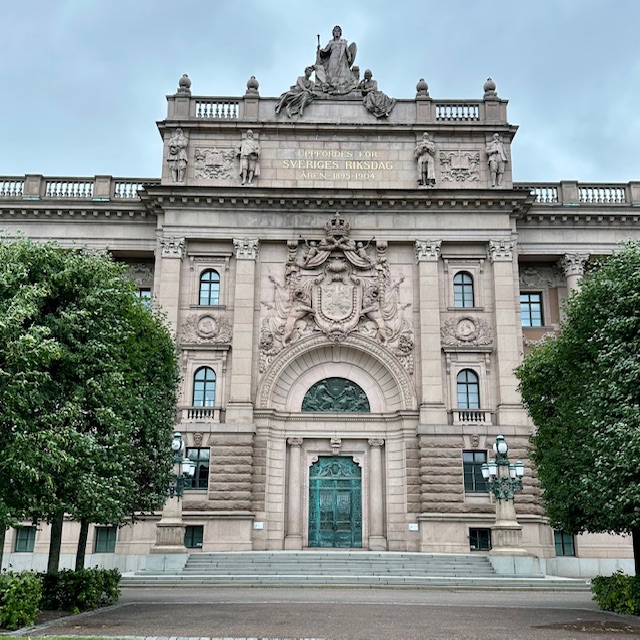
Two large arches connect the original parliament building with the new parliament building, which are divided by a pedestrian street. The new parliament building has a signature semicircular shape. It housed the Riksbank building which moved to Brunkebergstorg in 1976. The pictures below display view of the parliament building from 2 different angles.
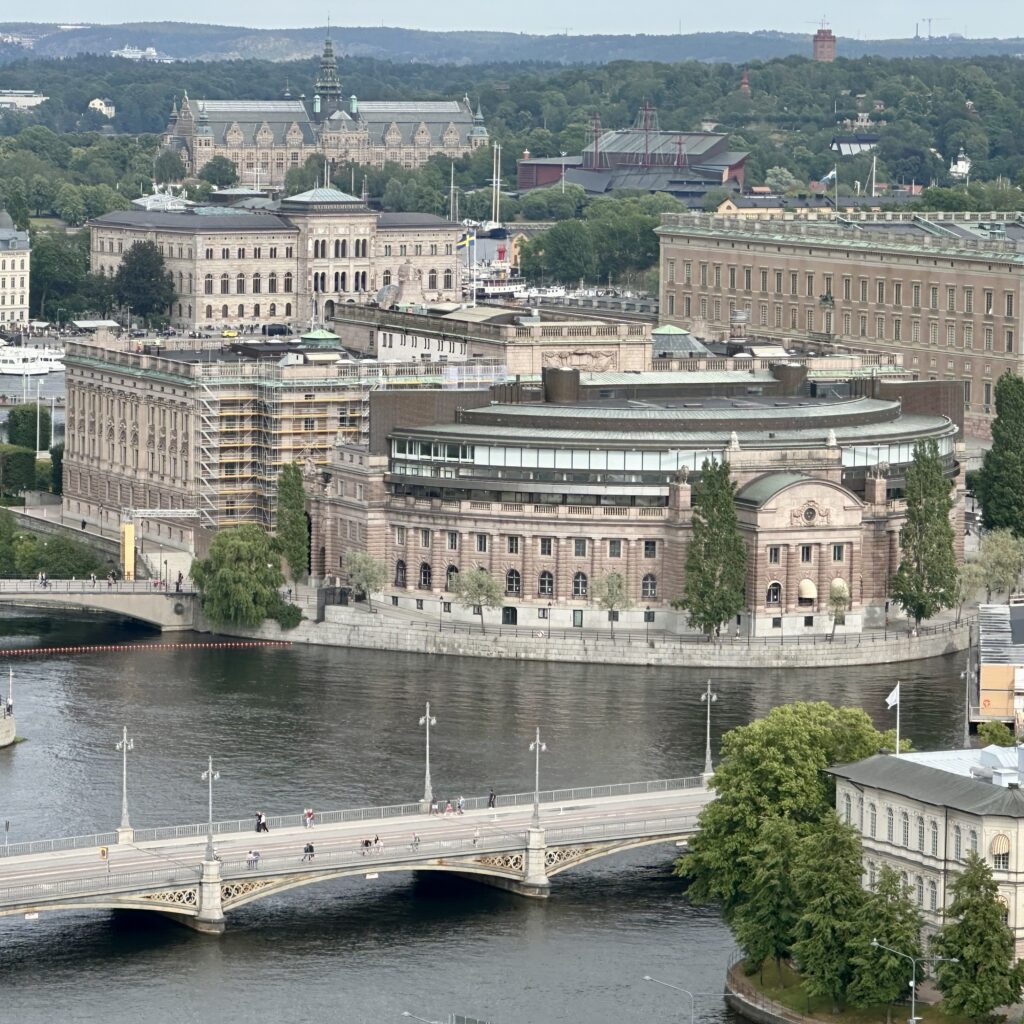
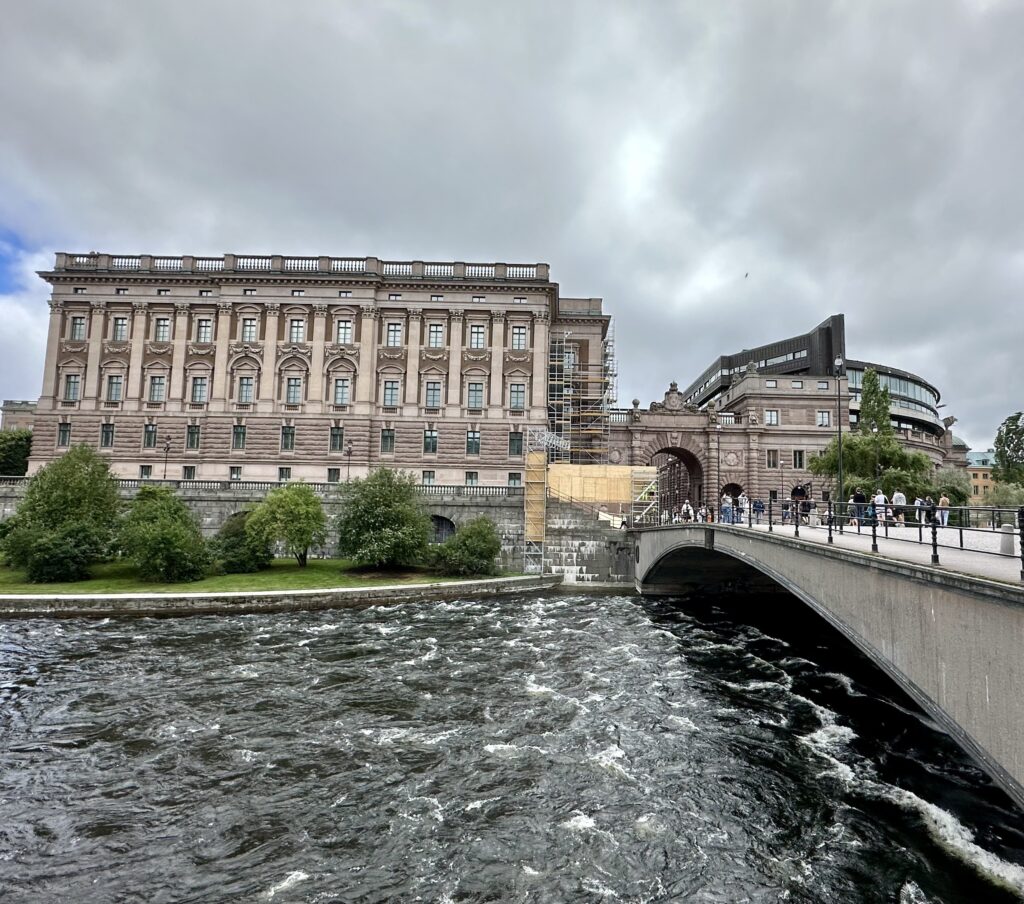
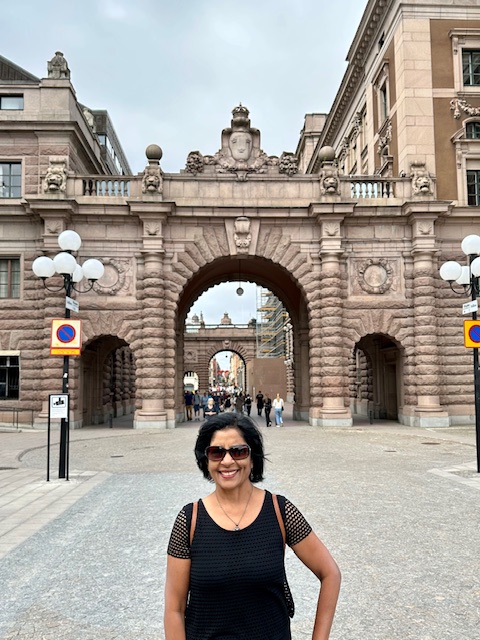
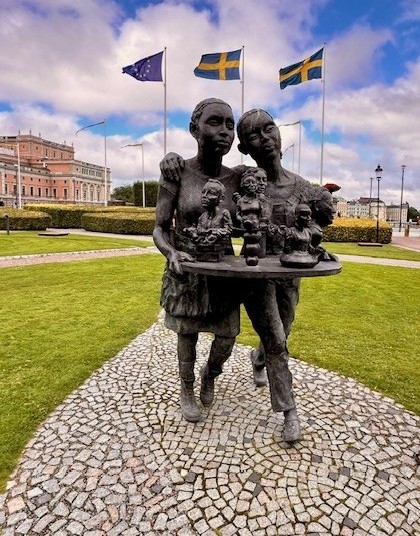
Riksdag, Sculpture – On Riksplan (plaza in front of Riksdag) outside of the Eastern Wing of the Riksdag building, you will find the artwork Come as you are! The work was erected in June 2022 in connection with the Swedish Parliament celebrating 100 years of democracy. The sculpture was created by the artist Astrid Göransson in collaboration with the Swedish Parliament and the National Public Art Council. The work of art Come as you are! constitutes three parts –
- The path – constructed of mosaic paving stones, which leads to the Riksdag.
- The sculpture – which depicts the first five women in the Riksdag. Kerstin Hesselgren, Elisabeth Tamm, Nelly Thüring, Bertha Wellin and Agda Östlund.
- They are being carried forward by two young women from our day to show that the fight for democracy and equality continues into the future. The work connects the five pioneers with all future generations.
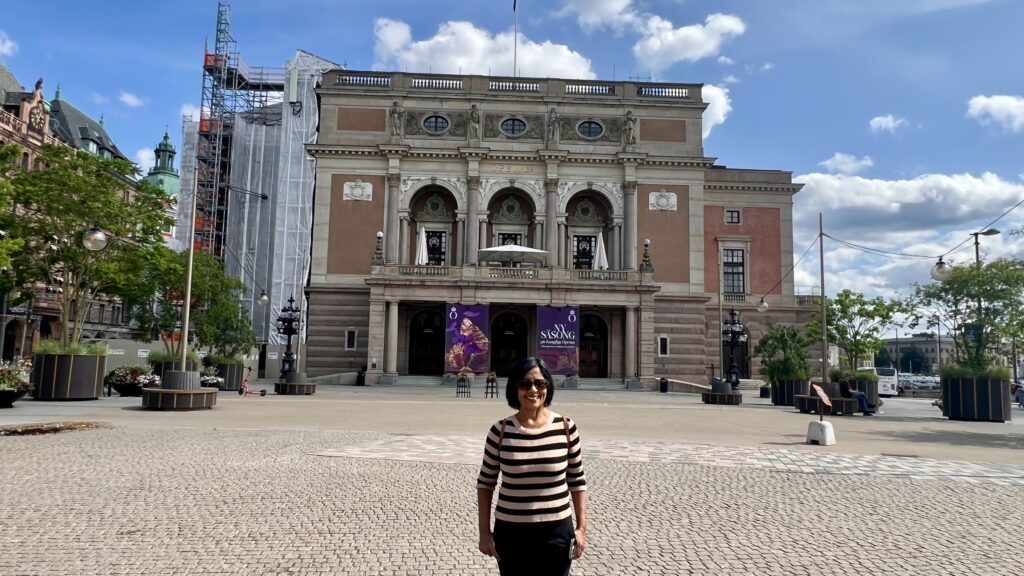
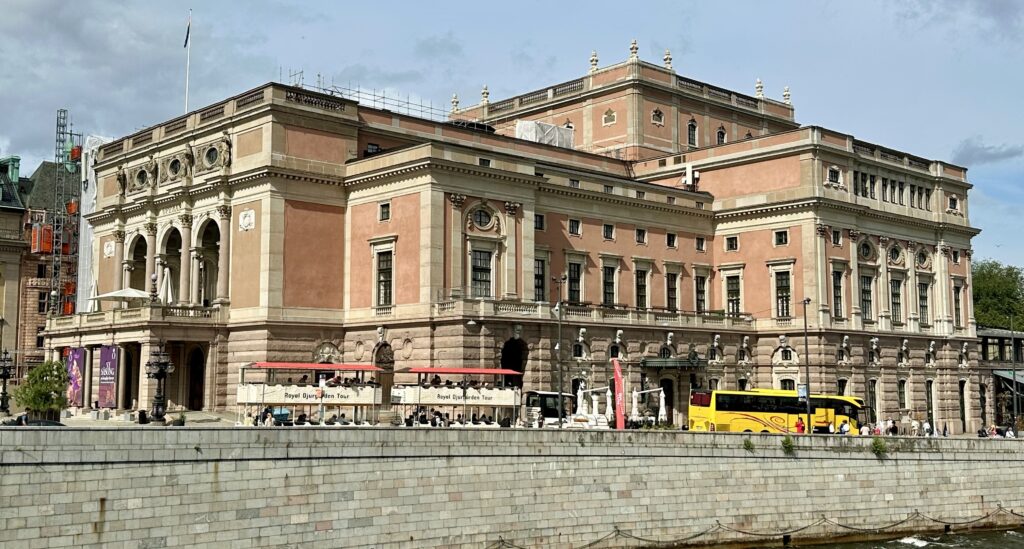
Royal Stockholm Opera – Founded by King Gustav III in 1773, this is the heart of opera in Sweden and home to opera singers, the Royal Swedish Opera Chorus and the Royal Swedish Ballet. The Royal Swedish Orchestra is also one of the oldest in the world, founded in 1526. You can book a tour to take a look backstage, visit the royal rooms, and peer down into the orchestra pit.
GuruWalk, Finska Kyrkan (Finnish Church) – The church’s origins trace back to the 16th century, with the first Finnish church service in Stockholm recorded in 1533. This was during a time of significant movement of people between Finland and Sweden, which was then part of the same kingdom. The church played a vital role during periods of conflict and displacement, such as the Russian occupation of Finland in the 18th century and the Finnish Civil War in the 20th century. It provided a space for refugees to connect with their Finnish heritage and find support within the community. Today, the church is a center for Finnish culture in Stockholm, fostering a sense of community and preserving Finnish traditions.
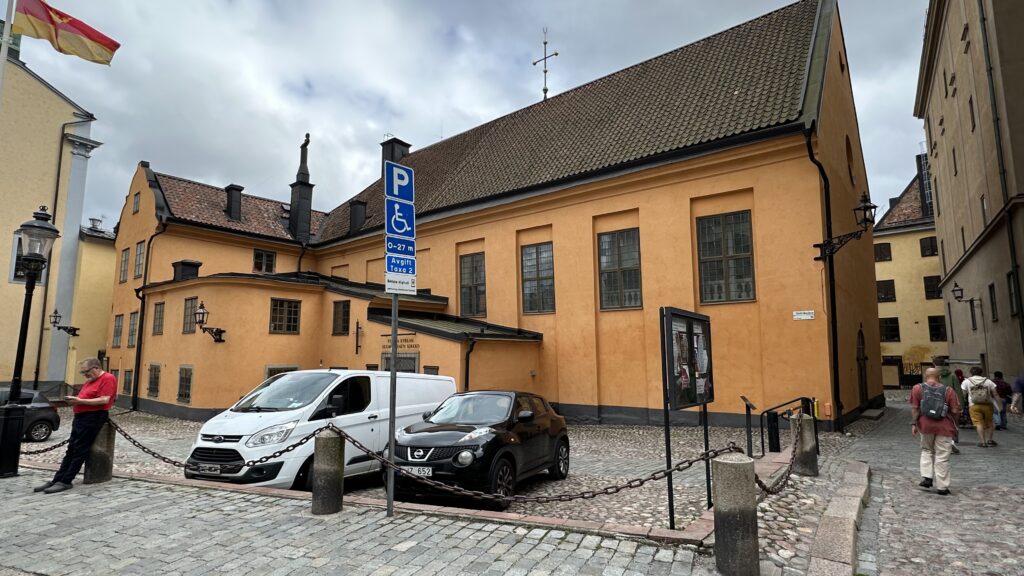
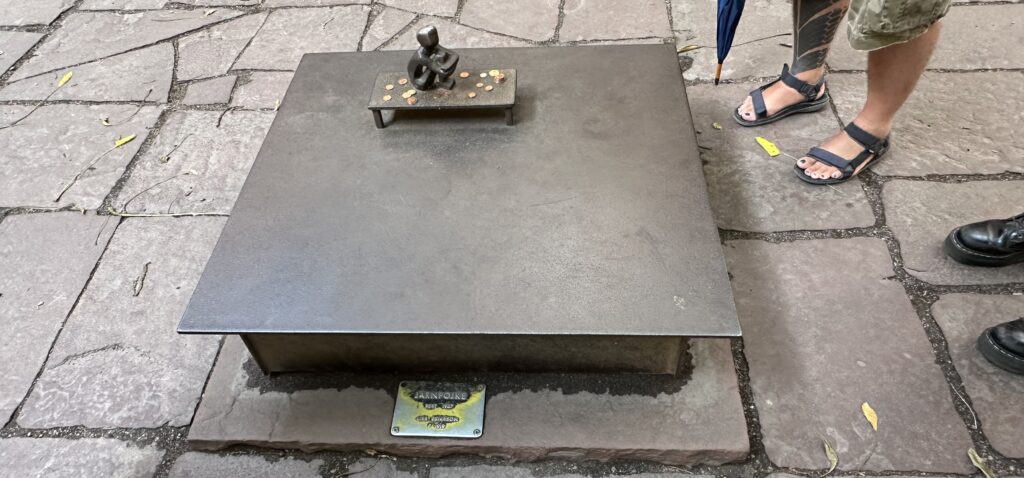
GuruWalk, Järnpojke or Iron Boy (translated to little boy who looks at the Moon) – is a sculpture in Old Town created by Liss Eriksson in 1954 and inaugurated in 1967. At 15 cm high, it is the smallest public monument of Stockholm. The sculpture is located behind the Finnish Church.
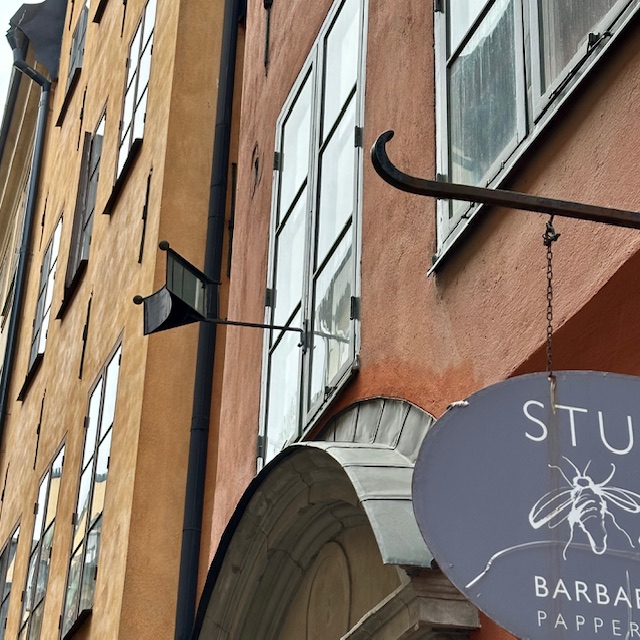
GuruWalk, Gossip Mirrors – or Skvallerspeglar are small, angled mirrors mounted on the outside of windows, allowing residents to see up and down the street without being seen themselves. These mirrors are mostly found on older buildings of Gamla Stan.
In the 18th and 19th centuries, women in some areas were not permitted to walk the streets without male escorts, making the gossip mirror a valuable tool for staying connected and informed. The primary purpose of these mirrors was to allow residents to discreetly monitor the street, keeping an eye out for visitors, deliveries, or simply observing the neighborhood.
While less common now, gossip mirrors are still found in some older buildings and are sometimes added as a decorative element to maintain the historical aesthetic.
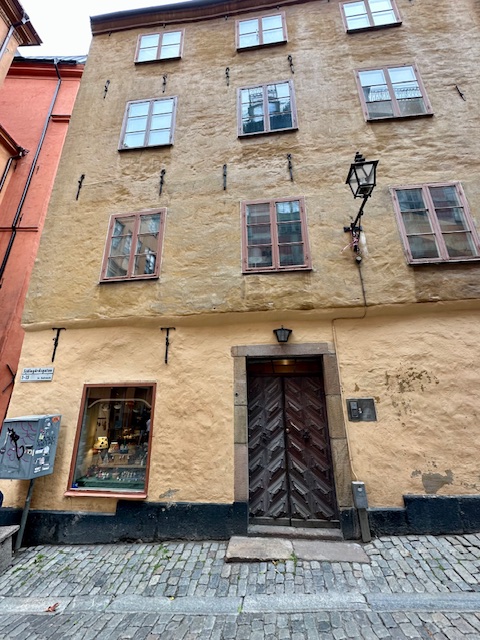
GuruWalk, Anchor Plates – Many of the old buildings in Gamla Stan, have anchor plates made of cast iron on the exterior walls which come in a wide variety of shapes giving them a decorative quality – everything from straight lines to more cursive shapes. These cast iron anchors are attached to the rafters inside the house so that they will not slip loose. Depending on the shape and design of the anchor, you can figure out the age of the house. Houses with straight lined anchors belong to 1750s and houses with squiggly shaped anchors are older and from the 1650’s.
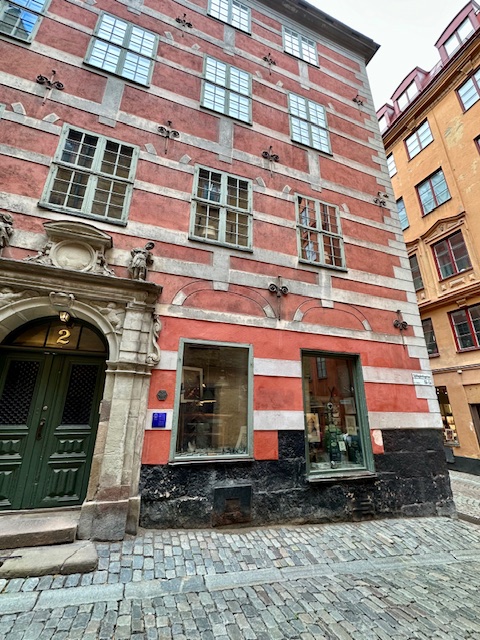
GuruWalk, Iron Square – Also known as Järntorget, this square dates back to around 1300, and is Stockholm’s second oldest square, just younger than Stortorget. Originally named Korntorget (Grain Square), it was renamed in 1489 as the iron trade overtook grain in importance. For centuries, the square was a hub of commerce, dominated by German merchants and home to wealthy individuals.
Today the square is surrounded by lively cafes and serves as a perfect backdrop for leisurely strolls and social gatherings. Visitors can enjoy a cup of coffee while soaking in the local atmosphere.
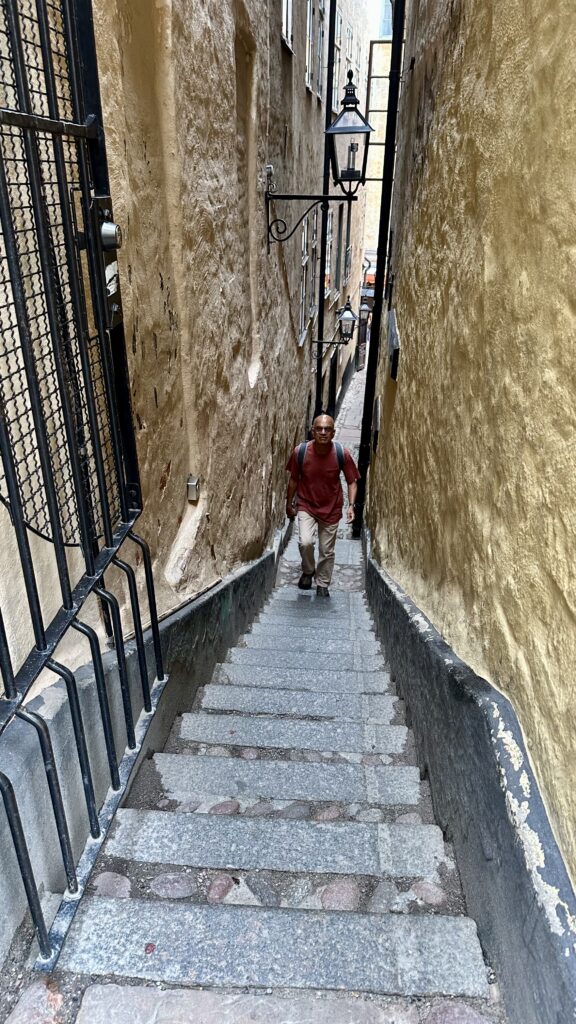
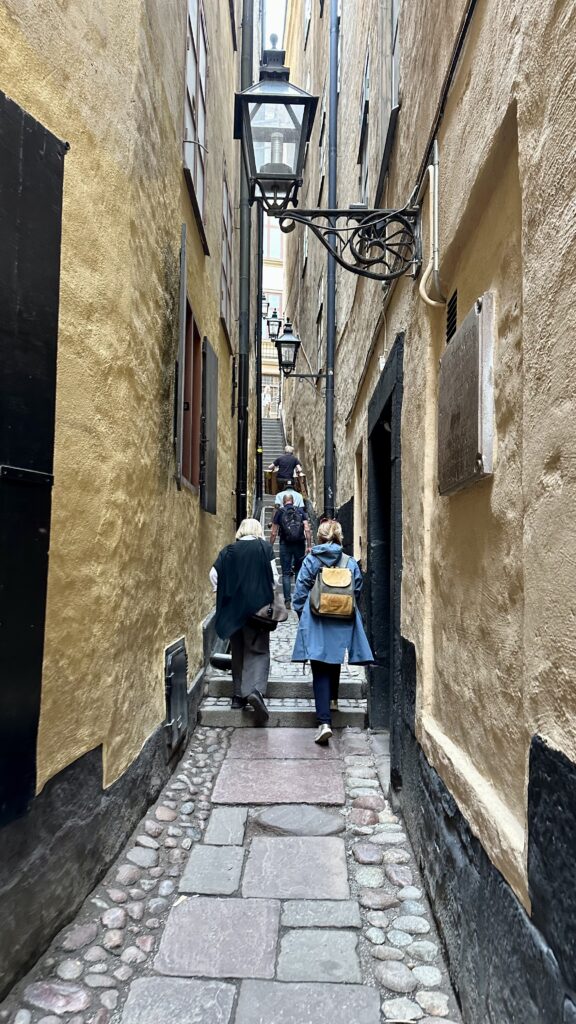
GuruWalk, Marten Trotzig’s Alley – Located in the heart of Stockholm’s Old Town, this area is renowned for its charming, centuries-old buildings and labyrinthine streets that have stood the test of time. Mårten Trotzigs Alley is particularly notable for being the narrowest street in Stockholm, a characteristic that has made it a popular attraction for both locals and tourists. At its tightest point, it measures only 35 inches (about 90 cm) wide. This cramped passage is a walkway and a steep staircase that connects two of the main roads in Gamla Stan. The name of the alley pays homage to Mårten Trotzig, a wealthy German merchant who settled in Stockholm during the 16th century.
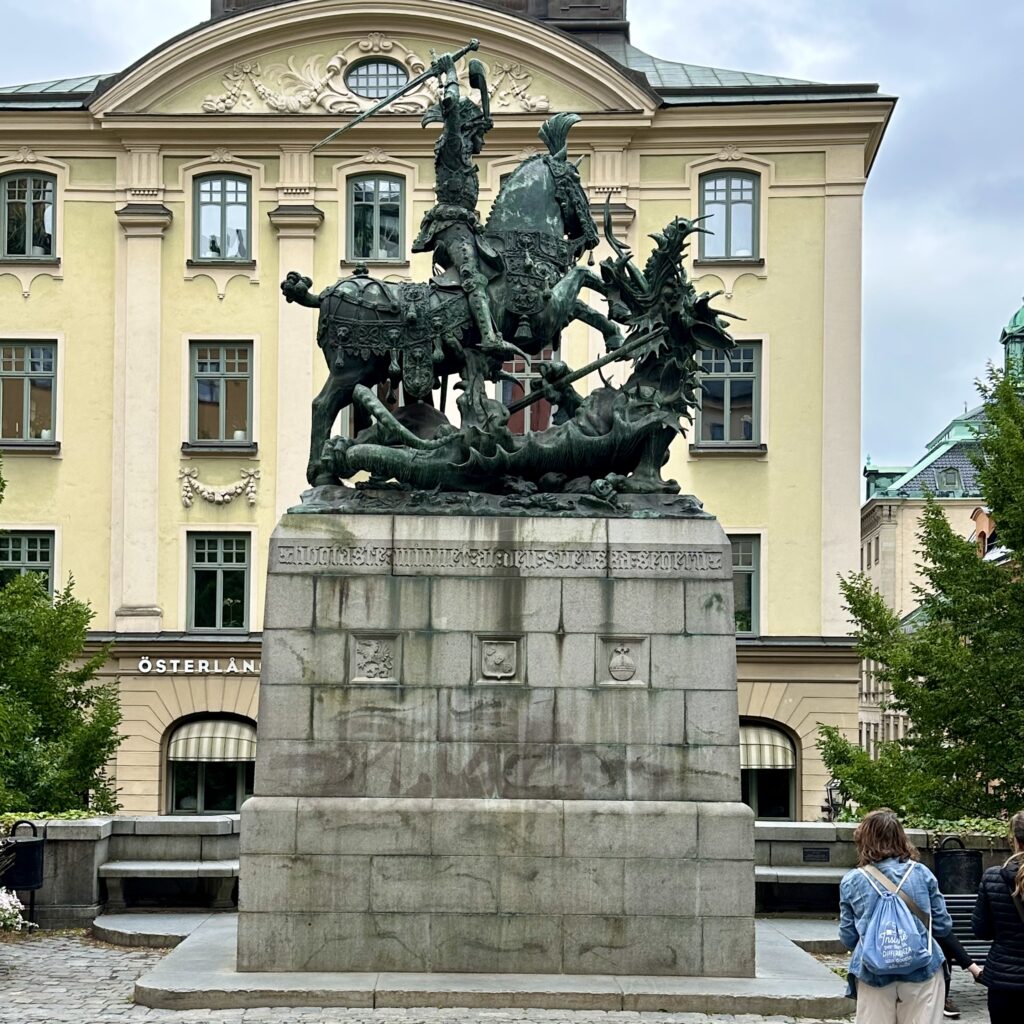
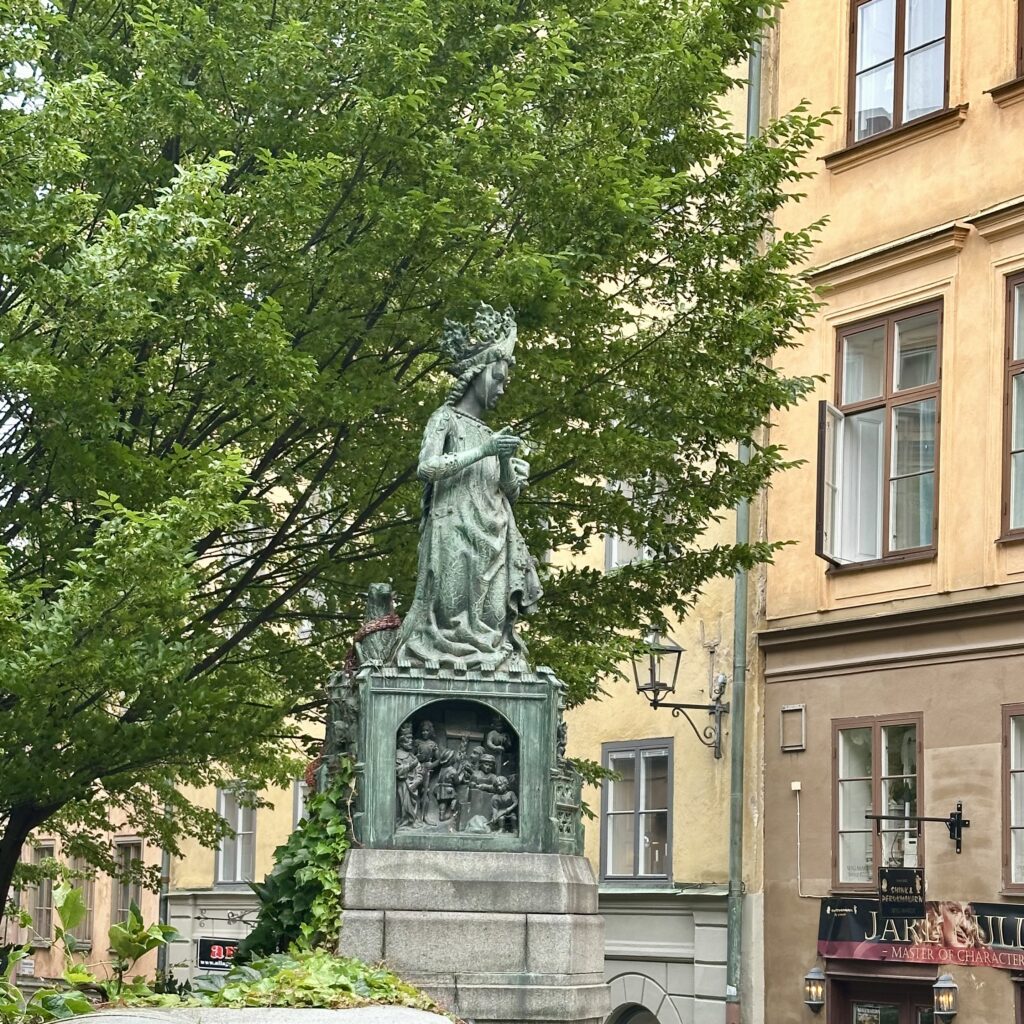
GuruWalk, St. George and the Dragon Statue – This sculpture is located in Köpmantorget (Merchants’ Square) in Gamla Stan. Unveiled on 10 October 1912, it is a bronze replica of Bernt Notke’s wooden St. George and the Dragon Statue which is in Stockholm Cathedral. It depicts the knight, sword raised, about to deliver the final blow to the dragon, which is lying prone on its back having been lanced. This iconic sculpture represents the eternal struggle between good and evil.
The princess who is part of the sculpture waits in her bridal veil along with a lamb. If the knight loses the battle, she and the lamb will become the dragon’s next meal. In the square, the princess is placed separately on a pedestal.
GuruWalk, German Church – also known as St. Gertrude’s Church or Tyska Kyrkan, this church was originally built for the city’s German-speaking community in the 17th century. The church is a jewel of Baroque architecture with a tall tower that rises 96 meters above the water and is capped with a copper rooster. Its richly adorned interior features intricate woodcarvings, stained glass, and a beautifully crafted organ.
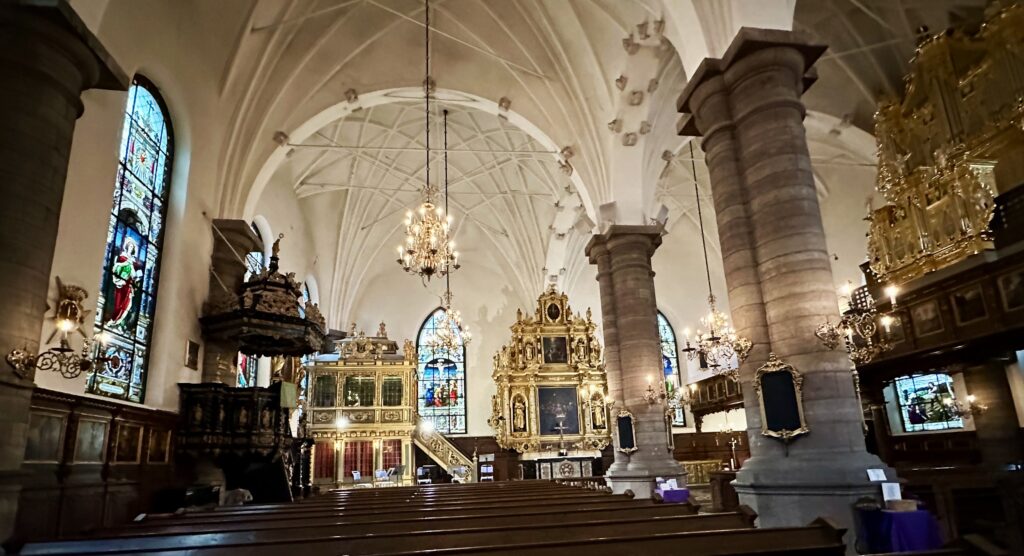
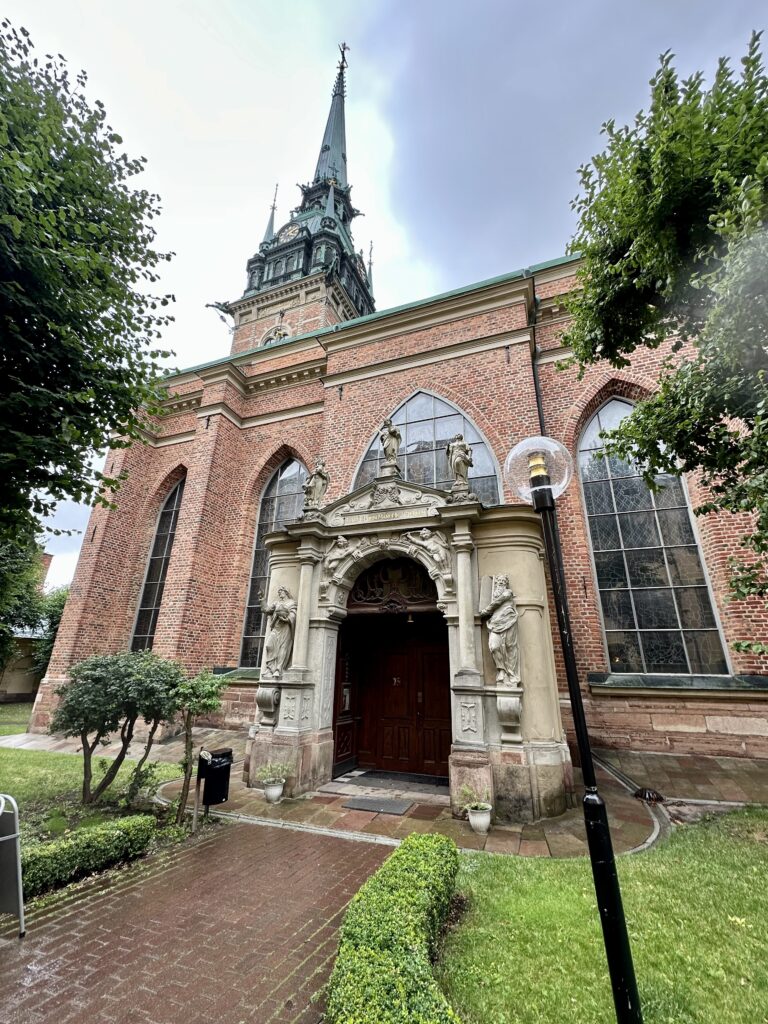
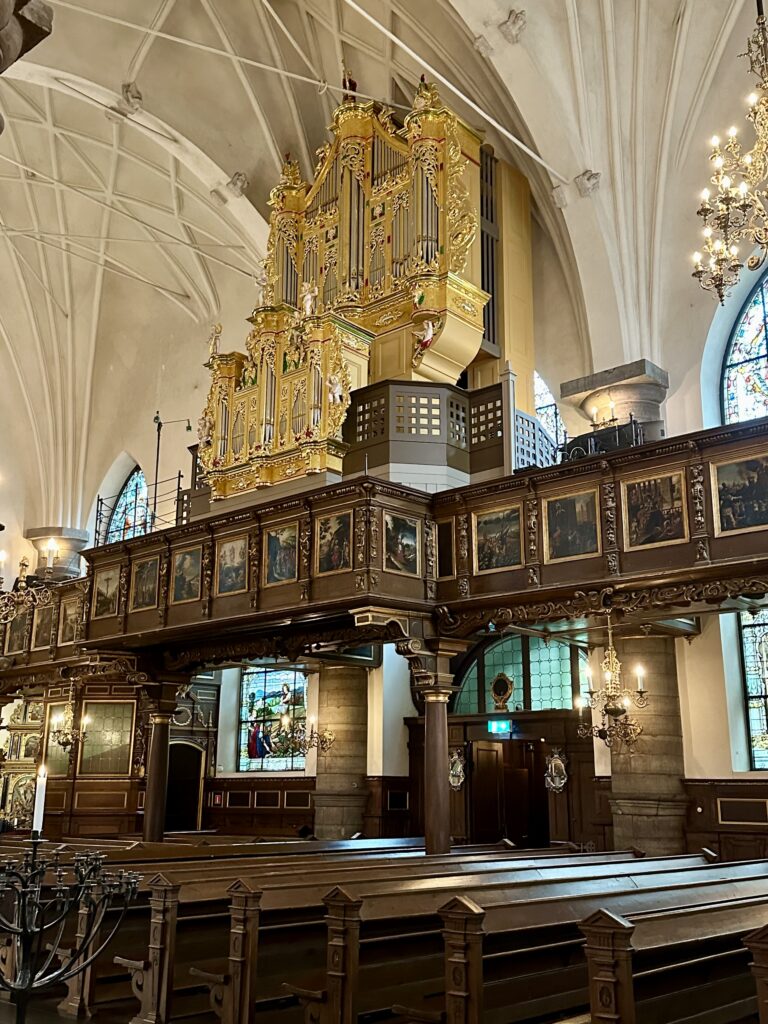
Despite the passage of centuries, the German Church remains a vital part of the German-speaking community in Stockholm. It also welcomes international visitors and music lovers to enjoy concerts and cultural events throughout the year.
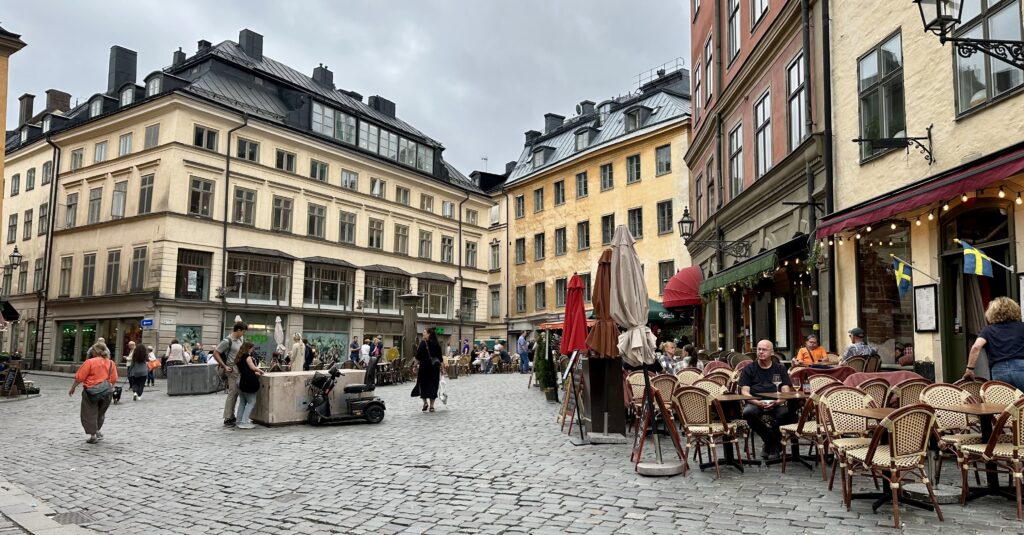
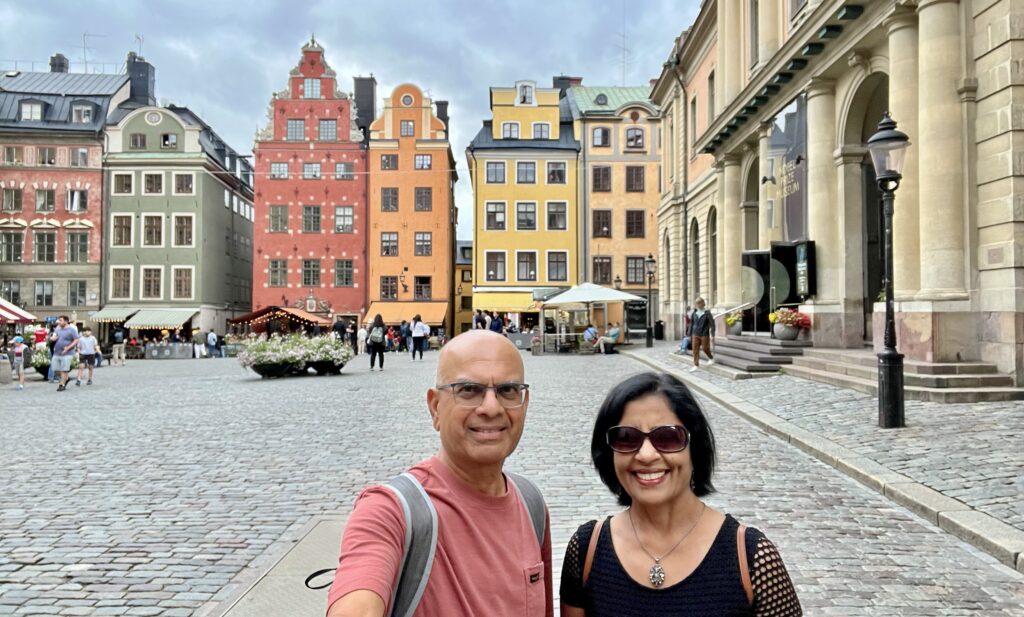
Gamla Stan, Stortorget – Stortorget or The Great Square, is the oldest and most beautiful public square in Stockholm. Situated in the heart of the city’s historic old town, this square dates back to the 13th century. With its cobbled streets and colorful facades, it remains one of the most iconic and photographed destinations in Sweden’s capital. Originally developed as a central marketplace, Stortorget quickly became the epicenter of social and commercial life in medieval Stockholm. Over the centuries, it hosted everything from royal proclamations and public celebrations to somber political reckonings.
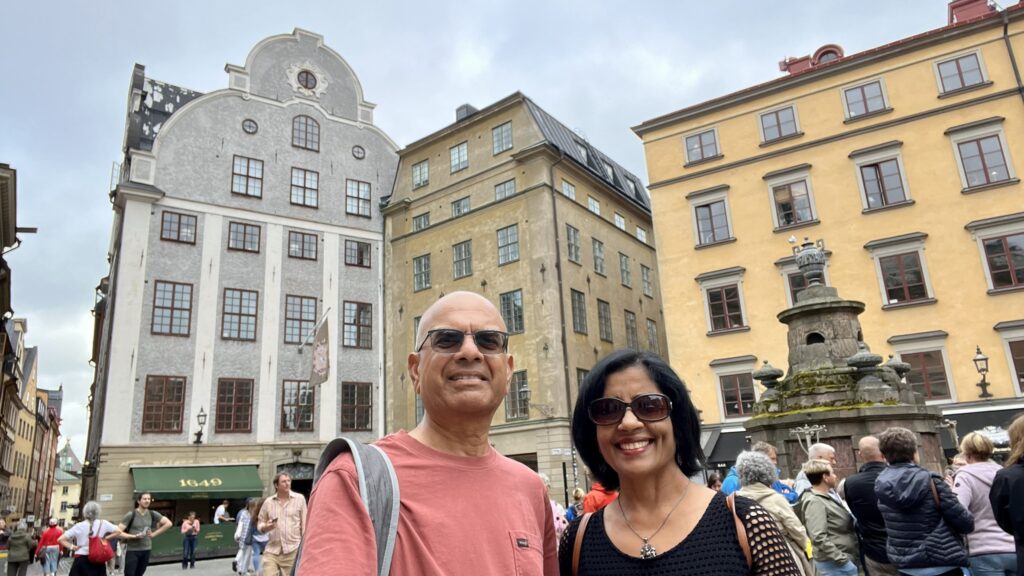
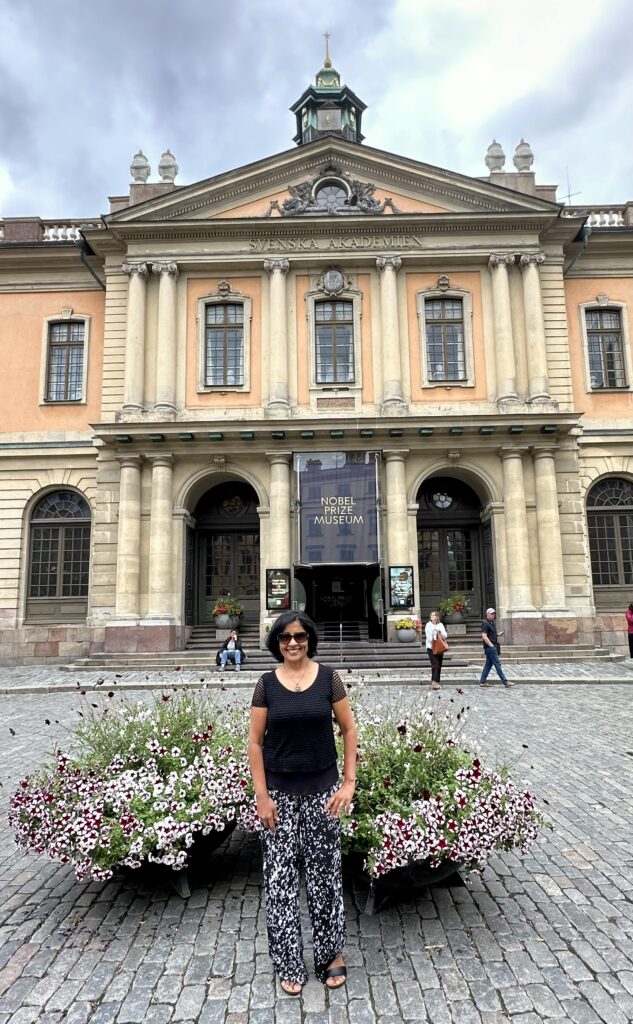
Gamla Stan, Nobel Prize Museum (Nobelmuseet) – One side of Stortorget is dominated by the Nobel prize museum. Opened in 2001, the museum showcases information about Nobel Prize, Nobel Laureates, and Alfred Nobel, the founder of the prize. The ticket includes a 25 minute guided tour in which you get to hear some interesting information about all the displays in the museum.
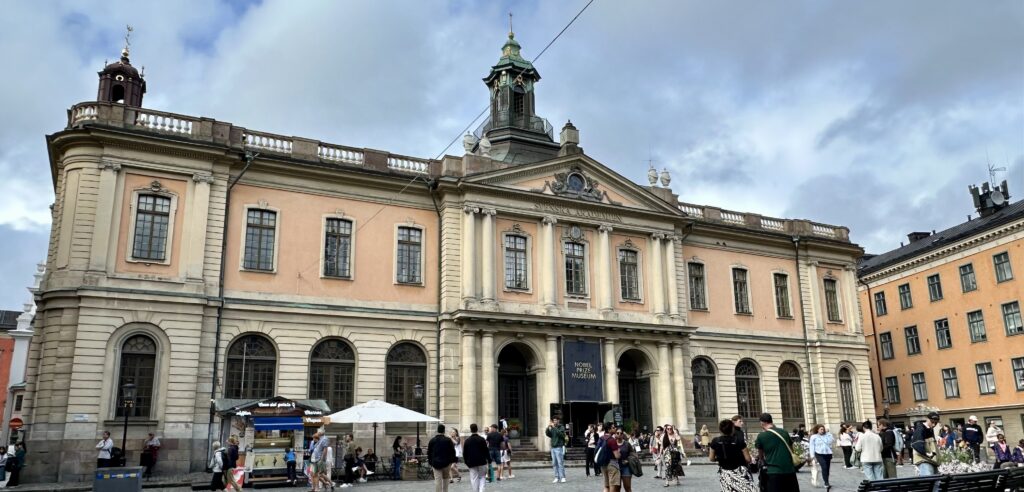
The museum also displays over 250 personal items donated by laureates, providing insights into their lives and groundbreaking discoveries and contributions to science, literature, peace, and economics. Some of the interesting objects include –
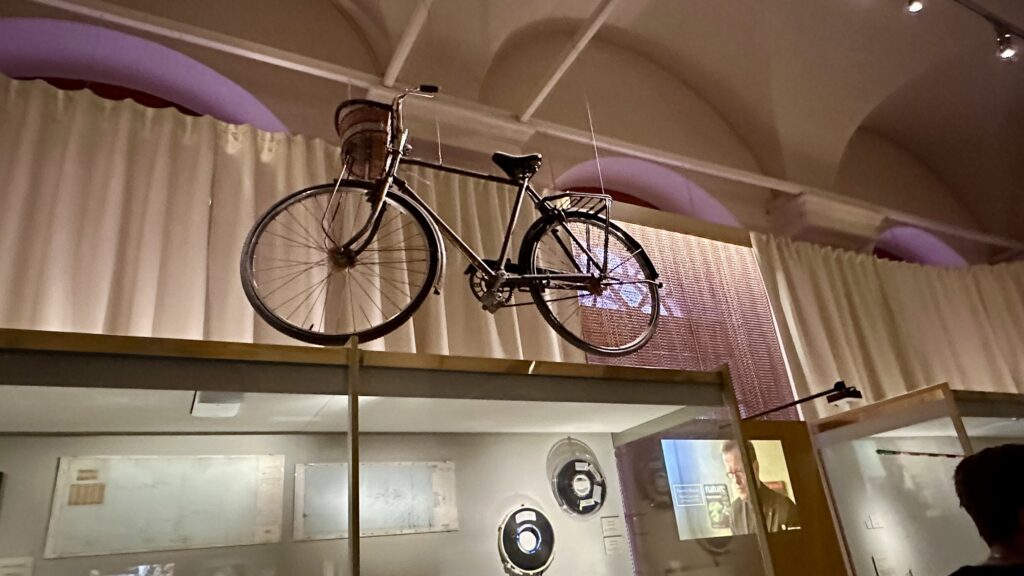
- Bicycle donated by Amartya Sen – 1998 Nobel Laureate in Economics donated the bicycle that played a role in his research when he was conducting field studies in rural West Bengal.
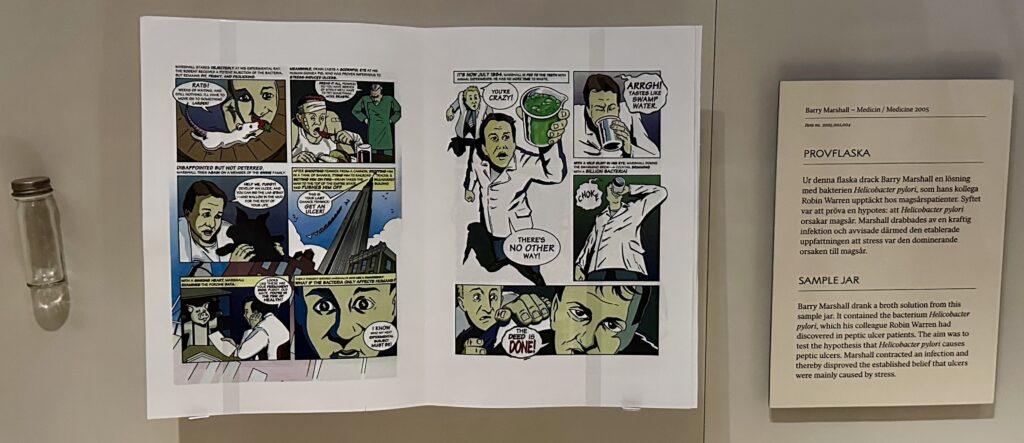
- Barry Marshall’s Sample Jar – 2005 Nobel Laureate in Medicine donated the sample jar from which he drank a broth that contained the bacterium helicobacter pylori that causes peptic ulcers. Marshall contracted an infection and thereby disapproved the established belief that ulcers were mainly caused by stress.
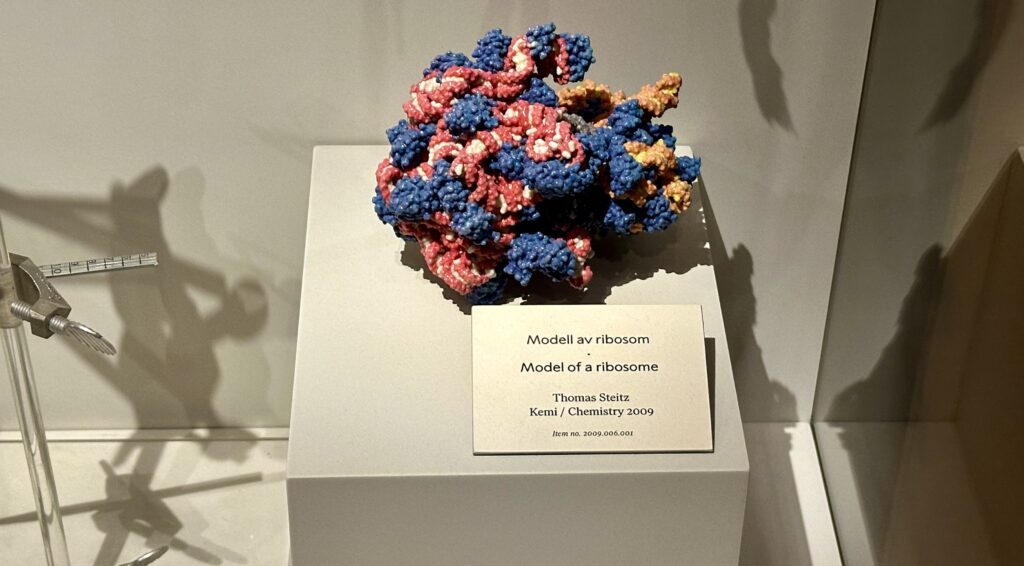
- Thomas A. Steitz ribosome model – 2009 Nobel Laureate in Chemistry donated the model of ribosome.
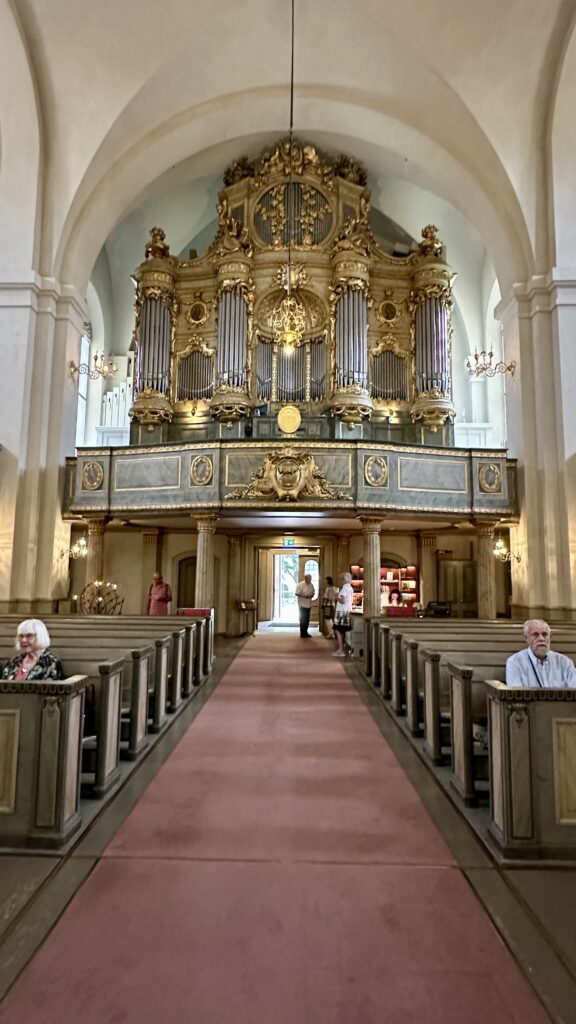
Gamla Stan, Stockholm Cathedral (Storkyrkan) – This Cathedral is within a few meters of Stortorget and the Royal Palace in the very heart of medieval Stockholm. The cathedral dates back to 1300 and is home to several renowned artefacts. The building has been extended multiple times and features painted ceilings dating back to its earliest construction. The cathedral serves as the seat of the Bishop of Stockholm and has been the site of royal coronations and weddings for years.
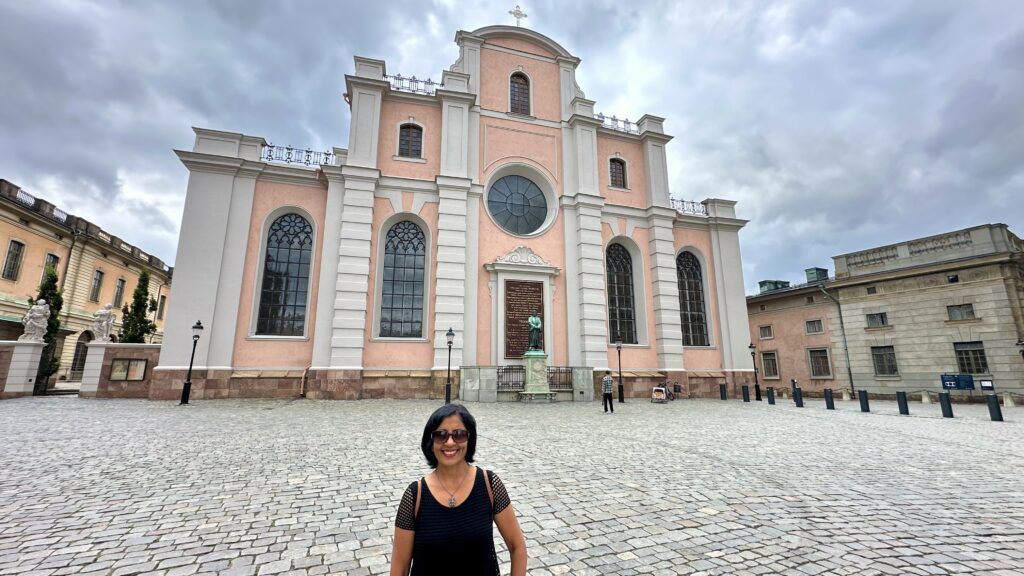
The Cathedral’s rich musical tradition has drawn some of Sweden’s most distinguished organists and choir conductors. Concerts are held weekly in the Cathedral. Lutheran in tradition, it offers a warm welcome to people of all beliefs and backgrounds.
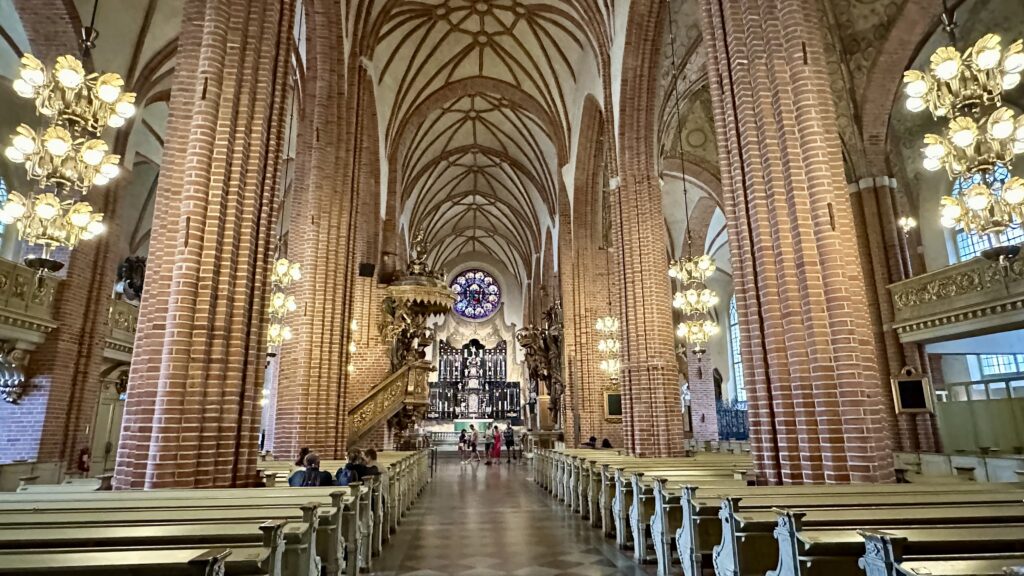
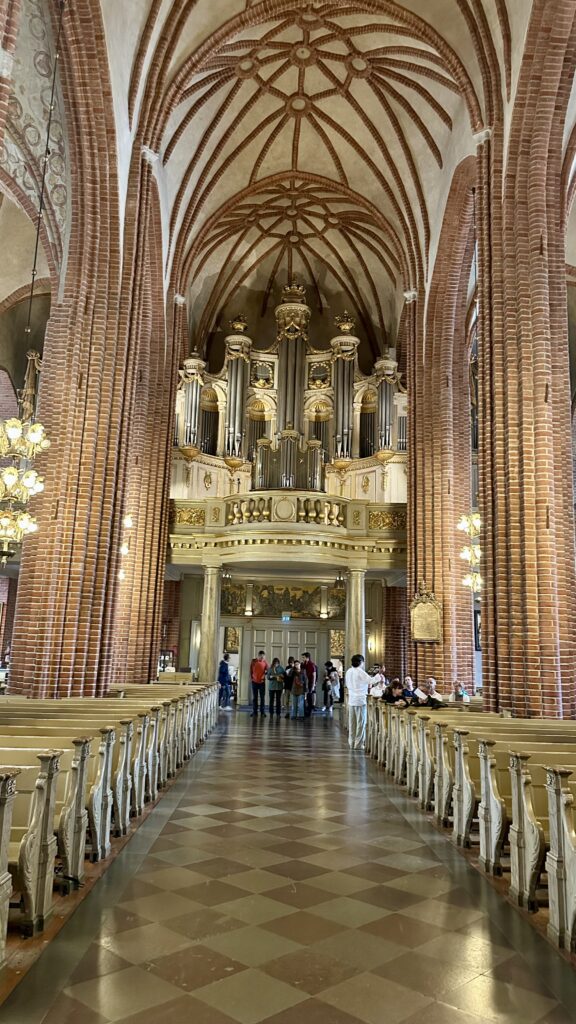
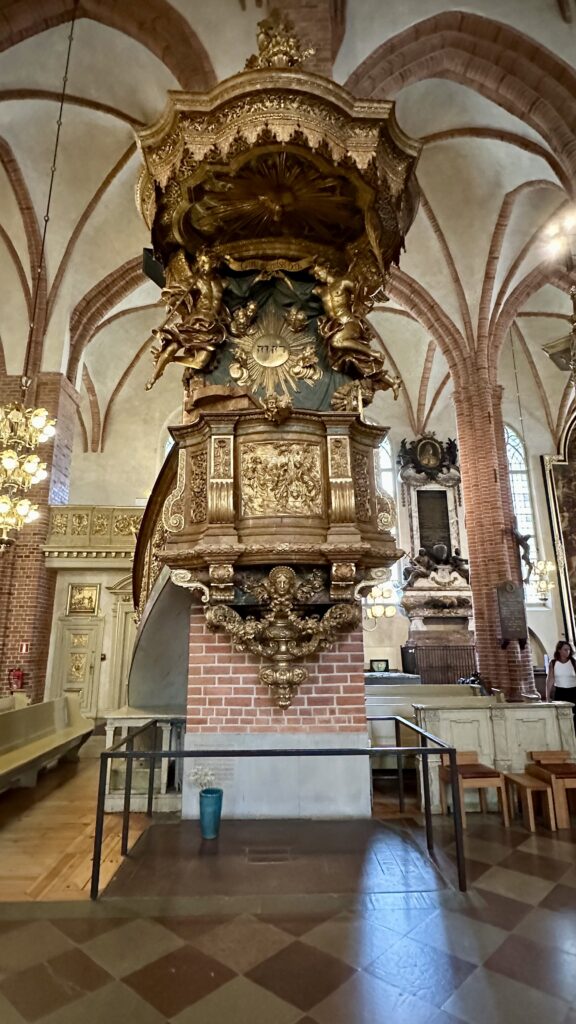
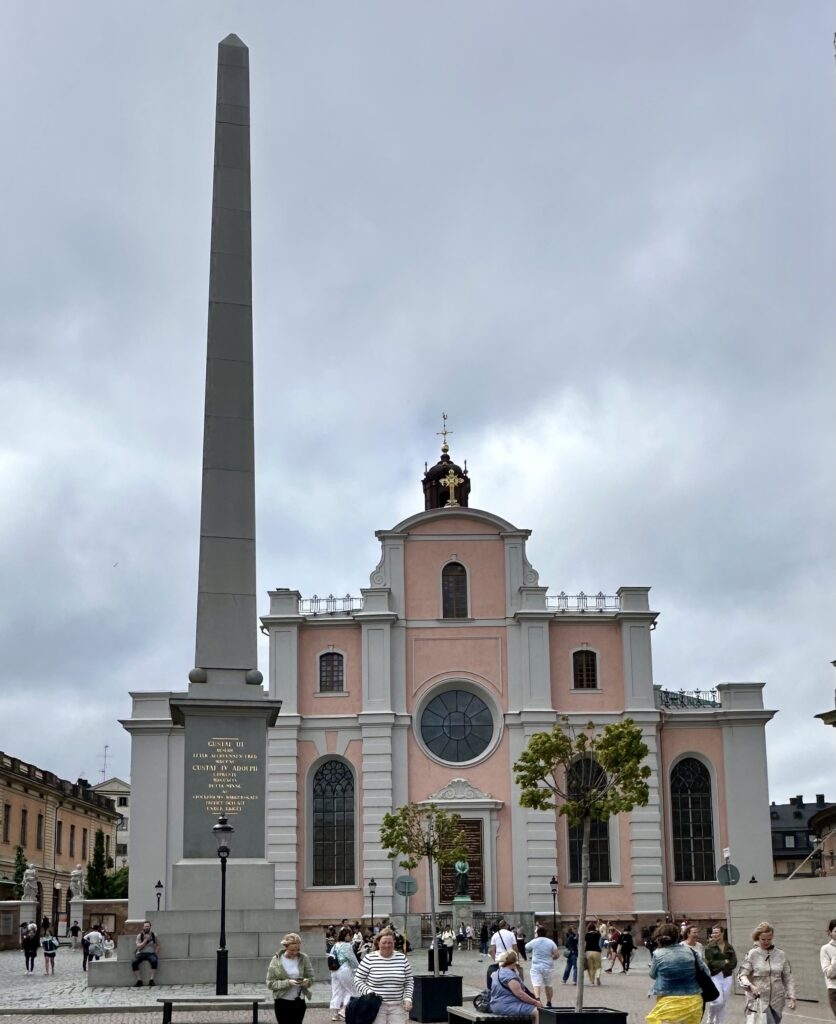
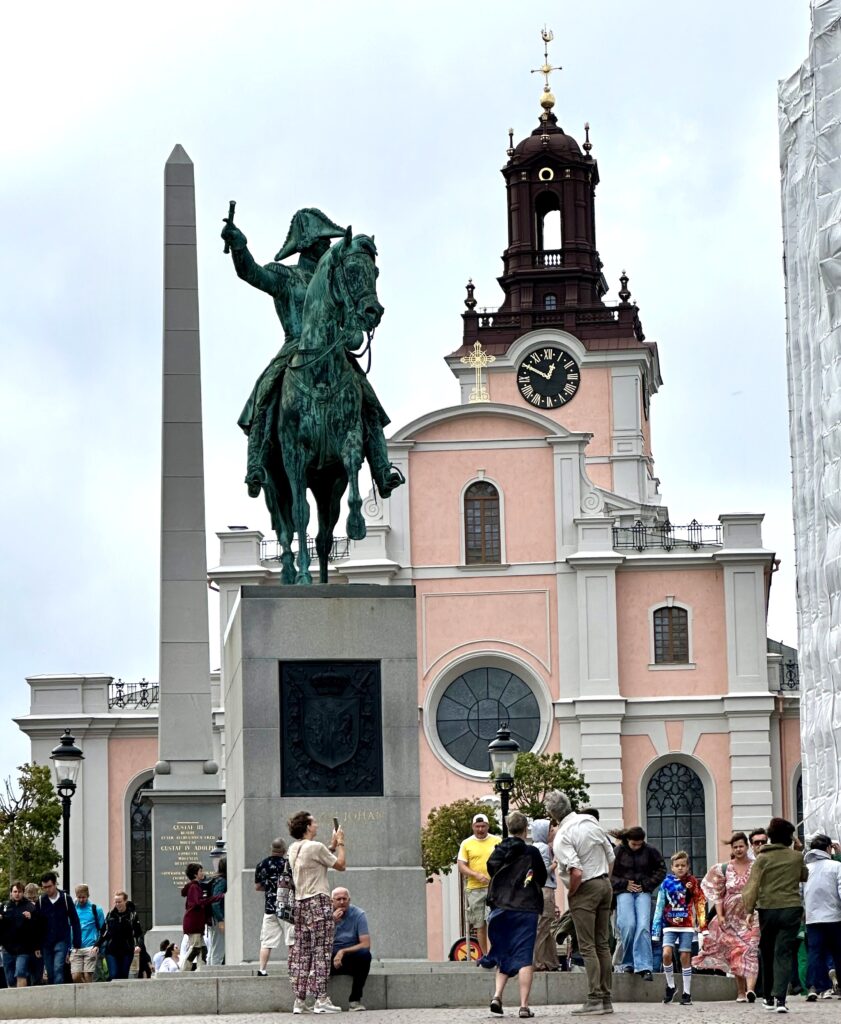
Adjacent to the Cathedral and the Royal Palace is Gustav III’s Obelisk and equestrian statue of King Karl XIV Johan
- Gustav III’s Obelisk – is a powerful symbol of patriotism and national resilience. This grand monument was commissioned by the King to honor the courage and dedication of Stockholm’s citizens during the Russo-Swedish War (1788-1790).
- Equestrian statue of King Karl XIV Johan – The statue of of King Karl XIV Johan was inaugurated on November 4, 1854. He was King of Sweden (as Charles XIV John) and King of Norway (as Charles III John) from 1818 until his death in 1844. He was originally a Marshal of France before becoming king. The statue depicts him as crown prince arriving in Stockholm in 1810.
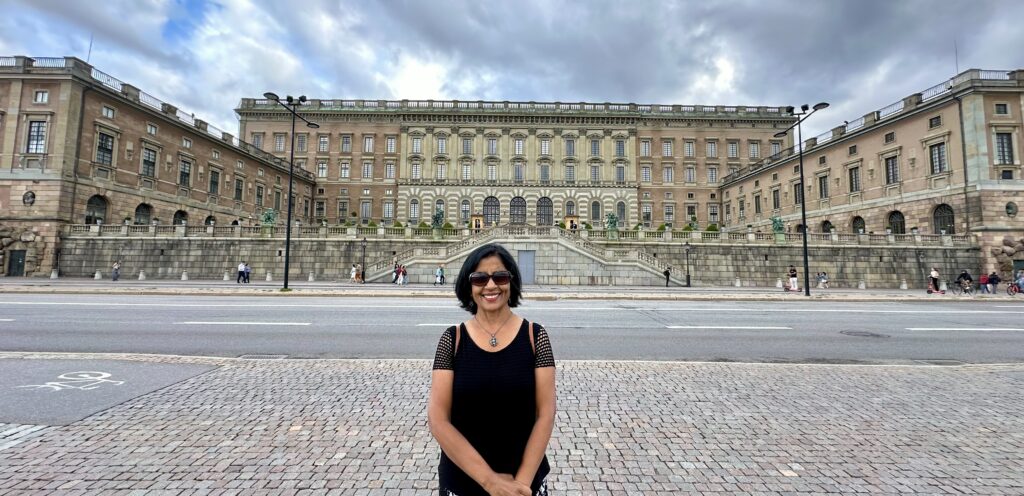
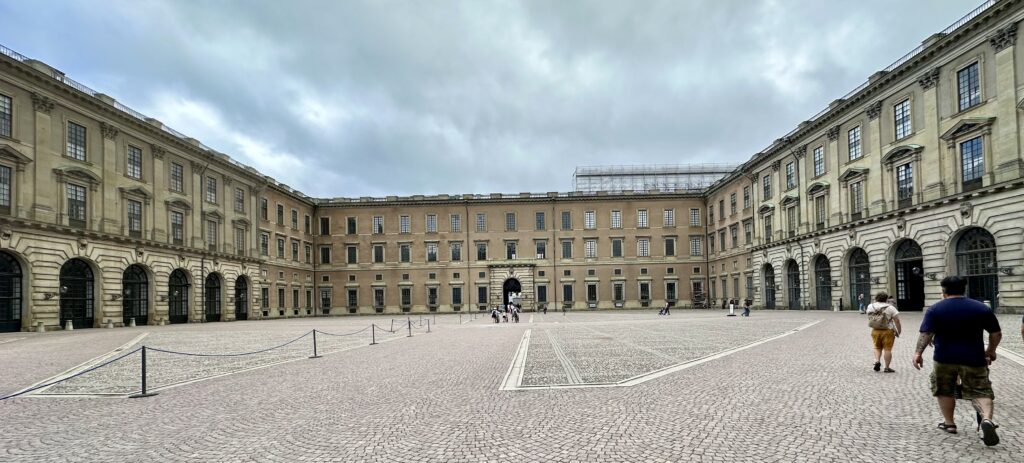
Gamla Stan, Royal Palace – Also called the Drottingholm, it is not only the official residence of the Swedish royal family, but also a workplace, a cultural-historical monument, and is open all year round to visitors. The palace is built in baroque style by the architect Nicodemus Tessin and has more than 600 rooms divided between eleven floors with a state apartment facing the city and smaller living rooms facing the inner courtyard.
There are many interesting things to see at the Palace. Plan on spending 1-2 hours visiting the following –
- Royal Chapel
- Treasury with the regalia
- Royal Apartments
- Tre Kronor Museum
- Museum of Antiquities
- The changing of the guard
Royal Palace, Chapel – This impressive looking chapel is the first place you will visit on your Royal Palace tour. Royal marriages and baptisms are held in the royal chapel. The present Royal Chapel is the third chapel in the palace grounds. Constructing a new Royal Chapel was a key part of architect Nikodemus Tessin’s extensive commission to build a new palace after a fire in 1697 destroyed the chapel. The chapel’s interior was completed in the middle of the 1700s. Sculptures, statues and ceiling paintings have been carried out by the foremost craftsmen of the period.
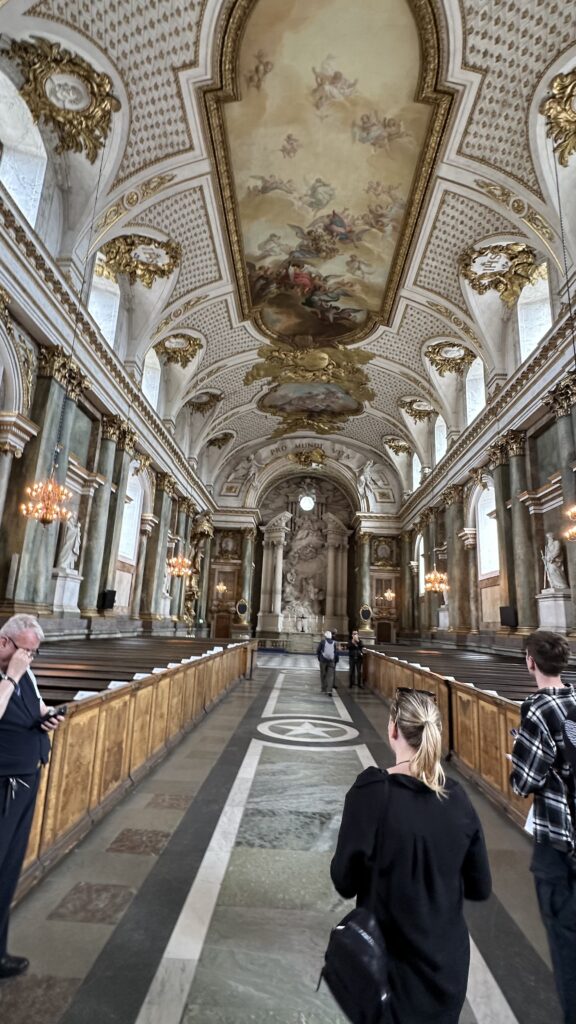
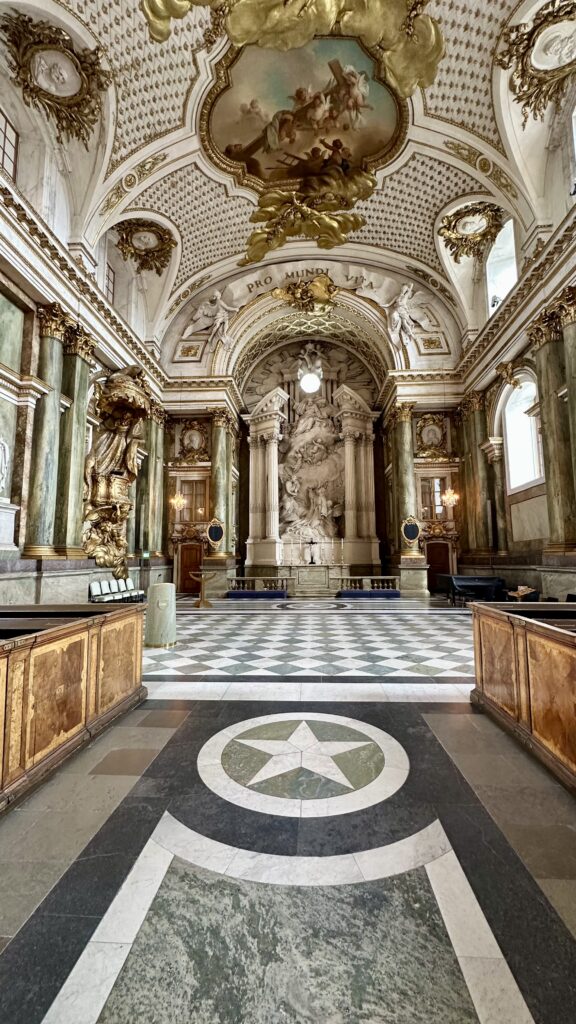
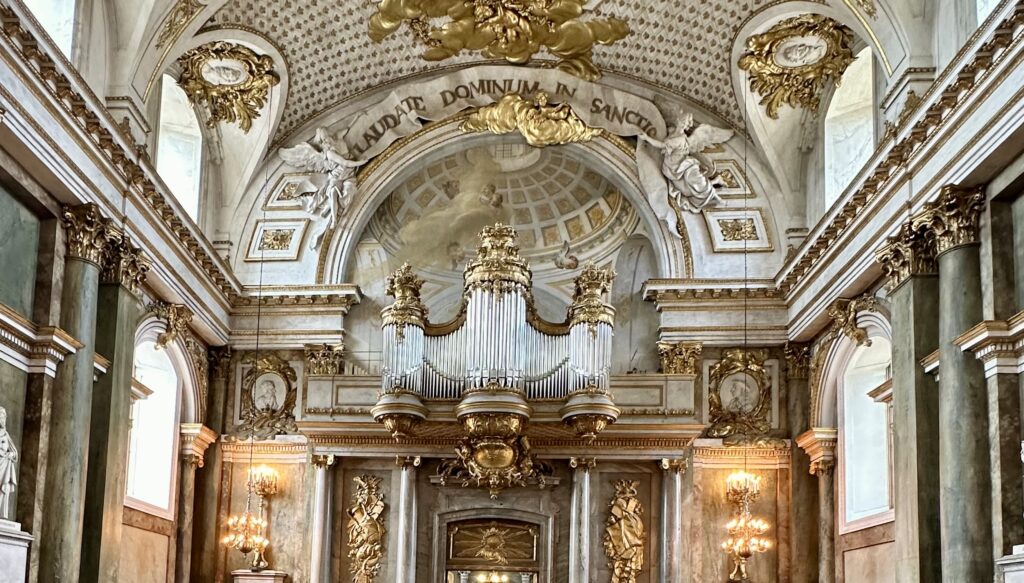
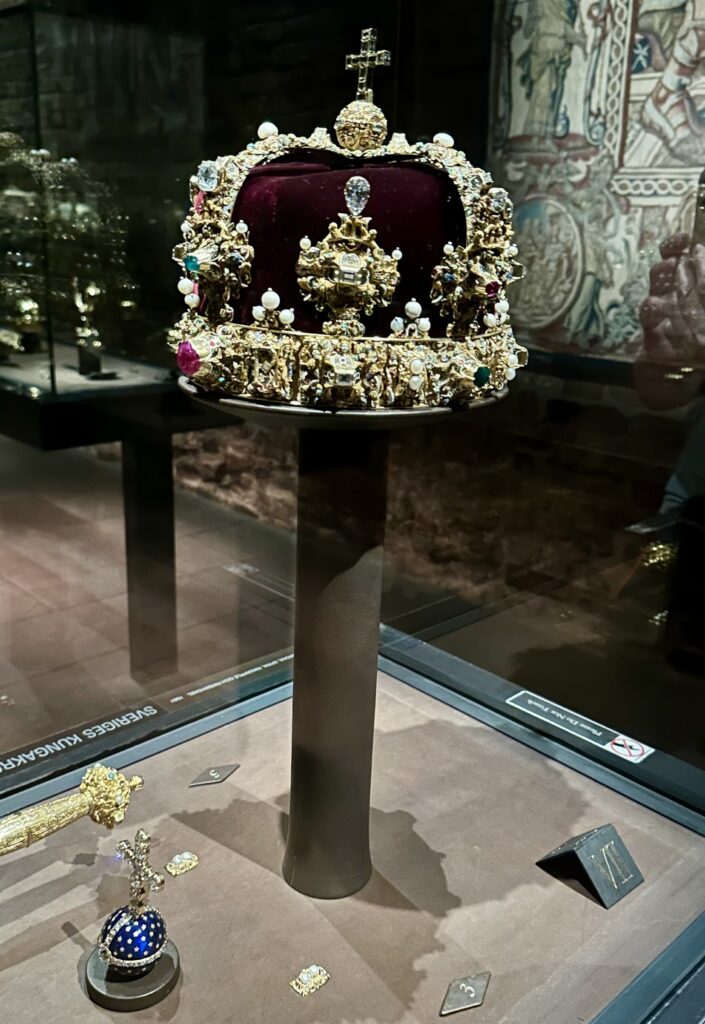
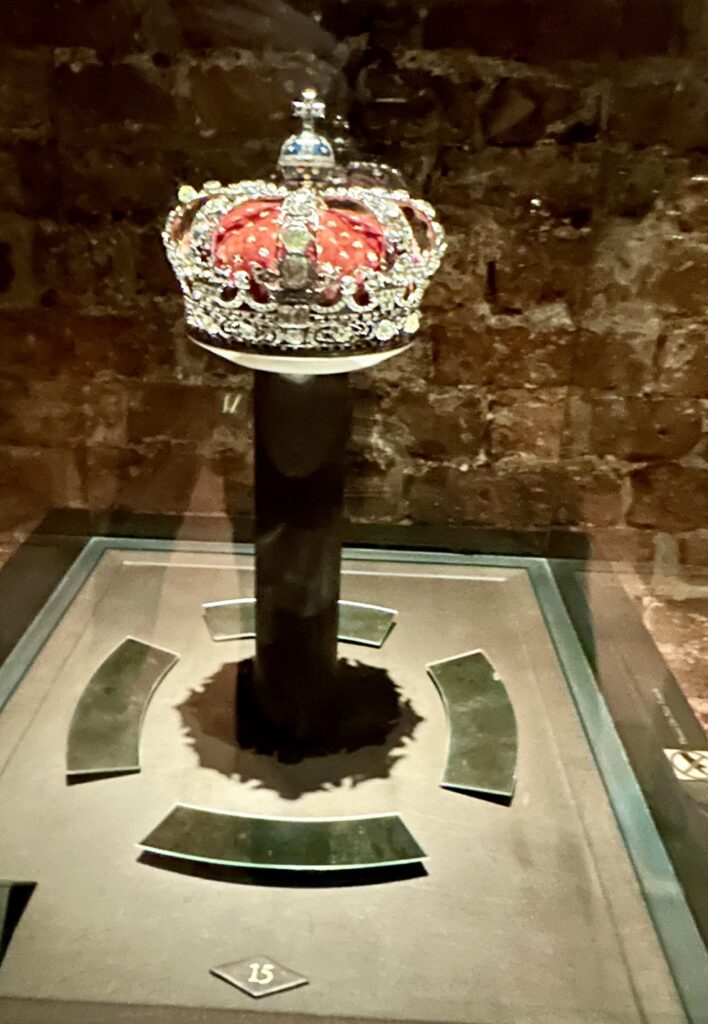
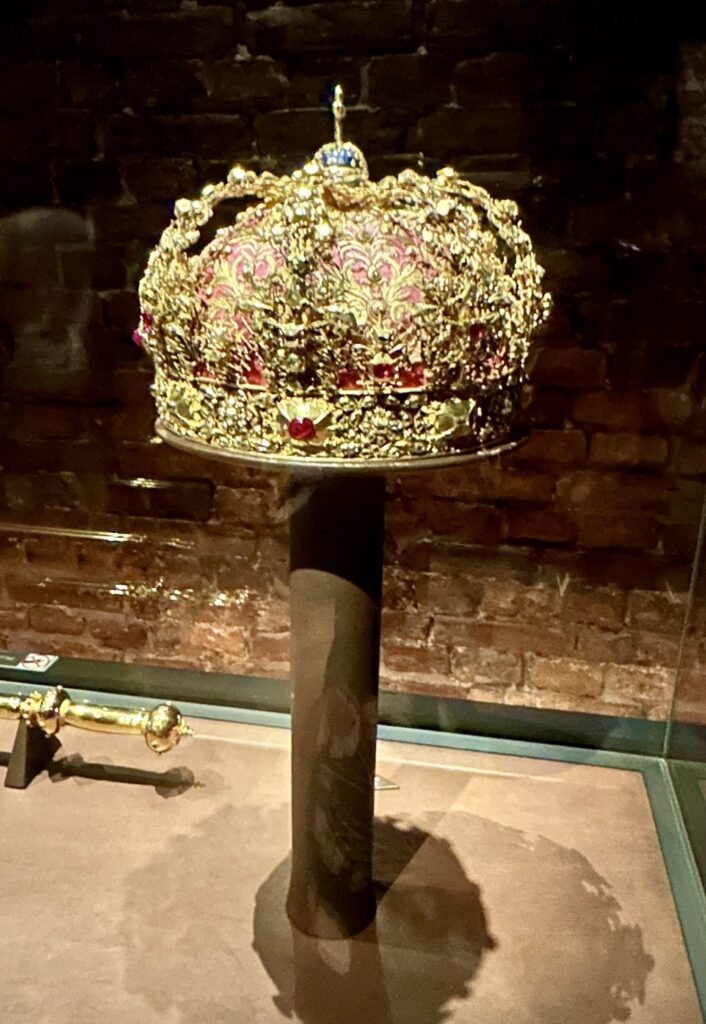
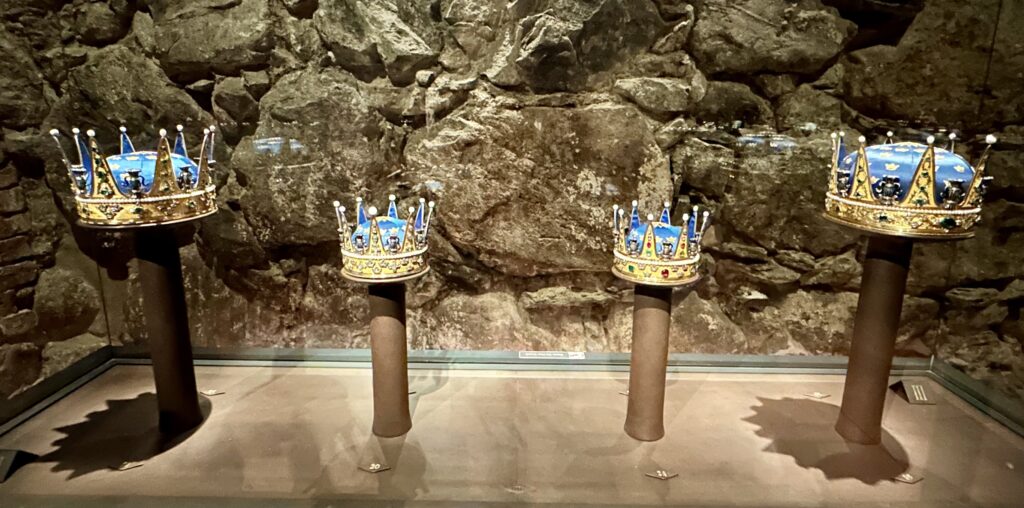
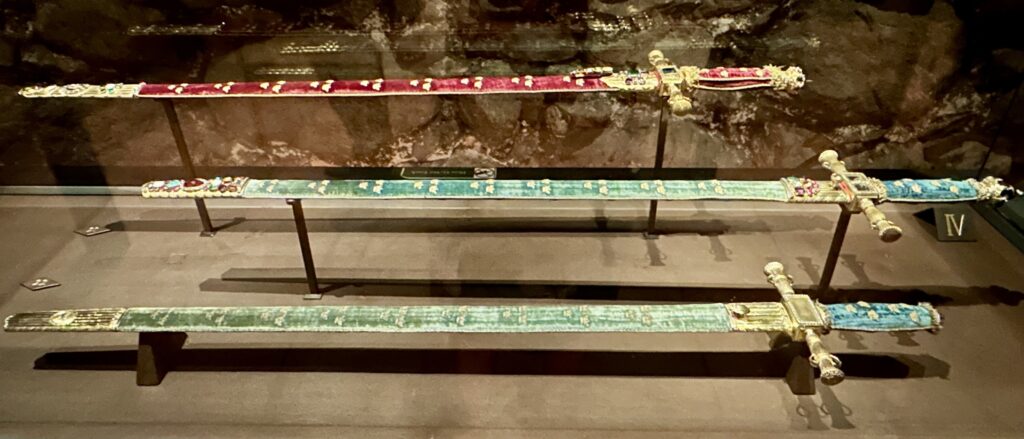
Royal Palace, Treasury with the regalia – We then walked down to the basement to visit the Royal Treasury. The regalia are the symbolic objects that The King or Queen are presented with by the Archbishop on coronation day. Some of them are still used today on ceremonial occasions such as coronations, christenings, weddings and funerals.
- Crown of Erik XIV from 1561 made for his coronation by Flemish goldsmith Cornelius ver Weiden.
- Louisa Ulrika’s Crown – was Queen of Sweden 1751 to 1771. She was married to king Adolf Frederick and was queen mother during the reign of King Gustav III.
- Maria Eleonora’s Crown was made in Stockholm in 1620 and used as a royal crown up until 1818, when King Karl XIV Johan decided to revert to using King Erik XIV’s Crown. Queen Maria Eleonora was one of the most versatile 17th century queen. Together with the French ballet master Antoine de Beaulieu, she introduced the court ballet to Stockholm.
- Crowns of several of the Prince and Princess – Prince Karl who later became King Karl XIII, Karl’s sister Princess Sofia Albertina, Karl’s sister-in-law Princess Hedvig Elisabet Charlotta, Karl’s brother Prince Fredrik Adolf
- Swords of state belonging to Gustav Vasa and other Royal swords
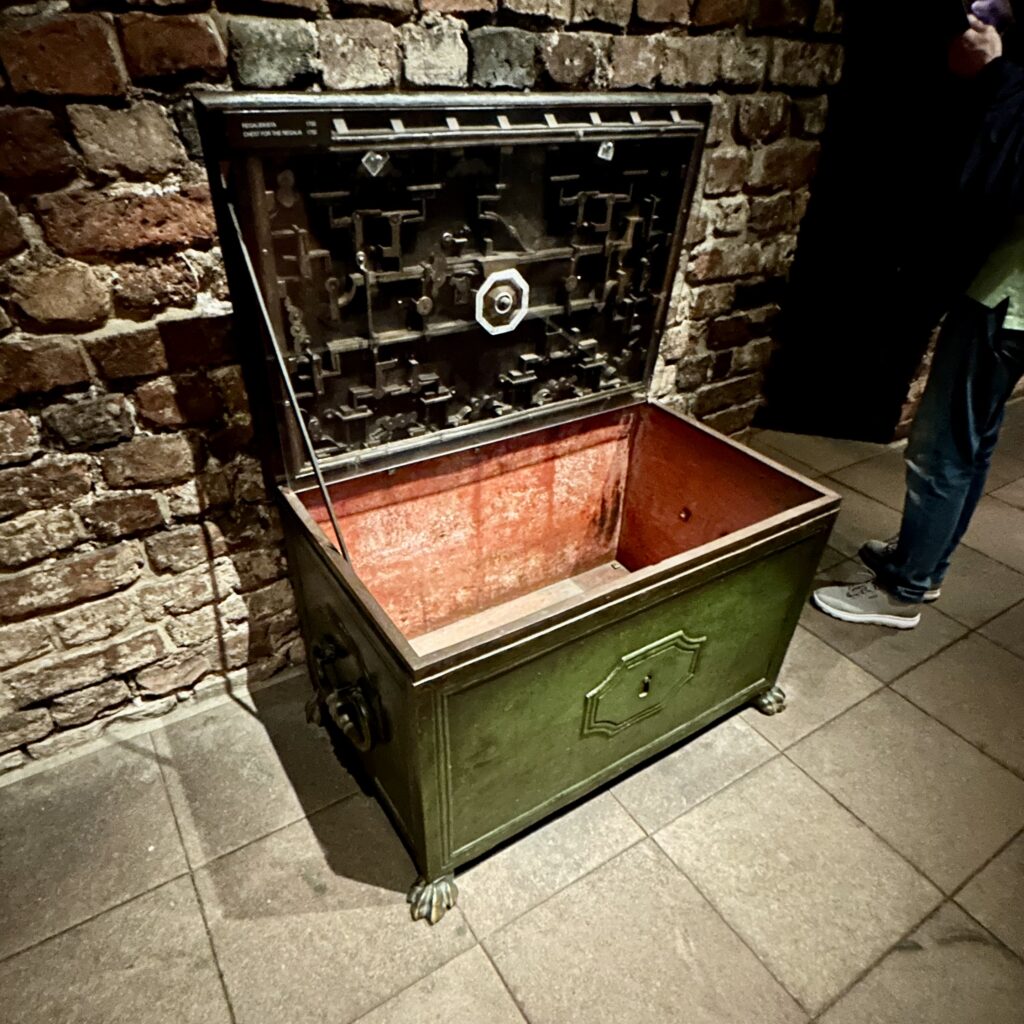
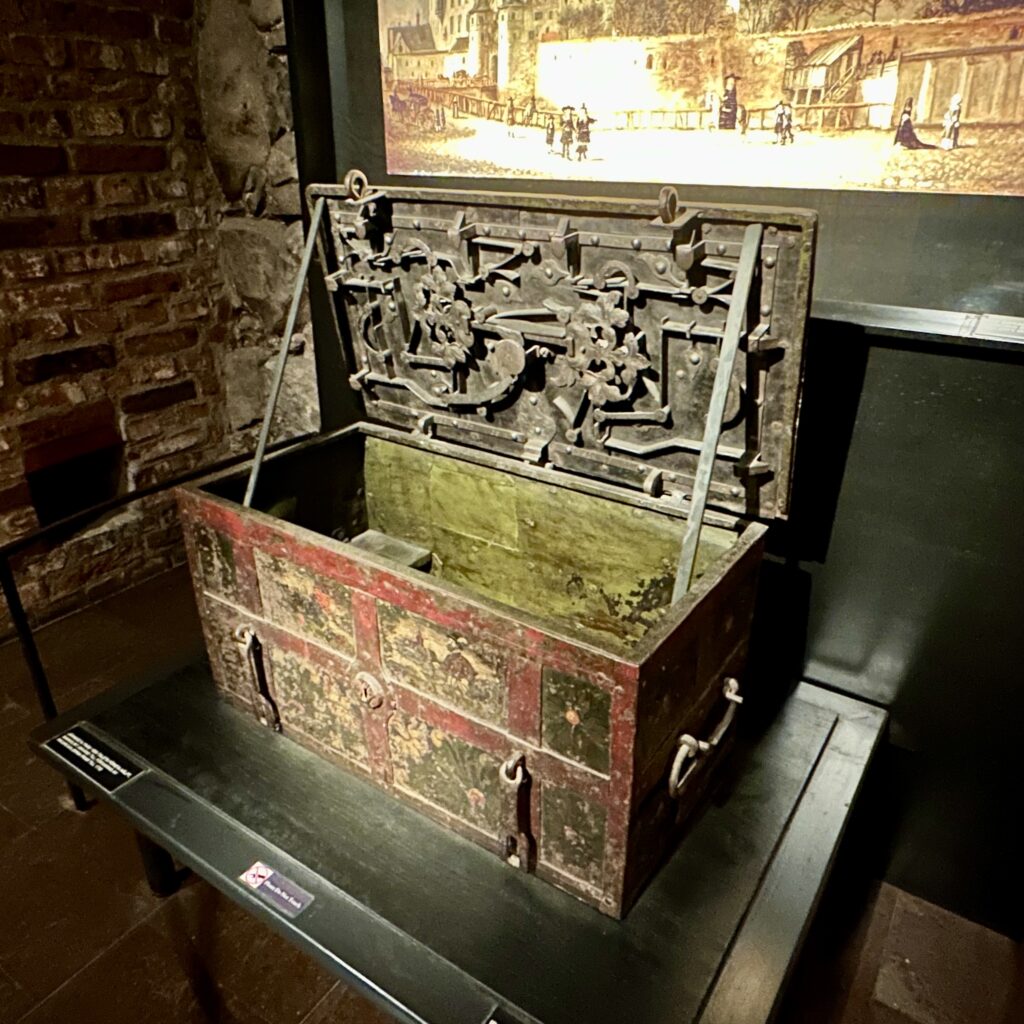
- Iron Chest from early 16th century. This was the chest in which the crown jewels were stored until 1732.
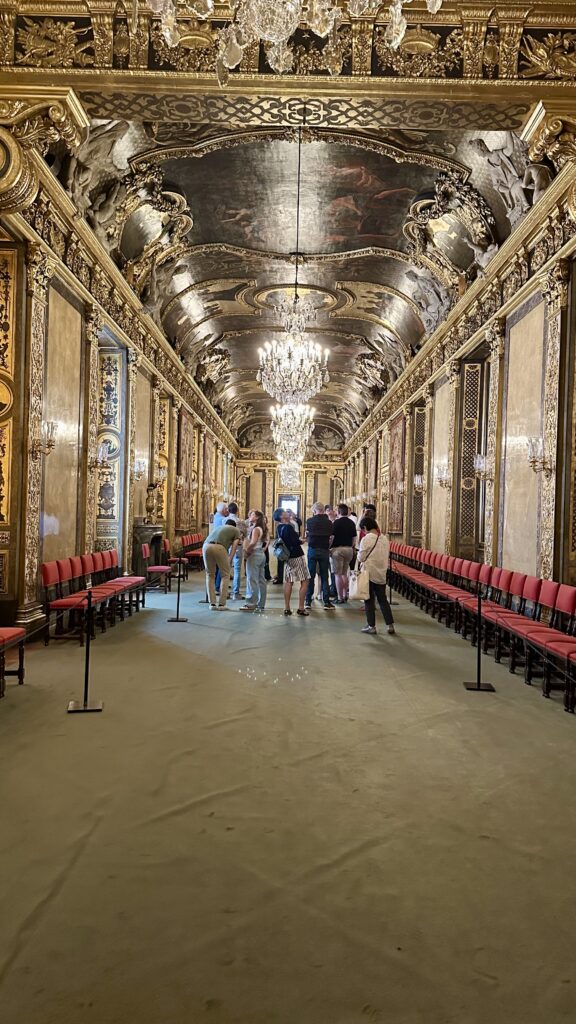
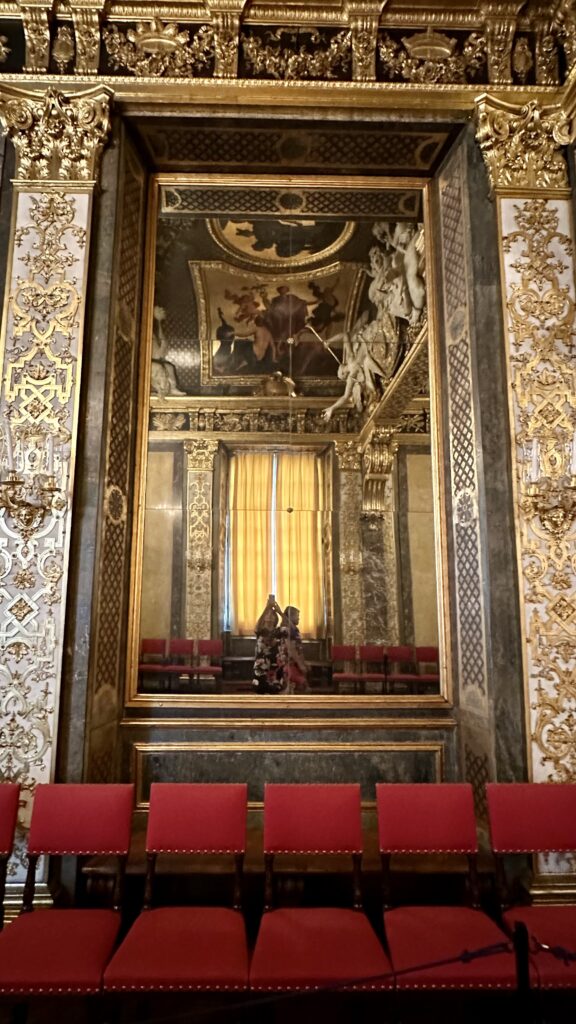
Royal Palace, Apartments – The State Apartments are used when the King and Queen entertain their guests. Gala banquets are held during state visits, and 3 or 4 official dinners take place each year in Karl XI’s Gallery. The Nobel Laureates are invited to dinner here each year. The Council Chamber is used for cabinet meetings on a number of occasions throughout the year.
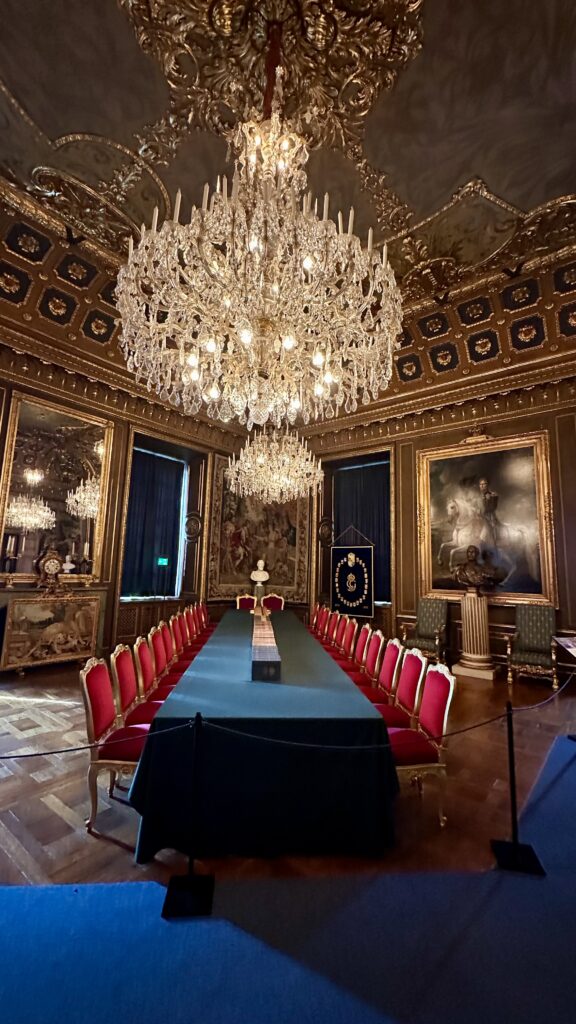
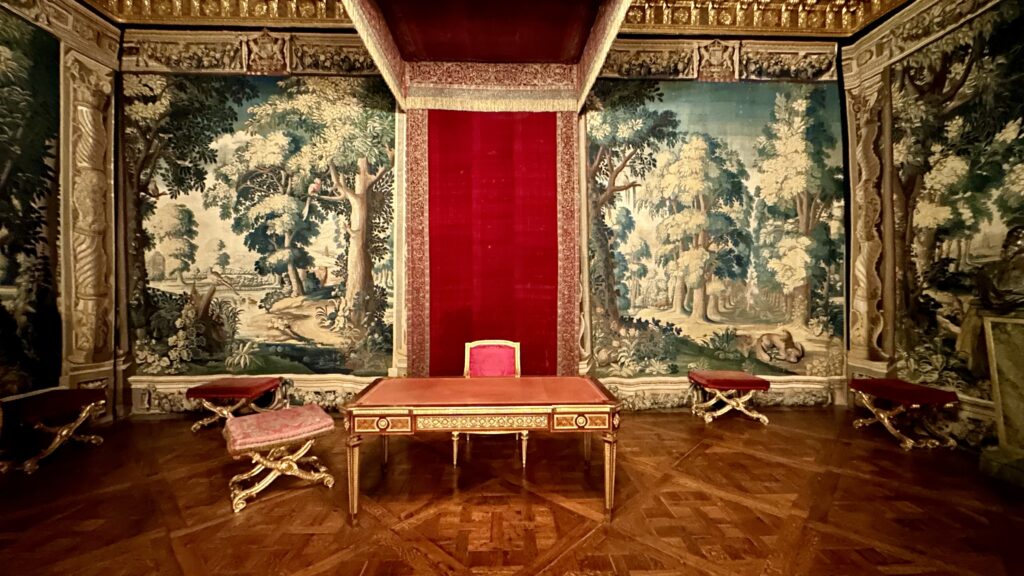
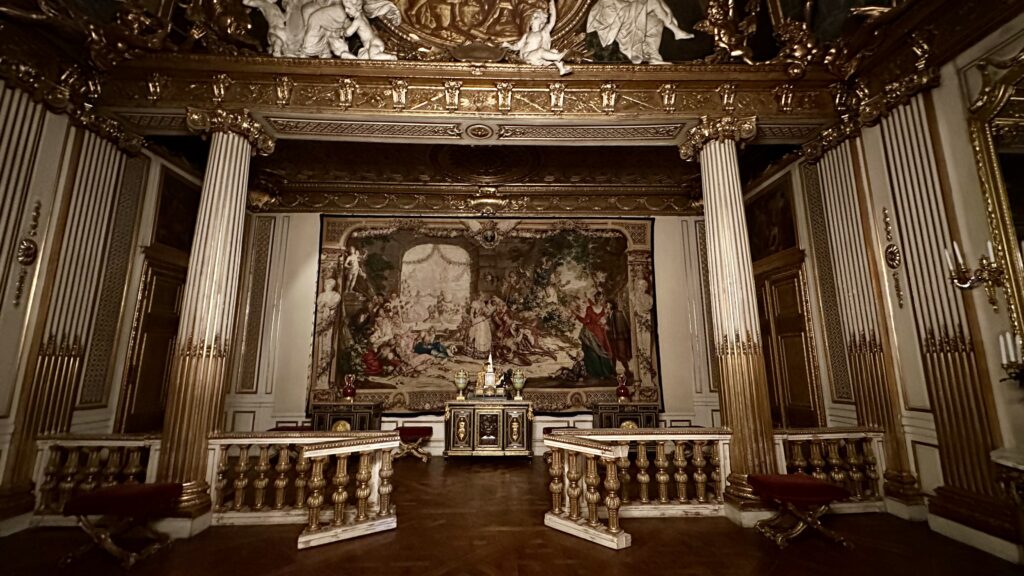
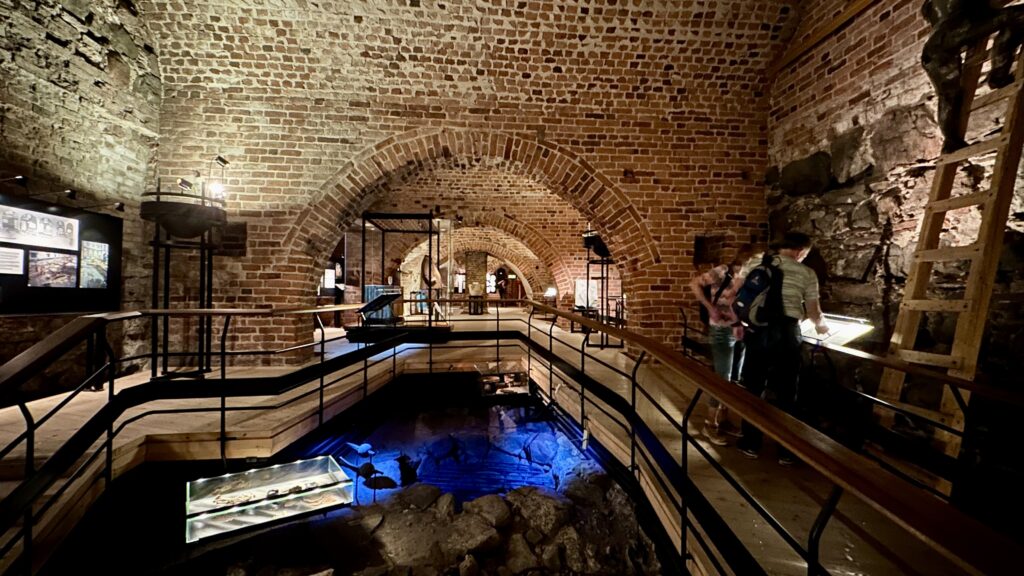
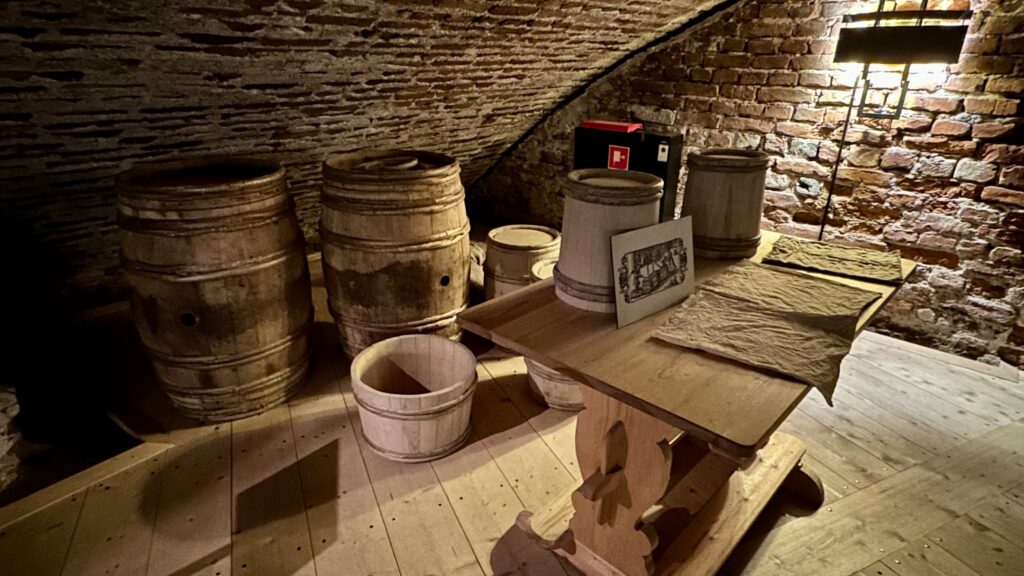
Royal Palace, Tre Kronor Museum – The Museum Three Crowns (Tre Kronor) is dedicated to the original Tre Kronor Palace in Stockholm, which was destroyed in a violent fire in 1697. As early as end of the 900s the Vikings built a wooden blockade on the spot where the palace is located today and by the 1100s a defense fort had been constructed. Featuring objects that were rescued from the fire and newly created models, the museum depicts the Tre Kronor Palace’s development from defense fort to the Renaissance palace of today. The museum is located on the ground floor of the palace’s northern wing, which is also the section which survived the fire the best.
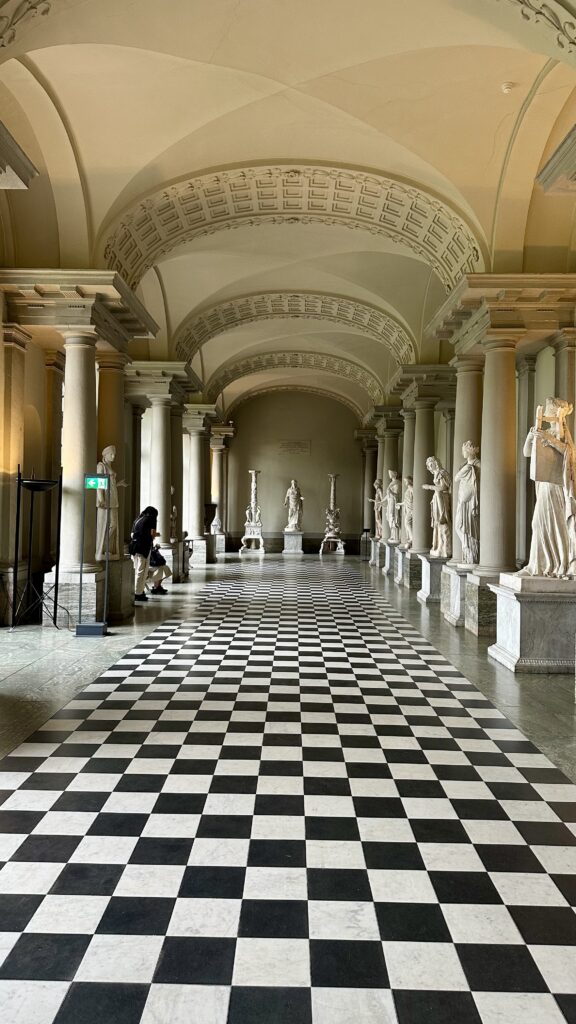
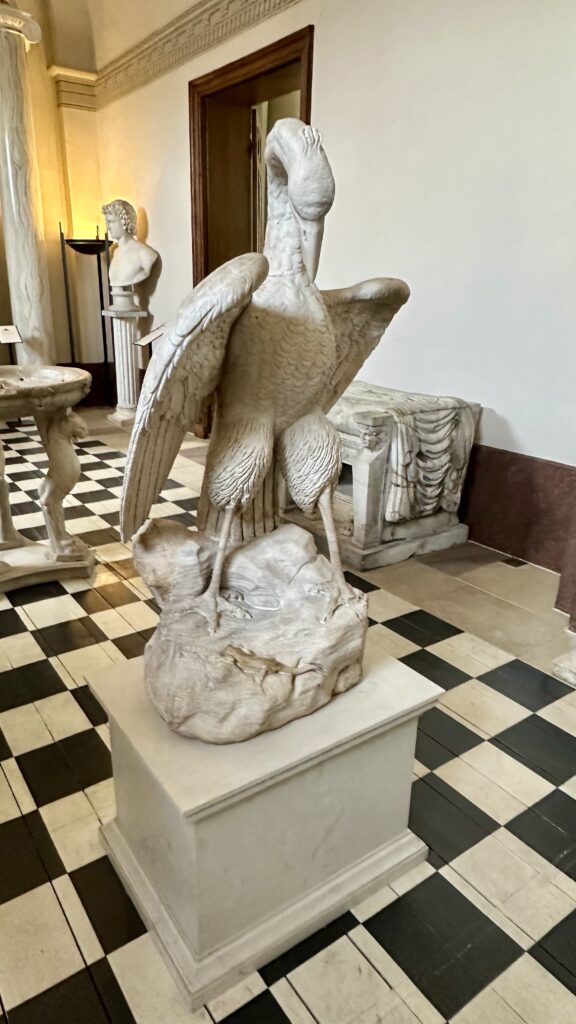
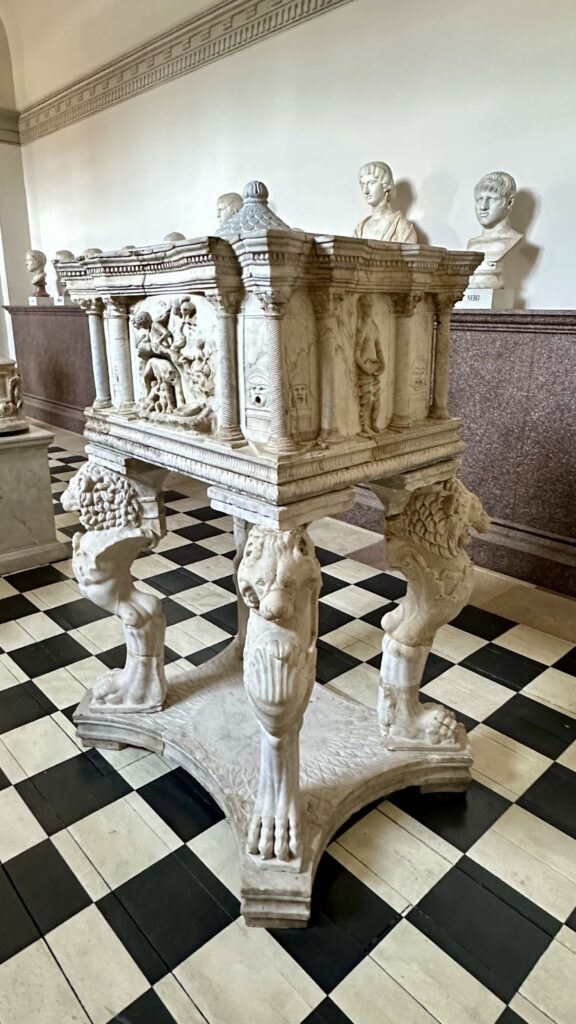
Royal Palace, Museum of Antiquities – houses King Gustav III’s collection of ancient sculptures and is one of Europe’s oldest museums that opened in 1794. The museum is situated in two stone galleries in the palace’s northwest wing. The museum features over 200 sculptures and other works purchased by Gustav III during his travels to Italy.
Royal Palace, Changing of the Guard – Starts at 12:15pm in the palace outer courtyard on weekdays, and at 1:15pm on Sundays and lasts for 40 minutes. We skipped watching this event.
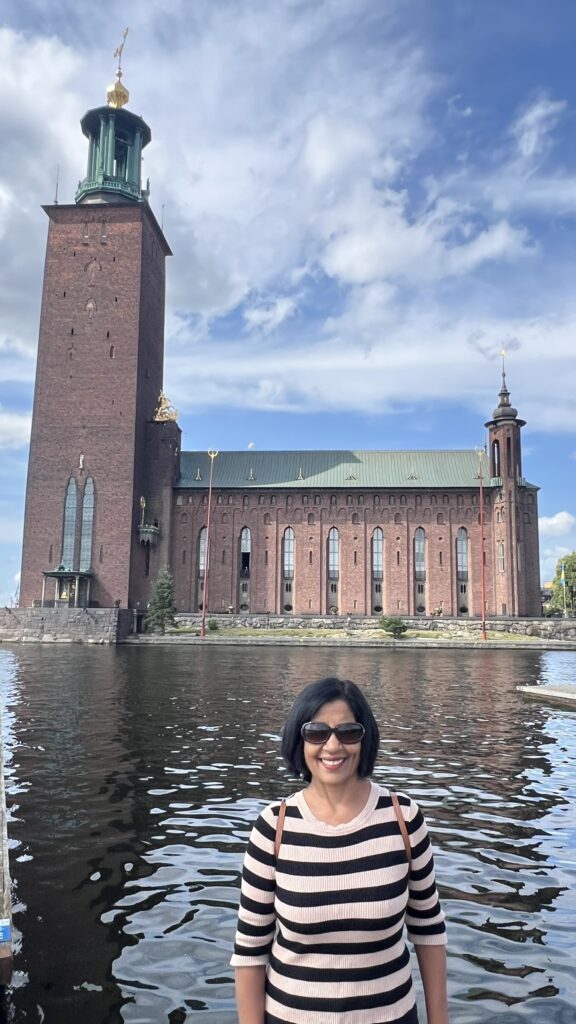
Kungsholmen, City Hall (Stadshuset) – The City Hall was designed by architect Ragnar Östberg and built between 1911-1923. The 106-meter tall tower has three crowns, which is the Swedish national coat of arms, at its apex. We had booked the 1-hour guided tour of the city hall a few weeks in advance.
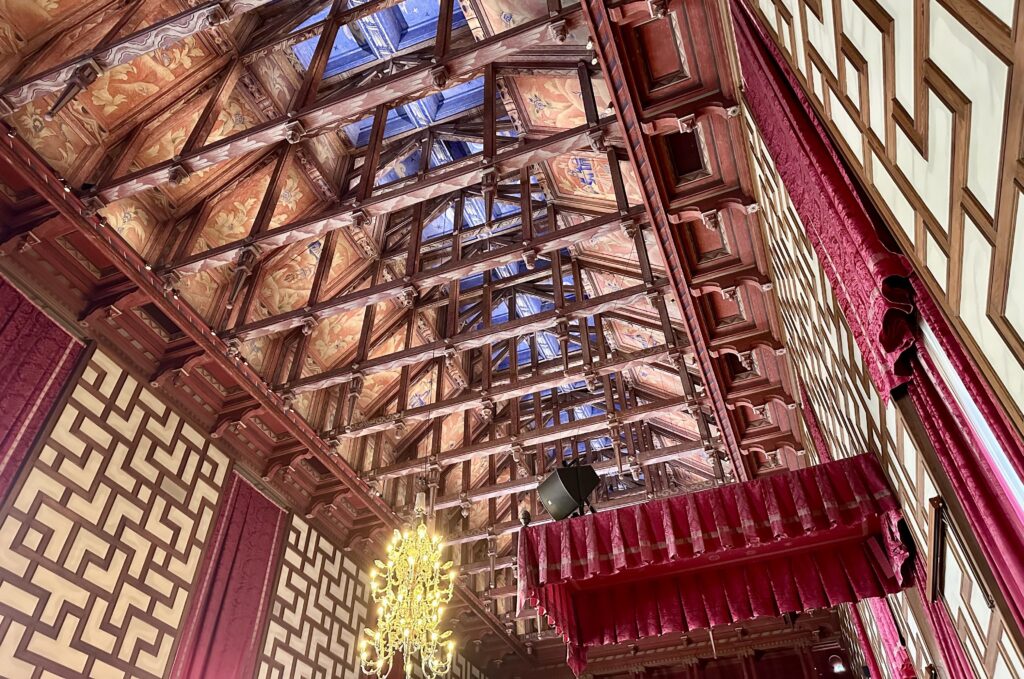
Nobel Prize Banquet Hall – Our tour started in this room which is aka the Blue Room, and is famous for hosting the annual Nobel Prize banquet since 1930. The room hosts about 1300 people during the Nobel Prize ceremony including the Swedish monarchs. The organ in the Blue Hall, with its 10,270 pipes, is the largest in Scandinavia.
Despite its name, the Blue Room contains almost no blue. Architect Ragnar Östberg originally planned to paint the bricks blue to symbolize Stockholm’s surrounding water, since the city is built across 14 islands. He ultimately decided not to paint the beautiful brickwork, but kept the name Blue Hall since it had already become established.
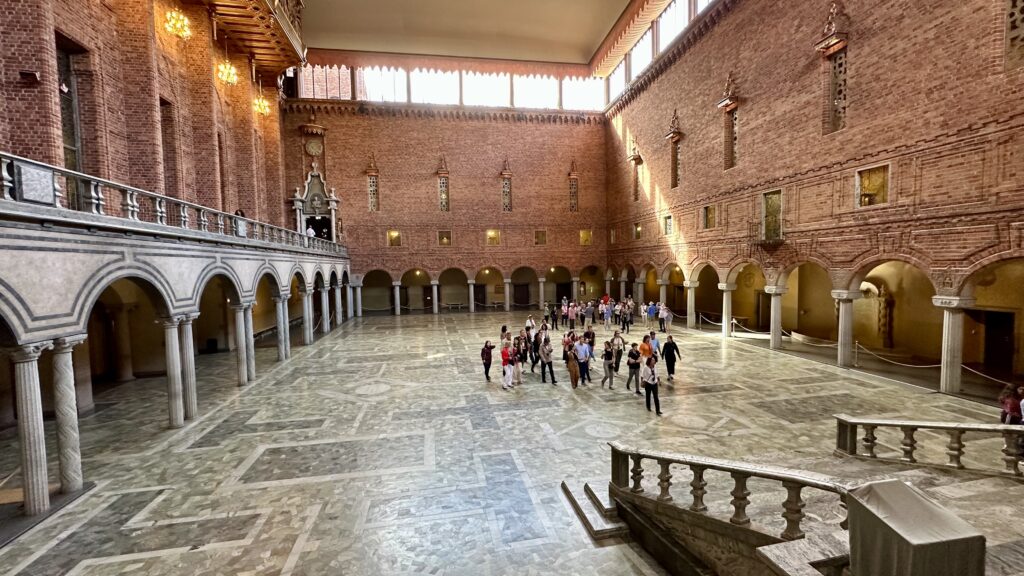
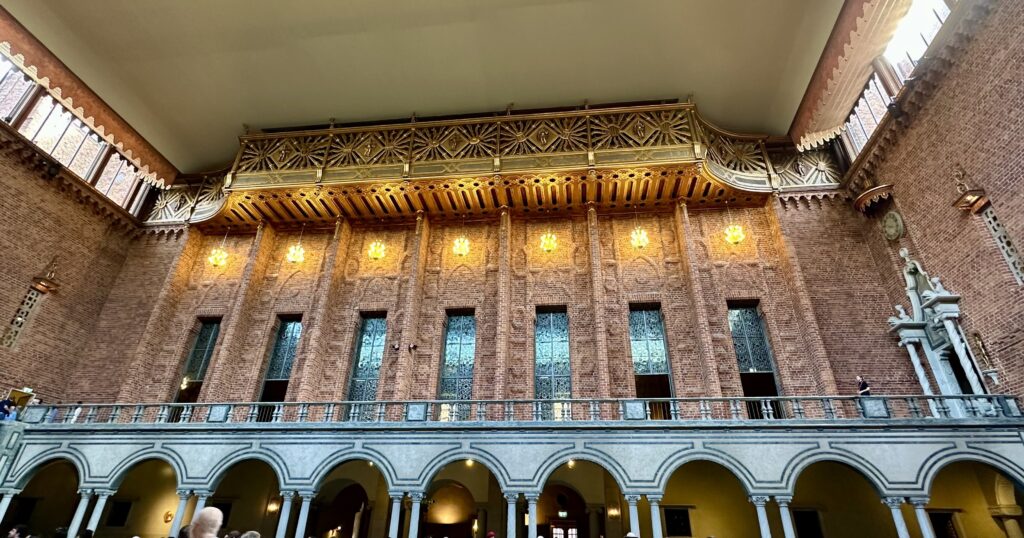
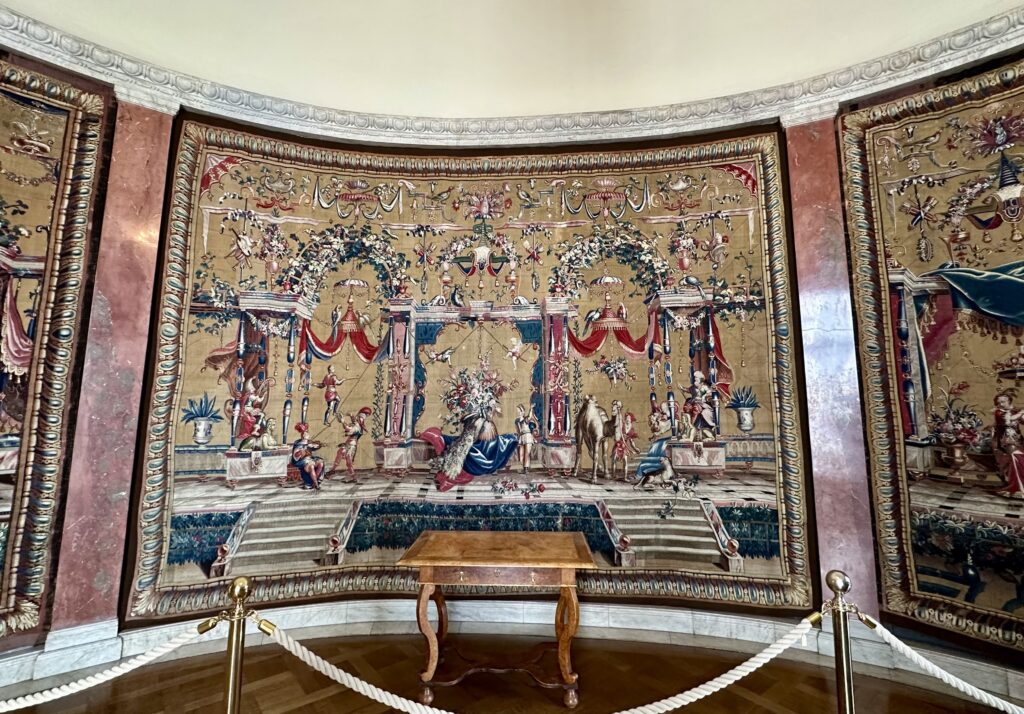
We then walked up the stairs and visited other rooms in the City Hall. The city council of Stockholm holds its meetings in another beautiful room – the Rådsalen or the Red Room.
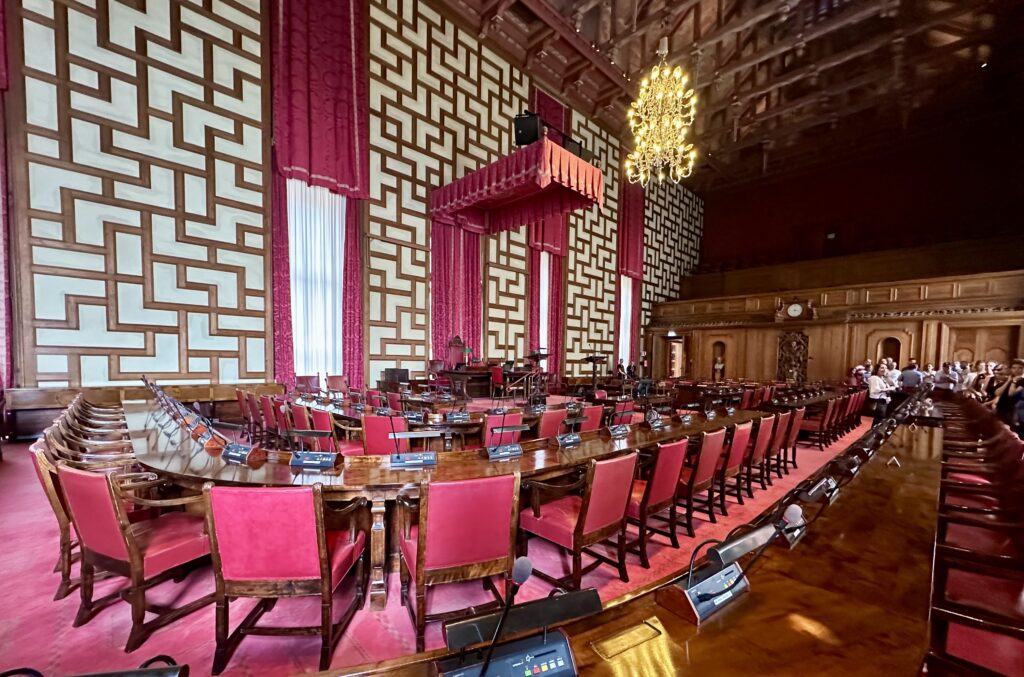
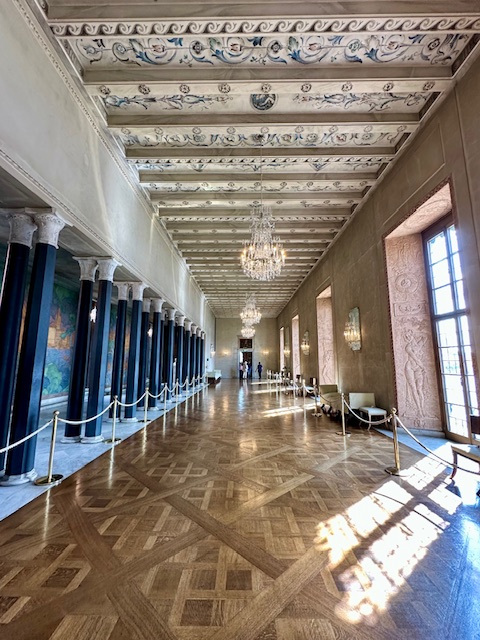
The Prince’s Gallery in City Hall is named after Prince Eugen, the artist who created the murals that adorn its walls. It is known for its beautiful views of Lake Mälaren and the Södermalm island, accessible through French windows along the gallery’s southern side. The gallery is primarily used for receptions of honored guests.
After dinner in the Blue Hall, Nobel Prize laureates, royalties, and guests dance in the Golden Hall, with its 18 million gold mosaic tiles. These mosaics show pictures from Swedish history and legends. In the center there is a picture of the Queen of Lake Mälaren, which represents the city of Stockholm.
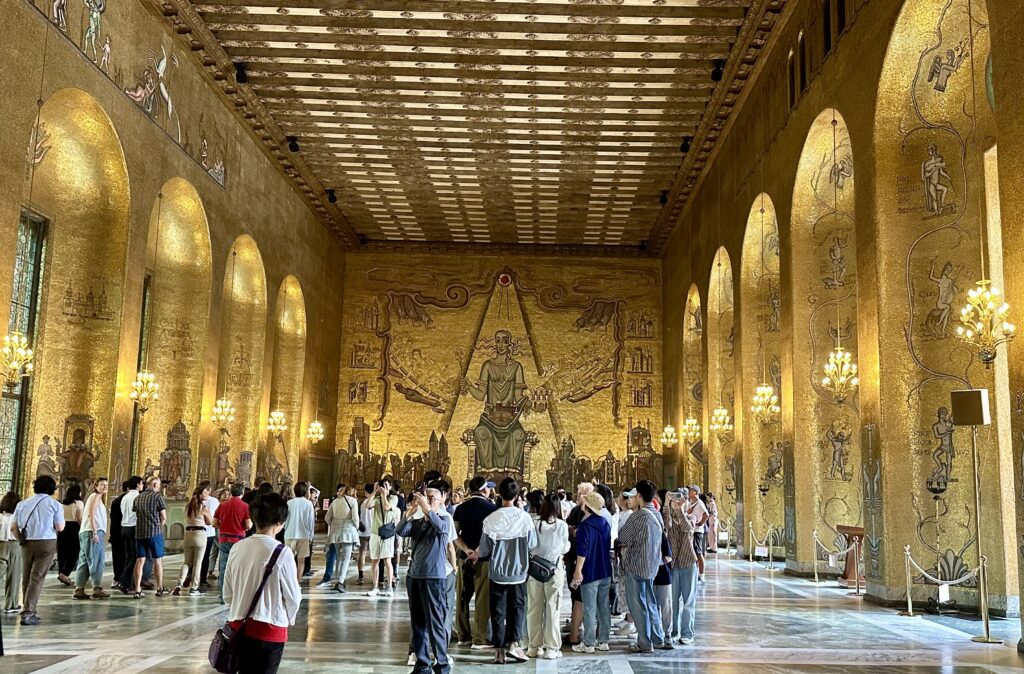
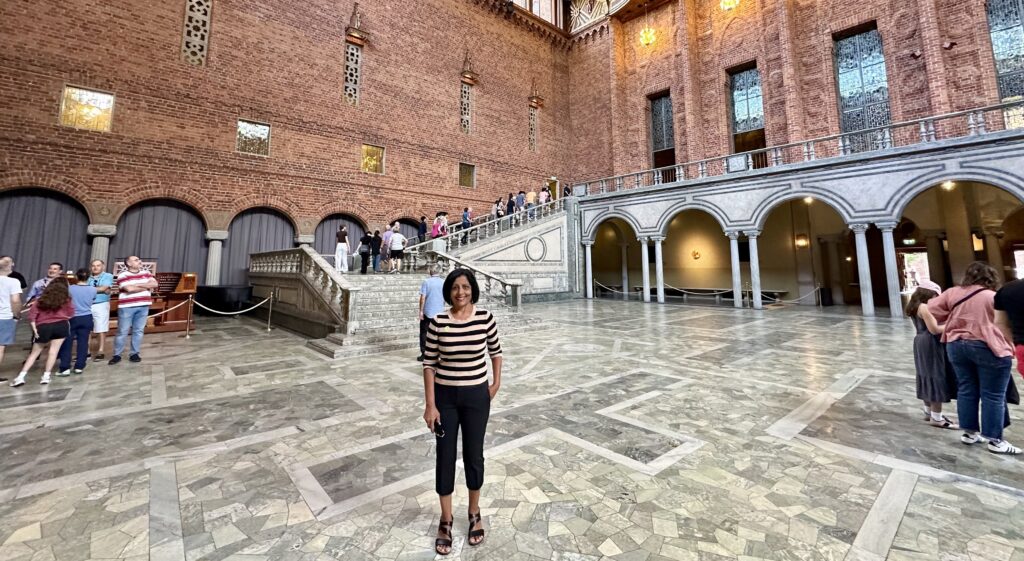
Stockholm City Hall, Exterior – You can spend an hour walking around the exterior of this magnificent building. There is a huge courtyard in the front which also has the entrance to the tower in one of the corners.
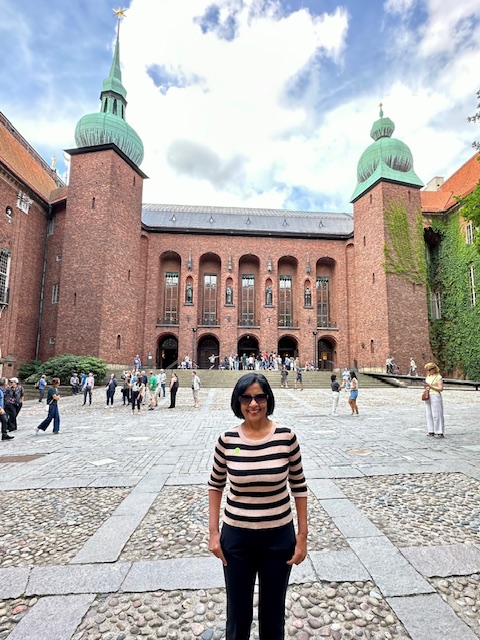
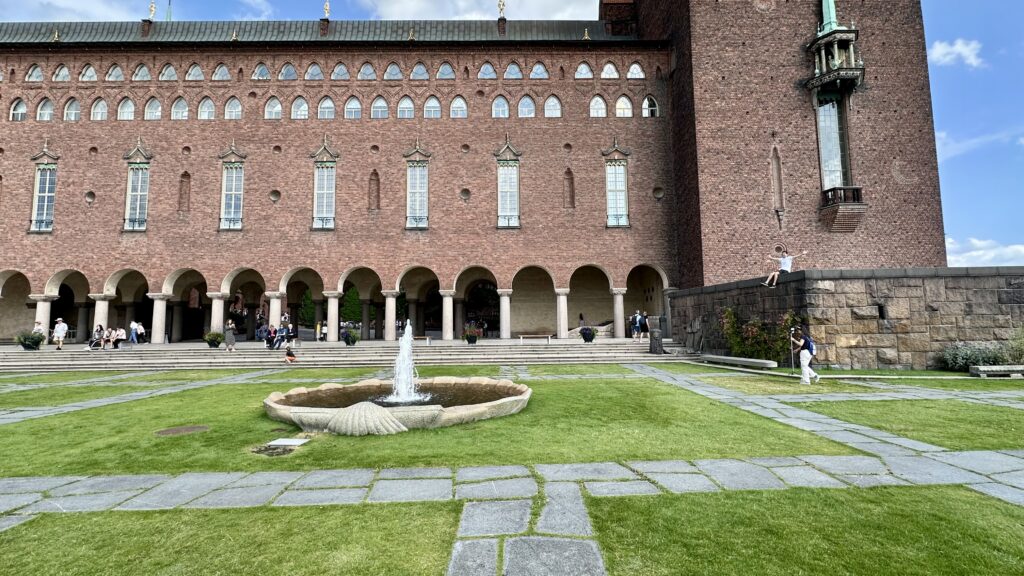
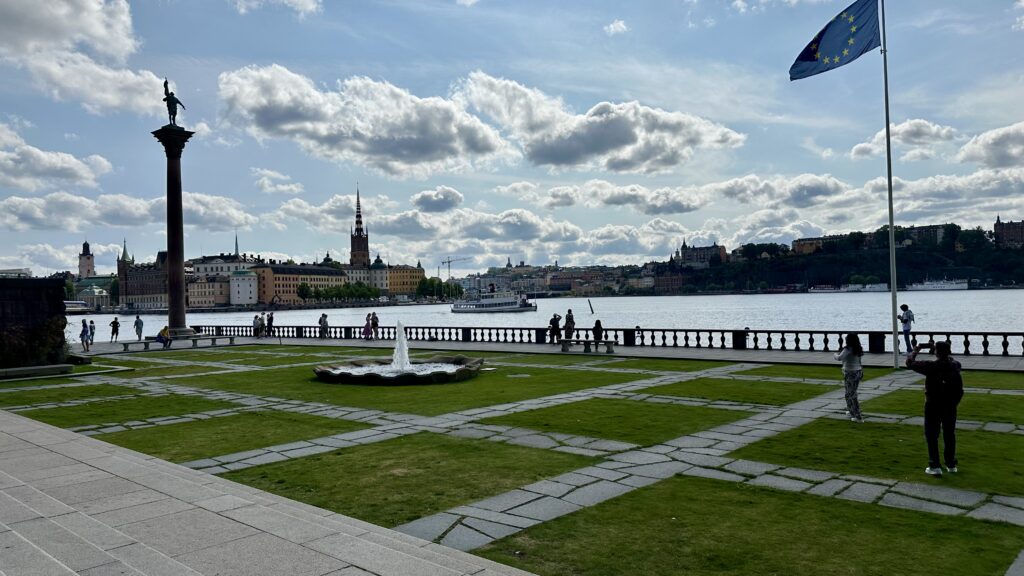
Stockholm City Hall, Tower – Climbing the 365 steps to the top of the City Hall tower is a popular thing to do. Entrance to the tower is timed and tickets sell quickly. It is advisable to purchase the tickets at least one day in advance. You get a marvelous view of the city and lake from the top.
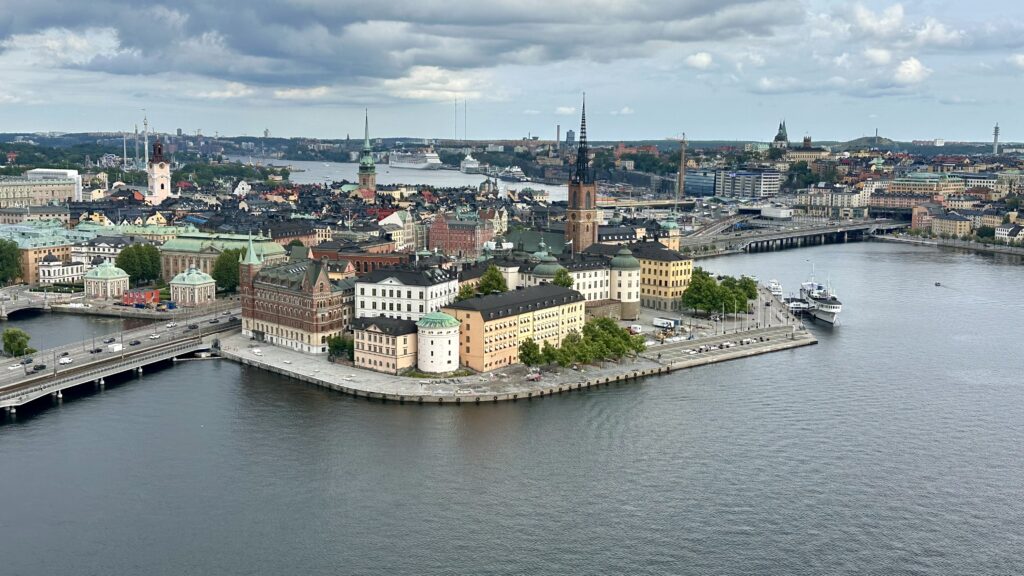
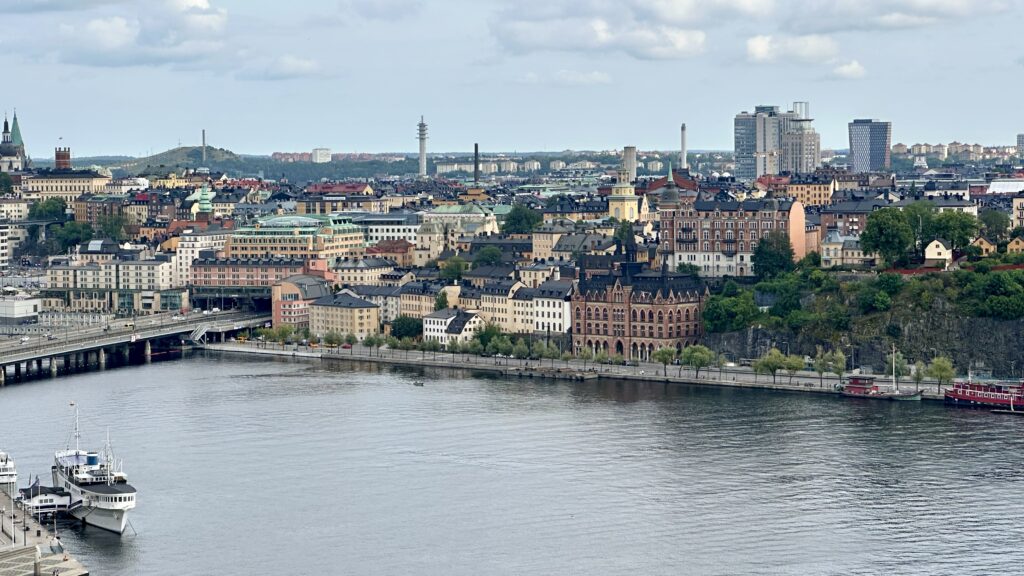
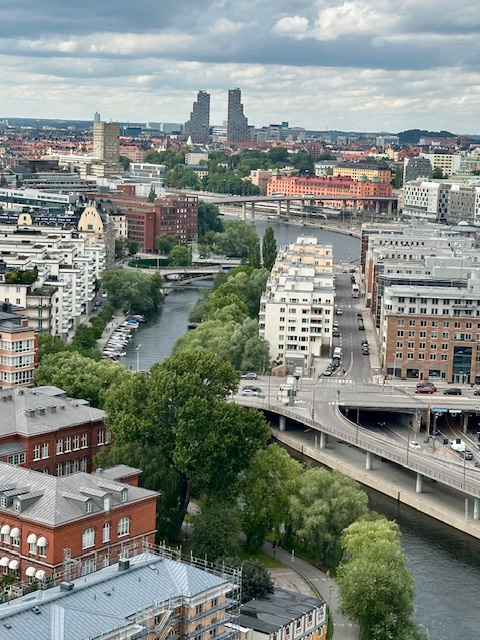
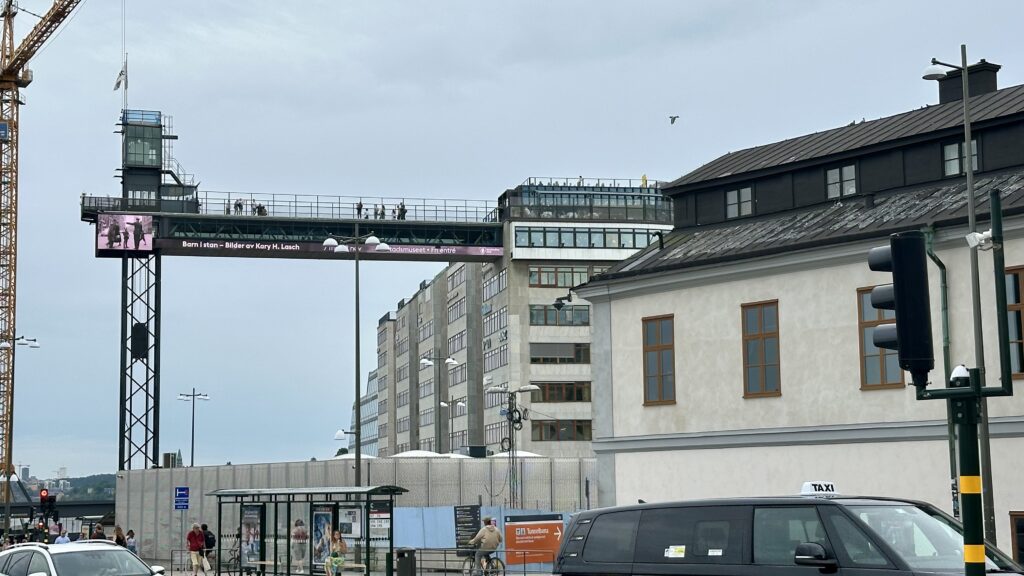
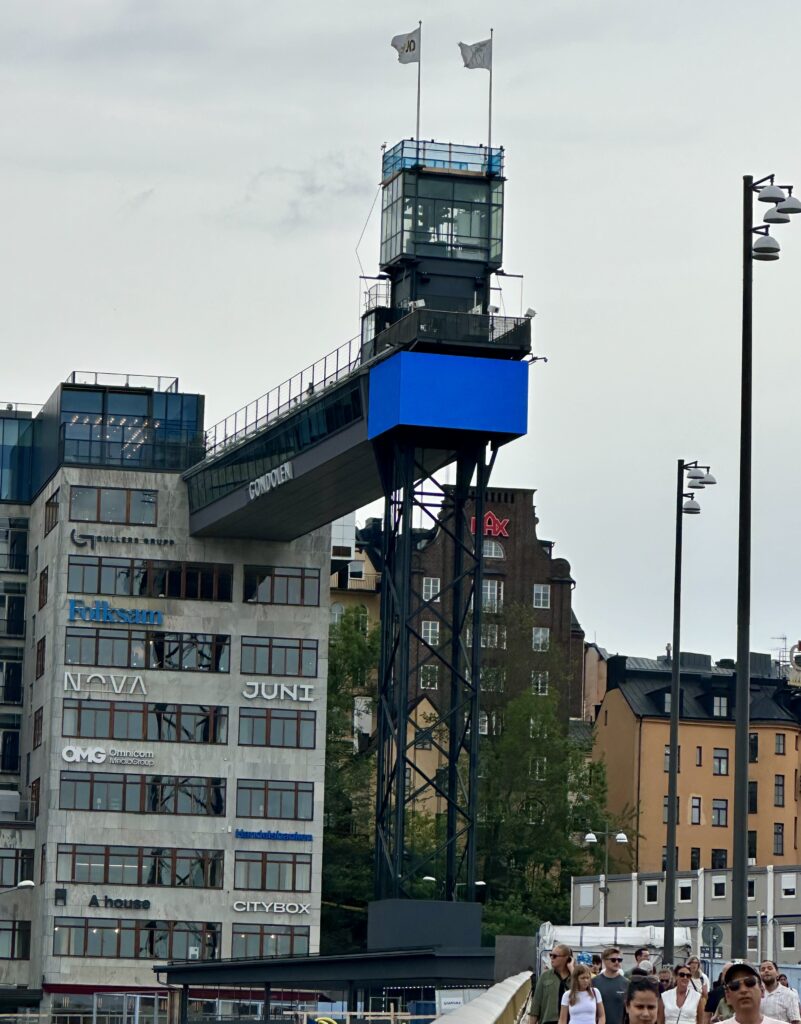
Södermalm, Katarina Viewing Platform – This viewing platform is located at the northern edge of Södermalm. An elevator takes you to the top and after you get off, the viewing platform is a long corridor. After visiting Monteliusvägen (see next section), the view of Gamla Stan from here is not as impressive. Also, the view is hindered by wire bars. If you walk further up, there is a restaurant and bar nearby from where you get an unhindered view of the city.
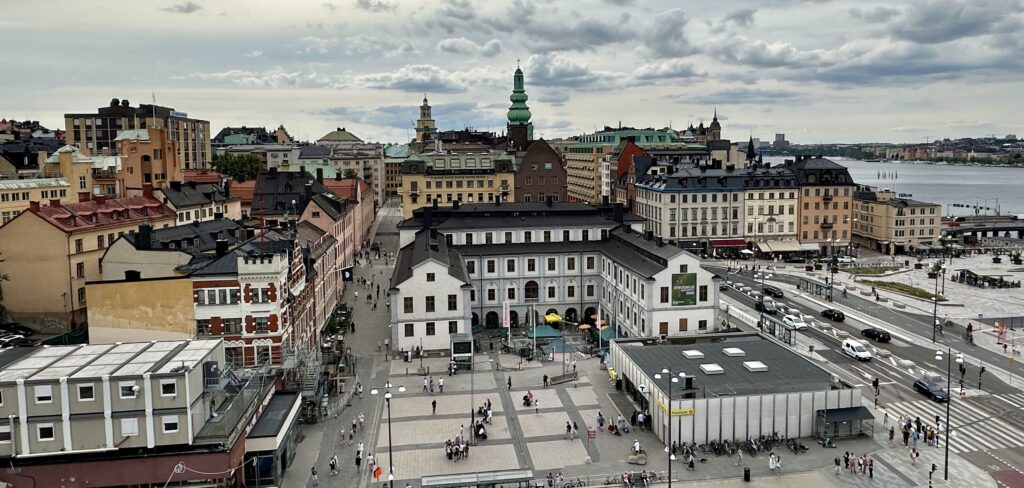
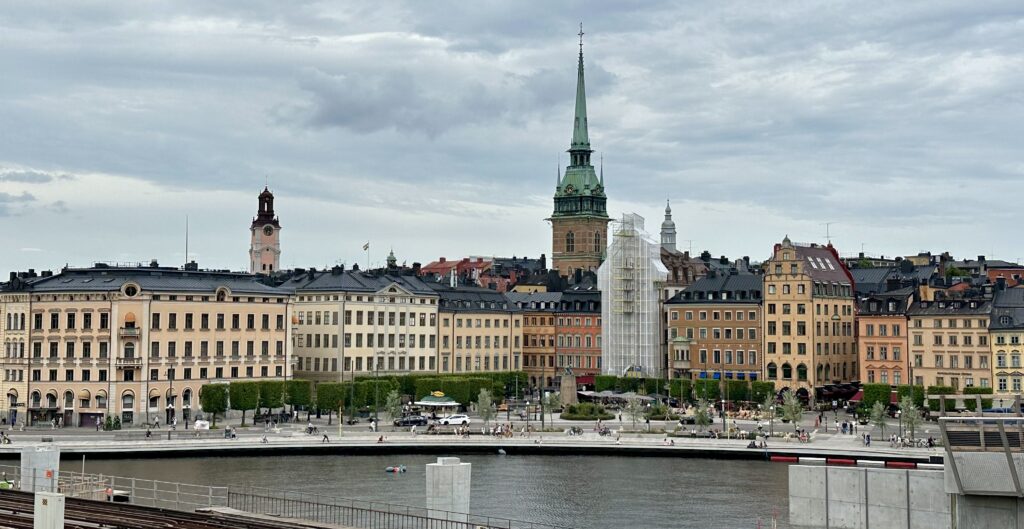
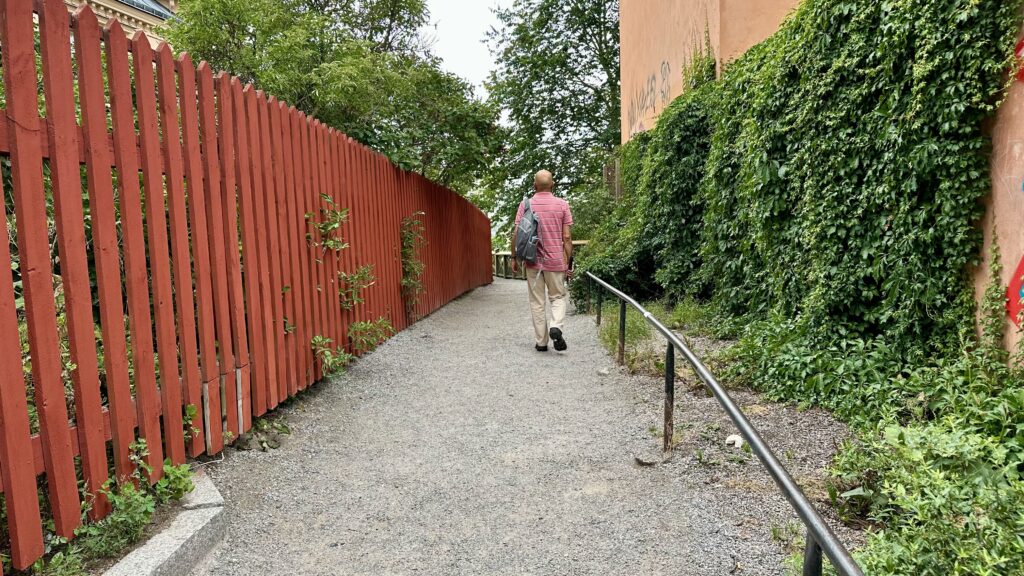
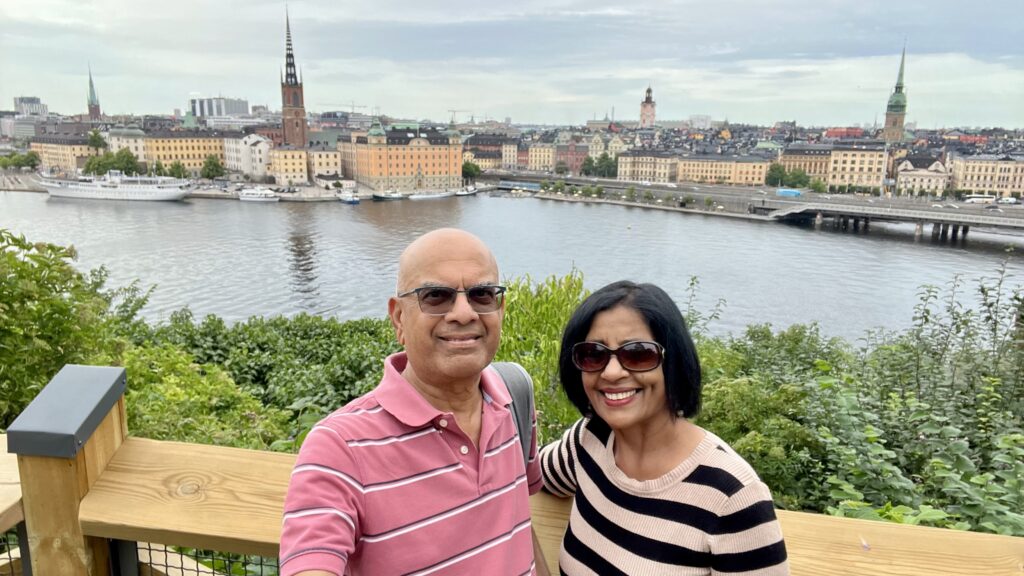
Södermalm, Monteliusvägen – Perched on Södermalm’s northern cliffs, Monteliusvägen is a narrow walking path that offers a panoramic views of Stockholm’s skyline, including Gamla Stan and Lake Mälaren. The half kilometer walking path is lined with charming houses on one side and a beautiful view on the other. It even has benches to relax. You can watch the sunset from here.
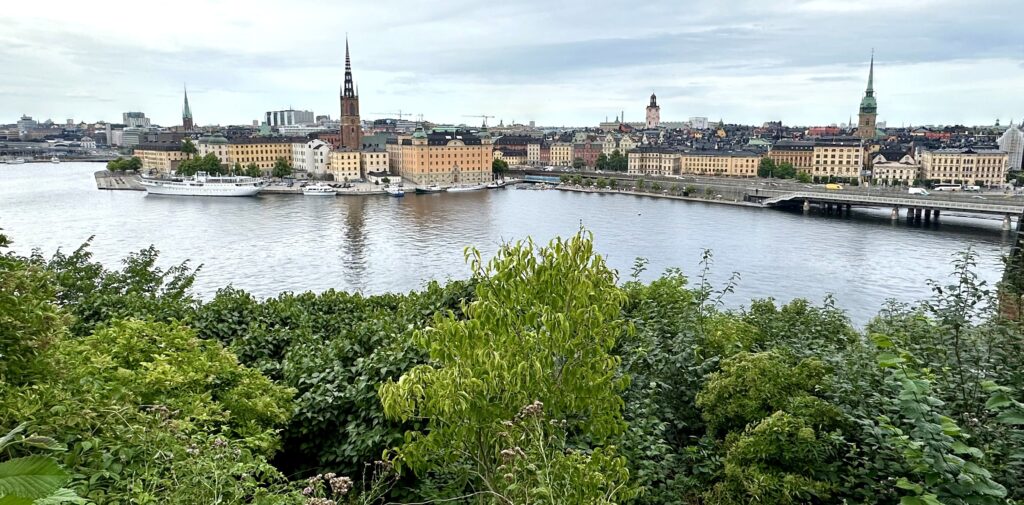
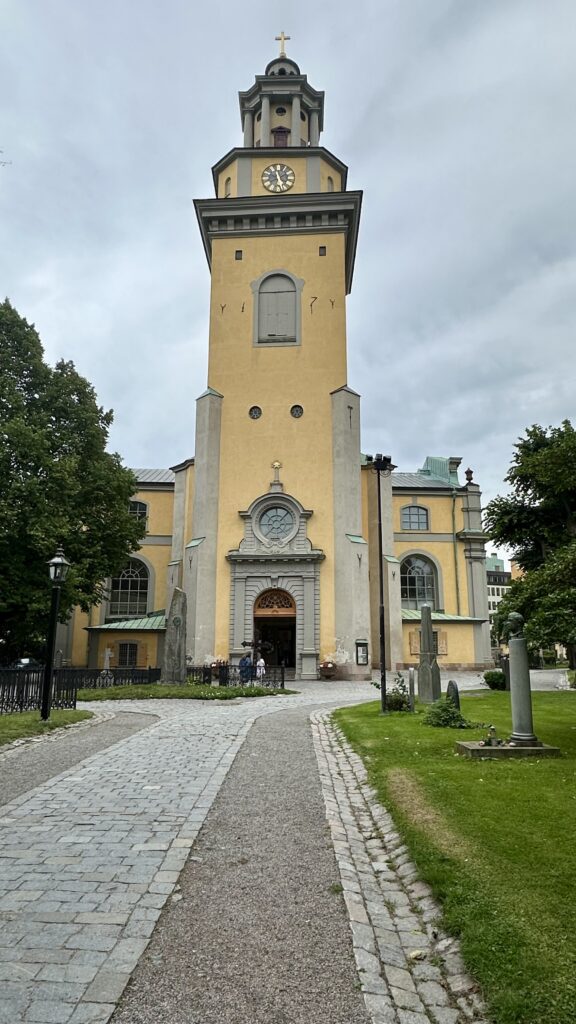
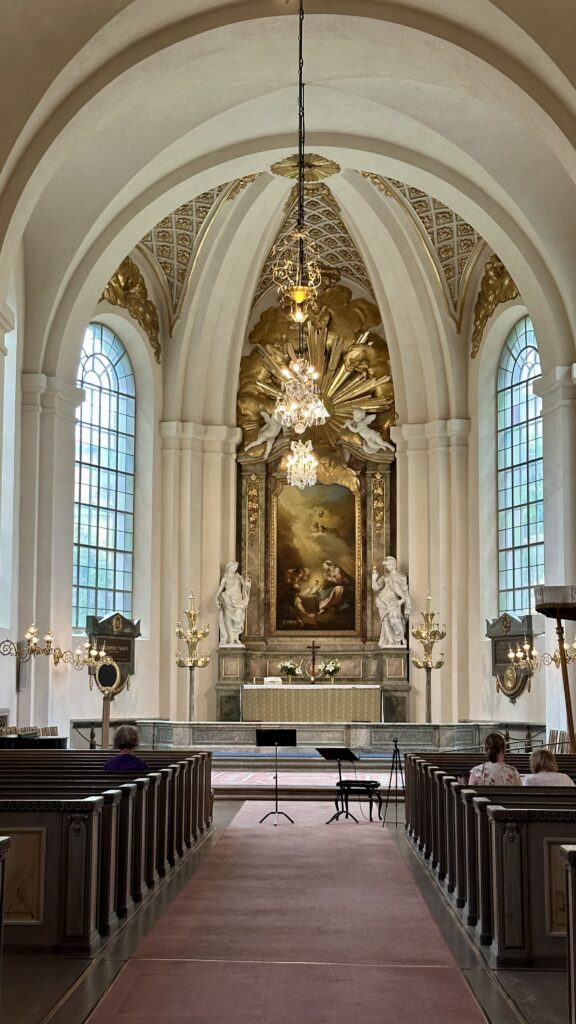
Maria Magdalena Church – On the way back, we stopped by this impressive looking church. This church in Södermalm is dedicated to and named for Jesus’ companion Mary Magdalene. Construction of the church began in the late 1500s, with completion in 1635. Over the centuries, the church has undergone significant transformations, shaped by contributions from several renowned architects. After a terrible fire in 1759, Carl Johan Cronstedt oversaw the repairs that gave the church its current look.
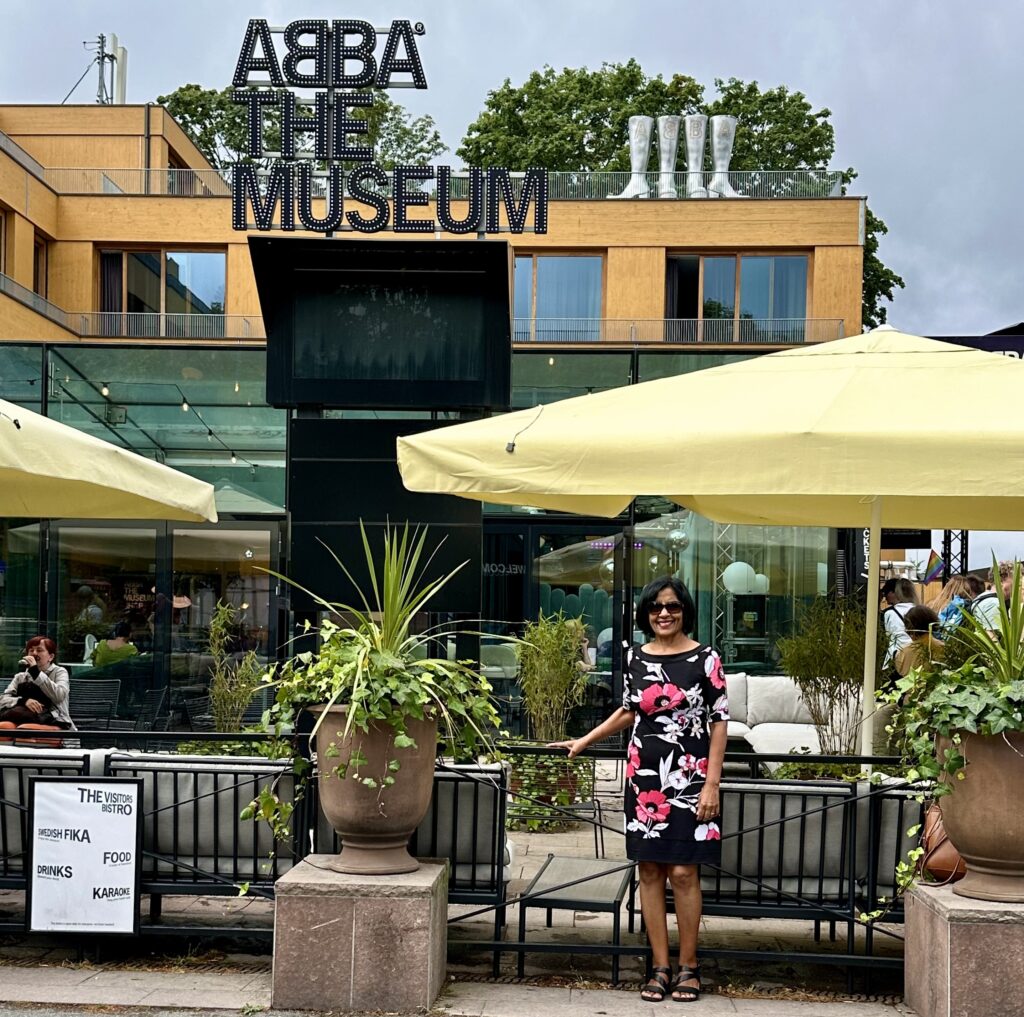
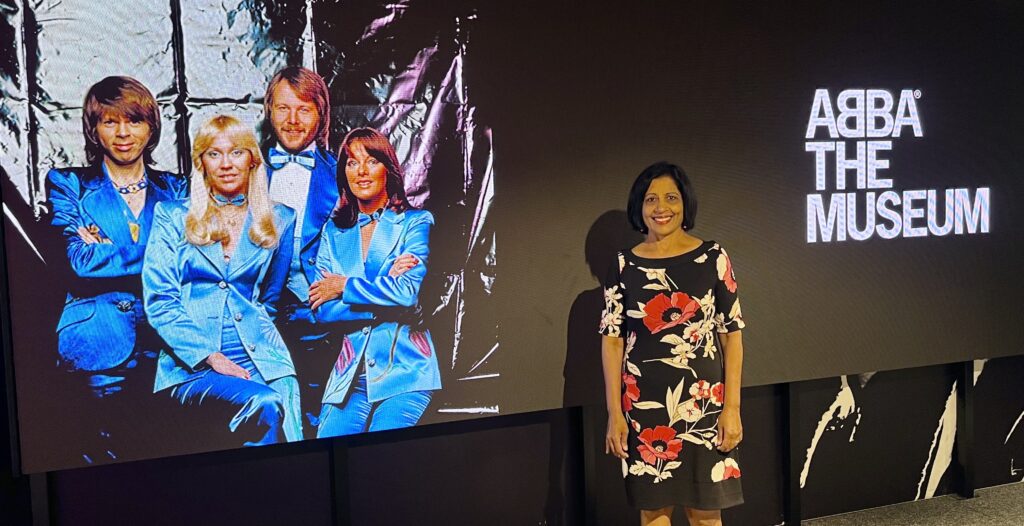
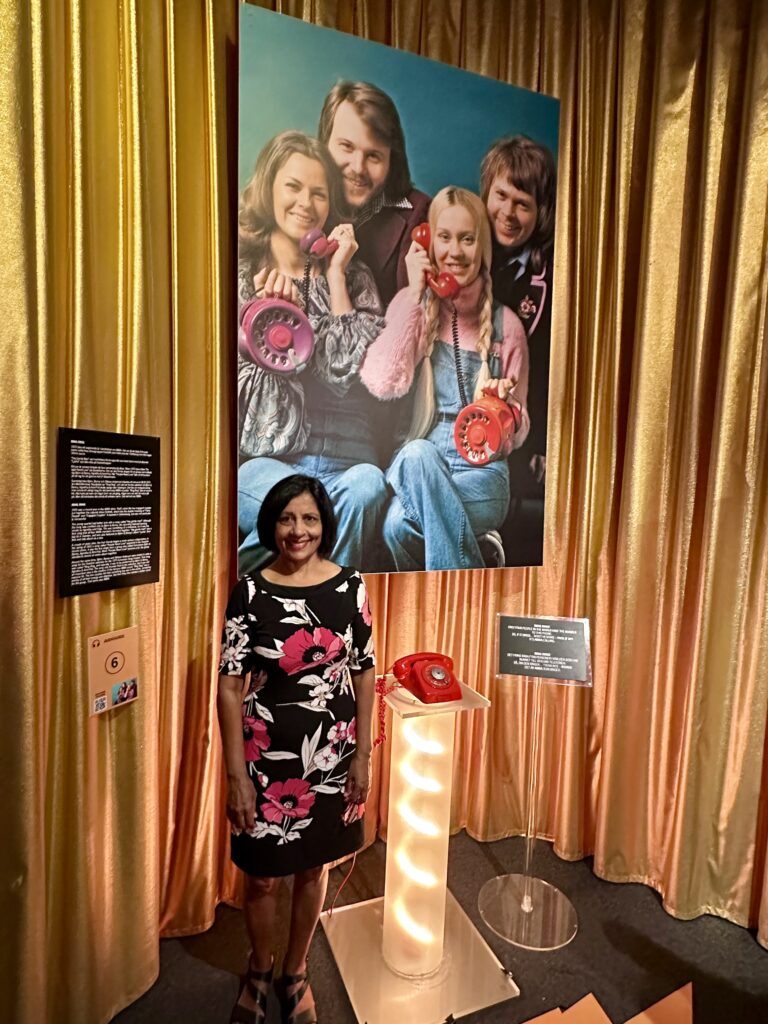
Djurgården Island, ABBA Museum – This museum is dedicated to the creation, rise, and legacy of Sweden’s most popular band – ABBA. Since the Swedish quartet burst onto the music scene in the 1970s, they’ve sold some 385 million records, provided the songs for a Broadway musical (and a movie version of that musical), and gotten people on the dance floor at countless weddings.
The museum features the stories and objects from the members’ lives before the band, you can see the guitar that Björn Ulvaeus used while he was learning to play or take a photo with the band on the bench. You can see the original costumes they wore, along with original costumes from some of their most famous performances. There are objects from their various tours and even the mixing desk that was used in their studio. I was a big fan of ABBA when I was growing up and I found the museum quite interesting. Plan on spending 1-2 hours here as there is a lot of information about each member of ABBA. It also offers an interactive experience where one can sing and dance with ABBA.
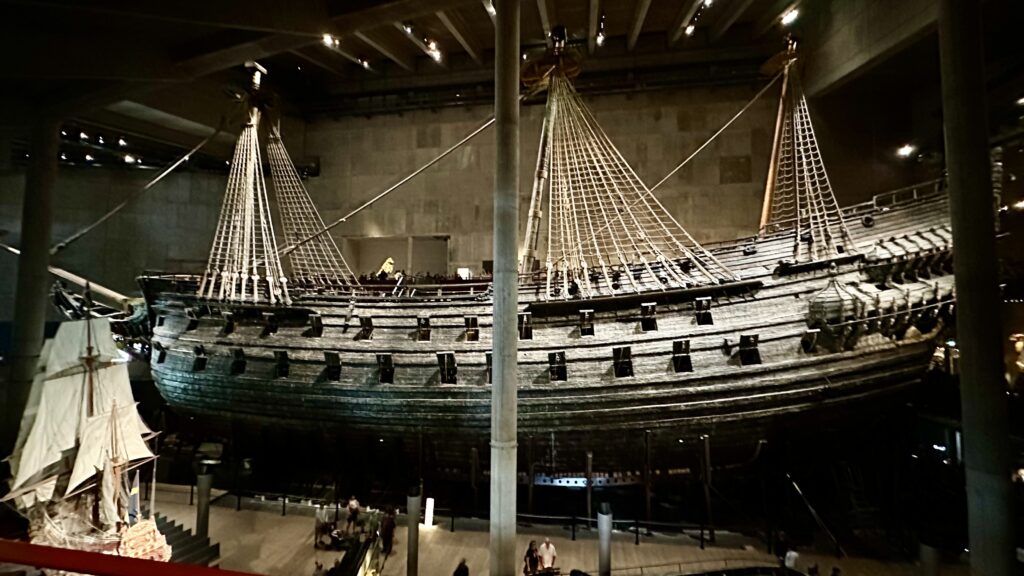
Djurgården Island, Vasa Museum – Opened in 1990, the museum displays the 17th century VASA battleship which was intended to be the pride of the Swedish imperial fleet. This majestic 64-gun sank on its maiden voyage in 1628 within minutes after it took off from the shore. The wreck was raised from its seabed in a major salvage operation between 1956-1961. This is the only almost fully intact 17th-century ship that has ever been salvaged.
We started our visit by watching a 17-minute film about the building of the ship, its sinking, and its salvaging effort. Watching the movie will allow you to appreciate the details on the ship.
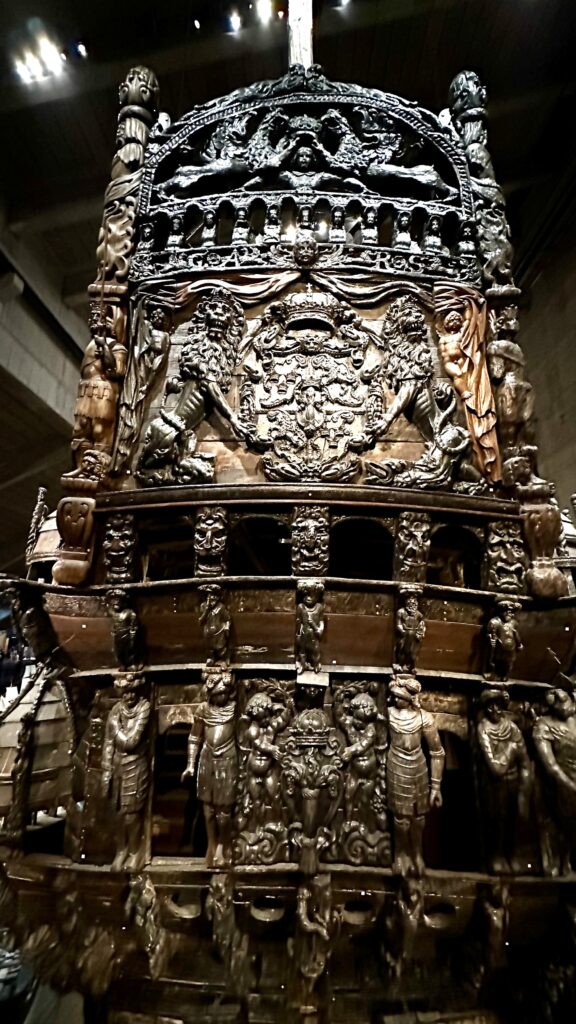
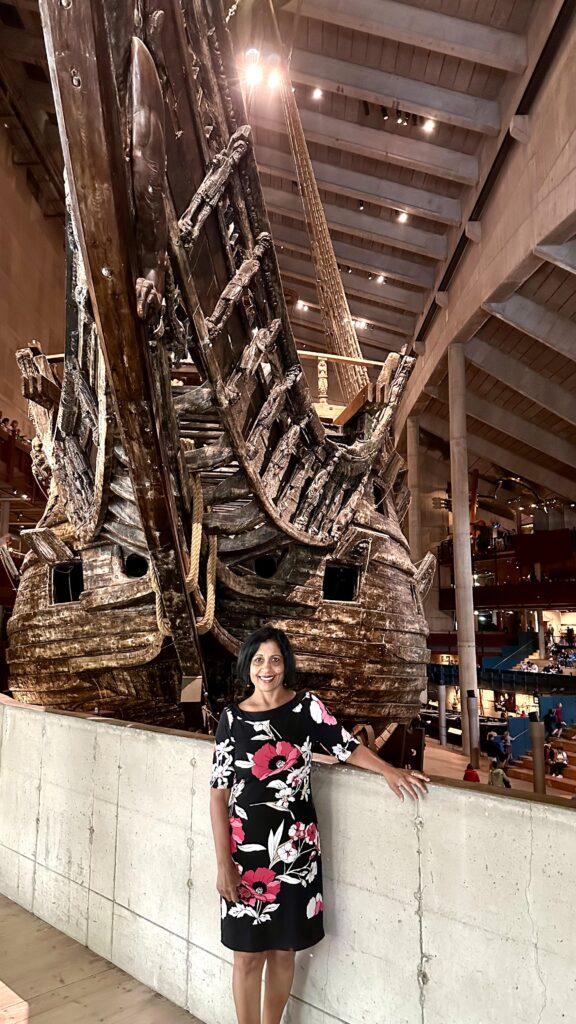
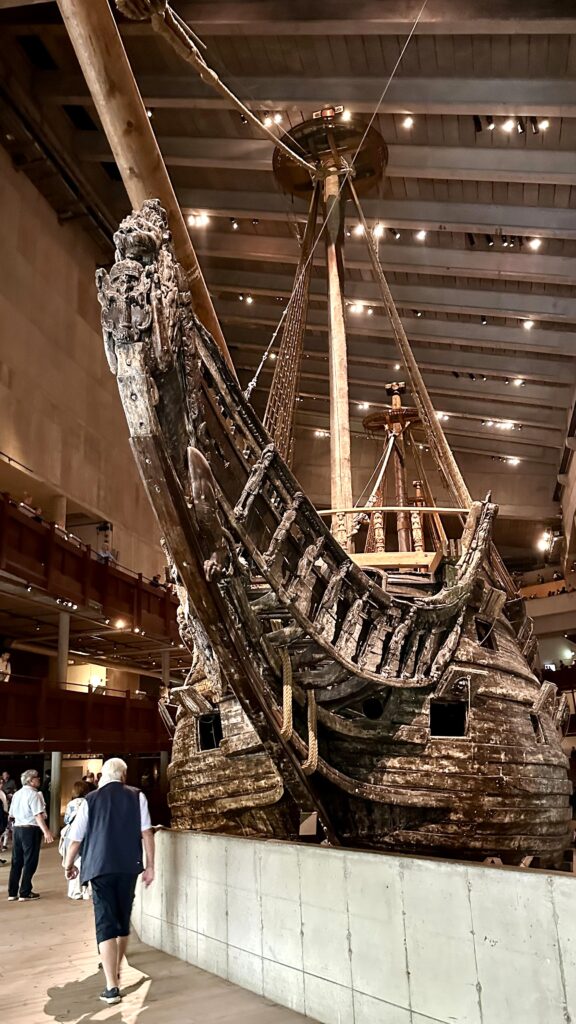
The stern of the VASA Battleship is adorned with intricate carvings, including depictions of King Gustav II Adolf being crowned by two griffins (representing his father), and 11 figures symbolizing the Swedish people. The Vasa’s beakhead, located at the very front of the ship, was a prominent feature adorned with sculptures and carvings.
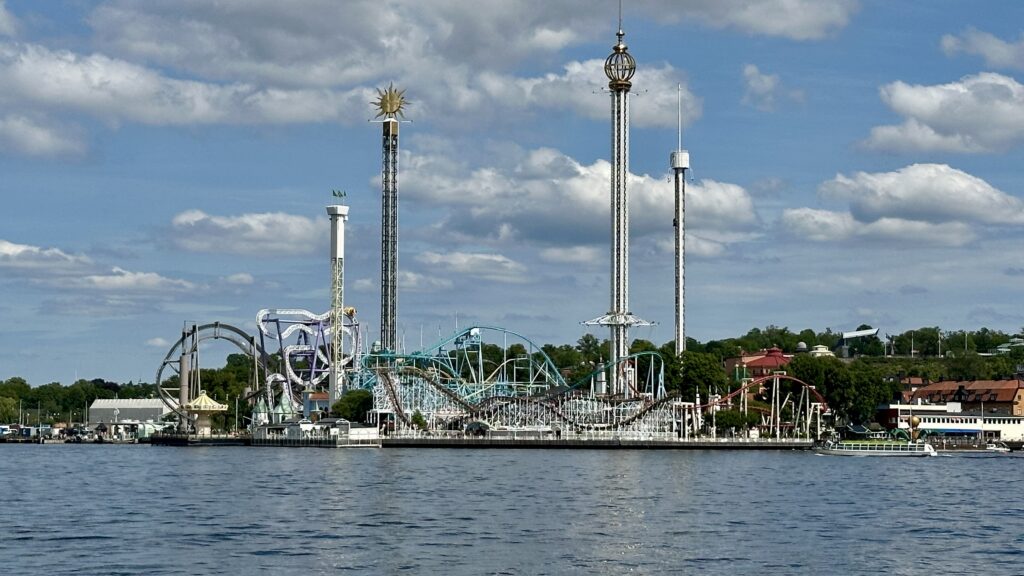
Djurgården Island, Gröna Lund Amusement Park – Set along the scenic waterfront of the island this amusement park is a popular place to visit during the summer. Since opening in 1883, it’s thrilled generations with over 30 attractions, concerts, and phenomenal views over the Baltic waters. We did not visit this place, but got a great view of the park on our ferry ride.
Djurgården Island, Skansen Open Air Museum – This open air museum is the oldest in Sweden. It was opened on 11 October 1891 by Artur Hazelius (1833–1901) to show the way of life in different parts of Sweden before the industrial era. The word Skansen has now become a general term for referring to open-air museum all over Europe and America.
Skansen is certainly worth a visit, if you are interested in open-air museums. My husband and I have been to a few of them and found them a bit boring and hence skipped visiting Skansen.
Archipelago, Vaxholm – Vaxholm is a popular island and town, often called the Capital of Archipelago. Located just 35 km from Stockholm, it is a popular destination for day trips. You can reach Vaxholm by bus, train, ferry, or car. We took a public ferry from dock 13 near – The ride takes 90 minutes and the ferry is equipped with a cafeteria. You can enjoy the views either by sitting inside or outside. We got onto the ferry 10 min before it took off and it was crowded (July 2025). There was some place to stand on either sides of the deck.

It was a gorgeous day and we got a great view of islands passing by. We also saw many small and colorful lighthouses floating in the water. The boat made stops at a few islands to drop off or pick up people. We got off at Drophelmsplan, which was in front of the Vaxholm hotel.

Vaxholm fortress – This huge fortress was across the water where we got off. It did not look like the fort was open on the day of our visit, neither did we see any ferries transporting people to the fortress. The fortress was commissioned by King Gustav Vasa during the 16th century, as a defensive outpost in the Stockholm archipelago. Since then it’s seen two wars, been demolished and rebuilt, and today serves as a museum, hotel, and conference center.
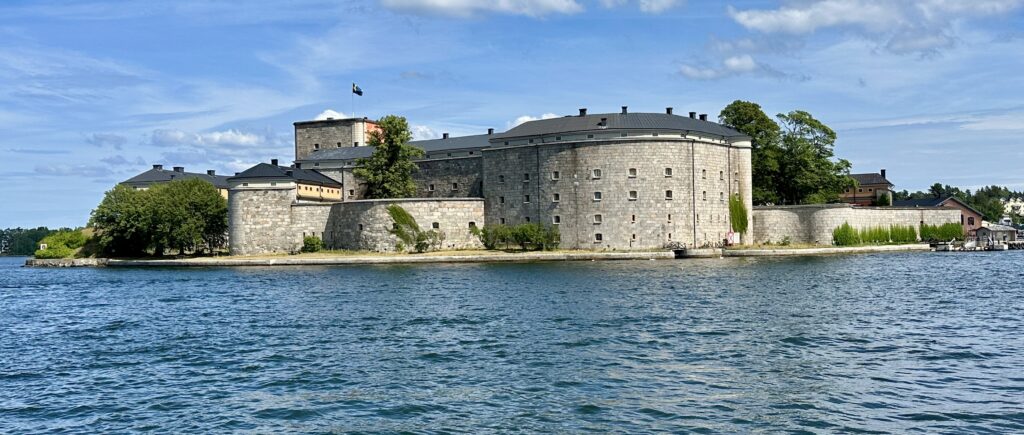
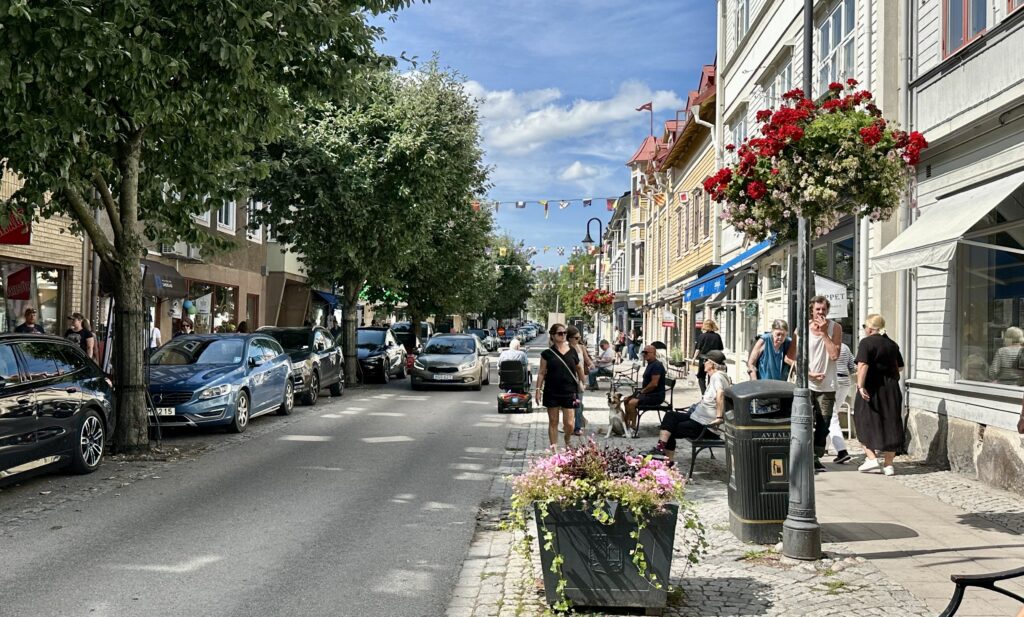
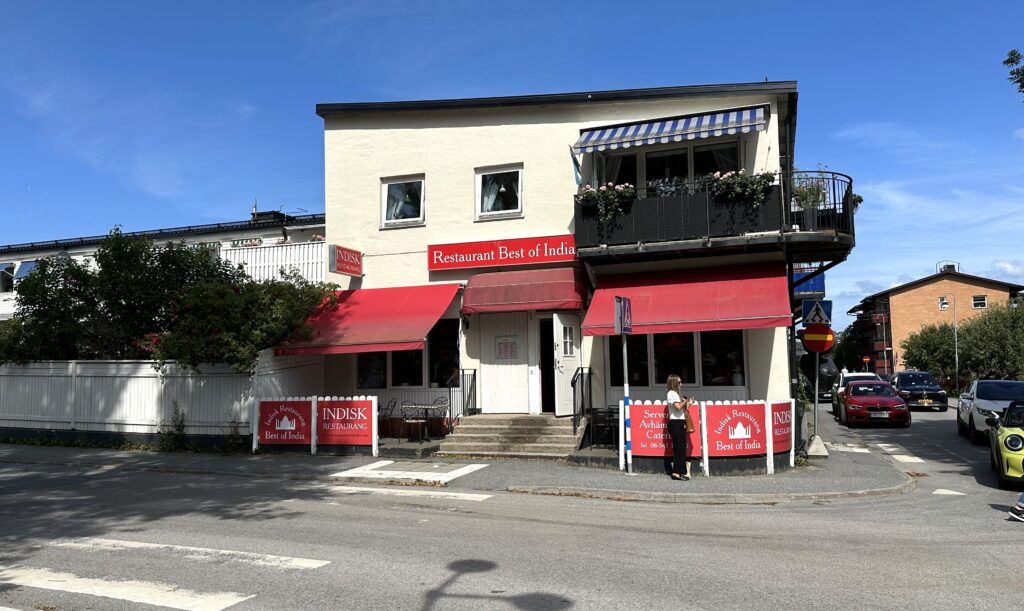
After we spent a few minutes checking out the castle from across the water, we looked around to figure out the best thing to do on the island. We followed the crowd of people through the main street, Hamngatan, that leads into the inner city. We first walked for half a mile on the busy street filled with grocery and apparel shops, cafes and restaurants all the way to a 4-way intersection. There was an Indian restaurant in one corner of the intersection that was closed.
We then walked to the city’s main square which is dominated by the town hall building. There was an open air restaurant and people playing chess on the huge outdoor chessboard in the square.
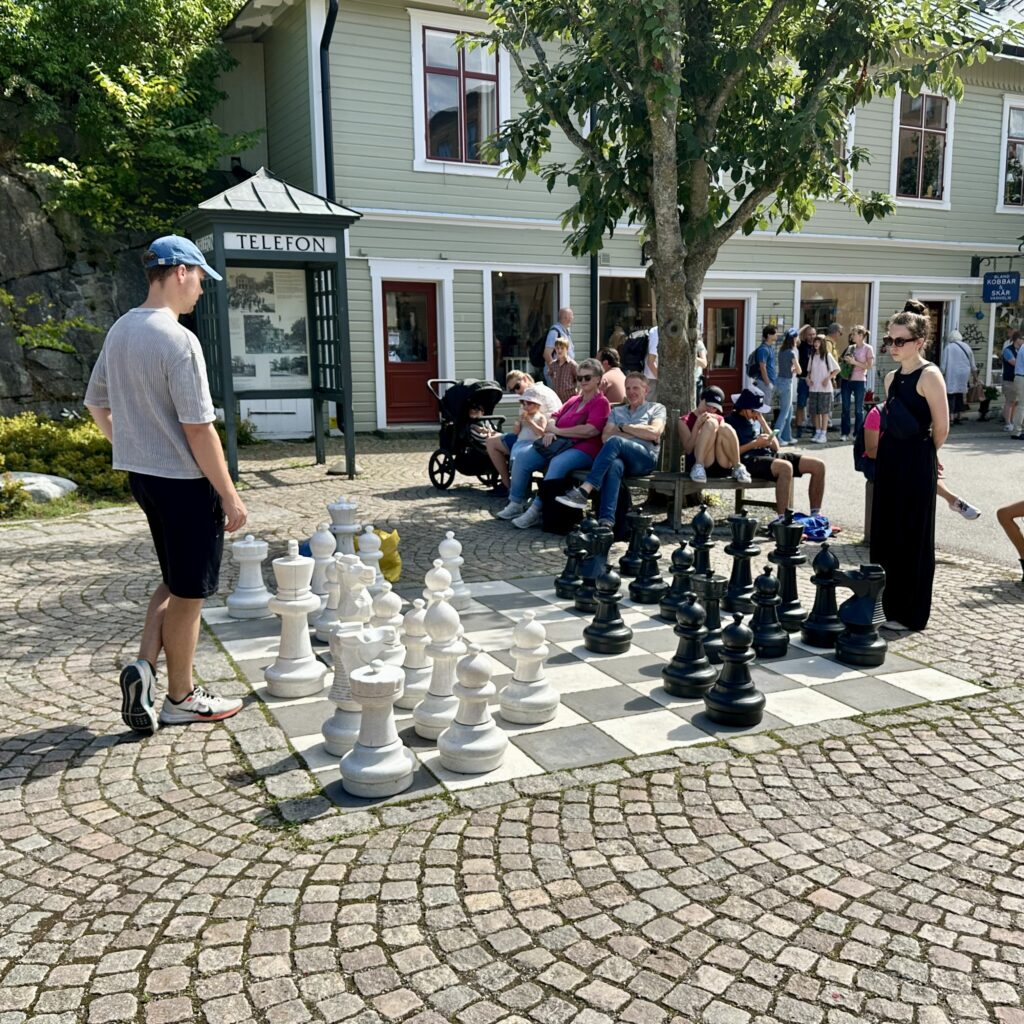
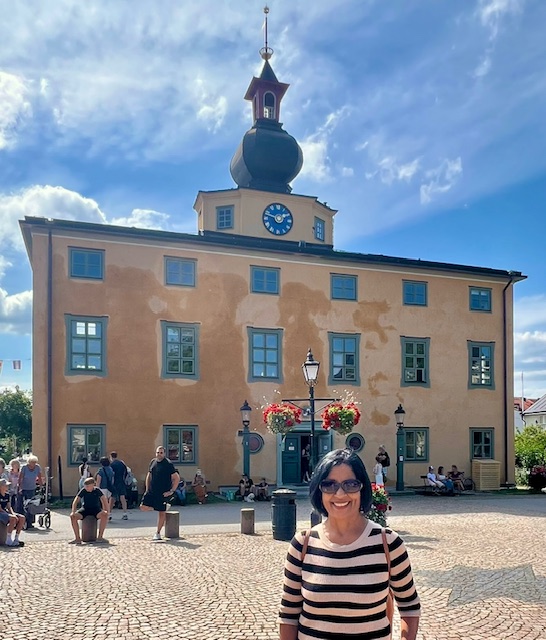
We walked back to the harbor to take the ferry back to Stockholm. We had enough time to have lunch in Hembygdsgårds, a cute Café close to the harbor from where we could see the boats coming in.
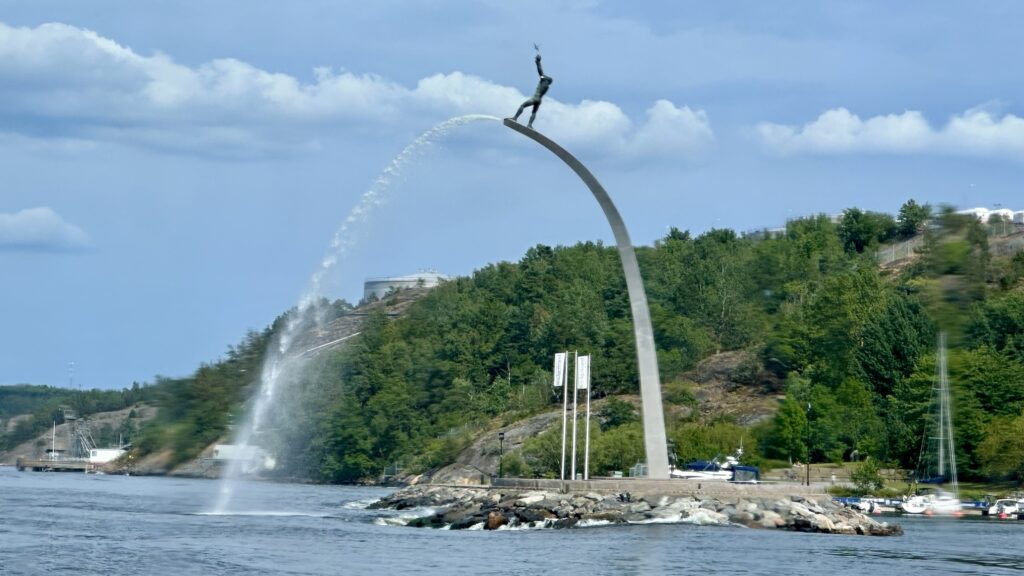
Archipelago, God, our father, on the rainbow – The ferry stopped at Nacka Strand on the ride back to Stockholm. On the pier nearby, we saw an interesting fountain sculpture named God, our father, on the rainbow. This famous artwork was created by Sweden’s most popular sculptor, Carl Milles (1875–1955). It depicts God standing on top of a 23-meter-tall (75-foot-tall) water spout. The work was designed in the 1940s and intended to stand in New York outside the United Nations. That plan was not realized, but in 1995 this version was installed at Nacka, just outside central Stockholm.
Was the Archipelago trip worth it ? – It is, if you have extra time and plan to stay in and around Stockholm for 3 days or more.
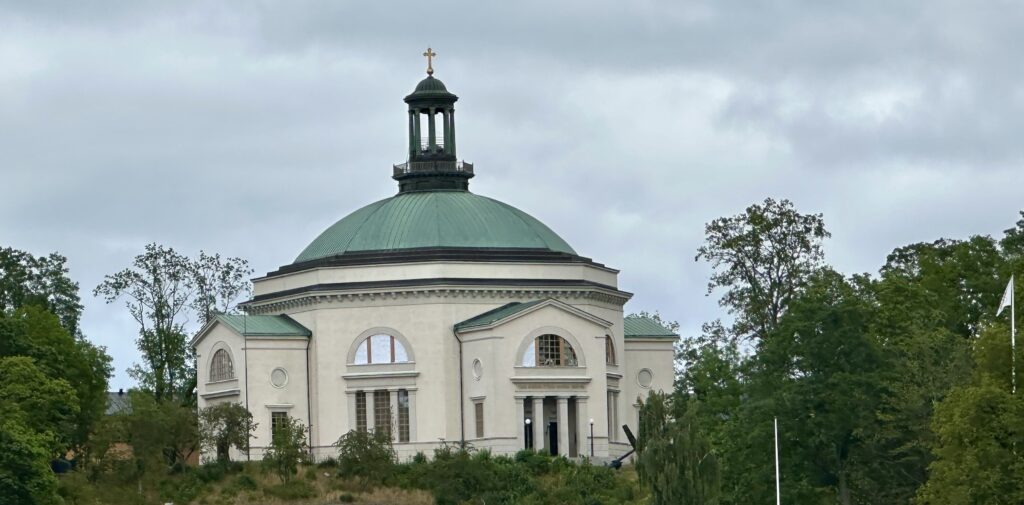
Eric Ericson Hall – This gorgeous building is visible from many places around Stockholm. It was formerly the Skeppsholmen Church named after its location. The church was built 1823-1849 to replace a minor wooden church that was destroyed in the devastating fire of 1822. It was inaugurated by King Charles XIV John in 1842.
The church was closely associated with the Swedish Navy as it was built on the islet that served as a naval base for a long time. The parish itself was disbanded in 1969 when the navy relocated to Muskö Naval Base. The church was later secularized in 2002 and renamed The Eric Ericson Hall in 2009. Eric Ericson was a Swedish choral conductor.
National Museum of Fine Arts – was founded in 1792 and exhibits an impressive collection of paintings, drawings and sculptures acquired mostly from the Swedish Royal Family, as its original name Kungliga Museet (Royal Museum) suggests.
The present building, designed by the German architect Friedrich August Stüler, was inaugurated in 1866. Along with works from world famous painters, such as Rembrandt and Dürer, it displays the masterpieces of many prominent Swedish artists, along with an impressive collection of porcelain and some pieces of modern art.
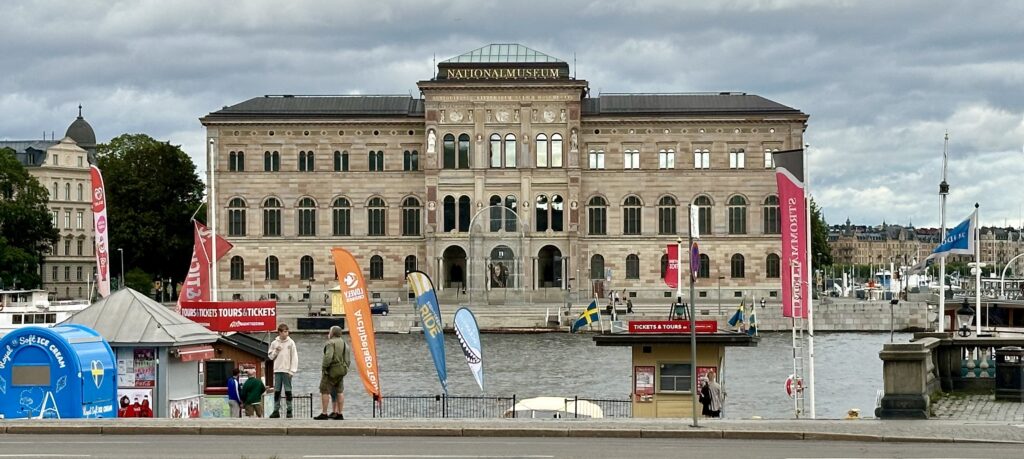
We did not have time to visit this museum. It gets a 4.2 review in TripAdvisor.