Half Day trip from Copenhagen
Frederiksborg Castle is located in Hillerød which is 40 km north of Copenhagen and less than 30 minute train ride. This stunning 17th century castle is built in the Dutch Renaissance style, and is spectacularly well preserved.
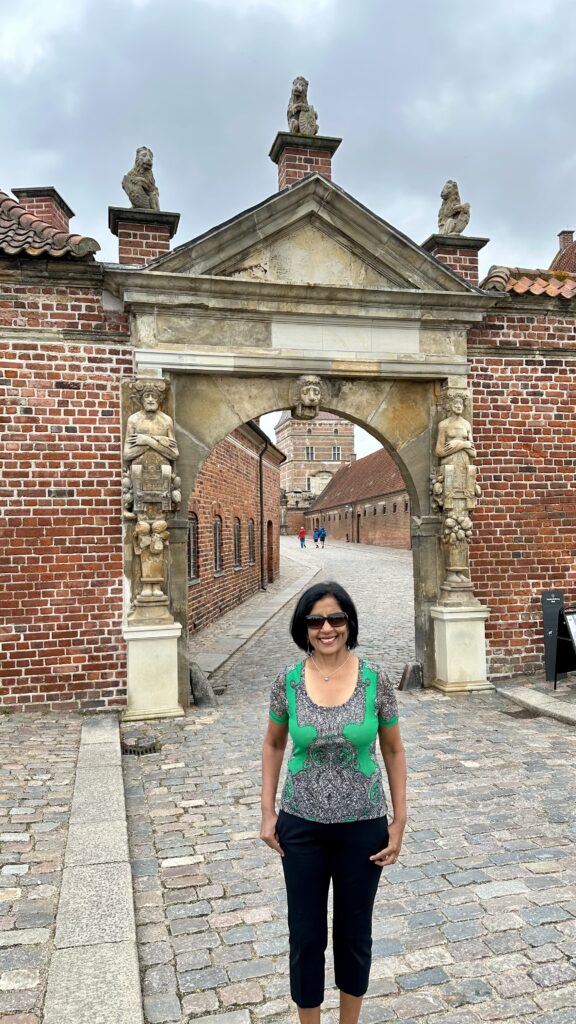
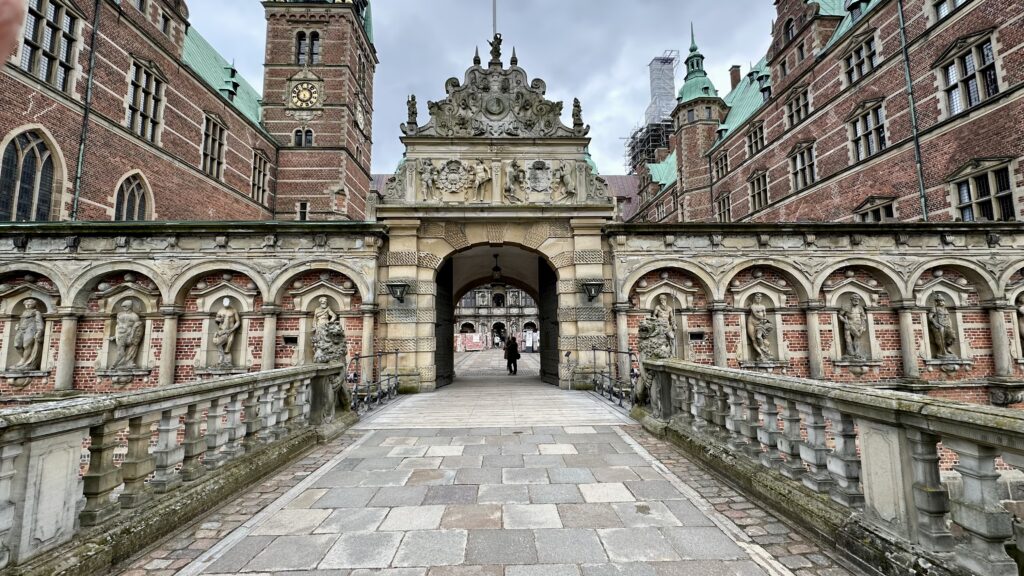
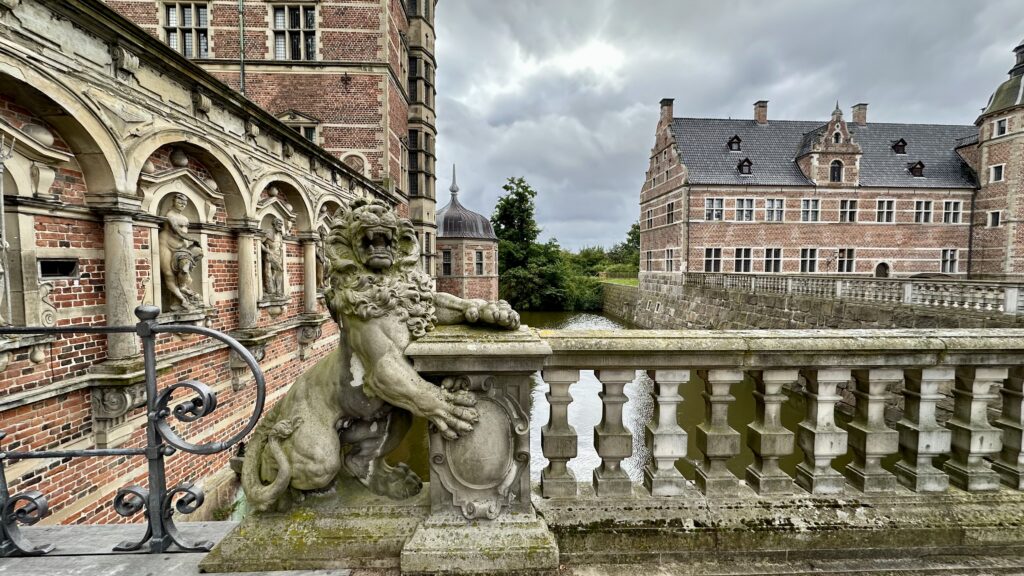
The castle lies on three islands in Frederiksborg Lake and was restored in its original style after a fire in 1859. Visitors first encounter a bridge followed by a stone archway known as the Town Gate. At the center of the archway, a lion statue represents Denmark. After passing through the Town Gate, visitors proceed along a narrow, cobblestone street called Staldgaden, which translates to “housing street”. This street was once home to the king’s court servants. You will then pass through the Christian VI’s Gateway which is dated 1736. Next is the S-bridge that leads to the Gatehouse and you have arrived.
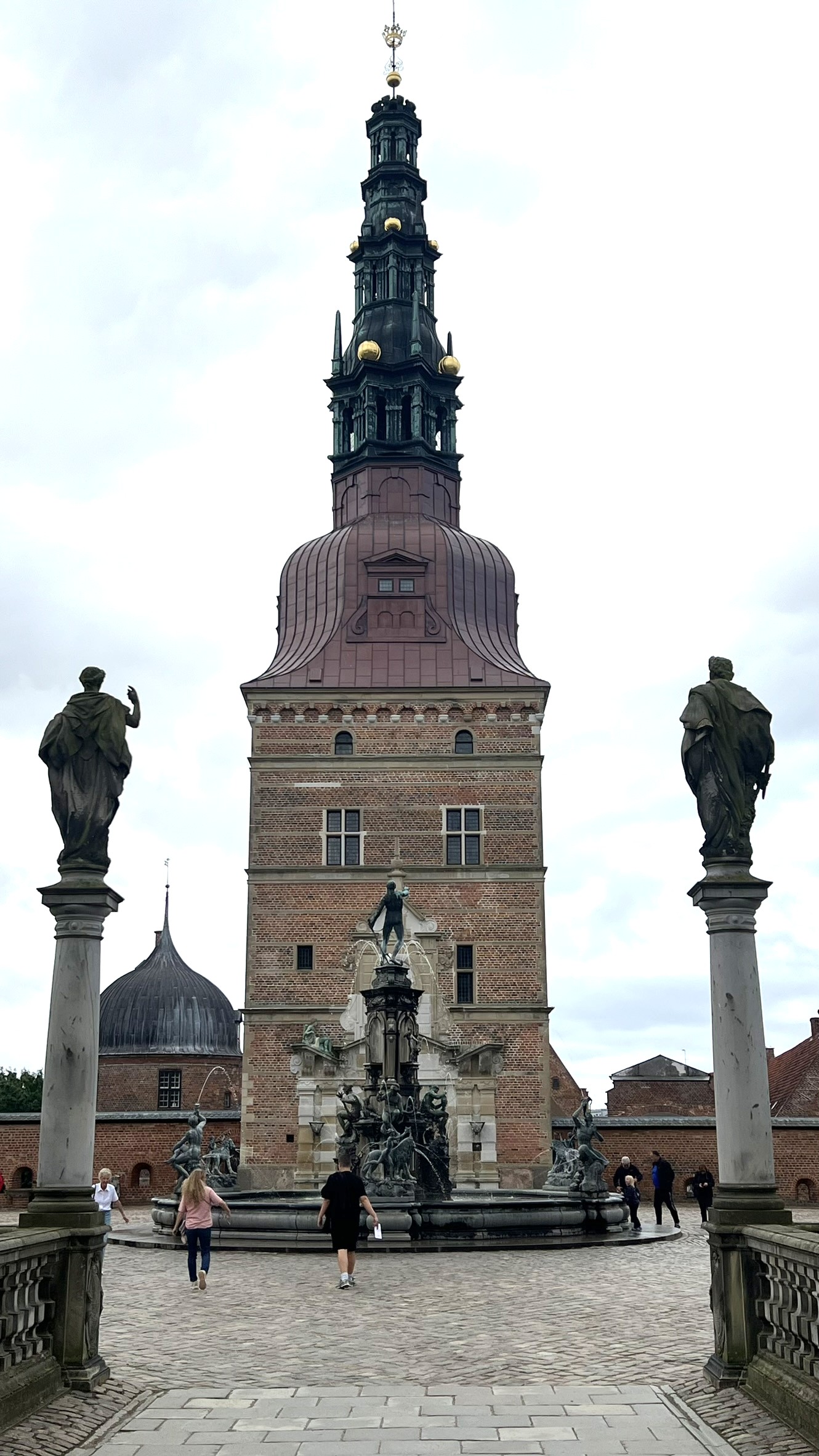
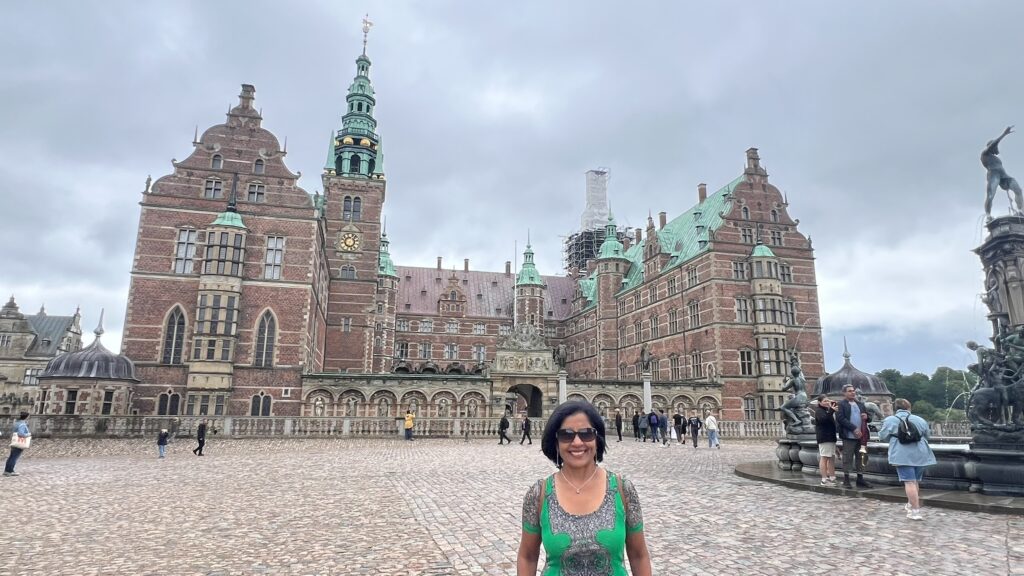
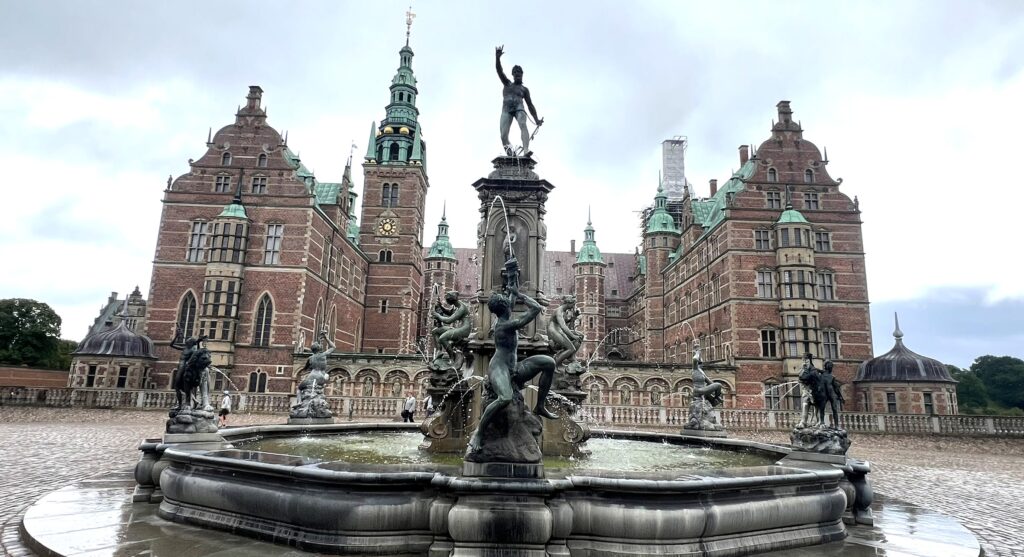
Since 1888, the main courtyard has featured a copy of the Fountain of Neptune by Adrian de Vries (1623), the original of which was taken to Sweden in 1658.
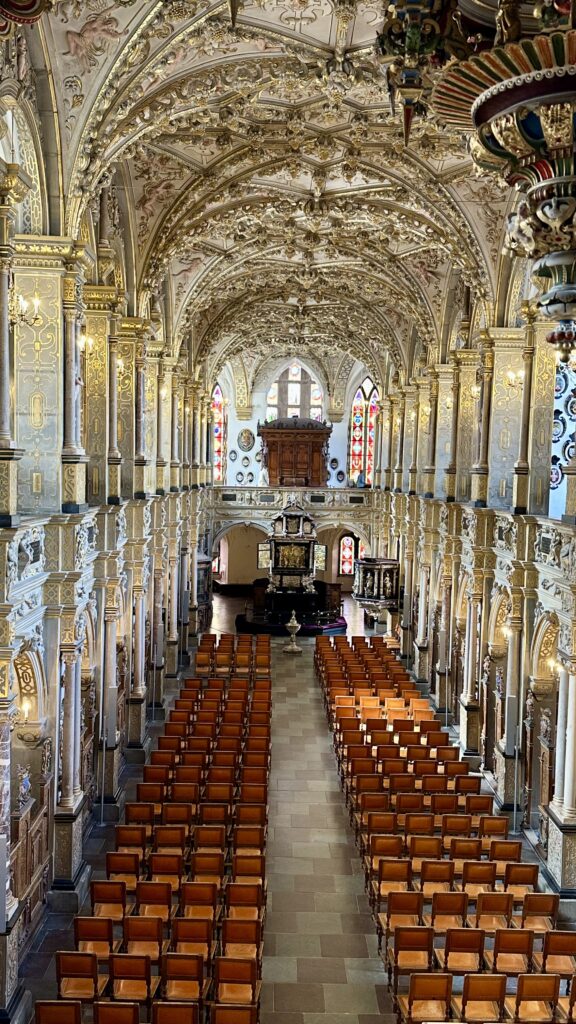
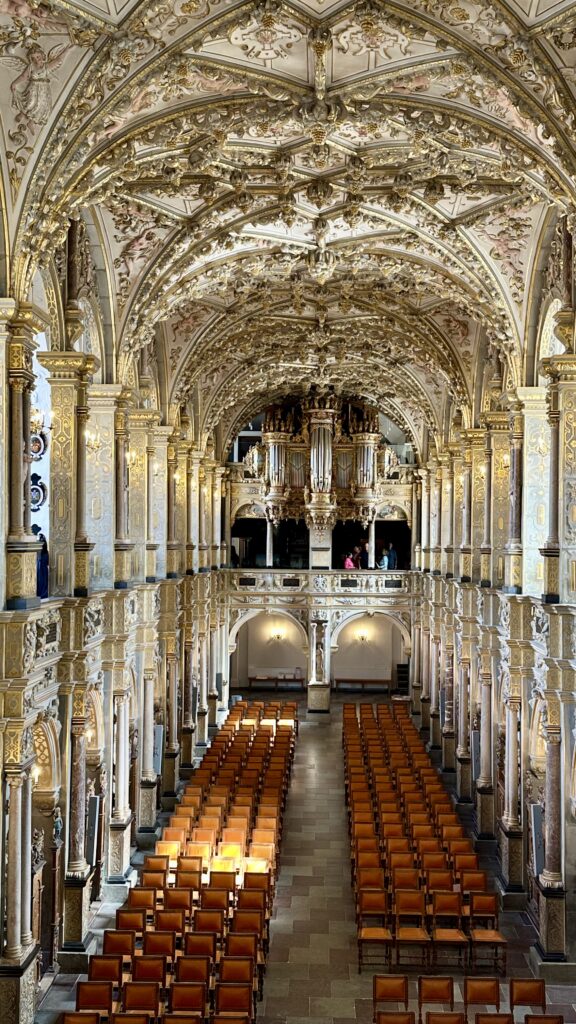
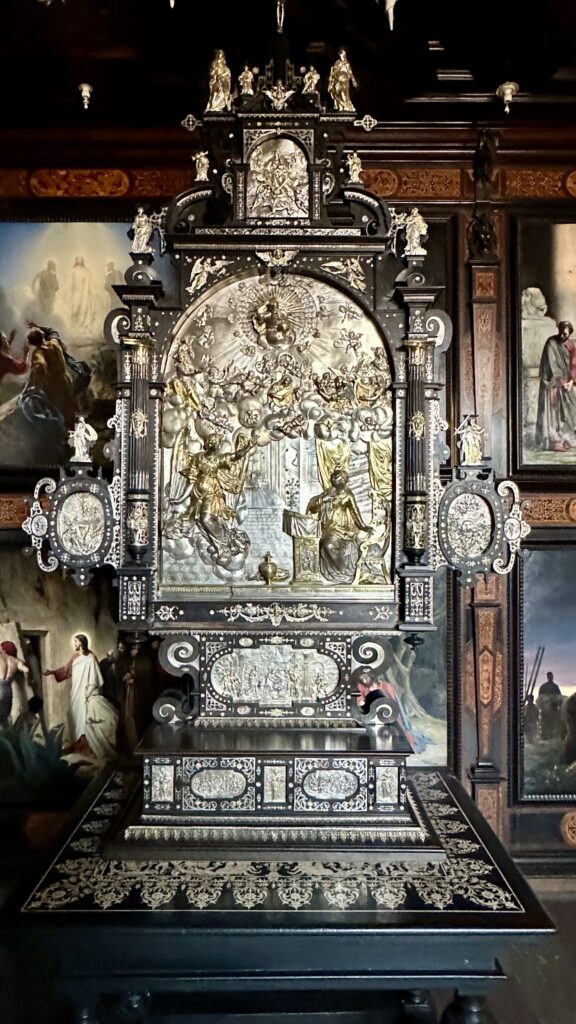
Castle Church – This historic and magnificent church dates from the time of Christian IV. During the period of absolute monarchy, the church was used for anointment of absolute kings. It now serves as a parish church and hosts concerts.
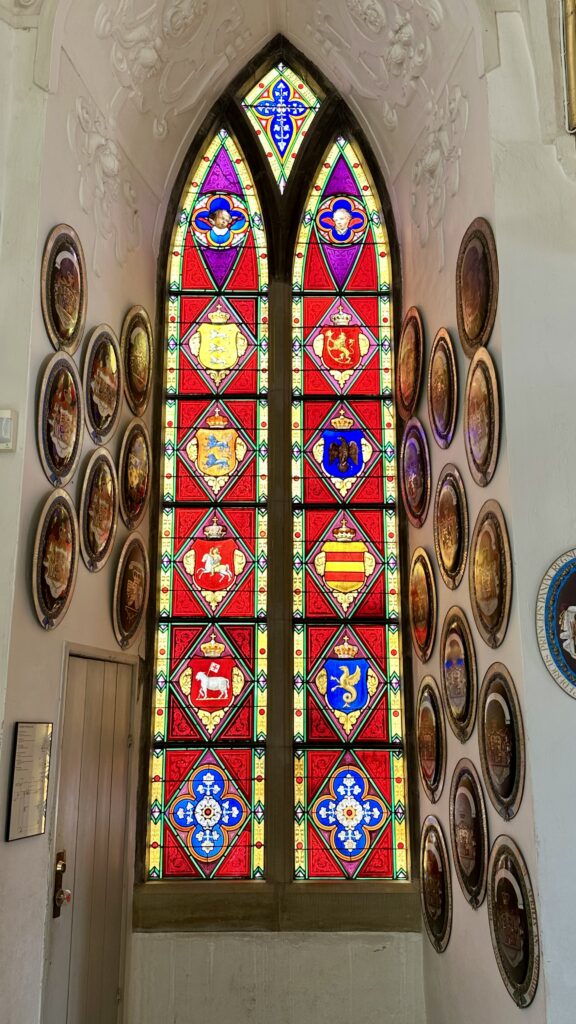
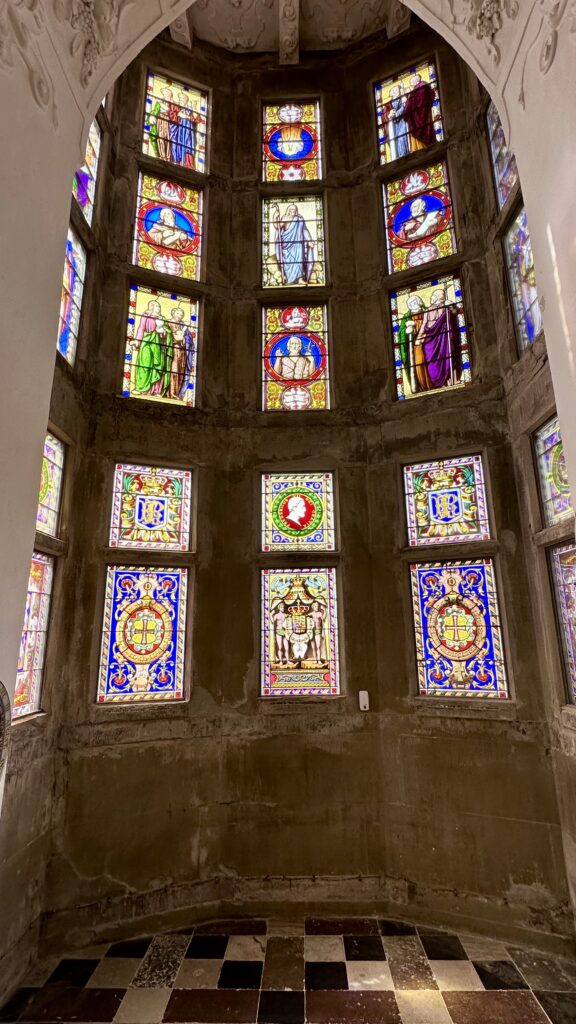
The Rotunda and Privy Passage – In 1660 the Rotunda was furnished in baroque style. The walls were covered with a pattern of Christian Vs crowned monogram and flowers above grey painted panels. The Rotunda was destroyed in a fire in 1859. When the castle was restored, a new ceiling painting was made which depicts the vices fleeing from Christian V.
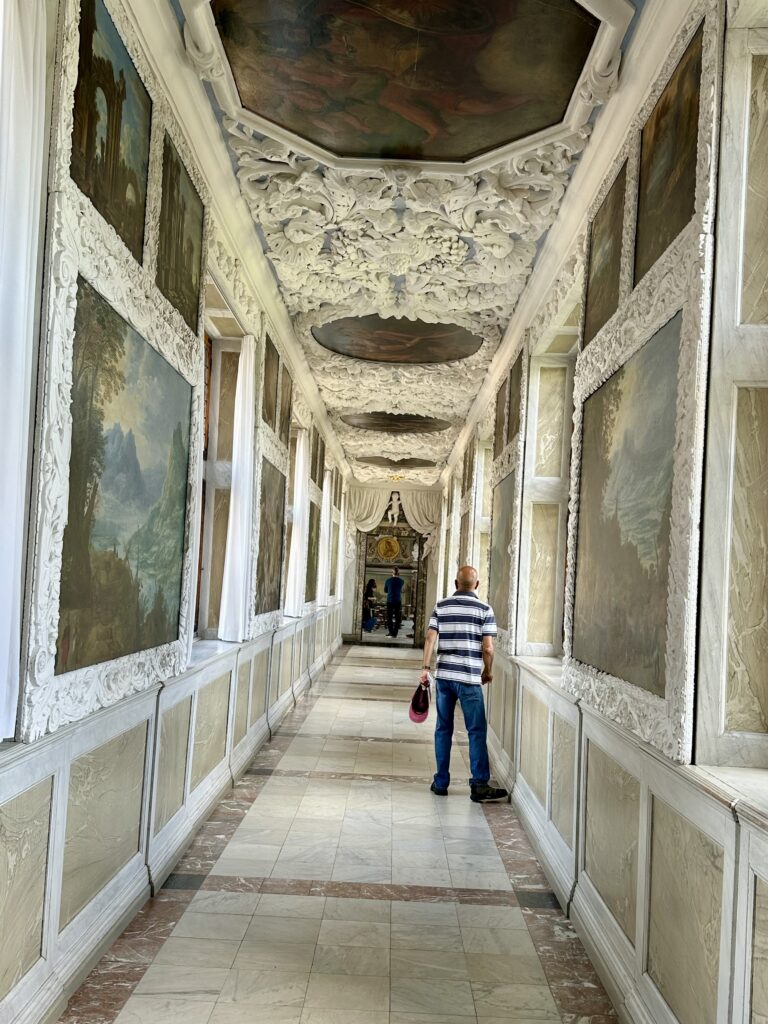
The Privy Passage leads to the Audience Chamber. In 1665 a fire destroyed the Privy Passage and was restored after in the 1680s. The passage is in the form of a picture gallery, the pictures being let into the walls and set off by richly carved frames to match the richly carved ceiling.
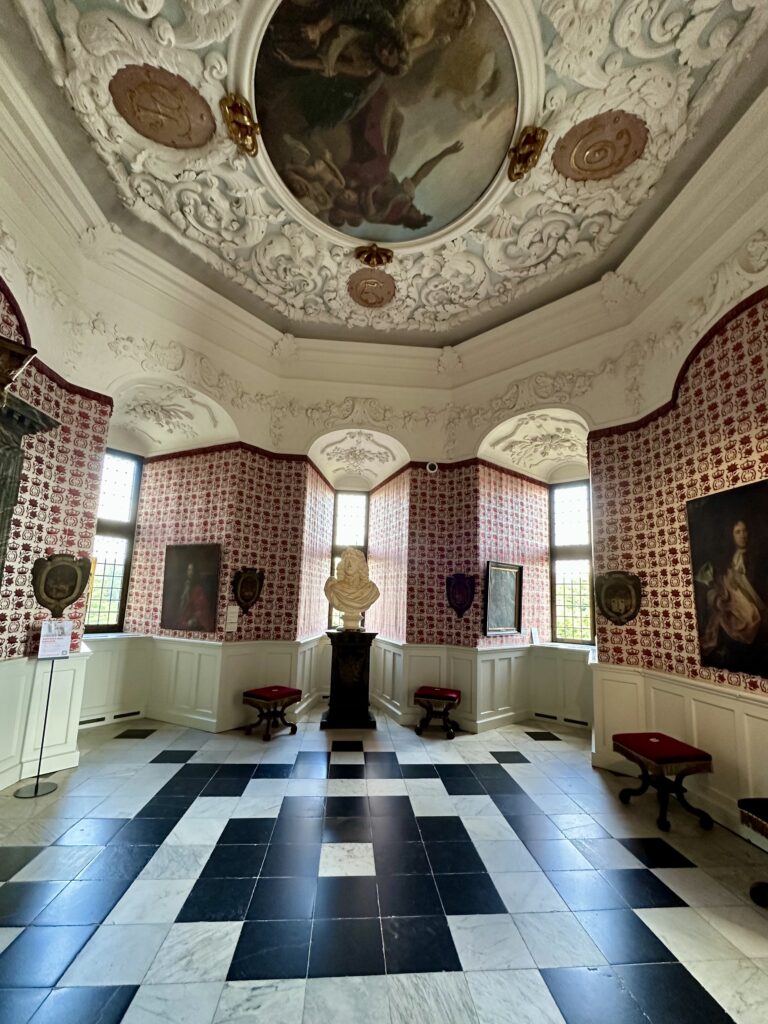
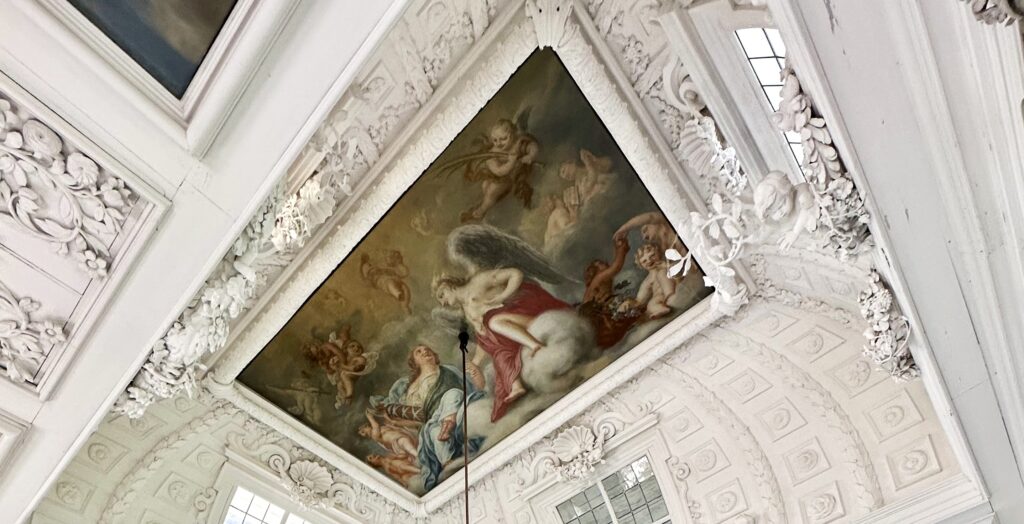
The Audience Chamber – After the fire in 1665, the chamber was restored during the 1680s under the supervision of Lambart van Haven. The paintings in the panels on the walls and ceiling pay tribute to the absolute monarch.
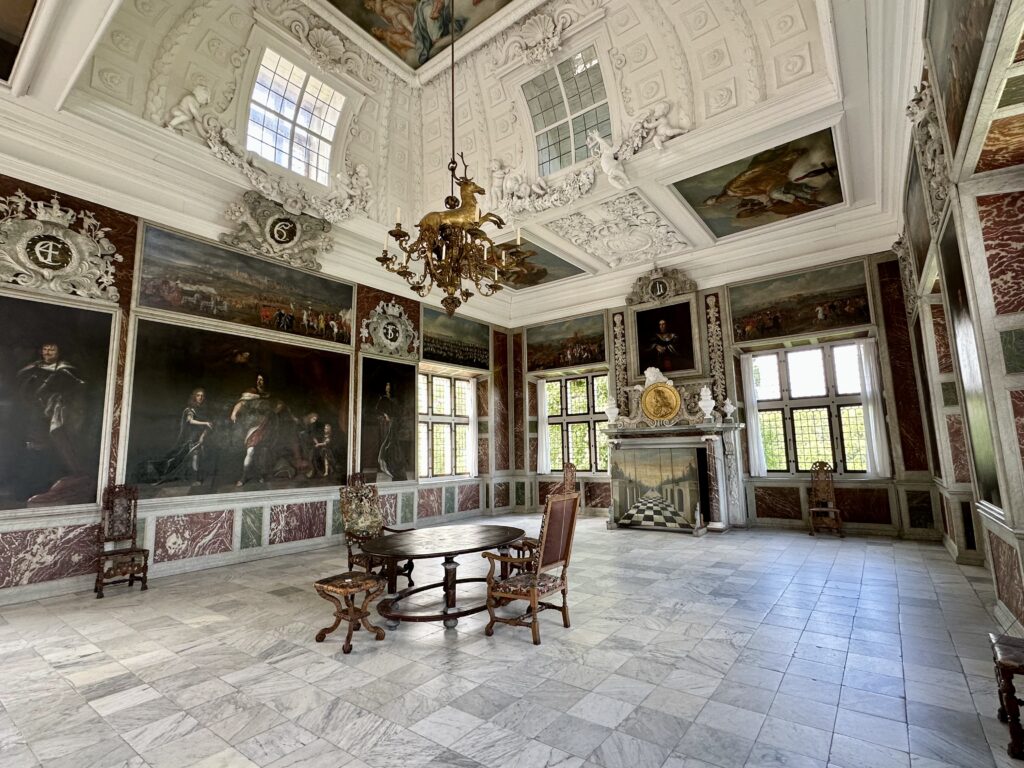
The painting on the ceiling of the chamber, designed by van Haven, bears the motto of Christian V, Pietate et Justitia (Piety and Justice).
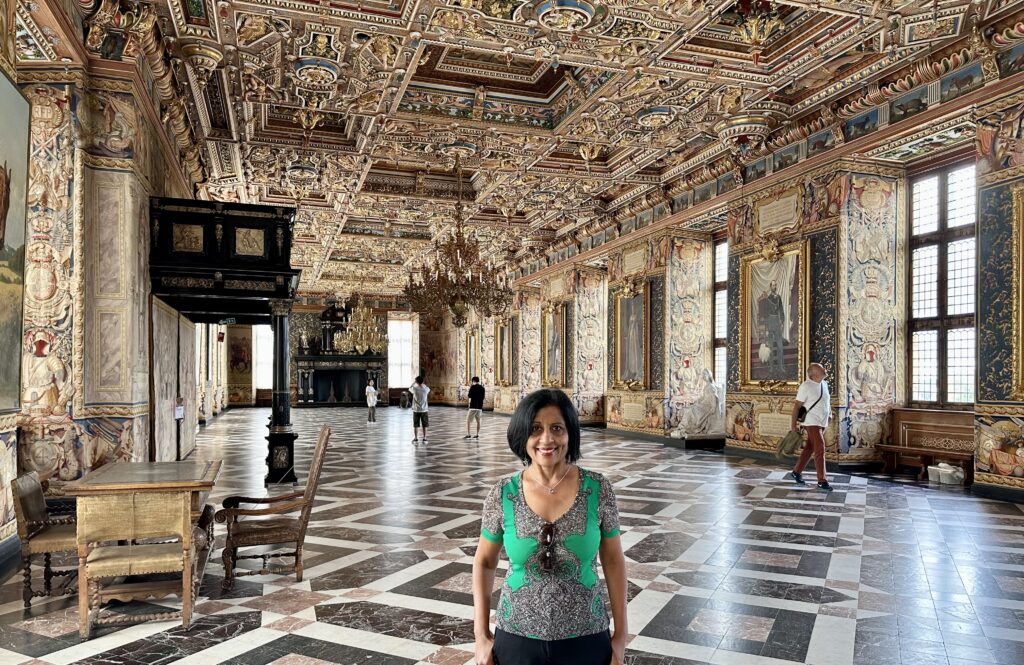
The Great Hall (Riddersalen) – is situated above the Chapel and also extends over the length of the west wing. It was destroyed by fire in 1859, but was almost fully restored in 1880 to its original glory. The room is decorated with portraits of the members of the royal family.
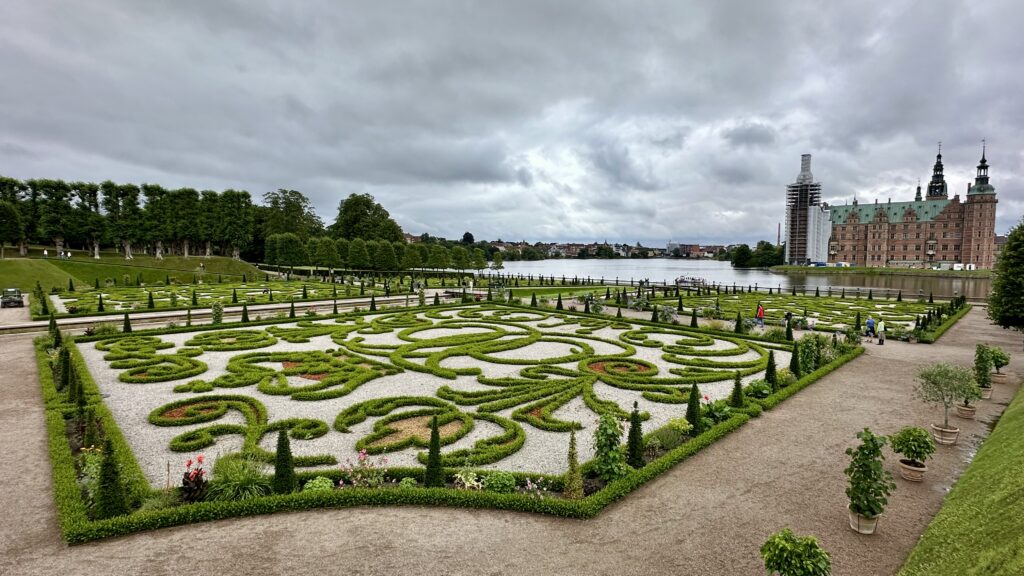
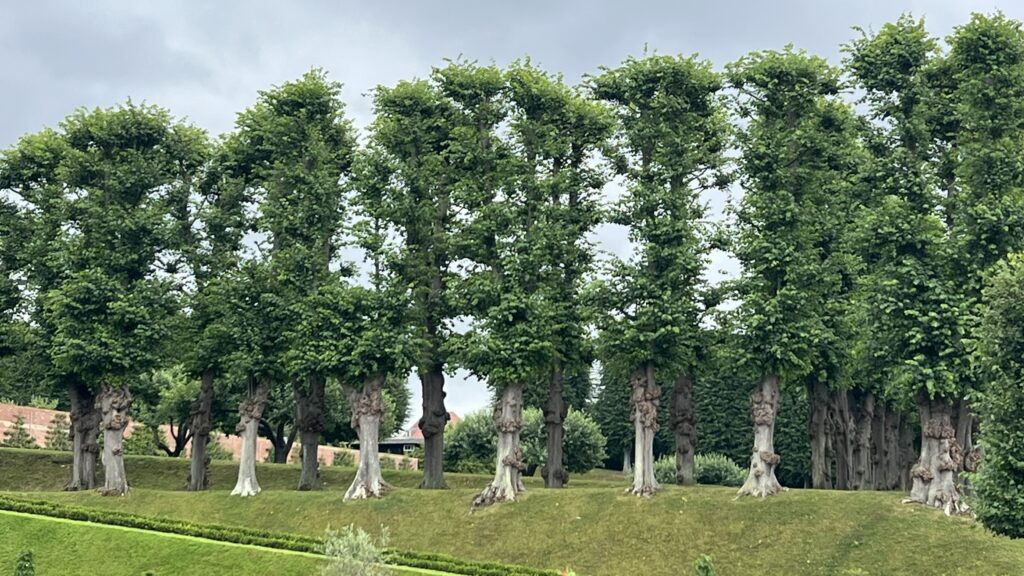
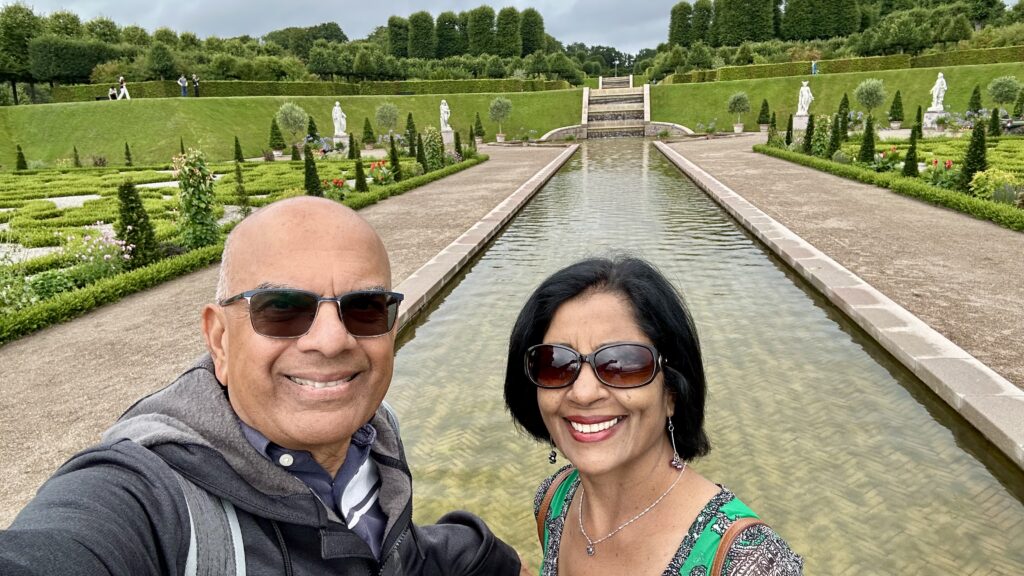
Frederiksborg Castle, Garden – The castle’s Baroque garden, created in the 1720s by Frederick IV and recreated in the 1990s, is a masterpiece of symmetry and symbolism. The garden is designed in four terraces descending towards Slotssøen (the Castle Lake). Central to it flows an impressive cascade, surrounded by precisely clipped hedges, topiary, and royal monograms – all a depiction of mankind’s control over nature.
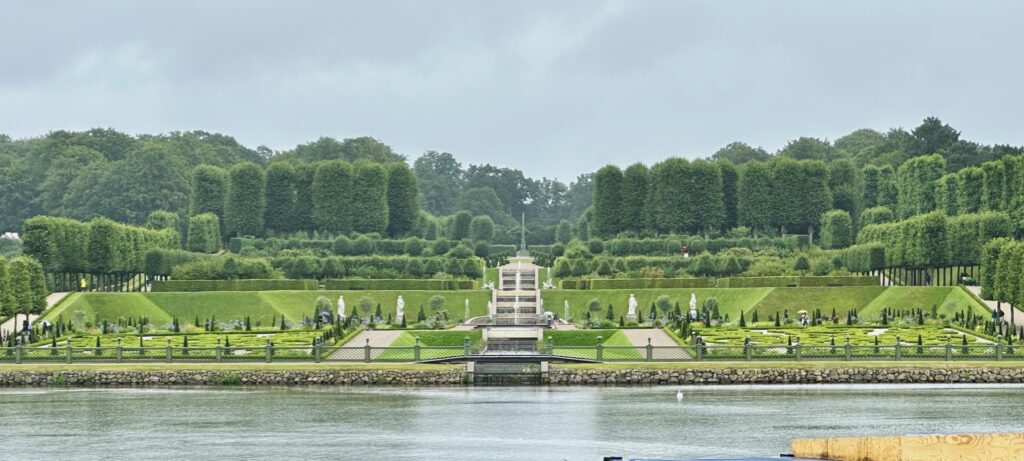
At the lowest terrace, four royal monograms are clipped into boxwood, each dedicated to a monarch who has shaped the garden’s history. The monograms represent King Frederik IV (initiated the garden), Christian VI and Frederik V (under whom garden existed) and Queen Margrethe II (inaugurated the restored garden). These art pieces are surrounded by yew trees and historic flowers, including tulips, once so expensive they were traded as luxury goods.