Wichita is a city in the heart of the Midwest United States. A fun fact about Wichita – It is the birthplace of Pizza Hut.
- Keeper of the Plains
- Arkansas River Trail
- Old Cowtown Museum
- Mid-America All-Indian Museum
- Frank Lloyd Wright’s Allen house
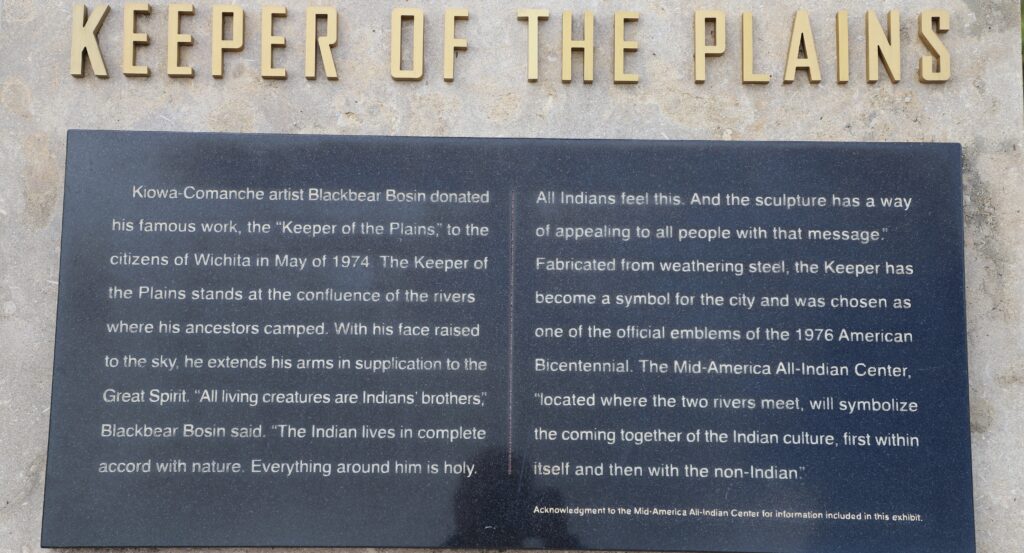
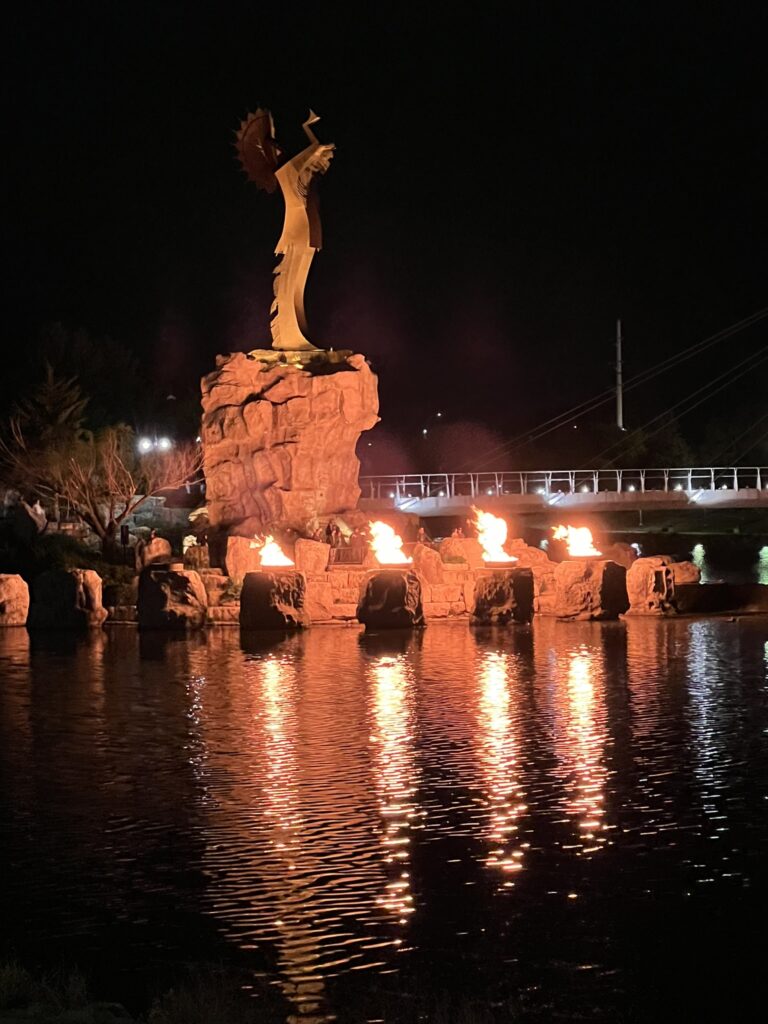
Keeper of the Plains – The Keeper of the Plains is a 44-foot tall steel sculpture standing at the point where the Big and Little Arkansas rivers join together in downtown Wichita. This land between the two rivers is sacred ground to the Native American people and is also home to the Mid-America All-Indian Museum. The American Indian sculpture was created by Wichitan and Native American artist Blackbear Bosin (1921-1980). This icon of Wichita was erected on May 18, 1974 to celebrate the United States Bi-centennial and has kept a watchful eye on the city ever since.
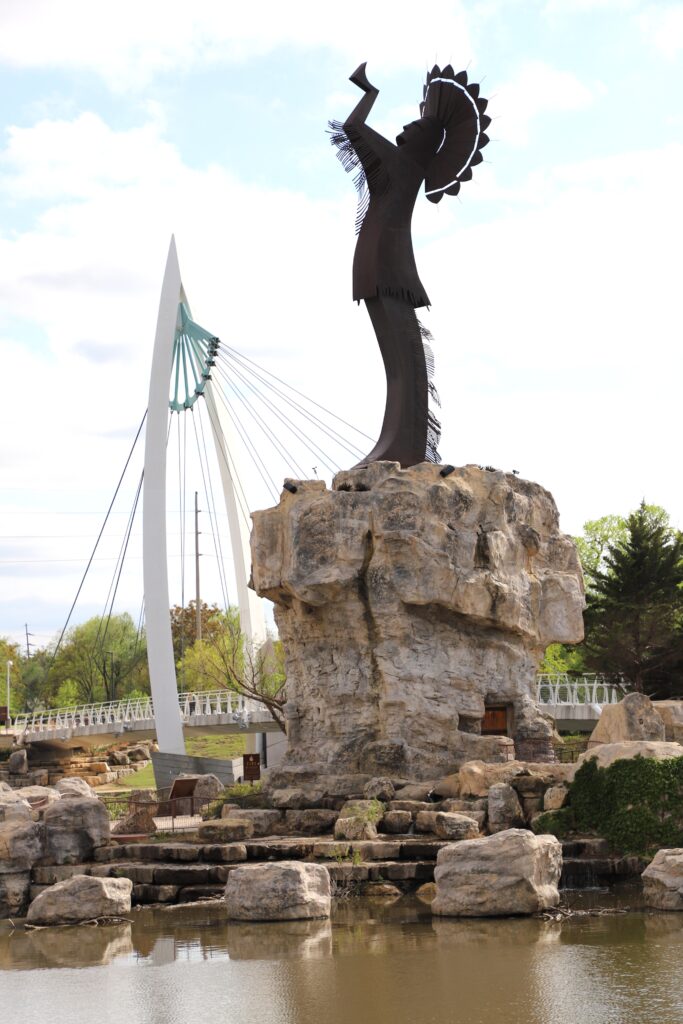
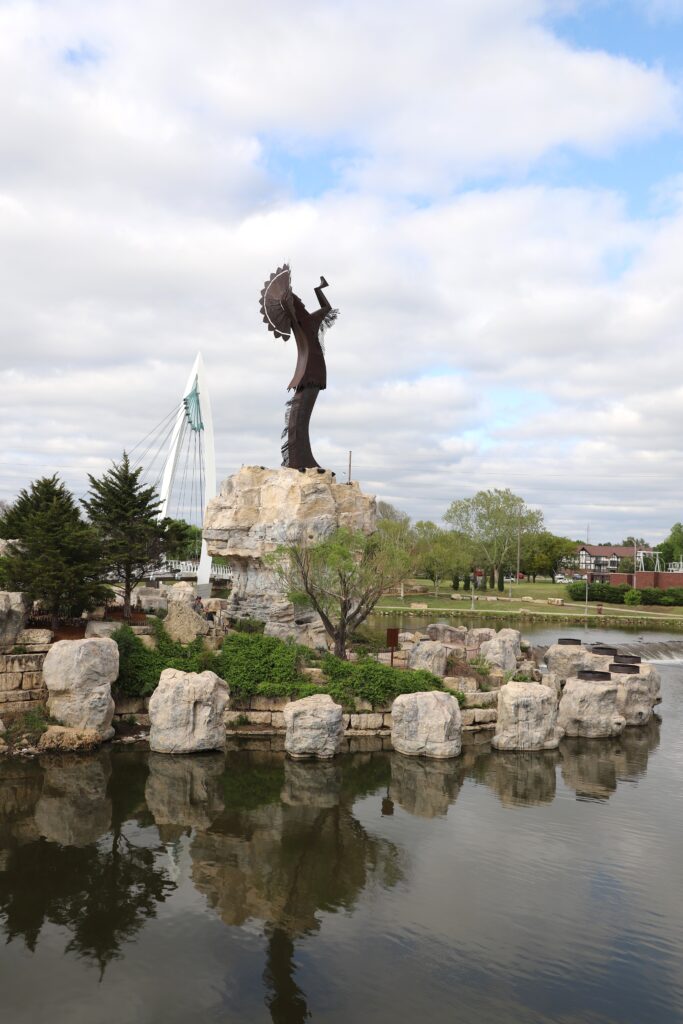
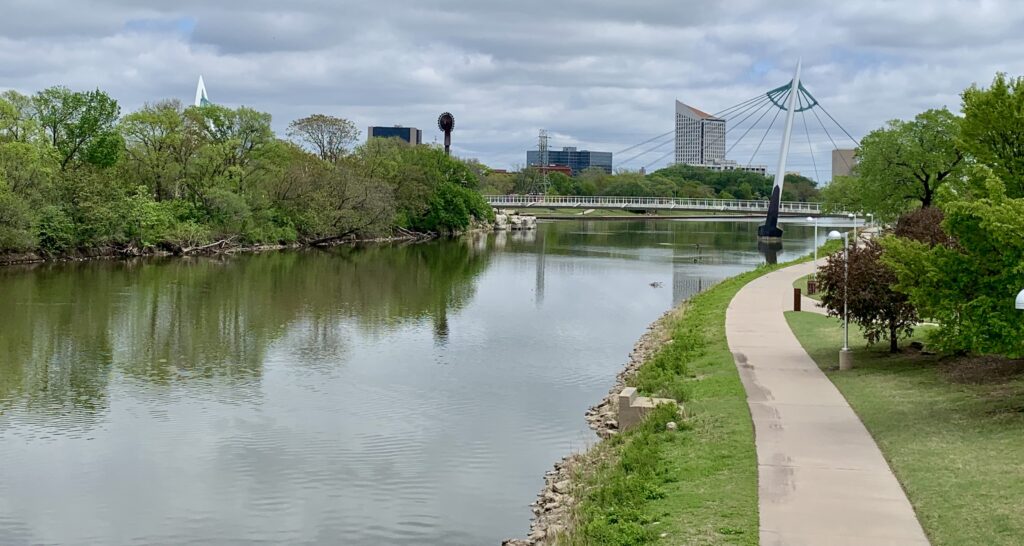
The Keeper of the plains is located at the point where the Big and Little Arkansas rivers join together. There are also two suspended foot bridges allowing people to cross from the north and south directions to the plaza at the base of the Keeper.
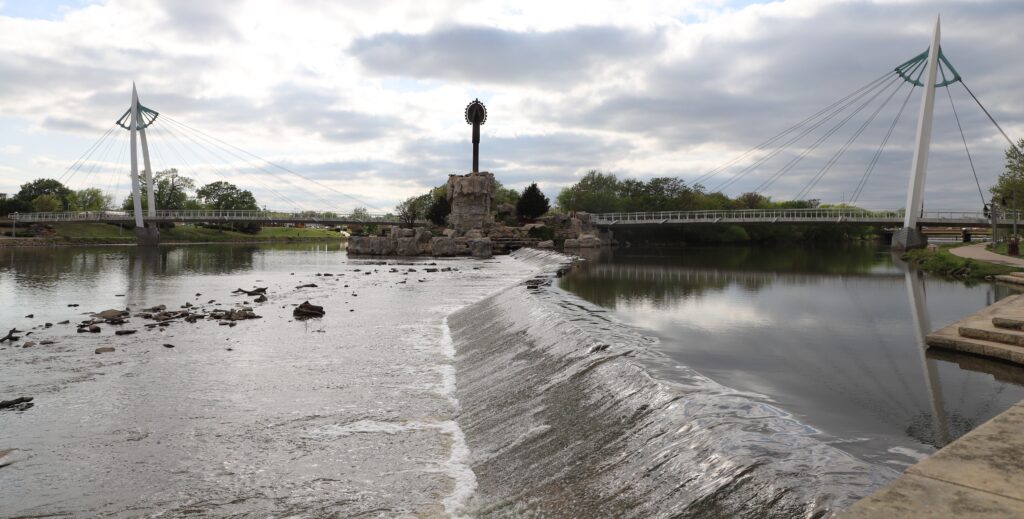
In 2006, there was a renovation which elevated the sculpture on a 30-foot rock promontory so it could be seen from farther away. Surrounding the base of the statue are multiple displays which describe the local tribes that used to inhabit the area, as well as several fire pits which are sometimes lit to illuminate the statue at night. The fire pits, which are known as the Rings of Fire, are lit manually for public safety and run in 15-minute increments. They are generally lit once a night around 7 pm during the winter and at sunset during the summer.

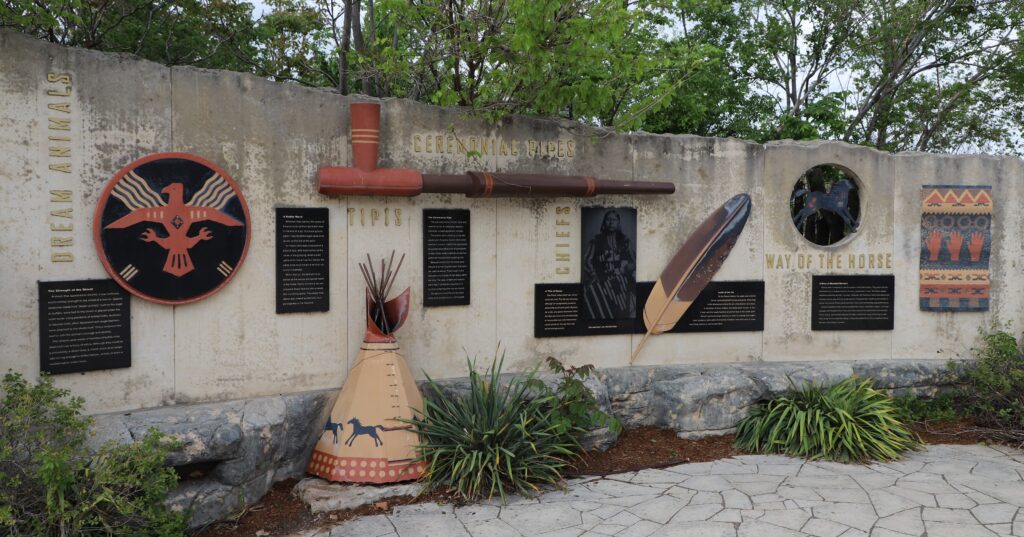
The surrounding Keeper of the Plains Plaza features exhibits detailing the customs and traditions of the Plains Indians.
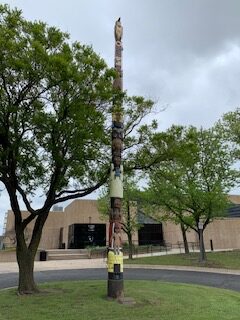
Mid-America All-Indian Museum – located near the Keeper of the Plains, the museum serves as a cultural center dedicated to educating people about and preserving Native Americans heritage.
The museum’s collection includes the largest publicly displayed body of artwork by Blackbear Bosin, the late Kiowa-Comanche sculptor and painter. Other notable pieces in the collection include beadwork, pipe bags, jewelry, pottery, and baskets. The museum has a large collection of Alaska Native artwork from the mid-20th century, as well as flags from over 70 American Indian tribes displayed in the Gallery of Nations event space.
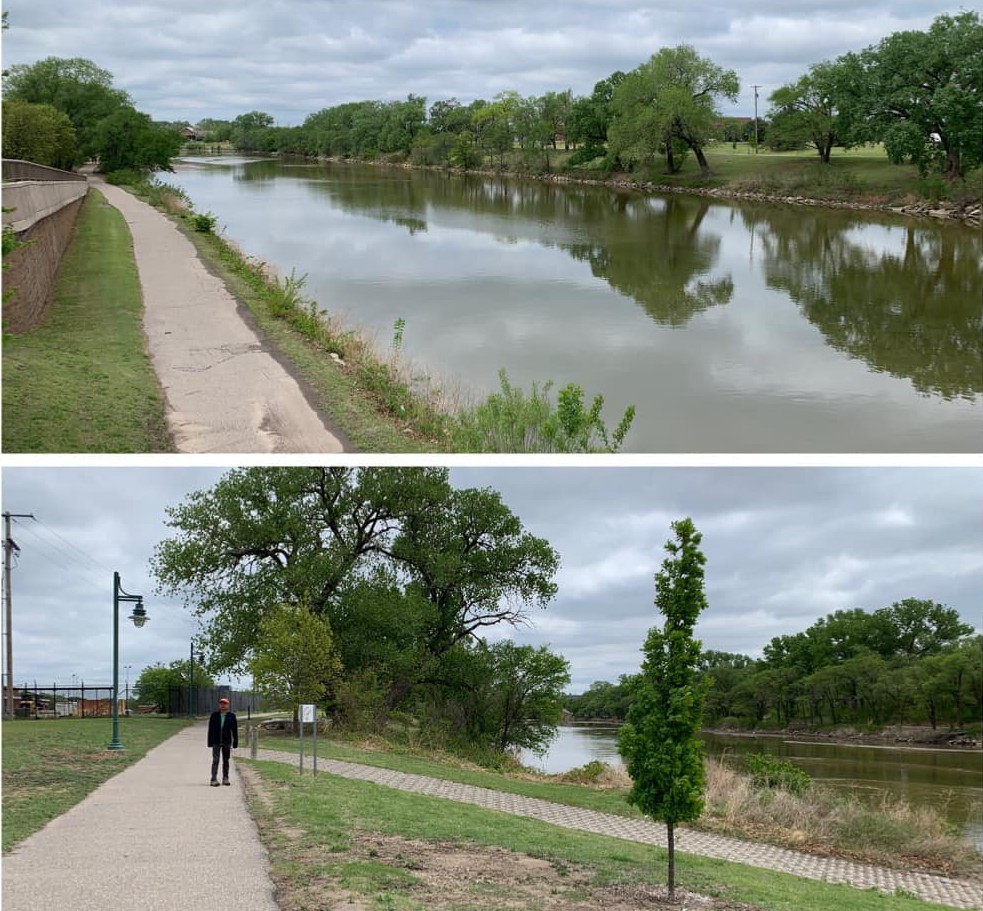
Arkansas River Trail – This is a lovely walking trail along the river in downtown Wichita. The path provides access to the Museums on the River district, which includes the Mid-America All-Indian Museum, Old Cowtown Museum, and Exploration Place. You’ll travel through areas with native grasses and plants, part of the city’s Wichita Wild Habitat program designed to preserve local ecosystems. The trail is mostly flat and is a great way to explore the city’s green spaces and cultural landmarks.
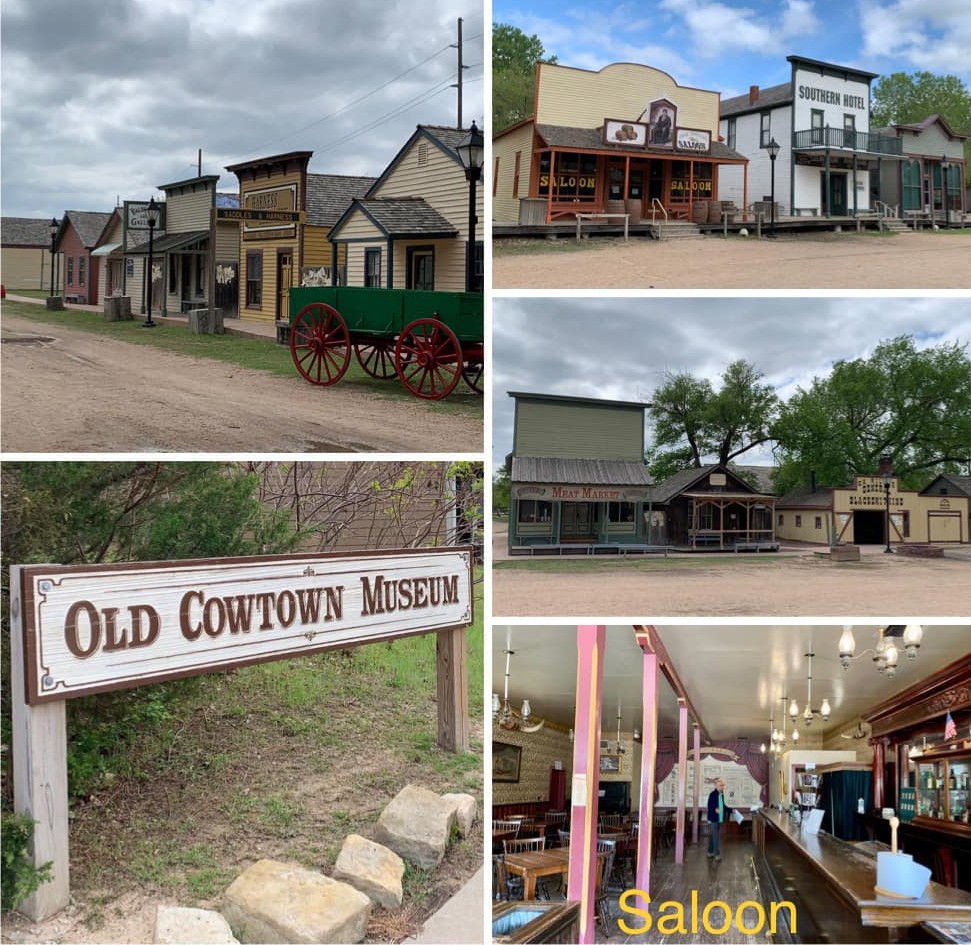
Old Cowtown museum – this open air museum takes you a step back into the Wild West. A replica of 1870s village in Wichita gives you an understanding of way of life in the early days of Wichita settlement.
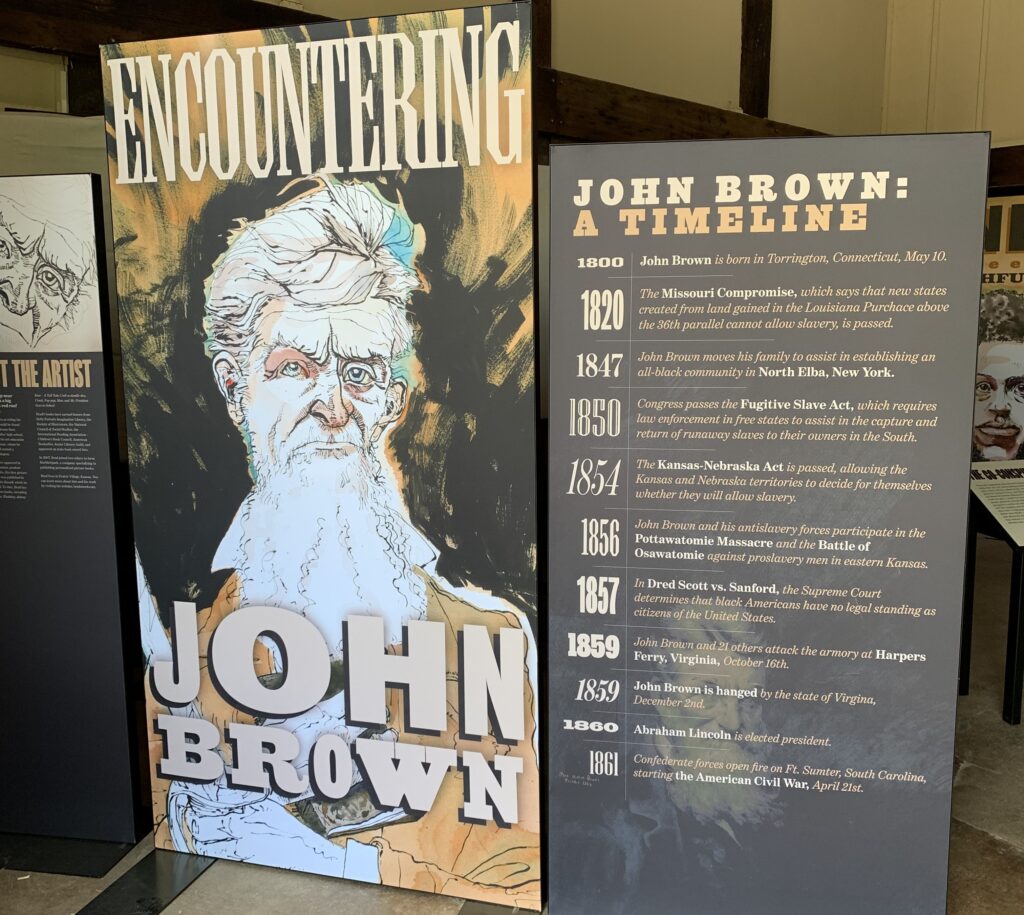
Encountering John Brown – A traveling exhibit centered on abolitionist John Brown made a stop at this museum in Wichita on April 2, 2022. The exhibit is entitled “Encountering John Brown” explores the story of John Brown through the encounters he had with other important figures of the time, including Harriet Tubman, Frederick Douglas and Robert E. Lee.
The exhibit follows John Brown from his childhood through his execution for his role in the raid of Harpers Ferry. From his roots in Ohio to his role in the violence of Bleeding Kansas to his plan to start a slave insurrection beginning with the taking of Harpers Ferry, the exhibit gives special focus to the people Brown met and tried to persuade to his cause on his march to martyrdom. As a conductor on the Underground Railroad, Brown helped many enslaved people escape to freedom.
Frank Lloyd Wright’s Allen house – Commissioned in 1916 and completed in 1918, Frank Lloyd Wright’s Allen House is named after its first owners, newspaper publisher Henry Allen and his wife, Elsie. It was the last of the architect’s famous prairie houses, which emphasized horizontal lines, earth tones and a continuous blending of interiors with exteriors.
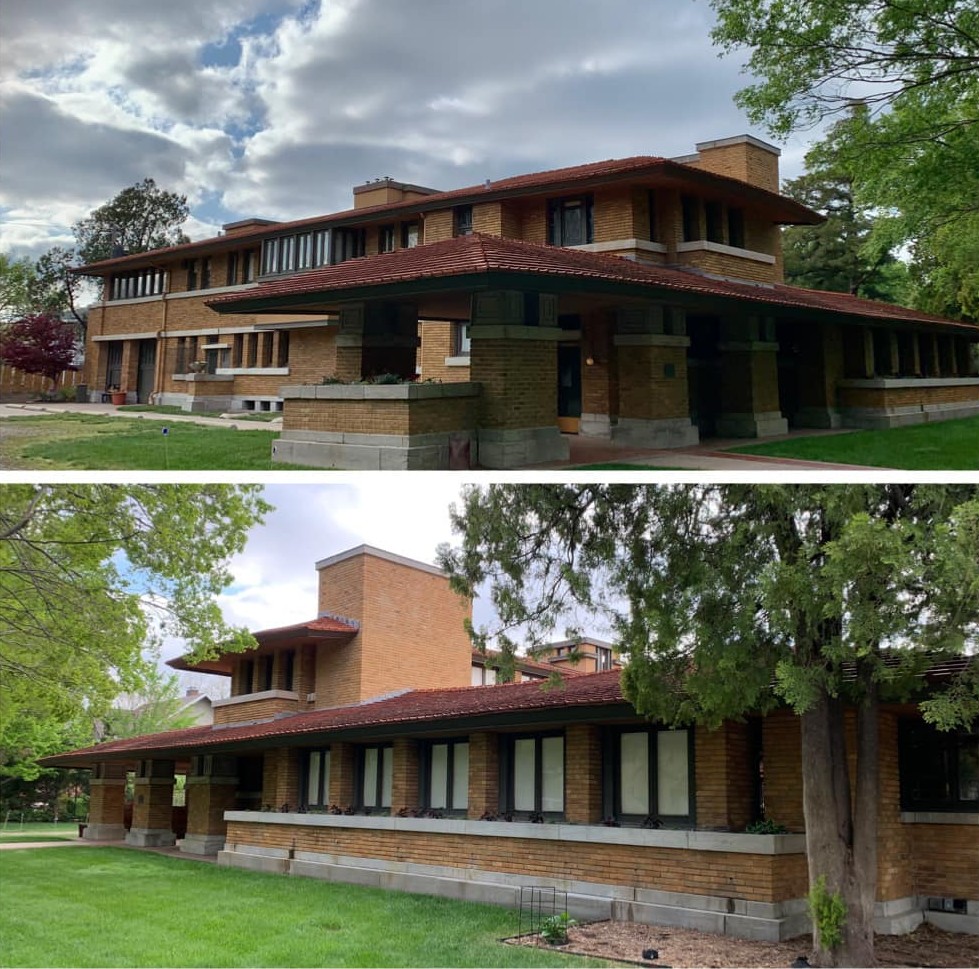
Architectural writers who have visited the house believe its living room is “one of the great rooms of the 20th century”. The home features more than 30 pieces of Wright-designed furniture, all of its original art glass and several new-for-their-time innovations, such as wall-hung water closets and an attached garage. Restored back to 1918, the house exemplifies Frank Lloyd Wright’s philosophy of living in harmony with nature.