2 nights in Druk Hotel
Thimphu, the capitol city of Bhutan, captivates travelers with its blend of ancient traditions, breathtaking landscapes, and vibrant culture. As the political, economical, and cultural center of this enchanting kingdom, Thimphu offers visitors, a variety of experiences that span from spiritual sanctuaries to outdoor adventures.
- National Memorial Chorten or Thimphu Chorten
- Buddha Dordenma
- Thimphu Market
- Clock Tower Square
- Tashichho Dzong
- Archery
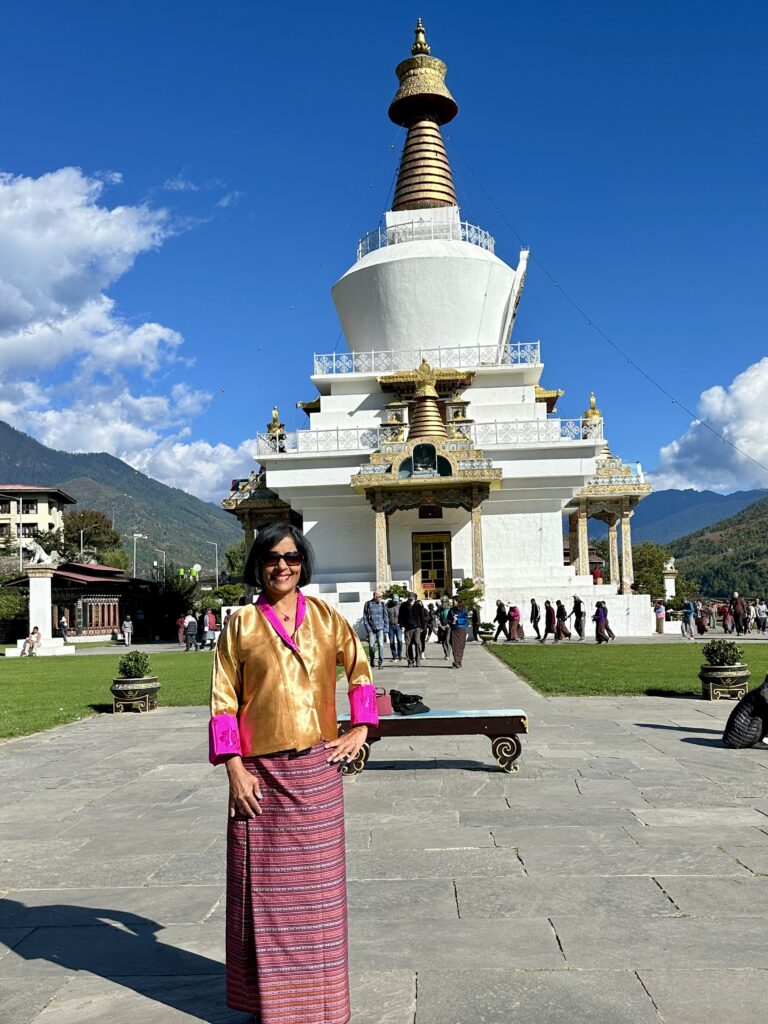
Our guide had provided traditional Bhutanese attire for us to wear—gho for men and kira for women—and the hotel receptionist assisted us in putting them on. We wore them while visiting the first site, after which we changed back into our casual jeans.
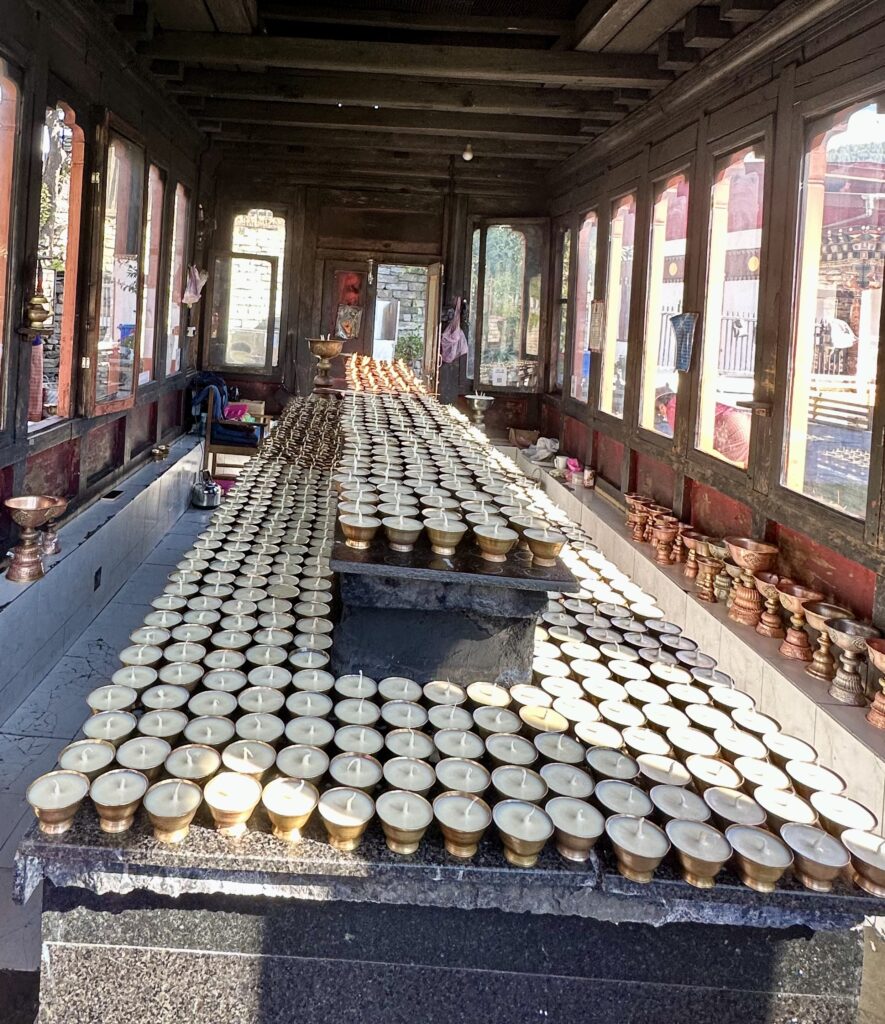
National Memorial Chorten or Thimphu Chorten – is one of the most iconic structures in Thimphu. This pristine white stupa, adorned with gleaming golden spires, was constructed in 1974 to honour the 3rd king of Bhutan, his Majesty Jigme Dorji Wangchuck, known as the Father of Modern Bhutan, who had envisioned a chorten to represent the mind of Buddha. Being a prominent landmark, the Chorten underwent extensive renovation in 2008. The complex has a few ornate buildings – One of them had hundreds of butter lamps, another one has prayer wheel, and a third building where ceremonies are carried out.
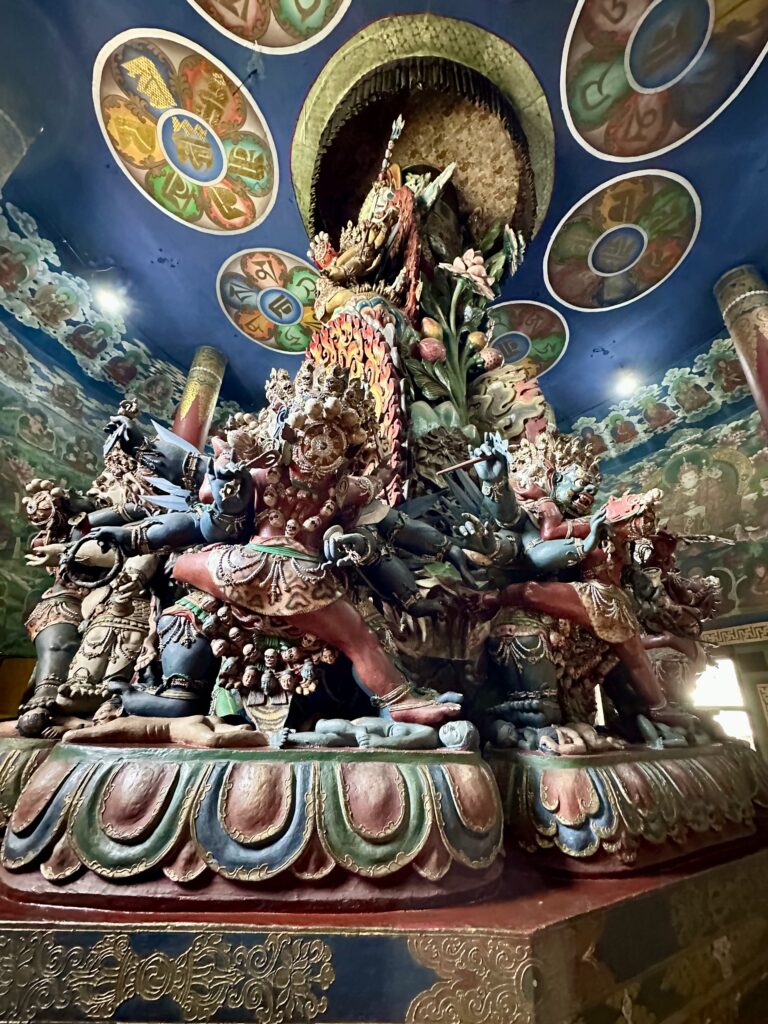
The interior has 3 floors filled with angry looking statues which are family of Vajrakilaya, a wrathful form of Bodhisattva. Vajrakilaya crushes under his feet demons representing the obstacles to spiritual realization. They remove negative thoughts from our body.
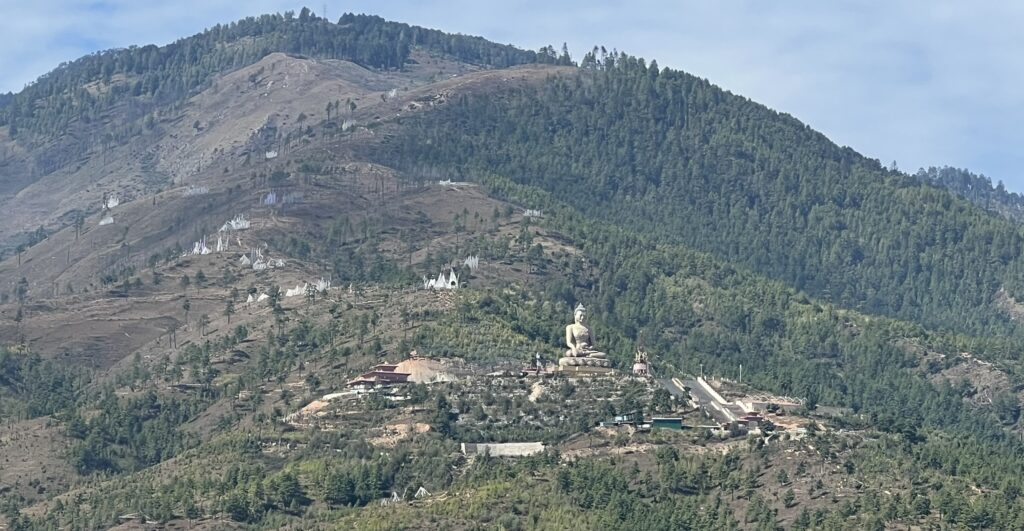
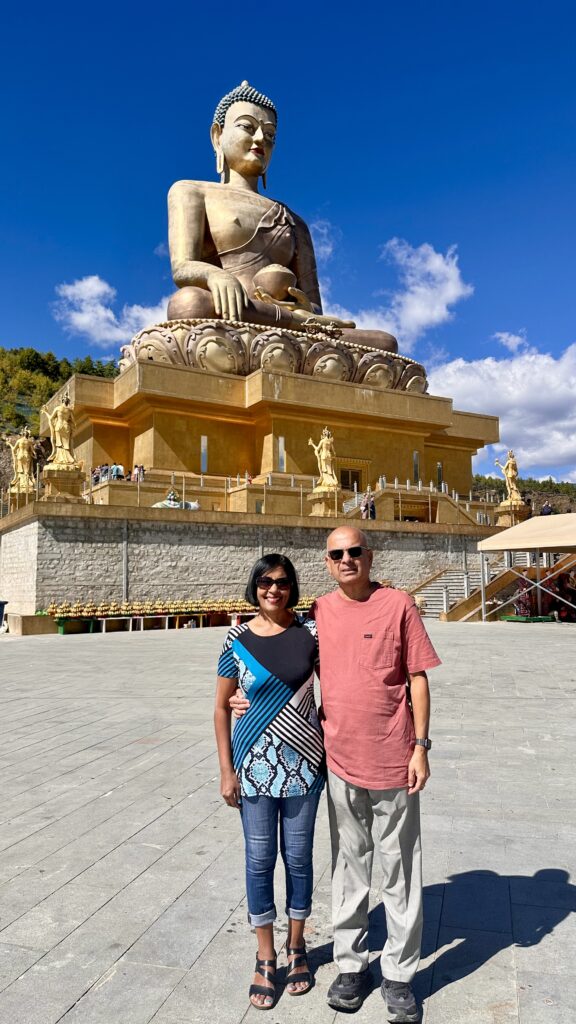
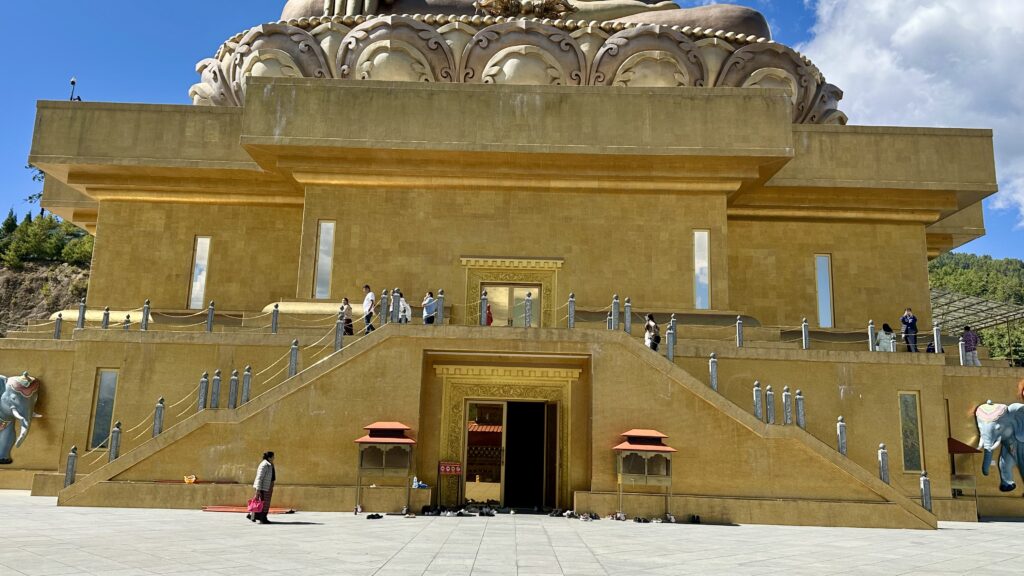
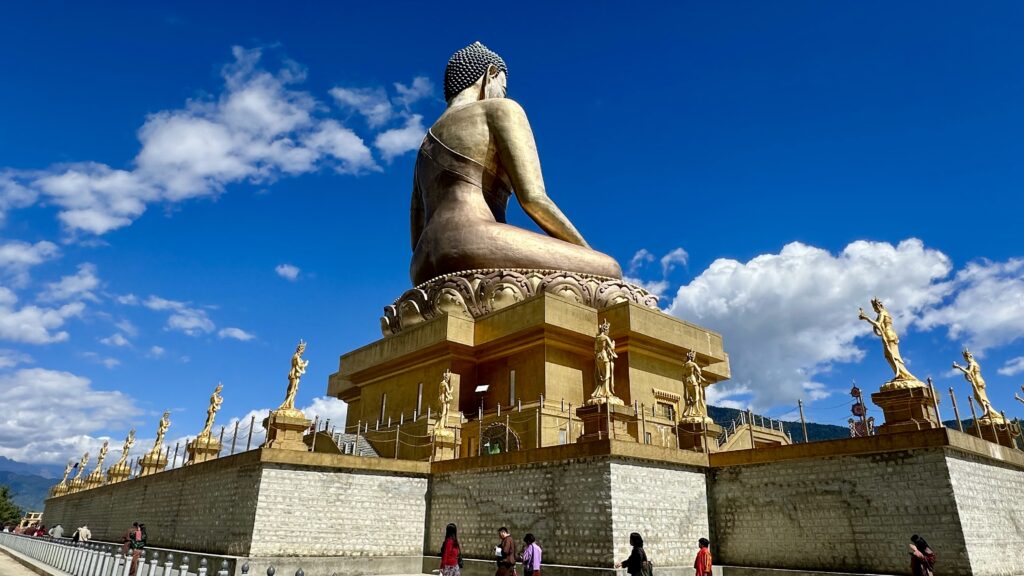
Buddha Dordenma – This massive statue of Buddha is 51m tall and is made of bronze and coated in gold. Built in 2015 on the merry occasion of of the 60th anniversary of the 4th kings of Bhutan, Jigme Singye Wangchuck, it houses 125,000 smaller Buddha statues ranging from 8 to 12 inches tall, each meticulously made from bronze and gilded in gold. The statue’s base which is 3 stories tall, contains a meditation hall, adding to its spiritual significance.
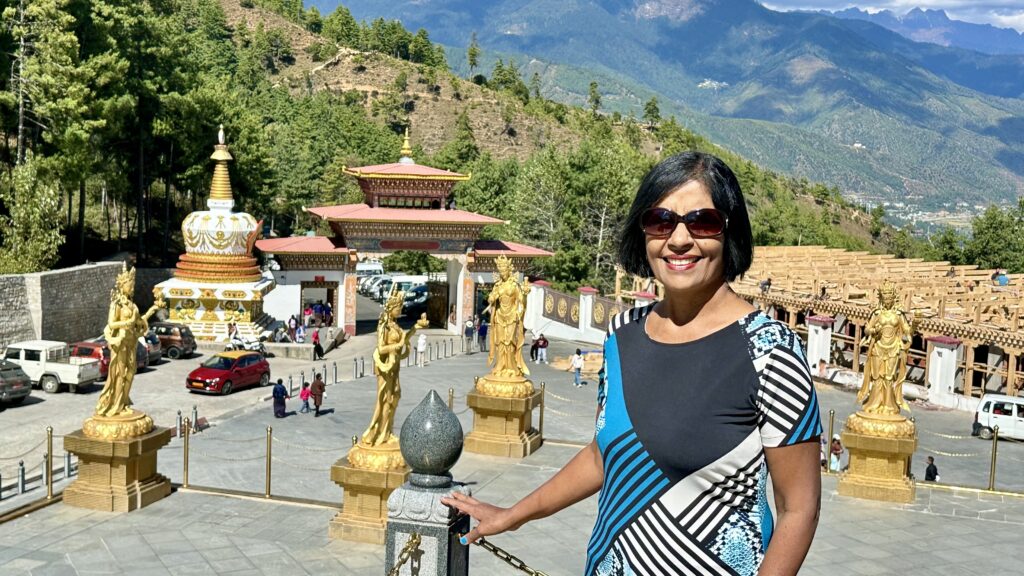
The statues is surrounded by apsaras or dakinis – golden guardian goddess statues that line the upper terrace. These guardian statues are there to protect the site and are a significant part of the overall monument.
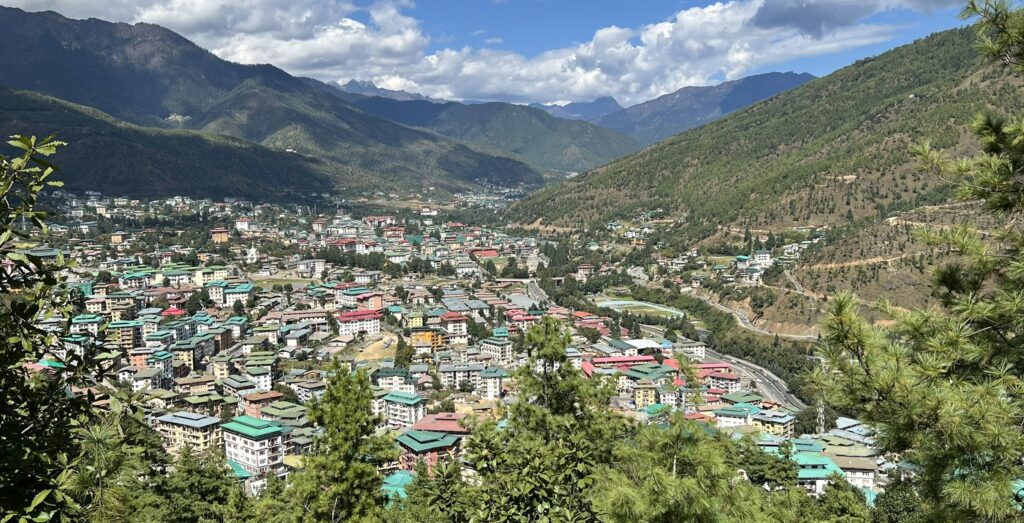
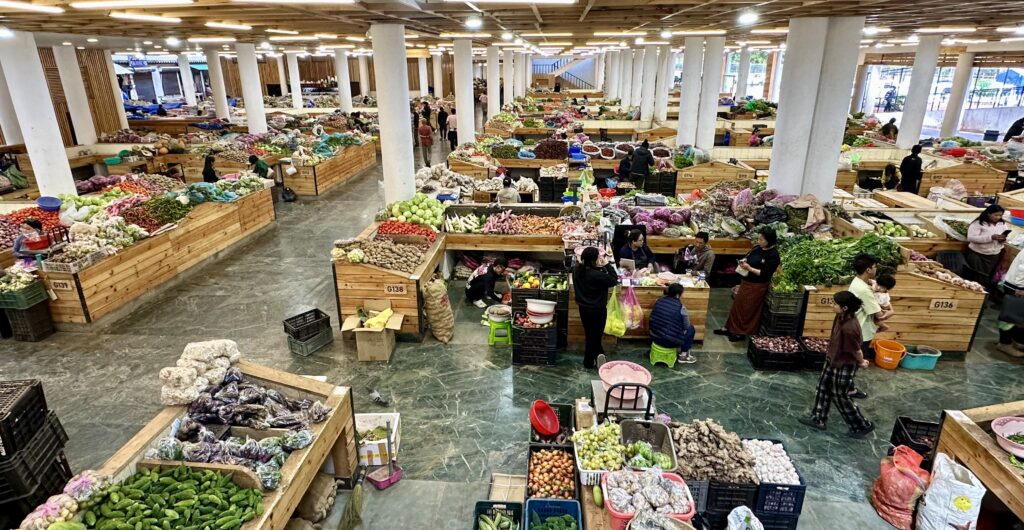
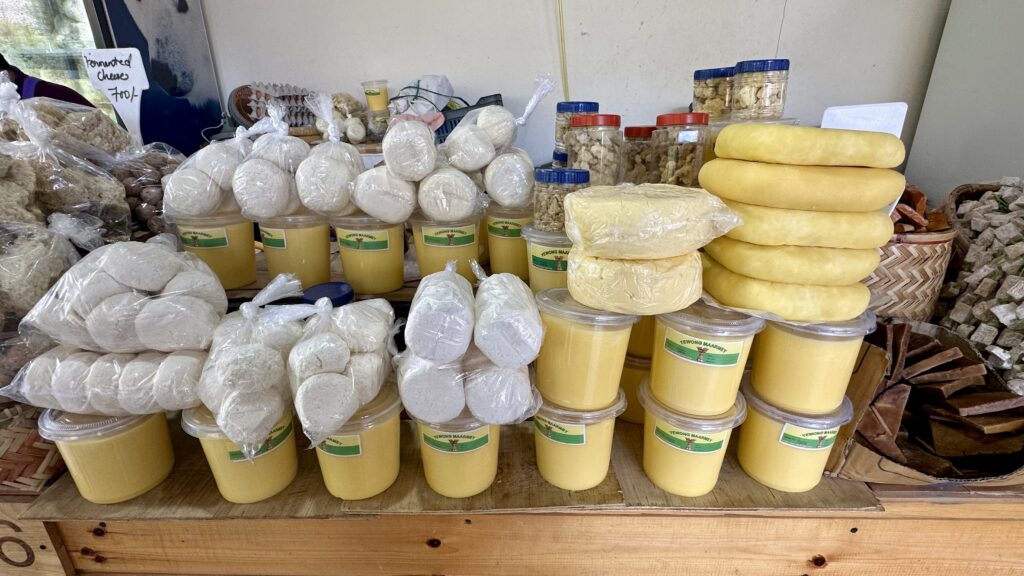
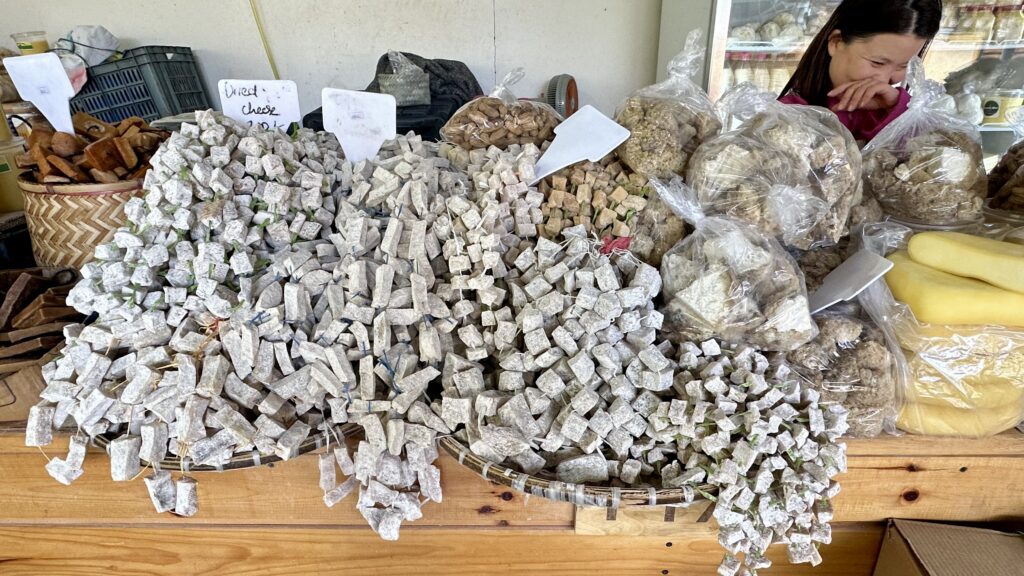
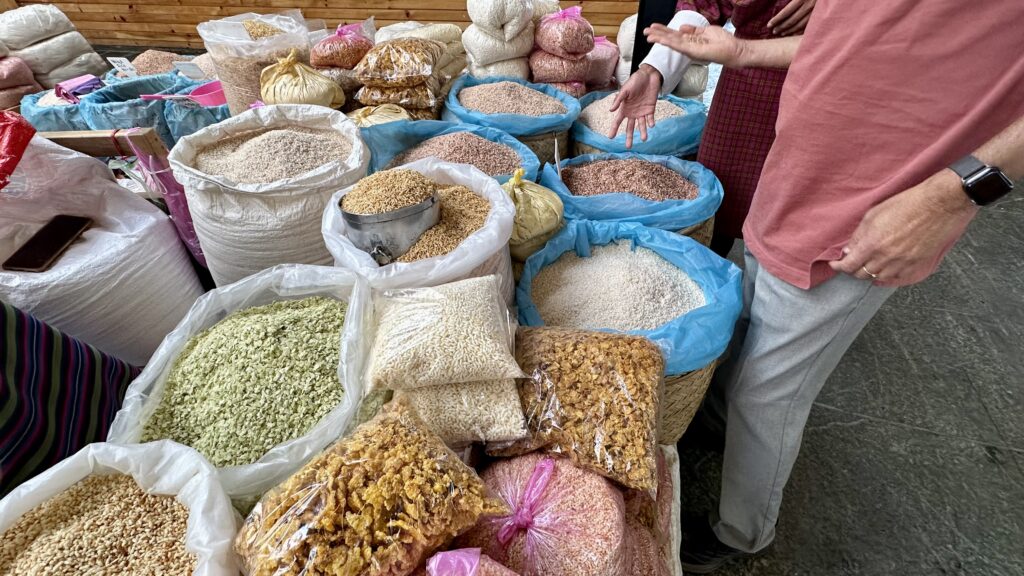
Thimphu Market – This huge market offers opportunities to peek into the culture of the country and to interact with locals. The colorful market bustles with traders and customers and is an ideal place to buy anything from vegetables to accessories to postal stamps, at unbelievably low prices. Here, visitors can actually witness how happy the locals are as they roam around tirelessly and with enthusiasm.
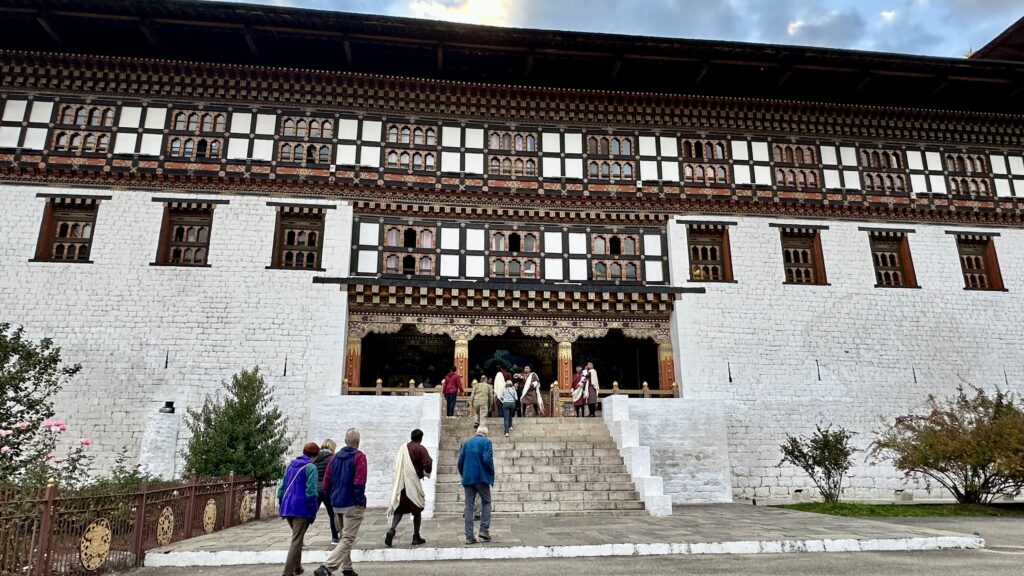
Tashichho Dzong – is a fortress located about 2 km from the city of Thimphu. Built in 1216, the original structure was destroyed in a fire. The current structure was constructed in 1641 and underwent several restorations. Also known as the fortress of the glorious religion, it is located on the banks of river Wang Chhu. The dzong combines administrative functions of the government with the spiritual life of monks, making it a unique institution. It houses government offices and is also the summer residence of the chief abbot.
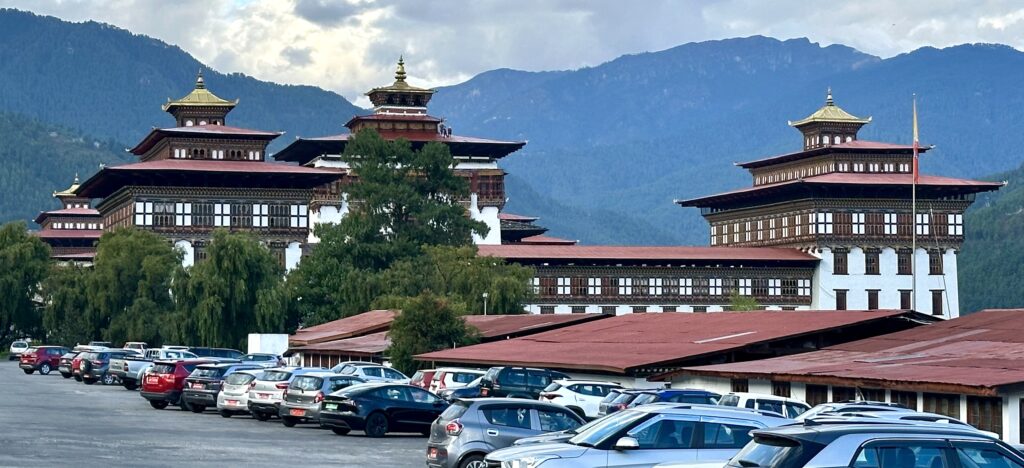
A lovely rose garden in front of the building welcomes the visitors to the fortress. Visitors are allowed to enter the fort after office hours (5pm), which is signaled by the national flag being lowered in a precise drill. We reached this place around 4:30pm to watch the drill from outside.
The interior of the fort has a huge courtyard where festivals and ceremonies ate held. There are several temples, administrative offices, and monastic quarters around the courtyard.
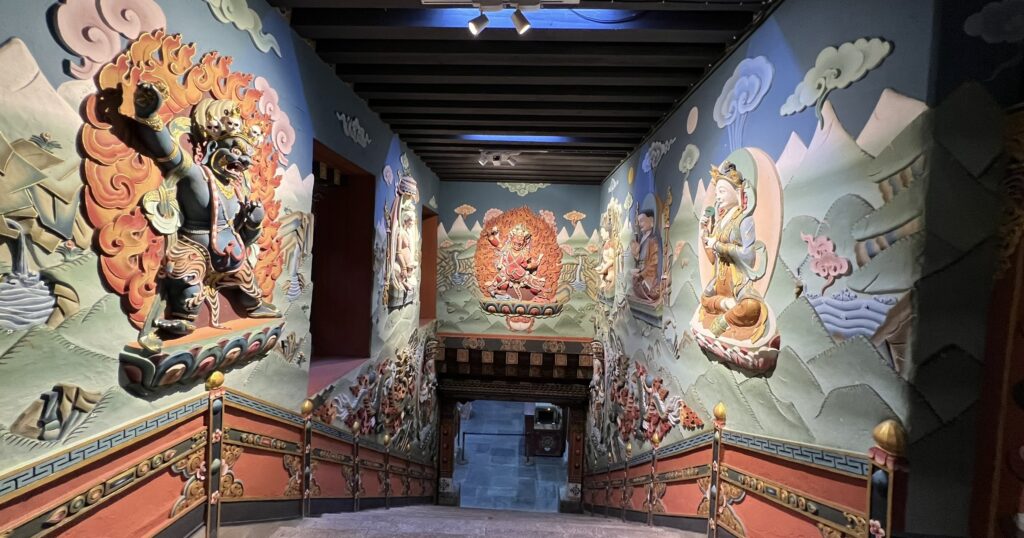
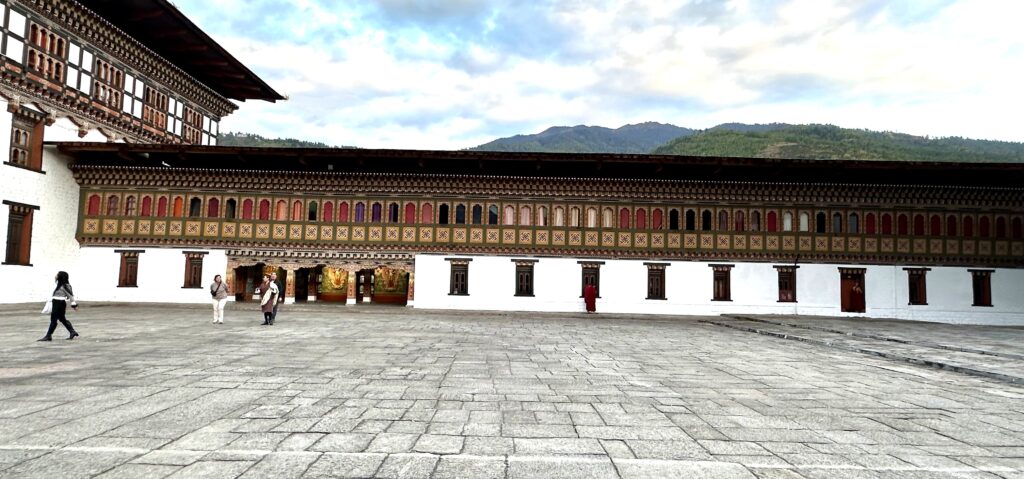
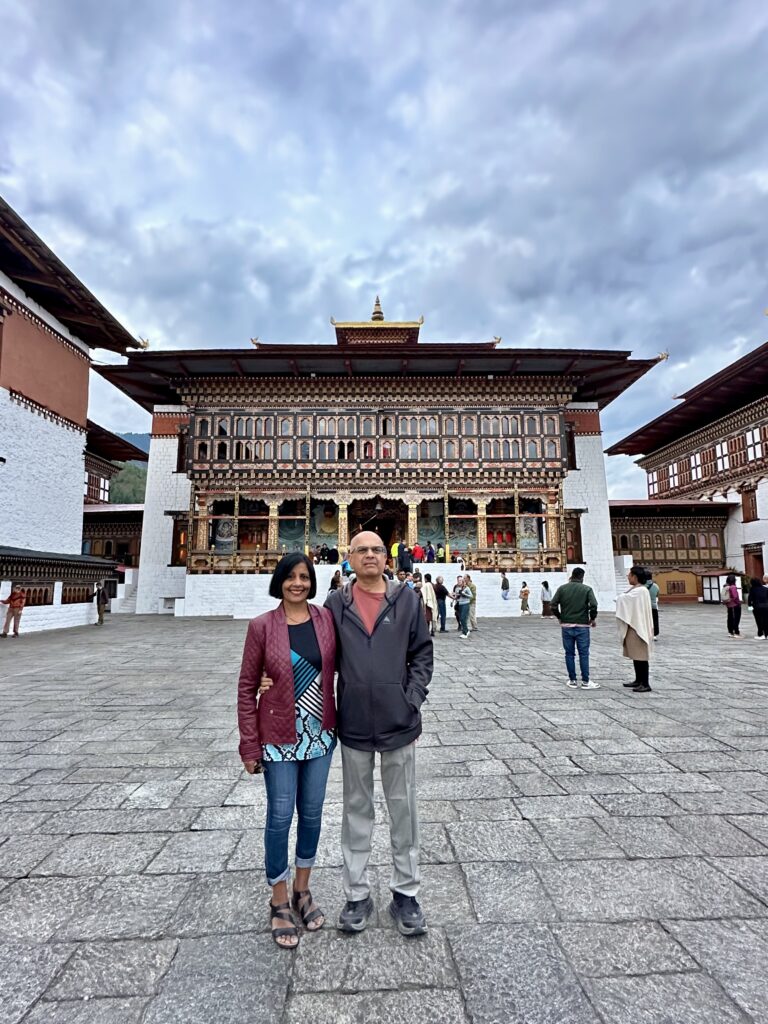
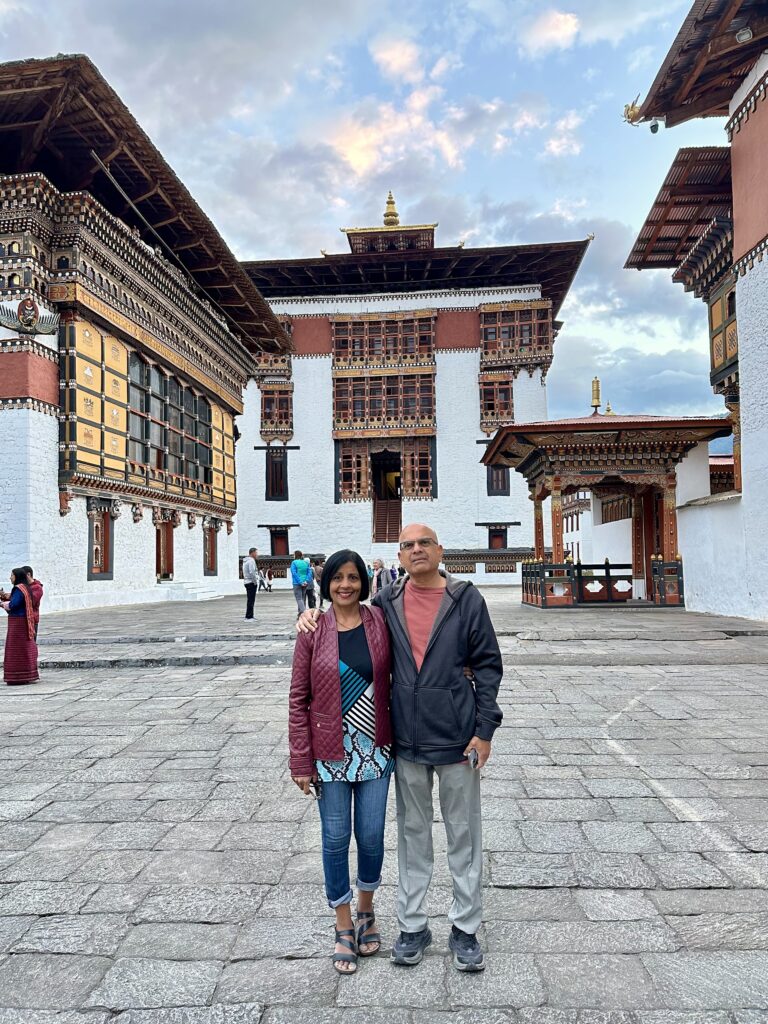
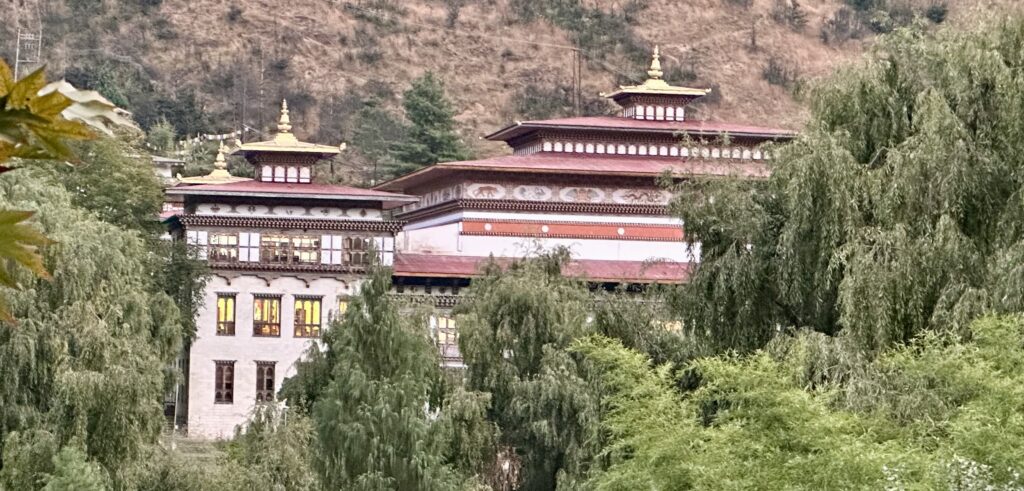
From the grounds of Thimphu Fort, we got a view of part of Bhutan’s new Parliament building. Designed in traditional Bhutanese style, it is the seat of Bhutan’s bicameral parliament, which includes the upper house (National Council) and the lower house (National Assembly).
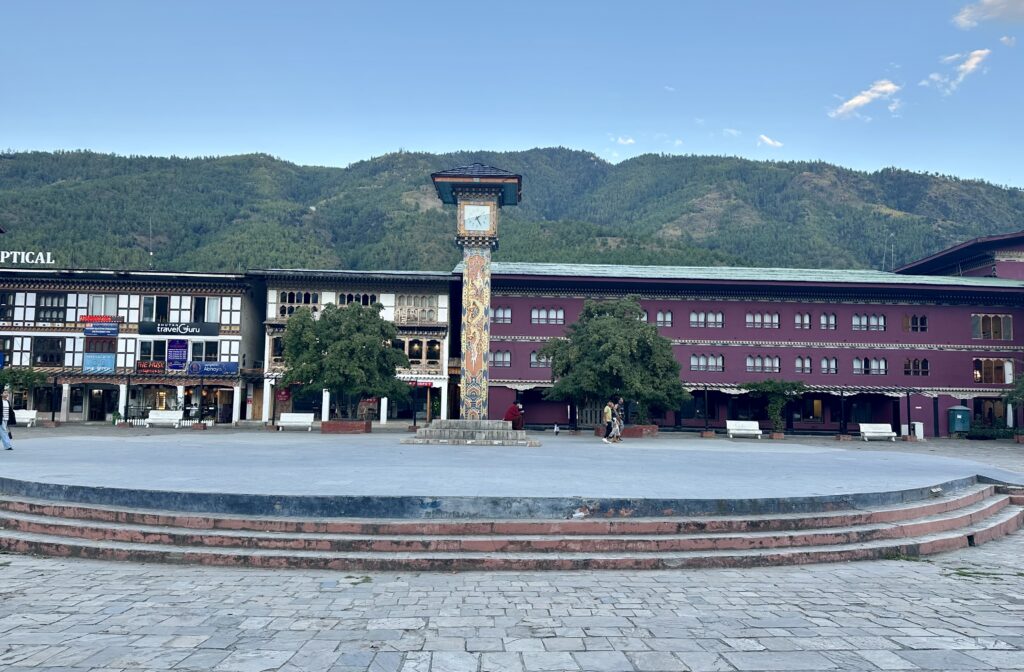
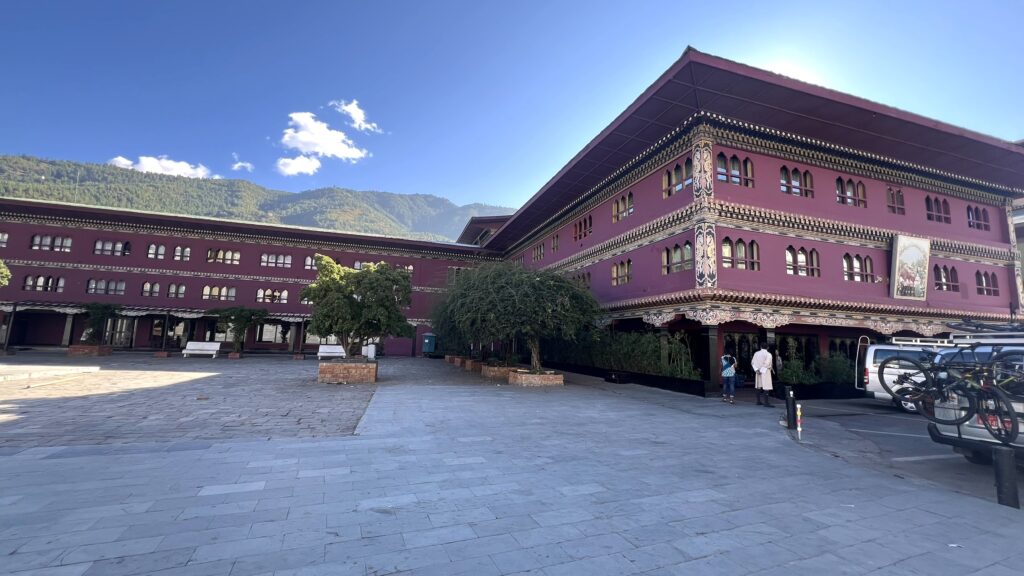
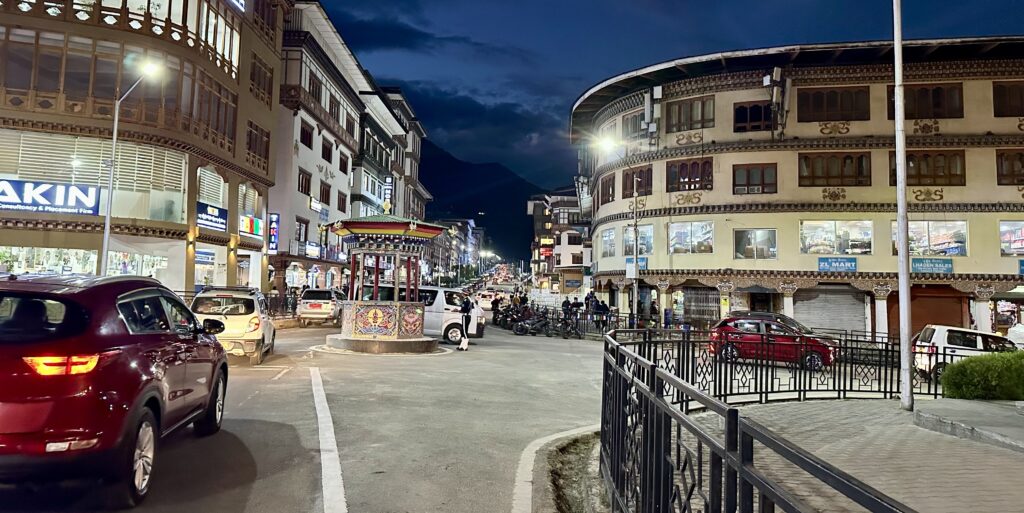
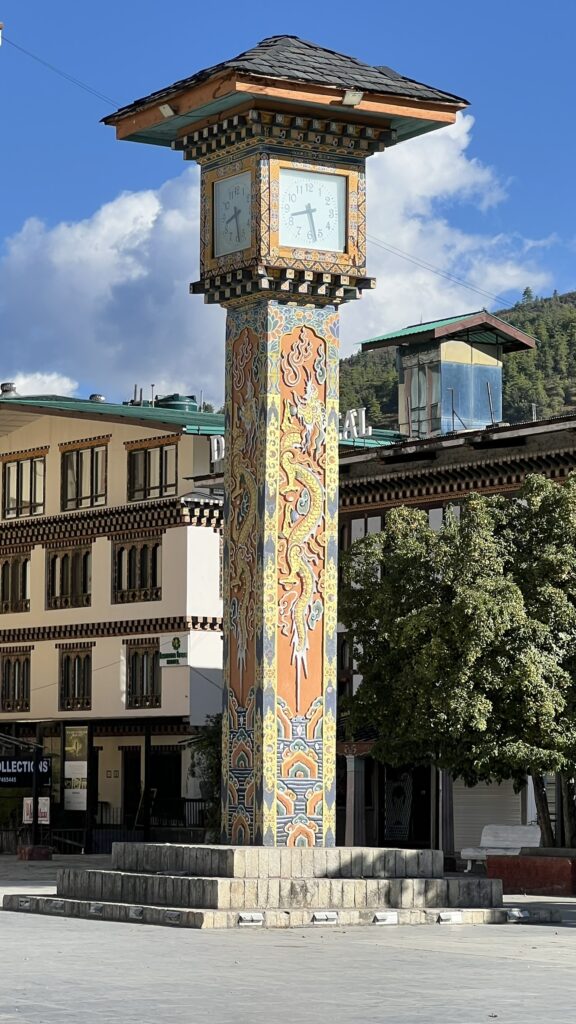
Clock Tower Square – Located along the main street, this is the main square in Thimpu. Our hotel was situated at one end of the square. The square is dominated by an eye-catching Clock tower with 4 clock faces. Locals visit this square in the evening to enjoy live music and the ambience. There are many restaurants, souvenir shops, and hotels nearby, making it one of the busiest place in the town.
Archery – has been the national sport of Bhutan since 1971, the year the country became a member of the United Nations. It’s not just a pastime here – it is a vibrant part of Bhutanese culture, deeply woven into the rhythm of everyday life. Archery competitions are anything but quiet; they burst with energy, filled with passionate cheerleaders, singing, dancing, and the aroma of traditional food, creating a festival-like atmosphere. Although we didn’t get the chance to watch a match during our visit, we heard that attending one is a wonderful way to experience local culture in its most authentic form – spirited, communal, and full of joy.