The town of Princeton owes its international reputation to its university and associated research institutes. Established in 1756, the school’s 1,600-acre grounds are wonderful to explore. We spent a whole day at the campus, walking along Nassau street and admiring the well preserved buildings.
- Nassau Hall
- Blair Hall
- Alexander Hall
- East Pyne Building
- Holder Hall
- Princeton University Library
- Princeton University Cathedral
- Cleveland Tower
- The institute for Advanced Study (IAS)
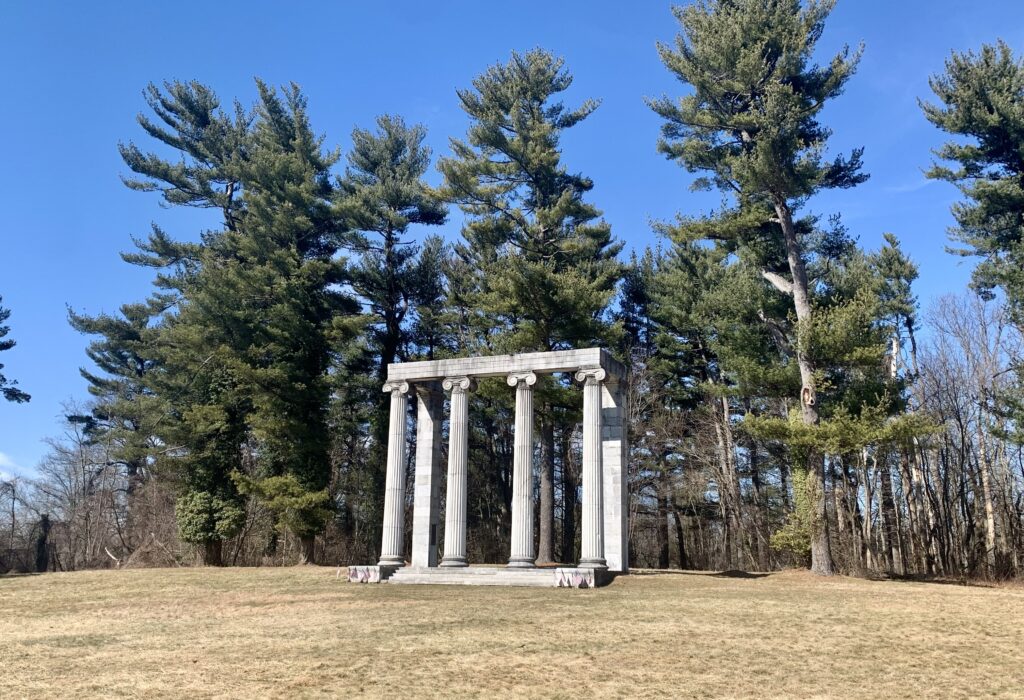
- Princeton Battlefield State Park
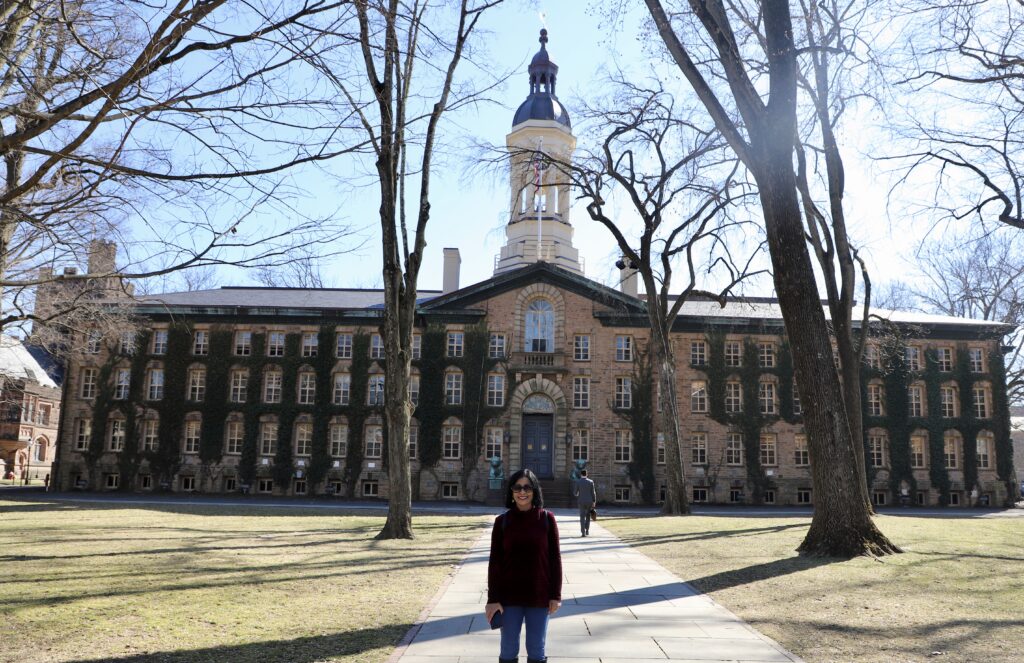
Princeton University, Nassau Hall – Our first stop was in front of Nassau Hall. This is where the college begins, and it is the oldest building at Princeton University. In 1783, this building served as the US Capital building for 4 months. Currently the building houses the university administration offices including that of the university president.
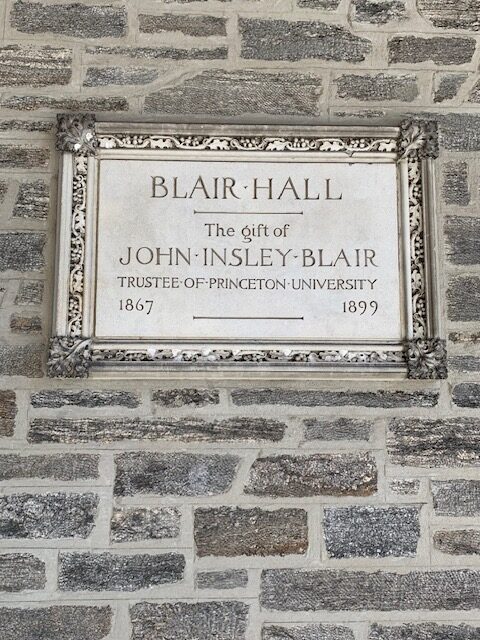
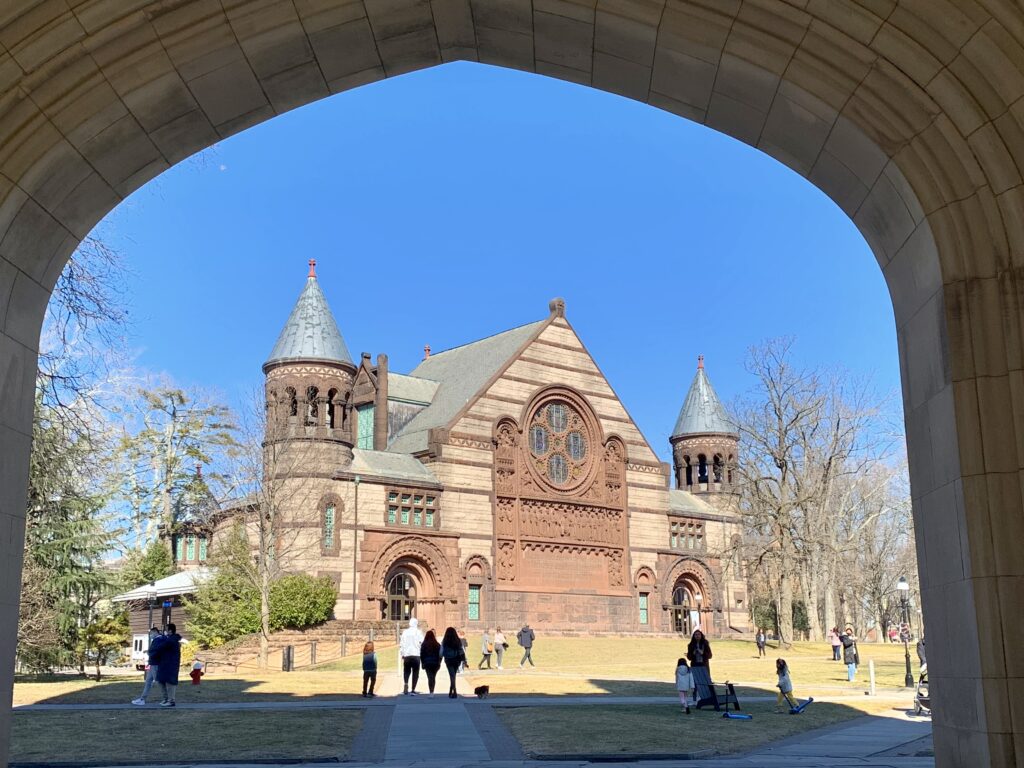
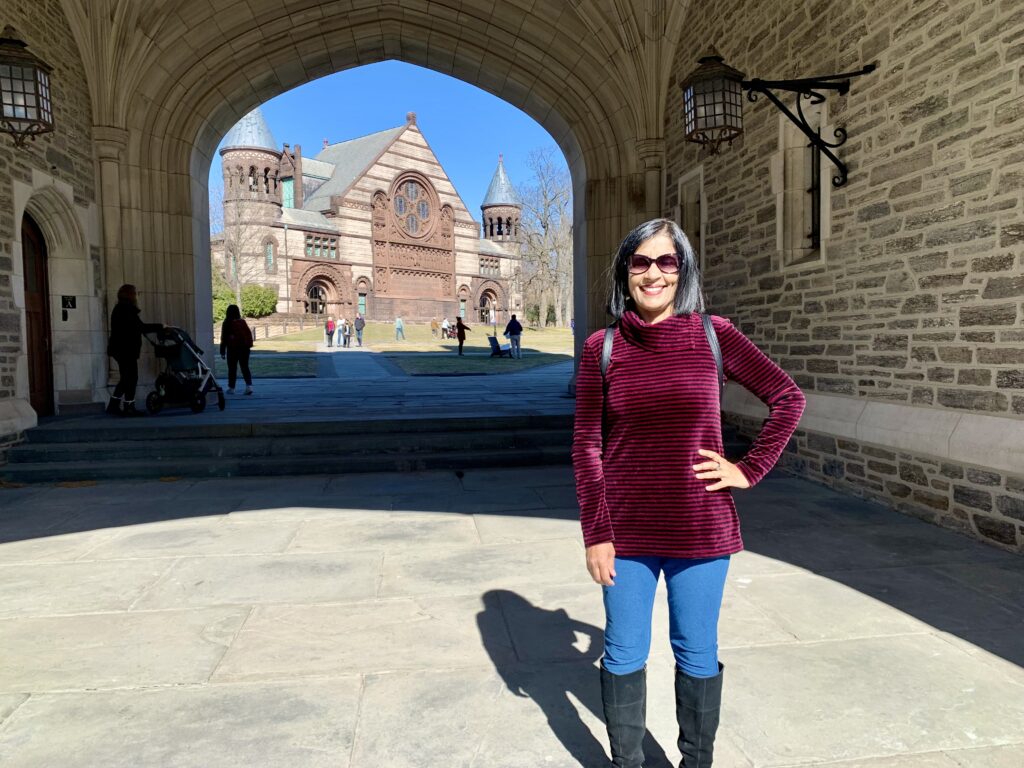
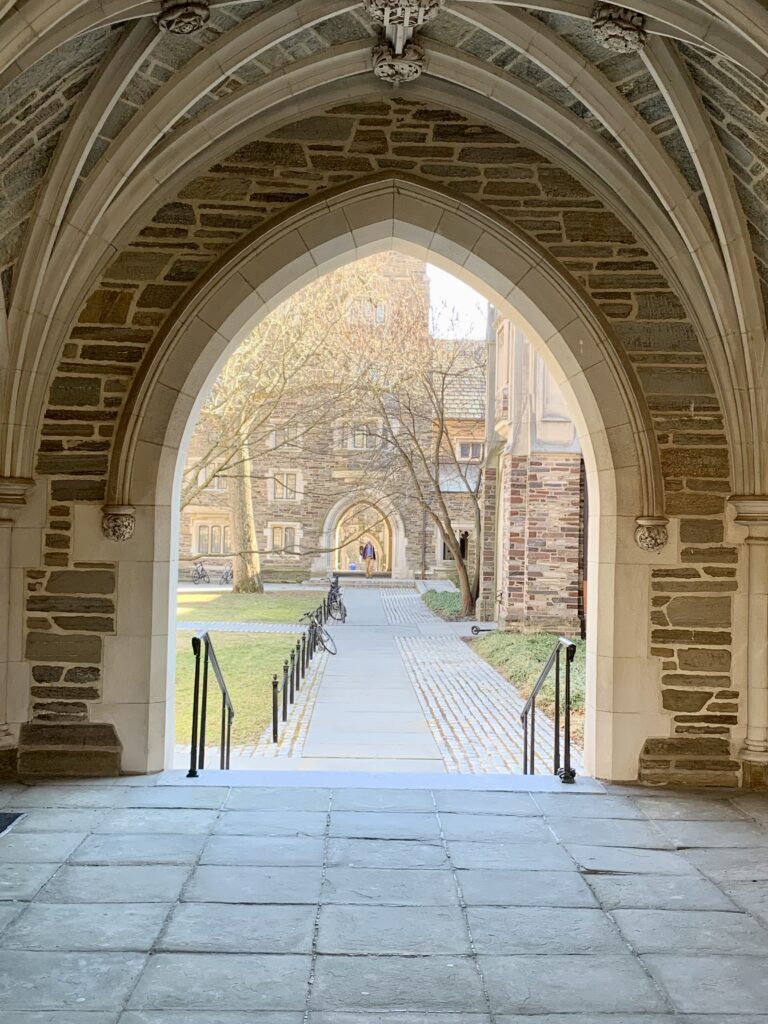
Blair Hall – Blair Hall, the University’s first collegiate Gothic dormitory, was a Sesquicentennial gift of John Insley Blair (1802-1899), a trustee of Princeton from 1867 to 1899. There’s nothing like scaling the steps of Blair Hall for the first time and seeing Princeton University framed through its Tudor-style arches. Blair Hall serves as a dormitory for Princeton students.
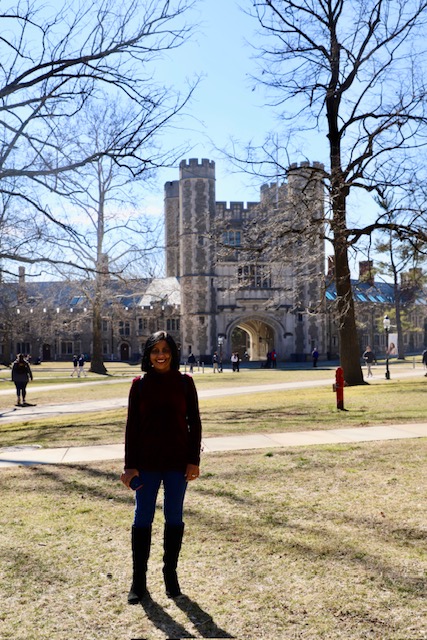
Princeton University, Alexander Hall – The gorgeous looking Alexander Hall is home to Princeton University’s Symphony Orchestra. You get a stunning view of the Alexander Hall through the Blair Arch.
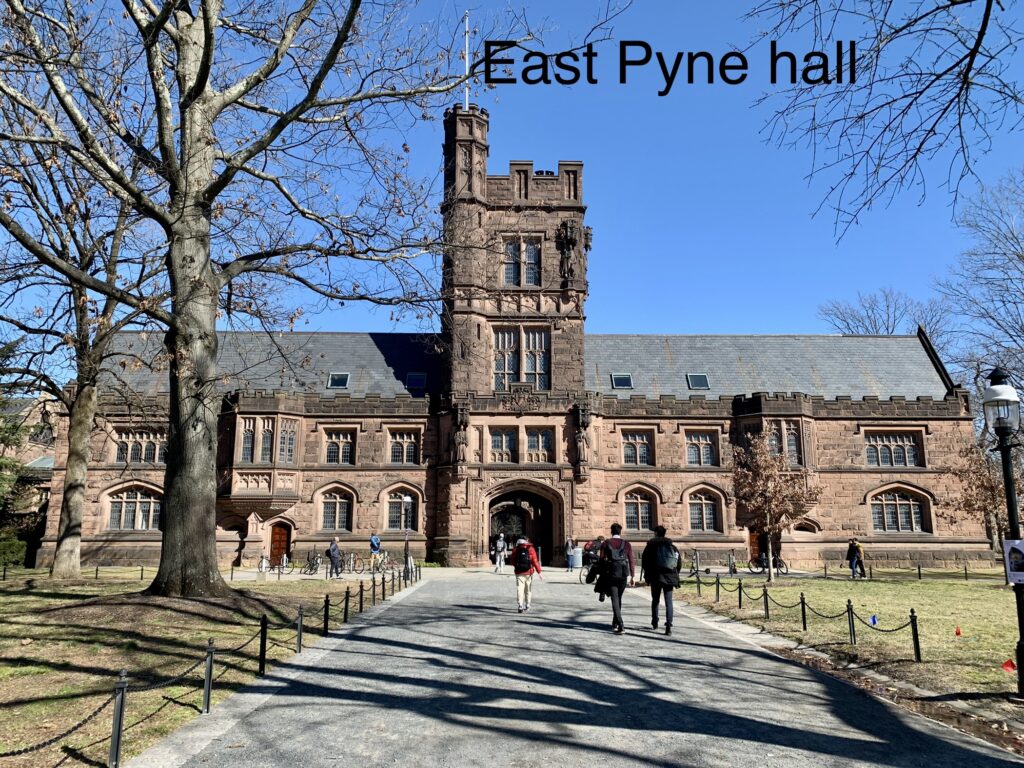
East Pyne Building – Built in 1897, it was used as the University Library until the completion of Firestone Library in 1948. Thereafter, as Pyne Administration Building, it housed various administrative offices until 1965, when, with the completion of New South Building, it assumed its present name and was renovated to accommodate offices and classrooms of various language and literature departments and programs and also to form the southern part of the Chancellor Green Student Center.
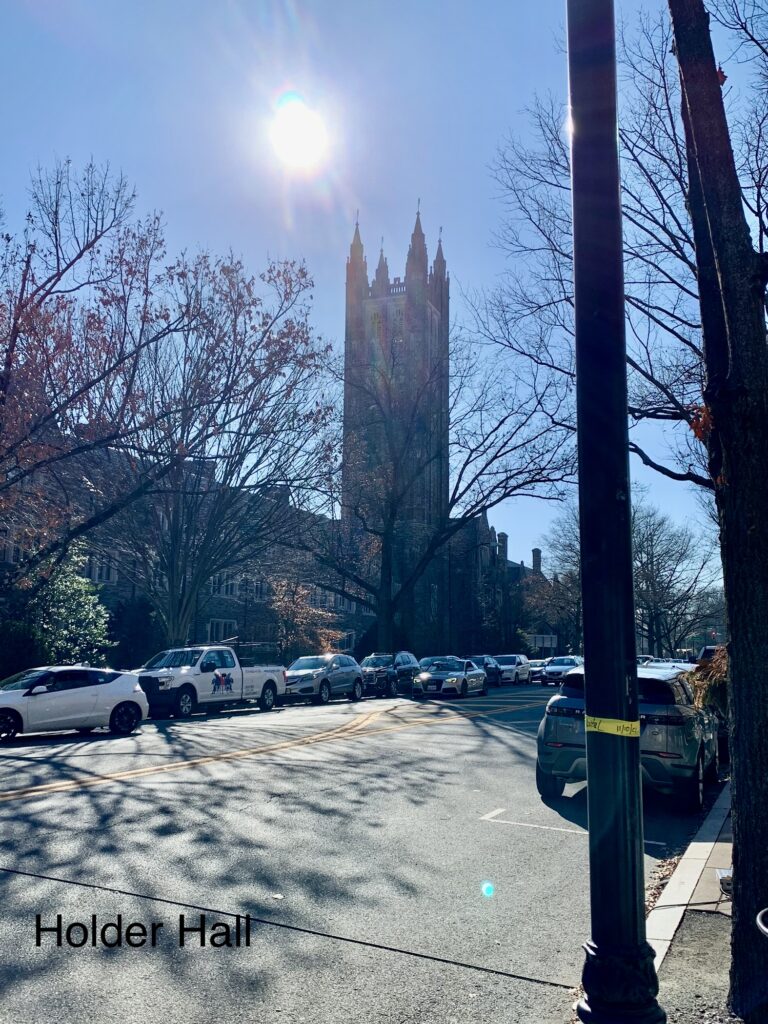
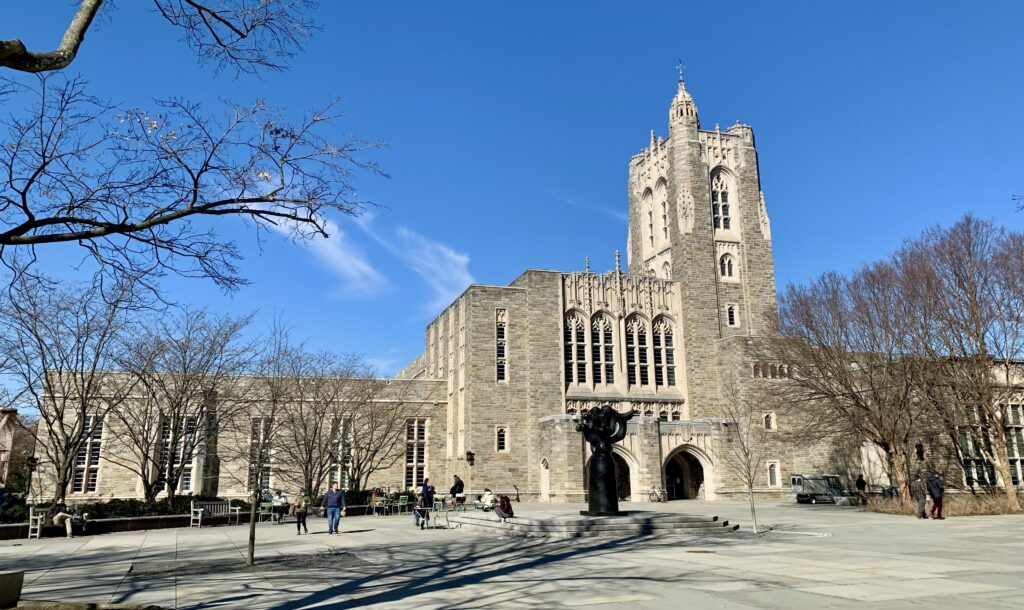
Holder Hall – Completed in 1910, it has a 140-foot tower that was modeled after the Canterbury Cathedral. It forms the large quadrangle on Nassau Street, three sides containing dormitory rooms, the fourth cloisters.
Princeton University Library – Princeton University Library is one of the world’s most distinguished research libraries, consisting of the Harvey S. Firestone Memorial Library and nine other buildings across campus. The library’s collections include more than eight million books, six million microforms, 49,000 linear feet of manuscripts, and impressive holdings of rare books, prints, archives and other material that require special handling. The library also houses an extensive electronic resource.
Firestone Library opened in 1948, as the first large American university library. Roughly 1.5 million volumes were moved during the summer of 1948 from East Pyne Hall, which until then had served as the University’s main library. The library building was expanded in 1971 and again in 1988 and currently has more than 70 miles (110 km) of bookshelves, making Firestone one of the largest open-stack libraries in existence.
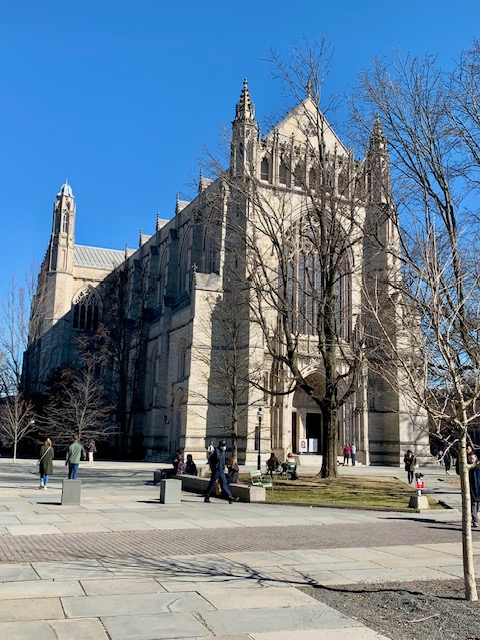
Princeton University Cathedral – The university was founded as a theological seminary. It is only fitting that its house of worship would be one of the most beautiful edifices on campus. Almost a century old, it was the largest university chapel when it was completed in 1928.Today it still holds regular interfaith religious services led by faculty in the school’s theology department. There are also musical performances throughout the month. It’s also a welcome refuge on days with no scheduled performances to simply sit in the wooden pews in silence.
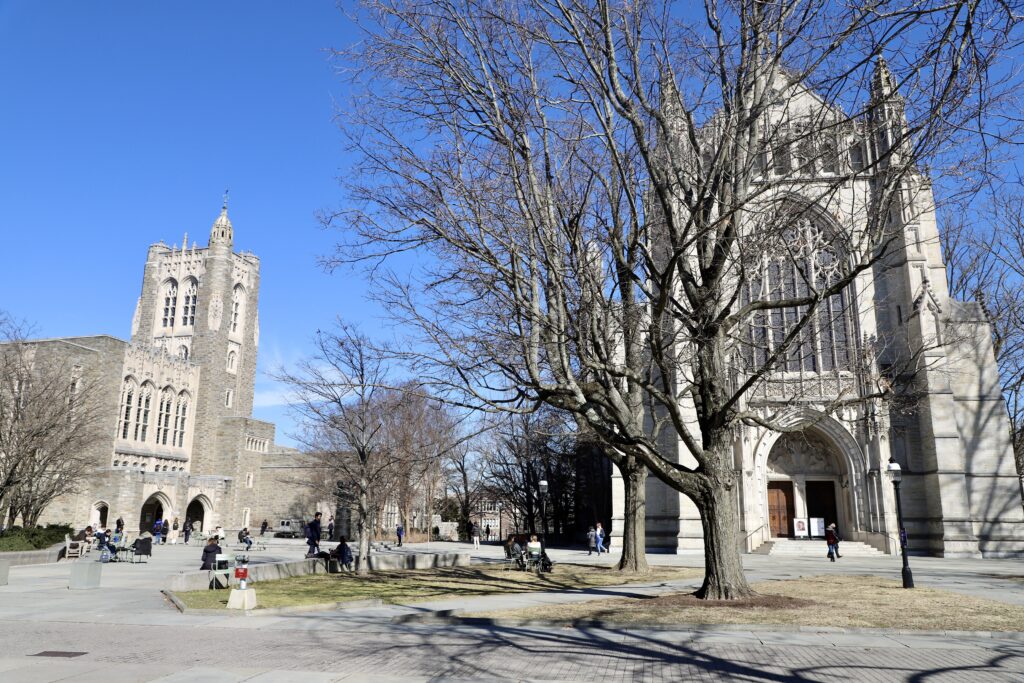
Cleveland Tower – This 173-foot Tower flanks the main entrance to Princeton’s Graduate College. Its beauty is often compared to that of Oxford University’s Magdalen Tower. One of the principal structures of the Graduate College when it was dedicated in 1913, the tower was erected as a memorial to President Grover Cleveland, who, following his retirement from public life, was a trustee of Princeton University and chaired the trustees’ graduate school committee. Funds for the construction of the tower were raised by public subscription from “citizens of all parties in all walks of life from all parts of the United States.”
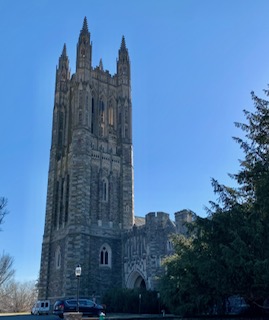
The institute for Advanced Study (IAS) – is an independent center for theoretical research and intellectual inquiry. It was founded in 1930 by American educator Abraham Flexner along with philanthropists Louis Bamberger and Caroline Bamberger. Renowned physicist Albert Einstein, was one of the institute’s first faculty members serving from 1933 until his death in 1955. He played a significant part in its early development.
Flexner’s guiding principle in founding the institute was the pursuit of knowledge for its own sake. The faculty have no classes to teach and there are no degree programs or experimental facilities at the institute. Research is never contracted or directed. It is left to each individual researcher to pursue their own goals. The institute consists of four schools: Historical Studies, Mathematics, Natural Sciences, and Social Sciences. It is supported entirely by endowments, grants, and gifts.
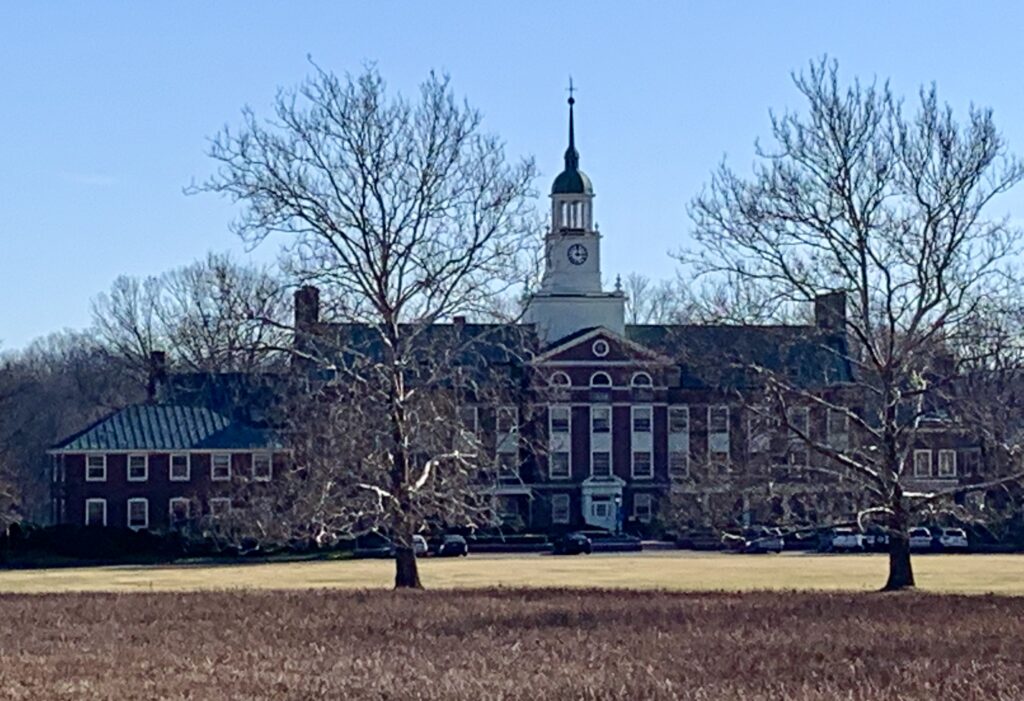
Princeton Battlefield State Park – This impressive and historic 200-acre site is the location of the Battle of Princeton of 1777, which resulted in George Washington’s victory over the British in the American Revolutionary War. It is just a mile southwest of Princeton University.